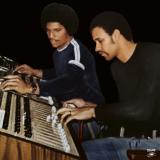
Igor Tamerlan is a stranger in his own land. Born in 1954 the Hague and spent most formative years in Paris, Igor suddenly had the urge to relocate to Bali in 1986. “I want to settle in Indonesia and marry a local girl,” he told his sister shortly before flying out.
His next journey would be as audacious as his time in the Fifth Republic. Born from a prominent Indonesian expatriate family in Paris with ties to Indonesia’s first prime minister Sutan Sjahrir, Igor earned a degree in architecture at Ecole nationale supe´rieure d’architecture de Paris-La Villette.
He could have been a brilliant architect or a political scientist (he was accepted to Sciences Po), but his passion for music distracted him from his academic works. He was after all named after Russian composer Igor Stravinsky.
During his brief stint at Sciences Po, Igor spent most of times hanging out at recording studios and rub shoulders with the likes of singer-songwriter Jean-Jacques Goldman and Michel Polnaref. He had a brief encounter with The Rolling Stones at the Cha^teau de Thoiry studio in the early 1970s.
But Igor’s musical education and his occidental eyes appeared to be ill-suited for Indonesia. His first record, titled Langkah Pertama (First Step) on the mainstream label Musica was met with a shrug and was a commercial dud. An experimental record blending the influence of Spanish motifs, Francophile production and a whiff of hip hop and ska was seen by critics as being too alien. His sarcasm-laden lyrics and his biting critique of excessive materialism among the upper tier of Indonesia’s nouveau riche in the album was met with confusion from the audience. He was just too far ahead of his time.
He left the label Musica – or may had been dropped – soon after Langkah Pertama and decided to go independent. He then relocated to Bali and set up a state-of-the-art recording studio in Sanur, across the street from Southeast Asia’s first boutique hotel where luminaries like Mick Jagger, David Bowie, Sting, Yoko Ono and Ringo Starr stayed for their holiday.
From the studio, Igor recording everything from the sounds waterfalls, geckos, minibuses to motorized rickshaw and mix them with hip hop, jazz, electronica, dub and Balinese gamelan. A visionary, Igor was the first musician to use MIDI, which started to be available globally in the early 1980s.
On paper, songs like “Bali Vanilli” should not work, a mish mash of disparate elements mentioned above, sung in three languages, Balinese, English and Bahasa Indonesia while tackling the subject of overtourism. The song was also the first to introduce rap to an unsuspecting audience. But for some strange reason “Bali Vanilli” became a sensation and overnight Igor became household name. And in 1987, long before overtourism was an issue, Igor broached the subject to a national audience in Indonesia on the possible destruction of nature and culture from tourism.
Ever an iconoclast, Igor decided to step out of the limelight following the success of “Bali Vanilli” and in early 1990s he relocated to Indonesia’s cultural capital, Yogyakarta. Here, he worked on some more experimental music while juggling as music video director. He passed away in 2018 at the age of 64.
The 10 songs in this compilation, Bali Vanilli: Experimental Pop from Paradise Island (1987-1991), are some of Igor’s best works, music that would have gone into obscurity had it not been for the diligent work of film director Alfred Pasifico Ginting, who managed to track down some of the master tapes while researching on a documentary on the musician.
These recordings have never before been released outside of Indonesia. Igor would have been proud with this reissue project.
quête:bali
Dieses exklusive Sammlerstück ist nun endlich wieder erhältlich!
"Djanger Bali", das revolutionäre Projekt von Tony Scott und Indonesischer All Star Band, überbrückte GenreGrenzen und kombinierte Jazz mit traditioneller Gamelan Musik. Durch diese einmalige Kombination entstand ein prägender Meilenstein im Ethnojazz. Dieser Re-Release überzeugt nicht nur durch hohe Musikalität, sondern beinhaltet unter anderem Liner-Notes und interessante Einblicke in Form eines exklusiven Booklets. Aufgewertet durch AAA Mastering des renomierten Mastering Engineers Christoph Stickel.
Lloyd Miller, Jahrgang 1938, ist ein US-amerikanischer Musikethnologe, Arrangeur, Komponist und Multiinstrumentalist. Millers Karriere begann in den 1950ern mit Dixieland. Aufenthalte im Nahen und Mittleren Osten weckten sein Interesse an orientalischer und speziell persischer Musik. Das machte aus Miller einen Pionier des Oriental-Jazz. Während der Siebziger hatte er als Kurosh Ali Khan sogar eine eigene Fernsehshow im Iran. Die Sendung lief sieben Jahre und brachte dem Musiker eine große Popularität ein Neben diversen erkussionsinstrumenten spielt Miller Bass, Flöten, Kamantsche, Klarinette, Oud, Piano, Santur, Sehtar, Tabla und Zarb. 2010 veröffentlichte Miller mit der britischen, vom Afrofuturismus angehauchten Spiritual-Jazz-Band The Heliocentrics ein gemeinsames Album, das Strut nun in einer limitierten Auflage von 1000 Exemplaren als Doppel-LP neu auflegt. Hier beweist das Londoner Musikerkollektiv, das im Jahr zuvor (2009) mit Mulatu Astatke, dem großen Ethio-Jazz-Veteran aus Äthiopien, ein viel beachtetes Werk in Umlauf gebracht hatte, einmal mehr seine musikalische und instrumentale Vielseitigkeit
Only those who read all the credits on record liner notes will know the full details: Areski is of course Brigitte Fontaine's partner in life, but also her creative alter ego, and the composer of the music of most of her songs. Even though it was his wife Brigitte and not him who wrote the lyrics, Areski is a poet in his own right. Furthermore, he is polyvalent: composing, arranging, singing, improvising, playing every possible instrument and even acting! Areski, to sum up, is the perfect mix of the tradition of Munir Bashir with the European sophistication' of someone like Jean-Claude Vannier, one foot permanently in Versailles (where he was born) and the maghreb. Areski, is left bank French songs without the stylistic effects, revised and updated through contact with arab-andalusian music. He is a Living Theatre style happening with a dose of cosmic free jazz, surrealist poetry viewed through the prism of Kabyle culture... All that and a lot more!
Areski honed his talent observing the stars of traditional chaâbi, testing it out in bars and dives before meeting, during military service, the singer Jacques Higelin with whom he would record his first cult album, and who would present him to his wife-to-be, Brigitte Fontaine. Between 1969 and 1980, with her, Areski would contribute an essential chapter to French underground music including classics such as Comme à la radio (with the Art Ensemble of Chicago), Je ne connais pas cet homme, L'Incendie, Le Bonheur and Vous et nous. For all that, Areski has never really tried to have a career under his own name, in spite of the wonderful Un Beau matin first published in 1970, and which it is high time to de (re)discover (better late than never). Those already in the know will not be surprised to see, especially, Jean-Charles Capon, author of the inspired L'Univers-solitude, Brigitte Fontaine of course, or Daniel Vallancien, author of a no-less inspired duo with saxophonist Philippe Maté. All contributing to an acerbic poetic universe, concerned but never militant, and open to worldwide influences long before they became a fashion.
Inspired, poetic, in a word essential: Un Beau Matin is one of the best albums of the French underground produced by Pierre Barouh on his label Saravah, alongside those by Maurice Lemaître, Catharsis, Claude Yvans, Mahjun, Barney Wilen, Cohelmec Ensemble et Michel Roques.
- A1: Steppers
- A2: Rubber Foot
- A3: Elasticated
- A4: Rocking
- A5: Lovers
- B1: Front Line
- B2: Scientific
- B3: Jungle
- B4: Bali Hi
- B5: Chemistry
Hopeton Brown, better known as Scientist, has been a pioneering figure in the world of dub for nearly 40 years. His early love of electronics proved fruitful when (still a teenager) he was hired at King Tubby's studio in Kingston. Brown quickly ascended the ranks and became heir to Tubby's throne, producing imaginative and technically impressive mixes that solidified his forward-looking nickname.
Introducing Scientist - The Best Dub Album In The World, his 1980 debut LP, lives up to its boastful title. Recorded with Sly & Robbie at Channel One Studio and mixed at King Tubby's, the album features hypnotic basslines, reverb-drenched keyboards, and fluid, start-stop rhythms. Opening track "Steppers," with its well-balanced phrasing and organic contours, shows Scientist's mastery of the studio-as-instrument concept. On "Scientific," the effects-laden guitars are stretched to their outer limit to create magnificent, spaced-out textures and muted tension. Introducing Scientist displays the talents of a man obsessed with every element of production, drawing out the very best of the dub form.
2026 Repress!
Doc Scott was on the decks. It was at Tribal Gathering (I think), 1996, standing in front of a wall of speakers to one side of the stage,
enjoying myself, like you do, when this sound started growing inside my brain. My head was then ripped clean off my shoulders!
Words are still hard to find! It was the first time I ever heard Shadow Boxing and its the only thing I still remember from that night. Om
Unit's 2014 Remix is paired with the 1996 original. DJ support from: Fabio, Mark Pritchard, Friction, Surgeon, Toddla T, Laurent
Garnier, Pinch, Zinc, Baliey, Rob Both, Billy Nasty, Krust & John B.
Dewa Alit, master of radical Balinese gamelan, returns to Black Truffle with Baur Bentur. Genetic (2020, BT063) introduced international listeners to the magical sound-world of Alit’s Gamelan Salukat, who perform on instruments tuned to a unique scale derived from modified versions of two traditional Balinese scales. The two pieces heard on Chasing the Phantom (2022, BT093) further demonstrated his radical fusion of tradition and experimentation, with passages where unorthodox techniques make the acoustic ensemble resemble glitching electronics. Baur Bentur now highlights another aspect of Alit’s work, presenting pieces composed in 2024 and 2025 where Gamelan Salukat performs alongside virtuoso pianist Sri Hanuraga. Alit’s music is grounded in deep reflection on the tradition of Balinese gamelan and its place in the contemporary world. His title, ‘Baur Bentur’, which translates as ‘mixing and smashing’, points to his embrace of the intercultural mixture of Eastern and Western elements in the search for innovation. Against the calcification of Balinese music into tourist entertainment, Alit poses his searching, experimental work, which celebrates the communal values and performance practices of traditional gamelan while pushing into startling new directions.
‘Sukat Tacara’ is a study in layered tempos, meters, and polyrhythms, a constantly shifting dialogue between piano and the instruments of Gamelan Salukat. It begins close to a traditional concerto, pairing a brisk sequence of melodic variations from the piano with a spare but propulsive accompaniment of drums and hanging metallophone tones, punctuated by low gong strikes. The piano builds in volume and density across a rapid succession of fragments, at points recalling George Antheil’s ticking wind-up machinery, though Hanuraga’s jazz background shines through in the fluidity with which he navigates the complexities of the score, where chromatic movement co-exists with bluesy phrases. An abrupt change in the piano to patterns of dense clusters introduces a new episode, during which the metallic instruments of the gamelan enter the foreground. The piece dazzles with its inventive rhythms and dynamics, building to a stunning passage featuring the signature heavy muting technique of the Gamelan Salukat metallophones in kinetic patterns that would be at home on a Príncipe release.
The title piece begins at high intensity and rarely lets up, working through bracing unison ensemble melodies and punctuation points where piano and gamelan together seem to become a single, thudding drum. For much of the piece the piano is tightly integrated into the ensemble, the harmonic extensions of the melodic line subsumed into a moving cloud of complex overtones generated by the gamelan instruments. Wildly kinetic on the rhythmic level, the piece swarms with microscopic movements of beating patterns generated by the ‘blend and crush’ of three simultaneous tuning systems: the equal temperament of the piano and the saih cenik (small scale) and saih gede (big scale) used by the gamelan instruments. Accompanied by the composer’s thoughtful liner notes and images of the musicians, Baur Bentur is a stunning next step in Alit’s radical combination of tradition and innovation.
DJ Support: Adam Auburn, DJ Nova, Norm De Plume (Delusions Of Grandeur), Guy Perryman, Simon 'Palmskin' Richmond, Rocco Rodamaal, Damian Lazarus, Demarkus Lewis, Douglas Arellanes, Craig Smith (Yoruba Affil), Lay-Far, Dr. StrangeDub, Dennis Ruyer, Kono Vidovic, Roberto Rodriguez, Bill Brewster, Chris Read, Richard Earnshaw, Hot Toddy, Handson Family, Dj Pope, Robbie Akbal, Golf Clap, Marques Wyatt, Kiko Navarro, Mr Beatnick, Jamie Jones - Hot Creations, Marcia DaVinyl MC, Mikael Ikalainen/ Dj Lord Fatty, Ian Friday, Mr V, Mathieu Schreyer, Willie Graff, Makossa, Stuart Knight, Timo Maas, Bruce Tantum, Sean Brosnan (Futuredisco), DJ Harri, Vinny Da Vinci, Trevor McNamee, Roger Sanchez, and Dom Servini
PDD are excited to welcome the return of the legendary Winding Road Records. Originally launched in 2002 by Schmoov! and home to releases by cult artists such as Ron Basejam, Hot Toddy, both of Crazy P fame as well Vincenzo, Rhythm Plate, Spirit Catcher and not to mention Lovebirds and their monster hit, I Want You In My Soul. After a hiatus, the label is back with a bang and teaming up once again with Lovebirds for another classic EP.
- A1: Bill Deal & The Rhondels - Freak 'N' Freeze
- A2: Ryjel - Heart's On Fire
- A3: Tom Balistreri And Nightstream - Started Out Dancing
- B1: Ron Moore - Old Mother Winter
- B2: Stone Mill Band - Livin' For A Lie
- B3: Tony Vitale - Get Up & Get Down
- B4: Tory Wynter - Oh Let The Rain Fall Down
- C1: Avatar - Been Thinkin' About You (Vocal)
- C2: Willie "King Juan" Dickey - Hot On Your Spot
- C3: Piz-Zazz - Rock (Rock Your Body)
- D1: King Perkoff Band - When You Live In Marin
- D2: The Shake & Bake Band Featuring S-Sence - Starflight Disco #1
- D3: Bionic Funk - Keep On Pullin
- E1: Bonus 7": Huntington, Barber & Company - Shake It Up
After nearly three years, *Can You Feel It Vol. 5* marks the release of a brand-new installment in Tramp Records' Disco/Boogie series. Like all four previous volumes, Vol. 5 offers a colorful mix of songs from the late 1970s and early 1980s. From extremely rare tracks to easily accessible ones and even unreleased material-this release has everything to make a collector's heart race. Once again, these songs will get you on your feet, inspire you to dance, and transport you back to the glittering world of the late 1970s. CAN YOU FEEL IT?
Let's take a closer look at a few of the songs on this album. Kicking things off are Bill Deal & The Rhondels, a band that needs no introduction. The same cannot be said for Tom Balistreri and Ryjel. The latter presents "Heart's On Fire," a seven-minute journey into previously unreleased deep disco. "Old Mother Winter" may not be a typical disco song, but it's undoubtedly a fantastic composition. The Stone Mill Band is relatively unknown even among hardcore collectors. The most recent track on this album is by singer Tory Wynter who already contributed a song for Can You Feel It Vol.4. "Oh Let The Rain Fall Down" was released in 1988.
The second record opens with "Been Thinkin' About You" by Avatar-an amazing song and probably the rarest gem on this album, in stark contrast to Piz-Zazz - a record you can find easily for a few dollars. Saxophonist King Perkoff was born in Santa Monica, California, but now resides in Berlin, and with "When You Live In Marin" he delivers a real disco-funk banger! Glenn "Shake & Bake" Doughty played professional football as a wide receiver for the Baltimore Colts from 1972 to 1979. Together with some of his teammates, he founded the Shake & Bake Band in 1975. We probably aren't telling Tramp fans anything new here. Anyway, a little over two years ago, we reissued the first of their two extremely hard to find 45-RPM singles ("Shake & Bake Pt. 1 & 2"). We also included a DJ-friendly edit of the song on "Movements Vol. 12." It is a must for us here at Tramp that we also reissue their second single, "Starflight Disco Pt. 1 & 2," soon!
So there you have it, 13 obscure but brilliant MODERN SOUL, DISCO and BOOGIE tunes of which all have not been compiled anywhere else. We sincerely hope you enjoy our guided tour back into the late 1970s and 80s Disco era.
A truly “Not Normal” label is finally here to unveil its concept of split releases.
The A-side takes you on a transcendental journey led by Balinsky, where melancholic echoes of 90s rave culture intertwine with modern rhythms and carefully sculpted basslines, forming a mysterious and captivating soundscape.
The B-side invites you into the fiery, groovy world of Javier Carballo. Refracted rhythms collide with deep, enveloping sound design, pulling you into a pulsating and uncharted adventure.
Together, the two artists create a delicate balance — their distinctive yet seamlessly blended visions deliver a luminous spectrum of tracks for you to enjoy.
Artwork by Olya Magarik.
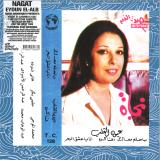
FIRST-EVER VINYL RELEASE OF CULT 1980 CASSETTE-ONLY ALBUM BY EGYPTIAN SINGER NAGAT EL SAGHIRA, CURATED AND ANNOTATED BY DISCO ARABESQUO. INCLUDES PRODUCTION BY EGYPTIAN FUNK LEGEND HANY SHENOUDA
Following the highly-acclaimed "Sharayet El Disco" compilation, Wewantsounds is delighted to team up with Disco Arabesquo for the reissue of Nagat El Seghira's cult 1980 album "Eyoun El Alb"
Originally released only on cassette on the Egyptian label Soutelphan, the album has since become a sought-after classic on the Arabic groove scene and this is the first time it is released on vinyl. Consisting of four tracks, the album features two tracks produced by Hany Shenouda whose group Al Massrieen is a reference on the Arabic disco funk scene.
Remastered for vinyl by Colorsound Studio in Paris, the album features the original cassette artwork plus a two page colour insert featuring liner notes by Disco Arabesquo.
When it comes to Arabic Divas, Oum Kalthoum, Fairuz and Warda usually take the lead in the poll list. But in her native Egypt, singer Nagat Al Saghira comes very close to this triumvirate. Born in Cairo in 1938, Nagat began singing when she was still a child gaining her stage name "El-Saghira" ("the young one") at this occasion as she started giving concerts at the age of seven, pushed by her father, the famed calligrapher Muhamad Hosny (Nagat's half-sister is the renowned actress Soad Hosny).
Nagat quickly rose to fame in the late forties and became an essential part of classic period of Arabic music, interpreting songs by such titans as Mohamed Abdel Wahab, Baligh Hamdy and Kamal Al Taweel. She also sang the works of Syrian poet Nizar Qabbani whom she introduced to a mainstream audience. Nagat started singing shorter songs but then upgraded to longer ones, often performing/recording them live as it was the trend in the 60s and 70s.
One such song is "Eyoun El Alb" ("Eyes of the Heart") which makes up the whole of Side 1 of the original cassette. Written by Mohamed El Mougy and Abd al-Rahman al-Abdouni, Eyoun El Alb is a love song made up of several distinct sections enhancing Nagat's hypnotic singing, accompanied by a percussion-heavy, traditional Egyptian orchestra.
Side 2 is the "diggers" groovier side featuring two floaters,"Bahlam Ma'ak" ("I Dream with You") and "Ana Basha El Bahr" ("I Adore The Sea") produced by cult Egyptian musician and producer Hany Shenouda, whose albums with his group Al Massrieen are highly sought after on the Arabic funk and Disco scene. One Al Massrieen track features on the "Sharayet el Disco" set compiled by Disco Arabesquo who notes that "Hany Shenouda had made waves with his new musical style that weaved in western funk and disco sounds into Egyptian music"
Both tracks feature an infectious slow-burning groove and incorporate funk influences with fat bass and lines of synth and clavinet that adds a funky tone to Nagat's soft singing. The third track "Fakra" ("Do You Remember") brings the best of both world with a syncopated rhythm and arrangements that are slightly more traditional than the Shenouda-produced tracks.
Originally released in Egypt on Cassette in 1980 on the venerable Soutlephan label, the album is now making its vinyl debut on Wewantsounds annotated by Disco Arabesquo and remastered for vinyl by Colorsound Studio in Paris for the joy of Arabic funk and Global beats worldwide.
Italian duo USAW join Fusion Of Thought for 'Not A Reason EP'! The prolific duo has gradually carved out a position in the modern techno space with live-performances at Tresor and OHM, as well as outings on established labels such as Clergy, ARTS, OECUS and their own USAW label. On 'Not A Reason', USAW deliver a distinctive slice of techno: unrelenting and forceful, yet with a particular sense for melody and hooks. Seasoned producer and Clergy label founder Cleric joins the cause with a remix, transporting original 'Illogical Behavior' to a new dimension.
- A1: Korogi ‘73 - Fushigi Song
- A2: Yas-Kaz - Hei (Theme Of Shikioni)
- A3: Yoichiro Yoshikawa - Tassili N'ajjer
- A4: Norihiro Tsuru - Farsighted Person
- B1: Geinoh Yamashirogumi - Theme Of Kaneda
- B2: Yoichiro Yoshikawa - Fiesta Del Fuego
- B3: Columbia Orchestra - Heart Beats / Theme For Andrew Glesgow
- B4: Kan Ogasawara - Gishin Anki
LP vinyl only release + 4 page liner notes (comes with hype sticker)
The percussive new age soundtracks of '80s and early '90s Japanese TV, anime and manga built alternative worlds and pushed boundaries in the process.
When Japanese composer Yas-Kaz left Tokyo for Bali in the mid 1970s he had little idea of how influential his trip would become. In studying the storied art of gamelan, the jazz and avant-garde percussionist opened a door to a world of sound and rhythm left behind by the West. The music he and his contemporaries made would become known as new age. It also happened to soundtrack the golden era of anime.
Awash with money and with the prerogative to entertain the burgeoning middle classes, anime in the 1980s experienced a creative and commercial boom. Not constricted by generic expectations, production houses such as the now renowned Studio Ghibli were able to experiment liberally with both form and content. And with it came the space for composers to be similarly adventurous.
TV, Anime & Manga New Age Soundtracks 1984-1993 charts this moment across eight tracks spanning classics of the genre and previously unknown rarities. The collection brings together music that found kinship in electronic and acoustic instrumentation, often combining spiritual or environmental themes with percussive, varied and highly refined syncopations of non-Western musical traditions.
Among them is ‘Kaneda’ by Geinoh Yamashirogumi, the shape-shifting group of self-styled musicians, anthropologists and computer scientists that masterminded the soundtrack to game-changing dystopian anime Akira - and with whom the sound, tuning and breakneck speed of Balinese gamelan has become indelibly entwined.
Reflecting the desires of the era to reach beyond Japan’s borders, many of the soundtracks featured were commissioned for narratives set in distant lands or alternative worlds. There’s violinist and composer Norihiro Tsuru’s ‘Farsighted Person’, written for The Heroic Legend of Arslān, set in ancient Persia; Yas-Kaz’s own ‘Hei (Theme of Shikioni)’, for period sci-fi manga & anime series Peacock King - Spirit Warrior; and two tracks - Tassili N’Ajjer and Fiesta Del Fuego - from Yoichiro Yoshikawa’s soundtrack to NHK’s proto-Planet Earth series The Miracle Planet.
Such was the variety and quality of the music produced, if there is a guiding principle to the tracks collected here it is a sense of escapism and adventure that came with the confluence of modern electronic instruments and a fascination with percussive traditions.
Elsewhere, pioneering children’s TV composer Chumei Watanabe’s ‘Fushigi Song’ (performed by a vocal group Korogi ‘72) offers a trippy and infectious groove with sonic similarities to Don Cherry’s ‘Brown Rice’; little-known jazz-funk library group Columbia Orchestra showcase the best of Tokyo’s session musicians on ‘Hearts Beats - Theme for Andrew Glasgow’; before lawyer-turned-composer Kan Ogasawara closes out the compilation with a dramatic flourish on ‘Gishin Anki’.
Following on from Time Capsule’s acclaimed deep-dive into the world of manga & anime synth-pop in 2022, this vinyl only collection is set to broaden and diversify an understanding of how soundtracks shaped the sound of new age music in Japan for a generation.
Curators: Kay Suzuki, Rintaro Sekizuka (Vinyl Delivery Service)
Artwork: Tu-yang
The first official reissue of Dorothy Carter"s folk-music exegesis comes 46 years after its original release, 20 years after Dorothy passed, and 11 years before the centennial of her birth. Yet it seems right on time for a new celebration of her music. Appalachian folk tunes, old and ancient psalms and hymns, Scottish, Irish, French and Israeli melodies, and original tunes flow together effortlessly in hypnotic gardens of eternal world musics. A highly energized, alternately meditative and proselytic recital whose vitality has only burgeoned in the decades since it appeared. As it should be: the music of Dorothy Carter is akin to a portal, linking her and us with the eternal. This edition of Troubadour reproduces the original album package, adding an insert adorned with additional photos of Dorothy and her collection of instruments, as well as notes from Eric Demby exploring the era - his childhood - from a vantage point of some 50 years. This reissue is a long-held family dream come true, and it is dedicated in loving memory to Bob Rutman, Constance Demby, David Demby and Dorothy Carter.
DJ Support: Pete Tong, Adam Beyer, Black Coffee, Demi Riquisimo, Nic Fanciulli, Tronik Youth, Duke Dumont, Argy, Phantoms
A techy double A slice of house from label head Kaz James thats been doing the rounds with some heavy hitting DJ piers. Both tracks have been staple part of Kaz's sets at Art Basel, Desa Kitsuné Bali, Burning Man, Brooklyn Mirage, Pacha Ibiza, Koko London, Mayan Warrior Tulum, his Mykonos residency Alamagou and beyond.
The release follows 'Sun is Shining' which was supported by the likes of Keinemusik, Black Coffee, and Pete Tong as Essential New Tune.
Been a longtime comin, but very happy its here now!!!! Two tracks from the Gregory James edition - the superb cover version of the "Aint no sunshine" sample tastic!!!! massive club groove, much needed as a 7" 45 rpm On the flip is the classic sample from back in the days by the Balistic bros "I'll fly away"
This is a follow up to our last successful piano duo release "In Spite Of Everything“. This time it is four hands on two grandpianos and a computer. Henrik on robot automatic disklavier grandpiano and Bugge playing a grandpiano. Reworked from live recordings at famous Radialsystem in Berlin. Cinematic, acoustic, minimalistic, playful, complex. Studio recordings made from stereo live concert recordings only possible with the help of new AI Stem separation. The full EP will be available on a specially pressed black-white vinyl.
- A1: Basement 5 - Silicon Chip
- A2: Disconnection - Bali Ha'i (Us Discomix)
- A3: A Certain Ratio - Shake Up
- A4: 23 Skidoo - Language
- B1: Pil - Home Is Where The Heart Is
- B2: Mark Stewart And The Maffia - Jerusalem
- B3: The Unknown Cases - Masimbabele (The Original Version)
- B4: Allez Allez - She's Stirring Up (Dub)
- C1: Animal Magic - Standard Man
- C2: Lifetones - Distance No Object
- C3: Snakefinger - I Gave Myself To You
- C4: Startled Insects - Overrzoom
- D1: Maximum Joy - Silent Street / Silent Dub
- D2: African Headcharge - Throw It Away
- D3: Ep-4 - Tide Gauge
- D4: 400 Blows - Declaration Of Intent
(incl 40p fanzine written by Matt Annis with photographs by Simon Pyke and Ian Brodie) Postpunk Theory is a meticulously curated compilation by the legendary Tony Thorpe, known for his work with The Moody Boys, 400 Blows, and The KLF. These classic tracks were played at parties by Thorpe at the time, making them his personal classics. The compilation features 16 rare and sought-after tracks from the post-punk era, including works by Mark Stewart and The Maffia, Basement 5, 23 Skidoo and more.
Defining post-punk is no easy task. While punk was defined by a raw, rebellious simplicity, post-punk (1978-1986) expanded into a diverse array of sounds and ideas. It maintained punk's independent spirit but embraced experimentation, incorporating influences from various musical and cultural traditions, resulting in a movement far more eclectic and fragmented than its predecessor.
At its core, post-punk broke away from traditional rock structures, blending genres like industrial, goth, and punk-funk with emerging dance music cultures. This era's spirit of innovation and defiance against musical norms continues to inspire, making post-punk a pivotal moment in music history that defies easy categorization.
Tony Thorpe presents Postpunk Theory - Alpha ? is a meticulously curated compilation by the legendary Tony Thorpe, known for his work with The Moody Boys, 400 Blows, and The KLF. These classic tracks were played at parties by Thorpe at the time, making them his personal classics. The compilation features 16 rare and sought-after tracks from the post-punk era, including works by Mark Stewart and The Maffia, Basement 5, 23 Skidoo, African Headcharge, and more.
Growing up in a vibrant musical environment in South London, Thorpe was deeply influenced by the eclectic sounds around him, from jazz-funk to Brit-Funk, and later, the post-punk records he discovered. As Thorpe recalls, "Post-punk was a mishmash of different cultures and ideas. Out of post-punk came dance music culture. That period was the most creative time because the culture was in its experimental phase." This compilation captures that innovative spirit, offering a glimpse into the era that shaped Thorpe's musical journey.
The album comes as a limited 2xLP set, accompanied by an extensive 40-page fanzine. The fanzine, written by Matt Annis (Join The Future), dives deep into the post-punk movement, offering insight and context enriched with striking photographs by Simon Pyke and Ian Brodie.