It took a long time – ten years – for his talismanic song, ‘Ça ira tu verras’, to prove his prophecies right, at a time when, everywhere else in the world, nothing seems to be going right. And if everything is going well for Séverin, it’s because he’s managed to build himself a bulwark, an impregnable citadel, and his records now exude a whiff of simplified idealism, with the influence of Souchon and Voulzy never far from his pen and guitar as he brings his bittersweet moods to life in verses and choruses.
But above all, he knows how to invent new settings for himself, push back the boundaries, step beyond the walls of his Parisian studio to go and see how things sound elsewhere. Recorded at Chale Abbey Studios on the Isle of Wight (UK), Séverin once again wanted to let the collective spirit of his regular collaborators take centre stage. Ambroise ‘Sage’ Willaume and Jérémie Arcache, who featured on the previous album *Nouveaux Dinosaures*, once again form the backbone of the band, on guitar and keyboards respectively. Bassist Théodora Delillez (Astral Bakers) and Canadian drummer Robbie Kuster complete the band’s core line-up, which, in just six days at this electric priory, went on to achieve – judge for yourselves – nothing short of miracles.
Whilst all around us the war on falsehood rages – from AI to post-truth, all these fake debates, hypocrites and false values – here is an album that doesn’t cut corners when it comes to emotions, nor in the way it sets them to music.
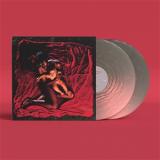
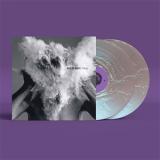
Auf ,Congregation" aus dem Jahr 1992, dem dritten Album der Afghan Whigs, kommen die Soul- und Psychedelic-Einflüsse der Band besonders gut zur Geltung; das Album trug maßgeblich dazu bei, den Sound der Band für die folgenden Jahre zu prägen. ,Congregation" ist auf Vinyl bereits seit vielen Jahren vergriffen, da die ursprüngliche Auflage längst ausverkauft ist. 2xLP im Gatefold-Cover und mit maßgefertigter Schutzhülle Gepresst auf Pearl Flip / Horizon-Vinyl!
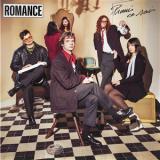
ROMANCE is redefining the French rock landscape with a distinctive identity that blends punk urgency, infectious melodies, and lyrics sung in French. Rooted in the legacy of the Rennes music scene while looking firmly to the future, the band transforms a wide range of influences into a sound that is instantly recognizable. Their debut album, Promis ce soir, is driven by memorable hooks, a strong artistic identity, and a live energy that has already made an impression. Produced with James Eleganz, the record showcases a mature band capable of appealing to both indie rock audiences and a broader mainstream public. The singles Alizée, Le Net, and D'la faute à moi perfectly illustrate this crossover potential. With a striking aesthetic, evocative songwriting, and a genuine live DNA, ROMANCE is emerging as one of the most exciting new acts in French-language rock.
With the amps still warm from 2024's coruscating comeback Life Knife Death, veteran Swedish punk-metal masters Wolfbrigade strike back like a wounded cobra with their loudest, fullest, thickest-sounding record yet. And that's no happy accident. On their twelfth LP (the first three released under the Wolfpack monicker, 1996–99), the quintet concertedly resolved to shake up their habitual processes and interrogate their customary methodology. "As the songs started to fall into place, we decided to do something we hadn't done in many years," explains the band. "For the last decade we've recorded, produced and mixed our albums ourselves. This time we wanted to work with someone from outside the band whose work we respect and who we felt would understand what Wolfbrigade is about."
With the amps still warm from 2024's coruscating comeback Life Knife Death, veteran Swedish punk-metal masters Wolfbrigade strike back like a wounded cobra with their loudest, fullest, thickest-sounding record yet. And that's no happy accident. On their twelfth LP (the first three released under the Wolfpack monicker, 1996–99), the quintet concertedly resolved to shake up their habitual processes and interrogate their customary methodology. "As the songs started to fall into place, we decided to do something we hadn't done in many years," explains the band. "For the last decade we've recorded, produced and mixed our albums ourselves. This time we wanted to work with someone from outside the band whose work we respect and who we felt would understand what Wolfbrigade is about."
Nach dem durchschlagenden Erfolg ihres selbstbetitelten Debüts legt „Rise and Shine“ die Messlatte noch höher – mit prägnanterem Songwriting, furchtloser Musikalität und jenem Feuerwerk auf den sechs Saiten, das zum Markenzeichen der Band geworden ist. Es ist ein Album, das die Tradition des Lone Star ehrt, ohne sich von ihr einengen zu lassen. Hätte das texanische Gitarrenspiel eine definitive DNA, würde sie dem gemeinsamen Werdegang von Moore, Moeller und Dayton sehr ähnlich sehen. Seit mehr als drei Jahrzehnten hat jeder von ihnen seinen eigenen Weg durch Blues, Rock, Country und Americana beschritten. Moore brachte schwebende, gefühlvolle Psychedelia zurück in den Blues; Moeller bereicherte die Austin-Szene mit messerscharfem Funk und wildem Saitenbending; und Dayton injizierte Punkrock-Adrenalin in das Herz des Outlaw-Country. Insgesamt haben sie sich zu einer der spannendsten Gitarrenbands entwickelt, die Texas seit Jahren hervorgebracht hat. Seit der Veröffentlichung ihres Debüts haben sich die Texas Headhunters mit ihrer furchtlosen Mischung aus Blues, Rock, Country-Soul und Roots-Musik breite Anerkennung verdient. SiriusXM spielte gleichzeitig drei Songs der Band in den Sendungen „Outlaw Country“, „Bluesville“ und „Little Steven’s Underground Garage“, wo sie zudem die begehrte Auszeichnung „Coolest Song in the World“ erhielten. Auch die Kritiker zeigten sich begeistert. „Guitar World“ und „Guitar Player“ lobten das Trio als „Triple-Guitar-Threat“, das „die Lone-Star-Tradition am Leben erhält“, während „No Depression“ ihre Liebe zum „rauen Barroom-Blues“ feierte. „Goldmine“ bezeichnete sie als „das Original“, The Alternate Root erklärte: „Kein Füllmaterial, nur Riffs“, American Blues Scene lobte ihre „Vollgas-Rückkehr zu den Wurzeln“, und Blues Rock Review fasste es einfach zusammen: „Jedes einzelne Mitglied ist ein meisterhafter Musiker, aber als Trio sind sie außergewöhnlich.“ Mit „Rise and Shine“ beweisen die Texas Headhunters, dass authentische texanische Gitarrenmusik immer noch am besten laut, locker und kompromisslos lebendig serviert wird. Formate: - CD im Mini-Gatefold Sleeve inkl. bedruckter Innenhülle - Yellow Rose Vinyl inkl. bedruckter Innenhülle
"Burning Down Paradise", das sechste Studioalbum der NWOBHM-Legende Tokyo Blade, erblickte ursprünglich im Jahre 1995 über Fresh Fruit das Licht der Welt. Fresh Fruit war ein Sublabel von SPV in Hannover. High Roller Records legt »Burning Down Paradise« jetzt zum allerersten Mal als Vinyl auf.
Die Platte markierte die Wiedervereinigung von Gitarrist Andy Boulton und Sänger Alan Marsh, die das erste Mal seit dem Debütalbum von Tokyo Blade im Jahre 1983 wieder gemeinsame Sache machten. Die damalige Besetzung wurde komplettiert von John Wiggins an der zweiten Gitarre, Colin Riggs am Bass und Marc Angel hinterm Schlagzeug.
„Ich denke, alle zwölf Songs haben den Test der Zeit gut überstanden“, kommentiert Gitarrist und Gründungsmitglied Andy Boulton heute. „Allerdings war es eine schwierige Zeit für Hardrock und Heavy Metal. Der musikalische Geschmack hatte sich drastisch verändert. Das Album wurde in einem kleinen Studio direkt außerhalb von Marlborough in Wiltshire aufgenommen. Zusammen mit einem Tontechniker namens Nick Beer. Ich nehme an, man könnte sagen, dass die ganze Band »Burning Down Paradise« produziert hat. Als Hauptsongwriter hatten Alan und ich am Ende aber wohl den größten Einfluss auf den Sound der Platte.“
Laut Aussage des Gitarristen erntete das Album zum Erscheinungszeitpunkt unterschiedliche Reaktionen: „Die Meinungen gingen auseinander, einige alte Fans mochten unsere neue Richtung nicht, während andere positiver eingestellt waren. Und was die Kritiker an sich betrifft, auf die höre ich eh nicht. Meine Einstellung ist: Wenn dir die Musik nicht gefällt, hör sie dir einfach nicht an.“
Nach der Veröffentlichung von "Burning Down Paradise" gingen Andy Boulton und Alan Marsh abermals getrennte Wege. Tokyo Blade lösten sich (zwischenzeitlich) auf: „Wir hatten die Schnauze voll, ohne Unterstützung von irgendwoher weiterzumachen. Es war eine schlechte Zeit für unsere Art von Musik, und wir sahen keinen Sinn darin, die Band weiterhin am Leben zu halten und unsere Kraft zu vergeuden.“
Remastered von Patrick W. Engel at TEMPLE OF DISHARMONY im März 2026.
Widow aus London (auch als Ritual bekannt) machten erstmalig 1983 im Zuge der NWOBHM-Bewegung auf sich aufmerksam, als ihr selbstbetiteltes Debütalbum auf Legend Records erschien. Zu jenem Zeitpunkt waren Re Bethe (Gitarre, Gesang), Phil Mason (Bass) und Rex Duval (Schlagzeug) allerdings bereits ganze zehn Jahre aktiv. Ihr allererster Live-Auftritt fand im September 1973 im ""Café des Artistes"" in der Fulham Road in London statt.
Heutzutage werden Widow/Ritual in bestimmten Kreisen als Säulenheilige der originalen Okkult-Rock-Welle verehrt. Re Bethe hingegen sieht wenig Parallelen zwischen seiner Band und Black Widow, Atomic Rooster oder Coven: ""Ich glaube, wir haben uns selbst niemals als Okkult-Rock-Band bezeichnet. Ich denke, wir waren eher ganz normaler Heavy Rock. Aber selbstverständlich haben wir beobachtet, was um uns herum musikalisch passierte. In den ganz frühen Tagen waren wir sicherlich ein wenig von Black Sabbath beeinflusst. Ich wollte schon immer wie eine Mischung aus Black Sabbath und Deep Purple klingen. Das waren wirklich die einzigen beiden Rockbands, die ich mir überhaupt angehört habe. Black Sabbath und Deep Purple hatten irgendwie den Dreh raus.”
Als Widow (oder Ritual) schließlich im Jahre 1983 ihre Platte vorlegten, hatte die NWOBHM ihren Höhepunkt bereits überschritten. “Wir sahen, was mit den anderen Bands geschah”, gibt Re Bethe zu Protokoll. “Wir fühlten uns dieser Bewegung auf eine bestimmte Art und Weise verbunden. Die Leute haben uns oft mit Samson, Quartz oder Pagan Altar verglichen. Im Grunde genommen gehörten wir aber einer früheren Generation an, die sich bereits vor der Punk-Revolution formiert hatte und nun mit der Schwierigkeit konfrontiert wurde, Arbeit an Land zu ziehen. Es war schier unmöglich, einen Deal zu ergattern, es war sogar unmöglich, überhaupt einen Vertrieb für die Platte zu bekommen.”
Audio-Restaurierung und Mastering durch Patrick W. Engel bei TEMPLE OF DISHARMONY im März 2026. Cutting durch SST Germany auf Neumann-Geräten für optimale Qualität in jeder Hinsicht.
The Fall, 1976 in Manchester gegründet, ist im Kern das Projekt von Mark E. Smith, der als konstantes Bandmitglied den Charakter der Gruppe prägte. Musikalisch bewegen sich die frühen Peel‑Aufnahmen im rauen Post‑Punk‑Spektrum: schroffe, gitarrengetriebene Arrangements, repetitiver Aufbau und Smiths markante, oft kryptische Vocals zeigen die ästhetische Direktheit, die den Sound der Band auszeichnet.
Die Zusammenstellung dokumentiert die Session vom 30. Mai 1978 mit "Futures And Pasts", "Mother‑Sister!", "Rebellious Jukebox" und "Industrial Estate" sowie die Session vom 27. November 1978 mit "Put Away", "Mess Of My", "No Xmas For John Quays" und "Like To Blow". Produzentisch zeichneten Tony Wilson und Bob Sargeant verantwortlich; als Toningenieure werden Mike Robinson, Mike Dave Dade und Brian Tuck genannt.
Als historische Momentaufnahme fängt die LP die rohe Studio‑Performance einer Band ein, die sich Anfangsphasen und Entwicklung bereits in diesen frühen Auftritten ablesen lässt. Die Zusammenführung beider Sessions auf einer schwarzen LP betont den dokumentarischen Charakter der Veröffentlichung.
out of Stock
Last delivered 6 days ago available to reorder, subject to availability
he Congos possess what all bands look for, that unique distinctive sound that draws the listener in. Alongside the great songs, lead singer Cedric Myton's singing, phasing and falsetto voice makes that just the case.
The Congos were formed by Cedric Myton (b. 1947, St Catherine, Jamaica) around the mid-Seventies when the
Rasta message was central to the reggae sound coming out of Kingston, Jamaica. But he had started out in the
Rocksteady era, when he formed the vocal group 'Tartans', taking lead vocal duties alongside Devon Russell, Prince Lincoln Thompson and Lindbergh Lewis.They cut 'Dance All Night' (1967) and 'Coming On Strong' (1968). The line-Up became The Royal Rasses and from this Cedric moved on to form the Congos on meeting Roydel Johnson, who had previously sang with Ras Michael and the Sons of Negas. Cedric's Rasta roots were firmly in place when he went to work with producer Lee Perry to cut the seminal album 'Heart Of The Congos' at Perry's just built, Black Ark Studios in 1977. Cedric Myton has carried on the mantle, cutting a set of tunes with the help of his good friend Mr Brent Dowe, who had previously sang lead vocals with the Melodians.This is the Dub set to the vocal album released on the Kingston
Sounds label called 'The Congos Feast'(KS008).With such strong songs, rhythms and vocals it always had the chemistry for a great dub set. Hope you agree and enjoy the dub excursion...
Ajo Se Po is the third album by alto-saxophonist and percussionist Kevin Haynes, released with his band Grupo Elegua. The album integrates musical elements with references to his deepening spiritual understanding. Haynes has created a modal harmonic language incorporating Afro-Cuban melodies and classical kora playing - his alto-sax, infusing the album with a personal 'voice'.
Yoruba spirituality is at the heart of Haynes' musical thinking which also includes both Nigerian and Cuban dimensions. This is especially reflected by the use of recitation and Cuban bata drumming being employed on all tracks, with each piece growing out of a particular bata rhythm. Each such rhythm is dedicated to a particular Orisha, or divinity.
As well as influences from Afro-Cuban, Native Nigerian and folkloric Bata, Haynes' music is a fusion of contemporary jazz incorporating Mandinga folk and praise songs and hard bop.
Kevin Haynes and Grupo Elegua have performed at renowned jazz festivals including Havana Jazz Festival, Cuba and Salamanca Jazz Festival, Spain. Haynes has also featured on Moses Boyd's hit album Displaced Diaspora.
Previously available on digital only, Ajo Se Po is now released on vinyl.
out of Stock
Last delivered 8 days ago available to reorder, subject to availability
Möge es den Menschen im bekannten Universum gefallen, dass das musikalische Ensemble mit zahlreichen Namen, das rechtlich unter dem Namen ,Kay-Bee Funk Music Group" firmiert, sein - alphabetisch gesehen - erstes Album mit dem Titel ,Access All Areas" veröffentlicht. Diese Aufnahmen, die mit der von Karate Boogaloo patentierten ,Lovely Recording Technique" entstanden sind, machen deutlich, dass jeder ein VIP ist, wenn man KB hört. ,Access" war das einzige Wort, das The Old Kar-Boo's bei diesem Projekt philosophisch leitete. Wurde ein Stück zu verworren, landete es im Papierkorb. Nur diejenigen, die von jedem und allen gesummt werden konnten, blieben erhalten. Dieses Sieb kam während des gesamten Prozesses zum Einsatz; Arrangements und Formen wurden straff gehalten, Schnickschnack auf ein Minimum reduziert. War ,Hold Your Horses" aus dem Jahr 2024 noch ein Epos, so ist ,Access All Areas" ein Haiku. Der bewährte Aufnahmeprozess der Band wurde gewissenhaft eingehalten, abgesehen von einer wunderbaren Ergänzung: den großartigen ,Sound Recordings" unter der Leitung ihres Inhabers und außergewöhnlichen Toningenieurs Alex Bennet. Alex, der den 4-Spur-Ampex 440 bei Bedarf abseits der ausgetretenen Pfade steuerte und stets dafür sorgte, dass die Stimmung stimmte, ist ein waschechter Booger. Auch wenn es sich nur wie ein Augenblick anfühlt, sagt uns die Uhr, dass fast 20 Jahre vergangen sind, seit Kay's Bees zum ersten Mal versuchten, die Songs ihrer musikalischen Helden - The Meters, Booker T & The MG's und The JB's, um nur einige zu nennen - zu spielen. Seitdem haben die Famous Flying Karate Boogaloo Brothers einen Schritt nach dem anderen gemacht und ihren eigenen Sound entwickelt - einen, der die Geschichte der instrumentalen Funk- und Soul-Musik respektvoll würdigt und die Zeit widerspiegelt, die sie damit verbracht haben, ihren unverwechselbaren Sound zu entwickeln. So sehr jedes Mitglied auch für sich allein glänzt, ist es doch ein besonderes Ereignis, wenn alle vier Planeten im Booger-System in einer Linie stehen. ,Access All Areas" ist eine solche Finsternis - ein künstlerischer Ausdruck, an dem jedes Mitglied gleichermaßen beteiligt ist und der einen Schatten wirft, der einzigartig für diesen Anlass ist. Jede Sekunde der Musik wurde unter voller Beteiligung aller Mitglieder komponiert und produziert; das Mixing übernahm Henry Jenkins, das Artwork stammte von Hudson Whitlock und Callum Riley, und Darvid Thor vollbrachte Dinge, die man gesehen haben muss, um sie zu glauben. Musik ist ein Mannschaftssport, und es gibt kein ,Ich" im Funk. Das Album erscheint bei den beiden großartigsten Plattenlabels der Galaxie: ,Colemine Records" aus Loveland, USA, und ,College of Knowledge" aus Coburg, Australien. Hören Sie sich bitte das neue Album ,Access All Areas" von Karate Boogaloo an.
Möge es den Menschen im bekannten Universum gefallen, dass das musikalische Ensemble mit zahlreichen Namen, das rechtlich unter dem Namen ,Kay-Bee Funk Music Group" firmiert, sein - alphabetisch gesehen - erstes Album mit dem Titel ,Access All Areas" veröffentlicht. Diese Aufnahmen, die mit der von Karate Boogaloo patentierten ,Lovely Recording Technique" entstanden sind, machen deutlich, dass jeder ein VIP ist, wenn man KB hört. ,Access" war das einzige Wort, das The Old Kar-Boo's bei diesem Projekt philosophisch leitete. Wurde ein Stück zu verworren, landete es im Papierkorb. Nur diejenigen, die von jedem und allen gesummt werden konnten, blieben erhalten. Dieses Sieb kam während des gesamten Prozesses zum Einsatz; Arrangements und Formen wurden straff gehalten, Schnickschnack auf ein Minimum reduziert. War ,Hold Your Horses" aus dem Jahr 2024 noch ein Epos, so ist ,Access All Areas" ein Haiku. Der bewährte Aufnahmeprozess der Band wurde gewissenhaft eingehalten, abgesehen von einer wunderbaren Ergänzung: den großartigen ,Sound Recordings" unter der Leitung ihres Inhabers und außergewöhnlichen Toningenieurs Alex Bennet. Alex, der den 4-Spur-Ampex 440 bei Bedarf abseits der ausgetretenen Pfade steuerte und stets dafür sorgte, dass die Stimmung stimmte, ist ein waschechter Booger. Auch wenn es sich nur wie ein Augenblick anfühlt, sagt uns die Uhr, dass fast 20 Jahre vergangen sind, seit Kay's Bees zum ersten Mal versuchten, die Songs ihrer musikalischen Helden - The Meters, Booker T & The MG's und The JB's, um nur einige zu nennen - zu spielen. Seitdem haben die Famous Flying Karate Boogaloo Brothers einen Schritt nach dem anderen gemacht und ihren eigenen Sound entwickelt - einen, der die Geschichte der instrumentalen Funk- und Soul-Musik respektvoll würdigt und die Zeit widerspiegelt, die sie damit verbracht haben, ihren unverwechselbaren Sound zu entwickeln. So sehr jedes Mitglied auch für sich allein glänzt, ist es doch ein besonderes Ereignis, wenn alle vier Planeten im Booger-System in einer Linie stehen. ,Access All Areas" ist eine solche Finsternis - ein künstlerischer Ausdruck, an dem jedes Mitglied gleichermaßen beteiligt ist und der einen Schatten wirft, der einzigartig für diesen Anlass ist. Jede Sekunde der Musik wurde unter voller Beteiligung aller Mitglieder komponiert und produziert; das Mixing übernahm Henry Jenkins, das Artwork stammte von Hudson Whitlock und Callum Riley, und Darvid Thor vollbrachte Dinge, die man gesehen haben muss, um sie zu glauben. Musik ist ein Mannschaftssport, und es gibt kein ,Ich" im Funk. Das Album erscheint bei den beiden großartigsten Plattenlabels der Galaxie: ,Colemine Records" aus Loveland, USA, und ,College of Knowledge" aus Coburg, Australien. Hören Sie sich bitte das neue Album ,Access All Areas" von Karate Boogaloo an.
With Lost Lost Lost, Pratt & Moody gather the defining moments of their journey and package it with fresh soul gold into one cohesive, slow- burning statement. What began as a series of cult 7” vinyl releases – often mistaken online for forgotten soul classics from another era – now finds its natural home in album form. Written and recorded with Timmion’s trusted house band Cold Diamond & Mink, the record captures the duo’s unmistakable chemistry: emotionally rich songwriting wrapped in warm, analog textures that blur past and present.
From the velvet sway of “Addictive Touch” to the cinematic tension of “You Bring Me Joy” and the beat ballad ache of “Hard Way To Live,” the album moves effortlessly between bedroom-soul intimacy and widescreen drama. “Hang Tight” opens with a blissful piano figure that nods to gospel-tinged 1970s soul before unfolding into a full-bodied groove, while “Hooked On Your Love” glows with golden-age group soul harmony sweetness. Across both sides, Pratt’s finely tuned vocals and Moody’s expressive guitar work anchor songs that feel timeless rather than nostalgic.
At its core, Lost Lost Lost is an album steeped in atmosphere – lush downtempo moments sit alongside sweet harmony-driven soul, cinematic builds dissolve into dark restrained grooves. Analog string synthesizers, vibraphone accents, tremolo guitar, and deep-pocket rhythms create emotional tension without excess. Pratt & Moody’s strength lies in their melodic instinct: songs that feel big without being pompous or losing their human quality. The result is a record that feels cohesive, immersive, and that real thing – reaffirming the duo as key architects of the contemporary lowrider soul revival.
With Lost Lost Lost, Pratt & Moody gather the defining moments of their journey and package it with fresh soul gold into one cohesive, slow- burning statement. What began as a series of cult 7” vinyl releases – often mistaken online for forgotten soul classics from another era – now finds its natural home in album form. Written and recorded with Timmion’s trusted house band Cold Diamond & Mink, the record captures the duo’s unmistakable chemistry: emotionally rich songwriting wrapped in warm, analog textures that blur past and present.
From the velvet sway of “Addictive Touch” to the cinematic tension of “You Bring Me Joy” and the beat ballad ache of “Hard Way To Live,” the album moves effortlessly between bedroom-soul intimacy and widescreen drama. “Hang Tight” opens with a blissful piano figure that nods to gospel-tinged 1970s soul before unfolding into a full-bodied groove, while “Hooked On Your Love” glows with golden-age group soul harmony sweetness. Across both sides, Pratt’s finely tuned vocals and Moody’s expressive guitar work anchor songs that feel timeless rather than nostalgic.
At its core, Lost Lost Lost is an album steeped in atmosphere – lush downtempo moments sit alongside sweet harmony-driven soul, cinematic builds dissolve into dark restrained grooves. Analog string synthesizers, vibraphone accents, tremolo guitar, and deep-pocket rhythms create emotional tension without excess. Pratt & Moody’s strength lies in their melodic instinct: songs that feel big without being pompous or losing their human quality. The result is a record that feels cohesive, immersive, and that real thing – reaffirming the duo as key architects of the contemporary lowrider soul revival.
Norman Blake und Raymond McGinley machen seit 37 Jahren gemeinsam Musik bei Teenage Fanclub, und auch wenn manche Aspekte des Bandlebens mit der Zeit einfacher geworden sind, können ihnen die einfachsten Dinge immer noch einen Strich durch die Rechnung machen. Blake sagt dazu: "Es ist schwierig, wenn es darum geht, sich einen Namen für ein Album auszudenken. Vor allem, wenn man schon 12 davon gemacht hat." Der Titel ,Do Not Dare To Dream" leitet sich ab von Blakes ,I Do Not Dare To Dream", einem mitreißenden, hymnischen Song, der von klangvollen Akustikgitarren getragen und am Ende von einem Duell elektrischer Gitarren begleitet wird, die sich wie eine beruhigende Umarmung umeinander schlingen. Blake erklärt, dass der Titel jene Memes verspotten soll, die die Menschen dazu auffordern, zu träumen, was für ihn irgendwie lächerlich ist. "Ich glaube nicht, dass die Welt so funktioniert." Das 13. Album von Teenage Fanclub ist voller Songs, die ruhig und entschlossen sind und eine Bestandsaufnahme des angespannten Zustands der Welt vornehmen, ohne der Verzweiflung zu verfallen. Blakes warme, von Orgelklängen untermalte Midtempo-Ballade ,Day In The Sun" und Raymond McGinleys ,Over And Over" sprechen beide davon, wie jeder einen neuen Sinn im Leben finden kann, indem er sein Herz öffnet. "Wir können immer noch fröhlich und optimistisch sein, auch wenn die Lage nicht gerade rosig ist", sagt McGinley. Blake und McGinley werden auf ,Do Not Dare To Dream" von ihren Bandkollegen Euros Childs (Keyboards und Gesang), Francis Macdonald (Schlagzeug) und David McGowan (Bass) begleitet. Dieses Quintett spielt nun schon so lange zusammen, dass keiner der beiden Hauptsongwriter und Gitarristen von Teenage Fanclub das Bedürfnis verspürt, sich vor dem Gang ins Studio über ihre Songs den Kopf zu zerbrechen oder Arrangements auszuarbeiten. Sie warten lieber auf die Beiträge der übrigen Bandmitglieder. Die Aufnahmen fanden im Black Bay Studio in der Ortschaft Kirkibost auf der schottischen Insel Great Bernera in den Äußeren Hebriden statt. Wie langjährige Fans wahrscheinlich wissen, nimmt Teenage Fanclub jedes Album an einem neuen Ort auf, damit die einzigartige Atmosphäre dieses Ortes die Musik beeinflussen kann. Great Bernera war ihr bislang abgelegenster Aufnahmeort, was der Band half, sich auf die Arbeit zu konzentrieren, sie aber auch in einen Zustand der Ehrfurcht versetzte, da sie von der tosenden See und antiken Ruinen umgeben waren. Das Ergebnis ist eine Sammlung von Liedern, die von der richtigen Perspektive von Musikern durchdrungen ist, die schon eine Weile im Geschäft sind, aufgenommen an einem Ort, der schon noch länger existiert. Wie Blake es ausdrückt: ,Ich glaube, es läuft einfach so ab, dass man von einer Sache zur nächsten übergeht, und ehe man sich versieht, sind 30 Jahre vergangen." McGinley fügt hinzu: ,Ja, es ist schon eine ganze Weile her, seit wir mit dem angefangen haben, was wir tun, aber für uns kommt es uns vor, als wäre überhaupt keine Zeit vergangen. An dem Ort, an dem wir das Album aufgenommen haben, wurde schon vor Tausenden von Jahren gesungen. Das Leben ist kurz, aber die Musik ist ewig."
Norman Blake und Raymond McGinley machen seit 37 Jahren gemeinsam Musik bei Teenage Fanclub, und auch wenn manche Aspekte des Bandlebens mit der Zeit einfacher geworden sind, können ihnen die einfachsten Dinge immer noch einen Strich durch die Rechnung machen. Blake sagt dazu: "Es ist schwierig, wenn es darum geht, sich einen Namen für ein Album auszudenken. Vor allem, wenn man schon 12 davon gemacht hat." Der Titel ,Do Not Dare To Dream" leitet sich ab von Blakes ,I Do Not Dare To Dream", einem mitreißenden, hymnischen Song, der von klangvollen Akustikgitarren getragen und am Ende von einem Duell elektrischer Gitarren begleitet wird, die sich wie eine beruhigende Umarmung umeinander schlingen. Blake erklärt, dass der Titel jene Memes verspotten soll, die die Menschen dazu auffordern, zu träumen, was für ihn irgendwie lächerlich ist. "Ich glaube nicht, dass die Welt so funktioniert." Das 13. Album von Teenage Fanclub ist voller Songs, die ruhig und entschlossen sind und eine Bestandsaufnahme des angespannten Zustands der Welt vornehmen, ohne der Verzweiflung zu verfallen. Blakes warme, von Orgelklängen untermalte Midtempo-Ballade ,Day In The Sun" und Raymond McGinleys ,Over And Over" sprechen beide davon, wie jeder einen neuen Sinn im Leben finden kann, indem er sein Herz öffnet. "Wir können immer noch fröhlich und optimistisch sein, auch wenn die Lage nicht gerade rosig ist", sagt McGinley. Blake und McGinley werden auf ,Do Not Dare To Dream" von ihren Bandkollegen Euros Childs (Keyboards und Gesang), Francis Macdonald (Schlagzeug) und David McGowan (Bass) begleitet. Dieses Quintett spielt nun schon so lange zusammen, dass keiner der beiden Hauptsongwriter und Gitarristen von Teenage Fanclub das Bedürfnis verspürt, sich vor dem Gang ins Studio über ihre Songs den Kopf zu zerbrechen oder Arrangements auszuarbeiten. Sie warten lieber auf die Beiträge der übrigen Bandmitglieder. Die Aufnahmen fanden im Black Bay Studio in der Ortschaft Kirkibost auf der schottischen Insel Great Bernera in den Äußeren Hebriden statt. Wie langjährige Fans wahrscheinlich wissen, nimmt Teenage Fanclub jedes Album an einem neuen Ort auf, damit die einzigartige Atmosphäre dieses Ortes die Musik beeinflussen kann. Great Bernera war ihr bislang abgelegenster Aufnahmeort, was der Band half, sich auf die Arbeit zu konzentrieren, sie aber auch in einen Zustand der Ehrfurcht versetzte, da sie von der tosenden See und antiken Ruinen umgeben waren. Das Ergebnis ist eine Sammlung von Liedern, die von der richtigen Perspektive von Musikern durchdrungen ist, die schon eine Weile im Geschäft sind, aufgenommen an einem Ort, der schon noch länger existiert. Wie Blake es ausdrückt: ,Ich glaube, es läuft einfach so ab, dass man von einer Sache zur nächsten übergeht, und ehe man sich versieht, sind 30 Jahre vergangen." McGinley fügt hinzu: ,Ja, es ist schon eine ganze Weile her, seit wir mit dem angefangen haben, was wir tun, aber für uns kommt es uns vor, als wäre überhaupt keine Zeit vergangen. An dem Ort, an dem wir das Album aufgenommen haben, wurde schon vor Tausenden von Jahren gesungen. Das Leben ist kurz, aber die Musik ist ewig."
Composer and multi-instrumentalist Koen Holtkamp has spent more than two decades shaping a body of work at the intersection of ambient, experimental, and electroacoustic music. Known for his role in the influential duo Mountains, as well as a solo catalog defined by texture and spatial awareness, Holtkamp has long explored how sound interacts with environment and perception. With Nightlife, he enters a new phase of that inquiry, one shaped as much by physical relocation as artistic evolution.
After leaving Brooklyn for the relatively rural setting of New York’s Hudson Valley, Holtkamp found himself immersed in nature and embracing a slower way of life, a shift that directly informed the album’s creation. Rather than rushing into a new project, he allowed the space itself to guide him, focusing on experimentation and play instead of a fixed outcome. Over time, a new instrument emerged from his modular system, built around physical modeling techniques that emulate plucked string sounds. Drawing on a deep affinity for acoustic traditions, from guitar soli to the kora and other chordophones, he began translating those influences into an electronic language, creating music that feels tangible, effusive, and even intimate, despite its synthetic nature. As the pieces took shape, Holtkamp expanded the project into a kind of imagined ensemble. Composed with specific collaborators in mind, the album features extensive contributions from drummer Greg Fox and saxophonist and flutist Matt Bauder, whose performances subtly reshape the material and draw it toward more fluid, song-like forms, alongside a guest appearance from Ben Vida on synth bass. Yet even as Nightlife occasionally resembles a band in motion, its construction resists traditional cohesion. Acoustic and electronic sources coexist to create a hyper-dimensional sense of space, with each element deliberately placed in its own distinct environment, yielding a complex yet inviting setting that feels both otherworldly and completely natural.
Much of the album was created during late-night sessions, which became a kind of personal ritual and ultimately inspired its title. Nightlife unfolds as a series of finely detailed environments, where stillness, texture, and subtle interplay take precedence over momentum. Each piece invites close listening while remaining open and unforced, reflecting both a change in pace and a deepening of focus. The result extends Holtkamp’s ongoing interest in how sound can shape, and be shaped by, the spaces we inhabit.
Beneath the sleek, confident guitar line that powers “Overdrive,” the lead single of All Over You, another guitar marks the time more impatiently, as if the groove its locked into is the timebomb- tightness of a pre-hookup heartbeat. Its energy isn’t nervous — after all, it’s hard to be nervous with Will Schwartz cooing come-ons like “I just wanna get you in the bed / Light you up like a cigarette” in your ear — but it is urgent. Excited. Titillated.
That’s the word that best describes the prospect of a new Imperial Teen record: titillating. They come out every five or six years, each new album acting as, to quote Roddy Bottum, “an episodic piece of where we are now, where the world is now, who we have become, and the geography of our collective consciousness.” There is considerable distance between Imperial Teen, its members — Bottum (guitars, keyboards, vocals), Schwartz (vocals, guitars, keyboards), Jone Stebbins (bass, vocals), and Lynn Truell (drums, vocals) — having made lives for themselves in different cities, but the collective consciousness that exists between them makes distance and time seem immaterial to the listener.
Time, especially time together, is not immaterial to Imperial Teen: it is precious. “For the last few records,” Stebbins explains, “the process has been similar. We live great distances away from each other, so initially, we get together to collaborate, write, and create. When we have enough material, we reconvene to record. Both scenarios, creating and recording, take multiple trips, sometimes with big lapses of time in between due to our various schedules.” Bottum concurs: “The biggest challenge in writing and recording is the distance between us, but the longing and desire and the ultimate coming together becomes more potent as a result.”
All Over You is a triumph of maximized moments together, four people bringing the force of their personalities to bear on years of built-up ideas. Title track “All Over You,” initially built over the computer, gained its charming sneer in the studio, where Stebbins’ buoyant, fuzzed out bassline added bounce to the song’s punchy, sloganeering lyrics, a perfect set-up for Truell to drive the song home, screaming the last line of the chorus, “We’ve got nothing to do,” like a rallying cry for a generation that’s been given nothing and told to deny themselves everything. “In my head,” Truell says, “I just went back to punk, to that feeling of prowling around looking for anything to do and being so mad about how boring everything is that you just have to yell.” The track had an attitude, it had an unexpected texture thanks to Truell’s playing improvised percussion, but her scream is what took it to the next level, transforming it into a signature Imperial Teen song.
One of Imperial Teen’s less magical concerns on All Over You is the effect capitalism has on the creation of art. This expresses itself in the headspinning rush of music industry success and disappointment that plays out in “Hands All Up,” and also in Imperial Teen’s sound. All Over You features the band’s most expansive, textured palette to date, and much of it’s steeped in — bubblegum music and boy/girl harmonies, electro beats and grungy distortion, power pop mall anthems and kiss-off lyricism — has been dismissed, at one point or another, as a fad. Time, of course, has proven otherwise, and All Over You makes a case for Imperial Teen as four of that time’s architects, inheriting, preserving, and pushing the boundaries of what pop music can be from one song to the next.
“We want to make people dance and think and feel,” says Schwartz. In all of those ambitions, All Over You crushes, brought to life by four musicians who found each other in the clubs of San Francisco over three decades ago and have remained family ever since. It is less a return from hiatus than a broadcast from the sonic utopia Imperial Teen has long ruled over, where the music is bratty and sexy and the parties don’t stop until everyone’s found euphoria. A raveup for mind, body, and soul, best enjoyed in a dark room packed with as many sweaty bodies as possible
Beneath the sleek, confident guitar line that powers “Overdrive,” the lead single of All Over You, another guitar marks the time more impatiently, as if the groove its locked into is the timebomb- tightness of a pre-hookup heartbeat. Its energy isn’t nervous — after all, it’s hard to be nervous with Will Schwartz cooing come-ons like “I just wanna get you in the bed / Light you up like a cigarette” in your ear — but it is urgent. Excited. Titillated.
That’s the word that best describes the prospect of a new Imperial Teen record: titillating. They come out every five or six years, each new album acting as, to quote Roddy Bottum, “an episodic piece of where we are now, where the world is now, who we have become, and the geography of our collective consciousness.” There is considerable distance between Imperial Teen, its members — Bottum (guitars, keyboards, vocals), Schwartz (vocals, guitars, keyboards), Jone Stebbins (bass, vocals), and Lynn Truell (drums, vocals) — having made lives for themselves in different cities, but the collective consciousness that exists between them makes distance and time seem immaterial to the listener.
Time, especially time together, is not immaterial to Imperial Teen: it is precious. “For the last few records,” Stebbins explains, “the process has been similar. We live great distances away from each other, so initially, we get together to collaborate, write, and create. When we have enough material, we reconvene to record. Both scenarios, creating and recording, take multiple trips, sometimes with big lapses of time in between due to our various schedules.” Bottum concurs: “The biggest challenge in writing and recording is the distance between us, but the longing and desire and the ultimate coming together becomes more potent as a result.”
All Over You is a triumph of maximized moments together, four people bringing the force of their personalities to bear on years of built-up ideas. Title track “All Over You,” initially built over the computer, gained its charming sneer in the studio, where Stebbins’ buoyant, fuzzed out bassline added bounce to the song’s punchy, sloganeering lyrics, a perfect set-up for Truell to drive the song home, screaming the last line of the chorus, “We’ve got nothing to do,” like a rallying cry for a generation that’s been given nothing and told to deny themselves everything. “In my head,” Truell says, “I just went back to punk, to that feeling of prowling around looking for anything to do and being so mad about how boring everything is that you just have to yell.” The track had an attitude, it had an unexpected texture thanks to Truell’s playing improvised percussion, but her scream is what took it to the next level, transforming it into a signature Imperial Teen song.
One of Imperial Teen’s less magical concerns on All Over You is the effect capitalism has on the creation of art. This expresses itself in the headspinning rush of music industry success and disappointment that plays out in “Hands All Up,” and also in Imperial Teen’s sound. All Over You features the band’s most expansive, textured palette to date, and much of it’s steeped in — bubblegum music and boy/girl harmonies, electro beats and grungy distortion, power pop mall anthems and kiss-off lyricism — has been dismissed, at one point or another, as a fad. Time, of course, has proven otherwise, and All Over You makes a case for Imperial Teen as four of that time’s architects, inheriting, preserving, and pushing the boundaries of what pop music can be from one song to the next.
“We want to make people dance and think and feel,” says Schwartz. In all of those ambitions, All Over You crushes, brought to life by four musicians who found each other in the clubs of San Francisco over three decades ago and have remained family ever since. It is less a return from hiatus than a broadcast from the sonic utopia Imperial Teen has long ruled over, where the music is bratty and sexy and the parties don’t stop until everyone’s found euphoria. A raveup for mind, body, and soul, best enjoyed in a dark room packed with as many sweaty bodies as possible
Creole Culture is the triumphant return of Dawn Richard’s King Creole era. Steeped in history but with its flag planted firmly in the future, Creole Culture pulls elements from Richard’s heritage as a Black and Native American woman who has spent a lifetime making and engaging with music. Following New Breed (2019) and Second Line (2021), Creole Culture is akin to a panel of a triptych: a fully-realized sonic and narrative universe in which Richard, as King Creole, rebuilds her hometown of New Orleans in her image. She not only honors her city for what it was or what it gave her, but stakes a claim for it as a cradle of global culture now and for all time.
Creole Culture follows two acclaimed avant-garde R&B albums with composer Spencer Zahn — the later of which, 2024’s Quiet in a World Full of Noise, found Richard exorcising the specters of grief and trauma in the wake of her father Frank Richard’s health struggles and the killing of her cousin Cisco. It is a softer take on the brass-soaked swagger of Richard’s previous King Creole efforts, an evolution brought about when she realized she had left a crucial viewpoint out of her exploration of New Orleans: her own. “New Breed was the story of New Orleans through my father’s eyes,” Richard explains. “I used his samples, his music, his cultures, his work with Chocolate Milk, his side of the family. Second Line was my mom — her interludes riddled the album with her depiction of what is meant to be a Creole woman in New Orleans. The masculine and feminine sides of King Creole had expressed themselves through them, but the story felt unfinished, like my version of the story was untold.”
That story is, for lack of a better word, complex: at turns triumphant and tragic, sexy and mournful, braggadocious and contemplative. Creole Culture presents Richard’s New Orleans as a utopian soundscape — an intoxicating blend of R&B, soul, hip-hop, pop, and jazz — that’s survived and thrived despite the dystopian circumstances visited upon it. Richard presents the melange of influence and artifact on Creole Culture with the care of a botanist nurturing new hybrids in a rose garden.
What emerges from that care is at once delightful and unexpected, enlisting a crew of guest stars including Big Freedia, Anjelika “Jelly” Joseph, Tarriona “Tank” Ball, and Durand Bernarr for features that play against type. Tank’s turn at spoken word verse on “l v r” serves to add dimension to King Creole’s New Orleans, as does Joseph’s undeniable voice on “chuuuurch.” “I’m not normally a features girl,” says Richard, ”but King Creole can’t build a world from scratch without help. What’s beautiful about the features here — which is also true of my band and producers — is they come from people who understand the materials of the world they’re from, they’re people I love, and they’re people who are just extraordinary at what they do. They’re part of the atmosphere of this place. You need them for the record to breathe.”
In the end, that’s what King Creole creates: a space where Dawn Richard can breathe, can be at peace with herself, and let loose with others. From finding love in opening single “enough” to relishing in the Afrocaribbean futurism of “fiesta,” Creole Culture is a tremendous, freeing breath of fresh air. It captures the resolve of a woman and a place who’ve survived the unimaginable and sees the future not as something to be endured, but as something to be created. Dawn Richard has been making that future one album at a time over the course of her career. Creole Culture is her most stunning one yet.
Creole Culture is the triumphant return of Dawn Richard’s King Creole era. Steeped in history but with its flag planted firmly in the future, Creole Culture pulls elements from Richard’s heritage as a Black and Native American woman who has spent a lifetime making and engaging with music. Following New Breed (2019) and Second Line (2021), Creole Culture is akin to a panel of a triptych: a fully-realized sonic and narrative universe in which Richard, as King Creole, rebuilds her hometown of New Orleans in her image. She not only honors her city for what it was or what it gave her, but stakes a claim for it as a cradle of global culture now and for all time.
Creole Culture follows two acclaimed avant-garde R&B albums with composer Spencer Zahn — the later of which, 2024’s Quiet in a World Full of Noise, found Richard exorcising the specters of grief and trauma in the wake of her father Frank Richard’s health struggles and the killing of her cousin Cisco. It is a softer take on the brass-soaked swagger of Richard’s previous King Creole efforts, an evolution brought about when she realized she had left a crucial viewpoint out of her exploration of New Orleans: her own. “New Breed was the story of New Orleans through my father’s eyes,” Richard explains. “I used his samples, his music, his cultures, his work with Chocolate Milk, his side of the family. Second Line was my mom — her interludes riddled the album with her depiction of what is meant to be a Creole woman in New Orleans. The masculine and feminine sides of King Creole had expressed themselves through them, but the story felt unfinished, like my version of the story was untold.”
That story is, for lack of a better word, complex: at turns triumphant and tragic, sexy and mournful, braggadocious and contemplative. Creole Culture presents Richard’s New Orleans as a utopian soundscape — an intoxicating blend of R&B, soul, hip-hop, pop, and jazz — that’s survived and thrived despite the dystopian circumstances visited upon it. Richard presents the melange of influence and artifact on Creole Culture with the care of a botanist nurturing new hybrids in a rose garden.
What emerges from that care is at once delightful and unexpected, enlisting a crew of guest stars including Big Freedia, Anjelika “Jelly” Joseph, Tarriona “Tank” Ball, and Durand Bernarr for features that play against type. Tank’s turn at spoken word verse on “l v r” serves to add dimension to King Creole’s New Orleans, as does Joseph’s undeniable voice on “chuuuurch.” “I’m not normally a features girl,” says Richard, ”but King Creole can’t build a world from scratch without help. What’s beautiful about the features here — which is also true of my band and producers — is they come from people who understand the materials of the world they’re from, they’re people I love, and they’re people who are just extraordinary at what they do. They’re part of the atmosphere of this place. You need them for the record to breathe.”
In the end, that’s what King Creole creates: a space where Dawn Richard can breathe, can be at peace with herself, and let loose with others. From finding love in opening single “enough” to relishing in the Afrocaribbean futurism of “fiesta,” Creole Culture is a tremendous, freeing breath of fresh air. It captures the resolve of a woman and a place who’ve survived the unimaginable and sees the future not as something to be endured, but as something to be created. Dawn Richard has been making that future one album at a time over the course of her career. Creole Culture is her most stunning one yet.
Danielle Ponder is done waiting for a future version of herself to arrive. Now, the Rochester-born, Atlanta-rooted singer-songwriter is unapologetically living in the moment. This realization powers Everything Has Changed, Ponder's anticipated sophomore album (and debut on Dead Oceans in partnership with Phoebe Bridgers). The LP is Ponder’s most self-assured statement to date: it was crafted through a period of immense transformation as the beloved vocalist propelled from being a lawyer to a full-fledged musical powerhouse. That artistic freedom threads the album, as heard on lead single, “Power”, which serves as both a declaration and an affirmation for the Black diaspora. Other highlights include the revelatory “Sun and Moon”, the towering blues ballad “God of You”, and the devastatingly vulnerable “Open Windows”. Everything Has Changed dismantles the stories Ponder once told herself and finds peace in what remains—all themes that have shaped much of her journey. Music was always a constant presence throughout her life, but practicality initially took over in adulthood. While performing with her family’s band and later developing her own projects, Ponder pursued a legal career focused on criminal justice reform.
It wasn’t until her late 30s that she allowed herself to seriously imagine music as more than a side pursuit. In 2021, at age 39, she finally took the leap, leaving law behind to pursue her artistry full-time. The gamble paid off: she signed her first record deal in 2022, becoming a trailblazer on her own unusual path to worldwide renown. Her debut album Some of Us Are Brave introduced Ponder as one of soul music’s most compelling new voices, thanks to singles like “Someone Like You”, “Roll The Credits,” and the empowering title track. The LP earned critical acclaim along with dozens of major sync placements, including the latest Apple campaign for the iPhone 16 Pro. She’s since had four major TV appearances, including Jimmy Kimmel Live! Ponder has also sold out shows across North America and Europe, including festival appearances at Bonnaroo, Lollapalooza, Afropunk, and the Montreux Jazz Festival.
But if that album documented her arrival, Everything Has Changed documents her evolution.
Danielle Ponder is done waiting for a future version of herself to arrive. Now, the Rochester-born, Atlanta-rooted singer-songwriter is unapologetically living in the moment. This realization powers Everything Has Changed, Ponder's anticipated sophomore album (and debut on Dead Oceans in partnership with Phoebe Bridgers). The LP is Ponder’s most self-assured statement to date: it was crafted through a period of immense transformation as the beloved vocalist propelled from being a lawyer to a full-fledged musical powerhouse. That artistic freedom threads the album, as heard on lead single, “Power”, which serves as both a declaration and an affirmation for the Black diaspora. Other highlights include the revelatory “Sun and Moon”, the towering blues ballad “God of You”, and the devastatingly vulnerable “Open Windows”. Everything Has Changed dismantles the stories Ponder once told herself and finds peace in what remains—all themes that have shaped much of her journey. Music was always a constant presence throughout her life, but practicality initially took over in adulthood. While performing with her family’s band and later developing her own projects, Ponder pursued a legal career focused on criminal justice reform.
It wasn’t until her late 30s that she allowed herself to seriously imagine music as more than a side pursuit. In 2021, at age 39, she finally took the leap, leaving law behind to pursue her artistry full-time. The gamble paid off: she signed her first record deal in 2022, becoming a trailblazer on her own unusual path to worldwide renown. Her debut album Some of Us Are Brave introduced Ponder as one of soul music’s most compelling new voices, thanks to singles like “Someone Like You”, “Roll The Credits,” and the empowering title track. The LP earned critical acclaim along with dozens of major sync placements, including the latest Apple campaign for the iPhone 16 Pro. She’s since had four major TV appearances, including Jimmy Kimmel Live! Ponder has also sold out shows across North America and Europe, including festival appearances at Bonnaroo, Lollapalooza, Afropunk, and the Montreux Jazz Festival.
But if that album documented her arrival, Everything Has Changed documents her evolution.
Moulded By Industry is William D Drake's six album, his first for ten years and a return to the richly layered sonic texture and epic production of his majestic Briny Hooves. He is joined by long time collaborators James Larcombe, Dean Gaisburgh-Watkyn and Steve Jackson, with the addition of a new crew member, singer Treana Morris. Moving on from his nine years of pianistic and compositional duties in Cardiacs, Drake's solo work has been known for its synthesis of Mellotron-driven grandeur with a surreal playfulness.
But the deep heart of Drake's work is in its powerful evocation of the landscape of the countryside and its connection with love, longing and loss. To this end, his own enigmatic lyrics have rubbed shoulders with poetry drawn from across the centuries. From obscure sources such as Samuel Spree to the poetry of Thomas Hardy and Rupert Brooke, his settings make old words shimmer with human emotion. The texture of his music also reflects an inspirational lack of concern for distances of time. The earthy breath of his harmonium is interwoven with tones teased from archaic instruments by James Larcombe – hurdy-gurdy, dulcitone and melodeon.
But Drake's sound-world is no museum. Here, ancient words and the timbres of ancient instruments become one with the rush of a moment's emotion. Moulded By Industry brings this approach a new sonic depth, intoxicatingly shaded by Treana's lush vocal harmonies and underpinned by Steve's rhythm. Dean's evocative guitar textures give an oceanic sense, tinged with Americana, recalling his work with Drake in their alt country band Nervous. These many layers of sound are drawn together into vivid soundscapes by the painterly mixing of producer Ott. Renowned for his work in electronica and dub, Ott's two decades of experience working with artists such as Sinéad O'Connor, the Orb and Brian Eno bring an organic touch here, more akin to the elemental forces of land and sky than grid electricity. More than any of Drake's previous albums, Moulded By Industry reignites the emotional urgency of old texts. The gorgeous single The Flickering Shade, haunted by glimmers of lost possibilities, is set from words by Thomas Ashe. Turtledove's heady evocation of the blissful madness of love sets the words of an anonymous 17th century ballad. above all, the album is a testament to Drake's love of John Clare, 'The Northamptonshire Peasant Poet'. Clare wrote as the centuries old process of enclosure, in which wild and common land was appropriated commercially, was accelerating.
His works, rather than representing simple sentimentality, are passionate love poems to the landscape and cries from a soul reeling from the creeping unfamiliarity devouring it. This sense of the tension between passion and ill-ease has its most potent expression in Green Shadows. The brooding, slow-tempo energy of Steve's drums drive a horizon-wide lament, alternately lulled by Treana's vocal textures and made restless by James' plaintive hurdy-gurdy and the emotive pull of Dean's slide guitar. The present moment is also a time of enclosure, both metaphorically, as our lives, memories and emotions are drawn into the commercial space of social media, and literally as land and water are swallowed by vast data centre developments. Moulded By Industry celebrates a regained sense of being in the moment in the landscape, in life and in love. The album closes with the utterly delightful single Love In The Universe. The kind of song that could make a cynic use the word 'joyous' without irony, this Harry Nilsson-esque romp reassures us, with a wink, that 'in an infinite universe everything has its place ... even the human race'.
Mit "Milky Way" kehrt ein lange vergriffenes Juwel des Jazzrock und Fusion zurück. Das einzige Album der gleichnamigen Supergroup wurde Ende der 1980er-Jahre von dem renommierten polnischen Saxophonisten, Violinisten und Komponisten Michal Urbaniak initiiert und vereint einige der bedeutendsten Musiker des Genres. Zur hochkarätigen Besetzung zählen unter anderem Lenny White (Return To Forever), Victor Bailey (Weather Report), Randy Brecker (Brecker Brothers) und Ray Gomez. Gemeinsam verbindet die Band virtuose Improvisation, eingängige Melodien und den charakteristischen Sound des klassischen Fusion-Jazz. Ursprünglich auf Fritz Raus Label L+R Records veröffentlicht, war das Album über Jahre hinweg nicht mehr erhältlich. Diese remasterte Wiederveröffentlichung würdigt das musikalische Erbe von Michal Urbaniak und macht einen besonderen Titel der internationalen Fusion-Geschichte wieder zugänglich
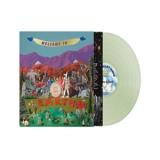
Der Weg zu ,Welcome to Earth" von den Death Valley Girls beginnt in der Asche des Eaton-Feuers in Kalifornien. Nachdem sie ihr Zuhause in Altadena und kurz darauf auch ihren geliebten Hund Tommy verloren hatte, sah sich die Leadsängerin und Songwriterin Bonnie Bloomgarden mit Fragen konfrontiert, auf die es keine einfachen Antworten gab: Was überlebt eine Katastrophe? Was bleibt nach einem Verlust übrig? Wie baut man ein Leben wieder auf, wenn die Dinge, die es einst ausmachten, verschwunden sind? Das Album, das aus diesen Fragen hervorging, gehört zu den intimsten und tiefgründigsten Werken, die die Death Valley Girls je geschaffen haben. Im gesamten Schaffen der Band haben sie Musik sowohl als Feier als auch als Suchaktion betrachtet. Alben wie ,Glow in the Dark", ,Darkness Rains", ,Under the Spell of Joy" und ,Islands in the Sky" verwandelten ihren Space-Rock-Sound in ein Mittel zur spirituellen Suche, um inmitten des alltäglichen Chaos Momente der Transzendenz zu finden. Doch ,Welcome to Earth" unterscheidet sich deutlich von seinen Vorgängern. Es konzentriert sich weniger darauf, der Welt zu entfliehen, als vielmehr darauf, zu verstehen, wie man nach einer Verwüstung verbunden bleibt. Was dabei entstand, war nicht unbedingt ein Psych-Punk-Album über Verlust, sondern über Verbundenheit: die unsichtbaren Fäden, die Menschen, Tiere, Erinnerungen, Landschaften und Leben über die Zeit hinweg miteinander verbinden. Der Titel des Albums fungiert sowohl als Begrüßung als auch als Mahnung - ein Willkommen aus der Natur an eine Spezies, die ihren Platz in ihr weitgehend vergessen hat. Immer wieder kehren die Lieder zu der Möglichkeit zurück, dass Trennung die hartnäckigste Illusion der Menschheit sein könnte. Diese Vorstellung von Verbundenheit reicht über die Lieder selbst hinaus
The title of Ghost Bridge, the East-Coast-spanning chamber ensemble Hour's fifth record, is less metaphorical than one might expect. Bandleader Michael Cormier- O'Leary repurposed it from an unrealized movie concept about a bridge that inexplicably starts disappearing. On the nearly-ten-minute title track of this richly imaginative suite of songs_written for a 13-piece ensemble that includes woodwinds, strings, and vibraphone as well as a rock rhythm section_Hour conjures up this central image with spectral string harmonics and free-time percussion gestures. While writing the keyboard pieces that became the takeoff point for the album, Cormier-O'Leary also found himself reflecting on the loss of loved ones or even his own mortality. The six kaleidoscopic instrumental pieces on Ghost Bridge, though, feel more cosmically inquisitive than straightforwardly elegiac, sketching a progression from existential doubt toward understanding and acceptance. Ghost Bridge forms a contrast with Hour's art-rock-informed, more improvisatory early releases, representing a step further into intricate chamber orchestration. Known for his work with Friendship, Wendy Eisenberg, and 2nd Grade, Phillybased multi-instrumentalist and Dear Life Records founder Cormier-O'Leary has made Hour a home for increasingly cinematic instrumental compositions since the mid-2010s. With dazzling production by Lucas Knapp, Ghost Bridge delivers plenty of the live ensemble's trademarks, especially cyclically developing guitar and keyboard melodies. However, even more than on Hour's last studio album, unconventional harmonies and sophisticated counterpoint take center stage here. These emotionally multifaceted compositions feel as rooted in contemporary classical and film soundtrack music as in indie rock. One of the most striking elements of Ghost Bridge is the more significant developmental role the orchestral instruments assume in each piece. Instead of underscoring Cormier-O'Leary's central hooks, there is a new mesmerizing level of detail to the group's conversational interactions and kinetic energy. "Centralia" is a stately and idiosyncratic fugue built from repeated and overlapping phrases, while Ghost Bridge's compositions are full of unexpected pivots in harmony that allow recurring melodic motifs to sound continually reshaded. On "Pearls," the chords modulate drastically around Cormier-O'Leary's inviting central melody in a way that emulates cuts in a film telling several parallel stories. There is an unsettled quality to the chords on Ghost Bridge, with Cormier- O'Leary's progressions avoiding firm grounding in either clearly sunny or melancholy tonalities. This mood is made more concrete by the record's sole vocal track, the jazz-inflected "Sky is Blue," featuring an uncannily gorgeous performance by Heeyoon Won. The song seems to be a communication from a person who has departed, offering consolation or perspective to someone left behind. Though its sonic palette is often tranquil, Ghost Bridge explores heartbreak, grief, anger, and helplessness in a distinct and pretense-free way. The project represents a bold step forward for Cormier-O'Leary as a composer and arranger, and on Ghost Bridge Hour reaches its most fully realized form to date, connecting soaring themes with an inventiveness that perfectly suits the searching nature of the subject matter.
Die 1969 in München gegründete Band Embryo (feat. Mishra) verbindet auf diesem Album Krautrock, Jazz, freie Improvisation sowie europäische und indische Musikelemente. Seit 2015 wird das Kollektiv von Marja Burchard weitergeführt. Die Aufnahmen entstanden 2023 im Minga Records Studio in München und dokumentieren die langjährige Zusammenarbeit mit den indischen Musikern Deobrat Mishra (Sitar, Gesang) und Prashant Mishra (Tabla). Ergänzt wird das Album durch Gastbeiträge von Niko Schabel, Dr. Chandreyee Maitra und Dattatreya Desai. Die Besetzung umfasst Marja Burchard (Vibraphon), Maasl Maier (Bass, Flöte), Jakob Thun (Schlagzeug) sowie Deobrat und Prashant Mishra.
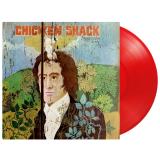
Imagination Lady is the fifth long-player for Stan Webb's Chicken Shack and was originally released in 1972.
Much in the same tradition as the great British bluesmen Alexis Corner and John Mayall, Webb's revolving-door personnel landed the band several notable members. For this album, Webb (guitar/vocals) gathered a trio consisting of himself, future Gods and Jethro Tull member John Glascock (bass), and Paul Hancox (drums). As with the previous Chicken Shack long-players, this disc features several Webb originals augmented with some well-chosen cover tunes.
The album opens with a ferocious cover of B.B. King's "Crying Won't Help You." In a style akin to the Faces or even some of the rowdier moments from the Peter Green-led Fleetwood Mac, this trio grinds out the blues with a decidedly English edge, followes by the folkie "If I Were a Carpenter". "Daughter of the Hillside" & is Webb's most impressive contribution to the album. This straight-ahead rocker is an ideal trio effort recalling the intense instrumentality of Cream or early Led Zeppelin. The closing number "The Loser" is upbeat and almost pop-oriented, again displaying the immense strength of this Chicken Shack line up.
Imagination Lady is available as limited numbered edition of 1000 copies on red vinyl and comes in a gatefold sleeve.
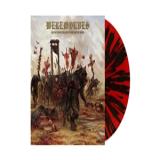
Red w/black splatter vinyl "You're Weak And You Know You're Weak" is the seventh album from WEREWOLVES in seven years. The band themselves have sworn to release ten albums in ten years, or commit group suicide if they fail. Ridiculously brutal moronic caveman death metal from members of PSYCROPTIC, THE BERZERKER, ABRAMELIN, THE ANTICHRIST IMPERIUM, and THE AMENTA.
Tapper Zukie was high on a list of artists that Richard Branson in 1978 had in mind to sign to his new Reggae label Front Line.
The mission was to sign the cream of the reggae crop when the Virgin record boss went down to Jamaica with a group of Reggae minded people,included in that group was one Johnny Rotten,singer of the very recently disbanded group The Sex Pistols.
The result of which would be a two album deal between Tapper and the label.
The first release also in 1978 was the album Peace in the Ghetto(Kingston Sounds KS052) and this release Tapper Roots.
For the cd issue of this release,Tapper has picked two tracks that he feels hapy to put alongside the album.
'Make Faith' cut with the band Knowledge and' New Star'..
This is a very important album from the Tapper Zukie catalogue...Respect
,Sharp Pins" ist das äußerst starke Lo-Fi-Pop-Projekt des talentierten Musikers Kai Slater aus Chicago, bekannt von Lifeguard und Dwaal Troupe. Aufgenommen von Kai Slater. Abgemischt von Kai Slater. Gemastert von Amy Dragon. Aufgenommen im Stülo Gulo in Chicago, Illinois. Ursprünglich als Hallogallo-Kassette im Eigenverlag veröffentlicht. ,Youth Revolution Now". Von Kai: ,Der Soundtrack zu meinem 18. Sommer, in dem ich mit einem chinesischen Taotao 50-ccm-Roller durch die Gegend um die Taqueria Moran fuhr und meinen Sta-Prest-Träumen nachjagte. Ich dachte, es wäre cool, eine Reihe von Songs aufzunehmen, die nie wirklich aufgenommen wurden, und zwar auf eine etwas durchdachtere Art und Weise. Aufgenommen auf einem Tascam Porta One im alten Beton-Stulogulo mit einer imaginären Band namens ,Men in Green Striped Trousers". Der ursprüngliche, von Sharp Pins geprägte Garage-Pop-Sound in seiner ganzen rohen, rauen und kreischenden Pracht _ Ich glaube, ich habe davon etwa 50 Exemplare angefertigt. Nun gehört mein Teenagertraum Ihnen.".
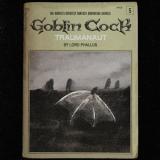
Der Frontmann von Goblin Cock, Lord Phallus, ist eine in einen Umhang gehüllte Nicht-Präsenz in einer Band aus ebenso vagen Persönlichkeiten, die bewusst nebulös gehalten sind; doch während ihre zahlreichen Nachahmer dies als Vorwand nutzen, um eine kommerziell verwertbare Geschichte zu vertiefen, wünschen sich die Mitglieder von Goblin Cock tatsächlich , ignoriert zu werden. ,Traumanaut" ist die neueste LP des Projekts und klingt wie ein unerwartet frischer Lufthauch, insbesondere ausgerechnet aus einem solchen Sumpf der Neurose wie diesem. Zeitweise klingt sie so persönlich, dass jeder normale Songwriter wohl bis zum Absurden gehen würde, um sich von dieser Ehrlichkeit zu distanzieren.
,Do to the Beast" war bei seiner Veröffentlichung das erste neue Album der Afghan Whigs seit über anderthalb Jahrzehnten. Die 1988 in Cincinnati, Ohio, gegründete Band hebt sich seit jeher deutlich von ihren Mitstreitern ab - durch ihre wilde, mitreißende Mischung aus Hardrock, klassischem Soul und den eindringlichen Obsessionen ihres Frontmanns Greg Dulli. Das Album war sowohl eine Art Heimkehr - es markierte ihre damalige Rückkehr zu Sub Pop, für das die Whigs der erste Neuzugang außerhalb der nordwestlichen Heimat des Labels waren - als auch ein Blick in die Zukunft einer der meistgefeierten Bands der letzten dreißig Jahre. Doppel-LP, gepresst auf ,Pearl Flip"-/,Lagoon"-Vinyl!
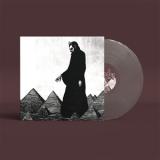
Einerseits ist ,In Spades" so typisch für die Afghan Whigs wie kaum ein anderes Werk der Band - und wird damit ihrem ursprünglichen Anspruch gerecht, die fehlende Verbindung zwischen dem heulenden Punk des Mittleren Westens à la Die Kreuzen und Hüsker Dü, den psychedelischen Soul-Symphonien der Temptations und den weitläufigen Hardrock-Klangerlebnissen von Led Zeppelin und Lynyrd Skynyrd zu erkunden. Gleichzeitig geht dieses Album weit über alles hinaus, was das bisherige Repertoire der Whigs zu bieten hatte - ein weiteres Markenzeichen, ebenso wie die explosive Gruppendynamik, die auf der Aufnahme eingefangen wurde. Klapphülle mit maßgefertigter Schutzhülle. Gepresst auf kristallklarem Vinyl!
South Asian super-producers Lapgan and Baalti – the former a Madlib-disciple spinning hip-hop grooves out of dusty desi samples, the latter duo purveyors of intricately tapestried dance music – holed up in the California desert in early 2024 for a songwriting session to blend their complimentary styles. They ended up with several albums worth of club material built upon decades of Indian music history – floor fillers that move like early Four Tet meets The Avalanches. They’ve been teasing this material around the world during live sets – from Paris Fashion Week to Glastonbury, London Clubs to BK Warehouse parties, sessions at Lot Radio and Karachi Community Radio, and anywhere else they find an aux. The result has been endless ID requests for unreleased gems like “Ipa Ma” and “Lime Tikka”, calls which should finally be answered with the release of Threads.
Lapgan Bio
Chicago-based archivist and producer Lapgan has become renowned for his signature style: unearthing rare and forgotten Indian & Pakistani sounds and recontextualizing them into hip-hop and dance beats that evoke J Dilla and Madlib. He has cultivated a reputation for quietly revolutionary sample-work across his beloved solo projects History and Duniya Kya Hai, as well as LAFANDAR, his critically acclaimed team up with Heems (of Das Racist / Swet Shop Boys). He has worked with a range of artists from both the West (Your Old Droog, Saul Williams, Cool Calm Pete, Kool Keith, Open Mike Eagle, Blue, Quelle Chris) and the East (EXCISE DEPT, Baalti, Sid Sriram, Sid Vashi, Dynoman), and has been featured in global media including Pitchfork, FADER, Stereogum, Passion of the Weiss, Mixmag, Homegrown, and Vinyl Me, Please. Over the past year he has headlined clubs and performed at festivals across the world from Chicago and New York to London and India, and was personally invited to soundtrack back to back Paris Fashion Week shows for the similarly norm-shifting designer Kartik Research. In 2026 he will soundtrack his third Kartik Research runway show, as well as reissue Duniya Kya Hai for its five-year anniversary alongside a companion EP featuring remixes from peers and supporters Arushi Jain, Loris, Mera Bhai, Malkfunktion, and Maral.
Baalti Bio
Baalti makes electronic music built around rhythm, pressure, and collective release – weaving through leftfield bass, dusty hip hop, tripped out dub and raw house all while maintaining a throughline rooted in South Asian culture seen through the lens of a sweaty dancefloor. In the last year they have experienced a whirlwind rise and growing global recognition: from their EP Mela vividly evoking West Bengal’s sound system culture to their Tamil-cinema-infused filter-house project with Anish Kumar Stunt Doubles, in addition to wide-ranging collabs and remixes alongside DJ ADHD, Naya Beat, and A.R. RahmanThey have also built a reputation for their frenetic live show, with appearances at international festivals like Glastonbury and MELT, headlining shows across Australia and Europe and supporting influences turned peers like Four Tet and Disclosure across North America. Their explosive, percussion-heavy sets have been platformed by Rinse FM, NTS, The Lot Radio, Beats In Space, and Refuge Worldwide, and their music has been renowned by publications including Pitchfork, Bandcamp Daily, RA, and MixMag. Their forward momentum continues into 2026 with slated headline tours in India, Australia, and Asia along with appearances at Coachella, Party in the Paddock, Fvded in the Park, and We Out Here festivals.
“When the flesh gets cut off the soul, it’s not the end.”
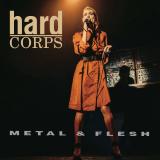
More than forty years after hardCORPS emerged from a Brixton basement, ‘Metal & Flesh’ returns in a new expanded edition on double vinyl and CD, newly remastered with the full involvement of surviving members Rob Doran and Clive Pierce. Born from the collision of punk, analogue synthesisers, sequencers, disco, reggae and experimental studio techniques, hardCORPS created electronic music that was as physical and emotional as it was mechanical. The arrival of French vocalist Regine Fetet gave the group its defining identity, placing her raw, uncompromising voice against the dense machinery of Hugh Ashton, Clive Pierce and Rob Doran. Working mainly with a Roland System 100, several Roland MC4 sequencers and later an additional MC500 and Atari ST 1040 computers, etc. pp., hardCORPS always transformed limitations, accidents, distortion and human imperfection into part of the music itself. Although rooted in the early 1980s, ‘Metal & Flesh’ refuses easy nostalgia, retaining the tension, space and character that made hardCORPS unlike their contemporaries. Yet, shall we eventually mention Kraftwerk, maybe let’s quote Ian Shirley from Record Collector magazine: „’Je Suis Passée‘ was not only a love letter to Kraftwerk but penned with such verve, passion and precision that Ralf and Florian probably would have accepted a blind date at a Düsseldorf cocktail bar (…).“ And as Martin Rushent famously said in 1990: “Hard Corps were ignored in their time. Perhaps it is the burden of the adventurous and the innovative to be ignored in their time, which is sad. Don’t ignore them now.”
This new edition has been carefully remastered to preserve that character and dynamics rather than simply making the recordings louder or more ‘modern’, while the artwork has likewise been developed to reflect the band’s original identity. Metal & Flesh’ is not merely an artefact of the 1980s, but a rare and fiercely individual document of four people discovering what happens when human instinct and machines collide.
Remastered by Martin Bowes. Graphic design by hard CORPS and Steve Lippert.
Gatefold sleeve gloss lamination, printed inner sleeves with lyrics, two double-sided hand-numbered.
SLOT is the high-energy, dance-punk project of couple Abby Detrich (vocals) and Max Detrich (bass, drum machine), based in Baltimore, Maryland, USA. Their music is a potent, genre-fusing sound described as gritty but flirty pop songs with a punk, in-your-face delivery, and pumping, heavy, danceable beats. Drawing on dance punk, noise pop, and alt-rock, their sound is rooted in Max's transition from drummer to electronic beats via a Boss DR-5 drum machine, with Abby contributing lyrics and dynamic vocals. The band's upcoming album is a bold, flirty, punchy, and raw statement, delving into themes of the intersection of performance and sexuality, self-acceptance, and personal reclamation. It was recorded with collaborator Danny Gibney in Harrisonburg, VA, capturing an experimental sound inspired by Y2K media. SLOT delivers an energetic, bratty, and in-your-face live show, having shared the stage with bands like Brainiac and played festivals like MACROCK. Beyond music, Abby is a floral artist and Max is a graphic designer, and they are both dedicated to progressive community causes in Baltimore.
SLOT is the high-energy, dance-punk project of couple Abby Detrich (vocals) and Max Detrich (bass, drum machine), based in Baltimore, Maryland, USA. Their music is a potent, genre-fusing sound described as gritty but flirty pop songs with a punk, in-your-face delivery, and pumping, heavy, danceable beats. Drawing on dance punk, noise pop, and alt-rock, their sound is rooted in Max's transition from drummer to electronic beats via a Boss DR-5 drum machine, with Abby contributing lyrics and dynamic vocals. The band's upcoming album is a bold, flirty, punchy, and raw statement, delving into themes of the intersection of performance and sexuality, self-acceptance, and personal reclamation. It was recorded with collaborator Danny Gibney in Harrisonburg, VA, capturing an experimental sound inspired by Y2K media. SLOT delivers an energetic, bratty, and in-your-face live show, having shared the stage with bands like Brainiac and played festivals like MACROCK. Beyond music, Abby is a floral artist and Max is a graphic designer, and they are both dedicated to progressive community causes in Baltimore.