DE MANNEN BROEDERS ist die erste Zusammenarbeit feat. Colin van Eeckhout und der flämischen Folk-Ikone Tonnie 'Broeder' Dieleman aus Zeeuws.
Ersterer ist der Frontmann der belgischen Post-Metaller AMENRA, einer Band, die für ihre überwältigende Härte in Sound und Gefühl bekannt ist.
Letzterer ist ein holländischer Folksänger, dessen Musik von der Kultur seiner seeländischen Heimat inspiriert ist und der bereits mit Baby Dee und
Bonnie Prince Billy zusammengearbeitet hat. Als die beiden sich trafen, spürten sie sofort eine Verbindung.
Das Ergebnis ist das 9-Track-Album Sober Maal (was übersetzt 'nüchternes Mahl' heißt und sich auf die Praxis bezieht, eine einfache Mahlzeit zu
essen, um Dankbarkeit zu üben), das unter dem Namen DE MANNEN BROEDERS veröffentlicht wird. Es wurde in weniger als fünf Tagen in der
Doopsgezinde Kerk aus dem 18. Jahrhundert in Middelburg in den Niederlanden geschrieben und aufgenommen.
Klanglich ist Sober Maal eine eindringliche, emotionsgeladene Reise, die sich in einer vergangenen Welt verwurzelt fühlt, aber dennoch völlig
eigenständig klingt und eine melancholische, aber dennoch hoffnungsvolle Note hat. Der Gesang von Colin und Tonnie verschmilzt mit dem Chor und
einer sparsamen Auswahl an Instrumenten, darunter ein Banjo, ein Klavier, eine Drehleier und die mächtige Zentralorgel - alles vermischt mit den
Klängen und dem Echo der Kirche.
quête:banjo
One of the most charismatic frontmen in modern bluegrass, Woody Platt has played an important part in shaping the trajectory of bluegrass music over the past 20 years. As a founding member and lead singer for The Steep Canyon Rangers, Platt spent years touring tirelessly, many of them in collaboration with actor/comedian and banjoist Steve Martin, earning a GRAMMY award, multiple GRAMMY nominations, and international recognition in the process. But when the pandemic struck, the time at home caused Platt to rethink his personal priorities. He decided to put his touring life on hold and left the Rangers to spend more time with his young family. Fortunately for bluegrass fans, the end of Platts tenure with The Rangers has marked a new chapter in his musical life, one that he is celebrating with the release of his first solo album, Far Away With You. The album cements Platts place at the cutting edge where traditional and contemporary bluegrass meet, and his smooth baritone vocals, coupled with his ear for lyrics with contemporary themes create a sonic palette that honors his bluegrass roots even as he cultivates new growth.
One of the most charismatic frontmen in modern bluegrass, Woody Platt has
played an important part in shaping the trajectory of bluegrass music over the
past 20 years. As a founding member and lead singer for The Steep Canyon
Rangers, Platt spent years touring tirelessly, many of them in collaboration with
actor/ comedian and banjoist Steve Martin, earning a GRAMMY award, multiple
GRAMMY nominations, and international recognition in the process. But when the
pandemic struck, the time at home caused Platt to rethink his personal priorities.
He decided to put his touring life on hold and left the Rangers to spend more time
with his young family. Fortunately for bluegrass fans, the end of Platts tenure with
The Rangers has marked a new chapter in his musical life, one that he is
celebrating with the release of his first solo album, Far Away With You. The album
cements Platts place at the cutting edge where traditional and contemporary
bluegrass meet, and his smooth baritone vocals, coupled with his ear for lyrics
with contemporary themes create a sonic palette that honors his bluegrass roots
even as he cultivates new growth
DE MANNEN BROEDERS ist die erste Zusammenarbeit feat. Colin van Eeckhout und der flämischen Folk-Ikone Tonnie 'Broeder' Dieleman aus Zeeuws.
Ersterer ist der Frontmann der belgischen Post-Metaller AMENRA, einer Band, die für ihre überwältigende Härte in Sound und Gefühl bekannt ist.
Letzterer ist ein holländischer Folksänger, dessen Musik von der Kultur seiner seeländischen Heimat inspiriert ist und der bereits mit Baby Dee und
Bonnie Prince Billy zusammengearbeitet hat. Als die beiden sich trafen, spürten sie sofort eine Verbindung.
Das Ergebnis ist das 9-Track-Album Sober Maal (was übersetzt 'nüchternes Mahl' heißt und sich auf die Praxis bezieht, eine einfache Mahlzeit zu
essen, um Dankbarkeit zu üben), das unter dem Namen DE MANNEN BROEDERS veröffentlicht wird. Es wurde in weniger als fünf Tagen in der
Doopsgezinde Kerk aus dem 18. Jahrhundert in Middelburg in den Niederlanden geschrieben und aufgenommen.
Klanglich ist Sober Maal eine eindringliche, emotionsgeladene Reise, die sich in einer vergangenen Welt verwurzelt fühlt, aber dennoch völlig
eigenständig klingt und eine melancholische, aber dennoch hoffnungsvolle Note hat. Der Gesang von Colin und Tonnie verschmilzt mit dem Chor und
einer sparsamen Auswahl an Instrumenten, darunter ein Banjo, ein Klavier, eine Drehleier und die mächtige Zentralorgel - alles vermischt mit den
Klängen und dem Echo der Kirche.
- Fuzzyfalafelosophy
- Speed King Universal Lifestyle
- You Don't Have To Ask
- Old Socrates
- It Was A Party
- Gin Tonic
- I've Got The Blues (Even Though Nothing Is Wrong) Fun Style
- One Of You
- Hunt A Little
- Forever
- Fun Campfire Song
- The Best Conversations
- Nine Pound Hammer
- This New Band
- Fuck Off
- Feather
- What I Was Thinking
- 52: Years Ago
- This Hopeless World
- Smithereens
- (I Ain't Got No) Fighting Style
- Banjoman
- Bloo You Believe In Bloo Blove
- Sex Is Still A Mess
- Ma Baby
- Skiing Song
- Hungry Heart
Red & Yellow Splatter Vinyl. Dan Reeder is a multi-faceted artist, recently championed by boygenius. He is Oh Boy Records longest signed artist, and was personally signed by the legendary John Prine himself. Reeder is releasing a collection of songs titled,Smithereens, an eclectic mix of songs, many recorded and played on gear he built. A true DIY maestro, Dan seamlessly assumes the roles of producer, mixer, mastering engineer, and visual artist, imbuing every facet of his artistry with his distinct touch. His musical stylings often draw comparisons to the likes of Blaze Foley, Bon Iver, Sufjan Stevens, and Ween.
From the first notes of Symbiont, the radical new collaborative album and document of Black and Indigenous futurism from Jake Blount and Mali Obomsawin, the listener is met with rising tidewaters, massive droughts, and the appearance of an iconoclastic uprising amidst the worlds indifference. Questions of future or present tense swirl around the music as the duo unspools the intertwined threads of racial and climate justice. Amid rumbling synthesizer drones, the thrum of banjo, and the thwack of drum machines, a whisper of truth can be heard: this crisis has been unfolding for centuries.
"‘A virtuoso guitarist with a galvanising charm that electrifies her audience.’ - Guardian
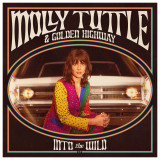
Molly Tuttle & Golden Highway release a new six-song EP, Into the Wild, via Nonesuch Records. The EP, a follow-up to their Grammy-winning and critically acclaimed 2023 album, City of Gold, includes three new songs as well as previously released covers of Jefferson Airplane’s ‘White Rabbit’ and Olivia Rodrigo’s ‘good 4 u’, and an alternate version of the City of Gold track ‘Stranger Things’.
In addition to the band’s previously scheduled US tour dates, which include a performance at the Ryman in Nashville in September, they have announced a new batch of US dates in November, including stops in North Carolina, Virginia, Maryland, upstate New York, Massachusetts, and more.
.
Of the new release, Tuttle says: “With this new EP we invite you to come on a journey with us Into the Wild. I wrote the title track with Ketch Secor after a week spent in the redwoods. This song is about getting lost in the wilderness even if it’s just in the forest of your mind. ‘Getaway Girl’ was an unfinished song I had started writing for our last LP City of Gold. It’s about a whirlwind romance set in New York City, kind of like Carrie Bradshaw meets bluegrass. In addition to these two new original songs, we included some of our favorite covers that we’ve woven into the live show, ‘White Rabbit’ by Jefferson Airplane and ‘good 4 u’ by Olivia Rodrigo.”
She continues: “We paid tribute to one of my favorite California songwriters Kate Wolf with a new version of her song ‘Here in California’ which features my dad, Jack Tuttle, and longtime friend AJ Lee singing with me. I used to play this one with my family band back in the day! On ‘Stranger Things’ (Down the Rabbit Hole Version) I wanted to go for a stripped back ethereal version of this song originally played by the full band on City of Gold. It features a trio with Dominick Leslie on mandolin, and Nathaniel Smith on cello and synth. I hope you enjoy trekking deeper into the woods with us as we pick up where we left off on City of Gold and explore new territory as a band.”
Earlier this year, Tuttle and the band—fiddler Bronwyn Keith-Hynes, mandolinist Dominick Leslie, bass player Shelby Means, and banjo player Kyle Tuttle—earned their second consecutive GRAMMY win for Best Bluegrass album for City of Gold, released last year on Nonesuch Records. Earlier this month, the band was nominated for eight IBMA Bluegrass Music Awards: Tuttle and the band are up for Entertainer of the Year, Vocal Group of the Year, Instrumental Group of the Year, and Album of the Year for City of Gold. Tuttle is nominated for both Female Vocalist of the Year and Guitar Player of the Year, and Bronwyn Keith-Hynes for Fiddle Player of the Year and New Artist of the Year. Additionally, Jerry Douglas, who produced City of Gold with Tuttle and is up for Resophonic Guitar Player of the Year, will be inducted into the Bluegrass Hall of Fame.
Raised in Northern California, Tuttle moved to Nashville in 2015. In the years since, she has received many accolades; in addition to the two GRAMMY wins she was also nominated for Best New Artist. She has earned three wins at the 2023 IBMA Bluegrass Music Awards and Tuttle won Album of the Year at the 2023 International Folk Music Awards. Additionally, she has earned Instrumentalist of the Year at the 2018 Americana Music Awards, and Guitar Player of the Year at the IBMAs in both 2017 and 2018. Tuttle has performed around the world, including shows with Billy Strings, Béla Fleck, Hiss Golden Messenger, Jason Isbell, Old Crow Medicine Show, and Dwight Yoakam, as well as at several major festivals including Newport Folk Festival and Pilgrimage."
Imaginative re-workings and improvisations by Andrew Tuttle of the late great Michael Chapman's unfinished instrumental album. Sonic explorations that bridge the Southern and Northern Hemisphere via the Caribbean, remote Northumberland and sub-tropical Australia. Navigating calm seas and turbulent waters of ambient corals, new-age pirates, waves of lapping banjos and drifting eroding guitars.
When Michael Chapman passed away in September of 2021, at the age of 80, he did so – as he spent much of his life – as both a pioneer and a legend. A veteran of the British blues/folk/jazz scene, Chapman emerged in 1966 and continued working throughout his life, always pushing the boundaries of his creations while collaborating with a slew of similarly heralded musicians along the way: Bert Jansch, Mick Ronson, Elton John, Thurston Moore, Steve Gunn; to name just a smattering of those he worked alongside over the years.
It's the latter of those – Brooklyn guitarist and songwriter Steve Gunn – who Chapman flourished alongside in recent years, the two collaborating on 50 and True North, two of Chapman’s final and finest records. It was through that friendship that Chapman’s music found Andrew Tuttle, the Brisbane-based multi-instrumentalist who has toured Australia several times alongside Gunn.
In the aftermath of Chapman’s passing, his partner Andru discovered Tuttle’s Fleeting Adventure LP, describing it as “one of the albums that kept me sane during that first brutal winter on my own.” The pair met in Australia shortly after, and before Andru had even made it back home to the north of England, Tuttle had begun working on the recordings she shared with him at that time. Those recordings were part of a project Chapman was working on at the time of his death, called Another Fish – what would have been a companion piece to his previously-released LP, simply called Fish.
Though Chapman had spent time in his local studio playing all the guitars, layering the different sounds and effects, he’d always intended to do much more work on the songs, however fate had its way and he never got to ribbon-bow those ideas and bring the album to its conclusion.
Though there was little intention in terms of how to finalise the project, Tuttle spent valuable time with those recordings. What materialised, eventually - with time, care, and diligent attention - is a two-disc set Another Tide, Another Fish, something both unusual and completely distinctive. The first disc, Another Tide is centred around Tuttle’s own work, which shaped all seven of Michael’s songs and ideas into new songs of their own, and the second disc which simply incorporates the recordings that Michael left behind.
“On all of the tracks I also ‘played along’ on banjo to the originals several times until I learned an approximation,” Tuttle continues. “This ended up resulting in a ‘hybrid’, where some works are easily identifiable to those who know Michael’s originals, and some took that inspiration to head altogether elsewhere. Each of the tracks, even where not obvious, does have at the very least a trace element sample of the original recordings so that it’s a true collaboration.”
What we’re left with is indeed a hybrid: part remix album, part cover album, both a solo work and a collaboration, of sorts. Inspired by Chapman’s original ideas and with new track titles directly referencing the numbered but otherwise untitled source material, Tuttle adds his own flashes of colours throughout, including editing, sampling, MIDI transposing and signal processing that twists these songs into beautiful new shapes. Perhaps Tuttle’s greatest achievement here then is that Another Tide sounds so effortlessly free of all this context.
Whether you know Michael’s, Andrew’s or even Andru’s story or not, these recordings will bristle with enchantment and intrigue, worlds are built, and while some thrive and grow, others fizzle out in a burst of light, such is the way. “It's been a long, long road but we got there and I think it's been more than worth it,” Andru says in the record’s liner notes. “I really hope you think the journey was worth it too.”
Guitars and effects by Michael Chapman recorded by Alex Warnes at Phoenix Studio, Brampton, Cumbria, 2017 Banjo, effects and edits by Andrew Tuttle at Bella Vista, Brisbane / Meanjin, 2023-2024
The second Nug-Net Vinyl Winner’s Circle is here. These are 4 of the top 8 tracks we received out of 400+ submissions. These have been played and tested by Gene and are certified for the dancefloor. Nug-Net will continue to shine a light on up and coming producers now and in the future.
This led to her immediate recognition as a banjo pioneer and to her win in 1991 of the Banjo Player of the Year award from the International Bluegrass Music Association (the first female to win an Instrumentalist of the Year award). For the 2024 reissue, the original 8- track, 1" multitrack tapes were transferred at a resolution of 192kHz/36- bit, and remixed and mastered by Matt Coles at
Compass Sound Studio in Nashville.
The album was produced in 1989 by acoustic music icon and frequent Jerry Garcia cohort David Grisman (architect of "Dawg Music," the jazz- influenced breakout fringe of the bluegrass genre) and recorded with a cast of all- star musicians at Dawg Studio in Marin, CA. Players on the sessions included Alison Krauss (fiddle), David Grisman (mandolin), Mike Marshall (guitar, fiddle, mandolin), Matt Eakle (flute), Joe Craven (percussion) and Jim Kerwin (bass).
The album's 12 tunes were all written by Alison and include the first recorded versions of some of her most well- known compositions, including "Mambo Banjo," "Leaving Cottondale," and "Weetabix."
REMIXED AND REMASTERED from 192kHz/36-bit transfers of the original multitrack tapes. LP – features LIMITED EDITION BLACK & WHITE SWIRL + album download code with 3 never- before- released bonus tracks Includes a 4- COLOR BOOKLET with liner notes from Alison Brown, Dave Dennison, and Mike Marshall, plus ARCHIVAL PHOTOS and SESSION DOCUMENTS
"Are Possible" is a spark-throwing, undulating fusion of styles played (mainly) on banjo, upright bass and drums, made possible by the individual perspectives of Nathan, double-bassist Casey Toll (Jake Xerxes Fussell, Mt. Moriah) and drummer Rex McMurray (CAVE) work together in an easy-rolling manner, but one that contains an expansive, ass-shaking confabulation of ideas. Music is time in redux: Are Possible"s many moments in time carry details from all over the place. Rex brought a rhythm to the table after drumming on buckets at work, Casey provided a bassline that redirected a previous jam, Nathan brought in a song he"d been fucking with forever and they figured it out together. Their diversity of sources moves easily within the arrangements, rendering a far-ranging set of feels, from transcendental to new country funk to good ol" jazz and the folk-rock, even - all of it drawn out exquisitely when they mixed at Electrical Audio in Chicago with the delicate hands of Cooper Crain upon the faders. The Nathan Bowles Trio have done their due diligence, passing their music through time and space on their way to now.
After performing together in the skiffle-oriented band Good Earth, singer-songwriter Ray Dorset and keyboardist Colin Earl formed Mungo Jerry, whose breakthrough single, “In The Summertime,” remains a stone-cold anthem of the early 1970s. With Paul King on banjo and jug, Mike Cole on string bass, Earl on ragtime piano and with Dorset’s humorous vocals upfront, “In The Summertime” was skiffle-tinged rock at its best. The reissue of this uncommon 12-inch also features Dorset’s “Mighty Man,” with King’s kazoo and harp, as well as a great cover of Woodie Guthrie’s “Dust Pneumonia Blues.” A must-have!
- 1: Betty Baker
- 2: Blackberry Blossoms
- 3: Pompey Ran Away
- 4: Cluck Old Hen
- 5: Chimes
- 6: Lost Girl
- 7: Can't Jump Josie
- 8: Red Bird
- 1: Rockingham
- 2: Prettiest Little Girl In The County
- 3: Drunken Hiccups
- 4: Hog Went Through The Fence, Yoke And All
- 5: Polly Put The Kettle On
- 6: Shortening Bread
- 7: Billy In The Lowground
Past collaborators of Decosimo include indie/folk artists Jake Xerxes Fussell, Wye Oak, and Hiss Golden Messenger. Past collaborators of Schrey include experimental/sound artists Alvin Lucier, Gordon Mumma and Yasunao Tone. In April 2021, Joseph Decosimo, Luke Richardson, and Cleek Schrey three of the most compelling interpreters in the American traditional music scene gathered at a cabin in Tennessee to explore their collective repertoire of Old-time fiddle and banjo tunes, gleaned from visits with older players, field recordings, and vintage 78s. Working with fiddle, hardanger d’amore (a fiddle with sympathetic strings), banjos, and a 19th-century pump organ, the trio captured both the sonic details of their instruments and a generous musical interplay rooted in a dozen years of collaboration. Their debut album, Beehive Cathedral, presents resonant, thoughtful, and expansive explorations of Appalachian and American music. The results showcase deep Details study and enveloping, exhilarating performances. A rich vein of stories and relationships to people and places underpin Beehive Cathedral. Much of the album draws on Decosimo’s experiences learning the music of Tennessee’s Cumberland Plateau, where he grew up and worked as a folklorist. A key source of inspiration was fiddler Clyde Davenport (1921-2020), “Clyde was a social and musical trickster who knew hundreds of old tunes and had an uncanny ability to recall each piece in exquisite detail,” says Decosimo. “During my visits, he’d play breathtaking local pieces from his father Will, who was born in 1868. His father had learned some of them from a neighbor who was born in 1829.” "This record expresses some of what we hear in Southern traditional music: the ring of the strings, the buzz of the tunings, the hum of the organ,” explains Schrey. Spending time listening to old recordings and imagining how those sounds were made has made the trio keenly interested in the relationship between physical motion and sound in their source material. The result is a dense layering of sounds and interaction. Of this sonic interplay, Irish fiddle luminary Martin Hayes observes, “The sound of a beehive conveys the idea of a unified harmonious soundscape which is how this recording sounds. Beehive Cathedral is a sonic delight, a beautiful blend of Old-time soundscapes and more. This is a hypnotic recording that is grounded, subtle and refined
- A1: I Can't Lose
- A2: Walking
- A3: Key To The Highway
- A4: Crippled Clarence
- A5: Pet Cream Man
- B1: Messin' With The Kid
- B2: Don't Quit The Man You Love For Me
- B3: Rolty's Banjo Shuffle
- B4: Strobe Lemming's Lament
- B5: Long Distance Call
- B6: Feel So Bad
After briefly replacing Eric Clapton in John Mayall’s Bluesbreakers, guitarist/bassist Geoff Krivit formed Doctor K’s Blue Band with pianist Richard Kay and singer/harmonica player Mick Hasse, the lineup completed by bassist Harold Vickers, slide guitarist Roger Rolt and future Steve Hillage drummer Eric Peachey. Their self-titled debut had top-notch renditions of blues classics such as ‘I Can’t Lose,’ ‘Key To The Highway’ and ‘Pet Cream Man,’ as well as spirited originals such as ‘Strobe Lemming’s Lament’ and the piano stomp ‘Crippled Clarence,’ but the album failed to break through. Grab a copy of this rarity to be blown away!
Unavailable on all formats since the early 2000s, Alison Brown’s GRAMMY-nominated debut album SIMPLE PLEASURES was a leap forward for Scruggs-rooted banjo playing when it was first released in 1990. For the 2024 reissue, the original 8-track, 1” multitrack tapes were transferred at a resolution of 192kHz/36-bit, and remixed and mastered. The album was produced by David Grisman and includes guests included Alison Krauss (fiddle), David Grisman (mandolin), Mike Marshall (guitar, fiddle, mandolin), Matt Eakle (flute), Joe Craven (percussion) and Jim Kerwin (bass).
Jacken Elswyth is a London-based folk musician, banjo player, and instrument builder. At Fargrounds is her third solo album, her first for the Wrong Speed label and the latest in a rich catalogue that repositions the spectral, vulnerable sound of the banjo away from its familiar role as signifier of the past and onto lands brave, new and unexplored. “The living wood is imbued with qualities that require engagement and understanding. Working with cherry, oak or walnut involves naming it an equal partner. The parallel, synchronous transformations of wood into instrument, of growing tree into resonating sound, musical tradition into musical flourishing, lie at the heart of Jacken Elswyth’s practices both as an instrument builder and as a creative musician. One might consider her primarily as a worker in wood, but whose craft and fields of expression are absorbed by those transitional and interim processes that manifest change. The traditional tunes included here have been cultivated and maintained by generations of players and collectors, pruned, grafted, and shaped over time. However, in this setting, their long-established forms seem to morph and shift. They audibly accrue unique qualities, blossoming and swelling into new modes of being, bright-stepping arrangements unfolding with a liveliness hinting at practices of ritual and community. Meanwhile, other pieces, creative cornerstones of this collection, appear fluid, partially formed. They suggest not the cultivation of new growth from established stock, but instead the actions of something on the verge of taking form. Working with raw elements of melodic and tonal abstraction, they illuminate the process of emergence and evolution. In this context, the title At Fargrounds is telling. It suggests a point set at some distance from any centre of human concerns, a liminal space in which the cultivated world encounters the world of other living things in their living state. Here, the innate strangeness of the maintained environment–vast lawns, sculpted hedges, vacant playing fields–encounters sprawling vistas of driftwood, dense thickets of brambles, stony hillsides. Across a full century-and-a-quarter, long-standing rural and pastoral musical traditions, at some distance from their origins, have been preserved, nurtured and re-shaped under the folk revival. Placed here, these artefacts now sit in alignment with unvarnished documents featuring the raw elements of sound-making. Their working-together is achieved through a universally-applied interest in musical growth and development. The juxtaposition and combination of these elements gives evidence of new, emerging approaches to community and social music: familiar, known, yet charged with an alien vitality”–CWK Joynes. “...she knows how to knit atmospheres, and does so to especially powerful effect during Scene 4b’s three minutes of stunning bowed banjo, yearning with longing and dread, while showing off her talent, curiosity and range”–Jude Rogers review of Six Static Scenes (Guardian Folk Album Of The Month July 2022) "Jacken is an emotive player with high technical ability. Further, she builds banjos and other instruments, and that intimate knowledge of the bones and fibres holding everything together means that her playing has very few cracks" - Foxy Digitalis
Noelle & The Deserters bring South-Western honky tonk and songs of heartbreak from the high deserts of New Mexico to the golden hills of California. Fronted by singer-songwriter Noelle Fiore, their music draws inspiration from the likes of Emmylou Harris, Loretta Lynn, Marty Robbins, J.J Cale, Gene Clark, Townes Van Zandt, and the great outlaw country players. The Deserters include seasoned players Graham Norwood (Bryan Scary, Graham Norwood) on guitar, Alicia Vanden Heuvel (The Aislers Set) on bass, David Cuetter (Tarnation) on pedal steel, and Jerry Fiore (Sonic Love Affair)on drums, all based in the Bay Area and Sacramento. Fiore was raised in Taos, New Mexico. As a guitar player and vocalist, she was a founding member of Sweet Chariot, singing and playing guitar / banjo. Later, she and Tim Cohen (The Fresh & Onlys) founded the band Magic Trick, recording four full length albums for labels Hardly Art and Captured Tracks. Fiore is also a current member of the Shannon Shaw Band, on guitar and vocals. High Desert Daydream is Noelle & The Deserters debut album, out on Speakeasy Studios SF. The songs on the album, written by Fiore, touch on life in the west, growing up in Taos, living in California, songs of love, memory, marriage, work, good times, and bad times. Like all classic country music, the songs are infused with a sense of real-life struggles and living life in the everyday. Fiore’s incredible voice carries the album, and her songs are at once moving, powerful, tender, humorous, and intimately relatable. Produced by Noelle Fiore and Alicia Vanden Heuvel, High Desert Daydream feels country, yet of the west, of California and New Mexico, of experimental fronts in country music, and is truly a work of beauty.
Tracks
A home, a house, has countless frequencies. Each room, each corner feels different. Swings differently. And as you grow older, you realize which corner is yours. But yeah, it takes time…
It certainly marks the end of an era when the house one called home as a kid no longer exists. This home, it was the starting point of so many journeys. Of one big, ongoing journey. And so it feels good, soothing, reassuring to at least return to a spot nearby – to that (proverbial) hill from where you can see it. Feel the vibe that made you.
Andi Haberl’s debut solo album as Sun is sort of dedicated to that house. It’s a journey leading to that hill overlooking everything that made him. It’s not about nostalgia, not about actually returning to a specific place. Instead, it’s about finding a personal frequency, an overlapping of sounds and samples, an open space that mirrors and extends whatever frequencies felt right at different points in time.
“To me, the results feel like Gold Panda/Four Tet meets Steve Reich meets Krautrock meets film scores. I just really wanted to create moods that touch me – and ideally others, too.”
Talking about his first solo album, Haberl recalls many stages: early compositions that ended up on Alien Ensemble’s albums, early DIY/home studio/multi-instrumentalist inspirations (Le Millipede), new technologies that came and went, even a set of wildly convincing arrangements (done with Cico Beck’s crucial input) that ultimately became stepping stones for yet another round of DIY takes. “It was a long, recurring process, and the songs went through so many different versions,” he says, talking about phases of growth (“I added more and more equipment over time”) and pruning, “cleaning up my music a bit.” Tending towards instruments that open up space, and slowly falling in love with sampling, he certainly didn’t rush things once it was time for interior design decisions ;)
“During this whole process I got to learn so much about my own taste, how I prefer to listen to the pieces, which musical elements really matter to me… and what my own voice is. For example, that acoustic elements are most important to me: the banjo, piano, drums, my voice, glockenspiel, trumpet, melodica. Anything that opens up some space.”
Every journey begins with a search: “Missing” with its plucked chords opens like a sunrise over pastoral plains, gently leading the way towards the intricate, playful explosion that occurs once a certain amount of energy (“Sun”) hits dirt and other surfaces: things grow, clot and curdle into new shapes, like new buds; layers of sound move forward, drenched in Spring’s new light. Relying on samples to ask for precipitation (“Rain On Me”), robotic “Low” goes from barren to bass-heavy after its midway shift in pace, full of loops plucked from the shade.
Towards the album’s midpoint, things are suddenly reversed: “Cluster” has that backwards pull, you can’t tell what’s what, yet everything is perfectly locked in, as the pace increases once again. And before the title song shimmers with densified cheering (to eventually stand tall like early Lymbyc Systym), “Beside Me” swipes you off your feet with its booming bass drum. The beat returns once again (“Daydream”), full of searching voices underneath, and at “Dawnday,” we can finally catch a melancholy view of the house. Voices hum. It’s the score moment of the album. Everything makes sense now. A happy end of sorts?
“I want to take people on a journey. A personal journey, too, because when my parents split up and sold the house I grew up in, I felt a bit like the ground had fallen out from under my feet. But I have dedicated the album title and the accompanying piece to this house… so I can keep it in good memory.”
“I Can See Our House From Here” has been a long time coming. It’s been a long journey. Homeward-bound. Leading to a place that’s really Haberl’s – his sound. His frequencies.
Known as a long-time member of The Notwist and various other bands/projects (Alien Ensemble, AMEO, jersey, Ditty etc.), Berlin-based drummer/composer Andi Haberl has also worked with My Brightest Diamond, Till Brönner, Owen Pallet, and Kurt Rosenwinkel, to name a few. “I Can See Our House From Here” is his first solo offering.
Aus Buenos Aires in Argentinien, Straßenmusiker Folk Trash Rock'n'Roll Punk Chaos, diese verrückten Hillbillies auf Speed verspeisen deinen Mist an der Sonnhalde 14 und fressen dich dich mit scharfer Zunge wie Würmer und Käfer. Angry Zeta wurde 2015 in Buenos Aires, Argentinien, als ursprünglich traditionelle Blues-Gras-Country-Hillbilly-Straßenmusiker-Band gegründet und wurde dann ein fester Bestandteil der lokalen Punk-Szene und Clubs, wo sie ihren Punk-Sound gefunden haben. Heute mischen sie alles zusammen zu einer Melasse aus Punk-Hillbilly-Folk und roher Straßenmusik, touren um die Welt in Clubs, Festivals und auf der Straße, verstärkt oder voll akustisch flexibel schlagen sie dich mit einem solchen Superhammer von Folk-Punk, dass du nicht weißt, wo du bist.Für dieses Album tourten Angry Zeta 3 Monate lang durch Europa und wir schickten sie nach Italien ins Outside Inside Studio für eine Aufnahmesession mit Matt Bordin, wo sie 3 Tage lang diese Songs aufnahmen. Zeta (Dario Vaccaro), der Sänger und Gitarrist, schreibt die meisten Songs zusammen mit Waltzer (Pablo Ferrando), der Geige und Gesang spielt. Die obskursten Songs wurden von Banjo Bob (Martin Bobrik) geschrieben, wie zum Beispiel Worms und Bugs. Es gibt 2 Coverversionen auf dem Album, eine von der argentinischen Punkband 'Flema' Si yo soy así, und ist ein Lied über das Trinken von Bier und das Trinken von zu viel Bier, dann die großartige Punk Billy Version von Mac Curtis's super killer Rockabilly Song Low Road.
“Not a lot of people talk about the true origins of bluegrass music,” says Swamp Dogg, “but it came from Black people. The banjo, the washtub, all that stuff started with African Americans. We were playing it before it even had a name.” Blackgrass, Swamp Dogg’s remarkable new album, is no history lesson, though. Produced by Ryan Olson (Bon Iver, Poliça) andrecorded with an all-star band including Noam Pikelny, Sierra Hull, Jerry Douglas, Chris Scruggs, Billy Contreras, and Kenny Vaughan, the collection is a riotous blend of past and present, mixing the sacred and the profane in typical Swamp Dogg fashion as it blurs the lines between folk, roots, country, blues, and soul. The tracklist is an eclectic one—brand new originals and vintage Swamp Dogg classics sit side by side with reimaginings of ’70s R&B hits and timeless ’50s pop tunes—but the performances are thoroughly cohesive, filtering everything through a progressive Appalachian lens that nods to tradition without ever being bound by it. Special guests like Margo Price, Jenny Lewis, Justin Vernon, and The Cactus Blossoms all add to the excitement here, but it’s ultimately the 81-year-old Swamp Dogg’s delivery—sly and playful and full of genuine joy and ache—that steals the show. The result is a record that’s as reverent as it is raunchy, a collection that challenges conventional notions of genre and race while at the same time celebrating the music that helped make Swamp Dogg the beloved iconoclast he’s known as today.
Bill MacKay and Drag City are delirious with pride to announce the discovery of a new territory: Locust Land, a record which seeks to reflect the nerve-shredding consciousness run amok in our world today - and somehow allay it with sound. Bill"s music is a visceral crackling where it meets the air, and Locust Land can"t help but reflect its era more than any other in his discography. It"s been five years since the release of Fountain Fire - but in the interim, Bill has barely stopped moving, collaborating with artists across the spectrum, including cellist Katinka Kleijn, banjo player Nathan Bowles and keyboardist Cooper Crain. He"s also contributed to recordings by Steve Gunn, Ryley Walker, Bill Callahan & Bonnie Prince Billy (Blind Date Party), and Black Duck (on their self-titled record featuring Douglas McCombs and Charles Rumback). Forget five years - how"d he even get Locust Land squeezed out of his temporal lobes? Bill"s sense of music as art is constantly modulating - lifting off from where it is found and naturally migrating to some other place. Sometimes, that"s elsewhere - others, it"s simply to be found deeper inside the starting point. And so, the action of moving on informs the landscape of Locust Land. This manifests in several different ways. A restless energy and urgency is repeatedly felt - in the driving momentum of "Keeping in Time," "Glow Drift," and "When I Was Here" - while a dogged persistence radiates from the tone colors and percussion of "Oh, Pearl." Mating a dirge-like desolation with sparkling guitars, "Radiator" adds darkness and depth. The sense of searching, displacement and longing in vocal tracks "Keeping in Time," "Half of You," and "When I Was Here" speak literally to the tumult of current vibrations. Within the arrangements, there"s also departure from previous norms - in addition to the brilliant guitar work for which he is known, Bill plays a variety of keyboards, from piano to organ to synth, extending his music with the available voicings, while enriching the sound field without abandoning his signature brevity. For fans of his singing, and following in the recent tradition of Fountain Fire as well as his collaboration with Nathan Bowles, Keys, Locust Land expresses with an increased vocal presence - and heightened engagement, with Bill"s words and melodies drawing us closer. Also different: on his previous solo recordings, Bill played every sound. Here, he has invited other illustrious Chicagoans to join him: Sam Wagster (The Father Costume, Mute Duo) plays bass on three songs, two of which feature the percussion playing of Mikel Patrick Avery (Natural Information Society, Jeff Parker, etc.). Additionally, Janet Beveridge Bean (Eleventh Dream Day, Freakwater) adds otherworldly vocal textures to the elegiac "Neil"s Field." Whether played alone or with companions, this music projects the strength of a universal collective. Even with a piece that might earlier have passed for blissful pastorale, Bill displays some declamatory motives. The reverie which opens the album, "Phantasmic Fairy," embodies both transcendent and desperate moods, with Bill"s ineffable slide guitar playing afloat, with organs and synths, in a dream state suffused with a sense of foreboding - a requiem, perhaps for the days of unencumbered bandwidth? On the other side of the album, the strength to continue to hope appears in the lifting melodicism/exoticism of the album-closing title track, leaving the listener with the sense of having achieved a hard-won space - a place of personal contemplation and dissent, one that everyone on the planet deserves to visit every single day on earth. With cover art also by Bill MacKay (the third of his albums on Drag City to feature his work), Locust Land stands as a thoroughly personal statement from Bill to everyone everywhere.
- A1: Welcome To Mathematics
- A2: Ten And A Hundred
- A3: Plus And Minus Five
- A4: Soft Mirrors
- A5: Colliding Clowns
- A6: Swaggering Cowboy
- A7: Plus And Minus Eight
- A8: Accelerating Athletes
- A9: Halving Rectangles
- A10: Myriad Mosaics
- A11: Shapely Patterns
- A12: Composite Cookbook
- A13: Agitated Banjo
- A14: Clocking The Day
- A15: Jumping Pyramids
- B1: Shadows In Four Aspects
- B2: Unitary Climb
- B3: Colossal Triangle Split
- B4: Apple Tree Angles
- B5: Child’s Angled Views
- B6: Old Seagull And Chips
- B7: Seaside Romp
- B8: Fair By The Sea
- B9: Tranquil Snail
- B14: Running Big And Wee
- B15: Take It Away
- B10: Masts And Nets
- B11: Numbered Rows
- B12: Slipping And Sliding
- B13: Perfect Postman
Limited black vinyl. Full colour sleeve with unseen pics of Ron Geesin in his studio doing maths stuff on the back.
Wow! So you’re telling me Ron Geesin made this kooky electro groovy score to a really progressive maths educational programme on Central TV in 1980 and it’s musically anarchic and amazing and it’s never been issued before? Until now. Wow again!!!! And there’s 30 tracks!!! Trunk Records we love you...
Basic Maths was the second educational TV Series for the Midlands-based ITV station for which I composed, played and recorded all music and noises. The first series, also for budding mathematicians in the 7-10 age group, was Leapfrog in 1978 produced by ATV (Associated Television): Basic Maths was for the newly-formed Central Television, the work spanning 1980-1981; both series were of twenty-eight parts.
The most worthy idea for both of these series was to project mathematics into life by means mainly of non-verbal sound and vision, with both animated and live action films, linked by two presenters, Fred Harris and Mary Waterhouse. In my role as Media Composer, I had had quite enough of voice overs, therefore music well under, so this fairly radical educational approach at the time encouraged my creative juices to run unhindered. Of course the sound had to do something with the picture and not just use it as a carrier for peacock display. It had to duet, play with and explain the visual content using novel and engaging techniques, so this involved the usual and sometimes intricate mathematical calculations which constantly exercised my already reasonable school maths.
Kater's captivating songs celebrate the power of oppressed people and act as an antidote to centuries of exploitation, fear, and greed. This collection of ten songs, featuring appearances by today's finest roots musicians such as Allison Russell, Aoife O'Donovan, and Taj Mahal, showcases Kater's biting topical songwriting and deft arranging chops. 'Strange Medicine's' intricate orchestrations were inspired by diverse sources: composer Steve Reich's propulsive minimalism, the frenetic jazz drumming of Brian Blade, the unsettling orchestral scores of film composer Jonny Greenwood, and the spiraling rhythms of the West African kora.
Furthermore, Kater's delicate yet robust banjo playing charts new territory well beyond what's expected of the instrument. With 'Strange Medicine', Kater taps into the full kaleidoscope of her artistry, creating an outlet for our collective grief and celebration and inviting the ancestors to a place of honor at the table.
The music from LES TONTONS FLINGUEURS (aka Crooks in Clover aka Monsieur Gangster) is as instantaneously recognizable as the James Bond theme thanks to a short and recurring melodic motif that can still stick in the heads of 21th century kids. Monothematism is a word used by musicologists to refer to the use of stylistic variations based on a single musical theme as can be heard in the Tontons : on the banjo, during the nose punch sequences, played jazz, blues, gloria or Hully Gally style. Though the Tontons music may on first listen sound nothing different than a straightforward yet catchy soundtrack, it turns out to be a real exercise in style. When reading Michel Magne's autobiography " L'amour de vivre " it clearly appears that mixing folk music and sound experiments was a mindful artistic choice. In the movie, Antoine Delafoy (Claude Rich) who is engaged to Patricia (the Mexican's daughter) is merely a Michel Magne caricature. He embodies a contemporary music composer in search of the " absolute anti-chord " by using a water tap. " We don't really know what it is but it's amusing ". In reality and despite his classical musical education, Michel Magne has indeed had a venture into avant-garde music, going as far as organizing an infrasounds concert at the Salle Gaveau venue (Paris) on July 15th, 1954. Infrasonic frequencies which quickly made the audience run for the toilets. On December 3rd,² 1956 his low-frequency sounds contributed to an " empirique " show at the Théâtre des Trois Baudets (Paris) with Alexandro Jodorowsky, Jean Michel Rankovitch and Tinguely. At the same time he wrote music on words by Françoise Sagan for Mouloudji. Again with this desire to cross the boundaries of musical genres. He recorded in 1959 an album of " musiques tachistes " from which a show with dances was staged by Michel Descombey. His taste for provocation and avant-garde did not prevent Michel Magne from composing and arranging popular music. He hence wrote the music for six Georges Lautner movies including the famous Tontons Flingueurs in 1963.Being part of the avant-garde long-haired world what could Michel Magne think of Michel Audiard ? A most kind character who had nevertheless been burned by supporters of the " nouvelle vague " including journalist Henry Chapier who described Les Tontons Flingueurs as being " chansonnier " cinema (in Combat 1963), meant for disenchanted quinquagenarians. Audiard had responded to Truffaut, another of his dispisers : " Dad's movies filled theaters, son's movies empty them. We should have been warned : with its seaside sounding name the Nouvelle Vague (new wave) drove millions of viewers out on the countryside ". In between melodic effectiveness and daring arrangements and tonality, Michel Magne's work is worth being listened to with fresh ears, cleared of clichés !
4 track 7” on green vinyl . Individual hand painted sleeves. Limited to 500 copies
worldwide. Includes poster.
Part of the Optic Sevens 5.0 Reissue Series.
Originally released in 1986 on Australian label Voyeur Records.
This is the first time that the single has been released in the UK.
Even As We Speak is an indie band from Sydney, Australia. Formed in the mid 1980s, founding members Matthew Love (guitar, banjo, vocals) and Mary Wyer (vocals, guitar) were later joined by Rob Irwin (bass) Anita Rayner (drums, banjo, mandolin), Julian Knowles (guitar, keyboards, production), and Paul Clarke (guitar, vocals.)
After a series of vinyl releases on Australian independent labels including Phantom Records, and success on the Australian indie scene, they came to the attention of BBC Radio 1 DJ John Peel who started to play the band’s ‘Goes So Slow’ Phantom Records release on his show. This brought them to the attention of UK audiences and began a relationship with UK indie label Sarah Records.
The band released several singles and an album on Sarah Records, three of which reached the Top 5 of the Melody Maker and New Musical Express UK independent music charts in 1992 and 1993.
The Undisputed Kings of Cowpunk and purveyors of the hardest and finest banjo/fiddle action you'll ever come across. Pronghorn have been kicking around since 1992, and this summer the band celebrates 30 years of playing home-grown cowpunk, drinking warm cans of Stella, late night garage food and meeting a whole host of nutters, and ne'er-do-wells along the way.
Lunaria Records is pleased to announce that we will be releasing the band's latest album, 'Welcome to Pronghorn County'. Available on CD and limited edition vinyl, you can now pre-order your copy!
On her new album Sun Without the Heat, McCalla brings more playfulness and joy than she has on previous records when she speaks to the concerns that have shaped her career, mainly including an ethos in which you must look back at lost and erased histories before you can embrace a forward vision of Afrofuturism and the importance of music making to heal and forge relationships across differences. Across Sun Without the Heat"s ten tracks, she achieves this with music that combines jazz, Haitian Twoubadou, American blues, folk and Brazilian Tropicalismo. Born in New York City to Haitian emigrants and activists, McCalla possesses a stunning mastery of the cello, tenor banjo and guitar. A founding member of Our Native Daughters alongside Rhiannon Giddens, Amysthyst Kiah and Allison Russell and an alumna of Grammy award-winning band The Carolina Chocolate Drops, McCalla has also received considerable praise and attention for her solo works, including 2014"s Vari-Colored Songs: A Tribute to Langston Hughes, which prompted the New York Times to rave that "her voice is disarmingly natural, and her settings are elegantly succinct" and 2022"s Breaking The Thermometer (4/5 review from The Guardian). Lyrically on Sun Without the Heat, McCalla draws from the writings of Black feminist Afrofuturist thinkers Octavia Butler, Alexis Pauline Gumbs and Adrienne Maree Brown, among others, with frequent themes being grief, connection and motherhood. Like these authors, McCalla is thinking hard about collaboration as a means of creative expression, community thinking, personal salvation, and rectifying social injustice. "The stories we"ve been told about ourselves and the stories that we have to learn to undo the stories we"ve been told," she explains."Sometimes these are painful stories to tell. This is especially vivid in the title song, "Sun Without the Heat.""
Anders als bei ihrem selbstproduzierten Debüt 'Refuge Cove' und dem Nachfolger 'Storm Queen' arbeitete Grace Cummings für ihr neues Album 'Ramona' mit Produzent Jonathan Wilson (Angel Olsen, Father John Misty) zusammen und schuf einen aufwändig orchestrierten Sound, der die Tiefe und den Umfang ihres stimmlichen Könnens voll zur Geltung bringt.
'Ramona', das am 5. April über ATO Records erscheinen wird, behandelt Trauer, Selbstzerstörung und emotionale Gewalt und verleiht Cummings Musik dabei eine neue Größe. “In the past I’ve been caught up in worrying about whether I’m being too emotional or over-the-top, but this time around I decided not to filter any of that out”, so Cummings. “My only intention was to be myself, which meant being extremely vulnerable in my writing and my vocal performance, without going back and editing myself later on.”
Das Album entstand in Zusammenarbeit mit einer Reihe von Gästen, darunter die Harfenistin Mary Lattimore und der Streicherarrangeur und Multiinstrumentalist Drew Erickson (Weyes Blood, Mitski, Lana Del Rey), mit Cummings an der Gitarre und am Klavier und Wilson an der Gitarre, dem Schlagzeug, dem Banjo und der Orgel. “I wanted everything and the kitchen sink on this record, to make it as big and dramatic as possible and show a whole range of colors.”
'starsdust' is an ambient album composed from the fragments of Runnner's 2023 album 'like dying stars, we're reaching out.' singles 'ten' and 'eleven' are glitchy, colorful moments of reflection stretched across a few meditative minutes. Runnner's noah weinman says on the creation of this release: "I made one rule for myself while making this record and it was that I wasn't allowed to record any new audio. Every sound on this album is a repurposed stem from Like Dying Stars, We're Reaching Out. I was allowed to pitch, flip, stretch, and chop anything I wanted, but everything had to begin from something already recorded for the last album. It started out as something fun to do in transit (and to alleviate my flight anxiety). I was doing a lot of solo touring at the time and my affinity for cheap Southwest Airlines flights meant a lot of layovers. I think I made the first three or four sketches either in the air or at the airport. I made the rest of the album during the spring of 2023 when I was mostly stuck in bed recovering from tearing my achilles tendon and the subsequent surgery. A project that seemed to perfectly fit my constraints. The initial process of making these songs was an attempt to remove myself from the process a bit. I'd (sort of) randomly choose stems from songs, like the bass from one track, the drums from another, and maybe find a banjo or piano loop from a third, and then throw them together. It usually made something chaotic at first, but the joy of the album was sifting through that initial cacophony and finding the kernel of the song to keep pursuing. Many attempts were abandoned, but the twelve featured here I consider to be my most fruitful endeavors. It was very exciting, scary, and rewarding to step outside of my wheelhouse on this record and I hope you ennnjoy it."
Outsider rock is no longer an invite-only endeavor with DIY touring art pop band Summer Like The Season. Their sophomore record “Aggregator" is a DM to come hang out on discord servers and twitch streams. Opening with the track “Meet Me On The Internet” this anthem is a welcoming call to summon a court of weirdos and misfits. Genre bending across the spectrum of indie rock to hyper pop, the musical musings of Summer Krinsky are an exploration of this cyborg era. As a LGBTQIA female producer, percussionist and singer, Summer fronts the band from a unique perspective in more ways than just physically behind the drum kit. Summer is an audio engineer and co-owns Atonuv, a recording studio in Detroit with bandmate Scott Murphy. She composes all of the music, playing piano, bass, guitar, drums, erhu, synths, found sounds, singing bowl, banjo, auxiliary percussion, melodica, kazoo and more on this album. Locking themselves in the studio for many months in a marathon of micro-details, Summer and Scott mixed the record to their exacting standards. The presentation of the band’s first album “Hum” was a polished product from out of thin air, finding fans in person as they toured from town to town. For this new record Summer’s goal was to allow audiences to witness, engage, and participate in a far more intimate manner. Summer live-streamed slices of the composition process, refining tracks such as “Android Hymn” and “Crosstalk” realtime on twitch. “Aggregator” is an album about nowness, living in the time of technological revolution, at the intersection of optimism and anxiety. These songs are a balance, a flip of a coin, the outcome of which is yet to be determined.
Circus of Desire is the much anticipated third studio album from Grammy-nominated folk singer-songwriter Olivia Chaney. Worked up over five eventful years, this collection of lovingly wrought songs was recorded in NYC with long-time collaborator, producer and musician Thomas Bartlett (David Byrne, the Magnetic Fields, Sufjan Stevens, The National, St. Vincent, Father John Misty)
Consisting of ten originals and one cover (a revoicing of Dory Previn’s haunting ballad ‘Lady with the Braid’), this album is Olivia set free. Taking their departure from real life experiences, these songs strain towards the universal. The title track blends the carnivalesque and meditations on ancient wisdom with an anthemic, dancy refrain. ‘Calliope’ is a tribute to Olivia’s daughter, named after the Greek muse of music and epic poetry, picturing this little life as part of the ever-revolving cosmos. ‘To the Lighthouse’ tells the story of her sister who left the capital to live on a remote island. Like ‘Mirror, Mirror’ and ‘Why’, a pair of tracks about erotic love, this song reflects upon our capacity to flee and transcend inherited trauma. ‘Zero Sum’ is a setting of a metaphysical number poem by Olivia’s grandfather, a mathematician and poet. ‘I Wish’ - the album closer, is the ultimate breakup song.
Whilst staying true to her folk roots, Olivia enters new musical territories with Circus of Desire, venturing into the realms of pop and dance. The record features cameos from a number of friends, including string arrangements by Nico Muhly and banjo and guitar from Sam Amidon. The result of this rich blend of musical influences is an album that looks honestly, sometimes despairingly, but primarily hopefully at the carnival that is life - ‘we’re in a dance with death, with fire…we’re all in a circus of desire’.
Circus Of Desire by olivia Chaney, released 22 March 2024, includes the following tracks: "Why", "Galop", "Bogeyman", "Mirror, Mirror" and more.
This version of Circus Of Desire comes as a 1xLP.
Enid Valu normally relies on lenses and light to express herself. Known to create stunning visuals, to capture sonic worlds with her preferred instrument (the camera), the US-born, Munich-based photographer and video artist has been working with various bands, shooting concerts, creating music videos, visualizing what she hears. However, now that she’s become an indispensable part of the local scene, she for once ditches the cam and steps up to the mic instead – appearing as featured vocalist on two of the four brand-new covers Hochzeitskapelle recorded for the forthcoming EP entitled “We Dance.”
“It’s later than you think,” she reminds us, just like Stephen Malkmus once did in Pavement’s “We Dance” – beautifully rearranged and reworked some three decades later. Also musing about “Stockholm Syndrome,” just like Yo La Tengo’s bass player James McNews did back then, this new Hochzeitskapelle interpretation is obviously less reminiscent of Neil Young, if compared to the original take. Instead, their Yo La Tengo cover feels almost like a song recorded by The Notwist – which, interestingly enough, is not because two of The Notwist’s core members also play in Hochzeitskapelle. Nope, it’s the vibe of Enid Valu’s guest vocals that somehow points in that direction.
As for the two remaining cover choices, it’s all-instrumental business as usual. For Low’s classic “Silver Rider,” it’s the banjo that does Alan Sparhawk’s vocal part, whereas the trombone soon joins in, contributing Mimi Parker’s second vocal layer as the tune unfolds. Eventually adding a German song to the mix – Wir Sind Helden’s “Elefant” –, it’s an EP that comprises four beautiful half-forgotten indie classics that Hochzeitskapelle reworks, adding the group’s unique, charmingly handmade/oddball “Rumpeljazz” trademark. One can immediately tell how much they love the original tracks: these are recordings, done by fans and admirers who aren’t even trying to sound much like the musicians who wrote them. However, the new versions are so compelling in their own right, they make you want to revisit the original tracks as well… (Dirk Wagner)
After winning three leading Belgian music awards with Humo's Rock Rally, De Nieuwe Lichting and Sound Track, girl band BLUAI is expanding its horizons. On their debut album Save It For Later, the trio leaves for a road trip through the sonorous areas populated by the likes of Big Thief, Pinegrove, Haim, and Alabama Shakes.
Save It For Later is a record not unlike a Polaroid picture. Belgian songwriter Catherine Smet captures the memories of her youth in lyrics with a perfume of Americana, country pop, and indie folk. The stories areset in her native Flanders, but close your eyes, and galloping horses on a ranch in Mississippi form the backdrop of BLUAI's debut album.
Catherine Smet (vocals, guitar), Mo Govaerts (drums), and Caitlin Talbut (bass) joined forces with producer Willem Ardui (blackwave.) for this record. BLUAI's instrumentation was expanded with banjo, twelve-string guitar, and lap steel. Engineer Tobie Speleman received 'Nashville tuning' as a briefing. BLUAI thus shifts the focus from indie rock to Americana and breaks open the band's frame of reference, with influences ranging from Maggie Rogers to Alabama Shakes to The Japanese House.
Save It For Later is the creation of a group that came together two years after the formation of BLUAI, found a common drive, and is now cruising at full speed. BLUAI is here to stay.
On A Golden Shore arrives as The Hanging Stars reflect on a year of triumphs. With an Americana Music Association Bob Harris - sanctioned award and a Nashville sell-out in Third Man’s Blue Room with Jack White approvingly looking on, they’re a leading light in the UK Cosmic Americana cohort. Their standing has allowed them to pay less attention to any preconceptions of what they are ‘supposed to be’. On A Golden Shore - their fifth album and their second for the pioneering Loose Music, following 2022’s Hollow Heart - finds them definitively themselves and presents a set of disparate songs whose fundamental linkage is the band that made them. On A Golden Shore was recorded at Edwyn Collins’ Clashnarrow Studios with Sean Read producing. Singer/guitarist Richard Olson, drummer Paulie Cobra, multi-instrumentalist Patrick Ralla, plus freshman bassist Paul Milne – laid down the album’s backbone over eight days. Mostly recorded live, even the solos done as a piece. Much is first take because trying better, it never worked as well. Pedal-steel player Joe Harvey-Whyte created and added his parts at his London studio bringing ‘shimmery psychedelic goodness’. Smartly sequenced On A Golden Shore proceeds in clusters of songs; commencing with the free and easy choogle of ‘Let Me Dream Of You’, encompassing the sunny glam of ‘Sweet Light’, the baggy Balearic waft of ‘Happiness Is A Bird’, the pan pipes and bongos of the exotic ‘Golden Shore’, through to the rolling banjo of ‘No Way Spell’ and the celestial cascades of ‘Heart In A Box’. Fashioned instinctively On A Golden Shore is ultimately an album of sensation as much as thought, filled with fleeting moments of blissful excess, and stumbling, rushing flutters of sound; its evanescent psychedelia, divine choruses, and shards of strings combine into an infectious, compelling Cosmic Heartbreak Boogie.
- Interlude - Some Terrible Habits
- Unknown African Boy (D.1830)
- Black John
- Interlude - These Little Ones
- The Beautiful Spotted Black Boy
- Mad-Haired Moll O'bedlam
- Interlude - Nobody Round Here Likes It
- The Hand Of Fanny Johnson
- Cinnamon Water
- Hide Yourself
- Cruel Mother Country
- Interlude - In The Village
- The Flames They Do Grow High
- Interlude - Need Not Apply
- Go Home
- Slave No More
Acclaimed Christian Raphael Prize winner’s debut for Topic Records, produced by Eliza Carthy. The Sorrow Songs: Folk Songs of Black British Experience is the upcoming record by Cornwall-based folk singer, songwriter and multi-instrumentalist Angeline Morrison, her debut for on the historic Topic Records label. Produced by Eliza Carthy and featuring some of her beautiful, soaring string arrangements, The Sorrow Songs was recorded in Cornwall at Cube Studios and is a work of what Angeline calls ‘re-storying.’
The stellar line-up of musicians on this album includes Cohen Braithwaite-Kilcoyne (anglo concertina, melodeon, vocals), Clarke Camilleri (guitar, banjo, vocals), Hamilton Gross (violin, vocals), Rosie Crow (piano, vocals), Alex Neilson (drums, vocals), Eliza Carthy (violin, fiddlesticks, vocals), Angeline Morrison (vocals, autoharp, double bass) and features Martin Carthy on the album’s closing track.
Sorrow Songs by Angeline Morrison, released 8 March 2024, includes the following tracks: "Black John", "The Beautiful Spotted Black Boy", "Interlude - Nobody Round Here Likes It", "Cinnamon Water" and more.
This version of Sorrow Songs comes as a 1xLP.
The vinyl is pressed as a opaque, green disc.
- X-Men Doctrine And Declaration: Target=40:40:11N 73:56:38W
- General P. Counterintelligence: Target=37:47:36N 122:33:17W
- ?Get Up, Punk! 0200 Hrs. (Joint Special Operations Task Force)
- Roc Raida: Riot Control Agent / Combat Stress Control
- Improvised Explosive Device 0300 Hrs
- ?Vaqueros Y Indios! (Joint Special Operations Task Force)
- Precision Guided Needle-Dropping And Larynx Munitions (Pgndlm)
- Duelling Banjo Marching Drill
- Battle Hymn Of The Technics Republic
- ?Fire In The Hole! 0400 Hrs. (Joint Special Operations Task Force)
- Convulsive Antidote For Nerve Agent Autoinjector (Canaa)
- Modified Combined Obstacle Overlay (Mcoo) …Or... How I Learned To Stop Worrying And Love The Turntables
- Surprise Swing Insurgency / Tabla And Tongue Twist Counterattack / Dragon Seeks Path
- ?Kamikaze! 0500 Hrs. (Take A Piece Of Me)
- We'll Paint This Town -- Throat And Phonograph Fire Support Coordination Measures (Tpfscm)
- Imitative Electromagnetic Deception (Ied) / Digital Nonsecure Voice Terminal (Dnvt)
- A.w.o.l. Block Party Brawl 0600 Hrs
- Eastside Multichannel Tactical Scratch Communications (Emtsc)
- ?Pimps Up, Aces High! 0700 Hrs. (Westside Swashbuckling Parade)
- Warcry / Infrared R'n'b Hallucination / Jungle Operations Exfiltration System
- L.o.l. - ¡Loser On Line! (Hate The Player, Hate The Game)
- Low Altitude Vocal Parachute Extraction System (Lavpes)
- Battle Damage Assessment And Repair / White Flag Surrender / Wake Me Up In Heaven
Nächstes Jahr feiern Ipecac ihr 25-jähriges Bestehen. Um die Feierlichkeiten einzuläuten, veröffentlicht das Künstlerfreundliche Label das 2005er Album General Patton vs. The X-Ecutioners zum ersten Mal auf Vinyl..., in einer limitierten Silver Streak-Ausgabe.
Die Veröffentlichung bringt Mike Patton, den legendären Frontmann von Faith No More, Mr. Bungle, Tomahawk und vielen anderen, mit einer der angesehensten DJ-Crews des Hip-Hop, The X-Ecutioners, zusammen. Die Zusammenarbeit kam zustande, nachdem die beiden Gruppen einige improvisierte Live-Shows zusammen gespielt hatten. Der süße Duft der Chemie wehte schon bald durch die Luft, und so beschloss man, einen Schritt weiter zu gehen und gemeinsam an einem kompletten Album zu arbeiten. Das Ergebnis sind 23 Tracks, die einen direkten Zusammenprall zwischen Hip-Hop und der wilden und verrückten Welt von Ipecac darstellen.
- Ltd. Col. LP: (Silver Streak Vinyl; zum ersten Mal auf Vinyl erhältlich; mit einem 24x36 ausklappbaren Poster und einigen metallischen PMS Farben)
Red Vinyl[20,97 €]
REKORDER is "a kind of retrospective of myself", says M.RUX about his second, long-awaited solo album. For over 10 years, Marten Rux aka M.RUX appears as a DJ, producer, editor, remixer and multi-instrumentalist all over the world and has developed an idiosyncratic sound that opens up subtle fields of tension: M.RUX mixes a sound between experimental sound design and hooklines that stay in your ears forever. Between wild percussion and contemplative harmonies, between ecstasy and meditative calm. In his DJ and live sets, M.RUX usually steps up to the controls with a smile, discreetly bobbing his head, while the audience goes wild. He circumnavigates clichés with trustworthy certainty and develops his very own guiding threads in his selection beyond BPM or genre straitjackets. One constant is his warm, often stoically slow kick drum, which holds all that playfulness together. REKORDER is a manifestation of this typical M.RUX sound. Similar to his concept album "Vermonische Melodien" from 2020 (on the Pingipung label), the artist's curiosity is directed towards the musical visions of the past. When new music technology projected great visions of the future and when new sounds had not yet solidi ed into clichés. REKORDER refers to the recording device, spelled in a German way, because most of the recordings were made in Germany (and in England as well). Phonography is a miracle that has only been around for 150 years: Technology gifts upon us prosthetics for remembering sound. Every recording is a process, and every playback a new performative act. Recordari (Latin) is a beautiful word. It literally means to take something to heart (cor) once again (re-). This doesn't just refer to remembering, but also to a ponderous, loving, sometimes doubtful contemplation. It is a perfect headline for M.RUX’ approach to processing sound. REKORDER draws deeply from its own archive, which has ourished quite splendidly during the pandemic. Multi-instrumentalist M.RUX mixes his own recordings of banjo, guitar, auto-harp, synths, percussion and jews harp with fragments from sessions with friends that have accumulated since 2020. They unfold in the process of re-listening in the mix and transform into a solid musical tapestry. A typical gesture for this album? M.RUX bows deeply to the history of pop music - especially the blues and its melancholy, coolness and shuf ing groove. The harmonic framework of the album is based on blues scales throughout. Instead of conveying blue emotions via lyrics or the tone of the voice, as the original genre does, the synthesizer takes on this role on REKORDER. With his sound design, M.RUX achieves an ecstatic sorrow in his melodies, this gurgling portamento that is reminiscent of R&B (or even the ingenious title melody of the series "Bojack Horseman”). If voices are heard on REKORDER, then as hypnotic fragments that guide us through the groove as conjunctions: "Because...", says the voice in the track of the same name. That's enough. There are no lyrics, no literal weariness, no love-songs or storytelling, REKORDER processes all of this into timbres and groove as vessels for the album’s individual, contemplative melancholy. Never forgetting, with a gentle smile, to swing a leg.
Black Vinyl[17,61 €]
LIMITED RED COLOURED VINYL!
REKORDER is "a kind of retrospective of myself", says M.RUX about his second, long-awaited solo album. For over 10 years, Marten Rux aka M.RUX appears as a DJ, producer, editor, remixer and multi-instrumentalist all over the world and has developed an idiosyncratic sound that opens up subtle fields of tension: M.RUX mixes a sound between experimental sound design and hooklines that stay in your ears forever. Between wild percussion and contemplative harmonies, between ecstasy and meditative calm. In his DJ and live sets, M.RUX usually steps up to the controls with a smile, discreetly bobbing his head, while the audience goes wild. He circumnavigates clichés with trustworthy certainty and develops his very own guiding threads in his selection beyond BPM or genre straitjackets. One constant is his warm, often stoically slow kick drum, which holds all that playfulness together. REKORDER is a manifestation of this typical M.RUX sound. Similar to his concept album "Vermonische Melodien" from 2020 (on the Pingipung label), the artist's curiosity is directed towards the musical visions of the past. When new music technology projected great visions of the future and when new sounds had not yet solidi ed into clichés. REKORDER refers to the recording device, spelled in a German way, because most of the recordings were made in Germany (and in England as well). Phonography is a miracle that has only been around for 150 years: Technology gifts upon us prosthetics for remembering sound. Every recording is a process, and every playback a new performative act. Recordari (Latin) is a beautiful word. It literally means to take something to heart (cor) once again (re-). This doesn't just refer to remembering, but also to a ponderous, loving, sometimes doubtful contemplation. It is a perfect headline for M.RUX’ approach to processing sound. REKORDER draws deeply from its own archive, which has ourished quite splendidly during the pandemic. Multi-instrumentalist M.RUX mixes his own recordings of banjo, guitar, auto-harp, synths, percussion and jews harp with fragments from sessions with friends that have accumulated since 2020. They unfold in the process of re-listening in the mix and transform into a solid musical tapestry. A typical gesture for this album? M.RUX bows deeply to the history of pop music - especially the blues and its melancholy, coolness and shuf ing groove. The harmonic framework of the album is based on blues scales throughout. Instead of conveying blue emotions via lyrics or the tone of the voice, as the original genre does, the synthesizer takes on this role on REKORDER. With his sound design, M.RUX achieves an ecstatic sorrow in his melodies, this gurgling portamento that is reminiscent of R&B (or even the ingenious title melody of the series "Bojack Horseman”). If voices are heard on REKORDER, then as hypnotic fragments that guide us through the groove as conjunctions: "Because...", says the voice in the track of the same name. That's enough. There are no lyrics, no literal weariness, no love-songs or storytelling, REKORDER processes all of this into timbres and groove as vessels for the album’s individual, contemplative melancholy. Never forgetting, with a gentle smile, to swing a leg.
wieder lieferbar Zwei Jahre nach dem Release "Ten Stones" (2008), das von Fans und Kritikern gefeiert wurde, haben Wovenhand und das Label Glitterhouse beschlossen, ihre Kräfte wieder zu vereinen. Das erste Ergebnis ist das Album "The Threshingfloor". Auf ihrem sechsten Album stoßen Wovenhand zu neuen Territorien vor, während David Eugene Edwards einen leidenschaftlichen Wirbel entfacht, der mitreißt und zutiefst spirituell ist. Seine unverwechselbare Stimme, sein kraftvolles Banjospiel und die beherzte Unterstützung von Pascal Humbert (Bass) und Ordy Garrison (Schlagzeug) machen "The Threshingfloor" zu einem atemberaubenden Erlebnis. Wie schon zu Zeiten seiner ehemaligen Band 16 Horsepower überrascht uns Edwards wieder mit mal einer Coverversion: "Trust" aus New Orders Debütalbum "Movement" wird auf "The Threshingfloor" zu einem manischen, intensiven Song- und Soundgewitter, dass den Hörer atemlos zurücklässt.