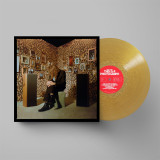
"This Is A Photograph", MORBYs siebtes Album, ist ein Loblied auf die Americana, das Leben und Tod und Blut auf der Leinwand zum Ausdruck bringt. Der kreativ gestärkte Songwriter hat es geschafft, seine besten Songs, seine besten Gesangsleistungen, seine prägnantesten Texte und seine üppigsten Arrangements auf "This Is A Photograph" zu vereinen. Dies ist zweifellos sein bisheriges Hauptwerk. Die Geschichte beginnt im Januar 2020, als MORBY im Keller seines Elternhauses in Kansas City geistesabwesend in einer Kiste mit alten Familienfotos blättert. Nur Stunden zuvor war sein Vater bei einem Familienessen vor seinen Augen zusammengebrochen und musste ins Krankenhaus gebracht werden. In dieser Nacht spürte MORBY noch immer den Schock und die Angst, die ihm in den Knochen steckten. Also sah er sich die Bilder an, bis ihm eines davon ins Auge sprang: sein Vater als junger Mann, stolz und stark und voller Selbstvertrauen, der mit freiem Oberkörper auf einer Wiese posiert. "In the photo he looks young and full of confidence, puffing his chest out at the camera as if he were looking for a fight," erklärt MORBY. "It was not lost on me that this was the same chest, just hours before, I had seen the ambulance put a stethoscope against as he lay on the kitchen floor of my sisters house." Während sein Vater wieder zu Kräften kam, grübelte er über diese Gedanken nach. Und dann machte er sich auf den Weg nach Memphis. Er zog in das Peabody Hotel und verbrachte seine Tage damit, den Träumern, die er bewunderte, Tribut zu zollen und sich vor ihnen zu verneigen; er ging hinunter zum Ufer des Mississippi, zu der Stelle, an der JEFF BUCKLEY sein Ende fand. Er schlenderte durch das Viertel, in dem JAY REATARD seinen letzten Tag verbrachte, und fuhr dann am Stax-Zelt vorbei, um seine Stimmung kurz aufzuheitern. Dann fuhr er an Graceland vorbei, bevor er den Highway 61 überquerte und die Geister zu sich rufen ließ, um seine eigenen Träume zu gestalten. Abends kehrte er in sein Zimmer zurück und hielt seine Ideen auf einem behelfsmäßigen Aufnahmegerät fest, das nur aus seiner Gitarre und einem Mikrofon bestand. Die schwermütigen Songs, die zu all dem passen, was er gesehen hatte, sprudelten nur so aus ihm heraus. Wiederum leitete Sam Cohen (der "Singing Saw" und "Oh My God" produziert hatte) das Projekt. Sie begannen in Cohens Studio im Bundesstaat New York, das sich noch im Bau befand, zusammen mit dem Schlagzeuger Nick Kinsey, und arbeiteten langsam an den Songs, da die Reise der Aufnahme der Start-Stopp-Qualität von 2021 selbst entsprach, mit magischen Momenten, die in die prekären Navigationen eingestreut waren. Mit der Zeit füllte sich die Besetzung. Der ehemalige Tournee-Pianist Oliver Hill sowie seine Mutter Meg und seine Schwester Charlotte sorgten für die Streicher. Die Tourneeleute Cochemea Gastelum (Saxophon), Jared Samuel (Orgel) und Alecia Chakour (Gesang, Tamburin) stießen zu den Sessions hinzu, ebenso wie Eric Johnson (Banjo). Und neue Mitstreiter*innen wie Schlagzeuger Josh Jaeger (Schlagzeug, Perkussion), Brandee Younger (Harfe), Makaya McCraven (Schlagzeug), Cassandra Jenkins (Gesang) und sogar Tim Heidecker und Alia Shawkat (die schrägen Lacher auf "Rock Bottom") fügten sich in das entstehende Bild ein. Und passenderweise fanden die letzten Sessions live in Memphis in Sam Philips Recording Co. statt, das von seinem Sohn Jerry Philips geleitet wird und das Erbe des ursprünglichen Sun Records Studios fortführt.
quête:banjo
South London based producer and multi-instrumentalist Neue Grafik announces his new EP 'Foulden Road Part II' from his Neue Grafik Ensemble band, released 25th March on Total Refreshment Centre. The sequel to their impressive 2019 release 'Foulden Road', Neue Grafik continues to incorporate 100% live takes with the ensemble, as well as solo productions that reflect Neue Grafik's past work with both the Rhythm Section and 22a labels.
Neue Grafik explains, "This EP is a reflection of the social context which surrounds me" – created in a year of much social isolation as well as political unrest, 'Foulden Road II' explores the complex feelings that he found himself battling. He adds "In 2019, we released 'Foulden Road Part I', which was a transitional album, exploring a new culture and navigating between two worlds: Paris and London. 'Part II' is a bit darker, closer to realness with a sprinkle of hope. I couldn't have predicted that I'd finish it encased in my flat, between four walls, in December 2020 after a year of lockdown, Brexit, George Floyd protests, and without London's brilliant culture mesmerising my mind. Everything was sad and closed. Hills were difficult to climb. But it also gave me the time to work hard and deliver this second part of Foulden Road, pushing it forward".
Combining an array of influences — from London, to Paris via New York, Nigeria and Cameroon — with well-measured confidence, ' Foulden Road II' allows you to reflect on the complexities of the last year, whilst braced with energy and hope to move forward positively. Heavy horns and hypnotic poetry form the backbone record, which will ignite any room. 'Foulden Road II' begins with the grounding poetry of MA.MOYO on 'Black Bodies'. The EP is dedicated to Adama Traoré, a black man who died in police custody in Paris. Neue Grafik explains "His name is not well known outside of France. I was shocked, devastated even, to learn that his story didn't cross the Channel". 'Queen Assa' is a heavily percussive dancefloor-hitter which honours French activist Assa Traoré, (Adama's sister) her family, and her struggle to support all families hurt by police brutality. Broken beat elements flow through the horn accompanied 'Officer, Let Me Go To School', while West London rapper Lord Apex offers an unapologetic and poignantly personal perspective on 'Step To It'.
Released on the Total Refreshment Centre label, based out of Stoke Newington's Foulden Road, the EP is a testament to his versatility as an ever-shifting figurehead. Engineered by Capitol K, recorded at Total Refreshment Centre, mixed by Marcus Linon at Greasy Records and mastered by Guy Davie at Electric Mastering – a significant pillar in Neue Grafik's musical career. Having played a DJ set there in 2017, he was convinced by TRC founder Lex Blondin to start a band after he was heard playing some compositions on the communal piano. After spending a couple of sleepless nights on the living room couch, his first gig was booked in the venue space downstairs a week later. The ensemble was established and he has remained in London ever since.
Neue Grafik Ensemble's musicians include; Matt Gedrych, Benjamin 'The Chief' Appiah, Jack Banjo Courtney, Chelsea Carmichael, Dougal Taylor, Yahael Camara-Onono, Xvngo, Rebekah Reid, Dan-Iulian Drutac, Jamie-lee Glinsman and Zara Hudson-Kozdój.
Neue Grafik hosts The Orii Jam Sessions, an energising weekly jam night at Hackney Wick's Colour Factory, which has become a pivotal weekly gathering, inspired by the likes of Unit 31 and Steam Down.
- A1: Curs In The Weeds
- A2: Rude To Rile
- A3: Working Poor
- A4: Albina
- A5: A Burden
- B1: Helen
- B2: Father
- B3: Heathen's Kiss
- B4: Different Gray
- B5: This Is What
- B6: Father (Reprise)
- C1: Curs In The Weeds (Reprise)
- D1: Working Poor (Live Sessie Voor Het Programma "Duyster")
- D2: Father (Live Sessie Voor Het Programma "Duyster")
Deluxe Reissue of "House With No Home" - Pressed on Clear Blue with
Gray Streaks Colour Vinyl with bonus 7" included
The cover of House with No Home, the second full- length album from Horse
Feathers, a dusty west coast folk duo comprised of Justin Ringle and Peter
Broderick, depicts a wintry farm dusted with snow It's an image that's easily
conjured throughout each of the 11 songs that make up Home, a subtle, nuanced,
and quietly noble collection of Americana-kissed alternative folk that echoes the
work of Bonnie "Prince" Billy, James Yorkston, Iron & Wine, and Bon Iver. Ringle,
who blends Richard Buckner's soft, serpentine delivery with Andrew Bird's "I can't
open my mouth all the way" mumble populates his songs with the kind of
woodsy, heart and soul-broken characters that one would expect to find lurking
between the pines on a frosty Oregon morning in February, but it's Broderick who
provides the chill. His string arrangements are grandiose in their simplicity and
busy without ever interfering with Ringle's poignant, icy prose. From the heady
opener "Curs in the Weeds" to the surging, banjo-led "Working Poor," the two carve
up each track like master craftsman, finding the perfect middle ground between
the sparse, reverb- laden landscapes of the Great Lake Swimmers and the
orchestral, aching beauty of Hem. This deluxe reissue includes a bonus 7" with a
2021 reworking of 'Curs In The Weeds' with a full band as well as 2 songs from a
radio session recorded during the European tour for the original album release.
“They were so solid. They meant what they said, they did what they did… here’s two guys, a guitar player and a harmonica player, and they could make it sound like a whole orchestra.” – Taj Mahal
“It was perfect. What else can you say?” – Ry Cooder
Nearly sixty years after they first played together, Ry Cooder and Taj Mahal, longtime friends and collaborators, reunite with an album of music from two Piedmont blues masters who have inspired them all their lives: GET ON BOARD: THE SONGS OF SONNY TERRY & BROWNIE MCGHEE, on Nonesuch Records.
With Taj Mahal on vocals, harmonica, guitar, and piano and Cooder on vocals, guitar, mandolin, and banjo – joined by Joachim Cooder on drums and bass – the duo recorded eleven songs drawn from recordings and live performances by Terry and McGhee, who they both first heard as teenagers in California.
Explaining where Terry and McGhee took him musically, Cooder says, “Down the road, away from Santa Monica. Where everything was good. ‘I have got to get out of here,’ was all I could think. What do you do, fourteen, eighteen years old? I was trapped. But that first record, Get on Board, the 10” on Folkways, was so wonderful, I could understand the guitar playing.”
Taj Mahal adds, “I started hearing them when I was about nineteen, and I wanted to go to these coffee houses, ‘cause I heard that these old guys were playing. I knew that there was a river out there somewhere that I could get into, and once I got in it, I’d be all right. They brought the whole package for me.”
Taj Mahal and Ry Cooder originally joined forces in 1965, forming The Rising Sons when Cooder was just seventeen. The band was signed to Columbia Records but an album was not released and the group disbanded a year later. The 1960s recording sessions, widely bootlegged, were finally issued officially in 1992. GET ON BOARD is Taj Mahal and Ry Cooder’s first recording together since then.
Harmonica player Sonny Terry and guitarist Brownie McGhee, both originally from the southeastern United States, had active solo careers as well as collaborating with some of the most celebrated musicians of their time. But they were best known for their forty-five-year partnership, which began in 1939 and included mesmerising live performances around the world and numerous acclaimed recordings.
Their Piedmont blues style became popular during the folk music revival of the 1940s and ’50s, centered in New York City’s flourishing club scene for jazz, boogie-woogie, blues and folk music. Terry and McGhee traveled in the same circles as Woody Guthrie, Pete Seeger, Leadbelly, and Josh White, among others in a rich mix of writers, actors and musicians. As a new generation emerging in the 1960’s drew inspiration from folk and blues, Terry and McGhee toured the world as the foremost exponents of the acoustic music of the Piedmont. They were named National Heritage Fellows in 1982 in recognition of their distinctive musical contributions and accomplishments.
“You got the south on steroids, when you got the music of the south, the culture of the south, the beauty of the south, through Brownie and Sonny,” Taj Mahal says. He describes McGhee as a “solid rhythm player. To really play behind the harp like that. He would set stuff up. He wasn’t making many notes. Sonny had all the notes, running around. But Brownie, he laid it down.” Cooder adds: “This thing of squeezing the thumb and first finger and a little bit of the second finger, which I still do. I’d forgotten where it came from. That’s what Brownie did. I saw him do that and said, ‘I think I can do that.’”
Taj Mahal calls Terry “a wizard harmonica player”. Cooder says, “Sonny had incredible rhythm for one thing. Making sounds with his voice and the harmonica so you couldn’t tell quite which was which. He was good at that.”
“We’ve been doing this a while,” Cooder says. “Perhaps we’ve earned the right to bring it back. Taj Mahal concludes. “We’re now the guys that we aspired toward when we were starting out. Here we are now… old timers. What a great opportunity, to really come full circle.”
The California based Tito Jackson is supported on his debut Blues album 'Under Your Spell', now in 180 Gram, cream coloured limited quantity vinyl, by an array of superlative special guests, including George Benson, Joe Bonamassa, Marlon Jackson, Eddie Levert, Kenny Neal, Bobby Rush and Stevie Wonder, who all add their special talents to the proceedings
"Love One Another" is the perfect antidote for today's times of doubt and trepidation, as the vocals of Tito, along with Marlon Jackson, Bobby Rush and Kenny Neal soar above the musical bed of melodies that feature the sweet sound of Stevie Wonder's signature harmonica style.
Song-writing duo and Hall of Famers Kenny Gamble and Leon Huff, who penned worldwide hits for The Jacksons and the O'Jays, came out of retirement to write "All In The Family Blues" for Tito. The track features Hall Of Fame legend, Eddie Levert.
As a friend and admirer of BB King, Tito plays tribute in his cover of King's classic, "Rock Me Baby" honored with BB's daughter Claudette King joining in. Tito Jackson's innate abilities as a singer, songwriter, guitarist, producer and arranger shine through brilliantly, creating a spectacular record that is destined for airplay and rave reviews in a number of formats. Continuing on the path set for Jackson when he broke into the music business as a member of the legendary Jackson 5, Tito continues to grow as a musician and performer.
UK Independent Record Stores Only Tracks: Checkered Flag / Smash Up On Highway One / Stack My Money / Drip Drop / The Cat With 9 Wives / Turn You On, Turn Me On / Rockabilly Riot / Off Your Rocker / Who Cares? / Rockabilly Banjo
This album doesn't blurt it out: There is no loud "Ta-Dah!", no exclamation mark. "The ghost that carried us away" flatters in a rather unobtrusive way. However, it has encircled you after the third song at the latest. Fragile hymns of nonchalant casualness, created by the 24-year-old Sindri Már Sigfússon. Guitars, piano, his almost bashful and yet so present voice. "Nature, mortality, love", these are the topics of his debut album. Even the one who listens only briefly, is able to make them out within the sounds. "Do you remember how the things look when you were young."
Reykjavik again. Iceland, the musical heartland. On top of that, there is a violinist with her voice in the clouds: Gudbjörg Hlin Gudmundsdóttir (violine, vocals, harmonica). There further are musicians Sindri shared his hometown and his passion: Orn (guitar, lapsteel) who forms together with Sindri and Gudbjörg the inner triangle of Seabear. Or Eiki, Orvar, Gudni and Dóri. One plays the flugelhorn, the slide-guitar or upright-bass. One belong to the live line-up of Sigur Rós (Eiki). Another is part of the sensational múm (Orvar). Some are stage members of Benni Hemm Hemm's Band - the other Icelandic artist on morr music. Sindri Már Sigfusson has invited them into his small studio, placed them in front of the only microphone, let them think about his musical thoughts. He likes the notion and the feeling of LoFi, Sindri says. Only for the recording of the drums three microphones were used. The result is reminiscent of the reduced stereo recordings of the 1960ies.
Libraries is the most direct promise that pop music is able to make. Tiny and gigantic, unobtrusive and exciting at the same time. A song like a blink into the most beautiful sunrise. A tumbling piano, swinging drums. Melodies, melancholy: "My little bird flew away from me". Or "hands remember", the singing being close to one's ear. "The voice of an old friend", a murmur, two violins. There is later "summer bird diamond", birds twitter to the accords of an old banjo, a glockenspiel. It is almost a radio play, chamber folk. And "seashell" at last, a pocket symphony, arranged around jumping drums. Sufjan Stevens would have done it in a very similar way.
- A1: Edgar The Elephant
- A2: Up The Dumper
- A3: Hung Bunny/Roman Dog Bird
- B1: Hooch
- B2: Billy Fish
- B3: Shevil
- B4: Charlie
- B5: A Growing Disgust
- C1: Eye Flys/Woman
- C2: Pitfalls In Serving Warrants
- C3: Outside Chance
- C4: Evil New War God
- D1: The Bloated Pope
- D2: Bad Move
- D3: With Teeth
- D4: Halo Of Flies
- D5: Oven
- E1: Sway
- E2: Anaconda
- E3: Lovely Butterflies
- E4: Boris
- F1: It's Shoved
- F2: Honey Bucket
- F3: We Are Doomed
- F6: At The Stake
- G1: Night Goat
- G2: Queen
- G3: Everybody's Talking
- G4: Revolve
- G5: Suicide In Progress
- G6: Prig
- H1: The Bit
- H2: Civilized Worm
- H3: Don't Forget To Breathe
- F4: Fly Paper
- F5: Let God Be Your Gardener
The Melvins’ first ever acoustic collection, featuring 36 songs including classics like ‘Night Goat’, ‘Honey Bucket’ and ‘Billy Fish’, as well as covers of Brainiac, The Rolling Stones and Alice Cooper tracks.
This newly recorded acoustic collection features a career-spanning collection of songs, from 1987’s ‘Gluey Porch Treatments’ to 2017’s ‘A Walk With Love & Death’ - the entire gamut of the legendary band’s catalogue is represented.
“I knew I wanted to do something ridiculously big,” explains Buzz Osborne of the band’s first ever acoustic offering. “36 songs reimagined by us acoustically is certainly ridiculous but it works. The magic of the songs is still there regardless of it being acoustic. Since we weren’t touring we had the time to do something of this size. I’m very excited about this record. Dale and Steven did a fantastic job on this. I think it’s a very special record. I can’t
think of anyone else who’s done something like this.”
The band previewed the impressive offering with the release of ‘Night Goat’.
Dale Crover noted: “I think people will be surprised that we can do an
acoustic version of a song like ‘Night Goat’ without losing any of the
heaviness. We also worked hard on the vocal arrangements. People are
going to freak out!”
‘Five Legged Dog’ also features acoustic versions of several rarities from the
influential band’s overflowing discography, including a cover of Redd Kross’
‘Charlie’ (from the limited edition ‘Escape From LA’ single), ‘Outside
Chance,’ a Turtles cover from the ‘Slithering Slaughter’ single and new
interpretations of The Rolling Stones ‘Sway’, Brainiac’s ‘Flypaper’ and Fred
Neil’s ‘Everybody’s Talking’ (popularised by Harry Nilsson). Butthole Surfer
Jeff Pinkus lends his vocals (and banjo) to ‘Don’t Forget to Breathe’ and
‘Everybody’s Talking’.
- A1: Across The Milky Way
- A2: New Stars
- A3: I Was A Cowboy
- A4: Steady With You
- A5: Sweet William
- A6: The Vampires Of Camelon
- A7: We'll Be The Summer
- A8: Snow On The Pines
- A9: Paint On A Smile
- B1: Everything Works Out
- B2: Shine It Out
- B3: When The Highway Ends
- B4: Is It Any Wonder
- B5: Over The Headland (Bonus Track)
- B6: Lust At Luss (Bonus Track)
- B7: Wa Wa (Bonus Track)
- B8: On The Waves (Bonus Track)
Marina proudly present the first ever vinyl issues of three classic albums by Glasgow's finest, The Pearlfishers: "The Young Picnickers" (1999), "Across The Milky Way" (2001) and "Up With The Larks" (2007). They are issued in deluxe 2-LP vinyl editions in beautiful gatefold sleeves with enhanced artwork and complete lyrics. All albums feature four (!) bonus tracks each, most of them never released before and not available on any streaming platform. Three albums of masterful, classic pop music, driven by main man David Scott's exceptional songwriting which was often compared to Paul McCartney, Burt Bacharach, Jimmy Webb, Todd Rundgren and Brian Wilson. The beautifully crafted arrangements include woodwinds, trumpet, flugel horns, banjo - and real strings! "David Scott's compositions sound something like The Carpenters and Burt Bacharach - except much more poppy, upbeat, and current!" (Babysue). These albums also feature some of the finest Scottish musicians. Duglas T Stewart of BMX Bandits co-wrote two songs. Norman Blake of Teenage Fanclub contributed backing vocals on "The Young Picnickers" and co-produced four tracks on "Up With The Larks". Mick Slaven, one of the most unique guitarists ever (Jazzateers, James Kirk, Paul Quinn & The Independent Group), plays on "Across The Milky Way". So does trumpet maestro Colin Steele who later recorded an entire album of Pearlfishers songs in terrific jazz arrangements ("Diving For Pearls", 2017). "The Young Picnickers" was selected "Indie album of the month" in MOJO magazine. "Up With The Larks" was recently voted one of "Scotland's favourite albums" in The Herald.
Wonderwall-Groove-Experimental-Soul-Expericence - CYRIL CYRIL from Geneva does it! "Another special band name - another easy explanation: Cyril Cyril are a duo consisting of two Cyrils. Cyril Yeterian plays accordion, banjo and myriad other instruments, and Cyril Bondi is an extraordinary drummer/percussionist with an experimental bent whose other bands include the wonderful Plaistow. Describing themselves as "muezzin without frontiers", they are fuelled by an irrepressible desire to travel beyond the obvious routes and find new places only they know exist." (Swiss Music Export) "A single word, a single cry can say a lot, as long as it is soulful. The sound of a duo reduced to its simplest expression - rhythm, a riff, a voice - can bear within itself an infinitely luxuriant musical organism - the double helix of DNA. Cyril Cyril, so real, so rich."
The Flower-Corsano Duo, the world’s best and only drums / Japan banjo duo return to VHF for their first album since 2009’s monumental The Four Aims. Mick Flower (Vibracathedral Orchestra) and Chris Corsano (frequently seen with Bill Orcutt, Joe McPhee, and other luminaries) work an area that’s not really jazz, not really anything—a stream of endlessly mutating free sound, a unique mind-merge between Corsano’s nimble drums and percussion and Flower’s amplified Japan banjo (also known as a Shahi Baaja, a type of electric Indian zither with both fretted / keyed and drone strings).
Flower cuts a highly original line, playing neither “leads” nor making drone-music. Less amplified here than on the more “heavy” The Four Aims, the strings ring out with distinct clarity in short snippets of melody and a canvas of pleasing electric sound. Corsano’s bag is to charm out a flow of thoughtful percussion engagement, rolling around on his kit, continually varying his attack and approach in conversational free-jazz style. The Halcyon is a precious addition to a tiny discography, a fortunate event even in today’s world of small press overabundance. Thanks guys!
It’s been ten years since Sadie Dupuis recorded the first Speedy Ortiz songs, a solo experiment that quickly became her full-time band. Since then, Speedy has produced an expansive and critically revered discography, toured worldwide, and inspired next generations of bands with inventive songwriting and advocacy to better the music industry. But in 2011, the younger Dupuis was struggling through concurrent traumas: heartbreak from first love, leaving her hometown of New York for Massachusetts, and the grief of losing several young friends. Speedy’s first songs glowed within the contrast of noisiness and intimacy, raw sonic elements that came with closely processing vulnerabilities and Dupuis’ insistence on performing and recording each instrument alone. As the new project fielded show offers from favorite show spaces like Death By Audio and Shea Stadium, these early tracks became the springboard for the playfully melodic and cleverly distorted style for which Speedy Ortiz as a full band is celebrated. Now, ten years later, Speedy’s first self-released collections will be widely available for the first time and reissued as a double LP The Death of Speedy Ortiz & Cop Kicker…Forever, alongside previously unreleased tracks, reflective liner notes penned by Dupuis, and unearthed photos and journal scans from that era.
The tracks on The Death of Speedy Ortiz & Cop Kicker…Forever were written after student-created prompts while Dupuis was teaching a songwriting class at the same summer camp where she’d first learned guitar. "Hexxy Sadie” was written in an hour, like the rest of the songs, and on Dupuis’ twenty-third birthday; using explosive riffs and distorted harmonies, she explores her uncertain yearning as a twinless twin. "Frankenweenie" came from the prompt “dog,” and over brooding piano, spry tambourine, and eruptive snare, Dupuis sings from the perspective of a dead childhood pet about forgiveness. “Cutco,” which navigates tricky chord changes with deft guitar passages and ironic deadpan, grins at the bitterness of friendships gone awry. These early songs highlighted Dupuis’ remarkable talent at dissecting specific emotions and moments, analyzing the many ways the pieces fit together, and scrutinizing the places where they don’t.
During the recording process, Dupuis was inspired by the impulsive DIY methods of artists like Elliott Smith and Sparklehorse; a mixing note from September 2011 read, “It's important for the 'concept' of this 'album' that I don't redo anything.” The Death of Speedy Ortiz & Cop Kicker…Forever still holds onto the magic immediacy of lo-fi recordings, but this reissue is helped by the technical know-how gained through Dupuis’ solo production work as Sad13 (Lizzo, Backxwash). Remixing in 2021, Dupuis cleaned up edits on her triple-tracked drums, made space for instrumental flourishes performed on eclectic instruments like cello, banjo and timpani, and rewired digital sounds to warm up the layers of intersecting guitars. Co-mixer Justin Pizzoferrato (Dinosaur Jr., Sebadoh), who worked with Speedy on Sports EP, Major Arcana, and Real Hair, further clarified the mix with analog compressors, and mastering engineer Emily Lazar (Liz Phair, HAIM) added a glossy sheen to the stratified bombast.
As Dupuis’ cult-beloved early material finally re-enters the world in a substantive way, The Death of Speedy Ortiz & Cop Kicker…Forever is a seamless fit to the Speedy Ortiz discography that succeeded it, and evidence that Speedy’s biting lyrics, intricate compositions, and daring performances have been inherent to the project since its outset.
A LOST RECORDING OF UNTAMED APPALACHIAN MUSIC.
160 gram black vinyl LP in gold & black color reverse-board jacket. Co-release with Jalopy Records.
In 1972, the renowned and singular folk musician Roscoe Holcomb left his home in rural Daisy, Kentucky and embarked on a west coast tour with Mike Seeger in 1972, which included a performance at The Old Church in Portland, Oregon - a beautiful Carpenter Gothic church built in 1882. Decades later, two particular reels were discovered deep within a pile of 1/4” tape in a shadowy corner of the KBOO Community Radio archives in Portland. Incredibly, those tapes contained the sole surviving evidence of a strikingly intimate and raw performance by Roscoe Holcomb, whose cascading and haunting banjo, guitar and voice echoed and saturated the room and hushed audience.
In contrast to Roscoe’s rarely documented (and at times restrained) live performances at folk festivals and television programs, Roscoe seems to have felt more familiar and spiritually moved in the old church that night. Heard here are standout versions of Appalachian folk-blues classics such as Single Girl, John Henry, East Virginia Blues, Swanno Mountain and more. Once cited as Bob Dylan’s favorite singer, Roscoe Holcomb appears at the peak of his powers here, showcasing his immense vocal talents on an extended acapella version of “The Village Churchyard”. The recording itself is warm and mysterious, sounding like the room itself is alive with the spirit, while the rumbles of trucks and hints of city sounds peek through the walls from the outside streets.
"With a unique trademark sound that is instantly recognizable even through a massive block of ice, Finnish melodic power metal overlords Sonata Arctica never fail to enthrall their audience with captivating hymns of Nordic splendor and magic. Graced by the aurora borealis, they’ve released ten studio albums thus far, taking us into their world since the majestic tunes of their long-fabled debut, “Ecliptica.” Now, however, the band is about to start a whole new chapter. Aptly titled “Acoustic Adventures – Volume One,” Sonata Arctica carefully strip their sound of all things metal only to reveal precious, stunningly beautiful acoustic songs that still capture the heart, spirit and very essence of this band. After Sonata Arctica hit the road in 2016 to premiere their marvelously crafted acoustic set to a stunned audience and then again in 2019, the idea was born to immortalize these intimate, pure, and heartfelt renditions of their iconic catalog on two acoustic albums, the second of which will follow in close succession. “The fans truly seemed to enjoy this side of the band quite much so there was clearly a demand to record these versions of our music.” Having said that, such a release was only a matter of time, anyway: At the very heart of every Sonata Arctica song lies a sublime melody, wreathed in melancholy. “We originally planned to record these songs in Los Angeles at a friends’ studio but since most of our touring seized we decided to do the recordings a bit sooner,” remembers Henrik “Henkka” Klingenberg. “Acoustic Adventures – Volume One” was recorded during summer 2020, with mixing and mastering following suite. Even though the songwriting material is so strong in this band -- you could hear it played on a triangle or a saxophone and still get goosebumps -- some songs proved to be trickier than others. “Not all of the stuff we tried worked out which is why some songs were not recorded,” Henkka says. “Luckily we have quite a large collection to choose from so there’s really no shortage of material.” It’s no exaggeration. The band has over one-hundred songs to choose from, which is a rather fortunate situation. What’s typically Sonata Arctica about all this is that they not only replaced electric with acoustic guitars. Instead, they didn’t shy away from writing whole new arrangements. “Thus, a lot of the songs sound quite different from the original versions.” Starting with the songs they already performed during the “Acoustic Adventures” tours, they added some personal favorites or gems to the mix after that and recorded the whole bunch live! Opening with the mesmerizing “The Rest Of The Sun Belongs To Me” and going via the banjo and organ infused (!) “A Little Less Understanding” to the heartbreaking ballad “Tonight I Dance Alone,” it becomes clear that Sonata Arctica have found solace and a home in these tender versions. One song especially proved to be a challenge for Henkka. “‘Wolf & Raven’ was quite the thing to play on acoustic piano,” he laughs, “but the whole session was a big challenge for everyone. On top of doing it all live, we also didn’t use a click track or metronome so you had to be really alert and make sure the songs stayed in tempo. I think ‘For The Sake Of Revenge’ is still is my favorite. It turned out really special and so different from the original. We also didn’t play the acoustic version live so nobody has heard it.” Yet, he means. The next acoustic tour is around the corner. Singles & Videos: 03.12 „The Rest Of The Sun Belongs To Me“ Sigle & Lyric Video 14.01 „For The Sake Of Revenge“ Single & Video // Focus Track"
“In the early 2000s, Tokyo's SuperDeluxe was a meeting point for many experimental musicians, both international and Japanese. This duo sprung from a live collaboration at the venue in 2006, where Machida was experimenting with processed steel pan and Lyall was largely performing using a tabletop guitar setup with a range of electronics. Many subsequent encounters were heavily experimental, ranging from densely layered noise music to sound collage.
Through the years, the collaboration shifted to a more tonal approach, with standard tunings and stronger compositional elements. Both musicians have a deep interest in traditional improvisational forms, so there was a natural evolution towards structural ideas—based on minimal scalar patterns—as the sound became more acoustic. The most recent instrumentation explores the unusual combination of steel pan, slit drums and banjo, while also delving deeper into the characteristics of the instruments themselves.”
Michael Hurley's first new studio record in 12 years features eleven songs recorded in Astoria, Oregon during the brief time of year when the foxgloves bloom. Hurley had been workshopping the set at home for the past few years. Friends and collaborators came into town and contributed from afar. The songs are lifted by violin, organ, upright bass, banjo, percussion - but at the center, of course, is the enigmatic Snock, whose songs have grown only more unique and more 57 years after his debut album (First Songs - Folkways, 1964). It could only be Snock. Heartbreaking, heartfelt, easy and carefree. The glorious opener “Are You Here For The Festival” – punctuated by a pair of violins – came to him while working in the garden. “Little Blue River” floats by on a cloud. The haunting “Jacob’s Ladder” sounds beamed in from another era. Or dimension. Foxgloves is as comforting and wonderful as any Hurley record that has come before it.
Black vinyl[16,60 €]
Born in 1999, Charlie Hickey grew up in South Pasadena,
just minutes from Downtown Los Angeles. Raised by two
singer-songwriter parents, Charlie’s second language was
music since day one. As early as grade school, he was
making sense of the world through songwriting, and by
middle school he was writing, recording and performing
songs that attracted a community of collaborators and could
silence a room.
A turning point for Charlie came at around the age of
thirteen, when he covered a song by then up-and-coming
artist Phoebe Bridgers, who was still in high school herself.
The two quickly became friends and collaborators, setting
Charlie on an exciting new musical path. Years later,
Bridgers introduced Charlie to songwriter, drummer, producer
and her bandmate Marshall Vore, who noticed something
special about Charlie. The two began writing and recording
songs together, and soon Charlie dropped out of school to
work on his music full-time.
Charlie Hickey’s first proper single was ‘No Good at Lying’
and it’s the first track on ‘Count The Stairs’. The Marshall
Vore-produced track introduces us to Charlie’s evocative
storytelling and features Phoebe Bridgers on backing vocals.
“I’m no good at lying / on my back or through my teeth / but
I’m good at dreaming / I can do it in my sleep,” he sings over
hushed guitars and a whimsical banjo, searching for truth as
his unconscious mind runs wild and bleeds into reality. It’s a
slow, quiet, and understated peek to the world of Charlie
Hickey, who is barely of legal drinking age, but taps into such
universal themes that showcase a wisdom beyond his years
and exudes promise for what’s to come.
Silver vinyl[16,60 €]
Born in 1999, Charlie Hickey grew up in South Pasadena,
just minutes from Downtown Los Angeles. Raised by two
singer-songwriter parents, Charlie’s second language was
music since day one. As early as grade school, he was
making sense of the world through songwriting, and by
middle school he was writing, recording and performing
songs that attracted a community of collaborators and could
silence a room.
A turning point for Charlie came at around the age of
thirteen, when he covered a song by then up-and-coming
artist Phoebe Bridgers, who was still in high school herself.
The two quickly became friends and collaborators, setting
Charlie on an exciting new musical path. Years later,
Bridgers introduced Charlie to songwriter, drummer, producer
and her bandmate Marshall Vore, who noticed something
special about Charlie. The two began writing and recording
songs together, and soon Charlie dropped out of school to
work on his music full-time.
Charlie Hickey’s first proper single was ‘No Good at Lying’
and it’s the first track on ‘Count The Stairs’. The Marshall
Vore-produced track introduces us to Charlie’s evocative
storytelling and features Phoebe Bridgers on backing vocals.
“I’m no good at lying / on my back or through my teeth / but
I’m good at dreaming / I can do it in my sleep,” he sings over
hushed guitars and a whimsical banjo, searching for truth as
his unconscious mind runs wild and bleeds into reality. It’s a
slow, quiet, and understated peek to the world of Charlie
Hickey, who is barely of legal drinking age, but taps into such
universal themes that showcase a wisdom beyond his years
and exudes promise for what’s to come.
Brian Setzer, iconic guitarist, songwriter, vocalist and 3-time Grammy award-winner, returns with his first solo album in 10 years! “Gotta Have The Rumble” is a red-hot album from start to finish, featuring 11 songs that are full of dynamism and bravado. The album is classic rockabilly at its absolute finest and showcases Setzer at the top of his career.
"Gotta Have The Rumble" will be out on CD via Surfdog Records on August 27, 2021, with the vinyl to follow on Novem-ber 12, 2021.
4 Reworked & Reimagined tracks from Motherhood and a cover of Deftone’s “Teenager”. Clear w/ Blue Glitter Colored Cassette Shell, with full pull-out J-Card artwork. Recommended If You Like : Bjork’s Live Box, The Deftones Cate Le Bon. Montreal’s No Joy—since 2009, a noisy four-piece shoegaze band, from 2015 onward, the sonic experiments of founding member and principal vocalist Jasamine White-Gluz has rejected convention, opting to find cohesion in vast, bold, indiscernible structures. In the beginning, the group excavated melodious riffs from squalling guitars, now, White-Gluz approaches songwriting with abstract meticulousness, no longer tethered to her six-string instrument. In 2018, it was the modular electronica of No Joy / Sonic Boom, an EP collaboration with Spaceman 3’s Pete Kember. In 2020, her first full-length as a soloist and No Joy’s first album in five years, Motherhood, her guitar returned for a genre-agnostic, maximalist treatise on aging. Fertility, family, death, birth, her voice heard loud in the mix, White-Gluz became a commanding force among the many-splendored sounds of trip-hop, trance, nu-metal, dance rock, and, of course, shoegaze, delivered through banjo, vibraphone, scrap metal, slap bass, even kitchen appliances. Who knew chaos could have such lucidity? Now, White-Gluz’s ever-expansive evolution has brought forth Can My Daughter See Me From Heaven, an EP reanimation of five songs from Motherhood, transformed by new orchestral instrumentalists: an opera singer, a cellist, a harpist, French horn musician. These songs, recorded entirely remotely, are not a correction. They are a spring rebirth—an opportunity to grow those tracks, similar to the transformation they would’ve undergone live, on stage. “Songs take on a new life when I’m on tour. These songs didn’t get that chance. I still had more to say with them,” White-Gluz explains. “I probably never would’ve been like ‘let’s get a bunch of classically trained players together,’ if it wasn’t for covid-19 canceling tours. This EP was an opportunity to do something that wasn’t obvious. It’s a bedroom recording, but it doesn’t sound like we recorded this in our bedrooms. I wanted to do something that sounded bigger than Motherhood did, and Motherhood was recorded before covid.” Where many musicians used last year’s disaster to look inward, releasing solitary, insular albums, No Joy did the opposite: “It was more, ‘Let’s try everything!’ Give me something to look at!”
Stadsbilder ("City Images") is the first collaborative album between Swedish musicians Jakob Lindhagen and Dag Rosenqvist. The composers have both made names for themselves within the contemporary music scene - Jakob as an award-winning film composer with solo music streamed in the millions on digital platforms, and Dag as a highly prolific musician and sound artist,
having over 50 releases over the last 15 years in a vast array of constellations, both solo works and as part of the duo From The Mouth Of The Sun, as well as film composing and music for dance performances. The music on Stadsbilder intertwines layers of organic and electronic sounds, with minimal piano melodies meeting vintage synthesizers, found sounds,harmonium, banjo, kantele, Fender Rhodes and saxophone, as well as cello (played by Sebastian Selke of CEEYS).
LIMITED RED VINYL.
“I think my music provides space for me to say the things I can’t always say in real life.” says Virginia native songwriter and multi-media artist Corrinne James. “That’s what I love about songwriting—There’s room in music for all of the conversations that can’t exist in reality.”
While studying New Media and Cinematography at the University of Virginia, James created a secret Bandcamp under the alias Naomi Alligator, and began uploading her intimate home recordings online. Inspired by the sparse and confessional qualities of Liz Phair’s early portastudio recordings, James decided to create her own musical journal to share and process personal anecdotes.
Her modern folk production and poetic songwriting links the sounds of classic folk artists like Joan Baez and Steeleye Span to a 21st century context. James wrestles with guilt, purpose, and jealousy through vivid narratives in the songs that make up her vast self-releases. This fall, five years since her first upload and over a dozen releases later, James will share her new four-track EP, Concession Stand Girl, while making her debut on Carpark.
On the title track for Concession Stand Girl that opens the EP, James sings the inner monologue of an unappreciated ticket-taker at a high school football game. James plucks a sparkly banjo and sings details of the concession stand girl’s relationship to each of the spectators who must go through her to enter the game. “Although seemingly insignificant, the concession stand girl must interact with each spectator as they enter the football game. Despite being unable to physically see the game, inside of her head she narrates her relationship to the people at the game.” The track “Anywhere Else” sits in contrast to the rest of the EP, being the only song where James plays guitar instead of banjo.
The last song written for the EP, “Anywhere Else” describes the tense emotions that come from comparing yourself to others in the eyes of your partner. “The protagonist is convincing herself, as well as her partner, that she could leave at any moment. She doesn’t want to be taken for granted anymore.” “Big Blue World” is a touching closer to the EP, where James sings about finding her way back to the place that feels most like home. James examines the fleeting nature of ambition and asks what really creates the feeling of contentment. Describing the song’s lyrics James says, “You can achieve everything you want, but sometimes it doesn’t feel like anything compared to just feeling at home and feeling who you are deep down.”
- A1: Dat Luit Van Freverts Hoff 03 00
- A2: Mammes Lütket Aum 02 47
- A3: Wach Up, Jakob 02 55
- A4: De Junge Van´n Kutsker 03 07
- A5: Püiper 06 10
- A6: Dat Iuerdeil 02 28
- B1: Trewwer 03 07
- B2: Bärgmusüik 02 58
- B3: Lütker Moses 03 14
- B4: Sprinkuiße 02 50
- B5: De Junge Van´n Schlächter 03 05
- B6: Sunnenlucht 03 04
- B7: Müin Nome Ess Plöger 03 12
Faitiche presents, for the first time on vinyl, a selection from the 84-track (!!) remix project originally released in 2013 as a three-tape set by Trip Shrubb aka kptmichigan aka Michael Beckett. Known to many from bands like Tuesday Weld or The Schneider TM Experience, Beckett remixed his way through Harry Smith’s famous Anthology of American Folk Music – a compilation of American folk, blues and country recordings released in 1952, soon to become key point of reference for the emerging folk revival movement. Having translated the title into the local dialect of the part of Germany where he lives, Beckett began reinterpreting all of its 84 tracks using sampler, effect pedals and loops – sometimes making several tracks in a single day. A colossal undertaking whose results are beyond accomplished and that is summed up in the selection of thirteen tracks on 'Trewwer, Leud un Danz'.
Murray Royston-Ward writes about 'Trewwer, Leud un Danz':
"Total sacrilege ... A collection of remixes of tracks from Harry Smith’s Anthology of American Folk Music which was originally released in its entirety. The album is titled Trewwer, Leud un Danz (sorrow, song and dance) which is drawn from an endangered ‘Low German’ dialect (lippisch Platt) and is poetically approximating Smith’s volumes Ballads, Social Music and Songs.
The hardware employed encompasses analogue, virtual analogue and digital. A primordial soup of electrical fields, striated granulation, micro-circuitry, molecular oscillations and mathematical manipulation; communicating directly with the guitars, zithers, mountain dulcimers, fiddles, jaw harps, banjos, harmonicas and human voices of 1930’s America: itself a reterritorialization of African and European folk traditions that reach back farther and farther into our collective pasts. (…)"
MAUGLI blends vibrant sounds and driving rhythms from all over the globe. With a background as a drummer and of various styles, his genre-bending music blends sampling and recording into a lively collage. His crisp arrangements balance an electronic yet organic feeling. His debut album “Alba” (translated from Italian as “sunset“) is inspired by traditional music and the dance rituals of various Afro cultures and their diaspora such as capoeira, work songs or gnawa. While seeking to translate their spirit into the present day, MAUGLI combines these elements with electronic music, wobbling synthesizers and stomping beats. “Ladainha” is a soulful homage to the capoeira culture featuring Professor Chipreu PDM and "Baksheesh" to the rich American blues tradition, with hypnotic synth riffs and chopped up guitar licks resolving in a south african chant (recorded in the late 1950`s). “Mizan” opens with a pounding Guembri (a traditional gnawa three-stringed lute) accompanied by it’s descendant the ’banjo‘, allowing the sampled berber vocals to shine through. “Rawa’s” striking guitar riff is set up against biting synth blobs and piano chords, Nigerian fiddles and chants that swing us deeply into the groove. Get your ticket, for this album is an outernational roundtrip.
UK multi-instrumentalist and story-teller Mara Simpson's new album In This Place will be released on September 24th, 2021. A heady blend of alt-folk, analogue synth and classical composition, In This Place is a tale of quiet rebellion, and taking back control. Fittingly, the new album marks the start of another new journey for Mara. In This Place will be the first record to be released on Downfield Records, a non-profit imprint set up by Simpson, placing artists at it’s centre. “I want to try and promote transparency and equality, assist other artists to get public funding and to ‘pay’ forward the time and resources I’ve benefited from,” she says. The label’s mission is to see musicians paid fairly and release records through a creative and joyous process.
Whilst the struggles of 2020 will go down in history, for Mara it was 2019 that was the tough one. A year spent consumed by worry, whilst in and out of hospital with her one year old daughter, had left Mara feeling like she was playing a constant game of catch up with a world that wouldn’t slow down. With songs ready to be recorded for her new album, she headed into the studio. “I stepped into the studio not needing my hand held, just my voice heard” explains Mara, who quickly came to the realisation that she was working in a toxic environment. Enough was enough
It was whilst waiting for a train that she had the sudden realisation that the album she was recording would never see the light of day. Struck by an overwhelming feeling of failure, Mara began to ruminate on the time and money she had wasted but then something clicked. “Perhaps it’s something about train stations, the coming and the goings, that allows a stagnating frame of mind the grace and space to clear” she says. “The funny thing is, upon realising failure, the despair I’d been feeling was now replaced with something else...Relief”.
Feeling re-energised, Mara called her dream producer Ellie Mason, of Voka Gentle, and together the pair began working on a new record. “I’ve been more hands-on with this album than I’ve ever been, taking a much more active role in production. Throughout the whole process Ellie has heard my voice, and been open to any possibility” explains Mara. “We’ve stumbled across golden moments, recording four part harmonies in Brighton’s oldest church, using every drum there is in Brighton Electric, layering New Zealand bird song with tape delayed piano, all thanks to her nurture, playfulness and kindness” she continues.
Album opener ‘Serena’, named after the apartment building in Brighton where Mara’s daughter was born, is based on the experience of becoming a mother and the responsibility of making important healthcare decisions. “How will I know how to love you” she sings over undulating synths and sparse piano chords. Title-track ‘In This Place’ is about the confrontation between mother and new-born child. The ‘sizing-up’ of one another as they embark on a new journey together. “When I left home to travel around the world and was so worried about breaking my Mum’s heart,” says Mara. “I just remember her saying that your children are never yours to keep. This is a song about the rawest of loves, and the fact that however much we love someone, they are never ours, and the beauty in that.”
In addition to the experience of motherhood, the songs on In This Place take inspiration from a wide range of places, including Mara’s ‘second home’ New Zealand. ‘Christchurch’, written in response to the Christchurch Mosque shootings in 2019, layers New Zealand birdsong on top of swirling piano and moving choral vocals. ‘Fault Lines’ was inspired by The Waitangi treaty. Signed in 1840 in New Zealand by the British Crown and Maori chiefs. The British understood that the Maori were signing over land that the British could now govern and effectively ‘own’, however to the Maori people it is impossible to own land, in the same way that you can’t ‘own’ air. “We live and die, the land remains and we are just it’s keepers for the very short time we are here. This song is about us not owning this earth - how can we? We are only the guardians of it while we are here” says Mara.
Backed by a band of accomplished musicians (Jools Owen (Bears Den) on drums, James Smith (Anaïs Mitchell) on banjo, Alexandra Hamilton-Ayres on clarinet and strings by Poppy Ackroyd) on In This Place, Mara sounds the most confident she’s ever sounded. With her new material, Mara Simpson hopes to promote a gentle, yet radical shift toward kindness and it’s this warmth that can be both heard and felt across her new record.
Deluxe Edition[33,57 €]
Portuguese experimental trio 10 000 Russos are gearing up for the release of their fifth album ‘Superinertia’, which is due out September 10th on Fuzz Club Records. Following on from 2019’s ‘Kompromat’ LP and tour dates around the UK, Europe and Mexico in support, the Porto-based band describe ‘Superinertia’ as a record addressing the “state of inertia that humans live in the West nowadays. It isn’t a record about the past or future. It’s about now.” For all that ‘Superinertia’ might take aim at a world without motion, however, the same cannot be said of 10 000 Russos themselves.
On the one hand, since their 2013 debut LP and the three that have followed on Fuzz Club since (2015’s self-titled, 2017’s ‘Distress Distress’ and ‘Kompromat’), 10 000 Russos’ music has always been about as kinetic as it gets: a truly unrelenting and motorik sonic force. On the other hand, ‘Superinertia’ also sees the band itself move into whole new musical territories – aided especially by the recent addition of synth player Nils Meisel to the line-up (who replaces former bassist André Couto.)
“The synths really opened up the sound of the band and gave more routes for the music to journey down. The most important thing on this album was to not repeat ourselves. A new arc in our sound is coming to life”, drummer and vocalist João Pimenta explains. On said arc, the Russos sound is expanded to include moments that invoke Ry Cooder’s ‘Paris, Texas’ soundtrack (‘Mexicali/Calexico’), dancey outbursts that transport you to the 90s Summer of Love (‘Super Inertia’), the closest thing Russos have ever done to a pop song (‘A House Full of Garbage’) and even a touch of banjo (albeit one that sounds like a country band on amphetamines playing over a feedback-blasted Stooges beat.)
“10 000 Russos are bizarre and excellent in equal measure.” - The Quietus
“Songs drip with heavy echo, relentless beats and bass and a sense of charging into the ultimate infinite.” - Bandcamp Daily
“Something unholy has indeed been summoned out of the ground, and it is a power trio from the Iberian Peninsula.” - Clash Magazine
Blue vinyl[26,43 €]
Portuguese experimental trio 10 000 Russos are gearing up for the release of their fifth album ‘Superinertia’, which is due out September 10th on Fuzz Club Records. Following on from 2019’s ‘Kompromat’ LP and tour dates around the UK, Europe and Mexico in support, the Porto-based band describe ‘Superinertia’ as a record addressing the “state of inertia that humans live in the West nowadays. It isn’t a record about the past or future. It’s about now.” For all that ‘Superinertia’ might take aim at a world without motion, however, the same cannot be said of 10 000 Russos themselves.
On the one hand, since their 2013 debut LP and the three that have followed on Fuzz Club since (2015’s self-titled, 2017’s ‘Distress Distress’ and ‘Kompromat’), 10 000 Russos’ music has always been about as kinetic as it gets: a truly unrelenting and motorik sonic force. On the other hand, ‘Superinertia’ also sees the band itself move into whole new musical territories – aided especially by the recent addition of synth player Nils Meisel to the line-up (who replaces former bassist André Couto.)
“The synths really opened up the sound of the band and gave more routes for the music to journey down. The most important thing on this album was to not repeat ourselves. A new arc in our sound is coming to life”, drummer and vocalist João Pimenta explains. On said arc, the Russos sound is expanded to include moments that invoke Ry Cooder’s ‘Paris, Texas’ soundtrack (‘Mexicali/Calexico’), dancey outbursts that transport you to the 90s Summer of Love (‘Super Inertia’), the closest thing Russos have ever done to a pop song (‘A House Full of Garbage’) and even a touch of banjo (albeit one that sounds like a country band on amphetamines playing over a feedback-blasted Stooges beat.)
“10 000 Russos are bizarre and excellent in equal measure.” - The Quietus
“Songs drip with heavy echo, relentless beats and bass and a sense of charging into the ultimate infinite.” - Bandcamp Daily
“Something unholy has indeed been summoned out of the ground, and it is a power trio from the Iberian Peninsula.” - Clash Magazine
Runnner's Always Repeating yearns for a sense of place. The project of the now LA-based songwriter/multi-instrumentalist Noah Weinman, Runnner's poignant reflections on the isolation and anxiety caused by a sense of rootlessness radiate with wit and charm. Self-produced and recorded wherever he called home at the time, Always Repeating documents this cycle of looking back and moving forward, of alienation changing to reconciliation. For Weinman, Runnner is primarily a solo endeavor with an ever - expanding musical community of musicians collaborating on his albums and shows, which at times have been known to feature up to a 7-piece live band (he also has a burgeoning career as a producer, notably working on Skullcrusher's critically-acclaimed debut EP for Secretly Canadian). Weinman completed Always Repeating last fall in Western Massachusetts and Woodstock using a mobile studio set-up. He played the majority of the instruments himself, including guitar, bass, trumpet, banjo, piano and synth. The goal was to create the perfect balance of intimate and melancholy songwriting through the lens of hi-fi/lo-fi dynamics, inspired by his favorite artists like Bon Iver, the Microphones, and Julien Baker. The 10-track collection is composed of five re-recorded versions of songs that appeared on Runnner's 2017 debut, Awash, and 2020's One of One EP. Although the songs were written over the course of three years, all find Weinman grappling with the same thing: feelings of uncertainty about his life. Always Repeating ultimately tells the start of Weinman's journey as Runnner, and his cyclical feelings of being connected and then disconnected from the world over and over again.
Responding to a comment that the foreground of his Western photographs
feels like a stage set, the photographer and auteur Wim Wenders suggests,
‘that impression is basic to the American West and everything people have
built there has a highly theatrical air.
This animates Places of Consequence, the second album and first solo LP
from Cameron Knowler, which deploys guitar and banjo as cinematic tools to
soundtrack and investigate the region.
‘Despite the fact that the lightheartedness of youth lifts and the problematic
components of the West reveal themselves over time,’ Knowler says, ‘there are
still ways of harnessing the space to richly creative ends.’
Single ‘Puerto Suelo,’ which features acoustic and electric guitars playing in unison and a small orchestra of kitchen utensils, shows Knowler’s knack for gorgeous melodies, and nods to LA session wizards like Blake Mills or Sam Gendel.
Places of Consequence is testament to making the effort, and a document of
Knowler’s clear talent.
Runnner’s Always Repeating yearns for a sense of place. The project of the now LA-based songwriter/multi-instrumentalist Noah Weinman, Runnner’s poignant reflections on the isolation and anxiety caused by a sense of rootlessness radiate with wit and charm. Self-produced and recorded wherever he called home at the time, Always Repeating documents this cycle of looking back and moving forward, of alienation changing to reconciliation.
For Weinman, Runnner is primarily a solo endeavor with an ever-expanding musical community of musicians collaborating on his albums and shows, which at times have been known to feature up to a 7-piece live band (he also has a burgeoning career as a
producer, notably working on Skullcrusher’s critically-acclaimed debut EP for Secretly Canadian). Weinman completed Always Repeating last fall in Western Massachusetts and Woodstock using a mobile studio set-up. He played the majority of the instruments himself, including guitar, bass, trumpet, banjo, piano and synth. The goal was to create the perfect balance of intimate and melancholy songwriting through the lens of hi-fi/lo-fi dynamics, inspired by his favorite artists like Bon Iver, the Microphones, and Julien Baker.
The 10-track collection is composed of five re-recorded versions of songs that appeared on Runnner’s 2017 debut, Awash, and 2020’s One of One EP. Although the songs were written over the course of three years, all find Weinman grappling with the same thing: feelings of uncertainty about his life. Always Repeating ultimately tells the start of Weinman’s journey as Runnner, and his cyclical feelings of being connected and then disconnected from the world over and over again.
- A1: Pas Perdus
- A2: Tsom
- A3: Aux Cyclades Electronique
- A4: Ma Rencontre
- A5: Ile De Beton
- B1: Attention Amiante
- B2: Chaque Jour
- B3: 14H
- B4: Nonza
- B5: Ok Skorpios
- B6: Gris Metal
- C1: Des Yeux Roses
- C2: L'observatoire
- C3: Le Pays Imaginaire
- C4: Coeur Inapaise
- C5: Serpentine
- C6: Les Amplis De Mayence
- D1: (Come Potrei) Scordare (Come Potrei)
- D2: Vision Of Love
- D3: Biscarosse
- D4: Kim
- D5: Haute Volupte
Bertrand Burgalat's first album 'The Sssound of Mmmusic', also known as TSOM, is released in an expanded reissue, twenty-one years after its first publication, on June 12th 2021 for the Record Store Day. Bertrand Burgalat combines lush arrangements, dreamy atmospheres and pop culture with class and humor.
In 2000, Bertrand Burgalat decided to evolve openly by releasing his first solo album 'The Sssound of Mmmusic' which had been in the works since the creation of the label 5 years earlier. This album, a true melancholic and sensual sonorama, reveals the very essence of Burgalat's art, fragile, nuanced, with a rare humility. Dotted with banjos and club bass, cascades of synthetic strings and soprano saxophone, geisha choirs and unblocked beats, 'The Sssound of Mmmusic' appears as a contrasting work where opposites unite in perfect alchemy.
Accompanied by previously unreleased tracks for the first time on vinyl, the album features songs like 'Gris métal' with a text by Michel Houellebecq, 'Vision of Love' his cover of Mariah Carey, or 'Kim' five minutes of intoxicating music.
- A 1: Sixty Years
- A2: Don't Trust A Woman (In A Black Cadillac)
- A3: When The Bells Don't Chime
- A4: That Someone Just Ain't You
- A5: Rat Pack Boogie
- A6: Drink Whiskey And Shut Up
- B 1: Ring, Ring, Ring
- B2: Smokin' 'N Burnin
- B3: Wild Wind
- B4: St. Jude
- B5: To Be Loved
- B6: When The Bells Don't Chime (Banjo Mix)
- B7: Luck Be A Lady (Single Version)
Surfdog Records and Brian Setzer have announced that for the first time, Setzer’s classic 2003 album Nitro Burnin’ Funny Daddy will be issued on vinyl. It will be released on limited edition 180 gram, red transparent vinyl on 25th June 2021.
Only Brian Setzer could cut an album with more lyrical honesty and musical diversity than anything he's ever done and then title it Nitro Burnin' Funny Daddy. Not that the name is misleading; Nitro is in fact packed with explosive performances. There's more than enough volatile picking and singing to mark this as a highlight of a catalog already crowded with great albums he's delivered as leader of the history-making Stray Cats and on his own too.
But there's more: street-corner doo-wop, heartbreak balladry, a foot-stomp hoedown, several lyrics that will shock and stun longtime fans, and always, somewhere in the mix, the blues. Every track is distinctive, none sounds like any of the others, yet all of them are pure Setzer. And it's all compressed into a tight trio format -- Setzer and his big band colleagues, standup slap-bass powerhouse Johnny Hatton and rhythm dynamo Bernie Dresel on snare and cymbals -- whose sound evokes Les Paul, Junior Parker, and even Earl Scruggs as much as Louis Prima or Eddie Cochran.
Originally released in 2003, Nitro Burnin’ Funny Daddy was Brian Setzer’s eleventh solo album and when it was released he said it was the most personal record he had ever done. The album followed his big-band release Boogie Woogie Christmas from the previous year and saw him back to his rockabilly best, taking in doo-wop (“To Be Loved”), bluegrass (“When The Bells Don’t Chime”), rootsy-rock (“Don’t Trust A Woman (In A Black Cadillac)”) and going on a cinematic Wild-West romp (“Wild Wind”).
JP Harris has a secret: his name is actually “Squash.” Long before Harris
became a well regarded honky-tonker, he used his childhood nickname
while playing archaic “old-time” American tunes at underground fiddlers’
gatherings, engrossed in this punkish folk music world.
‘Don’t You Marry No Railroad Man’, his debut recording of traditional music
under the moniker JP Harris’ Dreadful Wind and Rain, features ten tracks spanning the breadth of American old-time repertoire. Harris wades between ancient ballads that traveled from the British Isles to Appalachia like “Barbry Ellen,” to droning banjo ditties such as Hobart Smith’s entrancing “Last Chance,”
here played on one of Harris’ coveted homemade banjos. Harris also works as a
serious carpenter which adds a unique authenticity to his versions of the classic
“House Carpenter” and lesser known “The Little Carpenter.”
Alongside Harris’ haunting vocals, the album prominently features the lowtuned fiddle and harmony singing of his longtime friend and Old Crow Medicine Show member Chance McCoy, who produced the record at his West Virginia studio in an old barn. On this sparse and arresting recording, Harris isn’t
mining his roots as a marketing pitch, he has the chops to back it up. In fact,
this collection of songs made him who he is today. Welcome home “Squash.”
The past year's lockdown has proved undeniably challenging to improvising musicians who typically thrive on face-to-face interaction. But bassist Mike Watt, drummer/percussionist Mike Pride, and guitarist/banjoist Brandon Seabrook have all built their careers on kicking down the barriers between genres, so why would they let a little pandemic-induced isolation and geographic distance stand in their way? Convening for the first time as Three-Layer Cake, these three dizzyingly inventive artists bake up a long-distance set of singular, boundary-defying collaborations on their combustible debut, Stove Top. Stove Top is uncategorizable in the best sense of the word, patching together elements of punk, free jazz, new music, no wave, doom metal, dub, avant-funk, and various subsectors of the experimental in such freewheeling and raucous fashion that the very idea of divvying them up into disparate inspirations seems laughable.
** 12” LP edition of 300 copies with cover artwork and booklet featuring illustrations by Ettore Tripodi ** In September 2019 Alessandro Bosetti was invited by fellow composer and curator Riccardo La Foresta to create a new work for a newly created ensemble as part of a residency program hosted by Centro Musica in Modena, Italy. The very first encounter took place on Skype – kind of a prediction of the forthcoming physically distanced pandemic times. The first, straight-to-the-point question Bosetti posed to each musician was to tell him the history of their life. The materials collected in the interviews subsequently underwent a process of anonymization, selection and cut-up in order to create the imaginary autobiography of Didone, a genderless character on whom Bosetti composed a combinatory poem in 84 aphorisms, six of which have been translated into music. The ensemble consists of extremely different musical profiles: the contemporary soprano Giulia Zaniboni, minimalist banjo and acoustic guitar player Glauco Salvo, and four musicians with a jazz background such as guitarist Luca Perciballi, drummers Andrea Grillini and Simone Sferruzza, and saxophonist Dan Kinzelman (also part of Hobby Horse trio and long-time collaborator of Enrico Rava). Some of the stylistic features of Bosetti’s project Trophies (along with Kenta Nagai and Tony Buck) can be detected here and there. Persistent repetitions, mesmerizing sonic masses and extended, oblique melodic lines are here led by the clear and precise voice of soprano Giulia Zaniboni.
The voice is at the heart of this work: the textual fragments of the autobiographies are filtered through Zaniboni’s contemporary vocality, while informing the instrumental writing as well. Themes and textures unveil traces of words or sentences; fragments of biographies are embedded in the intricate instrumental dialogue between the two drummers. A final layer was added by Ettore Tripodi, a unique and out-of-time visual artist who imagined Didone in a series of illustrations accompanying the poem. "Didone" is a work about the reconfiguration and recombination of identities, where every specific sense of belonging melts into an indistinct swarming of possibilities.
Alessandro Bosetti is a Marseille-based composer and sound artist with a particular interest in the musicality of language and in the voice, conceived as an autonomous object and an instrument of expression. His works enact a dialogue between language, voice and sound within complex tonal and formal constructions, often crossed by oblique irony. He builds surprising devices, often linked to the radio medium and to a tireless reflection on the relationships between music and language, questioning aesthetic categories and listening postures.
His work has been shown in reference venues such as the GRM / Présences Electronique festival in Paris, Roulette and The Stone in New York, Café OTO in London, the Liquid Architecture Festival in Melbourne and Sydney, the Serralves Museum in Porto and the San Francisco Electronic Music Festival. His music is released by labels such as Errant Bodies Press, Holidays Records, Rossbin, Sedimental, Unsounds, Monotype, Weird Ear Records.
Gordon Koang, South Sudan’s enigmatic superstar and ceaseless fountain of infectious, upbeat pop music, kick starts 2021 by revealing a series of remixes from his recent Unity album, this time partnering with two of the undisputed leaders of electronic music in his adopted home city of Melbourne, Australia - Sleep D and Andras.
Stranded overseas after civil war tore apart their country over six years ago, Gordon and his cousin Paul Biel Kueth, who were on tour performing to expatriate communities in Australia, were forced to apply for humanitarian protection and made the heartbreaking decision to leave their families stranded at home, on the chance that citizenship would be granted and reunification made possible.
After languishing on the outskirts of Melbourne’s suburbs for many years, Gordon met the Music in Exile label, a not-for-profit run by members of Melbourne’s flourishing music scene in order to create more opportunity for the city's numerous refugee and migrant musicians. He immediately assembled a band and tracked his eleventh full-length album, Unity (his first recorded album featuring performances in English and made widely available).
In the midst of a successful run of singles and festival performances around Australia, the Covid-19 pandemic hit, derailing Gordon’s newfound success and growing status as the darling of Melbourne’s vibrant music scene. Forced to find alternatives, Gordon reached out to some of his newfound friends in that city’s community. The result - this set of startling remixes by some of the finest voices in electronic music today.
Gordon, who was born blind in a small village in South Sudan’s Upper Nile Valley, began composing on the thom, a five-stringed instrument sometimes referred to as a Sudanese banjo, He started busking on the streets of Juba, accompanied by his cousin Paul Biel, who would sell homemade cassettes and CD’s. His anthems of peace, love and unity struck a chord, and before long Gordon found himself as something of a folk hero and a voice for peace in a country torn by ongoing conflict.
Now resettled in Australia, Gordon records and releases music in order to support his family back home in East Africa. He still awaits Australian citizenship, and forges on in the hope that this may one day be granted, allowing him to reunite with his wife and family in his newfound home.
Unity is Gordon’s eleventh full-length album and first to be recorded in Australia. It was produced by Stefan Blair and Liam Parsons of Melbourne lo-fi legends Good Morning, and features an ensemble cast of Australian performers. South Sudan and Y Dah are taken from the album, reimagined here by Andras and Sleep D. The remixes were a gift to Gordon and his family, with no fees paid or royalties due - all proceeds go directly to Gordon to help him reunite with his family.
Isasa’s fourth LP is a guitar excursion from a skillful, humble guide. Minimal, contemplative songs, rich in atmosphere and warm in spirit.
Some musicians give their name to their first album, signifying introduction. Some hold it in reserve — it took Wire 39 years to get around to calling an LP Wire. But whenever they do so, they are making a statement. For Conrado Isasa, an acoustic guitarist from Madrid, Spain, the decision to call his fourth album Isasa reflects the fact that his music’s relationship to his own identity has evolved. Isasa presents an artist whose work reflects that he knows and accepts where he comes from.
Between 1993 and 2003, he played electric guitar in the hardcore metal band Down For The Count and the post rock combo, A Room With A View. These were collective statements, communications between small groups and a select underground community. After the latter group’s demise, Isasa stepped back from recording, and for a while from guitar playing as well. He spent some time learning to play the trumpet, but was inspired to return to the guitar in 2007 after he heard Geoff Farina play a Mississippi John Hurt song for the encore of a Glorytellers gig. Then came another period of learning, during which he studied the playing of Hurt, John Fahey, Jack Rose, and Glenn Jones.
Performing as Isasa, he made three records, each of which can be heard as confrontation with an artistic challenge. Las Cosas (2015) is between the man and his acoustic guitar; what could he do with his fingers, a slide, six steel strings, and a box of wood? Los Días (2016) faces the broader issue of how to deal with the requirements of the American Primitive guitar style. Like Fahey, Rose, and Jones, Isasa sought to make an album that used a cohesive sequence of guitar and banjo instrumentals to express personal experiences. With its references to the sights, sounds, and tastes one might encounter in Madrid, it is like a poetic diary written with the distance that comes from having mastered a second language. After making that record, Isasa toured parts of the United States, and played at The Thousand Incarnations Of The Rose, a festival that gathered representatives of American Primitive guitar’s past, present, and future in Takoma Park, the town where the style’s original synthesist, John Fahey, was born. Insilio (2019) began to look beyond that style, dealing with Hindustani raga forms and adding other instrumental textures.
And now comes Isasa. The name suggests something very personal, and it’s true that it draws upon Isasa’s closest relationships. Two compositions are either named for or feature the voices of his children, but their presence helps this music to transcend the purely personal. For what could be more universally shared than the joy and love one feels for children? Others invoke concepts — absence, liberty, love, reunion. They may mean one thing to Isasa, and another thing to you, but by sharing his reactions to them, he invites you to recognize yours. Isasa isn’t just using his experiences to tell you about his life; he is using what he knows about life to help us know a little more about ours.
Bill MacKay and Nathan Bowles’ debut is well titled: keys are what they play
and keys unlock things too. Their trad bonafides are balanced with
inquisitive playing that adds surprise as a formal songwriting and arranging
tool. Spirited 21st Century folk music made of equal parts bluegrass,
classical, country, gospel and improv.
‘Keys’ is, on first blush, a collection of guitar and banjo duets - but from the
opening moment, it is clear that Bill and Nathan’s agreed-upon duo is a
living organism, growing as it goes. Behind the stately figures of ‘Idumea’, a
19th Century southern hymnal played out on their stringed instruments, a
low organ drone hums persistently, signalling that this music, while coming
from traditional places, is asking more of itself, seeking sparks of inspiration
to light the path forward.
Bill and Nathan met a few years back, if time has any meaning. It didn’t
seem to at the time - after the first night they hung out, it seemed as if
they’d known each other for a while already. A year later, in 2018, they
were booked as a duo at Cropped Out. Preparing for the show involved a
correspondence exchanging lots of provisional ideas, thoughts and music
back and forth from Chicago to Durham NC, then dashing through the ideas
again on the festival grounds an hour before the show. From this seemingly
hectic preparation, their playing that night was remarkably serene, a
spiritual treatise clothed in the casual and natural manner of the proverbial
porch, or in this case, riverside-jam, as the stage literally straddled the edge
of the Ohio River. It was a stellar, simpatico first moment that asked for
more moments like it.
After several more sets the following year, they felt ready to roll tape (as the
saying goes) and chose to do so in Chicago, with Nick Broste at The Shape
Shoppe. Again, an easy rapport prevailed, allowing them to work through
their collected ideas quickly and freely, with the moments of spontaneous
decision that can come only with comfort and trust in each other’s presence.
Throughout ‘Keys’, Bill and Nathan propel their power-folk engine with intent
and feeling, joy and solemnity, as images of wariness, wonder, anger,
deliberation, forgiveness, trust and devotion rise up from the music and roll
it forward into the unknown, a place we can sense both players are happy
to go.
Eight of the ten songs featured are originals, with the other two coming
from different centuries to this one. The diversity of song is matched by the
instrumentation: in addition to Bill’s guitar and Nathan’s banjo, they add
voice, piano, percussion, pump organ, requinto and electric organ to the
richness and rusticity, the traditionalism and open space of the
compositions.
“Maestro melodist Christophe Petchanatz (aka Klimperei) and all around music fanatic David Fenech engage remotely in a repetitive exchange of recordings and overdubs on their debut album titled ‘Rainbow de Nuit’, sporadically spanning over the last decade. Evocations of experimental and improvised jazz, chansonesque songs, bluesy folk, and outsider music undulate harmoniously across the record. From music boxes and walkie-talkies down to plastic straws, plucking various stringed instruments such as the charrango and banjo, kazoos and snake-charmer ocarina and flutes, all the way through the sweet accordion and melodica, found and traditional tuned percussion - there is far from a shortage of sound sources on this freakishly inviting record. What germinates as an imaginative and emotional chord progression played by Klimperei, evolves with Fenech layering additional recordings, which would then find their way back home to Klimperei yet again, and so on, and so forth. This recursive compositional and improvisational loop, combined with Fenech’s musique-concrete-like mixing and editing techniques, transforms the acoustic recordings by way of compression, saturation, and reverberation or simple pitch changes - resulting in the duo’s recordings seemingly sound like they may very well be an octet in real time. While the majority of the recordings have been ping-ponged remotely, David and Christophe unite under one roof to record the closing track of the album.
The pieces presented on ‘Rainbow de Nuit’ treat the ears to a carousel ride waltzing through a multiverse made up of surrealist puppet theaters, dramatic film noir act changes, and a mosaic of polyphonic instruments and toys alike. In other words, a score to a fable brought to life with haunting yet charming melodies and occasional hallucinatory voices reminiscent of laughter and infantile epiphanies which we hear on Tarzan en Tasmanie and Madrigal for Lola. This is taken a step further by Fenech, to a brief libretto of incomprehensible tongues on Pocarina. Amid the mysterious and dark (Septième Ciel and Rugit Le Coeur) also lies tender and simple compositions (Rainbow de Nuit and Chevalier Gambette), murky suspenseful melancholy (Levy Attend and Eno Ennio), and casually slipping into pensive psychedelic backdrops (Un Cercueil à Deux Places) - forming a colorful blend of sounds. A world of echoes. A tale of tales. One persistent earworm that you’ll likely be whistling and humming along to on a first listen.”