Deluxe Eco Vinyl LP with 16 page lyric booklet! London slowcore band deathcrash have announced their new album Less, due March 31st via untitled (recs). Recorded at the UK's most remote studio in the Outer Hebrides, Less follows their critically acclaimed 2022 album, Return with a statement in reduction that turns out to be as powerful and potent as it is tender and introspective. "The mission statement was to be super minimal," says deathcrash singer Tiernan Banks. "Just simple and beautiful guitar parts and to be really bare. To be...less." Swiftly following Return, the band initially had no plans to make a full length. "The last thing we felt like doing was making another album," says bassist Patrick Fitzgerald. "It was like, 'let's do this little EP that's aesthetically quite different and pared down'." Less was always planned to be a statement in reduction but it soon became apparent that the songs the band were writing were significant, personal and, despite the intentions to strip things back, bigger. "As time went on, we started putting much more emotional weight into it and it became more important to us," says Banks. The result is a record that is as powerful and potent as it is tender and introspective, with arrangements that manage to feel refined yet detailed and with a deep emotional resonance at the core of the record. Banks' voice shifts from hushed whispers to guttural screams, one minute tapping into the kind of fragile beauty that artists like Elliott Smith managed so well, on tracks such as 'Duffy's' before unleashing a doom metal growl in thundering unison with the band on 'Empty Heavy'. The record has confirmed early press support from a number of UK publications, including a 4-page print feature in Loud & Quiet, a feature in Line of Best Fit, and early indications of support from Stereogum and a number of other U.S. publications too. A radio campaign will also be run for the second single 'Duffy's' and we expect support from BBC 6 Music, Apple Music and other tastemaker stations
Search:bar 1
- A1: Last Broadcast
- A2: Step Outside
- A3: Morning Haze
- A4: Broken Sleep
- B1: Long Highway
- B2: Rolling On
- B3: There Only Once
- B4: Out Of Place
- C1: Signals
- C2: Rise And Fall
- C3: Hideaway
- C4: Celeste
- D1: Long Highway (Inst.)
- D2: Out Of Place (Inst.)
- D3: There Only Once (Inst.)
- D4: Last Broadcast (Alt. Mix)
- D5: Celeste (Alt.mix)
WHITE/YELLOW VINYLS[26,85 €]
There's something intangible about Celeste, the Soundcarriers’ second album, originally released in 2010. It has a light, lucid quality, almost like driving exhausted through a strange city at night. Freeflowing yet tethered, dreamy yet attacking, the band continue the fight to reconcile competing impulses. Various threads just about keep the shimmering tapestry from tearing. Haunting folk melodies underpinned by rhythmic static and the physicality of the totally analogue recording and mixing, baroque keyboard counterpoints and sweeping arrangements. The opener “Last Broadcast” seems to encapsulate this but it's almost as if the album gets the angst out of its system with this track and is free to explore the quieter, less crowded back streets. After the smoke of “Last Broadcast” has cleared, the twisting road takes in the soft introspection of “Hideaway” and “Morning Haze”, both tracks morphing into heavy psyche grooves or the eastern tinged psyche funk of “Signals” and “Rise And Fall”. Or takes another turn with the tightly arranged opening segment of “Long Highway”. Somehow it still manages to fit in ‘60s pop gems like “There Only Once”. An album to really lose yourself in, yet more concise than the sprawling Harmonium and more relaxed and freeflowing than the nervy rush of Entropicalia, Celeste could be arguably their most indispensable album and not to damn it with faint praise, their most listenable.
A deluxe edition as a 2 x LP on yellow vinyl, features bonus demos, b-sides and live session recordings. The Hidden Cameras burst onto the Toronto music scene in the early 2000"s boasting an irresistible combination of pop and queer sensibilities. Playing self-proclaimed "Gay Church Folk Music" a new genre of their own making and songs ranging from haunted, aching ballads to foot-stomping anthems, the band"s outrageous stage shows packed such disparate venues as sweaty dance bars, art museums, a working porn cinema as well as many churches. Fronted by lead singer-songwriter Joel Gibb, the ensemble continues its musical provocations to this day, with Berlin now as its centre of gravity. The Hidden Cameras had yet to release a note of commercially available music when, in early 2002, they became among the most discussed and celebrated unsigned bands in the history of their native Toronto. By the close of the year, they had been the subject of uncommonly sensational features in The Globe and Mail (Canada"s national newspaper) as well as in every daily and weekly in Toronto. The reasons for the reckless enthusiasm of these usually cautious journals was simple: revelatory live performances that attacked and transcended the staid, dispassionate traditions of rock nightclub culture; and the songs of band front-man and mastermind Joel Gibb, a talent of uncommon melodic and poetic gifts. "The Smell of Our Own", The Hidden Cameras debut album was originally released in April 2003 on Rough Trade to tremendous critical acclaim.
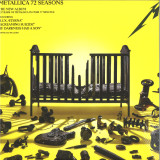
Metallica melden sich mit einem Knall zurück!
Die achtfachen GRAMMY-Gewinner veröffentlichen ihr langersehntes 12tes Studioalbum mit dem Titel „72 Seasons“.
Das Album beinhaltet 12 brandneue Songs, produziert von James Hetfield, Lars Ulrich und der Rock-Produzenten-Ikone Greg Fidelman (U2, Slipknot, Johnny Cash, Slayer, Red Hot Chili Peppers, uvm.) Als Vorgeschmack auf das Gesamtwerk dient der bereits veröffentlichte Song „Lux Æterna“. Mit 77 abwechslungsreichen Minuten bietet das Album darüber hinaus jedem Fan die Möglichkeit, sich vollkommen in das Werk fallenzulassen.
Den Titel erklärt James Hetfield wie folgt: „72 seasons. The first 18 years of our lives that form our true or false selves. The concept that we were told ‘who we are’ by our parents. … Prisoners of childhood or breaking free of those bondages we carry.”
Zusatzinfo:
Zeitgleich mit der Bekanntgabe des Albums und dem Release von „Lux Æterna“ kündigen Metallica auch ihre M72 Welt-Tournee an, die sich über die Jahre 2023 und 2024 erstrecken wird. Im Zuge dessen werden jeweils 2 Shows in Hamburg und München gespielt, jede davon mit einer gänzlich anderen Setlist und Support-Acts.
Metallica melden sich mit einem Knall zurück!
Die achtfachen GRAMMY-Gewinner veröffentlichen ihr langersehntes 12tes Studioalbum mit dem Titel „72 Seasons“.
Das Album beinhaltet 12 brandneue Songs, produziert von James Hetfield, Lars Ulrich und der Rock-Produzenten-Ikone Greg Fidelman (U2, Slipknot, Johnny Cash, Slayer, Red Hot Chili Peppers, uvm.) Als Vorgeschmack auf das Gesamtwerk dient der bereits veröffentlichte Song „Lux Æterna“. Mit 77 abwechslungsreichen Minuten bietet das Album darüber hinaus jedem Fan die Möglichkeit, sich vollkommen in das Werk fallenzulassen.
Den Titel erklärt James Hetfield wie folgt: „72 seasons. The first 18 years of our lives that form our true or false selves. The concept that we were told ‘who we are’ by our parents. … Prisoners of childhood or breaking free of those bondages we carry.”
Zusatzinfo:
Zeitgleich mit der Bekanntgabe des Albums und dem Release von „Lux Æterna“ kündigen Metallica auch ihre M72 Welt-Tournee an, die sich über die Jahre 2023 und 2024 erstrecken wird. Im Zuge dessen werden jeweils 2 Shows in Hamburg und München gespielt, jede davon mit einer gänzlich anderen Setlist und Support-Acts.
- A1: Pasillaneando (Feat Humberto "Huango" Muriel)
- A2: El Expresidiario (Feat Humberto "Huango" Muriel)
- A3: Bang Bang (El Tiroteo) (El Tiroteo)
- A4: Langaruto (Feat Humberto "Huango" Muriel)
- A5: Todo Es Todo (Feat "Piper Pimienta" Diaz)
- A6: Oriza (Feat "Piper Pimienta" Diaz)
- B1: La Chica Del Barrio Obrero (Feat "Piper Pimienta" Diaz)
- B2: Perlas Negras (Feat "Piper Pimienta" Diaz)
- B3: El Dia Que Naci Yo (Feat "Piper Pimienta" Diaz)
- B4: Algo Pa' Goza (Feat "Piper Pimienta" Diaz)
- B5: Yo No Vuelvo A Querer (Feat "Piper Pimienta" Diaz)
- C1: El Coco (Feat "Piper Pimienta" Diaz)
- C2: Dame Un Break (Feat "Piper Pimienta" Diaz)
- C3: Canto A Panama (Feat "Piper Pimienta" Diaz)
- C4: Cumbia Bacana (Feat "Piper Pimienta" Diaz)
- C5: Pa' Los Bomberos (Feat "Piper Pimienta" Diaz)
- D1: Caifaz (Feat Joe Arroyo)
- D2: Va A Llover (Feat Wilson Saoko)
- D3: Fruko Presidente (Feat Joe Arroyo)
- D4: La Loteria (Feat Joe Arroyo)
Civilistjävel! returns to Copenhagen label FELT with a four track EP following on from 2022's Järnnätter album.
Equally well placed next to the Biosphere / early Fax +49-69/450464 camp as well as various decades of electro-acoustic drone practitioners, Fyra platser (Four Places) also includes a trip-hop leaning collaboration with Cucina Povera. Whilst Järnnätter drew influence from the cyclical, chasmic nature of dub techno, Fyra platser hones further in on the ‘between’ areas in a minimal, reductivist fashion. The rhythms are there to follow but are primarily beatless and more expansive, though skewing perceptions of time in the same trademark manner.
Three locations in the Nordingrå area of the Swedish high coast are exorcised and channelled through sound. ‘Kolugn’ is a deliberately grainy, sepia-tinged continuation of the likes of Robert Rutman’s work across the 70s American avant-garde. It sits in contrast to the more obviously synthesis-led direction of fellow longform piece ‘Valmsta’. The location slowly changes to Finland via Athens, scenes of cafe conversations and hazy polaroids informing the lyrics of ‘Louhivesi’. The result sounds like a 90s illbient record dropped around 30 bpm and the stylus has caught on a perennial 8-bar loop. The balance of Cucina Povera’s cold, reverb-heavy vocal inflections drive the track into another dimension. If Moral were the Scandi Joy Division, this pairing must be the Scandi Massive Attack.
Mammal Hands announce spell-binding new album 'Gift from the Trees', their fifth studio album, pointing to subtle shifts and exciting new departures for the unique trio
"We're at a point now where playing and writing together can sometimes feel almost telepathic, that as individuals we can tune in to a collective resonance..."
Mammal Hands fifth album 'Gift from the Trees' offers a fresh perspective on the unique trio's singular music. The first to be recorded in a residential studio, the band enjoyed the opportunity to go late into the night searching for a deeper, more organic experience, closer to both their writing process but also their trance-like live performances. While some of the music was pre-composed and had even been performed live, the band also enjoyed the opportunity to improvise ideas in the studio. Drummer Jesse Barrett explains:
We wanted to have a more immersive experience that felt closer to our writing process. One thing that was really important to us was feeling free to jam out ideas as they came to us. We're at a point now where playing and writing together can sometimes feel almost telepathic, that as individuals we can tune in to a collective resonance and just follow that thread where it wants to go. Sometimes it's something as simple as a rhythmic, textural flow, like in Sleeping Bear.
There was also a conscious decision to move away from the sound and ambiance of the recording studio, with the band opting to engineer the record with their go-to live engineer Benjamin Capp before mixing the sessions with Greg Freeman in Berlin. The idea was to try and capture more of the energy of the band's captivating shows, saxophonist Jordan Smart explains:
Considering the group of tracks we had, it made sense to try and capture this process as organically and honestly as possible, and so a change in studio environment felt like the right move to us. Some of the tracks have a raw joy and energy that came with being able to play together again after a long period of time of having been apart, and capture that feeling of just being happy to be in a room with our instruments altogether again.
Whereas for pianist Nick Smart there was also the chance to really go deep into the band's music:
The new studio environment really opened us up to different ways of working and thinking because we could record at any hour of the day or night. I think this allowed us much more freedom to try unusual ideas and push elements of the music to extremes because we had the time to really focus in on the detail and work on things without time pressure. With some tracks, we were trying to find the boundaries of our playing ability and push beyond that point. With others, it was just getting into the right mindset and putting as much energy and emotion into the take as possible.'
The Welsh environment outside the studio doors seeped into the music presented on Gift from the Trees, with two recording sessions (one in winter and one in the spring) bringing different moods: one bleak and wintery, the other more hopeful and bright – an energy that permeates through tracks such as Kernel and Dimu.
Gift from the Trees opens with wonderfully elevating The Spinner which grew from one of Nick's piano parts and was developed and arranged into a complete tune without losing the feeling of constant flow and motion. It is almost like a dance, with the interaction of different melody parts and the doubling of certain parts melding together and fitting into the overall energetic flow, while Jesse's drums are both floating and deeply melodic. Riser aims to capture the band's raw energy and intriguingly is influenced by both breaks and modern drum production but also minimalist classical composition. Nightingale features the band at their most delicate and lyrical – a band favourite it draws heavily on modern folk with a beautifully realised melody that came unforced to pianist Nick Smart before being jammed out together. It was recorded early one morning, bringing an extra light and brightness to this beautiful performance.
Another album highlight is Dimu which utilises one of drummer Jesse Barret's favourite rhythmic devices from the Tabla repertoire and draws inspiration from Indian, Greek and Arabic music as well as modern folk arrangements. Dimu starts with saxophone over a bed of drones and percussion and moves through many different sections that frame and present the melodies in unique ways. The beguiling, intimate Deep within Mountains aims to place you in the room with the band as they play; it was recorded late at night to capture a dreamlike, liminal ambiance. The piano solo really reflects this mood and energy while the tenor is some of the softest and closest on the recording. Elsewhere, the remarkable Labyrinth started with what Nick describes as "some weird recording on my phone from a soundcheck, where Jordan was playing some crazy sounding bass clarinet part and I quickly recorded him", giving birth to a captivating, complex slice of propulsive 'almost' contemporary classical that like so much of the music on Gift from the Trees really couldn't be any other band than Mammal Hands.
Finally, the album draws to a close with the glorious Sleeping Bear, a tune that was wholly improvised in the studio. Nick and Jesse entered a simple but 'weird' locked groove and Jordan improvises melodies over the top. The track came about without any planning or thought; it was one of those special things that came by surprise and the band felt offered the perfect ending to their latest gift to us all: a deeply enthralling album that captures so much of what makes Mammal Hands a special band while mapping out new routes and paths for their beautiful, beguiling music.
- A1: Song Can Heal The Ailing Spirit - Yevgeni Abramovich Baratynsky
- A2: There Were Storms And Tempests - Yevgeni Abramovich Baratynsky
- A3: La Belle Dame Sans Merci - John Keats (Transl. Wilhelm Veniaminovich Lewick)
- A4: O Melancholy Time! Delight For Eyes! - Aleksandr Sergeyevich Pushkin (Excerpt From “Autumn”)
- A5: Farewell, O World, Farewell, O Earth - Taras Hryhorovych Shevchenko (Excerpt From “The Dream”)
- A6: I Will Tell You With Complete Directness - Osip Emil’evich Mandelstam
- B1: Here’s A Health To Thee, Mary - Aleksandr Sergeyevich Pushkin (After A Poem By Bryan Waller Procter)
- B2: Winter Journey - Aleksandr Sergeyevich Pushkin
- 9: The Isle - Percy Bysshe Shelley (Transl. Aleksandr Solomonovich Rapoport)
- B3: Autumn Song - Sergei Aleksandrovich Yesenin
- B4: Swamps And Marshes - Sergei Aleksandrovich Yesenin
- B5: Winter Evening - Aleksandr Sergeyevich Pushkin
The gentle music and quiet nostalgia of some of the most exquisitely beautiful poetry ever written flows through Hélène Grimaud’s latest album, a tribute to the Ukrainian composer Valentin Silvestrov. Together with baritone Konstantin Krimmel, winner of the 2018 International Helmut Deutsch Lied Competition, Grimaud presented extracts from Silvestrov’s song-cycle Silent Songs at the Stienitzsee Turbine Hall near Berlin last August, in the presence of the octogenarian composer, who has lived in Berlin as an exile from his war-torn homeland since March 2022.
Devon Church ist ein aus Winnipeg, Manitoba, stammender und in New York City lebender Singer-Songwriter. Er war viele Jahre lang Multiinstrumentalist, Co-Autor und Produzent des Dreampop-Duos Exitmusic, dessen Album Passage 2012 bei Secretly Canadian erschien und von Pitchfork als "aufrührerisch, cineastisch und manchmal brillant" beschrieben wurde. 2018, im selben Jahr, in dem Exitmusic ihren Abgesang The Recognitions auf felte veröffentlichte, brachte Church sein Solodebüt We Are Inextricable ebenfalls auf felte heraus, das die texturalen elektronischen Elemente, die er während der Exitmusic-Jahre genutzt hatte, in den Dienst eines Songwriting-Stils stellte, der in der Folk-Rock-Tradition verwurzelt ist. Nachdem Church 2019 in den gesamten USA aufgetreten war (im Vorprogramm von Orville Peck, Adam Green, Kirin J Callinan und Black Marble), machte er sich an die Arbeit, um sein neuestes Werk, Strange Strangers, aufzunehmen, während er in einer Scheune im ländlichen Pennsylvania Zuflucht vor der globalen Pandemie suchte. Das größtenteils selbst produzierte Album klingt, als hätte Eno aus der Apollo-Ära Phil Spector auf halbem Wege zu den Aufnahmen von Death of a Ladies Man die Regler (und die Pistole) entrissen. Die atmosphärischen Elemente von Churchs früheren Produktionen werden auf dem Album sublimiert und in den Dienst von bandgesättigtem Gesang, Combo-Orgeln und Gitarren gestellt. Seine Stimme, die seit seinem Debüt selbstbewusster und zurückhaltender geworden ist, ist immer noch irgendwo zwischen einem lakonischen Lee-Hazelwood und einem rauchigen Tom Waits, aber sie wird bei Stücken wie dem intensiv melodischen und treibenden "Flash of Lightning in a Clear Blue Sky" deutlich ruhiger. Die engelsgleichen Backing Vocals von Churchs Partnerin, der Künstlerin Ada Roth, verleihen dem Bariton des weltmüden Erzählers eine Aura von traumhafter Leichtigkeit. Wenn Roth in gedämpften, an Hope Sandoval erinnernden Tönen in den Vordergrund tritt und einen Text wie "We're so bored of the apocalypse" vorträgt, nehmen die Dinge eine subtil bedrohliche Wendung in Richtung Pop-Surrealismus. Ein Sinn für kosmischen schwarzen Humor hat sich in Churchs Texte eingeschlichen. Strange Strangers leiht sich den Titel von dem Öko-Philosophen Timothy Morton: "The strangeness of strange strangers is itself strange, meaning the more we know about an entity the stranger it becomes."
Everything eventually turns to dust. Everyone knows this, but few want to acknowledge that our time on this mortal coil is fleeting, preferring to remain in stasis, in hopes that "the end" will pass them by. Chicago trio FACS (guitarist Brian Case, bassist Alianna Kalaba & drummer Noah Leger) have been perfecting their brand of intense, cathartic post-punk over the course of four ever-evolving albums, beginning with 2017's "Negative Houses" thru 2021's landmark "Present Tense', which saw the trio dig deep into the gaping maw of a black hole & pulling back whatever debris they could grasp onto. Their newest "Still Life In Decay" comes as an addendum to the last album - a "post-event review" if you will. "Still Life In Decay" starts with a squall of white noise before collapsing into the band already locked into "Constellation"s lumbering groove, with Case's guitar a ghostly presence, appearing & disappearing in washes of gauzy feedback throughout the track. FACS have never been more locked in as a unit, and "Still Life In Decay" is a decidedly more focused effort. The apocalyptic chaos that defined their previous album "Present Tense" is waved away in favor of an examination of events with cumbrous clarity. FACS are a heavy band, but they don't necessarily FEEL like one (see side two's "Still Life", where Case's fluttering, melodic guitar lines are buoyed by the insistent, underlying pulse of the bass & drums). As a rhythm section, Kalaba & Leger dance & twist around each other like a double helix, forming the DNA of what makes FACS special. Collectively they approach rhythm from outside the groove as opposed to inside it, creating a lattice where Case weaves guitar lines like creeping vines, which makes the moments on "Still Life In Decay" where the band DOES lock in even more powerful. When the guitar punctures the lock-step swing of "When You Say", it hits like a hammer. Case utilizes his lyrics like a person suffering from anterograde amnesia; repeating phrases & holding onto old memories in a desperate attempt to avoid the slide into oblivion. Freeform poetic missives touching on themes of resignation, cynicism, class warfare, and a search for identity & meaning in a crumbling society; A primal desire to hold onto anything in a post-pandemic barrage of sensory overload. The album is a decidedly local affair; recorded once again at Chicago's famed Electrical Audio by renowned engineer Sanford Parker & mixed at his Hypercube Studio in Chicago's Ravenswood neighborhood & mastered by Matthew Barnhart at Chicago Mastering Service.
Like many debut solo albums from musicians in bands, Jared Mattson’s Peanut didn’t originally come from a need to break away. As a composer for the Mattson 2, Jared Mattson was working up a batch of new songs through the winter of 2019-2020, looking ahead to the next album he and brother Jonathan Mattson, the blitzkrieging drummer, would record. As the pandemic hit stateside, Jared holed up in his home studio and kept developing the new music. And during that process it became increasingly clear to them that this wasn’t shaping up to be the next Mattson 2 album. This was a Mattson 1 album.
Jared had been absorbing the guitar work on records by reggae stalwarts Aswad and Burning Spear, and also the Police’s Andy Summer and the ways he gives songs space. And Jared wanted a prominent bass sound, too, where the guitar itself sometimes settles into the passenger seat so that the bass can drive. Lyrically, the album taps into our rattled world, where anxiety, loss, violence, and regret are sometimes pierced by the promise of love. The time spent working on the album was a profoundly introspective time as he reflected on past relationships while living through and writing during the pandemic, he also never lost sight of this truth about himself: Life is great with music.
One of the album’s standout highlights is “Burn Down Babylon,” which is propelled by the bass’s funk-you-say groove. You don’t often encounter many pop songs with so blunt an opening line as, “I got punched in the face last night by a neo-Nazi,”—a true experience that was delivered many years ago in a bar brawl in Carlsbad, California. But to hear the music that goes along with this tale manages a vibe that is less melee and more backyard jubilee.
When “Please Come Here,” with an intro that slinks along like a Cadillac on a Sunday morning drive, kicks in, it’s typical of the album’s melodic pop flourishes, but the twist here is that the vocals are in Japanese (The Mattson 2 have toured Japan 20 times and covered many Japanese pop songs on 2018’s Vaults of Eternity: Japan). Ween’s “She Wanted to Leave” is the lone cover, but the way Jared reimagines the song makes it fits seamlessly within the album’s sonic template. The song’s inclusion was also a personal way to honor one of Jared’s best friends, who died from cancer two years ago. The two had always bonded over the song and marveled at its inherent beauty. Ultimately, Mattson’s solo debut unfolds like a string of fascinating clouds: These are not songs in a hurry; they shift around as they float by, and, most notably, they carry their unique kind of electric charge.
Former Granville Sessions frontmen and current Moose Funk Squad members have returned.
MNSR Frites, Archetype and Luca Brazi finally join forces for Mustard Tiger, their full-length debut
as a trio.
Having already written and performed nationally together for over a decade, this long overdue LP
showcases the effortless chemistry these respective artists have honed during their time as touring
band members and established solo acts.
Archetype is an audio craftsman, capable of both intricate rhyme schemes and a dynamic vocal
ability to boot. MNSR Frites has flows for days, with unpredictable and complex wordplay that
results in stunning verses. Luca Brazi always delivers hard hitting bars and punchline haymakers,
while providing the stylistic sample based production to formulate the beast that is Mustard Tiger.
John Eliot Gardiner feiert am 20. April 2023 seinen 80. Geburtstag. Parallel zu der 64-CD umfassenden Box werden zudem noch zwei bedeutende Alben auf Vinyl veröffentlicht: Händels Wassermusik und Purcells King Arthur.
Als dieses Album 1980 mit Händels Wassermusik aufgenommen wurde, war das Ensemble English Baroque Soloists erst zwei Jahre zuvor gegründet worden.
John Eliot Gardiner hatte 1964 zunächst den Monteverdi-Chor und 1968 das Monteverdi-Orchester gegründet, das auf modernen Instrumenten spielte.
In den späten 1970er Jahren wechselte das Orchester zu historischen
Instrumenten und wurde zu den English Baroque Soloists.
Das erste Konzert unter dem neuen Namen fand 1977 bei den Innsbrucker Festwochen für Alte Musik statt. Die Wassermusik-Suiten sind eine der ersten Aufnahmen der English Baroque Soloists. Gardiners Ästhetik bestand aus Genauigkeit, instrumentaler Perfektion, Intonation und Dynamik - es ging darum, alle Vorurteile, die es damals über den Barock geben konnte, abzubauen
- A1: Court Is Closed
- A2: Inside Black America
- A3: Times Are Hard, Friends Are Few
- B1: Prelude To Hell
- B2: Needle N' Spoon
- LP 2: Del Jones’ Positive Vibes (1973)
- C1: Vibe-Ing Theme
- C2: Prelude Ta Hell
- C3: Needle 'N Spoon
- C4: Cold Turkey
- D1: Soul Of Black Folks
- D2: Court Is Closed
- D3: Inside Black America
- D4: Times Are Hard, Friends Are Few
Del Jones, a poet, and proto-rapper, recorded Court is Closed in 1973. It was underground Philadelphia’s response to Amiri Baraka’s and Gil Scott-Heron’s indictments of the Black American experience - a call to action not just for his city, but for the nation. The set includes an oversized 10 page booklet by Jeremy Cargill, with contributions by Now-Again founder Eothen “Egon” Alapatt which delves into Jones’ music, milieu and life as an author, activist and orator, shining a light not only on his prescient awareness of hip-hop, but also on the struggles he confronted, and his urgent, current mandate. Court is Closed, equal parts psychedelic rock and deep funk, had a limited release of 500 copies and was rarely heard before Jones overdubbed horns on the album, remixed and augmented it with additional music, and issued it as the better-known Positive Vibes. Here we present both versions of the album on the 23rd release in the deluxe Now-Again Reserve Edition series. Jones’ story, and that of his family, is like his music: a loud, vital voice long silenced. Understanding it now is not just a visceral musical experience, but an essential dissection of racism and classism in America.
- A1: Holy Spirit (Prod. By Streetrunner & Tarik Azzouz)
- A2: BeneT (Prod. By Jimmy Dukes)
- A3: Eye On Money (Prod. By The Heatmakerz)
- A4: Find It Out (Prod. By Lt Beats)
- B1: Can’t Show Love Pt. 2 (Prod. By Lt Beats)
- B2: Flour City 3 (Feat. Eto) (Prod. By Thanos Beats)
- B3: Painful (Feat. Che Noir & Freeway) (Prod. By Maki)
- B4: Last Gasp (Feat. Ransom & Tearz)
38 Spesh has quietly become tastemakers’ top pick for “next to blow.” Just ask LeBron James, Kevin Durrant, DJ Premier, Sway, Method Man, or Lloyd Banks, all of which have co-signed this Upstate New York emcee. His 7 Shots EP, the third and final instalment in his fan-favorite “Shots Series,” marked the moment that many caught on to the TRUST movement. The 8 track offering gives underground Hip-Hop fans exactly what they want, hard bars over soulful beats. The project features guest verses from Freeway, Ransom, Eto, and Che Noir, as well as production from Streetrunner, The Heatmakerz, LT Beats, Thanos Beats, and more. Mixed and mastered by Chris Pinset Cover by Laz Art Direction by Jordan Commandeur A&R by Ransom
[h] B4. Last Gasp (feat. Ransom & Tearz) [7 Shots Version] (prod. by Mayor, Ty Jamz & Bernard B. Westwood)
Released in the UK in January 1967 by Decca Records and February by London Records in the US – Between The Buttons was the Stones’ fifth British and seventh US studio album. Released as the follow-up to Aftermath, this album marked a high point in the band’s career, continuing their ventures into psychedelia and baroque pop balladry, it is among the band’s most musically eclectic works. Brian Jones sidelined his guitar on much of the album, instead playing a wide variety of other instruments including organ, marimba, vibraphone, and kazoo. Piano contributions came from two session players: former Rolling Stones member Ian Stewart and frequent contributor and studio legend Jack Nitzsche. It was the last album produced by Andrew Loog Oldham, the band’s manager and producer of all of their albums to this point.
The album has one of the most striking sleeves of the period, featuring a classic Gered Mankowitz image on the cover. The photo shoot took place at 5:30 in the morning following an all-night recording session at Olympic Studios. Using a home-made camera filter constructed of black card, glass and Vaseline, Mankowitz created the effect of the Stones dissolving into their surroundings – according to Mankowitz… ""to capture the ethereal, druggy feel of the time; that feeling at the end of the night when dawn was breaking and they’d been up all night making music, stoned.”
The songs continued Aftermath’s lyrics of acute social observation and savage insight, their earlier raw, rootsy power enhanced by other influences of the period – notably The Beatles, The Kinks, and again Dylan. It is one of their strongest, most varied LPs, with many great songs that remain unknown to all but Stones devotees.
The inventive arrangements and innovative instrumentation on brooding near-classics like All Sold Out, My Obsession and Yesterday’s Papers brought a new dimension to the music. She Smiled Sweetly shows their hidden romantic side at its best, Connection is one of the record’s few pieces of more conventional driving rock and album closer Something Happened To Me Yesterday includes Keith’s first solo vocal.
The US version includes contemporaneous hits – the two songs that gave the group a double-sided number one in early 1967: the shameless and controversial Let’s Spend The Night Together and the beautiful, melancholy Ruby Tuesday.
Released in the UK in January 1967 by Decca Records and February by London Records in the US – Between The Buttons was the Stones’ fifth British and seventh US studio album. Released as the follow-up to Aftermath, this album marked a high point in the band’s career, continuing their ventures into psychedelia and baroque pop balladry, it is among the band’s most musically eclectic works. Brian Jones sidelined his guitar on much of the album, instead playing a wide variety of other instruments including organ, marimba, vibraphone, and kazoo. Piano contributions came from two session players: former Rolling Stones member Ian Stewart and frequent contributor and studio legend Jack Nitzsche. It was the last album produced by Andrew Loog Oldham, the band’s manager and producer of all of their albums to this point.
The album has one of the most striking sleeves of the period, featuring a classic Gered Mankowitz image on the cover. The photo shoot took place at 5:30 in the morning following an all-night recording session at Olympic Studios. Using a home-made camera filter constructed of black card, glass and Vaseline, Mankowitz created the effect of the Stones dissolving into their surroundings – according to Mankowitz… ""to capture the ethereal, druggy feel of the time; that feeling at the end of the night when dawn was breaking and they’d been up all night making music, stoned.”
The songs continued Aftermath’s lyrics of acute social observation and savage insight, their earlier raw, rootsy power enhanced by other influences of the period – notably The Beatles, The Kinks, and again Dylan. It is one of their strongest, most varied LPs, with many great songs that remain unknown to all but Stones devotees.
The inventive arrangements and innovative instrumentation on brooding near-classics like All Sold Out, My Obsession and Yesterday’s Papers brought a new dimension to the music. She Smiled Sweetly shows their hidden romantic side at its best, Connection is one of the record’s few pieces of more conventional driving rock and album closer Something Happened To Me Yesterday includes Keith’s first solo vocal.
The US version includes contemporaneous hits – the two songs that gave the group a double-sided number one in early 1967: the shameless and controversial Let’s Spend The Night Together and the beautiful, melancholy Ruby Tuesday.