Brasil Novo is a compilation made up of eight contemporary Afro-Brazillian tracks disseminating the rich and percussive heritage of Brasil and Samba De Coco. The compilation was compiled by Sao Paolo’s DJ Tahira and London’s Tim Garcia and flits between Samba, Candomble, Batuques, Jazz, Folk and beyond, all selected with the dancefloor in mind.
Some of the tracks have never before been released on vinyl like Dona Celia Coquista’s ‘O Bar’ and the live version of Toró Instrumentals ‘Dunas’, and the release also features tracks from Grupo Bongar, Renata Rosa and women’s Afro Bloco, Ilú Obá De Min.
The compilation has so far been supported by the likes of Gilles Peterson and Jamz Supernova (BBC 6 Music) Lopa Kothari (BBC Radio 3) and Zakia (NTS) and many more.
Search:bar musica
Four years in making, Voyeurs In the Dark is Toronto artist Barzin’s fifth studio album. That the album is more cinematic in its scope and conceptual in feel than his previous studio albums can be attributed to the time he spent over the past several years composing the soundtrack for the independent film, Viewfinder. Voyeurs In the Dark retains that cinematic quality, and at the same time infuses the music with elements taken from Jazz, electronica, rock and pop. Having primarily explored the quiet side pop and folk in his previous four albums, Barzin has expanded his musical palate, broadening his sound towards a more an experimental direction, while still retaining his preoccupation with exploring the internal landscape. The uniformity of sound that characterized the previous albums has been abandoned for the expression of differing aspects of the self that at times hold opposing views and desires. This is best represented in the image chosen for the cover of the album, which depicts three figures in one body. The album seems to be the expression of not one unified self, but the various aspects of the self. Voyeurs In the Dark sees the artist plot a seductive, contemplative route through city haze, shuttling between graceful glimmering interludes, with wonderfully atmospheric songs at every stop. From opener Voyeurs In the Dark’s first guitar strums and the fizz of its drum machine, the record envelopes itself in a glorious shadow, as shown in the slow waltz of I Don’t Want To Sober Up, dancing around its own swirling guitar chords. On Watching, Barzin plunges himself deeper into a wash of cyclic bass, guitar and synth riffs, as the gloom grooves into light. It’s Never Too Late To Lose Your Life has a much more affirming and urgent tone, shade turning into shapes and motion, while To Be Missed In the End builds its own smoke in a cloud of saxophone and sparse guitar notes, closing out a record full to the brim with scatterbrain beauty and eclectic dusk. Voyeurs In the Dark will be released worldwide on Monotreme Records on May 6th on CD and limited edition180 g black vinyl LP with printed inner discobag and digital download card. Press highlights so far: Video premiere and feature interview on Rumore.IT. Airplay on BBC 6Music, Amazing Radio (UK and US), Glastonbury FM, Shoreditch Radio, Indie Music Discovery, Listen to Discover, Norfolk Radio. Press coverage in V13, Skope, Whisperin and Hollerin, Fame Magazine, High Violet, Indie Midlands, Beehive Candy, Music Won’t Save you. Feature confirmed for Wonderland Magazine. PUBLICITY - UK and North America press and radio Cannonball PR. Europe Five Roses Press
Clear Vinyl
Bartosz Kruczynski - the sometimes-ambient producer also known by his more club-ready moniker, Earth Trax - returns to the Shall Not Fade catalogue with his third full-length album. The Sensual World LP draws from both the moody, industrial soundscape of the cold wave-inspired LP1; and the warmer, more ethereal undertones of its successor. Whilst lending stylistic aspects from both, his latest release maintains their mercuriality and textural complexity whilst at the same time resembling something distinctly new. This 13-tracker sees the Warsaw producer continue to prove himself as one of the most versatile and consistent producers in the game.
Composed and produced during the 2020 pandemic, The Sensual World contemplates eco/environmental aesthetics and recontextualizes the genres that Kruczynski took as a springboard for the inception of his musical career. The aptly-named "Dream Pop" and "Fireflies" use arpeggiated melodies, vocal chops and luscious pads to capture the transportive allure by which early Earth Trax releases have been recognised; whilst later in the record, "Pearl" and "Splash" pair these tropes with those of industrial techno to create two pulsating dancefloor heaters. Elsewhere, the focus is on sound design and rhythmic complexity, with sharp, crystalline acid melodies ("Metal") and "Dreams Made Flesh's" broken drill beats and epic synths. Whilst other tracks see Kruczynski tap into the "bittersweet dance floor moments" for which he has become renowned over the course of his illustrious career ("Nowhere"), The Sensual World also offers its listeners sonic respite with some stripped-back, down-tempo slow burners "Nowhere" and "Everlong".
A protean producer who nonetheless has succeeded in helming a truly inimitable and idiosyncratic sound, The Sensual World LP sees Kruczynski cater for everyone - from the emotional ravers to the more hard-faced warehouse dwellers.
First album by this duo, known separately for their work in Mouse on Mars
and Gastr del Sol.
Two long-form pieces, utterly different from one another: one hyper-detailed
electronic music and sound poetry, and the other live-in-the-studio electric
guitar and laptop paint-peeling.
The exciting first chapter in a long-anticipated collaboration
David Grubbs and Jan St. Werner met in the mid-1990s when Grubbs was
playing with Gastr del Sol and The Red Krayola and St. Werner in Mouse on
Mars and Microstoria. After years of exchanging ideas, ‘Translation from
Unspecified’ marks their first time locking horns as a duo, and it’s clear this
deck-clearing collaboration was long overdue.
In January 2020 Grubbs arrived at Mouse on Mars’ Berlin studio Paraverse
with a guitar and ‘Translation from Unspecified’, an open-ended, seemingly
self-generating poem suggesting AI, one of the themes in St. Werner’s recent
work. This became the side-length title track, a winding corridor of electronic
fanfares and spontaneous musical miniatures urging Grubbs’s slow and
steady recitation to grow wings and graduate into song.
Who knows where this idiosyncratic mise-en-scène - day-glo, extrovert
electronics and task-oriented human - came from? Reference points - distant
ones - might include Robert Ashley and Paul De Marinis’s ‘In Sara, Mencken,
Christ and Beethoven...’ and the sound poetry of Anton Bruhin.
Flip the record and you have ‘Soixante Ooze’, a live-in-the-studio duo for
guitar and computer more recognizably St. Wernerian and Grubbs-like that
reconfigures elements of the title track before finally morphing into needlepinning monoliths of sound.
David Grubbs has released fourteen solo albums and appeared on more
than 200 releases. He was a member of the groups Gastr del Sol, Bastro,
and Squirrel Bait and has performed with Tony Conrad, Pauline Oliveros,
Luc Ferrari, Will Oldham, Loren Connors, the Red Krayola, Royal Trux, and
many others. His newest book is ‘Good night the pleasure was ours’ (Duke
University Press, 2022).
Jan St. Werner is an artist and electronic music composer best known as
one half of the group Mouse on Mars. He has collaborated with Oval’s
Markus Popp as Microstoria and written music for installations and films by
visual artist Rosa Barba. In 2013, St. Werner released ‘Blaze Colour Burn’,
the first of a series of experimental recordings called ‘the Fiepblatter
Catalogue’. Recently his work has prioritized installation and interventions
with spatialized sound, including a number of collaborations under the name
Dynamische Akustische Forschung (DAF).
If you’re looking for a raw, sugary blast of distorted pop, look no further than
‘Weird Nightmare’. The debut album from METZ guitarist and vocalist Alex
Edkins contains all of his main band’s bite with an unexpected, yet totally
satisfying, sweetness. Imagine The Amps covering Big Star, or the gloriously
hissy miniature epics of classic-era Guided by Voices combined with the
bombast of ‘Copper Blue’- era Sugar - just tons of red-line distortion cut with the
type of tunecraft that thrills the moment it hits your ears.
These ten songs showcase a new side of Edkins’ already-established
songwriting, but even though the bulk of ‘Weird Nightmare’ was recorded during
the COVID-19 pandemic, some of its tunes date back to 2013 in demo form.
“Hooks and melody have always been a big part of my writing, but they really
became the main focus this time” he explains. “It was about doing what felt
natural.”
To be clear: Weird Nightmare is not a ‘pandemic album’, but an album - some of
which had been gestating for quite a while - that just so happened to be recorded
during the pandemic. “I had always planned on finishing these songs, but being
unable to tour with METZ, and forced to lock down, really gave me a push.” After
days spent homeschooling his son, Edkins would drive to the METZ rehearsal
room and tinker deep into the night on these songs’ deceptively simple structures
and rich, static-laden textures. “It was a godsend for me,” he states about the
creative process. “The hours would disappear and I would get lost in the music
and record. It was a beautiful escape.”
‘Weird Nightmare’ is, in its own way, a study in extremes: Edkins’ melodic
instincts and penchant for dissonance are both turned up to the max throughout,
the latter reflecting not only the barn-burning tendencies of METZ, but Alex’s own
sonic predilections. “It doesn’t sound right to my ears until it’s pushed over the
edge.” He also cites other artists who are masterful at mixing the sublime and the
punishing - Kim Deal and Scout Niblett among them - as influences on his own
songwriting. “My favorite songs are the simple ones,” he explains. “I’ve never
been attracted to virtuosity or technicality. Certain songs have the power to lift
your spirits like nothing else can. I wanted to create that type of song.”
A few guests pitch in on Weird Nightmare: Canadian alt-pop genius Chad
VanGaalen adds his unmistakable touch to the ever-escalating ‘Oh No’, while
Alicia Bognanno of Bully lends her distinctive pipes to the thrashing ‘Wrecked’, a
collaboration that effectively saved the song. “I almost didn’t put it on the album
because I thought it was missing something,” Edkins explains. “I sent it to Alicia
and she lifted it way up.”
And taking risks and reaching out of Edkins’ comfort zone was the name of the
game when it came to making ‘Weird Nightmare’. “I found myself doing new
things I didn’t have the guts to do before, recording everything by myself and
trusting all of my musical instincts,” he states. “I think when music manifests
quickly, a certain amount of honesty automatically comes along with it. When it is
a purely instinctual creation, there is no opportunity to obscure the truth.”
Loser Edition LP pressed on Coke Bottle Green transparent vinyl.
If you’re looking for a raw, sugary blast of distorted pop, look no further than
‘Weird Nightmare’. The debut album from METZ guitarist and vocalist Alex
Edkins contains all of his main band’s bite with an unexpected, yet totally
satisfying, sweetness. Imagine The Amps covering Big Star, or the gloriously
hissy miniature epics of classic-era Guided by Voices combined with the
bombast of ‘Copper Blue’- era Sugar - just tons of red-line distortion cut with the
type of tunecraft that thrills the moment it hits your ears.
These ten songs showcase a new side of Edkins’ already-established
songwriting, but even though the bulk of ‘Weird Nightmare’ was recorded during
the COVID-19 pandemic, some of its tunes date back to 2013 in demo form.
“Hooks and melody have always been a big part of my writing, but they really
became the main focus this time” he explains. “It was about doing what felt
natural.”
To be clear: Weird Nightmare is not a ‘pandemic album’, but an album - some of
which had been gestating for quite a while - that just so happened to be recorded
during the pandemic. “I had always planned on finishing these songs, but being
unable to tour with METZ, and forced to lock down, really gave me a push.” After
days spent homeschooling his son, Edkins would drive to the METZ rehearsal
room and tinker deep into the night on these songs’ deceptively simple structures
and rich, static-laden textures. “It was a godsend for me,” he states about the
creative process. “The hours would disappear and I would get lost in the music
and record. It was a beautiful escape.”
‘Weird Nightmare’ is, in its own way, a study in extremes: Edkins’ melodic
instincts and penchant for dissonance are both turned up to the max throughout,
the latter reflecting not only the barn-burning tendencies of METZ, but Alex’s own
sonic predilections. “It doesn’t sound right to my ears until it’s pushed over the
edge.” He also cites other artists who are masterful at mixing the sublime and the
punishing - Kim Deal and Scout Niblett among them - as influences on his own
songwriting. “My favorite songs are the simple ones,” he explains. “I’ve never
been attracted to virtuosity or technicality. Certain songs have the power to lift
your spirits like nothing else can. I wanted to create that type of song.”
A few guests pitch in on Weird Nightmare: Canadian alt-pop genius Chad
VanGaalen adds his unmistakable touch to the ever-escalating ‘Oh No’, while
Alicia Bognanno of Bully lends her distinctive pipes to the thrashing ‘Wrecked’, a
collaboration that effectively saved the song. “I almost didn’t put it on the album
because I thought it was missing something,” Edkins explains. “I sent it to Alicia
and she lifted it way up.”
And taking risks and reaching out of Edkins’ comfort zone was the name of the
game when it came to making ‘Weird Nightmare’. “I found myself doing new
things I didn’t have the guts to do before, recording everything by myself and
trusting all of my musical instincts,” he states. “I think when music manifests
quickly, a certain amount of honesty automatically comes along with it. When it is
a purely instinctual creation, there is no opportunity to obscure the truth.”
Loser Edition LP pressed on Coke Bottle Green transparent vinyl.
UK superstar M Huncho announces the release of his long awaited debut album, dropping May 20th, which will be entitled ‘Chasing Euphoria’ . The album will consist of 22 tracks embodying Huncho’s versatile Trapwave sound.. M Huncho is the slick masked artist who has helped engineer a lucid, ultra-smooth lane for a new strand of high-end UK music that matches melodic lyricism with trap bite. British artist Reuben Dangoor designed the iconic artwork which see’s Huncho floating in his own hands against a euphoric backdrop. Having just come off a sold out tour across the UK, his fanbase is constantly growing and his upcoming ‘Huncho’s Wolrd’ festival taking place in Barcelona in May sets precedent for M Huncho’s worldwide takeover. His last solo project ‘Huncholini The 1st’ was released in 2020 and peaked at #5 in the official charts. Now, two years on, he is in the best place of his life musically and his debut album is a clear reflection of that. Huncho is back, he’s better and he is not slowing down.
- 1: White Over
- 2: Time To Drink
- 3: Rites Of Spring
- 4: Interlude
- 5: I Think, I Think
- 6: Litres Into Metres/Susurrus
- 7: Ghost Story (Flexidisc - Bonus)
Repress[24,16 €]
This is the second Haress album, a five piece from Shropshire. They channel the sounds of Fairport Convention, Lungfish, Papa M, Earth, Robert Wyatt, John Fahey, and Talk Talk. Taking influence and making it their own. The first vinyl press comes with a bonus flexi disc telling the story of the week the band spent recording the album, the weirdness, the positively supernatural happenings. On this album the core duo of Elizabeth Still and David Hand are joined by David Smyth (Mind Mountain, Kling Klang) on drums, Chris Summerlin (Hey Colossus, Kogumaza) on guitar, Thomas House (Sweet Williams, Charlottefield) on vocals and Nathan Bell (Lungfish, Human Bell) on trumpet. In early 2020 the group travelled to a disused water mill in North Wales for a week to record with engineer Phil Booth (JT Soar) and his mobile studio. The stories of what occurred are told on the flexi disc that accompanies the LP but the group’s plans for a relaxing break in the country were scuppered by events that were either highly unusual, or positively supernatural (depending on your own beliefs in such things). Well-made plans were abandoned and the recording was forced to develop according to the location it was being made in. Chance and accident were welcomed as a collaborator rather than a saboteur and the group exited the sessions extremely freaked-out but with the makings of an album. Ghosts is an incredible piece of work and posits Haress on their own when it comes to developing new approaches to traditional musical forms. The music contains many moments of immediate joy - the relative pop of House’s vocals on White Over, the wild horns of I Think I Think, the rush of warmth as Time To Drink morphs into focus. But it also stretches the sound Haress have carefully developed almost to breaking point with sections of music that feel like somebody - something - else is steering the ship. The 2 final songs – Litres Into Metres and Sussurus – are joined together by a collage of site-specific sound. It was decided to add the output from a detuned long wave radio to this section on the final night of recording. Static hissed from the device but as soon as the record light illuminated, a rich male baritone voice sang loud and clear from the radio, taking a solo right where it was needed and then disappearing into space forever like the Ghosts of the title.
Pachakuti is a musician and producer with family roots in Colombia. He plays keys, tenor saxophone and clarinet. While living and working in Berlin, he draws inspiration from the natural world, investigative travels, and ancestral traditions of Latin America and beyond. His expressive and rhythmical playing and his instantaneous compositions are directed at the human core, arousing subtle experiences. While not being conformed to one style, it always invokes a sense of liveliness and depth to be delved in. young.vishnu is a producer and DJ. He has studied philosophy and music in Hildesheim, Germany, which heavily influenced his views on meaning and mythology in music. In his DJ sets he selects and plays classic and contemporary Funk, Soul and Afrobeat. His practice as a DJ informs his work behind the boards directly, adding also more organic grooves and broader spectrum of musical styles to his in Hip-Hop based production. If you had to put one single tag on their forthcoming album Dédalo, the best choice would be Jazz. That being said, Pachakuti and young.vishnu's sound worlds might be better described in their own words: "We just make music and try to incorporate what we love about it". They are musical freethinkers with shared interests in eastern philosophy and botany who interweave Hip-Hop, Latin and Funk with musical storytelling and world mythology. Undoubtedly, their most ambitious work to date, Dédalo (Spanish synonym for labyrinth), recorded and produced over the course of a year, shows Pachakuti & young.vishnu's ambitions and growth. Where their debut work Semilla (2020) centered around the image of the seed, Dédalo takes on the entire garden. Besides playing multiple instruments by themselves, Pachakuti & young.vishnu invited a growing group of befriended musicians into the studio, including percussionist maestro Eric Owusu (Pat Thomas, Ebo Taylor, Jembaa Groove) and drummer Leon Raum (Bokoya, Wyl), as well as Brazilian newcomer vocalist Laíz, and members of their former band project Soularkestra. The 16 recorded songs, ranging from 1:19 to 14:58 minutes, take you on an emotionally honest, metaphoric journey through the maze of human existence, of modern society and mythic poetry. The mostly instrumental tracks build on expressive melodies, layered rhythms, and a wide range of musical instruments, merging the sounds of Jazz with the classical word of orchestras and choirs, and urban soundscapes with traditional instruments such as the Andean Kena and Charango, the Colombian Gaita and Marimba de Chonta, and an Indian harmonium. The Album thus weaves together past and future, and diverse cultural threads, sounds and ideas in an act of cultural appreciation and global conscience. Mixed and mastered by Roe Beardie at The Brewery Studios, Berlin. The album artwork itself merges the visionary art of Mexican painter Sergio Chávez Hollar with an original artwork-inlay of Brazilian artist Laíz and the work of Carsten Pölking of the Nima Compositions Archive.
Dédalo will be available digitally and on double-vinyl with inside-out print cover and colored inlay with credits and painting by Laís De Mello Barbero.
- A1: Robson Jorge & Lincoln Olivetti - Eva
- A2: Chene Noir - Le Train
- A3: Metropolis - Every Time I See Him
- A4: The Brand New Heavies - Stay This Way (Feat N'dea Davenport - The Lunar Dub)
- B1: Typesun - The Pl (Extended Edit)
- B2: King Errisson - Space Queen
- B3: Yusef Lateef - Robot Man
- C1: Daniel Humair, Francois Jeanneau & Henri Texier - Le Cyclope
- C2: Airto Moreira - O Galho Da Roseira (The Branches Of The Rose Tree) (The Branches Of The Rose Tree)
- C3: Francisco - Wache
- D1: Nar'chiveol - Apocalypse Now Ho
- D2: On - Southern Freeez
- D3: Soylent Green - After All
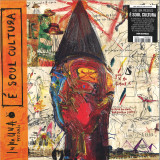
With some of the best DJs and selectors there is a certain mysterious sound or underlying feeling which unites the music they play, regardless of genre, year or tempo Luke Una is a master of telling a story through music and this compilation is a perfect example of his musical alchemy in action. Featuring tracks from Yusef Lateef, Airto Moreira, Crooked Man, Henri Texier and many more, it is a collection of new, old, rare and under-discovered music from around the world, all united by Luke under the banner of "E-Soul Cultura".It's best described by Luke himself, who writes: "As the 5AM city sleeps and the strobe lights are slowly turned off, we gather on the wrong side of town in a transcendental journey alone together. We are the late night disenfranchised holding on in various after parties, flats, lofts, random kitchens and basements into the outer cosmos with É Soul Cultura.
Music from exotic tear jerkers, Afro- spiritual jazz, cosmic Brazilian celestial grooves, machine street soul, dark horses, lost B- sides, £1 bargain- bin bombs, hidden gems, late night Italo dubbing, deep velvet N.Y.C garage, bass buggin sonic futurism, wrong speed 33BPM pitched up +8 new beat, majestic sunset strings, sweet vocals from heaven, no half steppin jazz dancing in outer- space and odd numbers. Yes… magical moments, together, holding on in witness protection suburban cul- de- sacs and Castle Court flats. Cosmic É high, 3000ft above the city getting evangelical to murky, wonky timeless beautiful music. This thing of ours dreaming of better days. Fail we may, sail we must, the sun will come up again."
- A1: Popsicles
- A2: Whistleblower
- A3: Jolly Tumbleweed
- A4: Pockets (Feat Olivier St Louis)
- B1: Deep Color Jam
- B2: Ndidi (Feat Nneka)
- B3: Moonshine
- B4: Albatross (Feat Lui Hill)
- C1: He's Coming
- C2: The Center (Feat J Lamotta)
- C3: Pho Tang Clan
- C4: Wasting All Your Lovin' (Feat Bowie)
- D1: Rauschgift (Part Ii)
- D2: Rainbow Runners (Feat Flo Mega)
- D3: Abstract Light
Created in the middle of the pandemic this album celebrates the magic that happens when 4 very uniquely gifted, but very complementary, instrumentalists come together for a jam session. From hazy guitars & warm keys over to funky beats & psychedelic grooves to ease you into an album that circumnavigates 360 degrees of soulful music.
Adding some garnish to this rhythmic stew are an impressive
collection of special guests: Olivier St. Louis, Nneka, Lui Hill,
J.Lamotta, Bowie & Flo Mega.
The KBCS represent the musical coming together of four very uniquely gifted, but very complementary, instrumentalists from Hamburg, Germany. Color Box, their sophomore LP, happened almost by accident, born as it was out of a series of freestyle jams.
The album kicks off with three instrumental openers - the first of which, Popsicles, is best described by the band them- selves as “a late summer teenage adventure”. Hazy guitars and warm keys playfully amuse each other over a solid, funky beat on what is an evocative and vivid introduction to this talented foursome. It’s followed by Whistleblowers, a sweet and somewhat whimsical piece where another sturdy bottom end allows keys and strings to enjoy some lively interplay, and Jolly Tumbleweed which, with its optimistic yet melancholic feel, completes the trio of warm, hazy psychedelic grooves to ease you into an album that circumnavigates 360
degrees of soulful music.
Adding some garnish to this rhythmic stew are an impressive collection of special guests. Berlin based, and internationally adored vocalist Olivier St.
Louis sprinkles a little Cali sweetness with the head nodding Pockets - one of the most immediate and soulful cuts on the album. A guaranteed ear worm, bringing a little sunshine to the winter months to come.
Elsewhere, multi-talented Nigerian singer Nneka lends her distinctive voice to the very succinct but powerful Afro-soul of Ndidi; the enigmatic Lui Hill lays his soul bare with honesty and candor on the alluring Albatross; Tel Aviv born J. Lamotta gives The Center a somewhat delicate and fragile dimension that plays perfectly alongside graceful guitars and contrasts with a sturdy backbeat of bass and drum; and Viviane Ann, AKA Bowie, smooths out the rough edges on the very radio friendly Wasting All Your Lovin’.
This is indeed music from the heart; a document of their coming together; and music that needs to be heard live!
Part of IF Music founder Jean-Claude’s ever expanding ‘YOU NEED THIS!’ series of compilation albums, the London record shop impresario and DJ takes us on another scintillating musical journey, this time exploring the catalogue of German jazz imprint, Enja Records. Like Jean-Claude’s ‘Journey Into Deep Jazz’ series on BBE Music and his 2017 exploration of Black Saint & Soul Note Records before it, ‘IF MUSIC PRESENTS YOU NEED THIS!: AN INTRODUCTION TO ENJA RECORDS’ provides another impeccably curated and programmed selection of music, assembled by simply one of the most knowledgeable and passionate vinyl specialists in the business. Featuring performances by John Stubblefield, Bobby Hutcherson, Harold Land, Don Cherry, Cecil McBee and Pharoah Sanders collaborator Marvin Hannibal Peterson to name but a few, this collection provides a great jumping-off point for Enja’s rich and diverse back catalogue. Founded in 1971 by Munich natives and jazz obsessives Matthias Winckelmann and Horst Weber, in its heyday Enja released albums by Eric Dolphy, Charles Mingus, Tommy Flanagan and John Scofield, as well as Kenny Barron, Chet Baker, Abbey Lincoln, Bea Benjamin, Freddie Hubbard, to name but a few. Having firmly established itself as “a bastion of all things deep in jazz” as Jean-Claude neatly sums up, Enja also went on to issue early World Music projects from Abdullah Ibrahim, Rabih Abou-Khalil, Mahmoud Turkmani and many others, and it remains active to this day. “There is no doubt that to the uninitiated, a compilation introducing such an esteemed archive is well overdue” says Jean-Claude. “As with previous albums curated by us, this is just a soupçon of this label’s vast back catalogue, which we hope will lead the listener to discover new music and to search out more from this criminally underrated, class act.”
Tracklisting
RIYL: Velvet Underground, Lou Reed, Nick Cave, Patti Smith, Leonard Cohen, Iggy Pop, Radiohead & Tom Waits. "If you have never heard the Doctors of Madness, you should. Musically they are the Velvet Underground, New York Dolls with shades of glam, hippie, prog and punk all rolled into one, yet are still totally original. Vastly underrated, they should have been huge. Pure genius" Vic Reeves…. The DOM are “the missing link between David Bowie & The Sex Pistols” (The Guardian May 2017). Exploding onto the music scene in 1975 with their theatrical, William Burroughs-inspired Sci-fi nightmare, they were misunderstood by many, but those who knew understood the importance of the band’s dangerous, uncompromising approach to lyrics, to music and to performance. Among the many fans of the band were acts as diverse as The Damned, Vic Reeves, Joe Elliott of Def Leppard, Spiritualized, Julian Cope, The Adverts, The Skids and Simple Minds. The Sex Pistols supported them, so did The Jam & Joy Division. They were the first to combine the avant-garde approach of The Velvet Underground with a distinctly European aesthetic. The blue hair, exotic stage-names, the lyrical themes of urban decay, political propaganda, mind control and madness were all taken up by the punk bands who followed in their wake. The DOM were trailblazers, pioneers, adventurers…pushing the boundaries of rock music and theatre to see how far it would go before it bust. What happened after them was due, in no small part, to what they achieved in 3 short years. They may not have been Jesus Christ, but they were, arguably, John the Baptist!!! Now, 40 years after they imploded, they are back…with an album seething with lyrical anger and passion. It is the most potent and incisive musical dissection of modern life and contemporary politics released the decade. With tracks titles like “So Many ways To Hurt You”, “Sour Hour”, “Make It Stop!” and the ground-breaking sonic assault of the title track “Dark Times”, Richard “Kid” Strange proves once again that he has his finger firmly on the pulse of our times, just as he had when he founded the band in 1974. Produced by John Leckie (Radiohead, Stone Roses, Pink Floyd), the new album, Dark Times, features contributions from Joe Elliott (Def Leppard), Sarah Jane Morris (Communards), Terry Edwards (PJ Harvey, Nick Cave etc), Steve ‘Boltz’ Bolton (The Who, Scott Walker) and the young protest singer Lily Bud, alongside the current thrilling and thunderous DOM rhythm section of Susumu Ukei (bass guitar) & Mackii Ukei (drums) of the Japanese extreme glam-metal band Sister Paul, and Dylan O Bates (violin and keyboards). Julian Cope, another rock star who, like Strange, found the confines of music too tight for his ambition, his energy and his imagination, was blown away when he first heard the songs, declaring, “These Dark Times are enormously informing: the RULES OF THE FUTURE are indeed being forged right now”. Top producer Martyn Ware (Human League/Heaven 17) said the album “…reminds me of Iggy Pop’s Kill City album – love it.” and Biba Kopf (The Wire) declared, “Still listening to new DOM album with immense interest and pleasure”. The first single, Make It Stop!, is an impassioned howl against the global drift to right wing extremism and persecution of minorities, and is already a live showstopper for the band. It features the thrilling cross-generational combination of Def Leppard’s Joe Elliott and Lily Bud on backing vocals. In the period since the last DOM gig in 1978, Richard has written a memoir, collaborated on a cantata with internationally celebrated composer Gavin Bryars, worked as an actor on films with Tim Burton, Martin Scorsese, Harmony Korine & Jack Nicholson, toured the world in a Russian version of Hamlet with James Nesbitt as his grave-digging co-star, played Glastonbury, sung baritone in the British premiere of Frank Zappa’s200 Motels at the Royal Festival Hall, directed a multi-media evening celebrating the life and work of William Burroughs, won Best Art Film Prize at the Portobello Film Festival last year, had his own live talk show, worked with Tom Waits and Marianne Faithfull on the William Burroughs/Robert Wilson stage play The Black Rider, curated events for the Tate Gallery, and sung Walt Disney songs with Jarvis Cocker.
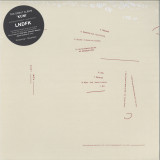
LNDFK (aka Linda Feki) presents her ground-breaking debut album, "Kuni" on Brooklyn-based Bastard Jazz Recordings. Undeniably on the rise after her 2019 breakout performance at Primavera Sound, LNDFK has already caught the attention of Pitchfork, Rolling Stone, Clash Magazine, Noisey, and Brooklyn Vegan (among many others) while being championed by the likes of Gilles Peterson, Tom Ravenscroft, and Jamz Supernova & landing spots on tastemaker playlists like Spotify's "Pollen" and "Fresh Finds."
"Kuni" is a spellbinding exploration of dichotomies: Love & Death (Eros & Thanatos), Flower & Fire, Delicacy & Violence, Poetry & Realism, Purification & Destruction. These opposites are reified in the 10-track LPs multifarious and multifaceted sounds, elegantly meandering through a variety of styles and genres, spearheaded by Linda and features the production wizardry of Darrio Bassolino who co-wrote the album.
"Kuni" opens with "Hana-bi," an ambient instrumental piece that sets the tone for the album. Inspired by the Takeshi Kitano 1997 film of the same name – particularly Joe Hisaishi's stunning soundtrack, as well as Kitano's paintings which appear in the film. "Hana-bi" expresses the dialoguing opposites of flowers and fire, the first of many dichotomous representations throughout the album. "Takeshi" acts as an extension and to "Hana-bi," albeit one of opposing sound, with its driving, highly syncopated drums (which reappear throughout "Kuni") – à la Karriem Riggins, Questlove, or Yussef Dayes – frenetic bass line, and jazz chords. Linda's sultry voice is interspersed, initially jumping around in scat fashion, being triggered as if a sample, before her lyrics come in; her vocals are used like an additional instrument, adding to the song's rich texture. "Kuni" truly hits its stride with the next song, "Smoke – a moon or a button" (its title lifted from the 1959 book by Ruth Krauss and Remy Charlip), which is structured like a jazz standard yet flows into neo-soul territory sonically with those prodigious drums a highlight once again.
LNDFK touches on experimental hip hop in two songs on the record (both of which were released as singles in 2021): "Don't Know I'm Dead or Not (feat. Chester Watson)" – track #4 – and "How Do We Know We're Alive (feat. Pink Siifu)" – track #9. Although they embrace a more hip hop-leaning sound, these songs by no means shy away from the exploratory theme, and feature two of the alt-rap scenes rising stars with Chester Watson and Pink Siifu who offer provocatively impressing verses, combining dense word play with unconventional flows. While these tracks may first appear to be outliers on the album, they are undeniably in tune with "Kuni's" message and sonic palette, acting as testaments to LNDFK's willingness to explore and experiment.
Meanwhile, "Ku" – the third and last single before the album release – furthers the pre-established future soul sound while meandering through nu jazz and left-field electronic. Inspired by the graphic novel and film, "Sin City," and its female assassin protagonist Miho, "Ku" is a musical interpretation of Miho's story, incorporating both her beauty – the first half of the song – and murderous tendencies – the second half – to create a stunning juxtaposition, culminating in an ambient finale that suggests the character's vulnerability and inner peace. The song gracefully bridges the gap between Hiatus Kaiyote-esque songwriting, Dilla's rhythmic syncopation, and Thundercat's instrumental prowess (LNDFK has shared a stage Brainfeeder labelmate Kamasi Washington).
Mixed in throughout "Kuni" are a series of instrumental pieces that function as something akin to an interlude. The aforementioned intro, "Hana-bi," and the album closer "se mi stacco da te, mi strappo tutto:" act as bookends, while "Om" indicates the half-way mark, and "Ktm" sees Jason Lindner add his sound the album. These tracks are the ambient foundation of "Kuni," representing the thematic duality of the work. Clocking in at only 24 minutes, "Kuni" packs an astonishingly diverse array of sounds, styles, and themes, all while showcasing virtuosic musicianship and instrumental prowess.
Appearing on "Hana-bi" and "Ktm," renowned international artists Asa-Chang and Jason Lindner add an additional perspective to "Kuni": Asa-Chang on "Hana-bi," and Jason Lindner on "Ktm." Asa-Chang - famously of the Japanese avant-garde group Asa-Chang & Junray - provides vocals and percussion to an alternate version of the instrumental opener, while the acclaimed keyboardist Jason Lindner offers his synth expertise on "Ktm." These features highlight the spirit of collaboration found in LNDFK's music, always willing to try out new ways of working.
LNDFK is a singer and songwriter, born of two cultures – an Italian mother and Arab father. She grew up in Naples, away from her father, the Sahara, her homeland and traditions, which has helped nourish the desire to rediscover – through art – an engagement to her roots. Her music melts with jazz, neo-soul and hip-hop influences, filtered through her experiences and sensibility.
Her first EP, "Lust Blue," was composed with the artistic production of Dario Bass and released by Feelin' Music; after that she released several singles that saw international radio support (BBC, NTS, Wordwide FM) and gained a massive audience on digital platforms. Together with her band, she toured around Europe, performing alongside such notable artists as Kamasi Washington and Mndsgn, among others. Most recently she toured Italy, and performed at Primavera Sound Festival 2019 in Barcelona.
"Kuni," is due out on NYC label Bastard Jazz Recordings in February, 2022, while the vinyl LP will follow shortly after.
- A1: Queen - Somebody To Love
- A2: Billy Joel - Movin’ Out (Anthony’s Song)
- A3: Little River Band - Help Is On Its Way
- A4: Blondie - Atomic
- A5: 10Cc - Dreadlock Holiday
- A6: The Allman Brothers Band - Ramblin’ Man
- B1: Paul Mccartney & Wings - Mrs. Vandebilt
- B2: Lou Reed - Vicious
- B3: Ike & Tina Turner - Workin’ Together
- B4: Thin Lizzy - Dancin’ In The Moonlight (It’s Caught Me In Its Spotlight)
- B5: Free - Wishing Well
- B6: Grace Jones - La Vie En Rose
- B7: Bachman-Turner Overdrive - You Ain’t Seen Nothing Yet
- C1: The Moody Blues - Question
- C2: Rodriguez - Sugar Man
- C3: Patti Smith Group - Dancing Barefoot
- C4: Roxy Music - Dance Away
- C5: Mcguinn, Clark & Hillman - Don’t You Write Her Off
- C6: Elkie Brooks - Pearl’s A Singer
- C7: Rush - Closer To The Heart
- D1: Three Dog Night - Mama Told Me (Not To Come)
- D2: Gerry Rafferty - Right Down The Line
- D3: Dobie Gray - Drift Away
- D4: Minnie Riperton - Les Fleurs
- D7: Leon Russell - A Song For You
- D5: The Brothers Johnson - Strawberry Letter 23
- D6: Big Star - Thirteen
Vol.2[28,15 €]
The Decades Collected compilations are part of the Collected compilation series, which is a collaboration between Universal Music and Music On Vinyl. The compilations bring together the biggest names of each decade, combined with forgotten hits and less discovered gems, giving the listener an experience of listening to their favourite tunes while uncovering new musical grounds at the same time.
Various Artists - Seventies Collected features classic tracks and forgotten gems: Queen “Somebody To Love”, Billie Joel “Movin’ Out (Anthony’s Song)”, Lou Reed “Vicious”, Blondie “Atomic”, Paul McCartney & Wings “Mrs. Vandebilt”, Rodriguez “Sugarman”, Patti Smith Group “Dancing Barefoot”, Roxy Music “Dance Away”, Big Star “Thirteen”, Leon Russell “A Song For You”, 10CC “Dreadlock Holiday”, Grace Jones “La Vie En Rose”, Rush “Closer To The Heart”, Gerry Rafferty “Right Down The Line”, Minnie Riperton “Les Fleurs”, The Brothers Johnson “Strawberry Letter 23” a.o.
Various Artists - Seventies Collected is available on black vinyl and includes an insert.
- A1: Isyanlar
- A2: Abla Deme Lazim Olur
- A3: Yamyam
- A4: Ninja Partisi
- A5: Yalniz Olu Baliklar Akintiyi Takip Eder
- A6: Kotuye Bi Sey Olmaz
- A7: Kilavuz Karga
- A8: Depresyondan Ciktim Bosluktayim
- A9: Hata Benim Gobek Adim
- A10: Ceketini Al Yoluna Bak
- A11: Sol Seritte
- A12: Hic Mutlu Olmam Daha Iyi
- A13: Mecnun’dan Beter Haldeyim
- A14: Simulasyon Terk
- A15: Bi Cinnete Bakar
Bongo Joe presents brand new sounds from the cutting-edge of the 21st century Istanbul underground by powerhouse Turkish trio Lalalar. Riding a wave of fierce energy and acclaim generated by their show-stopping festival performances at Le Guess Who and Trans Musicales, they now unleash their hotly-anticipated debut album, "Bi Cinnete Bakar". The brainchild of three of Turkey's most active and innovative alternative artists - Ali Güçlü Simsek, Barlas Tan Özemek and Kaan Düzarat - the album is a thrilling mix of punk energy, dark electronics and Turkish instrumentation and samples.
Famed free jazz concert registration of an early New Direction for the Art performance. Recorded in 1971. Old-style Gatefold LP, with rare photographs & extensive liner notes by Alan Cummings.
The performance by Takayanagi Masayuki New Direction for the Art at the Gen’yasai festival on August 14, 1971 was an intense, bruising collision between the radical, anti-establishment politics of the period in Japan and the febrile avant-garde music that had begun to emerge a few years before. The ferocious performance that you can hear here was received with outright hostility by the audience, who responded first with catcalls and later with showers of debris that were hurled at the performers. Takayanagi though described the group’s performance to jazz magazine Swing Journal as a success, “an authentic and realistic depiction of the situation”.
In 1962, Takayanagi, bassist Kanai Hideto and painter Kageyama Isamu went on to form an AACM-style musicians’ collective called the New Century Music Research Institute. Every Friday, members gathered at Gin-Paris, a chanson bar in the fashionable Ginza district of Tokyo, to push the outer limits of jazz creativity.
But the pivotal moment for his music was the creation a new trio version of his New Directions group in August 1969, with the free bassist Yoshizawa Motoharu and a young drummer Toyozumi (Sabu) Yoshisaburō. Experiments eventually led to the creation of two basic frameworks for improvisation that Takayagi referred to as Mass Projection and Gradually Projection.
“La Grima” (tears), the piece that was played at the Gen’yasai festival, is a mass projection and listening to it, you can get a clear sense of what Takayanagi was aiming at. Mass projection involves a dense, speedy and chaotic colouring in of space that destroys the listener’s perception of time, and thus of musical development.
The ferocity of the performance of “La Grima” at the Gen’yasai Festival in Sanrizuka on August 14, 1971 was consciously grounded by Takayanagi in a particular historical moment, ripe with conflict and violence. A month after the festival, on September 16, three policemen would die during struggles at the site. This was the context that the three-day Gen’yasai Festival existed within. The line-up reflected the radical politics of the movement, with leading free jazz musicians like Takayanagi, Abe Kaoru, and Takagi Mototeru appearing alongside radical ur-punkers Zuno Keisatsu, heavy electric blues bands like Blues Creation, and Haino Keiji’s scream-jazz unit Lost Aaraaff.
New Direction for the Arts trio topped the bill on the opening day, playing an aggressive, uncompromising “mass projection” set of polyphonic improvisation. Alongside drummer Hiroshi Yamazaki and saxophonist Kenji Mori, Takayanagi soloed hard and continuously for forty minutes. This was performance as precisely calibrated metaphor: three musicians responding to the demands of the moment with instinctive force and fury, untethered by rules, leaderless yet not rudderless (the direction part of the group’s name was no accident). The piece was entitled La Grima – tears - and the fusion between the palpable anger of the performance and hopeless sadness of its title were also perfectly apt for the situation. This was a fight that the state was always going to win. Yet, by all accounts, the band’s set went down like a fart at a funeral. The band were showered with catcalls and debris throughout, and by chants of “go home” when the music finally came to an end.
However, looking back at the event in the year-end issue of Japan’s leading jazz magazine, Swing Journal, Takayanagi was surprisingly upbeat: New Directions brought a solid political consciousness to our performance and succeeded in an authentic and realistic depiction of the situation. But journalism revealed its superficiality in its inability to penetrate the core of the music. I don’t know much about anyone else, but we at least left behind a competent record.
It’s a fascinating statement in many ways. Perhaps on one-hand it can be read as stubborn, solipsistic and self-justifying, yet in conjunction with his statement in 1971 there are points that guide us towards an understanding of just what Takayanagi intended with his performance at the festival. As Kitazato Yoshiyuki has argued, it becomes an almost religious act, directed at the earth deities of the land. A union of anger, sorrow and malevolence that can be placed nowhere effective, all it can do is find expression and channeling. The forcible land seizures at Narita, the eviction of farmers from land that had been in families for generations, the destruction of communities: none of this can be prevented, not least by an artistic action. All that can be done is an attempt to mark the land itself, to soak it with the combined force of emotions and the volume of the performances, to bury something there that cannot be drowned out, even by the coming roar of jet engines.
Tony Rolando's debut »Breakin' Is A Memory« could be your soundtrack. This worldbuilding album of electronic music leaves room for the listener to make big personal connections through subtly complex music resembling a sonic mobile which, as it spins, reveals new forms and colors. This is a collection of very human music with a deceptive simplicity and relaxed intensity. RIYL early OPN, Alessandro Cortini, Caterina Barbieri, Tangerine Dream.
These is cleverly assembled music that you want to flip over and play again, like Rolando's recent cassette on Imprec's Cassauna label. As with all Imprec vinyl releases, great care has been taken to ensure that this is a high quality pressing with low noise floor and loads of sonic detail.
On "Breakin' is a Memory" Tony Rolando invites the listener on tiny adventures questing insignificant treasures. Minimal percussion only suggests rhythm, allowing your mind to wander the crystalline lattices Tony weaves from handfuls of simple arpeggios. Soft analog bass frequencies make your travels more comfortable and the Strega instrument, a recurring recognizable character, is there to lead when you are too lost. The pace of "Breakin' is a Memory" oscillates from restless roadway motion to meditative exploration. The record closes with a celebratory decimation of the graphic memories of these tiny adventures. Play it again to rekindle them.
For more than a decade, Tony Rolando has composed electricity into musical instruments at Make Noise. When he collaborated with Alessandro Cortini in 2019 to create the Strega instrument, the experience rekindled Tony's love of composing and recording music. In 2021 he released "Old Cool Echoes" with IMPORTANT Records/ Cassauna. A third release of music composed entirely for the Shared System instrument he designed will follow later this year.
A cold wind blows while a disembodied drum marches in distance, diving slowly into an orchestra warm-up that ends with a bang: Marmo Music welcomes back Massimo Pegoraro, aka Modus, this time with a special tape release that carries genuinely shaped musical fantasies by the enigmatic electronic music composer and DJ from Genova. Each tune brings a new shade of his polychrome musical universe. He wrote a library music leaning ode to Moondog, recalls forgotten WW1 battles with longing choirs’ chanting along a minimal droning dream house Cello tone, and drops a melancholic fairytale that pits footage of kids laughing at a street market against Fellini-Score spinet melodies. Three of 14 mesmerizing, profoundly written pieces of music, that tell multi-layered contes with Synth reverberations, jazz ambiances, experimental Brit pop sonics, and a sundry range of field recordings. Together they build an enthralling story arc, that displays the open-minded spheres of the broad musical cosmos of Modus. To open the doors to his universe extensive, he additionally wrote some author’s notes for each single composition, that evoke vibrant images on his inspirations and their sounding outcome. Check the spell below while listening to intensely produced explorer music, that brings you obscure ideas from afar who express all the many subtle spirits of Modus.
- A1: Guillermo Cazenave - Mandala Fiel
- A2: Adalberto Cevasco - Comparsa Color De Leon
- A3: Litto Nebbia & Mirtha Defilpo - En La Tierra El Sol
- A4: Comedia - Los Dias Antes A Melina
- A5: Cesar Franov - Puma
- A6: Los Musicos Del Centro - Sombras De Ecuador (Feat Daniel Homer)
- B1: Jose Sarten Luis Asaresi - Lluvia De Invierno
- B2: Mate De Luna - Te Conozco De Algun Lado
- B3: Alfombra Magica - Pequeno Y Primitivo
- B4: El Molino - Moliendo Parches
- B5: Quique Sinesi & Cesar Franov - Sudan
HIGHLIGHTS: Let yourself go with the overwhelming musical output of Argentina's very own Melopea Discos, in a selection of songs that explore fusion with an air of mystery and a side of exquisite sensitivity across 11 carefully curated leftfield synth pop, experimental folk and ambient tracks. "Viento Sur" has been compiled by Argentine DJs and collectors Bárbara Salazar and Alejandro Cohen (dublab) based in Buenos Aires and Los Angeles respectively. Most of the songs are reissued here for the first time and many of them were previously unavailable on vinyl. Includes a 4-page insert with liner notes and photos. Remastered sound. Further Info: Viento Sur. Experimental Music & Fusion Music from Argentina. A Retrospective from Melopea Discos. Following the success of our 2020 release "América Invertida" (VAMPI 205), a fascinating survey of Uruguay's lesser-covered '80s endeavours in new wave pop, jazz-fusion, ambient folk and electronics, it's now time to cross to the other side of Rio de la Plata and let yourself go with the overwhelming musical output of Argentina's very own Melopea Discos. Born partly out of necessity and partly by a twist of fate, Melopea is a record label from Argentina created at the end of the 80s as a vehicle for the creative curiosity of its founder, Litto Nebbia, to document music not supported by the music industry. The songs that form "Viento Sur" do not provide a comprehensive vision of the different styles of the label but rather an approach to its more experimental side. This compilation puts together a selection of songs that explore fusion with an air of mystery and a side of exquisite sensitivity across 11 carefully curated tracks. From the southernmost latitudes of the American continent, "Viento Sur" brings soft and warm atmospheres that intermingle with more earthly pulses; sounds that reflect the beauty and richness of Argentina, from the jungle to the pampas, the subtlety of the forest, and the effervescence of the Río de la Plata and its neighboring candombe. "Viento Sur" has been compiled by Argentine DJs and collectors Bárbara Salazar and Alejandro Cohen (dublab) based in Buenos Aires and Los Angeles respectively. This release is presented with obi strip and a 4-page insert including liner notes and photos. Most of the tracks are reissued here for the first time and many of them were previously unavailable on vinyl. Remastered sound.