Season 2 formed in late 2024, bringing together seasoned Melbourne musicians with previous and current projects including Parsnip, The Stroppies and Phil and the Tiles. The five piece, comprising Carolyn Hawkins, Claudia Serfaty, Charlotte Zarb, Freya McLeod and Matt Powell, quickly set to work writing winsome, DIY, shimmer-pop hits that careen through your mind in a gratifying dizzy rush.
With a clear collective vision and little time to waste, Season 2 spent 2025 writing and recording, appearing live only a handful of times. Finally, this April, the band are primed for their debut release, a full-length album entitled 'Power of Now'. ‘Power of Now ‘is a cerebral explosion of melody, hooks, drones and rhythm. In the vein of The Feelies, The Vaselines and The Clean, Season 2 have whipped up a sonic whirlwind. It's a giddy thrill of snappy slap, catchy gang vocals and crystalline guitar refrains.
'Abundance of Power' is a bittersweet bop of ponderous bass, crisp chord flashes and grounded vocals that dwell on slighted futures and bored realities. 'Becomes a Dream' is a delirious race of scrappy strumming and flying phrases that unsettle as much as they pinball endorphins - "pour the ink into the sand, watch the dog it bites the hand". "Tell me something, elbows on the table, I'll tell you nothing, leave you tugging at the cable" they sing on the peppy future single 'Tugging at the Cable', capturing a certain innocent, wide-eyed expressiveness. Season 2 do sparky well, their songs are instant rewards, tunnelling into your subconscious and testing the dance floor. They keep everything moving, the beat and the conversation. Season 2 sound barely controlled and all the better for it, you have no choice but to be swept up.
'Power of Now' was recorded by Alex Macfarlane (The Green Child, Chateau) and mastered by Mikey Young. It will be released digitally and on LP (black vinyl) on April 24th, internationally via Upset The Rhythm and locally in Australia by Spoilsport Records.
Buscar:bare
In September 2024, Nacho Piek, Rapha Mundi, Odd Signals and Ibai Machín gathered for four days in a beautiful house in Etxeberri, a small village in Navarre with barely 50 inhabitants. Isolated from everyday rhythm and surrounded by nature, the goal was clear: to create a production camp dedicated exclusively to club music.
The result is Etxeberri EP, the debut of Buenobueno Soundsystem — a work that captures that coexistence in the form of direct and timeless music, designed for the dancefloor. An organic crossing of influences ranging from House, Techno and late-90s Minimal Trance to contemporary UK Bass.
Etxeberri EP will be released on March 13 exclusively on vinyl, in a limited edition of 200 copies. Each record includes an inlay with photographs of the creative process and private access to an audiovisual piece shot by Jesús Iriarte documenting the experience and the spirit behind the project
- 1: Party Lights
- 2: Waiting Game
- 3: Run Into Love
- 4: Peace Call
- 5: Don’t Stop
- 6: Blue Feather Movement
- 7: Never Down
- 8: Into The Night
Another Taste is back with their follow up album: Another Taste II delivers eight new cuts of boogie, funk, and obscure disco influenced productions, recorded live to tape. Comes with Download code.
After lighting up renowned clubs like KOKO London, Jazz Café London,Tresor Berlin, New Morning Paris, and festivals like Love Supreme (UK), Lost Village (UK), Nuits Sonores (FR), Hamburg Jazz (DE), Lowlands (NL), ADE Amsterdam - the band has surfaced from the studio anew, mixing myth with music.
If their debut record in 2024 was an introduction to their musical range, Another Taste II is the full immersion. The two-sided album plays like a neon-lit cab ride where the radio is set to groove. Expanding their palette with sharper songwriting, denser arrangements, and a fictional universe.
The album showcases Another Taste’s collective at full strength: Barend Lippens, Bobby van Putten, Bob Roche, Teun van Zoggel, Sarina Voorn, Diogo Carvalho, and Florian Verhagen. Together they summon a sound that is electrifying, communal, and unmistakably theirs, joined on “Peace Call” by Arp Frique and the Perpetual Singers, and bolstered throughout by a dedicated brass section.
Another Taste II is engineered and mixed by Bobby van Putten, mastered at The Carvery by Frank Merritt, with artwork and design by Timo ter Braak, Walt van der Veen and Robert Reinartz.
The new album presents a collaborative creation that’s both timeless and unpredictable, pulling listeners deeper into the band’s universe with every spin.
- A1: Jackson Mico Milas - Sea, Interior
- A2: Majid Bekkas & Magic Spirit Quartet - Annabi
- A3: Jesse Bru - The Coast
- A4: Loket - Afternoon At Barenquell
- B1: Superpitcher - Yves (Exclusive Lnt Edit)
- B2: Scott Orr - Scott B3 Barry Can't Swim - Sometimes I Feel So Alone
- B4: Marigold Sun - Here Lies Love
- B5: Barry Can't Swim - Chala (My Soul Is On A Loop)
- B6: Freddy Da Stupid - Back To Pangea Part Ii (Jazzapella Version)
- C1: Factory Floor - How You Say(Daniel Avery Remix)
- C2: Ronald Langestraat - Lowdown
- C3: Lance Desardi - The Power Of Suggestion
- D1: O'flynn - Kola
- D2: Accelera Deck - This Bliss
- D3: Pépe - Goma (A-Mix)
- D4: This Mortal Coil - The Lacemaker
- D5: St Francis Hotel - Dawn
- D6: Barry Can't Swim - Ferdinand Magellan (Exclusive Felt Cover Version)
- D7: Seamus - Ultrasound (Exclusive Lnt Spoken Word Track)
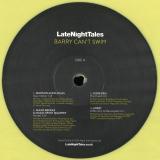
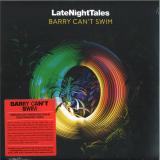
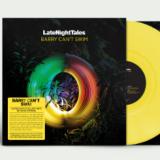
In the last two years, Barry Can’t Swim has released two albums – When Will We Land? and Loner. The debut was nominated for a Mercury Music Prize, winning 2024’s Best Dance Act on BBC Radio 1 and being nominated for Best Dance Act at the BRIT Awards in the same year. The latest album, 2025’s Loner, hit the top ten in the UK charts and was number one in the dance charts. This summer, Barry Can’t Swim cemented his position as one of the most singular new voices in electronic music with a gangbusting performance as a headliner at All Points East in London’s Victoria Park, building on his back-to-back performance with Bonobo at Coachella in 2024. Barry’s Late Night Tales mix brings together disparate styles and forms them into a coherent narrative. The powerful house tracks, like Lance DeSardi’s ‘Power of Suggestion’ and Daniel Avery’s remix of Factory Floor, intertwine with the abstract grooves of Freddie Da Stupid or Ronald Langestraat’s leftfield reading of Boz Scaggs’ ’70s smash ‘Lowdown’. There are exclusive tracks from Barry Can’t Swim himself (in the form of new single ‘Chala’ and an exclusive edit of Superpitcher’s ‘Yves’) and from friends and contemporaries, like Ninja Tune labelmate O’Flynn. Leaving aside the obvious quality of the mix, with its serpentine twists and dramatic turns, you can tell Josh is a fan of this series by bringing in his own personal poet, the brilliant Seamus, for the spoken word section right at the end. He’s a one-man Late Night Tales programmer.
Gap Mangione's monumentally influential Diana In The Autumn Wind. AKA BEWITH200LP. And, without question, Be With's White Whale.
They said it could never be done. And with good reason.
We've spent the past 12 years trying to license this legendary 1968 recording from Gap and, after much work, it's finally here. Remarkably, this is the first ever vinyl reissue of Gap Mangione's Diana In The Autumn Wind, produced with the full and extensive participation of Gap. An exceedingly rare album, it's been coveted by funk, soul, jazz and hip-hop sample fiends for decades.
It's unarguably *the* most sought after album for J Dilla / Madlib sample collectors. It has also been brilliantly sampled by A Tribe Called Quest, Large Professor, Ghostface Killah, Kendrick Lamar and Talib Kweli.
But this record is so much more than a sample-spotters curio. It's solid gold throughout. Bursting with killer funky-jazz grooves and tracks adorned with warm electric piano, the release is notable for featuring some extremely significant players at the very outset of their careers; Tony Levin, at 21, whose superb playing on both acoustic and electric bass was the harmonic mainstay of the trio and Steve Gadd, at 23, one of the greatest drummers of his generation.
With acceptable copies of this holy grail changing hands for $400, to call this reissue "much-needed" underplays just how vital it is. Gap's story is told in his words alongside rare photos across a sumptuously designed 2-page insert and, to augment this deluxe edition further, its all wrapped up in a beautiful, no-expense-spared luxury tip-on sleeve, as per the original hens-teeth release. And, while we're talking packaging, just take a look at that cover - a work of art in and of itself.
The tracks are short but complex, with that extraordinary rhythm section backing the beautiful piano, organ and electric piano work of Gap. It's like the best ever library funk breaks record you never heard - but all your favourite golden age rap producers were all over it, long ago. It's a stunning blend of the vibrant, driving music of the Gap Mangione Trio coupled with the sensitive composition and superb orchestration of Gap's legendary brother, Chuck Mangione, who helmed an amalgam of seemingly disparate elements – rock, big band jazz, solo improvisation and "classical" music - into a spectacularly cohesive whole that has aged wonderfully well. As Gap himself notes in the liners, "with this group I was able to explore and add new and exciting elements from rock, Brazilian and then-current pop music."
Opener "Boy With Toys" triumphantly swaggers out the gate, all big band horns, flutes and dextrous organ work. The synthesis of everything going on is nothing short of stunning. When one wise YouTube commentator called this tune "old school superhero music", Gap agreed. Rap luminaries did, too, amongst them Talib Kweli, who rapped over DJ Scratch's chopped up intro for "Shock Body" on his Quality album back in 2002.
You've barely recovered from that incredibly affecting opener when you get hit over the head with the exquisite title-track. And now you see how two of the greatest beats of all time emerged from one single track produced nearly 50 years earlier. Unforgettably utilised by Dilla for Slum Village's heartbreakingly good "Fall In Love" and then Madlib for his "Official" beat for Dilla to rap over, on the Jaylib record. Regardless of the records it went on to spawn, this is just a staggering tune in its own right. Be beguiled by the flutes and the flutter tonguing, the counter-melody from the trombones, the soprano sax solo. All of it. Simply beautiful.
The questing organ and horn workout "Long Hair Soulful" deserves a lot more attention, overshadowed somewhat by the opening two monsters but no less fantastic. It swings, it grooves and Gadd and Levin truly cook. Up next, Gap's wonderfully percussive, mellifluously piano-heavy cover of "Yesterday" by some fellas called The Beatles. It's a subtly arresting gem. "The XIth Commandment" is damn fine, with thick, gorgeous electric piano and snappy drum work underpinning chaotic soundtracky horns. To close out the side, "St. Thomas" showcases the "fourth" member of the Gap Mangione Trio, conga drummer Dhui Mandingo. Having performed with the Trio since 1965, Dhui‘s African-based and jazz-latin-influenced style amazed listeners and its way to hear why.
Opening the B-Side, standard "You're Nobody Till Somebody Loves You" breezes along in the late-night jazz club fashion before things get super deep with the outstanding and - up to now - un-sampled "Pond With Swans". It's simply heavenly, and how its moody, melancholic intro has yet to be pilfered is anybody's guess. It oscillates between gentle, sombre movements and bombastic grooves, equally hypnotic and joyous. The rendition of "You Are My Sunshine" is yet another showcase for Gap's virtuoso playing and Gadd's mastery of the pocket. Indeed Gadd's drumming on "Free Again" is nothing short of neck-SNAPPING! Ghostface took it for not one but two "Iron's Theme" tracks across his seminal Supreme Clientele. It's got that Galt MacDermot "Coffee Cold" feel. Suuuuuper cool. The frantic "Dream On Little Dreamer" hurtles along and must've surely had the whole room absolutely swinging from the chandeliers back in Rochester in the late 60s. The album closes with the magnificent Graduate Medley, featuring memorable renditions of "Scarborough Fair", "The Sounds of Silence" and "Mrs. Robinson". The warm electric piano lines of the former were sampled by The Ummah (Dilla again!) for Tribe's "Pad & Pen" from their reappraised final album, The Love Movement, as well as by Large Professor on his much-loved "The LP (For My People)".
Under the watchful eye - and extremely attentive ears - of Gap Mangione himself, the audio for Diana In The Autumn Wind has been carefully remastered by Be With regular Simon Francis, with a few much needed tweaks here and there, according to the artist's wishes. At the prestigious Abbey Road Studios, Cicely Balston's expert skills have made sure nothing is lost in the cut whilst the records have been pressed to the highest possible standard at the always stellar Record Industry in Holland. The artwork restoration has taken place here at Be With HQ and has that drop-dead gorgeous cover artwork popping like new. Buy on sight!
A new and very young groove-master in full effect !
She studied classical music on viola from the age of 3 through into college where she was on a path to be a performer in a large ensemble, but eventually left after feeling frustrated and limited in a world that did not provide much of an outlet for individual creativity. But the doors of perception really opened when she moved to British Columbia and was exposed to the raw beauty of the wilderness there.
She began recording at home using a basic audio setup along with a cello, viola, violin and double bass, and spent time making field recordings of natural sounds in BC. Her next idea was to actually move into nature to record, curious as to “how it would sound if I recorded outside entirely, with the natural reverb and sounds of the environment in the recording from the very beginning. The rustling of the leaves or a raven’s beating wings were as integral to the music as whatever I played.”
Fables is a mix of pieces that were recorded in the fall of 2024, in a small, remote cabin and outside, primarily using stringed instruments. The result is a series of stunning vignettes, meditations patiently unfurling like gentle waves, slowly advancing and retreating.4, in a small, remote cabin and outside, primarily using stringed instruments. The result is a series of stunning vignettes, meditations patiently unfurling like gentle waves, slowly advancing and retreating.
- 1: Wrists Of Kings
- 2: Not In Rivers, But In Drops
- 3: Dulcinea
- 4: Over Root And Thorn
- 1100: 0 Shards
- 2: All Out Of Time, All Into Space
- 3: Holy Tears
- 4: Firdous E Bareen
- 5: Garden Of Light
ECOMIX RED VINYL[34,87 €]
Weiter geht's mit den Ipecac ISIS-Neuauflagen: "In The Absence Of Truth" ist das Album der Band aus dem Jahr 2006, neu gemastert von James Plotkin. Die 2LP 140gr Vinyl kommt in einer Tip-On-Gatefold-Hülle in zwei Varianten: Standard-Schwarzvinyl und eine Indie-Exklusivausgabe in Eco-Mix-Rot. Das Album baut auf dem vorherigen Album der Band, ,Panopticon", auf und erkundet weiter den klaren Gesang von Leadsänger Aaron Turner (obwohl seine früheren Techniken, die mehr auf Schreien und Growlen setzten, auch noch vorhanden sind). Musikalisch ist das Album dynamisch und reicht von ausgedehnten musikalischen Ambient-Klängen bis hin zu fast tribalistischen Trommelrhythmen. Isis haben ihre langen Songs beibehalten; "In the Absence of Truth" ist mit fast 65 Minuten das längste Album von Isis. Obwohl die Band seit über einem Jahrzehnt nicht mehr existiert, ist ihr Einfluss auf den Metal immer noch spürbar, und die Verkaufszahlen machen es weiterhin zu einem der Top-Alben von Ipecac.
Alt Dub boss Federsen once again joins forces with cv313 and Echospace Detroit to deliver a second instalment in their ‘Altering Dimension’ series, once again merging hazy textural sonics with delicate dub leaning aesthetics.
Detroit’s dub techno lineage continues to evolve as cv313, Stephen Hitchell of Echospace, teams up with Federsen for Altering Dimensions Part Two, another collaborative EP set to land on Federsen’s Alt Dub imprint.
A defining figure in the genre, cv313 has long shaped its language through seminal works like Seconds to Forever and the Dimensional Space LP, fusing enveloping atmospheres with tactile rhythmic structures. Alongside him here,
Federsen whose music can also be found on Echospace Detroit as well as Grayscale, Synchrophone, Lempuyang and Avant Roots, has carved out a distinct voice rooted in precision and analogue-rich depth. Altering Dimensions Part Two again captures the intersection of these two perspectives, linking Detroit’s enduring sonic heritage with a refined, forward-facing approach to dub techno.
‘First Dimension’ opens the release, laying down heavy doses of sub bass, bubbling percussion and ever evolving, murky dub echoes amidst a crisp, stripped-down rhythm section.
‘Second Dimension’ follows and leans into vacillating atmospherics, a swaying bottom end groove and hypnotic, subtle evolution that’s synonymous with the cv313 sound.
‘Third Dimension’ kicks off the b-side next, further embracing this introspective and immersive style as textural elements shift and mutate atop intricately modulating percussive hits, bubbling synth tones and weighty low-end percussion.
‘Fourth Dimension’ then concludes the release, reducing things down to bare bones of hypntic dub, embracing a beatless construction the composition relies on spatial depth, nuanced delays and an underlying tension that decays
- A1: Morningtime X Chillwme - Lofty
- A2: Zendr X Comodo - Palm Island
- A3: Enluv X Spaniel Mac - Playa De Las Siestas
- A4: Globuldub X Fred Paci - Heatwave
- A5: Vhskid. - Lights Down Low
- A6: Solo San X Omar Juárez - Verão Sereno
- A7: Lock X Fred Paci X Toti Cisneros - Areia
- B1: John Lee X Jazzyhan - Sunset City
- B2: Banks X Skyswimming - Beach Day
- B3: L’atune X Squeeda - Maracujá Mood
- B4: No Spirit X Fool Parsley X Camel Club - Maneira
- B5: Erwin Do X Toti Cisneros - Beira Mar
- B6: Viktor Minsky X Living Room - Sea & Sun
- B7: Mike Beating - Amour D’été
- C1: J’san X Zeyn X Aboueb - Côte D’azur
- C2: Fnonose X Lazlow - Canopy
- C3: Flâneur X Mranthony - Barefoot
- C4: Lazlow - Celestia
- C5: Møndberg X Marsquake - Waves And Whispers
- C6: Gatz2Gatz X Ødyssee - Lagoon Daydream
- C7: Lenny B X Erwin Do - Drifting Tides
- D1: Lotus Beats - Head High
- D2: Marsquake X Dosi - Lazy Waves
- D3: Corey J. Beats X Krynoze - Iced Tea
- D4: Lucid Keys X Hokø - Sundaze
- D5: Odd Panda X No Spirit X Hikari - Turnip Tides
- D6: Pines & Pines X Otaam - Fácil
- D7: Kiabits X Dani Catalá - Sonhos Na Areia
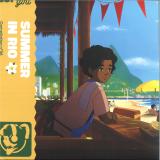
Feel the sun, samba, and soul that define summer in Rio.
Summer in Rio blends smooth bossa grooves with mellow lofi beats, capturing the laid-back energy of Brazil’s most iconic city. Born on Rio’s beaches in the late 1950s, bossa nova fused samba rhythms with jazz harmony and soft vocals, a sound both timeless and deeply expressive. This 28-track compilation brings that spirit to life: the first 14 tracks dive into bossa lofi with guitars and syncopated rhythms, while the last 14 ease into warm, expansive summer lofi.
From beachside mornings to golden hour evenings, this is summer on loop.
Mysticisms’ Dubplate series reaches number 10 with the first in a series of specials, taking the genre blurring music of Persian and presenting updated remixes and versions by up-and-coming producers, as well as friends and family of the label.
Started as a sporadic offshoot of Mysticisms’ main releases, with the idea to highlight the wonderful sounds of dub influenced dance music, Dubplate has now become an integral part of the mission.
To start, South London’s Picasso joins the label, showcasing his declared abstract grooves and an EP of Dub and Tech House movers. While his productions aim for the dance floor, they are often characterized by complex rhythms and unconventional structures, prioritizing atmosphere and texture over traditional melodies.
Drawing inspiration from ambient, jazz, experimental influences and the heavy hand of dub, Sam “Andrews” McKay has crafted an EP of immersive “soundscapes”. Joining the legendary Persian (Peter Reilly) as co-selector, his retakes are all warped grooves, wide bass and dubby atmospherics.
Opening with Space Within Art, the street soul meets reggae rhythms are jettisoned, and a Dub House swing drives the track. The love, homage and vibration for Sound System culture remains, enchanting trippy reggae sampledelic vocals weaving in the brain.
Dunya 2 sees a shift, minds expanding. A jazz influenced breakbeat, harp, strings, building to a psychedelic swirl, driven by a dub bass in a clash, morph and glow.
The deep Digi Dub of D Dub Twist grows, warping the ‘JA riddim meets English hedonism’ in true Soundclash style. Touches of drone underlay, highlighting Sam’s experimental leaning, utilising Persian’s love of Eastern mystical samples to marry perfectly for a deep dub excursion.
The self-prescribed “odd-fellow” completes his versions, exploring his love of depth and abstract sound in closer, Jacob’s Dub. The warm roots vibrations in original form develop into a scatter gun House bumper. Dubwise, Lovers, Stepper, all merge around shuffling, trippy beats and skippy hats, Picasso’s groove is laid bare, driving the EP to finale.
Abstract the Mystery.
Gatefold Sleeve
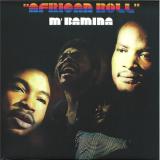
M’Bamina – African Roll (1975)
The story of an album born between Africa, Italy, and the nightclub culture of the 1970s
In the heart of 1970s Italy — a country undergoing profound social change and a music scene just beginning to open itself to distant sounds and cultures — an extraordinary, almost improbable story took shape. It is the story of a group of young African musicians who found their way to Europe, of a Turin nightclub that became a crossroads for communities and experimenters, and of an album which, released in small numbers and largely unnoticed at the time, is now considered a rare jewel of Afro-fusion.
The band called themselves M’Bamina — an ensemble of musicians from Congo, Cameroon, and Benin, who arrived in Italy in the early Seventies. Settling between northern Italy and the Pavia area, they began performing in small clubs and community events, bringing with them a vibrant rhythmic heritage: African polyrhythms, call-and-response vocals, funk-infused bass lines, and Caribbean or Afro-Latin colours absorbed along their musical journeys. Their raw, contagious energy on stage quickly drew attention.
Meanwhile, in Turin, another story was unfolding. There was a venue becoming almost legendary: Voom Voom, one of the city’s liveliest nightclubs, run by Ivo Lunardi. The club attracted an eclectic crowd — students, artists, foreigners, night owls — and Lunardi quickly understood that the dancefloor wasn’t just a place for music, but a melting pot for a new kind of cultural energy. Out of this vibrant atmosphere came his idea: to turn the club’s name into a small independent record label, Voom Voom Music, capable of capturing the spirit of those years and giving voice to unconventional projects.
When Lunardi heard M’Bamina, he immediately sensed that this was the sound he had been searching for: fresh, different from anything circulating in Italy at the time, and capable of blending African tradition with funk and European sensibility. He brought them into the studio.
Production was handled by Lunardi along with Christian Carbaza Michel, while the engineering was entrusted to Danilo Pennone, a young sound technician with a sharp, intuitive ear.
The recording sessions — held in Turin in 1975 — produced a remarkably warm and direct sound. The music feels almost live: grooves rooted in African tradition, but open to funk-rock structures and modern arrangements. It is a natural fusion, never forced. Tracks move between tribal rhythms, funk basslines, light electric guitars, congas and Afro-Latin percussion, with call-and-response vocals and melodies that echo both Congolese tradition and the lineage of Latin jazz. Not by chance, one of the album’s most striking tracks, Watchiwara, reinterprets a Latin standard through M’Bamina’s own rhythmic language.
The album was titled African Roll — a name that was already a statement of intention. It is African music that “rolls,” that moves, adapts, transforms within a new geographic and cultural setting. It is not strictly Afrobeat, nor Congolese rumba, nor Western funk: it is a spontaneous, hybrid blend, shaped more by lived experience than by any calculated aesthetic program.
When African Roll was released, the world around it barely noticed. Distribution was limited, and 1970s Italy had yet to develop a cultural framework for receiving such music. The national music press rarely paid attention to African or “world” productions. The album slipped into silence — though the band’s own story did not.
M’Bamina continued performing across Europe and Africa, even sharing a stage in Cameroon with none other than Manu Dibango. By the late Seventies, they moved to Paris, signed with Fiesta/Decca, and recorded a second LP, Experimental (1978). Meanwhile, the peculiar record they had made in Turin began to resurface quietly among vinyl collectors, Afro-funk enthusiasts, and DJs hunting for forgotten grooves.
That is when the album’s fate began to shift.
Over the decades, African Roll emerged as an almost unique document: a snapshot of an intercultural Italy before the word “intercultural” even existed, a fragment of migrant history, a spontaneous experiment in musical fusion born far from major industry circuits but rich in authenticity. Original copies began commanding high prices on the collector’s market, and the album became recognized as one of the hidden classics of European Afro-fusion from the 1970s.
Today, more than fifty years later, this reissue finally restores visibility and dignity to a project that deserves to be heard, studied, and celebrated. It is not simply an album: it is the testimony of a rare cultural encounter, born in an Italy unaware of how fertile such exchanges would one day become.
It is the story of a visionary producer, an extraordinary band, and a fleeting moment in which music, migration, and nightlife came together to create something genuinely new.
African Roll is — now more than ever — the sound of a bridge: between continents, between eras, between cultures. A record that, after rolling far and wide, has finally come home.
- 1:
- 2: The Telehealth Shuffle
- 3: Kokomo 2
- 4: Donor Country (A Good Cause)
- 5: Age Of Muralcide
- 6: Things I've Killed
- 7: Cost Of Inaction
- 8: Silver Spoon
- 9: Cool Job
- 10: Yassify Me
- 11: Maria, Machine
- 12: Villain Era
- 13: Living, Laughing, Loving, Trying
Steig ein in die neueste Mega-Firma von Seattle, Telehealth. Sind sie Rebellen, die mit Synth-Punk/New Wave die Grundlagen unserer techno-kapitalistischen Hölle untergraben wollen? Oder sind sie Unternehmer, die Marken aufbauen, um die Märkte zu stören und die Massen auszunehmen? Der einzige Weg, das rauszufinden, ist, ihr Debütalbum für Seattles älteste Mega-Firma, Sub Pop Records, zu kaufen. Green World Image folgt auf eine ausgedehnte US-Tournee, ein selbst veröffentlichtes Album und eine knackige 7"-Single aus dem Sub Pop Singles Club aus dem Jahr 2023. Für Fans von B-52s, Water From Your Eyes, Devo und Snooper. Die Kalshi-App ist ein ,Prognosemarkt für den Handel mit der Zukunft", eine Plattform, auf der Leute auf das Ergebnis von fast jedem realen Ereignis wetten können - von der Genauigkeit der Wettervorhersage bis hin zur Frage, ob in Gaza offiziell eine Hungersnot ausgerufen wird oder nicht. Als der Mitbegründer der Plattform, Tarek Mansour, Ende 2025 als offizieller Wett-Partner zu CNN kam, meinte er nach dem Deal: ,Die langfristige Vision ist, alles zu finanzieren und aus jeder Meinungsverschiedenheit einen handelbaren Vermögenswert zu machen." Telehealth wurde in dem chancenreichen Umfeld des Post-COVID-Seattle als skalierbares Musik-Startup mit ähnlichen Zielen gegründet. Das Unternehmen wurde 2022 von dem Ehepaar und Glücksspielbegeisterten Alexander Attitude (Synthesizer/Gesang/Gitarre) und Kendra Cox (Synthesizer/Gesang) gegründet, zu denen sich die langjährigen Mitarbeiter Ian McCutcheon (Schlagzeug), John O'Connor (Bass) und Dillon Sturtevant (Gitarre) gegründet. Die Gruppe will alle Meinungsverschiedenheiten darüber, wie die chaotische lokale ,Musikszene" weitergehen soll, zu Geld machen. Kann man DIY sein und gleichzeitig eine gute Suchmaschinenoptimierung haben? Kann man progressives kulturelles Ansehen und bares Geld gleichzeitig verdienen? Ist Kunst, die durch ,Kulturförderungen" der Tech-Industrie finanziert wird, irgendwie langweilig, authentisch gorpcore (junge Männer leben laut der New York Times den ,Quarter-Zip-Lifestyle") oder ironischerweise punkig? Für Telehealth ist die Antwort auf diese Fragen nicht ja oder nein, sondern eher eine unerschlossene Lücke im Musikmarkt, die auf eine Band wartet, die visionär und verrückt genug ist, auf die Verbreitung zu setzen. Produziert von Trevor Spencer, Green World Image, ist das zweite Album von Telehealth (nach dem Debütalbum Content Oscillator und einer Veröffentlichung des Sub Pop Singles Club, beide aus dem Jahr 2023) und sein Börsengang mit den Angel-Investoren Sub Pop ein vertikal integriertes Kunstwerk für die Post-Grunge-, Post-Flanell-Seattleiter und Konsumenten auf der ganzen Welt, die ebenfalls bereit sind, ihre eigene Leidenschaft für Musik zu finanzieren. Das traumainformierte, ergebnisorientierte und äußerst tanzbare Weirdo-Punk-Album ist inspiriert von Attitudes Zeit als ehemaliger Architekt in einer Climate PledgedÖ-Stadt, die mit ihrem Netzwerk aus effizient zonierten 5-über-1-Gebäuden die Kunst der ,Green World"-Architektur perfektioniert hat. Der PNW-Post-Punk von Telehealth schafft ähnliche architektonische Räume, in denen sich die glänzenden, futuristischen, techno-industriellen Rhythmen und Synthesizer des Seattle der Bezos-Ära mit dem rohen, unabhängigen Underground-Sound vermischen, den die Stadt aus kulturellen und Marketinggründen liebevoll bewahrt. Das Ergebnis? Stell dir XTC, REM und YMO vor, mit einem stärkeren Fokus auf ROI. Stell dir The B-52s vor, aber B2B. Stell dir einen intelligenteren Brainiac, einen transhumanen Gary Numan oder einen terminalen Online-Pylon vor. Endlich eine Band mit so vielfältigen Talenten, dass sie sowohl in deinem Keller als auch in den Amazon Spheres spielen kann.
[a] 1[USER ONBOARDING SEQUENCE]
Long considered a "Holy Grail" of Latin vinyl, The Booga Mambo Beat (1967) by Steve Hernández y Su Orquesta Latinoamericana returns.
This LP has puzzled collectors for decades: who was Steve Hernández, the shadowy figure behind this powerful orchestra including top Puerto Rican and New York musicians?
Arranged by Ray Santos and featuring vocalist Vitín Avilés, the album delivers a unique mix of mambo, boogaloo, descarga, proto-salsa and 1950s big-band swing. A rare bridge between the Palladium sound and the emerging salsa era. Originally self-released and barely promoted, the record became a cult favorite among DJs and collectors.
Sourced directly from the original master tapes, discovered in outstanding condition, this edition is pressed on 180-gram vinyl and includes extensive liner notes by Pablo E. Yglesias (DJ Bongohead).and a digital download code.
A must-have archival release for collectors, DJs, and anyone fascinated by the hidden corners of Latin music history.
At the core of the creative process behind “HPC” and “Bor3d” lies meta-irony, a quality that permeates much of today’s digital content landscape.
Both tracks are a deliberate attempt to push the sound toward a barely perceptible absurdity and ironic unseriousness in their interpretation of well-familiar styles of dance club music. It is a play with form, expectation, and recognizability — balancing sincerity with sarcastic exaggeration.
Okay
Okay is built around interruption. Voices, fragments of dialogue, yawns, irritation — people seem to step inside the track uninvited. Someone is bored, someone is annoyed, someone tries to stop the flow entirely. Just like in real life, the process is constantly disrupted. The track reflects the experience of being surrounded by opinions, noise, and skepticism — especially the kind that will never be convinced, no matter what you do. “Okay” becomes a quiet, ironic response to this pressure: not agreement, not approval, but endurance. The track continues anyway.
Tripatura
Tripatura is a fictional creature — a warped echo of cryptid mythology. In this narrative, Tripatura doesn’t simply exist, it hunts. Once it finds you, it drags you into an endless trip with no exit point. Time stretches, perception blurs, and the track itself becomes the trap. Its prolonged, unresolved ending mirrors the experience of being stuck inside a loop that refuses closure. Tripatura doesn’t rush. It lingers, slowly pulling you deeper, until the trip no longer feels temporary.
Originally released in 1994.
The legendary album from South Africa’s House and Kwaito master Doctor House being reissued for the first time with a full remaster from the original DAT tapes. Nelson Phetole Mohale released a series of albums as Doctor House. Cutting his teeth in the 80s as a session player for a host of big names like Volcano, Senyaka and Obed Ngobeni, he moved on to programming for acts like La Viva and Jivaro, also contributing to Carlos Djedje and others. Still barely out of his teens he became one of South Africa’s first rappers as part of PT House, co-written and produced by Danny Bridgens. Their debut album Big World was released in 1991 and followed by Big City Taste a year later.
- A1: Jackson Mico Milas - Sea, Interior
- A2: Majid Bekkas & Magic Spirit Quartet - Annabi
- A3: Jesse Bru - The Coast
- A4: Loket - Afternoon At Barenquell
- B1: Superpitcher - Yves (Exclusive Lnt Edit)
- B2: Scott Orr - Scott B3 Barry Can't Swim - Sometimes I Feel So Alone
- B4: Marigold Sun - Here Lies Love
- B5: Barry Can't Swim - Chala (My Soul Is On A Loop)
- B6: Freddy Da Stupid - Back To Pangea Part Ii (Jazzapella Version)
- C1: Factory Floor - How You Say(Daniel Avery Remix)
- C2: Ronald Langestraat - Lowdown
- C3: Lance Desardi - The Power Of Suggestion
- D1: O'flynn - Kola
- D2: Accelera Deck - This Bliss
- D3: Pépe - Goma (A-Mix)
- D4: This Mortal Coil - The Lacemaker
- D5: St Francis Hotel - Dawn
- D6: Barry Can't Swim - Ferdinand Magellan (Exclusive Felt Cover Version)
- D7: Seamus - Ultrasound (Exclusive Lnt Spoken Word Track)
In the last two years, Barry Can’t Swim has released two albums – When Will We Land? and Loner. The debut was nominated for a Mercury Music Prize, winning 2024’s Best Dance Act on BBC Radio 1 and being nominated for Best Dance Act at the BRIT Awards in the same year. The latest album, 2025’s Loner, hit the top ten in the UK charts and was number one in the dance charts. This summer, Barry Can’t Swim cemented his position as one of the most singular new voices in electronic music with a gangbusting performance as a headliner at All Points East in London’s Victoria Park, building on his back-to-back performance with Bonobo at Coachella in 2024. Barry’s Late Night Tales mix brings together disparate styles and forms them into a coherent narrative. The powerful house tracks, like Lance DeSardi’s ‘Power of Suggestion’ and Daniel Avery’s remix of Factory Floor, intertwine with the abstract grooves of Freddie Da Stupid or Ronald Langestraat’s leftfield reading of Boz Scaggs’ ’70s smash ‘Lowdown’. There are exclusive tracks from Barry Can’t Swim himself (in the form of new single ‘Chala’ and an exclusive edit of Superpitcher’s ‘Yves’) and from friends and contemporaries, like Ninja Tune labelmate O’Flynn. Leaving aside the obvious quality of the mix, with its serpentine twists and dramatic turns, you can tell Josh is a fan of this series by bringing in his own personal poet, the brilliant Seamus, for the spoken word section right at the end. He’s a one-man Late Night Tales programmer.
- A1: Jackson Mico Milas - Sea, Interior
- A2: Majid Bekkas & Magic Spirit Quartet - Annabi
- A3: Jesse Bru - The Coast
- A4: Loket - Afternoon At Barenquell
- B1: Superpitcher - Yves (Exclusive Lnt Edit)
- B2: Scott Orr - Scott B3 Barry Can't Swim - Sometimes I Feel So Alone
- B4: Marigold Sun - Here Lies Love
- B5: Barry Can't Swim - Chala (My Soul Is On A Loop)
- B6: Freddy Da Stupid - Back To Pangea Part Ii (Jazzapella Version)
- C1: Factory Floor - How You Say(Daniel Avery Remix)
- C2: Ronald Langestraat - Lowdown
- C3: Lance Desardi - The Power Of Suggestion
- D1: O'flynn - Kola
- D2: Accelera Deck - This Bliss
- D3: Pépe - Goma (A-Mix)
- D4: This Mortal Coil - The Lacemaker
- D5: St Francis Hotel - Dawn
- D6: Barry Can't Swim - Ferdinand Magellan (Exclusive Felt Cover Version)
- D7: Seamus - Ultrasound (Exclusive Lnt Spoken Word Track)
In the last two years, Barry Can’t Swim has released two albums – When Will We Land? and Loner. The debut was nominated for a Mercury Music Prize, winning 2024’s Best Dance Act on BBC Radio 1 and being nominated for Best Dance Act at the BRIT Awards in the same year. The latest album, 2025’s Loner, hit the top ten in the UK charts and was number one in the dance charts. This summer, Barry Can’t Swim cemented his position as one of the most singular new voices in electronic music with a gangbusting performance as a headliner at All Points East in London’s Victoria Park, building on his back-to-back performance with Bonobo at Coachella in 2024. Barry’s Late Night Tales mix brings together disparate styles and forms them into a coherent narrative. The powerful house tracks, like Lance DeSardi’s ‘Power of Suggestion’ and Daniel Avery’s remix of Factory Floor, intertwine with the abstract grooves of Freddie Da Stupid or Ronald Langestraat’s leftfield reading of Boz Scaggs’ ’70s smash ‘Lowdown’. There are exclusive tracks from Barry Can’t Swim himself (in the form of new single ‘Chala’ and an exclusive edit of Superpitcher’s ‘Yves’) and from friends and contemporaries, like Ninja Tune labelmate O’Flynn. Leaving aside the obvious quality of the mix, with its serpentine twists and dramatic turns, you can tell Josh is a fan of this series by bringing in his own personal poet, the brilliant Seamus, for the spoken word section right at the end. He’s a one-man Late Night Tales programmer.
FELT enter 2026 with a newly established sub label for reissues, retrospectives and oddball adjacent non-FELT material under the anagram catch-all LEFT. First on the agenda is a vinyl issue of a modern classical tape by Danish post-hardcore/late 2000s rock guitarist Johan Surrballe Wieth, founding member of the band Iceage (Escho/Dais/Mexican Summer/Matador).
Initially released on a limited cassette edition and plucked from the vast catalogue of the Copenhagen label Posh Isolation, the solo project Health & Safety can be read as composers meditation on anxiety, depression, insomnia and all the damned things they entangle. Wieth moves across the spectrum with dour, deliberate keys, mangled drone fx, barely-there violin scrapes, erratic chimes and whistles and with a knowing pace that feels akin to a guiding hand. We’re unsure if the form of each piece is meant to directly correlate to the drug so referenced but the quiet fever dream atmosphere of the 25 minutes also blurs each piece into a whole.
This quote from Wieth certainly rings true for the highly introspective nature of Health & Safety - “You should be very careful listening to too much music when you're writing an album. It has a tendency to become a little too explicit”
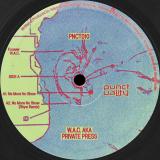
For the decennial release on Punctuality Warsaw duo W.A.C., aka Private Press step up with their Forever W.A.C EP. Moving away from their more techno-oriented offerings, Forever W.A.C. keeps the tempo and energy of their earlier work but suffuses the mood with warm, glowing trance and prog energy. This is peak-time Punctuality business in its purest form– on time as ever. “No More No Show” comes in hot from the get-go: galloping snare rolls, raved-up breakbeats, uplifting pads, big basslines, acid licks, and the low-end wubs that have become synonymous with the Punctuality sound. One for that point in the night when the dancefloor has melted into sweaty, eyes-closed, hands-up amorphia.
Barely recognisable to its original counterpart, the Rhyw remix strips the A1 down to the bare essentials. Preserving only a few percussive elements, the euphoria of No More No Show is replaced with hazy, cinematic synth washes that drone around a skeletal groove loaded with bassweight, warping the original into a dubbed out psychedelic UK stepper. Shifting to the morning light, “Only Froggerz” is a shimmering roller that ebbs and flows around barreling kick drums, kaleidoscopic synth lines, and vaporous FX, with lustrous chord work driving the emotion dial to 11. Elegant and restrained but relentlessly pummeling, it’s early-morning club gear at its finest.
Rounding out the EP with an essential slice of modern prog, “Close” utilises all the good bits: skippy basslines, filtered squelches, tribal-leaning percussion, and a relentless groove that builds around the subtle interplay between the stabs and the vocals. An epic closer that feels as true to the Punctuality canon as ever.
Stepping up for Punctuality number 8 is the dynamic duo of Ciel and Matthis Ruffing. Needing little introduction, both artists are prolific producers and collaborators across tempos and genres. Toronto-based Ciel has released music on labels like NAFF, Peach Discs, and !K7, while Berliner Matthis Ruffing’s work can be found on International Chrome, Infinite Drift, and Strictly Strictly, to name just a few.
Bonding over a shared love for the techno stylings of Claude Young and early 2000s tech/prog house from labels like Future Groove and Slide, the duo’s collaboration began with a spontaneous jam in Ruffing’s Berlin studio during the summer of 2022. With an organic studio chemistry, the pair continued to jam over the following years. Hot Squid is the result of these studio experiments: five tracks of sleek, muscular, contemporary tech house that fluidly distill the creative visions of both artists—slick, shimmering grooves, heavily weighted for the dancefloor.
The title track, Hot Squid, weaves dubbed-out waves of FX and low-end sonics around metallic, staccato drum bursts, sci-fi pads, stuttered vocals, and syncopated snares that flit and flicker around a rolling bassline reminiscent of golden-era UK tech house from the late ’90s. Roza Terenzi’s remix flips the original into a modern, low-stepping tek roller—a mind-bending re-fix that puts more focus on the snaking vocal groove and a sparser percussion arrangement, filled out with lustrous textures and razor-precise sound design.
On Little Voice, glossy synths and spiraling atmospherics cascade around a mesmeric vocal line, while tightly wound, minimal drum loops give way to a swaggering bassline that barely relents throughout the track. The result is a satisfyingly boshy, groove-driven roller, fit for the dancefloor at any time of day.
Late Summer maintains the EP’s high-grade production standard in the form of a dreamy, electro-leaning tech house number, resplendent with deep, pummeling kick drums, woozy low-end, and organic sonics. Its plucked melody and introspective pads nod to halcyon-era IDM and the Detroit techno that inspired the duo in creating Hot Squid.
The release culminates in Bong Bong—a meditative dancefloor tool suffused with ASMR-like nature documentary samples that lend the track a psychedelic intimacy. Careening percussion lines and swooning chord stabs anchor the rhythm, while the title’s “Bong Bong” mantra hums beneath the surface, carried along by barely perceptible sub fills and ultra-processed percussion. A cohesive, unique, and enduring take on seminal tech house and Detroit techno from Ciel and Matthis Ruffing.
Concrete City's two residents re-emerge with 'Serious Coin', the second long-player from label head DJ Superherb and long-time collaborator Ten Years Lost. Where their 2023 debut basked in heat-hazed hedonism, this follow-up sharpens the focus. At times deeper, and consistently drawing from the pair's shared language, Serious Coin is an unmissable entry in the Full Dose catalogue.
Across eight tracks, the duo lean further into their soulful instincts, balancing weighty low-end pressure with a distinctly human emotional warmth. Vocoded vocals, coalescing with dungeon synths, being carried by heavily swung rhythms represent a new strand in the pair's musical DNA.
The album captures the stillness of early morning city streets, yet still manages to push rhythmic elements forward. Barely-present samples and subtly detuned synths give the tracks a lived-in feel, as if they’ve already soundtracked a hundred late nights before reaching your speakers.
Like the first, this album has one foot firmly in dancefloor utility and the other in headphone introspection. Don't miss this dustier and deeper evolution to the Full Dose sound!
Group Rhoda returns to Dark Entries with Phase 5, a new LP of synthesizer-driven art-pop. An integral member of the West Coast electronic music scene, Mara Barenbaum has been writing, performing, and plunging into oneiric depths as Group Rhoda since 2009. Barenbaum’s songcraft is at once stylistically diffuse and laser-focused, a synesthetic approach that allows her to effortlessly glide between genres and soundworlds while centering her singular poetics. On Phase 5, her fifth LP as Group Rhoda, we find Barenbaum waxing nondualistic. Lines between fairytale and fact, between nature and art, between subject and object all dissolve under contemplation.
The songs on Phase 5 are perpetually in-between states, deftly shifting form at the blink of an eye. With sleight of hand, “Field Tone” transmutes from brooding John Carpenter-esque electro into vocoder-driven space disco. “Dragon Pine” darts from cosmic dub to cybernetic dancehall and back again. The uptempo darkwave-leaning number “Aeolian Crossing” dissolves into the void, like sand falling through one’s fingers, like a retreating wave. The cover artwork for Phase 5 is by Shawn Reed, and features purple lilies and light refracted through water. All songs on this album were mastered by Ruud Lekx. The digital version of Phase 5 will be released via Katabatik, a label and sound system that Barenbaum has had close ties to for the past decade.
CER009 finally brings Pumphouse Gang – “Welcome Back Into My Life” back to the 7inch format, a killer slice of Irish modern soul perfection from 1979. Originally pressed in tiny quantities and barely escaping dublin, it’s one of those records that rarely becomes available. A favourite of label boss miche, it’s in his words “an unbeatable soul track, that really fills a dancefloor with smiles”
On the flip, Medlar steps up once again, this time sending his mix straight from the Cayman Islands — a dubbed-out, Part 2-style reprise that stretches the groove, teases the rhythm, and gives the track a second life for late-night dancefloors.
As always, Celestial Echo digs deep into the overlooked corners of soul and disco, unearthing some of the best soul records and giving them a new lease of life. Each release is remastered with care and presented with the respect these recordings deserve.
Stripped of its branches and reduced to the bare trunk, Evigt Morker 6 stands at the threshold where fire becomes voice and light devours the sky. Across six tracks, the music moves through hushed revelation, listening for a call that cannot be refused. Salvation and damnation burn side by side on the horizon, as everything else is consumed by flame. ''Kapa grenarna. Lat stammen sta ren infor slutet. Nar riket oppnas ska rosten tala i lagor, bara for dig. Lyssna, och se hur ljuset ater himlen tills oandligheten skymtar. Kliv in i den negativa elden dar intet vander sig om och blir till.''
Yogg delivers the second release on his Polarized Future label, with four deep and sub-heavy cuts on ‘Don’t You’. Produced in his new Brussels studio, the EP channels the tension between familiarity and instability. The sounds here are deconstructed, fizzing and alive, produced with a pointillistic attention to detail.
This is music built for soundsystems, with a strong emphasis on bass weight and meditative, spacious minimalism. Elements are removed to the bare essentials, at times feeling like a contemporary reimagining of the early sound of dubstep; echoing the unease of a society in the midst of a dystopian timeline.
Isa Gordon and Tony Morris were first brought together through their individual releases on Optimo Music, which established mutual respect within the label’s community. While they had not previously performed live together, they were invited to take part in a fundraiser hosted by Queen’s Park Arena in support of Glasgow NW Foodbank and later for JD Twitch’s end-of-life care. Tony asked Isa to contribute guitar and backing vocals to his set, including a track then called Last Night I Had a Dream. That performance became the seed for their collaboration.
The first phase of fleshing it out, recalls Tony: “Somebody said Isa sang like Shania Twain. That got me thinking about country music and call and response, prompting me to come up with alternative lyrics.” Isa remembers: “I cycled over to Tony’s house with my guitar, and we spoke about what the tune meant. It was about him being wrapped up in dreamland, luxuriating in his subconscious, while my character — impatient and trapped in her own routines — barely had time to remember her own dreams.” Tony continues: “Brilliantly I realised that I could never collaborate with anyone in situ and so I sat in the garden for two hours watching my wife tend to plants. Every now and again I would creep up the stairs and put my ear to the door. I could hear Isa warbling away and so would resume my garden watch. After two hours I went back upstairs to see how she was getting on, only to find that she had written one of the greatest songs I’d ever heard. I still think that.” Tony adds: “My overwhelming sentiment about Wake Up Baby is pride. I can honestly say that I’m more proud of it than anything else I have done. It ticks a whole load of boxes. Isa’s singing in various Scottish modes is unique. The way her electric guitar adorns the dance beat makes it a rock song as well as a dance and a C&W song — truly multi-genre.”
The B-side of the 12” release, Syringe Moustache, is a surreal, darkly playful counterpart to Wake Up Baby. The track was inspired by a dream Tony had: “I was in a shopping mall, in a two-level shoe shop, and my attention was taken by a little girl with a syringe taped beneath her nose like a moustache. She went about her business trying on shoes, confident and wise beyond her years. In the dream, I imagined her as the daughter of cultured, intelligent parents determined to raise her independently. I was struck by my own feelings of inadequacy — I knew I could never have coped with such a contraption myself.” Isa’s take on the meaning of this song somewhat differs: “Tony sent me the tune over Instagram months before I met him, and I was spooked — as far as I knew, he didn’t know anything about me, but the story felt like it was written about me as a little girl, growing up around heroin addiction. The syringe beneath the girl’s nose became a symbol of the inescapable constraints of that environment, literally written on her face, yet something you just have to carry on through. On a buzz from the serendipity, I added a full instrumental backing to this most bizarre of works.”
The result is absurd, unsettling, and strangely empowering, staking out its own surreal, cinematic space. The 12” dance single is a format Tony had long wanted to explore — a tangible artefact to leave for family, a medium that celebrates the physicality of sound and the ritual of listening. It allowed the artists to maximise the format’s potential: a strong, multi-genre A-side, a surreal B-side, and remixes that expanded the record’s sonic world. Glasgow music staples Auntie Flo and 100% Positive Feedback were invited to reinterpret the tracks, bringing their distinctive touch — Auntie Flo transforming the A-side into a luscious, dancefloor-ready meditation, and 100% Positive Feedback twisting Syringe Moustache into absurd, playful shapes with false-start drops and over-the-top vocal editing.
The cover photograph, taken at the University Café by Harrison Reid, captures Isa and Tony embodying the characters they brought to life in the songs — a visual reflection of the record’s narrative and emotional stakes. The Café also holds personal significance: it’s where all of Isa’s meetings with Keith McIvor took place, where she first remembers visiting Glasgow as a child, and a place Tony fondly likes to go to drip egg yolk down his tie and watch the world go by. Together, the 12” format, the remixes, and the artwork create a cohesive, tactile experience, amplifying the duality, theatricality, and emotional breadth of the collaboration.
Recognized as one of the most prolific emerging producers of Latin American electronic music, Entrañas presents his second album Los Cueros Al Sol, a project that redefines his sound through a deeper connection with tradition, instrumentation, and his personal narrative. This album represents his most organic work to date, incorporating recorded instruments and showcasing Entrañas himself on guitar throughout several tracks, along with drums and guitars recorded by guest musicians.
The album offers an exploration of local rhythms, reimagined through his unique production style, characterized by carefully crafted sound design and rhythms full of distortion and energy that dissolve between textures and atmospheres. Alongside these traditions and sounds, aggressive and enveloping basses and synths emerge, accentuating the hybrid nature of his work.
True to its title, Los Cueros Al Sol, an expression that evokes the idea of laying bare the truth, of revealing oneself raw and without artifice, the project draws on everyday life in Quito, the hometown of Entrañas, with song titles reminiscent of traditional street foods. This intimate resource anchors the music in the land and memory, interweaving its local identity in every detail.
- A1: Intro
- A2: Young Boy
- A3: Virginia
- A4: Grindin’
- B1: Cot Damn (Feat Ab-Liva & Roscoe P. Coldchain)
- B2: Ma
- B3: I Don’t Love Her (Feat Faith Evans)
- B4: Famlay Freestyle (Feat Famlay)
- B5: When The Last Time
- C1: Ego
- C2: Comedy Central (Feat Fabolous)
- C3: Let’s Talk About It (Feat Jermaine Dupri)
- C4: Gangsta Lean
- D1: I’m Not You (Feat Jadakiss, Styles P & Roscoe P. Coldchain)
- D2: Grindin’ (Bonus Remix Feat N.o.r.e., Baby & Lil’ Wayne)
- D3: Grindin’ (Bonus Selector Remix Feat Sean Paul, Bless & Kardinal Offishall)
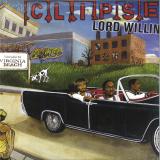
The first act signed to The Neptunes' newly formed Star Trak label was a Virginia based duo known as the Clipse. The first single “Grindin’” impacted the streets with its bare boned but infectious drum beat in the same way that “Sucker MC’s” did almost 20 years earlier. These brothers - Pusha T and Malice combined with The Neptunes groundbreaking production sent a clear message to the rap world – “we are not the same” (as rapped by Malice on his opening verse on “Cot’ Dam”). Clipse brings an authentic Virginia sound into the game and created a movement, with not only their darkly layered raps but The Neptunes as well. Pharrell Williams and Chad Hugo were able to combine their cyberpunk production with just the right group to create a street masterpiece. Following in the footsteps of such rap criminologists as Kool G Rap, Nas, Jay-Z, and Mobb Deep, the Clipse offer the Virginia hustler's viewpoint with clever, hard-hitting lyrics that is sprinkled throughout the entire album. With so many standout tracks on Lord Willin’ the album starts pulling no punches. On Track 1 simply (or maybe not) titled “Intro” you get a very personal and deep testament of crack and the drug game, a theme that is throughout this album…HEAVY. Songs like “Virginia” or “I’m Not You” (featuring Jadakiss, Styles P and Roscoe P Coldchain), have lyrics that play as a musical notes alongside The Neptunes tailored beats. “Young Boy”, “Comedy Central”… all fit perfectly alongside “When the Last Time” and “Cot Dam” as each song plays its part as chapters to the Lord Wilin’ masterpiece. “Gangsta Lean” (another one of the albums standout tracks) features a slightly lighter feel while paired with Pharrell's trademark falsetto hook. The truth of it is, it’s hard to just pick one track, or point out which is the albums star. Each song on Lord Willin’ is essential to making it the classic that it is. The Neptunes (who were busy turning out every other Pop hit on the radio) crafted an album that was deemed an instant classic, and cemented Clipse as Rap’s newest superstars.
IMPORTANT: These are often unplayed, sealed or barely played copies, but have been stored in a humid environment. Some copies might have slight storage damage like deformed sleeves or some mold. Even though a quick cleaning session of the item (if needed) will probably make it as good as new, these are still sold as is! Beroshima Moonraker remixed by AKIKO KIYAMA from Japan, ELECTRIC INDIGO the founder of female pressure and long term hardwax member and MUTRON from tokyo .
Synaptic Cliffs is barely able to contain the excitement for the release of the 4-track EP "Maximalism" where pdqb collaborates with DJ Sotofett in the most effective way. pdqb's sleek and melancholic electro originals carry a sexy 1980s reminiscing vibe, not too unknown from classic US electro disco-styled pop music. They meet warehouse remixes from DJ Sotofett, known for his top-notch electro productions on Clone and Tresor, as well as funky breakbeat, afro-dub and all-things-house on his own labels Wania and Sex Tags Mania. The remix of pdqb's electrocognition-beauty 'Giallactrus' has heavier, almost p-funk styled electro beats, live scratching complementing the block party approach while retaining the vibe of the original. Elysiaamore, pdqb's sonic love letter to Tangerine Dream, gets a bit of melodic menace treatment by DJ Sotofett, turning it into an intensified breakbeat juxtaposition with Junglized B-Boy elements... again without taking away the energy from the original. The vinyl version was cut by DJ Sotofett with optimal club sonics at Manmade Mastering, Berlin.
‘3' saw the core Lifted duo of Max D & Matt Papich unravel their visions of excess into their most divergent and wide-eyed collection to date. Presented here by Peak Oil in a vinyl edition featuring the painting of Jordan Kasey (yes, related to Martin Kasey, saxophonist on 2019’s LP 2) and packaged for a seamless listen.
First scene ‘Chefs’ places us squarely off-center, landing in a cinematic environment that feels a bit like steadycam Luis Bunuel , wine bottle whoo-ing and horn fanfare. Its music without a hard surface, defined more by its fluidity and characters, found sounds and performed dialogue. “Cymbecko” shifts gears into blissful ambient dub, and paves the way for a Luke Stewart led excursion into the uncanny that is ‘Trip Tongue’. Stewart’s upright bass never stops seeking, while Jordan GCZs Rhodes barely touches down before lifting back up into and out of Jacob Long’s (Earthen Sea, Esau) liquid tone sheets. An outside world of percussion accompanies.
The mood morphs and the scene cuts in hard with “Born in the Roof”, slacker techno that grows shimmering parts, Perlon for potheads. Voiceover slacks right with it, a half-convo caught in the billowing chorus of fx. “Macarena” snaps things into focus, working almost like an open window to airing out the heady fog. Simplicity in the vignette.
After “Mecha Perfume & Variety”, “Snow Dancing” reignites the drama, with burning guitar by Jonny Nash taking a plucky and sliding lead over wildly fused drums by Max D, we get a test of new depths for Lifted with the somber and exuberant “Whipped Cream”. Crackling like a radio but with modern propulsion in the form of richly evocative pads courtesy of Motion Graphics, it sounds like a dinner, a space trip, a storyboard, a scene, threaded together in bouncing, oblique ways.
"Bobby V" drops refreshingly, timed like a credit roll and leaving an afterglow that feels more tuned-in than ever.
Players on this album include: Luke Stewart (Irreversible Entanglements, Blacks Myths), Jeremy Hyman, Jonny Nash (Melody As Truth), Jordan GCZ, Matt Papich, Josh Levi, Mezey, Hirama, Dawit Eklund (1432 R), Motion Graphics, Max D, Jacob Long (Earthen Sea, Esau)
d 4.Born In The Roof Radio Mix
e 5.Macarena Radio Edit
Punching in with his debut vinyl EP for Fluid Funk, Chilean house producer Massiande follows up to a string of head-turning releases on an array of labels, including Jimpster’s Freerange Records. His much anticipated new offering, “Essential”, packs all the attributes of his vivid, floor-focussed vision, taking us on a bouncy ride across densely forested coastal house scapes and heavy-lidded electronics. Draped in washed-out pads and cottony textures, Massiande’s tracks have us floating in a chromatic daze of sorts, light-hearted and somewhat nostalgic, but above all hopeful and resilient.
A textbook slab of Massiande’s ever-expanding palette of woozy house tropes and silken disco touch, A1 “Tears” (also presented in bare instrumental form on the flip side B2) has it all, from the euphonic synths arrangements to the no-nonsense, club-igniting jack and irresistible footwork, via the infectious bass and Chicago-style soulfulness of its vocals. Proper fiery number and absolute weapon for any DJ seeking either impactful elegance in a peak-time context or to rekindle the flame when the after gets a bit too prosaic and requires that extra funky boost to get back on tracks. Grooviness exemplified.
More of a straightforward affair, A2 “Essential” unflappably beckons us on the path of utter vaporous escapology with its pulsating tableau of FX-soaked machine talk, semi-acidic bass and zero-G synthwork painting the sky all shades of pastel. The result is a rather captivating piece of weightlessly intuitive though carefully engineered sonic daydream. Injecting further oomph to the groove, B1 “Come On” pulls out a symbiotic collage of Sino-flavoured melody, Stax-ian vox sampling and straight out Detroit house-indebted propulsion, neatly showcasing both Massiande’s broad spectrum of influences and that idiosyncratic take of his on the said genres’ tried-and-tested leitmotivs.
IMPORTANT: These are often unplayed, sealed or barely played copies, but have been stored in a humid environment. Some copies might have slight storage damage like deformed sleeves or some mold. Even though a quick cleaning session of the item (if needed) will probably make it as good as new, these are still sold as is! HORIZON HAS BEEN ONE OF HIS BIGGEST HITS AND ONE OF COCOONS & SOMAS BEST SELLING VINYL. A MASSIVE HIT ON MOST FESTIVALS. ULRICH SCHNAUSS COMES WITH A GORGEOUS TECHHOUSE MIX. YOU ALL MUST HAVE HEARD OF TIGERSKIN AND HIS WELL CRAFTED MUSIC. THIS OUTSTANDING PRODUCERS COMES WITH A CLASSIC FLOORSTOMPER AMERICAN STYLE. THE FUNKDVOID MIX IS STILL ONE OF OUR ALL TIME FAVOURITES NEXT TO BEROSHIMAS SKYFLYER
The Wire: his most satisfying collection to date Resident Advisor: return to minimalist roots on a noise rock-influenced new live record Support from: Barnt, Ben UFO, Vladimir Ivkovic, Boris, OPTIMO 180 gr. colored vinyl pressing incl. art poster and sleeve - limited edition of 50 copies available via distribution Philipp Gorbachev is back at it with a new conceptual album. KGC Radio is all about returning to music-making roots - choices are raw, minimalist and different from the sonic industry environment. The flow is kept simple but deadly, using only the bare essentials to blow up the rave and festival scenes: analog synths, drum machines, a mic, and some sick percussion. The whole album was recorded in one take, like some kinda secret radio wave you stumble on in the middle of the night. Catch it, and you're diving headfirst into a maze of vibes and meanings you ain't seen coming. On the visual side, KGC Radio is a collab with Zhanna Maliti, this dope Moscow-based artist and photographer. Her one-of-a-kind style and imagery are a perfect match for the music, bringing the whole vibe to life. Sounds Like: Underground Resistance, Daniel Maloso, NIN, Broken English Club Mastering by: Beau Thomas
Utter presents Marshall Jefferson's previously unreleased meditation opus 'Yellow Meditation For The Dance Generation' alongside two remixes from French production maestro Joakim.
Marshall Jefferson: Chicago House music pioneer, creator of the anthemic ‘Move My Body’, an original collaborator of Adonis, Ce Ce Rogers and Roy Davis Jr., production mastermind of countless dancefloor classics such as Phuture’s ‘Acid Tracks’, Sterling Void’s ’It’s All Right’, Hercules’ ‘7 Ways’… and the soothing voice behind a 36 minute healing meditation guide. Yes, really.
But let’s rewind, slightly.
In 2017, Marshall was approached and encouraged by Ian ‘Snowy’ Snowball to write his autobiography and the pair set about putting Marshall’s account of the history of House music together. The book, ‘Marshall Jefferson: Diary of a DJ’ was published in 2019.
Following the book’s release, Ian and Marshall's collaboration continued and during the pandemic an outlandish idea arose to create a piece of music combining Ian's interest in meditation (he runs Club Chi specialising in Shibashi Qigong - a form of Tai Chi Qigong - which is a gentle form of movement therapy/exercise) and Marshall's willingness to experiment musically to see what might be possible.
The result is ‘Yellow Meditation For The Dance Generation’, where Marshall vocalises Ian’s lyrics in his instantly recognisable voice. The keen-eared out there may also recognise aspects of the music itself as a stripped back, lengthened and far mellower version of Marshall’s 1985 obscurity ‘Vibe’:
“I would take tapes to the Music Box and Ron Hardy would play my music. ‘Vibe’ was one of those tracks. I recorded ‘Vibe’ in 1985, but it became one of my tracks that I just forgot about until some guy on Facebook sent me a recording of it that was taken from a club. The only person who I ever gave a recording of ‘Vibe’ to was Ron Hardy. The other people I know who had copies of the track were Gene Hunt and Emanuel Pippin (DJ Spookie).
"The original version of ‘Vibe’ was made using a Roland 707, Roland JX-8P keyboard and a Roland 727 drum machine. I was still working at the Post Office at the time, and this was pre-‘Move Your Body (The House Music Anthem)’. ‘Vibe’ has the building blocks for ‘Move Your Body’ because it was using the instruments on the track that I discovered what I could do with the bass sound, to make a track like ‘Move Your Body’.”
Still, Ian’s initial intention for ‘Yellow Meditation’ was function and it was designed to be a ‘Sequential Relaxation Exercise’ focusing on the Solar Plexus. Bearing this in mind, Marshall took a bare-bones and hypnotic approach to this particular re-recording of ‘Vibe’ so that the voice takes centre stage and listeners (hopefully) find themselves on a meditative journey. In fact, this long-form track was always intended as a private tool purely for meditation at Club Chi rather than released to the public - after all, Marshall had also created and released a more drum heavy, ’traditional’ club-focused 'Vibe Three' instrumental version for that very purpose - but a chance airing of the full 36 minute version changed its path.
Much like those 1985 ‘Vibe’ cassettes, Marshall had sent the track to a few close contacts, one of whom was Kieran at Phonica Records who aired it over the shop’s basement soundsystem. Its unorthodox nature caught the ear of colleague Alex (of Utter) and the seeds of a physical release were planted.
Eventually, with the full-version carefully whittled down to a vinyl friendly length of 24 minutes, full track parts in hand and a b-side to fill, Alex sought out one of his favourite producers to take up the remix reigns: Joakim. The Tigersushi co-founder and Crowdspacer boss has a long history of boundary-pushing remixes that straddle both dancefloor functionality and experimentation. This time the original material resulted in Joakim coming up with a number of ideas and he finally delivered two versions - one club focused (‘Vertical’), the other more introspective and meditative (‘Horizontal’), both of which appear on the final 12”.
The limited edition 12” also includes a download code giving buyers access to all of the vinyl tracks plus an 18 minute extended version of Joakim’s ‘Horizontal’ remix, its instrumental counterpart (for those who can live without Marshall's voice) and full 12 minute acapella (for those who can't!)
Alex
a A1. Yellow Meditation For The Dance Generation (Edit) 24:00
b B1. Yellow Meditation For The Dance Generation (Joakim's Vertical Remix) 9:09
9:05
- A1: I Borrowed My Dad's Car But We Had Nowhere To Go So We Drove Around Listening To Music All Night
- A2: The House Party Went On So Long We Talked And Drank And Played Music Til The Morning
- A3: I Used To See Her On The Way Home From School And She Lit Up The Sky With Her Beauty
- A4: We Ditched School And Climbed Over The Neighbour's Fence To Swim In Their Pool All Day
- B1: We Were Dancing In Her Bedroom And Then We Made Out
- B2: We Walked All The Way To The Lake And The Water Was So Still We Jumped In Naked
- B3: She Broke Up With Me Before Our Last Class So I Walked To The Beach On My Own
- B4: Her Parents Were Out So We Shared A Joint And Floated Around In Her Pool Under The Starlight
Enigmatic UK producer Dylan Henner announces new album of deeply considered and choral-laced experimental ambient music Star Dream FM, said to be taped from a mysterious radio broadcast that plays his favourite memories from adolescence.
Though (clearly) fictional, the backdrop to new album Star Dream FM represents a tactile canvas on which the record’s true meaning is painted. It is, through Henner’s now-characteristic employment of ambient-textured synthesis, marimba, digital choir, and processed voice, a study of late adolescence and the experience of being seventeen.
Little is known about Dylan Henner, who landed on the ambient scene in 2020 with cassette releases for Phantom Limb, Belgian label Dauw, and cult tastemakers AD93. He barely promotes himself publicly, instead choosing to communicate through disarmingly poetic song titles. His debut album “The Invention of the Human” (AD93, 2020 - a recipient of BBC 6Music’s Album of the Year honours) responds to a set of philosophical questions - what exactly makes us human? What good is civilisation when there’s so much misery attached to it? How will technology affect humanity in the long run? In 2022, he released follow-up You Always Will Be on AD93, which traced the course of a single life from birth, to childhood, to adolescence, adulthood, parenthood, middle-age, old-age, and demise. He has also covered Raymond Scott, Terry Riley, Aphex Twin, Ryuichi Sakamoto, and Su Tissue among numerous further projects.
Wally Badarou is a synth pioneer and musical polymath. But rarely does he sing over his sumptuous tracks. The 6 songs that comprise new record Simple Things finally realise Wally's vision for select backing tracks from his beloved Colors Of Silence.
The tracks were originally developed back in 2001 for the release of the original CD; here, Wally has “simply" added overdubs and vocals to their mastered mixes with some discerning edits. Simply put, Simple Things is another slice of simply stunning Wally Badarou genius.
Simple Things has been decades in the making. Indeed, Wally struggled not only with the idea of singing these wonderful songs himself but singing them in English and writing his own lyrics, while wrestling with the sensational backing tracks, which themselves seemed to have taken on a life of their own.
As Wally explained to us: "In addition to the instrumental artist I have been known as, so far, there has always been a singer who simply was not sure he was, up until now. Even though “Back To Scales Tonight”, my very first album, was, indeed, a song album."
Opener "It Couldn't Be You" embellishes the uptempo groove of soca-funk gem "The Lights Of Kinshasa". As Wally explained to us, it's about “a simple love story somewhere, one rainy night, under the lights of Kinshasa. A woman, a man, online dating, quite usual in our times. Then they meet, almost missing each other." The guide vocal Wally had laid for Colors Of Silence - with an organ sound - seemed striving for words in Linguala, a Congolese language he could not speak. Therefore the decision to do it himself was not an easy one, for it had to be in English to fit his singing. We think it turned out pretty good!
"You Can't Hide Always" vocalises Wally's deep concerns set to the propulsive "Smiles By The Millions": "Populism, ostracism, radicalism, ethics and values all turned upside down worldwide, are they all inevitably exacerbated by our social networks? It could all melt down one day, like a house of cards in the ocean of fake news and false prophecies”. Wally wanted to keep the track as bare as possible but, inevitably, the backing vocals and the synth-brass arrive ultimately to present a welcome 70s flavour, with no snare-drum added.
The bright and breezy "We'll Make It Again" adds vocals to "Where Were We", a tropical, reggae-tinged bounce through the islands. Here's Waly: "Where were we when we last said: "I love you"? Simple words to express something quite common, but never quite simple to deal with. A simple song about the resilience of the broken hearts.” The reggae came from it being conceived when Wally was scoring for “Third World Cop”, a 1999 Jamaican action movie.
"Walk Straight Ahead" provides Wally's gorgeous, contemplative and idiosyncratic vocals to the deep serenity of Colors Of Silence highlight, "Amber Whispers". It's a gliding, divine, mini melodic masterpiece. It'll make you swoon in its extreme beauty. As Wally describes, "it started as just whispers, sweet amber whispers. Then the colour turned darker, as darker skies seemed to fall upon us while the whole world keeps on walking ahead, straight ahead, regardless of the blatant warnings, feeling much too comfortable in conformity. Initially, the verses were to be spoken only. I realised they could be sung all the while, without overshadowing the ethereal atmosphere." Amen.
The serene, celestial "Painting My Life Blue" presents the vocal version of "Days To Wonder". Says Wally, "how does it feel when your second half is gone after decades of riding life together? Past the temporary loss of your bearings, you come to realise you've been blind to the essential, and suddenly you can see...For this most intimate song of mine, I had tried to come up with a melody on top of the existing backing track, long before realising the melody was in the keyboard part already. It just needed to be properly mixed with it."
The profoundly emotional "Just Two Lovers" works up the formerly-too-brief and glorious "Crystal Falls" into a much fuller masterpiece and features acoustic guitar sparkle before fully glistening with some gentle head-nod percussion. Waly explains further: "Dear little green men, please tell me, what is it about us that makes you want to come and visit us so often (contrary to Fermi's assertion)? And here is the reply I believe I heard them sing: "You've got the key you've been searching for: Love”. I reverted to the initial backing track I had made around 1985, which already bore the melody, and which I added acoustic guitars to, before singing it." An astounding closer.
A synth specialist, there can be few artists more under-appreciated given their vast influence than Wally Badarou. His solo work practically defined the sound of the Balearic DJs of the 1980s, and thus the more sophisticated sound of dance culture thereafter. He was one of the Compass Point All Stars (with Sly and Robbie, Barry Reynolds, Mikey Chung and Uziah "Sticky" Thompson), the in-house recording team of Compass Point Studios responsible for a series of albums in the 1980s recorded by Grace Jones, Tom Tom Club, Mick Jagger, Black Uhuru, Gwen Guthrie, Jimmy Cliff and Gregory Isaacs. Badarou's keyboard playing could also be heard on albums by Robert Palmer, Marianne Faithfull, Herbie Hancock, M (Pop Muzik), Talking Heads, Manu Dibango and Miriam Makeba. He also produced Fela Kuti. Phew!
When we asked Wally about the significance of this collection's title, he explained: "These are "Simple things” that everyday’s life seems to build upon. The simplest are the harder to describe, but when satisfactorily described i.e. with simple words, they are the more genuine and authentic to express and share. I’ve immersed myself in other classic song lyrics, something I hardly did before, just to appreciate the genius behind the simple words they were made of, and had a great time studying how powerful they were in expressing complex ideas such as love."
Recording was twofold: first, most of the backing tracks were recorded in 2001, in Wally's studio in Normandy, mostly using hardware synths and Yamaha digital consoles. Then, he fine-tuned the melodies and wrote the lyrics in late 2023, then added some overdubs and sang them all during summer 2024. States Wally, "Digital Performer was and remains the DAW I’ve been using throughout, ever since the 80s."
Wally's sophisticated synth textures and expressive keyboard runs are so full of character, so full of life, that this work of art transcends any easy genre categorisation. Meticulously remastered and cut by both Simon Francis and Cicely Balston respectively, it has been pressed to the highest possibly quality at Record Industry in Holland. Sometimes, the simple things are the most extraordinary.