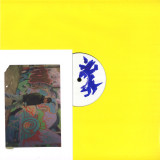
"Brazilian-born and Milan-based producer Worli makes his debut on Baroque Sunburst with an evocative EP rooted in the depths of 90's D&B. On the A side, Dynamo recalls the ciclicality of a generator, with enthralling grooves rolling through a landscape made of cavernous basslines and spectral vocals.
Breath - Dance totally lives up to it's name, exploring the psycho-physical experiences instigated by the alternation of caustic breaks and introspective ambiances. UK HC wizard Etch overstates the situation by giving Dynamo the full jungle treatment."
Suche:baroque
The heyday of American baroque pop – or chamber pop - ran from 1966 to the turn of the seventies. It used string quartets, harpsichords and woodwinds to create a summer-into-autumn melancholy that was quite new, and quite far removed from rock’n’roll as Eddie Cochran would have known it. Baroque pop’s musicians often came from a folk background, with an affinity for acoustic instrumentation. Linda Ronstadt's first band the Stone Poneys had introduced the autoharp to their line-ups in 1965, while the likes of Bonnie Dobson and Nico experimented with a string quartet’s, searching for different, post-electric Dylan directions.
"Jay Duncan's Baroque Sunburst bow Catalyst Curve is deep, percussive and submerging.
Bitten Dream's dark, atmospheric syncopation hypnotises, whilst Via Tekh's electro recalls Objekt. On the flip, Shrine twists 8-bit granular textures into early Livity Sound and Carrier territory, before the ambient Catharsis lulls the EP to a close."
Written & produced by Jay Duncan.
Mixed by Bradley Hutchings.
Master & cut by Marco Pellegrino at Analogcut Mastering.
Artwork by Luca Baioni.
Design By Otto Von Lumi.
Limited run of 200 copies.
"Following last year's LP on Lowless, Formant Value offers two half-tempo, obscure IDM dubs for BSUN. His usual ephemeral soundscapes are prominent, but wade into heavier waters by way of the two remixers. Valentino Mora reworks "Funzione I" into a misty, peak-time techno weapon, whilst Notte Infinita's "Funzione II" take is a high-tech, sub-heavy roller. Woofers at the ready."
Written, produced & mixed by Formant Value.
Master & cut by Marco Pellegrino at Analogcut Mastering.
Design by Otto Von Lumi.
Limited run of 200 copies.
Artwork by Luca Baioni & Paolo Bazzana.
Design by Flavia Serrão & Otto Von Lumi.
'London-based DJ/producer Soreab returns to Baroque Sunburst with a highly anticipated follow-up to 2020's 'Kraepelin Avenue' EP. The new four-tracker also marks his label's 10th release.
The concept of 'Maschera' revolves around Luigi Pirandello, an Italian dramatist and novelist. His ideas of the 'mask' and 'trap' take centre stage. Pirandello believed that the concepts of 'self' and 'identity' are lost and unachievable in human beings, who are all trapped behind a metaphorical mask concealing their identities.
Each track on 'Maschera' has two masks: they can be played at both 33 or 45 rpm, a dream for DJs mixing in wide tempo mode.The title-track draws inspiration from Pirandello's masking ideas. Soreab's half-time stomper moves with the slithering grace of a snake, evolving into intricate IDM melodies riddled with complex drum patterns. ‘Trappola’ is a melodic hide and seek, with a captivating slow tribal rhythm that gradually intensifies. In ‘Specchio’ the snake returns, biting his own tail in a continuous loop, a birth and death cycle. The closing track sees the opener remixed by KRSLD, a collaborator with Soreab on the BSUN and XCPT co-release 'Marmo'. His rework builds on all the concepts Soreab explores, infusing dub with a half-time modern dancehall mood. The snake, no longer masked, is now looking for you.'
- A1: Martin Stadtfeld - Neue Clavier-Übung I, Partie V In G Major: Prelude 01:43:00
- A2: Martin Stadtfeld - Neue Clavier-Übung I, Partie V In G Major: Gigue 01:04:00
- A3: Martin Stadtfeld - L'art De Toucher Le Clavecin: Prelude No. 7 In B-Flat Major 01:28:00
- A4: Martin Stadtfeld - Pièces De Clavecin, Sixième Ordre: No.5 In B-Flat Major, "Les Baricades Misterieuses" 02:35:00
- A5: Martin Stadtfeld - Sonata In D Minor, Bwv 964: Iii. Andante 02:37:00
- A6: Martin Stadtfeld - Sonata In F Minor, K.466 03:16:00
- A7: Martin Stadtfeld - Sonata In A Minor, K.54 01:57:00
- A8: Martin Stadtfeld - Suite In B-Flat Major, Hwv 434 / I. Prelude 01:26:00
- A9: Martin Stadtfeld - Suite In B-Flat Major, Hwv 434 / Ii. Allegro (Sonata) 01:23:00
- A10: Martin Stadtfeld - Suite In B-Flat Major, Hwv 434 / Iii. Aria Con Variazioni 02:34:00
- A11: Martin Stadtfeld - Suite In E Minor, Rct 2: Iv. Gigue En Rondeau Ii 01:40:00
- A12: Martin Stadtfeld - Suite In E Minor, Rct 2: Viii. Tambourin 01:11:00
- B1: Martin Stadtfeld - Passatempo Al Cembalo, Sonata No. 3 In C Minor / I. Allegro Moderato 02:10:00
- B2: Martin Stadtfeld - Passatempo Al Cembalo, Sonata No. 3 In C Minor / Ii. Allegro 01:41:00
- B3: Martin Stadtfeld - Sonata No. 21 In C-Sharp Minor, R.21 02:25:00
- B4: Martin Stadtfeld - Pièces De Clavecin: Xiv. Le Marche Des Scythes 05:21:00
- B5: Martin Stadtfeld - The Well-Tempered Clavier, Book Ii: Prelude And Fugue In E-Flat Major, Bwv 876 / I. Praeludium 03:01:00
- B6: Martin Stadtfeld - The Well-Tempered Clavier, Book Ii: Prelude And Fugue In E-Flat Major, Bwv 876 / Ii. Fuga 03:20:00
- B7: Martin Stadtfeld - & Lilian Akopova The Well-Tempered Clavier, Book I: Prelude No. 1 In C Major, Bwv 846 (Arr. For Piano Four Hands By Martin Stadtfeld -) 01:44:00
- B8: Martin Stadtfeld - / Lilian Akopova Armide, Lwv 71, Act V: Passacaglia (Arr. For Piano Four Hands By Martin Stadtfeld -) 03:45:00
- C1: Martin Stadtfeld - / Lilian Akopova Canon, P.37 (Arr. For Piano Four Hands By Martin Stadtfeld -) 03:34:00
- C2: Martin Stadtfeld - The Fairy Queen, Z. 629, Act Ii: Hush, No More, Be Silent (Arr. For Piano By Martin Stadtfeld -) 02:32:00
- C3: Martin Stadtfeld - The Fairy Queen, Z. 629, Act V: Chaconne (Arr. For Piano By Martin Stadtfeld -) 02:28:00
- C4: Martin Stadtfeld - Four Seasons Summer Variation (After Violin Concerto In G Minor, Op. 8, No. 2, Rv 315: Iii. Presto) 02:44:00
- C5: Martin Stadtfeld - Four Seasons Winter Variation (After Violin Concerto In F Minor, Op. 8, No. 4, Rv 297, Iii. Allegro-Lento) 01:43:00
- C6: Martin Stadtfeld - Trumpet Concerto In D Major, Twv 51:D7: Iv. Allegro (Arr. For Piano By Martin Stadtfeld -) 01:40:00
- C7: Martin Stadtfeld - Canarios (Arr. For Piano By Martin Stadtfeld -) 01:30:00
- C8: Martin Stadtfeld - Praise (After Israel In Egypt, Hwv 54: Dank Sei Dir, Herr) 02:13:00
- C9: Martin Stadtfeld - Piano Improvisation 1 (After Prelude From Neue Clavier-Übung I, Partie V) 01:06:00
- C10: Martin Stadtfeld - Piano Improvisation 2 (After Prelude From Neue Clavier-Übung I, Partie V) 01:16:00
- D1: Martin Stadtfeld - Minuet Piano Meditation 1 (After Minuet In D Minor, Bwv Anh.132 From Notebook For Anna Magdalena Bach) 01:03:00
- D2: Martin Stadtfeld - Minuet Piano Meditation 2 (After Minuet In D Minor, Bwv Anh.132 From Notebook For Anna Magdalena Bach) 01:23:00
- D3: Martin Stadtfeld - Air Piano Meditation (After Air From Orchestral Suite No. 3, Bwv 1068) 01:53:00
- D4: Martin Stadtfeld - Fugue Piano Meditation (After Fugue For Organ In G Minor, Bwv 578) 01:47:00
- D5: Martin Stadtfeld - Chaconne Piano Meditation (After Chaconne In G Major, Hwv 435) 01:44:00
- D6: Martin Stadtfeld - Sarabande Piano Meditation (After Sarabande From Suite In D Minor, Hwv 437) 01:11:00
- D7: Martin Stadtfeld - Aria Piano Meditation (After "Eternal Source Of Light Divine" From Ode For The Birthday Of Queen Anne, Hwv 74) 01:53:00
- D8: Martin Stadtfeld - Folia Piano Variation 1 (After Violin Sonata In D Minor, Op. 5, No. 12) 00:47:00
- D9: Martin Stadtfeld - Folia Piano Variation 2 (After Violin Sonata In D Minor, Op. 5, No. 12) 00:58:00
- D10: Martin Stadtfeld - Prelude Piano Variation (After Prelude From Violin Sonata In F Major, Op. 5, No. 10) 01:51:00D11 Martin Stadtfeld - Piano Improvisation 1 (After "Ach Bleib Mit Deiner Gnade") 02:21:00
- D12: Martin Stadtfeld - Piano Improvisation 2 (After "Ach Bleib Mit Deiner Gnade") 02:19:00
- D13: Martin Stadtfeld - Piano Improvisation 3 (After "Ach Bleib Mit Deiner Gnade") 00:58:00
- D14: Martin Stadtfeld - Piano Improvisation 4 (After "Ach Bleib Mit Deiner Gnade") 02:50:00
Mit seinem neuen Doppel-Album "Baroque Colours" präsentiert Martin Stadtfeld eine einzigartige Palette farbenreicher Werke des Barocks. Und das in einer ganz besonderen Form: Für den ersten Teil wählte er 19 wunderbare kleine Originalstücke aus, u.a. von Bach, Rameau oder Händel, aber auch von weniger bekannten Komponisten wie Johann Kuhnau oder Joseph-Nicolas-Pancrace Royer. Für den zweiten Teil hat Stadtfeld einige seiner Lieblingstücke des Barocks ausgewählt und für Klavier neu bearbeitet. So gibt es aus Vivaldis berühmten "Vier Jahreszeiten" die mitreißenden Melodien aus dem "Sommer" und dem "Winter" neu zu erleben - als kurze, wunderbar klingende Piano-Stücke. Oder den berühmten "Kanon" von Johann Pachelbel in einer neuen Fassung für Klavier zu vier Händen, die Martin Stadtfeld mit der Pianistin Lilian Akopova eingespielt hat. Diese ist auch seine Partnerin bei den vierhändigen Fassungen des ersten Präludiums von Bach sowie der "Passacaglia" aus Lullys Oper "Armida". Ein Erlebnis sind auch die Klavierfassungen von Purcells Musik aus der Oper "Fairy Queen". Nahezu meditativ klingen Stadtfelds Improvisationen über Themen von Bach (u.a. das berühmte "Air" und "Menuett"), über Werke von Arcangelo Corelli sowie über das Kirchenlied "Ach bleib mit Deiner Gnade". Aufgenommen wurden die insgesamt 45 Stücke mit einem modernen Steinway mit einem sehr nahen und warmen Klangbild, so dass sich die Farbenpracht und Intensität unmittelbar auf den Hörer überträgt. Es ist, als ob man vor einem farbenreichen barocken Gemälde stehen würde und dabei immer neue Farben entdeckt.
Upon its release, Maximum Rock N Roll called it, "Psychedelic pop without the acid flashbacks. . . remarkable." AllMusic wrote, "their cover of the Easybeats' 'Sorry' is worth the price of admission alone."
This is the release that put The Three O'Clock on the map in L.A., where the band quickly became a signature part of the Paisley Underground scene, a term coined by Three O'Clock vocalist/bassist and chief songwriter Michael Quercio.
This 40th Anniversary Expanded Edition, contains the five original songs from the LP with four additional recording from the era added to make it album length. One of the additional songs is a cover of Pink Floyd's "Lucifer Sam"
'Nicolò's music was born in the foggy winter of the Adriatic coast, and raised in the dusty grooves of Milford Graves LPs. It travelled to London and Berlin, where it collected sweat from crowds dancing in dark basements, leaving it with an organic hue and rhythmic patterns both broken and free.
This is bass-driven music from outer space. RRRing The Alarm!'
Produced and Mixed by Nicolò.
Mastering and lacquer cut by Kassian Troyer at Dubplates & Mastering.
Art by Paolo Bazzana.
Photo insert by Flavia Serrão.
Design by P.Bazzana & F. Serrão.
"Following this year’s VA ‘Marmo’, a collaborative offering co-released with XCPT, Baroque Sunburst releases its first Various Artists EP. Tracks from Taro, Pugilist, Slacker and Flørist, create a statement record championing subtle yet hybrid club-oriented sounds.
Buffalo, NY's Taro ignites the white label 12" with ‘Gas Burn’, a dreamy, rarified IDM zipper. An off-kilter UK funky remix from Flørist follows (his second appearance on the imprint after 2020's Intermedia 1 EP). The B side drags us into a half-time, downtempo sideroom, with tracks from Slacker (Aqueduct) and Pugilist (Symbiosis) slowing pace but maintaining intensity."
Limited to 300 copies.
Clear Vinyl Remastered Version
First vinyl pressing of Baroque by Japanese composer and multi-instrumentalist Susumu Yokota. The full length album was originally released by United Sounds Of Blue in 2014, a subdivision of Frogman Records in CD format. Now it is being re-released by Barcelona-based record label Modern Obscure Music as a double LP and in digital format. Baroque is one of the most significant albums of Susumu signed under his original name, and this is the first time the album will be pressed on a double LP 12". Yokota, was an eclectic, highly prolific electronic musician and composer from Japan who died in 2015 at 54. "There is always fear, rage, and ugliness existing behind beauty. I have been trying to express ki-do-ai-raku (the four emotions: joy, anger, sorrow, and happiness) through music. I would like to express even one's hidden emotion with reality. It's my eternal goal." Baroque is a clear example of this, thought the deep listeing of the album you can experiment all of that feelings in just one record and feel how his music infulenced the next generation of producers during the two next decades till today. The Tokyo-based artist devoted his time and creative energy to achieving this goal, and the result is a vast discography that begins with banging early acid house tracks in the 1990s, moves across the next two decades to include deep house and Detroit-influenced techno, a stunning run of ambient electronic albums and, in his last decade, a glorious confluence that wove his various skills into a series of borderless electronic records. Modern Obscure Music team is really excited to bring this gem to the light, Baroque is remastered and distributed in two 12" to be played in clubs and home sound-system bringing the best quality of sound to have the best experience. Susumu Yokota (?? ? Yokota Susumu, or ???·??? Susumu Yokota (April 22,1960 - March 27, 2015) Also known by the pseudonyms Stevia and Ebi, among other.
A series of four limited edition box sets released to celebrate the 40th
Anniversary of the Etcetera label
This one features 10 classic Baroque music recordings from their catalogue:
JS Bach: Toucher Bach Son for Flute & Harpsichord (KTC1695)
JS Bach: Goldberg Variations/Canonic Variations (KTC1400)
JS Bach/Abel/ JC Bach: Souper Galant with the Bach Family (KTC1293)
Vivaldi/Cage: 8 Seasons (KTC1429)
Schutz/Bach: Musicalische Exequien (KTC1578)
JS Bach: Kunst der Fuge (KTC1348)
JS Bach: Gamba Sonatas (KTC1365)
Faber/ Vivaldi: Missa Maria Assumpta (KTC1597)
Fiocco: Lamentations (KTC1544)
“Under the Haramia Tapes veil, Laurine Frost wriggles his way through dub infected, smoke-laden horizons bending and stretching time mischievously while peering through his mask. The saga continues no differently than any of Frost's other elusive outings, genre defiant as ever, we get a glimpse of what allegedly is an unreadable and luminous future.
Following his complex concept driven offerings, on ‘Daydreaming’ we are treated to a set of groovy and hypnotic vignettes flowing ever so fluidly between beat, rhythm, and harmony. Surgically layered, yet expertly stripped back, these bedtime ragers are crafted for those waking moments where the body becomes the mind.”
Ali Safi
Episode 4 of the Baroque Sunburst saga features Belgrade Ambassador Zarko Komar - aka Feloneezy - whose personal and intimate Uptempo production-style has previously found a home on Hyperdub.
"Axis to Axis" is a four-tracker that goes hard on resampling, blending Jungle and Juke with field recordings. The EP captures us in a hypnotic psychedelia, lubricated by moments of Dub and Jazz, with the unexpected fragments of vocals interrupting to drag the listener back to Earth.
'Flørist adds an important chapter to Baroque Sunburst's quest for the hypnotic and hybrid side of dance music. Moving effortlessly between different BPMs and orchestrating with an innate elegance, the Berlin-based Canadian producer has assembled three long mesmerizing journeys.
He straddles Terry Riley-esque minimalism, Warp's A.I. sci-fi side and the emotional depth of Basic Channel, blending these whilst maintaining dancefloor efficacy. "Intermedia 1" is architectural music where every detail is essential and everything is constantly developing.'
"Beat scientist Soreab signs our second release at the peak of his rhythmic experimentation. Four swirling, hyperactive, sketchy tracks dedicated to overturning the classic hierarchies of beats.
Folding the solidity of grooves and sound palettes coming from dance floor music to the hypnotism of techno scenarios and seasoning everything with an exquisite sense of sound design- capable of opening up into melodies without losing his ruthless intensity."
Four freshly dare-to-be different cuts of bass-driven Techno, electro/IDM grooves, atmospheric dub chords, weird percussions and odd-uneven rhythms.
There’s a subtle sense of tension and restlessness in the guts of this music but also a lot of space, both colliding in the powerful dubby synth-solo closing track.
Alongside Alfred Panou & the Art Ensemble of Chicago’s ‘’je suis un sauvage’’ , Baroque Jazz Trio‘s ’’Orientasie /Largo’’ is probably one of the hardest to find EP on Saravah.
Hitting #2 on Jazzman Records European Jazz 45’s top 10 list, this is the finest fusion between free jazz, baroque music & exotica with one of the most singular sound you can find on a jazz record !
Nach den zwei Klassik-Alben - Garrett vs. Paganini (2013) und - Timeless (2014) meldete sich David Garrett vergangenen Herbst mit - Explosive als Crossover-Künstler fulminant zurück. - Das neue Album ist einzigartig und überhaupt nicht zu vergleichen mit allen Sachen, die ich vorher gemacht habe , erklärt der Star-Geiger zur VÖ. Und Garrett sollte mit dieser Aussage Recht behalten: - Explosive begeistert Crossover-Fans wie Klassik-Liebhaber, platzierte sich gleich in der zweiten Woche auf #4 der Deutschen Album-Charts und hielt sich insgesamt 15 Wochen unter den Top 25. Das Album zeichnet sich durch seine spektakuläre Mischung an Eigenkompositionen Garretts und Crossover-Adaptionen berühmter Rock-/Pop-Klassiker aus. U.a. nimmt sich Garrett der Songs von Eminem (- Lose Yourself ), Michael Jackson (- They Don't Really Care About Us ) und Ed Sheeran (- Thinking Out Loud') an. Dass er für seine Eigenkompositionen - Serenity und - How Many Times Nicole Scherzinger bzw. Xavier Naidoo als Sänger/in gewinnen konnte, ist für David Garrett die Erfüllung eines Traums und Auszeichnung seiner Fähigkeiten gleichzeitig. - Explosive erscheint am 26. Februar 2016 als rote Doppel-Vinyl.
- Kofán – El Bejuco Umbilical
- Ensamble Juyungo – Chimborazo
- Llaquiclla – Agua Larga
- Asunción Quiñonez – Bambuco La Katanga
- Juan Luis Restrepo – A Saravino
- Juan Cayambe – Negra Muele Caña
- Rosa Huila – Andarele
- Ensamble Juyungo – Amanece
- Caynamanda Cunangaman – Candela Y Ron
- Llaquiclla – Ceremonia Matrimonial
- Ensamble Juyungo – Patagoré
- Papá Roncón – Sanjuanito Chachi
- Ensamble Juyungo – Llacta Pura
- Llaquiclla – Ritual Emberá
- Osvaldo Lindberg Valencia – Torbellino
- Raúl García Zárate – Kasilla Shungulla
- Ensamble Juyungo – Tren Con Ritmo De Caramba
- Ensamble Juyungo – Caramba Con Ritmo De Tren
- Llaquiclla – El Viaje Del Yagé
- Ensamble Juyungo – Toquesito
- Llaquiclla – Galapago
- Llaquiclla – Carambalante
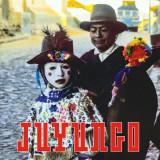
‘Since the 16th century, the Ecuadorian province of Esmeraldas has been home to a unique Afro-Indigenous culture originating in the integration of the Indigenous Chachi and Nigua peoples with African Maroon communities. Juyungo documents significant Esmeraldan artists and bands playing the Afro-Ecuadorian folklore of the province, as well as including some older field recordings. Based mostly on the marimba, whose origins lie partly in the African balafon, partly in Indigenous percussion instruments, the music is laced with call and response chants, ambient insect and bird noise, the filigree finger-styles of the Andean guitar tradition and the panpipes of the mountains. This is resonant insider roots music at its headiest — the mystic revelation of Esmeraldas, gully deep and lustral.’
- Francis Gooding, The Wire.
The fifth in our series of LPs compiling classic music from Ecuador. Customary Honest Jons runnings: a beautiful gatefold sleeve; superior pressing, with vivid, intimate sound; full-size, sixteen-page booklet, in colour throughout, with detailed, fascinating, bi-lingual notes, and stunning photographs.
The music is transfixing, magical; not like anything else. From start to finish, this album is continuously, profoundly immersive; a kind of journeying, trippy meditation about slavery and cultural resistance, identity and mix, places and spaces, futures and pasts. It’s inscrutable to net-surfing, algorithms, Shuffle. But for a taste try the insurgent marimba roller Agua Largo, jet-propelled by Rosa Huila’s rapturous blend of African spiritualist and Christian chant. ‘Healing music,’ Zakia called it on Gilles Peterson’s BBC show recently. And the ravishing pasillo Kasilla Shungulla — ‘calm your heart’ in the Quichua language — a duet between the Peruvian master-guitarist Raúl García Zárate and viola da gamba by Juan Luis Restrepo from Medellin, recorded in a baroque church in Buzbanza, Colombia.
- 1: Slab
- 2: Thirty-Seven Forever
- 3: How You Gonna Get Even
- 4: Someone You Forgot
- 5: Lonely Heart Pyramid Scheme
- 6: Soulseeker
- 7: Jukebox Weepie
- 8: Casio
- 9: High Hopes (Ballad Of Rural France)
- 10: Electrical Tape
Much like the duo’s music, the story of Rural France is both mundane and magical. Tom Brown (also of transatlantic janglepunks Teenage Tom Petties) and Rob Fawkes moved to London in their mid-twenties. Despite living under the same roof, they never picked up a guitar – except for one drunken, failed attempt at writing a Spoon song (“Big Chops” …don’t ask). It was only after both separately relocating to Wiltshire and starting families that they began assembling songs as a way of meeting up. Tom had amassed a pile of sprightly slacker jams that were calling out for Fawkes’ messily melodic guitar lines. Rural France was born.
After a debut album on their hero, ex-Lemonhead Nic Dalton’s Half-a-Cow Records, they retreated to a garage to record their next two albums: RF (2021) and Exacamondo! (2024), both released on much-respected jangle label Meritorio Records. Despite being lo-fi in the truest GbV sense, both records were warmly received by the DIY indie blogosphere, with their short, scrappy, but supremely melodic songs landing on numerous AOTY lists. RF even won Album of the Year at Janglepop Hub.
Raven Sings The Blues probably summed up the sound best: “With drunken visions of Beach Boys harmonies playing in the back of their heads and hooks that consume Teenage Fanclub cheeriness with the same beautiful brevity that drives Tony Molina, the pair have knocked out eleven rumpled classics.” Album four, SLOTHS, arrives via Meritorio Records and Safe Suburban Home Records on 08/05, and is a slightly different beast. For one, it’s been mixed by a professional – Rob Slater (Westside Cowboy, Yard Act, Thank) – giving the guitars and drums room to breathe. It’s easily their most high-fidelity record to date. It’s also their jangliest, most baroque and thoughtful album yet. But alongside added organ, horns and mellotron – and drums from Tom’s Teenage Tom Petties bandmate Jeff Hamm – it still retains the buzzes, hums and little freak-outs that stick to the duo’s original “Pavement playing Teenage Fanclub” mission statement. “Rob and I both wanted to do something a little slower and a little more melancholy,” says Tom. “We resisted our usual urge to hit the distortion pedal and made something that fitted where we are now and celebrates how we still listen to Meatloaf when we get drunk.”
SLOTHS is also the most thematically consistent Rural France record to date. While it wouldn’t be right to call it grown-up, it definitely has homeowners’ insurance. From the Silver Jews-esque Americana of “Slab” and mid-life rallying cry of “Thirty Seven Forever”, to the horn-embossed loser anthem “Lonely Heart Pyramid Scheme,” the songs celebrate (and rail against) the absurdities of getting older, forming a band in your thirties, and the strange phenomenon of time passing. Because no matter how slow you move, everything else goes fast. SLOTHS.
2026 Repress
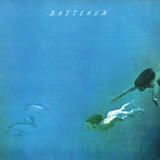
A notoriously jaw-dropping folk-funk classic, long treasured by the Balearic fraternity, the self-titled LP from the brothers Batteau nevertheless remains a criminally underheard gem. Appealing to fans stuck on Ned Doheny's scorching blue-eyed soul as well as Gene Clark's rich country-rock, it's an honour to present the first officially licensed vinyl reissue of this undoubted masterpiece of proto-Yacht-Rock.
Like a forgotten piece of baroque folk caught in 1973, Batteaux's eponymous album somehow sounds magically timeless. A full 45 years after the fact, it remains a mystery as to why they weren't better known. The lush production and virtuoso playing conforms with the ruling aesthetic of the time - well-crafted, melodic songs performed with precision and balance - whilst the shimmering AOR atmosphere and sun-dappled vocal washes align neatly with the best Crosby, Stills & Nash records.
Throughout, the beautifully penned tracks hold traces of Jimmie Spheeris, America and Seals & Crofts. The immaculately orchestrated percussion and additional instrumentation (electric piano and fiddle to name a few) are performed by perennially celebrated West-Coast cats including Tom Scott, John Guerin and Andy Newmark.
It's no surprise that the heavenly "High Tide" is such a Balearic touchstone. A free soul aqua-space groover, its sophisticated rhythms predict the swing of CSN's canonical "Dark Star" by a full four years. An alternative measure of its enduring magnificence can be gauged by MF Doom sampling Paul Horn's wonderful version, subsequently used by Ghostface Killah.
The highlights are many and memorable. Gorgeous opener "Tell Her She's Lovely" is the perfect example of the addictive, melody-driven songwriting which really should have earned them stardom. Moody ballad "Living's Worth Loving" is nothing short of heartbreaking whilst the chugging elegance of "Wake Me In The Morning" showcases their bewitching harmonies. The hypnotic yearning of "Lady Of The Lake" is an exquisitely string-drenched, piano-laced favourite that achieves a peculiar strutting-funk. It's that good.
This lovingly curated reissue enables a long overdue reappraisal of the hitherto buried genius of Batteaux. The serene aqua artwork which adorned the original jacket - their father worked on a dolphin-human communication project in Hawaii, hence the infamous design - and sumptuous inner sleeve have been faithfully restored. Whilst, with access to the original tapes, Simon Francis' sensitive mastering elevates the sound throughout and, as ever, it has been pressed at a reassuringly weighty 180g.
What happens when the mathematical rigor of Johann Sebastian Bach is stripped of its classical facade? With the album SRDNG x LPZG, the duo AMAS, together with double bassist Frithjof-Martin Grabner, delivers a radical answer on May 15th, 2026. The work does not merely translate Bach’s legacy; it consistently reimagines it within the aesthetics of Minimal, Dub-Techno, and Ambient. The creation of this extraordinary abstraction spanned three years and two geographical poles: the raw isolation of Sardinia and the academic precision of Leipzig.
The project found its origin in the seclusion of Pula, at the southernmost tip of Sardinia. There, AMAS extracted and digitally dissected the rhythmic and tonal essence of 14 selected works by Bach. In a temporary local studio, these minimalist sequences fused with field recordings of the surroundings to form a hypnotic framework of electronic structures. Back in Leipzig, this foundation met Frithjof-Martin Grabner. In an intense session held in a hall of the historic HMT Leipzig, spontaneous improvisations emerged that breathe the spirit of Miles Davis’ approach to "Ascenseur pour l’échafaud": free play based on rudimentary sketches, an intuitive reaction to the material—comparable to Davis’ iconic scoring of silent film images. It is a deliberate prioritization of atmosphere over technical perfection. Grabner utilizes the full spectrum of his instrument, creating sounds that, in post-production, often blur the line between analog depth and synthetic texture.
The result is an organic symbiosis: the vastness of Sardinia (SRDNG) meets the intellectual density of Leipzig (LPZG), while the strictness of the Baroque dissolves into the repetitive energy of Minimal Techno. To do justice to this conceptual ambition, the album will be released in an uncompromisingly audiophile edition. Limited to 200 copies worldwide, the double LP is pressed on 180g vinyl and features a front cover with a special 3D effect, continuing the visual tradition of the AMAS series. An album for listeners who understand Bach as a living origin of modern sound art—and for lovers of electronic music seeking a new, organic soul within the repetitive depth of techno.
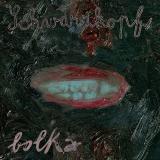
Bolka is known as the man with the cap. His cap has lived through a lot: his glitchy and microtonal experiments, studies at Institute of Sonology in The Hague or through countless performative works. A few years ago, Bolka’s cap fell apart. By that time he was already a fixture on the slovak experimental scene, but only releasing his debut album, “smutné stropy.” He started wearing new caps from then: somehow reminiscent of the old one, but much more varied — same as “smutné stropy,” bubbling with motifs, charming humour and pop sensitivity layered over detailed soundscapes popping with surprises.
On schwarzkopf, Bolka returns wishing for a thick black hair. With his charming love songs, that are positioned somewhere between a tightly run freak folk orchestra, deconstructed ballads and colorful ecstatic melancholy, he creates an album that thrives on juxtapositions that are completely unique, yet strangely familiar. Bolka’s songwriting is at once tender and irreverent — lovestruck whispering suddenly tripping over absurdist jokes and surreal images that fizz like soda. His songs move in that strange space between vulnerability and mischief, where intimate confessions collide with radical playfulness and the poetic rubs shoulders with the delightfully ridiculous.
On schwarzkopf, Bolka expands his world with a wide circle of collaborators and an even richer sonic palette. The album is meticulously detailed yet carefree: delicate moments sit next to sudden explosions, drifting from gentle pop to bursts of noise. Toward the end, the album even slips into a footwork-infused remix by Kodiki, passes through Julek ploski’s signature neon-baroque string perspective, and briefly wanders into Lénok’s cinematic sonic world. Bolka sings that he wants to dissolve into a healing ointment, to be ground in a mortar with calendula — and he invites us into this musical spa with him: a place that stings a little but ultimately soothes, a gorgeous soundscape that is both painful and joyful at the same time.
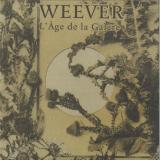
Based in Rennes and founder of the Vives label in 2020, Weever has been exploring the interplay of light and shadow for over 10 years, crafting abstract soundscapes and textured sonic tunnels of unparalleled musical breadth. He elegantly blends industrial and baroque sounds to construct sonic cathedrals. His music is both utterly raw and meticulously crafted.
L’âge de la Galère :
started this EP in 2020. At the time, I had just finished my studies, it was a pretty difficult period and I had made a track, or rather a melody, that I thought was amazing. I held onto it all these years without ever releasing it. 2020 was a tough year overall. The big question was: What am I going to do with my life? Hence the title L’âge de la Galère
The title really started to make sense when I began putting tracks together for Micheal. Around that time, I was reading Those of 1914 by Maurice Genevoix. For those who don’t know it: it’s written as a journal and tells the story of the author and his fellow soldiers in the trenches during World War I.
I’ve always been passionate about the two World Wars, I watch every film, old and new, I listen to the soundtracks, and so on. Same with period films, especially medieval ones. I love drawing inspiration from them.
So naturally, I imagine and create around that. It comes easily because it’s always been my universe. And when I make music, those kinds of images inevitably come out, even subconsciously.
So I created and told an audio story through my 6 tracks.
“It’s 1914. The story of many men who, upon hearing the sound of the bells, are met with the announcement of a war like no other. Most of them are young, some very young, and they are drafted into the French and German armies. They have no military experience, and the first battles are so violent that many won’t make it back. Very few will earn the glory they deserve.
The conditions are appalling, everything is in short supply, and the men are exhausted. Still, they must hold on.
Leaving carelessly from beneath their mothers’ skirts, too few returned. Many were left traumatized, and an entire generation was forever changed.”
Emily Wittbrodt's "Wearing Words" is a cycle of ten instrumentals and songs for harpsichord, cello, drums, clarinet, accordion and tenor. With precision, humor and grace, Wittbrodt translates a baroque sensibility into pop terrain, combining her fascination for language and poetry with her love for unusual instrumentation and classical forms.
This record is like the lost crown jewels of House Music with a story that spans decades. Originally programmed in 1998 on an Akai S3000XL, this was meant to be released on Bjørn Torske's Footnotes in 2001. Unfortunately the original matrix and the master DAT tapes got lost under crazy circumstances. Yet several years later the tapes were found by Sex Tags Mania in the studio of mastering engineer Helmut Erler and the record eventually got issued in 2009 when a totally different House sound was "en vogue." Then due to some unfortunate coincidences most of the records ended up in far flung Japan, and so this record stayed totally underground. Yet it became a cult hit when House Music and later Disco got a proper revival around 2010/11. So over the years prices for this rarity were rising and rising... Then fast forward to 2025: after a sunny day off Berlin's modular synthesizer show "Superbooth" ATJ boss Mr. Fonk and Doc L. Junior teamed up to finally reissue this gem with new masters by Andreas Kauffelt of "Schnittstelle" / Berlin. On this 12“ Norwegian Disco and Balearic sounds meet: funky but deep to the core, playful but hypnotic, stripped down but with baroque details. Truly one of House Music's greatest productions.
“From Birmingham and centred around the extraordinary songwriting talent of James and Patrick Roberts – initially as The Sea Urchins and since 1993 as Delta – they’ve only just got round to releasing their debut album, Slippin’ Out. It is a work of some beauty”. 9/10 NME ALBUM OF THE MONTH, 2000
“It’s classicist for sure, shot through with the influence of The Beatles, Byrds and Buffalo Springfield. In James’ downright beautiful closing ballad ‘I Want You’ one can also discern the school of ambitious English balladry that peaked in about 1968: The Casuals, Love Affair, Barry Ryan. The impression of accomplished old-schoolery is only furthered by the dizzying string arrangements penned by Louis Clark Jnr, son and namesake of the one-time orchestral chief of Electric Light Orchestra” – Mojo lead review, 2000
Having ended the 90s with the spirited ‘Laughing Mostly’ compilation of singles and demos (Guardian Album Of The Week) Delta finally released their debut studio album of twelve songs in the summer of 2000 on the Dishy Recordings label. Accepting that this might be their sole studio album the band threw everything at these recordings allowing it to exist in its own sphere, unbothered by their contemporary generation and disregarding the idea of even releasing a single.
Recorded at DEP International there was a notable difference to the scruffier, looser charm of their 1990s recordings, a tighter focus developed by having the experienced Lenny Franchi mixing the LP with them. Lenny had been working with a number of Island artists including My Bloody Valentine and Tricky so knew his way around a desk. There was also the question of budget (a few months passed between recording and mixing whilst funds were raised) so every day counted. Ultimately though you can hear the joy in the recordings, even amongst the melancholy and angst. As James recently recalled in an interview in Shindig! Magazine: “It was such a big deal for us. It’s one of my fondest memories doing that record. Everyone was happy. If there’s anything that I’d stand by, I think it would be that”
Louis Clark Jr joined the band towards the end of the ‘90s and brought a classically-trained element to the recordings particularly with his string arrangements. For ‘Cuckoo’, ‘I Want You’ and the prophetic ‘We Come Back’ Louis brought in eight players from the Birmingham Conservatoire; the baroque style is partly why the record often receives comparisons to Love’s ‘Forever Changes’.
On release ‘Slippin’ Out’ was a big favourite with writers at the NME, Mojo and The Guardian again and before long the band were signed to Mercury/Universal for their second studio album ‘Hard Light’, a far more expensive and expansive love affair. It was a temporary palatial home where things quietly fell apart again, but that’s another chapter.
“If long-term memory is nothing more than selective editing and only pop’s most weighty visceral works are built to last then it’s quite possible that in 50 years the Britpop era will be best recollected for the two bands it ostracised. Earlier this year we met Shack and thought their story of mercurial brilliance indicated the biggest music biz oversight of the 90s. We were wrong because we hadn’t met Delta yet. This is richer and more engrossing than anything by Shack”
These tracks were produced by Ori Lichtik between 2006 and 2017.
Half Life and Bill are precise cuts of extensive productions, tailored for the club, while Nu secretly hits everyday dance training routines. Dim the light.
Lethal. Minimal. Timely.
Press quote from Göteborg Opera
'The uniqueness of Lichtik's work lies in the combination of different musical worlds into a sophisticated and refined soundtrack, full of passion and groove, which, together with the choreography, provides the audience with a hypnotic experience. Lichtik's music is influenced by various styles and sounds, from industrial recordings and African indigenous music, through hip-hop, to baroque music. Ori's music is one of the most prominent and distinctive features of Sharon Eyal and Gai Behar's dance works.'
- A1: Eu Sou Terrivel
- A2: Lingua Do P
- A3: Love, Try And Die
- A4: Mini-Misterio
- A5: Acaua
- B1: Hotel Das Estrelas
- B2: Deixa Sangrar
- B3: The Archaic Lonely Star Blues
- B4: London, London
- B5: Falsa Baiana
Pure class as always from Gal Costa! The record is her first after the immediate Tropicalia years, and it's a stunning blend of styles that seems to draw heavily from changes going on in the American rock scene at the time. The core of the music is still steeped in Brazilian elements – but there's a lot of influences coming into play on the album, like bluesy rock phrasing, showy nostalgia-heavy arrangements, psychedelic production elements, and some of the baroque orchestrations that would show up on Gal's later albums in the 70s.
The first of 2 EPs 2 proceed the next FUTURE SOUND OF LONDON album in 2025
Side A is a deeply moody dark ambient journey through mists of choirs to a place of ritualist electronic beat swamp finally being spat on a leaf suburb road somewhere in Surrey - what just happened !
Side B unlike the previous side this begins far more reflective, as the journey progress it becomes more unsettling once more - a baroque minimalist piece followed by modular synths melding with breaks and drum machine - ambient field recordings , a mesh of carefully gathered and selected samples - FSOL perfection.
Longcut Records thrives on the transformative power of music. Discover concept albums that tell stories of journeys, struggles and raw emotions. Find your next soundtrack to let your mind wander or join us in our social activism, amplifying the voices that deserve to be heard. Just like our emblem—a spirited dachshund in motion—we embody relentless energy and a rebellious spirit against mainstream music. Mind us, but our true heartbeat resonates most powerfully with modern composition, ambient, techno, jazz, and experimental sounds.
Ten years after his first full-length effort ‘Man Is Deaf’ landed him firmly in the runnings for DJ Mag’s album of the year, prodigal son Michael Anthony Wright AKA Brassica returns to Civil Music with a deeply accomplished, painstakingly whittled LP of hydraulic electro slickness, rich synthscapes, and hooky, peak-time tearjerkers for the most discerning front-left lifers. ‘Tribeless Gathering’ is a barnstorming testament to Brassica’s stylistic and timbral deftness, touching down in the elusive epicentre of the club/home listening venn diagram with ease.
From the elastic, neon acid pointillism of opener ‘Hop Kweng’ to the mardy, miasmic plod of closing chugger ‘Changa Hill’, Brassica seamlessly segues between avenues of influence, his notoriously omnivorous musical knowledge roadmapping each turn. Raised on a diet of everything from early rave standards to metal, and schooled in avant garde sonics as a student of sound design at LCC, Brassica does a peerless job of sublimating his countless influences into a record of refined, heterogeneous, and most crucially, catchy, club moods.
Less spartan than his more recent oeuvre on Feel My Bicep, and less baroque than his technicolour experiments in postmodern synth pop with vocalist Stuart Warwick, Tribeless Gathering represents Brassica’s triumphant return to the main room, replete with rushy hooks primed for the planet’s finest soundsystems, and passages of heads-down tension bound to draw listeners right to the edge of their seats. Overall it is a concise and refined testament to Wright’s command of spectral sonics and effortless ability to pressurise a dancefloor. It is no surprise that he has also worked as a prolific mastering engineer, tuning music from a plethora of dance disciplines for maximum club impact. This work extends to his own projects (including this one), cementing them as rare expressions of complete artistry from studio to turntable.
As we delve deeper into the record, we are ushered through a series of accomplished and varied club moods, each channelling a unique cocktail of influences, but retaining a warm, ebullient analogue sensibility unique to Brassica’s work. This playful scope of influence calls to mind James T Cotton or Machinedrum’s experiments in dance music form, but Wright manages it all under one roof, wrangling everything from sashaying wub-laden two step to snarling Dillinja-esque FM damage into something inherently his.
Choice cut ‘Change Yourself’ layers an almost Cerrone-like piano refrain over radiant surges of saturated bass, dubby, strobing chords and a jagged, driving break, building to a jaw-clenching apex of dancefloor elation, while the rude, playful half-step of ‘Elevation’ breaks down the vintage speed garage formula into linear fragments, utilising a tight palette of resonant bass slugs, infectious synth leads and Papua New Guinea-style vocal strobes. The aptly named ‘Hold Tight’ fuses heart-in-mouth UK ‘ardkore pads with glissando acid disturbance and surgical snare fills in a formula which recalls the ethereal grit of Nubian Mindz’ 00s experiments in big-smoke break science, while the questing melodic arcs and arpeggiated squarewaves of ‘Pinball Marinara’ could easily have soundtracked an 80s sci-fi epic, beset with sparkling, bare-bones drum programming and hazy beds of sub sediment.
With ‘Tribeless Gathering’, Brassica both irreverently fuses and pays homage to the many unique and weird permutations of UK dance music. The short lived gathering of junglists, ravers and house hotsteppas of a similar name may have long since dissipated, along with the tribes themselves, but across these 11 tracks, he lays a blueprint for a new sound of togetherness.
Sleep Now Forever is the second and final album released by Sorrow, the post-Strawberry Switchblade group fronted by singer Rose McDowall. Originally released in 1999 and long since deleted it is a cornucopia of pastoral, elegiac folk music, swirling atmospherics, hymnal compositions and above it all the alternating towering and fragile vocal performances of McDowall. Recorded in the late 90s with fellow band member and co-songwriter Robert Lee, Sleep Now Forever is the definitive statement by the now defunct group and Rose McDowall’s most complete long-form work to date.
Released through the group’s own Piski Disk Records, Sleep Now Forever was distributed by World Serpent which struggled through the early 2000s with financial woes, eventually folding due to bankruptcy in 2004. Due to the company’s troubles, Sleep Now Forever was never distributed widely and was a victim of the company’s failure. Released on CD only, original copies are now rare and only traded on second hand channels. Remastered by Mikey Young for a limited vinyl release, Sleep Now Forever will be released on April 20th on double vinyl format, with one side an exclusive etching by Glasgow artist Holly Allan.
Despite its rarity, Sleep Now Forever enjoys a firm cult following. The album’s textures are expansive, lush, deliciously detailed and celestial. Recorded in home study Velvet Hole by Rose McDowall and then-husband Robert Lee, the album enlists an array of players from the underground Neo-folk / industrial scene: Nigel McKernaghan (Uilleann pipes, Whistles), Susan Franknel (Bassoon), John Contreras (Cello) and Lawrence Frankel (Oboe, Cor Anglais). The eleven songs here revolve around McDowall’s instantly recognisable voice. Brought up singing in the Catholic Church, McDowall’s vocals are impeccable and angelic, particularly on tracks like Turn Off The Light where her experiences with religion are canted over soaring oboe and guitar backing. By far the most evolved and realised version of Sorrow’s vision, it feels somewhat criminal that music this beautiful could be lost to time until now.
McDowall’s lyrics throughout Sleep Now Forever deal frankly with mental health, depression, altered states, death and redemption. Wave upon wave of harmony drench each song, McDowal’s vocal multi-tracked and imperious. Opener Soldier benefits from Robert Lee’s use of the studio as instrument, summoning forth a lilting group performance of sparkling guitar and percussion that recalls the Velvet Underground. Mikey Love’s master treats the compositions to brand new frequency dynamics and space. Harmonium and string drones form the counter to McDowall’s vocal on Love Dies, a slow, lurching lament that feels transcendent. On Haunting, the arrangement is orchestral and aching, bleeding into Fear Becomes You, with chord and harmony structure that recalls the baroque sixties pop of West Coast Pop Experimental Art Band or the 60s psychedelic folk movement. A towering, beautiful statement, this elegy for times lost and moonlit-illumination is finally resurfacing from the darkness.
Transversales Disques proudly presents Alain Goraguer Rare Soundtracks & Lost Tapes.
French composer Alain Goraguer who first made a name for himself as a sideman and arranger for Serge Gainsbourg wrote very few soundtracks, but amongst them, the legendary La Planète Sauvage (1973) is an absolute staple of France’s essential music.
During that same period of time, Goraguer wrote two rare and beautiful scores using the same masterclass arrangements. On L’Affaire Dominici (1975), Alain Goraguer creates a theme of great melodic clarity from a palette of breathy flutes, clavinet D6 baroque textures, wah-wah guitars and slow-paced drums that clearly reminds La Planete Sauvage’s atmosphere. The same can be said about the score of Au delà de la peur (1975) with its descending clavinet melody, twanging bass riff, funky drums and flashes of bended electric guitars. This record also includes never before released tracks found in the vaults of French national radio: beautiful and timeless orchestral compositions recorded at Studio 105, Maison de la radio.
REMASTERED FROM THE ORIGINAL MASTER TAPES
"We find ourselves venturing into the depths of a rugged terrain. In our hands, we hold stones and minerals, each possessing its own distinct texture, weight, and sonic potential. It is through the artistic touch and through the musical instruments that these earthly treasures, once dormant, are awaken to life." — Sara Oswald + Feldermelder
The 3rd collaboration of prolific cellist Sara Oswald and electronic musician Feldermelder evokes captivating sensations that oscillate between impending doom and hope. The albums' sonic journey is highly immersive, transporting the listener from one cerebral landscape to another. The transformative nature of metallic elements being integrated in sustained orchestral tones weaves the sonic tapestry, resulting in a captivating experience for the listeners. The organic sounding — reminiscent of minerals' timbres — brings a touch of brightness and a distinctive edge, while the orchestral harmonic structures lend a sense of grandeur and continuity. The origins of this music remain enigmatic, while the tracks of the album gradually unveil concealed aspects and the hidden truth.
One can step into a realm where melodies are reborn, as Sara Oswald's cello spins tales and emotions burst forth. Nature's eternal splendor intertwines with the essence of music, as she infuses harmonies with the soul of mountains. Vibrant hues come alive with delicate strokes, and cascading notes resonate with a select few. Feldermelder conjures profound echoes that swirl like ancient whispers of the earth's primordial past. He sculpts textures, from fragmented glitches to expansive atmospheres, that warp the fabric of reality. The two musicians merge together harmoniously, blending the acoustic and electronic worlds into a transcendent unity. This fusion of contrasting elements adds a unique and intriguing quality to the music. The cello's warmth merges with pulsating electronic beats, creating a symphony of contrasts and sonic upheaval. Each composition is woven in intricate layers, combining electroacoustic architecture with delicate precision. A subtle balance of chaos and control permeates the music as it meanders through the labyrinth of the mind. The soundscape unfolds like a grand tapestry, distant echoes murmuring like grains of sand.
Trained in baroque cello and advocating improvised music, Sara Oswald is the perfect match for sound artist and electronic musician Feldermelder. She plays solo, composes for film and theatre and collaborates with musicians like The Young Gods, Pascal Auberson, Sophie Hunger and Julian Sartorius. Feldermelder is a polymathic creative whose artistry spans composition, sound design, installation and code. He is co-founders of -OUS and part of Encor.studio, a collective of artists who specialise in creating immersive audio-visual installations. Through his work, he explores the idea of secrecy and its impact on our lives, using music and sound to create a thought-provoking and immersive experience for his audience.
Recently created Guatemalan label Identidata is extremely proud to present Sacratávica, the very first collected survey of Joaquín Orellana’s compositions. With a career spanning over 50 years of activity across contemporary art, performance, theater and sound art, Orellana is a highly singular figure in Guatamalan culture. Often considered to be the sole avant-garde composer in the country, his work has a deeply interdisciplinary quality. Most of his music was created using an orchestra of his self-built instruments, also known as Útiles Sonoros. Sitting at the border of sculpture, sound installation and musical instrument, these Útiles Sonoros, which he’s been building and developing since the late ‘60s, are at the center of his artistic activity.
Aside the obvious formal aspect, his compositions also have a strong political message, while being deeply rooted in Guatemalan history, folklore and various identities, both indigenous and modern. Playful opener “Híbrido a presión” was one of the first of his compositions to be performed entirely using the Útiles Sonoros. However, due to its technical complexity the piece was seldom reproduced, except for a later staging that Orellana directed in Louisville, Kentucky. “Ramajes”(1984), initially titled “Evocación profunda y ramajes de una marimba” , tracks the many incarnations of the marimba across history, before reaching its final form as one of Orellana’s instruments by combining vibrational percussion with melody and poetry fragments.
The title track, ‘’Sacratávica’’, represents one of the most ambitious and emotionally charged pieces from the album. An expansive 22 minute composition mixing textures that mimick field recordings and multi-layered vocal melodies culminating in choral catharsis, ‘’Sacratávica’’ deals in baroque maximalism without ever feeling cluttered. For the casual listener, the track immediately stands out, not only because of the moving vocal layered harmonies, but also through its epic scale and strong sonic narrative. Dubbed “Las voces del Rio Negro”, the piece references the massacres that took place in Coban during a period where the army massacred numerous towns, throwing the bodies in the nearby Rio Negro (the Black River).
Final track, “Fantoidea”, a glistening, metallic ambient improvisation, was a reimagining of Disney’s Fantasia using Paul Dukas’s “The Sorcerer's Apprentice” as inspiration.
Despite his work being presented in numerous exhibitions and concerts in various prestigious museums and theaters across the world, very few quality recordings exist to date. The only previously available recordings so far or either of very poor quality or did not receive enough attention. This is why, although The compositions presented not being previously unheard, having them all together in a high quality audio object represents a key moment In Guatemalan and Latin American culture.
Recorded on August 31st 2016 during a historical concert attended by over 1000 people at the Centro Cultural Miguel Angel Asturias, designed by Efrain Recinos, one of Guatemala’s leading contemporary artist from the last century, the four pieces were performed by a selection of over 90 musicians (including 60 vocalists) who were already familiar with Orellana’s instruments, cherry-picked from the Guatemalan Conservatory.
For the people behind Identidata, it has been a long and arduous process to put together these pieces. Trying to offer a panoramic view of Orellana’s work, the curators have selected pieces ranging from different decades and artistic periods. Sacratávica is a portrait of a singular artist whose work speaks not only to his culture, but carries strong aesthetic sensibilities that resonate universally.
*MILKY CLEAR VINYL - 300 COPIES ONLY FOR WORLD!!* Technology + Teamwork’s fizzling synths, interweaving textures and punchy rhythms are beguiling on their long-awaited debut album We Used To Be Friends. However, at the heart of it all it’s the connection between the group’s two members, Anthony Silvester and Sarah Jones, the friendship the much-travelled duo have managed to maintain for nearly 15 years and a showcase of the slow-burning construction of the electronic world that they’ve surrounded themselves with. We Used To Be Friends is ultimately the tale of two storied artists in their own right, holding onto each other through personal and career twists and turns, relocations and broader movements through respective phases of their lives. Silvester and Jones first met and then collaborated as part of biting post-punk five-piece XX Teens in 2008, eventually breaking off to forge their own path together even as the latter’s demand as a drummer grew. Performing with everyone from Hot Chip, Harry Styles and Bloc Party among many others, Jones has been a constant percussive presence across the sphere of alternative UK pop music – she’s also found time for her own solo project Pillow Person and played on records by the likes of Puscifer and Kurt Vile. Silvester meanwhile has performed in art galleries across Europe including: Fridericianum in Kassel, Kölnischer Kunstverein in Cologne, and Vleeshal in Middelburg, as well as providing sound design and composing work for several art films. Technology + Teamwork is the constant throughout all of that though. “Technology + Teamwork's name perfectly describes how we work” Silvester explains. “Sometimes the teamwork is between each other and sometimes it’s between us and the technology.” Although going by the name Technology + Teamwork as far back as 2014, two events conspired that pulled the project into focus for the pair of them: firstly, Silvester spent a year constructing a soundproof studio shed on the border of London and Essex where he lives. Secondly, inevitably, the pandemic brought the globe-trotting Jones back home to just seven miles away from her long-time collaborator and friend. “We probably hung out more than we had for a few years” says Silvester. “Also, after all her Pillow Person releases Sarah had gotten really good with recording vocals and knowing what did and didn’t work and had a really good home studio set up. We still worked separately though, exchanging ideas via email and WhatsApp.” As with many artists through 2020 and early 2021, working separately was a new necessity that they were forced to adapt to. However, it became clear that there were creative benefits to it. “It really changed our sound and our sounds became a lot more focused as a result” Jones says. “I wanted to use the same ideas of improvisation that I might use while playing the drums for myself and apply that to melodies and lyrics.” The album bristles with hyperpop modernity. You can hear it in the manipulated vocals most prominently on Big Blue’s disco strut and on Moving Too’s heady mix of pitched up voice and burrowing sub bass. However, the pair also looked to San Francisco and the West Coast synthesis movement of the 60s, Silvester inspired by the likes of Suzanne Ciani and Don Buchla. The plaintive lo-fi and melancholy of Amsterdam incorporates Mutable Instrument’s Marbles by Émilie Gillet which – inspired by Buchla’s own synthesis work – outputs random voltages to give the track an air of unpredictability. It’s something that occurs throughout the album, the duo revelling in the happy accidents that disrupt the flow of their hook-laden pop. “The ‘Buchlian’ ideas of music having randomness and uncertainty, completely freed us up” Silvester explains. “It felt a bit like having more members in the band, machines that didn't do what you expected or intended.” Perhaps more subtly, is the influence of 17th and 18th century Baroque music, with Silvester drawing a line between it and the 90’s R’n’B he and Jones both love – exemplified perhaps best on K+B’s percussive claps and sultry grooves. The portentous juddering synthpop of the title track, meanwhile, alludes specifically to Handel’s Sarabande. It’s typical of an album that only needs a scratch of its seemingly glossy surface to unearth a myriad of contorted touchstones and reference points that’ve fermented beneath it. Thematically there’s an anxious sense to the record, with tracks often balancing above a quiet sense of unerring tension even at their most bombastic. Moving Too is the result of an existential doubt that hit Silvester while out cycling, with the outro refrain "it's not enough to die you also have to be forgotten" a take on something Samuel Beckett once said. These worries are echoed on the album’s closing track What A Year, which borrows a lot of lines from the late drag performer and fashion designer Dorian Corey including the grimly defiant "you're gonna leave your mark somewhere in this world just by getting through it”. Those clouds offer a counter point to We Used To Be Friends, but then isn’t that what great pop albums do? Technology + Teamwork undoubtedly love the craft of the hook and the song, but they always position themselves left of centre, prepared to scuff things up, pull something out of shape or manipulate something to leave it sounding warped. Much like their friendship, nothing here is particularly linear – and it’s all the better for it. Bio: Anthony Silvester & Sarah Jones first collaborated as part of biting post-punk five piece XX Teens in 2008, eventually breaking off to forge their own path together even as the latter's demand as a drummer grew. Performing with everyone from Hot Chip, Bat for Lashes, Harry Styles and Bloc Party (among many others), Jones has been a constant percussive presence across the sphere of alternative UK pop music - she's also found time for her own solo project Pillow Person and played on records by the likes of Puscifer and Kurt Vile. Silvester meanwhile has performed in art galleries across Europe including Fridericianum in Kassel, Kölnischer Kunstverein in Cologne, and Wleeshal in Middelburg, as well as providing sound design and composing work for several art films. Technology & Teamwork is the constant throughout all of that though. "We Used To Be Friends" proves that Technology & Teamwork undoubtedly love the craft of the hook and the song, but they always position themselves left of centre, prepared to scuff things up, pull something out of shape or manipulate something to leave it sounding warped. Much like their friendship, nothing hear is particularly linear - and it's all the better for it.
In the fall 2021, Belgian saxophone player Robin Verheyen was invited by Kunstencentrum KAAP and W.E.R.F. records to play a solo concert during AMOK festival in the beautiful Bruges baroque church Walburga. The haunting concert was recorded in its entirety and additionally an extra recording session was scheduled in the Chamber Music Hall of the Bruges Concertgebouw. Both rooms have one thing in common: special acoustics. The playful dialogue Robin created with both spaces created an extremely unique sound and formed the basis for the title of this first solo album: Playing The Room.
Over the past two decades, Robin Verheyen has proven to be not only one of Belgium's brightest saxophonists of his generation, but also that he is a musical jack-of-all trades. Within his band with dEUS frontman Tom Barman - TaxiWars - he demonstrated his ability to rock, while with Bach Riddles he showed that he is no stranger to baroque music either. In his own bands he was often surrounded with illustrious American jazz greats like Joey Baron or Marc Copland, but with 'Playing The Room' Robin proves that he can hold his own as well and what an exceptional musician and improviser he is.
Playing The Room offers the listener a musical journey full of discoveries on the edge of spirituality and virtuosity. The album will be officially released on W.E.R.F records on Friday, May 5, and will be available in a limited edition on vinyl. An absolute must-have for any musical connoisseur.