FOUNDATION SERIES TELX001 marks the launch of Telur Records’ new vinyl Techno series.
It’s a six-track EP by various artists, released on vinyl. The record captures the Munich-based
label’s signature aesthetic, where layered depth, organic soundscapes, introspective moods, and
minimalistic rhythms converge into a hypnotic, immersive club experience. Designed for deeper
explorations, TELX001 stands as a bold statement in contemporary Techno from Munich
Cerca:base
Marking their 51st release, long time label collaborator and friend Owain K returns to 200 with a brand new solo 4 track EP, Kinematic Equations.
Having joined 200 back in 2012 with the “Colonius EP”, a lot has happened in that time. With 50+ releases on the imprint and Owain setting up his own blog and a label under the Innate banner. However, some things remain - mutual friendship, a shared love of underground Electronic music and Kölsch!
15 years on the Welsh rooted, Bristol (UK) based artist delivers some of his best music to date in the shape of the “Kinematic Equations”. A four track journey into astral electronics that weave together his take on deep space sounds, fused with a healthy dose of dubby aesthetics that are close to the label’s heart.
Starting with the rhythmic pulse of ‘Axial Shifts’ on side A, chords steadily arc into life as the intensity rises and falls, all whilst keeping a measured trajectory. Drifting into the ether, ‘Open Cluster’ fills the zone where heavy sub meets filtered percussion to a rounded 909 kick, set with dreamy atmospherics and shimmering delays.
On side B ‘Eta Aquarid’ blazes a powerful trail to machine-like rumbling and evolving pads which burst brightly over the course. Last but not least, the magical aura of ‘Ghost Of Jupiter’ appears - a fusion of glimmering melodies that float over driving bottom end and steady percussion, bringing the EP to a perfect conclusion.
Written and produced by Owain Kimber
Mastered by Emanuel Geller at Salz Mastering
Neapolitan DJ and producer Lello Di Franco, aka L.D.F., presents World Beats — a project driven by the intention to carve out a new, deeper mood on the dancefloor. Rooted in rhythm, raw edits and sampling, the concept draws from forgotten and classic cuts pulled straight from his vinyl collection, reshaped with a contemporary, club-focused approach. This first volume brings together like-minded artists from different corners of the world — Jesse Bru, Chicago edit master Rahaan, and Berlin- based DJ Merci — each contributing their own unique musical perspective while helping define the project’s distinctive global sound.
New York-based Patrick Sullivan AKA P-Sol has long proven his credentials when it comes to editing hip-hop joints, mashing together classics, and generally pulling apart favourite jams and rebuilding them with a different perspective. Most of them come on the PS7, as does this new long player, which is a top-shelf example of how to sample properly. Tittle tracks make subtle hints at inspirations if not source material as the works through loopy, sketchy jams that are short but sweet, more club-ready rollers and loved-up beats that drip with sexuality and jazzy sophistication. A great accompaniment to a long journey or lazy afternoon.
Fourth release on Ediciones Villasonora. Neuf is the debut LP by Le Controleur des Flux Sortants, a Lyon-Asturias duo based in the Netherlands, featuring from a respected artist of the Spanish underground pop scene. 8 tracks with a synthwave spirit, singular lyrics and a delicate, decadent soul, immersing the listener in beautiful and melancholic sonic parallels.
Brooklyn-based BlackCat Records continues its deep analog journey with Sonder, a refined dub techno statement by Argentinian producer Volpe.
Known for his warm sound design and subtle rhythmic detail, Volpe builds four immersive cuts around drifting dub chords, spatial depth, and slow-burning groove.
Instead of pushing for impact, Sonder explores atmosphere, patience, and emotional resonance, techno reduced to its purest and most timeless form.
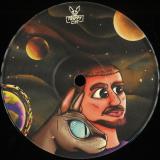
Trippy Journey presents Night Club EP the next chapter in the cosmic saga of Dollar the cat. Continuing his interstellar quest for sound, Dollar now finds himself drifting into the neon haze of a galactic nightclub, where the spirit of the 2000s meets futuristic frequencies.
A Side 'Night Club' fuses trippy tech energy with a garage-style bassline, acid-infused details, and a hypnotic cut built for deep late-night floors. The release also includes a huge remix from Liquid Earth, an artist who needs little introduction. His interpretation elevates the original with driving momentum, injects high-octane energy and experimental textures, pushing the original into new cosmic trip.
B Side 'Grand Hotel' delivers a darker minimal house mood a tight and built around classic synth tones that echo the essence of Trippy Cat’s sound. The EP is completed by a remix from Lisbon-based Nebulaee, who transforms it into a raw, atmospheric trip filled with experimental elements and deep textures.
Trippy Cat Wax continues to expand the sonic journey of Dollar the cat exploring the hidden corners of the universe where past, present, and future meet with new galactic sounds.
Mastered At Time Item Studio
A light yet ominous atmospheric intro opens Pugilist’s account on Waveforms, quickly showcasing the Spatial family debutant’s shrewd prowess for mid 90’s breakbeats. An instantly familiar vocal sample gunning for your mind body and soul punctuates proceedings while solid breaks lead into a crunching amen throwdown - edited superbly with tricky arrangements and glorious melodic synthwork.
Straight into the breaks without delay, a DJ-friendly intro from Pugilist quickly escalates into a scintillating amen showcase with crisp, detailed edits taking you right back to a dirty basement dancefloor rippling with underground energy in 1994. Peppered with samples and light vocal hits - not to mention the doomsday basslines ready to tear holes in your sub - Pugilist has announced himself in style to the waveforms label.
Bristol-based provider of tough and sinewy drum & bass, Holsten has proved himself one to watch with successes on UVB-76 Music, Hotline and Rupture, not to mention a clutch of releases on the essential label, Droogs. This EP sees him offering up four battle weapons that lean towards the glory days of techstep. Opener 'Burn' goes for apocalyptic bass and a hardstepping outer shell, finished off with nicely unsettling sonics. 'Service Kru 2' is the roasting Amen-led roller, with Dillinja-esque sidewinding edits, kung fu samples and ravey stabs. Flip it over for 'Twisted Music', tense and edgy rather than full on blasting, while closer 'Projectiles', remixed by Overlook, steams its way to the run out groove with the kind of dystopian intensity that fans of classic No U-Turn will be very comfortable with. Producer and label alike are both on the rise, so get on it.
- A1: Echi Tribali 2 01
- A2: Danza Della Pioggia 2 31
- A3: Totem 2 51
- A4: Danza Della Morte 3 14
- A5: Rito Della Fecondazione 2 45
- A6: Danza Di Guerra 2 29
- B1: Rito Nuziale 1 55
- B2: Iniziazione 2 09
- B3: Rito Del Sole 1 14
- B4: Invocazione 1 07
- B5: Rito Della Fertilità 1 23
- B6: Danza Dello Stregone 2 28
- B7: Rito Di Propiziazione 2 35
- B8: Adorazione 1 58
“Alle Sorgenti Delle Civiltà Vol. 3 - Africa, Australia, Nuova Zelanda” (1971) is the third and final chapter of a triptych of folk-based sound recordings released by Folkmusic. The album contains a total of fourteen tracks by Braen and Raskovich, i.e. the a formidable multi-instrumentalists Alessandro Alessandroni and Giuliano Sorgini, each grappling with seven different compositions characterised by a tribal mood. Among the grooves of this record, repressed on vinyl for the first time by Musica Per Immagini, it is possible to discern an in-depth study of one of those forms of popular culture referring to a specific geographic area, comprising the types of traditions often handed down orally and concerning knowledge, beliefs, fairy tales, legends, myths, narratives linked to the dimension of the fantastic, customs and traditions, namely music. Festivals and propitiatory rites, fights and dances, magical and sacred representations were all expressions of life whose sound and rhythm contributed to an appropriate description of the environment. Alessandro Alessandroni and Giuliano Sorgini have chosen some of the most significant musical characters that even belong to specific ethnic realities scattered across two distant continents, where the use of some of the typical instruments has favoured the realisation of sonorities of considerable interest.
Dutch composer and pianist Xavier Boot, also known as XA4, joins Philip Glass for the second release on the New York-based record label Orange Mountain Music, owned by Philip Glass.
“Xavier is really a wonderful pianist, and I am thrilled by how he now tackles my compositions, with that elegant electronica touch.” – Philip Glass
The Sea Above features not only Glass compositions but also several original pieces by Xavier: “I recorded this album inspired by all the musical influences I’ve experienced in my life, including classical, electronic (club) music, ambient, minimal, and even Indonesian music. The title track of the album is inspired by Philip Glass’s composition Mad Rush. He told me that he wrote this piece for an event with the Dalai Lama, where it was unclear when the Dalai Lama would arrive. That’s why Mad Rush was composed to last either five minutes or an hour. I tried to convey this idea of timelessness in my music, embodying this endless portal of time and space, which was also scientifically described by Albert Einstein. Another track on the album, Train I, is a reworking from Philip Glass’s opera Einstein on the Beach. You can experience the music on this album as a kind of journey, a trip where you are energetically drawn in at the beginning and later enter more of a fantasy world where dreams and unconscious elements of your mind can emerge.”
Credits:
Tracks 1 & 3 are original compositions by Philip Glass remixed by XA4
Tracks 2 & 9 remixed by XA4 and Jaro.
Tracks 4, 5, 6, 8,10 are original compositions by XA4
Track 7 is composed by XA4 and Tenzin Choegyal.
Vocals track 1: Julia Rosenhart.
Remix, production and playing: XA4.
Piano arrangement track 3: Michael Riesman and XA4.
Remix, production track 2 & 9: XA4 and Jaro.
Production assistance track 3: Jaro.
Mixing: Studio Karakterbak.
Mastering: Laura de Rover.
Cover foto: Angelina Nikolayeva.
Graphic design: Yesser Khalefa
Marking his vinyl debut on Lowpass, Berlin-based producer APRS steps forward after a run of striking releases on labels such as Soma, ARTS and Sungate.
“Drift” explores human emotions through drums, melodies and textures with five pieces that refuse to settle into one shape. Each track bends the EP in a new direction without breaking its thread, holding onto a sense of vastness, detail and intimacy. Andy Martin closes the record with a remix that widens the palette even further, pushing the material into heavier terrain while keeping its spirit intact.
LWP001 is less a declaration than a first gesture. Intuition over uniformity; a label shaped by instinct, variation and space; a place for artists to wander and for sound to evolve freely.
- A1: It's Just The Rain (Little Rocker Version)
- B1: It's Just The Rain (Dub Version)
Patchwork Inc. is a multi genre music collective based in Chicago. Inspired by the intricate and repetitive patterns on a quilt, deep grooves are stitched together with vibrant threads of analog synths, fat bass, Fender Rhodes, and a plethora of percussion to form a uniquely personal piece of art.
Their latest offering, Michael Damani’s "It’s Just The Rain," is officially getting the vinyl treatment. This special release features a fresh remix by Little Rocker on the A-side, backed by an immersive Dub Version on the B-side—a must-have for collectors and audiophiles alike.
Limited to 500 units.
Maria is the debut album from renowned Brazilian electric bassist and composer Moyses Dos Santos. A homecoming for the London-based artist, Moyses’ debut reconnects him with his North-Eastern roots while assembling an international cast of collaborators including legendary Brazilian arranger Arthur Verocai, US trumpet sensation Theo Croker and London-based vocal star Lynda Dawn.
After relocating from Brazil to London in the early 2000s, Moyses dos Santos quickly became one of the capitals’ most in-demand players, sharing stages, studios, and writing credits with best-selling artists including Nile Rodgers, Janelle Monáe, Emile Sandé, Gregory Porter and Omar.
In 2022, Moyses toured with Brazilian jazz-funk legends Azymuth, completing the rhythm section alongside Brazilian drumming master Ivan "Mamão" Conti. "It felt like he was my wise Brazilian grandfather figure." Moyses recalls. "When you spend so many years working internationally, you unconsciously start to leave certain parts of yourself behind. Mamão encouraged me to reconnect with Brazilian music, and that's where this record really began."
Brazil’s North-east, where African, indigenous and European traditions collided and fused most intensely, produced a musical heritage unlike anything else on earth, Moyses dos Santos is a product of this syncretism. On Maria, named after his mother, Moyses brings the musical vocabularies of his youth to the fore. From the soul of the church band where he began to learn his trade as a musician, to the rolling batucadas – maractus, baiaos, sambas and frevos – which he played throughout his teenage years.
Drawing on the lineage of North American electric bass giants like George Duke, Jaco Pastorius, and Stanley Clarke, Moyses runs Brazilian musical traditions through jazz, funk, soul and disco: his sound charged with the cosmopolitan energy of London's contemporary jazz scene.
Lead single and album opener “Boa Viagem’ is joyous, carnivalesque dancefloor jazz: a timeless groove for the nightclub and street party alike. Calling directly to a higher power “Brazilian Spirit” is an astral-jazz phenomenon, featuring the transcendent trumpet playing of Grammy nominated Theo Croker. On “Saudade” Moyses calls upon iconic Brazilian maestro Arthur Verocai, whose signature string arrangements cascade around the divine vocals of ascendant London artist Lynda Dawn.
With impeccable style, charisma, warmth and virtuosity, Moyses steps forward with his stunning debut Maria: out on vinyl, LP, CD and digitally on the 12th June 2026.
As the so-called “Latin boom” becomes a new anchor for hard-swung club sounds, it is crucial to recognize that the region’s musical culture extends far beyond dembow edits and the pop-trap hybrids that have edged into the mainstream. Monterrey-born, New York City-based producer and DJ Delia Beatriz, aka Debit, returns to NAAFI with Potpourri, a generous and kinetic collection of dancefloor-oriented tracks filled with percussive flourishes, squelching 303 basslines, and rhythmic mutations that actively challenge the status quo. Rather than rebuilding “Latin sounds” as a fixed category, the album rethinks their internal logic, tracing the evolution of techno and house in cities like Detroit, Chicago, and New York alongside parallel innovations emerging in Mexico, Colombia, and across the wider Latin world. Positioned on the bridge between Mexico and the US, Potpourri does not seek synthesis as a gesture of smooth fusion, but as a site of disruption.
The album can be heard as a loose follow-up to System (2018), Debit’s NAAFI-released EP that expanded the sonic potential of tribal guarachero through triplet-driven rhythms, industrial pressure, and noisy reconstruction. Potpourri retains guaracha as a structural backbone while drawing further influence from veteran DJ and producer Javier Estrada—who also appeared on System—and particularly from his fast-paced, nonlinear style of mixing. That approach becomes a formal principle here: canonical structures are dismantled, repetition is avoided, and tracks evolve without sacrificing propulsion. Coming after the introspective temporal inquiry of Desaceleradas and the speculative historical acoustics of The Long Count, Potpourri arrives as a deliberate surge of energy. As Beatriz explains: “It’s a manifesto for rethinking form and sound in dance music. By stepping outside traditional structures and embracing the potpourri approach, I’m creating new meaning with familiar rhythms. I’ve also been applying this to my DJ sets, using it as a tool to break free from established norms and explore new narrative possibilities.”
Years in the making, Potpourri imagines an alternate timeline in which the psychedelic squelch of acid—echoing pioneers such as DJ Pierre and Mr. Fingers—and the dub-inflected atmospheres of Basic Channel entered into direct and sustained contact with Latin American club mutations. Those references are legible, but never merely quoted. Instead, they are folded into syncopated hi-hats, overdriven kicks, and unstable arrangements that absorb both the intensity of the parties Beatriz remembers from Monterrey and the abrasive edge she sharpened at DIY noise shows in New England. The result is unmistakably a dancefloor record—heard in tracks as forceful as “Pero like” and the peak-time pressure of “tuvesuerte”—but one saturated with grotesque, psychedelic atmospheres, where sounds dissolve into hoarse croaks, acidic smears, and anxiety-inducing growls. Here, the rave becomes not simply a site of release, but a platform for navigating identity, hybridity, and artistic formation across borders. Moving through peaks and ruptures, Potpourri reveals a party narrative that is not linear but multidimensional.
By folding together the fluidity of DJ culture, the experimental charge of acid, and the rhythmic vitality of guaracha, Potpourri proposes a space of formal and political innovation within Latin America’s rapidly expanding electronic music landscape. It is a record that refuses containment, pushing against the templates through which Latin electronic music is often consumed, and insisting instead on friction, instability, and transformation as generative conditions for the dancefloor.
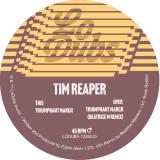
A little over a year ago Tim Reaper made his first appearance in the town LoDubs is based in, Portland, Oregon, at the always forward thinking westside venue Barn Radio. The bill was rounded out by yours truly, Jon AD, who set the standard for the night, which was a boggy, thick warehouse vibe, even though the venue was more of a tightly packed repurposed storefront with an overactive fog machine.
This stop turned into a bit of a several day stopover for the TR, who saw the town, met up with other Portland people, and after that was left with a bit of a aural vision of the whole experience, the DIY ethos of the Portland, and the desire to document these impressions on the label of his bill mate for the aforementioned night, LoDubs.
Shortly thereafter "Triumphant March" arrived at the LoDubs mailbox, and reverb heavy, oozing slab of Jungle funkiness.
Upon realizing this would be good material for a dubby remix, the next step was reaching out for people to do so, and Beatrice M was at that time really getting noticed with their take on Dub. This year has seen them really move up the ranks, needless to say.
- 1: Testcard
- 2: Horizontal Hold
- 3: Not Waving
- 4: Water
- 5: Twilight Furniture
- 6: 24 Track Loop
- 7: Diet Of Worms
- 8: Music Like Escaping Gas
- 9: Rainforest
- 10: The Fall Of Saigon
- 11: Testcard (Locked Groove)
‘They went beyond punk before punk had properly started…the entire album is a controlled explosion of ideas. Nearly fifty years on, This Heat’s debut is something the world has still not completely caught up with.’ - Simon Reynolds
‘Over the years, there have been bands to play as aggressively, or even as strangely, but very few have been able to rise from their collective influences and histories to create music so singularly distinctive and inspiring.’ – Pitchfork 9/10
‘This Heat sounded like the future then ... and still do now.’ - Dan Snaith (Caribou)
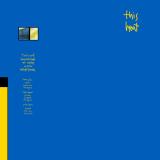
Although widely considered to be Post-Punk’s finest, This Heat actually began performing and recording their music in 1976, the early days of London’s punk era. Within their two albums and an EP they perfected a strange and volatile new strain of avant-garde rock that time has proved to be massively influential, a blueprint for much that would follow: post-rock, math rock, homemade musique concrète, experimental electronica.
Numerous critics have recognised the band's influence on the music of Sonic Youth, Glenn Branca, Steven Wilson, Public Image Ltd., Radiohead, Swans, Shellac, Young Knives, Black Dice, Lightning Bolt and numerous other experimental and post-rock bands. Disbanding in 1982 they have left an undeniable legacy that has only continued to grow in stature and relevance.
The album This Heat, also known to fans and critics as the ‘Blue and Yellow’, was their eponymous debut release, recorded in sessions between February 1976 and September 1978 in a variety of studios including their own Cold Storage, a converted cold storage room in the Acme Studios complex. Innovating throughout, they combined loops and tape manipulation (producing for example the proto-drum and bass ‘24 Track Loop’) with live performance and haunting vocals to a complex, dissonant whole. The band recorded everything they ever did – including gigs – and tracks such as “Water” were entirely improvised in the studio.
Having recently passed the 50 year anniversary of their first gig, and the recording of material that appears on their debut album, the group’s surviving members Charles Bullen and Charles Hayward, true to their DIY roots, have set up an imprint to release their recordings for their growing fan base that is increasingly recognising their influential place in music history.
- A1: Al Lark
- A2: Premier Contact
- A3: Verba Aliena
- A4: Breach
- A5: La Baleine Et Le Musicien
- A6: Speaker
- A7: Caudale
- A8: Cap Lahoussaye
- B1: Insomnia
- B2: Zodiac
- B3: Lingua
- B4: Breathe In Feat. Yael Naim
- B5: Megaptera Novaeangliae
- B6: Panimal
- B7: Try Again
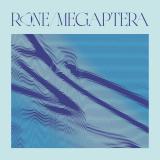
MEGAPTERA, the scientific name of the humpback whale, is also the title of the new album by French producer and composer Rone.
Born from an ambitious film project, the record was largely composed at sea, off the coasts of Brittany and Réunion Island, using a modular synthesizer and melodic sketches developed for an almost unreal proposition: attempting to resonate with whales through music.
Following Room With a View—a soundtrack to a performance created with the alternative dance company La Horde, exploring collapse and rebirth—Rone continues his investigation into new imaginaries. If that earlier work emerged from reflections on ecological, social, and technological tipping points, MEGAPTERA marks a shift: away from the city, toward the sea.
Gradually, he moved away from performance toward a more craft-based approach, extending his practice beyond the studio into a wider space of listening, exchange, and fieldwork. Early footage of sailors broadcasting his work into open water—seemingly answered by whale presence—circulated online, generating fascination, but also a growing unease for the artist regarding what these projections might imply.
This tension became the starting point for a longer period of field experimentation, developed in dialogue with scientists, environmentalists, sailors, and bioacousticians. The resulting 15-track album reflects this open-ended inquiry — not only into whether human-made sound can reach whales, but also into how this process can shape a new form of electronic music, and open it towards new deep-sea soundscapes.
Rather than seeking imitation, Rone works with reduction. Drawing on research into cetacean vocalisation, he pares back his language—focusing on frequency bands, repetition, and suspended structures. Minimalism appears less as reference than as natural convergence.
2026 Repress
In March 2023, Tresor Records will release "Crash Recoil", a new album by Surgeon. It marks Anthony Child's first techno LP in five years, following a period in which he felt uncertainty in his role as a techno producer and found it tough to locate inspiration. This new album encounters him drawing on spontaneous techniques to arrive at unchartered topographies.
"Crash Recoil" originates from Surgeon's recent live sets, where he experimented with constraints in performing and embracing the twists, turns and paradoxes that arrive from this. Each fresh iteration on consistent MIDI sequences and hardware reconfigured tracks into dierent constellations, creating an inspiring vortex of unpredicted events where ideas could flourish. This new approach allowed him to capture the spontaneous energy of his live shows in a way he had never done before. "This is not a live album, since it has not been recorded in one go during a live performance. In the same way that bands tour songs before going into the studio to record an album, I was able to explore these songs and hone their eectiveness during my live performances before creating a studio version."
The result is eight tracks that emphasise a new techno sound for Surgeon, drawing in references from across the musical spectrum. "I can hear Coil, King Tubby, Detroit Techno and The Cure all wrapped up with 30 years of DJing," Surgeon says of the album. Melancholic hum-like ambiences smudge around unadorned, near-droning basslines, crunching rhythm and percolating arpeggiations. The tracks carry unique and potent locomotion, with a low-slung grind through toughened terrains, breathing with a free spirit, untethered by a studio-based perspective. We hear manifestations of the same raw material across the album, like a textural motif, carving new variants and creating a cohesive work full of recollection.
Damian Dalla Torre returns with People Pleaser, a record shaped by movement, collaboration and an ever-deepening relationship with sound as environment.
The Leipzig-based multi-instrumentalist, composer and producer first found wide attention with his 2022 debut Happy Floating, and his subsequent album I Can Feel My Dreams was named the #1 Contemporary Album of 2024 by The Guardian, an accolade that broadened his audience and deepened confidence in his evolving voice. That second album, written between Europe and South America, opened unexpected doors and took Dalla Torre to stages across New York, Japan and Italy. “When you release music, it’s very intimate,” he reflects. “You show your emotions pretty raw. I was kind of scared. But getting so much positive feedback gave me a lot of self-confidence to try out more.”
People Pleaser begins in that quiet shift of confidence.
The title stayed with him for months before he committed to it. “It was a working title for a long time,” he says. “I didn’t actually think I would use it. But this term also felt somehow relevant in connection with the phase of self-negotiation during the development process. Some aspects are related to pressure, others are positive.” The ambiguity felt right. Rather than presenting it as a statement, Dalla Torre leaves it open, an invitation rather than a confession.
At the centre of People Pleaser is collaboration. Guitarist Bertram Burkert, whose playing stretches from classical delicacy to electric abstraction, joined Dalla Torre in the studio for an intensive three-day session, recording a wide palette of textures that would become the backbone of the album. Vocalist Laura Zöschg, a key live collaborator, harpist Babett Niclas, organist Felix Römer, tape experimentalist Markus Rom, marimba and vibraphonist Volker Heuken and Japanese artist Manami Kakudo also contribute, creating a sound that feels intimate yet expansive.