DJ Support: Phil Mison (Cantoma/Ambala), Charlie Bones (Do!You!!!), Frank Booker, Trujillo, Alice Palace, CIAN, DJ Aficionado, No Plastic, Jad & The, Leon D, Moe, Sadeedo, Longboss (Strangelove), Tom Kutsche, Marian Tone, Andy Pye (Balearic Social), Soft Rocks, Wrekin Havoc, Alfresco Disco, Manuel Darquart, Tom Bolas, Danny Russell, Craig Christon (Passport to/Beyond Paradise)
Many Hands - Basement Versionz #2, continuing from #1 with further excursions into Basement Balearica. From Bunker to Beach: Wiggy Dread Italo, Rebel Disco Reggae, Thai Boogie Funk and freshly creased 80s Steppers to help clever selectors get out of, or into trouble.
Suche:basement phil
DJ support from Charlie Bones, Phil Mison, Balearic Social, Moe, J-Walk, Phat Phil Cooper, Trujillo & Simon Caldwell
Born a Dance in a Berlin basement in 2016. MANY HANDS have been dishing out soul-derived genre-fluid selections via their Podcast since 2019, now launch the MANY HANDS imprint. This package of Special Exclusive DJ versions, reflects the wide-angle music ethos that goes down in a MANY HANDS session. Inspired by those utility discs that don't leave the bag, for Dancers, Dark rooms, and Heavy sound systems. Unitaaay baby!
- A1: You're My Latest, My Greatest Inspiration (Tensnake Remix Vocal)
- A2: Tensnake Remix Instrumental
- B1: Dr Packer Remix Vocal
- B2: Dr Packer Mix Dub
- C1: Teddy Douglas Bass Intro Mix
- C2: Teddy Douglas Bass Intro Instrumental
- D1: Micfreak & Dj Spen Higher Love Remix Vocal
- D2: Micfreak & Dj Spen Higher Love Remix Instrumental
Jasper Street Co. is one of the House Music community’s signature artist endeavors. Produced by Baltimore’s legendary production team The Basement Boys, and consisting of a collection of singers who can emote on the highest level of gospel, soulful and peak hour house, this collective has been riding high for years and is now going next level with the recent release of the “Rejoicing” album on Nervous Records. Prior releases from the album have skyrocketed to the top of DJ sales and club charts, with “Praying For You” being nominated for a Grammy for the Louie Vega remix in the Best Remixed Recording (non-classical) category.
Up next is a cover version of a song originally recorded by Teddy Pendergrass. Written and produced by Gamble & Huff, “You’re My Latest, My Greatest Inspiration” was originally released on Philly International Records in 1981. It was a massive R&B & Disco hit back then, and now has been updated by Jasper Street Co. for the house music community. The single package has an outstanding collection of remixers on board who make the project something even more special for the purists but also will launch into the larger worldwide music community. Teddy Douglas produced the original album version, but comes back for another take while adding some serious bass / kick drum juice with his Teddy Douglas Bass Intro Remix. Micfreak and DJ Spen put a highly creative spin on the original with some added effects on the vocal and a piano line that soars into the highest level of peak hour house energy with their Higher Love Remixes. Tensnake also gives it a very distinctive and infectious groove, while Dr. Packer takes all the original elements and uses his great talents and appreciation for soulful house and disco to make this project even more essential for house purists than it already is!
Double Vinyl package on Feb. 5 on Nervous Records. Includes custom jacket and yellow vinyl.
Light Switch: immerse yourself into Philippe Petit's original deeper version, echologist dubbed-out version, Lee Holman trippy version and Myles Sergé's stripped-down version. One track, four interpretations, to be used in dark sweaty basements from opening to closing hours...
2026 Update: while stock last, this coloured vinyl now comes with a coloured cover “Exploring Different Shades of Techno since 2011”
- A1: Maitreya Kali "One Last Farewell
- A2: Gary Higgins "Thicker Than A Smokey
- A3: Alicia May "Summer Days
- A4: Dan Gillmor & Doug Mcclaran "Ghost Song
- A5: Bobb Trimble "One Mile From Heaven
- B1: Bob Patterson "Friends Of Mine
- B2: Jim Sullivan "Jerome
- B3: Chuck & Mary Perrin "Corrine
- B4: Dan Modlin & Dave Scott "Loser, Lover
- B5: Billy Hallquist "Persephone
- C1: Richard Goldman "Sweethearts
- C2: Olav Rixen & Ulrich Fausten "Pilgrimade
- C3: Jerry And Nancy Stevens "A Little Resolution
- C4: Merrell Fankhauser "On Our Way To Hana
- C5: Michael Angelo "Field Of Lonely Eyes
- D1: Carm Mascarenhas "In The Sun
- D2: Joe & Bing "Daybreak
- D3: Philip John Lewin "Diamond Love
- D4: Michael Yonkers "And Give It To You
- D5: Naomi Lewis "More Beautiful
We couldn't be happier to announce the first Mapache Records compilation after all these years. ONE MILE FROM HEAVEN is a dreamy travel through the 70's and beyond private singer songwriters scene.
There have always been privately-pressed records. Such a "private" LP is an album that has been composed, performed, recorded and edited usually very-DIY style by the very artist or by an amateur label. A private press record is, above all, an act of the artistic urge. It's an act that takes place outiside of the industry out of need, out of a lack of knowledge, out of love, out of a drive, out of ambition... you can choose among the many reasons.
Depending on their genre, origins, time, and above all, quality, some of these efforts have become valuable pieces for the music collector. Having been created behind the "canonical history of music" written by the industry, every now and then an archaeologist will bring to the surface an artifact they have found in some basement or flea market, or that was kept covered in dust in the shell of some old recording studio soon to be torn down.
All these records have their own story, and some are still especially relevant, and others are but small footnotes in the encyclopedia of music that made their way into the margins of the mainstream world. These are the most limited of editions (and mostly locally made ones) of largely unsociable and mostly unobtainable records--and when found, they are often exorbitantly priced. Many of these marginalized and onscure artists have stayed alive only through the wonderful work of tireless song rescuers, music lovers, vocational archivists, collectors, and record labels with an idealistic drive. These romantics have been rescuing and indexing a form of music that very few have showed interest in until recent years. This record is a tribute to all of those who managed to make these songs not be lost to time. Above all, this release is a tribute to all those artists who recorded their songs on their own, mostly because they couldn't keep the music inside themselves.
S urrounded by the DIY-scene around their own self-founded recording label new basement, plainhead tries to introduce an ethos uncommon to the local music landscape in their hometown Munich (DE) and interacts between the boundaries of experimental rock and pop.
You Are More Than A Thousand Words‘ is a romantic gesture dedicated to the stars and the people we hold close to our hearts, a subtle mix of chamber pop, experimental acoustic indie and 00s indietronics.
(FFO: Phil Elverum, The Notwist, The American Analog Set)
Hamburg is sinking into an ever-expanding landscape of fresh construction ruins born from investor fantasies, concrete monster-bridges and ghostly office spaces. But from secret basements, a Geflecht begins to grow. After the first tape by Hamburg duo Kostenfalle, now comes their second album on vinyl.
The furious electropunk of Kostenfalle has been cut into the matrix at 45 RPM. Nine
songs in the fast lane, driven by sequencers, synthesizers, drum machines, and bass guitar. Despite the electronic machinery, Kostenfalle remain fiercely dynamic, twisting and shifting through intricate structures and sudden turns. Punk and Electronic Body Music lock into a dance; without warning we’re plunged into a psychedelic riff, only to slam angrily into the next guardrail.
With alternating vocals, Christian manning the transistors, Philipp holding the bass, the lyrics emerge dark and oblique, meditating on life as a one-dimensional human and on the spaces between people. Boycott and sabotage. Explode and generate.
- A1: Illegal
- A2: Illegal + Anitta
- A3: Illegal + Seventeen
- A4: Illegal + Nia Archives
- A5: Girl Like Me
- A6: Girl Like Me + Oklou
- A7: Girl Like Me + Kaytranada
- B1: Tonight
- B2: Tonight + Jade
- B3: Tonight + Basement Jaxx
- B4: Tonight + Joe Goddard
- B5: Stars
- B6: Stars + Yves
- B7: Stars + Dj Caio Prince + Adame Dj
- C1: Noises
- C2: Noises + Jt
- C3: Noises + Mochakk
- C4: Nice To Know You
- C5: Nice To Know You + Sugababes
- C6: Nice To Know You + Loukeman + Leod
- C7: Nice To Know You + Sega Bodega
- D1: Stateside
- D2: Stateside + Kylie Mingoue
- D3: Stateside + Bladee
- D4: Stateside + Zara Larsson
- D5: Stateside + Groove Armada
- D6: Romeo
- D7: Romeo + Ravyn Lenae
- D8: Romeo + Rachel Chinouriri
- D9: Romeo + Kilimanjaro
PinkPantheress announces a suite of physical products available to pre-order now.
Fancy Some More? sees PinkPantheress bring together an international spectrum of artists, delivering 22 remixes. Remixes come from artists including Anitta, Bladee, JADE, JT, Kylie Minogue, Oklou, Rachel Chinouriri, Ravyn Lenae, Yves, and Zara Larsson; genre-defining groups and collectives such as Basement Jaxx, Groove Armada, SEVENTEEN (THE 8, MINGYU, VERNON.), and Sugababes; and acclaimed producers and DJs including Adame DJ, DJ Caio Prince, Joe Goddard, Kaytranada, Kilimanjaro, Leod, Loukeman, Mochakk, Nia Archives, and Sega Bodega. Each track offers a new perspective to the signature PinkPantheress sound, expanding the Fancy That universe.
Released in May this year and written and produced by PinkPantheress, Fancy That was created alongside aksel arvid, Count Baldor, phil, Oscar Scheller, The Dare and others, bringing together a collective of creative minds to shape her latest sonic evolution. As she steps into her fun and kitsch-y era, rooted in British culture, the 9-track project showcases her signature vocals and genre-blurring sound.
Gothenburg trio Dark Horse present their new album "Listen", released by We Jazz Records on 13 November. The band, comprising of John Holmström (piano), Alfred Lorinius (bass) and Mårten Magnefors (drums) recorded their second album in a remote cabin by the ocean in Norway, owned by Holmström's family. The natural sound of the album owes a lot to the relaxed surroundings and the result is some high degree of improvised music turning into collective composition as the music unfolds.
The album recording took place at a very active spot in the trio's calendar, following extensive touring in Europe, Japan and their native country Sweden. The two days of improvising were edited down to highlights that easily fill an album's worth of quality listening and reveal what playing live brought to the three musicians: A natural ability to react to ideas, build on them and form coherent, compositional tracks on the spot. A task much easier said than done.
"We're a non-conceptual basement band all the way", laughs pianist Holmström. "We have been moving from free form music into collective composition and this is our pinnacle recording with that idea thus far. We just set out to play as honestly as possible and this is what followed."
A testament to the power of a fixed band unit developing over time, "Listen" comes across as a work by a group constantly keeping its nose to the wind when it comes to developing their music. The long-form opener "Allas Favorit" is a monumental piece building and releasing tension along its 12+ minute length. First single "Brutet Groove" assumes a fascinating, almost mechanic-sounding swing while assembling and reassembling the pieces of the puzzle, and the closing track "Fjäll-låten" gives us something of an ever-shifting sonic landscape in glorious colors, much akin to its name ("Mountain Song" in Swedish).
"That one Fjäll-låten includes some of the best musical moments of my life so far" confirms bassist Alfred Lorinius. "It's actually an edit of a 20-minute improvised sequence, and it has the real feeling of the band coming together and doing something new and fresh in the moment. I feel it's something you can revisit as many times as you like and there's always something to find in there."
Dark Horse formed in 2012 after Lorinius joined Holmström and drummer Mårten Magnefors to complete the group. Things quickly started taking shape musically from there on, but the group took their time in honing their craft with a method they now refer to as "tryout development". Their self-titled debut album appeared in 2015 and the current We Jazz album "Listen" marks the first internationally distributed release for the trio.The roots of Dark Horse lay firmly in the buzzing creative music scene of Gothenburg, Sweden, where the members have close ties with local establishments such as the legendary venue BrÖtz, and the city's vast scene of highly-regarded musicians.
In brief, "Listen" presents Dark Horse gloriously putting into use their musical philosophy what they describe "improvising as composing together".
"Listen" by Dark Horse is released by Helsinki's We Jazz Records on 13 November 2020 on vinyl and digitally. The vinyl comes in a heavy duty tip-on sleeve and the album design features the painting "Overwhelming Structure" by the Helsinki-based visual artist Maija Lassila.
For his last solo record ‘Through a Room’, Bill Nace shifted his usual saturated guitar sound and added tapes, hurdy gurdy, doughnut pipe, bird calls and the mysterious Japanese taishōgoto. Setting up for the final night of his three day residency at OTO with only the taishōgoto soundchecked, Nace hoped that Parker would arrive with his small soprano as its opposite. “I’ve been interested in state change, you know, playing until there’s a shift in time.” Known for his development of multiphonics to produce a constantly shifting pattern, Evan Parker has evolved an instantly recognizable sound - his work the soprano most distinct. Happily, it was the soprano Evan brought with him and as soon as the two start to play they entwine - taking off in a double helix of keys and reed primed for endless reconfiguration. Space warps under the velocity of playing, the pitch rising unrelentingly. It felt like unending lift off in the room, sheer energy until the last note makes remember your feet have been on the floor the whole time. Total time bending shredding.
–
"They had never played together before. They had never even met each other before this springtime 2024 concert at London’s Café Oto.
Evan Parker, circular breathing maestro of the saxophone, a legend in the universe that is Free Improvisation since the late 1960s and Bill Nace, one of the most intriguing experimental “noise” guitarists of the 1990s/2000s underground scene.
For those of us who have been enamored by the live and documented work of both these gents, this Café Oto duo was a must-hear event. It could have gone anywhere musically and that would have been totally fine. Particularly with Evan having a history of being thrown into a variety of challenging collaborations throughout his career, employing the learned elegance of trust in his own sensitivity to listening, responding, leading, following, sparring, intertwining, dialoguing, creating in the instant and, essentially, dignifying the non-hierarchical grace of chance.
The aesthetics of socialist consideration in Evan Parker’s playing, in his community of expanded and personal technique, for a younger player such as Bill Nace, strikes an exemplary model. This notion of respect would be entirely the reason Nace, when offered a residency at the most critical “new music” room in England, would request to play in duo with Parker.
Bill Nace came to prominence mostly during the apex of experimental music activity in and around Western Massachusetts in the early days of the aughts, with a focus on visual art and free improvisation guitar action. He could be found in the daytime hours, his head hanging down over a notepad, penning fine-tuned illustrations and abstract line drawings, while in the evenings he’d be attending any number of basement noise gigs, many of which he’d be participating in. His guitar style came across as being informed as much as by the physicality of his writing utensils in friction to the page as it was to his hearing and redefining of radical recordings ranging anywhere from the Black Unity Group to Black Flag.
Utilizing various metal files and other small cylindrical objects Bill would allow his guitar and amplifier to be in tandem with the improvisatory movements of his body as the instrument balanced, intentionally and, at times, precariously, upon his lap. The performances came across thrilling and daring and they would be mostly in the context of venues nothing more than a low-ceilinged damp and dank New England basement, a clutch of people hanging onto rusty pipes or sitting up on dilapidated washer/dryer machines, the shards of Bill’s “file guitar” sounds ringing out like the most alive music on Earth.
By the time Bill reached Café Oto in early 2024 he had relocated to Philadelphia all the while releasing a succession of collaborative LPs on his Open Mouth label to present his developing progression of solo and collaborative work. He also would find himself considerably engaged with playing the electric taishōgoto, a keyboard-activated string instrument from Japan which can exist as a one, two, four, five, or six string oblong sound object. Bill’s approach to the taishōgoto would not be too unlike his approach to the traditional electric guitar, though no outboard implements such as files, sticks, and rocks are utilized. The similarity would lie wholly with Bill’s full immersion of high velocity action-playing where, with the taishōgoto, an electric drone beauty occurs. The flurry of sonics and resultant harmonics emanating from the amplifier (which Bill opts to dial into with borderline loud-as fuck volume settings) furthers the meta-mantra properties of the instrument in an astounding display of drone dynamism.
This sound world of Bill’s two-stringed taishōgoto on this Café Oto night worked beautifully with Evan Parker’s improvisatory saxophone conceptions. The duology achieved instant lift off at ground zero only to find it’s eventual finale as if it were organically ordained. Time seemingly morphed from its ancient human construct of control, rendered inconsequential to the torrential transcendence of the room wildly activated by the magic resonance of the multi-directional pan-spatial sonance of the music as if it were some beatific blessing. It was one of those nights where art as a liberating force of spirit gifted the listeners with an offering of exaltation and joy. It was entirely mystical and mind blowing. A night of Total Music."
Thurston Moore, London, 2025
Kassie Krut is comprised of Kasra Kurt and Eve Alpert — former members of Philadelphia math rock institution Palm — alongside Matt Anderegg (Mothers, Body Meat). On their self-titled debut EP, the newly minted Brooklyn three-piece have retained the fangled snarl of their prior work, outlining sugary melodies with visceral flourishes. Front to back, 'Kassie Krut' smudges starkness & filth, settling into a commanding partnership fit for muddy raves, basement punk spaces, and festival stages alike.
After years of twisting rock instrumentation into unknown shapes, the first release by Kassie Krut represents a transformative refocusing of energies. These tracks evince the kind of wisdom that only comes from experience—and the kind of experience that can only be scored by new sounds, still glittering with the metal filings of their making
In between the folds of ceremony and commonality lies a perennial spring of musical expression.
A statement along the time continuum, or a testament to the resilient resourcefulness embedded in that truth, forms the philosophical approach of this album – the first outing of Dídac.
Studying an extensive archive of instruments, artifacts, and field recordings at the Musée d’ethnographie de Genève—a space steeped in folkloric gesture – Dídac encountered a cosmos of liturgical music and folk song. Anchored in reverance for tradition and transformation alike, this album navigates the old-world Mediterranean lore through a post-modern ambient lens, threading drone, gentle rhythm, electroacoustic textures and the crude tactility of archival material into one woven tapestry.
Under the guidance of Dr. Madeleine Leclair, Dídac was invited to work within one of the world’s most extensive ethno- musicological archives—L’AIMP. In the saturated basements and tape-lined backrooms of the museum, he submerged himself in the sounds of ritual and rural life: wax cylinders from the Eastern Mediterranean, tapes of liturgical hymn, the worn edges of communal song.
In a makeshift studio on the fourth floor of the museum, he sifted through the hours of material he collected, gradually discovering that the archive was no static source – It did not dictate; rather, it served as a companion—offering not answers, but questions. Not a beaten track, but a cluster of sonic clues and riddles. Samples do appear occasionally, tenderly interwoven into the dialogue of the songs. In Dídac’s self-titled debut, the past is not worn as ornament or kitsch; it is listened to and responded to. The museum, its archives, and the visit to Geneva became a foundational culisse of sorts, igniting a myriad of rough cuts and improvisational outtakes.
Dídac, or Diego Ocejo Muñoz, was born in Madrid in 1994 to a family of both Catalan and Castilian origin.
Brought up in a religious household, the influence of the Catholic Church innately shaped the social fabric, schooling and daily life. This lingering dominance led the adolescent Diego into a path of rejection of everything sacramental, promptly resorting to subversion in the shape of grafitti, skateboarding and underground music. Only later in life, after a rigorous venture as an acid and electro producer, the Church re-emerged before him in new light, invoking a deep fascination for its mysticism, iconography and choral tradition.
Spain in general and Catalonia in particular, has long served as a crossroads of the eastern–western Mediterranean continuum, with many of its cultures sharing aspects of way of life and ceremony. At the MEG, Diego found himself puzzled with this realization, resulting in a sonic amalgamation that reaches farther away from the rugged mountains of Catalonia than you might perceive at first encounter.
The deeply embedded memory of rite and public ceremony, religious hymn and landscape—sieved through the undercurrent of personal re-emergence, forms the emotional topography of this album. The record does not trace this landscape; it inhabits it. Its repetitive mysticism and ambient, wide-eyed gaze could possibly evoke (perhaps redundant) comparisons to artists such as Dimitris Petsetakis, or Popol Vuh’s late 70’s cinema scores.
The delicate lines between the sacred and the secular – between memory and re-invention – serve as a cipher to understanding this album in its entirety. Titles like Malpàs Mines or Pantocrator’s Portal Outro nudge toward a folkloric and devotional bedrock—places where labor and spirituality coexist, where names preserve both dust and veneration.
Nevertheless, this is far from mere nostalgia. It is a reclamation — singing alongside the spirits of the past, nurturing what still hums beneath the soil. It is an intimate reflection on tradition, rebellion, adolescence, ceremony and fantasy – a pastoral contemplation on what once was and what is to be.
DEVO’s Hardcore documents the group’s beginning as pre-punk outcasts in the fertile Akron, Ohio, underground rock scene. Spawned at the nearby college of Kent State, site of the infamous May 4 Massacre, DEVO formed as a conceptual art project armed with the radical philosophy of de-evolution. Brothers Mothersbaugh (Mark, Bob and Jim) and Brothers Casale (Jerry and Bob) along with drummer Alan Myers soon whipped up an otherworldly brand of “devolved blues” that could hold its own alongside the beatnik groove of 15-60-75 (a.k.a. The Numbers Band) or the primal rock poetry of The Bizarros. Recorded on various four-track machines and in tiny studios, basements and garages between 1974-1977, Hardcore reveals their strikingly clear vision: rock ’n’ roll stripped bare of its collective cool and jerked back into propaganda fit for post-modern man. It’s no surprise that these transmissions would soon catch the eye and ear of Brian Eno, who later produced their landmark 1978 debut album. Noisy synth, strangled guitar chops and a primitive rhythmic thud power the early DEVO sound. Threaded beneath it all are lyrical themes of post-McCarthy paranoia, middle-class ephemera and DEVO’s long-running topic of choice: sex, or lack thereof. Few moments in pop music history can match the grinding, pent-up energy of “Mongoloid” and the spastic bounce and sputter of “Jocko Homo” (two anthems presented in their earlier and superior versions here). Cult favorites like “Mechanical Man” and “Auto-Modown” make Volume 1 essential listening. Superior Viaduct and Booji Boy Records are proud to present DEVO’s Hardcore to a new generation of spuds, lovingly packaged with Moshe Brakha’s stunning cover photography. As David Bowie said in 1977, DEVO is indeed “the band of the future.”
Filippo Diana's “The Haunted Palace” is the second album of unreleased tracks published by Musica Per Immagini, or a sort of soundtrack for an imaginary horror film set in a bloody past, ispired by the book “The Case of Charles Dexter Ward” by Howard Phillips Lovecraft. The artist formerly known as Joe Drive used analog and digital synthesizers, as well as microphones and computers, to describe in notes the ancestral practices of resurrection of the dead accomplished by a shy and unsuspected character, who slowly transforms into an alien, inspiring both fright and terror.
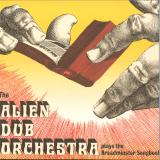
The Alien Dub Orchestra is ragtag collective of Bavarian musicians, featuring members of The Notwist and G.Rag y los hermanos Patchekos. The cohort formed around the idea of performing the standards of the fabled Breadminster Songbook, aka the back-catalogue of lone dubman Elijah Minnelli. Minnelli is known for constructing wheezy, forlorn odes to his hometown, both as highly sought-after self-released 7" singles, and a critically-acclaimed debut album, ‘Perpetual Musket’ for FatCat Records, lauded by the likes of The Guardian, The Wire, and The Quietus. ‘The Alien Dub Orchestra: Plays the Breadminster Songbook’ finds group covering Minnelli’s cumbia-infused dub reggae with full band, playing an eclectic array of instruments including: guiro, accordion, melodica, sousaphone, trumpet and assorted percussion.
The tale begins in 2022, when Minnelli was invited to lend his unique dubbing style to a pair of remixes for The Notwist, and what followed was an ever-flourishing relationship between the Breadminster native and the wider Munich scene. The seeds of the Alien Dub Orchestra were sown during a support gig for The Notwist, where assorted musicians joined Minnelli for a encore, reinterpreting one of his dub remixes across woodwind, brass and assorted percussion.
“The idea of real, competent professionals playing something you’ve muddled together on a computer in a damp basement is quite overwhelming,” reflects Minnelli on the process, “hearing them interpret and improve these melodies is a real joy and privilege.”
Despite the non-traditional origins of the source material, the inherent musicality of Minnelli’s songwriting shines through across his releases, and this creative kinship is what attracted the Orchestra to reimagining his work. The first live collaboration led to recording sessions and further gigs, with the Orchestra building a full set of Minnelli’s music.
The resulting album puts forward the strongest case yet of the shared musical throughline between the acts, where cumbia, dub and folk sensibilities coalesce to something all together unique. The tracks are wrought new, with melodies fleshed out and broader instrumentation expanding the sonic possibilities of the compositions. The tactility of the tracks is perhaps best demonstrated on the gorgeous ‘Vine and Fig Tree’, with it’s layed vocals and expressive bassline returning as a cavorting sousaphone line. Elsewhere, fan favourite ‘SLATS’ sounds as if it was simply written to be performed this way.
To further instill the cylindrical nature of these collaborations, the entire second half of the album is made up of dub versions of the Orchestra’s renditions. For these dubs, Minnelli is joined by Raimund Wong, who had caught his ear with his ambitious live sets, a daisy chain of tape machines and FX pedals. Again, despite their differing creative processes, the two bonded over a shared love of dub music. Each dub was a one-take, with Minnelli riding the faders and Wong’s filters and FX supplying a sound that doesn’t seek to imitate dub, so much as it tries to be it’s own chaotic self. The droning, psychedelic hypnosis of ‘Pundit Dub’ stretches the material to a whole new realm that feels outside of anything else Minnelli has produced before, an ode to the benefits of recycling sound if ever there was one. The whole second half is a perfect closing note to an album that is undoubtedly a love letter to folk tradition, dub ideology and, most importantly, the joy of uninhibited collaboration.
Elijah Minnelli - voc, guiro, percussion
Philip Gross - accordion, melodica
Theresa Loibl - clarinet, melodica
Cico Beck - electronics, keyboards
Sascha Schwegeler - congas, steel drum, percussion
Micha Acher - sousaphone, trumpet
Markus Acher - drums, voc
Dub mixes performed live by Elijah Minnelli & Raimund Wong at Breadminster County Council Studios
It’s very difficult to describe someone as prolific as Misha Panfilov. So, I feel the best way to define him is to think of a “Trivial Pursuit Playing Piece,” where each pie piece represents one of the bands he heads up, and each band has its own distinct style and genre. Yet, when looked at all together, create the whole musical persona of Misha. This is the lens I would like to view his latest endeavor, Days As Echoes.
The vibe on this sophomore release channels Krautrock philosophy and Library music, peppered with elements of jazz, Ethiopian, cinema, ambient and bits of everything between. This atmosphere is created from all the instruments Misha uses and the resulting compositions are heard as repetitive patterns that are forged from the multiple layering of melodies. Thus, creating six unique songs with emotional granularity, yet collectively encompass a genuinely positive “feel good” vibe…with a hint of nostalgia.
Moods of the day, moods like echoes say, A future of hope is yours, by following the Sun’s ray.
The opening track, “Days As Echoes,” is a dedication to a much simpler time when the sky was bluer and the snow was whiter…just like how you remember it when you were a child. A time when people honestly cared more about everything as a given, and not as a selfish accolade. A time when optimism seemed within reach. In other words, nostalgia marred by awareness.
…Leading to a path where the skies are not gray. Where dreams of castles in the air are the mainstay.
“In A Dream” has a style that pays homage to both spiritual jazz and ambient music. A simple theme is introduced and leads to the climax of this stormy dream, putting it all in perspective. That pivotal point when one realizes the truth by re-tracing the events, which led to the epiphany of how to find the answer while traveling within this airy soundscape.
…Diurnal or nocturnal, day or night, Traveling the path of truth must be done without fright.
One can’t help but feel a definite traveling vibe that comes from “Moonscape Waltz” To me, it has a dual-characteristic that can be visualized as a train trip, either at sunrise or sunset. Regardless, the time is not of major relevance, but the actual pursuit is. Lao Tzu said, “The journey of a thousand miles begins with that first step.” This track takes you beyond that initial step into this vast world toward your destination as you search for the truth.
…The unknown is real, but you know the deal. People need people to show which direction you point the wheel.
“Together” is the most peaceful and solo oriented compositions of this album. It shows how one cannot achieve happiness alone, but the importance of having someone special or a group of others to help along the way. Not only to help seek your goal, but also the ability to enjoy the scenery while on your journey
…The end of this tunnel has a light that’s so bright. Illuminating the trodden way, your destination, now in sight.
One is free from the chains of the unknown as you listen to a “Few Layers For Smith”, a dedication to a friend. A song that draws energy from the ECM works of Steve Reich, thats married with a primitive lo-fi basement setting. Its positive force breaks those encumbrances and gives you a glimpse of your prize. But you ruminate on this and come to the conclusion that the path that led you there is equally important as the goal itself. Question is, how do you share your realizations and experiences?
…The route was cast, the trials have passed. The glittering treasure you sought is yours now, at last.
“Ocean Song” meanders from the ritual rhythms of its shoreline to the crashing riptides of unbridled guitar feedback, creating this raging ocean atmosphere. However, its message is quite clear and states that people’s goals and experiences are not just meant for personal growth, but to be shared with
others, so that they too can live vicariously thru your story and somehow utilize it for their own.
…The prize has been won, but the journey is never done. You now have the responsibility to share everything under the Sun.
These six songs, each with its own sound, collectively comprise the vibe of this album. One cannot help but feel a sense of joy and fulfillment when listening to it. Each song has its own unique mood, yet together create an atmosphere of hope and happiness that has no choice but to spill out of the listener. I feel this was the ultimate goal of Misha’s on this record. Quite a challenge for the man who never sleeps, but is always searching for the perfect beat. One may not fully grasp his musical mind, but this album does give you a gateway into the moods and magic of Misha!
- Brent Sawicki
- A1: Pharoah Jones
- A2: Ghost Gospel
- A3: Ill Feeling
- A4: Capital Punishment
- A5: Do Not Adjust
- A6: Cool Green Trees
- A7: Chill Scratch
- A8: Poisonous Fumes
- A9: Welcome Aboard The Starship
- B1: Keep On Runnin
- B2: Sounds Impossible
- B3: Painted Faces
- B4: The Knew Style
- B5: Chicken Wing Blues Sauce
- B6: Kool Breeze
- B7: Sexx Bullets
- B8: Soul Child
- B9: Take Off Runnin
- B10: Centurian
- B11: Bozack
- B12: Church
- B13: Splash One
- B14: Hank
- B15: 73 Goatee
"Chasing the funky symphonies that filled my head and my dreams..."
December 25th, 2023 - an Instagram post. Stimulator Jones shared half a dozen FIRE tracks from his beat tape archive. We were immediately drawn to the rough hewn boom bap.
"I'd release that", Rob commented.
Hours of material was shared and the result is this: Cool Green Trees (1999-2005). A collection of beats and loops Stimulator Jones created between the ages of 14-20 at home in his basement, bedroom and computer room in Roanoke, Virginia.
You will not believe the profound soulful genius contained within these naive schoolboy melodies.
December 25th, 1998 - 25 years ago to the day and his much-coveted Yamaha SU10 sampler was finally bestowed upon young Stimmy AKA Sam Lunsford: "I immediately hooked up a CD Walkman to the input jack and looped the beginning two bars of Grover Washington Jr.'s "Mercy Mercy Me". I don't know what exactly was so thrilling about hearing two measures of music repeating over and over but it was so infectious and hypnotizing and enthralling to me. I'll never forget that ecstatic rush of making my first loop - an uncontrollable, gleeful smile plastered all over my face." When you hear the pocket breakbeat symphonies featured here on Cool Green Trees, you'll feel the same sense of frisson.
In the wake of his Stones Throw breakthrough - Exotic Worlds & Master Treasures - Stimulator Jones was pegged by many as a 90s throwback artist. However, he literally IS a 90s artist. He's been recording music most of his life and he's now 40. He created the bulk of Cool Green Trees as a teenager. Everything before 2004 was recorded when Sam was still in school. He was in 8th grade when he made the 1999 tracks - he didn't even have his learner's permit. This album is a snapshot of a young man in a simpler time. Things were still mysterious back then and he was flying blind, relying on his ears and having to figure things out for himself: "I had no road map for becoming a beatmaker. I have been collecting music since I was a kid, I am a lifelong digger and seeker of cool and interesting sounds. I was there in the golden age of Hip Hop, and while I may have been a suburban white kid in Roanoke, Virginia, I was tuned in and I bought so many classic albums when they came out. I was attracted to Hip Hop because of the musical and poetic quality. I was hypnotized by the rhythms, partially because I was a drummer. I didn't brag about collecting my breakbeat records or making beats - it was something I did in isolation. It wasn't something I generally wanted to bring attention to and it didn't really score me any cool points. I certainly wasn't flexing on social media about it."
Hell, he can do that now!
Opener "Pharoah Jones" was inspired by Yesterday's New Quintet and Madlib's ability to capture that classic 70s sound whilst playing all the instruments. Sam created this one stoned afternoon by laying down a 2 bar loop and a shaker loop on his Yamaha SU700 sampler. He hung a microphone from the ceiling and played his Yamaha Stage Custom drum kit over the top before adding ender Rhodes and playing his dad's Selmer tenor sax through an Electro Harmonix Memory Man echo pedal. Yes! Up next, "Ghost Gospel" utilises a dope loop from a gospel record and adds some soul-funk drums overtop, whilst working that filter knob. Says Sam: "The loop reminded me of something Ghostface would rap over. The sample was in 3/4 waltz time but I flipped it for a 4/4 groove, a technique I picked up from RZA. "Ill Feeling" uses sped-up pieces from a dusty old funk record and putting them over a classic NOLA drum loop; gain chopping up a slow, bluesy 3/4 time signature and bending it to a 4/4 groove. Classy shit. "Capital Punishment" features drums tapped in live, inspired by MF Doom's Special Herbs series. "Do Not Adjust" consists loops found on a compilation of 70s French music at Happy's Flea Market, a classic Roanoke digging spot.
The sublime, evocative title track, "Cool Green Trees" was created when Sam was still living at home. He dumped samples off his SU10 into the family desktop and arranged them in a demo version of Pro Tools: "This track was sort of my ode to the DJ Shadow style of sample based production. Super spacey, slow, and moody. The heavily filtered drums were inspired by Alec Empire's 'Low on Ice' album. I later added some scratches and sounds from a Spider Man storybook record." "Chill Scratch" snags the final bit of a bossanova record and pairs it with a drum loop before adding experimental scratching run through an Electro Harmonix Memory Man echo pedal. "Poisonous Fumes" was made using a sampler, mixer and a turntable; a kind of mixtape beat collage with added scratches and sounds from various records. Using dialogue from superhero records was a nod to Madlib. "Welcome Aboard The Starship" is dark, downtempo trip-hop with a spooky bent. Sam paired a slow, hard drum loop with a guitar sample grabbed off a psychedelic rock record. To finish, he added various backwards sounds and weird atmospheric effects and a little scratching. Swoon.
Side B opens with "Keep On Runnin", made on a borrowed Roland SP202 sampler. Having always loved the sound of the Lo-Fi filter on those machines, reminiscent of the Emu SP1200, Sam always imagined Del or another of the Hieroglyphics crew rapping over this beat. You can certainly hear why. "Sounds Impossible" sees Sam experimenting with layering multiple kick samples at different volumes to create patterns similar to those heard by Showbiz and Lord Finesse during their God-level 1995 period. "Painted Faces" was made by chopping up a REDACTED record which he had gotten from Happy's Flea Market and paired it with a REDACTED drum loop. By the time Sam recorded "The Knew Style", he had acquired a shitty old 1960s portable turntable off eBay. It didn't function properly when he bought it but his brother opened it up, cleaned it out and got it working: "I remember he told me that there was a bunch of sand inside of it when he opened it up, as if its previous owner had taken it to the beach. I would take that turntable on my Happy's Flea Market digs so I could preview records...that's how I found this loop."
"Chicken Wing Blues Sauce" loops up a classic blues joint and pairs it with some REDACTED drums. A bit of filtering and arranging et voilà! "Kool Breeze", from 1999, is one of Sam's oldest surviving beats, as is "Sexx Bullets". The Roots sampled the same record, leaving Sam frustrated yet vindicated. "Soul Child" was an early SU10 creation, looping a dusty old Soul Children 45 and pairing it with 70s rock drum loops to great effect. "Take Off Runnin" was another loop found digging with a portable turntable. Paired with some boom bap drums it makes for a hypnotic head-nod groove. "Centurian" was intended to be a little beat interlude a la Pete Rock. The sample is from a sun-dappled soft-psych record and it's paired with a Robin Trower drum loop that just happens to fit perfectly. Sometimes you slap things together kind of haphazardly and magic happens. "Bozack" was the first beat Sam made using Pro Tools, his first foray into using chopped sounds instead of loops, an exciting new world. "Church" is beat interlude using a Phil Upchurch loop with the "Long Red" drums - a favourite break of Dilla et al. Sam was really on a tear in late 2004, probably because he was unemployed and phoneless and able to just make beats all day. He made "Splash One" on a borrowed Yamaha SU700 and again was experimenting with tapping the drums in live with his fingers, instead of using a loop or sequenced pattern. Channeling 9th Wonder, Sam used a water splash sound effect from a Batman record as a percussive element, hence the title (also a 13th Floor Elevators reference). The main loop is a backwards portion of one of his favourite Roy Ayers songs.
"Hank" is another fun little beat interlude thing, created on a borrowed Roland SP202 sampler with the fantastic Lo-Fi effect that resembled the Emu SP1200 at a fraction of the price. "73 goatee", from 99, is another of his oldest surviving beats, created in his bedroom with his Yamaha SU10 and his brother's Vestax MR-300 4-track recorder: "This one will always feel special. I can remember having a feeling all the way back then on the night that I created it that this was a solid beat with a catchy loop. There was something in the Fender Rhodes melody that resonated with me emotionally, and I had never heard a producer sample that portion before. I felt like I had found my own unique sound, my own unique loop. It came from an Ahmad Jamal '73. I actually even recorded myself rapping and scratching over this beat way back then, I still have that version in all its imperfect sloppy glory."
Sam explains just how much these tracks mean to him: "They all have immense historical and sentimental value and I'm proud of them. These beats come from an innocent, simple time when I was just figuring out how to craft these sounds. They're something very personal to me. They are the initial part of a journey that I really was taking *alone*. There was no YouTube. I couldn't Google shit. I didn't even know any other beatmakers, producers or DJs in my town that could teach me anything. It was always just me, alone, in a room with some equipment - chasing the funky symphonies that filled my head and my dreams. What I was doing wasn't cool. Most of my peers thought I was a weirdo and couldn't care less. Creating these sounds was an anti-social endeavour. In a sense, I felt like it was me against the world, and all I had to instruct and assist me were the recordings produced by my heroes - RZA, DJ Premier, Erick Sermon, Beatminerz, Showbiz, Diamond D, Beatnuts, Prince Paul, The Bomb Squad, Pete Rock, Q-Tip, E-Swift, Mista Lawnge, DJ Shadow, Cut Chemist, Peanut Butter Wolf, El-P and so many more...I dedicate this collection to them, and to my older brother Joe who has always been a musical and technical guiding light for me.
This was a time before every kid was a self-described producer and beatmaker, before everyone had a DAW, before Kanye and "chipmunk soul", before Red Bull beat battles, before there was any social media beyond chat rooms and AOL Instant Messenger, before Soundcloud, before SP-404 mania, before lo-fi beats to study to, before Splice, before targeted ads for MIDI chord packs, etc. In 99 when I told people that I had a sampler and made beats I was mostly met with bewildered confusion and indifference. Kids and adults alike would wonder why I got this weird machine for Christmas instead of something worthwhile like a Playstation or a mountain bike or even a guitar for that matter because at least that could be used to make "real music". Back then, sampling was still not widely respected as an art form - it was seen as lazy, talentless and unoriginal at best and outright criminal theft at worst. I had gotten respect for playing drums and guitar and things of that nature but this was a step in the wrong direction in the eyes of many."
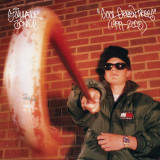
The cover photo is a picture of Sam standing on his back porch in the latter part of 1998, just before he got his first sampler. He was 13 years old, in 8th grade. His dad took the picture with his 35mm film camera: "I actually wanted to be pointing my dad's .22 pistol at the camera lens but he wouldn't let me. He gave me an old walking cane to use instead. The Tommy Hilfiger puffer jacket came from the lost and found at William Fleming High School where my mom worked as a secretary. I was thrilled when she brought it home because we never spent money on expensive name brand clothing like that - we were for the most part strictly a sale rack, bargain bin, thrift store, yard sale, flea market kind of family when it came to clothes. My watch is some cheap off-brand fake gold department store watch." Mastering for this vinyl edition was overseen by Be With regular Simon Francis and it was cut by the esteemed Cicely Balston at Abbey Road Studios to be pressed in the Netherlands by Record Industry.
YES! Originally released in 2000, Mark de Clive-Lowe's Six Degrees captures the early essence of what would later be known as broken beat, club-jazz and future soul; bridging the sounds of 70s jazz-fusion, jungle, hip-hop, house and Afro-Cuban rhythms. With fender rhodes, synths and an MPC2000 at the core of his production, de Clive-Lowe blended live musicianship with beat-driven sensibilities in a way that was ahead of its time.
Originally released in New Zealand via Kog Transmissions, the album found its way onto the global stage when Universal Jazz UK picked it up. Now, 25 years later, Be With is proud to present a special anniversary vinyl reissue, celebrating a landmark album that laid the foundation for an international career spanning continents, collaborations, and countless musical evolutions. Limited to just 400 copies for the world, these are gonna fly.
In 1998, a 23-year-old Mark de Clive-Lowe set off on a year-long journey that would shape his career and musical identity. Fuelled by an insatiable curiosity and a grant from New Zealand supporting emerging artists, he traveled across the globe — digging through record stores in San Francisco, immersing himself in the rhythms of Havana, collaborating in London’s underground studios and experiencing the jazz legacy of New York. Along the way, he crossed paths with pioneers, mentors and kindred spirits who would deeply influence his sound.
Six Degrees is the sonic diary of that transformative year — a musical world tour distilled into one groundbreaking album. It's both a snapshot of a pivotal moment in de Clive-Lowe’s life and a timeless statement of creative exploration.
The jazzy jungle vibes of "Roundtrip" opens proceedings, inspired by de Clive-Lowe's deep love of drum & bass. It kicks off with a rhythm pattern picked up in Havana, combined with Lonnie Liston Smith-style Rhodes textures and a rolling jungle breakbeat. Sublime. Up next, "La Zorra" is a moving tribute to the folkloric 6/8 rhythms he was surrounded by in Cuba. Afro-Cuban music had a huge impact on his sound and this track reflects those deep grooves brilliantly. Hip-hop has also been a major influence since de Clive-Lowe's teenage years and Manuel Bundy’s scratches bring an essential turntable element to "Melodious Funk", giving it that raw boom-bap edge.
Underground favourite "El Día Perfecto" came about by de Clive-Lowe wanting to write something as catchy as Incognito’s "Colibri", combined with his deep love for Lonnie Liston Smith. Effortless as it sounds, it pretty much wrote itself, seemingly. "Cosmic Echoes" is a nod to house music, but on the chiller side. Named after Lonnie Liston Smith’s band, with bouncy bass, a steady 4/4 groove and chopped tabla percussion, the mood this track conjures up is special. The deeply soulful "Day By Day" became the biggest track from the album, partly thanks to DJ Spinna’s remix and Café del Mar featuring it on their compilation. Cherie Mathieson’s vocals shine here. The lyric came to de Clive-Lowe while hanging out at Cause Célèbre in Auckland: “Day by day, side by side, hand in hand, no turning back.”
"Restless" is a jazz-funk jam built on a classic drum break, heavily influenced by Roy Ayers and the Mizell Brothers. Named in homage to Phil Asher’s Restless Soul moniker, his impact on de Clive-Lowe's journey can’t be overstated. Following on, "Mindscape" is a darker, rawer drum & bass track. The chopped-up drum break and moody synths channel everything he loved about the deeper, more atmospheric side of the genre. "Control" continues the jungle influence — this one’s all about the heavy grooves and deep bass, inspired by nights out listening to Jumping Jack Frost and Grooverider in packed basement clubs.
"Por La Mañana" is a musical snapshot of walking the Malecón in Havana in the morning sun. The city had such a profound impact on de Clive-Lowe and this track captures some of that energy and movement. Penultimate gem "Motherland" is a nod to his Japanese heritage. The melody draws from Japanese scales, shifting between moody introspection and uplifting harmony. Built on a chopped live drum break he recorded in Tokyo years earlier. We end with "El Día Perfecto (Reprise)", a stripped-down reprise featuring percussion, vocoder, Rhodes and synths — leaving the listener with a warm, uplifting final moment.
Speaking to Be With, de Clive Lowe explained just how much celebrating the 25-year anniversary of this album means to him: "Since then, I’ve released so much more music, but Six Degrees still resonates — it captures a really special moment in my life. A turning point, a fork in the road that ultimately changed everything. It’s amazing to reflect on where this journey has taken me, and I’m incredibly grateful for it. I still remember the night I finished "El Día Perfecto". I took a minidisc of it to my friend Cian’s DJ set at Galatos in Auckland. He plugged it in, and I watched the dancefloor move to something I’d just created hours earlier — it was a magical moment.
When Six Degrees was first released, the internet was still in its early days. There was no YouTube, no streaming, no instant global access to new sounds. The album was my way of bringing together all the music and places I had experienced over that year, blending them into something uniquely mine. It introduced me to listeners around the world and opened the doors to a career that would take me to more countries, collaborations and experiences than I ever imagined.
25 years later, I’m so grateful for everything this record set in motion. It’s a document of a moment in time, but it still feels alive — and I’m thrilled to share it again in this special anniversary edition."
Mastering for this 25 year vinyl edition was overseen by Be With regular Simon Francis and it was cut by the esteemed Cicely Balston at Abbey Road Studios to be pressed in the Netherlands by Record Industry. The original artwork has been lovingly brought back to life by de Clive-Lowe himself, with updated liner notes written specially for this landmark reissue.
- 1: Salvage Title
- 2: Tree Of Heaven
- 3: Betty Ford
- 4: Free Association
- 5: Hollow Skulls
- 6: Artex
- 7: Love Vape
- 8: Wildwood In January
- 9: Resident Evil
- 10: All Over The World
- 11: Fantasia
An album for sleeping and waking, walking and driving, hunting and fishing, for loitering outside a roadhouse on the haunted tundra. Okay in elevators, not great for dinner. On Caveman Wakes Up, Friendship’s new album and second for Merge Records, the band’s historically capacious definition of country music grows wider still. Shambolic guitars are offset by flute pads, bleary poetry is set against a Motown rhythm section, a song about Jerry Garcia and First Lady Betty Ford fades out with a drum solo, like if Talk Talk came from a dingy Philadelphia basement and was fronted by James Tate. Songwriter Dan Wriggins’ ragged baritone cuts through eleven murky, swirling country-rock songs with profound lyrical substance and sincerity. Like an alarm clock incorporated into the edge of a dream, Caveman Wakes Up belongs equally to the conscious and subconscious mind, fraught with background, steeped in reference and experimentation, delivered casually and as a dire warning, dedicated, above all, to music’s creative soul. Over the years, dedication has paid off. Friendship has become a kind of reverse supergroup,
wherein the band itself and each individual member are located centrally in an increasingly prominent scene of young folk and country musicians and songwriters. Drummer Michael Cormier O’Leary leads the instrumental collective Hour and, along with bassist Jon Samuels, runs Dear Life Records, home to friends and peers who count Friendship as a major influence including MJ Lenderman, Florry, and Fust. (Samuels also plays lead guitar in MJ Lenderman and the Wind). Guitarist Peter Gill’s band 2nd Grade records prolifically. Wriggins began writing the songs of Caveman Wakes Up on a downtuned classical guitar of Lenderman’s and finished on a barely tuned piano in an apartment he shared with Sadurn’s G DeGroot.
In the summer of 2023, Wriggins had just left the Iowa Writers’ Workshop, where his love for poetry and mistrust for the academic poetry world grew in tandem. A relationship fell apart, and Wriggins crashed for several weeks at Lenderman and Wednesday’s Karly Hartzman’s home in North Carolina, where he recorded the first demos of “Resident Evil,” “All Over the World,” and “Love Vape.” Wriggins returned to Philadelphia, and the band got to work on new ideas, finally tracking the album in five days with engineer Jeff Ziegler (Mary Lattimore, War on Drugs). Wriggins recorded vocals with Love the Stranger engineer Bradford Kreiger, and organ, violin (Jason Calhoun), and flute (Adelyn Strei) were recorded by Lucas Knapp in a West Philadelphia church.
Based in São Paulo and formed in 2017, TaguaTaguais lead by songwriter and producer FelipePuperi. Felipe, having fronted space groove rock band WannabeJalvafor several years, has an extensive indie resume. Having played at Lollapalooza Brazil, supported shows for Pearl Jam and Jack White. He's also been featured on KCRW, NY Times, Stereogum, Brooklyn Vegan and WFUV.
Tagua Tagua's 3rd full length LP and 3rd release on Wonderwheel following 2024's Todo Tempo EP and 2023's Tanto LP
Upcoming tour plans include SXSW and Lollapalooza Brasil in March 2025
Lead singleLado a Ladofeatures James Petralli frontman of the Austin, TX based rock band White Denim
White Denim were founded in 2008 and have shifted through genres like post-punk, soul, garage, and psychedelic rock and have released music on labels such as Bella Union, City Slang, and Downtown
2024 was a big year at radio as Tagua Tagua filmed and recorded a live sessions for NPR's World Cafe (US) and Gilles Peterson's Brownswood Basement on Worldwide FM (UK)
Embarked on a 10 date Brazilian tour in Spring of 2024 playing to capacity crowds each night in 400-500 cap rooms
Recent tour history includes two stints in the US for New Colossus Festival in NYC and SXSW March 2024 and November of 2024 in Miami, New York, and Philadelphia as well as a headline tour throughout Europe in September and October of 2024
Significant press coverage from publications like NPR Alt Latino, Remezcla, FIP, Bandcamp, and Sounds & Colours to name a few
Huge worldwide radio support from stations like KEXP, KCRW, KUTX (US) Inter, FIP, Nova (FR), RinseFM, Soho Radio, Worldwide FM (UK), 3RRR, 2SER, RTR (AU), RTP Antena 3, TSF Rádio Notícias, Rádio Oxigénio (PT) iCat, Radio 3 (ES) RBB Radioeins (DE) and many more
- I Heard That Noise
- Enything
- Take It From Me
- This House
- This Room
- Beginning Band Day One
- I Punched Through The Wall
- Hero
- Raven
- Drawn Away
- You Are
Mint Green Vinyl. Graham Jonson is drawn to the comforts of melody and noise. How the two conspire in tension, tonally and atonally, stirring up memory and mood. This quality animates the technicolor world of quickly, quickly, the psych-pop project that emanates from Kenton Sound, his basement studio in Portland, Oregon. "Everywhere your eye lands, there's another curio to marvel over," noted Pitchfork's Philip Sherburne when he visited Jonson's recording space for a Rising feature just after the release of his "strikingly original" 2021 debut LP, The Long and Short of It. Since then, Jonson formed a live band, released his Easy Listening EP in 2023, and navigated the up-and-downs of a young musician, the sustainability of tours and relationships. While shaped by personal bouts and fallouts, his highly-anticipated full-length follow-up finds Jonson making music that's universal, open-ended, and rewarding, like great songwriters can do. He set out to make a folk album but couldn't help coloring it in with noise; a confluence of lush instrumentation and unexpected sounds. Ambitious yet intimate, hi-fi yet homespun, the idiosyncratic songs on I Heard That Noise curve around the contours of everyday life with warmth, wit, and dissonance.
- Clem's Crime 05:08
- Synth Love 04:32
- Silver Skin
- Good Boy
- Will Not Dance
. The idea for the band was originally conceived by singer-guitarist Joe Woodward whilst writing and recording songs in his kitchen on a 4-track recorder, and over time eventually found help from like-minded friends, Elliot Roberts and Cam Wheeler. The three of them would spend their nights experimenting with cassette recording with the admirable if not challenging aim to recreate the symphonic sounds of Phil Spector on a DIY budget. With growing confidence and having amassed a small catalogue of songs, a few aborted attempts were made to get a live band together before they found help from a second guitarist, Eli Allison, who had recently relocated from Cornwall. As necessity would dictate, the first shows as a quartet made use of a drum machine, but the ideal formation for the band wasn’t truly complete until meeting Nia Abraham, whose live drumming would add a more physical quality to the band’s sound. At the beginning of 2024, they began working more purposefully towards an end goal with the writing and recording of the five-song Nowhere Near Today EP. Though retaining some of their home recording practices, they also made use of a studio facility based in a disused shopping centre basement that was made available through SHIFT, a local artist collective connected to the band. The acquisition of an 8-track Tascam 488MKII, along with the natural reverb of SHIFT’s empty concrete space allowed for further opportunity to experiment with both cassette recording techniques and their still developing live sound, the two environments permitting an all-too-rare creative freedom. The process was transformative for the group, their Spector-inspired ambitions now taking on a more defined shape that skirted around the edges of psych, noise-rock and industrial-pop in a way that increasingly became their own. For a debut EP, the results are impressively realised, a confluence of expansive tremolo guitars, a deliberately primordial rhythm section and a contrasting vulnerable vocal performance that’s both melodic and bracing. It’s a record born both of private experimentation and public performance, who they are on stage and what they express on record informing the other but still distinctly each their own thing, shifting then dovetailing like the waves of feedback that wash through Nowhere Near Today. Still a young band, it’s tomorrow they feel a lot closer to.
*BLACK VINYL*Asher White's third album in two years (and fifteenth overall), Home Constellation Study is less a refinement of last year’s sly, quaint New Excellent Woman and more an explosion of it. Her meticulous chamber pop has given way to resplendent swells of horns and squeals of noise, throbbing bass and queasy orchestral loops. The cover, painted by White, frames a burst of flowers against a dark blue abyss, mimicking the music: over frenzied sambas, bleary slacker rock, hushed ambient meditations, and surprisingly slick disco. The past year has found the prolific Providence-based singer-songwriter ascending through her city’s fertile experimental rock scene alongside the breakout synth-punk act BabyBaby_explores and her labelmates Or Best Offer. Live, White’s band plays riotous, unpredictable noise rock that nods to their city’s storied DIY scene; on Home Constellation Study, mid-album highlights like “Downstate Prairie” and “Hymn” nod to Providence’s bands of yore with their blistering sheets of feedback and pummeling drums, placing White, improbably, within the lineage of local heroes Les Savy Fav or the broken pop dispatches of Black Pus. At its core, however, Home Constellation Study is the product of studied, monastic auteurism. Like New Excellent Woman, it was arranged, performed, recorded and mixed by White alone in her basement studio in Providence. “Happy Birthday” is an earnest psalm, a paean of devotion and remorse to God a la Beverly Glenn-Copeland that drifts along with Panda Bear haziness. White’s concept of “toxic femininity” undergoes further investigation on “Good luck!” and “Runes,” both with Elliott Smith-like chord changes and the barbs of cynical romantics like Aimee Mann. Asher White’s vision has never been so expansive and unpredictable.
To experience Justin R. Cruz Gallego's pulverizing Sub Pop debut is to get burned down to ashes and burst forth, born anew. Grim Iconic...(Sadistic Mantra), the Tacoma-based artist's second album, is driven by opposing forces: noisy abstractions and tightly structured beats, anguish and dissolution at the outside world and empowerment within, apathy and catharsis. Grim Iconic...(Sadistic Mantra) weds scouring electronics to hooky songs and Gallego's powerful drumming in a way that feels visceral and new. It's his most personal statement to date, at once playful and intent, driven and combustible, total fucking chaos mixed into glints of broken-glass beauty. Born in Tucson, Arizona, Gallego experienced culture shock as a child after relocating to the frigid climes of the Pacific Northwest. He found solace in the Seattle punk scene centered around Iron Lung Records and has since remained a fixture in the underground community. "I see this record as first and foremost a musical statement," Gallego says. "I grew up in punk and DIY subcultures, but before that I had Latin music playing in the background through my childhood and every phase of adolescence. It was surprisingly natural to incorporate. I realized I wanted to go deeper into these rhythms. I wanted to make a record that felt as experimental as much as it felt from the perspective of a Latino. When I got a glimmer of that possibility, it felt exciting." Lead single "Dogear" is a face-melting party starter that sounds like someone forced Talking Heads and Rudimentary Peni to share a practice space. "I wanted a song that felt playful in the way it attempted to be dissonant without taking itself too seriously," Gallego says. "Cholla Beat" is even more ambitious, an anthemic mix of WAR and Wire led by unruly synthesizers spiraling down a labyrinth of production. Gallego's influences for the album are vast, ranging from British documentary filmmaker Adam Curtis to electric Miles Davis to audio miscreants like Demdike Stare and Oneohtrix Point Never. But it's Gallego's assured sonic vision that resounds the loudest. And, while J.R.C.G. is a solo project, conceived and executed primarily in Gallego's home studio, he found strength in opening the project to others, starting with Seth Manchester as co-producer. Manchester's penchant for bone-rattling frequencies, as seen in his production work with The Body, Battles, and Mdou Moctar, made him a natural fit for Gallego. Together, they retained the intimacy of Gallego's home recordings while taking advantage of the hi-fi stylings of his Machines With Magnets Studio in Rhode Island. The closing song, "World i," offers a glimpse into the live experience of Grim Iconic...(Sadistic Mantra), with upwards of seven band members blasting off. The album features a fascinating mix of supporting players, many of whom cycle through J.R.C.G.'s live lineup: Morgan Henderson (The Blood Brothers, Fleet Foxes), Jason Clackley (Dreamdecay, The Exquisites), Jon Scheid (Dreamdecay, U Sco), Erica Miller (Casual Hex, Big Bite), Veronica Dye (Terminator) Phil Cleary (U Sco), and Alex Gaziano (Dreamdecay, Kidcrash, Science Amplification). Taken as a whole, G.I.S.M. is a whirlwind of sound, pummeling, and cleansing. It's a sweaty, thrilling aural adventure and, like a great basement show, it'll leave you breathless, exhausted, and wanting to repeat it all over again. As any good mantra should.
Repress of the 2015 album on transparent caramel vinyl. Remember Sports is a 4-5 piece basement rock band, started in 2012 at Kenton College in Gambiet, Ohio. The band’s second album titled All of Something was recorded in Philadelphia with celebrated DIY producer and musician Kyle Gilbride (Waxahatchee, Girlpool, Swearin’). The quintet found a fuller sound with all hands on deck. All of Something unfurls like a flag outside a midwestern bedroom window, lifted with the air of uncertainty of those first, confusing steps of adulthood. Perry’s freckled voice, equal parts longing and hopeful, carries through with damning drums and tickling guitar solos. Each song jangles on, sometimes releasing declarative, fighting words and other times as careful as notes left on the fridge
- A1: Return Of The Mecca
- A2: For Pete's Sake
- A3: Ghettos Of The Mind
- A4: Lots Of Lovin
- A5: Act Like You Know
- B1: Straighten It Out
- B2: Soul Brother #1
- B3: Wig Out
- B4: Anger In The Nation
- B5: They Reminisce Over You (Troy) (Troy)
- C1: On & On
- C2: It's Like That
- C3: Can't Front On Me
- C4: The Creator (Remix - Bonus)
- D1: Mecca & The Soul Brother (Remix - Bonus)
- D2: The Basement (Feat Heavy D, Rob-O, Grap & Dida)
- D3: If It Ain't Rough, It Ain't Right
- D4: Skinz (Feat Grand Puba)
Mecca And The Soul Brother by Pete Rock & C.L. Smooth is considered by fans and critics as one of the finest hip hop albums of the early Nineties. Songs like "Lots of Lovin", "They Reminisce Over You (T.R.O.Y.)","Anger In The Nation" and "If It Ain't Rough, It Ain't Right" have everything; funky basslines, solid production, convincing lyrics and lots of soul. Producer Pete Rock built his beats from obscure R&B, funk and jazz records and CL Smooth added his sometimes-philosophical raps. Guest rappers on the album include Grand Puba (of Brand Nubian), Heavy D, Rob-O, Grap & Dida, and it reached #7 in the US R&B/Hip-hop charts and #43 in the US album charts. Mecca And The Soul Brother is available as a limited of 1500 individually numbered copies on silver coloured vinyl and includes an insert.
Mecca & The Soul Brother by pete & Cl Smooth Rock, released 19 April 2024, includes the following tracks: "Ghettos Of The Mind", "Act Like You Know", "Soul Brother #1", "Anger In The Nation" and more.
This version of Mecca & The Soul Brother comes as a 2xLP. This release comes with (a) Insert(s).
The vinyl is pressed as a translucent, yellow disc. Another vinyl is pressed as a translucent, yellow disc.
Black Vinyl[21,22 €]
In many ways, the music of Writhing Squares could have only originated in Philadelphia; the city itself a microcosm of creatives, go-getters, freaks & weirdos that have coalesced into a supportive & boundary-pushing crew. Former Purling Hiss bassist Daniel Provenzano & Ecstatic Vision sax-player & vocalist Kevin Nickles' first musical missive was shot forth in 2013 (the self-released CDR "Live In Space") & various singles, split releases, albums (and a double-album) later we arrive at the duo's fourth full-length "Mythology", their third for Chicago-based Trouble In Mind Records. "Mythology" picks up the pieces left shattered by their previous double-album "Chart For The Solution" and reconnects the broken shards together like Kintsugi, the ancient Japanese technique for mending broken ceramics, infusing the breaks with powdered gold. The Squares themselves are like mad-scientists, taking the ruined detritus populating junk shops & surplus outlets & constructing their own sonic laboratories in their New Jersey basements to record, mix & tweak "Mythology"s eight tracks. Their new location allowed the band to regroup, reassess & reconstruct their sound from the ground up, shearing away the cosmic excess of 2021's "Chart For The Solution" to a sharper point. Tracks like `Barbarians' & `LEM' are classic Squares; brutal, aggressive, unwavering assault of Motorhead/Stooges-inflected sci-fi punk scree, while others like `Chromatophage's mutant funk & `Cerberus's techno-slink owe a serious debt to electric-era Miles Davis or Herbie Hancock & show that the group has more to offer than bludgeoning you with sonic force. Provenzano's bass & electronics are like a tank rolling across the terrain - a gnarly construct of Hawkwind-ian headiness & `Vincebus Eruptum's snarl - uncaring of what gets in the way. Nickles' brass vacillates between Stooges-influenced sleaze, jazzy no-wave stabs, & cacophonous sonic storms, strafing the listener into oblivion. The duo are joined on "Mythology" by drummer John Schoemaker - who contributed drums to "Chart For The Solution"s epic closing track `Epilogue' - whose percussive pulse adds an organic swing to The Square's sonics, particularly on album closer "The Damned Thing"s cosmic strut. "Mythology" tackles a multitude of themes, from fantastical tales of hellhound `Cerberus' or the comic-inspired "Eternity " to `Chromatophage's colorful/evil yarn about animals that eat colors (or a Magic: The Gathering card) to the true-life influenced `Acid Rain' that deals with the uncertainty of consuming drinking water after a chemical spill in the Delaware River. Elsewhere, `Ferrell' is an homage to the late, great Ferrell "Pharaoh" Sanders & `The Damned Thing' by a short horror story penned by Ambrose Bierce about an animal whose coloring is invisible to the naked eye. Writhing Squares are in a transitional phase, mapping out a new sonic mythology for themselves after crossing the event horizon into unknown space. "Mythology" is streaming on most DSPs & released on black vinyl & limited fluorescent green vinyl (while supplies last) on April 26th, 2024.
Green Vinyl[22,06 €]
In many ways, the music of Writhing Squares could have only originated in Philadelphia; the city itself a microcosm of creatives, go-getters, freaks & weirdos that have coalesced into a supportive & boundary-pushing crew. Former Purling Hiss bassist Daniel Provenzano & Ecstatic Vision sax-player & vocalist Kevin Nickles' first musical missive was shot forth in 2013 (the self-released CDR "Live In Space") & various singles, split releases, albums (and a double-album) later we arrive at the duo's fourth full-length "Mythology", their third for Chicago-based Trouble In Mind Records. "Mythology" picks up the pieces left shattered by their previous double-album "Chart For The Solution" and reconnects the broken shards together like Kintsugi, the ancient Japanese technique for mending broken ceramics, infusing the breaks with powdered gold. The Squares themselves are like mad-scientists, taking the ruined detritus populating junk shops & surplus outlets & constructing their own sonic laboratories in their New Jersey basements to record, mix & tweak "Mythology"s eight tracks. Their new location allowed the band to regroup, reassess & reconstruct their sound from the ground up, shearing away the cosmic excess of 2021's "Chart For The Solution" to a sharper point. Tracks like `Barbarians' & `LEM' are classic Squares; brutal, aggressive, unwavering assault of Motorhead/Stooges-inflected sci-fi punk scree, while others like `Chromatophage's mutant funk & `Cerberus's techno-slink owe a serious debt to electric-era Miles Davis or Herbie Hancock & show that the group has more to offer than bludgeoning you with sonic force. Provenzano's bass & electronics are like a tank rolling across the terrain - a gnarly construct of Hawkwind-ian headiness & `Vincebus Eruptum's snarl - uncaring of what gets in the way. Nickles' brass vacillates between Stooges-influenced sleaze, jazzy no-wave stabs, & cacophonous sonic storms, strafing the listener into oblivion. The duo are joined on "Mythology" by drummer John Schoemaker - who contributed drums to "Chart For The Solution"s epic closing track `Epilogue' - whose percussive pulse adds an organic swing to The Square's sonics, particularly on album closer "The Damned Thing"s cosmic strut. "Mythology" tackles a multitude of themes, from fantastical tales of hellhound `Cerberus' or the comic-inspired "Eternity " to `Chromatophage's colorful/evil yarn about animals that eat colors (or a Magic: The Gathering card) to the true-life influenced `Acid Rain' that deals with the uncertainty of consuming drinking water after a chemical spill in the Delaware River. Elsewhere, `Ferrell' is an homage to the late, great Ferrell "Pharaoh" Sanders & `The Damned Thing' by a short horror story penned by Ambrose Bierce about an animal whose coloring is invisible to the naked eye. Writhing Squares are in a transitional phase, mapping out a new sonic mythology for themselves after crossing the event horizon into unknown space. "Mythology" is streaming on most DSPs & released on black vinyl & limited fluorescent green vinyl (while supplies last) on April 26th, 2024.
- A1: Return Of The Mecca
- A2: For Pete's Sake
- A3: Ghettos Of The Mind
- A4: Lots Of Lovin
- A5: Act Like You Know
- B1: Straighten It Out
- B2: Soul Brother #1
- B3: Wig Out
- B4: Anger In The Nation
- B5: They Reminisce Over You (T.r.o.y.)
- C1: On And On
- C2: It's Like That
- C3: Can't Front On Me
- C4: The Creator (Remix) Bonus Track
- D1: Mecca And The Soul Brother (Remix) Bonus Track
- D2: The Basement (Featuring Heavy D., Rob-O, Grap & Dida)
- D3: If It Ain't Rough, It Ain't Right
- D4: Skinz (Featuring Grand Puba)
Mecca And The Soul Brother from Pete Rock & C.L. Smooth is considered by fans and critics as one of the finest hip hop albums of the early 90s. Songs like “Lots of Lovin”, “They Reminisce Over You (T.R.O.Y.)”,”Anger In The Nation” and “It It Ain’t Rough, It Ain’t Right” have everything; funky basslines, solid production, convincing lyrics and lots of soul. Producer Pete Rock built his beats from obscure R&B, funk and jazz records and CL Smooth added his sometimes philosophical raps. Guest rappers on the album include Grand Puba (of Brand Nubian), Heavy D, Rob-O, Grap & Dida, and it reached #7 in the US R&B/Hip-hop charts and #43 in the US album charts.
When the grunge explosion of the early `90s elevated Seattle's flannel-clad misfits out of the divey clubs of downtown and into the mainstream, a new generation of restless artists filled the void left in the Pacific Northwest's underground music scene. The under-21 crowd making music in the wake of Nevermind seemed even less enamored with the slick production values, classic rock nods, and testosterone-fueled moshing culture that came with the Zeitgeist, favoring their own kind of Revolution Summer-style pivot away from the popular sounds of the era towards a more emotionally nuanced, melodic, and inclusive style of punk. The Puget Sound trio Lync perfectly captured the spirit of that era, blending the passionate chaos of the DC and San Diego scenes with the rough-hewn DIY pop sensibilities of Olympia's thriving indie community into one unified sound. Though they were only a band for two years, they helped define the next era of the Northwest underground, inspiring countless other artists and instigating the creation of beloved records from the region. After being out of print for over a decade, the band's sole LP These Are Not Fall Colors has been remastered and expanded into a 2xLP with the inclusion of "Can't Tie Yet"_a compilation track from the album's recording session_into a deluxe edition available courtesy of Suicide Squeeze Records. Originally released on K Records in the summer of '94 just a few months before the band called it quits, These Are Not Fall Colors is a boisterous collection of scrappy basement-show anthems played on duct-taped-together gear. Led by the off-kilter melodies of late singer/guitarist Sam Jayne and hammered into place by the driving bass of James Bertram and drum battery of David Schneider, the album's eleven songs channel that undefinable sound of the early `90s before descriptors like "post-hardcore" and "emo" became pejorative terms. Sure, you get a sense of the more sophisticated mid-tempo punk approach on songs like "B" and "Silverspoon Glasses," and maybe catch wind of wistful songwriting on "Pennies to Save" and "Cue Cards," but Lync seemed to cull their ideas from whatever bits of inspiration they could find in the gray gloom and geographic isolation of western Washington, absorbing it all and churning it together into a style uniquely their own. Despite Lync's short existence, modest aspirations, and DIY approach, their work had a ripple effect. Jayne would go on to make music under the moniker of Love As Laughter. Built to Spill's Doug Martsch was so enamored by the album that he enlisted Bertram and Schneider to serve as his rhythm section on the There's Nothing Wrong with Love tour. These Are Not Fall Colors engineer Phil Ek would go on to help record and produce records by Fleet Foxes, Band of Horses, and The Shins. Early bassist Isaac Brock and These Are Not Fall Colors album art contributor Jeremiah Green would go on to form Modest Mouse. Bertram and Green would also go on to form the revered indie rock group Red Stars Theory. At times it feels like you could pick any major Northwest indie rock group from the `90s and `00s and trace their DNA back to Lync. The deluxe edition of These Are Not Fall Colors comes pressed on 180g vinyl and packaged in a gatefold cover with printed inner sleeves and expanded artwork by Jesse LeDoux. The 2xLP also features an 18x24 poster with extensive liner notes by Brian Cook. Altogether, this new version of These Are Not Fall Colors not only brings this celebrated classic back into analog libraries of old fans, it also provides new context and appreciation for Lync's ongoing impact on both a local and international level.
Sourced from the Original Master Tapes and Presented in Audiophile Sound for the First Time: Mobile Fidelity’s Numbered-Edition 180g SuperVinyl LP Plays with Riveting Detail
Three decades before he released The Philosophy of Modern Song — an insightful book devoted to 66 tunes that both impacted his career and the music world at large — Bob Dylan issued Good As I Been to You. The under-heralded 1992 album, Dylan’s first solo acoustic album in nearly 30 years and first all-covers effort in nearly 20 years, can be seen as a prophetic prelude to what has become the Nobel Laureate’s celebrated late-career arc. It’s also an absorbing continuation of the custom Dylan has embraced since he first picked up a guitar.
Sourced from the original master tapes, pressed at RTI, and housed in a Stoughton jacket, Mobile Fidelity's numbered-edition 180g SuperVinyl LP of Good As I Been to You reveals the immediacy, detail, and stripped-down nature of recording sessions that took place in Dylan’s garage studio in California. Simple, raw, and unplugged, the record presents Dylan in peak form — and showcases a diversity of vocal phrasing, soulful chording, harmonica accents, and close-up ambience that on this reissue emerge like never before. As the first-ever audiophile edition of this almost-lost classic, this LP also benefits from SuperVinyl’s extraordinary properties: a nearly inaudible noise floor, superb groove definition, and dead-quiet surfaces among them.
Recorded and mixed by Micajah Ryan, and supervised by Debbie Gold, Good As I Been to You took shape at Dylan’s home shortly after the singer-songwriter completed sessions in Chicago with a full band. Unaccompanied, he again gravitated to existing works — in this case, traditional folk music — and, with Gold serving as a trusted advisor, performed the songs in multiple keys and tempos until he arrived at what he desired. That careful, determined albeit loose, organic approach emanates from this reissue, on which each note, movement, and space come across more directly, fully, and immediately than on the original formats. It helps draw a through-line to Another Side of Bob Dylan (1964) as well as the similarly themed follow-up, World Gone Wrong (1993) and immersive old-world storytelling of Tempest (2012) and Rough and Rowdy Ways (2020).
Well before Dylan made those renowned 21st century LPs, however, he needed to find a way out of a funk that — save for his 1989 collaboration with Daniel Lanois, Oh Mercy — followed him for years. As author Clinton Heylin reported Dylan admitting in 1997: “My influences have not changed — and any time they have done, the music goes off to a wrong place. That’s why I recorded two LPs of old songs, so I could personally get back to the music that’s true for me.”
Truth: Few, if any, concepts better encapsulate Good As I Been to You. It resonates with the same originality, honesty, resolve, and age- and time-defying relevance as the seminal Anthology of American Folk Music that fired Dylan’s imagination as a kid in small-town Minnesota and, later, per Greil Marcus’ That Old Weird America book, informed Dylan and the Band’s Basement Tapes sessions. This record also contains the type of music Dylan was playing during his acoustic sets at his period Never Ending Tour shows; within a year of the record’s release, Dylan would play half the album’s songs live.
As for those songs: Rife with strange mystery, common circumstance, and epic adventure, the stories appeal to our base instincts. Their themes — jealousy, temptation, sacrifice, love, revenge, identity, opportunity — operate on a fundamentally human level immune to trends, generations, or eras. They’re ancient and modern, serious and comical, open and disguised, simple and multi-layered. They talk of vengeance and justice (“Frankie & Albert”; “Jim Jones”), romance and tenderness (“Tomorrow Night,” “Froggie Went a Courtin’”), the troubled and trouble-free (“Hard Times,” “Sittin’ on Top of the World”). They lend voice to lovers scorned and freed (“Blackjack Davey”), the used and users (“Diamond Joe”), the powerful and powerless (“Arthur McBride,” “Canadee-I-O”), the followed and followers (“Little Maggie”). And akin to much of Dylan’s finest output, things are not always what they appear to be.
Spanning country, folk, sea shanty, bluegrass, and blues motifs, Good As I Been to You re-confirms Dylan’s position as an elite interpreter and sculptor — not of just structure but emotion. Dylan delivers the tunes as if he’s known them forever. He plays with a subtle sense of mischievousness and retains a largely upbeat demeanour; his eyes seemingly twinkle as he sings and picks. His guitar serves as the guidepost for shuffles, boogies, ballads, and mess-arounds while his innate feel for each specific arrangement and melody helps inform pacing, tone, attack.
Like a great author, he understands the importance of adhering to concision, luring an audience, holding their attention, and maximizing the impact of details, actions, and unexpected turns. Though already coarse and ragged, his voice feels ideal for the subject matter and his phrasing — from the clever ways he stretches syllables to underline meanings on the surprise twists of “Canadee-I-O” to the sheer delight he gets from singing “rowdy-dow-dow” on the protest song “Arthur McBride” — outstanding.
Clear Marbled Vinyl[23,74 €]
To celebrate the 10th Anniversary of Major Arcana, Speedy Ortiz will release a remastered edition, on Carpark Records.
On their debut full-length, Western Massachusetts' Speedy Ortiz manages a bit of magic by conjuring the spirits of classic American indie rock, while twisting those ghosts into new shapes. It's easy to hear the influences of Helium, Jawbox, and Chavez on this album, as well as nods to their contemporaries including Grass is Green, Pile, and Roomrunner. Sweet vocal harmonies run up against gnarly distortion, aided by basic, chunky bass parts and heavy, fill-laden drums.
The album was recorded in a few days in November at Justin Pizzoferrato's (Dinosaur Jr., Chelsea Light Moving) studio, Sonelab, a huge space in an old factory in Easthampton, Mass. The sessions went from very early in the day until very late at night, with the band taking its time to experiment. Pizzoferrato's collection of old distortion pedals were utilized on both the record's guitars and vocals.
The theme of the occult and the supernatural runs deep through Major Arcana, inspired by singer-guitarist Sadie Dupuis' reading on black magic. Dupuis' sometimes knotty and abstract lyrics bring to mind fellow wordsmith Stephen Malkmus, while referencing horror film tropes, chemistry, and neuroscience. Major Arcana's literal translation is 'major mysteries,' a phrase from tarot cards. 'I don't write in a narrative way and am more concerned with use of language than meaning,' Dupuis says, 'so I like the open-endedness of the title and the way it invites interpretation.'
After too much time freelance writing and watching re-runs in a windowless Brooklyn basement, guitarist and songwriter Sadie Dupuis left New York City for the wilds of Northampton, MA in order to pursue a master's degree in poetry. In doing so, she began Speedy Ortiz, a self-recorded lo-fi project named after a minor character from the Love and Rockets comic series. Speedy Ortiz soon became something else entirely as bassist Darl Ferm, guitarist Matt Robidoux, and drummer Mike Falcone teamed up to form a full band, balancing abrasive noise with infectious earworms. The newly minted Speedy Ortiz quickly found an audience in the Boston DIY scene, playing frequently with their friends Pile, Grass is Green, Fat History Month, Sneeze, Krill, and Arvid Noe.
Almost immediately, the band recorded a two-song single, 'Taylor Swift' and 'Swim Fan,' with Paul Q. Kolderie (Pixies, Hole) and Justin Pizzoferrato (Chelsea Light Moving, Dinosaur Jr.), and self-released it in March of 2012. Shortly thereafter they spent a few weekends at the dingy yet atmospheric Sex Dungeon Studios in Philadelphia recording the Sports EP, a five-track, loosely conceptual 10' released that June on Exploding in Sound Records.
The creation of Major Arcana, their full-length debut, marks the evolution of Speedy Ortiz into a wholly collaborative effort. Darl leans toward basic, chunky parts, while Mike, a talented songwriter in his own right, helped arrange while also providing aggressive, boisterous drums. And Matt is a classically trained guitarist, but his experience in noise and experimental music comes through in his anti-melodic guitar solos, which counterbalance Sadie's angular, scalar guitar riffs and poppy vocals.
The end result is a band able to distill their influences and creative impulses into something at once dissonant and melodic, noisy yet undeniably pop.
DEVO’s Hardcore documents the group’s beginning as pre-punk outcasts in the fertile Akron, Ohio, underground rock scene. Spawned at the nearby college of Kent State, site of the infamous May 4 Massacre, DEVO formed as a conceptual art project armed with the radical philosophy of de-evolution. Brothers Mothersbaugh (Mark, Bob and Jim) and Brothers Casale (Jerry and Bob) along with drummer Alan Myers soon whipped up an otherworldly brand of “devolved blues” that could hold its own alongside the beatnik groove of 15-60-75 (a.k.a. The Numbers Band) or the primal rock poetry of The Bizarros. Recorded on various four-track machines and in tiny studios, basements and garages between 1974-1977, Hardcore reveals their strikingly clear vision: rock ’n’ roll stripped bare of its collective cool and jerked back into propaganda fit for post-modern man. It’s no surprise that these transmissions would soon catch the eye and ear of Brian Eno, who later produced their landmark 1978 debut album. Noisy synth, strangled guitar chops and a primitive rhythmic thud power the early DEVO sound. Threaded beneath it all are lyrical themes of post-McCarthy paranoia, middle-class ephemera and DEVO’s long-running topic of choice: sex, or lack thereof. Few moments in pop music history can match the grinding, pent-up energy of “Mongoloid” and the spastic bounce and sputter of “Jocko Homo” (two anthems presented in their earlier and superior versions here). Cult favorites like “Mechanical Man” and “Auto-Modown” make Volume 1 essential listening. Superior Viaduct and Booji Boy Records are proud to present DEVO’s Hardcore to a new generation of spuds, lovingly packaged with Moshe Brakha’s stunning cover photography. As David Bowie said in 1977, DEVO is indeed “the band of the future.”
Spirit of Sundaze Ensemble (SOSE) is the latest evolution from London based DJ / producer, label and party series Secretsundaze. Sitting at the intersection of live music and electronic music innovation, leading contemporary musicians reimagine, record and perform a selection of tracks which have been foundational across Secretsundaze’s 20+ year history, embracing a myriad of influences from Balearic to synth pop to Brit funk.
EP 1 opens with their first single, a re-imagination of Photek’s seminal ‘Mine to Give’. Featuring Wayne Snow on vocals and garnering wide support from the likes of BBC 6 Music heads Gilles Peterson and Nabihah Iqbal, through to NTS and Worldwide FM tastemakers including Zakia, Moxie and Colleen ‘Cosmo’ Murphy, the tempo is slowed and explored in a more synthy 80s production style.
Next is their take on Joyce Sims’ (RIP) ‘Come into My Life’, moving the original Mantronix production into a more contemporary UK / Street Soul / Balearic territory.
The B-side sees them take on beloved Phil Asher (RIP) production, Nathan Haines’ stunning ‘Earth is the Place’, a classic Secretsundaze record if ever there was one. Featuring the vocals of Cherise, the SOSE version is a dance floor ready update which will appeal to all lovers of proper deep, soulful-leaning house music, one for the heads.
Closing the record is a flip of Wbeeza’s ‘Coast Spotting’. Featuring synths from the excellent Hinako Omori, this one goes in with an extended late night transcendental electronic / jazz rework with the original’s looped lead line modulating throughout the piece.
Leading musicians feature on the record including Myele Manzanza (Theo Parrish, Sound Signature), Lewis Moody (Zeitgeist Freedom Energy Exchange), Nikos Ziarkas (Theon Cross, Chelsea Carmichael), Oli Savill (Basement Jaxx), and Johnny Brierley (Fofoulah).
Following their debut sold out show at Southbank’s Centre Queen Elizabeth Hall, the Ensemble next take to the London stage at the iconic EartH Theatre, Dalston on September 21st for an EP launch party as well as a headline open-air concert at Las Dalias, Ibiza as part of Beat Hotel on September 30th.
All in all, an impressive debut showcasing the breadth and scope of this exciting new live project from Secretsundaze founder James Priestley, one to watch.
This 2023 edition of The Shins's beloved second album, Chutes Too Narrow, celebrates the album's 20th anniversary with a fresh remaster by Adam Ayan, supervised by band leader James Mercer, and lovely new packaging for the vinyl. Following The Shins's breakout 2001 debut, Oh, Inverted World, singer/songwriter/guitarist James Mercer and drummer Jesse Sandoval moved from Albuquerque to Portland, OR and bassist Neal Langford was replaced with Dave Hernandez (ex-Scared Of Chaka), who played bass on the stand-out track from the first record, "New Slang." Chutes Too Narrow, their heavily anticipated follow-up, was recorded in James' basement home studio, with later mixing assistance from Phil Ek (Built to Spill, Modest Mouse, David Cross, Les Savy Fav, etc.). And, with 10 songs, clocking in at just over 30 minutes, Chutes Too Narrow is a brief yet entirely scintillating glimpse at chiming, reflective and perfectly skewed pop innovation. It was released to widespread acclaim in 2003, garnering Pitchfork's Best New Music, four stars from Rolling Stone, and raves from the New York Times, MOJO, the Village Voice, SPIN, and tons more. It subsequently made best-of-the-decade lists from The AV Club, NME, Paste, Pitchfork, and Uncut. Critically acclaimed on release, and widely considered one of the best albums of the 2000s. Remastered from original tapes by Adam Ayan at Gateway Mastering.
Initial LOSER copies pressed on lovely Transparent Sun Yellow vinyl! This 2023 edition of The Shins's beloved second album, Chutes Too Narrow, celebrates the album's 20th anniversary with a fresh remaster by Adam Ayan, supervised by band leader James Mercer, and lovely new packaging for the vinyl. Following The Shins's breakout 2001 debut, Oh, Inverted World, singer/songwriter/guitarist James Mercer and drummer Jesse Sandoval moved from Albuquerque to Portland, OR and bassist Neal Langford was replaced with Dave Hernandez (ex-Scared Of Chaka), who played bass on the stand-out track from the first record, "New Slang." Chutes Too Narrow, their heavily anticipated follow-up, was recorded in James' basement home studio, with later mixing assistance from Phil Ek (Built to Spill, Modest Mouse, David Cross, Les Savy Fav, etc.). And, with 10 songs, clocking in at just over 30 minutes, Chutes Too Narrow is a brief yet entirely scintillating glimpse at chiming, reflective and perfectly skewed pop innovation. It was released to widespread acclaim in 2003, garnering Pitchfork's Best New Music, four stars from Rolling Stone, and raves from the New York Times, MOJO, the Village Voice, SPIN, and tons more. It subsequently made best-of-the-decade lists from The AV Club, NME, Paste, Pitchfork, and Uncut. Critically acclaimed on release, and widely considered one of the best albums of the 2000s. Remastered from original tapes by Adam Ayan at Gateway Mastering.
Acclaimed NY-based singer songwriter Jordan Lee aka Mutual
Benefit announces ‘Growing At The Edges’, on Transgressive
Records, his first record since 2019.
‘Growing at the Edges’ is sonically expansive, artfully blending
genres from country to classical with the help of multifaceted
co-producer Gabriel Birnbaum (Wilder Maker) and critically
acclaimed string arranger Concetta Abbate. The band,
alongside Lee and Birnbaum, was made up of Wilder Maker
members Sean Mullins (Andy Shauf) and Nick Jost (Baroness)
and features help from Jonnie Baker of Florist and Eva
Goodman of Nighttime among others.
“I approached ‘Growing at the Edges’ as an act of worldbuilding. It was a place we visited often over the past 5 years
collaging and sonically redecorating until it reflected the joy and
the pain of being human in a universe that will always be
changing. I wanted to make music that could simultaneously
mourn versions of the past but still find hope in the seedlings
which could, perhaps, bloom into better futures” - Jordan Lee
The album cover is a purposefully ‘unfinished’ weaving by fibre
artist Natalie Phillips.
“I had this theme for ‘Growing at the Edges’ where I was
thinking about the first little life forms that pop up after
something natural like winter or less natural like a disaster and
kind of channeling their spirit for the art and music. That got me
imagining one of Natalie’s beautiful weavings but in-process
with stray yarn and loom still visible. Incomplete yet still
beautiful. I couldn’t be happier with how it turned out.”
Mutual Benefit’s live shows are known for their rotating cast of
wide-ranging musicians leading to inspired interpretations of the
extensive catalogue on notable stages like MoMA’s sculpture
garden or UK’s Green Man Festival as well as the occasional
surprise park or basement show at home in Brooklyn.
Throughout the years Mutual Benefit has been in Album Of The
Year lists among Pitchfork and Stereogum, as well as Folk
Musician Of The Year by New York’s Village Voice.
Tracked in 1977, this bundle of never-before-released basement demos throw Harris’ beloved Philadelphia Sound into an unfinished root cellar, pelting it with Clavinet attacks, disco skats, and infectious hooks. Named for the street address of its underground uptown genesis, 1514 Oliver Avenue (Basement) is James “Jimmy Jam” Harris’ first foray into songcraft and an organic Minneapolis-vintage alternative to a late ’70s Prince songbook gone increasingly synthetic.