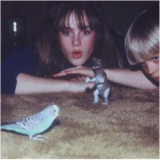
For more than 30 years, singer-songwriter and guitar hero Mary Timony has cut a distinctive path through the world of independent music, most recently as vocalist and guitarist of acclaimed garage-pop power trio Ex Hex (Merge) but also as a member of seminal postpunk band Autoclave (Dischord), celebrated leader of the deeply influential Helium (Matador), multifaceted solo artist (Matador, Lookout!, Kill Rock Stars), and a co-founder of supergroup Wild Flag (Merge). Described by Sleater-Kinney's Carrie Brownstein as "Mary Shelley with a guitar" and dubbed "a trailblazer and an innovator" by Lindsey Jordan a.k.a. Snail Mail, Timony has distinguished herself as one of her generation's most influential. Although she has remained a cult hero and critical favorite since the early '90s, Timony's many triumphs have long been counterbalanced by crippling doubt and self-nullification. Her fifth solo album, Untame the Tiger, approaches these emotions head on. Her first solo release in 15 years is a startling document of an artist fully coming into her own power during the fourth decade of her career. It is the product of lessons learned during life-altering struggle. The mystical, acoustic-driven Untame the Tiger emerged after the dissolution of a long-term relationship and was bookended by the deaths of Timony's father and mother. The album was recorded during a two-year period during which she was the primary caregiver for her ailing parents. The tectonic psychic shift Mary experienced due to this loss informs many of her lyrics. Standout track "No Thirds" "is a song about losing everything and having to keep on going," says Timony. "I wanted the verses to sound like a wide-open barren space, like driving across a desert, because that is what the song is about - losing people and the feeling that your future is a giant, wide-open blank space." The stripped-back acoustic instrumentation of "The Guest" conjures Sweetheart-era Byrds. Timony describes it as a song sung directly to loneliness: "I was imagining loneliness as a house guest who keeps knocking on your door. I thought it would be funny to say loneliness is the only one who always comes back." Untame the Tiger does not eschew Timony's guitar hero reputation; in fact, "Summer" relishes in it, a straight-up banger that you'd be half tempted to call "no frills" until its initial garage rock stomp breaks into the unexpected bliss of a twin guitar solo conclusion. "I wanted the recording to have the energy of the Kinks, early Dio and Elf, or Rory Gallagher," she explains. "I was also listening to a lot of Gerry Rafferty's first solo album and was inspired to have two simultaneous guitar solos." Untame the Tiger picks up the thread woven through Timony's freak-folk-anticipating solo albums of the early '00s. Basic tracks were recorded at Studio 606 in Los Angeles, with Timony backed by Dave Mattacks, drummer of legendary British folk-rock band Fairport Convention. "Mattacks is a hero of mine and one of my favorite musicians of all time. He is a true legend. I never in a million years thought he'd agree to play on my record," says Timony. "Before the session, I had a panic attack and had to go sit alone in the parking lot_ Once we started playing together, it felt so great that the fear subsided and turned into excitement. His playing felt instantly familiar, which makes sense because it's the foundation of many of my favorite records." Untame the Tiger was produced by Mary Timony, Joe Wong, and Dennis Kane. The album was recorded over the course of two years at Studio 606, Magpie Cage, 38North, and in Mary's basement Additional engineering by J. Robbins (Jawbox, Burning Airlines). Musicians include Chad Molter (Faraquet, Medications), David Christian (Karen O, Hospitality), and Brian Betancourt (Cass McCombs, Devendra Banhart, Hospitality). The album was mixed by Dave Fridmann (MGMT, The Flaming Lips, Mercury Rev), Dennis Kane, and John Agnello (Dinosaur Jr., Kurt Vile, Waxahatchee).
Cerca:basement tracks
Nach der Veröffentlichung ihres Debütalbums "Stay Alive" (2020) und der "At War With The Silverfish" EP (2021) meldet sich die Emmy-nominierte
Künstlerin, Autorin, Musikerin, Aktivistin und Against Me! Gründerin/Songwriterin Laura Jane Grace mit Hole In My Head zurück - ihrem
wunderschönen neuen Album mit elf Titeln, die ihre unbestreitbare Kraft als Songwriterin und Geschichtenerzählerin unter Beweis stellen.
Das Album enthält die persönlichsten und emotional ergreifendsten Songs ihrer Karriere - schlichte Meisterwerke wie "Dysphoria Hoodie" gepaart
mit glühend verzerrten Hymnen wie "Hole In My Head" und "Birds Talk Too", Tracks, die die Aufmerksamkeit des Hörers mit einer Unmittelbarkeit
und Dringlichkeit einfordern, wie sie Grace noch nie zuvor geschrieben hat.
Nach der Veröffentlichung ihres Debütalbums "Stay Alive" (2020) und der "At War With The Silverfish" EP (2021) meldet sich die Emmy-nominierte
Künstlerin, Autorin, Musikerin, Aktivistin und Against Me! Gründerin/Songwriterin Laura Jane Grace mit Hole In My Head zurück - ihrem
wunderschönen neuen Album mit elf Titeln, die ihre unbestreitbare Kraft als Songwriterin und Geschichtenerzählerin unter Beweis stellen.
Das Album enthält die persönlichsten und emotional ergreifendsten Songs ihrer Karriere - schlichte Meisterwerke wie "Dysphoria Hoodie" gepaart
mit glühend verzerrten Hymnen wie "Hole In My Head" und "Birds Talk Too", Tracks, die die Aufmerksamkeit des Hörers mit einer Unmittelbarkeit
und Dringlichkeit einfordern, wie sie Grace noch nie zuvor geschrieben hat.
Harm’s Way is Duck Ltd.’s most intuitive and organic album yet, the result of keen observation, self-possessed songwriting, and a collaborative spirit. Building on the successes of their previous releases, the deeply relatable album displays a band operating at a nuanced, lyrical and musical best.
Ducks Ltd. make inviting and frenetic guitar pop for when life feels overwhelming. While the band’s songs are ostensibly breezy, a palpable anxiety boils underneath that communicates something deeper about everyday existence. On their latest album Harm’s Way, the Toronto duo of Tom McGreevy and Evan Lewis hones in on interpersonal and societal collapses, urban decay, and the near-impossibility of keeping a level head when everything around you seems to be falling apart.
“They’re songs about struggling,” says singer and lyricist McGreevy (who also plays bass and rhythm guitar). “About watching people I care for suffer, and trying to figure out how to be there for them. And about the strain of living in the world when it feels like it's ready to collapse.”
Even with its often dark subject matter, Harm’s Way is Ducks Ltd.’s most vividly rendered and collaborative collection yet. It’s an undeniable evolution for the band, not just in how these songs soar, but in their entire writing and recording processes. Composed on tour while supporting acts like Nation of Language, Illuminati Hotties, and Archers of Loaf, the album displays the band’s finely tuned songcraft and well-earned, road-tested confidence. “When we got signed, we had played maybe five or six shows ever. After last year, it’s in the hundreds. That experience can change your perception of your own music and songwriting,” says McGreevy. “In the past when we got stuck on a song we had a tendency to look at our favourite records to see how they tackled it. But now, instead of asking ‘what would Orange Juice do?’, we’d ask, ‘what would we do?’.” Lewis adds, “We have this really great thing where every decision with the band is filtered through both of us. Here especially, we really figured out how to make something that truly sounds like us.”
The band, fortified by this strong sense of sonic identity and a self-assurance in their new material—and in contrast to their critically acclaimed 2021 debut Modern Fiction and 2019 EP Get Bleak, both self-recorded and self-produced in a Toronto basement—wanted to bring Harm’s Way to life in a new city, with an outside producer, and with some of their favourite musicians. “We realised that so many of our favourite bands who are making guitar music right now are from Chicago,” says McGreevy. Working with producer Dave Vettraino (Dehd, Deeper, Lala Lala), they enlisted a marquee cast of Windy City collaborators to round out the tracks on Harm’s Way, including: Finom’s Macie Stewart (violin, string arrangements); Ratboys’ Marcus Nuccio (drums on most tracks); Dehd’s Jason Balla (who helped arrange the backing vocals, to which he also contributed); and backing vocals from Julia Steiner (Ratboys), Nathan O’Dell (Dummy), Margaret McCarthy (Moontype), Rui De Magalhaes (Lawn), and Lindsey-Paige McCloy (Patio). The band’s touring drummer, Jonathan Pappo, and bassist Julia Wittman also appear on the LP.
Ducks Ltd. are a band that already thrives on skirting the edges of buoyant jangle pop and driving power pop, and the duo credits these collaborators with helping to push their sound even further. “Historically our process has been really tightly controlled and insular. On this record, we worked with people who we trusted with a pretty wide range of musical backgrounds and they had approaches and ideas that helped open up the record's sonic palette,” explains McGreevy. “Jason thinks about backing vocals in a totally different way than I do and is super intuitive with melodic ideas. Julia and Margaret have a really deeo understanding of harmony. Macie and Dave were comfortable with the idea of improvising string parts which took some of those layers in some surprising directions. Dave also has an amazing ability to create atmosphere on a recording, and encouraged us to use a bunch of different techniques, tones, and processes to achieve that.”
Harm’s Way’s lush, melodic swagger is clear from the first notes of opener “Hollowed Out.” A song about living with decline (inspired by a Toronto sinkhole), its bright, indelible catchiness serves in contrast to its lyrical unease. Anchored by Lewis’ shimmering electric guitar, “The Main Thing” laments growing apart from a person whose views you once shared while managing to toss in references to both the unglamorous lives of middle relief baseball pitchers and the occult. Other songs split the difference between country and krautrock, like the rollicking “Train Full of Gasoline,” which uses the 2013 Lac-Mégantic rail disaster in Quebec as a metaphor for self-destructive patterns. Meanwhile, “Deleted Scenes” mourns the absence of someone no longer in your life (even if for very good reasons) and recalls The Cure at their most direct, and closer “Heavy Bag” employs enveloping, mournful strings to evoke a sense of how misery frequently loves company.
The Spellbound EP serves as a profound exploration into GIDEÖN's artistic soul. Commencing with politically charged tracks, "Study War No More" on side A is an acid-garage hybrid rallying support for emergency aid in Gaza. On side B, the euphoric "Marcus Garvey" urges a reconsideration of the life and teachings of the Jamaican activist. "Spellbound" delves into an ultra-deep meditation on black magic, while "Hora De Bailar" transforms into a Latin sleaze-fest, embodying the label's steadfast commitment to militant queer Deep House.
GIDEÖN describes the EP as a faithful representation of his worldview, stating, "Two of the tracks were written to soundtrack the struggles of our time. Both 'Study War No More' and 'Marcus Garvey' are pieces of music created to motivate, elevate, activate, and educate the dance floors of today in preparation for the struggles immediately before us. I see music as a weapon, a weapon in our dance music community’s arsenal that we can use to lubricate, incentivize change around us."
In addition to the politically charged tracks, the EP features two deeper, sleazier offerings that vividly capture the essence of underground queer dance floors and darkrooms. These tracks resonate with GIDEÖN's experiences at renowned clubs like Bassiani in Tbilisi, K41 in Kyiv, Berghain in Berlin, Basement in New York, and Adonis in London.
GIDEÖN boldly declares, "I set out to do EXACTLY what the global religious right-wing extremists are so opposed to: the PROMOTION of homosexuality." This sentiment underscores the EP's mission to advocate for diversity in the face of opposition.
Aroop Roy’s star is deservedly in the ascendancy! As one of London’s most exciting selectors, he’s managed to position himself in the sweet spot of being the DJ’s DJ and causing wild scenes wherever he plays, with headline grabbing sets at Defected Croatia, We Out Here, Gilles Peterson’s Worldwide and many more.
As a producer, musician and label owner, he continues to excel, armed with a vast knowledge of outernational sounds, from rare African disco, jazz, funk, to house, UKG and seemingly everything in-between. His open-minded approach has led to brilliant releases and remixes for labels as diverse as Soundway, Heavenly Sweetness, Permanent Vacation, Club Bad, Delusions of Grandeur, Atjazz Recordings and his own Vive La Musique imprint.
Having played a few gigs together, it was only a matter of time before Jimpster convinced Aroop to get an EP together for Freerange and the resulting Re Bulele EP couldn’t be any more satisfying!
Leading the charge, 'Mama Mwana' captivates with entrancing thumb piano loops and a traditional African vocal all propped up by a subtle yet chunky house beat to lock the dancers in.
'Re Bulele' features the hypnotic vocals of Botswana native Fox Meropa. Aroop masterfully combines a deep, techy Afro House groove with glassy synth pads to form a stripped back instrumental with the vocals front and centre. Seemingly disparate elements shine on this wonderful alternative to the deluge of maximal Afro House tracks being released these days.
Moroccan producer FNX Omar delivers the goods with a sublime remix of Re Bulele. Creating tension with layers of looping vocals along with a rolling, percussive groove. Like the original, this remix transcends genres and will create special moments on the dancefloor, whether it be in a dark, sweaty basement or daytime festival in the sunshine.
Big Thief's music, rooted in the songs of Adrianne Lenker, paints in vivid tones "the process of harnessing pain, loss, and love, while simultaneously letting go, looking into your own eyes through someone else's, and being okay with the inevitability of death," says Adrianne.
Masterpiece, Big Thief's debut album, is -lled with characters and visceral narratives, songs that pivot in the space of a few words. Adrianne's voice and guitar playing speak of rich emotional territory with grace and insight. In her words, the record tracks "the masterpiece of existence, which is always folding into itself, people attempting to connect, to both shake themselves awake and to shake o the numbness of certain points in their life. The interpretations might be impressionistic or surrealistic, but they're grounded in simple things.'
Adrianne met her longtime musical partner, guitarist and singer, Buck Meek, in Brooklyn a few years ago, and they quickly formed a creative bond tempered by the experience of traveling and performing for months on end in old dive bars, yards, barns, and basements together. They recorded a pair of duo albums (A-Sides and B-Sides), and Adrianne showcased her songs on a solo album, Hours Were The Birds.
Now, as a full rock and roll band, with Buck on guitar, Max Oleartchik on bass, and James Krivchenia on drums, they bring a steady wildness, giving the songs an even deeper layer of nostalgia. "These guys feel like a pack of wolves at my back," says Adrianne, "they make the songs howl and bark with a fierce tenderness that gives me courage."
After spending last July in an old house that they turned into a studio on Lake Champlain with producer Andrew Sarlo, the resulting collection soars on what Big Thief fan Sharon Van Etten calls "...a real journey, with intelligent stories and twist-and-turn melodies.
- A1: From The Sun
- A2: Swim And Sleep (Like A Shark)
- A3: So Good At Being In Trouble
- A4: One At A Time
- A5: The Opposite Of Afternoon
- A6: No Need For A Leader
- A7: Monki
- A8: Dawn
- A9: Faded In The Morning
- A10: Secret Xtians
- B1: Swim And Sleep (Like A Shark)
- B2: Faded In The Morning
- B3: So Good At Being In Trouble
- B4: Swing Lo Magellan
- B5: Puttin' It Down
- B6: Two Generations Of Excess
- B7: Waves Of Confidence
Unknown Mortal Orchestra came to life in basements and bedrooms, the musical vision of Portlander-via-New Zealand Ruban Nielson that fused guitar-god riffs, choppy percussion, soul and funk. II, the sophomore album from UMO, emerged in an era rampant hedonism and isolationism and became the blueprint for everything Nielson has become renowned for. It was, and is, the solidification of Unknown Mortal Orchestra as an endlessly intriguing, brave and addictive band. Ten years on, it's back with an expanded edition. Written during a punishing, debauched touring schedule during which Nielson feared for both his sanity and health, II illustrates the emotional turmoil of life on the road, painting surrealist, cartoonish portraits of loneliness, love and despair. These conflicting themes are evident immediately; on the album's sleeve is an unnerving image of Janet Farrar, the famous British witch, Wiccan, author and teacher of witchcraft. The chilling refrain of opener "Into The Sun" sees Nielson deliver the line "Isolation can put a gun in your hand," softly, his words starkly intelligible above a warm, slow-burning melody that quickly brands itself onto your brain. His playful imagery ("I'm so lonely I've gotta eat my popcorn all alone") mirrors the melody, before a solo that borders on psychotropic ends II`s introduction. UMO is unafraid to dig deeper than the rest, their intoxicating, opiate groove bringing rock'n'roll's exaggerated myths to life. And as it unfolds, II does find Nielson reenergized. "One At A Time" and "Faded In The Morning" boast dizzying choruses and instrumentals; these crusty hunks could have been excavated from a lost 1960s treasure trove. "Monki" unravels over seven minutes like the yarn from a stoner's cardigan with an eye-frying pattern. "Dawn" is a minute of disconcerting noise that stands out between the nooks and crannies of the choruses, guitar solos, groove-heavy bass and drums that were recorded live by newly-recruited drummer Greg Rogove and Kody Nielson in a move away from the electronic percussion employed on album one. II closes with "Secret Xtians," a tender observational puzzle that fizzes to a satisfied end. In celebration of the album's 10th anniversary Nielson's complete collection from the II era is finally available in one compilation, and features the five acoustic tracks from the Blue EP as well as two additional B-sides. Unknown Mortal Orchestra was once Nielson's closeted concern. With an album that uses his singular musical imagination and extraordinary talent to parade his emotions with unyielding honesty, it is now a fully realized band operating at the peak of its powers ten years on.
Spirit of Sundaze Ensemble (SOSE) is the latest evolution from London based DJ / producer, label and party series Secretsundaze. Sitting at the intersection of live music and electronic music innovation, leading contemporary musicians reimagine, record and perform a selection of tracks which have been foundational across Secretsundaze’s 20+ year history, embracing a myriad of influences from Balearic to synth pop to Brit funk.
EP 1 opens with their first single, a re-imagination of Photek’s seminal ‘Mine to Give’. Featuring Wayne Snow on vocals and garnering wide support from the likes of BBC 6 Music heads Gilles Peterson and Nabihah Iqbal, through to NTS and Worldwide FM tastemakers including Zakia, Moxie and Colleen ‘Cosmo’ Murphy, the tempo is slowed and explored in a more synthy 80s production style.
Next is their take on Joyce Sims’ (RIP) ‘Come into My Life’, moving the original Mantronix production into a more contemporary UK / Street Soul / Balearic territory.
The B-side sees them take on beloved Phil Asher (RIP) production, Nathan Haines’ stunning ‘Earth is the Place’, a classic Secretsundaze record if ever there was one. Featuring the vocals of Cherise, the SOSE version is a dance floor ready update which will appeal to all lovers of proper deep, soulful-leaning house music, one for the heads.
Closing the record is a flip of Wbeeza’s ‘Coast Spotting’. Featuring synths from the excellent Hinako Omori, this one goes in with an extended late night transcendental electronic / jazz rework with the original’s looped lead line modulating throughout the piece.
Leading musicians feature on the record including Myele Manzanza (Theo Parrish, Sound Signature), Lewis Moody (Zeitgeist Freedom Energy Exchange), Nikos Ziarkas (Theon Cross, Chelsea Carmichael), Oli Savill (Basement Jaxx), and Johnny Brierley (Fofoulah).
Following their debut sold out show at Southbank’s Centre Queen Elizabeth Hall, the Ensemble next take to the London stage at the iconic EartH Theatre, Dalston on September 21st for an EP launch party as well as a headline open-air concert at Las Dalias, Ibiza as part of Beat Hotel on September 30th.
All in all, an impressive debut showcasing the breadth and scope of this exciting new live project from Secretsundaze founder James Priestley, one to watch.
The last twelve months have been a whirlwind for Henry Counsell and Louis Curran, the men who make up Joy (Anonymous). Having established themselves during the Covid-19 era by playing impromptu meet-ups on London’s South Bank, they have graduated to bigger venues, travelled to far-flung locales and recorded their second album, Cult Classics, while maintaining the spontaneous energy and irrepressible joy that made their name. Their music revels in the euphoria of being alive and all the feelings, good or bad, that come with it. It invites us into a community, draws us close and promises the night of our lives.
Recorded over the course of a year, the blueprint for Cult Classics was laid down over a two-week span at Imogen Heap’s Round House in east London. Joy (Anonymous) invited friends old and new to visit - they’d record live instruments in jam sessions upstairs and then retreat to a second room to flip and loop and generally mess with the sounds, moulding them into sizzling dance tracks. “Loads of people were coming up to me like ‘I thought this was going to be a dance record?’” Louis says, remembering the quietly beautiful music they’d be recording. “I’d be like, don’t worry about that, just keep playing.” He’d send it back to people later and they’d be floored - “That was my bit and you’ve made it... jungle!”
It was an organic and creatively fulfilling approach, one that didn’t allow any of the music to get stale or stagnate. As they built the tracks from the sounds they’d collected, Joy (Anonymous) would weave the new songs into their famously improvised live sets, testing them, refining them, taking note of the audiences’ reactions. In a year punctuated by a lot of travel, they’d also incorporate the voices of people they met along the way - “Beazley’s Poem”, which opens the record, features the words of a man who was working security at a Fred Again show at New York’s Terminal Five. “He was basically doing the opposite of his job and being a hype man, climbing on the fence and ramping up the crowd - we ended up hanging out with him - like, who’s this legend?” Louis explains. “He just speaks really amazingly about his life, all these amazing thoughts and opinions - he started jumping on the mic when we were playing, preaching these amazing messages to the crowd, like that we all need to be nicer to each other. The first time we played the record in its entirety, he introduced us and that’s the recording we’ve used.”
Joy (Anonymous) remain dedicated to the spirit of spontaneity. They shut a street down with a surprise waterside party in New York. On a trip to Copenhagen they played an impromptu set in a cafe, which turned into a house party and a night-long good time. In Lithuania, they ended up playing in a decommissioned prison. It’s harder, perhaps, to keep that spirit alive now that they are operating more within the confines of the music industry but they will keep lugging their kit to wherever the party calls for as long as they can. “I think if we lose that, we’ve kind of lost what makes us us,” Henry says.
Bursting with multi-genre reference points and disparate influences, Cult Classics is very much a dance album. The samples we made ourselves or we took from music that is quite different to dance music, but we definitely wanted to shout out a lot of the dance influences that we love,” Henry says. They listened to a lot of Daft Punk and Basement Jaxx as well as The Prodigy (“more rage stuff”), taking songwriting tips from their dance forebears, but also recording bits that felt more like jazz and motown (see: A Place I Belong and the lovely album closer, You’re In Or You’re Out). Emir Taha’s gentle classical guitar runs like a thread throughout Cult Classics, washing into the undertones of the record, tying it all together.
The album follows the beat of a night out, from frenetic, sweaty movement to the gentler winding down as the dawn breaks. At times it is euphoric, celebratory and pure, whirling fun, at others it seeks the joy in the darker emotions that life throws our way. 404 is designed to encapsulate everything about the Joy (Anonymous) journey so far. Skittering beats and ghostly vocals give way to vibrating house chords: sirens blare as we approach a dubstep drop. It’s dramatic and wild, ratcheting up, seeming to settle then hitting you with an intense and frantic breakdown before the ghostly vocal returns to lull us back into the world. It has the feel of a hungry cat playing with a mouse, toying with it before letting it get away.
What sounds like someone playing the spoons on playful, housey How We End Up Here is actually Louis’ restless habit of clicking his rings on everything, one of a myriad of calling cards and easter eggs that day one fans will recognise. They rework Miley Cyrus and Swae Lee’s Party Up The Street into a French-electro-inspired future classic, adding a note of melancholy to a tune that you can imagine hearing blaring from every car on a summer drive. The lyrics on Cult Classic are generally reassuring, inspirational, originally drawn from Henry in stream-of-consciousness freestyles. You’re fine the way you are, they seem to say - the repeated “No need to try” of A Place I Belong, the assurance that “It’s in me all the time” on In Me All The Time. Even the summery but regretful Did You Wrong hints at the growth that is possible from less than ideal behaviour. For Joy (Anonymous), joy isn’t about just being “happy” all the time - it’s about relishing every element of your being.
The name ‘Joy (Anonymous)’ is taken from the work Henry did with Alcoholics Anonymous groups: it is a way to build a community around sharing joy. Their impromptu live sets are known as ‘meetings’; they encourage fans to share moments of joy to their website. They care deeply about the scene they’ve come up in and are determined not to leave it behind. Every show is another chance to reach out and connect with people who love to come together and revel in music as loud as it can go.
Support slots for Fred Again and The Streets, wild B2Bs with Fred and Skrillex, and a set at Four Tet’s Finsbury Park all-dayer this summer have given the duo the opportunity to live out childhood dreams and introduced their infectious live shows to new audiences at huge venues.
With an album as assured and joyful as Cult Classics on the horizon (and a killer collab with The Blessed Madonna coming up), they’re only going to reach higher heights. But the essence of Joy (Anonymous) remains on the South Bank. Between shows at Ally Pally in September, they dragged their camping chairs and gear back down to the banks of the Thames: and it just felt right.
Sea Blue in Coke Bottle Clear Vinyl.
Because Hold, Jack Tatum's fifth album under the moniker Wild Nothing, was written in the aftermath of new parenthood during the pandemic, it was probably inevitable that it would be searching and existential music. But during the recording process, the artist known for synth-pop tastefulness used it as an opportunity to reach for a new sonic maximalism and wider set of influences. With contributions from longtime collaborator Jorge Elbrecht, Tommy Davidson of Beach Fossils and Hatchie's Harriette Pilbeam, first single "Headlights On" features an acid house-worthy bass groove and breakbeat that prove Tatum is playing for the rafters. Tatum produced the rest of the record on his own, partially out of necessity, due to the challenges of the pandemic. The songs were eventually brought to Adrian Olsen at Montrose Recording in Richmond to begin recording drums and filling in the gaps. While largely a product of isolation, Hold also reflects the things Tatum has learned from collaborators, both on previous records and during his acclaimed work with Japanese Breakfast and Molly Burch. The rest of the record was mixed by Geoff Swan, who listeners might know for his work with Caroline Polachek and Charli XCX. Swan put Tatum's vocals high in the mix, and throughout the album, he embraces playful vocal processing like never before. Tatum moved from Los Angeles back to his home state of Virginia about five years ago in search of a scaled-back lifestyle. The relatively suburban environment - and the occasional regret it inspired - proved to be great artistic fodder. It's the paradox of modern America - the suburbs are supposed to be stultifying to art, but they are so full of human desperation perfect for dramatizing. On "Suburban Solutions", he presents an anti-jingle with an acidly bright synthesizer melody, imploring you to sign on the dotted line, put your feet up, and embrace sweet oblivion. Adding to the song's menacing cheeriness is a chorus-sung bridge, made with assistance from Molly Burch and Tatum's wife, Dana, It was loosely inspired by the classic Martika song "Toy Soldiers" and the long-ago pop craze for children's choirs, and he embraces the trend's less-than-stellar reputation. By design, Hold dwells in uncertainty and fear, but in a package that encourages meditation and a bit of fun. "In the face of the pandemic, I think being a parent really forced my hand," Tatum said. "I felt that I had no other choice but to have a positive outlook on the world. Because if I were to give in at any moment and say, "Oh, everything is horrible," then I'll feel as if I've lost and I've given up on my son being able to thrive in this world."
Sea Blue in Coke Bottle Clear Vinyl LP + artist signed art print. Only 200 available.
Because Hold, Jack Tatum's fifth album under the moniker Wild Nothing, was written in the aftermath of new parenthood during the pandemic, it was probably inevitable that it would be searching and existential music. But during the recording process, the artist known for synth-pop tastefulness used it as an opportunity to reach for a new sonic maximalism and wider set of influences. With contributions from longtime collaborator Jorge Elbrecht, Tommy Davidson of Beach Fossils and Hatchie's Harriette Pilbeam, first single "Headlights On" features an acid house-worthy bass groove and breakbeat that prove Tatum is playing for the rafters. Tatum produced the rest of the record on his own, partially out of necessity, due to the challenges of the pandemic. The songs were eventually brought to Adrian Olsen at Montrose Recording in Richmond to begin recording drums and filling in the gaps. While largely a product of isolation, Hold also reflects the things Tatum has learned from collaborators, both on previous records and during his acclaimed work with Japanese Breakfast and Molly Burch. The rest of the record was mixed by Geoff Swan, who listeners might know for his work with Caroline Polachek and Charli XCX. Swan put Tatum's vocals high in the mix, and throughout the album, he embraces playful vocal processing like never before. Tatum moved from Los Angeles back to his home state of Virginia about five years ago in search of a scaled-back lifestyle. The relatively suburban environment - and the occasional regret it inspired - proved to be great artistic fodder. It's the paradox of modern America - the suburbs are supposed to be stultifying to art, but they are so full of human desperation perfect for dramatizing. On "Suburban Solutions", he presents an anti-jingle with an acidly bright synthesizer melody, imploring you to sign on the dotted line, put your feet up, and embrace sweet oblivion. Adding to the song's menacing cheeriness is a chorus-sung bridge, made with assistance from Molly Burch and Tatum's wife, Dana, It was loosely inspired by the classic Martika song "Toy Soldiers" and the long-ago pop craze for children's choirs, and he embraces the trend's less-than-stellar reputation. By design, Hold dwells in uncertainty and fear, but in a package that encourages meditation and a bit of fun. "In the face of the pandemic, I think being a parent really forced my hand," Tatum said. "I felt that I had no other choice but to have a positive outlook on the world. Because if I were to give in at any moment and say, "Oh, everything is horrible," then I'll feel as if I've lost and I've given up on my son being able to thrive in this world."
- 1: Pesticide
- 2: Vultures
- 3: Enforcer
- 4: Deflowered Soul
- 5: Dismemberment Of Sanity
- 6: Realms Of Darkness
- 7: Die Drunk
- 8: Few Lines And Tones About Dr Mengele
- 9: No Future, No Past 10. Legal Security Act
- 11: Brainwash
- 12: Sons Of Mother Earth
- 13: This Man
- 14: Satan's Back
- 15: Why?
- 16: For The Jackals Sake
- 17: No Return
- 18: Sick Standard Of Living
No Future, No Past – Svart Records set to release a compilation of the lost treasures of Finnish speed and thrash metal in October The roots of speeding thrash metal stretch out to the early and mid 80’s. It did not take long for the waves arising from the shores of California, central Europe and the United Kingdom hit Finland hard as well. The guiding light of Finnish thrash metal from that era was Stone from Kerava, but the entire scene that was bubbling beneath the surface was surprisingly vivid for such a small country. As the old saying goes, in the late 80’s there was not a single town in Finland without a speed metal band. These dozens – or hundreds, to be more precise – of vivacious bands formed by the long-haired youth didn’t just stay in the basements of their parents’ houses. Soon the youth centres of every county and open-minded venues such as the legendary Lepakko in Helsinki would arrange wild speed and thrash metal gigs. Studios run by more experienced musicians such as Timo Tolkki from Stratovarius were fully booked by hungry young bands eager to record their future metal classics. Many bands released 7” singles and demo tapes by themselves or with support from a record company, yet most of them permanently stayed at the demo stage through the golden era of the eighties. Svart Records is set to release a compilation of the absolute top tunes culled from these sought-after, long-lost demo tapes and singles on vinyl and CD in October. No Future, No Past – Finnish Speed & Thrash Metal Explosion combines the strongest, rarest, and most obscure Finnish metal tracks from the years 1986-1992. Backgrounds of the bands presented on the compilation differ a lot from one another. Vendetta and Damage were born from the ashes of the members’ previous hardcore and punk bands. A.R.G. and Catalepsy got their feet in the door fast of record companies such as Poko Records and Megamania, while other metal acts from that time simply faded away. After a few decades passed, some bands saw it fit to restart their careers, Sacred Crucifix and The Hirvi being examples of such comeback artists. No Future, No Past – Finnish Speed & Thrash Metal Explosion 1986–1992 will be released on October 13th on a limited 2LP vinyl edition and CD version. The compilation is packed with 18 remastered tracks of pure Finnish metal mayhem and accompanied by a booklet that contains band histories, photos, and song details. The compilation’s predecessor Real Delusions: Finnish Speed & Thrash Metal Explosion 1987-1991 was released in 2018 and its limited vinyl edition was sold out in a heartbeat, so get this rare gem now before it’s too late!
But after collectively moving across the country from Burlington, VT to Seattle, WA, the scrapped tracks transformed substantially into florid, at times entrancing compositions.
The pulsating "Circles" opens the album with lilted reflections on empathy, breathing in midtempo syncopation with subdued guitar tip- toeing around melodic drumming. supernowhere's cast of Meredith Davey (bass, vocals), Kurt Pacing (guitar, vocals), and Matt Anderson (drums) share a collective ambition for maximum interplay and collaborative writing, materializing cleanly knotted compositions that evoke vivid dreamscapes and the profound epiphanies drawn from them ("The Hand", "Ecdysis"). On upbeat "Dirty Tangle" Davey's voice glides through Pacing's angular arpeggiations, carving her own rhythmic lane with her distinctive, descanting singing style.
"Skinless Takes A Flight" notably would not have come to fruition without the help of engineer Dylan Hanwright (mix. Gulfer, mem. Great Grandpa, I Kill Giants), whom the band met shortly after relocating to Seattle. Hanwright offered up the studio where the album was recorded as a temporary rehearsal and writing space during the pandemic, which in turn gave him intimate familiarity with the music, resulting in an album that was recorded as intimately as it was written. Hanwright helped make the little moments shine too, as heard in the fleeting vocal harmonies on "Augury", or the spiraling chaos in "Basement Window," a further testament to the collaborative, everyone's-input-matters nature that characterizes supernowhere's dizzying yet meditative sophomore record.
- A1: Return Of The Mecca
- A2: For Pete’s Sake
- A3: Ghettos Of The Mind
- A4: Lots Of Lovin
- A5: Act Like You Know
- B1: Straighten It Out
- B2: Soul Brother #1
- B3: Wig Out
- B4: Anger In The Nation
- B5: They Reminisce Over You (T.r.o.y.)
- C1: On And On
- C2: It’s Like That
- C3: Can’t Front On Me
- C4: The Creator (Remix)
- D1: Mecca And The Soul Brother (Remix)
- D2: The Basement
- D3: If It Ain’t Rough, It Ain’t Right
- D4: Skinz
Clear Vinyl
Repressed! Get On Down proudly present Mecca And The Soul Brother, the critically acclaimed 1992 full-length debut from Pete Rock & CL Smooth. The album is considered as one of the greatest Hip Hop albums of all time. Boasting tracks such as the first single, “They Reminisce Over You (T.R.O.Y.)”, a dedication to their deceased friend; “Trouble T-Roy”, which went on to become not only their signature hit, but also one of Hip Hop’s all-time great songs. The album is propelled forward by Rock’s quick, soulful interludes; usually bits of old R&B tunes layered with his signature trumpet and sax loops. Smooth’s liquid freestyle delivery pieces together the perfect vocal match that, together, creates a sprawling, nearly 80-minute-long album on which not a single song or interlude is a throwaway or a superfluous piece.
Mecca And The Soul Brother has stood the test of time. The release has been named one of the essential recordings of the 90s by Rolling Stone, appears on Ego Trips listing of the Top 25 Hip Hop albums released from 1980-1998, and appeared on The Source’s 100 Greatest Rap Albums of all time.
- 1: Hello
- 2: A Love From Outer Space
- 3: Crack Up
- 4: Timewind
- 5: What's All This Then?
- 6: Snow Joke
- 7: Off Into Space
- 8: And I Say
- 9: Yeti
- 10: Conundrum
- 11: Honeysuckleswallow
- 12: Long Body
- 13: In A Circle
- 14: Fast Ka
- 15: Miles Apart
- 16: Pop
- 17: Mars
- 18: Spook
- 19: Sugarwings
- 20: Back Home
- 21: Down
- 22: Supervixens
- 23: Insect Love
- 24: Sorry
- 25: Catch My Drift
- 26: Challenge
A.R. Kive collates the three most astonishing works from that most miraculous of duos - A.R. Kane - comprising the ‘Up Home’ EP from 1988 that signified the band’s dawning realisation of their own powers and possibilities, their legendary debut LP ‘sixty nine’ (1988) and its kaleidoscopic, prophetic double-LP follow up ‘i’ (1989).
In founder-member Rudy Tambala’s new remastering, the music on these pivotal transmissions from the birth of dream pop, have been reinvigorated and re-infused with a new power, a new depth and intimacy, a new height and immensity. Vivid, timeless and yet always timely whenever they’re recalled, these records still force any listener to realise that despite the habits of retrospective myth-making and the
safe neutering effects of ‘genre’, thirty years have in no way dimmed how resistant and dissident to critical habits of categorisation A.R. Kane always were. Never quite ‘avant-pop’ or ‘shoegaze’ or ‘post-rock’ or any of those sobriquets designed to file and categorise, A.R. Kive is a reminder that those genres had to be coined, had to be invented precisely to contain the astonishing sound of A.R. Kane, because
previous formulations couldn’t come close to their sui generis sound and suggestiveness. This is music that pointed towards futures which a whole generation of artists and sonic explorers would map out. Now beautifully repackaged, remastered and fleshed out with extensive sleeve notes and accompanying materials, ‘A.R. Kive’ reveals that 35 years on it’s still a struggle to defuse the revolutionary and inspirational possibility of A.R. Kane’s music.
A.R. Kane were formed in 1986 by Rudy Tambala and Alex Ayuli, two second-generation immigrants who grew up together in Stratford, East London. From the off the pair were outsiders in the culturally mixed (cockney/Irish/West Indian/Asian) milieu of the East End, with Alex and Rudy’s folks first generation immigrants from Nigeria and Malawi, respectively. The two of them quickly developed and fostered an innate and near-telepathic mutual understanding forged in musical, literary and artistic exploration. Like a lot of second-generation immigrants, they were ferocious autodidacts in all kinds of areas, especially around music and literature. Diving deep into the music of afro-futurist luminaries such as Sun Ra, Miles Davis, Lee Perry and
Hendrix, as well as devouring the explorations of lysergic noise and feedback from contemporaries like Sonic Youth and Butthole Surfers, they also thoroughly immersed themselves in the alternate literary realities of sci-fi and ancient history (the fascination with the arcane that gave the band their name), all to feed their voracious cultural thirsts and intellectual curiosity.
It was seeing the Cocteau Twins performing on Channel 4 show the Tube that spurred A.R. Kane into being - “They had no drummer. They used tapes and technology and Liz Fraser looked completely otherworldly with those big eyes. And the noise coming out of Robin’s guitar! That was the ‘Fuck! We could do that! We could express ourselves like that!’ moment”, recalls Tambala - and through a mix of
confidence, chutzpah, ad hoc almost-mythical live shows and sheer innocent will the duo debuted with the astonishing ‘When You’re Sad’ single for One Little Indian in 1986. Immediately dubbed a ‘black Jesus & Mary Chain’ by a press unsure of WHERE to put a black band clearly immersed in feedback and noise, what was immediately apparent for listeners was just how much more was going on here - a
tapping of dub’s stealth and guile, a resonant umbilicus back to fusion and jazz, the music less a conjuration of past highs than a re-summoning of lost spirits.
The run of singles and EPs that followed picked up increasingly rapt reviews in the press, but it was the ‘Up Home EP’ released in 1988 on their new home, Rough Trade that really suggested something immense was about to break. Simon Reynolds noted the EP was: Their most concentrated slab of iridescent awesomeness and a true pinnacle of an era that abounded with astounding landmarks of guitar-reinvention, A.R. Kane at their most elixir-like.
If anything, the remastered ‘Up Home’ that forms the first part of ‘A.R. Kive’ is even more dazzling, even more startling than it was when it first emerged, and listening now you again wonder not just about how many bands christened ‘shoegaze’ tried to emulate it, but how all of them fell so far short of its lambent, pellucid wonder. This remains intrinsically experimental music but with none of the frowning orthodoxy those words imply. A.R. Kane, thanks to that second generation auto-didacticism were always supremely aware about the interstices of music and magic, but at the same time gloriously free in the way they explored that connection within their own sound, fascinated always with the creation of ‘perfect mistakes’ and the possibilities inherent in informed play.
‘sixty nine’ the group’s debut LP that emerged in 1988 had
critics and listeners struggling to fit language around A.R. Kane’s sound. As a title it was telling - the year of ‘Bitches Brew’, the year of ‘In A Silent Way’, the erotic möbius between two lovers - and as originally coined by the band themselves, ‘dream pop’ (before it became a free-floating signifier of vague import) was entirely apposite for the music A.R. Kane were making. Crafted in a dark small basement studio in which Tambala recalls the duo had “complete freedom - We wanted to go as far out as we could, and in doing so we discovered the point where it stops being music”. There was an irresistibly dreamy, somnambulant, sensual and almost surreal flow to ‘sixty nine’s sound, but also real darkness/dankness, the ruptures of the primordial and the reverberations of the subconscious, within the grooves of remarkable songs like ‘Dizzy’ and ‘Crazy Blue’. Alex’s plangent vocals floated and surged amidst exquisite peals of refracted feedback but crucially there was BASS here, lugubrious and funky and full of dread, sonic pleasure and sonic disturbance crushed together to make music with a center so deep it felt subcutaneous, music constructed from both the accidental and the deliberate, generous enough to dance with both serendipity and chaos. ‘sixty nine’ remains - especially in this remastered iteration - ravishing, revolutionary.
The final part of this ‘A.R. Kive’ contains 1989’s astonishing double-LP ‘i’ which followed up on ‘sixty nine’s promise and saw the duo fully unleash their experimental pop sensibilities over 26 tracks, plunging the A.R. Kane sound into a dazzlingly kaleidoscopic vision of pop experiment and play. Suffused with new digital technologies and combining searingly sweet and danceable pop with perhaps the duo’s strangest and boundary-pushing compositions, the album did exactly what a great double-set should do - indulge the artists sprawling pursuit of their own imaginations but always with a concision and an ear for those moments where pop both transcends and toys with the listeners expectations. Jason Ankeny has noted that “In retrospect, ‘i’ now seems like a crystal ball prophesying virtually every major musical development of the 1990s; from the shimmering techno of ‘A Love from Outer Space’ to the liquid dub of ‘What’s All This Then?’, from the alien drone-pop of ‘Conundrum’ to the sinister shoegazer miasma of ‘Supervixens’ — it’s all here, an underground road map for countless bands to follow.” Perhaps the most overwhelmingly all-encompassing transmission from A.R. Kane, ‘i’ bookended a three year period in which the duo had made some of the most prophetic and revelatory music of the entire decade.
After ‘i’ the duo’s output became more sporadic with Tambala and Ayuli moving in different directions both geographically and musically, with only 1994’s ‘New Clear Child’ a crystalline re-fraction of future and past echoes of jazz, folk and soul, before the duo went their separate ways. Since then, A.R. Kane’s music has endured, not thanks to the usual sepia’d false memories that seem to maintain interest in so much of the musical past, but because those who hear A.R. Kane music and are changed irrevocably, have to share that universe which A.R. Kane opened up, with anyone else who will listen. Far more than other lauded documents of the late 80s it still sounds astonishingly fresh, astonishingly livid and vivid and necessary and NOW.
The fourth EP from HOMO-CENTRIC Records presents GIDEÖN's broad musical vision, with tracks that span genres such as house and techno, as well as other influences, and includes his latest offering, “A Road Called Destiny”, his headiest offering yet and hot on the heels of previous anthem “Brighter Day”. This latest gospel belter has been tearing up dancefloors all summer and the track reaches euphoric heights comparable with the Baptist sermons featured in the house classics from the likes of Kerry Chandler and Robert Hood. "Hector’s Revenge" is a dark sleazy queer techno anthem already slaying Berghain’s main floor, "Vasquez Goes East" is a "raw basement cut that tips its hat to Junior Vasquez’s Sound Factory classic "Get Your Hands Off My Man” whilst “Fridays” serves up classic Swing 52 style chopped-up vocal cuts straight from vintage 90s NYC. Scope, range and diversity, but all quintessentially GIDEÖN
- 1: Funeral Bell
- 2: All Hail Hell
- 3: Servant Of No One
- 4: Unholy And Rotten
- 5: I Am Violator
- 6: Hot Graves
- 7: Long Live Death
- 8: White Hot Fire
- 9: Endless Slut
- 10: Lord In Chains
- 11: Strike Of Midnight
- 12: Take You To Hell
- 13: On The Wings Of Satan
- 14: Turn Up The Hell
- 15: Black Rock'n'roll
- 16: It's A Sacrifice
- 17: Vomit Queens
- 18: Screams Of Blasphemy
- 19: Cross Held High
- 20: Lucifer's Sanctuary
- 21: Berlin Is Burning
The 21-track "Complete and Total Hell" double LP features MIDNIGHT's pre-"Satanic Royalty" catalog. Back in print for the collectors of sleazy night dwelling Black Rock N’ Roll. Don't miss out on your chance to add to your collection, grab these classic tracks for the first time. NO CLEAN SINGIN: "Complete and Total Hell flows well as an album, even though it is a compilation. “Funeral Bell” opens with some Bathory-style atmosphere, and then the record pumps out track after track of chunky and distorted riffs. The early tracks sound like they were recorded straight to cassette in a basement over a boombox—which they may have been. The raw recording works in their favor since the songs emerge from simple building blocks. As the record progresses you can actually hear more and more money flow into Midnight’s recording—the guitar solos clear up, the bass rumbles deeper, until the music breaks into jangly boogie rock on “Berlin is Burning,” over an hour later. Yes, an hour"