
out of Stock
Order now and we will order the item for you at our supplier.
8,82 €
Order now and we will order the item for you at our supplier.

Since the release of DAMAGED in 2024, Michael Fiedler aka GHOST DUBS has been surfing intensifying waves of adulation, earning praise from such diverse underground legends as Justin Broadrick (Godflesh/Jesu), Regis, Stefan Betke (Pole) and Steve Von Till (Neurosis). With second album Oblique, his mastery of sculpting sound waves results in a spellbinding set of alien soundscapes: larger in scale, richer in tone and considerably more cinematic than its predecessor. Lower, deeper and moodier, its cloudy abstractions, shadowy pulsations and submerged rhythms find Fiedler reaching further into his own sonic void, crafting blurred melodies and addictive narco loops into something simultaneously heavyweight and hypnotic.
Lead single and album opener “Low Times” sets the atmospheric pressure to maximum, resembling a dream date between prime dirt-house era Andy Stott and Berlin dub-tech pioneers Basic Channel. From there, Oblique descends into a series of enchanting mood scenes: the furtive, balletic gyrations of “After All”, the haunting ambience and buried heartbeat throb of “Soft Collapse”, and the noirish atmospherics of “Blackout Dust”, which worms its way into the mind like some forgotten David Lynch scene. The spirit of reggae is more distanced here than on DAMAGED, but the ghost of Jamaican dub still permeates these foggy soundscapes, particularly on “Bombed Suburbs”, where Augustus Pablo-style melodicism is chopped, screwed and slowed into a magnetic lock groove.
Superficially minimal but maximal in its minute detail, Oblique is a record of contorted reflections, mesmeric echoes and tantalising audio mirages. By the vaporous mist of closing track “Almost a Structure”, obvious rhythm has been craftily filtered away, leaving a blurred and blunted residue full of mystery and implied narrative. Dense in the best possible sense and crushing when played loud yet equally potent played quiet, Oblique imagines dub techno burning its own rigid rulebook: sensual, funky and concussive rather than dry or alienating. Following Fiedler’s recent work scoring Sound of Falling, recognised at Cannes in 2025, Oblique finds Ghost Dubs shedding his influences and making it clear he has arrived at a sound entirely his own — essential deep listening and a bewitching dose of future shock.
expected to be published on 06.10.2026

Solid Groove hits naughty 40 and marks the occasion by serving up some 90s and 00s cuts from this and the Mysterious Dark label that have been hard to pin down ever since. 'Straight Ahead' is a loose-limbed and percussive tribal jumble, ''Dark 4' is fizzing, Basic Channel-style dub techno and 'Travel' is a grainy, textured deep techno cut that loops back and forth and causes your mind to wander amid the dewy pads. Previously CD-only track 'Dawn Over The Blue Planet' from Aubrey's Liquid Funk LP on Offshoot also makes its vinyl debut and is a brain-soothing deep house jam with stray melodic twinkles and an Omar-S style groove.
On Stock and ready to ship
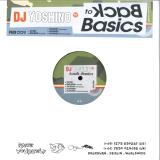
Impossibly rare slab: a capital-C-cult bit of millennial business from perhaps the most enigmatic member of the Gush Collective crew, who in the early 00s not so much redefined, but refined UKG… and then some. Alongside folks like Herb-LF and Lorenzo, Yoshino was a stalwart: releasing and remixing on the legendary but somewhat overlooked German labels Draft Recordings and Gush. It was here these cats smoothed out the UKG sound with a spliffed out vibe that fucked with the raw warm herby sounds of Tyree Cooper and QX-1; Yoshino, more than most though, flirted with sounds you wouldn’t expect to find in the UKG realm: think ethereally stuff man, I’m talking Placid Angels with the pseudo Japanese pop sensibilities of Faye Wong - but when when the cards fall down, his productions equally bang. So: splice in a bit of Serious Danger and Makesome Breaksome, light a phat one or zwei… & welcome to the wheelhouse.
‘Back to Basics' is a celebration of Yoshino as an artist: featuring a repress from our favourite Gush Collective stash (which is now so dear it makes me wish I’d better taken care of my records at after parties); three first time cuts of his on wax that we’ve curated from over the years that feature appearances from Peaky Beats and Miss Angel - and of course, there’s a killer remix from deep digging DJ and producer, Enchanted Rhythms (whose Youtube archive is packed to the veritable rafters with the most overlooked gems and updated with such frequency that it is hard to keep up). Apart from being a head’s head, Rich is also part of the Pace familia, so we're happy to welcome him to the catalogon a terrain he has endlessly kept fresh since day dot - he knows his shit here, and of course, he taps into that Yoshino flava big time.
On Stock and ready to ship
2026 Repress
SHDW & Obscure Shape are back with their second EP for 2023, following their debut release on their mothership label From Another Mind. The German duo's latest release, 'Basic Instinct', is a collection of five dancefloor anthems that provide the perfect soundtrack for any moment in a set. The EP features their signature die-cut cover and includes a digital bonus track.
'Basic Instinct' is the 12th installment of their Mutual Rytm label and showcases the pair's exceptional production skills and innovative approach to electronic music, with a mix of old and new school flavors, vivid drum programming, organic percussion and captivating melodic elements. The A-side kicks off with their signature track 'Eraser', which blends crisp drums with warm sub-bass and piercing synth stabs.
"Dancer in the Dark" takes a deeper dive into late-night territory, combining lush dub-influenced synths with a rolling acid bassline. "Disturbing Behaviour" closes the A-side and shows why the 303 has become an iconic tool for producers. Despite the sirens dominating around the breakdowns, the simple two-tone acid stab is the defining element of the track, complemented by amen-break leaning drums that hint at a UK rave direction.
The B-side goes in a different direction, with 'Memories of Nobody' taking a filtered and less aggressive approach, as echoing dub pads gather around a growling bassline and kick drum combination, topped off by brushed hats. The EP concludes with 'The Last Seduction', a track that reveals the full organic breadth of the previously hinted at Amen break. The fusion of said amen break with the warmth and familiarity of waxing and waning pads is reminiscent of the golden days of electronic music. With its expertly crafted soundscapes and diverse range of styles, 'Basic Instinct' is yet another stunning release from SHDW & Obscure Shape.
On Stock and ready to ship
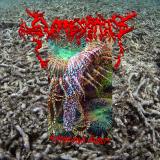
Extinction Burst! is the new invocation in album-form by Guttersnipe, Leeds’ premier and pre-eminent XFCER (XFCER: Xenofeminist crisis-energy rock)* duo. Slamming at full speed to multi-dimensional oblivion, Extinction Burst! is the most full, hidefinition lurid dream-mare yet spewed out by Uroceras Gigas & Tipula Confusa. Engineered and mixed by Ross Halden at Hohm Studio in Bradford and mastered by Rashad Becker, Extinction Burst! follows 2018’s My Mother The Vent, which garnered universal critical adoration. Nevertheless, this long-awaited follow up is more extreme: it is wildness beyond reason, splitting new tears in the reality gauze, ultimate hallucination through sound ecstasy. 2026’s Guttersnipe are evolved, mutated by 8 years of touring together and with the labyrinthine network of groups both Guttersnipe members are involved with - Tristwch Y Fenywod, Nape Neck, Petronn Sphene, Yexxen to name a few. On Extinction Burst!, as with previous material, the duo are heavily augmented with technology. Tipula Confusa's drum kit triggers chasm-causing synth pulses with thumping low end attack.. Strafing from all over the stereo field the constant shatter of the cymbals and toms feel like Sunny Murray or Rashied Ali in full flight during a John Coltrane session in 1967. Uroceras Gigas’s guitar + synth storm is by-now similarly an instantly recognised tool kit in underground music. Switching from screeching guitar atonality to intricate riffs from the black metal/Voivod hinterland to ultra-distorted synth meltdown, it’s an utterly overwhelming, essential and vital pouring-out of the full emotional spectrum. Both artists vocalise, ecstatic and primal, drawn out or yelped in pain or pleasure or panic. Alive On Tuesday begins with some of the only space on Extinction Burst! Digital crackles and tight-delays blow out into a fullthrottled death-dive into sweet opaqueness, offset by the duo’s vocals. There’s a popular believe that Guttersnipe is chaos, but over 9 mins here the group are clinical in their control of the simulated entropy. Mincing while the Maelstrom Churns’s guitar is modulated into jagged atonal atonement, duetting with the virtuoso drum patterns before it thuds into gear at quadruple the speed. Threads Of Radical Unaliveness veers close to the extreme Metal influences with blast beats and guttural vocalisations until the track exhausts itself into unaliveness. Keep Honking summons a demonic digital panic, with the duo reincarnating in real time as haunted versions of themselves, almost translating the lurid, ultra vivid, simultaneous hell+heaven of being alive in this dimension. Primordial Invagination harnesses No Wave’s dissension of normality before the structured collapse of Skra¨ckblandad Fo¨rtjusning, in which Tipula Confusa’s accelerating drums simulate a bouncing barrel of brimstone descending into a primordial gunky ooze, a respite in the middle before the record splutters to a stuttering finale, both members’ vocals out there in the neon realness, alive with crisis energy. There is nothing on this cursed earth like Guttersnipe. For over 10 years they have whirled in a wiggliness both woebegone and wonderstruck on a mission of radical mutant exaltation using rock music weaponry loaded with a queer hysterical ammunition to rupture the fabric of the known Rock universe and unleash a tendril-soft hallucinatory violence; thrumming with the bracing vividness of insect bodies, crazed with alien synaesthetic emotions, harnessing jagged excoriating illogic as a face meltingly snazzy affront to redundant macho mediocrity with the hope to break minds, squeeze hearts, explode pelvises and maybe even reset the parameters of reality. Addendum: xenofeminist : proposing and creating a world defined not only by sexual/gender equality, queer empowerment and the toppling of the racist heteropatriarchal hegemony and it’s tyranny of phallogocentric signifiers, but a philosophy of radical queerness that explodes the basic notion of embodied existence itself beyond even the human, where we see bacteria, invertebrates, reptiles, marine life, animalia in general, inanimate objects, quantum phenomena and as yet inarticulated bodies and minds as social and political equals that may inspire and inform our concepts of self, feeling and meaning as we labour to build a collective reality that doesn’t completely suck!! crisis energy : a term borrowed from the weird fiction author china mieville to describe a type of extreme concentration of power which emerges when a system or organism is pushed to it’s absolute limit; the point of rupture, chaos, entropic overload, just before it all breaks apart. rock : Rock ’n’ Roll, rock music, the devil’s music, sex, guitar, drums, voice, rhythm, riffs!
On Stock and ready to ship

Somewhere long ago in a vinyl galaxy near you We Play House Recordings released an E.P. called ‘This Is Still Belgium Vol 1’. The release was called like that because the music on it could only have been made by Belgians. Vol 2 never happened…until now. Label boss Red D has always been inspired by the rich Belgian club music of the 90’s and inevitably those influences have sneaked into his own productions, but never as clear as on the three tracks you are reading about now.
And so the original WPH series has been revived with WPH 024.5, aptly called ‘This Is Still Belgium Vol 2’. The music is situated somewhere between house, progressive house and early trance music, basically club music with soul & melody at its core.
On the A-side we find Red D teaming up with his friend Mona Lee, a soul sister who has been making waves in recent years in soulful house circles and who comes up with the vocal prowess to match Red D’s emotional trip of a track and heartfelt lyrics. Can you handle the break?
The B-side opens up with ‘Tides’, a deep hypnotic builder for late night eyes-closed dance floors and closes with ‘Papillon’, a track that came to life long ago in the minds of Telepaticos (Marcos Salon & Sandro Valcke). When Red D heard a demo version of this one the melody got stuck in his head and never really left him. Many moons later he rediscovered the parts of this one on a hard drive and got to work on his interpretation that features on this E.P. Safe to say the track holds a special place in Red D’s heart and we’re sure you’ll feel it as well!
On Stock and ready to ship

Just when you thought every holy grail must have been unearthed by now, here come Basic Unit with their deep cover late 90s masterpiece Timeline, the dankest darkcore-electronica-tech step album you've likely never heard.
Ben England and Rick Dallaway formed Basic Unit and debuted on Moving Shadow in 1997. They also moved on Nocturnal, a cult label that reached beyond D&B to platform some more experimental sounds. It was a short-lived label with some ominous footnotes — 'Several people involved with Nocturnal have vanished or are dead' reads the label's Discogs description. But in 1998 Nocturnal put out Timeline, a CD-only album from Basic Unit that cut a sharp, scathing figure against most D&B of the era. England and Dallaway embraced the album format as a chance to go deep, inhaling their inspiration from early days Autechre as much as Source Direct and boiling down the results to a steely, minimalist framework.
The likes of 'Resolution' are desolate, stark workouts that feel fractured and raw enough to align with early grime, complete with the strings, but the rhythms move in mysterious formations designed to confound like the most bloody minded electronica artists of the late 90s. Blown out bass and scattered flurries of machine gun breaks, squashed tundra drones that sound like they were pulled from 10th generation VHS b-movies and bit-crushed animal grunts fit for a Mega Drive beat 'em up. The sonics are redolent of the times, but Basic Unit chisel them mercilessly into their spartan vision, deploying brain-frying beat science with a stern restraint.
It's the kind of record that gives so much while holding so much back — a deadly tease that has flown under the radar for too long. This is the sort of shock reissue material that gets us gassed at Sneaker, and we're proud to be giving it a re-boost and a first ever outing on wax, all the better to shock you out.
On Stock and ready to ship

Established artist management company Palm Artists will be launching a new label this May. Named Palm Recs, the maiden release comes from fast-rising British-collective Girls Of The Internet in the form of the below single, Above.
The group described how Moloko’s The Time Is Now inspired them, stating: “We had the words running through our minds for a few weeks, just thinking about where they took us. It sparked us into writing Above. All the best love songs have a shot of poison. Musically, we were back at Patrick Adams meets Basic Channel.”
It’s a blissful five-minute offering, made up of rounded percussion and a warming underlying groove. Gentle kick-hat combos make up the overarching rhythm, whilst soothing vocals accentuate the track’s reflective nature. Dreamy chords soon meander into rolling key chimes to form an emotive, feel-good cut.
Girls Of The Internet have swiftly risen up the electronic music ranks since their debut release four years ago. Known for an eclectic disco-inspired sound both behind the decks and in the studio, their productions have found a welcome home on Defected, Classic Music Company and Heist Recordings in recent years, receiving support from Nemone, The Blessed Madonna and Axel Boman in the process.
Palm Artists is an East London based artist management company with over a decade of experience in developing some of the most exciting and successful musicians in the UK. Managing the likes of Gorgon City, Sonny Fodera, Adelphi Music Factory and a myriad of other industry heavyweights, the company has received several accolades over the years including; the BBC Sound Of 2019 while releasing multiple chart-topping singles, critically acclaimed album campaigns and delivering global tours for their roster. 2021 will see Palm Recs release a series of singles and remixes from some of their favourite up and coming acts, with producers such as Preditah, Fideles and many others soon to be debuting on the imprint.
On Stock and ready to ship

Ever more secure in her chosen path, Nídia radiates gloriously in all moods for the dancefloor in this, her album number 3. Consistent with her fiery nature and mixed roots in Guinea-Bissau and Cape Verde, »95 MINDJERES« is framed by the decisive role of women freedom fighters in PAIGC's struggle for the independence of Guinea-Bissau from Portuguese colonial domination during the 1960s and 1970s. Among others, the names of Teodora Gomes and Titina Silá shine brightly as leaders of a group of 95 women, providing them with military training and political awareness.
The album starts righteously with a question-themed banger; ambiguous in its sense of curiosity, even mischief, or perhaps it is a passionate commentary on the hard atavic realities of the world. It sets the tone for the wonderfully bouncy »Deep«, pads gently pulling at the legs, longing for action.
All of Nídia’s work has been basically concerned with pushing forward, instant piece by instant piece, a particular, some would say peculiar, view of what culture is, what role it plays in social life. She exercises her experimental inclination within the groove, interweaving percussion sequences and melodies in a very lean way - track durations are generally within range of what many would call "sketches" but the music just says what needs to be said. Beats are never artificially extended for the dancefloor, there's not a hint of that culture in »95 MINDJERES«. Closest would be "cp", an actual drum tool. Ideas are in motion now. And they fly out during the following »Mindjeres«, marked by gentle stabs as if counting the steps skyward. Unexpected turns near the end make final songs "abcd" and "Paradise" accentuate a longing sensation.
Stuff is ready, bodies alert, mind is sharp with warmth and fellowship, detoxed, we can now hear the overall tone of the album, a clear view on self nurture, freedom and responsibility. We believe it is sustained by Nídia’s progressive interpretations and approaches to promote harmony in never-ending family entanglements, reconcile notions of ancestry and uproot, and try out means to resist and fight. In praise of Love.
On Stock and ready to ship

Completing Kranky's chronologically reverse reissue program of the earlier loscil albums on vinyl, the 2001 debut album is issued on the format for the first time with the addition of three bonus tracks from the same sessions that produced the original release.
‘’Triple Point was my first full length album under the loscil name, and it was my first with kranky - a relationship now 25 years old. This reissue is as much about celebrating that relationship as it is about the music. I am extremely grateful for this journey. Arguably, none of it would have happened without this release.’’
“Pay no mind to the label and pay no mind to the producer's locale (Vancouver isn't Cologne or Detroit); Triple Point is one of the finest—and most varied—ambient techno releases of 2001.”— AllMusic
"Finding itself nestled halfway between the endlessly spacious mechanoid constructions of Berlin's Basic Channel and the drifting expanses of Labradford, Scott Morgan's work as Loscil never ceases to impress with its deft use of technology and percussion.”—Boomkat
On Stock and ready to ship

Vol 4[21,81 €]
The second ultra limited installment of Richard Norris' journeys into the outer reaches of dub has landed.
Mixing influences from roots reggae to On U Sound to Basic Channel and beyond, these six tracks offer warm and lush sonic landscapes to sink into.
On Stock and ready to ship

– Meow, Doc! Are you serious?!
– Hopefully, now we'll be able to program the cognitive processes of different creatures.
– The intranasal mutagen?
– With consciousness, too!
Spacelunch devoted all of his spare time to developing the virus. Once in the body, its molecules activate: they replace the configuration of neurotransmitters and start evolving independently. A small dosage of vapours reactivates brain navigation, whereas readings are taken from a nano-oscilloscope and sent to a tablet for further analysis. Augmented reality has long gone beyond virtuality, ladies and gentlemen!
The simulation of the collective mind has undergone a series of public tests initiated by enthusiasts from the Venus Biomolecular Institute. After a data leak from the lab's journal, the dangerous technology could have fallen into the hands of Aerospace Corporation, but luckily was intercepted by the Meta-Warp operational unit. Putting the development on pause, they shut down access to any information about the project. It remained unexplored, but the Professor's inquisitive mind wanted to understand the discovery that could change the future.
Order now. Collecting orders for repress.

Effortlessly dismantling the barriers between R&B, soul, funk, disco and jazz sounds, MF Robots present long player ‘Break The Wall’, on BBE Music. Astonishing musicianship, pristine production and top-tier songwriting, ‘Break The Wall’ immediately calls to mind those iconic American rhythm sections of the 70s and 80s. The music is energising, uplifting and the potent result of a highly accomplished musical partnership maturing, growing and hitting their stride together in lock-step. Jan Kincaid and Dawn Joseph met as members of one of the UK’s most successful Acid Jazz bands, which influenced Mark Ronson, D’Angelo, Jamiroquai, Erykah Badu and The Roots to name a few. Founding the Brand New Heavies was an important chapter for Jan, but once he and vocalist and songwriting partner Dawn began working together, the chemistry was instant and irresistible. It was time to turn the page, and soon MF Robots was born. “When we made our first album, we didn’t have a band as such. We basically made a lot of the record at home and called on other musicians as and when we needed them. Our sound was developing organically, and when we finally released the record to great critical acclaim, it was time to get out on the road,” says Jan. “We put together a band of like-minded young musicians, playing intimate gigs and big festivals all over Europe and beyond, growing tight as a unit, so that when it came time to think about making this, our second album, we knew we had an extra level of musicianship full of personality that could realise our vision.” Inviting band members Alex Montaque (keys), Naz Adamson (bass), Mark Beaney (guitar), Jack Birchwood (trumpet), Ben Treacher (sax) to improvise and contribute their own ideas over song-sketches laid out by Jan and Dawn gives ‘Break The Wall’ a special sense of off-the-cuff brilliance. Even on the polished final product you can detect a collaborative, fluid and unhurried approach to production that’s all-too rare these days. There’s guest performances from bassist Gail Ann Dorsey (‘The Love It Takes’, ‘Make Me Happy’) and guitarist Cory Wong ('Shine', 'Make Me Happy'), the former a top-flight session player who’s collaborated with Lenny Kravitz and David Bowie among others, the latter a member of the incredible Vulfpeck collective and an accomplished solo artist in his own right.
On Stock and ready to ship
Welcoming Hermanez to Satya has naturally induced the label to transcend musical boundaries by opening up the creative parameters to more electronic artistry. Taking spring by storm, Hermanez has adopted 009 with grace and unequivocal individuality. With his full-body thrilling tracks, he empowers the listener to Rewire their listening programming, refreshing their palette with a high-energy burst of sexy flavors.
“The urge for freedom during the lockdown was a big thing for me. I personally had a production burst. Everyone needed to deal with what happened, so I did it in my own way by purely doing the only thing that kept me moving forward: creating a space to stock a feeling. Rewire is a story that is beyond words, as it is made up of healing sounds. Although there were cultural contradictions these past years, what mattered most for me was and still is people’s love for music. Overall, 009 was inspired by the beautiful collision of people and their experiences.” - Hermanez
Through defined grooves, rolling bass lines, granular uplifting synths and pad use, Rewire is literally wired with deeply hypnotic and mystical atmospheres. Hermanez truly strikes and presents us with four dance floor weapons.
When the body starts moving
And the mind stops racing,
The heart ends up pumping
And a smile keeps spreading.
Our programming is now rewiring
Our perspectives now expanding,
With all 5 senses heightening
Because of what is resetting,
Recalibrating and realizing.
Rewiring to a new reality.
- Ty Alexander
On Stock and ready to ship
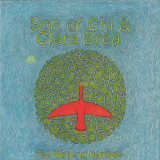
Son of Chi returns to Astral Industries, alongside Spanish artist Clara Brea, for the collaborative release of AI-29. A product of fate, chance experiments, but most of all, sensitive artistry - ’The Wetland Remixes’ exists as a confluence of two kindred musical spirits, a wayfaring epic that draws together a rich archive of ecological field recordings, live instrumentation and higher inspirations.
Ahead of Hanyo’s concert at Calma (Madrid) at the end of 2019, the curators organised a special dinner and arranged the meeting of Clara and Hanyo. As Hanyo recalls,“It was like stereochemistry. There was an instant match and understanding, and basically we decided in a split second to exchange recordings and to collaborate on future live and studio experiments.”
The auspicious meeting of the two ignited a remote exchange of materials and ideas, as the world descended into a series of pandemic-related lockdowns. The first of said recordings included the stems of Clara’s ‘Wetland Project’ - a site-specific audiovisual project originally produced for Eufonic Festival (Spain), using field recordings from the Ebro Delta nature reserve (one of the most threatened regions of climate change on the Iberian peninsula).
From this initial impetus, Hanyo began working on the first sketches of the album back in Rotterdam, Netherlands. Just like their meeting in Madrid, the project developed naturally and spontaneously with extraordinary ease. Later, Hanyo started adding field recordings from the Magic Cave and Wetlands of the ‘Kallikatsou’ (Patmos, Greece) as well as organic and acoustic overdubs, featuring bass, drums, percussion, guitars, oud, piano, hammond organ, wurlitzer, flutes, bells, and mouth harp.
In the distance, the sound of birds peak through the effervescent wash of the wetland soundscapes. The pass of running water flows deeper into a land full of secrets never told. On the strike of dusk, the silhouettes of shapely trunks and foliage melt slowly into the impenetrable darkness. As darkness passes, light emerges, with exquisite moments of tranquility that seemingly emerge from nothingness.
Beneath the shimmering veneer of textures, wildlife and melodies, one may hear the deeper references of ’The Wetland Remixes’. With credit to Clara’s input, for Hanyo the album process became a kind of refuge, and ultimately inspired the return to the core of Abstract Sound - what the Sufis call“Saut-i Sarmad.”Such references allude to the spiritual quality embedded in the music - the autonomous process of self-expression, the great mystery. Hanyo: “An ambience like this cannot be created by routine. There is no blueprint. The music has to find you. It’s like a blessing if it happens. You should not interfere, just observe and be impressed...”
Deep, luscious mind trips as per the classic Chi sound, ‘The Wetland Remixes’ beautifully correlates the interconnecting dots of geography, ecology, and mythology’s forgotten lore.
On Stock and ready to ship

The mysterious trio Pandilla LTD provide the first release on Ozy, a new sub-label run by Miguel Melo from Lisbon’s Carpet & Snares family. Never ones to tread the easiest path, Pandilla show off their full range of moods and tempos on this 4-tracker, opening with the jazzy and glitchy breaks of vignette ‘Beat Untitled’. This leads into ‘aWARe’, a downtempo epic of cinematic ambience and released tension that contrasts with the more dancefloor-ready cuts on the B. With its patient dubby tick-tock, ‘Mind Trick’ feels like a long-lost Basic Channel side-project, while the more extrovert ‘Trying To Go’ closes things in style with a shimmy and a shake.
On Stock and ready to ship

Every now and then a release comes along which is destined to unite, bring down the walls and basically, be a force for good. Your Kissing by Belcampo does just that, and with a style and panache which defies it’s lo-fi, handstamped limited white label aesthetic. The beauty of Your Kissing is in the way it successfully melds together elements of deep house, disco and the French Touch sound to form a track which will appeal to anyone who simply likes decent music. Belcampo keeps things stripped back just enough to give that beautiful, rolling, hypnotic atmosphere, whilst remaining lush, warm and uplifting, constantly teasing us with the repeated filtering guitar and string hook. Legendary British singer and songwriter Elisabeth Troy provides the cherry on top with her sweet vocal line giving us the hook which will get under your skin in all the right ways.
In addition to the main vocal mix we have a Belcampo Remix going heavier on the filters and pumping groove, calling to mind the glory days of Cassius, Motorbass and Super Discount with that distinctive feel-good French sound of the 90’s.
Closing out the EP we find Delisei which cranks up the jackometer for a peak time slice of looped-up heads down filter madness guaranteed to nice up the dance.
On Stock and ready to ship
Since the release of DAMAGED in 2024, Michael Fiedler aka GHOST DUBS has been surfing intensifying waves of adulation, earning praise from such diverse underground legends as Justin Broadrick (Godflesh/Jesu), Regis, Stefan Betke (Pole) and Steve Von Till (Neurosis). With second album Oblique, his mastery of sculpting sound waves results in a spellbinding set of alien soundscapes: larger in scale, richer in tone and considerably more cinematic than its predecessor. Lower, deeper and moodier, its cloudy abstractions, shadowy pulsations and submerged rhythms find Fiedler reaching further into his own sonic void, crafting blurred melodies and addictive narco loops into something simultaneously heavyweight and hypnotic. Album opener "Low Times" sets the atmospheric pressure to maximum, resembling a dream date between prime dirt-house era Andy Stott and Berlin dub-tech pioneers Basic Channel. From there, Oblique descends into a series of enchanting mood scenes: the furtive, balletic gyrations of "After All", the haunting ambience and buried heartbeat throb of "Soft Collapse", and the noirish atmospherics of "Blackout Dust", which worms its way into the mind like some forgotten David Lynch scene. The spirit of reggae is more distanced here than on DAMAGED, but the ghost of Jamaican dub still permeates these foggy soundscapes, particularly on "Bombed Suburbs", where Augustus Pablo-style melodicism is chopped, screwed and slowed into a magnetic lock groove. Superficially minimal but maximal in its minute detail, Oblique is a record of contorted reflections, mesmeric echoes and tantalising audio mirages. By the vaporous mist of closing track "Almost a Structure", obvious rhythm has been craftily filtered away, leaving a blurred and blunted residue full of mystery and implied narrative. Dense in the best possible sense and crushing when played loud yet equally potent played quiet, Oblique imagines dub techno burning its own rigid rulebook: sensual, funky and concussive rather than dry or alienating. "Second album from electronic producer Michael Fiedler's GHOST DUBS project. "Follows up from the highly-acclaimed 'Implosion' album with The Bug from 2025. "Debut album 'Damaged' sold out its three initial pressings and has just been repressed "Michael Fiedler recently scored 'Sound of Falling' which won a Cannes award in 2025 and made the shortlist for an Oscar, too.
Order now and we will order the item for you at our supplier.

The second volume of this (already) cult series of British proto-metal compilation albums. Every artist on here was a regional band in their local underground scene of the late 1960s/early 1970s. The main thing that differentiates this series to any other, is the fact that none of the artists included had any kind of commercial release during their existence (apart from Fusion Farm, who self-released an extremely rare private press LP titled 'Rush Job' in 1971). All the artists were discovered after extremely lengthy searches of old music magazines, local newspapers, concert posters, government agencies.... By any means possible! It was a lot of work, but the results speak for themselves. The one thing that joins all these bands together (apart from being exclusively British), was their desire to play as loud and heavy as possible. This was a magical era in rock music, where Black Sabbath were the undisputed kings, but the industry simply didn't want to recognise the countless other band that existed in their gloomy wake. All of the recordings on Yeah Man, It's Bloody Heavy! are taken from demos, whether originating from crusty old 1/4 inch tapes, dusty acetate discs or third generation cassette tapes. Basically, whatever format was available. As a result, sound quality varies, though we did our utmost to get these precious artefacts sounding as killer as possible. For instance, Bonehead were close friends of Led Zeppelin. Their guitarist/vocalist Paul Lockey had previously played with Robert Plant and John Bonham in the Band Of Joy. Their track, 'Free To Escape', was actually an audition tape for Atlantic Records, which had been instigated by Robert himself. Unfortunately, the band broke up not long after the recording. So, their recording is top notch, whereas others were taken from rehearsal tapes (such as Fusion Farms' - Keys To Hell). But the main thing is, there's a spirit that unites them all. Sit back, roll up a fat one and let your mind be blown by the obnoxious sounds and sheer weight of vintage gravity that is: 'Yeah Man, It's Bloody Heavy! Vol 2'.
expected to be published on 04.09.2026

Off the back of an epic 3 part triple album “Sidequests”, Session Victim kept the collaborators in tow with “The Disconnect” EP, featuring the talents of Kenneth Scott, Rossano Snel, and Quarion across 5 tracks. It’s the Empire Strikes Back of Rhythm Section EPs – following up from widely acclaimed and best seller “Basic Instinct”. Balancing funk elements of breakbeats, bass guitar, rhodes and mellow synths with finessed modern production, the duo have assembled another masterclass in precise yet characterful house music.
The record begins with “Hey, Activate!”, oozing funk, ambient pads, a groove bassline and optimal arpeggiated synth noodling sets the tone for the whole EP. “Dream Theory” is quite it’s namesake, with a distant sax solo, tremolo sine motifs and a sumptuous lick combining piano and the Session Victim trademark bass guitar.
B-side opener “Flotsam” comes through with smooth breaks and incidental style sampling harking back to the vibes of Herbert, with slow filtered chord groove referencing the vibes of early French Touch masterminds Cassius.
Progressing into more relaxed territory, still ideal for dancefloor moments: “Open Minds” is indebted to old soul jams with bongos, muted guitars and rhodes followed by “Loom”, using similar elements with a vibe akin to early Bonobo.
This EP is testament to Session Victim’s mastery of housemusic, being their 40th EP and standing firm in a crowded scene. Their consistent application of production precision is carried by an emotional heart of gold that you can hear in every record they make. Not to be missed.
Order now and we will order the item for you at our supplier.
Jim O'Rourke and Jos Smolders teamed up again after their first collaboration, Additive Inverse from 2021. Over a period of three years, both artists worked in sessions of a day, each in their own studio.
The result is sometimes like a warm cloud of sounds, suddenly breaking up into a rhythmic, irregular pattern, after which it dives into introverted mindsets. The music is in constant flux
The project followed the same workflow, but this time Jim took the lead and kicked off with a salvo of sounds that he extracted from his Kyma System. Both Jos and Jim were quite interested in the spectral character of sounds. Jim applied Kyma algorithms while Jos granulated his basic recordings. That way, textures are built, quite slowly moving from warm to gritty, from hard surfaces to deep sonic wells.
expected to be published on 30.05.2026

POD & Edward Richards return with their second release on Kinetic Vision, the ‘Polar Phase’ EP, following their much lauded ‘SQZR’ EP. A landmark release for the label, ‘Polar Phase’ marks the first of a series of records to come. Set at a tempo of 100 BPM, the duo mix minimalism, broken beats, world music percussion and psychedelic synths to weave a tapestry of darkness, albeit more zen than melancholy.
The opening track ‘Mind Machine’ is propelled by a broken beat and flurry of hard hitting snares. A swirl of synths abound while a tribal incantation is whispered in the dark. The title track ‘Polar Phase’ takes us on a pulsing journey of techno hypnotism, with icy synths threatening deep underwater immersion. The B side ‘Flux Growth’ elicits an obscure playfulness with its punctuated kick and slowly building chaos. Finally the Sub Basics remix of ‘ Polar Phase’ lifts the tempo and we find ourselves in a bliss of pure dancefloor hedonism.
POD & Edward Richards have crafted a rich textural sound with slow paced hypnotic grooves, creating deep absorption for both DJ and listener alike.
Order now and we will order the item for you at our supplier.

Trouble’s absolute classic: the legendary album from 1990 and the pinnacle of Trouble’s impressive career. Heavy Metal was never better than this! Includes a live bonus CD recorded in Dallas, Taxas (USA)! Trouble’s debut album did great things for Metal and remains one of the darkest, thrashiest Doom albums to date. A lot of things can change in six years, especially when you’re talking Metal and the dates are 1984 and 1990. The decade may have changed them, but not in a way that suggests decay or a decline in the quality of their resolve or their skill as musicians and performers. On the contrary, Trouble’s 1990 self-titled release is arguably their most mature, boasting a fleshed out sound with unparalleled songwriting, a great production, and the time-crafted vocals of Eric Wagner which had improved major in the years since their previous efforts. All of this culminates in what is my mind the most “complete” thing Trouble ever created. From the mid-paced chug of a killer opener in “At the End of My Daze” to the last notes of “All Is Forgiven”, I can’t see filler or anything resembling a weak link. The riffs here are some of the best ever written, by Trouble or anyone else; every song has a manically awesome main riff that demands a display of headbanging. Riffs are undoubtedly the point of focus here; they make the songs, and they’re a timeless variety of great. Also, the interplay between guitarists Bruce Franklin and Rick Wartell is some of the best lead work you will ever hear in Metal. Trouble basically reinvented themselves with this release, and while I think it was a fantastic rebirth, those who aren’t so keen on the laid back stoner vibe they chose to adopt may not see it as a rejuvenation, but a step back (they did go from doom and gloom to collectively embracing their inner acid dropping free love hippie, after all). But the Metal remained fully intact! And as I’ve said, I think this is Trouble at their best. This is originality and innovation at its best, it is supreme quality. A leader of bands paves the way and then steps aside to create something that will serve as an example of how to improve upon an established formula: that is, by doing it really damn well.
expected to be published on 09.01.2026

US Black Friday 2025 Release. There are very few albums in the psych/punk/hard rock/private presses strata that garner the sort of universal awe and accolades that Fraction’s almighty Moonblood LP does, and even fewer records in the world that could be dubbed ‘Christian Rock’ incur such fierce devotion. Indeed some records just meteorically lift themselves out any genre tag with brilliance and sheer defiance--and Moonblood is surely one of them. Based in LA, Fraction was a ragged collection of working-class musicians--the line-up was ringleader Jim Beach--vocals; Don Swanson--lead guitar, Curt Swanson--drums, Victor Hemme--bass, and Robert Meinel--rhythm guitar. Beach himself describes those early days: “The guys met through various acquaintances that we had in LA. All of us had been in bands before, but were seeking something with more teeth. We had a small studio in an industrial complex in North Hollywood and started practicing sometimes as early as 4:30 AM. We all had day jobs, so we did what we could.”
Amazingly the recording sessions for the album were recorded similarly on the fly, as Beach further states: “The Moonblood recording took place at Whitney’s Studio in Glendale, CA, early in 1971. On a strict budget, these songs were recorded in less than three hours—all of them “one takes.” We played, all 5 of us, simultaneously-- there were no studio effects, no overdubbing or any additional sound effects added. Basically what you hear is considered ‘old school’ recording.”
This workmanlike description in no way prepares one for the pure tortured genius the session wrought. Particularly noteworthy is Beach’s vocals—as commonly stated, the spirit of Jim Morrison is conjured in his deep baritone, which gives way to unparalleled pained howls, at times bathed in delay which trails into the abyss. Fascinatingly enough, Beach cites the much punker Love as his fave LA band over the Doors, and also gives influence-nods to proto-everything rockers The Yardbirds and to Dylan, whose dark word tapestries surely inspired Beach’s lyrics (though lines from The Doors’ “L’America” pop up on the LP) Whatever the case, the man clearly has a vision, as even the stark sleeve concept is Beach’s own. Equally as integral to the Fraction sound is lead guitarist Don Swanson—his blown-out fuzz riffs set a template for what is now commonly known as “stoner rock” or “acid punk,” and his solos consist of jagged, wah-wah-ed shards of notes, with his amplifier clearly pushed to the limit.
Beach says: “Don’s guitar was always my driving force and he did everything he could to keep it over the top. You’d never know that (his sound) was coming from an old, broken down Esquire. Don kept it alive!” The other members contributions shouldn’t be underappreciated though-- drummer Curt Swanson keeps things at a constant simmer, and then boils over when the whole band launches into snarling glory. The band and LP as a whole equals something indescribably intense from start to finish—comparisons to the Detroit late 60s high-energy bands like The Stooges and MC5 abound, as well as the sort of late 60s damaged spirit lurking in biker clubs and disgruntled Vietnam vets. The song cycle on side 1 of the LP in particular cuts to the emotional core, with severely charged dark lyrics like “Extend your thumbs and burn the darkness out of her.” Which brings us to the Christian aspect--it often can confuse listeners. The Fraction/Beach world of religion is complex and perhaps a bit pagan/sinister than most---fire and brimstone, temptation, and the truth-seeker being burned by this hell on earth—or perhaps as Beach himself best put it: “Speaking for myself, as a believer, it’s been a progressive experience since my childhood.
I think we’re all basically driven to live more than religion.” The album was pressed in a run of but a few hundred to little attention in the day, but now inferior bootlegs flood the marketplace, and originals of Moonblood command thousands of dollars. So enjoy this all-inclusive reissue, which also features for the first time on vinyl, 3 lost tracks-- like the more acoustic-minded “prisms” and “dawning light,” as well as the proto-metal choogle of “Intercessor’s Blues.”
expected to be published on 05.12.2025

"The Bad Seeds and Zakary Thaks were mid ‘60s Texas garage rock bands formed in the wake of the British Invasion, influenced by The Rolling Stones, Kinks, Yardbirds and others, becoming top local live attractions at a time when the 13th Floor Elevators and Moving Sidewalks were leading the way into psychedelia. In late 1966 Rod Prince on guitar and Roy Cox on bass from Bad Seeds joined up with David Fore from Zakary Thaks on drums to create a new band out of San Antonio featuring two lead guitarists. Todd Potter filled out the quartet on second guitar and they chose the name Bubble Puppy, taken from Aldous Huxley’s 1932 dystopian novel Brave New World. Huxley was an early advocate of LSD, appropriately. In 1969 Bubble Puppy scored a top 20 hit single with “Hot Smoke & Sasafrass” which led to their LP “A Gathering Of Promises”. International Artists, the legendary Texas label that previously had unleashed mind expanding classics by the Elevators, Red Crayola, Golden Dawn and others was a perfect fit. After the LP and additional 45s didn’t repeat the success of “Hot Smoke & Sasafrass” the band hooked up with Nick St. Nicholas of Steppenwolf as their new manager and moved to Los Angeles. A new band name was in order, Nick St. Nicholas chose Demian, title of the 1919 novel by Herman Hesse. His books were popular with the counterculture at the time and had provided Steppenwolf with their new name after they changed it from the Sparrow and hit it big. Demian recorded the LP live in the studio at the Record Plant in one midnight to six session. They had their arrangements fully realized, allowing them to combine live show energy and economy with to-the-point delivery suitable for repeated listening. No doubt they were aiming for pop hit success, using proto hard rock skills in a radio friendly way without compromising the heavy guitar moves. The vocals have echoes of the earlier Bubble Puppy style in spots but are more melodic with vibrant harmonies reminiscent of Moby Grape, Buffalo Springfield, James Gang… at times flashing on Steve Stills/Richie Furay westcoast without being too sweet about it. It works terrifically when the radio friendly voices top off killer hard guitar ensemble action. Early hard rock that is too bluesy flashy can get tiresome with repeat listening, especially if overdosing on guitar solos with the band relegated to the background… Demian keep it interesting with inventive song structures allowing all four players to integrate constantly into an ever changing but focused whole. This LP is a grower, despite the basic two guitars, bass and drums lineup and no frills production you reach a lot of different places during the ride. Demian is deadly hard rock, a perfectly organized vibe straddling live energy and crafted itinerary, amongst the first obscure major label killers that commanded premium $$ with collectors even way back in the late ‘70s. It gets you there every time, even half a century later!"
expected to be published on 31.10.2025
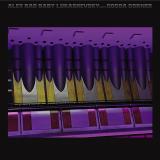
OOOOH! by Alex Bad Baby Lukashevsky with Cocoa Corner (2025)
Celebrated veteran of Toronto’s music scene, known for his boundary-pushing approach to folk and avant-garde music, twists rock music into strange and brilliant new shapes with the help of young jazz players, U.S. Girls, and his own immensely talented son.
OOOOH! is hard on the outside and soft on the inside. Made in the spirit of unity,
humanity, and poetry — disobediently renouncing the glory of personal triumph for the
generosity of an honest experiment. On the last track of the album you’ll hear “Or do you only ever never want to make a single enemy? / That’s not freedom or humility / It’s nothing, honestly.” Oooh, that's a bad baby!
A celebrated Toronto songwriter and performer, Alex Lukashevsky has always been disobedient. Which simply means, nothing is off the table when he’s looking for his
poetic voice; when trying to find the realest I of the teller. As he sings on the lead track “that musician that’s dead” The musician is radical/ it’s the world that’s demented/ listening with their eyes, the music looks dented/ they’re over-represented.
OOOOH! was recorded in January 2024 at Sound Department in Toronto, engineered by Patrick Lefler (ROY), mixed by Grammy-nominated producer Matt Smith. All the songs were tracked live off the floor in two days, with one extra day for recording vocals, to keep the recording fully alive and breathing. As leader of Deep Dark United, as a solo performer, and a sideman in Brodie Wests’ Eucalyptus and Luka Kuplowsky’s Ryokan Band, Alex has been an outsized influence on the Toronto music scene that spawned acts like Broken Social Scene and Owen Pallett. (Pallett, who has toured with Lukashevsky, went so far as to record an entire album’s worth of Alex’s songs, backed
by a full orchestra.)
Lukashevsky has approached each of his albums and projects as something completely new, using only the musical boundaries he creates with each song. Even when he
has recorded songs with nothing but his voice and his own acoustic guitar accompaniment, the results are never “stripped down” or “back to basics,”
Gong! How do you get to heaven / have fun! have fun!
It’s cool to approach music as a game of “spot the influence”; Burt Bacharach-meets-Black Flag; Lana Del Rey-meets-LCD Soundsystem etc. Glorified mash-ups are promising because of their conversational nature. But they can turn us into hyperboreans; blowing cold air beyond ourselves while doing what we can to remain warm. To devise a game or a narrative is to have a winner and a loser, but we all know that just as you win/ so you lose. And does anything really change? Alex Lukashevsky and Cocoa Corner are more at ease drawing blind contours or playing an old game like consequences. They let things add up without knowing particularly how. Cognition is recognition.
Lukashevsky, in addition to writing all the songs, plays guitar and sings on OOOOH!, doing both in ways that are soulful and spikey at the same time. Joining him on guitar and vocals is his oldest child, Charlie Lukashevsky, who, at 23, is already a talented performer and songwriter in his own right. Cocoa Corner also includes Aidan McConnell, an in-demand drummer and composer, Jack Johnston, a jazz bassist and Barry Harris acolyte, and percussionist Evan Cartwright (The Weather Station, U.S. Girls, Cola, Tasseomancy), who plays steel pan and marching drum.
Working with his son and with other younger musicians is central to the album’s
unpredictable aesthetic. It reinvigorated the sound in unexpected ways. Lukashevsky says, “I had to reconsider my own instincts. I had to deal with being 99 years old.”
In addition to these performers, the album includes a tasty contribution from Meg
Remy, the visionary musician and producer who is the leader of the critically acclaimed
project U.S. Girls. Remy duets with Lukashevsky on the imagistic and sprawling album
closer “things keep happening.”
About that album title: OOOOH! is taken straight from “that musician that’s dead” an
arch and unhinged comment on the exertion required to navigate a lifetime of music making.
Lukashevsky’s delivery of that one emotive word is a kind of cultural posture, but also a
hundred percent primitive expression. The impact is never less than visceral. His vocal
delivery ranges through rich baritone blues to keening falsettos to a kind of sprechstimme that periodically steps out from the music to grab the listener’s shirt. He
doesn’t sound too nice, but he is sincere. When life gives you lemons lament.
For OOOOH! his first official full-length album since 2012’s Too Late Blues, (a collection of knotty-yet-effervescent tunes built upon the enchantingly serpentine harmonies of Lukashevsky and his vocal collaborators, Felicity Williams (Bahamas, Bernice) and Daniela Gesundheit (Snowblink, HYDRA)), Alex has once again broken apart and rebuilt his own approach to music. Or rather (because that sounds too over-determined), he
has allowed his music to build itself into strange new shapes that only fleetingly and
coincidentally, but happily, resemble anything that might be called rock and roll. There is some editorializing within the song’s lyrics— Lukashevsky even cheekily contributes to the “spot the influence” game with the line “Muddy Waters, Rite of Spring!” a funny preemptive strike against anyone already reaching for some variation of avant-blues to describe what the song is up to here. In fact there are many names checked on this record (literally and in spirit); they are the lily pads that trace the path of this expression! Palestrina, Peter Pears and Benjamin Brittain, Andrés Segovia, Stravinsky, Lotte Lenya, Alice Coltrane, Skip James, Chuck Berry, D’Gary, Betty Carter, Mukhtiyar Ali, Chuck D, Yoko Ono, Hailu Mergia, David Bowie, Jane Siberry. rhythm is a skeleton mansion / haunted by melody / feckless prodigy / the world is under a spell / cast by some demon angel / Practice day and night / Try as hard as hell / no one can sing that well Musicians are often worried by the way in which they are prepared to fail rather
than how they would like to succeed; it’s such a deep concern that it tempers their creativity and shackles their process. Current cultural proclivities, tend to comfort a certain kind of artistic failure and abnegate another kind. How many testimonials, full of heartfelt care and investment, have you heard for Taylor Swift, and yet a craftsman like Chris Weisman is often dismissed easily as though he’s doing something anti-social. what’s throwing itself in my ears and my eyes / arrogant devil ad hominem christ.
The music you will hear on this recording veers off in multiple directions at once,
and features a rock and roll spirit with a divergent heart. This is no sclerotic clomp of the Average Rock Song, but in fact a flood of humanity in all its darkness and moodiness and unpredictability. If most performers make songs that are like sports cars or pickup trucks to drive around, Lukashevsky has built something more akin to a rowboat in a tree: it’s weird and beautiful.
expected to be published on 24.10.2025

Biometric-Audio presents its second release: Serial Experiments Lain, a five track musical project characterized by an artistic virus in which stories unfold through minimalistic music, science fiction and industrial sounds, with very dark atmospheres at times. The album relates with a wide range of listeners. The idea was born from the inspiration of two mangas, Serial Experiments Lain and Ghost in the Shell, merging their elements into a single creative vision. A connection between mind and technology.
Order now and we will order the item for you at our supplier.

SHDW's Mutual Rytm imprint is back with its third release of 2024, marking a full label debut from Sonic Propaganda with their 'Native' EP.
Sonic Propaganda comes from the collaborative minds of Earwax and Rosati, a pair who favour dark and intense techno sounds and take inspiration from Jeff Mills and Robert Hood. In the studio, they blend analog and digital technologies into smoky warehouse atmospheres and immersive journeys that connect with listeners on an emotive level, and this full EP lands following their contribution to the third instalment of the Mutual Rytm's Federation Of Rytm compilation series in February.
The powerful 'Native' opens up at high speed with tightly coiled drum loops that never let up. Sleek metal percussive sounds peel off the grooves and lock listeners into a perfect state of hypnosis. 'Soul Pressure' is just as absorbing, with a tense bassline keeping you on edge as the train-like drums march under incendiary hi-hat ringlets. There is plenty of perfect machine funk to 'Terminal', which has more rusty synth textures and chopped-up vocal fragments humanising the turbulent grooves. 'Basic Path' brings an extra skip to the kicks as they enter, scuffed up and flowing just above the groove, while vocal pulses and twitchy synth modulations bring the detail. 'Body Empire' closes the vinyl package with a deeper vibe and pensive synths that add warmth and soul to the brilliantly mechanical grooves, while digital bonus 'Acid Riot' closes with squelching acid lines amongst a swell of analog crunch and laser-sharp percussion.
Order now and we will order the item for you at our supplier.

Unreleased electronic / jazz / madness from two titans of jazz and experimentation: JOHN SURMAN and KARIN KROG.
I could now write a load of blown up puffery about how amazing this is, but everyone does that, and a lot of the time it’s all a load of bollocks. But basically this was sent to me by Karin / John when I asked if they had anything hanging about that had not been released. This came through and blew my tiny mind. Like something from prime Annette Peacock “Pony” period. Here is what John Surman said…
John Surman writes:
Back in 2012/13 there had been some talk about a big futuristic open air urban dance/theatre production for about 80/100 actors/dancers with lasers and all kinds of lighting effects on different stages. I was invited to get involved and, together with Ben and Karin, we eventually decided to get to work on some ideas. I think that the original plan was that in performance there would be a mixture of live music and electronica.
Not altogether surprisingly, bearing in mind the complexity of the project, it never moved forward and developed into anything more than an interesting idea. It was probably over ambitious & I guess the funding never came through.
The only information I that I can find relating to the production refers to two silent movies made in 1927/1928 by the filmmaker Eugene Deslaw, entitled `La Marche Des Machines´ and `Les Nuits Électriques.These were clearly intended to act as inspiration for the project.
After months turned into years it became obvious that the project was going nowhere, and so the recorded music laid around gathering dust until Johnny Trunk asked Karin if she had any interesting music that he might be interested in releasing. One thing led to another and so, finally, Electric Element found a home!
For anyone interested in the equipment used this will have to be an approximation since the memory might be playing tricks. Karin was probably using a Yamaha Rex50 f/x unit, a Roland VT-3 Voice Transformer and an Oberheim Ring Modulator. I was playing Bass Clarinet and Contrabass Clarinet through various f/x units together with a Yamaha WX5 wind synth. All the instruments and voice were also processed through Ben´s equipment. After writing this I asked Ben for his recollections and he came up with the following:
John, Karin and I created this music in 2 or 3 days in the winter of 2013 at their studio in Oslo, Norway. I followed up with another 2 or 3 days of mixing, editing and post-processing . We kept a collaborative, improvisational and free-form approach to the sessions. I grew up immersed in music such as Cloudline Blue, the 1979 duo album of Krog/Surman, and this felt like a similar approach. I have mixed sound for many of their live duo concerts and I would use effects and electronics as an
accompaniment and counterpoint to the performed music. The relation of organic and artificial sound sources in music has always fascinated. In this case, I used some contemporary digital signal processing to introduce my own aesthetic into the conversation, in particular using granular synthesis to recombine small 'clouds' of sound into alternate forms. Some of the software tools I used included Ableton Live, Max/MSP and Reaktor.
Order now and we will order the item for you at our supplier.

Over and through the hot cement of North East L.A., an almost-dry riverbed winds like a snake through the city. Coyotes lap at its trickling stream by moonlight, as pedestrians rush past it by day without a second glance, their thoughts tangled up in the distractions of life in a sprawling metropolis. Here, amongst the many avenues and gentle hills, we find Coffin Prick (alias: Ryan Weinstein).
Loose Enchantment, this latest Coffin Prick record, is music conceived of in a different frame of mind for humans living in a world nearly-disenchanted with itself. The album consists of eleven new pieces of music recorded by Coffin Prick himself at his home in Los Angeles, a great city of quicksand-like commitments and those who love them enough to uphold the ends of their collective bargains. A record as much about the confusion of modern life as it is endeavored to expose the lusts in the very loins of creation. Sounds enchanting enough for you? Let’s look a little more closely…
On the heels of 2023’s Laughing (Sophomore Lounge), Coffin Prick got busy. And fast. Playing shows into the year with a newly minted live band, while simultaneously working day and night in his home studio laying the ground for what would become Loose Enchantment. Whereas he was essentially a recording know-nothing at the inception of his last LP, he’d learned a thing or two about better capturing his ideas by this point, taking the sidesteps and victories born of the experience Laughing provided and turning the bright lights on them. As many of Los Angeles’s drivers choose to do, it was time to take some surface roads. Odes to self-delusion, the mysteries of creation, cleanliness, and the secrets in other people’s lives.
A little Loose Enchantment for everyone, basically.
expected to be published on 22.05.2025

15 years after it's original release, Freestyle Records serve up reissue for The Apples' Kings LP - fully remastered with a fresh new cut, it's sounding better than ever!
In a musical first for the band, they wrote, arranged and recorded Kings with specific collaborators in mind. They held sessions with two of their heroes; a congregation with two musical and spiritual father figures from opposite ends of The Apples rich spectrum: Fred Wesley (pioneer of funk trombone in particular and funk horn arranging in general with James Brown, The JBs) Shlomo Bar (vocalist, percussionist, godfather of Israeli world music).
The exciting process of these recordings exposed the band's many roots and influences; elements of The JB's funky foundations, cut 'n paste, soul, middle eastern and dub are all clearly displayed - strained through the band's unique decks-horns-sfx-bass-drums lineup. This release signified the next step in The Apples ever thickening groove stew, primed for festival and club stages with a relentless live set filled with runaway grooves, countless twists and turns, dizzying transitions, spontaneous arrangements, the occasional reworking of early 90's alt-rock fist shakers - plus the basic jump-up-and-down crazyness for which The Apples are known across dancefloors, soundsystems, playlists, films, televisions, cars and ears worldwide.
e B1 | Batash (Alwoojdi) feat Shlomo Bar
expected to be published on 14.03.2025

BASIC is a mind-meld between Chris Forsyth, his frequent running partner (and formidable 6-string thinker) Nick Millevoi, and Mikel Patrick Avery (Natural Information Society). "This Is BASIC", their debut album, is a complex and entrancing instrumental LP recasting forgotten scraps of guitar history into a moving mosaic of strings, skins and electronics. Taking inspiration (and their name) from the 1984 Robert Quine/Fred Maher album ("Basic"), Forsyth and Millevoi got together for a run of low-key jam sessions using an Alesis drum machine for rhythm tracks and forging a collaborative language from angular polyrhythms, pulsing baritone-guitar lines, and shimmering chorus-pedal washes (another stylistic nod, this time to the glistening post-punk of the Durutti Column and numerous 4AD bands). Avery was soon enlisted on drum kit_a setup that quickly morphed into a single drum, bell, and a bespoke electronics rig of his own creation. The trio quickly flowered into an improvisational swirl of disorienting electronics, hypnotic throb, and dense flanged-guitar harmonics: three unique voices spinning a complex conversation of textures and rhythms.
expected to be published on 06.09.2024

It's already hard to describe what Deerhoof sounds like. So we'll skip that part and say this sounds a lot like Deerhoof with a different singer. And in keeping with 30-year Hoofian tradition, melodies soar, big hit earwigs abound, harmonies are complex, and keys change frequently and unexpectedly. Arrangements are in a constant state of impatient agitation. Emotions run high but delivery is usually a falsetto deadpan. We Sang, Therefore We Were is grief delivered in code. Greg plays everything save for a few birds who join in singing now and again. He keeps the instrumentarium severely limited, the sound shambling and anti-slick. It turns out Greg is a really good bass player and guitar player, if a bit more rudimentary and slicing compared to his Deerhoof bandmates. He does play more angry guitar solos. But don't expect another Chippendale/Saunier speed-drum freakout; the songwriting is gorgeous and sophisticated, and drums are almost an afterthought. Here, song is Queen. The singing is high and whispery, tending towards the three-part harmony. What we're saying is: We Sang, Therefore We Were sounds a bit like Deerhoof fronted by The Andrews Sisters. This is a peek inside the mind of one of indie rock's most celebrated drummers, many of whose fans may not even realize the relentlessness of his musicianship and compositional prolificacy. Mozartian chords and sounds insinuate themselves here and there on this record, finally taking over in a big climax at the end, when the drums break off unexpectedly into a laugh-or-cry orchestral outpouring that ironically may be the rawest part of a very raw album. "Satomi, Ed, John and I were chatting between shows in Austin in early December. They encouraged me to make a record on my own. With no one to please but myself, it came together way faster than usual. It was basically done by the holidays. I had been excited by the announcement that the new Rolling Stones record was going to sound 'angry.' I thought, 'Yes, I'm angry too.' But Hackney Diamonds turned out more like cotton candy than punk rock. So I went back to Nirvana. I always loved the catchy melody over massive distortion, the way their songs refused to conform to simple major or minor scales, the dark sarcasm which still resonates in this age of phony blue-check-washing of fascism." The album cover is all text, penned by Greg on the familiar topic of interspecies absurdist operatic anti-Cartesian revolution. The songs' lyrics are all drawn from this epic poem. White House spokespersons are recast as The Queen of the Night from The Magic Flute, The Queen of the Night is recast as a mockingbird singing all night in a battle for survival, and ultimately the mockingbird is recast as a campy drag artist taking pleasure in her own aggressive, tireless music-making.
expected to be published on 19.07.2024

Order now and we will order the item for you at our supplier.

Piezo’s Ansia imprint returns for its 8th outing ‘Imago’, inviting Berlin’s Unity Vega for a split EP of uptempo dancefloor explorations that mine that fertile space between footwork, drum’n’bass, dancehall and experimental contemporary club sonics.
Unity Vega leads the charge with ‘No Body No Mind’ - a waterlogged darkside skanker that sits somewhere between the half-stepping jungle of the UVB-76 crew and the kind of oddball dancehall deconstructions often peddled by Ansia's extended circles.
Appearing again on the flip, Vega ups his pace on ‘Set Em’ - a nervy footwork roller that pits gully hip-hop vocal chops against rising bell chords and washes of delayed noise. Think Rashad dubbed out by Kevin Martin and you’re in the right ballpark.
Label head Piezo’s contributions continue along similar lines, albeit in his own unmistakable style. ‘Toughts, Heavy’ also finds the midpoint between d’n’b and dembow, this time marrying a gurgling acid bassline with a euphoric-turned-paranoiac trance lead.
Up next, ‘Nel Frigo Ah’ strips things back to the raw, banging basics: a looping vocal call pinned down by a frenetic crescendoing drum workout.
To close, Japanese legend Foodman delivers a pots-and-pans rework of ‘Thoughts, Heavy’ - a true curveball tool for the adventurous DJs amongst us.
Order now and we will order the item for you at our supplier.

Superb 45 featuring two Hammond-led instrumentals! We caught up with Mr Guy Hamper for an insightful Q&A_ Q: What a cracking single this is! 'Instrument of Evil' in particular has a very eerie vibe. What was the inspiration for it? A: The track is the sequel to '7% Solution', which featured on the last Guy Hamper Trio LP with Thee Headcoats standing in as rhythm section. A 7% Solution being the amount of morphine Dr Watson administered to Sherlock Holmes. For 'Instrument of Evil' I took Sherlock Holmes' later designation of his syringe as "an Instrument of Evil". This is originally a quote from the bible: "Wicked men do at times reject God's purpose for the state, transforming the good of civil government into an instrument of evil." Point of interest: Morphine addiction happens to tie in with another aspect of the song. In the section that nods to Elmer Bernstein's main title theme to the film of the book The Man With the Golden Arm, in which the main character is also a morphine addict. Another ingredient - we added six-string bass to that section in tribute to Jet Harris - he formerly of top group The Shadows, who recorded a great version of Bernstein's classic. To top it all off the record sleeve references the fine graphics of the great Saul Bass. Phew! Q: The track features contributions from Tom Morley (trumpet) and Anna Jordanous (sax). What's it like working with them? A: They are great and easy to work with. I basically make a playground and let them loose in it with very little direction, apart from pointing out the swings and location of the roundabout. I told Tom "You're a Spanish trumpeter stood on a hill in Spain." For Anna, I think we said "go low and nasty." Q: On the flip side you have 'Incense Rising From a Censer'. A very evocative title for an evocative track. Do you have lyrics in mind for this for a possible later release? A: No lyrics have sprung to mind as yet - but it's always possible. The title is from The Elders observation in Dostoevsky's The Brothers Karamazov, a book I really recommend. Prayer rises to God on the smoke of the incense burning in the censer. I imagine this track being some kind of antidote to 'Instrument of Evil'. Q: This single marks your first time in the new premises of Jim Riley's Ranscombe Studio. What's the new place like? A: The studio is great - the sound - using my old Mighty Caesars drum kit, and Jim engineering, is pure, easy with a better sound than the old premises. Q: Any more Guy Hamper Trio releases in the pipeline? A third album perhaps? A: Again, anything is possible. Me and Jamie (James Taylor, Hammond organ) have talked of writing together in the future. Jamie is a truly great musician - the cherry on the cake if you will. We're just busted old eggs, sour milk, and some gunk. Q: A live Guy Hamper Trio show would be amazing. Any chance of that happening or will it remain a studio-based project? A: It could happen if someone came up with a very cunning plan.
expected to be published on 19.04.2024

Lewis Fautzi's new alias, Space Program, debuts in the scene with a deep dive into the edge of his creative and artistic mind, where new visions and ideas have been boiling for so long. A futuristic and spacial sound, emerges from psychedelic soundscapes and places the audience in an expedition to unexplored galaxies and alternate realities.
Scientific Side EP is the first outcome of years and years of methodic experiences in his studio and awakens a profound sense of vitality that goes beyond the basic comprehension of music.
Order now and we will order the item for you at our supplier.

The Last Ronin project was born from the encounter of 2 minds, geographically far but so close ideologically. It was a simple idea at first:
'Why don’t we put some beats up, sample some bits, and mix it up with nowadays sounds and technology and see what comes up?’
That’s basically how ‘Sleepers’ was born.
Stretch & Enjoy sound is a mixture of cultures, vibes, experiences but has its common point into the 90’s breakbeat flavor and you can feel it all the way through.
Order now and we will order the item for you at our supplier.

So I have a problem: I hate everyone and all music. Well, OK, not everyone. But c’mon - you know what people are like. Honestly, they’re the worst. And fair enough I might not really hate all music, but let’s be honest: have you ever actually heard any music? I mean, jeeez. If I’m gonna listen to a record, I’ll need something that matches this misanthropy; something that really gets the neurotransmitters firing on all cylinders and ready to obliterate the feelgood factor. Something like Cleveland band Cruelster, basically. Cruelster are made up of members of Knowso, Perverts Again, and a plethora of other Ohio noiseniks. If it seems like you’ve seen that name before, it’s highly probable - they released a demo back in 2012 and have been sporadically dropping bundles of rough-edged sonic snot ever since, thanks to labels like Lumpy (whose own Dumpers are at the very least sonically adjacent) and Turbine Piss. This singles collection compiles all the non-album tracks they’ve released since that early demo to make a thrillingly ‘orrible racket. Twelve years’ worth of punk rottenness and general stupidity contained in 29 tracks and 40 noisy minutes. It is, of course, fucking brilliant. From the gleefully melodic dumbness (and Booji Boy-flavoured additions) of ‘My Embarrassment’ to the malevolent rumble of ‘Double Trouble’, not to mention a fabulously energised cover of Icona Pop’s dance-pop smash ‘I Love It’, every track here is a winner. It’s the perfect tonic for your rage and the perfect foil to a cruel world where everyone else’s disdain seems more pronounced than your own. You owe it to yourself to complete your record shelves with this instantly classic comp - it’s punk rock par excellence. And as for that ‘hating all music thing’... ah, who cares, this is all gold. Listen immediately, you’ll be causing chaos to its raucous brilliance before you know it. Genre: Alternative / Punk
expected to be published on 29.03.2024