Cerca:basis

Generi
Tutto
DIE LOKALMATADORE - EIN LEBEN FÜR DIE ÄRMSTEN
  • 1: Mann, Bin Ich Breit
  • 2: Feuer Frei
  • 3: Auf Ruhr
  • 4: Happy Weekend
  • 5: Babysitter
  • 6: Motel Hell
  • 7: Wer Ist Birne Mark?
  • 8: Superspanner
  • 9: Tangobrüder
  • 10: White Boy
  • 11: Der Scheich Von Österreich
  • 12: Have Love, Will Travel
  • 13: Scheißmauken
  • 14: Allergie
  • 15: In Den Arsch

1991 erschien das bereits 1989 aufgenommene Debütalbum der Lokalmatadore aus Mülheim an der Ruhr mit fünfzehn Titeln. Die CD-Version und die Vinylversionen sind seit Jahren vergriffen. Die Gesamtauflage beider Formate hat die 10.000 überschritten. Da immer wieder nach Vinyl gefragt wurde, gibt es nun endlich wieder eine LP-Version. Der Bandschriftzug auf dem Cover-Artwork hat eine andere Farbe als bei früheren Veröffentlichungen. Nach einigen musikalischen Experimenten während der 80er Jahre hatten die Lokalmatadore 1989 ihren Sound gefunden und fast schon perfektioniert: Erdiger Punkrock britischer Prägung mit gelegentlichen 60s-Einflüssen und Texte aus dem prallen Lokalmatadore-Ruhrgebietsalltag. Gleich der erste Streich wurde ein Meisterwerk niveauvollsten Prolltums und Basis für die Erfolge der Lokalmatadore bis heute. Das Debütalbum, aufgenommen 1989, veröffentlicht 1991. Das Slade nachempfundene Cover ist schon mal ein Hingucker, die Musik bestens produzierter Punkrock alter englischer Prägung, die Texte schon typisch eigener Lokalmatadore-Stil. Als Debüt direkt ein Meisterwerk niveauvollsten Prolltums!

pre-ordina ora10.04.2026

dovrebbe essere pubblicato su 10.04.2026

16,60
Guilty Razors - Complete Recordings 1977 - 1978

UILTY RAZORS, BONA FIDE PUNKS.


Writings on the topic that go off in all directions, mind-numbing lectures given by academics, and testimonies, most of them heavily doctored, from those who “lived through that era”: so many people today fantasize about the early days of punk in our country… This blessed moment when no one had yet thought of flaunting a ridiculous green mohawk, taking Sid Vicious as a hero, or – even worse – making the so-called alternative scene both festive and boorish. There was no such thing in 1976 or 1977, when it wasn’t easy to get hold of the first 45s by the Pistols or the Clash. Few people were aware of what was happening on the fringes of the fringes at the time. Malcolm McLaren was virtually unknown, and having short hair made you seem strange. Who knew then that rock music, which had taken a very bad turn since the early 1970s, would once again become an essential element of liberation? That, thanks to short and fast songs, it would once again rediscover that primitive, social side that was so hated by older generations? Who knew that, besides a few loners who read the music press (it was even better if they read it in English) and frequented the right record stores? Many of these formed bands, because it was impossible to do otherwise. We quickly went from listening to the Velvet Underground to trying to play the Stooges’ intros. It’s a somewhat collective story, even though there weren’t many people to start it.
The Guilty Razors were among those who took part in this initial upheaval in Paris. They were far from being the worst. They had something special and even released a single that was well above the national average. They also had enough songs to fill an album, the one you’re holding. In everyone’s opinion, they were definitely not among the punk impostors that followed in their wake. They were, at least, genuine and credible.

Guilty Razors, Parisian punk band (1975-1978). To understand something about their somewhat linear but very energetic sound, we might need to talk about the context in which it was born and, more broadly, recall the boredom (a theme that would become capital in punk songs) coupled with the desire to blow everything off, which were the basis for the formation of bands playing a rejuvenated rock music ; about the passion for a few records by the Kinks or the early Who, by the Stooges, by the Velvet mostly, which set you apart from the crowd.
And of course, we should remember this new wave, which was promoted by a few articles in the specialized press and some cutting-edge record stores, coming from New York or London, whose small but powerful influence could be felt in Paris and in a handful of isolated places in the provinces, lulled to sleep by so many appalling things, from Tangerine Dream to President Giscard d’Estaing...
In 1975-76, French music was, as almost always, in a sorry state ; it was still dominated by Johnny Hallyday and Sylvie Vartan. Local rock music was also rather bleak, apart from Bijou and Little Bob who tried to revive this small scene with poorly sound-engineered gigs played to almost no one.
In the working class suburbs at the time, it was mainly hard rock music played to 11 that helped people forget about their gruelling shifts at the factory. Here and there, on the outskirts of major cities, you still could find a few rockers with sideburns wearing black armbands since the death of Gene Vincent, but it wasn’t a proper mass movement, just a source of real danger to anyone they came across who wasn't like them. In August 1976, a festival unlike any other took place in Mont-de-Marsan – the First European Punk Festival as the poster said – with almost as many people on stage as in the audience. Yet, on that day, a quasi historical event happened, when, under the blazing afternoon sun, a band of unknowns called The Damned made an unprecedented noise in the arena, reminiscent of the chaotic Stooges in their early adolescence. They were the first genuine punk band to perform in our country: from then on, anything was possible, almost anything seemed permissible.

It makes sense that the four+1 members of Guilty Razors, who initially amplified acoustic guitars with crappy tape recorder microphones, would adopt punk music (pronounced paink in French) naturally and instinctively, since it combines liberating noise with speed of execution and – crucially – a very healthy sense of rebellion (the protesters of May 1968 proclaimed, and it was even a slogan, that they weren’t against old people, but against what had made them grow old. In the mid-1970s, it seemed normal and obvious that old people should now ALSO be targeted!!!).
At the time, the desire to fight back, and break down authority and apathy, was either red or black, often taking the form of leafleting, tumultuous general assemblies in the schoolyard, and massive or shabby demonstrations, most of the time overflowing with an exciting vitality that sometimes turned into fights with the riot police. Indeed, soon after the end of the Vietnam War and following Pinochet’s coup in Chile, all over France, Trotskyist and anarcho-libertarian fervour was firmly entrenched among parts of the educated youth population, who were equally rebellious and troublemakers whenever they had the chance. It should also be noted that when the single "Anarchy in the UK" was first heard, even though not many of us had access to it, both the title and its explosive sound immediately resonated with some of those troublemakers crying out for ANARCHY!!! Meanwhile, the left-wing majority still equated punks with reckless young neo-Nazis. Of course, the widely circulated photos in the mainstream press of Siouxsie Sioux with her swastikas didn’t necessarily help to win over the theorists of the Great Revolution. It took Joe Strummer to introduce The Clash as an anti-racist, anti-fascist and anti-ignorance band for the rejection of old-school revolutionaries to fade a little.

The Lycée Jean-Baptiste Say at Porte d’Auteuil, despite being located in the very posh and very exclusive 16th arrondissement of Paris, didn’t escape these "committed" upheavals, which doubled as the perfect outlet for the less timid members of this generation.
“Back then, politics were fun,” says Tristam Nada, who studied there and went on to become Guilty Razors’ frontman. “Jean-Baptiste was the leftist high-school in the neighbourhood. When the far right guys from the GUD came down there, the Communist League guys from elsewhere helped us fight them off.”
Anything that could challenge authority was fair game and of course, strikes for just about any reason would lead to increasingly frequent truancy (with a definitive farewell to education that would soon follow). Tristam Nada spent his 10th and 11th unfinished grades with José Perez, who had come from Spain, where his father, a janitor, had been sentenced to death by Franco. “José steered my tastes towards solid acts such as The Who. Like most teenagers, I had previously absorbed just about everything that came my way, from Yes to Led Zeppelin to Genesis. I was exploring… And then one day, he told me that he and his brother Carlos wanted to start a rock band.” The Perez brothers already played guitar. “Of course, they were Spanish!”, jokes their singer. “Then, somewhat reluctantly, José took up the bass and we were soon joined by Jano – who called himself Jano Homicid – who took up the rhythm guitar.” Several drummers would later join this core of not easily intimidated young guys who didn’t let adversity get the better of them.

The first rehearsals of the newly named Guilty Razors took place in the bedroom of a Perez aunt. There, the three rookies tried to cover a few standards, songs that often were an integral part of their lives. During a first, short gig, in front of a bewildered audience of tough old-school rockers, they launched into a clunky version of the Velvet Underground's “Heroin”. Challenge or recklessness? A bit of both, probably… And then, step by step, their limited repertoire expanded as they decided to write their own songs, sung in a not always very accurate or academic English, but who cared about proper grammar or the right vocabulary, since what truly mattered was to make the words sound as good as possible while playing very, very fast music? And spitting out those words in a language that left no doubt as to what it conveyed mattered as well.
Trying their hand a the kind of rock music disliked by most of the neighbourhood, making noise, being fiercely provocative: they still belonged to a tiny clique who, at this very moment, had chosen to impose this difference. And there were very few places in France or elsewhere, where one could witness the first stirrings of something that wasn’t a trend yet, let alone a movement.

In the provinces, in late 1976 or early 1977, there couldn’t be more than thirty record stores that were a bit more discerning than average, where you could hear this new kind of short-haired rock music called “punk”. The old clientele, who previously had no problem coming in to buy the latest McCartney or Aerosmith LP, now felt a little less comfortable there…
In Paris, these enlightened places were quite rare and often located nex to what would become the Forum des Halles, a big shopping mall. Between three aging sex workers, a couple of second-hand clothes shops, sellers of hippie paraphernalia and small fashion designers, the good word was loudly spread in two pioneering places – propagators of what was still only a new underground movement. Historically, the first one was the Open Market, a kind of poorly, but tastefully stocked cave. Speakers blasted out the sound of sixties garage bands from the Nuggets compilation (a crucial reference for José Perez) or the badly dressed English kids of Eddie and the Hot Rods. This black-painted den was opened a few years earlier by Marc Zermati, a character who wasn’t always in a sunny disposition, but always quite radical in his (good) choices and his opinions. He founded the independent label Skydog and was one of the promoters of the Mont-de-Marsan punk festivals. Not far from there was Harry Cover, another store more in tune with the new New York scene, which was amply covered in the house fanzine, Rock News (even though it was in it that the photos of the Sex Pistols were first published in France).
It was a favorite hang-out of the Perez brothers and Tristam Nada, as the latter explained. “It’s at Harry Cover’s that we first heard the Pistols and Clash’s 45s, and after that, we decided to start writing our first songs. If they could do it, so could we!”
The sonic shocks that were “Anarchy in the UK”, “White Riot” or the Buzzcocks’s EP, “Spiral Scratch” – which Guilty Razors' sound is reminiscent of – were soon to be amplified by an unparalleled visual shock. In April 1977, right after the release of their first LP, The Clash performed at the Palais des Glaces in Paris, during a punk night organised by Marc Zermati. For many who were there, it was the gig of a lifetime…
Of course, Guilty Razors and Tristam were in the audience: “That concert was fabulous… We Parisian punks were almost all dressed in black and white, with white shirts, skinny leather ties, bikers jackets or light jackets, etc. The Clash, on the other hand, wore colourful clothes. Well, the next day, at the Gibus, you’d spot everyone who had been at this concert, but they weren’t wearing anything black, they were all wearing colours.”

It makes sense to mention the Gibus club, as Guilty Razors often played there (sometimes in front of a hostile audience). It was also the only place in Paris that regularly scheduled new Parisian or Anglo-Saxon acts, such as Generation X, Siouxsie and the Banshees, the Slits, and Johnny Thunders who would become a kind of messed-up mascot for the venue. A little later, in 1978, the Rose Bonbon – formerly the Nashville – also attracted nightly owls in search of electric thrills… In 1977, the iconic but not necessarily excellent Asphalt Jungle often played at the Gibus, sometimes sharing the bill with Metal Urbain, the only band whose aura would later transcend the French borders (“I saw them as the French Sex Pistols,” said Geoff Travis, head of their British label Rough Trade). Already established in this small scene, Metal Urbain helped the young and restless Guilty Razors who had just arrived. Guitarist for Metal Urbain Hermann Schwartz remembers it: “They were younger than us, we were a bit like their mentors even if it’s too strong a word… At least they were credible. We thought they were good, and they had good songs which reminded of the Buzzcocks that I liked a lot. But at some point, they started hanging out with the Hells Angels. That’s when we stopped following them.”

The break-up was mutual, since, Guilty Razors, for their part, were shocked when they saw a fringe element of the audience at Metal Urbain concerts who repeatedly shouted “Sieg Heil” and gave Nazi salutes. These provocations, even still minor (the bulk of the skinhead crowd would later make their presence felt during concerts), weren’t really to the liking of the Perez brothers, whose anti-fascist convictions were firmly rooted. Some things are non-negotiable.
A few months earlier (in July 1978), Guilty Razors had nevertheless opened very successfully for Metal Urbain at the Bus Palladium, a more traditonally old-school rock night-club. But, as was sometimes the case back then, the night turned into a mass brawl when suburban rockers came to “beat up punks”.

Back then, Parisian nights weren’t always sweet and serene.

So, after opening as best as they could for The Jam (their sound having been ruined by the PA system), our local heroes were – once again – met outside by a horde of greasers out to get them. “Thankfully,” says Tristam, “we were with our roadies, motorless bikers who acted as a protective barrier. We were chased in the neighbouring streets and the whole thing ended in front of a bar, with the owner coming out with a rifle…”
Although Tristam and the Perez brothers narrowly escaped various, potentially bloody, incidents, they weren’t completely innocent of wrongdoing either. They still find amusing their mugging of two strangers in the street for example (“We were broke and we simply wanted to buy tickets for the Heartbreakers concert that night,” says Tristam). It so happened that their victims were two key figures in the rock business at the time: radio presenter Alain Manneval and music publisher Philippe Constantin. They filed a complaint and sought monetary compensation, but somehow the band’s manager, the skilful but very controversial Alexis, managed to get the complaint withdrawn and Guilty Razors ended up signing with Constantin with a substantial advance.

They also signed with Polydor and the label released in 1978 their only three-track 45, featuring “I Don't Wanna be A Rich”, “Hurts and Noises” and “Provocate” (songs that exuded perpetual rebellion and an unquenchable desire for “class” confrontation). It was a very good record, but due to a lack of promotion (radio stations didn’t play French artists singing in English), it didn’t sell very well. Only 800 copies were allegedly sold and the rest of the stock was pulped… Initially, the three tracks were to be included on a LP that never came to be, since they were dropped by Polydor (“Let’s say we sometimes caused a ruckus in their offices!” laughs Tristam.) In order to perfect the long-awaited LP, the band recorded demos of other tracks. There was a cover of Pink Floyd's “Lucifer Sam” from the Syd Barrett era – proof of an enduring love for the sixties’ greats –, “Wake Up” a hangover tale and “Bad Heart” about the Baader-Meinhof gang, whose actions had a profound impact on the era and on a generation seeking extreme dissent... On the album you’re now discovering, you can also hear five previously unreleased tracks recorded a bit later during an extended and freezing stay in Madrid, in a makeshift studio with the invaluable help of a drummer also acting as sound engineer. He was both an enthusiastic old hippie and a proper whizz at sound engineering. Here too, certain influences from the fifties and sixties (Link Wray, the Troggs) are more than obvious in the band’s music.

Shortly after a final stormy and rather barbaric (on the audience’s side) “Punk night” at the Olympia in June 1978, Tristam left the band ; his bandmates continued without him for a short while.

But like most pioneering punk bands of the era, Guilty Razors eventually split up for good after three years (besides once in Spain, they’d only played in Paris). The reason for ceasing business activities were more or less the same for everyone: there were no venues outside one’s small circuit to play this kind of rock music, which was still frightening, unknown, or of little interest to most people. The chances of recording an LP were virtually null, since major labels were only signing unoriginal but reassuring sub-Téléphone clones, and the smaller ones were only interested in progressive rock or French chanson for youth clubs. And what about self-production? No one in our small safety-pinned world had thought about it yet. There wasn’t enough money to embark on that sort of venture anyway.

So yes, the early days of punk in France were truly No Future!

non in magazzino

Ordina ora e ordineremo l'articolo per te presso il nostro fornitore.

21,43

Last In: 22 days ago
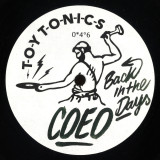
Coeo - Back In The Days

Coeo

Back In The Days

12inchTOYT046
TOY TONICS
03.04.2026

2026 Repress

COEO are to Toy Tonics records, what Master at Work were to the House scene of the 1990ies: They bring the Soul into the House. Their new EP Back In The Days' is a 4 track house stomper that could have been made in 1997 by guys like Sneak, Dimitri from Paris or Little Louie. But still the similarities to the new Berlin Sample-House scene around Max Graef and Hodini are evident, too. Already their last years' superhit NATIVE RIDDIM (which is featured as a bonus track on this vinyl) included some heavy jazz samples they found in their parents' bag of soul. Native Riddim has been no.1 in the Traxsource charts for several weeks and was the basis for their already huge following. From Laurent Garnier to Tensnake - the feedback has been awesome. Now they proceed their way of souldful house. Just good taste.

In stock dal06.05.2026

9,87

Last In: 2 days ago
Arne Jansen & Stephan Braun - Short Stories LP
  • 1: Wichita Lineman
  • 2: I'm Getting Old
  • 3: Ordinary World
  • 4: Two Whole Summers, Half A Life
  • 5: Catch
  • 6: Between The Bars
  • 7: Alone And Forsaken
  • 8: You've Been Flirting Again
  • 9: Frozen
  • 10: Gloomy Sunday

On her new album, Two Whole Summers, Half A Life, Lisa Bassenge is once again accompanied by her trusted fellow musicians, pianist Jacob Karlzon and bassist Andreas Lang, with whom she has already realised numerous projects. Typical of Bassenge, the repertoire comprises a seemingly wild yet harmoniously connected mix of pop, singer-songwriter and jazz elements. The spectrum ranges from Elliott Smith to Duran Duran, from Billie Holiday to Björk. ‘It's always about the expressiveness of the songs – that's the common thread for us,’ emphasises the Berlin-based artist. The album features a track by Hank Williams as well as Madonna's ‘Frozen’ and “Catch” by The Cure. Two original compositions are also part of the recording: the title track ‘Two Whole Summers, Half a Life,’ a tribute to the power of friendship and youth, and the neo-folk ballad ‘I'm Getting Old.’ Both works impressively underline Lisa Bassenge's own artistic signature. For over two decades, Lisa Bassenge has stood for stylistic openness and a characteristic voice that lends new nuances to every song. Despite all the diversity, jazz remains the tonal basis. The Scandinavian-style relaxed sound of Karlzon and Lang lends the interpretations a soft, atmospheric depth.

pre-ordina ora27.03.2026

dovrebbe essere pubblicato su 27.03.2026

22,65
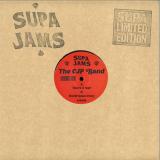
The CJP Band - You're A Star

The CJP Band

You're A Star

12inchSJAM12002
Supa Jams
24.03.2026

After finding homes in all the right record boxes last summer with their debut 'Anthem' - 'You & Me & The Music'

The CJP Band return to Supa Jams with two more perfectly crafted sides of Disco Jazz Funk and Soul.

Side A delivers a monster rework of the Aquarian Dream classic 'You're A Star".

A tour de force from start to finish. Taking the timeless original to stratospheric new heights.

Side B brings things back down to earth, literally. Joe Bell joins the band on vocal duties for 'World Gone Crazy'.

A string drenched lament on the madness the earth, despite enduring multiple ills for far to long already, Seems to herald yet new levels of crazy on an almost daily basis. Is there nothing we can do?

Limited Black Vinyl Pressing

Hand Stamped Sleeve

Don't Sleep

non in magazzino

Ordina ora e ordineremo l'articolo per te presso il nostro fornitore.

21,64

Last In: 32 days ago
Simon Berz - Tectonic

Simon Berz

Tectonic

12inchKR124LP
Karlrecords
20.03.2026

“Tectonic” is a concise portrait of SIMON BERZ’s geological sound explorations across continents over the last 15 years: drums, electronics, and a set of electronically manipulated basalt stones from Iceland.

SIMON BERZ is a transdisciplinary drummer, sound artist, and music educator based in Switzerland and Berlin. Working at the intersection of improvised music, sound art, and performance, and deliberately crossing boundaries between disciplines, his aesthetics are shaped by a sustained engagement with natural materials, particularly stone, and their sonic transformation through electronic manipulation. Beyond his performance work, BERZ founded BADABUM as an art label and a music school.

For the last 30 years, BERZ has been performing in Japan, China, Russia, the USA, Cuba, Iceland, Turkey, and across Europe. He has collaborated with artists including BILL LASWELL,BABY SOMMER, DAMO SUZUKI (CAN), JAMES TURRELL, JIMI TENOR, JOHN SINGLAIR, JOJO MAYER (NERVE), KONDO TOSHINORI, KIDD JORDAN, LAUREN NEWTON, LEE “SCRATCH“ PERRY, MAURO PAWLOWSKI (dEUS), NILS PETTER MOLVÆR, NIKI GLASPIE, NORBERT MÖSLANG, PAUL LOWENS, PFADFINDEREI, ROB MAZUREK, SKÚLI SVERRISSON, and he was the live drummer for APPARAT. As BERZ understands artistic practice as energy emerging from nature and through dialogue with people, his recorded output is intentionally selective, with one highlight being “Beats versus Breath” with KONDO and LASWELL (2023). Alongside a regular drumkit and electronics, he has developed his own instruments such as the “Lithophon” in which resonating stones are turned into amplified sound through water drops, and “Tectonic”, a set of Icelandic basalt stones shaped through electronic manipulation. These self- built instruments form the material basis for his performances, installations, and sound recordings.

“Tectonic” is also the title of BERZ’s latest work: a summary of his geological sound explorations across continents. From Iceland to Indonesia and Bali, from New Orleans to China, in caves and at shores, BERZ carried his millions-of-years-old basalt stones as both instrument and collaborator. On Java, he met Baron, a builder of stone gamelan instruments. At the Pacitan Tabuhan Cave (Indonesia) he performed with MISBACH BILOK and WUKIR SURYADI (SENYAWA) who work with corals as instruments. BERZ brought these encounters and “field recordings” to the Stöðvarfjörður studio in Iceland, where he recorded with his “Tectonic” set-up, drums, and electronics. The music was later mixed in Berlin by DIRK DRESSELHAUS (SCHNEIDER TM). The resulting album moves from club-driven tracks to ambient passages, from gamelan-inspired textures to HipHop-like beat patterns. It resists easy categorization while staying direct and physical in its impact.

non in magazzino

Ordina ora e ordineremo l'articolo per te presso il nostro fornitore.

23,49

Last In: 43 days ago
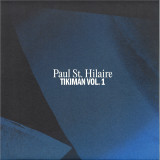
Paul St. Hilaire (AKA Tikiman) - Tikiman Vol. 1 LP 2x12"

For the first time in more than a decade, Paul St. Hilaire (AKA Tikiman) presents a solo album – 100% Tiki.

Over his 30-plus year career, St. Hilaire has become one of dance music’s quietly legendary figures. Born and raised in Dominica, he moved to Berlin in 1994 and has lent both his voice and his musicianship to some of the most iconic electronic music from the German capital – and beyond. Renowned for his collaborations with Moritz von Oswald and Mark Ernestus (AKA Rhythm & Sound), he has also appeared on records with Deadbeat, Rhauder, Larry Heard aka Mr. Fingers and Stereotyp (G-Stone Recordings), amongst others.

However, few know the extent of St. Hilaire’s compositional and technical mastery. From his home studio in Kreuzberg, which includes an extensive collection of vintage hardware, self-built instruments and notebooks scribbled with endless lyrics, he has created a vast archive of material spanning ambient dub, avant-jazz, lush techno and lovers rock.

Tikiman Vol. 1 is a heady, downtempo tour de force of patois metaphors on education, displacement and personal vs. global histories, as is evident on slippy album opener “Bedroom in My Bag”: Mister, mister / Where are you going? / I’m heading for a faraway land / What are you having in the bag in your hand? / Help us to understand / He said, I’ve got my bedroom in my bag.

Overall, the album’s lyrics reflect on life between Berlin and Dominica, specifically St. Hilaire’s hometown of Grand Bay, where he has worked with various musicians famous for the island’s different genres of carnival music. St. Hilaire himself always favoured the island’s more “discrete” music, developing a sonic synergy between two different geographical strains of groove and minimalism, and combining them with foundational Caribbean mixing techniques, which provide the basis for his songwriting and distinct
baritone.

Tikiman Vol.1 offers a rare insight into St. Hilaire’s complex artistry, from the eyes-down grooves of “Little Way” and the guitar-heavy digi dancehall experiment “Keep Safe,” to the subtle hypnosis of “Ten to One” and the softly crashing synth waves of closer “Three And A Half”, evoking not only beaches but also coasts and borders. It’s a fitting expression of both the breadth of St. Hilaire’s work, as well as his history as one of the few black, Berlin-based artists who, despite remaining largely overlooked, has influenced the city’s electronic music culture since its beginnings.


Credits
Written & Produced by Paul St. Hilaire
Mastered by Stefan Betke
Artwork by Grant Gibson

Kynant Records was founded in 2015 by Richard Akingbehin, a British-Nigerian radio programmer (Refuge Worldwide), music writer and DJ. Originally specialising in deep techno and featuring artists such as Cio D’Or, Terrence Dixon and Donato Dozzy, Kynant has since launched a sub-label Kynant EX which focuses on ambient, dub and experimental electronics.

non in magazzino

Ordina ora e ordineremo l'articolo per te presso il nostro fornitore.

28,78

Last In: 38 days ago
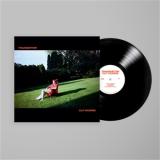
CUT WORMS - TRANSMITTER

CUT WORMS

TRANSMITTER

12inchJAGLP489
JAGJAGUWAR
13.03.2026
  • Worlds Unknown
  • Evil Twin
  • Long Weekend
  • Barfly
  • Windows On The World
  • Walk In An Absent Mind
  • Don't Look Down
  • Shut In
  • Out Of Touch
  • Dream
disponibile anche

CLEAR RED VINYL[24,79 €]


Transmitter ist Max Clarkes viertes Album als Cut Worms. Produziert von Jeff Tweedy im Loft Studio von Wilco, zeigt Transmitter, wie Clarke seine Fähigkeiten weiterentwickelt hat und wie zwei Künstler zusammenkommen, die in ihrer Arbeit nach Anmut inmitten von Entwurzelung suchen. Es sind Orte, die vom Mythos der Selbstständigkeit geprägt sind, an denen Menschen, die die Idee der Verbindung durch Technologie verkauft haben, zu stillen Sendern reduziert wurden - Datenpunkte, die gekauft und verkauft, manipuliert und gemessen werden und deren Leben durch genau die Netzwerke verzerrt wird, die sie eigentlich verbinden sollten. Die ersten Anzeichen für Transmitter gab es, als Cut Worms im Sommer 2024 als Vorgruppe von Wilco unterwegs waren. Am Ende der Tour lud Tweedy die Band ein, im legendären Loft in Chicago aufzunehmen, und schon bald wurden Pläne geschmiedet, im Herbst damit zu beginnen. In der gemütlichen Unordnung aus Gitarren, Verstärkern und Büchern im Loft fanden Clarke und Tweedy schnell eine gemeinsame musikalische Basis und eine gemeinsame Vorliebe für komplexe Songs. Während Clarkes Stimme und Texte den Rahmen bildeten, skizzierten Tweedys Gitarren- und Basslinien die Räume, in denen die Songs leben. Tweedys Präsenz als Produzent zeigte sich nicht in hartnäckigen Entscheidungen, sondern darin, wie er Räume kolorierte und immer wieder neue Texturen anbot. Zwischen ihnen überbrückte ihre gleichgesinnte Sensibilität eine Generationskluft, um etwas zu schaffen, das nuancierter war, als es jeder von ihnen allein hätte schaffen können. Wenn frühere Veröffentlichungen von Cut Worms von der Dekadenz des Brill Building und verrückter Americana geprägt waren, wirkt der Sound auf Transmitter dunkler, reichhaltiger und gesättigter mit der Angst des modernen Lebens. ,Long Weekend" beschleunigt die Zeit und hat die melodische Dringlichkeit von Big Star oder Dwight Twilley. ,Evil Twin" kämpft mit bitterer Enttäuschung, seine gesprächigen Gitarren erinnern an den klirrenden Herzschmerz von The Replacements und The Go-Betweens, und ,Windows on the World" neigt sich mit einer Melancholie, die irgendwo zwischen Elliott Smith und Miracle Legion schwebt, der Sonne der Zukunft zu. Der letzte Titel ,Dream" bringt uns zurück auf eine vertraute Ebene: Clarke allein am Klavier, zart und unentschlossen, grübelt er über das Schicksal von Träumen und das Risiko, zu kurz zu kommen oder sich auf dem Weg zu verlieren. Transmitter zeigt Clarke in voller Fahrt, der mit der Überzeugung eines Menschen schreibt, der seinen Frieden mit der Ungewissheit gemacht hat. Diese Songs setzen sich mit den Kosten des Komforts auseinander und kehren zu der Idee zurück, dass Schönheit, Verbundenheit und Liebe keine Luxusgüter sind, sondern Überlebensnotwendigkeiten. Clarke fühlt sich zu Paradoxien hingezogen - der Reibung zwischen Intimität und Flucht, Glauben und Zweifel, Schatten und Licht. Seine Vergebung kommt, wie die des abgeschnittenen Wurms, durch Übertragung zustande: durch den Akt, etwas Zerbrechliches in den Lärm zu entlassen und darauf zu vertrauen, dass es noch immer spürbar ist.

pre-ordina ora13.03.2026

dovrebbe essere pubblicato su 13.03.2026

23,49
CUT WORMS - TRANSMITTER

CUT WORMS

TRANSMITTER

12inchJAGLPC1489
JAGJAGUWAR
13.03.2026

Transmitter ist Max Clarkes viertes Album als Cut Worms. Produziert von Jeff Tweedy im Loft Studio von Wilco, zeigt Transmitter, wie Clarke seine Fähigkeiten weiterentwickelt hat und wie zwei Künstler zusammenkommen, die in ihrer Arbeit nach Anmut inmitten von Entwurzelung suchen. Es sind Orte, die vom Mythos der Selbstständigkeit geprägt sind, an denen Menschen, die die Idee der Verbindung durch Technologie verkauft haben, zu stillen Sendern reduziert wurden - Datenpunkte, die gekauft und verkauft, manipuliert und gemessen werden und deren Leben durch genau die Netzwerke verzerrt wird, die sie eigentlich verbinden sollten. Die ersten Anzeichen für Transmitter gab es, als Cut Worms im Sommer 2024 als Vorgruppe von Wilco unterwegs waren. Am Ende der Tour lud Tweedy die Band ein, im legendären Loft in Chicago aufzunehmen, und schon bald wurden Pläne geschmiedet, im Herbst damit zu beginnen. In der gemütlichen Unordnung aus Gitarren, Verstärkern und Büchern im Loft fanden Clarke und Tweedy schnell eine gemeinsame musikalische Basis und eine gemeinsame Vorliebe für komplexe Songs. Während Clarkes Stimme und Texte den Rahmen bildeten, skizzierten Tweedys Gitarren- und Basslinien die Räume, in denen die Songs leben. Tweedys Präsenz als Produzent zeigte sich nicht in hartnäckigen Entscheidungen, sondern darin, wie er Räume kolorierte und immer wieder neue Texturen anbot. Zwischen ihnen überbrückte ihre gleichgesinnte Sensibilität eine Generationskluft, um etwas zu schaffen, das nuancierter war, als es jeder von ihnen allein hätte schaffen können. Wenn frühere Veröffentlichungen von Cut Worms von der Dekadenz des Brill Building und verrückter Americana geprägt waren, wirkt der Sound auf Transmitter dunkler, reichhaltiger und gesättigter mit der Angst des modernen Lebens. ,Long Weekend" beschleunigt die Zeit und hat die melodische Dringlichkeit von Big Star oder Dwight Twilley. ,Evil Twin" kämpft mit bitterer Enttäuschung, seine gesprächigen Gitarren erinnern an den klirrenden Herzschmerz von The Replacements und The Go-Betweens, und ,Windows on the World" neigt sich mit einer Melancholie, die irgendwo zwischen Elliott Smith und Miracle Legion schwebt, der Sonne der Zukunft zu. Der letzte Titel ,Dream" bringt uns zurück auf eine vertraute Ebene: Clarke allein am Klavier, zart und unentschlossen, grübelt er über das Schicksal von Träumen und das Risiko, zu kurz zu kommen oder sich auf dem Weg zu verlieren. Transmitter zeigt Clarke in voller Fahrt, der mit der Überzeugung eines Menschen schreibt, der seinen Frieden mit der Ungewissheit gemacht hat. Diese Songs setzen sich mit den Kosten des Komforts auseinander und kehren zu der Idee zurück, dass Schönheit, Verbundenheit und Liebe keine Luxusgüter sind, sondern Überlebensnotwendigkeiten. Clarke fühlt sich zu Paradoxien hingezogen - der Reibung zwischen Intimität und Flucht, Glauben und Zweifel, Schatten und Licht. Seine Vergebung kommt, wie die des abgeschnittenen Wurms, durch Übertragung zustande: durch den Akt, etwas Zerbrechliches in den Lärm zu entlassen und darauf zu vertrauen, dass es noch immer spürbar ist.

pre-ordina ora13.03.2026

dovrebbe essere pubblicato su 13.03.2026

24,79
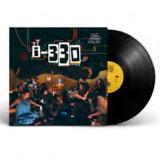
Flore Benguigui & The Sensible Notes - i-330

Von der Disco in den Jazz Club - Flore Benguigui ist zurück!
2024 platzte in der Welt des französischen Pop eine Bombe, als Flore Benguigui ihren Ausstieg aus der
erfolgreichen Elektropop-Band L’Impératrice bekanntgab. Mit ihrem ersten Solo-Album ist sie jetzt in
Bestform zurück und verbindet swingende Jazz-Songs mit Pop- und Elektro-Elementen.
Die ausgebildete Sängerin und Pianistin hegte schon immer eine tiefe Liebe zu Evergreens und zu Unrecht vergessenen Klassikern von Nina Simone bis Chanson-Legende Barbara. Ihr erstes Album unter
eigenem Namen greift diese Musik jetzt auf und transportiert sie ins Hier und Jetzt. Ihre unverwechselbare
Stimme, flirrend und mädchenhaft, aber punktgenau und selbstbewusst, ist die Basis der Jazz-Ohrwürmer
mit einer Dosis Indie-Pop, die sie mit ihrer Band The Sensible Notes erarbeitet hat. Für Pop- wie für
Jazz-Fans ist ihr ein sehr hörenswertes Werk gelungen.

pre-ordina ora13.03.2026

dovrebbe essere pubblicato su 13.03.2026

25,63
John Chowning - Stria

John Chowning

Stria

12inchIMPREC478LP
Important Records
06.03.2026
  • Phonè
  • Turenas
  • Stria
  • Sabelithe

Dr. John Chowning (b. 1934) is a pioneering computer musician, composer and professor who, in 1967, discovered the FM synthesis algorithm. This breakthrough in electronic music allowed for simple, yet rich timbres described as sounding "real." With this discovery, Chowning composed singular, dramatic electronic music and changed the timbre of music forever.

Chowning utilized the potential of computers to synthesize sounds according to programmed instructions. The composer's use of his own FM algorithms, digital synthesis with computers and the new compositional concepts offered by a programmable musical structure combine to create some of the most original and unique electronic music ever created.

The compositions on this LP were realized between 1966 and 1981 and the music on this LP, with the exception of Stria, was originally released on CD in Germany (Wergo, 1988). The version of Stria included here contains a section not included on the Wergo CD. Thus, this version of Stria is complete. This is the first time these purely digital recordings have been released on an analog medium. The original dynamics of these groundbreaking compositions have been preserved on this LP. As a result, listeners are advised to increase volume with caution.

In 1975, John Chowning founded the CCRMA - Center For Computer Research In Music and Acoustics at Stanford University. Through Stanford, Chowning licensed his groundbreaking algorithms to Yamaha resulting in numerous new instruments including the iconic DX series of keyboards. In 1972, his composition Tureens which is included on this LP, was the first to create the illusion of continuous 360-degree space using four speakers.

Technical Notes:

All pieces on this LP are originally quadrophonic. The illusion of moving sound sources is thus projected from the surrounding environment given by four loud-speakers on the stereo-basis.

STRIA was composed using Chowning’s own program to compile the musical structure into note-lists and MUSIC 10 (by D. Poole/Tovar) to generate the sounds in software-synthesis. The original quadrophonic version utilized 12 bits, two different sampling rates being used to accommodate the enormous amount of data on the magnetic disc-packs available at that time. The original sound-data was processed by sampling-rate conversion and digital mixes to achieve the stereo version presented on this LP.

SABELITH and TURENAS were synthesized originally using Smiths’ SCORE and MUSIC 10. However, their format was changed from direct sound-samples to a command stream for a special purpose computer, the System Concepts Digital Synthesizer, designed by Peter Samson, one of the first large-scale digital synthesizers for real-time sound processing - one was designed for CCRMA in the late seventies. For this recording the sounds were recorded directly from the synthesizer computing the samples in real-time.

PHONÈ was realized with the System Concepts Digital Synthesizer using again Chowning’s own program to create the note list.

The master tape of this LP was made directly from the computer system at CCRMA which generated and stored the sound data in digital format. No analog recording was involved at any stage of the production and editing process.

pre-ordina ora06.03.2026

dovrebbe essere pubblicato su 06.03.2026

27,52
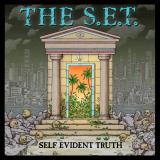
The S.E.T. - Self Evident Truth
  • 1: This Chain
  • 2: T.m.t
  • 3: White Lies (Feat. Gut Instinct)
  • 4: Predetermined Hate
  • 5: Prey Strikes Back
  • 6: Truth Revealed
  • 7: Self Evident Truth
disponibile anche

Tape[14,50 €]


Out of Baltimore, Maryland comes The S.E.T. who are crafting 100% unapologetic hardcore music. Formed between bassist Che (founder of Flatspot Records), guitarist Brady (formerly of Turnstile), and drummer Ryan (formerly of End It), the band started through jam sessions in early 2024. Before they knew it, they had instrumentals for seven songs written and were ready to put lyrics to the tracks, and the search for a vocalist began. Che spotted Tim hopping on stage and grabbing the microphone at Disturbin’ The Peace Festival, invited him to try out for vocalist, and The S.E.T. was then complete.
The S.E.T. will release their debut Self Evident Truth EP, on February 27th through Flatspot Records. It’s 15 minutes of fury and groove, taking cues from Baltimore acts such as Gut Instinct (whose Sebastian Gorgone features on “White Lies”) and Stout and the crossover sounds of New York like Leeway and Judge. Recorded and mixed by Justin Day at New Noise Recording and mastered by Brad Boatright at Audiosiege, the tracks roar with thick bass lines, fast-paced drums, and rage fueled vocals. Lyrics come from a place of candor, expressing the basis of equal rights and defying the propaganda the current administration is spewing.
As The S.E.T. comes into fruition, the band wants to exist as a place to put words to action and come together as a community through both their music and live shows

pre-ordina ora06.03.2026

dovrebbe essere pubblicato su 06.03.2026

25,00
The S.E.T. - Self Evident Truth (Tape)

Out of Baltimore, Maryland comes The S.E.T. who are crafting 100% unapologetic hardcore music. Formed between bassist Che (founder of Flatspot Records), guitarist Brady (formerly of Turnstile), and drummer Ryan (formerly of End It), the band started through jam sessions in early 2024. Before they knew it, they had instrumentals for seven songs written and were ready to put lyrics to the tracks, and the search for a vocalist began. Che spotted Tim hopping on stage and grabbing the microphone at Disturbin’ The Peace Festival, invited him to try out for vocalist, and The S.E.T. was then complete.
The S.E.T. will release their debut Self Evident Truth EP, on February 27th through Flatspot Records. It’s 15 minutes of fury and groove, taking cues from Baltimore acts such as Gut Instinct (whose Sebastian Gorgone features on “White Lies”) and Stout and the crossover sounds of New York like Leeway and Judge. Recorded and mixed by Justin Day at New Noise Recording and mastered by Brad Boatright at Audiosiege, the tracks roar with thick bass lines, fast-paced drums, and rage fueled vocals. Lyrics come from a place of candor, expressing the basis of equal rights and defying the propaganda the current administration is spewing.
As The S.E.T. comes into fruition, the band wants to exist as a place to put words to action and come together as a community through both their music and live shows

pre-ordina ora06.03.2026

dovrebbe essere pubblicato su 06.03.2026

14,50
VARIOUS - Trash Attack

Various

Trash Attack

4x12inchGCRBOX045
GCR Zyx
27.02.2026
  • Scarecrow- Condemned To Be Doomed (Part 1)
  • Scarecrow - In The Beginning
  • Scarecrow - I Owe You
  • Scarecrow - Nuclear Radiation
  • Scarecrow - Condemned To Be Doomed (Part 1)
  • Scarecrow - In The Beginning
  • Scarecrow - I Owe You
  • Scarecrow - Nuclear Radiation
  • Raging Violence - Born In The Streets
  • Raging Violence - Demons Evil Forces
  • Raging Violence - Call Of The Gods
  • Raging Violence - Fear The War Within
  • Possuido Pelo Cao - A Marcha Do Cao (The March Of The D.o.g.)
  • Possuido Pelo Cao - Ugly On The Inside Too
  • Possuido Pelo Cao - Air Mail Surgery
  • Possuido Pelo Cao - Catholic Beast
  • Excess - Grinding Raid
  • Excess - Evil Child
  • Excess - Homicide
  • Excess - Death Creation
  • Excess - Baby Blood

Nach dem Hoch Ende der Achtziger wurde es still um das Genre THRASH METAL, welches einst von Bands wie Metallica, Exodus oder Legacy (Testament) in den USA, dann auch von Sodom, Kreator oder Destruction
in Deutschland gestartet wurde. Erst in den Zweitausendern zeigten sich wieder Bands, die sich diesem Stil, der grob ausgedrückt zwischen Speed Metal und Death Metal liegt, wieder annahmen. Heute dürfte Thrash aufgrund vieler noch aktiver Acts aus den Achtzigern und jungem Nachwuchs so groß sein wie nie zuvor.

Diese Vinylbox enthält vier Alben, die zwar unterschiedlich sind, aber alle zum Genre gehören. Allen voran RAGING VIOLENCE aus den USA. Dabei handelt es sich um die Originalbesetzung von HIRAX, allerdings mit Sänger
Rob Perkins. Neue Songs und Neueinspielungen (unter Anderem der rare Demotrack „Born In The Streets“) konnten Fans und Kritiker begeistern. EXCESS aus Deutschland war eine Death-Thrash-Band, die es nie zu einem Alben gebracht hat. Nach drei Demos schwärmte man aber auch in erfolgreiche Richtungen aus: Crematory, Mystic Circle und Blood. Für

EXCESS war keine Zeit mehr… Die Demoaufnahmen wurden restauriert und remastert und erschienen bei Golden Core/ZYX erstmals als LP und CD. Auf dem Tape „Crucifixion“ hört man Drummer Neudi (Manilla Road,
Trance, Savage Grace, etc.).

SCARECROW haben mit „Condemned To Be Doomed“ 1988 eine heute rare Eigenpressung veröffentlicht, die zu den wohl ungewöhnlichsten deutschen Thrash Alben gehört. Hier trifft Punkattitüde auf progressive Elemente,
während die Basis lupenreiner Thrash ist. Kein anderes Album klingt wie dieses außergewöhnliche Werk der deutschen Band. Aus Brasilien kommen oder kamen (mal sind sie aktiv, dann wieder nicht…) POSSUIDO PELO
CAO, die von D.R.I. und Suicidal Tendencies beeinflussten CrossoverThrash bieten. Bei den schnellen, kurzen Tracks bleibt kein Auge trocken…
und kein Genick verschont. Das deftige Werk von 2008 erschien damals nur als CD

pre-ordina ora27.02.2026

dovrebbe essere pubblicato su 27.02.2026

40,76
Tom Hodge & Floex - Je Suis Karl OST
  • 1: Lost Future
  • 2: Slow Deep Dive (Intro Version)
  • 3: Lonely Choice
  • 4: In Motion
  • 5: Twisted Plans (Car Park Version)
  • 6: Grief Process
  • 7: Distorted Idea (Maxi In Prague Version)
  • 8: Absent Mind
  • 9: Acceptance
  • 10: Event Flow
  • 11: Slow Deep Dive (Alex Version)
  • 12: Deep Dive (Jsk Version)
  • 13: Twisted Plans (Red Club Version)
  • 14: Strange Love

Political thriller Je Suis Karl, produced by German director Christian Schwochow, has a strong Czech connection. The soundtrack has been created by Czech musician and composer Tomáš Dvořák, a.k.a. Floex, who joined forces with British composer and pianist Tom Hodge. The soundtrack for Je Suis Karl will be released on September 16, 2021.
"In this project, Tom and I built on music that we wrote together three years ago for the album A Portrait Of John Doe. While this was the first feature film for me, Tom has extensive experience with composing music for movies and series," commented Dvořák.
Co-produced by the Czech company Negativ and filmed in part in the Czech Republic, the movie features characters played by Czech actresses Anna Fialová and Elizaveta Maximová. The picture makes use of the story of a young German girl, Maxi, and her family to draw attention to rising extremism among right-wing nationalists. Je Suis Karl was premiered during this year's Berlinale film festival in the Berlinale Special section.
At the director's initiative, music for Je Suis Karl was composed based on the script before the emergence of the COVID-19 pandemic. “Christian Schwochow asked for a demo, but when Tom and I set to work in Prague, we came up with a huge amount of inspired stuff within a short time, and the music became the foundation of the soundtrack. Because of the pandemic, the music itself was created on a long-distance basis. It was a game of ping pong of sorts," Dvořák added.
The soundtrack for Je Suis Karl features a unique timbre, far from the traditional symphonic sound. Instead, the sonic design relies on a fusion of dark, discordant, dirty sounds that present the symphony orchestra in a novel fashion.
Floex and Hodge created a database of loops, sounds, soundscapes, and sonic experiments with no specific compositional context. In composing music for individual scenes, they used this musical database, remixed themes and versions of compositions, and worked with vintage equipment, such as the Yamaha MT4X cassette player. Considering the large quantity of music recorded, the album contains 14 compositions from the movie itself, plus bonus tracks that did not make it into the film.
Tomáš Dvořák, a.k.a. Floex, is a Czech clarinetist, composer, producer, and multimedia artist, the recipient of multiple Anděl Music Awards. His discography includes two long-play records, Pocustone and Zorya, soundtracks for the games Samorost 2, Machinarium, Samorost 3, Pilgrims, and Papetura, remix albums, and extended-play records. In 2018, he joined forces with Tom Hodge to release the album A Portrait Of John Doe.
British composer, pianist, and clarinetist Tom Hodge challenges the boundaries of contemporary experimental music. He composes music for film, series, documentaries, advertising, and ballet. His most recent projects include the soundtrack for Je Suis Karl and music for the movie The Mauritanian filmed by director Kevin Macdonald. He has released several solo albums, including Piano Interrupted and Second Moon of Winter, and has pursued a long-term collaborative partnership with musician Max Cooper.

pre-ordina ora20.02.2026

dovrebbe essere pubblicato su 20.02.2026

20,59
Jan Jelinek - Loop-Finding-Jazz-Records 2x12"

2024 repress

In February 2021, Jan Jelinek's seminal album "Loop-Finding-Jazz-Records" turned 20. The anniversary repress, a double LP with two bonus tracks (B-sides from the Tendency EP, 2000), is a little late to the party.
What the press said about Loop-Finding-Jazz-Records:
“Don’t be misled by the title, though for there isn’t a finger-snapping rhythm c bebop lead anywhere on the album. Instead, Jelinek chooses to explore the visual effect moiré - two shifting patterns creating an implied third dimension - in the audio realm.” (Alternative Press)
“The title acts as explanation for the studio technique that provided the basis for this album, snippets of other people’s arrangements deconstructed through a sampler into loops and then splashed onto an audio canvas.” (ATM)
“Jelinek’s sound evolved out of his dislike for (and inability to play) keyboards.” (RPM)
“Jelinek has abstracted his sources beyond recognition, looping his millisecond samples into flickering patterns of sonic moiré laid atop a dub Techno framework. (...) Jelinek might as well have sampled a horn player’s hissing intake of breath – it would have been ‘jazz’ enough for his purposes.“ (The Wire)
“It’s a perfect inversion of conventional music, a sonic negative. Everything that would typically be foreground is moved back or pushed off the screen altogether, and the flecks of sonic debris that would normally be covered by other sounds are left to carry the melody and rhythm.” (Pitchfork)
“All you need to know is that these onomatopoeic non-specific songs (...) are warm, paradisical creations”. (NME)
“Listen carefully and you’ll hear textures slowly unfolding and mutating. Presuming you’ve not fallen asleep of course.” (iDJ)
“At times, it’s all a bit dripping tap Japanese water torture; so sedentary it drowns in its own motionlessness” (DJ)
“Loop Finding Jazz Records' is a genuine modern classic whose re-release is anything but a cynical mortgage repayment exercise. Consider this a second chance, then pretend you had it all along.” (Boomkat)
PS:
“I’ve been fortunate enough to see Jan Jelinek live once, at Tonic NYC (...). Wearing a black and white striped shirt, he looked like a nihilistic Charlie Brown.” (beachsloth)

non in magazzino

Ordina ora e ordineremo l'articolo per te presso il nostro fornitore.

26,01

Last In: 43 days ago
THE BUSTERS - CALLING

The Busters

CALLING

12inchSRR24
SKA REVOLUTION
23.01.2026
  • Champagne
  • Detox Baby
  • Calling
  • Dancing In America
  • Freak Show
  • Your Name
  • Good Friends To Go
  • Danger Paradise
  • Geschichte Schreiben
  • Echoes
  • One More Time
  • Bon Voyage

Mit Calling melden sich The Busters eindrucksvoll zurück - neun Musiker, ein Album, das kollektive Kreativität hörbar macht. Entstanden in zwei Studios - den atmosphärischen Waldstudios bei Berlin und "Der Raum" in Waltrop - verbindet Calling emotionale Tiefe mit musikalischer Klarheit und der typischen Leichtigkeit der Band. Die Songs entstehen basisdemokratisch, ohne Hierarchie - aus Vertrauen, Präzision und Spielfreude. Das Ergebnis: ein Album voller Dynamik, Wärme und Atmosphäre. Man hört den Raum, die Luft, das Miteinander. Statt digitaler Perfektion steht das Gefühl im Vordergrund. Highlights wie der Titeltrack "Calling", das melancholisch-leichte "Champagne", das bissige "Freak Show" oder das hoffnungsvolle "Geschichte schreiben" zeigen die Band in ihrer ganzen Bandbreite - nachdenklich, ironisch, berührend. Live entfaltet sich die volle Kraft: The Busters gehören seit über 35 Jahren zu den besten Live-Bands Deutschlands. Calling fängt diese Energie ein - als klingendes Abbild einer Band, die weiß, wer sie ist, und trotzdem immer wieder neu aufbricht. With Calling, The Busters make a powerful return - nine musicians, one shared language, and an album that showcases the vibrancy of collective creativity. Recorded between two studios - the atmospheric Waldstudios near Berlin and "Der Raum" in Waltrop - Calling blends emotional depth with musical clarity and the band"s signature ease. No mastermind, no hierarchy - just a democratic process built on trust, precision, and joy. The result is an album rich in dynamics, warmth, and atmosphere. You hear the room, the air, the connection. Feeling takes precedence over digital perfection. Tracks like the floating opener "Calling," the subtly melancholic "Champagne," the biting "Freak Show," and the uplifting "Geschichte schreiben" reveal the band"s full emotional range - thoughtful, ironic, and deeply human. On stage, The Busters truly shine: with over 35 years of live experience, they are one of Germany"s most seasoned and beloved live acts. Calling captures that energy - a sonic reflection of a band that knows who they are, yet continues to explore new paths.

pre-ordina ora23.01.2026

dovrebbe essere pubblicato su 23.01.2026

22,27
Andy Vaz & Andy Garcia - The Andy To Andy E.p.

The Cryovac machine operates independently to service the world with an original strain of techno. Our people are pioneers of their own sound and seasoned veterans of its' cause. This cause is the basis for our action and the motivation for our vinyl. Cryovac believes the vinyl format is the truest way to take in our music, and this is why we take great care to personally craft our own plates and photograph our own art. The Cryovac approach and stance make it a true oddity in a world of commodities, and we hope you realize, feel, and respect our work.

Andy Vaz is a rebel from the city of Cologne. He is a creator of techno labels that follow their own path and challenge the standard dogma. His version of the techno sound has gone from stark and funky minimalism to synth cascades and housey feels. Andy Vaz is the perfect choice to collaborate with Andy Garcia. Garcia's brand crunchy soul tech mixed with vocal nonsense is the yin to Vaz's yang. These like minds share a name, a spirit, and a drive to keep moving forward no matter the cost.

non in magazzino

Ordina ora e ordineremo l'articolo per te presso il nostro fornitore.

10,29

Last In: 4 months ago
Voal - Jinx

Voal

Jinx

12inchISO003
ISOTOOP
17.11.2025

Voal — Vand and Shoal — reveal five more cuts on their home label Isotoop, taken from the pair’s time living together in Utrecht. Whereas the debut EP, ‘Saffron’, dropped the listener into psychedelic aesthetics and atypical rhythmic structures, the sequel ‘Jinx’ has a more crystal-cut vision of club music, made for no less exploratory dancefloors.

Possessing a natural progression almost as fluid as a contiguous live set, with imagination each track can form the basis of the next through the fingerprints of a barely-perceptible ghost leaving a piecemeal narrative impression, an exposure in negative that develops over repeated exposure to the five versatile tracks.

Relative to Saffron’s sidestepping repertoire, this latest EP goes for the jugular with insistent club dynamics from the get-go. Summoning steps on air, a self-contained package of breezy dancefloor initiation and escalation, all-in-one, and from the foothold of this thermal vortex Crosswind ups the drama with storm-hued dynamics and blustery club debris.

The knife of aesthetics is freshly sharpened for the flip: Jinx takes the record out of earthbound atmospheres and deep into sci-fi territory. A jigsawwing bassline seems to drill ever-deeper into an expanding landscape, as it does so uncovering small sonic treasures locked in the bedrock. A mirror to this scene, The Chain digresses with bubbling verve and psychedelic strut, a combo-finishing left hook that simultaneously holds playfulness alongside dour dramatics, a duality shared by vinyl-exclusive closing track Ouah, which blows out the lights with a smirk, and premium hallucinatory dub psychosis.

non in magazzino

Ordina ora e ordineremo l'articolo per te presso il nostro fornitore.

16,39

Last In: 16 days ago
SIX ORGANS OF ADMITTANCE - SCHOOL OF THE FLOWER
  • Eighth Cognition/All You've Left
  • Words For Two
  • Saint Cloud
  • Procession Of Cherry Blossom Spirits
  • Home
  • School Of The Flower
  • Thicker Than A Smokey
  • Lisboa

2005...it"s 20 years since already? We can still feel the sensuous tickle of the wind at our back during that marvelous time. It was, as the Scorps promised, a wind of change, and we were drawn to a number of like-minded birds floating in that breeze! Today, we salute Six Organs of Admittance; their School of the Flower was just the record we"d never dreamed of when we asked them if they wanted to do one with us. Turned out their pronoun of choice was "him." "He" was Ben Chasny and we"ve been happy collaborating with him ever since. Coming on the heels of records like Dark Noontide and Compathia, School of the Flower found Six Organs riding high. Having achieved much in his traditional home-recorded kingdom, he too was looking for something different. What our Ben recalls: "It was the first time Six Organs was in a studio, so that"s cool. I wanted to play with Chris Corsano to expand on some of the rhythms in my playing, to kind of suggest some different forms for the way the folk-psych/folk music were being played at the time. The title track was inspired by John Cale and Terry Riley"s Church of Anthrax - I remember we had a big tape loop stretched around the whole studio to form the basis of that. I was taking a lot of cold medicine that week - not the coolest drugs to be on, but, you know..." School of the Flower was indeed a whole new thing - containing enduring fan favorites like "All You"ve Left," "Words for Two," Ben"s revelatory take on Gary Higgins" "Thicker Than a Smokey" (pointing the way for our reissue of Red Hash later that year) and a deep vibe of spiritual folk-jazz throughout. And best of all? It was just the beginning of twenty years of sending the inspiration of Six Organs of Admittance out into the world! But today, we"re happy to send you back to School of the Flower. There"s nothing like it.

pre-ordina ora07.11.2025

dovrebbe essere pubblicato su 07.11.2025

25,42
Articoli per pagina:
N/ABPM
Vinyl