The strength of Fan Club Orchestra's (FCO) trajectory lies in their nebulous, collaborative, and experimental nature, always with Laurent Baudoux at the centre. With its roots in the DIY impulses of the Brussels art and music scene of the late nineties, Baudoux rallied together a revolving cast of players with an unconventional ensemble of instruments to explore melancholic psychedelia that touched on drone and minimalism as readily as it carved minor pop hits from cracked electronics. Performances were often highly improvisational, aided by the barely controlled chaos that guest collaborators—such as American artist Mike Kelley—would inject into an appearance.
FCO self-released two albums in the early 2000s before finding a home with Sonig, where they released several more records up until their last with the label in 2013. This was a fitting frame as Sonig, like FCO, channelled the fervour and formalism of the experimental music history of the Rhineland, which includes Kraftwerk, krautrock, and key early electronic music studios.
Following an eleven year hiatus, Laurent Baudoux reassembled the group in 2024 and presented a new album with the esteemed Glaswegian label 12th Isle late in that same year. Building on the strength of the new iteration, and with the aim of reappraising some of the rich yet oblique history of the group through this new lens, FCO have remastered and reissued their 2013 album, 'An Insane Portrait'.
The recordings were originally commissioned in 2009 for Fabrizio Terranova's film 'Josée Andrei, An Insane Portrait' about the truly remarkable figure Josée Andrei. Shot in San Francisco, the film is an intimate portrait of Andre. Blind from birth, she is a witch, painter, photographer, tarot reader, and psychology and modern literature graduate.
'An Insane Portrait' captures a stripped-back FCO, with Baudoux working solely with original FCO member Ann Appermans. The configuration of Baudoux's electronics and Appermans' bass guitar yield a tender and preciously melodic suite of instrumentals.
Originally released on vinyl by Sonig in 2013, the remaster will again be presented by the label in a limited cassette edition and in digital formats, each featuring a bonus track that was not included in its original release.
Cerca:bass club
The strength of Fan Club Orchestra's (FCO) trajectory lies in their nebulous, collaborative, and experimental nature, always with Laurent Baudoux at the centre. With its roots in the DIY impulses of the Brussels art and music scene of the late nineties, Baudoux rallied together a revolving cast of players with an unconventional ensemble of instruments to explore melancholic psychedelia that touched on drone and minimalism as readily as it carved minor pop hits from cracked electronics. Performances were often highly improvisational, aided by the barely controlled chaos that guest collaborators—such as American artist Mike Kelley—would inject into an appearance.
FCO self-released two albums in the early 2000s before finding a home with Sonig, where they released several more records up until their last with the label in 2013. This was a fitting frame as Sonig, like FCO, channelled the fervour and formalism of the experimental music history of the Rhineland, which includes Kraftwerk, krautrock, and key early electronic music studios.
Following an eleven year hiatus, Laurent Baudoux reassembled the group in 2024 and presented a new album with the esteemed Glaswegian label 12th Isle late in that same year. Building on the strength of the new iteration, and with the aim of reappraising some of the rich yet oblique history of the group through this new lens, FCO have remastered and reissued their 2013 album, 'An Insane Portrait'.
The recordings were originally commissioned in 2009 for Fabrizio Terranova's film 'Josée Andrei, An Insane Portrait' about the truly remarkable figure Josée Andrei. Shot in San Francisco, the film is an intimate portrait of Andre. Blind from birth, she is a witch, painter, photographer, tarot reader, and psychology and modern literature graduate.
'An Insane Portrait' captures a stripped-back FCO, with Baudoux working solely with original FCO member Ann Appermans. The configuration of Baudoux's electronics and Appermans' bass guitar yield a tender and preciously melodic suite of instrumentals.
Originally released on vinyl by Sonig in 2013, the remaster will again be presented by the label in a limited cassette edition and in digital formats, each featuring a bonus track that was not included in its original release.
- A1: Alcohol And Cocainemarijuananicotine, Remix – Glok (2)
- A2: Teutonic Wine, Remix – Trentemøller
- B1: I Will Never Stop Loving You, Remix – A Place To Bury Strangers
- B2: The Cross, Remix – Night Club
- B3: Root Of All Evil (Bass Remake), Bass – Melvin Brannon Ii, Mixed By – Jagz Kooner
Golden hour couldn't come soon enough for HATT.D, presenting his new EP on Belgian label Flipsight.
Our sun-soaked journey along the lakeside begins with the title track, 'Hold Me' . An unexpected vocal flip that transforms a forgotten sample into a soulful plea. Next up, 'DANCE' delivers a mellow yet club-ready groove, driven by sharp vocal chops and Dave's signature bass-forward rhythm.
On the B-side, 'Check This Shhh Out' fires things up with no-nonsense energy: snappy hi-hats, heavy kicks and pure peak-time attitude.
Closing the ensemble is 'Connection', an ode to the deep, often elusive feeling of true human connectivity.
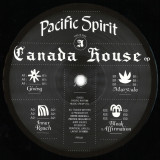
Pacific Rhythm is proud to introduce the first EP from label founder DJ D.DEE's new production alias, Pacific Spirit. The EP is a collaborative effort with long-time friend of the label Patrick Holland and was recorded at the Jump Source studios in Montreal, Quebec, earlier this year over the course of a few snowy days.
The Canada House EP slips through a myriad of influences, and the tracks aim to service the warm-up slot and the late-night crew. From slouched 78 bpm Balearic featuring D.DEE's vocals to storming acid, down to life-affirming disco with Holland ripping live bass, keys, and guitar. It's all here and ready for the club, radio, or wherever you choose to enjoy it.
Franky Wah makes Crosstown Rebels debut with ‘Disconnect’ EP, featuring Kuuda. Out on 20th June 2025, the four-tracker sees the acclaimed UK producer make his first appearance on the revered imprint.
A producer known for balancing dancefloor energy with introspective songwriting, Franky Wah’s rise has been fuelled by a string of chart-topping singles, non-stop global club and festival appearances, and the launch of his own imprint and event brand, SHÈN. With musical influences stretching from trance and breakbeat to afro-house and techno, he now brings that rich sound palette to the Crosstown fold for the first time with a release that’s equal parts euphoric and deep as it is driving. Delivering a powerful and emotionally charged four-track release, 'Disconnect' showcases the Yorkshire-born artist’s blend of underground grit and melodic sophistication, featuring two standout collaborations with rising vocal trio Kuuda.
Opening the EP, the title track pairs swirling textures, brooding basslines and crisp percussion with commanding vocals, setting the tone for the journey ahead. The synergy continues on ‘Off The Wall’, a hazy, late-night jam elevated by Kuuda’s signature warped vox interjections. On the flip, ‘Desert Dance’ continues further into hypnotic territory with wicked bass licks and layered synth work, before closing track ‘Freak In The Sheets’ delivers another impactful, heads-down groove laced with attitude. Featured on two of the EP’s four cuts, Brighton-based trio Kuuda continue to emerge as a rapidly ascending vocal project within electronic music. Known for their genre-fluid songwriting and dynamic live presence, their collaborations with Hot Since 82, Yousef and Artche have earned them widespread support from the likes of Pete Tong, Danny Howard and RÜFÜS DU SOL. Blending emotional depth with club-ready impact, ‘Disconnect’ marks an inspired meeting point between Franky Wah’s expansive production style and the Crosstown Rebels spirit—one that looks set to soundtrack dancefloors throughout the summer and beyond.
YES! Originally released in 2000, Mark de Clive-Lowe's Six Degrees captures the early essence of what would later be known as broken beat, club-jazz and future soul; bridging the sounds of 70s jazz-fusion, jungle, hip-hop, house and Afro-Cuban rhythms. With fender rhodes, synths and an MPC2000 at the core of his production, de Clive-Lowe blended live musicianship with beat-driven sensibilities in a way that was ahead of its time.
Originally released in New Zealand via Kog Transmissions, the album found its way onto the global stage when Universal Jazz UK picked it up. Now, 25 years later, Be With is proud to present a special anniversary vinyl reissue, celebrating a landmark album that laid the foundation for an international career spanning continents, collaborations, and countless musical evolutions. Limited to just 400 copies for the world, these are gonna fly.
In 1998, a 23-year-old Mark de Clive-Lowe set off on a year-long journey that would shape his career and musical identity. Fuelled by an insatiable curiosity and a grant from New Zealand supporting emerging artists, he traveled across the globe — digging through record stores in San Francisco, immersing himself in the rhythms of Havana, collaborating in London’s underground studios and experiencing the jazz legacy of New York. Along the way, he crossed paths with pioneers, mentors and kindred spirits who would deeply influence his sound.
Six Degrees is the sonic diary of that transformative year — a musical world tour distilled into one groundbreaking album. It's both a snapshot of a pivotal moment in de Clive-Lowe’s life and a timeless statement of creative exploration.
The jazzy jungle vibes of "Roundtrip" opens proceedings, inspired by de Clive-Lowe's deep love of drum & bass. It kicks off with a rhythm pattern picked up in Havana, combined with Lonnie Liston Smith-style Rhodes textures and a rolling jungle breakbeat. Sublime. Up next, "La Zorra" is a moving tribute to the folkloric 6/8 rhythms he was surrounded by in Cuba. Afro-Cuban music had a huge impact on his sound and this track reflects those deep grooves brilliantly. Hip-hop has also been a major influence since de Clive-Lowe's teenage years and Manuel Bundy’s scratches bring an essential turntable element to "Melodious Funk", giving it that raw boom-bap edge.
Underground favourite "El Día Perfecto" came about by de Clive-Lowe wanting to write something as catchy as Incognito’s "Colibri", combined with his deep love for Lonnie Liston Smith. Effortless as it sounds, it pretty much wrote itself, seemingly. "Cosmic Echoes" is a nod to house music, but on the chiller side. Named after Lonnie Liston Smith’s band, with bouncy bass, a steady 4/4 groove and chopped tabla percussion, the mood this track conjures up is special. The deeply soulful "Day By Day" became the biggest track from the album, partly thanks to DJ Spinna’s remix and Café del Mar featuring it on their compilation. Cherie Mathieson’s vocals shine here. The lyric came to de Clive-Lowe while hanging out at Cause Célèbre in Auckland: “Day by day, side by side, hand in hand, no turning back.”
"Restless" is a jazz-funk jam built on a classic drum break, heavily influenced by Roy Ayers and the Mizell Brothers. Named in homage to Phil Asher’s Restless Soul moniker, his impact on de Clive-Lowe's journey can’t be overstated. Following on, "Mindscape" is a darker, rawer drum & bass track. The chopped-up drum break and moody synths channel everything he loved about the deeper, more atmospheric side of the genre. "Control" continues the jungle influence — this one’s all about the heavy grooves and deep bass, inspired by nights out listening to Jumping Jack Frost and Grooverider in packed basement clubs.
"Por La Mañana" is a musical snapshot of walking the Malecón in Havana in the morning sun. The city had such a profound impact on de Clive-Lowe and this track captures some of that energy and movement. Penultimate gem "Motherland" is a nod to his Japanese heritage. The melody draws from Japanese scales, shifting between moody introspection and uplifting harmony. Built on a chopped live drum break he recorded in Tokyo years earlier. We end with "El Día Perfecto (Reprise)", a stripped-down reprise featuring percussion, vocoder, Rhodes and synths — leaving the listener with a warm, uplifting final moment.
Speaking to Be With, de Clive Lowe explained just how much celebrating the 25-year anniversary of this album means to him: "Since then, I’ve released so much more music, but Six Degrees still resonates — it captures a really special moment in my life. A turning point, a fork in the road that ultimately changed everything. It’s amazing to reflect on where this journey has taken me, and I’m incredibly grateful for it. I still remember the night I finished "El Día Perfecto". I took a minidisc of it to my friend Cian’s DJ set at Galatos in Auckland. He plugged it in, and I watched the dancefloor move to something I’d just created hours earlier — it was a magical moment.
When Six Degrees was first released, the internet was still in its early days. There was no YouTube, no streaming, no instant global access to new sounds. The album was my way of bringing together all the music and places I had experienced over that year, blending them into something uniquely mine. It introduced me to listeners around the world and opened the doors to a career that would take me to more countries, collaborations and experiences than I ever imagined.
25 years later, I’m so grateful for everything this record set in motion. It’s a document of a moment in time, but it still feels alive — and I’m thrilled to share it again in this special anniversary edition."
Mastering for this 25 year vinyl edition was overseen by Be With regular Simon Francis and it was cut by the esteemed Cicely Balston at Abbey Road Studios to be pressed in the Netherlands by Record Industry. The original artwork has been lovingly brought back to life by de Clive-Lowe himself, with updated liner notes written specially for this landmark reissue.
Rotterdam-based duo Merkelbach & Nathan Homan strike with the first release on their label, Beau Brummel. Aimed for the dance floor, this record is based on their unique sound.
The Swinsung EP contains four tracks that will make you throw your hands in the air, whether you're at a house party, a club, or a big festival. Ranging between House and Techno, this EP features banging 909s, catchy vocals, and quirky basslines that will definitely make you bounce.
Danza Tribale opens a new chapter in 2025 with MAITAKE - ??, the debut EP from Italian sound explorer Lo.Sai. Rooted in sonic tactility and movement, the project draws from both ancestral rhythms and experimental structures to create something intimate, immersive, and future-facing.
Named after the "dancing mushroom" from Japanese folklore, MAITAKE is inspired by the interconnected growth of mycelial networks and the emotional ecology of shared experience. Developed in collaboration with choreographer Maria Combi, the EP is a meditation on collective motion - where dance, rhythm, and ritual coalesce.
Across five tracks, Lo.Sai weaves together broken percussion, deep bass, fieldrecordings, and global rhythmic language. Fragments of flamenco, muezzin prayer, and Central African everyday rhythms float through the record - artefacts gathered by the artist's close-knit creative circle in Lunigiana. What emerges is not just a club record, but a living, breathing sonic organism.
Cyphon is excited to announce the release of an amazing new EP from Domenic Cappello. Titled Galactic Praise, this four-track masterpiece pays homage to the rich heritage of Detroit Techno while seamlessly incorporating Cappello's innovative sound design, displaying his golden ear for what makes a discerning dance floor tick.
A key figure in the electronic music scene through his long-standing residency at Glasgow's legendary Sub Club, Domenic captivates audiences globally with his unique blend of tough, pulsating beats, heartfelt melodies, and deeply immersive soundscapes. His position as booker and resident (alongside Harri) at Sub Club has allowed him to hone his craft and connect with some of the finest talents in House and Techno, influencing his distinctive style. With Galactic Praise, he takes listeners on an exhilarating journey through the heart of techno, inspired by the pioneering music that emerged from the golden era of Motor City sounds.
Dat Thing sets the tone. A driving house track that encapsulates the raw energy and spirit of Detroit, featuring hypnotic synth lines and robust bassline that give a hint of melancholy whilst maintaining a stripped back groove for maximum club impact.
Niamh’s Song is a deeper exploration of melody and rhythm, showcasing Cappello's masterful ability to weave complex harmonies into an intoxicating, otherworldly groove.
Flip over for Galactic Praise, a tribute to the roots of Techno, this track combines classic 909 and 303 elements with ethereal pads creating a heavier, timeless sound that will resonate with both longtime fans of the genre and newcomers alike.
Closing out this special EP we have Neon Skyline, a pumping yet reflective piece that captures the essence of late-night drives through urban landscapes blending chiming arpeggios, a driving synth bassline and tough beats making for an immersive experience.
As Domenic puts it: 'This EP is a tribute to the roots of techno that have inspired me since my formative years. My experiences at the Sub Club have been crucial in shaping my sound and approach to my own productions, inspiring me to create something that captures the energy and emotion of that packed dance floor and incredible sound system. I can’t wait to share it with everyone!'
Sneaker Social Club welcome a veritable supergroup of bass heavyweights in the form of Legion. Made up of Trends, Boylan, P Jam and D.O.K., this four strong collective first came to light with the We Are Many 12" on Artikal Music in 2021, and now they regroup for another four-strong payload of soundsystem pressure that embraces the darkness in devastating fashion.
The Sister Abigail EP leads with 'Rastaman', an ice-cold half-step drop that summons the spirit of early dubstep in its raw minimalism, eerie atmospherics and snarling low-end wobble. Without an ounce of fat, it's a lean workout of drums and bass that finds catharsis in simplicity without compromising on high definition detail. 'Souls' locks into a jerky groove to set the dance off at acute angles, nudging the textures up a notch without disturbing the spartan mood of the release. 'Sister Abigail' pushes the underlying malevolence of the Legion sound to the forefront with dissonant sheet-metal tones while packing the rhythm section into a tight, vicious formation of gnashing, chrome-plated teeth. 'Play That Vibe' seals the deal on the EP with a hard-thumping, propulsive groove that calls to mind the techy development of dubstep in the 2010s — a taut, tracky throwdown to keep the intensity on a rolling boil.
Drawing on the grounding principles of OG dubstep with a sharp line in crisp, modernist production and a ruthless economy of arrangement on display, Legion prove many cooks can still result in a potent, brutally focused broth.
- Full Grown Man
- Twirling In The Middle
- Jealous Boy
- Young Reader
- Beep Boop Computers
- Muck (Very Human Features)
- When The Little Choo Choo Train Toots His Little Horn
- How To Be A Confidante
- Living In The Future
- Tales Of A Visionary Teller
- The Sound Of Communism
- Blame Me
- Appropriate Emotions
The Bug Club sind wieder da, für ihren jährlichen Termin auf dem Markt der Garagen-Rock-Macher, wo sie eine weitere reinrassige Platte anpreisen. LP-Nummer vier, "Very Human Features", erscheint kurz nach der ersten Sub Pop-Veröffentlichung der Band, "On the Intricate Inner Workings of the System" von 2024. Mit dieser Platte setzte die Band ihre Liebesbeziehung zu BBC Radio 6 fort, begann dank einer Session mit KEXP eine neue und tauchte auf den Seiten des NME auf. Gibt es noch etwas auf der Liste? Oh ja, Festivalauftritte, unter anderem im heimischen Green Man's Walled Garden, das bis auf den letzten Platz gefüllt ist. Dann Auftritte in den USA an den Orten, von denen die Briten immer nur hören. Dieses Album - eine neue Ladung typisch verspielter, riffgeladener, intelligenter Bug Club-Songs - gibt der Band einen Vorwand, ihre nicht enden wollende Tournee fortzusetzen und ihre schreienden Fans zu füttern, die dank der unermüdlichen Veröffentlichungswelle dieser Band überschwänglich und erwartungsvoll sind. Auf "Very Human Features" haben The Bug Club ihre Gewohnheit fortgesetzt, sich als ein kollektiver Geist zu präsentieren. Zwei in Einem. Selten findet man eine Band mit zwei kreativen Kräften, die eine so einzigartige, gemeinsame Perspektive, Sinn für Humor und ein Händchen für Popmelodien haben. In "Beep Boop Computers" wechseln Sänger Sam (auch an der Gitarre) und Tilly (am Bass) zwischen I's, my's und we's hin und her, als ob es da keinen Unterschied gäbe, während sie zwischenmenschliche Beziehungen und Erfahrungen in einer glorreichen Glam-Rock-Demontage der menschlichen Aspekte, auf die der Titel des Albums verweist, auf die Schippe nehmen. Um beim Thema zu bleiben: "How to Be a Confidante" macht das, was The-Bug-Club wirklich können, indem sie, wieder als zwei Stimmen aus demselben Kopf, allgemeine Aspekte unseres Lebens herausgreifen und sie lächerlich klingen lassen. Das Surreale liegt im Vertrauten, nicht im Ignorieren des Vertrauten - The Bug Club wissen das, und dieses Verständnis bildet zusammen mit einer unerbittlichen Basslinie das Rückgrat dieses Garagenrock-angehauchten Gassenhauers. Nachdem The Bug Club in den USA dank der kräftigen Garagen-Punk-Scheibe "On the Intricate Inner Workings of the System" und der anschließenden US-Tournee eine entsprechend große Fangemeinde gewonnen haben, wird die fruchtbare Partnerschaft mit Sup Pop mit "Very Human Features" noch schmackhafter. Die neue Platte ist ein sicherer und unendlich witziger Wirbelwind aus literarischem, selbstreferenziellem und gut gelauntem Rock'n'Roll. Die Band reitet auf der immer weiter anschwellenden Welle ihrer Popularität, als ob sie auf Rollschuhen schnell über den Aldi-Parkplatz in Caldicot flitzen würde. Möge es lange so weitergehen.
Phantasy proudly presents a new AA single from Ewan McVicar, ‘Careless Drifter / Basic Foundation’. Undoubtedly one of the most prominent and successful figures in UK dance music in recent years, McVicar’s contribution to Erol Alkan’s long-standing London label is a love letter from his earliest days raving in rural Scotland. Debuted by McVicar at I Love Acid at Corsica Studios, and road tested at his own Handpicked parties, each track is a paean to communal party spirit that has informed his musical philosophy.
Patient but instantly trippy, ‘Careless Drifter’ coaxes dancers into a bottom-heavy bath of bassline and oscillations, revealing an alluring saxophone break that bridges the rawest end of the rave with unexpected opulence.
On the flip side, ‘Basic Foundation’ further strips back this instinct for club composition, dropping the tempo while dazzling with razor-sharp synths. The result is primo acid-house chug, alternating between light and shade, as McVicar’s knack for a melody emerges from his modular experiments.
- A1: So Many Miles Away
- B1: Groovy Thang
Chicago recording artist Reggie Soul (real name Reginald Stone) recording career consisted of three 45singles spread over 3 separate labels. Firstly, the funk outing “I Got Jody” backed with the soulful “I Feel So Bad” for the Red Balloon label. “I Feel So Bad” was a Lee Sain composition which Lee himself recorded under the title of “Baby Don’t Leave Me” for the Broach label. Reggie’s “I Got Jody” also came out a second time on Nation Time Records as the flipside to “Soul Walkin’” a cover version of the James Brown song but mis-credited as the performing artist Reggie Smith?
Reggie’s third release “My World of Ecstasy/Mighty Good Loving” was released on the Scott Brothers owned Capri Records label in 1968. The fledgling Capri Records Company having been set up in premises at 409, East 47TH Street in Chicago’s Southside, used the front of the building as a record store with the rehearsal studios situated at the rear, the final recording sessions took place initially at some of the smaller independent studios across the city before using the major Columbia and RCA Recording Studios as Capri Productions grew. Reggie co-wrote both sides of his Capri 45 with Charles and Walter Scott respectively. The arrangements were provided by John Jackson and Bill McFarland who alongside Claude Williams provided the horn section to many of the Scott’s future productions. The Scott Brothers were also the house band at one of the Southside’s most popular night clubs ‘The Bonanza Lounge on 7641, South Halsted. Besides performing, they used the club to scout for potential artists for their label and it is believed that’s where their business relationship with Reggie Soul initially began.
Surviving witness accounts always cite Reggie as a solo performer which begs the question who are the credited ‘The Soul Swingers’ on the Capri 45? Well, it transpires that this was a pseudonym used by the Scott Brothers present on the recording, Charles (Chuck) drums, Tommy (bass guitar) and Walter (Rhythm guitar).
At the beginning of Soul Junction’s working relationship with Scot-Tees a further Reggie Soul unissued session was mentioned and sure enough two tape boxes arrived one containing “My World Of Ecstasy/Mighty Good Loving”, great, but disappointingly the second named tape had been reused as a rehearsal tape of several recognizable riffs of later Scott-Tees productions, doh!
Then months later lady luck intervened, a box containing two unmarked acetates held together with a nut and bolt was found. After considerable investigation, it transpires that they are the missing Reggie Soul tracks which we now present to you. Both songs are A.C Carson compositions, The A-side “So Many Miles Away” is a wonderful crossover song that shares some lyrical similarities to fellow Capri stablemate Judson Moore’s released Chicago Music Bag 45 “Lisa” while the flipside of our release features Reggie’s interpretation of Judson’s “Groovy Thang”. So, at long last Soul Junction are able to present to the lost Reggie Soul sessions that several veteran soul scribes who known their onions have likened to another great Chicago recording artist, the mighty, Tyrone Davis.
Space-surf-psych-rock quartet Japanese Television’s album ‘Automata Exotica’ has been remixed by invited friends and peers; including Goat Fool from GOAT, Factory Floor’s Gabe Gurnsey, and Edgar Breau from cult band Simply Saucer. Informed by UFO encounters, ritualism, robots, Northern Soul, and nuclear weapons, ‘Automata Exotica’ was released in March 2024 and was described as “Heavy but also joyful” by The Quietus, “A fuzzy blast of space-surf energy”in Shindig and “A remarkable and unique proposition” by Louder Than War.
Rather than having been transformed out of all recognition, “reimagined” is a more apt term to describe this new version of ‘Automata Exotica’. With the album’s eight tracks presented via considered, alternative mixes with pertinent sonic application, it hangs together incredibly coherently - albeit as a wild and feverish psychedelic experience.
JTV toured with GOAT while writing ‘Automata Exotica’, with the fat fuzz tones and extended middle percussion section of ‘Typhoon Reggae Police’ heavily influenced by their time watching and learning from side stage. Starting life as an uneasy mixture of scratchy 60s garage rock and 70s Afghan psych folk, Goat Fool from GOAT ripped the song apart and stitched it back together. Recognisable but weird and uncanny, it’s a stripped down, oppressive, shimmering voodoo nightmare.
“We used to go and see Gabe’s weird, excellent band Factory Floor playing dark little club nights in Shoreditch years ago and marvel at the racket” says JTV. “Gabe’s been a long time collaborator of ours, in fact he’s the only person to not only do more than one remix for us, but has featured on every remix release we’ve done. Our most ecstatic, cathartic song, ‘Tabadaboum’ was the perfect match for Gabe - the motorik krautrock bassline fits right in with the pneumatic grind of his vintage drum machine loops and synth flurries”.
It's hard to measure the impact cult 1970s Canadian space rock proto punk psych band Simply Saucer had on the formation of Japanese Television. The band reached out to Edgar Breau - the band’s founding member and guitarist - who guitarist Tim says was “really generous with his time, and really kind to an overly keen and slightly awkward Simply Saucer mega fan. It's a real honor to have him playing guitar on one of our records”. His cosmic reimagining of ‘Golden Birds’ layers on the delay, reverb and screaming guitars, launching the track into outer space.
‘Automata Exotica (Remixed)' is set for release on 6th June 2025 on limited edition LP and digital formats. Japanese Television tour in Europe through March and April. The album is released by cult underground label Tip Top Recordings (Jim Wallis, Mandrake Handshake, Pearl & The Oysters), run by Ben Rimmer and David Warn.
- 1: Stay Tuned
- 2: Monster Truck
- 3: Animal
- 4: Be A Sport
- 5: Meg
- 6: Lafayette
- 7: And What?
- 8: Precious Stones
- 9: All In
Red Vinyl[26,68 €]
Rock’n’roll revivalists Split Dogs are not here to make 15 second viral videos, they’re not here to sell you a lifestyle, they’re here to destroy. Born from the frustration of seeing music become commodified and soulless, vocalist Harry Atkins and guitarist Mil Martinez had the idea to form a band as far back as 2015, with the name ‘Split Dogs’ pulled from the classic zombie film ‘Return of the Living Dead’.
In South London, a young Martinez would hear Status Quo, Bachman Turner Overdrive and Dire Straits on the car radio while his father drove him to school. At home he would invade his older brothers’ record collection which leaned towards the harder sounds of punk and heavy metal. Meanwhile in the Black Country, Harry’s mother instilled a love of Northern Soul, Slade and rock’n’roll, with stories of nights out at Club Lafayette and family singalongs at home. According to Martinez, “Our sound is a culmination of all those early influences and, to be honest, it really shows.”
It wasn’t until 2022 that Split Dogs officially arrived on the scene with bass player Suez Boyle joining the band in 2023. Already a prominent figure in the queer punk scene, Suez played the first ever Rebellion Festival at the tender age of 16 with her band The Walking Abortions. Up until that point, drummer Chris Hugall, an old friend of Martinez and former member of ska punks Mouthwash (signed to Rancid’s label Hellcat back in the day), was only on hand to help design artwork. It wasn’t until 2024 Hugall joined the band full time, cementing the current line-up.
The raucous live shows and infectious lyrics saw the four-piece make a name for themselves among the punks of Bristol, a scene that has always welcomed LGBTQ+ and marginalised people. As word spread, so did the gigging, and soon enough Split Dogs were playing to sold out rooms in mainland Europe, eventually grabbing the attention of UK label Venn Records (Gallows, Bob Vylan, High Vis). ‘Here to Destroy’ was recorded over three days at Middle Farm Studios by producer Peter Miles. All tracks were laid straight to a 16 track reel-to-reel tape machine, no autotune, no effects pedals, no computers. To add to the music’s authenticity, the album was recorded live, with Harry singing along in a vocal booth. No cutting and pasting, just nailing takes. According to Martinez, “It was a blast! We fully immersed ourselves, sleeping in a small apartment below the studio, cooking meals and listening to Pete’s extensive record collection”. While the final result is a step away from Split Dogs early punk sound, the attitude is still there in droves. “We wanted the album to have a raw bones feel,” Martinez tells us, “real 1970s rock’n’roll!”. Harry channels the spirit of Motörhead’s Lemmy Kilmister as they tear through hook after hook, singing about the Northern Soul clubs their mother once frequented (‘Lafayette’), the Orwellian nightmare we’re heading for (“Stay Tuned”) and a touching homage to British working class culture (“And What?”). As the album title makes clear, Split Dogs are here to destroy, but they’re also here to rebuild and remind us of music’s essence. “We’re not beholden to the digital age, we don’t want to get famous on social media, we just want to show the world that rock’n’roll is alive and well”.
José James just can’t leave the ’70s alone. Or maybe it’s the other way around. The singer, songwriter, bandleader, and producer was born in 1978, after all, but over his past 17 years of fundamentally forward-looking, blessedly mercurial music, he keeps getting pulled back in. His 2013 Blue Note breakthrough No Beginning No End revisited the hooky, funky, jazz-streaked songcraft of the time through a modern crate-digger’s ears. On 2020’s No Beginning No End 2 — James’ debut on his own Rainbow Blonde Records — he went back through the portal with a small army of fellow celebrated eclecticists. Just last year, there was the album 1978, a richly layered love letter to said year that felt deep, luxe, and cool. It’s as if — vested with the restless fluidity of jazz, the tuned-in sensitivity of soul, and the revisionist grit of hip-hop — he is trying to play his way into the exact moment when, culturally speaking, everything was about to change.
“I'm still so fascinated by the tension in that era of all these seemingly clashing things happening at once,” says James. “The loft scene, the jazz scene, Elton and Billy, Bob Marley, the Isleys, Funkadelic, disco being this behemoth in a way I don't think we even understand today… And then there’s where everybody went from there — into hip-hop, into punk rock, exploding jazz. It's like a summation of the ’70s, and it's about to transform. It's the peak of the rollercoaster.”
Literally breaking into history is impossible, of course, but James’ new LP, 1978: Revenge of the Dragon, does feel like breaking through or bursting out. In loving contrast to its predecessor, the fresh set plays hot, like a Friday night out at the Mudd Club in its prime. Though he’s dreamt up albums with collaborator counts approaching the dozens, James gathered a tight crew for this one. Himself and Taali on vocals. BIGYUKI on keys and analog synth. Jharis Yokley on drums. Bass split between David Ginyard (Blood Orange, Terence Blanchard) and Kyle Miles (Michelle Ndgeocello, Nick Hakim). And an all-star brass lineup: Takuya Kuroda on trumpet, young lion Ebban Dorsey on alto sax, and genre-spanning ronin Ben Wendel on tenor sax. They set up in Dreamland Studios near Woodstock, a restored 19th century church, and recorded live to tape, two tracks, drums pushed to the max — “a small homage to the rise of punk,” says James.
In that place out of time, the band laid down a handful of choice covers and some wild originals, like the single “They Sleep, We Grind (for Badu),” a decades-collapsing cut powered by an ugly groove. Steeped in dub, funk, and sampledelia, James chants an artists’ mantra (“They sleep, we grind / Man, f--- your nine to five”), makes lyrical callouts to Marley and Nas, and channels everything from George Clinton to J Dilla, not to mention the earthy mysticism of Erykah Badu. In 2023, James released and toured his Badu covers LP, On & On. “Living in her musical house for a year was transformative,” he says. “This is my summary of everything I learned through her, tying it to this idea that artists move differently. We are in society but we are outside, too, looking out and in at the same time. Our hours are different, our schedules are different.”
To that point, James and co. actually began each day in the woods, filming the album’s visual companion piece, Revenge of the Dragon, an honest-to-God kung-fu short complete with bad overdubs, training montages, camera tricks, and plot twists. The film pays tribute not only to the genre’s greatest year (1978, of course), but also its cinematic exchange with Blaxploitation, plus James’ own recent Shaolin training and admiration for Bruce Lee as a culture-bridging force (the LP’s cover recreates an iconic shot of Lee). On top of that, says James, “We had this immediacy in the studio. Live, one take, no overdubbing. I feel like that's where the martial arts piece comes in, where it's about being relaxed but also aware, and there's immediacy in your movements.”
Across the project, tribute takes that refracted, multifaceted form. From his personal late-’70s playlist, James chose four covers reflecting the era’s disco-fied churn: the MJ-meets-Quincy dancefloor masterpiece “Rock With You”; Herbie Hancock’s prescient vocoder fever dream, “I Thought It Was You”; and a pair of Black-radio hits from two bands whose fans typically wouldn’t have been caught dead in the same stadium: “Miss You” by the Rolling Stones and the Bee Gees’ “Inside and Out.” All of it gets filtered through a contemporary Black (and beyond) lens, coming out loud, free, funky, and buzzing — dynamic, yes, but also of a joyous piece.
1978: Revenge of the Dragon transports you to a crowded room where all this is playing out in real time. That feeling is helped out by opener “Tokyo Daydream,” a bass-driven swan dive into a neverending night of boutique bar-hopping and neon revelry. Later, “Rise of the Tiger” finds James bringing rare braggadocio to a propulsive track with growling synth lines and a hunger for whatever comes next. And then there’s the closer, “Last Call at the Mudd Club,” which with its upbeat energy and string of Stevie-inspired pickup lines, evokes the sort of unabashedly elated track the DJ throws on at 3:56 a.m. before everyone is kicked out. “I wanted to leave the album on that note,” says James. “If this was a night out in New York, this would be the last thing you hear before you get in that taxi and go back to your apartment.” Or, perhaps, back to 2025.
Single Sided Repress!
We've watched the movies, seen the photos, heard the stories. As in all of New York City, crime was as rampant in the subway as it was on the streets. Thefts, robberies, shootings and killings were a frequent reality throughout the 1970s. In 1979, a group of angered residents led by Curtis Sliwa began taking crime prevention into their own hands, donning red berets - looking very much like a gang and calling themselves the Guardian Angels. This funky track produced by the Legendary Patrick Adams and uptown empresario Peter Brown is an ode to what was hapenning at the time. Like many of the P&P records of the time, this wasn't dance music for flashy downtown clubs, it was the real uptown funk! With bass as heavy as rolling stock, and field recordings from the subway tannoy echoing along almost empty train carriages late at night, Margo Williams's vocals supply the inner city funk menace with some almost ethereal soul.' At a crossroads between funk, soul and an emerging Hip Hop culture this track apealled to both the disco crowd and the bravado of the uptown b-boys.
- A1: Pinky Ann Rihal, Party Tonight (Turbotito & Ragz Rework)
- A2: Kirti Anuraag, Zindagi To Zindagi Hai (Daniel T Rework)
- A3: Ilaiyaraaja, Aye Zindagi (Turbotito & Ragz Rework)
- B1: R D. Burman, Birth Of Shiva (Jkriv Extended Remix)
- B2: Pinky Ann Rihal, Tere Liye (Turbotito & Ragz Rework)
- B3: Asha Puthli, Our Love Is Making Me Sing (Black Devil Disco Club Remix)
Naya Beat presents select remixes and reworks by Black Devil Disco Club, JKriv, Daniel T., and Turbotito & Ragz.
Naya Beat have released some scorching digital-only remixes over the years with collectors and selectors alike clamouring for a physical release. Well you asked, and they listened! Some of the label’s best digi remixes are now finally assembled here for the very first time on vinyl. If that isn’t enough, the vinyl EP includes a new and previously unreleased Asha Puthli remix by the pioneering French cult producer Bernard Fevre aka Black Devil Disco Club. A mouthwatering collaboration, Puthli’s ‘Our Love Is Making Me Sing’ is transformed into a scintillating dark and brooding cosmic groover. It’s Black Devil at his classic best.
The EP also includes Turbotito & Ragz’ disco rework of ‘Party Tonight’ by Hindi new wave pioneers Pinky Ann Rihal, already a dance floor anthem and a firm favourite with international selectors including CC:DISCO and Barry Can't Swim. Maestro producer, DJ, and Razor-N-Tape label head JKriv delivers a killer house remix of Bollywood legend RD Burman’s ‘Birth of Shiva’ replete with synth stabs, bansuri flute, an epic bassline and other plot twists.
Other highlights are Los Angeles-based producer Daniel T.’s dubby Bollywood workout of composer Kirti Anuraag’s ‘Zindagi To Zindagi Hai’ as well as more goodies from Naya Beat founders Turbotito & Ragz with remixes of Ilaiyaraaja's ‘Aye Zindagi Gale Lagaa Le’ and Pinky Ann Rihal's ‘Tere Liye’.
Cut to vinyl for the discerning DJ and listener by multi-Grammy-nominated Frank Merritt at The Carvery, the EP comes in a new beautifully designed 12” Naya Beat ‘disco’ sleeve with centre label cutout.