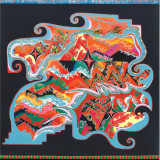
After four years, De Lichting is back with a new double album: Drie Nul Drie!
This fresh addition to the infamous compilation series revolves around a central theme: The 303 Acid Bassline.
The double LP format has always been the weapon of choice for the crew when it comes to implementing diversity in their musical story.
Despite the 303 being a rather limited concept, everyone within the collective finds a unique way to approach this classic element that has been rinsed for decades.
From the typical techno bomb of “MJM002” to the sneaky after hours tech gem “5421”, or the Detroit influenced chill-out cut “Tool”, the album bursts with playfulness and creativity, while coming together logically sound wise.
Buscar:bass collective
The next chapter of the Natural Information Society is here. Since Time Is Gravity, credited to Natural Information Society Community Ensemble with Ari Brown, presents a newly expanded manifestation of acclaimed composer & multi-instrumentalist Joshua Abrams nearly 15 year, 7 albums &-counting flagship ensemble. Joining the core NIS of Abrams (guimbri & bass), Lisa Alvarado (harmonium) Mikel Patrick Avery (drums) & Jason Stein (bass clarinet) are Hamid Drake (percussion), Josh Berman & Ben Lamar Gay (cornets), Nick Mazzarella & Mai Sugimoto (alto saxophones & flute), Kara Bershad (harp) & Chicago living legend of the tenor saxophone Ari Brown. Recorded live to tape at Electrical Audio & The Graham Foundation, cover painting Vibratory Cartography: Nepantla, by Lisa Alvarado. 2xLP on Eremite USA, 2xLP & CD on Aguirre/Eremite Europe. Out 14-04.
Since first developing Natural Information Society in 2010, Joshua Abrams has been gradually expanding the group’s conceptual underpinnings, its musical references & the sheer number of the group’s members. Its music is, in a sense, an expansive form of minimalism, based in repeated & overlaid rhythmic patterns, ostinatos & modality. Its roots, its scale & its meaning become clearer in time. If time is gravity, it also allows us to carry more. Having begun as fundamentally a rhythm section with Abrams’ guimbri at its core, the version here can stretch to a tentet, including six horns.
Abrams has been expanding his minimalism gradually, but he has long understood a key to minimalism’s potential: the breadth of its roots in the late 1950s & early 1960s, ranging from the dissatisfaction of young European-stream composers with the limitations of serialism to the simultaneous dissatisfaction of jazz musicians with the dense harmonic vocabulary of bop & hard bop. The former began exploring rhythmic complexity & narrow tonal palates in place of harmonic abstraction (Steve Reich’s Drumming, Philip Glass’ Music with Changing Parts; perhaps above all Terry Riley’s In C & his late ‘60s all-night organ & loop concerts); the later reduced dense chord changes to scales (signally with Miles Davis' Kind of Blue, but rapidly expanding with John Coltrane’s vast project). In the 1950s the LP record opened the world with documentation of Asian & African musics, key influences on both minimalists & jazz musicians. If John Coltrane’s soprano saxophone suggested the keening shehnai of Bismillah Khan, the instrument was rapidly taken up by two key minimalists, LaMonte Young & Riley, similarly appreciative of its flexible intonation, the same thing that kept it out of big bands.
If the guimbri, the North African hide-covered lute that Abrams plays with NIS, involves a rich tradition of hypnotic healing music associated with the Gnawa people, Abrams’ music also touches on other musics as well — other depths, memories & healings, different drones, rhythms & modes. As the group expands on Since Time Is Gravity, he has made certain jazz traditions in the same stream more explicit as well. If there is a mystical & elastic quality involved in the experience of time, both in direction & duration, you will catch it here. The parts for the choir of winds expand on the roles of Abrams’ guimbri, Mikel Patrick Avery & Hamid Drake’s percussion & Lisa Alvarado’s harmonium: at times, the winds are almost looping in the tentet version, each hitting a repeating note in turn, at once drone & distinct inflection on temporal sequence. The brilliance of the work resides in Abrams’ compositions, the NIS’ intuitive execution & in Ari Brown’s singular embodiment of the great tenor saxophone tradition, including the oracular genius of Eddie “Lockjaw” Davis, & Yusef Lateef. The three pieces by the expanded NIS featuring Brown —the opening “Moontide Chorus” & “Is” & the ultimate “Gravity”— have an immediate impact, & togther might be considered a kind of concerto for tenor saxophone. Here Brown presses almost indistinguishably from composed melody to improvised speech, getting so close to language that he might have a text. Everything here is a sign. Note the tap of the Rhythm Ace that links “Moontide Chorus” to “Is”, the attentive heart always present, even when signed by a machine. There’s a link here to the methodologies & meanings of dub music & the linear & vertical collage of beats, textures & tongues: treated with reverence, a sample of a beat-box can be as soulful, as hypnotic, as a mbira or a tamboura. If those pieces with Brown are heard as a suspended concerto, the three embrace & enfold the other works, like the sepals of a flower. That placement will also touch on the mysteries of our perception of time.
Particularly in “Is”, but elsewhere as well, a phenomenon of transcendence arises in which time appears to be tripartite, at once moving backwards & forwards & standing still. This is an act of technical brilliance certainly, but also an illumination of music’s ability to represent temporal consciousness through polymetrics. This particular listener has only heard it before in a few places, including the horn shouts & bowed basses of Coltrane’s Africa, in moments of Charles Mingus’ The Black Saint & the Sinner Lady, in certain pieces where tapes were literally running backwards, & earlier still in Dizzy Gillespie’s Cubana Be, Cubana Bop, in which the composer George Russell & conguero Chano Pozo found a music that spoke at once in the voices of Stravinsky’s Rite of Spring & the vestigial rites, rhythms & songs of the Yoruba language & Santeria religion of inland Cuba.
In Joshua Abrams’ compositions & the realization of them by the NIS, in the time of one’s close listening & memory thereof, distinctions between the “natural” & the “social”, the “quotidian” & the “transcendent” are erased, suspended or perhaps irrelevant. Consider two of the ensemble pieces, one named for nature, the other social science. In “Murmuration” the repeated wind figures of flute & alto saxophone combine with the interlocking patterns of harp, guimbri & frame drum (tar) to create a perfect moving stillness, not an imitation but a witness to the miracle of the starlings’ astonishing collective art, a surfeit of beauty that might be the ultimate defense tactic.
“Stigmergy” takes its name & concept from the Occupy movement’s Heather Marsh, who proposes a social system based on a cooperative rather than competitive models, one in which ideas are freely contributed & developed as ideas rather than an individual’s property. In its form, Abrams’ “Stigmergy” is the closes thing to traditional jazz, a series of accompanied solos by each of the wind players. However, the composed accompaniment is a radically collectivist notion: a repeated rhythmic figure, call it ostinato or riff, in which the different winds each play only a note or two of the figure, a concept both more collectivist & individualistic in its conception than any typical unison figure. It suggests another of the underlying recognitions that propel the Natural Information Society, the group as social organism, the teleology of hypnotic anarchy, all parts in place, functioning systematically, evolving & expressing itself, its nature & society, as a transformative organism.
George Lewis has described music as “a space for reflection on the human condition”. This suggests that, rather than a “distraction”, at least some music might serve as a distraction from distraction. It’s a focus, a clarity, a awareness, an external invitation to interiority, as if music itself is a model for form & contemplation, an organism contemplating for us or as us. If that is a possibility, & I am sure I have heard such musics, than this music is among them. How many of our rhythms, melodies & harmonies (cultural, historical, biological, psychic) might such music carry, translate & transform in the particulate ecstasy of our own murmuration? (Stuart Broomer, April 2022)
Dear friends, music is more than just the sum of its individual parts. It also has a metaphysical character, which is particularly determined by its sociality. Kerrier Collective, a group of friends from Cornwall in England, lives this social aspect by making music together and ¦nding relaxation from their stressful everyday lives. With their worldbuilding
"dreams of the sea" Ep, the collective presents us with dance music not often heard like this. It is inspired by classic folk, pop, jazz, UK garage, latin, disco, house and techno. Imagine The whitest boy alive together with Giorgio Moroder interpreting Dylan songs with musical means of the hardcore continuum in a South American bar - Ok, take that with a wink, but you know what is meant. The title track is a sound journey into the depths of the ocean, where we encounter an
underwater party. A fat Reese bass forms the foundation of this piece, which is complemented by a rich arrangement of shimmering bells, guitar plucking, strings and female vocals.
This breathtaking mood leads into a driving beat accompanied by acid arpeggios. It's all so deep that you think you can hear the call of a whale from somewhere. "Paddington Express" is a slow march accompanied by heavy bass. All around you, a piano ghosts up and down and mysterious vocal snippets create a perfect symbiosis with an acid line. Should you be accompanied "On your last day" by this eponymous track, it will be a good day - a day that may begin with a gloomy, heavy foreboding, but will dissolve into a joyful, peaceful lightness. The guitar lick of this track issimply irresistible. On your last day, you will de¦nitely dance!
The record closes with "Friday afternoon". The name says it all. We all know how it feels. Let this euphoric disco tune carry you into the weekend! P.S.: Physical release comes with handcrafted, screen printed artwork by fabulous graphic artist Zatina Kessl.
Since we've known him, Robert Lloyd has made quite clear his enormous affection for the songs and sounds of Freakwater, the duo of Janet Beveridge-Bean and Catherine Irwin who've been wrongly denied their place as rightful and willful progenitors of alt-country's 'movement', which (frankly) is to their credit. Their genius in offering absolute authentic to the sound old-time Appalachian folk music with a modern façade that in no way negates tradition (one of their albums is titled Feels Like The Third Time) is unparalleled within the genre, and Freakwater remain under-appreciated. After the start of Covid, Robert dared approach Janet with the idea of recording together. Over the course of the long pandemic, songs were bandied about for months, and when recording was finally practical, a band was assembled with dates set up for a recording session in Valencia, Spain. Robert and Janet were joined by Robert's long-time ally, Pete Byrchmore, the musical foil for Robert's solo album on Virgin and a former Nightingale, Mark Bedford, the bassist for Madness and Terry Edwards' Near Jazz Experience, and Pablo Roda, Spanish mystery drummer, couldn't have worked out more perfectly. Tracks were selected without regard for collective presentation, just the goal of walking out of the studio with an album of perfect gems. Forget Lee & Nancy or George & Tammy, Rob and Janet have an immediate chemistry that only sounds long-lived - and too uniquely them to merit any comparison. The title track, Black Cat, Dark Horse is the sole Lloyd / Bean / Byrchmore composition and one of the record 's highlights. Jim Elkington, collaborator with Jeff Tweedy and Richard Thompson, contributes Heavy Reckonings and a song written with Janet, The True Lovers' Knot And The Lie, while Robert adds reworkings from past releases - Sweet Georgia Black and Black Country (with Pete) - not to mention the unreleased Eggs And Bacon. Janet brought One Shot and the unheard Freakwater song Arc Of A Smile. Covers of tunes from Dion and The Monkees and a magnificent Jon Langford song, "Tears Like Stars" round out the album. We daresay the album is among the finest you'll hear in 2023. That it doesn't fit perfectly into any preconceived genre is a testament to its quality. "Songcraft" is a word used infrequently today, yet Black Cat, Dark Horse will show that good songs endure. We're proud that Robert and Janet will find some new admirers through this album's release. The Michael Cumming / Stewart Lee film King Rocker made a case for Robert Lloyd-as-losthero; this album furthers that idea and shows a compelling side of Janet's talent and abilities which will be a surprise to her fans and serve as an entry point to exploring her many other compelling projects.
Pacific Northwestern doom metal monolith BELL WITCH will see the
release of their new album "Future's Shadow Part 1: The Clandestine
Gate" on 2LP/2CD, June 9th.For their new album, bassist/vocalist Dylan
Desmond and drummer/vocalist Jesse Shreibman exploded Bell Witch's
bounds
Like 2017's lauded "Mirror Reaper", "The Clandestine Gate" is a single 83-minute
track -- a composition that pulses and breathes on a filmic timeframe. It
constitutes the first chapter in a planned triptych of longform albums, collectively
called "Future's Shadow." While traces of organ and synthesizer hovered over
"Mirror Reaper" and Bell Witch's 2020 collaboration with Aerial Ruin, "Stygian
Bough Volume 1", "The Clandestine Gate" drew those instruments closer to the
center of its compositions.The band reunited with their longtime producer Billy
Anderson as they began negotiating these new compositional weights. On "The
Clandestine Gate", Bell Witch's twinned voices build off of the chantlike textures
of previous records while steering toward more developed melodic lines,
structured harmonies, and rhythmic death metal growls.
The immense gravity of a work like "The Clandestine Gate", which features
exclusive stunning cover art by Jordi Diaz Alama, allows ideas to simmer in a way
that feels profoundly and somatically intuitive -- not just a philosophical exercise,
but an embodied truth. By slowing down both their creative process and the
tempo of the music itself, Bell Witch digs even deeper into their long standing
focus: the way life spills on inside its minuscule container, both eternal and
fleeting, a chord that echoes without resolution.
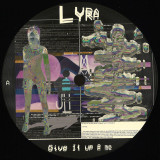
Young South Coast UK producer Lyra’s ‘Give It Up 2 Me’ has been a very 2023 entity so far, racking up 170k + streams as an unofficial Soundcloud upload, starting to make an impact on Tik Tok (especially via the L Major remix) whilst being, in 4/4 terms, on the nippier side of things.
Rocking along at an unapologetic 160bpm, ‘Give It…’ goes big on energy, and low on musical frills, as the song (a faithful cover of Ojerime’s original) and driving bass/drums combo do all the work for what is a minimal, avant - donk workout.
On the remix front, Limoux slows things down with a 135bpm 4/4 mix that feels like it has roots in LDN 2015 style foot shuffling, but with added sense of contemporary punch and reach.
Stepping up on an old school / new school junglist front, L Major’s mix takes no prisoners, with his rolling, cut up breaks and big Reese b-line set to cause damage to unsuspecting systems everywhere.
Closing proceedings, the Jag Limbo mix doesn’t seem to know if it wants to be Overmono or Giorgio Moroder, is in reality neither, and arguably none the worse for it.
- A1: Let’s Live In Love (Ft. Horace Andy)
- A2: Crazy Baldhead (Ft. Donovan Kingjay)
- A3: My Selecta (Ft. Gappy Ranks)
- B1: Portfolio (Ft. Mr Williamz)
- B2: Spiritual Healing (Ft. Johnny Clarke)
- B3: Let Me Be Your Man (Ft. Donovan Kingjay)
- C1: I’ll Get Along Without You (Ft. Earl 16)
- C2: Guiding Star (Ft. Mr Williamz)
- C3: Smoke All Night (Ft. Horseman & Charlie P)
- D1: I’ll Get Along Without You (Ft. Earl 16)
- D2: Guiding Star (Ft. Mr Williamz)
- D3: Smoke All Night (Ft. Horseman & Charlie P)
Reggae Roast, the UKs premier Reggae Soundsystem collective are delighted to bring you their second studio album More Fire!. Following on from their debut Turn Up The Heat, which was released through Trojan Records reaching #1 in the iTunes Reggae charts.
Having been at the centre of the UK Soundsystem scene for over a decade, Reggae Roast have brought together a plethora of world-famous reggae stars on one record, including veterans Horace Andy, Johnny Clarke & Horseman, alongside more contemporary vocalists such as Gappy Ranks, Mr Williamz & Soom T.
Joining the dots between reggae and UK bass music, Reggae Roast take you on a joyful journey through the ages, seamlessly taking influences from Rocksteady through to Roots, Dancehall, Jungle and Dubstep.
More Fire! will be released as a limited edition of 1000 individually numbered copies on flaming coloured vinyl, cut at 45RPM and housed in a gatefold sleeve with 2 printed inner sleeves.
Tidal Waves Music proudly presents ‘Fly By Night’ for the FIRST TIME on vinyl (the album was only released as a limited compact disc back in the early nineties).
This unique record comes as a deluxe 180g vinyl edition (strictly limited to 500 copies) with obi strip.NonReturnable.
This vinyl edition also features the original painted front cover artwork by Virgil Grady (known for his work with Tribe records) and back photography by acclaimed Detroit scene photographer & author Barbara Barefield, whose work has appeared in many renowned publications such as The New York Times, LA Times, People magazine and countless others.
Released exclusively for Record Store Day 2023 (UK/Europe) and available in participating stores on April 22, 2023.
Wendell Harrison was born in Detroit in 1942 where he began formal jazz studies for piano, clarinet and tenor saxophone. At 14, while still in high school, Harrison started performing & recording professionally with artists such as Marvin Gaye, Grant Green, Sun Ra, Hank Crawford … and many others.
In 1971, Harrison began teaching music at Metro Arts (a multi-arts complex for youth) where he also connected with Marcus Belgrave, Harold McKinney and Phil Ranelin…soon after they formed the (now
legendary) Afro-centric TRIBE record label and artist collective. TRIBE used the Metro Arts complex as a vehicle to convey a growing black political consciousness. Wendell Harrison also published the very popular TRIBE magazine, a publication dedicated to local and national social and political issues, as well as featuring artistic contributions such as poetry and visual pieces.
In 1978 Harrison and McKinney co-founded REBIRTH, a non-profit jazz performance and education organization, in which many notable jazz artists have participated. Around the same time Wendell Harrison
also created the WENHA record label and publishing company, which released many of his (now classic) recordings as well as those of other artists, such as Phil Ranelin, Doug Hammond and Reggie Fields (The Real ShooBeeDoo).
In the early 1990s, Wendell Harrison was awarded the title of “Jazz Master” by Arts Midwest. This distinction led Harrison to collaborate with fellow honorees and gave him the chance to tour throughout the UnitedStates, Middle East and Africa. Even to this day Wendell Harrison's recordings for the TRIBE, WENHA and REBIRTH labels have a large worldwide fanbase.
It is on WEHHA in 1990 that Harrison released (and self-produced) the opus: ‘Fly By Night’ which we are proudly presenting you today. ‘Fly By Night’ is a monster of an album featuring an all-star line-up that
includes Doug Hammond (Mingus, Lonnie Liston Smith) on drums, Kirk Lightsey (Chet Baker, Calvin Keys) on piano, Cecil McBee (John Hicks, Pharoah Sanders, Alice Coltrane) on bass, Jaribu Shahid (Sun Ra) on contrabass and Pamela Wise (Tribe) on Piano. Harrison is killing it here with this selected ensemble (guys he grew up with in Detroit in the late 50’s, when hard bop was the thing and Miles and Coltrane were the heroes of the day). This group of talented veterans are taking this classic album to unseen heights.
On ‘Fly By Night’ the gloves come off…no more jazzy-funk or poppy-jazz. Wendell picks up his tenor for one tune but the remainder of the sessions he performs on clarinet. Wendell’s mastery coaxes the sweet piquant sound of the instrument and as it re-emerges in the contemporary jazz scene. The eight handpicked tunes demonstrate the fertile new directions Wendell Harrison has been working on, combing standards with a fresh new approach.
On these amazing recordings (recorded at the Rebirth Studios in Detroit) the listener is invited to experience a synthesis of what has been and what is now. The record shows Wendell’s trademark proficiency. All of the above makes this incredible record both timeless and as relevant today as it was back when it was initially
released.
repress !
After Space Ghost’s first album Endless Light took to international airwaves and echoed out of cities from London to Los Angeles, his forthcoming release Aquarium Nightclub brings back his signature lo-fi aesthetics with a fresh hit of inspiration from the natural world.
Melding irresistible vintage synths with a meditative groove, Aquarium Nightclub is a journey of sorts. Taking listeners on a tropical tour through 80s house drums, lush synth landscapes, and deep bass melodies, the thirteen-track LP is as adventurous as it is restrained.
Growing up in a small town a few hours from California’s East Bay area, Space Ghost (Sudi Wachspress) moved to Oakland ten years ago to study at the California College of the Arts. In a city known for its vibrant cultural fabric and its experimental music scene, Space Ghost represents a new generation of young artists. His DJ collective Late Feelings, launched in 2013, has allowed him to find his own groove amongst monthly all-vinyl dance parties, where he plucks influences from various corners of the world.
More complex than last year’s release, Aquarium Nightclub shows off Space Ghost’s artistic hunger and unique sonic signature.
Kicking off with “Sea Snake Island,” a track that is best described as late 80s house melancholia is a beautiful dance of shimmering keys, drum machines, and sounds of the jungle. The single “Sim City” ft. Morgan is a classic Chicago house beast; dark but uplifting with heavy bass undertones, fuzzy drum pulse, and plenty of mysterious synth melodies. Other tracks like “Ocean Odyssey,” “Night Dive” and “Aquarium Nightclub” plunge into an ambient world of slow 80s funk, though always rooted in the Bay Area sound.
A product of record-collecting and dance party hosting, Aquarium Nightclub is a glittering postcard from Atlantis. Profound yet undeniably groovy, its mesmerizing tropical undertones promise a safe journey back to the endless days of summer.
The distinctive rolling grooves, growling basslines and blasting horns of Snakehips Etcetera combined to present Nucleus's most energetic record. First released on Vertigo in 1975, original copies of Snakehips Etcetera are now very tricky to score. Like all the Nucleus records, it’s aged ridiculously well and this Be With re-issue, re-mastered from the original analogue tapes, shows off just why this deserves to be back in press.
Genius trumpeter and visionary composer Ian Carr was one of the most respected British musicians of his era. He was a true pioneer and saw the potential in fusing the worlds of jazz with rock, just as Miles Davis and The Tony Williams Lifetime did in the US. In late 1969, following the demise of the Rendell-Carr quintet, and tiring of British jazz, Carr assembled the legendary Nucleus. Regarding music as a continuous process, Nucleus refused to “recognise rigid boundaries” and worked on delivering what they saw as a “total musical experience”. We can get behind that.
Under bandleader Carr, Nucleus existed as a fluid line-up of inventive, skilled musicians. This constant evolution and revolution was all part of the continuous musical exploration and discovery that took jazz to new levels. And the music has kept relevant. To steal a line from a review of our re-issue of Roots, when it comes to anything Nucleus “it’s basically already hip-hop”
With all restraint out the window, 1975's pimped-up Snakehips Etcetera is the outrageous - in both cover art and sound - follow-up to the brooding Under The Sun. It's perhaps not one for the jazz purists! It finds Nucleus pared down to a core group of six, with Carr, Bob Bertles (sax), Ken Shaw (guitar), Geoff Castle (keys), Roger Sutton (bass) and Roger Sellers (drums) comprising the collective. Snakehips Etcetera reflects a period where the compositions start to become a little more direct and less-cerebral in comparison to some of Nucleus' previous releases. And why would we begrudge them some fun? This one rocks, swings and funks with no little soul. And more than a little jazzy sleaze. Clearly, they were having a good time.
The album has a real live, jamming feel to it, no surprise given the extent to which they were touring at the time. The band is tight and grooving throughout, none more so than on Bob Bertles's effervescent opener, "Rat’s Bag". So darn funky it stings, it's an infectious gem full of punchy clean lines over a killer bassline from Sutton. The thick, driving jazz-rock of "Alive And Kicking" is exactly that. It has a very improvisational feel, but an inspired one at that and features a wailing guitar solo from Ken Shaw that simply slays. The funky "Rachel’s Tune" is amazing, bringing you back to Canterbury days with its fuzzed-out organ solos to close out Side A.
Opening up Side B, the cool psychedelic title track unfolds slowly and sensually over its ten-plus minutes. A stoned soul stew of sorts, each member of the crew gets their chance to shine over Sellers's steady drums. The melodic funk fusion of "Pussyfoot" pairs Carr with Bertles on ace solo flute for a bright, springy melody. This one really gleams over shuffling drums. Changing the pace to close out this memorable set, the particularly cool "Heyday" is a reflective, sober tune which reinforces the sumptuous Nucleus palette, the acoustic guitar and bass high in the mix to make the neck snap, the horns elegantly blasting to help you swoon.
This Be With edition of Snakehips Etcetera has been re-mastered from the original Vertigo master tapes, Simon Francis’ mastering working together with Cicely Balston's cut at AIR Studios to weave their usual magic with these wonderful recordings. The striking, lascivious sleeve has been restored in all its seductive/ridiculous beauty.
Bristol's new wave dance floor instrumentalists announce their new album 'Ruins Everything' releasing on Worm Discs. Snazzback’s
electrifying chemistry has wowed audiences at Ronnie Scott’s, festivals such as Glastonbury, Boomtown & Shambala and gained support from BBC Radio heavyweights including Gilles Peterson, Jamz Supernova and Jamie Cullum. Snazzback's music is a collage, collectively constructed, torn up and glued back together in unexpected ways, bringing a renewed, daring energy to UK dance music.
The 7-piece embrace their experimental beginnings to create a sound
fusing abstract beats with spiralling improvisation. Their music is soaked in influences including interlocking West African rhythms, rootsy Brazilian flavours, sprawling soundscapes, deep dubstep
basslines and flickering arpeggiators. A collaborative instinct runs through the group, and an eclectic choice of vocalists keeps their
compositions shimmering with new possibilities.
End of Everything is the intrepid seventh album from Mega Bog, a nightmarish experimental pop ensemble led by Erin Elizabeth Birgy. In 2020, Birgy was surrounded by seemingly endless turmoil: mass death, a burning planet, and a personal reckoning when past traumas met fresh ones. Living in Los Angeles, against the backdrop of brilliantly horrifying forest fires, she questioned what perspective to use moving forward in such dumbfounded awe. Deciding to seize something tangible, she produced a record that spoke of surrender, of mourning, and support in the face of tumultuous self-reflection. Writing on piano and synthesizer, instead of the familiar guitar, Birgy explored a spectrum of new sounds to illuminate a state of volatility and flux that was both universal and personal. Speaking of this transition, she describes the need “to feel… instantly. I didn’t want to dig into secret codes. I no longer wanted to hide behind difficult music. I was curious to give others the same with the music I create; to make music someone could use to explore drama, playfulness, and dancing, to shake the trauma loose.” Heavy grooves, metal guitar squeals, Italo disco bass lines, rhapsodic synth layers, and huge choruses stomp around the delightfully sanguine pop drama. Where previous records stretched out into the abstract and ethereal, End of Everything delivers a hit straight to collective awareness and healing. A seemingly disparate jukebox of sounds – ranging from Thin Lizzy, Bronski Beat, Franco Battiato and Ozzy Osbourne to 90’s house classics like Haddaway’s ‘What is Love’ and Corona's ‘Rhythm of the Night’ - foregrounded a new punchy theatricality in Birgy’s music. The songs she was creating at home followed suit with bolder hooks and more dancefloor energy than she’d ever dared before.
- A1: Without You
- B1: Love Can't Be Borrowed
Produced by Kelly Finnigan of The Monophonics, Record Kicks present “Without You” / “Love Can't Be Borrowed” a limited edition 45 featuring 2 singles from the upcoming album by US combo The Sextones “Love Can’t Be Borrowed”. The 45 vinyl is limited to 500 copies worldwide and it’s a must have for all rare soul fans and djs. The Sextones are back. The intrepid soul crusaders from Nevada’s high desert have emerged from years-long writing and recording process guided by virtuoso producer Kelly Finnigan (Monophonics) with their latest offering: Love Can’t Be Borrowed the new album to be released next September 29 via Milan heavy-weight soul label, Record Kicks. With inspiration from artists like The Moments, Baby Huey, The Delfonics, and especially the late Curtis Mayfield, the album is drenched in the era-defining tone that can only come from its origins on analog tape. Friends since childhood, The Sextones are Mark Sexton (guitar, vocals), Alexander Korostinsky (bass), Daniel Weiss (drums), and Christopher Sexton (piano). Having known each other for so long, their musical chemistry is effortless and forms the foundation of the band’s longevity and creative workflow. Despite their bond, each member has been able to channel their creativity into other acclaimed groups—Alexander and Mark with their cinematic-soul project Whatitdo Archive Group, whose acclaimed debut LP “The Black Stone Affair” was released on Record Kicks in 2021, and Daniel with the soul/jazz group Delvon Lamarr Organ Trio (Colemine Records). Flexing their creative muscle individually has only strengthened The Sextones’ collective songwriting ability and heralds their formidable return to the spotlight. With their recent signing to Record Kicks, the self-made heroes of soul begin a new chapter in their sonic journey, ready to scale new heights and plumb deep emotional depths in service of the genre they love.
Three years after the release of ARTEMIS’ critically acclaimed self-titled debut album, the ensemble returns with a marvelous follow-up that highlights the improvisational strength of its members as well as their respective gifts as composers. In Real Time showcases a new lineup of the collective with founding members pianist Renee Rosnes, drummer Allison Miller, trumpeter Ingrid Jensen, and bassist Noriko Ueda joined by newcomers tenor saxophonist Nicole Grover and multi-reedist Alexa Tarantino. The 8-song set presents compelling new band member originals along with choice covers of pieces by Lyle Mays (“Slink”) and Wayne Shorter (“Penelope”).
The second collaborative album from Laetitia Sadier Stereolab & solo and Brazil's Mombojó. Release via Stereolab's Duophonic Super 45s imprint. Modern Cosmology is a musical ensemble composed of six individuals of the human race, none of which are cosmologists or astronomers, although Felipe S. - who sings and plays the guitar - knows quite a bit about reading astrological charts. He shares his frontperson duties with one Laetitia Sadier who, by virtue of her singer-songwriter career both as a solo artist and as part of the Stereolab ‘groop’, happens to be one of the key figures of her bandmates’ musical formation. Their paths first crossed when Marcelo - also on guitars - lent his amp for some of Laetitia’s solo concerts in Brazil under the condition that he got to meet his musical idol, and along came his brother Vicente - who plays the drums - and keyboardist Chiquinho. The four lads, plus Missionário José on bass, are collectively called Mombojó, an established band on the Brazilian alternative scene.
- A1: Musik 4 Da Soul (Feat Courtney Melody)
- A2: Garden Of Life (Tenor Fly Tribute)
- B1: Athos (Feat Lij Tafari)
- B2: Ancestorz (Jungle Fari)
- C1: Tottenham Story (Feat Akala)
- C2: Jungle Defender
- C3: Postcode Dance (Feat Martha Cecilia, Nãnci Corriea + Phoebs)
- D1: Senegal
- D2: Samurai Junglist (Feat Junglist Youths)
Mikail Tafari aka Congo Natty aka Conquering Lion aka X Project aka Rebel MC is back.
After releasing his acclaimed 31 track album last October on digital platforms, he comes with a 9 track double LP featuring the more uptempo tracks & Mixed Double CD Mixtape.
He created the tracks with his ‘Resistance Band’, featuring a rich talent of the established & new global artists from Brazil, Japan, Jamaica via Deptford & Tottenham. It crosses genres of Drum & Bass, Reggae, Jazz & shows the Rootz of Jungle. The Resistance Band include The cream of reggae: Courtney Melody, Reggie Stepper, Junior Delgado, Daddy Freddie & Carroll Thompson. The new school of uk vocal talent: Maverick Sabre, Eva Lazarus, Akala, Klashnekoff & Logic & the new jazz school : Shabaka Hutchins, Nubya Garcia on sax & Amrit Kaur on sarangi. Plus international artists: from Brazil – Monkey Jhayam, Japan : Junglists Youths, Fikir Amlak & Krar Collective from Ethiopia, but all have their rootz in Jungle.
Set to represent the global diaspora and giving a voice to the people on the upcoming album, Congo tells the most important story jungle music can tell whilst documenting the uprising and reflecting on where mankind, culture and the journey is at in 2023.
With a five decade deep discography spanning seminal and timeless releases like Street Tuff, Tribal Bass & Wickedest Sound (as Rebel MC), Junglist, Get Ready, Code Red, Under Mi Sensei, Get Wild, Kunta Kinte and more, Congo has played a founding and hugely influential role in one of the most phenomenal, boundary breaking music movements the UK has ever known.
Remaining on the front line of the musical rebellion to this day, Mikail understands jungle’s power to unite and break barriers. Weaving positive affirmations of his spiritual life as a Rastafarian into his song writing, he has been an consistent protagonist in the jungle uprising since the early 90s. Forever humble, he seeks to spread more positivity and encourage unity, whilst focusing on the new generation who will carry his torch into the next five decades.
Continuing to spread the Congo Natty message as a performer, musician, label owner, pioneer, revolutionary, humanitarian and father, Ancestorz (Rootz Of Jungle) is set to be his most personal, ambitious, timeless and expert album to date and his finest chapter yet.
- A1: Erstes Kapitel (Verschliffen)
- A2: Zweites Kapitel (Ruckartig)
- A3: Drittes Kapitel (Ungesagt, Dann Vergessen)
- A4: Viertes Kapitel (Bewusstseinsfrei)
- B1: Fünftes Kapitel (Kreuzweis)
- B2: Sechstes Kapitel (Herausgewunden)
- B3: Siebentes Kapitel (Verflochten)
- B4: Letztes Kapitel (Halb Vermutet, Halb Gesehen)
11th album by the one-of-a-kind collective: psychedelia and free form jazz (not jazz) trigger a sophisticated excursion into weird textures with drastic turns. Dislocated dense music full of secret connections!
Kammerflimmer Kollektief – "Schemen"
Before reason prevails, invoked by those who want everything to remain as it is, Kammerflimmer Kollektief disrupts the established supply chains of sound. It seeks more interesting ways to assemble them. Trusting in this, because of the fact that every sound that still comes out of a guitar, a bass, a harmonium, drums and electronic devices has already been taken into the common mangle of meaning anyway. Enough of all that. Here, nothing is explained. Here we speak in schemes. Polished and jerky.
The images that Kammerflimmer Kollektief conjures up therefore happen not in the focus of consciousness, but rather in its outer realms. In those to which one does not give one's full attention at the moment, but which are nevertheless perceived. For example, when a leaf falls from the ground back up to the tree in the corner of your eye, and for an instant you think this is possible, before you realize it was a small bird flying into the tree; it is in just such irritating moments between perception and realization that the art of the Kollektief also unfolds. On "Schemen", familiar fragments float gently around their core – a Fender Rhodes tone, a bass figure, a guitar motif, a masterful drum shuffle, a moment of icy stasis borrowed from the harmonium playing of Christa 'Nico' Päffgen. Triggering brief associations, they slowly rush off in other directions through free jazz-informed editing work, whereupon such zones can also arise in which perception has a few tricks ready and earlier experience suddenly breaks into the now in a completely different way. Half suspected, half seen.
Half-music like Can from Cologne – also masters of improvised editing – sometimes produced a few decades ago in their in-between moments. The first minutes of "Future Days" for example, which fade in gently, sketch a barely graspable figure emerging from all directions of the room. Kammerflimmer Kollektief also engages in similarly open moments of development. Loosely, it eludes the first formative impressions, keeping itself ready for moments that do not follow any logic of appointment. This looseness in handling makes Kammerflimmer Kollektief so fluidly audible, even when dissonant peaks and free playing arise. What Karlheinz Stockhausen is to Can's understanding of composition, the recordings of The Cocoon are to Kammerflimmer Kollektief. The Cocoon, a meeting of garage psychedelics from the Hannover area with free jazzers from the Galaxie Dream Band, whose album "While The Recording Engineer Sleeps", recorded in 1985 in unguarded moments, operates in a very similar way with decentralized perceptual ambivalences and only appeared more or less secretly four years later on Wilhelm Reich Schallspeicher. Other traces of "Schemen" lead to the debut album of Quicksilver Messenger Service. The guitars of Gary Duncan and John Cipollina, which refer to themselves in an unforced manner, are instructions to let go. They don't want to be traced in every note as a solo, but they give their music a sense that the essential takes place off center, in the mutual and intuitive gift of loving attentions. Consciousness-free.
Loving turns like the little guitar phrase that, like a kind of leitmotif, is repeatedly ghosting more or less unchanged through all of the Kammerflimmer Kollektief albums. A Coricidin induced, very catchy slide idea filtered out of ancient Æther, which – who knows – maybe even centuries ago found its way from somewhere to America – the old, the eerie – and from there wafted on through the ages to southern Germany, to a smoky studio in the Upper Rhine lowlands. A memory of which even the memory no longer knows what it once reminded. Unsaid, then forgotten.
In Kammerflimmer Kollektief you will also find a friend of slowly building, unhurried music, which probably would have been appreciated by the old Franz Mesmer, who 200 years ago, after tranquilizing treatments, sometimes used to play for his patients ambient melodies on the enormous glass harmonica. However, in order not to surrender completely to the flow of one's own life energy, as Mesmer had in mind with his therapies, Kammerflimmer Kollektief occasionally adds hectic tensions, gently embraced by the droning of a sine wave generator, as if a trance could briefly refesh. This old analog sine wave generator is new in the Kammerflimmer assortment of sounds. So, the art of the Kollektief likes to dock occasionally in modern times, yet with the past in mind. Mental states begin to flicker between imagination and certainty, between culture-bound art expression and coincidences: A cawing and scraping can always just be a cawing and scraping with Kammerflimmer Kollektief, the way Andy Warhol's mushroom eater just eats a mushroom.
Heike Aumüller's cover works, which illustrate all the Kammerflimmer Kollektief albums, additionally act as amplifiers of unexplained refractions. Her style consists of eye-corner art that remains so, even when looked at directly. Her shots remain disquieting because they do not jolt themselves into a reassuring order, even in retrospect. Rather than evading the fear that arises when looking at them by trying to impose some irrational rhyme or reason, that fear must simply be endured. This strategy of endurance is equally applicable to the music. The trick is to let parts be parts without compulsively seeking delusional patterns that lull us into a false sense of security and in doing so, possibly delude ourselves. In this context, freedom means not having to anxiously attach a fantasized superior meaning to everything. "Schemen" has an conspiracy disintegrating effect.
b A2 Zweites Kapitel (ruckartig) [feat. Heike Aumüller]
Mammal Hands announce spell-binding new album 'Gift from the Trees', their fifth studio album, pointing to subtle shifts and exciting new departures for the unique trio
"We're at a point now where playing and writing together can sometimes feel almost telepathic, that as individuals we can tune in to a collective resonance..."
Mammal Hands fifth album 'Gift from the Trees' offers a fresh perspective on the unique trio's singular music. The first to be recorded in a residential studio, the band enjoyed the opportunity to go late into the night searching for a deeper, more organic experience, closer to both their writing process but also their trance-like live performances. While some of the music was pre-composed and had even been performed live, the band also enjoyed the opportunity to improvise ideas in the studio. Drummer Jesse Barrett explains:
We wanted to have a more immersive experience that felt closer to our writing process. One thing that was really important to us was feeling free to jam out ideas as they came to us. We're at a point now where playing and writing together can sometimes feel almost telepathic, that as individuals we can tune in to a collective resonance and just follow that thread where it wants to go. Sometimes it's something as simple as a rhythmic, textural flow, like in Sleeping Bear.
There was also a conscious decision to move away from the sound and ambiance of the recording studio, with the band opting to engineer the record with their go-to live engineer Benjamin Capp before mixing the sessions with Greg Freeman in Berlin. The idea was to try and capture more of the energy of the band's captivating shows, saxophonist Jordan Smart explains:
Considering the group of tracks we had, it made sense to try and capture this process as organically and honestly as possible, and so a change in studio environment felt like the right move to us. Some of the tracks have a raw joy and energy that came with being able to play together again after a long period of time of having been apart, and capture that feeling of just being happy to be in a room with our instruments altogether again.
Whereas for pianist Nick Smart there was also the chance to really go deep into the band's music:
The new studio environment really opened us up to different ways of working and thinking because we could record at any hour of the day or night. I think this allowed us much more freedom to try unusual ideas and push elements of the music to extremes because we had the time to really focus in on the detail and work on things without time pressure. With some tracks, we were trying to find the boundaries of our playing ability and push beyond that point. With others, it was just getting into the right mindset and putting as much energy and emotion into the take as possible.'
The Welsh environment outside the studio doors seeped into the music presented on Gift from the Trees, with two recording sessions (one in winter and one in the spring) bringing different moods: one bleak and wintery, the other more hopeful and bright – an energy that permeates through tracks such as Kernel and Dimu.
Gift from the Trees opens with wonderfully elevating The Spinner which grew from one of Nick's piano parts and was developed and arranged into a complete tune without losing the feeling of constant flow and motion. It is almost like a dance, with the interaction of different melody parts and the doubling of certain parts melding together and fitting into the overall energetic flow, while Jesse's drums are both floating and deeply melodic. Riser aims to capture the band's raw energy and intriguingly is influenced by both breaks and modern drum production but also minimalist classical composition. Nightingale features the band at their most delicate and lyrical – a band favourite it draws heavily on modern folk with a beautifully realised melody that came unforced to pianist Nick Smart before being jammed out together. It was recorded early one morning, bringing an extra light and brightness to this beautiful performance.
Another album highlight is Dimu which utilises one of drummer Jesse Barret's favourite rhythmic devices from the Tabla repertoire and draws inspiration from Indian, Greek and Arabic music as well as modern folk arrangements. Dimu starts with saxophone over a bed of drones and percussion and moves through many different sections that frame and present the melodies in unique ways. The beguiling, intimate Deep within Mountains aims to place you in the room with the band as they play; it was recorded late at night to capture a dreamlike, liminal ambiance. The piano solo really reflects this mood and energy while the tenor is some of the softest and closest on the recording. Elsewhere, the remarkable Labyrinth started with what Nick describes as "some weird recording on my phone from a soundcheck, where Jordan was playing some crazy sounding bass clarinet part and I quickly recorded him", giving birth to a captivating, complex slice of propulsive 'almost' contemporary classical that like so much of the music on Gift from the Trees really couldn't be any other band than Mammal Hands.
Finally, the album draws to a close with the glorious Sleeping Bear, a tune that was wholly improvised in the studio. Nick and Jesse entered a simple but 'weird' locked groove and Jordan improvises melodies over the top. The track came about without any planning or thought; it was one of those special things that came by surprise and the band felt offered the perfect ending to their latest gift to us all: a deeply enthralling album that captures so much of what makes Mammal Hands a special band while mapping out new routes and paths for their beautiful, beguiling music.
First release on the new french label Disques de la Spirale, featuring an experimental motorik-kraut-dub infused, semi-improvised live act built by Tamara Goukassova, Axel Larsen & Théo Delaunay (Panoptique, Succhiamo, Violent Quand on Aime, Radiante Pourpre..) from Simple Music Experience ; featuring Maoupa Mazzocchetti, Fiesta en el Vacío, Ventre de Biche, Kyle Knapp (Deliluh) …
For fans of Faust, Tomaga, Tony Conrad...
French non-jazz trio overflowed by Simple Music Experience’s funders Tamara Goukassova, Théo Delaunay & Alexandre Larcier, offering a 40mn of non-simple music madness, and navigating between a dozen of etiquettes from undecided space rock to motorik-infused-dub, medieval folk, cartoon trance; everything under the seal of psychedelia and half-improvisation.
Built from drums, violin, springs, samples, reiterations, overdubs, trumpets, synths, distortions; and the appearances of L. Cedrón (Fiesta en el Vacío), L. Retraite (Ventre de Biche), K. Knapp (Deliluh), F. Mazzocchetti (Maoupa Mazzocchetti).
Chimera embraced by three members of the Simple Music Experience label, also (co-) liable at one point for the acts of Axel Larsen, (The) Simplists, Violent Quand On Aime, Constance Chlore, T. Goukassova, Radiante Pourpre, Succhiamo or Panoptique; Parasite Jazz emerged in 2016 in the smoke of a suspicious performance on Simple Music TV. An improvised and protean artifact at birth, the project settled down at the end of 2020 as a trio (Axel Larsen, Constance Chlore, Tamara Goukassova) in Marseille, then as a sextet during the Illusio festival in the summer of 2021. A series of concerts with a shifting line-up followed - Kyle Knapp, Luca Retraite and Luna Cedrón sometimes appeared and with them, spontaneous incandescences. This first series of collective hallucinations took the form of an album during a perilous recording at Grrrnd Zero (Lyon) in October 2021, and is completed by live recordings gleaned over the course of the summer episodes.
All tracks are composed and performed by Parasite Jazz:
Alexandre Larcier: bands, FX, springs
Tamara Goukassova: violin
Théo Delaunay: drums, percussion, synthesizer, tapes
Florent Mazzocchetti: trumpet on "Carton Jazz" and "Alarm Twist" (sampled)
Luca Retraite: bass on “Terciopelo” and guitar on “Alarm Twist”
Luna Cedron: vocals on “Terciopelo”
Kyle Knapp: lap steel on “Terciopelo” and “Untitled live at Gigors”
Around Function: Sketches, band lettering
Recorded and mixed by Théo Delaunay at Grrrnd Zero (Lyon) and l'Embobineuse (Marseille) except "Terciopelo" recorded at Illusio (Pradelles) and "Untitled live at Gigors" at La Sye Electric (Gigors-et-Lozeron).
Mastering: Rupert Clerveaux
Cover: Diane Malatesta
Design: Alan Briand
Parasite Jazz thanks: Quentin Mosko, the Groovedge/Illusio crew, Théo & Clyde, Maoupa Mazzocchetti, the 3 jokers Luna Luca and Kyle, Grrrnd & the Embobineuse.
The Hippo Sound System is a collective formed in 2018 by Bristol UK’s notorious ‘samba junglist’ DJ Hiphoppapotamus.
"Origins" is their long-awaited debut album!
Touring the festival scene across the UK and Europe their explosive live performances have earned them a well trusted reputation for blowing up dancefloors, moving feet and uplifting souls! Their tracks have been featured on BBC Radio 1, BBC Radio 1Xtra, BBC Radio 6 by Jeremiah Asiamiah, Don Letts and Craig Charles. Don Letts also included their track “Into The Jungle” on his “Best of 2020” round up.
Fusing their favourite elements of world music and sound system culture, they explore new possibilities between musical cultures, fusing ancestral rhythms with modern dance music.
Percussive rhythms and heavy bass drive this vibe train as this Hippo and his percussionist/production partner, Munki, draw influence from all over, Including Afro/Latin/world music, Jazz, Hip Hop, House, Breaks, Dub, Drum and Bass & Jungle for their productions. The result? A uniquely high energy and psychedelic global bass sound – complete with the flair of live musicians and the exciting builds and drops of bass music!
Passionate about collaboration with both their recordings and performances, they often call
upon guest features from artists such as K.O.G, Franz Von, Simo Lagnawi (Electric Jalaba), MC Spyda, Dr Syntax and many more. With almost no tempo untouched from 70-180BPM, they’re an extremely eclectic and versatile band that can customise sets for most stages and occasions.