quête:bass collective

Genres
Tout
VUSI/NORMAN ZULU/JIVE MAHLASELA CONNECTION - Face to Face

Strut revives a lost recording from the archives in January with a 2002 collaboration between acclaimed South African folk singer Vusi Mahlasela, singer songwriter Norman Zulu and Swedish jazz / soul collective Jive Connection. Sotho folk singer Vusi Mahlasela, dubbed "The Voice" Of South Africa, performed at Mandela"s inauguration in 1994 and has enjoyed his own long relationship with Sweden, regularly embarking on cultural exchanges and forging a strong bond with the Jive Connection band, featuring guitarist / bassist Stefan Bergman and Little Dragon drummer Erik Bodin within its line-up. Although touring regularly, the collaboration has rarely been documented beyond a lone studio album in 1994. This "lost" recording, discovered in the archives of producer Torsten Larsson, also features songwriter / vocalist Norman Zulu and showcases their natural musical chemistry together. Vusi"s songs have traditionally addressed the struggle for freedom and the need for reconciliation and, here, his lyrics are as powerful as ever, ranging from parables ("Prodigal Son") to an unflinching lament on child abuse ("Faceless People"). Jive Connection vary the soundtrack, bringing in hints of reggae, jazz and post-punk alongside traditional township arrangements.

pré-commande24.01.2023

il devrait être publié sur 24.01.2023

24,33
Teeth Machine - Gumball

Teeth Machine

Gumball

7"-VinylROK027
Ra-Ra Rok Records
10.01.2023

7" Black Vinyl in Fold-out Concertina Sleeve, 500 copies only. An anachronism in current times where individualism reigns supreme, Teeth Machine are a rare band knitted together through close camaraderie: a collective in the truest sense of the word, whose intricate, improvisational style resolutely resists being reduced to one single contributor. Teeth Machine found its beginnings in the close friendship and musical collaborations of Arthur Bently (saxophonist/lead guitarist) and Gray Rimmer (lead vocals/guitar). Having played together in various other projects since the age of 17 and disaffected with the music industry, the pair’s first furtive experimentations with the music that would later become Teeth Machine took place at a deliberate distance from the Outside world. This early incubation period, and the music made through endless bedroom sessions and demos recorded on laptops and tapes, became the spine of the project, fostering a sound that still retains both a precious intimacy and a large, expansive sonic scope. The band’s lineup as it stands today features long term friends and collaborators Anthony Boatright (Bass), Jamie Staples (Drums), and Ciara Reddy (Vocals/Synth). On their first self-assured, recorded offering to the wider world, Teeth Machine still bear the imprint of their origins, the band’s sound firmly grounded in the ethos of mutually weighted contribution, as well as the closeness cultivated in their early experiences, always retaining an air of uninhibited creativity and adolescent intimacy. ‘Gumball’, their first release on RaRaRok (Wulu, The Goa Express) was self-produced, mixed by Dilip Harris (King Krule, Mount Kimbie). It’s a song that conveys the tension and impossibility of communication and language, even when attempting to connect with those closest to us. Despite this, and however much the track itself bristles with an unmistakable air of friction, the listener gets the strong sense that there has not been a love lost, but rather one renegotiated, even expanded. Speaking about ‘Gumball’, Teeth Machine said: “‘Gumball’ is about the impossibility of talking. It was written during quite a chaotic period, and the lyrics came about after we had a big argument in the kitchen while trying to record a demo at the time - it tracks the madness and intensity of trying to make sense to someone you care about, or to yourself in your head. There’s a kind of antagonistic self help mantra that resonates throughout; it’s about internal and external conflict. It’s angry, but it’s also full of love too

pré-commande10.01.2023

il devrait être publié sur 10.01.2023

11,56
Various - Dead Dreams Don't Die Vol 1

Dead Dreams Don’t Die vol 1 marks the inception of Half Grand Records, a label focused on no-frills, raw talent electronic music. This artefact contains new output from several members of legendary Borft Records. Nimam (Spregleda) gives us a riotous and exuberant Drum and Bass banger that will have your teeth jingling. Jon Doppler’s signals transform from searing blasts of psychedelia to soaring synths that will make you pine for days of yore. A Stantz drops some body music that's equal parts acid and mosh pit. The closing track is by a group specific to the label; Cracktros. Cracktros is a collaborative group project that will continue to grow as more artists join the HG fold. With this number, the collective explores fantastic textures in this riveting deep house ditty. Keep your eyes peeled on this label.

pas en stock

Commandez maintenant et nous commanderons l'article pour vous chez notre fournisseur.

11,56

Last In: 3 years ago
Malikk & Chicks Luv Us - Can We Dance?

Jamie Jones and Lee Foss’ label Hot Creations will deliver a combined EP by Aix en Provence-based DJ and producer MALIKK and Marseille-born duo Chicks Luv Us in August. Bridging chunky tech house with dub techno, Can We Dance displays their collective love for bright and playful beats.

On the title track, the producers work in symbiosis to create a club-driven chunker with chopped-up vocal samples and a squishy bassline. Bouncy ‘til the last beat. On the B-side, Chicks Luv Us drop a Balearic-flavoured banger with Makelene. High-pitched vocals pulsate throughout the track, as huge kickdrums and playful sound FX amp up the energy. MALIKK offers a quirky closing track on Walkie Talkie, packed with punchy drums, bleepy percussion and techy vocals—perfectly aligned with Hot Creations’ colourful aesthetic.

Chicks Luv Us are two Marseille-born pals with a penchant for groovy house and minimal techno. Their back catalogue echoes the textures that bring them together as producers, with releases on Loco Dice’s Desolat, Steve Lawler’s Viva Limited and many more. They cut their teeth in DJing during their residency at Spartacus Club in Cabriès in the south of France from 2009 and 2018. Today, the pair continue to grow a legion of international fans while finessing their craft in the studio, and soundtracking dancefloors worldwide. MALIKK is an Aix en Provence-based artist whose early appreciation for 80’s disco, funky and soul still occasionally seeps into his current club-focused music. Previous releases on Hot Creations, Hottrax, Toolroom, and Solotoko display his multi-dynamic palette, nodding to several genres and moods. Having played in Brazil, Argentina, Spain, Belgium, Netherlands and his native France, MALIKK’s DJ sets reflect his fun and explorative approach, marking him as one of Aix en Provence’s finest exports.

pas en stock

Commandez maintenant et nous commanderons l'article pour vous chez notre fournisseur.

13,87

Last In: 14 months ago
The Broadside Hack - Live from Real World

Following their debut Glastonbury Festival performance, Broadside Hacks in collaboration with British Underground today announce the UK premiere of The Broadside Hack; a new documentary telling the story of the young vanguard of UK artists sharing radical interpretations, proto-feminist narratives and queer histories through the lens of British traditional folk song. An accompanying live album of the songs performed in the film will also be released in December on LP and digitally. Having enjoyed its US premiere at SXSW in March, The Broadside Hack is a short music documentary produced by British Underground, created with the aid of a grant from Arts Council England and PRS Foundation. Directed by Crispin Parry and filmed by The Northern Cowboys, It explores the influence of traditional folk songs on a new generation of musicians, filmed just as the UK was emerging from the dark days of the pandemic. The documentary was made in collaboration with music collective Broadside Hacks and features influential artists and groups from the new folk scene, including Rough Trade signees caroline, former Goat Girl bassist Naima Bock, whose acclaimed album Giant Palm was released on Sub Pop earlier this year, Shovel Dance Collective, Thyrsis, Broadside Hacks and Boss Morris. Discovering a fresh vitality in the tunes and new histories in the stories they tell, the film includes conversations, dances and intimate performances filmed at Peter Gabriel’s Real World Studios in Box, Wiltshire between 17th and 19th August 2021. The live concert and screening of The Broadside Hack arguably marks the close of the first chapter in the story of the UK’s new folk scene; a story in which Broadside Hacks has been central. Initially formed as a folk night, the pandemic forced it to change its shape, morphing into a collective of young, like-minded musicians who met to play folk music in South London. “An adventurous exploration of traditional music by the young and folk curious” - The Times // “All your favourite players in one Sunday League team” - Loud And Quiet // "The band play old folk songs, those so old their authors have been lost in time, and inject in them such life, depth and emotion that it's extremely affecting" - The Quietus // Side 1 A1 Boss Morris - Up The Hill A2 Interview Shovel Dance Collective - ‘A Collective Authoring of History’ A3 Shovel Dance Collective - The Bold Fisherman / My Husband Has No Courage In Him A4 [Interview] Thyrsis - ‘Collaboration Across Space and Time’ A5 Thyrsis - Single Sailor A6 [Interview] Naima Bock (Broadside Hacks) - ‘Retracing Beginnings’ A7 Broadside Hacks - Gently Johnny. Side 2 B1 Shovel Dance Collective - Merrily Kissed the Quaker B2 [Interview] Shovel Dance Collective - ‘Queering Folk Songs of the Past’ B3 Thyrsis - Godstow Bridge B4 [Interview] Naima Bock (Broadside Hacks) - ‘The Broadside Hacks Folk Club’ B5 Broadside Hacks - Rain and Snow B6 Boss Morris - Young Collins

pré-commande16.12.2022

il devrait être publié sur 16.12.2022

23,11
DELI TELI - TSIFTETELI CLUB LP

Bongos, bouzouki and Farfisa organ galore ! The explosive cocktail of rock'n'roll and traditional Tsifteteli hailing from 1960's Greece is still alive thanks to Deli Teli : the Marseille-based quartet performs a string of forgotten hits that once set Athens on fire, with a contagious energy and a subtle dose of Mediterranean drama.

Half a century ago, while French seasiders would dance to « Yéyé » sounds and dig the Beatles or Pink Floyd, a whole other scene was happening further along the coastline. Notably, Greek artists were a huge influence beyond the Mediterranean cradle ; Aris San's version of « Boum Pam » (a.k.a. « Bros Gremos Kai Piso Rema »), brilliantly interpreted by Deli Teli on this record, was a n°1 hit from Southern Europe to the tip of India ! Far from being an exclusive Greek sound, Tsifteteli music has travelled through borders for centuries and means « double string » in Turkish. In the 1960's, it mixed with rock'n'roll, surf and Latin-american influences, and gave birth to the typical « Laïko » sound.

With their powerful electric bouzouki (Greek lute) and the distinctive sound of the Farfisa organ, Deli Teli have carved their style while digging through the incredible goldmine of the late 60's and early 70's Tsifteteli/Laïko singles. The 4 musicians met in 2019 with a burning desire to dive into electric sensations – bassist Christos Karypidis used to play oud and keyboardist Arthur Bacon played accordion in most of his former projects – and made the most of 2020's « lockdowns » by building their repertoire and thinking up Deli Teli.

On this mini-album, they also interpret Koko's « Chily Chily », a groovy belly-dance mover ; « Ekso Dertia Kai Kaïmi », an intoxicating and frenetic floor shaker ; « Tsiftetelli 1969 », a cool organ-lead surfing instrumental ; and 2 slightly freer and more psychedelic numbers, « Taksim Deli » (improvisation) and « Bournelis », a creative re-arrangement of 2 tracks by Leonardos Bournelis.

Deli Teli preach a collective, sensual and solar hip-wiggling across the continents and beyond ; they are ready to shake our minds and bodies until we all gel together... Join the « Tsifteteli Club » now !

pas en stock

Commandez maintenant et nous commanderons l'article pour vous chez notre fournisseur.

18,87

Last In: 3 years ago
Shake Chain - Snake Chain

red/clear splatter vinyl

Shake Chain will also be performing at Marina Abramovic’s private view at Modern Art Oxford on September 23rd.

Shake Chain have been busy demolishing audiences and expectations for the best part of three years. Vocalist Kate Mahony sets that standard by starting each live performance by crawling from the back of the room through a disbelieving crowd’s legs in a shiny yellow raincoat. The resulting questions that frantically arise of ‘what’s going on?’, ‘am I hallucinating?’ and ‘is this part of the show?’ are hallmarks of how Shake Chain approach making their unruly, lyric-bespattered rock music.

The four-piece from London are completed by Robert Syres (guitar, synth), Chris Hopkins (bass, synth) and Joe Fergey (drums), all artists hailing from Goldsmiths College, Nottingham Trent and Wimbledon, University of the Arts. A mutual love of thought-provoking performance art and a yearning for disruption have helped Shake Chain lock into their wayward sound. Twitchy guitar lines jolt and jerk, synths burble noisily and tack-sharp drums pin things down for Kate’s reeling vocal to vault and slur. Kate’s singing has drawn comparisons with Yoko Ono, Su Tissue and even a seance with it’s unique embrace of flights of atonal fancy, head-first repetition and ecstatic frenzy. Opinion-dividing arguably, but singular in making Shake Chain dauntingly brilliant.

Shake Chain’s debut album ‘Snake Chain’ was recorded in the New Forest’s Chuckalumba Studios early in 2022. The tranquil setting only slightly skewed by the intense extratropical cyclone occuring outside. When asked to sum up the album the group collectively settled on it sounding like “crying in a Catholic sex dungeon with Eastenders on”, perhaps only half tongue in cheek given the soapy dramatics of opening track ‘Stace’. ‘RU’ is a stompy triumph of ad lib monotony, heavy and wonky, its vocal slowly unwinding into residual sense. Shake Chain’s songs are populated with cowboys, cherry-pickers, content-addicts, private investments, a careless driver called Mike, architects and by much lamentation at the state of our confusing existencies. This last point underlined in luminous marker pen with slow-building vortex ‘Highly Conpeptual’ and whispered closer ‘Duck’.

‘Copy Me’ races along with radiant headbangs of dynamic abandon, one part tumble, two parts pummel, “hold your breath til something changes” commands Kate whilst everything of course is in hammering flux. ‘Second Home’ is similarly coruscating yet bouyant, whilst ‘Arthur’ feels like it could tear inside in two amid sobbing wails and the twining of its disparate parts. Throughout all the unhinged freakouts, found sounds and blasting rhythms though is Kate’s questioning, resilient presence, anchoring everything. On bruising creeper ‘Birthday’ she asks most tellingly “Do we speak language or does language speak us? Is there a mouth in the middle of the desert? Do you ask how cups are designed? Would you say yes when you really mean I don’t know”? Shake Chain are cathartic and absurd, humorous and deadly serious yet always inspired. Its this tightrope walk which makes their album such a thrilling, vital listen.

pré-commande16.12.2022

il devrait être publié sur 16.12.2022

13,91
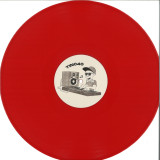
Borai - Naturally EP

Borai

Naturally EP

12inchTIN040
Time Is Now
16.12.2022

Red Vinyl

Introducing Time Is Now's newest recruit, a link up that felt inevitable. A Bristol native, Borai has had a firm foot in the city's bass scene since its inception, his steadfast dedication to rave culture helping to shape what it is today. When he's not curating his own Higher Level label, helping steer the Club Glow collective, or cutting dubplates for Dubstudio, he's exercising his passion for hardware, crafting vital DJ tools which span an impressive crosssection of the hardcore continuum. Naturally EP is a culmination of these endeavours, as well as his far-spanning influences.

We're transported out of Bristol and into late 80's Chicago - the golden era of garage house - via soulful vocals, nebulous melodies and saxophone whispers. It wouldn't be a Borai release, though, without some UK flavours. Rich atmospheric jungle track 'Phosphenes' brings things to a euphoric close, and reminds us of the producer's ambidexterity.

pas en stock

Commandez maintenant et nous commanderons l'article pour vous chez notre fournisseur.

10,88

Last In: 2 years ago
Bohren & Der Club Of Gore - Sunset Mission LP 2x12"

"Meat. The story needs meat. (And blood ... coagulated blood (Gore)). The substance we are seeking here lies beyond the bare bones of fact, thewhen and the where (founded in 1988, Mülheim an der Ruhr) or personneland instruments (a trio since 2016, built around keyboards, saxophone, bass & drums). The story is more than the sum of its facts. Mysteries may very well lurk here or there along the way. What keeps the final two foundermembers going after all this time Do Morten Gass and Robin Rodenberg have skeletons locked in their closets How dearly we would we love to know the answer to that one, alas the most beautiful puzzles tend to remain unsolved.Including their debut Gore Motel' (1994), BOHREN & DER CLUB OF GORE have amassed an impressive eight longplayers. Four album titles allude to the night - their debut was followed by Midnight Radio' (1995), Sunset Mission' (2000), and Black Earth' (2002), whilst the most recent instalment carried the name Piano Nights' (2014). The nocturnal quartet was punctuated by Geisterfaust' (2005), Dolores' (2008) and a mini-album entitled Beileid' (2011), adding rather eerie overtones to the after hours ambience. The BOHREN & DER CLUB OF GORE legend has grown stronger both at home and abroad with every record they have released and every show they have played. Strange as it may seem, there is a uniform consistency to their reception. Whatever the band does, critiques are unfailingly positive, yet repetitious. References, links and associations recur almost word for word. Consider the arrival of Christoph Clöser in 1997, by way of illustration. When he joined the group, his saxophone replaced the departing Reiner Henseleit's guitar as one of the defining instruments in the band. This was arguably the sharpest break in their sound to this day and a significant marker in terms of the band's reverence for Dutch instrumentalists GORE (the clue is in the name), whose repetitive riffs paved the way for how the guitar would be deployed in a post-everything future. Nevertheless, this fissure in the BOHREN continuum has barely merits a mention in the greater scheme of things. Similarly conspicious by their absence in the BOHREN chronicles are the numerous instruments which they added to the mix - vibraphone, organ, tuba, bass trombone to name just a few. The introduction of choirs at least had a clear visual impact. Since Thorsten Benning left at the end of 2015, the band has continued as a trio, sharing shifts on the drums (although they have equipped themselves with mechanical brushes). A decrease in personnel was conversely accompanied by quantum leaps forward in the group's musical development - or more precisely, minor adjustments triggered major effects. Such changes may not get any easier to spot in the future, such is the intensity of internal imagery sparked by the music, a maelstrom of distractions so powerful that its promises are too sweet and too dangerous in equal measure. The music of BOHREN & DER CLUB OF GORE opens up remarkable rooms of association, from a warm burrow to a pristine secret lodge, from a
dusky woodland tavern to a smoky quayside dive. Individual and collective floods of images rush forth irresistibly. Loneliness is not at all problematic: empty multi-storey car parks, nighttime drives, remote bridges to nowhere. All in your mind. This is the temptation, a sweet, guilt-free addiction. It's all in your mind - and only there. These sinister crackling songs are invitations to secrete oneself in darkness. With track titles such as 'Maximum Black', 'Zombies Never Die' or 'Dandys Lungern Durch Die Nacht', the mind wanders inexorably into filmic spaces.
Echoing the masters of midnight cinema, stories evolve all by themselves. As the American Film Noir Foundation observed so smartly: 'the vivid co-mingling of lost innocence, doomed romanticism, hard-edged cynicism, desperate desire, and shadowy sexuality.' Their definition of Film Noir serves just as well as an appraisal of the group, 'Bohren For Beginners'.
Which says it all really, doesn't it A final word of warning! Sources close to the band describe the double CD
released in October 2016 as a gateway drug to the Bohren universe. Enter at your own risk, some have never found their way out again."(by Lars Brinkmann)

pas en stock

Commandez maintenant et nous commanderons l'article pour vous chez notre fournisseur.

30,71

Last In: 3 years ago
w1b0 - When Humans Ruled The Earth LP 2x12"

Debut album by Dutch producer w1b0, who passed away in August, to be released in November on U-TRAX.

Wibo Lammerts' sudden death on August 15thshocked the worldwide electro community, and also left the record label, that had been working on the debut album with the artist known as w1b0 for the past two years, dumbfounded and in grief.

Wibo had jokingly always called his upcoming debut album 'his legacy', which now sadly has become a painful truth. With the support of Wibo's family, U-TRAX is now doing the only thing that doesn't feel totally wrong: proceed as planned, and release 'When Humans Ruled The Earth' on November 11.

W1b0 made quite a name for himself with heavy electro tracks that he released on labels like Bass Agenda, Hilltown Disco and Discos Antónicos. Standing at 202 meters, and combined with a cheerful character, most people remember him as the gentle giant of electro.
For this album, Wibo wanted to steer away from the dark and heavy electro he mostly made until then. The idea of having a platform to create delicate electronic music in different styles, and make it a showcase of his versatility, was very appealing to him. And that is where he and U-TRAX found each other.

The full-length album (over 75 minutes on cd and digital) comes after 'The Pilex Program EP', released in October, that featured a remix by Detroit's Ectomorph of 'Pilex Driver' and saw 'Program Yourself To Feel' remixed by a well-known Dutch producer that recently created the new 'techno alias' Human Form.
As usual with U-TRAX, the album comes in three different editions, with the 11-track double vinyl version containing the Ectomorph and Human Form remixes. The CD and digital version boast original versions only, plus four additional tracks: 'Alternate Reality Interface', 'Mixed Matter Fluctator', 'Synthetic', and 'In There'. The cassette version more or less has the same track list as the CD/digi version, but has both aforementioned remixes and a bonus track in the incredibly hypnotizing 'I Wanted You', a track that unfortunately couldn't be on the CD and vinyl versions.

Buyers of the physical releases get treated on superior quality products, another trademark of U-TRAX. The vinyl edition boasts over one hour of music, on two 180 grams, green vinyl discs, in a black & white & neon green gatefold sleeve. The eye-catching artwork is created by Utrecht artist Leffe Goldstein, known amongst others for his psychedelic beer can designs for Utrecht brewery Maximus. Wibo, being the beer lover he was, had zero doubts about having Leffe Goldstein do the cover for his album. The CD has a total playing time of 75 minutes and comes in a beautiful 6-panel digipack, while the cassette will have full-color on-body print and comes in a plastic-free Maltese cross fold-up sleeve.

Buyers of the physical releases get treated on superior quality products, another trademark of U-TRAX. The vinyl edition boasts over one hour of music, on two 180 grams, green vinyl discs, in a black & white & neon green gatefold sleeve. The eye-catching artwork is created by Utrecht artist Leffe Goldstein, known amongst others for his psychedelic beer can designs for Utrecht brewery Maximus. Wibo, being the beer lover he was, had zero doubts about having Leffe Goldstein do the cover for his album. The CD has a total playing time of 75 minutes and comes in a beautiful 6-panel digipack, while the cassette will have full-color on-body print and comes in a plastic-free Maltese cross fold-up sleeve.

Opener 'Acid Whip' is one of the oldest compositions on this album, in which a dark 303 bassline hums over layers of spacey strings. Wibo named it after the legendary Whip It party in Amsterdam's De Melkweg. 'Alternate Reality Interface' then presents bouncy rhythms toying around with all sorts of analog (bass) synthesizers, before we go really deep with the epic ambient techno track 'Wandering Souls'.
Then things get a little lighter spirited: 'Mixed Matter Fluctator' is an electro track that builds on sounds created by Matt Buggins. It has very strong Detroit influences, the city Wibo loved so much and that he made a pilgrimage to with a group of friends that called themselves 'The Techno Tourists'. The tempo goes up a notch in 'Program Yourself To Feel', that halfway opens up in wide science fiction strings that evoke memories of Star Wars, the movie series that Wibo was a great fan of, and that was the source of many of his tracks' names. The Human Form remix opens the vinyl edition of this album and is a downright belter of a track.

Next is a somewhat experimental intermezzo named 'Synthetic'. Erratic beats and pounding bassdrums get accompanied by very subtle eerie-sounding strings, before melancholic synthesizers and piano chords take over. This is an excellent prelude to the epic 'Hologram Computing', a track that is one of our favorites. It slowly and softly builds and builds, before a pounding bassdrum breaks loose and a hypnotic arpeggio takes you to higher planes.
Not ready to letting the listener relax, w1bo then serves 'Beilstein Reference', which again presents his trademark cocktail of down-to-earth electro rhythms and catchy melodies, covered in all sort of little sounds and noises, giving the song a lot of energy. What follows is 'Hit me', a track loosely based on a song by Dutch indie rock band Mr. Joe Abe. Wibo met the band's singer on a camping site while being on holidays and the two decided Wibo should do a remix of one of their songs. Nothing was left of the original except the vocals, and the result is a remarkable cheerful, poppy electro song.

'Anticipated Input' is one of the more recent tracks Wibo made for this album, combining electro, acid and, yes: epic strings. But not all is peace and quiet on this album, as 'Pilex Driver' shows. This is w1b0 going experimental in a danceable fashion: Industrial sounds make the track sound like we're passing a construction site that is playing loud electro music. On the vinyl version of this album, Ectomorph totally decomposed the original and made it into a mysterious, almost subdued, and totally brilliant electro track that sees a main role for the retro Roland CR drum machines sounds.

TFHats, Wibo's fellow member of the Transhumanism collective, added lyrics to 'Cartesian Coordinates'. His vocals add a pleasant New Wave flavor to this song, that has breaks that remarkably reminds one of Nirvana's 'Smells Like Teen Spirit'. What follows is the most personal track on this album. 'Fornan' is a song that Wibo made for his wife Nanette, and was added as the last piece of the puzzle that creating an album is. The warm Detroit techno atmosphere in this electro song couldn't be a more beautiful tribute to his love, and mother of their two young boys.
The album then takes a surprising detour through a 1980s landscape with 'In There', that features the Joy Division-esque vocals of another one of Wibo's friends, indicated only as Vincent. The super slow and gloomy track is a treat for anyone that loved the darker side of New Wave. The album has a worthy closer in the sensitive, yet playful 'Schlegel Diagram'.


h 08: Hit Me (w1b0's Slugfest Assault Dub) feat. Mr Joe Abe

pas en stock

Commandez maintenant et nous commanderons l'article pour vous chez notre fournisseur.

9,87

Last In: 3 years ago
Aroma Di Amor - Zwarte Doos 6x12" + 7"

Comprehensive box of 6 LPs / EPs and the band's first rare 7inch.

Aroma Di Amore is/was Belgian’s premier cult band. Since the early eighties ADA innovatively combined electronics with rock. With a mix of razor-sharp Flemish lyrics and unconventional song structures the group earned a cult status in Belgium and abroad. 40 years later they conclude their career with a few last concerts and a vinyl box set spanning the years 1983-1987.

At the notorious Rock Rally of 1982 Aroma Di Amore stands out with their wonderful handling of the Flemish language, a deep bass, typical cold new wave drums, biting guitar riffs with the occasional flavor of absolute madness. Frontman Jos Verlooy adopts the stage name Elvis Peeters. The explanation for this remarkable pseudonym choice: in 1977 – the period of the singer's musical awakening – one of the two famous rocking Elvises (not Costello, but Presley) succumbs to his pill addiction. So, dixit Verlooy, there is an Elvis vacant. A banal surname belongs next to that exotic first name. A combination that breathes rock 'n' roll, according to the singer.

His companion Gerry Vergult – who very much determines the sound with his metallic riffs, somewhat indebted to Jean-Marie Aerts – adopts the stage name Fred Angst. Completely in line with the depressing zeitgeist of the 1980s. Gerry eats and breathes music. Besides composing most of ADA’s songs, he records & self-produces a few fantastic dark en loner solo minimal wave tracks as Fred Angst. He is still musically active, more towards the electronic leftfield nowadays under the moniker Zool.

It is clear from an early age that companion Elvis Peeters possesses the gift of the word. As an adolescent he published the punkzine “Dus”. The punk spirit stimulates Peeters. He begins to transform the poetry that he has been entrusting to paper for some time into song lyrics. It is on a whim and without any stage experience that punk friends Peeters and Angst register for the Rock Rally as Aroma di Amore. On a bed of post-punk and cold wave (Joy Division, Wire and Sisters of Mercy are the main influences), they initially let out playful, minimalist and nonsensical slogans such as "Doe De Mafia" (1982) and "Gorilla Dans De Samba" (1983). Later on, the tone becomes more serious, although Peeters' choice of words continues to show a penchant for absurdism and sarcasm. No one in Dutch songwriting imitates this verbal elasticity, certainly at that time.

The numerous songs about war are downright horrifying. In the 1980s, an arms race is underway. When the Belgian government decides to install nuclear missiles in 1981, Aroma di Amore asks for one minute of silence in the hall during performances. In "Lauwe Oorlog" (1983), Peeters exposes the core of his unrest: “paraat voor de parade / de vrede wordt begraven / met militaire eer”. To this day, the frontman of AdA still proudly wears his at least 30 year old 'atomic energy, no thanks!' button.

In 1984 Aroma releases Koude Oorlog on the new and independent Brussels label Play It Again Sam. The traditional press and radio ignore the record, but in the alternative circuits the mini-album does not go unnoticed, and the group starts to build a solid fan base, resulting in more and more offers for gigs. There's also interest in the Netherlands, and due to the international contacts of PIAS, the record also ends up in France, Switzerland, Spain and Canada.

Encouraged by this modest success, the group returns to the studio for a 12" single. With new group member Frits De Cauter on sax, they record "Voor De Dood". To this day, Voor De Dood remains the most popular AdA song, as evidenced by the countless compilations on which the song has appeared.

AdA goes to the Netherlands to record their next album “De Sfeer Van Grote Dagen”. The people from Nasmak have built a new studio in Eindhoven and one of the members, Theo Van Eenbergen (later Henry Rollins), will be the producer. “De Sfeer Van Grote Dagen” is the group's most adventurous album, and the reviews are again unanimously favorable. However, sales are disappointing and PIAS proposes to recruit Chris Reed of Red Lorry Yellow Lorry and record a new single with him. "Zonder Omzien" is recorded at the prestigious Pyramid Studio. However, PIAS is waiting to release the album and in the meantime AdA is recording a number of extra tracks with producer Ludo Camberlin, including "Koekoek In De Stad". Towards the end of the year, Lo and Elvis travel to Africa for a few months and as a result the group comes to a standstill. In this period, Zonder Omzien is released.

At the beginning of 1986, Peeters and Meulen return, and Andrea Smits leaves the group. Luc Pillards is hired as a replacement, and when Ludo Camberlin presents himself as a new label boss and producer (Anything But Records), they start recording their first full album for the label. “Harde Feiten" kicks in immediately, and the group is back up to cruising speed. In the first week of release, the record even appears in the bestseller list of the record stores.

At the beginning of 1987 the recordings for the second album start, this time in a production by Peeters and Angst themselves. Shortly after the shooting, AdA goes to Switzerland for a short but successful tour, with Men 2nd and Cas & Organized Crime as support act. "Koudvuur" is published in the autumn and considered to be their strongest record so far by the group, the reactions are rather low. Both the reviews in the press and the sales are disappointing and put a damper on the joy. Nevertheless, the group is invited to perform in Valencia, Spain, where they have an unexpected success.

MUTANT SOUNDS BLOG

Aroma Di Amore have always been outsiders, even within the confinement of the alternative rock circuit. Their peculiar blend of raw guitars, electronics, Dutch lyrics and unconventional song structures was too hybrid for many. Those howewer who, without prejudice, would lend an ear to the band's music, discovered an energetic, authentic and uncompromising collective that stood above all trends. While so many Belgian "connaisseurs" had their doubts about the possibilities of international recognition for a band singing in Dutch, Aroma Di Amore toured France, Switzerland and Spain; their records figured in alternative charts from Poland to Canada.

From beginning to end the nucleus of Aroma Di Amore consisted of Elvis PEETERS, who in a inimitable, possessed way delivered his highly original lyrics, and Fred ANGST, guitarist mastering the heaviest riffs as well as refined tapestries of sound. Furthermore, the line-up varied throughout the band's carreer with:- H.K. (Guitarist from 1982 until 1983)- Andrea SMITS (Organ from 1982 until 1985)- Luc PILLARDS (Synthsizer in 1986)- Jan WANDELAAR (Guitar and synthesizer in 1986)- Pulcherie (Saxophone in 1983)- Wout DOCKX (Bass from 1987 until 1988)and especially- Lo MEULEN (Bass from 1983 until 1987)and the late Frits DE CAUTER (Saxophone from 1984 until 1986) contributing to the music.

Box Set includes: Gorilla Dans De Samba 7" (1983), Voor De Dood 12" (1984), Koude Oorlog LP (1984), De Sfeer Van Grote Dagen 12" (1985), Zonder Omzien 12" (1986), Harde Feiten LP (1986), Koudvuur LP (1987)


pré-commande02.12.2022

il devrait être publié sur 02.12.2022

138,61
Aroma Di Amo - Koude Oorlog

First-time reissue of Aroma Di Amore's debut album, originally released in 1984.

Aroma Di Amore is/was Belgian’s premier cult band. Since the early eighties ADA innovatively combined electronics with rock. With a mix of razor-sharp Flemish lyrics and unconventional song structures the group earned a cult status in Belgium and abroad. 40 years later they conclude their career with a few last concerts and a vinyl box set spanning the years 1983-1987.

At the notorious Rock Rally of 1982 Aroma Di Amore stands out with their wonderful handling of the Flemish language, a deep bass, typical cold new wave drums, biting guitar riffs with the occasional flavor of absolute madness. Frontman Jos Verlooy adopts the stage name Elvis Peeters. The explanation for this remarkable pseudonym choice: in 1977 – the period of the singer's musical awakening – one of the two famous rocking Elvises (not Costello, but Presley) succumbs to his pill addiction. So, dixit Verlooy, there is an Elvis vacant. A banal surname belongs next to that exotic first name. A combination that breathes rock 'n' roll, according to the singer.

His companion Gerry Vergult – who very much determines the sound with his metallic riffs, somewhat indebted to Jean-Marie Aerts – adopts the stage name Fred Angst. Completely in line with the depressing zeitgeist of the 1980s. Gerry eats and breathes music. Besides composing most of ADA’s songs, he records & self-produces a few fantastic dark en loner solo minimal wave tracks as Fred Angst. He is still musically active, more towards the electronic leftfield nowadays under the moniker Zool.

It is clear from an early age that companion Elvis Peeters possesses the gift of the word. As an adolescent he published the punkzine “Dus”. The punk spirit stimulates Peeters. He begins to transform the poetry that he has been entrusting to paper for some time into song lyrics. It is on a whim and without any stage experience that punk friends Peeters and Angst register for the Rock Rally as Aroma di Amore. On a bed of post-punk and cold wave (Joy Division, Wire and Sisters of Mercy are the main influences), they initially let out playful, minimalist and nonsensical slogans such as "Doe De Mafia" (1982) and "Gorilla Dans De Samba" (1983). Later on, the tone becomes more serious, although Peeters' choice of words continues to show a penchant for absurdism and sarcasm. No one in Dutch songwriting imitates this verbal elasticity, certainly at that time.

The numerous songs about war are downright horrifying. In the 1980s, an arms race is underway. When the Belgian government decides to install nuclear missiles in 1981, Aroma di Amore asks for one minute of silence in the hall during performances. In "Lauwe Oorlog" (1983), Peeters exposes the core of his unrest: “paraat voor de parade / de vrede wordt begraven / met militaire eer”. To this day, the frontman of AdA still proudly wears his at least 30 year old 'atomic energy, no thanks!' button.

In 1984 Aroma releases Koude Oorlog on the new and independent Brussels label Play It Again Sam. The traditional press and radio ignore the record, but in the alternative circuits the mini-album does not go unnoticed, and the group starts to build a solid fan base, resulting in more and more offers for gigs. There's also interest in the Netherlands, and due to the international contacts of PIAS, the record also ends up in France, Switzerland, Spain and Canada.

Encouraged by this modest success, the group returns to the studio for a 12" single. With new group member Frits De Cauter on sax, they record "Voor De Dood". To this day, Voor De Dood remains the most popular AdA song, as evidenced by the countless compilations on which the song has appeared.

AdA goes to the Netherlands to record their next album “De Sfeer Van Grote Dagen”. The people from Nasmak have built a new studio in Eindhoven and one of the members, Theo Van Eenbergen (later Henry Rollins), will be the producer. “De Sfeer Van Grote Dagen” is the group's most adventurous album, and the reviews are again unanimously favorable. However, sales are disappointing and PIAS proposes to recruit Chris Reed of Red Lorry Yellow Lorry and record a new single with him. "Zonder Omzien" is recorded at the prestigious Pyramid Studio. However, PIAS is waiting to release the album and in the meantime AdA is recording a number of extra tracks with producer Ludo Camberlin, including "Koekoek In De Stad". Towards the end of the year, Lo and Elvis travel to Africa for a few months and as a result the group comes to a standstill. In this period, Zonder Omzien is released.

At the beginning of 1986, Peeters and Meulen return, and Andrea Smits leaves the group. Luc Pillards is hired as a replacement, and when Ludo Camberlin presents himself as a new label boss and producer (Anything But Records), they start recording their first full album for the label. “Harde Feiten" kicks in immediately, and the group is back up to cruising speed. In the first week of release, the record even appears in the bestseller list of the record stores.

At the beginning of 1987 the recordings for the second album start, this time in a production by Peeters and Angst themselves. Shortly after the shooting, AdA goes to Switzerland for a short but successful tour, with Men 2nd and Cas & Organized Crime as support act. "Koudvuur" is published in the autumn and considered to be their strongest record so far by the group, the reactions are rather low. Both the reviews in the press and the sales are disappointing and put a damper on the joy. Nevertheless, the group is invited to perform in Valencia, Spain, where they have an unexpected success.

MUTANT SOUNDS BLOG

Aroma Di Amore have always been outsiders, even within the confinement of the alternative rock circuit. Their peculiar blend of raw guitars, electronics, Dutch lyrics and unconventional song structures was too hybrid for many. Those howewer who, without prejudice, would lend an ear to the band's music, discovered an energetic, authentic and uncompromising collective that stood above all trends. While so many Belgian "connaisseurs" had their doubts about the possibilities of international recognition for a band singing in Dutch, Aroma Di Amore toured France, Switzerland and Spain; their records figured in alternative charts from Poland to Canada.

From beginning to end the nucleus of Aroma Di Amore consisted of Elvis PEETERS, who in a inimitable, possessed way delivered his highly original lyrics, and Fred ANGST, guitarist mastering the heaviest riffs as well as refined tapestries of sound. Furthermore, the line-up varied throughout the band's carreer with:- H.K. (Guitarist from 1982 until 1983)- Andrea SMITS (Organ from 1982 until 1985)- Luc PILLARDS (Synthsizer in 1986)- Jan WANDELAAR (Guitar and synthesizer in 1986)- Pulcherie (Saxophone in 1983)- Wout DOCKX (Bass from 1987 until 1988)and especially- Lo MEULEN (Bass from 1983 until 1987)and the late Frits DE CAUTER (Saxophone from 1984 until 1986)contributing to the music.

pré-commande02.12.2022

il devrait être publié sur 02.12.2022

22,31
Aroma Di Amore - Harde Feiten

First-time reissue of Aroma Di Amore's 2nd album, originally released in 1986.

Aroma Di Amore is/was Belgian’s premier cult band. Since the early eighties ADA innovatively combined electronics with rock. With a mix of razor-sharp Flemish lyrics and unconventional song structures the group earned a cult status in Belgium and abroad. 40 years later they conclude their career with a few last concerts and a vinyl box set spanning the years 1983-1987.

At the notorious Rock Rally of 1982 Aroma Di Amore stands out with their wonderful handling of the Flemish language, a deep bass, typical cold new wave drums, biting guitar riffs with the occasional flavor of absolute madness. Frontman Jos Verlooy adopts the stage name Elvis Peeters. The explanation for this remarkable pseudonym choice: in 1977 – the period of the singer's musical awakening – one of the two famous rocking Elvises (not Costello, but Presley) succumbs to his pill addiction. So, dixit Verlooy, there is an Elvis vacant. A banal surname belongs next to that exotic first name. A combination that breathes rock 'n' roll, according to the singer.

His companion Gerry Vergult – who very much determines the sound with his metallic riffs, somewhat indebted to Jean-Marie Aerts – adopts the stage name Fred Angst. Completely in line with the depressing zeitgeist of the 1980s. Gerry eats and breathes music. Besides composing most of ADA’s songs, he records & self-produces a few fantastic dark en loner solo minimal wave tracks as Fred Angst. He is still musically active, more towards the electronic leftfield nowadays under the moniker Zool.

It is clear from an early age that companion Elvis Peeters possesses the gift of the word. As an adolescent he published the punkzine “Dus”. The punk spirit stimulates Peeters. He begins to transform the poetry that he has been entrusting to paper for some time into song lyrics. It is on a whim and without any stage experience that punk friends Peeters and Angst register for the Rock Rally as Aroma di Amore. On a bed of post-punk and cold wave (Joy Division, Wire and Sisters of Mercy are the main influences), they initially let out playful, minimalist and nonsensical slogans such as "Doe De Mafia" (1982) and "Gorilla Dans De Samba" (1983). Later on, the tone becomes more serious, although Peeters' choice of words continues to show a penchant for absurdism and sarcasm. No one in Dutch songwriting imitates this verbal elasticity, certainly at that time.

The numerous songs about war are downright horrifying. In the 1980s, an arms race is underway. When the Belgian government decides to install nuclear missiles in 1981, Aroma di Amore asks for one minute of silence in the hall during performances. In "Lauwe Oorlog" (1983), Peeters exposes the core of his unrest: “paraat voor de parade / de vrede wordt begraven / met militaire eer”. To this day, the frontman of AdA still proudly wears his at least 30 year old 'atomic energy, no thanks!' button.

In 1984 Aroma releases Koude Oorlog on the new and independent Brussels label Play It Again Sam. The traditional press and radio ignore the record, but in the alternative circuits the mini-album does not go unnoticed, and the group starts to build a solid fan base, resulting in more and more offers for gigs. There's also interest in the Netherlands, and due to the international contacts of PIAS, the record also ends up in France, Switzerland, Spain and Canada.

Encouraged by this modest success, the group returns to the studio for a 12" single. With new group member Frits De Cauter on sax, they record "Voor De Dood". To this day, Voor De Dood remains the most popular AdA song, as evidenced by the countless compilations on which the song has appeared.

AdA goes to the Netherlands to record their next album “De Sfeer Van Grote Dagen”. The people from Nasmak have built a new studio in Eindhoven and one of the members, Theo Van Eenbergen (later Henry Rollins), will be the producer. “De Sfeer Van Grote Dagen” is the group's most adventurous album, and the reviews are again unanimously favorable. However, sales are disappointing and PIAS proposes to recruit Chris Reed of Red Lorry Yellow Lorry and record a new single with him. "Zonder Omzien" is recorded at the prestigious Pyramid Studio. However, PIAS is waiting to release the album and in the meantime AdA is recording a number of extra tracks with producer Ludo Camberlin, including "Koekoek In De Stad". Towards the end of the year, Lo and Elvis travel to Africa for a few months and as a result the group comes to a standstill. In this period, Zonder Omzien is released.

At the beginning of 1986, Peeters and Meulen return, and Andrea Smits leaves the group. Luc Pillards is hired as a replacement, and when Ludo Camberlin presents himself as a new label boss and producer (Anything But Records), they start recording their first full album for the label. “Harde Feiten" kicks in immediately, and the group is back up to cruising speed. In the first week of release, the record even appears in the bestseller list of the record stores.

At the beginning of 1987 the recordings for the second album start, this time in a production by Peeters and Angst themselves. Shortly after the shooting, AdA goes to Switzerland for a short but successful tour, with Men 2nd and Cas & Organized Crime as support act. "Koudvuur" is published in the autumn and considered to be their strongest record so far by the group, the reactions are rather low. Both the reviews in the press and the sales are disappointing and put a damper on the joy. Nevertheless, the group is invited to perform in Valencia, Spain, where they have an unexpected success.

MUTANT SOUNDS BLOG

Aroma Di Amore have always been outsiders, even within the confinement of the alternative rock circuit. Their peculiar blend of raw guitars, electronics, Dutch lyrics and unconventional song structures was too hybrid for many. Those howewer who, without prejudice, would lend an ear to the band's music, discovered an energetic, authentic and uncompromising collective that stood above all trends. While so many Belgian "connaisseurs" had their doubts about the possibilities of international recognition for a band singing in Dutch, Aroma Di Amore toured France, Switzerland and Spain; their records figured in alternative charts from Poland to Canada.

From beginning to end the nucleus of Aroma Di Amore consisted of Elvis PEETERS, who in a inimitable, possessed way delivered his highly original lyrics, and Fred ANGST, guitarist mastering the heaviest riffs as well as refined tapestries of sound. Furthermore, the line-up varied throughout the band's carreer with:- H.K. (Guitarist from 1982 until 1983)- Andrea SMITS (Organ from 1982 until 1985)- Luc PILLARDS (Synthsizer in 1986)- Jan WANDELAAR (Guitar and synthesizer in 1986)- Pulcherie (Saxophone in 1983)- Wout DOCKX (Bass from 1987 until 1988)and especially- Lo MEULEN (Bass from 1983 until 1987)and the late Frits DE CAUTER (Saxophone from 1984 until 1986)contributing to the music.

pré-commande02.12.2022

il devrait être publié sur 02.12.2022

22,31
Aroma Di Amore - Koudvuur

First-time reissue of Aroma Di Amore's 3rd album, originally released in 1987.

Aroma Di Amore is/was Belgian’s premier cult band. Since the early eighties ADA innovatively combined electronics with rock. With a mix of razor-sharp Flemish lyrics and unconventional song structures the group earned a cult status in Belgium and abroad. 40 years later they conclude their career with a few last concerts and a vinyl box set spanning the years 1983-1987.

At the notorious Rock Rally of 1982 Aroma Di Amore stands out with their wonderful handling of the Flemish language, a deep bass, typical cold new wave drums, biting guitar riffs with the occasional flavor of absolute madness. Frontman Jos Verlooy adopts the stage name Elvis Peeters. The explanation for this remarkable pseudonym choice: in 1977 – the period of the singer's musical awakening – one of the two famous rocking Elvises (not Costello, but Presley) succumbs to his pill addiction. So, dixit Verlooy, there is an Elvis vacant. A banal surname belongs next to that exotic first name. A combination that breathes rock 'n' roll, according to the singer.

His companion Gerry Vergult – who very much determines the sound with his metallic riffs, somewhat indebted to Jean-Marie Aerts – adopts the stage name Fred Angst. Completely in line with the depressing zeitgeist of the 1980s. Gerry eats and breathes music. Besides composing most of ADA’s songs, he records & self-produces a few fantastic dark en loner solo minimal wave tracks as Fred Angst. He is still musically active, more towards the electronic leftfield nowadays under the moniker Zool.

It is clear from an early age that companion Elvis Peeters possesses the gift of the word. As an adolescent he published the punkzine “Dus”. The punk spirit stimulates Peeters. He begins to transform the poetry that he has been entrusting to paper for some time into song lyrics. It is on a whim and without any stage experience that punk friends Peeters and Angst register for the Rock Rally as Aroma di Amore. On a bed of post-punk and cold wave (Joy Division, Wire and Sisters of Mercy are the main influences), they initially let out playful, minimalist and nonsensical slogans such as "Doe De Mafia" (1982) and "Gorilla Dans De Samba" (1983). Later on, the tone becomes more serious, although Peeters' choice of words continues to show a penchant for absurdism and sarcasm. No one in Dutch songwriting imitates this verbal elasticity, certainly at that time.

The numerous songs about war are downright horrifying. In the 1980s, an arms race is underway. When the Belgian government decides to install nuclear missiles in 1981, Aroma di Amore asks for one minute of silence in the hall during performances. In "Lauwe Oorlog" (1983), Peeters exposes the core of his unrest: “paraat voor de parade / de vrede wordt begraven / met militaire eer”. To this day, the frontman of AdA still proudly wears his at least 30 year old 'atomic energy, no thanks!' button.

In 1984 Aroma releases Koude Oorlog on the new and independent Brussels label Play It Again Sam. The traditional press and radio ignore the record, but in the alternative circuits the mini-album does not go unnoticed, and the group starts to build a solid fan base, resulting in more and more offers for gigs. There's also interest in the Netherlands, and due to the international contacts of PIAS, the record also ends up in France, Switzerland, Spain and Canada.

Encouraged by this modest success, the group returns to the studio for a 12" single. With new group member Frits De Cauter on sax, they record "Voor De Dood". To this day, Voor De Dood remains the most popular AdA song, as evidenced by the countless compilations on which the song has appeared.

AdA goes to the Netherlands to record their next album “De Sfeer Van Grote Dagen”. The people from Nasmak have built a new studio in Eindhoven and one of the members, Theo Van Eenbergen (later Henry Rollins), will be the producer. “De Sfeer Van Grote Dagen” is the group's most adventurous album, and the reviews are again unanimously favorable. However, sales are disappointing and PIAS proposes to recruit Chris Reed of Red Lorry Yellow Lorry and record a new single with him. "Zonder Omzien" is recorded at the prestigious Pyramid Studio. However, PIAS is waiting to release the album and in the meantime AdA is recording a number of extra tracks with producer Ludo Camberlin, including "Koekoek In De Stad". Towards the end of the year, Lo and Elvis travel to Africa for a few months and as a result the group comes to a standstill. In this period, Zonder Omzien is released.

At the beginning of 1986, Peeters and Meulen return, and Andrea Smits leaves the group. Luc Pillards is hired as a replacement, and when Ludo Camberlin presents himself as a new label boss and producer (Anything But Records), they start recording their first full album for the label. “Harde Feiten" kicks in immediately, and the group is back up to cruising speed. In the first week of release, the record even appears in the bestseller list of the record stores.

At the beginning of 1987 the recordings for the second album start, this time in a production by Peeters and Angst themselves. Shortly after the shooting, AdA goes to Switzerland for a short but successful tour, with Men 2nd and Cas & Organized Crime as support act. "Koudvuur" is published in the autumn and considered to be their strongest record so far by the group, the reactions are rather low. Both the reviews in the press and the sales are disappointing and put a damper on the joy. Nevertheless, the group is invited to perform in Valencia, Spain, where they have an unexpected success.

MUTANT SOUNDS BLOG

Aroma Di Amore have always been outsiders, even within the confinement of the alternative rock circuit. Their peculiar blend of raw guitars, electronics, Dutch lyrics and unconventional song structures was too hybrid for many. Those howewer who, without prejudice, would lend an ear to the band's music, discovered an energetic, authentic and uncompromising collective that stood above all trends. While so many Belgian "connaisseurs" had their doubts about the possibilities of international recognition for a band singing in Dutch, Aroma Di Amore toured France, Switzerland and Spain; their records figured in alternative charts from Poland to Canada.

From beginning to end the nucleus of Aroma Di Amore consisted of Elvis PEETERS, who in a inimitable, possessed way delivered his highly original lyrics, and Fred ANGST, guitarist mastering the heaviest riffs as well as refined tapestries of sound. Furthermore, the line-up varied throughout the band's carreer with:- H.K. (Guitarist from 1982 until 1983)- Andrea SMITS (Organ from 1982 until 1985)- Luc PILLARDS (Synthsizer in 1986)- Jan WANDELAAR (Guitar and synthesizer in 1986)- Pulcherie (Saxophone in 1983)- Wout DOCKX (Bass from 1987 until 1988)and especially- Lo MEULEN (Bass from 1983 until 1987)and the late Frits DE CAUTER (Saxophone from 1984 until 1986)contributing to the music.

pré-commande02.12.2022

il devrait être publié sur 02.12.2022

22,31
Aroma Di Amore - De Sfeer Van Grote Dagen

First-time reissue of Aroma Di Amore's 3rd EP, originally released in 1985.

Aroma Di Amore is/was Belgian’s premier cult band. Since the early eighties ADA innovatively combined electronics with rock. With a mix of razor-sharp Flemish lyrics and unconventional song structures the group earned a cult status in Belgium and abroad. 40 years later they conclude their career with a few last concerts and a vinyl box set spanning the years 1983-1987.

At the notorious Rock Rally of 1982 Aroma Di Amore stands out with their wonderful handling of the Flemish language, a deep bass, typical cold new wave drums, biting guitar riffs with the occasional flavor of absolute madness. Frontman Jos Verlooy adopts the stage name Elvis Peeters. The explanation for this remarkable pseudonym choice: in 1977 – the period of the singer's musical awakening – one of the two famous rocking Elvises (not Costello, but Presley) succumbs to his pill addiction. So, dixit Verlooy, there is an Elvis vacant. A banal surname belongs next to that exotic first name. A combination that breathes rock 'n' roll, according to the singer.

His companion Gerry Vergult – who very much determines the sound with his metallic riffs, somewhat indebted to Jean-Marie Aerts – adopts the stage name Fred Angst. Completely in line with the depressing zeitgeist of the 1980s. Gerry eats and breathes music. Besides composing most of ADA’s songs, he records & self-produces a few fantastic dark en loner solo minimal wave tracks as Fred Angst. He is still musically active, more towards the electronic leftfield nowadays under the moniker Zool.

It is clear from an early age that companion Elvis Peeters possesses the gift of the word. As an adolescent he published the punkzine “Dus”. The punk spirit stimulates Peeters. He begins to transform the poetry that he has been entrusting to paper for some time into song lyrics. It is on a whim and without any stage experience that punk friends Peeters and Angst register for the Rock Rally as Aroma di Amore. On a bed of post-punk and cold wave (Joy Division, Wire and Sisters of Mercy are the main influences), they initially let out playful, minimalist and nonsensical slogans such as "Doe De Mafia" (1982) and "Gorilla Dans De Samba" (1983). Later on, the tone becomes more serious, although Peeters' choice of words continues to show a penchant for absurdism and sarcasm. No one in Dutch songwriting imitates this verbal elasticity, certainly at that time.

The numerous songs about war are downright horrifying. In the 1980s, an arms race is underway. When the Belgian government decides to install nuclear missiles in 1981, Aroma di Amore asks for one minute of silence in the hall during performances. In "Lauwe Oorlog" (1983), Peeters exposes the core of his unrest: “paraat voor de parade / de vrede wordt begraven / met militaire eer”. To this day, the frontman of AdA still proudly wears his at least 30 year old 'atomic energy, no thanks!' button.

In 1984 Aroma releases Koude Oorlog on the new and independent Brussels label Play It Again Sam. The traditional press and radio ignore the record, but in the alternative circuits the mini-album does not go unnoticed, and the group starts to build a solid fan base, resulting in more and more offers for gigs. There's also interest in the Netherlands, and due to the international contacts of PIAS, the record also ends up in France, Switzerland, Spain and Canada.

Encouraged by this modest success, the group returns to the studio for a 12" single. With new group member Frits De Cauter on sax, they record "Voor De Dood". To this day, Voor De Dood remains the most popular AdA song, as evidenced by the countless compilations on which the song has appeared.

AdA goes to the Netherlands to record their next album “De Sfeer Van Grote Dagen”. The people from Nasmak have built a new studio in Eindhoven and one of the members, Theo Van Eenbergen (later Henry Rollins), will be the producer. “De Sfeer Van Grote Dagen” is the group's most adventurous album, and the reviews are again unanimously favorable. However, sales are disappointing and PIAS proposes to recruit Chris Reed of Red Lorry Yellow Lorry and record a new single with him. "Zonder Omzien" is recorded at the prestigious Pyramid Studio. However, PIAS is waiting to release the album and in the meantime AdA is recording a number of extra tracks with producer Ludo Camberlin, including "Koekoek In De Stad". Towards the end of the year, Lo and Elvis travel to Africa for a few months and as a result the group comes to a standstill. In this period, Zonder Omzien is released.

At the beginning of 1986, Peeters and Meulen return, and Andrea Smits leaves the group. Luc Pillards is hired as a replacement, and when Ludo Camberlin presents himself as a new label boss and producer (Anything But Records), they start recording their first full album for the label. “Harde Feiten" kicks in immediately, and the group is back up to cruising speed. In the first week of release, the record even appears in the bestseller list of the record stores.

At the beginning of 1987 the recordings for the second album start, this time in a production by Peeters and Angst themselves. Shortly after the shooting, AdA goes to Switzerland for a short but successful tour, with Men 2nd and Cas & Organized Crime as support act. "Koudvuur" is published in the autumn and considered to be their strongest record so far by the group, the reactions are rather low. Both the reviews in the press and the sales are disappointing and put a damper on the joy. Nevertheless, the group is invited to perform in Valencia, Spain, where they have an unexpected success.

MUTANT SOUNDS BLOG

Aroma Di Amore have always been outsiders, even within the confinement of the alternative rock circuit. Their peculiar blend of raw guitars, electronics, Dutch lyrics and unconventional song structures was too hybrid for many. Those howewer who, without prejudice, would lend an ear to the band's music, discovered an energetic, authentic and uncompromising collective that stood above all trends. While so many Belgian "connaisseurs" had their doubts about the possibilities of international recognition for a band singing in Dutch, Aroma Di Amore toured France, Switzerland and Spain; their records figured in alternative charts from Poland to Canada.

From beginning to end the nucleus of Aroma Di Amore consisted of Elvis PEETERS, who in a inimitable, possessed way delivered his highly original lyrics, and Fred ANGST, guitarist mastering the heaviest riffs as well as refined tapestries of sound. Furthermore, the line-up varied throughout the band's carreer with:- H.K. (Guitarist from 1982 until 1983)- Andrea SMITS (Organ from 1982 until 1985)- Luc PILLARDS (Synthsizer in 1986)- Jan WANDELAAR (Guitar and synthesizer in 1986)- Pulcherie (Saxophone in 1983)- Wout DOCKX (Bass from 1987 until 1988)and especially- Lo MEULEN (Bass from 1983 until 1987)and the late Frits DE CAUTER (Saxophone from 1984 until 1986)contributing to the music

pré-commande02.12.2022

il devrait être publié sur 02.12.2022

20,38
Aroma Di Amore - Zonder Omzien

First-time reissue of Aroma Di Amore's 4th EP, originally released in 1986.

Aroma Di Amore is/was Belgian’s premier cult band. Since the early eighties ADA innovatively combined electronics with rock. With a mix of razor-sharp Flemish lyrics and unconventional song structures the group earned a cult status in Belgium and abroad. 40 years later they conclude their career with a few last concerts and a vinyl box set spanning the years 1983-1987.

At the notorious Rock Rally of 1982 Aroma Di Amore stands out with their wonderful handling of the Flemish language, a deep bass, typical cold new wave drums, biting guitar riffs with the occasional flavor of absolute madness. Frontman Jos Verlooy adopts the stage name Elvis Peeters. The explanation for this remarkable pseudonym choice: in 1977 – the period of the singer's musical awakening – one of the two famous rocking Elvises (not Costello, but Presley) succumbs to his pill addiction. So, dixit Verlooy, there is an Elvis vacant. A banal surname belongs next to that exotic first name. A combination that breathes rock 'n' roll, according to the singer.

His companion Gerry Vergult – who very much determines the sound with his metallic riffs, somewhat indebted to Jean-Marie Aerts – adopts the stage name Fred Angst. Completely in line with the depressing zeitgeist of the 1980s. Gerry eats and breathes music. Besides composing most of ADA’s songs, he records & self-produces a few fantastic dark en loner solo minimal wave tracks as Fred Angst. He is still musically active, more towards the electronic leftfield nowadays under the moniker Zool.

It is clear from an early age that companion Elvis Peeters possesses the gift of the word. As an adolescent he published the punkzine “Dus”. The punk spirit stimulates Peeters. He begins to transform the poetry that he has been entrusting to paper for some time into song lyrics. It is on a whim and without any stage experience that punk friends Peeters and Angst register for the Rock Rally as Aroma di Amore. On a bed of post-punk and cold wave (Joy Division, Wire and Sisters of Mercy are the main influences), they initially let out playful, minimalist and nonsensical slogans such as "Doe De Mafia" (1982) and "Gorilla Dans De Samba" (1983). Later on, the tone becomes more serious, although Peeters' choice of words continues to show a penchant for absurdism and sarcasm. No one in Dutch songwriting imitates this verbal elasticity, certainly at that time.

The numerous songs about war are downright horrifying. In the 1980s, an arms race is underway. When the Belgian government decides to install nuclear missiles in 1981, Aroma di Amore asks for one minute of silence in the hall during performances. In "Lauwe Oorlog" (1983), Peeters exposes the core of his unrest: “paraat voor de parade / de vrede wordt begraven / met militaire eer”. To this day, the frontman of AdA still proudly wears his at least 30 year old 'atomic energy, no thanks!' button.

In 1984 Aroma releases Koude Oorlog on the new and independent Brussels label Play It Again Sam. The traditional press and radio ignore the record, but in the alternative circuits the mini-album does not go unnoticed, and the group starts to build a solid fan base, resulting in more and more offers for gigs. There's also interest in the Netherlands, and due to the international contacts of PIAS, the record also ends up in France, Switzerland, Spain and Canada.

Encouraged by this modest success, the group returns to the studio for a 12" single. With new group member Frits De Cauter on sax, they record "Voor De Dood". To this day, Voor De Dood remains the most popular AdA song, as evidenced by the countless compilations on which the song has appeared.

AdA goes to the Netherlands to record their next album “De Sfeer Van Grote Dagen”. The people from Nasmak have built a new studio in Eindhoven and one of the members, Theo Van Eenbergen (later Henry Rollins), will be the producer. “De Sfeer Van Grote Dagen” is the group's most adventurous album, and the reviews are again unanimously favorable. However, sales are disappointing and PIAS proposes to recruit Chris Reed of Red Lorry Yellow Lorry and record a new single with him. "Zonder Omzien" is recorded at the prestigious Pyramid Studio. However, PIAS is waiting to release the album and in the meantime AdA is recording a number of extra tracks with producer Ludo Camberlin, including "Koekoek In De Stad". Towards the end of the year, Lo and Elvis travel to Africa for a few months and as a result the group comes to a standstill. In this period, Zonder Omzien is released.

At the beginning of 1986, Peeters and Meulen return, and Andrea Smits leaves the group. Luc Pillards is hired as a replacement, and when Ludo Camberlin presents himself as a new label boss and producer (Anything But Records), they start recording their first full album for the label. “Harde Feiten" kicks in immediately, and the group is back up to cruising speed. In the first week of release, the record even appears in the bestseller list of the record stores.

At the beginning of 1987 the recordings for the second album start, this time in a production by Peeters and Angst themselves. Shortly after the shooting, AdA goes to Switzerland for a short but successful tour, with Men 2nd and Cas & Organized Crime as support act. "Koudvuur" is published in the autumn and considered to be their strongest record so far by the group, the reactions are rather low. Both the reviews in the press and the sales are disappointing and put a damper on the joy. Nevertheless, the group is invited to perform in Valencia, Spain, where they have an unexpected success.

MUTANT SOUNDS BLOG

Aroma Di Amore have always been outsiders, even within the confinement of the alternative rock circuit. Their peculiar blend of raw guitars, electronics, Dutch lyrics and unconventional song structures was too hybrid for many. Those howewer who, without prejudice, would lend an ear to the band's music, discovered an energetic, authentic and uncompromising collective that stood above all trends. While so many Belgian "connaisseurs" had their doubts about the possibilities of international recognition for a band singing in Dutch, Aroma Di Amore toured France, Switzerland and Spain; their records figured in alternative charts from Poland to Canada.

From beginning to end the nucleus of Aroma Di Amore consisted of Elvis PEETERS, who in a inimitable, possessed way delivered his highly original lyrics, and Fred ANGST, guitarist mastering the heaviest riffs as well as refined tapestries of sound. Furthermore, the line-up varied throughout the band's carreer with:- H.K. (Guitarist from 1982 until 1983)- Andrea SMITS (Organ from 1982 until 1985)- Luc PILLARDS (Synthsizer in 1986)- Jan WANDELAAR (Guitar and synthesizer in 1986)- Pulcherie (Saxophone in 1983)- Wout DOCKX (Bass from 1987 until 1988)and especially- Lo MEULEN (Bass from 1983 until 1987)and the late Frits DE CAUTER (Saxophone from 1984 until 1986)contributing to the music.

pré-commande02.12.2022

il devrait être publié sur 02.12.2022

20,71
Micah P. Hinson - Born into a strict fundamentalist Christian household in sinful Memphis and growing up in evangelist

His debut was recorded in the winter of 2003 with assistance from Texas
chamber pop collective The Earlies, followed by three albums of original material
and one all-covers album. In 2011, a near-fatal car crash paralyzed his arms for
months. He spent his recovery time listening to some demos he'd made before
the crash. The material eventually culminated in the darkest and most intensely
personal collection of songs from him thus far and garnered widespread critical
acclaim. (Micah P. Hinson & The Nothing). Since then, each record is a final
confrontation with himself, each song shakes with danger. I Lie To You, the new
Micah P. Hinson album, comes from five days and five nights of recording in
Irpinia, South Italy, with production by Alessandro Asso Stefana (PJ Harvey, Mike
Patton, Vinicio Capossela). Accompanying Micah and Asso are Raffaele Tiseo's
celestial strings, Zeno De Rossi metaphysic drumming and the double bass
gentleman Greg Cohen. On this new album he sings, with his weathered, husky,
prophet-like voice, eleven tales of love, loss and regret, which once again reveal
his heart as an artist laid bare.

pré-commande02.12.2022

il devrait être publié sur 02.12.2022

22,90
MUSTA - tamburi parlanti LP

MUSTA presents an elaborate six track EP project, titled 'Tamburi
Parlanti' which translates to 'Talking Drums' in English. The body of
work marks a turning point in his career to make more than electronic
music, and delves into a plethora of live music and field recordings
recorded for the EP, ranging from polyrhythmic tribal drum-patterns to
Afro-funk bass chords, congas and jazz-keyboard, played by local
musicians as well as himself.

Musta's love for music began during his 11 years spent living in the
Dominican Republic. This encounter of Latin rhythms started the musical
genre contamination that to this day distinguishes his productions. In
this EP, like the rest of his releases, the music is diverse, tribal and
hypnotic. Respectful of the past yet constantly innovative. This love of
the past and future has led him to release edits and originals on staple
labels such as Nervous Records, Samosa Records.

Music aside the EP artwork has significant meaning, the mask shown is
that of the ancient Mamuthone icon of Sardinian folklore which goes back
further than 2000 years, defined as a representation of the collective
soul of Sardinia, the ancient ritual of the Mamuthone creatures is that
of a rhythmic dance where 12 of the creatures dance together,
representing the 12 months of the year. With this theme, Musta aims to
connect the dots of this pastime tradition into the EP, reflecting it
visually as well as through the music itself.

"Tamburi Parlanti EP is a collection of songs that I've made myself
around the world, recording and collaborating with various musicians of
many different nationalities. The music reflects my musical path in
recent years which draws strong inspiration from afro-funk and latin
disco from the 70s and 80s. My intent is to create music that presents a
journey between the hottest Latin sounds, over to more African disco
rhythms.

pas en stock

Commandez maintenant et nous commanderons l'article pour vous chez notre fournisseur.

15,08

Derniere entrée: 3 jours
Waajeed - Motor City Madness (Remixes)

Heralding the release of Memoirs of Hi-Tech Jazz, the forthcoming album by Detroit-born-and-based artist, Waajeed, the 12” features further examinations of the track’s motifs by the vaunted Detroit collective, Underground Resistance, Zambian producer SHE Spells Doom, and a special reimagining by Waajeed himself featuring live drums.

Alongside the LP version the three remixes further explore the links between Techno and Jazz, styles both founded on African traditions that make commentary on the present but are always oriented to potential hereafter.

On the People Mover Remix, Waajeed enlists the talents of Zo!, Tall Black Guy, Michele Manzo, and more to explore one extreme of the track’s musical heritage. Syncopated drums, driven by a full and bright snare drum, firmly place this version in the sphere of contemporary Jazz emanating from Detroit and cities across the US.

Coming from an album inspired by revolutionary efforts against oppression in Detroit and in Black locales around the world it is entirely fitting that Underground Resistance should provide their take on Motor City Madness. UR’s Mike Banks follows the lead of the original’s melange of genres. By thickening the bassline, peppering the mix with extra brass from the Mad Brass Horn Section, and adding strings courtesy of Six Mile Strings, UR further explore the dynamic intersection of music, history, and geography.

SHE Spells Doom closes the remix package with his second release on Tresor after his contribution to 2021’s Tresor30 compilation. The Zambian artist trims Motor City Madness down to the bones of the brass section and infuses them with a gqom beat, simultaneously referring to Jazz and Techno’s deepest roots in Africa, as well as suggesting where they might be headed in the future.

PUBLISHED: 6TH OCTOBER 2022

pas en stock

Commandez maintenant et nous commanderons l'article pour vous chez notre fournisseur.

18,07

Last In: 6 months ago
Articles par page:
N/ABPM
Vinyl