The latest from Mr. K and Most Excellent Unlimited pairs lowdown and stomping disco from an unlikely source with a funked-out floorfiller from some very familiar voices.
Minnie Riperton’s 1977 single “Stick Together” was an outlier in her catalog of smooth modern soul, an intentional nod in the direction of the prevailing disco sound. Co-written with Stevie Wonder, “Stick Together” in its original single release was divided into two parts, the first a fairly conventional uptempo cut with all the catchy qualities you’d expect from Stevie and the husband and wife team of Richard Rudolph and Minnie. It was the second half of the song that caught the ears of DJs who played for funkier dancefloors, however. Freddie Perren, a former member of Motown’s legendary Corporation collective of songwriters and producers, and a man then red-hot off his success with Tavares’ “Heaven Must Be Missing An Angel” and the Sylvers’ “Boogie Fever,” was on production duties, and the song clearly benefits from his disco-friendly touch. In Mr. K’s epic edit we are treated to a lengthy exploration of the second part of “Stick Together,” featuring keyboardist Sonny Burke (veteran of Marvin Gaye’s band and fresh from playing on Candi Staton’s disco smash “Young Hearts Run Free”) working out an irresistible Jingo-esque piano part, Riperton’s sensual ad-libs, and, as if that wasn’t enough, a cameo appearance by Pam Grier on finger snaps! Krivit’s 8-minute-plus edit passes way too quickly to get enough of the hypnotic groove — rewinds are called for!
Our flip side, “Body Language,” originated as an album cut on the Jackson Five’s last album of original material for Motown, Moving Violation, recorded before Jermaine left to go solo and the remaining brothers joined Epic Records in a new incarnation as the Jacksons. For such an obvious heater it’s puzzling why the label never released it as a single; but regardless of that apparent misstep, “Body Language” has long been a sure shot in many DJs’ bags. With his new edit, Mr. K presents the track in its ultimate form, loud, remastered, stretched out and rippling with energy over a full six minutes. With an iconic bass line that just doesn’t quit, and Michael and the boys in fine form, it’s impossible to imagine a situation where this wouldn’t set the room on fire.
Поиск:bass collective
Все
- A1: Engineering Systems
- A2: The Latent Space
- A3: Speech & Ambulation
- B1: Thousand To One
- B2: Walking & Talking
- B3: Youmachine
- C1: Doublekeyrock
- C2: Machine Rights
- C3: Go Tick
- C4: The Fear Of Machines
- C5: Artificial Authentic
- C6: Machine Perspective
- C7: Cut That Fishernet
- D1: Tools Use Tools
- D2: Loose Tools
- D3: Seven Months
- D4: Paymig
- D5: Borrow Signs
- D6: New Definitions
- D7: New Life Always Announces Itself Through Sound
Mouse on Mars, the Berlin-based duo of Jan St. Werner and Andi Toma, approach electronic music with an inexhaustible curiosity and unparalleled ingenuity. ‘AAI’ (Anarchic Artificial Intelligence) takes their fascination with technology and undogmatic exploration a quantum leap further.
Emerging from a primordial ooze of rolling bass and skittering electronics, hypnotic polyrhythms and pulsing synthesizers propel the listener across the
record’s expanse. Hidden in the duo’s hyper-detailed productions is a kind of meta-narrative.
Working with AI tech collective Birds on Mars and former Soundcloud
programmers Ranny Keddo and Derrek Kindle, the duo collaborated on the creation of bespoke software capable of modelling speech; text and voice from writer and scholar of African Studies Louis Chude-Sokei and DJ/producer Yağmur Uçkunkaya were fed into the software as a model, allowing Toma and Werner to control parameters like speed or mood, thereby creating a kind of speech
instrument they could control and play as they would a synthesizer.
The album’s narrative is quite literally mirrored in the music - the sound of an artificial intelligence growing, learning and speaking. This exploration of artificial intelligence as both a narrative framework and compositional tool, allowing the duo to summon their most explicitly science-fiction work to date. Original artwork by Casey Reas, inventor of the computer graphics language Processing.
Recently, Mouse on Mars received the 2020 Holger Czukay Prize for Pop Music.
Mouse on Mars have been regularly streaming performances throughout 2020, partnering with organizations like Goethe-Institut, Haus der Kulturen der Welt, Conditions of a Necessity and others and will continue these in 2021.
‘AAI’ is available on grey or black double LP packaged in a single sleeve with full colour insert / lyrics. CD comes with 8-panel poster booklet.
“Andi Toma and Jan St. Werner continue to create soundscapes that blur the line between programming and live musicianship, and sometimes between Earth and outer space.” - AV Club
“Enthralling and impossible to categorize.” - Pitchfork
“Sustained and ephemeral electronic sounds conjure unearthly open spaces… It’s not a song; it’s sound as a temporal phenomenon, a few minutes of sculpted attention.” - The New York Times
Electric Jalaba comprises six accomplished musicians with an empathy thatfeels telepathic and a groove that immerses. In Arabic, the mother tongue ofMoroccan-born singer and guimbri player Simo Lagnawi, a leading practitionerof Gnawa music in Britain, they call this indefinable quality, "El Hal" - "Thefeeling". "It's the feeling that comes when we're playing and totally forgetting where weare," says producer and bassist Olly Keen. "The feeling of being grabbed by themusic and lost in the groove." 'El Hal / The Feeling' is the new third album fromElectric Jalaba and their first release in five years. It's a multi-faceted work thatfinds the band tighter than ever, deploying a vast cache of influences across ninetracks improvised and developed in their south London studio then deftlyproduced by Keen. Some tracks pay homage to the origins of Gnawa music,whose repertoire of Arabic-language praise songs contains remnants of WestAfrican dialects - Bambara from Mali, Fulani and Hausa from the Sahel region -that point to a centuries-old migration. "The trance-inducing effect of Gnawa was what hit us first. It was visceral, heartstopping," continues Olly, whose siblings - producer / keys player Henry Keen,guitarist / multi-instrumentalist Nathaniel Keen and singer / multi-instrumentalistBarnaby Keen - make up Electric Jalaba alongside revered Anglo-Italian kitdrummer Dave De Rose and Simo on vocals, krakeb and guimbri. "Simoselected the chant from the traditional song suites and, as a band, we extendedthese short pieces of ceremonial music and experimented with sound andstructure," explains Olly. Tracks include the Juno-led dancefloor single 'CubailiBa', 'Agia Hausa', a multi-layered wig-out that partly takes its inspiration fromSenegal's fiercely percussive mbalax rhythms and 'Daimla', a gloriously dubbyode to Allah and iconic maalems including the late Mahmoud Guinea. "There's avery strong rhythmic element within the band but because of our differentperspectives but the melodic components are really unique as well," says Henry.That feeling of being outside of yourself but totally within yourself at the sametime... That's what all of us, collectively, are striving for."
The first EP from Nottingham’s like-minded music collective, Plates.
Originally established as a record shop and now a record cutting studio and music community, this EP showcases sounds close to its core and original supporters.
A1 is a track salvaged from a box of long-lost cassette tapes dating back to the mid-90s, bursting with raw and uplifting grooves, a soundtrack to moody city nights in Nottingham. Facehugger a long-time friend and supporter of Plates, alongside musical partner, Mark Warden aka DeviantRIP brings a tearing live analogue jam mashed together on a Roland 202, 808, 909 and JD800 - ave it!
A2 offers a completely different take on the typical ‘jungle’ style. Citizen Griot, an already prolific local beatmaker, better known for his hip-hop grooves and collaborations with local rappers, brings moody and enchanting jazz club vibes over subtle but constantly moving breakbeats.
B1 is the first ever ‘finished’ track from Plates founder, DJ Squid who has spent the last 10 years focusing on DJing and wasting precious time. This tune dedicates his love for early 90s jungle, and hardcore with the roots of soul, rare groove, weird library music and the simplicity of hand-picked samples, an MPC 2000XL and a dust-covered Mackie mixing desk.
B2 brings you back down to earth in a smoky spaced-out back room courtesy of long-time crate digger and local hero Mr Wilson. Head-nodding beats cushioned by a soothing bassline and hypnotic chords that surround you and carry you away to another dimension that is neither new or funky.
This record is dedicated in memory of Rita, Philpotts, Pete Woosh, Adam XTC and Harry McCormick.
Until Now, Jilala has been a much sought-after phantom in relation to their better-known musical and spiritual contemporaries, The Master Musicians of Jajouka. Culled from three and a half hours of 1965 recordings by writers/artists/poets Brion Gysin and Paul Bowles, the first batch of Jilala recordings were released on a 1965 LP that was scarce even upon its initial release. The second batch of Recordings, which this LP has drawn from, came in the form of a CD by Baraka Foundation in 1998, which is also now long out of print. The Jilala brotherhood -- like the better-known Jajouka culture -- has pre-Islamic roots in Sufi mysticism that span across northern Africa from Morocco to India. Jilala shares the kinds of small, portable instruments historically favored by nomadic cultures. Even among the more ardent aficianados of "world music" these recordings have seldom been heard. In the original liner notes Ira Cohen provides a breakdown of the Jilala ensemble: "The instruments used are the shebaba, a long transversal cane flute, which leads the way; the bendir, a handheld drum resembling a tambourine without cymbals; and the karkabat which is a double castanet made of metal. On this record there are usually three flutes, six drums and one pair of castanets." In conjunction with the qraqaba -- an iron analog to the wooden castanets featured heavily in the Flamenco music of the Roma people that also flourished over the centuries mere miles to the north in southern Spain. These bendir drums provide a range very similar to that covered in contemporary popular music by the bass drum, snare, and cymbals that make up standard drum kit. The Trance-inducing grooves were major influences on such bands as Led Zeppelin, Agitation Free, Can and the Rolling Stones. The collective rhythms are often reminiscent early hip hop. oFirst time these tracks appear on vinyl - Pressed on 180 Gram Black Vinyl o Recorded by Brion Gysin & Paul Bowles in Morocco 1965 o Limited Edition of 300 Copies - DMM: Direct Metal Mastering o New Liner Notes by Peter Wetherbee o Contains insert of original liner notes from 1965 Jilala LP o Long out of print in any format for over 20 years.
The Martha’s Vineyard Ferries - ‘Suns Out Guns Out’ Over the course of two prior releases — 2010’s ‘In The Pond’ (Sickroom) and 2013’s ‘Mass Grave’ (Kiam) — The Martha’s Vineyard Ferries quietly carved out a high-IQ corner of the U.S. rock underground reserved for taut, deathly catchy songs that showcased deft (if get-to-the-point) instrumentation. That the band have been kinda/sorta under the collective radar has more to do with their being otherwise occupied (more on that in a minute) than a lack of artistic ambition; they’ve slayed before and after a long break, they’re back to slay again. So you’re wondering, what could possibly take precedence in real life terms over playing in a band this awesome? Much as I hate to compare and contrast, part of the dilemma is that the principals of The Martha’s Vineyard Ferries — commonly referred to by their fans as “the Fuckin’ Ferries”, “The Martha’s Vineyard Ferries” by everyone else --- are in too many awesome bands already. Guitarist/vocalist Elisha Wiesner has previously set the world on fire with the Massachusetts sextet Kahoots and earlier this year released a 63 song (!) digital masterclass in songwriting under the John Pancake nom de plume. Drummer/vocalist Chris Brokaw has previously pounded on things for heavyweights including but not limited to Codeine, The New Year and Obnox, though there’s a fair chance you’ve also heard his guitar/vocal performances, both solo and with Come (as well as an impossibly long list of contributions to the likes of The Lemonheads, Dirtmusic, Thurston Moore, Consonant and more). Bassist/vocalist Bob Weston is internationally renowned for his sternum-crushing work on behalf of Shellac, Volcano Suns and sound manipulation tactics for Mission Of Burma (I’ve not heard any of the above, but I’m told they’re all “ok, if you’re into that sort of thing”) Add to this workload the tiny matter of the 3 players having spent most of the last 7 years living in 3 different time zones, it’s nothing short of a miracle the 3rd and finest Martha’s Vineyard Ferries album could pass for the sustained effort of 3 men who’ve been locked up together all this time, writing and recording a powerful statement to rival anything in their collective catalogs (I’m thinking of a scenario kind of like “The Lighthouse”, except there’s 3 men instead of two and there’s more guitars than birds, but maybe the occasional bird, as you tend to get a few of them near the water).
A fixture on Copenhagen's music scene for nearly two decades, Nikolaj Jakobsen, aka Sugar, has to date thrived on concentrating - usually to the point of obsession - on one type of music at a time. Early on, it was punk: from his mid-teens he lived in the legendary squat and artistic community Ungdomshuset, toured worldwide with punk and metal bands, and was completely immersed in and dedicated to the city's DIY punk and metal scene.
Then in 2012 he set foot in a techno club for the first time, and his laser-like focus turned in that direction. Jakobsen began producing fast techno under the Sugar alias, and co-founded Fast Forward Productions, an agency and party that has gathered together the city's previously disparate band of fast techno and trance producers, DJs and collectives. Fast Forward has been instrumental in launching the careers of the likes of Schacke, Repro, Funeral Future and Rune Bagge, as well as Jakobsen himself.
Now Jakobsen is launching a new label that, even down to its name, is an open challenge to himself to focus on multiple musical styles at once. Perfumery, of which the Eyes Cream EP is the inaugural release, will be a home for his productions under the Sugar name and other aliases, as well as collaborative efforts with others. The label's open remit defies definitive categorisation of is to come, but its second release will be an abstract, atmospheric album by the cimbalom and tuba player and composer Anders Bo Eriksen, aka OPICA. On that record's heels will be collaborative projects with D.Dan and HVAD, as well as an experimental-minded debut LP by Jakobsen as Sugar.
Though Perfumery will be a platform for the exploration of new musical territories, Eyes Cream comprises four fast-techno hardware jams in Jakobsen's signature style. As well as showing off his knack for punning in a second language, opener Bright Side Of The Spoon is a classic Copenhagen splicing of darkness and light, with insistent, ominous bass waves leavened by twinkling synth textures. On the surface the middle two tracks, Eyes Cream and Try Me, are harder, flintier, Detroit-referencing tools. Just beneath, however, lurks the texture and warmth that is one of Copenhagen techno's prime calling cards. Perhaps the greatest treat of the EP is saved for last: Once And For No One is a gorgeous, gauzy, end-of-the-night banger that packs a hefty emotional punch.
All proceeds from physical and digital sales of the first EP on Perfumery will go to Sea-Watch.Org, a German NGO dedicated to saving migrants trying to reach Europe on stricken vessels in the Mediterranean.
- Engineering Systems
- The Latent Space
- Speech And Ambulation
- Thousand To One
- Walking And Talking
- Youmachine
- Doublekeyrock
- Machine Rights
- Go Tick
- The Fear Of Machines
- Artificial Authentic
- Machine Perspective
- Cut That Fishernet
- Tools Use Tools
- Loose Tools
- Seven Months
- Paymig
- Borrow Signs
- New Definitions
- New Life Always
- Announces Itself
- Through Sound
Mouse on Mars, the Berlin-based duo of Jan St. Werner and Andi Toma, approach electronic music with an inexhaustible curiosity and unparalleled ingenuity. ‘AAI’ (Anarchic Artificial Intelligence) takes their fascination with technology and undogmatic exploration a quantum leap further.
Emerging from a primordial ooze of rolling bass and skittering electronics, hypnotic polyrhythms and pulsing synthesizers propel the listener across the
record’s expanse. Hidden in the duo’s hyper-detailed productions is a kind of meta-narrative.
Working with AI tech collective Birds on Mars and former Soundcloud
programmers Ranny Keddo and Derrek Kindle, the duo collaborated on the creation of bespoke software capable of modelling speech; text and voice from writer and scholar of African Studies Louis Chude-Sokei and DJ/producer Yağmur Uçkunkaya were fed into the software as a model, allowing Toma and Werner to control parameters like speed or mood, thereby creating a kind of speech
instrument they could control and play as they would a synthesizer.
The album’s narrative is quite literally mirrored in the music - the sound of an artificial intelligence growing, learning and speaking. This exploration of artificial intelligence as both a narrative framework and compositional tool, allowing the duo to summon their most explicitly science-fiction work to date. Original artwork by Casey Reas, inventor of the computer graphics language Processing.
Recently, Mouse on Mars received the 2020 Holger Czukay Prize for Pop Music.
Mouse on Mars have been regularly streaming performances throughout 2020, partnering with organizations like Goethe-Institut, Haus der Kulturen der Welt, Conditions of a Necessity and others and will continue these in 2021.
‘AAI’ is available on grey or black double LP packaged in a single sleeve with full colour insert / lyrics. CD comes with 8-panel poster booklet.
“Andi Toma and Jan St. Werner continue to create soundscapes that blur the line between programming and live musicianship, and sometimes between Earth and outer space.” - AV Club
“Enthralling and impossible to categorize.” - Pitchfork
“Sustained and ephemeral electronic sounds conjure unearthly open spaces… It’s not a song; it’s sound as a temporal phenomenon, a few minutes of sculpted attention.” - The New York Times
"Do you feel what I feel too?" Brijean Murphy floats the question at the start of Feelings, the full-length Ghostly International debut from Brijean, her collaborative project with Doug Stuart. Guided by a lush mix of charismatic keyboard chords, grooving bass lines, and radiant bongo-driven rhythms, the "Day Dreaming" lyric doubles as an invitation and a statement of intention. Brijean want you to move, physically, mentally, dimensionally; this is dance music for the mind, body, and soul. With Feelings, they've manifested a gentle collective space for respite, for self-reflection, for self-care, for uninhibited imagination and new possibilities. The album cultivates a specific vibe, a softness Murphy has come to call "romancing the psyche." Growing up in a family immersed in jazz, Latin and soul music, Murphy would become an accomplished DJ, session and live player in Oakland's diverse music scene and one of indie's most in-demand percussionists (Poolside, Toro Y Moi, U.S. Girls). In 2018, she began recording songs with multi-instrumentalist and producer Doug Stuart, who shares a background in jazz and pop in bands such as Bells Atlas, Meernaa, and Luke Temple. Following their first sessions, which resulted in the mini-album Walkie Talkie (released in 2019 on Native Cat Recordings), the duo continued freeform hangs in Oakland, inviting friends Chaz Bear, Tony Peppers, and Hamir Atwal. "We improvised on different feels for hours," says Murphy. "Nothing quite developed at first but we had seeds. We re-opened the sessions a couple months later, after returning from tours, and spent a month developing the songs in a little 400 square foot cottage." Aforementioned album opener "Day Dreaming" is a dynamic celebration of newness: the excitement in finding deeper understandings of yourself as you get to know someone, something, or somewhere new. "Wifi Beach" drops a pin in pure psych-pop exotica. With Atwal on drums, Stuart on bass, Peppers on keys, and Bear engineering, the group improvised the track's intro sequence based on the vision of a lavish 1970s pool party. Establishing the scene is a mid-frequency drum kit disco shuffle augmented by tight congas and timbale effect, as Murphy sings in spurts: "I want to be / Deep in love / I want to be / Say you love me too / I want to be / Honey." The stanzas cut between "reflective moments of wants and being overwhelmed by feelings of the present," she explains. "A lot of the `love songs' I write are to my psyche, self-reflections on how to encourage tender perspectives and make more time for the sweet stuff." Though there is a loose, dance-oriented motif throughout, the material gives way to somnolent turns. On "Ocean," Brijean's anodyne lyrics, reminiscent of Astrud Gilberto's airy croon, float atop a brushed drum pattern, sparkling rhodes lines, and pittering and softly funky woodblock bops. The opening line sets up the rest, "In this gentle space we lay" _ among the album's propensity for movement, tracks like "Ocean" stand out by leaning back for momentary sways of blissful introspection. Murphy calls the charming "Hey Boy" a "psychedelic guide _ the exploration of finding what feels good _ through sorrow, anxiety, apathy." This mentality applies to Feelings on the whole: in these nebulous and verdant worlds of hazy melodies, feathery hooks, and percussive details, the songs simply want us to feel alive. They radiate in wonderful abandon and with a sense of devotion to the self. RIYL: Stereolab, Astrud Gilberto, Air, Little Dragon, Broadcast, Khruangbin, Poolside.
LTD. BLUE & PINK SWIRL VINYL
"Do you feel what I feel too?" Brijean Murphy floats the question at the start of Feelings, the full-length Ghostly International debut from Brijean, her collaborative project with Doug Stuart. Guided by a lush mix of charismatic keyboard chords, grooving bass lines, and radiant bongo-driven rhythms, the "Day Dreaming" lyric doubles as an invitation and a statement of intention. Brijean want you to move, physically, mentally, dimensionally; this is dance music for the mind, body, and soul. With Feelings, they've manifested a gentle collective space for respite, for self-reflection, for self-care, for uninhibited imagination and new possibilities. The album cultivates a specific vibe, a softness Murphy has come to call "romancing the psyche." Growing up in a family immersed in jazz, Latin and soul music, Murphy would become an accomplished DJ, session and live player in Oakland's diverse music scene and one of indie's most in-demand percussionists (Poolside, Toro Y Moi, U.S. Girls). In 2018, she began recording songs with multi-instrumentalist and producer Doug Stuart, who shares a background in jazz and pop in bands such as Bells Atlas, Meernaa, and Luke Temple. Following their first sessions, which resulted in the mini-album Walkie Talkie (released in 2019 on Native Cat Recordings), the duo continued freeform hangs in Oakland, inviting friends Chaz Bear, Tony Peppers, and Hamir Atwal. "We improvised on different feels for hours," says Murphy. "Nothing quite developed at first but we had seeds. We re-opened the sessions a couple months later, after returning from tours, and spent a month developing the songs in a little 400 square foot cottage." Aforementioned album opener "Day Dreaming" is a dynamic celebration of newness: the excitement in finding deeper understandings of yourself as you get to know someone, something, or somewhere new. "Wifi Beach" drops a pin in pure psych-pop exotica. With Atwal on drums, Stuart on bass, Peppers on keys, and Bear engineering, the group improvised the track's intro sequence based on the vision of a lavish 1970s pool party. Establishing the scene is a mid-frequency drum kit disco shuffle augmented by tight congas and timbale effect, as Murphy sings in spurts: "I want to be / Deep in love / I want to be / Say you love me too / I want to be / Honey." The stanzas cut between "reflective moments of wants and being overwhelmed by feelings of the present," she explains. "A lot of the `love songs' I write are to my psyche, self-reflections on how to encourage tender perspectives and make more time for the sweet stuff." Though there is a loose, dance-oriented motif throughout, the material gives way to somnolent turns. On "Ocean," Brijean's anodyne lyrics, reminiscent of Astrud Gilberto's airy croon, float atop a brushed drum pattern, sparkling rhodes lines, and pittering and softly funky woodblock bops. The opening line sets up the rest, "In this gentle space we lay" _ among the album's propensity for movement, tracks like "Ocean" stand out by leaning back for momentary sways of blissful introspection. Murphy calls the charming "Hey Boy" a "psychedelic guide _ the exploration of finding what feels good _ through sorrow, anxiety, apathy." This mentality applies to Feelings on the whole: in these nebulous and verdant worlds of hazy melodies, feathery hooks, and percussive details, the songs simply want us to feel alive. They radiate in wonderful abandon and with a sense of devotion to the self. RIYL: Stereolab, Astrud Gilberto, Air, Little Dragon, Broadcast, Khruangbin, Poolside.
For Another Michael, it all boils down to trust. In mid-2017, the critically acclaimed indie three-piece packed their bags and collectively relocated from Albany, NY to a shared house in West Philadelphia. This move signaled not only the start of a new chapter for the trio, but also a deepening of the bonds that would come to define their captivating debut LP, `New Music and Big Pop.' "It's hard for a group of people to get closer than living together," says bassist and producer Nick Sebastiano. "The stronger our connection grew, the more it shaped the music we found ourselves making." It should come as little surprise, then, that `New Music and Big Pop' is Another Michael's most collaborative work yet. Recorded in a small A-frame house-turned-makeshift studio outside Ferndale, NY, the record finds the trio pushing their sound in a dreamier, more folk-influenced direction, building songs around vulnerable, intimate performances using an ethereal palette of breezy guitars, subtle keyboards, and layered harmonies. As on the band's early EPs, singer and songwriter Michael Doherty's mesmerizing voice is front and center here, calling to mind Robin Pecknold or Ben Bridwell in its reedy, crystalline timbre, but it feels more at home than ever before amidst the album's lush, Technicolor landscape, which the band partnered with producer and fellow housemate Scoops Dardaris to create. The result is a masterfully understated record that belies its status as a full-length debut, a thoughtful, poetic, collection all about growth and change, hope and faith, endings and beginnings, delivered by a band that's only just begun to scratch the surface of their story.
With 2017’s ‘Planetary Prince’, pianist/composer Cameron Graves established himself as a visionary creative force emerging from the Los Angeles genre-defying collective The West Coast Get Down.
With his sophomore album ‘Seven’, Graves further expands on his otherworldly inspirations, alongside guitarist Colin Cook, bassist Max Gerl, drummer Mike Mitchell and special guest Kamasi Washington.
Upon an initial listen, the juggernaut metal force and hardcore precision of ‘Seven’ can knock you back. After all, Graves grew up in metal-rich Los Angeles, headbanging to Living Colour as a kid and, after immersing himself in jazz and classical studies for years, he reignited his love for hard rock through records by Pantera, Slipknot and his most profound metal influence, Swedish titans Meshuggah.
But a closer listen to ‘Seven’ reveals a myriad of other influences at work. “Los Angeles is a melting pot of everything,” Graves points out. His father, Carl Graves, was a great soul singer, and you can hear his imprint along with the likes of Marvin Gaye and Otis Redding, on “Eternal Paradise,” which marks the younger Graves’ vocal debut.
Throughout the album, the generation of 1970s jazz-rock fusion pioneers is a source of inspiration. “Our mission is to continue that legacy of advanced music that was started by bands like Mahavishnu Orchestra, Weather Report and Return to Forever,” Graves says. “That was instilled in us by the masters. Stanley Clarke, Chick Corea, Herbie Hancock - these guys sat with us and told us, ‘Look, man, you’ve got to carry this on.’
“Cameron Graves is a musical genius. He has an innovative approach to the piano that is completely unique.” - Kamasi Washington
“In all aspects of his being, Graves embodies intense seeking and absurd skill.”
- LA Weekly
The five members of Sun June spent their early years spread out across the United States, from the boonies of the Hudson Valley to the sprawling outskirts of LA. Having spent their college years within the gloomy, cold winters of the North East, Laura Colwell and Stephen Salisbury found themselves in the vibrant melting-pot of inspiration that is Austin, Texas. Meeting each other while working on Terrence Malick's 'Song to Song', the pair were immediately taken by the city's bustling small clubs and honky-tonk scene, and the fact that there was always an instrument within reach, always someone to play alongside. Coming alive in this newly discovered landscape, Colwell and Salisbury formed Sun June alongside Michael Bain on lead guitar, Sarah Schultz on drums, and Justin Harris on bass and recorded their debut album live to tape, releasing it via the city's esteemed Keeled Scales label in 2018. The band coined the term 'regret pop' to describe the music they made on the 'Years' LP. Though somewhat tongue in cheek, it made perfect sense ~ the gentle sway of their country leaning pop songs seeped in melancholy, as if each subtle turn of phrase was always grasping for something just out of reach. Sun June returns with Somewhere, a brand new album, out February 2021. It's a record that feels distinctly more present than its predecessor. In the time since, Colwell and Salisbury have become a couple, and it's had a profound effect on their work; if Years was about how loss evolves, Somewhere is about how love evolves. "We explore a lot of the same themes across it," Colwell says, "but I think there's a lot more love here." Somewhere is Sun June at their most decadent, a richly diverse album which sees them exploring bright new corners with full hearts and wide eyes. Embracing a more pop-oriented sound the album consists of eleven beautiful new songs and is deliberately more collaborative and fully arranged: Laura played guitar for the first time; band members swapped instruments, and producer Danny Reisch helped flesh out layers of synth and percussion that provides a sweeping undercurrent to the whole thing. Throughout Somewhere you can hear Sun June blossom into a living-and-breathing five-piece, the album formed from an exploratory track building process which results in a more formidable version of the band we once knew. 'Real Thing' is most indicative of this, a fully collaborative effort which encompasses all of the nuances that come to define the album. "Are you the real thing?" Laura Colwell questions in the song's repeated refrain. "Honey I'm the real thing," she answers back. They've called this one their 'prom' record; a sincere, alive-in-the-moment snapshot of the heady rush of love. "The prom idea started as a mood for us to arrange and shape the music to, which we hadn't done before," the band explains. " Prom isn't all rosy and perfect. The songs show you the crying in the bathroom,, the fear of dancing, the joy of a kiss - all the highs and all the lows." It's in both those highs and lows where Somewhere comes alive. Laura Colwell's voice is mesmerising throughout, and while the record is a document of falling in love, there's still room for her to wilt and linger, the vibrancy of the production creating beautiful contrasts for her voice to pull us through. Opening track 'Bad With Time' sets this tone from the outset, both dark and mysterious, sad and sultry as it fascinatingly unrolls. "I didn't mean what I said," Colwell sings. "But I wanted you to think I did." Somewhere showcases a gentle but eminently pronounced maturation of Sun June's sound, a second record full of quiet revelation, eleven songs that bristle with love and longing. It finds a band at the height of their collective potency, a marked stride forward from the band that created that debut record, but also one that once again is able to transport the listener into a fascinating new landscape, one that lies somewhere between the town and the city, between the head and the heart; neither here nor there, but certainly somewhere.
OPAQUE GARAY VINYL
SUMAC (Aaron Turner on guitar and vocals, Nick Yacyshyn on drums, and Brian Cook on bass) invests in the recursive exercises of chaos and control, which manifest on the band's second album What One Becomes. The trio's debut The Deal (2015) revealed a new side of Turner's combustible songwriting and guitar work, further expanding on his efforts in Isis and Old Man Gloom. On the new album (recorded by the prolific engineer Kurt Ballou of Converge, who has also recorded High on Fire and Torche), the trio has elevated the songs' complexities with a greater entanglement of velocity, density, form, and function. The results are a testament to the tour-honed collective intuition and technical skills of drummer Yacyshyn (Baptists), bassist Cook (Russian Circles, These Arms Are Snakes, Botch) and Turner. The music of What One Becomes requires that each player be attuned to the dynamics and the tension within the multilateral structures.
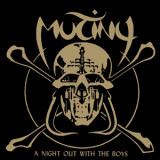
- Rare P-Funk album from 1983 - Funkadelic/Parliament All-Star Line-Up - First ever vinyl reissue - Comes with a repro of the original insert - 180g Black Vinyl Edition - Limited to 500 copies, comes with obi strip // Jerome "Bigfoot" Brailey is an American drummer who started performing in the early 1970s with several R&B groups from the likes of The Unifics, The Chambers Brothers and The Five Stairsteps where he developed his unique style and finesse on drums. Later in 1975 he joined George Clinton's P-Funk collective and has appeared on many of Parliament & Funkadelic's most popular recordings (some of which he also co-wrote). Brailey played on classic albums like `Mothership Connection' and `One Nation Under A Groove'. Samples from that body of work (and his drum arrangements) have since then appeared on hundreds of hip hop and contemporary R&B songs by renowned artists such as Kendrick Lamar and Childish Gambino. Jerome Brailey is a member of the Rock and Roll Hall of Fame (inducted in 1997) and part of their `50 greatest drummers in the Hall' list (stating that his drum style kept Parliament-Funkadelic rooted in the old-school `James Brown-style funk')_next to this achievement, he was proclaimed by Rolling Stone as one of the `100 Greatest Drummers of All Time' for his steady kick drum, shifty hi-hat action and intricately unpredictable snare patterns. Brailey earned numerous Gold and Platinum records with the P-Funk Organization and has worked as a session drummer for many talented artists such as Herbie Hancock, Buddy Miles, Snoop Dogg and Pharoah Sanders. George Clinton's funk empire was not without its disagreements and Jerome Brailey's `Mutiny' project was a direct result of just such a disagreement (as well as one of the more notable offshoots of the P-Funk axis). Mutiny performed in a style not far removed from the classic P-Funk style and with a lot of emphasis on the dual lead guitar work, but what makes them unique compared to their contemporaries is that at times their recordings also emit a darker, more sinister feeling. Besides Brailey on drums (and on most of the lead vocals) Mutiny featured a funk-alumni line-up and released three amazing and collectible albums: `Mutiny On The Mammaship' (CBS, 1979), `Funk Plus The One' (Columbia, 1980) and `A Night Out With the Boys' (J. Romeo, 1983)_these were followed by two comeback albums: `Aftershock' (Rykodisc 1995) and `Funk Road' (Catbone, 2013). The `Mutiny' album we are proudly presenting you today (A Night Out With The Boys) is an underrated gem made by musicians who defined the funk scene of the '70s and '80s! Featuring an all-star line-up that includes Rodney Curtis (Fred Wesley, Maceo Parker), Michael Hampton (Funkadelic-Parliament, Deee-Lite), Kenni Hairston (Cameo) and Maceo Bond of Osiris/Afrika Bambaataa fame! `A Night Out With The Boys' has it all: Jerome's trademark drumbeats, funky bass grooves, driving riffs accented by stinging synth parts, slow spacey (and prominently featured) guitars, top-notch lead vocals and chants that recall Sly Stone's "Loose Booty". The whole album is a hot dance jam with crisp percussion_an extremely infectious, locked-in-the-pocket bass-heavy monster-funk-bomb that any serious self-respecting funk fanatic must have in his/her collection!
Terry Gross is an engrossing trio composed of guitarist Phil Manley (Trans Am), bassist Donny Newenhouse, and drummer Phil Becker. The trio are also connected as owners and engineers at Bay Area recording spot El Studio, where they began improvising together as a way to test the boundaries and gear of the studio. Their loose, organic chemistry burgeoned into a deep camaraderie and a sound both expansive and exacting. The three experienced musicians crafted their first fulllength album through the pure joy of playing together with no expectations. With the tapes rolling on their rehearsals, the band captures the exuberance of live performance and elevates those recordings through a deft use of the studio as their collective instrument. On their debut LP Soft Opening, Terry Gross channels their cosmic powers and considerable chops into a gleefully mesmerizing odyssey fit for an arena. Soft Opening took shape over the course of 2016-2019, with Terry Gross writing and refining their songs. "Space Voyage Mission" and "Worm Gear" parallel one another as sinuous jams that pulse with adamantine fervor. Each mountainous epic churns spellbinding repetition and simplicity into dizzying gallops that take hairpin turns into sinewy riffing and elysian vocal melodies. Phil Manley's guitar takes on a constellation of tones across "Space Voyage Mission" with drifting delays soaring over the Newenhouse and Becker's driving rhythm section which all succumb to frothing overdrives that spin the song into entirely new pastures. The hypnotic throb of "Worm Gear" grows all the more enchanting as Newenhouse and Becker add subtle shifts to the single-chord barrage. "Specificity (Or What Have You)" contrasts these two in its more traditionally pop-oriented structure while retaining its predecessors wide-eyed energy and delves further into the album's lightheartedyet-earnest take on sci-fi tropes from space and time travel to the singularity. As Terry Gross, Phil Manley, Donny Newenhouse, and Phil Becker are sonic scientists traversing the borderlands of rock. Soft Opening captures the simple joy of a no-holds-barred trio in stunning detail, transporting the listener into the splendor and freedom of rock.
- That Old Feeling
- It’s Always You
- Like Someone In Love
- My Ideal
- I’ve Never Been In Love Before
- My Buddy
- Let’s Get Lost (Bonus Track)
- But Not For Me
- Time After Time
- I Get Along Without You Very Well
- My Funny Valentine
- There Will Never Be Another You
- The Thrill Is Gone
- I Fall In Love Too Easily
- Look For The Silver Lining
- Just Friends (Bonus Track)
‘Chet Sings’ by the trumpeter and vocalist Chet Baker is a classic of West Coast cool jazz. Recorded between 1953 and 1956 this CD reissue includes 10 bonus tracks and vinyl inludes 2 bonus tracks.
The collective personnel accompanying Baker includes Russ Freeman on piano & celeste; Jimmy Bond, Carson Smith, Joe Mondragon, bass; Peter Littman, Lawrence Marable, Bob Neel, Shelly Manne, drums; among others. The 20-page booklet features complete information and specially prepared liner notes by Penguin
Guide to Jazz’s writer Brian Morton and by France’s prestigious Jazz Magazine.
SINGS
Southern Lord announce Crush The Machine, the debut EP from West Coast hardcore punk collective D.E.A (Dead End America), formed by the late, great Steve "Thee Slayer Hippy" Hanford of Poison Idea, with current and former members of Queens Of The Stone Age, Eyehategod, The Accüsed A.D, World Of Lies, Ape Machine, and more.
Captured before Hanford’s passing earlier this year, D.E.A's debut shall be released on 7" and digital EP on 30th October (Non-Returnable) Recording details, liner notes from Mark Lanegan and more info below.
Crush The Machine sees the primary writers, drummer/vocalist Steve Hanford and guitarist Tony Avila (World of Lies, Why Won't You Die, Aborted Cop, Here's Your Warning) joined by lead guitarist Ian Watts (Ape Machine, Minmae) and bassist/vocalist Nick "Rex Everything" Oliveri (Mondo Generator, The Dwarves, ex-Kyuss, ex-Queens Of The Stone Age), with additional lyrics and vocals from Mike IX Williams (Eyehategod, Corrections House, Outlaw Order) and Blaine Cook (The Accüsed A.D, The Fartz, Toe Tag).
"A perfectly appropriate title for this 7 inch EP of jack-hammering, oldschool style hardcore tunes released by Southern Lord, written and played by a rogues gallery of real deal music lifers as a condemnation of the criminal Trump administration and republican party, in the same spirit of those by-gone days when Ronald Reagan or George Bush was the crooked, self-serving president of the crumbling United States empire. Never before has there been a more obvious target, as Donald Trump and his mafia family cabinet rape the country while Rome burns. D.E.A. is Tony Avila, Ian Watts, Nick Oliveri, Mike IX, Blaine Cook and the legendary and beloved, late producer and drummer of Poison Idea, Steve "Thee Slayer Hippy" Hanford. Dying shortly before the completion of this record, it stands as a final testament to his genius, one last hot-wired blast of his epic musical brilliance."
Mark Lanegan
Los Angeles
August, 2020
“The greatest thing about being a musician is experiencing it with other people,” says Ed Riman, the Brighton-based Eurasian singer, songwriter and sound-scapist who records as Hilang Child. “Whether that’s playing with others, creating together, sharing a vision, whatever, I just think in all aspects it’s a totally elevated experience when you’re not alone.” Proof rings out with force and feeling on Hilang Child’s superlative second album, ‘Every Mover’, released on Bella Union.
In 2018, Riman delivered a serene, textured debut album in ‘Years’, rich in sound and feeling. Lauren Laverne, Q, MOJO and others lavished praise but the “isolating process” of making the album left Riman hungry to find alternative ways of working. Meanwhile, the “lonely, pressured” aftermath of ‘Years’ found Riman grappling with “rough selfesteem and anxiety issues,” amplified in part by social media’s “fulfilment narratives.” Duly, he set out to navigate and overcome these mindsets, drawing deeply on his own insecurities and those he recognised in others.
These themes converge emphatically on ‘Every Mover’, an album steeped in everyday emotional states and crafted for cathartic, communal performance. Drawing on a rich spread of collaborators, sounds and themes, Riman uses his frustrations as the impetus to transform the brimming promise of ‘Years’ into upfront and expansive new shapes. “I wanted it to sound a bit gutsier than the first album,” he says, succinctly, “heavier and closer to the kind of stuff that hits me when I go to shows or blast music in the car. I started out in music as a drummer playing for pop or beat-driven artists and grew up listening to louder stuff, but a lot of the music I’ve made as Hilang Child has been more ethereal. I wanted to bring it back to a place that feels more ‘me’ and make more of a thing of having big hypnotic drums, aggressive bass, ripping distorted instruments and a general energy to it.”
‘Good To Be Young’ serves swift notice of this leap, its banked synths and twinkling sound clusters leading to an assertion of fresh force when the main beat lands and a congregation of friends - AK Patterson, Paul Thomas Saunders, Dog in the Snow, Ellen Murphy, members of Penelope Isles - unite for the gang-vocal refrains. “It’s all iridescent colour I’m on,” Riman exults, a claim lived up to on the full-flush folktronica of ‘Shenley’.
A reflection on spiralling insecurity, ‘Seen The Boreal’ ups the ante again with its monkish chorales, looping samples, spectral woodwinds (from multi-instrumentalist John ‘Rittipo’ Moore, of Public Service Broadcasting and Bastille previous) and ecstatic chorus, Riman transforming a meditation on hindsight’s limiting effects into a spur to look forwards. And surge forwards he does with the glittering synths, spacey guitars and Krautrock propulsion of ‘King Quail’, developed in jam sessions with dream-pop wonder Zoe Mead (Wyldest) in her basement studio.
Brought to a sublime close with ‘Steppe’, the resulting album projects its own epiphanic force. Thankfully, most of the main parts were recorded pre-lockdown between East London, Gateshead, Brighton, Wandsworth and elsewhere, before mixing proceeded remotely. Meanwhile, alongside indie-pop trio OUTLYA’s Will Bloomfield (percussion/coproduction on ‘Play ’Til Evening’), visual design collective Tough Honey (accompanying videos) and other collaborators, Riman’s bond with co-producer JMAC (Troye Sivan, Haux, Lucy Rose) proved crucial. “It felt freeing to work collaboratively and have that push-andpull of ideas,” says Riman. “Even the moments where we didn’t see eye-to-eye made it feel like I wasn’t alone, with someone else working just as passionately on the project.”
LP pressed on red transparent vinyl.
Once upon a time “Miss Onion” made her way to Zanzibar, in search of real traditional African music.
Luckily, she got in touch with an Italian collective of people called Uhuru Republic, who were traveling throughout Kenya and Tanzania and collaborating with many local musicians, in studios and on stage.
One evening they were recording the Qanun, the main instrument in the Swahili culture, and Miss Onion participated the whole intensive session of music and Konyagi (the local most famous super alcoholic drink). She fell in love immediately with the Afro-Bass gem that was born, and decided to bring it back to Europe. Like this Miss Onion turned this particular piece into a sweet memory from a splendid trip to the heart of Africa.
We immediately shared Miss Onion’s love for this real tribal music experience called “Konyagi a Gogo”, fusing African instruments with electronic sounds and orchestral elements.
For the remix we put the stems in the expert hands of Rafael Aragon who greatly managed to give it an “even more clubbing” spin.
The result is a tasty 7” inches called “Veggie Tales Vol. 3”!!
We’ll hope you enjoy as much as we did.
Buon appetito!