Wu Hen is the sophomore album from Peckham visionary Kamaal Williams -- an invitation to elevate to a higher state Cinematic strings from Miguel-Atwood Ferguson and virtuoso saxophone from Quinn Mason are textural additions that make for a deeper, multi-layered experience than previous releases.
Bringing groove back to the forefront, Wu Hen oscillates between celestial jazz, funk, rap and r&b reinforced with the rugged beat-heavy attitude of grime, jungle, house and garage - a self-styled fusion Kamaal describes as Wu Funk.
New players on this record include LA’s Greg Paul on drums (of Kalayst Collective), Rick Leon James on bass, Quinn Mason on saxophone alongside vocal features from cult rapper Mach-Hommy and Kaytranada collaborator Lauren Faith. Multi-talented renaissance musician Miguel Atwood-Ferguson (who has worked with Ray Charles, Flying Lotus, Dr. Dre, Mary J. Blige, and Seu Jorge) contributes signature strings, which add vivid colour and rich depth, evoking vintage David Axelrod.
Kamaal rose to prominence with the hugely acclaimed Yussef Kamaal alongside drummer Yussef Dayes and a catalogue of 12”s for imprints such as MCDE, Eglo, and Rhythm Section as Henry Wu that became essential DJ tools. In 2018 he launched Black Focus Records with the Kamaal Williams debut The Return, which charted in the UK and saw sold out shows and festival appearances across Europe, North America and Asia.
Buscar:bass collective
To say Fredfades and Jawn Rice are House music producers would be sneering at their efforts across genres like Hip Hop, Soul, and Jazz. The Mutual Intentions collaborators have forged a sound together in classic House, siphoning a myriad of influences through their intricate constructions in the studio as solo acts since first meeting in 2007. Becoming fast friends over a shared love of the dusty beats of an SP1200, Jawn Rice and Fredfades started working together while the Mutual Intentions collective gestated around them. Individual works by Jawn and Fred dot the collective’s back catalogue like various nodes of evolution through the course of MI’s output.
“We’ve always been sharing sketches,” explains Jawn Rice, “but I feel that these past years have been more productive in getting some of these sketches out as songs with Fredrik. It’s just a continuation of our friendship.” Emboldened by this friendship and with their finely tuned skills in the studio,
honed to near-perfection, they eventually started making music together. Following two seminal solo LPs – Fredfades’ Warmth and Jawn Rice’s Highlights – the pair consolidated their music as a duo in 2019, striking out with their electrifying debut, Jacuzzi Boyz. In a fusion between Jawn’s electronic inclinations and Fred’s soulful eccentricities, Jacuzzi Boyz established the duo as a new force workingNew Release Information within the broad scope of House music, with a sound imbued in the origin story of House and the genre’s hip-hop allegiances.
In 2020 they continue to pursue music together in the sophomore LP, Luv Neva Fades. Following the release of the title track and lead single, Luv Neva Fades finds the producers cementing their artistic voice and re-enforcing their commitment to a singular sound. Lush Rhodes keys and bouncing percussion lay the foundations for the album, while buoyant bass-lines and sparkling synthesisers provide
the catalyst for a crooning vocal or ruminating melody. It’s a record that thrives in a sultry mood; an LP that basks in the warmth of its analogue origins and cools in the shade of languid chord progressions.
Like Jacuzzi Boys, this album is an extended collaborative affair, as Mutual Intentions’ reach stretches across the Atlantic with guest appearances from Byron the Aquarius, Javonntte, Arthur Kay, Bendik HK and the SP1200 that started it all. Shimmering melodies, hazy harmonies and boisterous beats draw Fredfades and Jawn Rice out of the jacuzzi and onto the dance floor, moving under shimmering stars, where the duo cement what they started with Luv Neva Fades.
The first-time teaming of Poland’s dynamic Marcin Wasilewski Trio and bigtoned US tenorist Joe Lovano brings forth special music of concentrated, deep feeling, in which lyricism and strength seem ideally balanced.
The alliance plays four new tunes by Marcin and one by Joe, as well as Carla Bley’s classic “Vashkar” (in two variations), plus collective improvisations with strong input from all four players; Slawomir Kurkiewicz’s bass skills are particularly well-deployed in the spontaneous piece “Arco”. Joe will be joining the Polish trio for a number of selected concerts in the autumn.
Arctic Riff was recorded at France’s Studio La Buissonne in August 2019, and produced by Manfred Eicher.
Personnel: Joe Lovano: tenor saxophone; Marcin Wasilewski: piano; Slawomir Kurkiewicz: double bass; Michal Miskiewicz: drums
Los Angeles based hardcore punk band Entry shall release their debut full length, Detriment via Southern Lord on 17th July on LP and digital formats. This follows their sold-out 7” No Relief on Dune Altar.
Entry started as a project between Sara G and Clayton Stevens (of Touché Amoré) inspired by the likes of Discharge, Minor Threat, Converge, Tragedy, The Cramps, and The Exploited. The punk community at large is as inspiring as it has ever been to them.
Compact and ferocious, Detriment is a diverse album and a breath of fresh air in the genre. The debut showcases Entry’s appreciation for different aspects of punk and hardcore, and their imaginative songwriting that is condensed into nine succinct musical statements of intent.
As a collective, Entry firm belief in the power of punk and the uniting nature of music, and with Detriment they reflect themselves and their community with integrity and authenticity, this caught the ears of Southern Lord label owner Greg Anderson. He remarks "The unhinged intensity of Entry’s live performance at the last Power of the Riff fest blew me away. They embody many of the characteristics of powerful underground music that I have been obsessed with since my youth!.”
Entry are:-
Sean Sakamoto- Bass Guitar
Sara G- Vocals
Chris Dwyer-Drums
Clayton Stevens- Guitar
Bass player Sean Sakamoto plays in the indie pop band Sheer and is a recording engineer in LA, while drummer Chris Dwyer is also a recording engineer in LA, Sara’s musical origins come from punk bands in Pennsylvania, and Clayton also continues to play guitar in Touche Amore on Epitaph Records.
Entry have played the Olympia Hardcore Festival, and Ceremony's Homesick festival in Los Angeles. Opening for bands like Career Suicide, Krimewatch, Sunn, Dangers, Despise You, Sect, and Show Me The Body.
Lascelle 'Lascelles' Gordon - the driving force behind Vibration Black Finger – astonishes us yet again with a magnificent second album. Once more his inspiration is drawn from the obscure spiritual jazz collectives of the 1970s where he employs a vast array of like-minded collaborators to create a listening experience infused with an ever-present undercurrent of personal expression and cultural empowerment that's as enriched with ideas as it is progressive in its form.
Having earned his chops as founding member of the Brand New Heavies, Campag Velocet and Heliocentric World, Lascelle's latest album Can You See What I'm Trying to Say bursts with energy and vivid contrasts, flowing effortlessly between beat-laden grooves, oscillating improvisations, soulful recitations, audio verité and moody atmospherics. The album drops like a post-hip-hop reimagining of foundational genres, with a prayer to the future.
''Can You See What I'm Trying to Say' is a quote from Marion Brown, the great alto saxophonist' explains Gordon. 'The album was put together over the last three years, not in the conventional way of going into the recording studio with musicians, but starting from ideas I had on various formats (cassettes, mini disc, DATs & reel to reel). I also used field recordings. I did a lot of home recording with long time musical friends Ben Cowen & Diana Gutkind, some of them going back 20 years. The voices of my nieces (heard on Law of the Universe) were recorded 25 years ago. 'Only in a Dream' and 'Empty Streets' are the only songs that were recorded live in the studio.'
'I was blown away by the New Life Trio 'Empty Streets' (from 1978) and was fascinated by the vocals' continues Lascelles. 'I always thought it would be great to cover this tune'. Such is the power of this song, it's used to open the album, with vocalist Ebony Rose turning in a thoroughly haunting vocal performance. While not a concept album as such, Lascelles has nonetheless conceived and presented Can You See What I'm Trying to Say to be heard as a complete listening experience, with each track blending into the next, resulting in a seamless expression of music.
Following 'Empty Streets', some instrumental interludes segue into a dimensional drift of beats, space synths, horns and electronics; there's a vocal reprise of 'Acting For Liberation', sung with gusto by Maggie Nichols, and then there's the album's momentous finale, 'Only In A Dream', which takes off as an ominous drone before a delicious bassline from the late Ken Kambayashi transforms it into an intense, soaring epic which finally descends onto another world.
In a career spanning several decades, Lascelle Gordon remains an omnivorous musical force, whether as DJ, collaborator or radio broadcaster. As amply demonstrated on Can You See What I'm Trying to Say, he refuses to rest on his laurels and continues to impress with music that is as rich, vital and contemporary as anything he's done before, covering an incredible amount of musical ground in the process.
For his third release on LARJ, Davis from São Paulo dusts off his TR-808, Juno, MS-20, and gets firmly into his musical stride for six electroid tracks full of pumping bass drums, snappy snares and bleepy synth-riffs. Conjuring that signature new school vibe with a true vintage touch, every track pulls its weight with bubbling basslines and/or funky synths. Davis surely hits on the motifs and distinctive dynamics for which LARJ can always be trusted upon.
Davis Genuino, who has already played a few times on the wooden dancefloor with the likes of Âme DJ and Oliver Hafenbauer, is a founding member of the ODD queer warehouse-party collective and a central figure to São Paulo’s new school House and Techno scene.
F.S.Blumm enters Andi Otto's studio with a whole palette of strings and a mission to create quirky, peaceful soundscapes. The artists intertwine acoustic and electric guitars, harps, electric bass, psaltery and cello in eleven electronica compositions ranging from neo-classical gravity ("Entangleland") to spaced-out dub jams ("Active Fault Map"). "Yukiyama" evolves in multilayered patterns braided over warm tape-noise. "Kilani" reminds of Rabih Abou Khalil's ECM recordings, with its oriental scale and a beat that counts to seven. The tunes shine most when silence takes over, when the sounds find space to unfold and decay. Far from being trivial ambient lullabies, these compositions burst with detail: Bells rattle, a kalimba resonates, and vintage synths induce their voltage into the acoustic framework. Andi Otto and F.S.Blumm have been musical collaborators in the studio as well as on stages between Berlin and Tokyo for more than a decade now, the heyday being their previous duo album "The Bird And White Noise" in 2014. On "Entangleland", Andi Otto contributes the cello, harp and synth recordings and takes care of the mixing. Compared to his recent releases on Multi Culti or Shika Shika, these tracks are less dancefloor oriented. The calm of this album is a flourishing environment for Otto to pluck the acoustic cello which we usually hear in a more processed way in his solo works. F.S.Blumm contributes guitar and bass recordings as well as saturated percussion echoes from his self-made spiral box. Blumm is famous for his acoustic solo productions since his early outings on Morr Music or Tomlab. He has also appeared on Pingipung a few times, for example with his album "Up Up And Astray" or as a Lee 'Scratch' Perry collaborator with the "Quasi Dub Development" project. He recorded three duo albums together with Nils Frahm and is a member of the mighty "Jeff Özdemir & Friends" collective in Berlin. "Entangleland" sees the two artists weave together a mass of acoustic motifs, synthetic melodies, riddims and improv jams where the magic emerges from the sum of the parts. "It's not about accompanying a cello theme with the guitar or vice versa," Andi Otto says. "Entangling sound means letting go of hierarchies, that no one is first. Our studio is not a control room, it's a place of imagination where we take things apart and make things whole."
With the collective generosity of all those involved along the way, from mastering, manufacturing, affiliated record stores and PR to the artists themselves and PDD, all profits from this special one-sided Artwork remix of Mildlife ‘Zwango Zop’ will be donated to two charities combatting the bushfire emergency in Australia via Prime Direct Distribution; Wildlife Victoria and the Australian Red Cross.
Their indispensable efforts continue to assist the emergency response, rebuilding homes and habitats, supporting rescued animals and the shelters that house them, alongside aiding the evacuation centres and recovery hubs created in many communities and implementing recovery plans for those who have been devastatingly affected by the bushfires.
Certified man of the people, king of the content and all-round good guy Artwork has been there, everywhere, and done it all - in more guises than many would even know about. From Magnetic Man to Grain, D’N’D to Artwork he’s a master producer, well versed at knowing what dancefloors want and more importantly need.
Now take Mildlife, the boundary pushing, critically acclaimed Melbourne-based space jazz four-piece, who’ve managed to seamlessly blend jazz, funk and disco into one multi-coloured, multi-layered melting pot of auditory excitement. A band whose hype is certainly lived up to, with the likes of DJ Harvey heavily championing them to the point of including ‘Magnificent Moon’ on his ‘The Sound Of Mercury Rising’ VA LP.
A wash with improvisation, soaring synths, stratospheric bass riffs, and a fluidity of grooves, ‘Zwango Zop’, taken from Midlife’s debut album ‘Phase’, is kaleidoscopic cosmic gold. For this special non-profit release, Artwork extracts that undeniable funk energy and turns into a 10-and-a-half-minute, highly hypnotic, instantly addictive creation that it is as psychedelic as it is slamming.
Just one of many examples of the dance music community coming together as a power of good to raise funds for those affected by the emergency in Australia. Support the cause, through the medium of music.
‘Visions’ is a new collaborative album from BADBADNOTGOOD co-founders, Matthew Tavares and Leland Whitty. The Grammy Award winning, multi-platinum producers have been performing and writing music together for 10 years. They have achieved international acclaim with BADBADNOTGOOD and Tavares’ recent solo single ’Self-Portrait’ has been championed by tastemakers such as Gilles Peterson and Benji B. ‘Visions’ is the latest upshot of their incredibly fruitful partnership.
Recorded in Toronto, it was produced by Tavares and Whitty - with Tavares also mixing the album and arranging strings. After a three-week writing period it was played in its entirety in one continuous studio session; almost all the tracks on the album are the first take. Tavares is on piano and guitar, Whitty on saxophone and flute. The rhythm section of Julian Anderson-Bowes on bass and Matthew Chalmers on drums completes the players. They make an impressive collective and are performing at the peak of their powers.
Conceptually the album is a canvas for a combination of composition and group free-form improvisation. Tavares and Whitty are the sole composers, but with some tracks collectively improvised, there is also a group dynamic running through the album. The outcome is a sublime melting pot of modern jazz, impressionist classical music and Arthur Verocai-esque arrangements. It is a sound that is hard to date; it is certainly of the now but is also reminiscent of a lost classic. Similar to the process of its creation, the optimal listening experience for ‘Visions’ is in its entirety. As a coherent body of work it draws the listener in with waves of intensity and crescendos that release back into tranquility - there is both darkness and light in the album’s narrative arc. There is also rawness and honesty to the music, which makes it feel like an intensely personal and intimate offering.
'Active Imagination' is a result of the bringing together of musicians for a day in the studio, with minimal rehearsal, to collectively experiment and improvise in the moment - in contrast to the more composed and structured recordings of the Paradox Ensemble album 'Awakening' from January 2019. All musicians contributed their distinctive individual voices, creating a united force of spiritual, freeform jazz. Each composition is based on a different mode, all with their own distinctive flavour: "So Long Chef" nod's to Coltrane with its chords jumping by major thirds, before a more static middle section,offering a chance for Walters and Jeff Guntren (tenor sax) to explore the Lydian mode."Ahimsa" is a meditative reflection and group improvisation, based around a simple theme in the mixolydian mode, resulting in a spiritual journey steered by Rebecca Nash's hypnotic piano solo. "Gordian Knot" was conceived as a vehicle for Ed Cawthorne (aka Tenderlonious) to cut loose on soprano sax in the phrygian mode, which he achieves with devastating effect, backed up by Nim Sadot's infectious bass hook and complimented by an equally striking trumpet solo from the band leader. Finally, "Dansoman Last Stop" uses the dorian mode to channel the spirit of a bustling travel interchange in southern Accra, Ghana, conceived further by another exquisite trumpet solo from Walters.
When acclaimed South African musician Guy Buttery first sought out Dr. Kanada Narahari in late 2016, it was as his patient.
“It was a dark time.” Buttery recalls, “I had been bedridden for months and had been suffering from debilitating bouts of fatigue which no diagnosis or medication could help me get to the bottom of. When I first met Kanada, I was at the stage where even picking up my guitar to make music had become a joyless and taxing exercise.”
As Buttery’s searched for a cure, a family member recommended he see Kanada an Ayurvedic doctor who had relocated to South Africa from India and set up a practice in Durban. It was during this consultation, that the musician first experienced how Narahari infused the healing properties of Indian Classical music into his practice. Rather than treating him with a smorgasbord of pharmaceuticals, Narahari played his sitar and set Buttery on a strict daily diet of Raga’s to fast track his recovery.
Buttery was not only struck by his doctor’s musical talents but by the powerful healing properties inherent in his sitar compositions. When he left Narahari’s doctors room that afternoon, he asserts he was feeling decidedly clearer, lighter and stronger.
“Diving into Kanada’s music was definitely one of the reasons I'm still here today.” he admits. “The consistent tonal centre at the heart of Indian Classical Music, literally became my support pillar over this period. A central core of sorts in which to fall back on, strengthen and discover.”
Narahari as it turned out, was not only a prominent music therapist (and one of the only Ayurvedic doctors practicing in South Africa) but like Buttery, a highly accomplished musician with a devoted following back in his homeland.
Born in a small village along the Western Ghats in Karnataka, India, Narahari, at the age of nine, had enrolled to study Carnatic classical vocal and developed an interest in Hindustani Classical music with a particular passion for the sitar. While Buttery had secured his reputation as one of South Africa’s musical treasures, a multi-instrumentalist who commands sold-out performances both locally and internationally and more recently had been awarded the prestigious 2018 Standard Bank Young Artist for Music.
From this consultation, a friendship developed between the two musicians with Buttery soon inviting Narahari to join him in his studio. But it wasn’t all plain sailing in the beginning. While Buttery and Narahari’s sensibilities were very much aligned, there were a range of cultural and musical influences, nuances and inflections that first needed to be navigated and understood.
“I suppose we had to find a common ground.” Buttery says, before adding, “Which in the end turned out to be pretty "uncommon ground" for the both of us.”
It was after a few intensive sessions together that something exhilarating began to emerge. What began as a few idle improvisations soon evolved into feverish and lengthier jams. Whenever time permitted, the musicians would meet, descending deeper into the emerging sounds, while reimagining the realms that existed between their African and Indian heritages.
Over the next few months, the duo would rack up over fifteen hours of recordings in studio, and it was up to Buttery to shape the material into an album which they collectively titled Nāḍī, which Narahari translates from the Sanskrit as "The Channel" or "An Internal River".
During this period, Narahari bestowed upon Buttery, the moniker Guruji while Guy would refer to him, in affectionate return, as Panditji. Each time the musicians would meet, the studio space would be cleared by an impromptu ritual, with Guruji burning African Imphepho while Panditji would chant a Sanskrit mantra dusting Indian Agarbatti clouds over their instruments.
Once the room had been made hazy with this aromatic alchemy (with the ancestors welcomed in) the musicians would pick up their instruments and plunge into shimmering tides of sound. Reflecting on these sessions, Narahari recalls the immense creative freedom he felt throughout: “Guy and I tried to wander as much as possible, without any speculative, preoccupied ideologies or limitations. Love remained at the forefront of our journey together.”
“Those evenings we spent together in the studio” adds Buttery, “felt incredibly rich with purpose and a profound sense of freedom. While improvising, anything could happen and mostly did.”
On a first listen, the tracks on Nāḍī emerge as salty, humid invocations to the inscrutable depths and misty myths of the Indian ocean-- that vast body of water that stretches between, and laps the shorelines, of the artists’ respective homelands.
When asked to describe the sound him and Narahari refined, Buttery prefers to relay a series of evocative images.
“For me” he explains, “Nāḍī is a lighthouse, a beacon that resides at the bottom of the ocean.” As Buttery envisions it, “what once offered light to guide ships to safety, has been submerged and re-purposed by marine life as a coral-reef temple. Similarly, this sunken lighthouse exists as a concealed cenotaph, memorializing the ancient sea-routes and passages that once connected the two distant lands.”
On paper this may sound obscure but listening to the songs, it serves as an apt metaphor.
Across each meditative movement, listeners are able to relive the journey, immersing themselves in a series of incantations, replete with high dynamics, delicate African-Indian inflections and virtuoso string playing of an entirely new order. Further complimenting the fusion of musical dialects are a range of guest artists including Shane Cooper on bass, Thandi Ntuli on vocals, Chris Letcher on organ, Ronan Skillen on tabla and percussion and Julian Redpath on guitar, synth and backing vocals.
Now like the submerged lighthouse, the recordings stand as a monument, a marker and snapshot of this fortuitous meeting, a tribute to the healing gifts of Guruji and Panditji in performance. It’s a process that already, both musicians look back on with reverence and nostalgia.
Buttery ruminates in closing, that when he first met Kanada his illness correlated with the biggest drought South Africa had experienced in many years “…for whatever reason, whenever we would connect and make music together, the sky would tend to open. Even if it was just a few drops. This went on for months, until finally the drought dissipated and my health had been restored.”
By the time the heavens did open across the East Coast, a deep friendship had been forged and with it abundant musical offerings poured down. A treasured sample of which we able to share in every time we press play and immerse ourselves in the sacrosanct musical universe that is Nāḍī.
One of the greatest enigmas of the music scene in mid to late 1970s Harare was The New Tutenkhamen, a band which played an eclectic brand of Zimbabwean township music combining
traditional rhythms and western influences. The band included some luminaries of Zimbabwean township music. Elisha Josamu was an alumnus of the fabulously-named Hallelujah Chicken Run Band (alongside Thomas Mapfumo), and Green Jangano’s long-running Harare Mambos, and would later form Two Plus Two with bassist Christopher “Chex” Tavengwa. Jethro Shasha played the drums, and would arguably become the New Tutenkhamen’s most famous export, making continental waves working with likes of Salif Keita. Paul Sekerani played the rhythm guitar, with Amos Chatyoka on the organ, while the enigmatic Maggie Mbuli provided vocals and F. Manda played the sax. The New Tutenkhamen recorded I Wish You Were Mine at Teal Records, produced by Crispen Matema, a talented jazz drummer in his own right who had played drums on the all-time classic Skokiaan, and had backed Louis Armstrong on his 1960 Rhodesia visit. Combining the
heavyweight producing talents of Matema and the writing chops of Josamu, The New Tutenkhamen band created an album howcasing various musical styles popular at the time. From the afro-jazz jam session aesthetics of “Tutenkhamen Theme”, “Big Brother alcom” and “Forever Together”, to the almost Van Morrison-sounding “Sunday Morning”; from the upbeat rock ballad “True Love”, to the funk-infused dance song “Togetherness”; from the bouncy jazz
exhortations to work hard in “Ane Nungo”, to the brassy, raunchy foot-stomper “Me & Dolly”. The title track “I Wish You Were Mine” is a ska-infused ballad that wouldn’t be out of place in post-war
Birmingham, while the star of the show is “Joburg Bound”, itself a fast-paced rock piece with Motown undertones and funky guitar lines. As a collective effort, I Wish You Were Mine provides a fascinating insight into a fraught time in Zimbabwe’s history, and the bands plying their trade through the turmoil, making music for young people, by young people.
- A1: Next To Nothing Feat Ego Ella May And Emma-Jean Thackray
- A2: Sonnet 17 Feat Ego Ella May
- A3: Still Here
- A4: Somebody Else Feat Andrew Ashong
- A5: Tape Loop
- A6: Stack Feat Pie Eye Collective
- A7: Before The Sun Feat Ego Ella May
- B1: Step
- B2: Joyfulness Feat Alexa Harley
- B3: Circle
- B4 2: Minute Switch
- B5: Wall Street
- B6: Communication Control
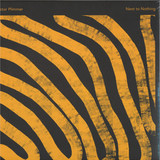
Born and raised in South London, Hector Plimmer is a multi-faceted producer, composer and DJ whose sound is drenched in tribal rhythms and beautifully crafted bass. Influenced by beat-makers like Flying Lotus and Theo Parrish, but with the subtleties of the classic Metalheadz era drum and bass, his second album 'Next To Nothing' is released on 25th October 2019. The album features guests Ego Ella May, Emma-Jean Thackray, Andrew Ashong, Pie Eye Collective and Alexa Harley.
After featuring on Brownswood Bubblers 11, curated by Gilles Peterson, Hector proved his talent when he was selected as a winner of the PRS Steve Reid InNOVAtion award. At a performance at ‘Sounds Of The Universe’ Record store, Hector caught the attention of Albert's Favourites' label heads Adam Scrimshire & Dave Koor. A conversation was started which led to the transfer of almost a whole album's worth of material and resulted in his debut full length record ‘Sunshine’.
'Sunshine' was met with rapturous acclaim. The record went on to be awarded Gilles Peterson’s album of the week on his BBC 6 Music show and was championed by both Lauren Laverne and Tom Ravenscroft on the station as well as Jamie Cullum on BBC Radio 2. Its success on the airwaves transcended to streaming with the inclusion in the top 50 viral US chart on Spotify.
"This album has been a real labour of love. I spent the most part of a year trying to make music I thought would be fitting to follow my last album, whilst not actually knowing what that might sound like. 'Sunshine' had been received way more positively than I had anticipated and although praise is a lovely thing, it was the cause of much anxiety when the time came to start on this record. I put a lot of pressure on myself to produce music and kept going down routes that felt forced or just didn’t click for me, in hindsight I realise this was me making music not for myself, but for what I imagined other people might want to hear. In a way 'Next to Nothing' is my first real album, 'Sunshine' was more like a collection of four to five years worth of music compiled into the shape of one. This is my first dedicated attempt at creating a cohesive project, something that shows who I am right now and what got me here."
- Hector Plimmer
As a DJ Hector has a monthly slot on NTS radio. He has played alongside the likes of Gilles Peterson, Kutmah, Alexander Nut, MNDSGN, Onra, Dego, Kaidi, Max Graef & Glenn Astro; Hector finds himself in the good company of those talented selectors who play genres across the spectrum of Hip-hop, Beats, Funk, Soul, Disco, Afro-beat, House and Jazz.
For over half a century, Takehisa Kosugi was one of the most unique and enduring figures in the Japanese underground. As an art student in Tokyo in the early 1960s, he joined the Fluxus-styled performance unit Hi Re Centre and then founded the improvisational ensemble Group Ongaku, but his most legendary project was The Taj-Mahal Travelers – a multicellular organism that included Kosugi, Ryo Koike, Yukio Tsuchiya, Seiji Nagai, Michihiro Kimura, Tokio Hasegawa and sound engineer Kinji Hayashi.
With a penchant for long psychedelic jams (some lasting 12 hours or more) The Taj-Mahal Travelers lived up to their name. Touring in a Volkswagen van across Europe and Asia in the early '70s, they eventually reached the actual Taj Mahal in India. Upon their return to Japan, they held a concert to raise more touring funds and released their very first recordings. Their debut album, July 15, 1972, would extend the band's matter-of-fact titling: all the tracks were named precisely for the times they began and ended.
With a grab bag of instrumentation (electric violin, double bass, santoor, vibraphone, harmonica, radio oscillators, sheet iron, etc.), The Taj-Mahal Travelers weave together mesmerizing waves of sonic texture. Featuring longtone concepts that Kosugi discovered while working with sound generators in New York in the mid-'60s, July 15, 1972 remains just as much a collective tone poem as psych workout. These leader-less sounds coalesce into a unified whole that feels both subconscious and sublime, as if the waveforms bypass the listener's ears and land directly inside one's synapses.
From Far Out Recordings’ in-house producer, Daniel Maunick’s debut solo album Macumba Quebrada conjures scenes of collective hedonism from start to finish. Spanning Afro-Brazilian spiritual dance ceremonies, late-eighties Detroit techno parties and jungle and broken beat raves in nineties London, Maunick celebrates our instinctive, age-old desire to come together and lose our sense of self.
Daniel Maunick practically grew up behind the mixing desk. As the son of Brit-funk legend Jean-Paul ‘Bluey’ Maunick (of Incognito fame), he found himself immersed in music from an early age, and quickly became involved in London’s drum n’ bass, acid-jazz, house, broken beat and soul scenes, releasing his first production at the age of sixteen on Gilles Peterson and Norman Jay’s Talkin’ Loud label. Since then, he has produced albums by the likes of Azymuth, Marcos Valle, Terry Callier, Incognito, Ivan ‘Mamao’ Conti and Sabrina Malheiros.
Reflecting his dual residence between Rio de Janeiro and East London, Macumba Quebrada features deep house stompers and broken bangers littered with Brazilian rhythms - in the form of both dusty percussion and Maunick’s intricate drum programming. But the album sees Daniel draw inspiration from across the black music continuum, and the rich histories of communal celebration in Detroit techno, Chicago house, London D’n’B and New York disco. Bringing all this together in explosive peak-time club tracks, moments of eerie ambience, South American swing and tribal earthiness, Macumba Quebrada expands on Maunick’s recent vinyl-only EPs ‘A Vicious Circle’ and ‘Sombra Do Dragao’, with a 13-track double LP and 14-track CD and digital release.
Taking its title from a syncretism of South American spiritual practices, the cover art is photograph taken by acclaimed French photographer and self-taught ethnographer Pierre Verger, who travelled the world documenting civilizations that would soon be effaced by progress. Settling for good in Salvador, Brazil, Verger became initiated into the Candomblé religion, eventually officiating rituals and ceremonies within the community. Without having become an ordained priest, Daniel Maunick shares both Verger and Far Out Recordings’ love for Brazil: its people, its culture and its music.
"He's been producing Azymuth and all kinds of great musicians in Brazil, and finally his debut album is about to be released." Gilles Peterson (BBC 6 Music)
"This one is a good one. Thanks!" Derrick Carter
"Wow couple of killers on there so it sounds!! Thanks a lot" ?? San Soda
"He is always brilliant!" Voclov (Neroli)
"Energetic, summery and full of groove. "It's like Theo Parrish went to Brazil and never decided to come back." Errol (Touching Bass)
"Super dope release from Daniel! proper Venom / Viper Squad vibes!!" Pablo Valentino (MCDE/Faces Records)
"Organic and bumpy...healthy dance music!" Mad Mats (Local Talk)
"really diverse, great sound" Chris Todd (Crazy P)
"super dope" Nick Tyson (XOA)
"Keep em coming man! ... Nice one" Earl Jeffers
"Feeling this! As always with Mr Maunick." Opolopo
"Dirty Trix is real nice!" Jkriv (Razor N' Tape)
"This is great!" Danny MoodyManc
"He's right on the money with this one, isn't he? Deep, profoundly funky stuff that Larry Heard would be proud of. You can feel it!!!!" Mark Webster (BBC 5 LIVE)
"this is so dope" Alex Attias (Visions Recordings)
"Love these tracks" Serkan Cetin (SunSplash)
"Great release, I love It! I-Robots approved!" I-Robots
"This is excellent. Dirty Trix and Somra Do Dragao are the ones!" Dane (The Love Below)
Secretsundaze welcomes Eliphino to the gala relaunch of their imprint for a thoroughly satisfying mini album of contemplative jacking and dulcet breakbeats.
Eliphino's most recent 'Realistic Sex EP' on the hotly tipped Meda Fury label boasts thunderous breaks, 303s and serious sub-bass pressure which has gained praise from tastemakers such as Jon K, Carista, Josey Rebelle, Moxie and Gilles Peterson.Having flexed with this darker edged EP after a long lay-off from releasing, while sharpening his skills and reconnecting with his musical inspiration, Eliphino is now ready to really cut loose with 'Breaking Up Is Hard' - a statement longplayer that dreamily investigates the dusty spaces between house, breakbeat, ambient, hardcore and acid. Tom This album came about as way of focussing my energy in the wake of a significant break up. I tried to experiment with melody and texture to convey some of the range of emotions that come with such a testing time. That being said, the B-side bangers are more dedicated to abandon and forgetting your worries.
Hailing originally from the Leeds, but with time spent in both London and Berlin, 'Breaking Up Is Hard' lands somewhere between the Hessle Audio crew, Joy O and Selected Ambient Works era Aphex.
Having previously released heaters for Brownswood and Hoya Hoya over the years, Eliphino stepping up for the debut artist LP on the reactivated Secretsundaze label feels like a natural fit as James Priestley explains:
""We've collectively had a connection and friendship with Tom that goes back several years and in fact it was receiving this work as demos that really spurred and inspired us into getting the label rolling again. It feels totally right to be working with him on this and for this mini-LP to herald the relaunch of the label as it moves towards a more artist led as opposed to EP driven approach.
The Transhumanism collective was born on the dance-floor at Dave Clarke's first Whip It party at the Melkweg in Amsterdam. This is the fourth vinyl release on Bass Agenda Recordings that features the four Dutch Electro artists w1b0, RXmode, Slaves of Sinus, and TFHats. The releases to date have had ongoing support from many key DJs who support the authentic Electro scene - Dave Clarke, UMEK, Helena Hauff, DJ Stingray, Maceo Plex, and Alienata to name but a few. Juan Atkins and Helena Hauff were still dropping w1b0's track from the first release this Summer (2019) at various festivals. It's no surprise that the first in the series has just been repressed, and now, the third in the series keeps the pressure up with 4 brand new tracks. As always, the brief here was simple - "be yourself and do your best to kill it". All four artists have risen to the occasion - maintaining the fundamentals of their individual sounds, evolving a little in some parts, and bringing a compilation with something for every discerning DJ with an ear for cutting edge Electro.
BLIQ unveil a debut release by Greek producer Aphelion aka George Konstantoulakis (member of Equations Collective). "Volatile Radiance" sets the pace with otherworldly futurism, while "Cosmic Vibrations" completes the A-side with addictive bass notes & crystallised melodics. On the flip, legendary electro producer Silicon Scally (Carl Finlow) follows a menacing cyberfunk route, while Aphelion's original, concludes the release with an interplanetary rhythm track interpretation.
After just 6 months since first seeing Big Yawn perform, we are thrilled to welcome them to the Research family. A compelling prelude to their debut album "No!" due out in late 2019.
Over six years the Melbourne-based group has evolved, with members of the band running various releases through label and collective Fallopian Tunes. As of 2019, Big Yawn had become a four-member music group, motivated by a history of studio production, prolific collaboration and quality hangout time.
The groups freshest effort 'Skin Rat/Thomas' captures the band performing live in the studio, and it's typical Big Yawn: fat and punchy low-end bass; drums and live drum processing; delay fx samples; thick syrupy synths. 'Skin Rat' is a hyperbolically dubbed out, tongue in cheek, magnetic blend of UK garage, footwork and breaks. And 'Thomas' takes cues from a slightly damaged post-punk sound, amplifying a brittle and sinister type of atomic porn-funk.
Limited to 200 copies. Hand numbered and housed in a screen-printed sleeve, artwork by Julian Hocking.