Concealed within the eclipse, Overdue presents a new black-label 12" series - symbolic of its sinister auditory contents.
Further proof of their unbridled dedication to sound system music and commitment to quality, the Belgian Dubstep imprint unravels
it's fifth physical release. Based in Denver, its newest signee by the name of Ghast returns to the spotlight, following up on heavyweight releases on prominent labels such as Encrypted and Gradient Audio.
The talented American artist sets the stage with two unruly armaments, alongside murderous remixes by Denmark's bass music stalwart RDG as well as the label operators themselves, Substrada & Caba.
Starting the engines, 'Mothership' immerses the stage in flickering echoes and haunting wails - the air bustling with anticipation. Eerily disfigured, granular reverberations materialize amid a pressurized and truly outlandish soundscape, barren at its core. Heading into the second section with renewed vigour, no dance floor remains unscathed in the ensuing aftermath.
The subsequent doomsday scenario, as engineered by Substrada & Caba, strips the ship to its bare essentials - laced with trippy drum instrumentations and the psychedelic foley samples. The meticulous flow presents itself in a bleak dungeon style - hoodlum vocal fragments rounding off the resulting low-frequency inferno.
Flipping the record to its equally profound B-Side, 'Vehement Mess' unhinges another portal into madness - dance floor upheaval guaranteed. Showing no signs of mercy, the infernal armagedon proves to be emblematic for Ghast's dystopian sound design. Profusely industrial and with clinical efficiency, hitting all the right frequencies as the second wave ignites but all available power reserves.
Finishing off any remaining survivors with his irreproachable signature style, RDG's remix marches onwards with unrestrained might in a four-to-the-floor fashion - super-charged, galvanizing the rave in a no-holds-barred shutdown.
Suche:bass material
The hyper talneted Stellar Om Source (NOT NOT FUN, RVNG, NO 'LABEL) blowing up new styles on this one!
"If there is one thing that leaps out from Stellar OM Source’s music, it is the sense of a highly active mind at work. There is an indivisible feeling that a real person is behind this dynamic flurry of tones, waves, vibrations and modulations. On I See Through You, the first full Stellar OM Source release in over four years, the spark that first LP piqued the interest of so many listeners is glowing stronger than ever.
In the 2010's, Christelle Gualdi carved a name as one of the most essential live electronic musicians around, dazzling dancers and home listeners in kind with her bombastic, acidic hardware jams. Circumstances outside her control forced a stop for the Stellar OM Source project. It was touring, including two shows in the summer of 2019 at Dekmantel Festival and Listen! that Gualdi credits as year highlights, which proved to be the integral jump-start to the engine.
Inspiration came rushing back thanks to the human connection of performing. Seeing a younger generation connect with her put fresh charge into the circuitry of her gear. All this accrued into new material on the road, and thus I See Through You was born.
The spirit of 2013’s cult favourite Joy One Mile is alive and well on I See Through You. There is once again immediacy, urgency and lust. But Stellar OM Source stepping into a comparatively more poppy and playful mode on these four tracks could also throw some. Fundamentally she says, it comes from a similar place, and ends with an enmeshed and positive outcome. Gualdi credits both “1995 rave” and “the clarity, bass and breath” of hi-def hip-hop productions as being twin northern stars for her to follow.
The artwork comes from friend and highly respected photographer & director Pierre Debusschere, whose work similarly flits between arresting close-ups and, well, the widescreen luxe of Beyoncé videos. “I’m definitely not a purist anymore,” Gualdi laughs – and with club-ready impact meeting human warmth, this shows in abundance.
“Night Alone” wastes no time in getting the listener up to speed. Is that an LFO sample running through “Night Alone”? Is this a lost Metro Area classic? Is that Stellar OM Source taking a diversion into searching Ibiza-rousing vocal for a moment, or did we imagine that in a heat haze? Where are the kicks? Oh there they are. How many elements are buried and revived within just over five minutes?
It’s hard to tell. Before we know it, “Lost Codes” is up and away, keeping pulses racing. A pitter-patter of baby kicks feel like a pre-tremor before a welting electro-Italo lead crashes into play. With fizzing energy, rasping synths and a frisson of danger, fans of Unit Moebius and The Hacker will be doing somersaults of joy.
“White Echoes” wastes kicks off the flip side with low gurgles descending briefly like a UFO reverse parking into the spot SOS had vacated. Soon, 303s are twisting like Chinese burns while warm chords offer a salve. The mood maintains on “Wild Palms”, the only song on this record not to feature additional mixing work from Peaking Lights’ dub-wise sensei Aaron Coyes.
True to form, the B2 is all Stellar: elements switching up and out, with all the fun and frenzy of capital-L Live action. Kick drums and bassline darting back and forth like a synchronised swimming routine, all elements in concert. The momentum of a runaway mine cart that you can’t help but strap yourself to. I See Through You is one for the dancers who have given Stellar OM Source the motive to move forward once again."
The On Board Music imprint returns with its third release this October, a five- track various artist package featuring material from Lanoche, Yugen, Serena Butler, Estrato Aurora and Vera Logdanidi.
Laura BCR’s On Board Music delivers its third release here, following two mini LP projects from Healing Force Project and Mesak. The ‘Point A’ project marks the beginning of a series of VA’s coming on the imprint focusing on both established and up and coming talents from different origins, stylistically ranging from ambient to techno and all meeting together on the dance floor. French painter Natacha Mankowski provided the artwork once again, and mastering was taken care of by Carsten Dämbkes.
Taking the lead is Lanoche’s ‘Love Fall’, an ethereal opener fuelled by hypnotic pads, wandering bass tones and heavily reverberated, shuffled percussion before Yugen’s ‘Phantom’ lays focus on pulsating arpeggios, choppy bass stabs and swirling atmospherics. Serena Butler’s ‘Fertile Fancy’ follows next, a cinematic four minute ambient cut employing subtly nuanced pads and bright voice like tones throughout.
Estrato Aurora’s ‘Icnita’ opens the flips side with murky, oscillating bass tones, gritty, off-kilter drums and an ever-present underlying tension before Vera Logdanini’s ‘VPlanet’ rounds out the package perfectly, delivering a reduced Techno cut fuelled by cavernous atmospherics, arpeggio bleeps and swirling low-end pulses.
Vinyl only imprint DMK (sub-label of Dogmatik Records) returns this November with the ‘Future Funk’ EP from Alex Jann.
Alex Jann’s material has amassed a wide array of supporters over the years, from Solid Blake and Alienata to Dave Clarke, Afrodeutsche and Posthuman his strictly hardware and modular synth workouts perfectly weave emotional synthesis with raw, gritty aesthetics. He’s released several EP’s over the years on labels such as his own Censor imprint with remixes of his work by such artists as Marco Bernardi & Animistic Beliefs, multiple EP’s with Clive Henry and shared label space on Rhythm Cult alongside Deadbeat, Barem, & Aquarius Heaven.
Title-cut ‘Future Funk’ leads with crunchy 808 style bumpy drums, tension building strings and squelchy acid licks at its core, while ethereal pad swells and wandering sub bass tones wander within the groove. ‘Robotic Prayer’ follows next, with shuffled percussion, soft atmospherics and a choppy bass line smoothly carried across five and a half minutes all subtly nuanced throughout.
Opening the flip side is ‘The Return’ which employs robust drums and murky synth flutters alongside cinematic string melodies before ‘Liberation Of Mass’ rounds out the release, fusing a broken rhythm and intricately programmed oscillating synth effects to create a hypnotic end to the EP.
When acclaimed South African musician Guy Buttery first sought out Dr. Kanada Narahari in late 2016, it was as his patient.
“It was a dark time.” Buttery recalls, “I had been bedridden for months and had been suffering from debilitating bouts of fatigue which no diagnosis or medication could help me get to the bottom of. When I first met Kanada, I was at the stage where even picking up my guitar to make music had become a joyless and taxing exercise.”
As Buttery’s searched for a cure, a family member recommended he see Kanada an Ayurvedic doctor who had relocated to South Africa from India and set up a practice in Durban. It was during this consultation, that the musician first experienced how Narahari infused the healing properties of Indian Classical music into his practice. Rather than treating him with a smorgasbord of pharmaceuticals, Narahari played his sitar and set Buttery on a strict daily diet of Raga’s to fast track his recovery.
Buttery was not only struck by his doctor’s musical talents but by the powerful healing properties inherent in his sitar compositions. When he left Narahari’s doctors room that afternoon, he asserts he was feeling decidedly clearer, lighter and stronger.
“Diving into Kanada’s music was definitely one of the reasons I'm still here today.” he admits. “The consistent tonal centre at the heart of Indian Classical Music, literally became my support pillar over this period. A central core of sorts in which to fall back on, strengthen and discover.”
Narahari as it turned out, was not only a prominent music therapist (and one of the only Ayurvedic doctors practicing in South Africa) but like Buttery, a highly accomplished musician with a devoted following back in his homeland.
Born in a small village along the Western Ghats in Karnataka, India, Narahari, at the age of nine, had enrolled to study Carnatic classical vocal and developed an interest in Hindustani Classical music with a particular passion for the sitar. While Buttery had secured his reputation as one of South Africa’s musical treasures, a multi-instrumentalist who commands sold-out performances both locally and internationally and more recently had been awarded the prestigious 2018 Standard Bank Young Artist for Music.
From this consultation, a friendship developed between the two musicians with Buttery soon inviting Narahari to join him in his studio. But it wasn’t all plain sailing in the beginning. While Buttery and Narahari’s sensibilities were very much aligned, there were a range of cultural and musical influences, nuances and inflections that first needed to be navigated and understood.
“I suppose we had to find a common ground.” Buttery says, before adding, “Which in the end turned out to be pretty "uncommon ground" for the both of us.”
It was after a few intensive sessions together that something exhilarating began to emerge. What began as a few idle improvisations soon evolved into feverish and lengthier jams. Whenever time permitted, the musicians would meet, descending deeper into the emerging sounds, while reimagining the realms that existed between their African and Indian heritages.
Over the next few months, the duo would rack up over fifteen hours of recordings in studio, and it was up to Buttery to shape the material into an album which they collectively titled Nāḍī, which Narahari translates from the Sanskrit as "The Channel" or "An Internal River".
During this period, Narahari bestowed upon Buttery, the moniker Guruji while Guy would refer to him, in affectionate return, as Panditji. Each time the musicians would meet, the studio space would be cleared by an impromptu ritual, with Guruji burning African Imphepho while Panditji would chant a Sanskrit mantra dusting Indian Agarbatti clouds over their instruments.
Once the room had been made hazy with this aromatic alchemy (with the ancestors welcomed in) the musicians would pick up their instruments and plunge into shimmering tides of sound. Reflecting on these sessions, Narahari recalls the immense creative freedom he felt throughout: “Guy and I tried to wander as much as possible, without any speculative, preoccupied ideologies or limitations. Love remained at the forefront of our journey together.”
“Those evenings we spent together in the studio” adds Buttery, “felt incredibly rich with purpose and a profound sense of freedom. While improvising, anything could happen and mostly did.”
On a first listen, the tracks on Nāḍī emerge as salty, humid invocations to the inscrutable depths and misty myths of the Indian ocean-- that vast body of water that stretches between, and laps the shorelines, of the artists’ respective homelands.
When asked to describe the sound him and Narahari refined, Buttery prefers to relay a series of evocative images.
“For me” he explains, “Nāḍī is a lighthouse, a beacon that resides at the bottom of the ocean.” As Buttery envisions it, “what once offered light to guide ships to safety, has been submerged and re-purposed by marine life as a coral-reef temple. Similarly, this sunken lighthouse exists as a concealed cenotaph, memorializing the ancient sea-routes and passages that once connected the two distant lands.”
On paper this may sound obscure but listening to the songs, it serves as an apt metaphor.
Across each meditative movement, listeners are able to relive the journey, immersing themselves in a series of incantations, replete with high dynamics, delicate African-Indian inflections and virtuoso string playing of an entirely new order. Further complimenting the fusion of musical dialects are a range of guest artists including Shane Cooper on bass, Thandi Ntuli on vocals, Chris Letcher on organ, Ronan Skillen on tabla and percussion and Julian Redpath on guitar, synth and backing vocals.
Now like the submerged lighthouse, the recordings stand as a monument, a marker and snapshot of this fortuitous meeting, a tribute to the healing gifts of Guruji and Panditji in performance. It’s a process that already, both musicians look back on with reverence and nostalgia.
Buttery ruminates in closing, that when he first met Kanada his illness correlated with the biggest drought South Africa had experienced in many years “…for whatever reason, whenever we would connect and make music together, the sky would tend to open. Even if it was just a few drops. This went on for months, until finally the drought dissipated and my health had been restored.”
By the time the heavens did open across the East Coast, a deep friendship had been forged and with it abundant musical offerings poured down. A treasured sample of which we able to share in every time we press play and immerse ourselves in the sacrosanct musical universe that is Nāḍī.
A Unique EP of remixes from Kniteforce Head Honcho, Dj Luna-C. Each remix is firmly based in the vibes of the old skool, with the rolling basslines and touch of madness that is expected when Luna-C gets in the studio. The tracks were all chosen based on their ability to be folded into something both new and old, and then refashioned into something very different from the source material.
The result is a cohesive mess, an orderly panic, and a clash of harmony, and all the expected trademarks of a prime Kniteforce EP.
Club/DJ Support - Billy Bunter, the Fat Controller, Glowkid, Slipmatt, Dj Jedi, Dj Luna-C, Dj Brisk, Clayfighter, Jimni Cricket, Bustin, Sc@r, Doughboy, Saiyan, Dave Skywalker, Ponder ...and many others.
In her most personally narrative work to date, A Fossil Begins To Bray is the follow up on Dais Records for NYC producer Hiro Kone, furthering the dialogue set forth on her 2018 release, Pure Expenditure. While the statements on Pure Expenditure rallied behind a point of dangerous excess and injustice, the material on A Fossil Begins To Bray embark upon a journey of discovery and selfanalysis, proposing a potential reorientation towards absence in hopes of illuminating potential futures.
In Mao’s own words, “This album considers the power of absence as neither a lack or deficit, but as a quiet, indeterminable force to cultivate in this time of looming and unrelenting techno-fascism. It asks that we take pause to consider our learned languages and actualities and to better consider how desire shapes our recollections and interpretations of this ‘existence.’” This allegory is expertly applied to every song on A Fossil Begins To Bray. Mao has established a long history of employing absence in her productions to maximum effect. With a vast assortment of diverse elements at play, no single track ever feels overly convoluted and further illustrates Hiro Kone’s skillful attention to dynamic tension and flow. Tracks such as “Fabrication of Silence” and “Submerged Dragon” perfectly represent the power of absence, utilized in a matter to create unique amalgams of decisive, cinematic techno rhythms from the electronic void. As the melodic elements contained within A Fossil Begins To Bray begin to unravel and slowly take form, the unaware are rewarded with a driving yet tangible refrain that offers resolve in contrast to the dense, textureladen backdrop that forms the album’s foundation. The first single, “Feed My Ancestors”, expands upon Hiro Kone’s signature take on electronic music structures. Seemingly free from the predictable contracts imposed by any one genre’s stereotypes, Hiro Kone throttles the foreboding bassline in favor of more calculated, abstract cut-ups that gracefully hold the track in place between hopeful utopia and something more ominous.
Our imprint marks its five years anniversary this year and to celebrate it’s offering up five special various artist packages across 2019 limited to 250 copies each, featuring material from the likes of Vid, The Mole, Cinthie, Shinichiro Yokota, San Proper, Akiko Kiyama, Com Sin aka Cosmin TRG, Subb-an and more..
Here though we see the focus on the core family as well as some new additions, celebrating the artists involved over the past five years and looking towards the future with some fresh, hotly tipped acts.
For the fourth installment in the series the label welcome’s Berlin’s queen of House Cinthie onto its roster with ‘6am’, as the name would suggest a heads down, emotive slice of House aimed at those special moments in the early hours of the dance floor, fusing a robust analogue drum workout with bright strings, jazzy piano lines and driving low-end.
Akiko Kiyama’s ‘Dirt Specks’ follows, a typically unique offering from the Tokyo based experimentalist, built around swirling bass notes, hypnotising processed vocals and glitched out percussion before label co-founder Red Pig Flower’s ‘Mental Adventure’ brings eastern-tinged plucked strings and vacillating atmospherics into the limelight alongside rounded subs and a bumpy rhythmic drive to create a smooth, hypnotic trip.
- A1: Next To Nothing Feat Ego Ella May And Emma-Jean Thackray
- A2: Sonnet 17 Feat Ego Ella May
- A3: Still Here
- A4: Somebody Else Feat Andrew Ashong
- A5: Tape Loop
- A6: Stack Feat Pie Eye Collective
- A7: Before The Sun Feat Ego Ella May
- B1: Step
- B2: Joyfulness Feat Alexa Harley
- B3: Circle
- B4 2: Minute Switch
- B5: Wall Street
- B6: Communication Control
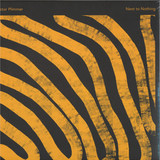
Born and raised in South London, Hector Plimmer is a multi-faceted producer, composer and DJ whose sound is drenched in tribal rhythms and beautifully crafted bass. Influenced by beat-makers like Flying Lotus and Theo Parrish, but with the subtleties of the classic Metalheadz era drum and bass, his second album 'Next To Nothing' is released on 25th October 2019. The album features guests Ego Ella May, Emma-Jean Thackray, Andrew Ashong, Pie Eye Collective and Alexa Harley.
After featuring on Brownswood Bubblers 11, curated by Gilles Peterson, Hector proved his talent when he was selected as a winner of the PRS Steve Reid InNOVAtion award. At a performance at ‘Sounds Of The Universe’ Record store, Hector caught the attention of Albert's Favourites' label heads Adam Scrimshire & Dave Koor. A conversation was started which led to the transfer of almost a whole album's worth of material and resulted in his debut full length record ‘Sunshine’.
'Sunshine' was met with rapturous acclaim. The record went on to be awarded Gilles Peterson’s album of the week on his BBC 6 Music show and was championed by both Lauren Laverne and Tom Ravenscroft on the station as well as Jamie Cullum on BBC Radio 2. Its success on the airwaves transcended to streaming with the inclusion in the top 50 viral US chart on Spotify.
"This album has been a real labour of love. I spent the most part of a year trying to make music I thought would be fitting to follow my last album, whilst not actually knowing what that might sound like. 'Sunshine' had been received way more positively than I had anticipated and although praise is a lovely thing, it was the cause of much anxiety when the time came to start on this record. I put a lot of pressure on myself to produce music and kept going down routes that felt forced or just didn’t click for me, in hindsight I realise this was me making music not for myself, but for what I imagined other people might want to hear. In a way 'Next to Nothing' is my first real album, 'Sunshine' was more like a collection of four to five years worth of music compiled into the shape of one. This is my first dedicated attempt at creating a cohesive project, something that shows who I am right now and what got me here."
- Hector Plimmer
As a DJ Hector has a monthly slot on NTS radio. He has played alongside the likes of Gilles Peterson, Kutmah, Alexander Nut, MNDSGN, Onra, Dego, Kaidi, Max Graef & Glenn Astro; Hector finds himself in the good company of those talented selectors who play genres across the spectrum of Hip-hop, Beats, Funk, Soul, Disco, Afro-beat, House and Jazz.
* Emika releases a remix EP of her 6th studio album ‘Falling In Love With Sadness’, (Originally released on World Mental Health Day Oct 2018)
* The remix EP explores 4 sound worlds in electronic music today. Experimental bass music, hypnotic & dark techno, and electro.
About the remixers:
* Pinch, a pioneer of UK bass-driven music, is considered to be one of the most groundbreaking, explorative producers to emerge from the UK dubstep scene.
* Rising techno star Julia Govor is an artist doing things differently, paving her own way with her own label, receiving recognition from the global dance music scene.
* Rebekah needs no introduction, pioneering her own intense sound, now entering her 20th year in the business, she is a serious artist with some seriously heavy vibes.
* Underground Berlin talent Headless Horseman, all though shrouded in mystery, is in high demand world-wide to perform his unique live sets at some of the biggest clubs and festivals.
* Emika produced original album material with cult electro icon The Exaltics.
* Solid remixes from solid underground artists.
About the remixes:
* Pinch creates a seductive environment for a scene from which could have been from David Fincher's Fight Club, one which threatens to overload at any given time, but retains tension until the end.
* Julia’s mix transports us into the next part of our journey, beyond conflict and tension, she gives us the chance to breathe, open up, be free and to dance.
* Rebekah's remix brings us hurtling back down to Earth at a tremendous pace, with crystal clear drums that wake up the soul and synths that energize the mind, this version is more than a dark techno track, it has the spirit of a self-confident grown woman running through it.
* Headless Horseman brings Emika’s original into a beautiful new song space, revoicing the harmony and finding completely fresh chords and backing.
* The artwork hits the mark with a message important for Emika: Equality. With 3 female artists and 3 male artists all featured on the cover, this is a way in which Emika highlights her love for collaboration and sharing of the spot-light.
* Green coloured vinyl (1st edition) 500 copies pressed..
‘’We are moving into a new century where collaboration is going to bring music forwards and exclusivity is going to become a thing of the past.’’ - Emika
Captivity is the next highly anticipated extended EP by Kush Arora aka Only Now, following a triptych of self-released output in 2019. Continuing the project’s ever evolving engagement with themes of time and existence, Captivity encompasses versatile synthesis, mutant kuduro, widescreen sound design, turbulent cold fronts of power ambient and melodic undertones of black metal.
The product of a two-year period in which Arora was contending with transitional shifts in his personal life, Captivity is a culmination of what the project has explored both in a prolific run of recent material and as a whole, across several years of time dilating, mind altering music.
Although shaped by adversity and corresponding sentiments of angst and insignificance, Captivity is pitched at total transcendence. Adopting a meticulous approach to production, a methodology which opens up almost every element to transformation and deconstruction, Arora generates forms which possess a sense of pointillist precision, as well as a keen psychedelic potency.
Despite consistency with his earlier output as Only Now, Captivity is nevertheless an indication of Arora’s ability to challenge internal and external assumptions. The introduction of new hardware – namely, the Nord Drum 3P synthesizer – as well as the incorporation of far-flung atmospherics – closing track ‘Clock Lust’ features field recordings from a trip to Kyoto – delivers fresh enterprise and experimentation, contributing to the expansion of a sound signature which remains as unpredictable and compelling as ever.
With the eponymous opener, Arora combines fathomless underworlds and riotous breakbeats. On ‘Mutants’ a hyper-kinetic onslaught of percussion, low-end and stray cut-ups of noise break out, building to a panorama of thunderous industrial firmaments. ‘Perpetual Slaughter’ maintains momentum with icy, ricocheting FX and concussive, tribal drums, and then unexpectedly shifts into a poignant outro which brings to the fore the enduring influence of black metal on the project. ‘Bound 2’ is cut with relentless sub-bass and rapid syncopation, resembling an abstracted form of juke music, something that could feasibly have been masterminded by Autechre. With the LP’s finale, ‘Clock Lust’, Arora presents a finale of transfixing 3D ritualism, the lone toll of a bell ringing out into a mesmeric emptiness.
Together these form a complete statement from Arora, illustrating the fertile and open-ended territories the Only Now project has arrived at after promising outings on Infinite Machine and Discrepant imprint Sucata Tapes. With Captivity Arora delivers a substantial highpoint and a profound voyage into the world of Only Now.
‘Synth Expressionism/Rhythmic Cubism’ LP from Chicago’s Jamal Moss aka Hieroglyphic Being is a collection of idioms that have no past and no future, his jarring use of polyrhythmic polyphony imbues a sense of timelessness.
The prolific catalog of Moss’ covers many musical dialects from his hometown and beyond. Never standing in one artistic sphere for too long, this adventure for On the Corner Records sees Hieroglyphic Being exploring a multitude of expressions of the American Avant-garde.
Abstractions Of The Future Past — Afro-Cubism: The Designation, conceived by an African With A Mainframe — An Etude Of Effigy — A Hieroglyphic Being.
Rhythmic Cubism: In this ‘Dissertation Of Disorientation’ Neal Andrew Emil Gustafson temporal considerations are put aside as polyrhythmic propulsion is the current flowing through the work. As prelude the fastidious ‘Rhythmic Cubism’, Moss enacts a flurry of white noise and musical coda as it phases in-and-out of synchronicity.
The disjointed dance of an alternative Black Music, ‘The Spiritual Or ‘Electromagnetic Worlds’ takes the meter down a fraction to exonerate a granular groove of visceral refracted complexity. Sonorus static sits alongside spastic shards of synthesis to reveal a melancholic medley before its conclusion.
‘Apocrypha’ collages distinct rhythmic source materials in an entrancing abstraction of ‘Hypersonic Hemiola’. An assertion of Art Blakey proportions. Perpetually pushed forward through the building of distorted percussion, Moss precludes into syncopated synapsis before and end of reductive symmetry.
Evolving into a studdered off-kilter groove, ‘The Redemption Project’ flows as a dissipating organ medley dissolves into a deluge of layered sonic textures, creating an indiscernible metric center before fading to a distant vanishing point.
Departing with a common-time ‘Timbuk2’ takes off like a classic Chicago Acid track, then makes a left turn towards the center as it drives the rhythmic motion into a dystopian dreamland, as the sax line surges forcing the track to break free from it’s charted course.
The Fragmented Fantasy of The Synth Expressionism/Rhythmic Cubism LP is a conclusive work that has no end, a conundrum of conceptual calculated improvisation. Drifting through time, this fragmented abstraction of Afro-Cubism leaves room for posterity, as each listen summons a new perspective on the suite. Something ever so common in the work of Jamal Moss. Charting new sonic directions, the very nature of its precedent makes it a truly Hieroglyphic affair.
Words By Neal Andrew Emil Gustafson
Destiny is made. Realised. Driven by the acts of vision. Hireroglyphic Being is a seer. Atomic resonance echoing from the big bang defies the conceptual reality of purity. The nuclear static of ‘white noise’ is HBs canvas. Channeling poly rhythms into the universe. Experience, repetition and eternal decay. From purity back to the absolute by way of a deluge of slurry across time. Infinite layers of distortion and refracted complexity. This is HBs canvas. Sound of eternity channelled through a bass bin, represented by its own impure reflection and fragments. Always more than it's whole but never as was before.
This album seeks to reach beyond ideas and emotions, beyond the comprehension of a human archetype. Beyond ultimate history, forwards and back. To ends and a singular beginnings. Timbuk2 is the frenetic intersection where the call and response of these ideas lock and dissipate back into the void.
Casino Times? aka Nicholas Church and Joseph Spencer
from London have been betting against the house for
close to 10 years already, winning big with releases on
Wolf Music, Needwant, Omena and their own Casino
Edits label. The pair also hosts the radio Show “What’s
My Derivative?” on Bloop Radio.
Since Mireia Record’s big cheeses RSS Disco have been keen to gamble with the Time’s
music, routinely lighting up dancefloors with it, a loose connection and mutual admiration
formed over the years and eventually lead to this fine record here.
RUSH & KAWAI
Casino Times demonstrate their cunning yet natural and flowing sound with two originals:
“Rush” and “Kawai”. Both tracks are a proper trip of its own, psychedelic pinball machines
that’ll catapult you to the further edges of the known sphere.
An arpeggiated melody line leads the “Rush”, while a rock solid foundation of hard hitting
drums keep you steady. The melody filters into acidic fringes and a strange voice guides the
traveler to the core of this outer-body experience.
By intertwining a pulsating E-Bass with sharp percussions and a brazen guitar chords,
“Kawai” steers the travels even further out of world’s reach. A whole ensemble of sirens and
vocal fragments warn of imminent rapture. After this, it’ll be hard to return to the mundane.New Release Information
KAWAI (Conga Fever’s Belgian Fries Remix)
Leading the string of three remixes is Mireia’s Conga Fever. Known by now for impeccable
and inspired productions he might just have outdone himself again with this interpretation
of “Kawai”.
Taking cues from Belgian New Beat while sounding unconditionally modern at the same
time, Conga Fever has crafted a bona fide festival anthem. After confidently building up
tension and taking his time in the breakdown, the remix manages to release an incredible
amount of energy. We’ve seen people out of their minds and literally stage dive to this one.
KAWAI (Rigopolar Remix)
A new face and dream cast to the label: Rigopolar aka Menio Brown. The Brooklyn-based
producer and DJ has been on our radar for some years with a string of captivating releases
for Tom Tom Disco, Nazca Records and an upcoming EP on Duro. Especially “Sun Of
Lemuria’s” hypnotic brittleness turned our heads.
Adding a new high point to his repertoire, Rigopolar’s take on “Kawai” is an expansive, dark
journey into the void. Powerful lasers and strobe lights appear to lead the way, emergency
broadcast voices beckon the dancers to the floor. The clobbering bassline and twitching
melody help to reach previously unseen heights.
RUSH (Filburt Remix)
Working his signature slow-burn magic on his remix of “Rush” is Filburt. More than happy to
welcome him back to the label. The O*RS label head, DJ and producer is responsible for
some of our favorite material in the past and does not disappoint with this remix either.
Lush pad sounds oppose salient drumming, slowly tightening the atmosphere while a robotic
voice evokes a melancholic mood. The whole night’s rooted on this fervid bassline and it’ll
carry you into next Monday
2024 Repress
ODD OKODDO is a Kenyan/German duo consisting of Olith Ratego and Sven Kacirek.
The two artists met in Kenya, about a decade ago, when Sven Kacirek was recording his "Kenya Sessions", an album that put Kacirek on the map of outernational producers. It was reviewed as a "World Music 2.0" (de:bug magazine), whose "fascination endures" (The Wire). Olith Ratego also made an appearance on the "Kenya Sessions”, on the track "Too Good To Be True".
The duo formed the project ODD OKODDO in 2018, with the two musicians joining their various talents which dovetail in perfection. Ratego writes the lyrics and vocal melodies while Kacirek composes, records and produces the arrangements of all nine songs on AUMA. They create a colourful, dynamic sound which is defined by both Ratego’s enormous vocal compass and range of timbres as well as Kacirek’s outstanding skills as a sensitive percussionist.
Olith Ratego sings in a musical style called "dodo", which originates from the shores of Lake Victoria in Kenya, high in pitch and soulfully expressive. He refers to his music as "dodo blues". His lyrics touch upon the topics of politics, family and of course: love. As a skilled luthier, Ratego builds his instruments himself, like the five-stringed Okodo which lends its name to the project.
Sven Kacirek is a multi-instrumentalist who has been commuting between Germany and Kenya for many years now. In the past he has closely collaborated with various international musicians, among them Nils Frahm and Shabaka Hutchings. Kacirek’s sound builds upon a powerful bass marimba which is present throughout the album. It sometimes invokes the sound of a tuned 808 kick-drum. He works with Kenyan an arsenal of percussion instruments as well as household objects and found materials. Kacirek has now settled into a signature sound which has been described as "thrilling and dizzyingly inventive" by the Australian Cyclic Defrost magazine.
The LP comes with a printed inner sleeve with liner notes by Tabu Osusa from the Nairobi based label Ketebul as well as explanations about the song lyrics.
DJ Richard's first release of 2019 sees him drop four invigorating electro tracks on Flexxseal titled "Eraser".
Emerging from the Providence noise scene, DJ Richard forges a path of disciplined selectiveness as a producer and DJ with his idiosyncratic style allowing him to make impressive, self-assured connections between 80s EBM, new beat and Italo disco, electro, techno and "post-minimalist" house. DJ Richard's feral approach evolved from the roots of his White Material imprint which quickly achieved cult status after early releases from himself and co-founders Galcher Lustwerk and Young Male.
As a solo artist, DJ Richard continues to push the boundaries of his talent and influences reflected in his two utterly distinctive and bewitching albums released in alliance with influential German electronic label, Dial. "Eraser" sees him join up with fellow American Christopher Joseph and his Flexxseal imprint as DJ Richard masterfully maintains his skill in propagating ephemeral and raw sounds with his aptitude for electronic body control.
"Critical Damage" kicks things off with resilient oscillations fused beautifully with angelic leads and thudding percussion reflecting a post-punk aesthetic while "Eraser" delivers tough, acidic swirls undulating beneath sharp, broken grooves and growling undertones.
On the flip, a slow, chugging drum sequence balanced with haunting modulations and machine-like vibrations that echo throughout take the focus in "His Threshing Floor" before "Casca's Theme" concludes the EP with meandering, robotic synth flutters and distorted bass resonations driven by hypnotic rhythms and world-ending atmospheres in this powerful electro cut.
After a string of succesful singles, “Deixa Musica A Tocar”, “So Vejo Voce”, “E A Felicidade” and the Dj Harvey supported “ Te Faz Bem” and “Serei Seu”, The Danish / Brazilian quartet constellation Copenema (Copenhagen / Ipanema = Copenema) are ready to release their debut album “Deixa Musica a Tocar”.
The album mixes European electronica influences with Brazilian songwriting style. The sound becomes unique and some would say Balearic.The albums leading single “Te Faz Bem” a funky downtempo track with live saxophone, flute and rhythm guitars and a baseline to die for has become somewhat a national Ibiza balearic anthem over the past years and spread worldwide especially due to the massive support from Djs incl from Harvey to Dj Pippi to Pete Tong. “Serei Seu” the second single another Ibiza fave is a funky party track that sounds like a modern Jorge Ben. The single “So Vejo Voce” is Stan Getz meets the beach vibes, “Festa De Relaxamento” an Alfredo fave is jazzy Brazilian funk vibes with heavy live drums and a bass line that wants you to move.
“Lullaby For Impanema” is sunset material. The bands first recording the 12 min beautiful jazzy cosmic downtempo Pat Metheny influenced and Leo Mas supported “Some Di Some Day” is pure bliss and a sunset fave amongst the Balearic community.
The album has three added bonus tracks (Vinyl Only) - Can’t Sleep and Nada Mais both recorded in a Music For Dreams writers camp recently and the 12 minute journey of Serei Seu by Danilo Braca
Returning to his original Electro disguise Electro Nation, Thomas P. Heckmann returns with fresh and brand new material after 20 years! All that you love in original funky Electro is there, Robot voices (done with an ultra rare Texas Instruments Magic Wand), fat Bass, spacey effects and smooth as silk pads ! Enjoy the ride and stay tuned for more to come !
Electrocute Soundplates was never gone, but waiting in dark shades of the distopian underground...
Words from the label:
Our imprint marks its five years anniversary this year and to celebrate it’s offering up five special various artist packages across 2019 limited to 250 copies each, featuring material from the likes of Vid, The Mole, Cinthie, Shinichiro Yokota, San Proper, Akiko Kiyama, Com Sin aka Cosmin TRG, Subb-an and more..
Kicking off the third instalment of the series is San Proper’s ‘Your Call’, a robust yet dream house workout fuelled by choppy bass hits, fluttering synth licks and a shuffled analogue drum groove. Barcelona based trio Triad follow with ‘Room N’, a hypnotic house cut fuelled by ethereal chord swells, modulating percussion and vacillating bass tones.
Tokyo’s Iori Wakasa then rounds out the release with ‘Rave In A Village’, as the name would suggest embracing a classic house feel via a winding piano chord, twinkling piano melodies, crunchy drums and mesmeric pads throughout.
This project also sees a new design concept for the imprint from London’s David Surman’s painting installation project ‘Paintings For The Cat Dimension’ which ‘’explores the motif of the cat as emblematic of internet aesthetics, a place where all painting styles and modes now exist non-hierarchically as pure information.’’
- A1: Rainbow Deux (6 57)
- A2: Let Love In (6 14)
- A3: Sigh (4 08)
- B1: The Darkest Night (7 32)
- B2: Surrender Now (6 08)
- B3: Summer Is Her Name (4 37)
- C1: Are You Ready (3 18)
- C2: Streets (Keep Me Runnin’) (7 00)
- C3: Samba Dreams (3 20)
- D1: Let’s Go Deep (5 27)
- D2: We Should Be Laughin’ (3 45)
- D3: Wishful Thinking (4 00)
TThe melodically adventurous soul of Leon Ware continues its expression in his final opus Rainbow Deux, released on double vinyl on September 13th. The album features new songs recorded and performed by Leon before his health turned, leading to his transition on February 23rd 2017. Co-produced by Taylor Graves, it has stellar musical contributions from the likes of Kamasi Washington, Thundercat, Ronald Bruner Jr, Rob Bacon and Wayne Linsey.
Taylor Graves came into Leon’s musical family in 2002 when he, his brother Cameron and the Bruner brothers Ronald Jr and Stephen (Thundercat) were playing along with their schoolmate Kamasi at an L.A. jazz club. Taylor, Cameron, Ronald and Stephen became Leon’s band for his debut shows in Japan in 2002 and Taylor continued to work with Leon as his mentor and collaborator over the next 15 years.
“Leon was ALWAYS writing something or developing his musical palette” his wife Carol Ware tells us, so it’s impossible to pinpoint any single moment of Rainbow Deux’s genesis. Six of the songs go back to 2012/2013 and were released in 2014 as part of Sigh, a Japan-only CD collection heavy with Rob Bacon’s tasteful licks and Wayne Linsey’s piano vibes. The rest of the material comes from Leon’s sessions with Taylor.
Describing Leon’s and his process, here’s Taylor: “We’d start by having some great homemade food! Then a glass of wine ‘to slow down time’. After we’d have our fill and smoked our joints we’d go into his studio room to listen and create.”
The album was finished-up around August of 2016 in a back-and-forth between Leon and his go-to mastering engineer Toni Economides in the UK.
Leon worked on Rainbow Deux with life’s greatest challenge looming over him, yet it is one of his most focused and cohesive solo offerings since the 1980s. The entire record is a vibe: mellow, deep and smooth as silk. The lyrical themes are eternal, and the music is elegant, soulful and sensual.
The album opens with the hypnotic throb of “For The Rainbow”, coming on like a percussive, slow-mo house shuffle. Gilles Peterson is a fan. The exotic “Let Love In” follows, with its gradual-build Island Funk, intricate guitar picks and sassy female vocals. It explodes when it hits its stride. “Sigh” is the stylish slow jam close-out to side A. Serene guitars and polished drums create neck snapping funk, with a swaggering finger-snap strut.
Side B opens with the easy-burning broken-beaty “The Darkest Night”, the centrepiece of the album. Kamasi Washington’s lurking sax, restrained and beautiful, unfurls into the dank, sticky atmosphere of Thundercat’s signature creeping bass laid over his brother’s in-the-pocket drums. Leon’s vocals are perfect, a masterclass in seductive sax-soul.
“Surrender Now” conjures waves of vocals to swell and wash over the glossy piano, subtly bumping hip-hop drums and bubbling synth-bass stabs. It’s got the trademark Leon layers. “Summer Is Her Name” has Kamasi’s effortless, melancholic sunshine sax give way to rising tempos and propulsive rhythms.
“Are You Ready” is a total highlight (and we’ve been playing it out for ages). It’s a nimble groove of piano and synth rolling around Theo Croker’s sensual trumpet playing. Digi-soul at its finest. With lush G-Funk sensibilities “Streets (Keep Me Runnin’)” sounds like a lost Dam-Funk produced gem. All tough kicks and snares and street sounds. Leon’s hood pass will be forever intact.
“Samba Dreams” is the first of two tracks that bring a little Rio magic to Rainbow Deux. Leon created a whole body of work in partnership with Brazilian legend Marcos Valle that includes “Rockin’ You Eternally” - a hit for Leon - and “Estrelar” – a hit for Marcos. Leon channels his obvious love of Brazilian music here through more of Croker’s sumptuous trumpet, played over loose percussion. “Let’s Go Deep” is next up. A dreamy between-the-sheets quiet storm anthem and a real showcase for Leon’s vocals.
The dripping, honeyed harp-funk of “We Should Be Laughin’” marks the star turn of the brilliant Kimbra. Leon first met her on-stage to do an impromptu duet of “Inside My Love” during an open-air celebration of Minnie Riperton in July of 2014. Kimbra was working with Taylor on her music and he brought her to Leon’s house to do some writing. This was the result.
Warm synths radiate shuffling samba soul on “Wishful Thinking” as those Brazilian rhythms return to bring Rainbow Deux to a close.
During an apartment move Leon and Carol rediscovered some watercolours Leon had done years ago. One of these paintings had been dubbed “Deux Hearts” and Leon decided it should be on the cover of Rainbow Deux, getting as far as approving a draft concept for the artwork.
Carol has overseen developing that draft into the final gatefold sleeve. It brings together quotes, photographs and tributes in what is a reflection on the music, relationships and philosophy of the sensual minister.
Gerry “the gov” Brown, Leon’s long-time sound engineer, was by his side throughout the project, recording and mixing. The album was mastered by Toni Economides and Simon Francis’ additional sensitive work makes sure this double LP sounds like it should on vinyl.
Be With’s first ever release was Leon’s eponymous LP. Re-issuing that album planted the seed of a relationship that has grown to grant us the privilege of presenting his crowning achievement. We know that Leon’s fans all over the Earth will love Rainbow Deux. But we also hope that this album, the final entry in a phenomenal body of work, will reach new fans and find fresh conduits for the spirit of this oft-unsung hero of Soul.
Leon always said “they will get it when I'm gone.”
He also said that “the spirit never dies”…
Rubisco returns this September with the ‘Timeframe’ EP coming courtesy of up and coming Dutch artist,
Sota.Amsterdam born now Berlin based DJ and producer Sota has been steadily gaining traction via releases on
Ornate Music and his own Talaman imprint. Here though we see him joining the roster of fellow Berlin based
artist, Nick Beringer’s Rubisco imprint, home to material from the likes of Diego Krause, Julian Alexander, Ed
Herbst, Maik Yells, the label head himself and more.‘Take Me To My Planet’ leads on the package, twisting and
turning via a snaking bass groove, heavily swung drums, metallic percussive chimes and modulating synth
pulses before title-cut ‘Timeframe’ focuses on murky pad textures choppy bass stabs, shuffled hats and glitched
out synth flutters. ‘Watkins’ then rounds out the release on a deeper tip, employing airy chords, rounded sub bass
tones and organic drums to all subtly bloom and unfold across six and a half minute