The second of Alma Negra's 12 Rhythms Series is dedicated to the Maloya sound from La Réunion, a tiny island where a
melting pot of cultures is reflected strongly in its music. Maloya's roots go back to the time of slavery, its quick tempo and raw
energy making it not only a popular dance music but also a powerful protest through movement.
On their Maloya EP, the Basel collective pay tribute to the hypnotic rhythms that were feared both by the Catholic Church and the French government for the musical form's subversive part in the rebellion against colonialism.
The release revolves around two contrasting Alma Negra re-workings of Lindigo's Tany Be. The first takes a classic call &
response structure in 12/8 and 6/8 rhythms, adding a driving bass line and guitar licks. A solid 909-kick locks things in step,
along with a sax flourish and FM synths. Their re-imagining of African and Tamil influences for modern dancers is a triumphant
manifestation of the music's origins.
With the main reworking focusing on a rolling dance floor groove, the Dub Mix concentrates on trance-inducing aspect of
Maloya. Using a modular set up to pick apart layers of percussion, it is a dense and heady trip into the spirit world.
The B side focuses on Christine Salem, one of today's stars of the Maloya scene. Without wanting to squeeze the soul from her
deep tones, Kabaré is slowed down a notch, with drums added sparingly. This sensitive treatment gives the track just enough
weight and tension to punch in on todays dance floors without losing the intent of the original.
The source material for this EP has been road tested from the very beginning of Alma Negra's journey. The collective have gone
to great lengths to ensure the original creators are on board with their treatment of their music and are honoured to be given the
chance to distil their own ethos into a record that is bubbling with today's dance floor drive. Their reverent treatment aims to
preserve the power and beauty of the source material, to bring uncovered gems to a new audience.
quête:bass material
There are some records that manage to sound both of a time and utterly timeless and Bon Voyage Organisation's Jungle Quelle Jungle (a nod to Supertramp's Crisis What Crisis) is one of those albums. Its silken-smooth production, irresistible grooves, funk-tinged guitars, lush soundscapes and general glowing presence could easily lead one to believe that have dug up a lost disco gem from the 1970s. However, behind the disco-pop gleam lies eerie dystopian sci-fi ruminations of a futuristic bent and tones that can often feel as French as they do Asian or African.
This sort of cross-continental exploration is an expansion on BVO's previous two EPs, the man behind the Organisation, Adrien Durand, says. 'I tried to continue the musical expedition between dystopian Science-Fiction Haunted Africa - plus Haitian Vaudou on 'Soleil Dieu' - and futuristic Asia. Addressing, in a double entendre manner, some of the political issues that I am sensitive to.' In fact the jungle in question in the album's title is a metaphorical one and one that creates a vast series of environments for Durand to explore such subjects as world trade, utopian ideals and themes of idols, as well as of time and communication. However, one will need to speak French to decipher such explorations, as well as shake off the natural impulse to move with every glorious beat on its 13 tracks, of which are moved along by Maud Nadal and Agathe Bonitzer's golden vocals.
Durand is a full-time producer based in Paris, working with the likes of Amadou & Mariam, so it makes sense that this record would absolutely sparkle in this department. Durand feeds off the variety of musicians coming and going during recording sessions as well as the rotating members and numbers of people involved with the band but fundamentally he writes all songs on piano first before bringing them to record live. 'We recorded a rhythm section of five - drums, percussion, guitar and myself on bass/synth bass and keyboards - at La Frette which is a studio located in a mansion outside of Paris and fitted with a beautiful 1973 NEVE desk. We only used analogue gear, by taste really, and found it a pretty reliable way of doing things. This simply consists of putting good players together in a room and waiting for the right take to happen.' Two four-day sessions and a 'cooling off' period (to let the recordings settle) soon followed before Durand picked the material back up to give it a final polish.
The resulting album is one loaded with intricacies and idiosyncrasies, something that Durand puts down to his own unique approach. 'I don't consider myself much of a songwriter but I love arranging rhythm sections and I'm pretty proud of the ones on this record.' This applies when it comes to working with such musicians as Inor Sotolongo Zapata, who with Durand used traditional Cuban percussive instruments and explored Haitian rhythms. When Durand expands on some of the ideas and influences that were funnelled into the record, you begin to get a sense of the vastness of the sounds that fill his world, from Trevor Horn's production work on ABC's Lexicon of Love, to the literary work of JG Ballard to the visual flair of the original Blade Runner and even the Tuareg sounds of Tinariwen, due to the fact that his studio neighbours their manager's and he would hear their rhythms bleeding through the walls. You therefore end up with an album that offers tracks such as 'GOMA' that fuses Chinese and African rhythms as well as 'SI D'Adventure' a piece of pop music that is dazzlingly hook-laden.
As a result of this cooking pot of sounds, influences, thoughts and creations, Durand has more of a gumbo approach to making this music than a set-out scientific formula. 'There is no definite recipe for me to like the production of a record,' he says. 'Of course it really sticks out that my work is really influenced by the 1978-1983 period, the golden age and last stand of analogue studios and session musicians.' Whilst Durand adores the traditional and conventional music, he really views this as something bigger and wider. 'I have a taste for the otherworldly vibe from records coming from less sought-after musical scenes, particularly Poland, Haiti, Ethiopia, Somalia, Congo and early Cantonese pop. Languages and the rapport of the people involved in the making of those records really inspires me. I particularly hate the use of the word 'World Music' as a potpourri for everything that doesn't sound quite western enough.'
Techno Album of the month March 2018 in Mixmag UK!
Central to the Israeli club scene, Deep'a & Biri have long been defying expectations even within a community they helped construct. Serving as resident DJs, activists and bookers for Tel Aviv's legendary Barzilay Club, the pair helped build a transcendent club scene. Hugely influential artists such as Robert Hood, Derrick May, Rødhad, Ben Klock and Moritz Von Oswald passed through the club, enjoying legendary crowds and what they could surely sense was a genuine air of anarchy, rebellion and unadulterated rave pleasure.
As the duo held down dozens of parties with dozens of DJs, there was no 'eureka' moment for their emerging sound; just a steady stream of brilliant, inspiring electronic music, much of which left an indelible imprint on the pair. Now based in Berlin, for Deep'a & Biri, things are much the same, even if the landscape and the city is different. Always rooted in the fertile ground between machines and emotion, on their second full-length LP, 'Dominance', the duo demonstrate their unique grasp of the sensitive, unfolding relationship between man and machine. Steadfast in their insistence never to remain in one lane in terms of their sound, 'Dominance' flawlessly segues between forcefulness and weightlessness. From beginning to end, this is not a record afraid to show its teeth with an uncompromising, instantly recognisable techno palette that kicks the foundations of any sound system with menace, anger and determination, particularly on tracks such as the dense 'Voltage' and pulsing throughout the more industrial flourishes of 'Ecole De Nancy' and 'Seeking Solace'.
Beyond these grittier, although never mindless, moments of authority, a sense of escapism and curiosity imbues the album. 'Alpha Cephei' offers the first hint of Deep'a & Biri's more wistful concepts, producing a smoke trail of twinkling electronics out of a smudged but distinctive bassline. That understated sense of emotional catharsis carries throughout, to be found between the complex-yet-familiar bells that drive 'Flow Diverter's' rhythm to a Detroit-indebted landscape that will surely instantly elasticate any keen dancers, while 'False Memories' offers big-room techno fulfillment with none of the character or sincerity removed for cheap thrills. Saving the most remarkable moments for last, the pair sign off 'Dominance' with the poignant and purifying 'Astral Trails', fusing an ethereal, ambient landscape with the more pronounced rhythms of their hardware.
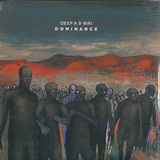
The album's distinctive artwork comes from the studio of Jewish orthodox artist Avraham Guy Barchil, who forged a powerful connection with Deep'a, both was immediately drawn to 'weird atmosphere, amazing technique and emotions involved with his work'. Perhaps one of the most interesting painters from Israel, Avraham is known for his unique perspective, taking his inspiration from the Zohar - the foundational work in the literature of Jewish mystical thought known as Kabbalah. The ambiguous figures represent mystical aspects of the Torah (the five books of Moses), as well as material on mysticism and mythical cosmogony.
Ensuring their natural, conscious touch always remains at the forefront of this unapologetically machine-driven music, Deep'a & Biri have produced an album in the lineage of their heroes and greatest influences. Cerebral yet satisfying, deep yet always engaging, 'Dominance' both reasserts and evolves Deep'a & Biri's forward facing and singular sound.
Intimate November tour also announced After their 2012 Mercury Prize nominated debut and 2015's Top 20 follow-up 'Born Under Saturn', musical adventurers Django Django are back for 2017, exploring new sounds with their brand new album 'Marble Skies' which will be released on January 26th on Because Music. Today the album launches with first single 'Tic Tac Toe', a rousing, trippy upbeat rock track with an enormous echoing hookline which will excite fans of the band's rockabilly-influenced elements. The accompanying video for 'Tic Tac Toe' was directed by John Maclean, brother of Django Django drummer/producer David Maclean and director of the critically acclaimed modernist western 'Slow West'. It depicts vocalist/guitarist Vincent Neff enjoying a rapid-fire day-trip to Hastings which takes a turn into the surreal and sinister when a ghost train puts him on a collision course with a grim reaper inspired by Ingmar Bergman's The Seventh Seal. As John Maclean explains: The film could be about the fading era of the beach arcades, time moving too fast, love and games, horror and happiness but it is actually about a man who needs to go buy a pint of milk to make a cup of tea.' After the brilliant, rave-shaped grooves and expansive arrangements of its predecessor, 'Marble Skies' is a more concise and focused offering which recalls the dynamic, genre-blurring music of their debut. It's a return to form, an album which finds them returning to the handmade, cut-and-paste approach of the past. Upon finishing the 'Born To Saturn' tour, Dave ventured to LA to work on a production project, whilst the other band members went to India with the British Council. When they returned, the new album process began with a back-to-basics approach which recalled the DIY ethos of the band's early days, Django Django - minus an absent Maclean - assembled at Urchin Studios in Tottenham, London with Metronomy drummer Anna Prior to experiment with the idea of coming up with new tracks through loose jamming sessions. After ten days of recording, there was plenty of raw material to send up to Dave (then back in his hometown of Dundee) for him to edit, refine and evolve. As ever, all four band members (completed by Tommy Grace on synths and bassist Jimmy Dixon) contributed to the band's music, melodies and lyrics as the final album took shape. Parts of 'Marble Skies' find Django Django sailing into uncharted territories, not least the driving title track (propelled by Prior's drumming), with its echoes of Krautrock and Suicide. Meanwhile, the hazy Zombies-like summer pop of 'Champagne', which explores the joys and ills of alcohol, was inspired by the band's over-indulgence during a boat trip on the Seine that was hosted by their label. Those drawn to the more dance-orientated side of Django Django will find much to love in the twisted '80s electro pop of 'In Your Beat' and the dancehall-influenced 'Surface To Air', a dreamy-headed pop song fronted by Rebecca Taylor of Slow Club. The collaboration came as a result of the two bands meeting up at SXSW some years ago, where Rebecca and Dave in particular bonded over shared interests in R&B, hip-hop and dancehall. Another more surprising collaborator is Jan Hammer, the Czech-born, American-based jazz-fusion and electronic artist who shares writing credits with the band on the gorgeously floaty 'Sundials'. If there's a mood running through 'Marble Skies', it's one of reflection on things past and present, and finding some kind of peace with your place in the grand scheme of things.
Bubblewrap Collective and The Gentle Good are proud to present 'Y Gwyfyn', a new EP entirely in the Welsh language to celebrate Welsh Language Music Day 2018. The EP contains brand new tracks and previously unreleased material as well as outtakes and an album track from the recent Welsh Music Prize winning 'Ruins/Adfeilion'.
In keeping with the'Ruins/Adfeilion'album, themes of the naturalworld,cultural identityandsocial justice feature prominently in 'Y Gwyfyn' EP. The title track describes a hot summer evening as perceived through the senses of a moth, whilst 'Briwsion' (Crumbs) is a critique of social inequality in today's modern world. Fan favourite track 'The Fisherman' (Y Pysgotwr) is reworked into the Welsh language, followed by a brand new recording of traditional Welsh folk song 'Cariad Cyntaf' (First Love). The EP ends with an epic 8 minute instrumental, 'Golwg y Gwdihw' (An Owl's Eye View), a musical representation of a nocturnal woodland scene originally recorded as part of a project for National Museum Wales. The EP features some of the finest musicians in Wales, including Jack Egglestone on drums, Callum Duggan on bass and Georgia Ruth on vocals. The EP also gives a platform to the stunning string arrangements of Cardiff based composer Seb Goldfinch, performed beautifully by the Mavron Quartet.
Long-term Soma collaborator Tony Scott drops his debut album with the label under his Edit Select alias, the perfectly crafted experience, 'Cyclical Undulations'. Having released with Soma under his Percy X moniker for years and having countless hits under his belt, Scott reinvented himself as Edit Select. Known for his dark, expressive and expansive music, Edit Select has become once of the most well respected and renowned artists in the genre. With this latest full length, he continues to explore the furthest reaches of the Deep Techno spectrum.
The Cyclical Undulations journey begins with Insta Grain, a mesmeric odyssey of ebbing pads and sparse percussive elements that seem to drift of into the expanse. A perfect opener before the first foray into more 4x4 territory begins with Above Ground a pulsating affair before Two Step Phase, a more stripped back affair, reminiscent of earlier Percy X works in it's 90s heyday. Undulation, more propulsive in it's approach, melds warping synth hooks alongside spectral tones. Horizon#1 follows in a similar vein yet drift into slightly more hypnotic territory as recurrent tones lead the track. Scott flourishes with yet more machine-throb crafting Close Up & In The Beginning She Was, both stacked with subtle nuances of his stylised percussion lost across dream like states. The later half of the album has a distinct minimalistic approach yet seem to provide maximal output with every beat. Horizon#2 is dark and ominous yet still characterised by a tough percussive element. Contact, produced in collaboration with Claudio PRC, delves into more submerged sounds with heavy sub bass and echoed drums, finishing of with Towards The E; a shuffling broken beat affair with after hours vibes and an endearing ethereal quality.
Cyclical Undulations demonstrates a mature sense of production from Edit Select. An assured collection of material, each track providing a striking insight into a true artistic mind.
East Man is a new project from Anthoney Hart and its material predates his previous work as Basic Rhythm. His unique take on grime reduces the sound to its steely fundamentals, bringing in influences from dancehall, drum and bass and techno to gird the voices of the MCs he works with. His own name for this hardcore continuum mongrel is 'Hi Tek'.Anthoney struck a friendship with the academic and theorist Paul Gilroy, who wrote the album introduction.
Ilija Rudman presents Andre Espeut 'Tears To Sound'
featuring Ron Trent Mix
Over the last decade and a half, Ilija Rudman has been responsible for many high quality releases, delivering distinctly warm, sun-kissed, analogue-rich material on labels including Bearfunk, Instruments Of Rapture, Compost , 20/20 Vision, Electric Minds, Is It Balearic Recordings, Rong Music , Classic Music Company and of course, his own Red Music imprint.
Even so, the Croatian has rarely made anything quite as deep and sensual as the material showcased on this first full EP for NuNorthern Soul. Top billing must go to the "Aquapella" version of "Tears To Sound", a spellbinding acapella cut that puts the enchanting vocals of storied soul man Andre Espeut front and centre.When Rudman sent the track to old friend Phil Cooper, the NuNorthern Soul boss thought it sounded like something he'd hear from US deep house legend Ron Trent. So, he approached the Prescription co-founder to see if he fancied remixing it. As you might expect, the results are astonishingly good.
Rich in rising and falling new age melodies, darting synthesizer motifs, languid piano flourishes and heavy analogue bass, Trent's wonderfully ultra-deep interpretation naturally gives pride of place to Espeut's seductive vocal. Even by the Chicagoan's infamously high standards, his epic Vocal Mix is incredibly special.
All versions of the single also feature two other original Rudman productions, both of which are wonderfully deep and dreamy. "Distant Feelings" is fluid, deep and yearning, with twinkling electric piano motifs and dreamy chords reclining over sizzling drum machine cymbals, no-nonsense beats and a gently pulsing analogue bassline. Those who enjoy the Balearic side of Rudman's work should also check out "Deep Sensation", a jazzy and breezy fusion of tumbling, vibraphone style melodies, rolling electric piano riffs and rubbery boogie bass. Both tracks are every bit as magical in their own way as the producer's thrilling Andre Espeut collaboration.
Al Brown was inspired to write the single 'Proverb' after spending hours hunched over his bible in Spanish Town as a youth. He had become known for his more commercial covers of singer Al Green material, but 'Proverb' was one of the few tunes that he recorded that were roots inspired and has become highly sought after. Recorded at Channel One with Ernest Hookim engineering, who did an excellent job of squeezing out a thumping horns led tune. The inspired version on the flip has Lloyd Parks on bass and the singer Derek Lara on drums. The Seventh Extension Band was the house band of the Zodiac label. Not a tight knit band as such, but built built around singers Bunny Lara and Derek Lara. 'Words spoke in haste will all go to waste so be cool'. True thing Al. Comes in hand stamped bag.
(Disclaimer: release notes refer to the combined CD double-album release "Hot Flash: Best of The Voltags" on which all tracks appear together. "Electric Nightmare" and "Danger High Voltag" are released separately on vinyl format)
It does not happen that often any more that unreleased music from 40 years ago surfaces. Even more unlikely it is that the songs put on tape are such treasures. The Voltags were right at the forefront of the local Washington DC New Wave/Punk scene of the late 1970s. Influenced by Kraftwerk, Gary Numan, The Clash, and The B-52's, they have released only one 45rpm single during their existence. But during the time span of not even 18 months, they had recorded enough material for an entire album - but the songs remained in the can.
This is the story of The Voltags, a short-lived band which could have become famous and mentioned in the same breath as the aforementioned music legends of that era - if their songs had been released back in the day. Dive in and enjoy the sound of The Voltags, it is truly special. We here at Perfect Toy are thrilled to be label to finally release their work and we sincerely hope that they are finally getting the appreciation they so richly deserve.
Detailed information:
Dave Bennett and Hangnail Phillips grew up in Brookside Park, Newark, Delaware, USA, a small suburban college town nestled midway between Philadelphia and Baltimore. Their first band project evolved into Pump Productions (Pump) under which they released their only 45rpm single in 1970 (one of the two songs, "Pappy's Rug", can be heard on "Down & Wired 3", Perfect Toy Rec.). Soon after the recording of the single the two graduated from High School and disbanded Pump. Both moved on to form two new Newark bands. Dave was a founding member of "Snake Grinder & The Shredded Fieldmice" and Hangnail co-founded "Rudy Baker & The Vegetables".
In early 1979, two friends of Dave's, Nick Norris and Mike Fisher, became partners in a music production company, White Clay Productions. One of White Clay's first artists was Dave Bennett who had just written two excellent songs: "Electric Jungle" and "Son Of Sam". White Clay set up a recording session and Dave assembled a group of friends to record the songs. Before the recordings were even mixed, Dave asked Hangnail if he would join in a band to support the single and other songs he had written. When James Keesey (drums) and Rick Reid (bass) were added the line-up was complete. For a while they didn't have a name and then one day Nick Norris was looking at a photo of Dave standing next to a "Danger High Voltage" sign. Dave's head was in front of the E in Voltage and Nick laughed "Danger High Voltag" and so it was soon suggested that the band should be called "The Voltags" (pronounced Vol'-togs). After months of preparing a repertoire they were ready to play out. Their first gig was (October 20, 1979) at a gay disco in nearby Wilmington called The Backstage. On December 30, 1979, White Clay decided to put on a big show at the State Theater to celebrate the end of the Seventies ("The End Of The Decade Bash").
For the next year, with the help of White Clay, they recorded 19 songs, both studio and live recordings with White Clay's mobile unit. If not for these "off the board" recordings, many of their songs would have never been recorded. There was always talk of a second Voltags single but the strains of working so closely together were taking their toll on them and Dave decided to leave the group in December of 1980. The Voltags couldn't be The Voltags without Dave, and by the end of 1981, Hangnail, James and Rick, too, were ready to disband.
- all songs previously unreleased
- mastered from the original reel-to-reel tapes
- limited vinyl release
Mastered and cut by Rashad Becker at Dubplates & Mastering in Berlin.
Hana's first and self-titled LP was recorded in Autumn 2010 at Facta non Verba and consists out of 5 tracks which are techno oriented with disposal of experimental and abstract elements.
Reviews
OMG Vinyl
Hana s S/T LP is easily the best promo records we ve gotten in months. This Greek duo has somehow, almost entirely below the radar, released one of the most exciting electronic records of 2011. Their wobbly brand of techno sometimes chugs ahead at full-speed, other times easing back into a wider waver, almost resembling some weird, warped IDM. I will be shocked if this record doesn t get wider appreciation very soon. Whether that happens or not, we fully recommend it, track one down.
Cyclic Defrost by Oliver Laing
Granny Records duo Hana come correct with their first album, offering a refreshing take on techno and IDM variants in the vein of Jan Jelinek, Raime, Actress and hints of the mighty Chain Reaction label. Mastered at Berlin s Dubplates and Mastering by none other than Rashad Becker, a name that often appears in the run-out groove of artists who inhabit a curiously funky techno-not-techno netherworld Hana s debut self-titled release grows in stature and listening enjoyment with every spin. With a sense of fun and adventure inhabiting the grooves, Hana (who are also part of label-mates, Good Luck Mr Gorsky), explore experimental timbres and ghostly vocalisations with a lightness of touch that belies their recording credentials.
Starting off with an abstract, Clicks and Cuts style intro, Liv slowly finds the sweet spot between mutant Detroit electro funk, a hint of the indie/dance territory of Matthew Dear and the abstract, yet rhythmic 12 releases on the Beatservice label, by Norwegian duo Information from the mid 90s. Obermaier implies the groove to begin with, until a wrong-footed man-with-two-left-feet rhythm leads into minimal acidic flourishes. Album opener SM heads in a Ricardo Villalobos vs. Nonplace Urban Field direction, as the lopsided rhythm and sepulchral vocals add a haunted edge to proceedings. CR80 uses beautifully syncopated live drums and urgent female vocals, and adds a driving, belligerent synth riff falling somewhere in between DMZ and Gary Numan. Echoic, boingy sounds threaten to derail the beat, but somehow it manages to maintain, reminding me of Shed and A Made Up Sound; more in overall feel than in the specific sounds. For those that enjoy abstract electronics that work just as well on headphones as on the dance floor, Greece s Hana are a duo to watch.
Textura
Hana's self-titled debut album arrives saddled with a (literally) cheeky front cover one would more associate with a 70s band like Wild Cherry than a Greece-based techno outfit formed in Thessaloniki last summer. Recorded in fall 2010 at Facta non Verba, the five-cut release finds Good Luck Mr Gorsky members Thanasis Papadopoulos and Thanos Bantis hunkered down in their chemical lab concocting formulae to go along with their material's stripped-down techno beats. Using analogue synths, samplers, and sequencers, the duo brings a decidely experimental edge to their productions, sprinkling as they do liberal doses of burble and flutter over bass-heavy techno rhythms.
The opening track, Sm, sets the scene with a heavy low-end pulse thudding alongside a steady kick drum and joined by acidy synths and percussive effects that suggest a lighter being repeatedly flicked open. On a slightly more aggressive tip, the B-side's Cr80 adds truncated vocal yelps to its bleepy, elephantine throb. A dubby dimension emerges in the track, too, when echoing waves drift repeatedly across the huge bass that slithers across the track's underbelly. The album's most elaborate track comes last. Liv opens beatlessly with flickering shudders and what could pass for the amplified workings of an ant community but then progressively fills in the dots with an insistent beat pattern, voice fragments, and even the demented meander of accordion playing. Though Hana hardly rewrites the techno guidebook on the release, it's nevertheless a pleasurable listen, in part due to the multi-dimensional experience provided by the vinyl format and the always superb mastering work done by Rashad Becker at Berlin's Dubplates & Mastering.
Milan based collective Just This return with two VA releases to continue their 'Broken Promises' series. With the aim of documenting the progression of cultural movements, the label have pursued underground material since 2010. Broken Promises Part 3 and Part 4 are due for release on 1st December and 8th December respectively, and each feature four new tracks channelling refined techno with minimalist, ambient sentiments.
Hunter/Game open Part 3 with 'Distance', a meditative journey through ambient textures using expansive synths and vast acoustics. Next, Architectural brandishes 808 drums for a tense workout on 'Electric Soul'. On the B-side, label co-owner Pisetzky explores the darker side of minimal on 'Anterial', whilst Altman plays with moody bass and ricocheting percussion on 'Shapes'.
Part 4 opens with a shuffling rhythmic framework on Inland's 'Aechmea', followed by 'Zona', a pointillist groove by Ben Gibson, aka one half of the collaborative project Dyad. On My Flower's 'Kundal', a cyclical melody wanders through eerie acoustics whilst Hiver navigates a broken beat framework with glitchy distortions and dub echoes on 'Stellar Parallax Landing'.
* 2017 year marks TEN YEARS OF INTEGRAL RECORDS and looking back upon the label's incredible back catalogue, what a decade it has been for drum & bass music that we hold so close.
* Initially set up as a passion project and a platform for showcasing future talent, the label has been consistently releasing cutting edge drum and bass since 2007. The ethos of the label has always been about quality control and finding those special vibes that no question capture heart and soul. Honing their unique musical language, selections are carefully handpicked by head honchos Artificial Intelligence and more recently in collaboration with label manager Emma G that fit with the forward thinking, original spirit we know as Integral.
* Now 40-odd releases deep and renowned for breaking some of the most exciting artists on the roster today, the label also boasts signature classics from some of the scenes most prolific residents. Names include the likes of Lenzman, Lomax (one half of Loadstar), Alix Perez, Calibre, System, Zero T, Technicolour & Komatic (Technimatic), LSB, Steo, Dawn Wall, Mohican Sun, Phil Tangent, Satl and just recently, A.I. themselves.
* Celebrating the seminal journey thus far, a double album will mark this very special occasion. Part One will showcase a selection of the finest from over the years in a chronological journey of the label's sound (for digitial release.) A second curation will simultaneously launch across all formats of entirely new and most exclusive material to date, reinforcing Integral's place at the round table of bass.
* A perfect teaser for what's to follow, the Album Sampler will drop this November featuring two stunning tracks. First up, '1000 Souls' comes courtesty of A.I. - tones of the deep, lush and soulful set the sultriest of grooves. Beautifully moody keys entice, chill and soothe. On the flip, 'Defiance' from Mohican Sun follows suit. With a gritty percussive edge, haunting melodies and a desperately emotional vocal to boot, this music will draw you all into the most mesmerising of dancefloor spells.
* Mark November 24 as the official release of the TEN YEARS OF INTEGRAL Album Sampler across all formats. Bag your limited vinyl copy now.
First official reissue of Nigerian Boogie Disco Grail LP produced by Grotto for EMI Nigeria and originally released in 1978. Contains dance classic'Bad city Girl'. Liner notes by Nigerian Music expert Uchenna Ikkone, include previously unpublished photos and extensive interviews by Temitope Kogbe.
.
Odion Iruoje was the A&R manager at EMI at the time,' Benson says, and he auditioned us, liked he material and signed us.' Odion Iruoje of course had groomed and produced Ofege. Now he was looking to repeat the formula with other high school groups such as Tirogo, Apples and Question Mark. Grotto's deep rock would be a welcome addition to this schoolboy rock' series.
Work on their album started immediately, with Iruoje in the producer's chair. Adapting to the tastes of the times—as well as their own maturing musical sensibilities—Grotto started transitioning from acid rock towards sleeker, more dance floor-friendly grooves. As I grew older I think I got a bit jazzier,' Benson says. I also listened to Curtis Mayfield, James Brown, Isley Brothers, Prince and a lot of funk groups from that era.'
Hard rock was the content of the first album,' Amenechi agrees, and funk/jazz/R&B the focus of album number two. Especially with the late Toma Mason Jr. joining as bassist.' The group's second album, Grotto II: Wait... No Hurry (released in 1979) reflected the growing sophistication of its members' musical outlook. Fat, funky bass grooves rubbed shoulders with jazzy flute lines, space-age synthesizer tones punctuated good, old-fashioned crunchy rock riffs.
This November will see Elia Perrone launch his new Jun'Ai imprint with his very own 'Flowers' EP, accompanied by a remix from Romanian minimal powerhouse Vid.
Tuscan producer and DJ Elia Perrone has long been one of the most respected figures in Italy's underground electronic music scene having co-founded the Klang Club in Arezzo which has seen him play alongside the likes of Simoncino, Juju & Jordash and Move D. Amongst this Elia, alongside brother and production partner heads up Unclear Records which plays host to their collaborative works as Easy To Remember as well as material from the likes of Baby Ford, Roman Fluegel, Christopher Rau and Dandy Jack amongst others.
Here though we see Elia turning a new chapter with the launch of his Jun'Ai imprint and taking the lead on the inaugural release is 'Flowers', a mind-altering slice of micro house fueled by pops, whirrs, clicks and sample cuts while fluttering atmospherics and bright string plucks ebb and flow throughout the murky depths of the composition. Vid aka Egal 3 steps up on remix duties to follow, delivering a straight edged take on things via crunchy organic percussion, billowing echoes of the original's atmospherics and a robust sub driven bass line.
Opening the flip side is 'Rain Smell', a slow brooding, hypnotic number employing dynamic string licks, modulating synth drones and bumpy 4/4 drums before 'Moshishi' closes out the package with airy ethereal textures, glitched out off-kilter percussion and rumbling low end tones.
The New Backwards, created in 2007, was originally included in the Ape Of Naples box set released on Important in 2008 and was constructed by PETER CHRISTOPHERSON using material from the Backwards sessions recorded in the early '90s for a planned release on Trent Reznor's Nothing Records label. The New Backwards, like The Ape Of Naples, is an intense fan favorite and an essential part of the COIL catalog.
Sumerian Fleet is a trio formed by Dutch producers Alden Tyrell and Mr Pauli, joined by Zarkoff after their 2010 debut EP. Their second EP came out in 2012 followed by their debut album 'Just Pressure' on Dark Entries in 2014. Sumerian Fleet have returned to release their sophomore LP 'Pendulum' of all new material as well as a remixed version of 'This Game Has No Name' from Zarkoff's other band, FFFC.
'Pendulum' contains 80's Dark Wave/EBM inspired tracks with an industrial tinge. The band cites inspiration from musical acts Fad Gadget, Front 242, Bauhaus and Sisters of Mercy. Literary references come from Poe's 'The Pit and the Pendulum', Pelevin's 'Generation P' and 'Life of Bugs', as well as classic Cyberpunk like Gibson's 'Sprawl' trilogy. Sumerian Fleet deliver 8 songs of vintage dark electro with a Gothic tinge and a touch of bass guitar. The album's been put together in a way that the listener can connect the dots, create a narrative, and become immersed in this attitude that the band's trying to convey, such as Vigny's idea of accepting despair: "A calm despair, without angry convulsions or reproaches directed at heaven, is the essence of wisdom."
All songs were initially recorded at Mr Pauli's studio in Den Haag, with overdubs and additional recordings at Zarkoff's Sensorium Studio in Croatia, and then final mix downs at Alden Tyrell's studio in Rotterdam. The album has been mixed by Alden Tyrell and mastered by George Horn at Fantasy Studios in Berkeley. Each LP is packaged in a copper foil stamped jacket designed by Eloise Leigh, with abstract squares in varied rhythmic repetitions to indicate motion, and included a double sided 10'x10' insert with lyrics and notes.
The visionary Turkish percussionist and the great South African bassist were introduced by Don Cherry in 1969, when Dyani moved to Sweden after the break-up of The Blue Notes. They worked together regularly over the next decade, starting out with Cherry in the Eternal Ethnic Music trio.'Another world,' recalls Temiz. 'At that time I was trying to learn as a big band jazz drummer, and when I met Don Cherry, I said, forget it. We played another kind of music. Indian music, Turkish music, Bulgarian, Chinese, you know... All kinds of music.' 'Every musician,' Dyani said later, 'should realize and acknowledge that folk music is the backbone of every music.'Recorded in Istanbul in 1976; originally released in an edition of one thousand copies only, on the Turkish label Yonca. The first side features Turkish material arranged by Temiz; the second, SA-oriented music put together by Dyani, opening with a stunning interpretation of Cherry's Marimba (Goddess Of Music).In a handsome gatefold sleeve, with excellent notes and previously unpublished photos.
A leading figure and respected elder in the Teklife family, Traxman has waited patientlywhile releases from young upstarts like Taso and Dj Earl have been enjoyed by footwork lovers all over the world. Now the time has come for Traxman to take centre stage, presenting a collection of new material that demonstrates his mastery of the footwork sound. Tekvision arrives hot on the heels of Teklife 005: Greenlight by DJ Manny, bringing an interesting contrast of production methods and styles. A prodigious crate digger, Traxman has provided the sample sources for many of Footwork's classic tracks over the years. So while DJ Manny recorded the majority of the vocals on Greenlight himself, Traxman uses his expert sample flipping techniques to add the human element to his productions. Traxman is a mainstay of the Chicago underground, with a discography stretching back to the golden era of Dance Mania Records in the 1990s. Ghetto House was an important precursor to Footwork, and Traxman was a key figure during this transition.
Echoes of the Ghetto House sound resonate through Tekvision, with tracks like Drop It Down and Twist The Party Out paying homage to the origins of Juke and Footwork music. Be Gagen feat DJ Earl is a beautiful opening track, with a soulful, melancholic synth unfolding patiently over a half-speed beat. When the bass kicks in after 1 minute 10 seconds it has a profoundly uplifting effect, and the late arriving vocal rounds off the composition perfectly.
Many of the tracks demonstrate brilliant and playful manipulation of vocal snippets, with Let Me Get Up and Control Ya Bitchezzz among the finest examples of this art. Finally,Tone Deaf and Whop Line show yet another side to Traxman's sound with an intoxicating and angular mix of bass and bleeps.
MICK HARRIS (SCORN, QUOIT, PAINKILLER) returns after several years of hiatus with ten tracks of blasting landmine bass and interlocking shrapnel rhythms.I've been asked to write a press piece for the dark lord MICK HARRIS.Where does one even start Especially for someone with decades of releases over various solo projects, collaborations and pseudonyms, whether it's doing blast beats in the original NAPALM DEATH to crushing techno brutality as MONRELLA, or savage drum & bass as QUOIT. Then of course there's the mighty SCORN and his numerous collaborations with fellow luminaries such as JOHN ZORN and BILL LASWELL (in PAINKILLER).Rather than being tied to genres or scenes, MICK HARRIS is one of those producers who creates a whole sonic world uniquely of his own, in which varying tracks, styles and tempos take form, but yet in which everything sounds unmistakably characteristic of the creator. Needless to say his work has influenced legions of producers like SURGEON, REGIS, ONTAL, VATICAN SHADOW / PRURIENT, FAUSTEN, SHAPEDNOISE et al, and pretty much anyone in the world of powerfully dark, abrasive music you could name-drop. And yet after all this time, it is impressive that HARRIS still stands way above his successors and has never been surpassed in his own production/performance game.After a hiatus of several years, he is back with a new album under the guise of FRET.Working at a faster tempo than his SCORN material, the FRET project first surfaced years ago on the DOWNWARDS label, rooting it firmly in the dark, industrial and technoid world, and appeared more recently on Tresor (Kern mix by OBJEKT), maintaining the characteristic colossal bass-heaviness and textural depth.And now a full album on KARLRECORDS, Berlin. HARRIS fans will be delighted to know that despite the 130 bpm tempo, the newest FRET still resolutely avoids any straight four-on-the-floor kickdrums, every track lurches, stumbles, staggers and charges forth with beats in beautifully broken asymmetry.We get 10 tracks of crushing, percussive destroyers, each itself a storm of precision chaos, with colossal low-end frequencies that'll cause stampedes in the right circumstances. The classic HARRIS sound is there, searing waves of feedback distortion, intricate, interlocking rhythms and cold, abattoir atmospheres, especially track 6 "Stuck in the track at Salford Priors" which sounds like you're being continuously suspended in the air from multiple explosions all around, each kickdrum throwing you up in the air, the next one going off before you can fall completely back to the ground.The lazy-minded would probably lump it in with the term "techno", but the disciplined brutality, blasting landmine bass and interlocking shrapnel rhythms are clearly HARRIS' own trademark style, sitting somewhere between SCORN and QUOIT.The tracks appear deceptively chaotic on the surface, yet each is meticulously and masterfully composed with great attention to layering and detail. MICK HARRIS fans rejoice, the dark lord still remains at the top of his game.
(Derek Szeto / Fausten / Combat Recordings)