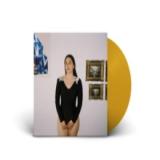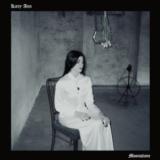
Through crushing riffs and haunting vocals, it reflects on loss, the forces of nature, and existential struggle. The production balances raw intensity with a deep, immersive atmosphere, enhancing the album's emotional depth. The album opens with a song in Latin, setting the tone with a ritualistic invocation. As its title suggests, it serves as a reminder to preserve one's inner purity in a decaying world, weaving ancient echoes into the album's foundation.
Todeslied follows as a hymn to death, carrying a solemn mood. The record also draws upon literary inspirations: one track is based on The Road by Cormac McCarthy, evoking apocalyptic desolation and the desperate fight for survival, while Dress in flames gives voice to the fury and imprisonment of Bertha Mason, the tormented character in Charlotte Bronte's victorian novel Jane Eyre. Compared to her previous release, which was more personal, Moonstone marks a shift towards greater collaboration within the band, with a more unified approach to songwriting and arrangements. The album, featuring two tracks by bassist Francesca Papi, has been arranged and refined together with Davide Rosa (guitar) and Fabio Orticoni (drums). The release also includes a powerful tribute to Bathory with a reinterpretation of Shores in Flames.
Recorded at Produzione Rumorose, mixed by Maurizio Baggio, and mastered by Giovanni Versari, this record represents a powerful evolution in the band's sound, sharpening their identity and pushing the boundaries of their musical expression.
Cerca:bass t
- 1: Gonna Lose
- 2: Fool's Gold
- 3: Understood
- 4: Elements
- 5: Rock Steady
- 6: Spiderweb
- 7: Never Alright
- 8: Alright
- 9: Comes A Day
"When The Wind Forgets Your Name" ist das erste neue Built to Spill -Album seit der Veröffentlichung von "Untethered Moon" aus dem Jahr 2015 und das achte Studioalbum dr langlebigen Band um Mastermind Doug Martsch. Es wurde von Martsch produziert, von Martsch, Lê Almeida, Joao Casaes und Josh Lewis gemischt und von Mell Dettmer gemastert. Das Cover Artwork wurde von dem Comiczeichner Alex Graham (Dog Biscuits; Fantagraphics Books) gestaltet, der auch den fünfzigteiligen Comicstrip für das Klappcover des Albums illustriert hat (erhältlich mit den CD-, LP- und MC-Ausgaben des Albums). Seit 1992 wollte Doug Martsch, Gründer von Built to Spill, dass seine geliebte Band ein gemeinschaftliches Projekt ist, eine sich ständig weiterentwickelnde Gruppe von unglaublichen Musikern, die gemeinsam Musik machen und live spielen. Nach mehreren Alben und EPs auf Independent-Labels stand Martsch von 1995 bis 2016 bei Warner Brothers unter Vertrag. In dieser Zeit nahmen er und seine wechselnden Mitstreiter sechs unbestreitbar großartige Alben auf - "Perfect From Now On", "Keep It Like A Secret", "Ancient Melodies Of The Future", "You In Reverse", "There Is No Enemy", "Untethered Moon". "When The Wind Forgets Your Name" setzt nun die Erweiterung des Built to Spill -Universums auf neue und aufregende Weise fort. Im Jahr 2018 brachten Martschs Glück und seine Intuition ihn mit dem brasilianischen Lo-Fi-Punk-Künstler und Produzenten Le Almeida und seinem langjährigen Mitstreiter Joao Casaes zusammen, beide von der psychedelischen Jazz-Rock-Band ORUA. Als Martsch ihre Musik entdeckte, verliebte er sich sofort in sie und bat sie bei Built to Spill mitzumachen, als er eine neue Begleitband für Auftritte in Brasilien brauchte. Die Auftritte in Brasilien liefen so gut, dass Martsch, Almeida und Casaes beschlossen, 2019 weiter zusammen zu spielen und durch die USA und Europa zu touren. Bei Soundchecks erlernten sie neue Songs, die Martsch geschrieben hatte, und als die Tournee zu Ende war, nahmen sie die Bass- und Schlagzeugspuren in seinem Proberaum in Boise auf. Nachdem sie nach Hause geflogen waren, begann Martsch selbst mit dem Overdubbing von Gitarren und Gesang. Das gemeinschaftliche Abmischen fand während der Pandemie übers Internet statt, in dem die Tracks hin und her geschickt wurden. Herausgekommen ist "When The Wind Forgets Your Name", eine komplexe und schlüssige Mischung aus den unterschiedlichen musikalischen Ideen der Künstler. Neben den poetischen Texten und Themen von Built to Spill sorgen die Experimente und die Liebe zum Detail für ein Album voller einzigartiger, lebendiger und zeitloser Klänge.
Limitierte Loser Edition, gepresst auf "Misty Kiwi Fruit Green" farbiges Vinyl. "When The Wind Forgets Your Name" ist das erste neue Built to Spill -Album seit der Veröffentlichung von "Untethered Moon" aus dem Jahr 2015 und das achte Studioalbum dr langlebigen Band um Mastermind Doug Martsch. Es wurde von Martsch produziert, von Martsch, Lê Almeida, Joao Casaes und Josh Lewis gemischt und von Mell Dettmer gemastert. Das Cover Artwork wurde von dem Comiczeichner Alex Graham (Dog Biscuits; Fantagraphics Books) gestaltet, der auch den fünfzigteiligen Comicstrip für das Klappcover des Albums illustriert hat (erhältlich mit den CD-, LP- und MC-Ausgaben des Albums). Seit 1992 wollte Doug Martsch, Gründer von Built to Spill, dass seine geliebte Band ein gemeinschaftliches Projekt ist, eine sich ständig weiterentwickelnde Gruppe von unglaublichen Musikern, die gemeinsam Musik machen und live spielen. Nach mehreren Alben und EPs auf Independent-Labels stand Martsch von 1995 bis 2016 bei Warner Brothers unter Vertrag. In dieser Zeit nahmen er und seine wechselnden Mitstreiter sechs unbestreitbar großartige Alben auf - "Perfect From Now On", "Keep It Like A Secret", "Ancient Melodies Of The Future", "You In Reverse", "There Is No Enemy", "Untethered Moon". "When The Wind Forgets Your Name" setzt nun die Erweiterung des Built to Spill -Universums auf neue und aufregende Weise fort. Im Jahr 2018 brachten Martschs Glück und seine Intuition ihn mit dem brasilianischen Lo-Fi-Punk-Künstler und Produzenten Le Almeida und seinem langjährigen Mitstreiter Joao Casaes zusammen, beide von der psychedelischen Jazz-Rock-Band ORUA. Als Martsch ihre Musik entdeckte, verliebte er sich sofort in sie und bat sie bei Built to Spill mitzumachen, als er eine neue Begleitband für Auftritte in Brasilien brauchte. Die Auftritte in Brasilien liefen so gut, dass Martsch, Almeida und Casaes beschlossen, 2019 weiter zusammen zu spielen und durch die USA und Europa zu touren. Bei Soundchecks erlernten sie neue Songs, die Martsch geschrieben hatte, und als die Tournee zu Ende war, nahmen sie die Bass- und Schlagzeugspuren in seinem Proberaum in Boise auf. Nachdem sie nach Hause geflogen waren, begann Martsch selbst mit dem Overdubbing von Gitarren und Gesang. Das gemeinschaftliche Abmischen fand während der Pandemie übers Internet statt, in dem die Tracks hin und her geschickt wurden. Herausgekommen ist "When The Wind Forgets Your Name", eine komplexe und schlüssige Mischung aus den unterschiedlichen musikalischen Ideen der Künstler. Neben den poetischen Texten und Themen von Built to Spill sorgen die Experimente und die Liebe zum Detail für ein Album voller einzigartiger, lebendiger und zeitloser Klänge.
- A1: Tucked In
- A2: Cruise Your New Baby Fly Self
- A3: Kill The Sex Player
- A4: (I) Don’t Got A Place Psychic Know-How
- B1: Explicity Yours
- B2: From Now On
- B3: Raindrop
- B4: The Royal Lowdown
- B5: My Martini
- B6: Glazed-Eye
Suspended Gold Vinyl[28,53 €]
Originally released in 1994, GVSB’s second full-length release for Touch and Go Records, Cruise Yourself, is characterized by catch vocal lines wrapped in a sonic double-bass low end. Guitars filter in and out of songs driven by heavy powerhouse groove drumming. There is noise, there is melody. “Tucked In” churns, “Kill the Sexplayer” pounds relentlessly, “(I) Don’t Got A Place” glides, and “Psychic Know-How” blows your head off… but you regain it immediately in the ominous groove of “Explicitly Yours.”
- 1: You Could Perhaps
- 2: Dream Life
- 3: Antarctica
- 4 20: Days Of Summer
- 5: Alpha Centauri
- 6: Shoe Shaped Cloud
- 7: Neon Lights
- 8: Gold Mine
- 9: Some Days (Feat. Fenne Kuppens)
- 10: Oh, My Father
Die italienische Singer-Songwriterin Marta Del Grandi veröffentlicht Ende Januar 2026 ihr neues Album Dream Life bei Fire Records, ihre erste neue Musik seit dem raffinierten, hingebungsvollen Pop ihres Albums Selva aus dem Jahr 2023. Del Grandi kehrt mit einem Album zurück, das in einem Feld der Träume spielt, einer multidimensionalen Panoramaaufnahme, unterbrochen von gelassener Desillusionierung, die musikalische Grenzen überschreitet, während persönliche Hoffnungen und Sehnsüchte gegen die Weite der Sterne und darüber hinaus geworfen werden. Das Album beginnt mit ,Antarctica", einem Song, der sich mit dem ethischen Dilemma der Welt auseinandersetzt und uns mit einem Riff, das an Talking Heads in ihrer Blütezeit erinnert und mit abstrakten Phrasierungen à la Laurie Anderson durchsetzt ist, aus unserer Komfortzone reißt. ,Neon Lights" unterstreicht diese Stimmung, geht jedoch auf einer persönlicheren Ebene darauf ein. Die verzerrten Gitarren und der wandernde Bass bieten einen härteren Einblick in rebellische Selbstfindung, eingebettet in einen symphonischen Klangteppich. Weiter in ,Dream Life" ist ,Alpha Centauri" ein eindringliches, introspektives Stück Pop-Magie, das Martas wunderschöne Stimme in Nostalgie für die Teenagerzeit schwelgen lässt und ihr inneres Kind wiederentdeckt, während eine entfernte Tuba eine Gegenmelodie trägt. Der Titeltrack untersucht den Quantensprung zwischen Realität und unseren Träumen und Ambitionen und bildet einen Kontrapunkt zu ,Shoe Shaped Cloud" und seiner grüblerischen Untersuchung einer gescheiterten Beziehung, die von einer schmerzerfüllten Stimme vorangetrieben wird, die an Radiohead in ihrer zerbrechlichsten Phase erinnert. Das Album spiegelt das wachsende Bewusstsein wider, dass wir die Zukunft oder das Ergebnis unserer Pläne nicht vollständig kontrollieren können. Dieser rote Faden zieht sich durch das gesamte Album, eine Reise, die poetisch, ironisch und tief in der Gegenwart verwurzelt ist. ,Mein vorheriges Album Selva hatte einen poetischen und bukolischen Charakter - in meinem Kopf kann ich mir jeden Song als Ölgemälde vorstellen - Dream Life hat einen zeitgemäßeren Ansatz, mit Texten, die politische und soziale Themen berühren, einer expliziteren persönlichen Erzählweise und einem klareren Pop-Sound. Es ist eher wie ein Fotobuch, klarer und detaillierter." - Marta Del Grandi Limitiertes, goldfarbenes Vinyl, bedruckte Innenhülle, mit DLC oder Digi-Sleeve CD.
Whitelands' second album Sunlight Echoes builds on their elemental debut - that won them fans from Slowdive to David Jonsson - with a more expansive sound that takes them out of the shoegaze shadows to somewhere bigger, better and brighter. Produced by long-time collaborator Ian Flynn and mixed by double Grammy Award-winner Eduardo De La Paz (New Order, The Horrors, The Charlatans, The KVB, Drug Store Romeos), there are soaring string arrangements (by Iskra Strings) and Lush guest vocals from labelmate Emma Anderson. "We're coming back with a lot more maturity and realness," says singer and guitarist Etienne Quartey-Papafio of their step up. "It shows in how much more emotional our music has become." With maturity comes a newfound confidence, so not only are there stunning melodies everywhere, but Etienne's vocals are front and centre throughout. "It's been really cool to watch Etienne push through boundaries," adds bassist Vanessa Govinden. "I like the direction we've taken on this album. We're taking a risk. It's half and half." She's right - the first half of the album has an almost Britpop breeziness, that belies the serious subject matter that inspired the songs, while the second half gets heavier, in all senses, with added grit and gravitas."This album is one of enduring," says Etienne of the overarching theme. "We had family that were dying, I was broke, there was a shortage of my ADHD medication_ I was suffering, but not just me, everyone around me was too." "The last two years have been challenging," concludes Vanessa. "The universe really fucked with us. That's why there are themes of loss, disconnection, fragmentation and yearning, but on the other side there is also unity and hope." Sunlight Echoes is a poetic, melodic statement of intent from this formidable band. Whitelands have fought back and triumphed in the face of adversity.
- 01: Imprevedibile
- 02: Confabulante
- 03: Melissa
- 04: Mais
- 05: Aglio
- 06: Genziana
- 07: Bucaneve
- 08: Papaveri
- 09: Campanule
- 10: Taurus
- 11: Il Diavolo
The Modern Sound Quartet represents one of the most treasured, yet least documented, outfits in the history of Italian library music. An exceptional studio band of session musicians with a formidable groove, they released only a handful of albums under this name in the second half of the 1970s. However, their sound indelibly shaped dozens of "invisible" soundtracks, often without ever receiving an official credit on the back sleeve.
Led by pianist and composer Oscar Rocchi, and featuring Andrea Surdi (drums), Luigi Cappellotto (bass), and Ernesto Verardi (guitar), the quartet embodies the more jazz-funk, cinematic, and irresistibly groovy side of the 1970s Milan scene. They established themselves as a compelling alternative to the already established groups operating primarily out of Rome, such as I Marc 4 or I Gres.
Juggling late-night club jam sessions, tours supporting Italian pop giants like Ornella Vanoni, and creating rhythmically intense library records, the Modern Sound Quartet forged a unique sonic aesthetic: sophisticated, electric, and profoundly metropolitan.
This boxset celebrates their funkiest side—an irresistible combination of incandescent drum breaks, tight grooves, and high-intensity fusion passages—bringing together some of the most sought-after tracks from legendary LPs like Erbe Selvatiche (1977), Floreama (1977), Horoscope (1978), and I Tarocchi (1980). The selection also delves further back to the roots of their sound, including two powerhouse tracks from Pop-Paraphrenia (1973), a project where Oscar Rocchi—backed by a young, lethal Tullio De Piscopo on drums—sowed many seeds that would fully blossom in the subsequent Modern Sound Quartet output.
Created with DJs, beatmakers, and collectors of Italian library music in mind, this boxset deliberately features tracks that were never previously released on 7 inch—an ideal format for maximizing the rhythmic punch of the quartet's sound.
Available in a limited worldwide edition (500 copies), enriched by iconic 70s-style artwork conceived and designed by Eric Adrian Lee.
- A1: Original
- B1: Extended Version
Psyché is an eclectic project rooted in the Neapolitan music scene. Conceived in 2018, the project includes Marcello Giannini (Nu Genea Live Band, Guru, Bassolino, La Famiglia), Andrea De Fazio (Nu Genea Live Band, Parbleu, The Funkin Machine), and Paolo Petrella (Nu Genea Live Band, Fratelli Malibu). They were recently joined by Roberto Porzio (Parbleu, Fitness Forever, 24 Grana, The Funkin Machine).
"Hurriya (We Must Resist)" is a sonic bridge crossing the Mare Nostrum, connecting the shores of Naples and Tunisia.
At the heart of this fusion is the voice and soul of Tunisian musician Ziad Trabelsi, whose Arab roots intertwine with the psychedelic, Mediterranean sound of Psyché.
In this track, Afrobeat and Arabic sonorities meet to create a hypnotic journey, one where Ziad's oud weaves an evocative groove that gallops like horses in the desert.
The song carries the echo of the ancient dominations and cultural exchanges that have shaped Naples—a millennia-old crossroads of civilization—where traces of Arab and North African influences continue to resonate in its streets and, most notably, in its music.
"Hurriya"—the Arabic word for freedom—is an anthem of resistance and resilience, a dialogue between East and West that dissolves the rigid boundaries of geography and politics. It is a collective song for the freedom of all peoples, against oppression, abuse, and injustice everywhere in the world. As Psyché emphasize: "Even if life tests us severely, and we often feel like giving up in the face of injustice, we must resist. We must refuse to disappear."
The single is available digitally and physically, on January 23rd, as a 7" vinyl. The B-side of the physical release includes an exclusive, extended version of "Hurriya (We Must Resist)", available only in this format.
Waiting is the essence of travel. Patience is its own reward.
Two people. A Telecaster guitar with a few effect pedals. A drum machine. An audio interface is connected to a laptop. The ingredients are simple yet effective.
But any suggestion of four-track cassette machines and vintage bedsit productions is quickly dispelled by digital dubbiness and refined arrangements. A tail of reversed echos. The crystalline flourish of octave-pitched delays. Riddled hi-hats tickle and taunt. A bass drum asserts its space.
Winkler's guitar patterns have a fragmented, almost haphazard connotation. Searching in a shimmer of reverb. Until the beat, the framework, sets in to reveal structure. Intentionality. Reihse's programmed rhythms go just to the point of a groove, holding the moment of tension, knowingly delaying the gratification. Beats that have scratchy patina anda subtly playful edge; their crispness stands in contrast to the contemplative drift of the guitar. Is it a trance? Or a dance? Yes.
There are some apparent references here: a good portion of Les Disques du Crépuscule, some kraut-esque electronica, even a smidgen of Morricone / Spaghetti Western, blending into a kind of Musique Noir – yet these serve as a set of orientational coordinates, rather than quotations.
This is so far the most assured release by Periode, perhaps eschewing some of the naiveté that was wilfully cultivated in earlier output – there is no cheeky cover version this time. And no singing either. The nine pieces have the quality of a series, a variation on a mood, or a subset of moods. What emerges is an inviting swagger in the face of bleakness. There is a profound melancholy, but it is not the darker kind, and does not exclude humour.
First impressions may suggest that this is purely nocturnal music. Yet it equally evokes the harsh sunlight and baking summer heat. Or a rainy day. And transportation: the music suggests the motion of travel, even if that travel only happens within the mind. And waiting. Waiting while doing nothing much. Because that's all you can do. (Alexander Paulick)
We Jazz Records continues their 7" series with a new release by Oaagaada, a fresh quartet from the rural parts of Southern Finland. "Oag-ada / A Swimming Trip" appears on 30 October and presents the band's ability to create fiery and flowing jazz music with strong avantgarde leanings. Think Art Ensemble Of Chicago on their groovy mode and add a strong DIY mentality, four people in a room creating music in the now. The lows are low and the highs are high, with the trumpet firmly on the red, adding just the right amount of blurriness into the picture. Perhaps it's not "lo-fi jazz" per se, but rather music which is more concerned with other things than the cleanest of hi-fi imagery. This is "real jazz for real people".
The quartet includes Tuure Tammi (trumpet), Sami Pekkola (sax), Tero Kemppainen (bass) and Simo Laihonen (drums). Laihonen has recently appeared on We Jazz Records with Stanley J. Zappa and previously with Black Motor, and more Oaagaada can be heard on the recent "We Jazz Live Plates" album "Lonna 2019".
True to We Jazz style, the 7" single comes with old school heat-pressed labels and a plain brown paper sleeve.
Berlin-based Swedish dynamic duo of sax man Otis Sandsjö and bassist/producer Petter Eldh return with new music on We Jazz Records. Remember the hard hitting banger "Tremendoce" from Otis Sandsjö's "Y-OTIS 2"? Well, the saga continues, and the new directions are surprising to say the least, just as we like it!!! Some proper late night / early morning out there vibes on this one, and the flip is yet another step forward, bringing in Kathrin Pechlof on harp. Things are liquid, just as you would guess, but the whole consistency of the substance has flipped and evolved. A new sound. A new idea. Another new day in Mauerpark, Berlin.
Berlin-based Swiss vocalist Lucia Cadotsch returns with her celebrated Speak Low trio for their second album, released by We Jazz Records on 27 Nov. "Speak Low II" features Cadotsch on voice, Otis Sandsjö on tenor saxophone and Petter Eldh on double bass, and introduces guest artists Kit Downes on hammond organ and Lucy Railton on cello. "Speak Low II" picks up where their genre-bending and forward-looking debut album left off, introducing new shades into the band's sound and also diving even deeper into the songs they tackle. What makes Speak Low special is their approach to really get to the heart of each composition with seemingly minimal means, yet generating a sound which is both instantly recognisable and remarkably impactful.
"Speak Low II" comes almost five years after the band's lauded debut, and proves the depth of the band's approach right from the start. At the core of the trio's operation is an openness to their love of the music and to their surrounding scene(s). The album comes across as a unified collection of songs made truly theirs and found through listening to records and spending time with their musician friends, often on the road. The highly evolved band sound and the equality of the musicians shines through on the Speak Low sound, as the group uses their 100+ performances together as a vehicle for the development of their music.
"The first album was filled with pretty famous songs, but that was actually not at all intentional" explains Cadotsch. "Those were just my favourite songs of the previous 10 years and we started working on making them ours, musically. We were playing around with concepts for the second album, but soon realised that we just needed to find the right songs and adapt them organically, which comes through in how we interact with the songs and each other. This time around, we wanted to dig deeper and made finished arrangements of around 20 tracks, half of which we ditched in the process. The ones that made the cut have been through a lot and they just felt right for us."
In a way, the Speak Low approach could be described as archaeological. Three music lovers connecting with songs found at various sources, readily throwing away any ideas that don't seem natural to them, and hanging on tight to the ones that do.
Turns out there is a concept to "Speak Low II". It's the band itself, their shared musical development and their love of music.
"Speak Low II" will be available on We Jazz Records on vinyl (PURPLE and BLACK editions), CD and digitally. The vinyl versions come with a heavy duty tip-on sleeve and a printed inner sleeve. CD in digisleeve with no breaking plastic parts.
After two decades in the experimental music scenes of New York and Western Massachusetts, Wednesday Knudsen might be known equally as a sought-after improv collaborator and the vocalist and guitarist for the beloved long-running psych band Pigeons or, more recently, as a member of the New England psych-folk ensemble Stella Kola. Though her forthcoming release, Atrium, is Knudsen’s fifth solo album, it is both her first solo work to appear on vinyl and a double LP, marking her rich recording history with a stunning masterwork. Channeling the “atmosphere of presence” alongside the legions of Éliane Radigue, Hiroshi Yoshimura, and Joanna Brouk, on Atrium, Knudsen plays it all—alto saxophone, flute, guitar, synth, piano, autoharp, bass guitar, and vocals. The collected compositions are studies in the tones, timbres, and pacing particular to the woodland environment of the Taconic Mountains where she lives. Atrium’s tracks are sculptural rather than ambient, with a release into the gorgeous hold of gravity that insists we don’t escape or drift away. This is music for remembering time. This is music that reinforces the power of art as resistance. The songs on Atrium distill our attention in a language that Knudsen calls “the opening of the heart,” reminding us that subsistence and community results from our own actions and engagement with our exterior. Atrium is a refuge, vital in our current moment and imbued with resonant power for our future.
- Just Another Wizard
- Walls Of Hate
- Chroma
- Manic
- Price Of It All
- The Alp
Clear Purple Marble Vinyl
Stone Machine Electric return with ‘FACES’, a deep and immersive exploration of their signature Doom Jazz sound, where slow burning grooves, atmospheric distortion and meditative heaviness merge into a single hypnotic flow.
The Texas trio expand the boundaries of doom, stoner and psychedelic rock with six expansive tracks shaped by textured guitars, fluid basslines and ritualistic drumming, creating a sense of weight and space that pulls the listener into a raw and introspective dimension.
‘FACES’ is an album built on tension and release, repetition and movement, crafted for those who seek heavy music that pushes beyond the traditional framework and into a more spiritual and experimental territory.
LP pressed onto Clear Purple Marble vinyl.
Essential for fans of Monolord, YOB, Shrinebuilder, Om and early Earth.
- Title Track
- Pov Ur Dead And I'm Checkingmy Hair In Ur Sunglasses
- White Boy Dance
- Tired Of U
- Spam Calls
- All Of A Suddenly
- Somebody Else
- Horse W/ Curse
- (Airplane Song)
- I Can See My House From Here
- Waterfalls
- Catalina
- Xing Guard
- Sidewaze
- Paintball
SPIRIT!, the third LP from HUNNY, is about embracing the weird-an album born from uncertainty and built on instinct. It"s a testament to breaking free, starting over, and tuning out the noise. Now the sole project of longtime frontman Jason Yarger, HUNNY has shed its past shape to become something more fully itself. SPIRIT! doesn"t reinvent the wheel so much as keep it spinning forward. Across 15 tracks, the album-co-produced by Yarger and former bassist Kevin Grimmett with drums by former drummer Joey Anderson-leans into the sounds that have always lit HUNNY"s fuse: hooky post-punk, gleaming synths, and shout-along choruses praised by Alternative Press, Kerrang!, and Rock Sound. But it also pushes further-into abstraction, playfulness, and freedom. It"s the latest turn for HUNNY, a band long celebrated for shapeshifting through genres and decades with style on fan-favorite releases like Yes. Yes. Yes. Yes. Yes. (2019) and new planet heaven (2023)-always evolving, yet unmistakably themselves. That dynamic energy carries into their high-voltage live show, sharpened on tours with Joywave, Mom Jeans, Waterparks, and State Champs.
- A1: Mirai (Léviathan)
- A2: Adieu (Rue De La Victoire)
- A3: Sillons (Abyssinie)
- A4: Turquoise (La Fête Noire)
- A5: L’averse (Vendredi)
- B1: Tête En Bas (88888888)
- B2: Bol Chaud, Bol Froid
- B3: Filmer Du Feu (Inline Twist)
- B4: Water Signs (Saint-Donatien)
- B5: Le Malchin (Bleu Sous-Marin)
- B6: Loin De Vous (Gravité)
- B7: Mi Rey (Léviathan)
Here, Flavien departs from his usual creative process to embrace collaboration—because plouf! (Léviathan) is also the story of a dive, his first collective adventure with musicians he had always dreamed of working with: Michelle Blades (guitar), Kiala Ogawa (keys), Akemi Fujimori (bass), Cédric Laban (drums), and Thibaud Merle (winds).
Reworking these songs is a way of revisiting forgotten musical landscapes, shedding new light on them with a different perspective. It’s about transforming a solitary electronic record into a collective piece by exploring new textures and instrumental approaches.
With this album, Flavien Berger uses his early tracks as raw material—as if the 2015 Léviathan were now a kind of demo from which to extract the essence and create something entirely new. The project, like the music that drives it, is rooted in the idea of reinvention.
The result is a fresh sonic exploration where Léviathan’s tracks take on new forms—some staying true to their original versions, others completely reimagined, blending past and present.
After 8 years, 2 albums on BureauB and different small releases RVDS comes back to his roots and releases these 3 Acid Bangers:“Too much Acid” which has 4 TB303 Basslines in one match, which can remind on some Emanuel Topp tracks, then there is the Acid Electro track “Schluckauf” (Hiccup) which expresses hiccups in sounds, the last track “Acid Busline 242” is very soulful and has recordings of the busline 242 in London.
- 1: Der Brauch
- 2: Der Faden
- 3: Das Seil
- 4: Brauch Reprise
- 5: Der Doppelgänger
- 6: Die Lüge
- 7: Die Brücke
- 8: Das Nachsehen
- 9: Die Heimkehr
Gold Vinyl[33,57 €]
Since their formation, The Hirsch Effekt have carved out a unique niche in the German-speaking music scene. Yet, despite—or perhaps because of—their elusiveness, the band has captivated a devoted audience. Musically, The Hirsch Effekt have always embraced limitless possibilities. Acoustic, introspective moments—where bassist Ilja John Lappin brings out his cello or guitarist Nils Wittrock returns to his classical roots—sit naturally alongside massive progressive metal onslaughts. The band is equally at home on intimate club stages as they are at international festivals, evidenced by repeated appearances at Euroblast and numerous events across the UK. Recently, they toured Germany alongside scene giants like Leprous, Tesseract and traversed Europe with Caligula’s Horse. Yet between these extremes, The Hirsch Effekt continually create songs that flirt with radio accessibility—almost—because the band steadfastly resists any form of standardization. With their seventh album, Der Brauch, they continue this course uncompromisingly. While earlier works, despite their diversity, were still labeled “metal albums,” this new record explores paths first hinted at on the multilayered second album, Holon : Anamnesis—the same album that fans of VISIONS magazine voted the only German-language entry among the 20 best albums of all time. Der Brauch can be seen as a return to that pivotal point—and simultaneously as a bold step forward. Drummer Moritz Schmidt doesn’t entirely forgot blast beats, but the record demands a new heading. In the end, though, there is only one truth: it unmistakably sounds like The Hirsch Effekt.
Mathias Kaden returns to Rekids with the 'Circulate' EP, featuring a William Kiss Remix.
Mathias Kaden is back on Rekids after 2022’s ‘Blackbird’ EP, this time with the four-track ‘Circulate’ EP featuring a remix from the hotly tipped William Kiss. Kaden’s ‘Freedom’ kicks things off with stripped-back machine rhythm, tasteful stab melodies and a deeply satisfying low-end groove before an iconic gospel vocal joins in. Title track ‘Circulate’ is another infectious low-slung crawler with crunchy synth hits and a hypnotic and classy vibe that will get the dancefloor moving.
On the flip, William Kiss remixes Mathias Kaden’s ‘Freedom’ following his recent EP on Rekids' sibling label RSPX and the release of his collaborative project, Not Without Friends, with Luke Alessi and Jordan Brando on RÜFÜS DU SOL’s Rose Avenue. Kiss turns the track into a pumping peak-time cut with additional percussion and plenty of his signature Jackin’
flavour. Closing out the record, Kaden’s ‘Twisting Shadows’ introduces an acidic bassline and warped, dubbed-out vocals before dropping into an energetic trip.
Active since the mid-90s, Mathias Kaden appeared on Radio Slave’s Rekids for the first time in 2019 for ‘Liberate Drums’. He now returns to the label with the ‘Circulate’ EP, adding to his versatile discography on labels like Dyinamic and Vakant while also remixing work by Matthias Tanzmann, Onur Özer, Anja Schneider, and Trentemöller.