After new versions of the music of Mahler and Beethoven, the most unusual album of the Bruckner Year 2024 is now being released. Jazzrausch composer Leonard Kuhn transports Bruckner's symphonies and original compositions based on them mostly in a crisp, almost pop-oriented song format - with intense jazz grooves and often with gripping force, but also with a lot of sophistication and a big band line-up expanded to include horn, percussion, bassoon and three strings.
quête:basso
Zee Skirts is the slightly mysterious band around Zeezee L'amoroso. After a self-released LP, Zee Skirts comes today with a second full album i.c.w. W.E.R.F. Records.
'Only the Bad Sleep Well' is a collection of songs written specifically for insomniacs, lost daydreamers and those who cherish their pajamas as a precious gem. What began as a musical odyssey inadvertently emerged as a concept record.
We hear melodic earworms combinedwith dashes of Japanese film noir, a bassoon chasing a trombone and a drum kit rolling down the stairs. Musically, they get the hot sauce from Harry Nilsson, Robert Wyatt, Yasuaki Shimizu, Kate Bush, Thelonious Monk, ...
The norwegian group Boastein was founded by Are Storstein and Øistein Boassen in 1970. Boastein's debut album "Jeg har min egen luke" became something of a holy grail within alternative music in Norway. This is DIY rock from the anarchist basement with a sound and lyrics that was quite groundbraking when it came out. It was also one of the very first independent releases in Norway. The album can be described as free and progressive underground rock filled with dark humor, political sting and a good amount of weirdness. The record was first released in 399 copies in 1977.
Mesmerizing and exuberant Argentinian La Yegros, probably the most magnetic artist on the South American continent, is back with a new album!
The undisputed Queen of "Nu Cumbia" has not rested on her laurels. Surrounded by the same accomplices who have supported her for the last ten years, but eager to renew herself, she has set about recording her fourth album, which stands out from her discography. Although her personal folklore is still rooted in South American folklore, La Yegros is now absorbing contemporary, global music, while tackling intimate, often melancholy and even painful subjects, which she overcomes with the same resilience that drives her in concert. Nothing stands in the way of this Argentinian whirlwind, all the more fascinating for the fact that personal considerations are now surfacing beneath the veneer of the party atmosphere she sets alight.
La Yegros returned to the stage in 2022 to celebrate the 10th anniversary of Viene de Mí, her single hit from the self-titled album, released in 2012 in Argentina and then worldwide in 2013, which catapulted her to international fame. We then discovered a singer who had grown up in the traditions of her country. Her parents come from Misiones, a province bordering Brazil and Paraguay, where balls are filled with the sounds of chamamé (a mix of polka and Guaraní music), Carnavalito (Andean folklore) and Colombian Cumbia. But she herself is a native of Buenos Aires, whose nights are enlivened by the bass of Dancehall and electronic music.
These influences have merged in two further successful albums, Magnetismo (2016) and Suelta (2019), followed by high voltage tours during which La Yegros has been able to display her generous nature, inexhaustible energy, exuberant personality and infectious enthusiasm.
To record her new album entitled 'HAZ', La Yegros has put her faith in the same team that has worked with her since Viene de Mí. On one hand, producer Gaby Kerpel (also known as King Coya), a pioneer of synthetic experimentation applied to traditional music, who has remained her faithful accomplice for over twenty years. On the other hand, composer Daniel Martín, who knows how to come up with melodies to dream about and hymns to sing along to. Inseparable and complementary, the trio continues to concoct this mesmerizing mixture where acoustic instruments meet samples and the rolling of machines. But the new productions don't rely on a tried and tested formula. Generally co-produced between France and Argentina, they break away from over-defined genres. La Yegros knits together new rhythms and incorporates sounds that are unheard of in her country, derived from the latest urban trends, as well as echoes of reggae and funk. As for the lyrics, signed alternately by the trio, they are embodied by La Yegros whose charismatic voice questions a period of her life tossed by waves of love and lovelessness, joy and sorrow, euphoria and anguish, indulgence and resentment.
The album is open to a wealth of musical styles. You'll hear funk guitar and Andean flutes, melancholy accordion and rolling drums, Tuareg blues enhanced by brass, house and electro Cumbia loops, and the bassoons of a chamber orchestra. The folklore 2.0 of La Yegros, nourished by its colorful inspiration, at times tender or exalted, has been imagined as a hymn to love and the contradictory feelings that come with it. As always, it has also been conceived with the stage in mind. Hatching in a storm of overturned emotions, the album is all the more explosive for the strength of the live show that accompanies it. In addition to the usual line-up of guitar, accordion and percussion, a musician handles synthesizers and machines to boost the electronic turboshaft. In any case, you can count on the singer to assert her increasingly clear-cut character with each new project. And, above all, she won't give up. L.a Yegros is back and her batteries are fully charged.
- A1: Lady Bird
- A2: Tune Up
- A3: Pent Up House
- A4: Indian Summer
- B1: Cheryl Blues
- B2: Line For Lyons
- B3: Look For The Silver Lining
- B4: My Old Flame
Recorded in October 1959, with heroin a caustic presence, In Milan is the first of the albums Chet Baker cut in Europe, revisiting West Coast cool jazz nuggets with drummer Gene Victory and a set of local players, including bassist Franco Serri and pianist Renato Sellani, bolstered by saxophonists Glauco Masetti and Gianno Basso on select tracks. Bop favourites such as Charlie Parker & Miles Davis’ ‘Cheryl’ and Davis’ ‘Tune Up’ are handled with care, and there’s a fine take of ‘Line For Lyons,’ which Baker first recorded as a member of Gerry Mulligan’s Quartet, with a great solo by Serri. It’s Baker at his best – thoroughly excellent!
- A1: Fred Und Luna - Intro (Future Sounds Of Kraut 2) (2 47) * Exclusive
- A2: Sankt Otten - Angekommen In Der Letzten Reihe (6 30)
- A3: Ghost Power - Vertical Section (2 14)
- A4: Fred Und Luna - Monotonikum (Edit) (4 46)
- A5: Formant B - Kater (Single Version) (4 24)
- B1: Thomas Fehlmann - Permanent Touch (3 23)
- B2: Roman Flügel - Rules (4 50)
- B3: Sordid Sound System - It's About Time (4 37)
- B4: I Cube - Basso (4:15) * Exclusive
- C1: Lucas Croon - Krautwickel (7 22) * Exclusive
- C2: Minami Deutsch - Your Pulse (5 22)
- C3: Gilgamesh Mata Hari Duo - Johan (4 46) * Exclusive
- D1: Kosmischer Läufer - Spargelspiegel (4 43) * Exclusive
- D2: Young Solo - Twin Shadow (3 51) * Exclusive
- D3: Schlammpeitziger - Runzreich (4 04) * Exclusive
- D4: Halwa - Schmetterling (5 45) * Exclusive
- D5: Fred Und Luna - Outro - Auf Wiederhören 2 (1 52) * Exclusive
Wir haben so großartiges Feedback zur Future Sounds Of Kraut Vol. 1 bekommen, also kommt hier Volume 2: 17 moderne Kraut-Elektronik-Tracks (9 davon exklusiv und vorher unveröffentlicht) inspiriert von Kraftwerk, Can, Neu!, Cluster, Harmonia, Klaus Schulze und vielen anderen. Kuratiert und zusammengestellt von Compost-Künstler Fred und Luna. Die Collage auf dem Cover wurde - wie schon auf Vol. 1 - exklusiv von der fantastischen Künstlerin Norika Nienstedt aus der Kraut-Metropole Düsseldorf gestaltet.
Gar nicht einfach oder im Grunde unmöglich, den Begriff "Kraut" stilistisch zu beschreiben. Dennoch begeben sich Compost Records und Fred und Luna auf eine Zeitreise, um die unterschiedlichen Elemente deutscher elektronischer Musik der 1970er- und 1980er-Jahre und ihre Auswirkungen auf die neuere deutsche und weltweite Musikszene zu entdecken.
Nach dem großen Erfolg von Volume 1 wurde umgehend ein Nachfolger gestartet, der stilistisch an seinen Vorgänger anknüpft und darüber hinaus - da dies eine der Grundideen der Reihe ist - das musikalische Spektrum Schritt für Schritt um neue krautige Elemente erweitert. Auf Volume 2 finden sich deshalb nun auch ein paar cluborientierte und experimentelle Tracks.
Compost und Fred und Luna wünschen viel Pläsier beim Krautifizieren!
Format: - Schwarze 2LP mit Content-Sticker inkl. 9 exklusiven/unveröffentlichten Tracks
DJ Quotes:
- "A great compilation with a unique approach!" - Hans Nieswandt
- "Amazing contributions from all the artist involved ! Love this album ! Thank you Fred & Luna !" - Peter Kruder
- "Very interesting compilation ... Great music" - Laurent Garnier
- "Superb in every way" - Nick Warren
Sonor Music Editions proudly presents "A TEMPO DI JAZZ" by Maestro Piero Umiliani. This lost gem captures the formative years of Modern Jazz in late 1950s Italy - alongside the legendary Basso-Valdambrini recordings in the early 1960s, as well as the early years of Piero Umiliani's long and prolific career as a composer with over 190 soundtracks, 40 library albums, and 35 TV title themes recorded.
A TEMPO DI JAZZ includes seven original compositions by Piero Umiliani recorded in 1959. Here, at the age of 33, he lays a perfect ground with himself as a pianist, accompanied by some of the best Italian soloists at the time: Marcello Boschi on alto saxophone and flute, Ivan Vandor on tenor saxophone, Peppe Carta on bass, and the American trombonist Bill Gilmore. With plenty of room for improvisation, the sextet fuses Big Band moods with West Coast experimentation of Latin American rhythms and Modern Jazz ballads that sit perfectly between his soundtracks for the films "I Soliti Ignoti" (Big Deal on Madonna Street) from the same year that attained him international recognition, and his masterpiece "Smog" (featuring Chet Baker and Helen Merrill) from 1962.
Five compositions are outtakes from Piero Umiliani's mega-rarity "Tempo Jazz", released on RCA Custom in 1960, while 'Tema In Blues' has been published on the two - impossible to obtain - 45 releases "Moderato Swing" (RCA Camden 45CP 112) and "Tema In Blues" (RCA Custom 45 R3) from 1960 as well as the previously unreleased track 'Mezza Cottura.'
The music has been transferred and remastered from the original master tapes and lacquer cut in MONO, preserving the original sound of the recordings.
One-off masterpiece release of German Minimal Synth-Pop from Gütersloh, Germany in 1984. Recorded in a DIY recording studio in a former prison for the mentally ill located on the outskirts of a forest near the artists’ homes aptly named Prison Studio.
Back in 1984, the release was privately pressed on 7″ by the band itself, distributed in limited quantities at the time and it has only exchanged hands a few times on public marketplaces since its original release, for very high prices. The record has always been as rare as it is good, to quote Basso. We are delighted to make this outstanding release available again to record collectors and DJs around the world as the first release on Average Records.
Included in this 12″ repress are 2 stunning brand new remixes by virtuoso producers and friends Alexander Arpeggio from Berlin and Aradea Barandana aka Dea who currently resides between Jakarta and Bali, each bringing their own flavour to the table.
"Field of Reeds" ist ein dunkles, ehrliches und experimentelles Orchesterwerk, das die Liebe der Band zu Bach, Britten und Stephen Sondheim widerspiegelt. Es markiert eine klangliche Abweichung für die Band und stellt eine weitere kompromisslose Veränderung einer Band dar, die ihresgleichen sucht.
"Field of Reeds" wurde in Zusammenarbeit mit dem Dirigenten André de Ridder arrangiert und wird begleitet vom Basso profundo Adrian Peacock, dem renommierten britischen Jazztrompeter Henry Lowther, dem niederländischen zeitgenössischen Komponisten Michel van der Aa, dem schwedischen Soundtrack-Arrangeur Hans Ek und der portugiesischen Jazzsängerin Elisa Rodrigues. Zur Feier des 10-jährigen Jubiläums enthält diese Ausgabe eine geätzte Seite auf schwarzem Doppelvinyl.
The band is John Dwyer (synths, vocals), Heather Lockie (viola), Thomas Dolas (synths), Andres Renteria (hand percussion), Brad Caulkins (tenor saxophone), Kyp Malone (synths) and Archie Carey (bassoon). The singers are YoshimiO (Boredoms, OOIOO), Albert Wolski (EXEK), Gracie Jackson (GracieHorse), Ciriza (Artist Extraordinaire), Kyp Malone (Bent Arcana, TV On The Radio, Rain Machine etc.), Brigid Dawson (Thee Oh Sees, The Mothers Network), AZITA (Scissor Girls, Bride of NONO, AZITA). For fans of Steve Roach, Eno, Syrinx, Howard Shore, Current 93, Terry Riley, Tangerine Dream and a proper sage scrub. “An experiment in symphonic improvisation paired with synthesizerscapes. Strings, reeds, synths and hand percussion all blend sweetly into an odd landscape indeed. The final touch was to bring aboard some singers I have loved over the years. I’m so pleased they were all willing to participate and I’m very tickled by the plane we navigate. Once YoshimiO agreed to be on board I knew we were going to be OK. Recorded and mixed at my home studio (Stu-Stu-Studio in Los Angeles) and remotely, this one was a slow burn to see the light of day. And here it is in its final crystal form. Celebrating the spaces between ritual, habit and ceremony. And all the parallels between. The line is blurred. This is occult adjacent strain of sound. At home in daily ritual, contemplation and meditation.” - John Dwyer
- A1: The Avengers Main Titles Theme
- A2: My Wildest Dream (Main Title)
- A3: My Wildest Dream (Action Sequence)
- A4: My Wildest Dream (Finale)
- A5: Whoever Shot Poor George Oblique Stroke Xr40? (Main Title)
- A6: All Done With Mirrors (Main Title)
- A7: All Done With Mirrors (Action Sequence)
- A8: All Done With Mirrors (Blues In Suspense)
- A9: All Done With Mirrors (Optical Illusions)
- A10: All Done With Mirrors (Fife And Drum)
- B1: Super Secret Cypher Snatch (Main Title)
- B2: Super Secret Cypher Snatch (Action Sequence)
- B3: Super Secret Cypher Snatch (Action Sequence 2)
- B4: Super Secret Cypher Snatch (Cyber Crush)
- B5: Super Secret Cypher Snatch (Finale)
- B6: Super Secret Cypher Snatch (Tag Scene)
- B7: Game (Main Title)
- B8: Game (Contrabassoon Plays Burlesque)
- B9: Game (Circus Snakes And Ladders)
- C1: Noon Doomsday (Main Title)
- C2: Noon Doomsday (Lone Railroad)
- C3: Noon Doomsday (Ticking Clock)
- C4: Noon Doomsday (Death By Bullfight)
- C5: Noon Doomsday (Insistent Heartbeat)
- C8: Wish You Were Here (Main Title)
- C9: Wish You Were Here (Interlude For Bassoon)
- C10: Wish You Were Here (Woodwind Games)
- C11: Wish You Were Here (Cor Anglais)
- C12: Wish You Were Here (Tag Scene)
- D1: The Interrogators (Main Title)
- D2: The Interrogators (Adagio Flute / Main Theme)
- D3: The Interrogators (Harp To Flute / Brass Menace)
- D4: Take Me To Your Leader (Main Title)
- D5: Take Me To Your Leader (Wah-Wah Blues March)
- D6: Take Me To Your Leader (Wah-Wah Blues March 2)
- D7: Take Me To Your Leader (Light Suspense)
- D8: Who Was That Man I Saw You With? (Extended Title Music)
- D9: Who Was That Man I Saw You With? (Quiet Winds)
- D10: Who Was That Man I Saw You With? (Fender Rhodes Suspense)
- D11: Who Was That Man I Saw You With? (Finale)
- C6: Noon Doomsday (Marking Time)
- C7: Noon Doomsday (Finale)
The Avengers remains one of the great institutions of British television, a landmark series and the epitome of the swinging 60s.
This debut release on vinyl features highlights of music from the Tara King era series of The Avengers by composer Howard Blake,
taken from the CD release (2011). Following on from Johnny Dankworth and Laurie Johnson (whose classic theme opens this release),
Blake delivered his own distinctive musical style to the hippest show on TV. He was awarded the OBE in 1994,
after a music career covering everything from choral works and ballet to film and TV. His music for the Christmas perennial
The Snowman, with its magical Walking in the Air theme has become a seasonal standard.
- A1: Main Title
- A2: Ghoulies Flambé
- A3: Sneaking
- A4: Ghoulieboppin’
- A5: An Old Tomato
- A6: Patty Gets It
- A7: For The Benefit Of Mr. Satie
- A8: Ghouliepalooza
- A9: Help Him
- A10: Montage
- A11: Organus Maximus
- A12: Sex Critters
- A13: Slice ‘Em, Dice ‘Em
- A14: Merle’s Mummy
- A15: Yuppie Agenda
- A16: Ned Discovers
- A17: Larry Sees
- B1: They’re Real
- B2: Interlude
- B3: Ned’s Showdown
- B4: Ned Is Gone
- B5: Nigel
- B6: Studio Chatter
- B7: Nicole’s Story
- B10: Fighting
- B11: Gang’s All Here
- B12: Clown’s Jaws
- B13: Froggy
- B14: Cuteness
- B15: Hell Breaks Loose
- B16: Ghoulies Jazz
- B17: Danger Zone (Studio Chatter)
- B18: Slate 9M2 (Studio Chatter)
- B19: Gastroburgers From Hell
- B20: Mazel Tov, Molotov
- B21: Baroque Indigestion
- B22: Ghoulies Ii Finale
- B8: Prepping The Carnival
- B9: Larry In Satan’s Den
WRWTFWW Records is proud to announce the first ever release of the long-lost original motion picture soundtrack from the 1988 cult horror comedy sensation Ghoulies II by the incomparable Fuzzbee Morse. Digging deep to uncover a true gem of the VHS era, this limited-edition vinyl release (500 copies worldwide) marks history in the making as a piece of film score lore is resurrected from the depths of oblivion. The LP is packed with 39 tracks and features an exclusive artwork by French illustrator Pierre Thyss, as well an obi and composer notes.
The captivating melodies that once played hauntingly in the background of Ghoulies II were long believed to be lost forever. It took over 30 years and Fuzzbee Morse's unwavering determination to dig out the legendary recordings – and restore them for full audio pleasure!
The superb soundscape of Ghoulies II perfectly captures the chilling and wacky essence of the cult movie, as well as its creepy carnival setting. Morse, citing influences such as Bernard Hermann, Frank Zappa, and Igor Stravinsky, flexes his multi-instrumentalist skills, flowing with ease between magical fairground elements (with brilliant use of calliope, tuba, flutes and sparkly sounding synthesizers), dark atmospheres and frightening attacks (tribal percussion, strings, along with dissonant, atonal gongs, bowed cymbals), and goofy moods (bassoon, bass clarinet, glockenspiel, trumpet, clarinet). It’s big cinematic horror movie music with a lighter comedic touch – the 80s live again!
To complete this collector's edition, French illustrator Pierre Thyss (the man behind the WRWTFWW Records logo) lends his (immense) talent to provide awe-inspiring visuals that flawlessly encapsulate the juxtaposition of horror and comedy.
Ghoulies II follows the release of the full uncut soundtrack of Ghoulies (1985) which was released on vinyl for the first time ever by WRWTFWW Records in 2020 alongside soundtracks for other Richard Band-composed, Empire Pictures-produced classics: TerrorVision and Troll. All these 80s horror favorites are still available – complete the collection now!
ATA Records are proud to announce this new double A-side from The Sorcerers featuring, on the flip, the first release by The Outer Worlds Jazz Ensemble.
Exit Athens marks the start of a new era for The Sorcerers. Continuing their investigations of Ethio-Jazz and 60s and 70s European library music, the group is now formed around Joost Hendrickx (Kefaya, Shatner's Bassoon, Abstract Orchestra), Richard Ormrod (saxes, flute & keys) and ATA label head, bassist Neil Innes. Exit Athens features a driving funk engine room with exotic percussion, vintage keyboards, and the classic Addis Ababa combination of vibes, flute and horns. The aim is to double-down on previous album successes The Sorcerers and In Search of The Lost City of The Monkey God, expanding their tonal palette whilst tightening their focus, with the intention of producing multiple albums of solid analog cuts, every one of which will appeal equally to DJs and audiophiles alike.
On the AA side, Beg, Borrow, Play marks the debut of The Outer Worlds Jazz Ensemble. The first in an ongoing series of 45s and LP issues, each Outer Worlds release will feature the immaculate grooves of the hard-working, unsung sidemen of the Leeds Funk, Latin and Ethio/Afrobeat scenes. The Outer Worlds series was conceived to feature visiting soloists who have made a beeline to ATA in search of a specific setting for their material, and represents ATA's ambition to encompass the very best in contemporary jazz/club/rare groove/exotica sounds.
Beg, Borrow, Play kicks this off with ATA veteran Chip Wickham on baritone sax, and a slice of jazz exotica that owes as much to New Orleans Street Beat as to the Eastern moods of artists like Yusef Lateef and Ahmed Abdul-Malik. The result is loose and limber, with horns reminiscent of classic Art Ensemble of Chicago, and will appeal to fans of contemporary Afro-Futurist fusions
Raw Energy by JD Twitch showing Petersen's Trance (Not Trance) the way to the dancefloor.
Synths and sitars for eternal bliss on the flipside. Another pin glowing!
Back in 2017, Basso delved into his micro-press cassette collection to treat us to the first retrospective of kosmische wizard Trance. Spanning both the bucolic and galactic, ‚Tapes' (GBR010) suspended time and space, enveloping us in the nebulous beauty of Jürgen Petersen's misty ambience.
Among the appreciative audience for this mind expanding release was one JD Twitch aka Keith McIvor, one half of the mighty Optimo. Keith's vision of remixing Jurgen's ‚Purification' for the club was embraced by both the artist and the label guy with glowing eyes. Charting a course through progressive house, ambient techno and the weirder bits of the solar system, McIvor combines the celestial synthesis of the original with some tough and tracky drum programming, turning the intensity up to 11 in pursuit of early morning ascension. A sensitive arrangement allows space for Peterson's waveforms to work their magic, while laser fire and additional fx abuse unlock evolutionary abilities buried deep in your unconscious mind.
The previously unreleased, largely unheard ‚Contemplation' was originally intended to feature on the ‚Tapes' compilation, but fell off the edge of that flat Earth thanks to its maximal runtime. Too good to remain a secret, this crepuscular creation enjoys the entirety of the B-side, drifting through the eons via meditative electronics, delicate sitar and a touch of tapey flutter.
Embrace the almost 40 year old tape's flaws and imperfections that could not be restorated and dive into the immersive and unparalleled.
This is music for higher beings.
Mary Jane Leach is a composer focussed on the physicality of sound, its acoustic properties and how they interact with space. She has played an instrumental role in NYC’s pioneering Downtown scene alongside Arthur Russell, Ellen Fullman, Peter Zummo, Philip Corner and Arnold Dreyblatt, as well as devoting years to the preservation and reappraisal of Julius Eastman’s work since his death in 1990, compiling the »Unjust Malaise« 3CD set in 2005 and editing the 2015 book »Gay Guerrilla: Julius Eastman and His Music«. »Woodwind Multiples« is her second album for Modern Love, following »(f)lute songs« (2018).
»Woodwind Multiples« features four pieces for multiples of the same instrument: four bass flutes, nine oboes, nine clarinets, and seven bassoons. Each piece works closely with the unique sound of each instrument, combining pitches that create other, sometimes unexpected, tones, primarily combination and interference tones, as well as rhythmic patterns. What you hear is what happens naturally - there is no processing or manipulation.
»8B4 (1985/2022)«, played by Manuel Zurria, is for four bass flutes. It is a revision of 8x4, which was written in 1985 for the DownTown Ensemble and was only performed once, due to its unusual instrumentation: alto flute, English horn (originally bass oboe), clarinet, and voice.
»Xantippe’s Rebuke« (1993) was written for Libby Van Cleve, for eight taped oboes and one live, solo oboe. The eight taped parts are equal and dependent, while the solo part is meant to be a solo with the tape as accompaniment. The piece works with the unique sound of the oboe, starting with unison pitches that create the richest sound, building the piece from there. Pitches and rhythmic patterns that occur naturally are notated and then played later, which in turn create other pitches and rhythmic patterns. So, in effect, the nature of the oboe and its natural sound determine the direction of the piece.
»Charybdis« (2020), played by Sam Dunscombe, is for solo clarinet and eight taped clarinets. It combines a somewhat obscured reference to Weep You No More, a John Dowland piece, which combines with the sound phenomena created from the melody and supporting chords of the Dowland.
»Feu de Joie« (1992) was written for bassoonist Shannon Peet and is an homage to the bassoon and its wonderful sound. It is for seven parts—six taped and one »live.« The taped bassoons combine to create a bed of sound that exploits the unique qualities of the bassoon, creating combination and interference tones, starting off with unison pitches, creating a rich sound that builds from there. Most of the subsequent pitches and phrases occur naturally, and are then notated later on in the piece, which in turn creates other notes and phrases.
Swami John Reis celebrates his 100th year in rock ’n’ roll with a brand new band and record! “Ride The Wild Night” is neither completely similar nor dissimilar to his previous bands (Hot Snakes, Night Marchers, The Sultans, Rocket From The Crypt, Drive Like Jehu, etc).
Yet the sound is immediately familiar and assuring (like an old friend you lost touch with that comes back into your life only to ask to borrow money).
The music is an amalgam of ’60s folk-punk, ’70s punk-punk and pre-Vietnam War rock ’n’ roll, filtered through the Reis’ unregistered, trademark sensibilities. “I wanted to celebrate some of my favorite rock n roll in its transitional periods. Flaming Groovies, Paul Revere and the Raiders, The Kinks, The Saints and others created some of the most exciting recordings while also connecting the musical past to its future. That really appeals to me”.
Although titled a “solo” record it is predominantly in name only. The record is built on stentorian bedrock of savage drumming by J. Sinclair K. of Hot Snakes and the pounding acoustic piano of Joe Guevara. Also adding their expertise to the mix is Chris Prescott (Pinback) Gar Wood (Hot Snakes), Glen Galloway (Truman’s Water), Jacob Turnbloom (Mrs. Magician) and Jordan Clark (PLOSIVS). With this backing, Swami John Reis finalizes it with his throaty basso and weaponizes the files with roaring electric guitars, rapid acoustic guitar strum and bass.
Hear his defiant, croak-howl in what might be his most autobiographical work yet. “All of these stories are real. They just might not be completely true.” Reis adds, ”The words come from what I overhear through my fence, what I see across the street, pictures I see in my head, experiences that I can’t forget or am grateful to remember.” If there is a loose theme throughout the record he offers, “Musically and lyrically there is a motivation to surrender to a restless and impulsive spirit that can only be satisfied by breaking things. Creating rubble for better or worse. “
Music critics and fans alike have long referred to Reis’s signature voice as “The Velvet Yawn” and never has that description been more apt. “Ride The Wild Night” was recorded by Reis at City Of Refuge (Night Marchers, Black Lips, The Spits) and mixed by Ben Moore (Hot Snakes, Diamanda Galas) at Singing Serpent.
After a first release by a member of the crew, Love Reaction is proud and humbled to welcome on the label one of Geneva’s rising stars and longtime friend, Mirlaqi.
With this record, he offers a simple yet poetic groove : Disco and balearic in their broadest sense, tinged with his signature touch of Spatial House.
A very personal project, produced in collaboration with family and friends. He has known the instrumentalists on bassoon and sax since high school. The singer, with her spellbound voice, is now a recurring partner, featured on every record he released. He also brought his cousin into the equation, to help him on his journey back to his origins, as she translated parts
of the texts to Armenian.
A-side includes the most organic tracks of the record, that, while still suited to make you dance, will also fit perfectly as a soundtrack to end a shiny afternoon in front of the ocean. On the flip, the clubbier tracks : An original production, This Color, which is the track that inspired the cover art, and a remix by parisian italo-maestro LeonxLeon. Expect the most infectious grooves the balearic spectrum could offer and prepare to dance, not on the beach this time, but rather in orbit, on the red sand of Mars
DAFNE VICENTE-SANDOVAL - MINOS CIRCUIT (2021)
Minos Circuit is the resonance of a double exploration, that of an instrument, the bassoon - an instrument dear to Dafne Vicente-Sandoval - and that of a listening, of a gaze, almost. The first exploration deconstructs the instrument, tearing it apart, reducing it to an archipelago of sound bodies stimulated by an electro-acoustic device that generates feedback and infiltrates each part of the bassoon, in order to carry out a methodical, systematic examination. The second exploration is the inner one of attention and listening, the one that measures, at each moment, the necessity or not of an intervention in the very act of the musical work, of this subtle balance that is established between composition and observation, between action and contemplation.
(fr) Minos Circuit est la mise en résonance d’une exploration double, celle d’un instrument, le basson — instrument cher à Dafne Vicente-Sandoval — et celle d’une écoute, d’un regard, presque. La première exploration déconstruit l’instrument, le met en pièce, le réduisant en un archipel de corps sonores stimulés par un dispositif électroacoustique générateurs de larsens qui vont s’infiltrer dans chacune des parties du basson, pour en faire l’examen méthodique, systématique. La seconde exploration, c’est celle, intérieure, de l’attention et de l’écoute, celle qui mesure, à chaque instant, la nécessité ou non d’une intervention dans l’agir même de l’œuvre, de cette bascule subtile qui s’établit entre composition et observation, entre action et contemplation.
LARS PETTER HAGEN - TRANSFIGURATION 4 (2018)
Both a “meditation on musical ruins” and “a study of the material of Richard Strauss’s Metamorphoses”, Transfiguration 4 works on the musical fragment as an expressive and poetic possibility that can be deployed below or beyond simple musical syntax, a syntax that is still too often equated with music itself. What Lars Petter Hagen highlights in this remarkable work is that the power of music lies at its fringes, that is, at the edge of its own disappearance. Transfiguration 4 floats in a particularly moving way in these troubled lands, where nothing is ever resolved, and where everything, however, is suspended, like a stream of blurred memories that memory would summon to form an intuition. A musical intuition.
(fr) A la fois « méditation sur les ruines musicales » et « étude du matériau de Metamorfosen de Richard Strauss », Transfiguration 4 travaille le fragment musical comme possibilité expressive, poétique, pouvant se déployer en-deçà ou au-delà de la simple syntaxe musicale, syntaxe encore trop souvent assimilée à la musique même. Ce que met en lumière Lars Petter Hagen dans cette œuvre remarquable, c’est que la puissance de la musique se situe à ses franges, c’est-à-dire aux lisières de sa propre disparition. Transfiguration 4 flotte de manière particulièrement émouvante dans ces contrées troubles, où rien jamais ne se résout, et où tout, pourtant, se suspend, comme un flux de souvenirs flous que la mémoire convoquerait pour former une intuition. Une intuition musicale.
- 180 GRAM AUDI OPHILE VINYL
- GATEFOLD SLEEVE
- PVC PROTECTIVE SLEEVE
- INCLUDES 2 PRINTED INNER SLEEVES WITH LYRICS AND PICTURES
The Soldier's Tale is a theatrical work 'to be read, played, and danced' by three actors (the soldier, the devil, and a narrator) and dancers, accompanied by a septet of instruments. The libretto relates the parable of a soldier who trades his fiddle to the devil in return for unlimited economic gain. The music is scored for a septet of violin, double bass, clarinet, bassoon, cornet or trumpet), trombone, and percussion. The libretto is adapted by Roger Waters from the translation by Michael Flanders and Kitty Black, based on the original text by Charles-Ferdinand Ramus.
As the work opens, Joseph, a Russian soldier, marches toward his hometown on leave, pack in tow. ('Marche du soldat'/'The Soldier's March') He rests by a stream and rummages through his pack. First he takes out his lucky St. Joseph medallion, then a mirror, then a photograph of his girlfriend. Finally, he finds what he was searching for: his fiddle. He begins to play. ('Petit airs au bord du ruisseau'/'Airs by a Stream') The devil appears disguised as an old man carrying a butterfly net, but Joseph does not notice him and continues to play. The devil sneaks up on Joseph from behind and startles him.
The Soldier's Tale package includes 2 printed inner sleeves with lyrics and pictures.
- A1: La Strega (Her Journey To The Grand Ball)
- A2: The Grand Ball Of The
- A3: Duljas
- A4: Morning At Boma Park
- A5: The Five Curtains
- A6: Book Of Roses
- A7: In Doga
- A8: Gamée
- B1: Passage To Promise
- B2: In The Woods Of Kroandal
- B3: Jugglers In Obsidian
- B4: Chanson De L'heure Bleue
- B5: Czippa And The Ursanian Girl
- B6: The Birds Of Tilmun
- B7: Hirzel / Jours D'amour
- B8: Manto's Arrow And The Sphinx
- B9: Letters To A Young Rose
Book of Roses is yet another brilliant Vollenweider album, yet it's notably
different from the rest of his works to date
There is a wide range of styles and a tremendous range of different instruments
and sound effects used here. In addition to his electroacoustic harp, you hear
orchestral music, vocals, hammer dulcimer, bassoon, flutes, harmonica, horns/
brass instruments, piano, electric and acoustic guitars, accordion, bass, and
many different types of percussion, e.g. hand clapping, chalk/crayon scratching,
and various kinds of drums. In addition you hear many sound effects: pages
turning in a book, footsteps, clocks ticking, dogs barking, birds chirping, bow and
arrow, and many other special effects.Even though this album is perhaps more
"chopped up" into different songs (and four separate "chapters" like in the book) it
flows together nicely as do the rest of his albums and the songs are great to
listen to. There is a diverse range of styles. It starts off with orchestral
movements, then we have the cheery "Morning at Boma Park" and the smooth
crayon- scratching rhythm of the title track, to the optimistic sounding South
African "Passage to Promise" to the fast paced Spanish- guitar/ harp piece
"Jugglers in Obsidian." Track 13 "Hirzel" is probably the most mainstream
Vollenweider track on this CD. It is an upbeat song with a pop-rock feel and brings
back a similar style and intensity of many of the songs from "Dancing With the
Lion." The final track "Letters to a Young Rose" has a somewhat festive African
feel and beat with several different kinds of percussion and is a perfect way to
end the album.Bottom line: It may be different and more diverse from many of his
previous albums, with many different instruments and sound effects in addition
to his harp, but "Book of Roses" is another must-have Vollenweider album.
The last album of Dead Cat In a Bag on vinyl! 180g + downloadcode.
"Do you know it? Ennio Morricone, Nick Cave, Mark Lanegan, Tom Waits and Zach Condon walk into the bar, and there are all the seats occupied by the Dead Cat In A Bag musicians. Really." - this is how Jarek Szubrycht started the review of the last album of the Italian group Dead Cat In Bag in Gazeta Wyborcza. And he was right. Really.
Yes! Dead Cat In A Bag is back! They are back with a new album "We've Been Through".
After exploring several so called Neo-Folk regions, flirting with Folk Noir, mostly with Traditional Folk in a modern perspective, for example Americana to Tex-Mex and Balkan Music to Alternative Country, on this third record the ensemble drifts to a cinematic landscape, focusing on the theme of overcoming.
We've Been Through puts together World Music elements incorporating an almost soundtrack experience for a journey into both Day and Night, Hope and Disillusionment and telling stories of broken romances and shipwrecks.
Utilizing banjo and theatrical vocal delivery, together with with classic and odd instruments, the band remap the original charts but still set sail the desired destinations. And if, about the previous records, critics were prone to recall the prowess of Waits, Cave, Lanegan, Cash and Tindersticks, this time it will be harder to name the grandfathers.
Now there is a Morricone (or was it Badalamenti?) guiding spirit and a dreamlike universe full of memories, from the dry electric blues of a stream of consciousness duet in Duet For Nothing to the unexpected crooning vocals provided by Liam McKahey (CousetauX) in Lost Friends (a banjo droven dirge dealing with electronics and a bassoon, with steal percussions and a music saw for a frame), from the rendition of the traditional Wayfaring Stranger, balancing between electric guitars and Bluegrass, to the intimate cover of Leonard Cohen's Hunter's Lullaby, from the rock-(swamp)blues of The Cat Is Dead (enriched by Italian bass hero Gianni Maroccolo, from Litfiba and C.S.I.) to the soft meloncholy of the string quartet in Between Day And Night, from the dark cabaret of Fiddler, The Ship Is Sinking to the soft porch song, between Willard Grant Conspiracy and Kris Kristofferson, of the final title track.
You can hear a shrawn and a blues harp, whispers and choirs, love and dudgeon as the record goes. This is the sound of an orchestra playing on a sinking ship: what else could a fiddler do? And what can we do, in the end?
Blue Vinyl
Leipzig-based musician, engineer, and producer Friedrich Brückner has, despite his youthfulness, been a decisive figure in the Leipzig music scene for literal decades, being involved, in one way or another, in many, if not most notable releases coming out of the city. Having received a classical musical education, Brückner most recently figured as part of the German-American band White Wine, playing the bassoon and bass, but has also, as either musician, producer or sound designer, toured internationally with the likes of Yoko Ono, Get Well Soon, Modeselektor, or Dear Reader.
For a few years now, Brückner has been working on his solo debut, which now comes in the form of his remarkable »Polyism«, out on Altin Village & Mine. On it, Brückner puts his considerable musical chops to use, in the service of a rollercoaster of an album that truly eschews categorization, being, as its title suggests, a work of being multiform. While the sound takes wide ranging cues from jazz, new age, dub, electronics to post punk, Brückner’s compositions never feel accidental in the slightest. Instead they share a distinctive sense of dramaturgy, a pronounced attention to sonic texture, and a sense of purpose both within the individual pieces as well as in the context of the album as a whole. The result is an LP that is astonishingly coherent, considering the multitude of means it employs.
On »Polyism«, Brückner also enlists a veritable all-star cast of guest performances, ranging from his parents Isabell and Bernd Brückner, both professional musicians, on saxophone, clarinet, and flute, Martin Wenk (Calexico) on trumpet, to Hendrik Otremba (Messer) and Brückner’s four-year-old daughter Rosa both on vocals, to name but a few. Each lend their own notes to »Polyism«, a work of what it means to live, that is, to be many. Truly exceptional stuff!
Leipzig-based musician, engineer, and producer Friedrich Brückner has, despite his youthfulness, been a decisive figure in the Leipzig music scene for literal decades, being involved, in one way or another, in many, if not most notable releases coming out of the city. Having received a classical musical education, Brückner most recently figured as part of the German-American band White Wine, playing the bassoon and bass, but has also, as either musician, producer or sound designer, toured internationally with the likes of Yoko Ono, Get Well Soon, Modeselektor, or Dear Reader.
For a few years now, Brückner has been working on his solo debut, which now comes in the form of his remarkable »Polyism«, out on Altin Village & Mine. On it, Brückner puts his considerable musical chops to use, in the service of a rollercoaster of an album that truly eschews categorization, being, as its title suggests, a work of being multiform. While the sound takes wide ranging cues from jazz, new age, dub, electronics to post punk, Brückner’s compositions never feel accidental in the slightest. Instead they share a distinctive sense of dramaturgy, a pronounced attention to sonic texture, and a sense of purpose both within the individual pieces as well as in the context of the album as a whole. The result is an LP that is astonishingly coherent, considering the multitude of means it employs.
On »Polyism«, Brückner also enlists a veritable all-star cast of guest performances, ranging from his parents Isabell and Bernd Brückner, both professional musicians, on saxophone, clarinet, and flute, Martin Wenk (Calexico) on trumpet, to Hendrik Otremba (Messer) and Brückner’s four-year-old daughter Rosa both on vocals, to name but a few. Each lend their own notes to »Polyism«, a work of what it means to live, that is, to be many. Truly exceptional stuff!
CHIARA CIVELLO'S NEW SINGLE ADDS NEAPOLITAN VIBES TO BRAZILIAN FUNK TO CELEBRATE DIVERSITY AND INCLUSION
Four Flies is proud to present a new, exciting single by internationally acclaimed Italian singer, multi-instrumentalist and songwriter Chiara Civello. Co-produced with Neapolitan pianist, beatmaker and producer Dario Bassolino and with lyrics by Civello and Sicilian artist Kaballà, "Sono Come Sono" is the first Italian adaptation of the Brazilian song "Olhos Coloridos", a celebration of diversity, mixed roots and inclusion written by Macau and made famous by singer Sandra de Sa. To respect the spirit of the original and its soul-funk sound, Civello decided to produce the song in Naples, a city with many similarities to Rio de Janeiro, including its multicultural history. The result is an irresistible eighties-inspired boogie-funk track brimming with positivity and joy.
"Sono Come Sono" comes out on 21 October 2022 as a 12" VINYL MAXI SINGLE containing the song plus three fantastic remixes by eclectic Neapolitan DJ/producer Whodamanny that add groovy and tribal influences to the mix and further enhance its dancefloor potential.
Civello's adaptation has been praised by the writer and singer of the original, as well as by another great name in Brasilian popular music:
"Cada Qual com seu Cada Qual, e muito Respeito pra Liberar Geral…" Chiara has expressed this idea truthfully, beautifully and with dignity. I'm very excited, proud and happy! This is a fantastic version of "Olhos Coloridos". "Limitar…, é humilhar o Infinito…" Thank you, sister" – Sandra de Sá
"Chiara, I couldn't contain my emotion when I listened to your Italian version of "Olhos Coloridos". Beautiful vocals… a beautiful brass arrangement… pure black-Rio! You put colors into my eyes and light into my soul with your magical performance, I have no words. I must really thank you for the joy you gave me. "somos o que somos", Olhos Coloridos, Sarará Crioulo"" – Macau
"Another smooth and super groovy creation by Chiara Civello, this is a perfect Italian version of the classic Rio de Janeiro soul-funk song, "Olhos Coloridos", made famous by Sandra de Sá. It respects the spirit of Black pride contained in the original lyrics but adds to it new sounds and meanings. Well done, Chiara!" – Nelson Motta
Growing Bin say sayonara to summer with these bittersweet Balearic gems from Japan’s Nuback. Emotional pop and daydream dub to make you feel younger than yesterday. While the Discogs hipsters hastily hunt down the last, lost street soul OGs, Growing Bin choose instead to indulge in a little Nuback swing. Enlisting the talents of Tokyo’s Dai Nakamura, Hamburg’s home for sensitive sounds provide a much needed vinyl release for the misty-eyed ‘When The Party Is Over’ and ‘Heartbeat Summer’. Largely operating through his own Too Young Records, Nuback trades in textured soul, sympathetic synthesis and forlorn funk - a master at making you move while breaking your heart. Back in 2013, he waved ‘Goodbye To Summer, Again’, giving a digital release to these two tracks, which lurked a little low for the radar until Dai and Basso met somewhere beyond the algorithm, soon bringing this release to bloom. Opening with a fanfare of featherlight pads and full bodied bass, ‘When The Party Is Over’ is pure sonic seduction, holding both Balearic boogie and City Pop in a tender embrace. Delicate guitar and sparkling sequences tug the heartstrings with nostalgic beauty, and Dai’s smooth vocals are made to make you swoon. Emotional pop at its finest folks. On the B-side, ‘Heartbeat Summer’ drops the tempo and soaks up the sun, losing its cares in a haze of loved up dub. As soulful keys sink into spring reverb and steam kettle synths ride a rolling bassline, this downbeat delight lays back in the long grass, making shapes from the clouds and sipping a cool koshu. For summer lovers everywhere; A facemask ruins a first kiss, so start your romance right with Nuback.
2022 repress
Second album by Univers Zero originally released in 1979. A classic of chamber rock music featuring heavy use of dissonance and dark, brooding and extremely complex melodies.
"This music on this LP might have little to do with rock and might also be a massive downer, but the quality of the writing and playing is extremely high. Michel Berckmans' solo work on oboe and bassoon is magnificent, and
Patrick Hanappier's string playing (violin and viola) also demonstrates the precision of a trained classical musician, along with demonic avant-garde scraping and howling on "Jack The Ripper".
Best of all, Univers Zero never cheapens the effect of the music with any of the stock cartoon licks which are associated with the gothic genre today. Group members sound deadly serious about what they're doing, which might call their sanity into question, but which makes for an incredibly powerful listening experience. In fact,
Heresie is a stunning one-of-a-kind item that has never been duplicated by anyone -- including Univers Zero. "
- All Music
The concert by Paolo Conte in the heart of the Reggia di Venaria Reale, produced by Milo Fantini and RitaAllevato (who also takes care of the artistic direction) for ConcertoSrl and broadcast in exclusive streaming on ItsART on September 30th, will relive in a special limited edition.
In fact, on 12th November "Live at Venaria Reale" (Concerto srl / Platinum srl / BMG Rights Management Italy srl) comes out in a Box Limited Edition and double Lp. An album full of precious contents: double vinyl, cd, 7 '' vinyl, which contains the unreleased El Greco and the song AMinestrina feat. Mina, a copy of the score for Via con me and an original signed and numbered print by the artist.
During the show, Conte's charm and unmistakable timbre were accompanied by an orchestral ensemble of eleven musicians fromexception: Nunzio Barbieri (Guitars), Lucio Caliendo (Oboe, Bassoon), Claudio Chiara (Alto Sax, Flute, Accordion, Keyboards), Daniele Dall'Omo (Guitars), Daniele Di Gregorio (Drums, Percussion, Marimba), Luca Enipeo ( Guitars), Francesca Gosio (Cello), Massimo Pitzianti (Accordion, Bandoneon, Baritone Sax, Piano, Keyboards), Piergiorgio Rosso (Violin), Pierre Steve Jino Touche (Double Bass), Luca Velotti (Soprano Sax, Tenor Sax, Flute, Clarinet ).
In addition to the unpublished El Greco, the tracklist also contains the most beloved songs of the singer-songwriter: "Hemingway", "Sotto lestelle del jazz", "Come Di", "Alle prese con una verde milonga", "Aguaplano", " Max "," Gambling "," Dancing "," Madeleine "," Genoa for us ","Via con me "," Reveries "," The raincoats "," Le chic et le charm ", in which finished loves, nostalgia and exotic atmospheres parade.
Tribal electronics, dubby downbeat, sedated house and disoriented breaks coming from Molto Brutto's Andreas Kunzmann. Following on from his essential reissue of II aka Molto Brutto's feverish and freaky second LP, Basso fires up the Growing Bin lathe for a further foray into AK's eccentric catalogue. Recorded between 1998-2005 and unreleased until now, these genre-fluid tracks retain the unorthodox charm central to the Austrian's art. Sometimes dancing is just falling to music, and Andreas lives the life unbalanced.
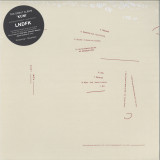
LNDFK (aka Linda Feki) presents her ground-breaking debut album, "Kuni" on Brooklyn-based Bastard Jazz Recordings. Undeniably on the rise after her 2019 breakout performance at Primavera Sound, LNDFK has already caught the attention of Pitchfork, Rolling Stone, Clash Magazine, Noisey, and Brooklyn Vegan (among many others) while being championed by the likes of Gilles Peterson, Tom Ravenscroft, and Jamz Supernova & landing spots on tastemaker playlists like Spotify's "Pollen" and "Fresh Finds."
"Kuni" is a spellbinding exploration of dichotomies: Love & Death (Eros & Thanatos), Flower & Fire, Delicacy & Violence, Poetry & Realism, Purification & Destruction. These opposites are reified in the 10-track LPs multifarious and multifaceted sounds, elegantly meandering through a variety of styles and genres, spearheaded by Linda and features the production wizardry of Darrio Bassolino who co-wrote the album.
"Kuni" opens with "Hana-bi," an ambient instrumental piece that sets the tone for the album. Inspired by the Takeshi Kitano 1997 film of the same name – particularly Joe Hisaishi's stunning soundtrack, as well as Kitano's paintings which appear in the film. "Hana-bi" expresses the dialoguing opposites of flowers and fire, the first of many dichotomous representations throughout the album. "Takeshi" acts as an extension and to "Hana-bi," albeit one of opposing sound, with its driving, highly syncopated drums (which reappear throughout "Kuni") – à la Karriem Riggins, Questlove, or Yussef Dayes – frenetic bass line, and jazz chords. Linda's sultry voice is interspersed, initially jumping around in scat fashion, being triggered as if a sample, before her lyrics come in; her vocals are used like an additional instrument, adding to the song's rich texture. "Kuni" truly hits its stride with the next song, "Smoke – a moon or a button" (its title lifted from the 1959 book by Ruth Krauss and Remy Charlip), which is structured like a jazz standard yet flows into neo-soul territory sonically with those prodigious drums a highlight once again.
LNDFK touches on experimental hip hop in two songs on the record (both of which were released as singles in 2021): "Don't Know I'm Dead or Not (feat. Chester Watson)" – track #4 – and "How Do We Know We're Alive (feat. Pink Siifu)" – track #9. Although they embrace a more hip hop-leaning sound, these songs by no means shy away from the exploratory theme, and feature two of the alt-rap scenes rising stars with Chester Watson and Pink Siifu who offer provocatively impressing verses, combining dense word play with unconventional flows. While these tracks may first appear to be outliers on the album, they are undeniably in tune with "Kuni's" message and sonic palette, acting as testaments to LNDFK's willingness to explore and experiment.
Meanwhile, "Ku" – the third and last single before the album release – furthers the pre-established future soul sound while meandering through nu jazz and left-field electronic. Inspired by the graphic novel and film, "Sin City," and its female assassin protagonist Miho, "Ku" is a musical interpretation of Miho's story, incorporating both her beauty – the first half of the song – and murderous tendencies – the second half – to create a stunning juxtaposition, culminating in an ambient finale that suggests the character's vulnerability and inner peace. The song gracefully bridges the gap between Hiatus Kaiyote-esque songwriting, Dilla's rhythmic syncopation, and Thundercat's instrumental prowess (LNDFK has shared a stage Brainfeeder labelmate Kamasi Washington).
Mixed in throughout "Kuni" are a series of instrumental pieces that function as something akin to an interlude. The aforementioned intro, "Hana-bi," and the album closer "se mi stacco da te, mi strappo tutto:" act as bookends, while "Om" indicates the half-way mark, and "Ktm" sees Jason Lindner add his sound the album. These tracks are the ambient foundation of "Kuni," representing the thematic duality of the work. Clocking in at only 24 minutes, "Kuni" packs an astonishingly diverse array of sounds, styles, and themes, all while showcasing virtuosic musicianship and instrumental prowess.
Appearing on "Hana-bi" and "Ktm," renowned international artists Asa-Chang and Jason Lindner add an additional perspective to "Kuni": Asa-Chang on "Hana-bi," and Jason Lindner on "Ktm." Asa-Chang - famously of the Japanese avant-garde group Asa-Chang & Junray - provides vocals and percussion to an alternate version of the instrumental opener, while the acclaimed keyboardist Jason Lindner offers his synth expertise on "Ktm." These features highlight the spirit of collaboration found in LNDFK's music, always willing to try out new ways of working.
LNDFK is a singer and songwriter, born of two cultures – an Italian mother and Arab father. She grew up in Naples, away from her father, the Sahara, her homeland and traditions, which has helped nourish the desire to rediscover – through art – an engagement to her roots. Her music melts with jazz, neo-soul and hip-hop influences, filtered through her experiences and sensibility.
Her first EP, "Lust Blue," was composed with the artistic production of Dario Bass and released by Feelin' Music; after that she released several singles that saw international radio support (BBC, NTS, Wordwide FM) and gained a massive audience on digital platforms. Together with her band, she toured around Europe, performing alongside such notable artists as Kamasi Washington and Mndsgn, among others. Most recently she toured Italy, and performed at Primavera Sound Festival 2019 in Barcelona.
"Kuni," is due out on NYC label Bastard Jazz Recordings in February, 2022, while the vinyl LP will follow shortly after.

- 1: Notte In Algeria (From "I Piaceri Proibiti" / Remastered 2022)
- 2: Francesco De Masi: Oggi In Africa (From "Alla Scoperta Dell'africa" / Remastered 0)
- 3: Ennio Morricone: Agosto Jazz (From "La Voglia Matta" / Remastered 2022)
- 4: Armando Trovajoli: Jumping (From "Il Vedovo" / Remastered 2022)
- 5: Ora Di Punta (From "Mondo Cane N. 2" / Remastered 2022)
- 6: Riz Ortolani: Il Sorpasso (Titoli - Ripresa) (From "Il Sorpasso" / Remastered 2022)
- 7: Marcello Giombini: Notti D'amore A Tokyo (From "Le Dolci Notti" / Remastered 2022)
- 8: Il Vedovo Bianco - M (From "Amore Facile" / Remastered 2022)
- 9: Tensione (From "Audace Colpo Dei Soliti Ignoti" / Remastered 2022)
- 10: Gianni Ferrio: Frenesia Dell'estate (Titoli) (From "Frenesia Dell'estate" / Remastered 2022)
- 11: Luiz Bonfa: Coppia In Crisi (From "Le Ore Dell'amore" / Remastered 2022)
- 12: Piero Piccioni: Your Smile (From "3 Notti D'amore" / Remastered 2022)
- 13: Il Treno Rosa - M16 (From "Mille Peccati Nessuna Virtù" / Remastered 2022)
- 14: Gardenia (From "Sedia Elettrica" / Remastered 2022)
- 15: In Fondo Alla Notte - M32 (From "Una Bella Grinta" / Remastered 2022)
- 16: La Strega In Amore (Titoli) (From "La Strega In Amore" / Remastered 2022)
"For a whole decade, spanning between the second half of the ‘50s and the second half of the ‘60s, jazz took over the Italian screens. The Californian be-bop rhythms, filtered and reinterpreted in a typical Mediterranean key, became the perfect soundtrack to the Italy of the economic boom; the quintessential music for a country that was sailing through a moment of profound and exciting industrial, social and cultural renovation. A nation that was rapidly shedding its skin, changing its style, look and identity, but also its landscape, letting itself go to the inebriation of the economic miracle. The compilation was conceived like a sonic stream, a journey of discovery carefully sequenced from hundreds of soundtracks from the golden age of Italian jazz contained in the CAM Sugar archive.
33 tracks that go beyond music, telling the story of Italian cinema, society and of its unmistakable style and charm. A genre that even when nodding to Californian be-bop, to crime jazz or bossa nova still sounds surprisingly original and Mediterranean, elegant, and seductive, either with joyous peaks (the scat of I Cantori Moderni di Alessandroni or of I 4+4 di Nora Orlandi) or with enigmatic and nearly dramatic nuances (La strega in amore by Luis Bacalov, Il batticuore by Marcello Gigante). The compilation also offers a precious insight into the Italian jazz scene of the times, with its string of formidable soloists like Gianni Basso (sax) and Oscar Valdambrini (trumpet), two Piedmontese men on duty for the RAI television orchestra conducted by Armando Trovajoli; like Nunzio Rotondo (trumpet) a legendary and elusive figure who had a special bond with Piero Piccioni; or like Enrico Rava (trumpet), Franco D'Andrea (piano) and Gegé Munari (drums) who often recorded with Piero Umiliani. Not to forget international stars like Chet Baker and Gato Barbieri, who were often fortuitously dragged into the recording sessions also thanks to Umiliani’s never-ending curiosity."
repressed !
Free your mind and float away, you’re now entering the mode of the Growing Bin. Hamburg’s centre for audio enlightenment is back with another sublime sensory experience, this time from the land of the rising sun. Keen to get another stamp on his passport, Basso reached out to Japanese duo Singu, two open minded cats who just love to jam. Marrying Kiyo’s free drumming with Keta Ra’s melodic mastery of keyboard and guitar, the two-piece fuse free jazz, post-rock, kosmische and ambient into immersive and esoteric improvisations. Free from any compositional concerns, the Hiroshima outfit trade in energy, emotion and expression. The frenetic percussion and ephemeral melodies of opener ‘Aurora Gate’ instantly transport you to the breathless churn of a Tokyo crossroads, where thousands of people rush by but you stand still in the eye of the storm. Though they may be explosive, the drums sit back in the mix, offering a soft intensity behind the shimmering wall of melody. A nimble and nuanced affair, ‘Bop’ brings rapid fire rhythm, slick syncopation and hypnotic piano refrains. Cool bass rolls along like KDJ’s ‘Rectify’, as Singu update the acid jazz template like Toshio Matsuura covering Carl Craig. Singu journey from far out to Furthur on Aside closer ‘Nagebu’, strapping in for psychedelic synth wig out which is heavy on the resonance and free on the filter. Blooming out of the darkness on the B1, Basso favourite ‘Fazaria’ soothes and moves you with its twinkling keys, nebulous wave forms and delicate guitar, leaving you wide eyed in wonder as the drum fills burst like fireworks across a star-filled sky. ‘828’ sweeps into abstraction as Kiyo and Keta Ra combine snapping glitches and aquatic electronics with fractal guitar tones and woozy bass, pushing through a portal to see what’s beyond. An a-grade wal
‘The Syd Barrett of the avant-jazz scene’ British jazz composer, pianist, songwriter, Mike Taylor died tragically young, leaving just two albums as well as co-writes with Ginger Baker for Cream’s Wheels Of Fire album to his name. In 1973, under the direction of Neil Ardley, several of the performers who had worked with him recorded an album of Taylor’s surviving orchestral music, jazz tunes and songs as a memorial to him and to preserve his work as a composer and song writer for posterity. Taken from Ardley’s master tapes, this is their critically-acclaimed tribute to a master of his art by friends and colleagues, themselves representing a cross-section of the cream of modern British jazz talent of the day.
Collective Personnel
Tony Fisher, Greg Bowen, Henry Lowther, Ian Carr (trumpets, flugelhorn) : Chris Pyne, David Horler (trombones) : Ray Premru (bass trombone) : Barbara Thompson (flute, alto flute, soprano sax) : Ray Warleigh (flute, alto sax) : Stan Sulzmann (flute, alto sax, soprano sax) : Bob Efford (oboe, tenor sax, bassoon) : Dave Gelly (bass clarinet, clarinet, tenor sax) : Bunny Gould (bass clarinet, bassoon) : Peter Lemer (piano, electric piano, synthesizer) : Alan Branscombe (vibraphone) : Chris Laurence, Ron Mathewson (bass, bass guitar) : Jon Hiseman (drums, percussion) : Neil Ardley (director) : Norma Winstone (vocal)
Composed by Mike Taylor. Music direction by Neil Ardley. Recorded by Denis Preston at Landsdowne Studios, London, 1973. For publishing credits, contact MCPS London, England.
Mastered by Martin Mitchell at Moorend Studios, February 2007.
He looked like a bank clerk, but acted like a mystic”. Obituary – ‘Melody Maker’, February 15th 1969
“You’ll be returning to this for eons to fully unlock its genius.” Record Collector
“From the eerie opening sounds, like an orchestra tuning up, through a searing chord, and then into the frantic countermelody under long brass on Brown Thursday, and the baleful march-time of Land of Rhyme in Time, Taylor's audacity is plain.” The Guardian
Dating from 1974, and following on from the re-release of Legend, this is the second in our series of vinyl reissues of the original Virgin albums. Geoff Leigh had left the group and Lindsay Cooper joined on Bassoon, Oboe, Flute, Soprano Sax. The mix was more 'live' than Legend, with the drums much more up front. The first half is highly composed material, with some of the Cow's best loved tunes, like Half Asleep Half Awake and Bittern Storm Over Ulm. For the second half the material was all written in the studio, using loops, varispeed tapes and electronics, and superimposing live improvisation and composed passages.
- A1: Enrico Rava Quartet - Line For Lyons
- A2: Maurizio Lama Trio - Tema For Franco
- A3: Sergio Fanni And His All Stars – Duo
- A4: Sergio Fanni And His All Stars – Circeo
- A5: Azzolini, Donadio, Mondini, Piana - Bag’s Groove
- B1: Charleston
- B2: Blues Passacaglia
- B3: Slow
- B4: Boogie Woogie - Invenzione A Quattro Voci
- B5: Modern Jazz Gang - The Drum Is A Tramp
- B6: Modern Jazz Gang - Blue Mirria
- B7: Dino Piana Quartet Feat. Gianni Basso - Tempo Di Febbraio
This compilation comes as a perfect introduction to vintage Italian Jazz. A fine selection of some of the best Italian mainstream jazz masters of the sixties and seventies such as the young trumpet genius of Enrico Rava, or maverick film music composer Piero Umiliani, whose jazz influence is well known worldwide. Throughout this record you will bump into both famous and obscure swing / bop stylists of the likes of bass player, Giorgio Azzolini, trombonist Dino Piana, tenor saxophonist Gianni Basso, and drummer Gil Cuppini, a bunch of true pioneers who made the sound of Italian Jazz.
Basking in the golden glow of an Indian Summer, Basso brings us a much needed reissue of one of his most treasured musical discoveries, Guy Maxwell's 'Outside My Window'. A long time favourite in the Growing Bin, this mellow masterpiece originally crept out in 1980 with no backing from its label, the soon to burst Bubble. Now resequenced and redressed to the exacting standards of Mssr. Maxwell, 'Outside My Window' is ready to warm the hearts and cheer the ears of a whole new audience.
Born in Bordeaux under a wandering star, Guy spent the 70s on the road, freewheelin' from Paris to Rome, guitar in tow, before settling in Switzerland at the end of the decade. There he reconnected with school friend Serge Maillard, whose Santiago bandmates swung by to help bring Guy's arrangements to life. Joined by Jan Dix (Om Buschmann and Foodband) on percussion and Ruth Failure (later in Mag and the Suspects) on guitar, and the Santiago powerhouse of Tato Gómez, Sergio Castillo and Paco Saval, who also leant his deft touch behind the desk, Guy put together a nine track trip through groovy AOR, gentle jazz fusion, cosmic folk and yacht rock.
For this reissue, Guy's stripped back the tracklist, tossing aside a trio which didn't quite stand the test of time in favour of a concise six song LP which brings brilliance in every bar. 'Watch Out Sally' introduces the LP with playful keys and a Latin lilt, a sophisticated seventies pop song that's more Aja than A-Ha, sax and strings sending the whole track soaring as Guy muses on wanderlust in his honeyed tones. 'You Never Sang This Song' is undoubtedly a lost classic, embodying all the bittersweet beauty of yearning while riding a rollercoaster arrangement of folk-jazz fusion enhanced by Serge Maillard's quicksilver solo. 'Funny Weather' looks both ways as it closes out the A-side, marrying the smooth sounds of the 70s with the rain-soaked jangle of the decade to come. The B-side opens with the LPs second lost classic, the frankly sublime 'Beautiful Day'. Stripped back to acoustic guitar and subtle hand percussion, this jazzy ballad brings a tear to your ear before drawing your attention skywards with the acid folk energy of the chorus. There's mellow magic in the air on 'Summer Song', an optimistic ode to sunshine and romance lifted way beyond the AOR standard by a lyrical sax solo before Maxwell closes the set with the 7/4 escapism of 'There's A Train Leaving', a fond farewell which sees the ensemble say goodbye in perfect harmony.
ADSX / Hanoben jump da Berlino to Rimini sul train degli Acidio !!
Sina's Freun is all fidanzato fidanzato v 303 303 303. Luv ov my livvvvve.
Werner's Spiel acido bumbles, taglia and incolla. Boogie boogie.
Elvira's Katzenfisch inno elettronico Krautrock. Synth anthem !!
Infine, Mund. Punk slap. Basso. All join hands with...
ACEEIID !!
After a year of enforced isolation, we've all become experts at introspection. After all if the outlook is grim, why not look inwards instead? Just don't be surprised when all that naval gazing gives you a bellyache. Luckily, Cass. is back on the Growing Bin with the beguiling beauty of 'Ambient Music For A Young Girl', a soothing set which demands your full attention.
In the era of deserted dance floors, when the house and techno crowd export uninspired ambient to keep the streams flowing, Cass. offers an alternative approach to slow listening straight from the heart. Niklas came to Basso with a wealth of sensuous sounds to curate for a new LP, and these six expressionistic vignettes sit together like paintings at an exhibition. All born from the same brush but varied in tone, texture, mood and approach, they achieve an immersive effect without ever fading into the background. Sonic synonyms of Rothko, Turrell and Kapoor, each imbued with hidden depth, each utterly compelling, each conveying a profound calm.
Working his mellow magic on the Growing Bin, Sorcerer entertains your inner child with eight tracks of instrumental west coast pop suitable for dancing, dreaming and surfing a wave or two.
While Basso sat in a Teutonic treehouse, feeding his head with the sounds of the woodland, Dan Judd danced on the sands of San Francisco's Baker Beach. Stretching between them, like the world's longest tin can radio, was the Dream Chimney. This legendary forum, run by Ryan Bishop, better known as The Beat Broker, helped to launch a thousand labels, and the Growing Bin is one of them - all hail the Chim!
Here, Dan, naturally mystic in his Sorcerer guise, satisfies all our sensory needs with a Kinder Surprise of sweet melodies, coastal cool and playful rhythms inspired by his children's earliest responses to music. Following his feelings and avoiding overthinking, he creates open, enticing and accessible cuts; each living and breathing that mellow magic you only get on the West Coast.
'Kids World' kicks into gear with the spheric bass of '2000 Studio', a bouncy embodiment of that spacious San Francisco sound. There's a nod to nu disco but the dreamy dubiness takes the track much deeper, especially as those surf guitars start to detune in the summer heat. The breezy fretwork continues on 'Disco Drums', topping a wriggling groove tailor made for the terrace. Shades of rave refract through a healing crystal at the midpoint, encouraging al fresco dancing from sunrise to sunset. The A3 sees Sorcerer get into the groove of 'Bahia Brothers', rolling that rubberised B-line out of his own Paradise Garage before putting the top down for the carefree Balearic pop of 'Spray Paint.'
The B-side glides into being via the night dubbing grooves of 'Fire Feel', a reverb laden journey though glassy tones, off beat perx and gorgeous chord progressions. Next up, the new wave inspired 'Crunchy' translates Sheffield's daring synth pop into a wide eyed blast of psychedelic house, boosting our mana ahead of the loose limbed and light footed 'First Wave'. Ringing guitars reference Ghanaian highlife, shimmering in the heat haze as Dan funks up the drum kit ready for the broken beat and blissed out energy of sundowning set closer 'Escape Route'.
Growing Bin switches back into reissue mode with an off-kilter obscurity from Austrian eccentrics Molto Brutto. Equal parts amateur funk, indie jangle, art rock and idiot pop, "2" is a real weird bastard with a whole lot of charm. As the Bin continues to grow in all directions, there's plenty of space for new sounds to take root. Alongside patches of Ambient, Balearic, Kosmische and Jazz, Hamburg's audio allotment now stretches to accommodate the strange waves of Molto Brutto.
Basso dug their first LP a decade back in Stuttgart's Second Hand Records, embracing their abrasive style of sandpaper sonics and experimental urges. Interest piqued, he made the journey through their DIY catalogue, capturing excellent collaborations under the Ganslinger alias before bumping into the second of their two LPs. Originally released on their Golfdish imprint in 1988, "2" walks into the pub with an air of accessibility, but quickly unravels into glorious chaos - pissing in the corner and passing out on the bar. Pop structures are suggested then subverted.
Pints of Paisley slosh out of a broken Glass, tape loops spool onto shabby Material, and indie janglers are just a couple of stamps short of a Postcard.
Turning you tipsy, this loveable rogue starts to tell you his life story, but you're going to have to fill in some blanks. They miss 'Blackie', but who is he - a dog? What happened on the 'Deadly Vacation'? Is that song really about a 'Goldfish', or did they find out the name of America's horse? Words repeat until they lose all meaning, awkward poetry masks a lost laureate and a drunken Wurlitzer sends the room into a spin.
The pubs are shut, so get happy drunk with Molto Brutto.
Patrick Ryder