Opaque Pink Version
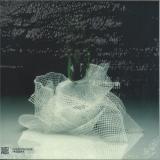
Bubble Bath for Giants is an ode, a Tribute, a reverence for Oceans, for the Mighty Magnificent Power of Fairies, to the energy that we are all everything, whole, well, but in different sized and shaped vessels at times . . . It is a Celebration of Gentleness and of incredible Force, and Charge . . . These, I sea as the same. The Yang Springs from the Yin and together they ever reflect, dance, and express themselves . . .
Many Bells, Bowls, Ceramics, Chimes, Cymbals, Drums (Bass, Sakara, Surdo, Tom, and many more,) Gongs (Chao, Cup, Indonesian, Sun, and Symphonic,) Keyboards (Metal, Synthesizer, and Wooden,) Percussion, Plant Leaf Bundles and Fronds (Bamboo, Eucalyptus, and Palm,) Ratlles, Shakers, Voice, Whistles, and Sound Design by Carlos Niño.
Featuring:
Luis Pérez Ixoneztli, Bernard Xolotl, Aaron Shaw, Surya Botofasina, Nate Mercereau, Laraaji, Darius Jones, Sheila Govindarajan, Idris Ackamoor, Deantoni Parks, André 3000, Marshall Allen, Sam Gendel, Sibusile Xaba, Mia Doi Todd, Anisia Uzeyman, Saul Williams, Jojo Abot, Jowee Omicil, Aztlan Unearthed
///
Cover Photo by Carlos, from in the Maui Waters
Art Direction, Design and Original Art by Nep Sidhu
Layout Production by Jonny O'Hara
Recorded by Carlos Niño in Topanga, California, and by some of the Artists named above, from their Homes . . .
Mastered by David Allen
///
Suche:bat art
- 1: Carrion Crawler
- 2: Contraption / Soul Desert
- 3: Robber Barons
- 4: Chem-Farmer
- 5: Opposition
- 6: The Dream
- 7: Wrong Idea
- 8: Crushed Grass
- 9: Crack In Your Eye
- 10: Heavy Doctor
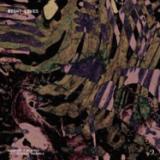
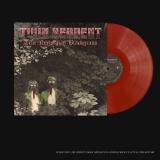
What's the first thing you think of when someone mentions Thee Oh Sees? Probably their riot-sparking live show, right? Visions of a guitar-chewing, melody-maiming John Dwyer careening across your cranium, rounded out by a wild-eyed wrecking crew that drives every last hook home like it's a nail in the coffin of what you thought it meant to make 21st-century rock 'n' roll? Yeah, that sounds about right. But it misses a more important point-how impossible Thee Oh Sees have been to pin down since Dwyer launched the project in the late '90s as a solo break from such sorely missed underground bands as Pink and Brown and Coachwhips. (While Dwyer still records songs on his own, Thee Oh Sees is now a five-piece featuring keyboardist / singer Brigid Dawson, guitarist Petey Dammit, drummer Mike Shoun and multi-instrumentalist / singer Lars Finberg.) That restlessness extends to everything from the towering, thirteen-minute title track of 2010's Warm Smile LP to the mercurial moods of 2008's The Master's Bedroom Is Worth Spending a Night In. Now, Thee Oh Sees chase the home-brewed symphonies of Castlemania with the scrappy, high-wire hooks of Carrion Crawler / The Dream. Originally envisioned as two EPs, it was cut live to tape in less than a week at Chris Woodhouse's Sacramento studio in June, reflecting the battering-ram bent of the band's live show better than any bootleg ever could. "As I'm sure most would agree," explains Dwyer, "Castlemania was more of a vocal tirade. This one's meant to pummel and throb." That it does, whether one blasts the slow, speaker-bruising build of "The Dream," the sunburnt organs and dovetailing guitars of "Crack in Your Eye" or the interstellar instrumental "Chem-Farmer," a perfect example of what happens when one takes a well-oiled machine-a gang of rabid road warriors, really-and adds a second, groove-locked drum set to the mix. To listen is to realize that Dwyer's music is as manic as the underground comic inclinations of his artwork; colorful and confusing in a way that's more than welcome. It's downright refreshing, like a slap in the face at 5:00 in the morning. Or, as Dwyer puts it, "You have to leave a mark somehow."
The timeless brick breaker is back in a completely modernized version! Composed by Xavier Thiry, the game's original soundtrack is adaptive and progressive, and fits perfectly into the game experience offered.
Xavier Thiry is a composer, director and producer working in the worlds of music, TV, advertising and cinema. He has worked on many soundtracks for Pastagames, but also Arte, Darjeeling, DotEmu, Arkedo, and many others. The Arkanoid Eternal Battle soundtrack is his first original creation for Microids.
- Greensleves
- Borderick
- Light Blue
- Dive
- Impromptune
- Saturn
- Stronger Than Pride
- A House Is Not A Home
- A Nod To The High Priest
- Why?
Recorded spontaneously in a single afternoon, the album captures an unguarded musical conversation between two of the most compelling voices of their generation. Born in Brixton and now based in Harlem, Ruben Fox has emerged as a major presence on the international jazz scene, renowned for the depth of his sound, the emotional clarity of his ballad playing, and a voice rooted in tradition while speaking firmly in the present. His work follows collaborations with artists including Wynton Marsalis, Barry Harris, Roy Hargrove, Jon Batiste, and George Coleman, and builds on the critical acclaim of his 2021 debut Introducing Ruben Fox.
Micah Thomas is one of the most celebrated pianists of his generation, praised for a style that is both restlessly inventive and deeply grounded in the history of the music. A Jerome L. Greene Fellow and Juilliard alumnus, Thomas has worked extensively with Immanuel Wilkins, Joshua Redman, Ambrose Akinmusire, and Billy Drummond, and has been recognised by DownBeat, Jazz Magazine, and The New York City Jazz Record as a defining contemporary voice. Fox and Thomas first developed their musical relationship while studying at Juilliard, where they regularly played duo sets. In Two Minds was recorded on a whim at Chris Pattishall's apartment in Washington Heights, with no rehearsal, no edits, and no agenda beyond mutual respect, listening, and shared musical values. Over three hours, the pair simply showed up and played.
The result is an intimate, conversational record that foregrounds generosity, empathy, and deep musical listening. Sparse, direct, and emotionally rich, In Two Minds offers a rare document of two artists meeting in real time, balancing history, intellect, warmth, and spontaneity.
Inspired by a look back to futuristic tracks from the early 90's to the 50's in the US and the impact now of artificial intelligence on life today is the theme of this ep.
tags: electronic. techno and variations
Android Blaze : Looking at a future apocalypse. Referencing George
Orwell's 1984 and Blade Runner.
pre-mastered by DJ Sotofett. Mixing by Robotron . Mastered by
Manmade Mastering.
Kids and Batteries :Virtual kids searching for their souls online.
Real Synthetic Life : Referencing the 50's science fiction movie Forbidden
Planet.
MASKxSOUL is the new international project, featuring the baritone Alexander Korenkov (of Mariinsky Theatre, Theatre du Chatelet, and JFK Center fame, who performed with Vladimir Yurovsky, Valery Gergiev and Anton Batagov) and introducing the voice and music of Tatiana Selivanova (Vanilla Quartz), backed up by Jason Kohnen (The Kilimanjaro Darkjazz Ensemble, The Lovecraft Sextet, Mansur) and Dimitry El-Demerdashi (Mansur). One might say that MASKxSOUL blends dark-jazz, tsar punk, and Eastern folklore with the setting of the romantic landscapes inspired by the Russian classical tradition. MASKxSOUL presents a new vision of a perennial classic, namely, Eugene Onegin by Alexander Pushkin, a romantic novel in verse that has served generations of artists across the globe as inspiration, with a debut single dedicated to Pushkin's 222nd anniversary on June 6th 2022. The complete eight track MASKxSOUL debut album "Onegin" is available now through Denovali.
- 1: Grief (Feat. Maya Al Khaldi)
- 2: Karakoz
- 3: Echoes Of The Harvest (Feat. Alabaster Deplume)
- 4: Old Poem Made Of Sand
- 5: Dawn On The Cremisan Valley (Feat. Julmud)
- 6: Jinn Of The Bethlehem Souk (Feat. Osama Abu Ali)
- 7: Wondering Through The Crowded Paths Of Al-Hisba
Mai Mai Mai’s artistic path has never rested on laurels, it’s been a constant evolution, a profound and poetic research, a dark and dusty journey through awareness and collaborations where the heart of the process has always been about building connections and understanding people and their rituals. Mai Mai Mai’s new album ‘Karakoz’ was mostly recorded in Palestine (Ramallah and Bethlehem) in 2024 during an ongoing genocide and follows his acclaimed Southern Gothic double-album ‘Rimorso’. The album opens a new chapter for the Roma based artist, a deeply personal record where his traditional industrial miasma flows into a weeping vortex of spiritual hymns, Mediterranean hauntology and Middle Eastern chants of sorrow, carrying the despair of a battered population and matching the fighting hope with echoes of ambient bliss. Recorded during his artistic residency in collaboration with Radio Alhara and Wonder Cabinet, the album is the result of an immersive six-week residency between January and May 2024, in Bethlehem and Ramallah, where Mai Mai Mai delved deep into the traditional music of Palestine, meeting and collaborating with local musicians, exploring archives, and recording the resonances of the land. This deep engagement allowed him to unearth the intricate layers of Palestinian sonic heritage, weaving them into his own sonic language.
- Matches
- Frightening Machines
- Sirius
- Hurricane
- Madeleine
- Atlas
- A Matter Of Time
- Table Four
- I'm Always Willing
- Could This Be Enough?
RED SMOKE COLORED VINYL[23,11 €]
The new record follows Priddy"s sophomore LP "The Pendulum Swing" which firmly established her as one of the most exciting artists on the contemporary British music scene. Produced by Rob Ellis (PJ Harvey, Anna Calvi, Bat for Lashes), "These Frightening Machines" was written over the course of a year as Priddy made the transition from her 20s to her 30s. The most sonically varied of her career, the songs span a full spectrum of emotions from anger and despair to hope, longing and lust, from reclaiming the voices of women silenced by history, to expressing solidarity and love, to confronting illness, disconnection, the vulnerability and importance of relationships, and the general ache of growing older and not always wiser. They explore what it means to keep going when things fall apart, to hold onto connections in a world that sometimes divides, and to figure out where we fit into the machines and systems we find ourselves a part of.
- とんでもマウンテン / Mount Amazing
- アドバタイズデモ / Advertise Demo
- キャラクターせんたく / Character Selection
- マジンディスコ / Genie Dancer's Disco
- マジンロック / Genie Dancer's Rock
- カンフーストリート / Kung-Fu Alley
- ドラゴンカンフー / Dragon Kung-Fu Fighter
- ウキウキおもちゃランド / Toytown
- わくわくテレビスタジオ2 / Funtime Tv Studio 2
- トレーニングスペース / Training Room
- とこなつアイランド / Eversummer Island
- ウエスタンビレッジ / Wild West Town
- ファンタジーナイト / Fantsy Knight
- たいけつ!ウッキーピンク(バナナにハートブレイク) / Battle! Monkey Pink
- ナイトキャッスル / Knight's Castle
- うちゅうテレビようさい / Space-Tv Fortress
- たいけつ!ウッキーイエロー / Battle! Monkey Yellow
- とのさまじょう / The Emperor's Castle
- サルなげスタジアム / Super Monkey Throw Stadium
- Happy☆センセーション / Happy Sensation
- マジンダンサー / Genie Dancer
- うみべリゾート / Seaside Resort
- わくわくテレビスタジオ / Funtime Tv Studio
- サルうらない / Hall Of Horoscope
- ピポサルのテーマ / Super Monkey
- ゲッチュマン / Cyber Ace
- とのさまじょう2 / The Emperor's Castle 2
- とんでもマウンテン2 / Mount Amazing 2
- カッチンコールたいりく2 / Freeze Continent 2
- ミニマルテーマ / Minimal Theme
- かくれんぼのもり / Hide-N-Seek Forest
- カッチンコールたいりく / Freeze Continent
- ワイルドウエストキッド / Wild West Kid
- へんしんとうじょう / New Morph
- ガチャメカとうじょう / New Gadget
- しんきろうタウン / Mirage Town
- ウエスタンビレッジ2 / Wild West Town 2
- ひこうきだいへんたい / Airplain Squadron
- どっきりホラータウン2 / Bootown 2
- けっせん!スペクター(スペクターのテーマ) / Final Battle! Specter(Specter's Theme)
- びゅんびゅんビッグシティ / The Big City
- クリアリザルト2 Sg3 / Result 2 Ae3
- クリアリザルト Sg3 / Result Ae3
- サルをつかまえろ!/ Catch Monkeys!
- どっきりホラータウン / Bootown
- テレビステーション / Tv Station
- トモウキシティ / Tomouki City
- サルティメットファイティング / Ultim-Ape Fighting
- ドンドコゆきまつり2 / Winterville 2
- はじめてのゲッチュ / The First Catch
- とこなつアイランド2 / Eversummer Island 2
- たいけつ!ウッキーレッド2 / Battle! Monkey Red 2
- たいけつ!ドクタートモウキ / Battle! Dr.tomouki
- トモウキシティ2 / Tomouki City 2
- しょうてんがい / Mall
- ミラクルニンジャ / Miracle Ninja
- びっくりおんせんランド / The Hot Springs
- けっとう!ウッキーブルー / Fight! Monkey Blue
- マジンワルツ / Genie Dancer's Waltz
- ナイトキャッスル2 / Knight's Castle 2
- マジンチーク / Genie Dancer's Cheek
- トモウキタワーはっしん! / Go Tomouki Tower!
- サトルねつべん / Satoru's Speech
- トモウキのカツラ / Tomouki's Wig
- たいけつ!ウッキーレッド / Battle! Monkey Red
- トモウキのテーマ / Tomouki's Theme
- スタッフロール Sg3 / Staffroll Ae3
- サルシネマ / Monkey Cinema
- びっくりおんせんランド2 / The Hot Springs 2
- だつりょくハカセ / Lazy Professor
- まよなかベイサイド / Midnight Bay
- たいけつ!スペクター / Battle! Specter
- うちゅうテレビようさい2 / Space-Tv Fortress 2
- ドンドコゆきまつり / Winterville
- たいけつ!ウッキーホワイト / Battle! Monkey White
- たいけつ!ウッキーブルー / Battle! Monkey Blue
- クリアジングル Sg3 / Clear Fanfare Ae3
- ウキウキおもちゃランド2 / Toytown 2
- ブルーのオルゴール / Blue's Orgel
- はくちょうのみずうみ / Swanlake
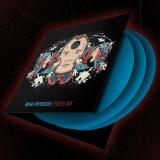
4XLP box set, 4 Coloured discs: translucent violet, ice, blue, and orange vinyl
Hardcover slipcase box
Celebrate twenty-five years of Ape Escape and thirty years of PlayStation with Ape Escape 3 Originape Soundtracks in a Box!
Saru Get You 3
As with the Ape Escape Originape Soundtrack, composer Soichi Terada has meticulously re-recorded and reconstructed all tracks from the Ape Escape 3 Original soundtrack. Previously only available on CD, this is the complete soundtrack's first time on vinyl. This box set was produced in partnership with Mr. Terada and Far East Recording, and is an officially licensed Sony Interactive Entertainment product.
This release contains eighty tracks, spanning four individually sleeved records, housed in a hardcover box. It is similar in construction to the Ape Escape Originape Soundtracks in a Box release (2024), and the two will look quite nicely next to one another on your shelf!
We are happy to announce that this box set features a definitive edition of the Ape Escape 3 Originape tracklist. This also includes "Swanlake," a track previously unavailable on the CD release. At its core, the Ape Escape 3 soundtrack features much of Soichi Terada's signature sound: lush electronic, jungle, silky smooth synthesizer, humor, and charm.
Ape Escape 3 was originally released in 2005 (Japan), and its moviemaking pipos were unleashed across the rest of the globe in 2006. The game features two new protagonists (Kei and Yumi) who battle the Freaky Monkey Five, underlings of the nefarious Dr. Tomoki and the evil monkey Specter.
Complimenting the game's journey through the TV-verse, the Ape Escape 3 soundtrack also features twists on themes from Wild West Showdowns, Kung-Fu movies, and space operas. Fans of the Ape Escape Originape Soundtrack, as well as newer work like Asakusa Light, will certainly enjoy all elements of Soichi Terada's music present in Ape Escape 3.
The music on this box set was mastered by Justin Perkins of Mystery Room Mastering, who also mastered the original Ape Escape Originape Soundtracks box set (2024). Using Mr. Terada's premastered source files, the music was completely and specifically mastered for vinyl. The box set also features original Ape Escape 3 character renders and key art. All of the design elements have been put together with careful thought, referencing the original Japanese guidebook for inspiration and visual cohesiveness.
It is with great pleasure that we celebrate Soichi Terada's music and the Ape Escape franchise with this four-disc release!
Original key art and renders from the サルゲッチュ team
Officially licensed © Sony Interactive Entertainment
©2025 Sony Interactive Entertainment Inc. “PlayStation”, ”プレイステーション”, “Ape Escape” and ”サルゲッチュ” are registered trademarks of Sony Interactive Entertainment Inc.
- 1: Dc2Nyc
- 2: Interlude 1 (Movin')
- 3: Dc2Nyc2 (Feat. Maryanne Ito, Shing02, Spin Master A-1)
- 4: Interlude 2 (Ooh Aah)
- 5: Blue (Feat. Nicholas Kaleikini)
- 6: Interlude 3 (Game Over)
- 7: Honolulu Jazz
- 8: Disco
- 9: The Flu
- 10: In A Dream
Dae Han is the unsung backbone behind progressive Honolulu acts and international artists. He’s the go-to drummer whenever Japanese rapper Shing02 tours the US and Asia with a full band. In 2019, Takuya Kuroda tapped Dae to organize a band to support the Brooklyn-based trumpeter’s gig at Blue Note Hawaii. Dae also recently teamed up with guitarist Gilbert Batangan and bassist Mark Tanouye to open for Khruangbin. And every year he organizes an always impressive jazz-forward tribute to the late J Dilla.
On the drums, Dae’s swift, technical style compliments every situation, from jazz and funk to R&B, reggae, and hip hop. Much the same, Dae has approached the compositions and arrangements for his debut with craft and purpose.
BLUE, coming in February 2020, came to fruition over the past 12 months with the help of Nelson Cho, the musician and recording engineer behind Lightworks Recordings in Wahiawa, Oahu. Together, the two spent countless hours honing a sound that travels across hip hop, jazz, and house.
The resulting songs act as a diary of the artist’s fateful journey from Washington D.C. through New York to Honolulu, where he resides today. Reflecting on joyful highs and the lowest lows, Dae creates a collage for the listener to hear, appreciate, and understand the path he’s traveled thus far.
- A1: Choro (Remastered 2026)
- A2: Menino Pequeno Da Bateria (Remastered 2026)
- A3: Ginza (Remastered 2026)
- A4: The Girl From Ipanema (Remastered 2026)
- B1: A Taste Of Honey (Remastered 2026)
- B2: Ballad Of Pancho Villa (Remastered 2026)
- B3: Little Fishes (Remastered 2026)
- B4: Mambeando (Remastered 2026)
Der Pianist Vince Guaraldi und der brasilianische Gitarrist Bola Sete begegneten sich zum ersten Mal
während eines Aufenthalts im Club Trois Couleurs in San Francisco – eine schicksalhafte Begegnung, die
eine fruchtbare kreative Partnerschaft begründete, die schließlich West Coast Jazz mit Bossa Nova und
afro-brasilianischen Rhythmen verbindet.
Das 1964 aufgenommene Album „From All Sides“ war die zweite Zusammenarbeit des Duos (insgesamt
gab es drei) und gilt als eines ihrer entspanntesten und fröhlichsten Werke. Das Album ist mühelos und
eskapistisch und gleitet von einer federleichten Interpretation von „The Girl from Ipanema“ zum temperamentvollen Galopp von „Ballad of Poncho Villa“.
Während Guaraldi vor allem für seine zeitlosen Peanuts-Soundtracks gefeiert wird, werden langjährige Hörer
hier melodische Fäden erkennen, die später in diesem beliebten Universum wieder auftauchten. Adaptionen
des wehmütigen „Menino Pequeno da Bateria“ (später überarbeitet als „Little Drummer Boy“) und des
unbeschwerten „Choro“ erschienen später jeweils auf „A Charlie Brown Christmas“ (1965) und „He’s Your
Dog, Charlie Brown“ (1968).
Diese Neuauflage des Albums erscheint als Teil der Original Jazz Classics Series auf 180-Gramm-Vinyl,
gepresst bei RTI, mit vollständig analogem Mastering von den Originalbändern bei Cohearent Audio und
einer Tip-On-Hülle, die das Original-Artwork originalgetreu nachbildet.
Scupltures is composer and pianist Derek Hunter Wilson’s third solo album, an ode to the ancient and contested shorelines of the Pacific Northwest. Deeply embedded in place, the six longform pieces that make up the album reflect the artist’s journey through grief (including losing his father) and the passage of time, each one built upon loops created from extended sessions with harpist Joshua Ward. Like the foggy, moss-encrusted locations that inspired the album, Sculptures has a timeless feel to it, shadowed by the rumblings of a colonial system in decay.
Award-winning poet Mathias Svalina composed a poem for the album, entitled “A Dream for Sculptures”. It is reproduced on an insert that accompanies each LP.
Derek Hunter Wilson is a composer and multi-instrumentalist based in Portland. He has released two solo albums on Beacon Sound (Travelogue, 2017; Steel, Wood, & Air, 2019), as well as a collaborative album with Location Services entitled Wake (2022). In 2018 he collaborated with visual artist Gregory Euclide for his Thesis Project label, resulting in a split 10" with Spanish musician Rauelsson. He has additionally worked with poets Zachary Schomburg and Brandi Katherine Herrera for several sound and performance pieces, and has performed live on the West Coast and in Berlin, sharing the stage with artists such as Colleen, Amulets, Patricia Wolf, Pulse Emitter, and Liima.
- A1: Ohayo! Voice Cast:minami Takayama, Yoko Kawanami, Miki Narahashi
- A2: Renaissance Jounetsu Vocalist:wataru Kuniyasu
- A3: Idainaru Ajio<Bgm>
- A4: Okazu Yunta Vocalist:minami Takayama, Yoko Kawanami, Miki Narahashi
- A5: Konishi No Kokuhaku Voice Cast:hirotaka Suzuoki
- A6: Hisshyoku Ryourinin Vocalist:hirotaka Suzuoki Chorus Singers:minami Takayama, Yoko Kawanami, Miki Narahashi
- A7: Hinode Syokudo<Bgm>
- A8: Syokuseikatsu Vocalist:tomohiro Nishimura
- B1: Eye Catch Voice Cast:minami Takayama, Yoko Kawanami, Miki Narahashi
- B2: Onabe Wo Mitetene Vocalist:mari Yokote
- 3: Aji Syobu<Bgm>
- B4: Ajiou Ryourikai Kaika Vocalist:yuzuru Fujimoto & Ajio Ryouri Kanto Shibu
- 5: Shimonaka No Kokuhaku
- B6: Surume No Iji Vocalist:tomohiro Nishimura
- B7: Yokokuhen Voice Cast:kenyu Horiuchi Narrator:minami Takayama
- B8: Kokoro No Photograph Vocalist:wataru Kuniyasu
The analog LP reissue of the original soundtrack album from the anime Mr. Ajikko, which aired in 1987. The original LP catalog number is K28G-7379, and the original
CD catalog number is K32X-7125, released on June 21, 1988 (the tracklist differs from the CD released in 2004, which included eight newly added tracks).
The original manga, created by Daisuke Terasawa, was serialized in Weekly Shonen Magazine from autumn 1986 to the end of 1989, and was adapted into an anime
series that aired on TV Tokyo from October 1987 to September 1989.
This is the only soundtrack album for the anime series. It features the opening theme “Renaissance Jounetsu” and the ending theme “Kokoro no Photograph”, both
composed and sung by singer songwriter Wataru Kuniyasu, who is also known for composing Akina Nakamori’s “Gypsy Queen”. Lyrics were written by Ikki Matsumoto,
and arrangements were done by Tatsumi Yano.
The album includes image songs, eyecatch music, and preview tracks, with contributions from renowned comedy song artists Masayuki Yamamoto (Side A tracks 4 and 6)
and Tatsuo Kamon (Side B tracks 1 and 7). The album was structured, scripted, and directed by the anime’s director Yasuhiro Imagawa, making it a variety style album.
The main background music (BGM) was composed and arranged by Daito Fujita (Side A tracks 1, 3, 5, 7; Side B tracks 3, 5). The original manga author Daisuke
Terasawa also contributed lyrics for two songs (Side B tracks 3 and 5). Voice actor Tomohiro Nishimura participated both as a singer (Side A track 8; Side B track 7)
and as an arranger (Side B track 7).
Voice actors Minami Takayama, Yoko Kawanami, Miki Narahashi, Hirotaka Suzuoki, and Kenyu Horiuchi also participated in min dramas and chorus segments.
This album, which comically and dramatically portrays cooking battles, is a “Bravo!” anime soundtrack that closes out the Showa era in style. After 37 years, it is finally
being reissued as an analog LP a long-awaited release for anime connoisseurs!
- A1: Joker’s World
- A2: Babble On
- A3: Heels Without Souls
- B1: Shit We Do
- B2: Street Dwellers
- B3: A Lil’ Sumthing Feat Artifacts & Raquel
- B4: L.i. Groove
- C1: Time
- C2: Local Hero
- C3: Gaining Pounds
- C4: Parkyard Lingo
- C5: Bust Me Down
- D1: No Batter Swing
- D2: Ghetto Diamond
- D3: Joker’s Wild
- D4: L.i. Groove
- A1: Fading Away
- A2: Make It Stop
- A3: Who Wins
- A4: Read Between The Lines
- A5: Automated Paradise
- A6: Terminal Terminal The End
- A7: Endless Sky
- A8: Brockwell Lido
This is Jah Wobble"s first post punk LP in recent years following travel and dub records. The brash guitar driven tracks reflect his continuing preoccupation with the declining state of the nation. Driven by his experience working each week at a music based community project in Merton, with Jon Klein, it is reminiscent of Mark Stewart. Angry in an empathetic, constructive way it resolved with the beautiful instrumental "Brockwell Lido". Like much of his work these days, much of the lyrical content comes while traversing London"s transport system. Jah Wobble, is an English bass guitarist and singer. He became known to a wider audience as the original bass player in Public Image Ltd (PiL) in the late 1970s and early 1980s; he left the band after two albums. Following his departure from PiL, he developed a solo career. In 2012, he reunited with fellow PiL guitarist Keith Levene for Metal Box in Dub and the album Yin & Yang. Since 2013, he has been one of the featured pundits on Sunday morning"s The Virtual Jukebox segment of BBC Radio 5 Live"s Up All Night with Dotun Adebayo. His autobiography, Memoirs of a Geezer, was published in 2009. Jon Klein Is an English guitarist and producer, best known for being a member of Siouxsie and the Banshees for seven years, from 1987 until 1994. He also founded Specimen and The Batcave nightclub. Klein has worked for other artists including Talvin Singh and Sinéad O"Connor. More recently he has worked as a co-producer and guitarist with Jah Wobble.
Somewhere between heaven and hell…there is Fallen Angel. Dark Entries continues its mission of shining light on a generation of composers and musicians lost to AIDS with Brandy Dalton’s Fallen Angel, his soundtrack work for the award-winning Fallen Angel series. Brandy was known for many years in the LA underground for his performances with his boyfriend, Robert Woods, who was the resident DJ at Club Fuck. Eventually, they recruited John Munt to form the band Drance, becoming infamous for their high-energy performances and songs that tackled taboo topics like sadomasochism. While Drance explored the aggressive sounds of industrial and EBM, Dalton continued to produce a wide range of electronica, from abstract sonic textures to techno bangers. The Fallen Angel album collects 16 sweaty, sticky cuts composed for the pornographic series Fallen Angel, a trio of leather-focused films released by Titan Studios. The sounds here span from the fractured cyberpunk-rave of “Swelled” to the tabla-laced trance of “FA2,” taking listeners on a journey through hedonistic recesses chock full of crunchy digital drum machines and wailing FM synths.
This album was originally released on CD in 1999 by Titan Studios, capitalizing on the success of the film franchise. It will be reissued on LP as well as CD, featuring 6 bonus tracks. Artwork for the album, designed by Eloise Shir-Juen Leigh, features stills from the Fallen Angel film. Also included is an insert with liner notes and photographs. This album is dedicated to Brandy, who passed away from AIDS-related illness in 2006, after battling with the disease for 17 years. Brandy’s passing was preceded by his best friend and Drance co-founder Robert’s death in 1995. Documenting a sonic shift in the 90s bathhouse music, Fallen Angel provides a hardcore BDSM ride, building upon the analogue archival soundtracks that Dark Entries has previously released.
- Beast And The Harlot
- Burn It Down
- Blinded In Chains
- Bat Country
- Trashed And Scattered
- Seize The Day
- Sidewinder
- Wicked End
- Strength Of The World
- Betrayed
- M.i.a
RED & YELLOW SWIRL VINYL[33,57 €]
Zum 20-jährigen Jubiläum zurück -zweifarbiges Swirl Dopple-Vinyl und erste schwarze 2LP-Pressung seit der ursprünglichen Warner-Veröffentlichung 2005. Plus exklusives Glanzlack-Sleeve! Mit über 2,5 Millionen verkauften Exemplaren weltweit ist "City of Evil" nach wie vor eines der beliebtesten Alben von Avenged Sevenfold. Inklusive des Fan-Favoriten "Bat Country", der Single "Burn It Doen" und "The Wicked End". Avenged Sevenfold (abgekürzt A7X), die amerikanische Heavy-Metalcore-Band aus Huntington Beach, Kalifornien, wurde 1999 gegründet. Avenged Sevenfold sind bekannt für ihren variantenreichen Alternative Metal-Sound und ihre dramatischen, teils expliziten, Bilder auf Albumcovern und Merchandise-Artikeln. Auf ihrem Debütalbum "Sounding the Seventh Trumpet" entwickelte die Band einen Metalcore-Sound, den sie bis zu ihrem zweiten Album "Waking the Fallen" weitgehend beibehielt. Der Stil der Band hatte sich mit ihrem dritten Album und ihrer ersten Veröffentlichung bei einem Major-Label Warner, "City of Evil", zu einem traditionelleren Heavy-Metal-Stil entwickelt, der u.a. Bezug auf NWOBHW und Metallica nimmt. Nr. 63 auf der Liste der "100 Greatest Guitar Albums of All Time" des Guitar World Magazine. Kerrang! listet "City of Evil" sowohl bei "666 Albums You Need to Hear Before You Die" als auch in "50 Albums You Need to Hear Before You Die" sowie als Nr. 35 in "50 Greatest Metal Albums Ever". Rolling Stone nimmt das Album in seine Liste "The 100 Greatest Metal Albums of All Time" mit auf.
Die Jubiläums-Editionen des Doppelalbums sind als rot-gelbes Swirl-Vinyl (limitiert auf 500 Exemplare weltweit) erhältlich, oder als klassische schwarze 180g-Pressung, welche für Hopeless Records absolut nicht klassisch ist, sondern eine Rarität darstellt, zu haben Beide kommen mit Silberfolie veredeltem Sleeve, welches exklusiv für die 20th Anniversary 2025er Auflagen sein wird. Für Fans von Metallica, Slipknot, & Bullet For My Valentine, Metalcore, Alternative, Post-Metal, Emo, Heavy Metal
- 1: Y Dechrau (Feat. Boy Azooga, Jessy Allen, Earl Jeffers, Andy Brown & Amanda Whiting)
- 2: Chware Teg
- 3: Thema Osian
- 4: Tyrchu (Feat. Gruff Rhys)
- 5: Dŵr Y Mynydd
- 6: Geiriau
- 7: Tynged
- 8: Trac Piano
- 9: Cynnau Tân (Feat. Carwyn Ellis)
- 10: Anturiaethau Pellach Capten Idole
- 11: Pino Ar Y Bâs!! (Feat. Darkhouse Family)
- 12: Brân Swît
- 13: Thema Nia (Ahmed)
- 14: Sidan Torri
- 15: Erlid Y Ddraig
- 16: Dwyrain Cymru
- 17: Un I Dewi (Feat. Andy Brown)
- 18: Maen Llia
- 19: Tad A Mab (Feat. Dafydd Brynmor Davies)
- 20: Diolch A Nos Da (Feat. Dafydd Iwan)
Don Leisure has cemented his name as one of the most forward-thinking and experimental beatmakers & producers within the current musical ecosystem. As well as being 50% of Darkhouse Family (alongside Earl Jeffers) he has collaborated with the likes of Angel Bat Dawid, Gruff Rhys, DJ Spinna and First Word label-mates Amanda Whiting & Tyler Daley (Children of Zeus). Garnering serious support from Lauren Laverne, Tom Ravenscroft, Huw Stephens, Gilles Peterson, Huey Morgan, The Vinyl Factory, Clash, Uncut and many more. Following the release of ‘Cynnau Tân (feat. Carywyn Ellis)’ (which gained support across BBC Radio from Tom Ravenscroft, Zakia & Huw Stephens) Welsh beatmaker Don Leisure announces the release of a new album ‘Tyrchu Sain’) as he returns with a new single ‘Tyrchu’ due for release on 22nd January 2025. ‘Tyrchu’ features the soft-spoken vocal stylings of Gruff Rhys over a gently rolling, tape saturated and expertly chopped instrumental, creating (in Gruff’s own words) ‘Shiny new beat-treasures with ghostly reflections of Welsh pop’s past - skillfully dug from Sain Records’ deepest veins’
A dedicated student of music, over the years, Don has amassed a vast encyclopaedic knowledge of music genres and subcultures, including a fascination with Welsh psychedelic folk music from the mid-20th century. This introduction was made by respected musician, producer & selector Andy Votel’s 2005 two-part compilation series ‘Welsh Rare Beat’ (in collaboration with Gruff Rhys and Don Thomas), comprising twenty-five tracks from Sain Records’ back catalogue. Now the oldest independent record label in Wales, Sain is a wildly influential bastion of home-grown Welsh talent, co-founded by Welsh-language folk singer Dafydd Iwan, whose music has seen a cultural resurgence in recent years with his 1983 song Yma o Hyd (We’re Still Here) becoming a huge anthem for Wales football fans. Set up in the Welsh capital, many of Sain’s early releases were recorded at Rockfield Studios in Monmouthshire, but in the early 1970s the record company moved to the Caernarfon area and opened their first recording studio in 1974 near Llandwrog. Announcing a huge digitisation project throughout 2024, Sain Records took on the mammoth task of painstakingly digitising their entire back catalogue spanning 55 years, working in partnership with the National Library of Wales the resulting archive then be submitted for to the National Library of Wales in Aberystwyth, preserving them for future generations to enjoy. Taking this period of rediscovery as an opportunity to reimagine their impressive inventory, Sain invited Don Leisure to dig into their musical treasure chest, creating a sprawling sonic tapestry from the dusty gems within. On this exhilarating excursion, Sain Records founder Dafydd Iwan explains: ‘Imagine someone gave you access to over 50 years of Welsh popular music – almost all of it unknown to you before. It would be a strange experience of discovery, an unknown territory which could baffle and excite. This happened to Jamal (Don Leisure) – and he was captivated by a world of music he barely knew existed, and when he was asked to distill the experience into one album, he immediately warmed to the idea. And this is the result – a kaleidoscope of sounds to encapsulate a half century of Welsh music. To call it unique would be superfluous: no-one could ever recreate this album. Listen, and enjoy.’.
The resulting product is ‘Tyrchu Sain' (translating to ‘Digging Sain’), a fearless and exploratory album, which sees Don put his signature unparalleled and unpredictable skills to work, weaving together moments of forgotten beauty into celestial and otherworldly compositions. The record features appearances by artists from Wales who have a similar obsession as Don Leisure in these classic Welsh rarities including Gruff Rhys, Carwyn Ellis, Earl Jeffers Amanda Whiting and Boy Azooga. A shimmering patchwork quilt of sound, ‘Tychru Sain’ traverses a shifting landscape of acid folk, eerie vocal melodies and interstellar soundscapes, propelled forth by crisp, head nod-inducing drums and grainy textures. Breathing new life into compositions lost to time, and paving a path for new listeners to discover the magic that lies within.
- A1: Des Plumes Dans La Tête (Variation 1) 1:15
- A2: Situation Initiale 1:20
- A3: Pour Les Oiseaux 1:16
- A4: Feu 0:24
- A5: Le Brasier De Tristesse 3:36
- A6: Ferme Les Yeux 1:08
- A7: Des Plumes Dans La Tête (Variation 2) 1:15
- A8: Les Débutants 1 1:50
- A9: Pour Les Oiseaux (Variation 1) 1:17
- B1: Anthracite 1:28
- B2: Nocturne Urbain 2 0:59
- B3: Pour Les Oiseaux (Variation 2) 0:39
- B4: Sinon Le Vent Qui Passe 0:41
- B5: Noir 1:19
- B6: Ferme Les Yeux (Variation) 0:42
- B7: Les Débutants 2 1:16
- B8: Pour Les Oiseaux (Variation 3) 0:36
- B9: Blanche Comme L'infini 1:58
- B10: Situation Finale 2:02
- B11: Des Plumes Dans La Tête 1:20
- Un Autre Décembre Lp
- C1: Minéral 3:28
- C2: Sous Tes Yeux Probablement 1:16
- C3: Granulation 1 1:38
- C4: Neuf Cents Lunes 3:56
- C5: Alors La Lumière Vacille 1:07
- C6: Granulation 2 0:56
- D1: Il Fait Nuit Noire À Berlin 2:12
- D2: La Lettre Qu'il N'envoya Jamais 2:00
- D3: Granulation 3 1:35
- D4: Un Autre Décembre 2:24
- D5: Granulation 4 1:26
- D6: Du Rève Dans Les Yeux 1:30
- Nocturne Impalpable Lp
- E1: Blanc 2:23
- E2: Cet Enfer Miraculeux 2:59
- E3: Radiophonie N°1 2:54
- E4: Doucement, Le Grain De Sa Peau 3:41
- E5: 0:36
- E6: Ocre 2:47
- E7: 0:35
- E8: Radiophonie N°2 3:15
- E9: Adieu Miséricorde 1:14
- E10: 0:31
- E11: Léger 2:25
- E12: 0:40
- F1: Le Monde Intérieur 4:01
- F2: Arachnéenne Encore 1:29
- F3: 0:27
- F4: Je Me Suis Bâti Sur Une Colonne Absente 4:04
- F5: 0:33
- F6: Radiophonie N°3 2:07
- F7: Nocturne Urbain 4:56
Minority Records is releasing a unique boxset Politique du silence with three early albums from Sylvain Chauveau, French composer of minimalist neoclassical music.
“When I made my first albums as a composer, I was obsessed with minimalism, and this quote from the film director Robert Bresson summed up my state of mind. I set myself three principles: 1) Use silence as a starting point, 2) Only add sound when it's absolutely essential, 3) Don't imitate the Anglo-Saxon musicians I admired, but draw on the musical culture of my country, France which lead me to listen intensively to Satie, Debussy and Ravel.” Chauveau explains the background to his work.
The collection Politique du silence contains the recordings of Des plumes dans la tête (2004), Un autre Décembre (2003) and Nocturne impalpable (2001) on coloured 180 gram vinyls. The cover features artwork by French photographer Valéry Lorenzo.
“When I discovered the simple and powerful black and white pictures by Valéry Lorenzo, in the 90s, I immediately fell in love with them. We became good friends and since then I ask him to let me use one of his photos for most of my album covers, or to make my portrait for press shots. It has become a real collaboration, music and images, for more than 25 years. It was then logical to ask him again for the cover of this boxset, like a gentle reflection on my piano and strings era. It's a true honour for me to see my early music recollected, repackaged, remastered after all this time. Which gives me hope that this music, in which I've put all my soul and heart during the years 2001 to 2003, is maybe not forgotten yet.” Chauveau himself adds of his collaboration with Valéry Lorenzo.
Nocturne impalpable and Un autre Décembre were re-issued by Minority Records in 2014 and 2015 and both titles completely sold out. This year’s release also includes the album Des plumes dans la tête in its world premiere on vinyl.
Nocturne Impalpable is a world of minimalism, abstraction, and contemporary rendition of classical music with variations for the piano, clarinet, strings, and accordion which are often compared to the compositions of composers Harold Budd and Claude Debussy. Here, Chauveau partially reveals his versatility as a composer by connecting electronic elements, noises, and ambient planes with monumental strings and piano preludes. The
album of piano variations Un autre Décembre is interspersed with field recordings and electronic noises. The inspiration for the recording of the album and for its name was the song Jaurès by the Belgian singer and composer Jacques Brel. This song tells the story of the grandparents’ generation who toiled in the mines. “Comfort and health won’t protect our generation from sadness and discontent. We also live through winter times, even if these are slightly warmer due to the current climate.” An album of 20 short instrumental sketches with several delicate intermezzos for the piano, string quartet, and the clarinet, Des plumes dans la tête, was composed for the eponymous film by director Thomas de Thier.
Sylvain Chauveau was born in 1971 in the French town of Bayonne and currently lives in Barcelona. His extensive discography of mainly meditative neo-classical recordings for the music labels FatCat, Sub Rosa, Sonic Pieces, and Flau is enriched by several collaborations and his participation in the Ensemble 0, Arca, and On projects. Chauveau has also composed many film soundtracks as well as music for the theatre. He has presented his works in Prague several times, most recently in the spring of 2024 at the Spectaculare festival. His compositions get tens of millions of streams on streaming services, and he’s been called the French king of minimalism.
Nina Wilson, better known as Ninajirachi, is a 26-year-old Australian electronic producer who released her debut album I Love My Computer earlier this year via NLV Records. A concept record built on her connection with her PC, swiping between genres of EDM, tech-house, speed garage, dubstep, and hyperpop. Wilson builds on the legacy of early-2000s and 2010s Australian electronic artists like PNAU and Flume using technology as a medium, a motif, and a mirror for reflection. Between remixing Princess Nokia, Deadmau5 & The Neptunes, releasing on Nina Las V egas’ NLV Records and RL Grime’s Sable V alley, Ninajirachi has performed at Lollapalooza, EDC, Laneway, Listen Out, Splendour, Falls Festival, and more and toured with Mallrat, Charli XCX, Porter Robinson and Cashmere Cat.
- 1: Tribe
- 2: Halo
- 3: Mayday
- 4: Parallel Realities
- 5: Doppelgänger
- 6: Godlike
- 7: Ghost Town
- 8: Coldheaven
- 9: Back To Dirt
- 10: Snake Skin
- 11: Lies
- 12: Echo
Explosive Ukrainian metalcore force SPACE OF VARIATIONS returns with Poisoned Art, out on February 13, 2026 via Napalm Records. Blending furious brutality with heartfelt emotion, the four-piece band sheds their skin and continues to push the boundaries of modern metal, their new record showing a new facet of their ever-evolving sound—a new era. Twice crowned Ukraine’s best metal band, and former tour partners of genre giants Jinjer, SPACE OF VARIATIONS are raising the bar for metalcore with the twelve new tracks of Poisoned Art. Mercilessly honest, the opening track “TRIBE” sees the band battle existential fears in both English and their native Ukrainian. Driving in the urgency are diverse stylings, ranging from djent in “HALO” to fitting sirens in “MAYDAY”, showing that SPACE OF VARIATIONS doesn’t shy away from adding a certain edge to their catchy choruses. “PARALLEL REALITIES” cleverly combines soft melodies with brutality, staging captivating desperation and neck-snapping breakdowns as parallel realities. Explosive outburst “DOPPELGÄNGER” powerfully blends groovy distorted guitars and unrelenting intensity, contrasted by haunting melodic passages and subtle electronic textures, making this song especially hard-hitting. The mix of pummeling ferocity with emotional depth continues throughout “GODLIKE” and “GHOST TOWN”, before “COLDHEAVEN” stands out from Poisoned Art through its exploration of hip hop elements and cold industrial grain. “BACK TO DIRT” continues the djent vibe, while “SNAKE SKIN” delves into electronic territory.
- Elegia
- Voce In Xy
- Canti Delle Sfere
- Frammenti Di Sonno
- Movimenti E Silenzi Per Spazi Bianchi
- Antico Adagio
- Ondulazione Melodica
- Motus
- Frammenti Di Suono
- Vocis
- E Echi Armonici Part 1
- F Echi Armonici Part 2
For the first time, all the 1978 recording sessions of Lino Capra Vaccina's legendary Antico Adagio - including Frammenti da Antico Adagio and Echi Armonici da Antico Adagio - collected in one definitive deluxe edition. Minimalism, and so much more. Sheets of resonance, stunning harmonic interplay, intricate rhythms rising as one. Sidelong works of pulsing, hypnotic, ritualistic drone built from vibraphones, marimbas, gongs, bells, and cymbals, threaded by the sustained vocal tones of Juri Camisasca and Dana Matus. A trance-inducing, meditative, cosmic world of sonic interplay - the world beyond, joined with that which lays within.
Before an aberrant idea of progress ludicrously sped up our daily lives, even in hectic Milan it was possible to "play slowly" - with no pressure, simply following the path your art was showing you. This music moves between modal fascinations, ritual evocations, and states of hypnotic trance, evoking the acoustic environment of Tibetan and Zen Buddhist ceremonies and the temporal structures of Noh theatre, from which Vaccina took the name of his original label, Nō. Now, fittingly, this complete collection appears on Ubi Kū, the label of the Italian Buddhist Union.
Lino Vaccina (1953) first gained note as a member of Aktuala, creating a hybrid of rock, avant-garde, and ancient musics while incorporating sonic traditions from across the globe. After leaving in 1974, he studied at Milano's Civica Scuola di Musica, collaborating with Franco Battiato and Juri Camisasca, and forming Telaio Magnetico in 1975. In 1978 he self-released Antico Adagio in a tiny edition and wouldn't be heard from again until 1992. From 1979 to 1985 he was percussionist with the Orchestra of Teatro alla Scala under maestros such as Abbado and Ozawa. His career has been marked by an incredibly high bar of quality and a tragically slim recorded output - a rigorous and sensual language fusing Oriental, Mediterranean, and African influences with ritual elements and a cosmic sense of time.
As Massimo Torrigiani writes: "Lino Vaccina's music captivates through its internal coherence and its ability to generate states of suspension and deep listening - through undulations, small melodic fragments, dialogues between acoustic instruments and resonances that seem to evoke a phantom orchestra. An example of personal exploration, discipline and openness that speaks across time to anyone willing to be drawn into its sound."
Frammenti da Antico Adagio and Echi Armonici da Antico Adagio contain material from the original sessions, restored and issued by Die Schachtel in 2014 and 2017. The new masters, prepared by Giuseppe Ielasi, are based on those restorations and the original material. The package includes previously unpublished photographs from the May 1978 sessions and liner notes by Mauro Radice in Italian, English, and French. Cover art by Dana Matus. Printed by Legno, Milano & Mother Tongue, Verona.
Personnel: Lino Capra Vaccina (vibraphone, marimba, tablas, wooden drums, darbuka, cymbals, gong, metal sheets, bells, bass drum, tom, snare drum, piano, voice), Dana Matus (voice, percussion, cetra), Juri Camisasca (voice), Mario Garuti (violin), Roberto Mazza (oboe). Original production by Massimo Villa & Lino Vaccina with Piero Cannizzaro. Recorded May 1978 at Circle Studios, Milano.
The heights of the Italian avant-garde, at their very best.
- 1: When The Cold Wind Blows
- 2: The Death Of Me
- 3: Different Kinda Woman
- 4: If I Was King
- 5: Shakedown
- 6: Fire And The Flame
- 7: I'm Ready
- 8: Paralyzed
- 9: Carry On
- 10: Battered And Bruised
- 11: What The Future Holds
BLACK SWAN Return with Third Album “Paralyzed” — A Masterclass in Melodic Hard Rock Robin McAuley (McAuley Schenker Group), Reb Beach (Winger, Whitesnake), Jeff Pilson (Foreigner, The End Machine, ex-Dokken), and Matt Starr (Ace Frehley, Mr. Big) — collectively known as BLACK SWAN — are back with their explosive third album, Paralyzed. Following the critical acclaim of their previous releases, the supergroup once again delivers a powerful statement in modern hard rock. With all songs written and composed by McAuley, Pilson, and Beach, and expertly produced by Pilson, Paralyzed showcases Black Swan at their peak performance — offering a dynamic mix of towering vocals, razor-sharp riffs, and hook-laden melodies. The band’s chemistry continues to shine, elevating their songwriting and musical delivery to new heights.
Tracked at Pilson’s Los Angeles studio, the album reflects the tight-knit synergy among its members. McAuley’s commanding vocals remain as ageless, while the instrumentalists deliver with precision and fire. Much like its predecessors, the new record is a testament to the individual and collective talents of these seasoned musicians. Far from being a patchwork of their previous bands, BLACK SWAN has firmly carved out its own identity. Paralyzed is fresh, heavy, and melodically rich — a cohesive and compelling album that feels both classic and contemporary. Building upon the blueprint laid by their debut, Shake the World, the band expands their sonic universe. The result is a record that not only meets but surpasses expectations, cementing BLACK SWAN as a formidable force in the modern hard rock scene. Whether you’ve followed these legendary musicians since the heyday of '80s rock or you’re just now discovering their magic, Paralyzed is essential listening — a masterclass in melodic hard rock delivered by artists who continue to defy time and expectations.
- A1: The Intent Of Vengeance
- A2: Bullet Proof Confidence
- A3: Senzu
- A4: Not For Sale
- B1: Heavy Handed
- B2: Kumite
- B3: Makankosappo
- B4: A Step Further
With an ever-growing horde of rappers clamoring for attention, manifesting a successful long-term career in hip-hop has become an almost supernatural achievement, reserved for artists with near-mystical talents. Atlanta emcee Tha God Fahim embraces this role, positioning himself as a divine warrior with lyrical powers transcending this earthly realm, battling dark forces with tactical ingenuity and relentless dedication. This artistic vision has become even more vivid in recent years, culminating in the wildly creative series Hyperbolic Time Chamber Rap with acclaimed producer Nicholas Craven. Inspired by the anime phenomenon Dragon Ball and its conception of a dimension unconstrained by the rules of time, Fahim and Craven just concluded the ambitious endeavor with a staggering fifteen volumes released in only eight months. Taken collectively, Hyperbolic Time Chamber Rap forms a vital entry in Tha God Fahim's catalog, blending gritty narratives of hustle and hardship with intergalactic rhyme wizardry. Fahim's stratospheric ambitions are elevated by exquisite production from Nicholas Craven, known for his work with Roc Marciano, Mach-Hommy, Westside Gunn, Conway, Boldy James, Pink Siifu, and more. This first ever vinyl pressing of volume 3 contains
- Hasiera 00:50
- 2: Iratzarri 0:37
- Sarrakio 02:10
- Dantza Bihurritua 03:50
- Desagertu 03:18
- Meditazioa I 02:09
- Besarkatu Ninduzun (Cdr Y Basandere Ahotsak) 03:50
- Meditazioa Ii 02:53
- Ametza Iii 02:06
- Oroipen 04:04
- Fallen Gaza 03:09
- Atseginzale Dantza 02:14
- Sua Eta Heriotza 00:59
- Agur Maria (Cdr Y Basandere Ahotsak) 03:55
- Bukaerako Dantza 04:03
- Amaiera 00:36
Una interpretación de Soinuarenbidea II debería partir de esta premisa: todo es posible, nada es aleatorio, y en sí mismo es un imposible de aleatoriedades. El escenario planteado explora la idea de realidad aumentada desde una percepción sonora, ambiental y colectiva. La obra transita hacia adelante y hacia atrás recreando experiencias extintas de porvenir incierto, tratando de facilitar un fin pacificador. Cada pieza sonora se crea, se despliega, se repliega y se destruye, en una torsión permanente de toda la realidad que hace posible cada fragmento musical, cada identidad acústica, cada espacio sonoro. Lo onírico, la ficción, y el viaje están continuamente presentes, y es en el transitar de cada fragmento donde se produce el diálogo de la exposición musical. Los elementos de esta ficción se recrean continuamente, en un continuum donde se entrelazan y se van contorsionando a medida que crecen o decrecen con cada fragmento de síntesis concreta. Los temas explícitamente musicales son el magma que conduce a dar voluptuosidad al disco, siendo la piel un contexto o límite que en sí mismo fluctúa indefinidamente en texturas y configuraciones posibles. Y la urdimbre del silencio es la síntesis que está continuamente presente y que trata de cohesionar los fragmentos en continua colisión expresiva. Las grabaciones de campo proporcionan el material sonoro concreto, y como un fractal sonoro cada una de ellas ofrece diferentes grados de interpretación que a su vez conduce a nuevos fragmentos y nuevas creaciones. Así que se puede pensar que esta es una síntesis de una posible realidad, pero interpretable en infinidad de maneras. Un movimiento y una estaticidad implícitas que generan estructuras y dinámicas acústicas. Lo que se escucha no es real, pero en sí mismo forma parte de la realidad, creando un escenario expectante. Lo cinematográfico, plástico y teatral, danzante y dinámico cobra importancia en este juego, porque se trata de contar una historia, una experiencia recreada desde los puntos de vista del arte visual. Es a su vez hilo conductor y entretenimiento, discurso político y puro divertimento. Es desde este espacio de convivencia artística que tiene sentido la totalidad y justifica el formato sonoro planteado. La contradicción de la obra es patente en el formato, y es a su vez el planteamiento de una accidentalidad en el devenir vital. Contenedor de Ruido recoge todas estas contradicciones y las manifiesta en la obra Soinuarenbidea II. Es una historia sonora, es un cuento acústico. Es un fragmento de vitalidad en imágenes audibles. Es una invitación a la reflexión, a la crítica, al disfrute, a la meditación, a la celebración. Y sobre todo es esperanzadora apreciación de la realidad como algo maleable que confeccionamos colectivamente, que requiere de una paciente observación y la participación colectiva global, en un mundo finito pleno de diversidades y del que ignoramos prácticamente todo, al que deberíamos volver con respeto y devoción.
Soinuarenbidea II-ren interpretazio batek premisa honetatik abiatu beharko luke: dena da posible, ezer ez da ausazkoa, eta, berez, ausazkotasun ezinezko bat da. Planteatutako agertokiak errealitate areagotuaren ideia aztertzen du, soinu-, ingurumen- eta talde-pertzepzio batetik abiatuta. Lanak aurrera eta atzera egiten du, etorkizun zalantzagarriko esperientzia desagertuak birsortuz eta helburu baketsua lortzen saiatuz. Soinu-pieza bakoitza sortu, hedatu, tolestu eta suntsitu egiten da, musika-zati bakoitza, identitate akustiko bakoitza eta soinu-espazio bakoitza ahalbidetzen dituen errealitate osoaren etengabeko bihurdura batean. Onirikoa, fikzioa eta bidaia etengabe daude presente, eta pasarte bakoitzaren joan-etorrian gertatzen da musika-erakusketaren elkarrizketa. Fikzio honen elementuak etengabe birsortzen dira, continuum batean, non sintesi zati zehatz bakoitzarekin hazi edo txikitu ahala elkar lotzen eta bihurritzen diren. Esplizituki musikalak diren gaiak diskoari atsegintasuna ematera eramaten duen magma dira, azala testuingurua edo muga izanik, testura eta konfigurazio posibleetan mugarik gabe aldatzen dena. Eta isiltasunaren irazkia etengabe presente dagoen sintesia da, zatiak etengabeko adierazpen-talkan kohesionatzen saiatzen dena. Landa-grabazioek soinu-material zehatza ematen dute, eta soinu-fraktal batek bezala, horietako bakoitzak interpretazio-maila desberdinak eskaintzen ditu, eta horrek, aldi berean, zati eta sorkuntza berrietara eramaten du. Beraz, pentsa daiteke errealitate posible baten sintesia dela, baina hamaika modutan interpreta daitekeena. Egitura eta dinamika akustikoak sortzen dituzten mugimendu eta estatikotasun inplizitu bat. Entzuten dena ez da erreala, baina, berez, errealitatearen parte da, eta agertoki espektakularra sortzen du. Zinematografikoak, plastikoak eta antzerkikoak, dantzariak eta dinamikoak garrantzia hartzen dute joko honetan, ikusizko artearen ikuspegitik birsortutako istorio bat, esperientzia bat, kontatzea baita helburua. Aldi berean, hari gidaria eta entretenimendua da, diskurtso politikoa eta dibertimendu hutsa. Elkarbizitzarako espazio artistiko honetatik osotasunak zentzua du eta planteatutako soinu-formatua justifikatzen du. Obraren kontraesana nabarmena da formatuan, eta, aldi berean, bizi-bilakaeran istripu-tasa bat planteatzea da. Zarata-edukiontziak kontraesan horiek guztiak jasotzen ditu eta Soinuarenbidea II obran adierazten ditu. Soinu istorio bat da, ipuin akustiko bat. Bizitasun zati bat da, irudi entzungarrietan. Hausnarketarako, kritikarako, gozamenerako, meditaziorako eta ospakizunerako gonbidapena da. Eta, batez ere, itxaropentsua da errealitatea modu kolektiboan egiten dugun gauza xaflakor gisa hautematea, behaketa pazientea eta partaidetza kolektibo globala eskatzen dituena, dibertsitatez betetako mundu mugatu batean, ia guztia kontuan hartzen ez duguna, eta errespetuz eta debozioz itzuli beharko genukeena.
An interpretation of Soinuarenbidea II should start from this premise: everything is possible, nothing is random, and in itself is an impossible randomness. The proposed scenario explores the idea of augmented reality from a sonic, environmental, and collective perception. The work moves back and forth, recreating extinct experiences of an uncertain future, seeking to facilitate a peaceful end. Each sound piece is created, unfolds, retreats, and is destroyed, in a permanent twisting of all reality that makes each musical fragment, each acoustic identity, each sonic space possible. The dreamlike, the fictional, and the journey are continually present, and it is in the transit of each fragment that the dialogue of the musical exposition takes place. The elements of this fiction are continually recreated, in a continuum where they intertwine and contort as they grow or diminish with each fragment of concrete synthesis. The explicitly musical themes are the magma that leads to the work's voluptuousness, the skin being a context or boundary that in itself fluctuates indefinitely in possible textures and configurations. And the warp of silence is the synthesis that is continually present and seeks to unite the fragments in a continuous expressive collision. The field recordings provide the concrete sound material, and like a sonic fractal, each one offers different degrees of interpretation that in turn lead to new fragments and new creations. So one can think of this as a synthesis of a possible reality, but interpretable in an infinite number of ways. An implicit movement and staticity that generate acoustic structures and dynamics. What is heard is not real, but in itself is part of reality, creating an expectant scenario. The cinematic, plastic and theatrical, dance and dynamic aspects take on importance in this game, because it is about telling a story, an experience recreated from the perspective of visual art. It is at once a common thread and entertainment, political discourse and pure entertainment. It is from this space of artistic coexistence that the whole makes sense and justifies the proposed sound format. The contradiction of the work is evident in its format, and it is, in turn, the presentation of an accidentality in the course of life. Noise Container gathers all these contradictions and manifests them in the work Soinuarenbidea II. It is a sound story, an acoustic tale. It is a fragment of vitality in audible images. It is an invitation to reflection, to critique, to enjoyment, to meditation, to celebration. And above all, it is a hopeful appreciation of reality as something malleable that we collectively craft, requiring patient observation and global collective participation, in a finite world full of diversity and of which we know practically nothing, to which we should return with respect and devotion.
Paisajes sonoros, diseño sonoro, drones y música grabada, realizada y arreglada para Contenedor de Ruido por David Aranaz. Coro: Basandere Ahotsak. Producido y mezclado por David Aranaz. Mástering: Estanis Elorza. Fotografía: David Aranaz. Texto: David Aranaz. Traducción: Saioa Aranaz Oreja. Trabajo y Diseño artístico: Cristina Martinez. Edición: Contenedor de Ruido Producciones y Sarbide Music. Distribución: Contenedor de Ruido.
Contenedor de Ruido agradece el apoyo en la realización de Soinuarenbidea II al coro Basandere Ahotsak y en especial a Eva Orbara Goicoa.
Soinuarenbidea II está dedicado al pueblo palestino.
Paisajes y objetos Sonoros, samplers y otras músicas transformadas para Soinuarenbidea II
Burlada: Paseos sonoros matinales por Merindad de Sangüesa, Calle Mayor, Capuchinas, Parque Uranga y varias iglesias y plazas. Pasajes del cotidiano: basura de papel, cristal y plástico.
Pamplona: Cementerio de San José. CEIP Sanduzelai /// Quinto Real: Fábrica de Armas, Puerto de Urkiaga y alrededores. Suite del silencio, bosques en movimiento /// Fábrica de armas de Orbaiceta: regatas, biosques, paseo sonoro hasta regata /// Belate: Puerto de Belate y alrededores. Vacas en pradera junto a las turberas /// Bardenas Reales: Suite de guitarra y Suite del silencio, estepa desértica /// Austria: Tranvías de Graz y Viena. Muchedumbre del metro de Viena.
Voces cinematográficas de: Matanza en Texas, Robocop, Espíritu Sagrado, Solo los Amantes Sobreviven, Voces de Gaza, Yojimbo, Terciopelo Azul, Los 7 Magníficos.
La pista A2 está dedicada a la memoria de David Lynch.
La pista B4 está dedicada a Eva Orbara Goicoa.
Pista A4: Contiene interpretaciones de piano de Three Piano Pieces Op.11 de Arnold Schoenberg.
Pista A5: Es una interpretación expandida con síntesis FM del Concerto Op. 24 - Etwas lebhaft - de Anton Webern.
Pista A7: Contiene la canción Besarkatu ninduzun (Letra de Josune López y música de Josu Elberdin) en interpretación de Basandere Ahotsak en la iglesia de Burutain bajo la tormenta.
Pista B2: Contiene la canción Recuerdos de la Alhambra (Fernando Tárrega) en interpretación torsionada de David Aranaz Sarasa.
Pista B14: Contiene la canción Agur María (Letra y Música de Estíbaliz Robles “Estitxu” y arreglo exclusivo de Alfonso Ortiz para Basandere Ahotsak) en interpretación de Basandere Ahotsak.
Equipamiento para Soinuarenbidea II.
Micros de condensador SE7, configuración XY y ORTF; Micros de cinta ORTIZ LUTHIER configuración XY y Blumlein; Grabadoras MARANTZ y ZOOM; Sintetizadores y samplers Elektron MONOMACHINE SPS-1, MACHINEDRUM SFX6 y MODEL:SAMPLES. Dave Smith MOPHO. Torso Electronics S-4. Sintetizador Modular 333 DIY; Guitarra clásica ALHAMBRA 6P; Esculturas Sonoras tipo Baschet, cristal y metales; Mesa Soundcraft FX16ii; Interface de Audio RME Babyface Pro FS; DAW Logic Pro; Procesamiento de modelado analógico con Acústica Audio, Waves, Softube, Brainworx, Sonible, Analog Obsesion, Tokio Dawn. Metering de Logic y RME DigiCheck . Amplificación Hafler PRO2400. Monitorización BW DM602 S3. Mezcla digital; Mastering híbrido.
- A1: Robert Pico - Le Chien Fidèle
- A2: Annie Girardot - La Femme Faux Cils
- A3: Spauv Georges - Je Suis L'état
- A4: Zoé - Zoé
- A5: Jacques Da Sylva - Fou
- A6: Valentin - Je Suis Un Vagabond
- A7: Jacques Malia - Histoire De Gitan
- A8: Bernard Jamet - Raison Legale
- B1: Jean-Pierre Lebort - Barbara Au Chapeau Rose
- B2: Les Concentrés - Fils De Dégénérés
- B3: Les Missiles - Publicité
- B4: Hegessipe - Le Credi D'hegessipe
- B5: Marechalement Votre - Ethero Disco
- B6: Mamlouk - Decollez Les
- B7: Mozaique - L'amour Nu
- B8: Jean-Marc Garrigues - Je Dis Non
- B9: Penuel - Astronef 328
The journey through French-speaking pop archives continues with this fifth volume, packed with fuzz, gimmicks, and dissent. Far from the charts, the selected tracks display a great creative freedom, often backed by corrosive humor. Welcome to the surprising, kaleidoscopic, and colorful world of the late sixties and early seventies, Wizzz!
Born in Montauban, Robert Pico stumbled into music by chance when he met René Vaneste, then artistic director at Pathé-Marconi. René brought him to Paris to record his first 45 RPM EP in 1964. A year later, Pierre Perret introduced him to Vogue, where he recorded his second album with Claude Nougaro’s orchestra. Sylvie Vartan then introduced him to RCA, where he recorded four singles, including the astonishing "Chien Fidèle," a track backed by a hair-rising fuzz guitar. Alongside his solo career, he also composed for other artists like Alain Delon (the song was recorded but remains unreleased), Magali Noël, Bourvil, and Georges Guétary. In the Paris of the sixties, he mingled with Mireille Darc, Elsa Martinelli, Marie Laforêt, France Gall, Françoise Hardy, Petula Clark, Régine, Dani, Serge Gainsbourg, Joe Dassin, Franck Fernandel, Charles Level, and Roland Vincent. Despite his efforts and winning a Grand Prix Sacem for his final record, Robert Pico didn’t achieve the expected success in show business and decided to leave Paris and return to the Southwest, where he devoted himself to writing. He is the author of 23 books (including Delon et Compagnie, Jean-Marc Savary Editions 2025, a memoir about his youth and his many encounters). Today, he is relieved to never have become a celebrity and devotes himself to his work with passion.
In 1969, the Franco-Italian movie Erotissimo was released, directed by Gérard Pirès (who later directed Taxi in 1998, written and produced by Luc Besson). This pop comedy features Annie Girardot, Jean Yanne, Francis Blanche, Serge Gainsbourg, Nicole Croisille, Jacques Martin, and Patrick Topaloff. The soundtrack was written by Michel Polnareff and William Sheller, with lyrics by Jean-Lou Dabadie. "La Femme Faux-cils," performed by Annie Girardot. It recounts the feelings of a rich CEO's wife who seeks to develop her sex appeal under the influence of advertisement and magazines. Groovy, sparkling and light, this track, with ITS lush arrangements humorously critiques consumer society and feminine beauty standards.
“Je suis l’Etat” (1967) is the flagship track of the first EP by singer-songwriter Spauv Georges, aka Georges Larriaga, better known as Jim Larriaga (1941-2022). Born into a family of bakers, the young man was initially planning to become a hairdresser when he discovered English-speaking music through Elvis Presley and the Beatles. After this revelation, he decided he would become a songwriter and gave himself five years to succeed. He recorded his first two EP’s independently for RCA under the pseudonym Spauv Georges; meaning “that poor George”, a nickname given to him by the mother of her friend Jean-Pierre Prévotat (future drummer of the Players, Triangle, or Johnny Hallyday). Portraying a depressed and eccentric young man, Spauv Georges created corrosive and amusing songs that didn’t reach a wide audience, despite a TV appearance with Jean-Christophe Averty.
Supported by his loyal friend and fellow songwriter Jean-Max Rivière, Georges Larriaga met the future singer Carlos in the early '70s, then Sylvie Vartan’s assistant. He wrote songs for Carlos, including the popular "La vie est belle," "Y’a des indiens partout," and "La cantine", which went onto become a huge hit in 1972. He also composed for Claude François (“Anne-Marie”, 1971), Charlotte Julian (“Fleur de province”, 1972), helped launch child singer Roméo (who sold 4 million records), and later wrote the hit "Pas besoin d’éducation sexuelle" (1975) for the young Julie Bataille. In 1971, Jim recorded an album for Disc'Az: “L’univers étrange et fou de Jim Larriaga”, which featured pop gems like “La maison de mon père”.
The story of the song "Zoé" began when Pierre Dorsay, artistic director at Vogue Records, asked Swiss singer and musician Pierre Alain to write a song for a new female singer. The inspiration came when he realized that Zoé (the artist's name) was also the name of France's first atomic battery, created in 1948, which consisted of uranium oxide immersed in heavy water! The lyrics reflect a bubbling energy that must be handled with caution, while the instrumentation echoes this atomic theme, notably with the use of a theremin.
Zoé’s career lasted only as long as a single 45 RPM, but it seems Christine Fontane was the vocalist behind this pseudonym, who is known for several EPs, a good "popcorn" album in 1964, and a handful of children’s singles in the '70s. Regardless, the photograph on the cover is of a different girl entirely.
Later, Pierre Alain continued his career, writing songs for himself, Marie Laforêt, Danièle Licari, Alice Dona, Arlette Zola (3rd place in Eurovision 1982), and achieving multiple gold and platinum records in Canada. Also an inventor with several patents, president of the Romande Academy, and head of the French Alliance in Geneva, he now composes atonal music, books, and poetry. Moreover, he is also the host of "Les Mardis de Pierre Alain" at "Le P'tit Music'Hohl" in Geneva.
Filled with oriental choruses and fuzz guitar, "Fou" is from Jacques Da Sylva's only EP released by Vogue in 1967. Despite the quality of this recording, all traces of this singer disappear after this first effort.
Valentin is a baroque pop singer born in Belgium. He is the songwriter and composer of most of the tracks on his three singles released in the late 60s in Canada. A legend says that he reincarnated himself as Jacky Valentin during the 1970s for a rock'n'roll revival career in Belgium, but his older brother sadly debunked this story. Valentin's first two singles were arranged by Claude Rogen, a Parisian session pianist who had come to Canada to promote the song “Mister A Gogo”, a cover of David Bowie’s “Laughing Gnome”, adapted by singer Delphine, his wife at the time. Far from his usual network, Claude Rogen arranged music for Polydor, including the arrangements for “Je suis un vagabond” in 1969, a jerk tune with string arrangements and a furious optimism.
Jacques Malia wrote, composed, and recorded his only 45 EP for Festival in 1966. “Histoire de gitan” is an incredible beat track with bohemian scat that tells the story of a gypsy musician who came to Paris to make it in the Music-Hall, to no avail. The hero of the song and its author probably shared a similar fate, as Jacques Malia faded into anonymity after this remarkable attempt.
Bernard Jamet recorded two EPs for Barclay in the late sixties and co-wrote several songs with Christine Pilzer, Pascal Danel, and prolific songwriters Michel Delancray and Mya Simile. The track “Raison Légale” (1968), his masterpiece, immerses the listener in a courtroom right when a murderer is being judged, with jerk rhythm and free arrangements. A unique, paranoid, judicial, and psychedelic oddity.
Jean-Pierre Lebrot-Millers started his career in show business in 1967 as a singer and songwriter for the Philips label. After three singles, he wrote several songs of a new kind with his friend Pierre Halioche, in the midst of the sexual liberation movement and the democratization of drugs. With provocative lyrics, “Les filles du hasard” and “Barbara au Chapeau Rose” were released on a Philips singles in 1968. The character of Barbara was inspired by a queen of Parisian nightlife during the psychedelic years: model Charlotte Martin, who dated Eric Clapton from 1965 to 1968, then Jimmy Page from 1970 to 1983. Jean-Claude Petit’s arrangements, with a table-filled intro, soul brass, and Hendrixian guitar, emphasize the flamboyance of a hedonistic and sexy character, whose dog is named Junkie because “Junkie est un nom exquis”! The track was recorded live in three takes with a full orchestra.
Upon its release, the record was censored by Europe 1 and RTL due to its references to drug use. Jean-Pierre Lebrot was then banned from the airwaves and later dismissed by his record label. He changed his artist name to Jean-Pierre Millers, while his companion Pierre Halioche became D. Dolby for a new dreamy composition, “Chilla”, which Jean-Pierre produced himself with arrangements by Jean Musy. Once again, the song was immediately censored everywhere. After this setback, he decided to stop singing and started taking on odd jobs to support his Swedish wife and their son until the day he met Jean-Pierre Martin, then production manager at Decca, who had worked with Manu Dibango. Martin offered Jean-Pierre Lebrot-Millers, then employed at Rank Xerox, the position of artistic director at Decca. He accepted and became, a year later, promotion director (radio, press, TV). He worked on Julio Iglesias’s first album for Decca, which became a massive hit and allowed him to meet Claude Carrère. The latter asked him to write new songs and find their performers, much like a “talent scout.” It’s through him that Jean-Pierre discovered Julie Pietri and Corinne Hermès. He composed “Ma Pompadour” for Ringo, Sheila’s husband, and took the microphone again for the syncope hit “Rendez-Vous” in 1982.
That same year, Jean-Pierre Lebrot-Millers tried to release a track for which he had heavily gone into debt: “Si la vie est un cadeau”. Having recorded it in London, he presented it to numerous professionals, all of whom refused to get involved. The same thing happened with Antenne 2 and the Sacem when he proposed the song as France’s entry for Eurovision. He then met Haïm Saban, who was producing cartoon soundtracks and had just launched the Goldorak theme song. Saban, having listened to the song, declared it had the potential to become a hit. He sent Jean-Pierre and Corinne Hermès to meet the CEO of the Luxembourg radio and television network. The latter received them, asked to hear a verse and chorus a cappella in his office, and immediately hired them to represent Luxembourg at Eurovision 1983. They reworked the arrangements and recorded a new version with Haïm Saban as co-producer. The song ended up winning Eurovision 1983, a great comeback for our hero. He continued producing and hung out with the band Nacash in Belgium when a couple came to introduce their daughter for an impromptu audition in a hotel room. The girl sang “Les démons de minuit” while dancing to a radio cassette. Impressed, he had her take singing lessons for a year and composed a song for her (for which he had the melody and title, but no lyrics). This required him to go on the hunt for a lyricist, who ended up being Guy Carlier. They recorded the song, which was initially a ballad, at Bernard Estardy’s CBE studio, and gave the singer a new name: Melody. They showed the song around their industry network without success. Later, Estardy called Jean-Pierre to suggest changing the rhythm and making it pop-rock. Orlando, Dalida’s brother, liked the result and decided to co-produce the track. “Y’a pas que les grands qui rêvent » became a classic hit. The song has since been covered by Juliette Armanet (as a ballad, like the original) and Valentina.
Born into an aristocratic Breton family, Hervé Mettais-Cartier worked as a DJ at Queen Kiss, a nightclub in Poitiers, where he formed the band Les Concentrés with Michel (an actor) and Christian (a radio technician). Together, they created a repertoire of whimsical songs (“Ma bique est morte”, “J’suis un salaud”, “Fils de dégénéré”...) that they performed on stage dressed in white (in homage to “concentrated milk”). They performed at Bliboquet and Olympia in 1968 for the 10th edition of the “Relais de la chanson Française” organized by L’Humanité-Dimanche and Nous les Garçons et les Filles, sponsored by Pepsi Cola. Winners in the author-composer category, alongside Danish singer Dorte, their visibility allowed them to record a 45, and appear on television in Jean-Christophe Averty’s show. The A-side of the disc features Bruno le ravageur, a casatchok dedicated to Bruno Caquatrix, the director of Olympia, nicknamed in the song “Coq Atroce” or “croque-actrices”. The B-side is dedicated to “Fils de dégénéré”, a quirky tribute to Hervé's aristocratic roots, mixing absurdity with sophisticated vocal harmonies.
After Les Concentrés, Hervé Mettais-Cartier formed the duo La Paire et sa Bêtise with his friend Olivier Robert. They performed in Parisian cabarets and toured with Pierre Vassiliu. In the late 1970s, Hervé began a solo career. He recorded two albums for the Motors label in 1978 and 1979, which did not achieve their anticipated success due to lack of promotion. In 1980, he met Bernadette, with whom he started a family and created a “Chansons à voir” (songs to see) show that he performed until his death at the end of 2024.
Publicité comes from the final EP by the Missiles (Ducretet Thomson, 1966), a disc that also includes “La (nouvelle) guerre de cent ans”, featured on Volume 4 of our Wizzz! series. Please refer to the booklet for the story of the band.
“He’s 1.82 meters tall, 28 years old, weighs 135 kg, is black and Belgian”: this is the description of singer Hegesippe on the back of his sole single (Decca, 1967). He appears on the album cover wearing a Greek toga, like a hippie gag – we are at the end of the year 1967. In “Le crédo d’Hegesippe”, this former bodyguard of Antoine and the Charlots plays the delightful card of the thick brute converted to Flower-Power and non-violence, with arrangements by Jean-Daniel Mercier, aka Paul Mille.
“Ethéro-disco” was released on a promotional record for clients of the Maréchal company (Liège, Belgium) for the New Year 1979. Over a funky rhythm, celebrity impersonations (Brigitte Bardot, Jacques Dutronc, Fernandel…) deliver an enigmatic text about pharmaceutical products like ether, bismuth, and aspartate. The track was composed by Dan Sarravah (responsible for Joanna's “Hold-up inusité” featured on Wizzz! Volume 3) and Tony Talado, who was also a singer (one 45 in 1967), songwriter (with over a dozen credits between 1964 and 1985 in various styles from surf music to disco), author (Devenez Végétarien, Dricot Editions, 1985), ad designer, and psychologist.
Décollez-les is on the A-side of Mamlouk's only single, a pseudonym for Marsel Hurten, who is known for his work on several EPs in the late sixties, as well as composing music for Hervé Vilard’s “Capri, c’est fini”, Claude Channes' “La Haine”, Annie Philippe’s “On m’a toujours dit”, and Nancy Holloway’s “Panne de Cœur”.
This strange song, with Afrobeat horns and absurd dialogues between a chef and his kitchen staff, is the result of a collaboration between Marsel Hurten and one of his neighbors, a photographer from Pavillon-sous-Bois (93), where the musician settled after returning from the Algerian War. A music video was shot to promote the record.
Marsel Hurten was born in Tourcoing (59) into a musical family. At a young age, he joined the brass band founded by his grandfather, playing the piston before studying trumpet at the conservatory, as well as teaching himself how to play the guitar. As an orchestra musician, he toured in France, Belgium, Germany, and England. He released a series of solo 45’s between 1965 and 1968 for the DMF and Az labels before stopping recording to focus on working for other artists (Gilles Olivier, Noëlle Cordier…).
“L’amour nu” (Vogue, 1971) is the work of the short-lived Belgian band Mozaïque. The track, written by singer Jacques Albin, closely resembles another of his compositions, “Carré Blanc”, which he recorded in 1969 for Disc’AZ.
Represented by the Lumi Son micro-label based in Marignane (Côte d'Azur), Jean-Marc Garrigues released two 45 RPMs in the late sixties, defending the French jerk sound. The song “Je dis Non” is a short, joyful ode to youth, pop music, and rebellion.
Songwriter and performer Jacques Penuel released three singles. The first one, “Astronef 328” (Fontana, 1969), features a dizzying series of chords punctuated by sound effects, a sci-fi story, and arrangements by Jean-Claude Vannier.
We would like to sincerely thank Pierre Alain, Moon Blaha, Marsel Hurten, Bastien Larriaga, Jean-Pierre Lebrot-Millers, Bernadette Mettais-Cartier, Robert Pico, Olivier Robert, Claude Rogen, Micky Segura.
- A1: The Whip Hand
- A2: Aegis
- A3: Dyslexicon
- B1: Empty Vessels Make The Loudest Sound
- B2: The Malkin Jewel
- B3: Lapochka
- C1: In Absentia
- C2: Imago
- C3: Molochwalker
- C4: Trinkets Pale Of Moon
- D1: Vedamalady
- D2: Noctourniquet
- D3: Zed And Two Naughts
Noctourniquet And then everything went black, at least for a while, at least for The Mars Volta. In the months and years following their fifth full-length, Octahedron, Omar kept on at his usual fearsome creative pace. In fact, he ramped up his output considerably, starting up his own Rodriguez Lopez Productions label and releasing a slew of solo albums. It was a practice he’d begun shortly after De-Loused’s release, with his solo debut A Manual Dexterity: Soundtrack Volume One, but as the decade reached its close, Omar grew to rely upon his solo recordings as an outlet for his prolific creativity, these albums often exploring musical pastures far beyond even The Mars Volta’s wide-ranging parameters. Before choosing to release music under his own name, Omar would always play it to Cedric first, to see if the frontman thought it had potential to become Mars Volta music. Shortly after Octahedron’s completion, Cedric flagged one batch of tracks Omar had cut with Deantoni Parks, a brilliant drummer and composer who’d briefly occupied the Mars Volta drumstool in-between Jon Theodore and Thomas Pridgen’s tenures, and whose volcanic creativity and unique, unpredictable approach to rhythm and composition had quickly made him one of Omar’s favourite artistic foils.
As with the music that made up Octahedron, the new tracks Cedric had optioned for The Mars Volta often veered far from the riotous, Grand Guignol visions of their earlier releases. It possessed the punchy, song-based focus of Octahedron, though this was a considerably darker, more menacing strain of pop, with synthesisers figuring heavily in the productions. Cedric took the tracks in 2009 and set about writing songs to the music. But no more new Mars Volta music would be heard until 2012. The years that passed in-between were nonetheless momentous, and busy, witnessing an unexpected reunion of the members of At The Drive-In, and Cedric joining his own side-project, Anywhere. But there wasn’t any sign of life within the Mars Volta until Omar, Cedric and their bandmates took to the road for a series of live shows in the spring of 2011, billed as The Omar Rodriguez-Lopez Group, debuting the songs that would become Noctourniquet. The album followed the next year, and it remains one of The Mars Volta’s finest, its electronic textures staking out unfamiliar but fertile new ground.
An unsettling, subtly turbulent listen, Noctourniquet found Cedric sketching out a story about “some sort of device that stops the darkness from bleeding”, drawing influence variously from the nursery rhyme Solomon Grundy, the Greek myth of Hyacinthus and the song Birth, School, Work, Death by British underground rockers The Godfathers. It was an album of dystopian futurism, signalled by the paranoid cyber-rock of opener The Whip Hand and its unnerving chorus, “That’s when I disconnect from you”. But it was also an album of inspired, unexpected moves and uncanny invention, like how Dyslexicon seemed to eerily evoke Blondie’s Rapture, before rushing headlong into its bruising chorus, tempos shifting restlessly throughout like quaking earth beneath the listener’s feet, or how Aegis put a brave new spin on The Mars Volta’s trademark rewiring of salsa’s overdriven passions, or how Cedric had never sounded as scary as he did on The Malkin Jewel’s mutant burlesque shuffle. Tracks like Molochwalker were sleek and concise in a way The Mars Volta had never really attempted before – which was all part of Omar’s plan.
“It had all been guitar, guitar, guitar, overdubs, everything fighting for space in the same frequency,” he explains. “So for Noctourniquet, it was all about subtracting elements, of sticking to how I made demos.” Deantoni’s presence helped revivify the group, playing against cliché and expectation, and taking each song in unexpected directions. “I’d beatbox a rhythm for him to play, to go with my guitar part, and he’d come back with three or four alternate options. It was so great.” Similarly, Cedric had never sung better than on Noctourniquet, staking out a fearsome spectrum from the chilling Tom Waitsian growl of The Malkin Jewel to the keening, beautiful vocalisation on Vedamalady, rising to match some of Omar’s most deft, most immediately effective and melodic songs yet. Indeed, Noctourniquet is the sound of a band discovering new ways to do familiar things, renewing their commitment to their mission, finding fresh inspiration a decade in, and shaking off any complacency that might have come with ten years of acclaim and success.
About DJ Yoke..
Born in the small city of Aveiro, Portugal, DJ Yoke (Gabriel Casal) is a hip hop DJ and producer with over two decades of experience shaping the underground scene. In 2011, he was awarded Hip Hop Band of the Year in Portugal and crowned champion of the DMC Battle Supremacy, alongside multiple finalist appearances in the same competition.
Known for blending raw hip hop beats with broken beat and groove-driven textures, DJ Yoke has built a solid independent catalogue, including three solo albums and three beat tapes released independently.
In 2025, he unveils Yoke Fora de Órbita, a landmark release that represents a more mature and refined stage of his artistic journey. The album marks his first physical release, available on vinyl and cassette, and reflects the strong influence of his recent years based in London.
Conceived to be performed both as a live act with musicians and as a DJ set, Yoke Fora de Órbita expands Yoke’s sonic universe beyond the traditional DJ format. Live performances with musicians are scheduled for London, Lisbon, and other European cities.
No longer just a DJ, DJ Yoke continues to redefine his role as an artist — while keeping the turntable as his core instrument.
- 1: Gonna Lose
- 2: Fool's Gold
- 3: Understood
- 4: Elements
- 5: Rock Steady
- 6: Spiderweb
- 7: Never Alright
- 8: Alright
- 9: Comes A Day
"When The Wind Forgets Your Name" ist das erste neue Built to Spill -Album seit der Veröffentlichung von "Untethered Moon" aus dem Jahr 2015 und das achte Studioalbum dr langlebigen Band um Mastermind Doug Martsch. Es wurde von Martsch produziert, von Martsch, Lê Almeida, Joao Casaes und Josh Lewis gemischt und von Mell Dettmer gemastert. Das Cover Artwork wurde von dem Comiczeichner Alex Graham (Dog Biscuits; Fantagraphics Books) gestaltet, der auch den fünfzigteiligen Comicstrip für das Klappcover des Albums illustriert hat (erhältlich mit den CD-, LP- und MC-Ausgaben des Albums). Seit 1992 wollte Doug Martsch, Gründer von Built to Spill, dass seine geliebte Band ein gemeinschaftliches Projekt ist, eine sich ständig weiterentwickelnde Gruppe von unglaublichen Musikern, die gemeinsam Musik machen und live spielen. Nach mehreren Alben und EPs auf Independent-Labels stand Martsch von 1995 bis 2016 bei Warner Brothers unter Vertrag. In dieser Zeit nahmen er und seine wechselnden Mitstreiter sechs unbestreitbar großartige Alben auf - "Perfect From Now On", "Keep It Like A Secret", "Ancient Melodies Of The Future", "You In Reverse", "There Is No Enemy", "Untethered Moon". "When The Wind Forgets Your Name" setzt nun die Erweiterung des Built to Spill -Universums auf neue und aufregende Weise fort. Im Jahr 2018 brachten Martschs Glück und seine Intuition ihn mit dem brasilianischen Lo-Fi-Punk-Künstler und Produzenten Le Almeida und seinem langjährigen Mitstreiter Joao Casaes zusammen, beide von der psychedelischen Jazz-Rock-Band ORUA. Als Martsch ihre Musik entdeckte, verliebte er sich sofort in sie und bat sie bei Built to Spill mitzumachen, als er eine neue Begleitband für Auftritte in Brasilien brauchte. Die Auftritte in Brasilien liefen so gut, dass Martsch, Almeida und Casaes beschlossen, 2019 weiter zusammen zu spielen und durch die USA und Europa zu touren. Bei Soundchecks erlernten sie neue Songs, die Martsch geschrieben hatte, und als die Tournee zu Ende war, nahmen sie die Bass- und Schlagzeugspuren in seinem Proberaum in Boise auf. Nachdem sie nach Hause geflogen waren, begann Martsch selbst mit dem Overdubbing von Gitarren und Gesang. Das gemeinschaftliche Abmischen fand während der Pandemie übers Internet statt, in dem die Tracks hin und her geschickt wurden. Herausgekommen ist "When The Wind Forgets Your Name", eine komplexe und schlüssige Mischung aus den unterschiedlichen musikalischen Ideen der Künstler. Neben den poetischen Texten und Themen von Built to Spill sorgen die Experimente und die Liebe zum Detail für ein Album voller einzigartiger, lebendiger und zeitloser Klänge.
Limitierte Loser Edition, gepresst auf "Misty Kiwi Fruit Green" farbiges Vinyl. "When The Wind Forgets Your Name" ist das erste neue Built to Spill -Album seit der Veröffentlichung von "Untethered Moon" aus dem Jahr 2015 und das achte Studioalbum dr langlebigen Band um Mastermind Doug Martsch. Es wurde von Martsch produziert, von Martsch, Lê Almeida, Joao Casaes und Josh Lewis gemischt und von Mell Dettmer gemastert. Das Cover Artwork wurde von dem Comiczeichner Alex Graham (Dog Biscuits; Fantagraphics Books) gestaltet, der auch den fünfzigteiligen Comicstrip für das Klappcover des Albums illustriert hat (erhältlich mit den CD-, LP- und MC-Ausgaben des Albums). Seit 1992 wollte Doug Martsch, Gründer von Built to Spill, dass seine geliebte Band ein gemeinschaftliches Projekt ist, eine sich ständig weiterentwickelnde Gruppe von unglaublichen Musikern, die gemeinsam Musik machen und live spielen. Nach mehreren Alben und EPs auf Independent-Labels stand Martsch von 1995 bis 2016 bei Warner Brothers unter Vertrag. In dieser Zeit nahmen er und seine wechselnden Mitstreiter sechs unbestreitbar großartige Alben auf - "Perfect From Now On", "Keep It Like A Secret", "Ancient Melodies Of The Future", "You In Reverse", "There Is No Enemy", "Untethered Moon". "When The Wind Forgets Your Name" setzt nun die Erweiterung des Built to Spill -Universums auf neue und aufregende Weise fort. Im Jahr 2018 brachten Martschs Glück und seine Intuition ihn mit dem brasilianischen Lo-Fi-Punk-Künstler und Produzenten Le Almeida und seinem langjährigen Mitstreiter Joao Casaes zusammen, beide von der psychedelischen Jazz-Rock-Band ORUA. Als Martsch ihre Musik entdeckte, verliebte er sich sofort in sie und bat sie bei Built to Spill mitzumachen, als er eine neue Begleitband für Auftritte in Brasilien brauchte. Die Auftritte in Brasilien liefen so gut, dass Martsch, Almeida und Casaes beschlossen, 2019 weiter zusammen zu spielen und durch die USA und Europa zu touren. Bei Soundchecks erlernten sie neue Songs, die Martsch geschrieben hatte, und als die Tournee zu Ende war, nahmen sie die Bass- und Schlagzeugspuren in seinem Proberaum in Boise auf. Nachdem sie nach Hause geflogen waren, begann Martsch selbst mit dem Overdubbing von Gitarren und Gesang. Das gemeinschaftliche Abmischen fand während der Pandemie übers Internet statt, in dem die Tracks hin und her geschickt wurden. Herausgekommen ist "When The Wind Forgets Your Name", eine komplexe und schlüssige Mischung aus den unterschiedlichen musikalischen Ideen der Künstler. Neben den poetischen Texten und Themen von Built to Spill sorgen die Experimente und die Liebe zum Detail für ein Album voller einzigartiger, lebendiger und zeitloser Klänge.
For AI-41 Astral Industries presents a vinyl reissue of Robert Henke’s multifaceted concept album ‘Layering Buddha’. An erudite masterclass on sampling and composition, ‘Layering Buddha’ encapsulates the material process of metamorphosis and a well of nascent, ever-present potentialities. This new edition comes remastered by Henke himself.
Originally released in 2006, ‘Layering Buddha’ began with a curious encounter with the ‘Buddha Machine’ - a pocket-sized, battery powered playback device that, over the past two decades, has quietly achieved a cult status around the world. Conceived by the Beijing-based group FM3 (Christiaan Virant, Zhang Jian), the machine takes inspiration from Tibetan Buddhist prayer boxes and consists of nine sound loop compositions of varying length, which can be toggled with a single switch. Due to low production cost and manufacturing imperfections, each Buddha Machine is unique, giving slight variations in sound, pitch and duration.
Using a state of the art A/D converter Henke made high quality recordings from a single machine, providing the source material for the album. Through various processing and arrangement methods, new pieces emerged, most of them all deriving from a single source loop. The pieces were then set up on the computer as generative arrangements, living as continuously permutating structures that could theoretically go on forever - just as the loops do within the Buddha Machines…
The final pieces featured on the album are rendered excerpts of these infinite permutations, and therefore exist as momentary views on a perpetual machinery, as opposed to closed works. Upon initial exploration, it also became a natural development to format the work into an immersive multi-speaker performance - which premiered on January 31, 2007.
Within the music, subtle artefacts and idiosyncrasies are transmuted into new realms of texture and timbre. Through the extractive hand of subtle augmentations, an array of ethereal dimensions emerge from the vast unseen ocean. Suspended in a sense of timelessness, their undulating rhythms point to a pool of endless mysteries.
- A1: Bienvenue Au Speakeasy
- A2: Draskapha
- A3: Mellow Mood
- B1: Minute Papillon
- B2: Quadro
- B3: Sans Faire
Already fifteen years that Cléa Vincent has been stepping on stage with that childlike fervor, that passion for pop and its elasticity, from her early days in Parisian bars to last year’s show at the Bataclan for the release of her third album Advitam Æternamour. You could say she needs no introduction, her name being inseparable from some of the most exciting work to emerge in contemporary French independent music. From the very beginning, she asserted her taste for spontaneous, candid, sunlit music, turning her songs not only into spaces of introspection but also into small capsules for dialogue. She collaborates constantly, with Kim Giani, Jeanne Balibar, Alison Wheeler, Jacques, NUSKY & VAATI, João Selva, Les Clopes…driven by a desire for sharing, for visions that meet and collide across genres. Alongside her work as a composer, she dedicates herself to giving a voice to the artists around her, notably through her show Sooo Pop, broadcast on YouTube in 2018 and 2019, where she welcomed guests as varied as Christophe, Moodoïd, Mathilde Fernandez, Katerine, and The Pirouettes. Like others of her generation, she claims the influence of francophone pop from the 1980s, but rather than being a successor to Jacno, Cléa draws from everything that shapes her era, fully plugged into the present, its faces, its energies, its collisions. She travels too, a way of reshuffling the cards of her inspiration, and her discovery of South America, of bossa nova and samba during her tour dates, became the catalyst for her series of EPs Tropi-Cléa.
- 1: Siphium
- 2: Moly
- 3: Psalacantha
- 4: Styrax
- 5: Argos
- 6: Murena
- 7: Snake Of Arabia
- 8: Gold Eating Ants
Crypt of the Wizard is proud to present Ginger Wizard - The Curious Flora and Fauna of the Ancient World on vinyl and digital formats.
About ten years ago in a record store in Prague, the Ginger Wizard discovered a copy of Bo Hansson’s Lord of the Rings LP. Although initially unfamiliar with the record, the reference to Tolkien’s masterwork and the incredible cover art drew him in and, rather fittingly, sent him off on a journey of discovery that would reshape his creative trajectory.
Years later while working in cassette tape manufacturing, Ginger Wizard noticed that most fantasy-inspired music fell into two camps: metal and dungeon synth. With little interest in the former, but intrigued by the latter, he began writing a few songs imagining a beautifully packaged and tactile cassette tape. However, dungeon synth he soon realized was “the most boring music to make”.
So began the Ginger Wizard’s own mythological discography. In 2022 came The Feast for the Dead King and Other Musical Themes recorded at home in a cold kitchen, is conversely an album full of warmth drawn from sheer exploration. A year later Can I Choose My Own Psychopompos? was recorded for the legendary Stoned to Death label - a 7” séance of semi-improvised noise and melody featuring allies from the Ginger Wizard’s live backing band The Peter Jacksons. The following year with Bathysburg Tales, a new approach was needed in order to keep the project interesting. Drawing inspiration from Popol Vuh and the inclusion of vocals lent by Protomartyr’s Joe Casey and Jakob Battick, a new more cinematic sound began to emerge.
Now, we present The Curious Flora and Fauna of the Ancient World marking a step into something stranger while still channeling the spirit of Bo Hansson. The new album rejects swords and sorcery for the mythology of the natural world “the ancient stuff,” he explains in the record’s insert, “has a similar taste for me as fantasy.” These songs bloom, creep, and shimmer like forgotten plants under distant suns while rooted in something real and organic. Inspired by the myths of nature rather than heroic quests, it’s an album that feels alive, equal parts archaeological dig and psychedelic garden.
Currently at work on a soundtrack for an imagined 1970s fantasy film in collaboration with The Peter Jacksons, the Ginger Wizard continues to expand his strange universe while The Curious Flora and Fauna of the Ancient World serves as a new map to somewhere ancient, beautiful, and unknown.
Swan Song
The vinyl LP at the heart of this éthiopiques 31 tracks 2 to 11 was one of the very last vinyl records ever released in Ethiopia. But above all it represents, we felt, the absolute masterpiece of the Ethiopian Groove – the Swan Song of Swinging Addis. The album leaves a clear idea for posterity of the level of sophistication and mastery that modern Ethiopian music had achieved, before being crushed under the Stalino-military heel of the Derg – as the bloody revolution that was unfolding came to be called.
Ethiopia1976.
The Revolution that broke out in February 1974 rolled on in a ruthless march. The whole of Ethiopian society was utterly stunned. The bouquets of flowers handed joyfully to the first tanks of the coup d'état were to wilt very rapidly. From September 1976 to February 1978, 18 months of Red Terror (the name given by the junta itself) spilled blood throughout the country. This fratricidal conflict took its heaviest toll among students and youth. The shift from feudalism to a cruel and primitive Stalinism left the country's citizens deeply traumatised, and snuffed out any pretence of activism, whatever the sector of society. This ice age was to last for seventeen long years.
ሙሉቀን፡መለሰ Mulukèn Mellèssè Muluqän Mälläsä
It was three tracks by Muluken that served as the opener for éthiopiques-1 more than 25 years ago. Seven more tracks appeared on éthiopiques-3 and 13, all accompanied by The Equators, which was soon to become the Dahlak Band.
The first track, Hédètch alu, also the very first piece that Muluken ever recorded, left audiences both unsettled and amazed. Reflecting the singer's extremely young age (he was just 17 at the time), this angelic voice mystified many, who thought they were in fact listening to a feminine voice. He was not yet 22 when he released his last vinyl record in 1976 with Kaifa Records (KF 39LP), one of the very last to be issued in Ethiopia, before the cassette tape became the dominant medium for music distribution – and before the new revolutionary regime put a stop to all independent musical life, via an unspeakable barrage of prohibitions and other persecutions.
Mulu qèn, literally, “A well filled day”. This tender maternal intention wasn't enough to ward off the cruelty of fate. His mother's premature death drove Muluken to leave his native Godjam, in northeast Ethiopia, to live with an uncle in Addis Ababa. Born Muluken Tamer, he took his uncle's last name – Mèllèssè.
The spelling Muluken appeared in his administrative records. Transcription of Amharic to the Latin alphabet, both in Ethiopia and for scholars, gives rise to controversies and quibbles that can never be neatly settled. French allows for a closer approximation of the original pronunciation, thanks to its battery of accent marks, confusing as they may be to anglophones.
Between rather accommodating administrative record-keepers and the various versions that pop up in interviews given by the artist, Muluken's year of birth oscillates between 1953 and 1955…
1954? One thing is certain: the artist's talent made itself known very early indeed, because he got his start in 1966-67, at the age of 13 or 14. Photos from the period attest to his extreme youth. It's a strange sort of initiation for a very young teenager to become a sensation in the heart of Addis's nightlife at the time, Woubé Bèrèha – the Wilds of Woubé. And what's more, in the club of the Queen of the Night, the Godjamé Assègèdètch Alamrèw herself, the very same that was portrayed by Sebhat Guèbrè-Egziabhér in his novel-memoir Les Nuits d’Addis Abeba2… The legendary female club owner who is remembered to this day by the capital's ageing boomers.
Muluken first tried his hand at the drums, before he grabbed the microphone. He emigrated briefly to the Zula Club, across the street from the old Addis Post Office, one of the ground-breaking bars of the burgeoning musical scene, before joining the Second Police Band in 1968, for around three years. He spent a few months with the short-lived Blue Nile Band founded by saxophonist Besrat Tammènè. As the musical scene grew increasingly successful, and pulled slowly but decisively away from its institutional ties, Muluken released his first 45rpm single in February 1972 (Amha Records AE 440). It was included in two LP Ethiopian Hit Parade compilation albums in September of the same year. All in all, Muluken released eight two-track 45s and the same number of original cassette tapes between February 1972 and 1984, the year that he departed for permanent exile in the USA. After converting to Pentecostalism in 1980, Muluken gradually abandoned all secular musical activity. In 1985, at the end of a concert in Philadelphia, he decided to quit concerts and recording for good. Mèlakè Gèbré, the historic bass player from the Walias band who was playing with him that night, recalls that everything appeared so irredeemably diabolical in Muluken's eyes, that it was to be the end of his contribution to Ethiopian Groove.
The end of the story, the beginning of a legend.
Dahlak Band, forgotten by History
Aside from his personal history and vocal talents, it must be remembered that Muluken Mèllèssè was one of the biggest names in the musical innovations that marked the end of the imperial period. These éthiopiques aim to convince those who are just discovering this hidden gem... As for Ethiopians themselves, they are to this day captivated by this singular and atypical figure in the Abyssinian pop landscape – even though he withdrew from public life some 40 years ago. Incorrigible devotees of poetic twists, of more or less hidden meanings, Ethiopians appreciate above all the care Muluken took in choosing his lyrics and the writers who penned them, such as Feqerte Haylou, Alemtsehay Wodajo and, here, Shewalul Mengistu (1944-1977). Love songs, written by women, a far cry from the conventional drivel that pleases sappy sentimentalists.
Muluken is equally acclaimed for his perfectionism when it came to music, the opposite of the overly casual approach that is all too common. He remained a faithful partner of musicians who came from a lineage that borrowed from several inventive and pioneering bands (Venus, Equators, Dahlak). Amongst them were certain artists who began their musical lives with Nersès Nalbandian at the Haile Sellassie Theatre and who come of age in around 1973 – at just the wrong time, you might say. Among them were the pillars Shimèlis Bèyènè (trumpet), Dawit Yifru (keyboards) and Tilayé Gèbrè (sax & flute). Most notably Tilayé Gèbrè, certainly one of the most important musicians, composers and arrangers of his generation, of the end of the imperial era, and of the early years of the Derg.
It was only in 1981 that a miraculous opportunity arose for Tilayé to escape the Stalinist paradise of the dictator Menguistou Haylè-Maryam. Once again it was Amha Eshèté (1946-2021) who provided a solution. The spirited and courageous producer, who had been in exile in Washington since 1975, succeeded, thanks to his incredible perseverence, in bringing the Walias Band to the USA. It was, in fact an extended Walias Band comprising ten musicians3, six of whom chose to slip away after a few concerts and the recording of an LP (The Best of Walias, WRS 100). Tilayé Gèbrè was one of these. He has been living in the USA ever since. There he joined the then-nascent Ethiopian diaspora, which lived largely unto itself, and was making only very modest headway in the American musical market. It seems unfair that Tilayé Gèbrè and the Dahlak Band were not able to benefit earlier from the public recognition that they do deserve.
A similar draining away of the top-rate talents would lead to the reorganization of the major groups of the “Derg Time”. The remaining artists spread themselves around between Ibex Band (renamed Roha Band), Ethio Star Band and a remodeled Walias Band. That spelled the end of the Dahlak Band.
With this record, produced by the essential Ali Abdella Kaifa a.k.a. Ali Tango, we can appreciate everything that the Derg not only destroyed, but also prevented from flourishing. This gem of Ethiopian-style afrobeat came out in 1976 (and, by way of a parenthesis, before the FESTAC 1977 in Lagos, which was attended by an impressive delegation of Ethiopian musicians — although Fela was already personna non grata in his own country). Despite everything that might distinguish this ethio-groove from Fela’s music – no colonial axe to grind, no question of political confrontation with the authorities, no claims to negritude or Africanism for the Ethiopian musicians, and less extrovertion! –, this LP fits beautifully into the saga of intense and electrified soul of the new “African” groove that Fela and Manu Dibango embodied so well from that point onwards.
In restoring this record to its place in the afrobeat epic, it can be seen that, if nothing else, the timeline bestows a legitimate pedigree and a historical primacy to works that had no international impact when they were originally released.
Warning! Masterpiece!
Following 2018's acclaimed collaboration with Simon Fisher Turner, "Care", Swedish sound artist Klara Lewis returns with "Ingrid", her third solo release for Editions Mego.
"Ingrid" is a departure from Lewis's previous solo outings, drifting from the eerie rhythmic variations of "Too" and "Ett" and moving assuredly into long-form experimentation. The piece retains those records' pulsing core and builds on a single cello loop that is steadily enveloped by a surge of distortion. It's almost like a voice or chant, shifting pointedly from a whisper into a scream before singing peacefully into the light.
At times, "Ingrid" reminds of William Basinski's looping melancholy or Steve Reich's controlled and innovative phase experiments, while at others, it recalls the chaotic Scandinavian physicality of black metal. Yet the entire composition is anchored in Klara Lewis's distinct emotional world. By dissolving familiar and beautiful strings in baths of noise, Lewis allows something violent but tender to grow in its place. In a society struck through by cynicism, "Ingrid" is a cathartic listening experience and a beacon of hope.
- Angel's Share
- Void Lacquer
- California Sober
- Steal Wool
- Plunder!
- A Good Man Is Hard To Find
- Doubt Mountain
- Flight Risk
- Potemkin Village Voice
- Aim's True
- Love Is A Battlefield Simulation
- Crueler Walls
- Camel Cash
- Fever Dream
- Receipts
- Did You Enjoy Your Time Here.?
Did You Enjoy Your Time Here...? ist das neue Studioalbum von PremRock, einem Künstler von Backwoodz Studioz(vielleicht am besten bekannt als die Hälfte von ShrapKnel; das ernüchternde Yin zu Curly Castros wildem Yang). DYEYTH knüpft da an, wo Prems nachdenkliches Backwoodz-Debütalbum ,Load Bearing Crow's Feet" aus dem Jahr 2021 aufhörte: klar, herzlich und gnadenlos witzig. Das Album wurde von Sebb Bash, Blockhead, YUNGMORPHEUS, Child Actor, Controller 7, ELUCID, Small Professor, Jeff Markey und Fines Double produziert, während Prems langjähriger Kollaborateur Willie Green alles zusammenfügt. Textlich wird Prem von einigen der weltweit besten Künstler unterstützt, darunter Pink Siifu, Billy Woods, Cavalier, Nappy Nina, Illogic, AJ Suede, Mary Esther Carter und natürlich Castro. Jeder Gast holt das Beste aus dem Mix heraus und sorgt für fruchtbare Kollaborationen, die weit über einfache Gastverse hinausgehen. Mit originellen Artworks, die vom Album inspiriert sind, vom Chicagoer Künstler Gabe Karagianis. Die besten Formulierungen sind diejenigen, die mehr als eine Bedeutung haben. Wie beim Betrachten eines abstrakten Gemäldes können Worte für verschiedene Menschen unterschiedliche Bedeutungen haben. Eine Frage oder ein Satz, der entweder zu einer längeren existenziellen Überlegung oder einfach nur zu einem Achselzucken führt. Könnte sich auf das gesamte Leben beziehen, auf 90 Minuten in einer Einrichtung oder auf 5 Jahre in einer romantischen Beziehung. Der kurze, berauschende Rausch einer Designerdroge oder die automatisierte Umfrage am Ende einer Online-Transaktion. Es ist eine einfache, aber heimlich geladene Frage. Nun, hast du es getan?
Kutiman joins Batov Records’ Middle Eastern Grooves Series with explosive double-sider
Batov Records is thrilled to announce the debut of pioneering producer, multi-instrumentalist, and multidisciplinary artist Kutiman on its highly collectable Middle Eastern Grooves 45s series. The release features two essential, souk-fuelled, psych-funk heaters: “Haraka” and “Khamsin”.
A prolific musical force, Kutiman delivers the goods on “Haraka” (“movement”), layering neck-snapping rock drums, irresistible psychedelic basslines, and haunting organ riffs, with microtonal-bending synths and tabla-inspired percussion.
On the B-side, “Khamsin” (“heatwave”) continues the trip with another heavy dose of Middle Eastern psych and funk, culminating in a blistering guitar solo in his signature Middle Eastern style by longtime collaborator Uri Brauner Kinrot (Ouzo Bazooka, Boom Pam), who also contributes beguilingly languid bass guitar riffs.
Both tracks showcase Kutiman’s distinctive ability to fuse regional traditions with modern grooves, marking a bold new addition to the label’s standout series.
- Mean Street
- Dirty Movies
- Sinners Swing!
- Hear About It Later
- Unchained
- Push Comes To Shove
- So This Is Love?
- Sunday Afternoon In The Park
- One Foot Out The Door
The song titles on Van Halen's aptly titled Fair Warning don't lie. The likes of "Unchained," "Mean Street," "Push Comes to Shove," "One Foot Out the Door," and more indicate the mood the band channels on its double-platinum 1981 record — the nastiest, darkest, and fiercest album of the group's storied career. For the fourth time in four years, Van Halen throws down the gauntlet to all challengers and emerges victorious.
Sourced from the original analog tapes, pressed on MoFi SuperVinyl at Fidelity Record Pressing, and strictly limited to 5,000 numbered copies, Mobile Fidelity's UltraDisc One-Step 180g 45RPM 2LP set plays with unfettered clarity, dynamics, and immediacy. Benefitting from superb groove definition, an ultra-low noise floor, and dead-quiet surfaces, this vinyl edition captures what went down in the studio with tremendous realism and involving presence.
Taking a more controlled approach in the studio and still completing everything in less than two weeks, Van Halen and producer Ted Templeman relied on studio amplifiers to direct the sound. Further diverging from the live-on-the-floor approach of its earlier albums, the ensemble also employed overdubs to great effect. The result: Dense, stacked architecture that underlines the hard-hitting tenor of the songs — and which comes alive like never before on this reference edition that looks as good as it sounds.
The premium packaging and gorgeous presentation befit the reissue's select status. Housed in a deluxe slipcase, it features special foil-stamped jackets and faithful-to-the-original graphics that illuminate the splendor of the recording. Aurally and visually, it is made for listeners who want to immerse themselves in everything involved with the album, including the iconic cover art adopted from William Kurelek's haunting painting, "The Maze."
Isolated frames from Kurelek's childhood-inspired work — including a man bashing his head into a brick wall, a guy pinning down an adversary as he delivers bare-fist blows to his face and others watch with apparent glee, a boy tied down on a conveyer belt and being sent through the equivalent of a meat saw — adorn the front and back covers. The sunnier visual disposition of Van Halen's prior efforts gives way to something sinister and tortured, traits reflective of the music within. The band members, too, are visually depicted not in glamorous shots but in a serious black-and-white portrait in which the quartet is clad in black leather jackets.
Tough, aggressive, stark: Fair Warning comes on like a series of bare-knuckled punches to the solar plexus and boasts lyrical narratives to match. Though not a concept record, the concise album revolves around themes of roughing it on the streets and struggling to survive amid dim prospects. Singer David Lee Roth reportedly penned many of the initial lyrics after traveling to Haiti and observing extreme poverty. The characters and situations populating Fair Warning reflect hardscrabble existence, last-chance desperation, and underlying danger.
Witness the crazies, poor folks, and hunters of “Mean Street”; the former prom queen turned pornographic actress on “Dirty Movies”; the menace and vice of “Sinners Swing!”; the streetwise hustle of “Unchained”; the isolation and alienation of “Push Comes to Shove”; the desire for escape on “One Foot Out the Door”: A carefree California beach party Fair Warning is not.
Having said he felt angry and frustrated during the sessions, guitarist Eddie Van Halen uses the forceful arrangements as a playground for his seemingly unlimited arsenal. Supported by a crack rhythm section and a hyped-up Roth, he performs with an almost impossible combination of punk-like intensity, technical finesse, lyrical fluidity, and unbridled emotion. The virtuoso was increasingly butting heads with Templeton and seeking a freedom in the studio he believed denied him.
No wonder he plays like a bat out of hell. Listen to the rapid-fire manner in which he slaps the high and low E strings on the 12th fret of his instrument on “Mean Street,” instilling the tune with funk flair and metal-spiked sharpness. For the pouty strut of “Dirty Movies,” Eddie Van Halen contributes slide guitar magic made possible after he sawed off the lower portion of a Gibson SG so he could reach further down the fretboard.
Related intensity, urgency, and daredevil momentum punctuate the surging “Sinner’s Swing!” A heavily flanged, delicately melodic introduction frames the attitudinal “Hear About It Later,” among the most creative arrangements of Van Halen’s career. And do riffs come any bigger or magnetic than those on the high-wire kick of “Unchained”? As for the out-of-left-field “Sunday in the Park,” an instrumental composed on an Electro-Harmonix micro-synthesizer: Who but Eddie Van Halen to supply creep factor in such an ingenious way?
Despite selling fewer quantities than Van Halen’s prior efforts, Fair Warning remains for many diehards the record that epitomizes all of the band’s immense strengths —Roth’s manic energy and tongue-wagging humor, Alex Van Halen’s rhythmic heartbeat-in-your-chest bombast, and Michael Anthony’s lucid bass lines included. Arriving when the New Wave of British Heavy Metal and new-wave movements were taking flight, it signaled a shot across the bow from a band determined to stay a step ahead and provide proof nobody could touch what it delivered.
More than four decades later, Fair Warning still sounds that alarm.
- A1: Rone - The Dolphin Ambassador
- A2: Mézigue & Swooh - Broken Roll To Venice
- A3: Kink - Give Me
- B1: Belaria & Madben - Into The Void
- B2: Oniris & Benjamin Rippert - Sonate
- C1: Legowelt & Cuften - Liar
- C2: Zaatar & Trunkline - Come Into The Light
- C3: Scan X & Electric Rescue - Lost In Time
- D1: Manu Le Malin & Kmyle - Little Big Man
- D2: Célélé & Théo Muller - Drum And Drift
Astropolis Records — the label born from the legendary electronic French festival — celebrates a decade of electronic devotion with a generous and deeply emotional anniversary compilation - a bit late, but never short on flair.
This double vinyl gathers the many faces of the Astropolis galaxy: in-house artists, long-time companions of the festival, and rising voices from a perpetually vibrant French scene. Across 18 artists, listeners are invited on a sonic journey where rave legacy, electronic dreamscapes, and collective fervor intertwine — true to the DNA of a festival that’s never known boundaries.
The record opens with grace and wonder courtesy of Rone, whose electronic touch channels both the intimate and the infinite. Between electronica and downtempo, The Dolphin Ambassador bathes in luminous melancholy, offering a moment of calm before the storm. In the same contemplative vein, we’re proud to unveil one of the first productions from Célélé alongside Théo Muller: Drum and Drift, a subtle blend of dubby vibrations and sunlit textures.
Astropolis has always thrived on happy collisions — and this compilation is proof of it. The unlikely meeting between Mézigue and Swooh sends house spiraling into a g-tech vortex on Broken Roll To Venice, a playful burst of groove, hybrid energy, and cheeky mischief. The same spirit of alchemy fuels Belaria & Madben, whose Into The Void burns bright as a 90s rave-meets-EBM anthem wrapped in hypnotic trance. Zaatar & Trunkline bring raw intensity to Come Into The Light, a sweaty, visceral banger at the crossroads of techno, dark disco, and EBM.
French techno pillars Scan X & Electric Rescue deliver a masterclass in elegant machine soul on Lost In Time. When Manu Le Malin teams up with Kmyle, the result is as sharp as it is cinematic: Little Big Man pulses with dramatic tension, balancing raw emotion and restrained fury. Elsewhere, Oniris & Benjamin Rippert reconnect with the melodic techno spirit of the label’s early days on Sonate, guided by a craftsman’s sense of harmony.
For the machine lovers, Legowelt & Cuften resurrect the spirit of early electroclash on Liar, a carnal fusion of analog synths and DIY attitude. And for the diehard dancefloor devotees, KiNK finally releases a cult track from his live sets: Give Me, a breakbeat-meets-vintage-house stormer tailor-made for those late-night sweats.
This anniversary compilation reaffirms the label’s openness to new generations and hybrid sounds, while paying tribute to the techno roots that shaped its foundation. Like the festival itself, it embodies sincerity and collective energy — a small manifesto linking generations, aesthetics, and territories, celebrating roots without nostalgia and the future without bending to trends.