It is highly likely that you will have hummed a song by
Charles Trénet at some point in your life. Thus ‘La Mer’
(aka ‘Beyond the Sea’), a song written on a train
between Narbonne and Montpellier in July 1943, is sung
in Tokyo as well as in Los Angeles and its popularity is
universal. And this is not the only one, among the 700 or
so songs that Charles Trénet submitted to Sacem during
a career of exceptional longevity: nearly seventy years.
10 CD box set features 277 tracks, including 11 rarities.
This edition presents the complete studio recordings
1937-1962 plus several bonus titles from 1933-1936.
2LP vinyl format offers a selection of 29 of his most
famous songs.
What they said about Charles Trénet:
“This new pulse, this extraordinary joie de vivre brought
by the songs that this dishevelled boy was throwing by
dozen, were born from the conjuncture of a remarkable
poetic gift and the vitality of jazz fully assimilated by a
fine sensitivity.” - Boris Vian
“The Sun-King of songs” - Henri Salvador
“He’s a giant … someone who brought everything to
French song. The ‘Singing Fool’ was not only a singerpoet, he was someone extraordinary who is part of the
heritage. He will be teached in schools, he will be talked
about in universities around the world” - Charles
Aznavour
“Charles never asked for anything, but he knew exactly
which place was his, which is the first.” - Alain Delon
quête:be famous
In November 1976, Jef Gilson’s phone rang. What a surprise! It was Serge Rahoerson, one of the musicians he had met in Madagascar at the end of the 60s and who had played on his first album “Malagasy”. Rahoerson announced that he was in Paris for a few days.
Immediately, Jef wanted to organise a recording session, starting the next day. He thought of a trio including Serge, Eddy Louiss on organ and cellist Jean-Charles Capon, who had also been on one of the trips to Tananarive and so had also known Rahoerson there. Unfortunately, Eddy Louiss –who had already played with Gilson and Capon on the album “Bill Coleman Sings And Plays 12 Negro Spirituals” in 1968- had to drop out at the last minute: he was delayed by a session with Claude Nougaro. Jean-Charles Capon had also become a sought-after studio musician since his trip to Madagascar in 1969. He appeared on several key albums on the Saravah label including the now famous “Comme À La Radio” by Brigitte Fontaine, “Un Beau Matin” by Areski and “Chorus” by Michel Roques, without mentioning the album by his own Baroque Jazz Trio. He was also to be found with Jef Gilson for his album on Vogue with the ex-drummer from Miles Davis’ first great quintet, Philly Joe Jones, or also in the orchestra led by Jean-Claude Vannier for the album “Nino Ferrer & Leggs”. He also played regularly on albums by Georges Moustaki.
Jean-Charles Capon and Serge Rahoerson found themselves thus in the studio, with Jef at the controls. He had decided to record the rhythmic structure right away. He would find the soloists later, that didn’t worry him. Serge Rahoerson was on drums. Though a saxophonist by training, Jef remembered that Serge was also capable of great things behind a drum kit: he was the improvised drummer on their cover of “The Creator Has A Master Plan” on the album “Malagasy”... The great memories came flooding back (the nod on the title “Orly - Ivato”), and the old magic worked again.
Brought in momentarily from Europamerica, Gilson’s new big band, in which JC Capon also played, the saxophonists Philippe Maté, from France (another Saravah stablemate) and the American Butch Morris (soon to be a key member of David Murray’s band) were invited to record their parts later and Gilson mixed it all as if it had been one single session (as he had already done on other albums, with the tracks by Christian Vander recorded before the creation and success of Magma).
The album would not appear until 1977, on Palm, Jef’s own label, and was dedicated to the memory of Georges Rahoerson, Serge’s father, who had also played on the album “Malagasy” and who had died prematurely at the age of 51 in 1974.
“I only received my own copy of the album in 1981 when I came to live in France definitively”, a still-moved Serge Rahoerson told us in 2013. “I was playing in a club one night and Jef turned up by surprise with a copy of the album for me, I was so pleased to see him again. When I arrived in France, I told everyone that I had played with Jef Gilson a few years previously, and I was surprised to learn that so few people knew of him. For us, he was of one of the great jazz visionaries.” (Jérôme "Kalcha" Simonneau)
Following up on 2017's phenomenally received 'All Right' / 'Innerspace' single on BMTM, Tim Reaper returns to the label with two gorgeous slices of cruising atmospherics that hark back to the seminally lush sounds of Lucky Spin, Dee Jay Recordings and early Good Looking Records.
'Stand Up' layers Demon's Theme-esque strings over hypnotically alternating chords, while submarine beeps deliver head-nodding rhythms over the shuffling breaks and bumping bass lines. If the words 'Speed' and 'Mars Bar' mean anything to you, you should listen to this immediately.
'The Tranquility Track' takes us into more melancholy territory, with filtered Steve Reich-style marimba loops and haunting pads dancing over the vintage break edits for which Tim Reaper has become famous.
Strictly for those who understand the power of a mesmerising groove.
- 1: Intro (Live At Cbgb)
- 2: Impressionable (Live At Cbgb)
- 3: Murder (Live At Cbgb)
- 4: Your Head (Live At Cbgb)
- 5: Repetition (Live At Cbgb)
- 6: Sinatra (Live At Cbgb)
- 7: Rumble (Live At Cbgb)
- 8: Ironhead (Live At Bdu)
- 9: Better (Live At Bdu)
- 10: Give It (Live At Bdu)
- 11: Blacktop (Live At Bdu)
- 12: Oven (Live At Bdu)
- 13: Turned Out (Live At Bdu)
- 14: In The Meantime (Live At Bdu)
On January 27th, 1990, Helmet entered the stage of New York’s equally famous and infamous CBGB’s. What followed was an explosive live show, set during the earliest days of the band’s career. Getting ready to release their debut album “Strap It On” in March that year, Helmet propelled themselves through a staccato-heavy set of tracks that would soon earn them worldwide acclaim in the Punk scene. The first side of this brand-new live album features the CBGB’s set for the first time ever on vinyl and CD, while the second half contains an equally energetic performance, recorded in 1993 at the Big Day Out Festival in Melbourne, Australia. With tracks such as ‘Ironhead’, ‘Better’ and ‘In the Meantime’, the setlist strikes a perfect balance between the band’s hits and hidden gems from their early years. “Live and Rare” is available on 1LP 180g Vinyl as well as a CD Digipak Edition for the first time ever via earMUSIC, to be released worldwide on November 26th, 2021.
Spoken word recordings from Gregory Corso, Tina May Hall, Sam Lipsyte, Christine Schutt, Gary Lutz, Allen Ginsberg, Dawn Raffel, Jason Schwartz, Kathryn Scanlan, Scott McClanahan, & Terry Southern. About 40 years ago, in a record shop on Long Island during a weekend visit there to see my parents, i found a double-LP that looked like something i should definitely buy. It was called "BIG EGO", by the The DIAL-a-POEM POETS. On the cover was a picture of John Giorno (a great poet Ed Sanders had turned me on to) on a NYC rooftop with Philip Glass, Meredith Monk, and two kids. It cost $2. I bought it and rushed back to my parents house, where i still had my old turntable in the basement, not far from my Jimi Hendrix and Zappa Crappa posters, and my framed portrait of John Cage. My copy of Eno's "Discreet Music" was still on the turntable, having been left there years before, when i'd fled Long Island for good. I lifted it from the platter, gently slid it back into its sleeve, like a priceless religious artifact, and put Side A of the Dial-a-Poem LP on. I almost lost my mind while listening to it. The next day i went back to the same record shop looking for more DIAL-A-POEM LP's. i found two. One had a long list of names on the back, some famous, and some i'd never heard of before. I bought both LP's, and an hour later, for the first time in my life, i was exposed to the art of Laurie Anderson, whom i'd never heard of before. This was 1978. Her contribution was a piece called "Time To Go". It changed my life. Or at least, that’s how I remember it. I was just a kid, so there were a lot of moments like that, around then. Nowadays, these moments can be had in seconds, with a click of the cursor. That evening, as i sat alone by my imaginary campfire (ie; that record player in my parents basement), i promised myself that someday, somehow, i would embark upon a WORDS & MUSIC project that might move people the same way i was moved when i first heard Laurie, and Robert Wilson & Christopher Knowles, and Burroughs, and Ginsberg, and Corso, and Anne Waldman, and John Ashbery, and the great Charles Olson, and so many others. Words, for the very first time, had wielded the same power as music. And it was visceral. Just like music. It ran deep. It was a FEELING. John Giorno died in 2019, but he kept poetry alive like nobody's business. I was lucky enough to have spent some time with him in the early 1980's, when i was briefly a member of The Fugs, and often found myself surrounded by those Ginsberg called, "...the greatest minds of my generation". Ed Sanders (who'd ushered me into that scene) once told me that when he came to NYC, it was easy to go to a cafe, or to St Marks Church, and hear Burroughs, Corso, Ginsberg, and all the greats, reading their poetry. He said that even if you were just a bum on the street, you could just walk right up to them, and start a conversation. They were totally accessible, if they were in the right mood at that particular moment. So i was shocked when Sanders told me he didn't approach any of them, not even once, til he'd been going to their readings for nearly ten years. "For almost a decade, I went to every reading, every lecture, every panel discussion. But I never went near them. Never approached them. Not even once", Sanders told me. "For ten years, all I did, was listen." It took me four decades, but ... better late than never. I finally made WORDS & MUSIC, Book One.
This is a special one. Very much indeed. I was on a train on my way to Galicia earlier this year when my phone started off. It was Mike. Me and him exchange a call every now and then, so I thought it was the classic how-you-doing thing, which of course was. Only that this time the call ended with him saying “I’ve emailed you something, a couple of vocal takes plus the only music line that survived that session which is some great drumming by Gad”. Nothing more. Gad (scratches head)? Who the hell is Gad? When I arrived at destination and found some steady wifi connection I downloaded the stuff and found out “who the hell” Gad was. Nothing less than the “most recorded drummer in the history of soul music” aka James “Big Foot” Gadson who, beside the Kirklands, in his career has been drumming for the likes of Marvin Gaye, Charles Wright, Bill Withers, The Temptations, Martha Reeves, Quincy Jones, you name a Soul Star or a famous album, or a legendary recording session, he was there beating snares and kicks. Having been much satisfied by our work on the “Love Scenario” release Mike wanted us, and I quote him literally, “to do our magic”. We did our best of course, but you just can imagine the pressure. This time we went the extra mile though because at some point, listening again and again to the verses and choruses I figured out it would have been a great experiment to give an ultra retro feel to an original recording of 1980. So, while we were doing our thing I’ve asked my mate Paul from Blue Lotus Recordings in Saint Louis, if they could “do their magic” themselves. They gladly accepted the challenge, I handed them over the vocal takes and Gad’s drumming and the result is this 4 tracks 7”/33 rpm biscuit which we hope you will enjoy as much as we all have enjoyed producing it.
Paz en La Tierra is a result of a search by the Meridian Brothers & Conjunto Media Luna of the heart of something that can be called a 'power format' of Colombian Caribbean music; Accordion , Guacharaca, Caja, Congas, Electric bass, and vocals.
Departing from this idea, and casually working with the music of a documentary on the famous singer Diomedes Diaz, Iván Medellín (accordionist of Conjunto media luna), and Eblis Álvarez from the Meridian Brothers, embarked on a new work building a sound exclusively on the traditional format, searching for several spaces between the lines in the universe of accordion in Colombian music.
The duo departed from the basic: the line of vallenato, the most famous in the country but not the only one, the line of sabanero music more of the lands of Sucre and Córdoba inclined towards cumbia, bullerengue, son vallenato among other airs fed the group's ideas. The Barranquilla center deserves a separate mention, due to its cosmopolitan approach, using all kinds of influences, from the Caribbean islands to ancient rhythms or even modern rock and funk, also used as an inspiration for this record.
In the process, new ways of melody appeared and new ways of expression emerged. Although the rhythms used in the record are rooted in the traditional, the duo glitched those rhythms turning them into new directions in the style, using exclusively the past references to transmute the sound into something that looks inside a parallel future.
Using several theatrical situations, alterations in musical structures, and slight deformations of the traditional harmony (a tonal center and its dominant) the result of "Paz en la Tierra" is enigmatic and charming, and at the same time directed towards the dance floor keeping the past alive and flourishing the essence of the tradition.
- A1: The Mebusas Good Bye Friends
- A2: Georges Happi Hello Friends
- A3: Black Reggae Darling I'm So Proud Of You
- A4: Christy Essien I'll Be Your Man
- A5: The Lijadu Sisters Bobby
- B1: Tala Andre Marie Hop Sy Trong
- B2: Essama Bikoula I'll Cry
- B3: Carlos And Miki All This Nonsense
- B4: Pasteur Lappe Babette D'o (Rastawoman)
On 18th April, 1980, after decades of anti colonial struggle, the Zimbabweian flag was finally raised at midnight at the Rufaro Stadium in Harare. Not long after, the words "Ladies and Gentlemen, Bob Marley and The Wailers!" rang out, and Zimbabwe's independent future began.
In the years that followed, Africa was to produce it's own reggae superstars, as the likes of Alpha Blondy, Majek Fashek and Lucky Dube swept across the continent and beyond, and there's no doubting Bob Marley's explosive impact on this particular narrative.
Marley's unswerving commitment to liberation and unity ranged from the sweeping spiritual sentiments of iconic hits such One Love and Redemption Song to the galvanising, focused tone of 1979's 'Zimbabwe', and his status as global superstar ensured that his (self funded) part in the countries' epochal celebrations meant that the history of reggae in Africa would always be viewed through the prism of his influence ( Wiki/African Reggae : "In 1980, world-famous Jamaican reggae musician Bob Marley performed in Harare, Zimbabwe, and that concert is often credited as marking the beginning of reggae in Africa")
But in fact, the recorded history of reggae produced in Africa stretches back over a decade before Marley's arrival on the continent, and showcases broad pan - diasporic interflows between the Carribean and Africa, with the UK and the US communities playing influential supporting roles, all helping shape the evolution and development of the genre in Africa from late 60's inception to Marley's arrival in 1980, and then well beyond.
Reggae Africa : Roots and Culture, 1972 - 1981 tries to capture a sense of that evolution, starting in 1972 as Mebussa's ultra rare 'Good Bye Friends' effortlessly captures triangular, transatlantic cultural interflows, with the short lived Nigerian group's bitter sweet chords echoing classic US soul, but laid over a gritty, skanking Jimmy Cliff - esque proto reggae rhythm.
Trying to work out the precise provenance of Black Reggae's 'Darling I'm So Proud of You' (1975) isn't easy, but involves Paris based / African focused label Fiesta, some proper OG co-branding exercise with Bols Brandy ( "Bols Brandy presents Black Reggae") - and deeply infectious, lilting Rocksteady.
By 1976, glorious Nigerian sister duo Lijadu Sisters are echoing the chunky roots of a Dennis Brown or U Roy on 'Bobby', and in 1977, bespoke Nigerian drummer Georges Happi is introing 'Hello Friends' with the soon to be universal signature reggae tom roll intro, before veering leftfield with snatches of spoken Afro - English vocal in between the hooky choruses.
Nigerian giant Chrissy Essien's 'I'll Be You Man' (1979) combines floaty Lovers vibes with catchy ska shuffle, and in the same year, Cameroonian afro-funk/disco heavyweight Pasteur Lappe' drifts seamlessly into skanking, Lovers infected reggae on 'Babbette D.O. ( Rastawoman )' (before a sprawling electric guitar solo reminds us how unselfconsiously eclectic so much African music of the era was.)
And finally bookending the compilation, in chronological terms, fellow Cameroonian Tala AM also swaps his funk and soul for the rootsy and infectious 'Hop Sy Trong' (1981), again highlighting the diverse and eclectic approach to this timeless Carribean musical genre taken by African musicians in the years before that Bob Marley year zero event in Zimbabwe.
- A1: Think
- A2: You’ve Got The Power
- A3: Wonder When You’re Coming Home
- A4: This Old Heart
- A5: The Bells
- A6: And I Do Just What I Want
- A7: Hold It
- A8: The Scratch
- B1: Bewildered
- B2: If You Want Me
- B3: Suds
- B4: Sticky
- B5: Baby, You’re Right
- B6: I’ll Never, Never Let You Go
- B7: Just You And Me, Darling
- B8: I Love You, Yes I Do
Third installment in James Brown's early singles collections series. Another essential release covering the crucial 1960-1961 time frame, when Brown and his Famous Flames began to define their innovative R&B style especially through the release of the hit album Think!. Needless to add that the album includes immortal tracks such as You've got the Power, I'll go Crazy, Baby you're Right and Think!
- A1: Enrico Rava Quartet - Line For Lyons
- A2: Maurizio Lama Trio - Tema For Franco
- A3: Sergio Fanni And His All Stars – Duo
- A4: Sergio Fanni And His All Stars – Circeo
- A5: Azzolini, Donadio, Mondini, Piana - Bag’s Groove
- B1: Charleston
- B2: Blues Passacaglia
- B3: Slow
- B4: Boogie Woogie - Invenzione A Quattro Voci
- B5: Modern Jazz Gang - The Drum Is A Tramp
- B6: Modern Jazz Gang - Blue Mirria
- B7: Dino Piana Quartet Feat. Gianni Basso - Tempo Di Febbraio
This compilation comes as a perfect introduction to vintage Italian Jazz. A fine selection of some of the best Italian mainstream jazz masters of the sixties and seventies such as the young trumpet genius of Enrico Rava, or maverick film music composer Piero Umiliani, whose jazz influence is well known worldwide. Throughout this record you will bump into both famous and obscure swing / bop stylists of the likes of bass player, Giorgio Azzolini, trombonist Dino Piana, tenor saxophonist Gianni Basso, and drummer Gil Cuppini, a bunch of true pioneers who made the sound of Italian Jazz.
Born and raised in Seoul, Didi Han's passion for the arts began in high school.
During her time at university, where she majored in art and textile design, Didi worked as a designer. Didi Han first began blurring the lines between the arts of fashion and music after working as a music director for fashion shows and selecting music during fashion week. It wasn't long after that, that Didi went to DJ academy to learn how to DJ, inspired by a performance from Nicolas Jaar.
After her success as a member of the "Deluxe Seoul” collective, with whom she played at multiple popular venues across Korea, Didi Han was asked to perform for the world-famous Boiler Room platform on two separate occasions, and later toured across Europe and Asia. While active as a DJ, Didi Han discovered a desire to create her own music. Her 2019 release Forest gave her fans a glimpse of exciting production activities to come, featuring a low-fi texture and the sound of a flugelhorn.
Wake Up is the first project from Didi Han on french label Roche Musique. The 5 track EP was completed after the Seoul based-producer's trip to Bali in 2020. Inspiration from the sounds heard and the experiences had in the warm sunlight and emerald ocean, are what influenced the chill house tracks. Here, Didi Han introduces a mellow and melodic debut-EP which features a lots of percussion. Wake Up mixes elements of hip hop, jazz and house, and features collaborations with established artists such as Wansun Kim, Lydia Lee, Nelick and fellow Korean producer, L-like.
Already keen on Roche Musique musical identity, she quite naturally decided to release her first project under the French label.
“We first met in 2018 while Roche Musique was touring in South Korea, we instantly matched around our vision of the club scene : fresh, bold and spontaneous! In 3 years we had time to build a genuine relationship.”
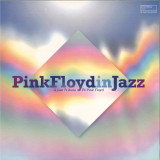
- A1: Pink Turtle - Money
- A2: Ulita Knaus - Have A Cigar
- A3: Gero Körner Trio - Another Brick In The Wall
- A4: Bird On A Wire - Wish You Were Here
- A5: Kirlian Camera - Julia Dream
- A6: Max De Aloe Quartet - See Emily Play
- B1: Nguyên Lê (Featuring Youn Sun Nah) - Breathe (In The Air)
- B2: David Neerman - Us And Them
- B3: Laurent Fickelson (Featuring Stéphane Belmondo) - Set The Control For The Heart Of The Sun (Edit)
- B4: Voices On The Dark Side - Any Colour You Like
- B5: Jordan Rudess - Grandchester Meadows (Edit)
Francisco López offers a brand new field recording composition based on the recordings he did in the island of Tenerife whilst visiting for a performance at the Keroxen Festival, 2020.
Internationally recognized as one of the major figures of the sound art and experimental music scene, Francisco has an ear-like gift to point his microphones (and our ears) to the most special and unlikely of sound sources. For almost forty years he has developed an astonishing sonic universe, absolutely personal and iconoclastic, based on a profound listening of the world. Destroying boundaries between industrial sounds and wilderness sound environments, the presentation here is not unlike his most famous and celebrated works whilst still maintaining its unique relevance among a prolific catalogue of sounds.
Entitled Hidden Island Music the work explores its aforementioned ‘hidden sounds’ of Tenerife with a high sensorial mix of environmental and ‘industrial’ recordings taken in and around the Massifs of Teno and Anaga and later composed into a unique sonic journey through the huge sound pits of this rugged region of north Tenerife.
Another masterful work from one of the masters of his craft, shifting from the limits of our perception to the most dreadful abyss of sonic power, a profound and transcendental listening open to sensory and spiritual expansion.
Original environmental sound matter recorded at multiple locations in Macizo de Teno and Macizo de Anaga (Tenerife), November 2020.
Evolved, composed, edited, mixed and mastered at ‘mobile messor’ (Tenerife, Den Haag) and Dune Studio (Loosduinen), 2020-21.
This one is about the 14th district of Paris.
On the first side, you'll find a track by MLM which invites you to a minimal trip between the René Coty Street and the Montparnasse tower. The track name is a reference to a french poetic movement.
Next is L-e-o's track which takes you around the parisian "prison de la santé" in a very trippy way.
On the side B, you'll find Soufflé Caramel's track that brings you to the Alésia neighborhood and reminds us the early hours of Minimal music.
Then, the maestro Djebali pleases us with a reference to his now world-known Ideal Ghetto Touch.
Finally, the geniuses KERAW make you lose your head with this galactic jungle that will get you travelling around the famous Montsouris Park.
We hope you'll like it !
LMR003, 12", Paris 2021.
Master by SFX Mastering.
BBE Music celebrates the centenary of recorded Ghana Highlife music with a double album reissue of two rare 80s LPs recorded by the late Atakora Manu, AFRO HIGHLIFE and OMINTIMINIM. Born in Toase, Ghana, a proud Asante, Atakoras musical talent made itself clear from an early age. But it wasn’t until his late teens that he put that talent to use as a performer, first founding the legendary Princess Trio from 1961 till 1963 with drummer Togas and multi-instrumentalist Elder Osei Bonsu. After a spell from 1963 till 1966 as guitarist with the United Ghana Farmers’ Council Drama Troupe, Manu teamed up with Moses Kweku Oppong to form the legendary Kakaiku No. 2 Band, producing a string of national hit singles over the following three or four years. There followed a three year break from music until fate struck: Atakora found a job in 1973 as Recording Studio Attendant- and later recording engineer- at Ambassador Recording Studios in Kumasi, at that time the country’s largest independent label. On seeing his musical talents behind the studio desk, it wasn’t long before the boss suggested to Manu that he get back to making music himself, an opportunity that he was quick to take up- as will be more than apparent from the hardcore, rootsy Highlife and palmwine selections reissued here. As well as long-time associates Togas and Elder Bonsei, local Kumasi legends CK Mensah, Amoako Agyeman, Agyei Kyeremanteng (of the famous Keyeremanteng All Stars) , and Atta Fofie lent a hand from time to time, along with a handful of other seasoned Ambassador studio session players. THE MUSIC A unique selling point here is the mix of vintage, rootsy ‘palmwine’ blues-style guitar Highlife with quirky keyboard electronics, a sound well-established today but revolutionary in the comparatively conservative world of 70s and 80s Highlife. This comes across beautifully in Dada and Cape Coast Cousin, the latter toasting off guitar licks with bubbling wah wah organ. We find a similar juxtaposition in Asante Kotoko, a shout-out to Kumasi’s champion soccer team, which also features some sweet ‘village’ drumming, and in Meka A Ensa..
“ When I started working on the piece in March of 2020, I had only decided to record it in the way I wanted to. The coronavirus was spreading globally, and the situation was gradually changing into something very serious. With no gigs scheduled and hardly seeing anyone, I felt as if my spirit was in a slightly deeper place than usual during the production. I sat down in front of my equipment as if I were dropping a fishing line into a quiet lake. I kept feeling that something new was lurking beneath the water surface. I was trying to catch that something that seemed to be just out of reach, that floated in and out of sight like a speck of smoke. “ _Referenced from: Afterword of 7FO「Ran - Bouten」
2021 brings a new album by Osaka electronic musician / producer 7FO. This work is a departure from the recent global ambient / new age approach, and the unique sound aesthetic created using only hardware equipment is a new frontier of 7FO or a return to his origin. "Ran - Bouten" is a new electronic music album with a poetic sensibility using machines.Discovered by overseas labels such as RVNG intl., Bokeh Versions, and Metron-and with the release that followed EM Records in his hometown Osaka, it's like his personal folk craft that was once quietly played at his own pace. Music has reached listeners around the world. In recent years, he has been touring from a famous performance with Tapes at the Belgian "Meakusma Festival 2019" to a Japan-Korea tour. "Ran - Bouten" was born as a result of facing the sound alone without being asked by anyone to cool down the heat when the steaming and intense experience had settled down. Inside the cool electronic sound like a water bath, you can feel the maker's heart sending hot blood.Peep into the condensed universe of a home-recorded miniature world that looks like an independent production of unknown age. He was alone in a dark room, making full use of KAWAI's 1990 digital and FM synthesizers , tracing the shape of nature and resonating the micro and macro sound worlds. The Rhythm and melody that continues to the Paradise Pure Land, which floats in a dreamy atmosphere, is the true value of 7FO even without his guitar play.Mastering by Makoto Oshiro, which supports everything from home listening to club sound systems. Hiroaki Hidaka designed the jacket to make the image of the sound appear cool and friendly everywhere.
- A1: Intro
- A2: Real Name, No Gimmicks
- A3: City Of Grind
- A4: Goerlitzer (Interlude)
- A5: Goerlitzer (Skit)
- B1: Infiltrate
- B2: What's Yours
- B3: Boogie Angst
- C1: The Substance Break (Skit)
- C2: Dangerous Ego
- C3: Introspective (Interlude)
- C4: Disappearing
- C5: Club Situation (Skit)
- D1: Street Dreams (Feat Florian Rietze)
- D2: Let's Hide
- D3: Nice Place, Bad Intentions
- D4: Outro
“Einsteigen Bitte!”
After more than six years of collaboration between label and artist, Feines Tier and Luca Musto bring to you the highly anticipated first full length LP “Nice Place, Bad Intentions”.
Musto’s first LP “Nice Place Bad Intentions” departs from the conventional 4/4 time signature. Instead, the album’s structure and the tracks themselves are reminiscent of a 1990s/2000s Hip Hop long play release. This becomes evident in the fact that the LP not only features 17 tracks, including skits and interludes, but also that they make up the framework of a conceptual album. Here, listeners will be encouraged to follow the track list and listen to “Nice Place, Bad Intentions” in one go.
“Nice Place, Bad Intentions” was produced over a period of 1,5 years. Besides the majority being original samples and vocals from Luca Musto, the LP also features a number of studio musicians, including bass players, trumpeters and guitarists. Cologne-based guitarist Simon Bahr can be found on several tracks, including the three singles “Infiltrate”, “Boogie Angst” and “Real Name, No Gimmicks”. Moreover, the skits and interludes are spoken by professional voice actors from the US and Canada.
The Berlin-themed album follows the characters Mick and Richie, who are all about partying and come to the city for one weekend in hopes to have the time of their lives. When the characters’ expectations meet reality, their naiveté (or bad intentions) lead them to getting screwed, robbed and even arrested. These stories about their journey through Germany’s capital are found in the interludes and skits. Listeners can follow them passing infamous places and metro stations in the city based on sampled BVG announcements, which gives the album a radio play vibe.
Sound-wise, Luca Musto’s unique sounds include scratched hooks that meet original lyrics and melodies, resulting in distinctive genre-bending tunes. As Mick and Richie stumble through some of Berlin’s most in-famous places, their expectations repeatedly clash with the reality of the capital’s nightlife. Similarly the liste-ners’ expectations are twisted and turned. Yet, the soundtrack underlining the characters’ journey never disappoints and brings its listeners on a rhythmic trip of old and new sounds. From rapping on downtempo as in “City of Grind” to merging the classic structure of electronic music with funky guitar licks and unconventional chord transitions as in “Infiltrate”, the LP feels at once like a daring experiment and like the beginning of a developing new genre.
Welcome to the world of Spöön Fazer!
This lost cold wave artist self-released a sought after 7” single in 1980 - Music 2 Dance 2 - and a 12” EP Sunset on Illuminated Records in 1982. In 2008 German label Anna Logue released an EP of unreleased songs that quickly sold out. Spöön featured on Cherry Reds Close To The Noise Floor compilation (2016) examining innovative U.K. electronica released between 1975 and 1984.
The music on these releases showcase Spöön's unique style that blended together art rock, drum machines, guitar, bass, washes of synthesisers and a compelling vocal style.
Spöön Fazer took to the stage over 30 times between 1980 and 1982 at venues ranging from the famous New Romantic haunt the Blitz Club to the Mind, Body and Spirit Festival at Olympia. He either appeared solo singing to pre-recorded music or with his backing band the In-Sect.
OM Swagger brings you a collection of material collated from Spööns personal tape archive. As well as tracks like Do Different Dances and Beat Dance Drumming that appeared on those hard to find recordings, we serve up unreleased tracks recorded between 1980 and 1982. Songs like Fall In Love With The East, Dancing In London, Samurai Dancing Party, Wish, Chan and Birthday show a more commercial side that never made it onto vinyl. These tracks are on a par with music released at the time by artists like Blancmange and John Foxx.
Aptly named Alternative Regression Therapy this 17-track compilation gives an insight into the lost world of Spöön Fazer detailing a career that started on a drum stool for punk band Whippets From Nowhere to a one-man crusade to enrich the cosmos with electronic music! Tracks like Michael, Row The Boat Ashore show that with the right backing Spöön might have
Continued over…
even hit the charts. Spöön even turned down the opportunity to become the drummer for the Thompson Twins just before they hit the big time.
It’s time to fall in love with Spöön Fazer.
Ellesmere, a symphonic-prog music project founded and led by Italian multi-instrumentalist Roberto Vitelli, author of all the music and lyrics, surprisingly comes back just one year after their second album "Ellesmere II / From sea and beyond" with an amazing work in terms of freshness, energy, impact and meticulous attention towards its sound and arrangements.
First of all, "Wyrd" deserves admiration starting from the cover artwork made by Rodney Matthews, an iconic illustrator at least equal to the legendary Roger Dean. Musically, it evolves on the same path of "Ellesmere II", so the main references are classic prog outfits Yes, King Crimson, Kansas, plus a good amount of jazz-rock, present in every song; but there are also references to contemporary progressive rock and to artists such as Transatlantic, Flower Kings and Spock's Beard. "Wyrd" is therefore a third epic and even more enthralling chapter than the previous one, almost completely instrumental and captivating from the first minute to the very last one.
As per tradition, "Wyrd" also involves a series of prog-related prestigious guests: Mattias Olsson (Änglagård, White Willow / drums), Tomas Bodin (The Flower Kings / keyboards), David Cross (King Crimson / violin), John Hackett (brother of the famous Steve Hackett and a constant presence in his solo records / flute), David Jackson (Van Der Graaf Generator, Osanna / saxophone), Tony Pagliuca (Le Orme / keyboards), Luciano Regoli (Raccomandata Ricevuta Ritorno / voice), Fabio Liberatori (Loy & Altomare, Lucio Dalla, Ron / keyboards), Fabio Bonuglia (keyboards) and Giorgio Pizzala (vocals).
In a path of musical and stylistic evolution that started from the acoustic and pastoral prog of "Les Châteaux De La Loire" (2015), we hope that "Wyrd" does not represent point of arrival, but another passage towards new unexplored lands!
- A1: Visitors From The Galaxy (Timothy Fife Redux)
- A2: Welcome To The Planet Earth (Credit 00 Remix)
- A3: Subhuman Species (Alen Nenad Sinkauz Remix)
- A4: Visitors From The Galaxy (Tapan Ma Ni Govora Remix)
- B1: A Ritual (Goran Vejvoda Remix)
- B2: To Turn Back Time (Anatolian Weapons Club Mix)
- B3: Main Theme (Drvg Cvltvre Dark Hole Remix)
- C1: Waste Of Emotional Energy (Repeated Viewing Remix)
- C2: To Turn Back Time (Anatolian Weapons Love Mix)
- C3: Human Species (Heinrich Dressel Remix)
- D1: Earths Gravity Wears You Out (Security Dj Remix)
- D2: Main Theme (Drvg Cvltvre Cold Space Mix)
- D3: Main Theme (Ali Renault The End Remix)
Limited Edition 2 x LP vinyl with 13 remixes and more than 78 minutes of music, comes in gatefold double colour sleeve with exclusive photographs from the film, extensive liner notes and japanese style OBI strip. The score for a film by Oscar winning director Dusan Vukotic 'Visitors From The Galaxy' from 1981 (FOX001LP) was remixed by 11 artists from 9 countries. All original tracks from Visitors From The Galaxy (alternative titles: Gosti Iz Galaksije; Monstrum Z Galaxie Arkana; Gaeste Aus Der Galaxis; I Visitatori Della Galassia Arcana; Goscie Z Galaktyki Arkana; Los Visitantes De La Galaxia) are arranged, composed, conducted and produced by Tomislav Simovic. This compilation includes additional screen sounds from the unpublished tapes of composer Tomislav Simovic also featured in Dusan Vukotic film. With courtesy of Tomislav Simovic estate artists were given complete creative freedom to remix, reinvent and re-imagine the futuristic soundscape of first science-fiction film in Yugoslavia that was scored in analog, abstract, electronic and synthesised music. Alen & Nenad Sinkauz, Ali Renault, Anatolian Weapons, Credit 00, Drvg Cvltvre, Goran Vejvoda, Heinrich Dressel, Repeated Viewing, Security DJ, Tapan and Timothy Fife got the sounds from Tomislav Simovic score and embarked on a musical journey that had no rule or predetermined direction or genre; it was only their creativity inspired by Visitors From The Galaxy sound that led them to a new pieces, more or less experimental, abstract or dance floor friendly. The diversity of music goes wide and deep, it is modern and made by the stars of today paying homage to a composer who always retreated in being a star. As the remix projects of this kind are still very rare and include famous names like Ennio Morricone, Steve Reich or Peter Thomas Orchestra, Tomislav Simovic is now finally, one might say, at home.