First time available on 180 grm black 180 grm vinyl 2LP . Revelation is the first album that was fully recorded & produced at Anton's recording studio in Berlin . It is the 14th full length release from the Brian Jonestown Massacre recorded from late 2012 to early 2014. With Anton Newcombe refining the 13 tracks that appear on the album Featuring Ricky Maymi an original member of the band plays on this album. It also features Joachim Alhund (Les Big Byrds) , Constatine Karlis (Dimmer), & Ryan Van Kriedt (Asteroid #4) . Plus vocal performance in Swedish by Joachim Alhund (Les Big Byrds) on the opening track . This album brings the traditional Brian Jonestown Massacre sound mixed with eastern influences & bringing it up to date with the benefit of all the additional weirdness that's been discovered in the past 40 years. Two dozen band members later and numerous ups and downs' (some have been famously sensationalized in the media ), the one thing that has always remained consistent for this psychedelic collective, is front man Mr. Anton Alfred Newcombe
Buscar:be famous
While filming "The Library Music Film", Shawn Lee & Paul Elliott travelled the world interviewing legendary composers, musicians and producers. This meant visiting some incredible recording studios, studios almost as famous as the music created in them, places like Telecine Sound Studio in Rome, Angel Studios in London, Studio CBE in Paris and Piero Umiliani's Sound workshop in Rome.
f you have ever met Shawn Lee & Paul Elliott, you will know they can't resist picking up an instrument or two for an impromptu jam, so it was inevitable that the pair would create some music in at a least a couple of these world-renowned studios. This special 7" release is the result of their spontaneous, off the cuff musical moments.
"Mexican Marimba" was kick started in The Sound Workshop Studio in Rome, when Shawn and Paul played the Maestro Piero Umiliani's Mexican Marimba with their fingers - the mallets where not next to the instrument, so they just played anyway!
"French Attack" began life when Paul improvised a piece on Studio CBE's tack piano, while Shawn sat on the floor beating out the rhythm on a bass drum and tom toms - this moment can briefly be seen in "The Library Music Film"
Both recordings were then taken back to London to Shawn Lee's own studio for the finishing touches and the music was included in the film's underscore. Here it is released commercially for the first time!
Hailing from one of the world’s most famous harbours, Rotterdam, a true multicultural melting-pot, the music by 6-piece band called the Greyheads mirrors the daily life of this busy city. They approach jazz from a hip-hop point of view, or hip-hop from a jazz point of view, always carefully adding a perfect dose of other influences (all the members are heavily influenced by artists like Miles Davis, J Dilla, Herbie Hancock and Robert Glasper) with an exciting, groovy and vibrant tone.
After having self-released their debut EP "GREYHEADS × KYTOPIA" in 2017, they recently finished recording "HOMES", their first full length album.
Led by drummer Nello Biasini, this truly international band of like minded musicians was formed in 2016 and have since been busy creating their own, fresh and unique sound. Whether an intimate jazz club or the main stage of a big festival, they are all about creating a feel-good groovy vibe using live rlectronics, drum 'n bass, jazz, hip hop and pop fused together.
GreyHeads performed at NN North Sea Jazz 2019 and several other festivals such as So What's Next Festival, Jazz Delft Festival, Cutting Edge, ProJazz, Big Rivers Festival, as well as opening for the bands Moonchild and Knower.
'Homes' is a journey through space and time, travelling in opposite but jointed paths that lead to the places we call home. The concept of the record is to carry the listener to experience what every place and time can in any way, represent home, characterized by different atmospheres, sounds, images and sensations.
japanese legendary jazz guitarist “ryo kawasaki”,some of his famous works are like mellow jazz fusion masterpiece “tarika blue”,dance jazz classic “trinkets&things”,cosmic new wave jazz “lucky lady”….
this album with his band “the golden dragon” is probably the best album for fans of wired jazz,brazilian,barealic music. japanese best digger “chee” picked up this album as his favorite album from japan on RA.
“little tree” is a first album that ryo kawasaki used self made guitar synthesizer.
this album is rich in variety, japanese brazilian jazz fusion classic “looking around you”,experimental guitar ambient “capricho arabe”,cosmic fusion “quasar infection”,barealic jazz masterpiece”you are the sun-light”,club jazz classic “little tree”,folky jazz vocal “jamiko”,a lot of great song on this album.
Thousand Knives Of Ryuichi Sakamoto's Landmark First Solo Album From 1978 Issued On The Better Days Label And Featuring The Synth Classics "plastic Bamboo," "end Of Asia" & "thousand Knives" Is Reissued Outside Of Japan For The First Time In Decades.
Wewantsounds is proud to announce the release of Ryuichi Sakamoto's first solo album originally released in 1978 on the soughtafter Better Days label. Sakamoto was a member of Yellow Magic Orchestra at the time but the group hadn't released their first album yet. Featuring Sakamoto on a wide range of synthesizers and keyboards programmed by Hideki Matsutake, and accompanied by a few musicians including Haruomi Hosono and Pecker, "Thousand Knives" was a blueprint for the YMO sound and includes cult classics that were to become live favourites. Save for a small-scale release in 1982, this is the first time the album is being released on vinyl outside of Japan. Remastered from the original tapes by renowned producer and engineer Seigen Ono, the LP edition comes with original artwork including OBI and 4p insert with new introduction by Paul Bowler. 1978 was a key year for Japanese music. Haruomi Hosono, one of the country's most innovative musicians had just formed Yellow Magic Orchestra pursuing the sonic experimentation he had started with his solo album "Paraiso." The album, credited to "Harry Hosono and The Yellow Magic Band," had been recorded between December 77 and January 78 and featured both Ryuichi Sakamoto and Yukihiro Takahashi. Hosono quickly invited both musicians to form YMO but before the group could release their first album, Sakamoto entered the Nippon Columbia studios in April 1978 with a plan. Sakamoto had become an in-demand session musician after studying composition at the Tokyo University of Art and had played in many key albums of the time: Taeko Ohnuki's "Sunshower" and Tatsuro Yamashita "Spacy" to name just two famous albums. This led to an invitation by Hosono to feature on "Paraiso". A penchant for avant-garde and improvisation had gotten Sakamoto interested in Electronic Music early on and with “Thousand Knives”, he decided to get Hideki Matsutake on board as he had mastered the art of synth programming following a stint with Electronic Music pioneer Isao Tomita. “Thousand Knives” took several months to record as Sakamoto would be busy during the day with his session work and would only record at night. Named after Belgian-born poet Henri Michaux’s description of a mescaline experience, the album is a reflection on how synthesizer technology might come to change the face of music. The first side conceived as a long suite opens with the title track and a recitation of the Mao Zedong poem "Jinggang Mountain" filtered through a vocoder, before morphing into a mid-tempo synthpop instrumental. It is followed by "Island Of Woods", a ten minute track buzzing with insect-like synth sounds reminiscent of the tropical exotica of "Femme Fatale" on “Paraiso” (also featuring Sakamoto). Side one ends with "Grasshoppers," a beautiful acoustic piano melody underlined by a subtle synthesizer soundscape. Side two opens with "Das Neue Japanische Elektronische Volkslied," acknowledging the influence of the German sound spearheaded by Kraftwerk. The track features a mid-tempo metronomic beat skilfully intertwined with a Japanese folk sounding melody. The album ends with two catchy uptempo synthpop tunes in the form of "Plastic Bamboo" and "The End Of Asia," which both became staples of YMO’s and Sakamoto's live shows. Although "Thousand Knives" sold modestly upon release, it was hugely influential in setting the agenda for what was to follow. YMO's sound included various influences from its three members but there is no denying “Thousand Knives” paved the way for the group's Computer Music sound. Thousand Knives remains a fascinating insight into the making of a music revolution.
This split release unites two female underground acts, both of whom have recently become pivotal parts of the contemporary electronic musical landscape in Japan. Hot on the heels of the acclaimed PAREDO EP compilation (TAL12), which has been released in May 2019 (and also includes contributions from Lena Willikens and Miki Yui), the SUPER MILD split album is the second outing by KOPY and TENTENKO on TAL. Their newest works punctuate their highly individual approaches to contemporary experimental dance music.
TENTENKO is a Tokyo-based electronic music producer. Her career began in 2013 when she joined the mainstream idol group BIS. Immediately after her departure from BIS in 2014 she commenced work on her solo project under her artist name TENTENKO. Since then she has radically reinvented her music away from glossy J-POP towards weird and industrial rooted dancefloor. TENTENKO first made a name for herself on the alternative Japanese music scene with a steady flow of live performances as well as collaborations with members of the legendary Japanese noise band HIJOKAIDAN.
For a few years now KOPY has been an unpredictable and charismatic part of the vital electronic music scene of Osaka. She has quickly garnered a reputation for creating her live sets exclusively with borrowed electronic equipment. Her name KOPY very much originates from this "concept". Apart from a few performances at Düsseldorfs famous nightspot SALON DES AMATEURS, she has been invited by LENA WILLIKENS to her showcase at the MEAKUSMA FESTIVAL in 2018. Her sinister dancefloor mystique is heavily steeped in the free spirited noise and rhythm cultures of her hometown.
Funky soul-jazz organist Caesar Frazier crafted superior Hammond funk. 75, his second LP, is a rare gem. It’s comfortably his greatest artistic statement.
The follow-up to Hail Ceasar!, it’s a taut, grooving set that expands his sound and, put simply, it’s got better songs. The key elements of his debut album are all there – production from maestro Bob Porter, accompaniment from hip players (Bernard “Pretty” Purdie, Cornell Dupree, John Tropea) and arrangement from Horace Ott - but the overall sound is elevated. The tightly jamming, expressive jazz-funk makes for a richer, fuller, more satisfying experience.
75 is a mixture of hard-driving originals, deeply beautiful slower numbers to vary the tempo and a couple of classy covers. The crazy bombastic “Mighty Mouse” - a riot of horns, organ and in the pocket drums - became an acid jazz classic at Dingwalls and it’s easy to see (hear?) how. A blissed out, lushly instrumental take on Seals and Crofts’s “Summer Breeze” follows, perfect for those sunshine sets.
Side A closes with the heavenly “Sweet Children”. A loping, funky jazz masterpiece famously sampled by Kanye West for Common’s “Real People” from Be. It opens beautifully, with soaring sax and a funky horn section combining with weightless keyboard tones atop snapping drums. Unsurprisingly, the excellence endures right through to the end.
The B side opens with perhaps the album’s most famous track. "Funk It Down” contains the familiar “I can feel the funk” vocal refrain throughout. But it’s the gorgeous, insouciant bridge that you should all know and love, having been used as the hook for Gang Starr’s “Ex-Girl To Next Girl”. A great cover of Stevie Wonder's “Living for the City” comes next, with an unforgettable bass-line which anchors the entire heavy rhythm section workout. Dizzying organ, triumphant horns and sun-dappled guitar grooves combine to create “Walking On The Side”, rounding out a pretty smoking set.
This is one of those rare 70s funk-soul-jazz LPs on which a bad track cannot be found. It’s all essential. So of course finding original copies on vinyl at affordable prices has been tough for years.
Mastered brilliantly by Simon Francis, cut by Pete Norman and with painstakingly reproduced artwork by the Be With team, this fresh Be With reissue ensures this legendary LP now sounds, looks and feels as sensational as it should.
One of the greatest enigmas of the music scene in mid to late 1970s Harare was The New Tutenkhamen, a band which played an eclectic brand of Zimbabwean township music combining
traditional rhythms and western influences. The band included some luminaries of Zimbabwean township music. Elisha Josamu was an alumnus of the fabulously-named Hallelujah Chicken Run Band (alongside Thomas Mapfumo), and Green Jangano’s long-running Harare Mambos, and would later form Two Plus Two with bassist Christopher “Chex” Tavengwa. Jethro Shasha played the drums, and would arguably become the New Tutenkhamen’s most famous export, making continental waves working with likes of Salif Keita. Paul Sekerani played the rhythm guitar, with Amos Chatyoka on the organ, while the enigmatic Maggie Mbuli provided vocals and F. Manda played the sax. The New Tutenkhamen recorded I Wish You Were Mine at Teal Records, produced by Crispen Matema, a talented jazz drummer in his own right who had played drums on the all-time classic Skokiaan, and had backed Louis Armstrong on his 1960 Rhodesia visit. Combining the
heavyweight producing talents of Matema and the writing chops of Josamu, The New Tutenkhamen band created an album howcasing various musical styles popular at the time. From the afro-jazz jam session aesthetics of “Tutenkhamen Theme”, “Big Brother alcom” and “Forever Together”, to the almost Van Morrison-sounding “Sunday Morning”; from the upbeat rock ballad “True Love”, to the funk-infused dance song “Togetherness”; from the bouncy jazz
exhortations to work hard in “Ane Nungo”, to the brassy, raunchy foot-stomper “Me & Dolly”. The title track “I Wish You Were Mine” is a ska-infused ballad that wouldn’t be out of place in post-war
Birmingham, while the star of the show is “Joburg Bound”, itself a fast-paced rock piece with Motown undertones and funky guitar lines. As a collective effort, I Wish You Were Mine provides a fascinating insight into a fraught time in Zimbabwe’s history, and the bands plying their trade through the turmoil, making music for young people, by young people.
- A1: Coyu Feat Lazarusman – You Don’t Know (Intro)
- A2: Coyu Feat Mike Leary – We All Try
- A3: Coyu – Out Of The Pain
- B1: Coyu Feat The Black 80S – The Three Chimney
- B2: Coyu Feat Thomas Gandey – 1+1 (Album Mix)
- B3: Coyu – Insania
- C1: Coyu & Moby – I May Be Dead, But One Day The World Will Be Beautiful Ag Ain
- C2: Coyu – Waking Up From Anxious Dreams (Metamorphosis)
- C3: Coyu – Dia Uno (The Beginning Of A New Era
- D1: Coyu - Volare
- D2: Coyu – Happiness? Go Ahead
- D3: Coyu – La Coherencia De No Ser Coherente
- E1: Coyu Feat The Horrorist – My First Pill
- E2: Coyu Feat Gabriella Vergilov – Unite
- F1: Coyu – Fear Is Gonna Be A Player In Your Life
- F2: Coyu – Wanna Do Right, Wanna Do Wrong
Influential Spanish artist Coyu is stepping out on his own Suara label with a long overdue debut album entitled ‘You Don’t Know’ that is going to shatter all conceptions about him. Due for release this September 23rd, the 16 track affair showcases his broad range and takes in collaborators like Moby, Lazarusman, The Horrorist, Thomas Gandey and many more.
Coyu quickly rose through the ranks to become one of the most prominent names in underground dance music. The Spanish man famous for his love of cats has established his Suara label as a go-to outlet for the most essential house and tech tracks, as well as releasing his own expressive grooves on Cocoon Recordings, Diynamic, Bedrock Records, Turbo Recordings and MORE. Now he really stretches his legs across a fantastic full length album that goes way beyond the dance floor and shows many new sides to his sound. The artist has been working on it since 2012 and aims to show people that whatever they think about him is wrong.
Says the artist himself, “the album is named ‘You Don't Know’ because many people have a preconceived idea of who I am. Until now, maybe I wasn't smart enough to show them my roots, what I love and what I can offer to the music. I'm not just a DJ or a producer who can play or make grooves – I love many different genres and many different kinds of music. With this album I want to change that preconception.”
The album kicks off with a dramatic spoken word from legendary vocalist Lazarusman before exploring low slung and sleazy grooves on ‘The Three Chimney’, floaty light melodic and dreamy house on ‘Out of The Pain’ and more club focussed but just as dreamy fair on ‘We All Try’ with Mike Leary.
Proving he can do everything from poolside gems to peak time techno, ‘Fear Is Gunna Be A Player In Your Life’ is one to get you in a trance with its sonar like synths and rolling deep space drums. Thomas Gandey aka Cagedbaby then steps up to guest on ‘1+1’ which is a hands in the air piano anthem to pump the party, and ‘Wanna Do Right, Wanna Do Wrong’ is a techno cut with brilliantly energetic drum programming and a big, perfectly placed vocal sample.
Switching up the vibe is ‘I May Be Dead, But One Day The World Will Be Beautiful Again’ with none other than dance legend Moby. It is a heavenly track with break beats, angelic melodies and a celestial feel that leaves you refreshed. The second half touches on raved-up drum & bass, gurgling minimal techno and harder techno with mind melting acid synths. The Horrorist contributes to the banging ‘My First Pill’, while the techno journey continues with ‘Unite’ featuring Gabriella Vergilov before the album finishes on the fluttering ambient track ‘Insania’, with mad church bells and manic percussion all bringing things to a close in style.
This is a broad, adventurous album that covers plenty of music ground and takes you on a true electronic trip from one of dance music’s most accomplished names.
After their brilliant label debut with "Grow Yes Yes" in 2017, Professor Wouassa now returns with their brand new third album on Matasuna Records.
The Swiss band's career spans more than 15 years, where they have played at many major festivals in Switzerland and abroad. The 11 members of the band have perfected their musical qualities over the years and captivate as a well-rehearsed live band with their energetic and rousing shows. So it isn't surprising that they supported concerts of Afrobeat legends like Ebo Taylor or Seun 'Anikulapo' Kuti.
Their still exuberant creativity can also be heard on their new work entitled Yobale Ma!, which in Wolof's language can be translated as "take me" or "get me". With their new album they take the listener to their musical island to explore the borders of Afrobeat and beyond.
The song Fallou Fall opens the album in a jazzy & big band way, and quickly switches to an afrobeat theme and solo. In the middle the song breaks into an Afro-style pattern, which is performed by Thaïs Diarra in Bambara (Malian dialect) in a traditional Mandingo way of singing. The track ends with a Sabar percussion part - a traditional Senegalese drum.
Yobale Ma is the single of the album, which is inspired by the funky guitars of a Nile Rodger and some typical fast Ghanaian highlife of Ebo Taylor.
The track Thiaroye Gare is about the Tirailleurs sénégalais, a unit of the French army who fought for France in WWII. After returning from captivity they were taken in Camp Thiaroye northeast of Dakar. Corrupt and racist colonial officials led to a revolt, which was bloodily suppressed by French troops.
From the musical point of view the song shows a link between afrobeat and funky James Brown rhythms, which ends in a fast afrobeat style with baritone saxophone and trombone solos.
Beguente Len in the middle of the album is a kind of interlude that represents Wouassa's own way of interpreting traditional afro beats and rhythms.
With the two songs Djongoma and Sama Yone Professor Wouassa leaves his usual afrobeat path to explore the "sound of the islands" (Mauritius, La Réunion, Cape Verde or Cuba) and blend it with their personal and unmistakable style.
With Iba Niawoulo the professors investigate a kind of Ghanaian highlife medium tempo with a chord progression from Serge Gainsbourg's song "Initial BB". The tracks change in the middle to a fast Rhythm'n'Blues beat, which is accompanied by afro guitars. The singer "Mamadou Diagne" talks about his alter ego in Dakar.
In Djougoudja typical afro rhythms are mixed with pure Ethiopian 70's brass sounds and funk guitars. As heard several times in other songs, the track breaks into a very personal and hard to describe Wouassa beat in it's middle. At this time, Mamadou Diagne recites a big slam about the spiritual ideas and the history of the famous senegalese theologian and poet Serigne Touba (Cheikh Ahmadou Bamba). Under his flow some sabar percussions (typical senegalese percussions) build a strong and intense musical rug.
NO MORE don't need much of an introduction - the legendary Kiel-based (No)Wave / PostPunk band project took the worlds dancefloors by storm with the release of their seminal single "Suicide Commando" in 1981 which was later re-introduced to the Techno / Electro youth of the world, when Munich's DJ Hell famously reinterpreted the tune in 1998.
Still actively touring and releasing on a regular NO MORE are now making their debut on the freshly launched Intrauterin Recordings-offshoot EL CABALLO SEMENTAL..
The labels cat.no. 001 is a first time on vinyl release taken off NO MORE's "The Return Of The German Angst" digital mixtape and sees one of the bands hit tunes being reworked in a unique, highly captivating manner, pressed exclusively as a limited to 200 copies whitelabel edition on purple / violet vinyl.
"123456789 (baze.djunkiii + Herr Brandt Dream A Nudream Remix)" exceeds the bands natural musical realm by far and transfers the song into MoombahGoth / DubWave territories previously unheard of, not only for a classic band like NO MORE.. The rework picks up latest developments from the urban and bass music world whilst keeping the haunted vibe of the original songs chorus intact, slighty references NuBeat / PostPunk and Dub, adds lush, dreamy Cosmic guitar textures and even winks to the underground whistle and rave posse with a sweet as candy piano breakdown.
In their conjunctional remix work we see Intrauterin Recordings-founder baze.djunkiii, quality electronic music activist and prolific DJ for more than 20 years, and Herr Brandt, founding member of the classic German Wave / Indie / Alternative outfit The Convent as well as of the praised underground Synth Pop / Minimal Wave band Sonnenbrandt, effortlessly merge the best of two musical worlds to create something new and captivating, like they used to do on the decks with their former BETA-ZERFALL parties which were the main and initial reason the two of them and NO MORE came together in the first place.
a A- 123456789 BAZE.DJUNKIII + HERR BRANDT DREAM A NUDREAM REMIX
In a trio of instrumental tracks, Alex from Tokyo and Willie Graff pay tribute to the places they love: New York City, Ibiza, and Berlin. Inspired by the unique soundscapes and club cultures of each city, the two DJ friends (who met while spinning records at NYC club Cielo in the mid-2000s) came together in late-night jam sessions at Darren Eboli’s studio in Tribeca to bring the soundscapes to life.
Indio & Ronin, famous but top secret Djs and Producers from the world scene, with their first release with a 12" vinyl,
sure to turn on the dance floors! Having found an idea in a debut version full of unexpected riffs and counter riff keeps
the fire lit from the biginning to the end. On side A there is a real killer for more 'fiery tracks, while side B is 'a more' clubs interpretation
while remaining in the same mood. One of the newest releases in the best game at the moment!
Previously released on CD accompanied by “Gone, Gone Beyond”, “The Mirror” is the
dreamy soundtrack of an a/v project from collage artist extraordinaire Vicki Bennett aka
People Like Us.
With ‘’The Mirror’’ Bennett continues her eternal disassembling of popular music by
exploring how the narrative of familiar sounds/songs can change dramatically under a
new context, with that context always changing, in a never-ending flow.
Each song is singular. And each song is a collage of and undefined number of other
songs from other artists. It sounds familiar because that has been the modus operandi of
People Like Us since the early 1990s. But “The Mirror” plays with the notion of familiar,
driving around a collection of famous pop songs/artists, messing around with the memory
of the listener and, of course, his unique comprehension of those specific songs applied
in a new context.
Because of the use of familiar pop sounds, “The Mirror” is often grandiose. Like an epic
film only with highs, never letting the listener down or letting him doubt the power of pop.
Even, of course, when the coordinates are twisted, mixed, over or underrepresented.
Each moment feels like something that could only happen in a parallel universe.
Although that may sound naïve, it’s just a lost thought of reaction to the beautiful collages
of People Like Us in “The Mirror”. This mirror doesn’t reflect an image of ourselves or an
image of pop. But an image on the way memories drift and are being constant rebuilt. An
unfinished collage.
Mastered by Mark Gergis
Vinyl Cut by Rashad Becker
Over the years Kid Loco has become a reference in the French electronic music landscape. Firstly, known for being an activist in the French underground music scene, he cofounded Bondage Records in 1982. With Bondage Records, he introduced several bands to the French alternative music scene like Bérurier Noir, Ludwig Von 88 or Washington Dead Cats. Alongside his activity of label manager, he composed and released under the name of Kid Bravo, an experimental music at the crossroads of rock and electronic. Astonished by the beginnings of the instrumental hip-hop of DJ Shadows, Jean-Yves Prieur aka Kid Loco experimented new ways of composing music with the sample technic in his own studio near Orly. This new musical adventure led to the birth of a mini album Blues Project released in 1996 on Yellow Productions.
Exploring further his own psychedelic universe, he released his first album A Grand Love Story in 1997 under the name of Kid Loco. Acclaimed both by the French and international music review, “A Grand Love Story” established itself as an iconic album of the trip-hop and electronic music scene. During the two years following its release, Kid Loco continued to invent his own musical universe nurtured by multiples influences. In 1999, he released Jesus Life For Children Under 12 Inches, an album featuring thirty remixes he composed for French and international artists (Pulp, Talvin Singh etc.) as well as his mixed compilation for the famous DJ KICKS collection released on the German electronic music label, !K7.
After a first European tour, Kid Loco returned to his studio, nicknamed “The Lafayette Velvet Basement” and composed his second album Kill Your Darlings released in 2001. Compared to his previous compositions, Kill Your Darlings features more tracks without sampled vocals. Eager to explore new musical horizons, Kid Loco produced in 2004 the original soundtrack of the American movie The Graffiti Artist directed by James Bolton (Narrative Feature Sound Award – Austin Film Festival 2003). Cruising to new musical galaxies, Kid Loco continued to compose and released the album Party Animals & Disco Biscuits in 2009 followed in 2011 by the album Confessions Of A Belladonna Eater. In addition of his albums, Kid Loco continued to experiment with the production of compilations celebrating the trip-hop music with “Trip-Hop Classics” released in 2010 followed by a second opus released in 2013 on Wagram Music.
2019 marks the return of Kid Loco with his track Here Comes The Munchies selected in the original soundtrack of the show Vernon Subutex (Canal +), the vinyl reedition of his cult album A Grand Love Story and for the first time the digital release of the album Confessions Of A Belladonna Eater with exclusive remixes.
Mais Alors !!?... c’est à l’envers is the first release of new French Label ICI BIENTÔT (Here Soon ...), launched by Paris Fleamarket’s Record Shop, Geminicricket. On the Menu... Suspended Time,
Unsung Heroes, Hidden Records and Next Door Marvels.
In 1983, NEF released their first and only album, Mais Alors !!?... c’est à l’envers. At that point, the band already had a long history, interwoven with that of various musical trends and alternative
movements from the late sixties to the early eighties. That’s certainly what makes this record so special and able to conciliate such different worlds as Electronic Prog, Film Score, New Wave …
The band’s destiny was most certainly tied to their native region, the South of France, an idyllic environment that attracted a number of musicians during the 1970s, allowing the group to attend many
concerts or share the bill with several groups that have gone on to become well known: Can, Ash Ra Tempel, Magma, Catherine Ribeiro, Zao, Chêne Noir, Art Zoyd …
Founded in 1975 by Richard Lorenzi, NEF started as a kind of Free Rock band with multiple influences, going from Prog to Musique Concrete, in which any method of making sound, any way of
bringing out sounds was good … 2 musicians and a photographer, full member of the band who was projecting slides over the music and influenced their dreamlike universe. In 1978, Vincent Tronc came on board with his keyboards and synths. While the group had been influenced by electroacoustic techniques until then, Vincent broadened NEF’s horizons, bringing in a host of new influences: Ash Ra Tempel, Kraftwerk, Klaus Schulze … the beginnings of electronic music. When the album is recorded in 1983, new directions were taken and changed NEF’s usual sound.
First, the idea of playing the accordion, clearly not a common thing and a new Drum Machine, the Roland CJ-5000. Pressed the day a figure of French Chanson died, NEF’s pressing is botched up, a
good part of the records were unusable since the records came out totally warped. Then, at the end of the eighties the small stock of remaining records is lost in the sadly famous flood of Nîmes. 2000
records had been pressed, but very few survived! All the more reason to reissue Mais Alors !!?... c’est à l’envers, an unsung record, free and multifaceted, a quirky and daring musical ovni, transcending eras and genres, between synthetic
Krautrock and Film Score, reminiscent of NEU! (with a red nose), François de Roubaix and Pascal Comelade.
Matasuna Records is thrilled to reissue another musical jewel from Peru on vinyl for the first time. The songs were recorded by the band Bossa 70 and released on a 7inch EP and the self-titled album in 1970. Both are much sought-after collector's items and impossible to find. The songs were transferred from the original master tapes and got a new mastering.
Nilo Espinoza Vascones or better known under his artist name Nilo Espinosa is without doubt a Peruvian saxophone and flute legend. After a classical musical education he entered the music scene in the early 1960s. In 1966 he founded the band Los Hilton's with some of the best Peruvian musicians including the gifted piano player Otto de Rojas. In 1967 they recorded the first and only LP of the group, which was released in a small edition in Peru.
Their concerts were more and more influenced by Jazz and Bossa Nova, so in 1968 they changed the band's name to Bossa 70. In the record label's office Nilo met the Afro-Peruvian Carmen Rosa Basurco, who also loved Bossa Nova and could sing in Portuguese and English. From then on she was the main singer of the band.
Bossa 70 recorded four songs for a 7-inch EP in an edition of only 100 copies, which was given away for promotional purposes at concerts and to friends & family. In 1970 they recorded their self-titled LP which reflected a mixture of Bossa Nova, Latin Jazz and Funk. The label pressed only 300 copies, which were sold out very quickly. This LP was the band's only album and is a rare piece of Peruvian music history.
Si Voce Pensa on the A-side is a great cover version of the same named song by famous Brazilian musician Roberto Carlos from 1968. Bossa 70 adapted the song for the dancefloor, which is driven by an uplifting rhythm and the expressive voice of the singer. Of course, the great interplay of the other musicians must not go unmentioned. A fantastic track that will heat up everywhere!
Birimbao on the flipside is another fantastic Brazilian cover version. The song was written in the 1960s by Baden Powell, one of the most important Brazilian guitarists and one of the pioneers of Bossa Nova. Bossa 70 set their own stamp with a new instrumentation with brass, wah wah guitars, piano, flute parts and trumpet solos. The percussion section is also a brilliant backup for this one. Another winner!
It seems KPM have long been fans of Smith and Mudd and, after being introduced to each other by mutual friend Andy Allday, the peerless Balearic maestros were invited to contribute to the library label’s digital-only “Album Shorts” project. The results are predictably wonderful.
With past projects under our belt working with everyone involved so far it made perfect sense for Be With to take on the vinyl release of this instant library classic. But why is it called “Tea With Holger”?
“Holger” is of course Holger Czukay and the whole LP is dedicated to Smith and Mudd’s time spent with him and Ursa Major at Can’s famous Inner Space Studio in Weilerswist, near Cologne.
When not recording it seems they spent a great deal of time sat around being entertained by Holger’s stories and drinking many cups of different sorts of tea from all over the world. These moments provide some their fondest memories of their visits:
“Looking back, it was pretty incredible that we spent part of our lives with Holger in one of the most magical places we’ve ever known, Inner Space Studio. We have our memories and, of course, the Bison album we made with him. But to honour the time we spent with him, we wanted to dedicate an album to him called ‘Tea With Holger’. The names of the tracks are about that time.”
The album was recorded over several years in London, Margate and Gorthleck, a small hamlet in the Scottish Highlands. Mike Piggott, who played with Bert Jansch, handled the strings and played violin whilst Sam Creer lent his virtuoso cello work to the proceedings. The sessions employed a key recording technique from their time with Holger: hit record and play. They wanted to capture magical improvisational moments live and not do the work later on in editing.
In their own words (and in classic library record sleeve style) these tracks are collectively described as “Balearic themes including breezy soul, sun-dappled melodies, warm pianos and sweeping strings”. You want to hear this, right?
The album is vintage Smith and Mudd. The gentle piano ushering in opening track “The Gardener” is soon joined by low, bubbling drums. When the time is just right, lush guitars glisten above a Welsh language vocal that floats like silk. Easy as a sea breeze. “Innerspace” is of course a nod to Can’s aforementioned studio. Dark, heavy piano meets rolling drums before warm chords and luscious strings take over, gliding over moody grooves to drive you home. Closing out side A, “Weilerswist” delivers more beautifully rolling piano and guitars over thumping cellos and building drums.
Side B opens with the full, string-enhanced version of “Away From Me”. This is Smith and Mudd’s prefered version and it’s only available here on this vinyl issue. For us it’s the standout on this all-highlight album. Tribal tones, piano and cello set a melodic staccato for violin to soar over while rolling piano lines and gospel organ chords descend into a drum drop that leads to a glorious vocal lead finale.
Distant synths introduce sun-drenched guitars and uplifting strings in “Kölner Street”, before a spacey Moog solo leads to a spellbinding, sci-fi drop. The sunshine returns before the track ends. The album closes with “Tea With Holger”. Airy vocal swells are punctuated by plucked cellos and picked guitars, all wonderfully warmed by a soulful piano.
Cut by Pete Norman and pressed in the Netherlands by Record Industry, “Tea With Holger” comes in a classic KPM green sleeve complete with track descriptions from Smith and Mudd themselves. The finishing visual touches come courtesy of Richard Robinson. We’ve given this record the same care and attention as we give to each our KPM re-issues, and it’s just as essential.
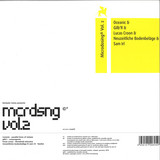
Microdosing is a series of compilation 12”s selected by Julienne Dessagne aka Fantastic Twins, and designed in collaboration with French visual artist Geff Pellet. Microdosing is a collective experiment aimed at helping you fighting back your modern obsession with happiness. You may deserve a nice day but the day does not need a nice you, nothing should be forced, everything is permitted. Microdosing will provide you with sonic healing weapons on regular basis and at irregular dosage. Those doses will favour psychedelic social techniques against self help tyranny, creation over soma, provoking over numbing, our outer-selves over our inner-selves. Microdosing refuses the fatality of the pleasure principle. Life is a struggle, time to embrace it. —— "My battery is low and it’s getting dark” We at Microdosing will make Opportunity’s famous last words fully ours. Some would see these as an epitaph on a black screen, we embrace them as a reclaimed fragility. Are we grains of sand wandering in space, hoping for a goal? No. We are the cosmos, the cosmos is us, unafraid of the end, unafraid of the void. Before the rise of the infinite silence, Microdosing brings you new guiding lights, white sun or black hole being a simple permutation of the kinetic rainbow. Oceanic’s “Parallel Lines Of Stripes” is a meandering mantra, an synthesised Moebius ring, a mission to your heart, that furthest star in the sky. Gilb’R’s “Cosmogonie” simply reminds us of the profound relation between spatial systems and the holy act of birth (cosmo, world and gon, conceive). The universe is a body, your body is your universe. Lucas Croon’s “Threshold Stimulus” is the soundtrack of a never ending voyage, the man is on a trip to the core sanctum. Imagine Space as a reverberation room cladded with bakelite. Losing yourself in delay repeats sometimes is the shortest way. Neuzeitliche Bodenbeläge & Sam Irl’s “Faeden” is another hymn to the umbilical chords joining us to the outer world, a black monolith of kraut acid, a pagan dance as portal to a destination only you can choose. Microdosing will be back soon with more enablers, helping to turn your petty struggles into a search for a meaning of life. The Quest lives on.
- A1: Anushka Chkheidze - The Old Man And The Sea
- A2: Stia - One
- A3: Anushka Chkheidze - Only Notes
- A4: Anushka Chkheidze - +995
- B1: Katie Eristavi - Monument (Feat Dea Bezhuashvili)
- B2: Anushka Chkheidze - Sleepers, Walkers, Scientists
- B3: Eto Gelashvili - Rivers
- B4: Tamta Gwarliani - Thoughts
- C1: Ani Zakareishvili - 5 Margarets
- C2: N Chavchavadze - Queen Size
- D1: Dea Bezhuashvili - Snow Queen
- D2: Tamta Gwarliani - Failed To Open
- D3: Natalie Beridze - Girl Galaxy
SLEEPERS POETS SCIENTISTS is the compilation of 9 female Georgian artists. It showcases works by Natalie Beridze's students at the CES (Creative Education Studio), where Beridze teaches song-writing and music production. Natalie Beridze is an international well-established artist with releases on Max Ernst, Laboratory Instinct, and Monika Enterprise, through live performances, theatre and movie soundtrack works, as a member of artists collective Goslab, and collaborations with Ryuichi Sakamoto, Thomas Brinkmann, Gudrun Gut, Nikakoi – to name but a few. "This compilation is the backbone of what I try to persuade as a lecturer and as a person, who endlessly loves the music-making process. "Sleepers, Poets, Scientists " is the embodiment of intelligent, benevolent, dedicated, talented and beautiful women, who I believe have a bright future as female composers in Georgia and this album is a significant step towards it."
The retro cover is a nod to the famous group shot from the 1927 Solvay conference, which brought together physicists like Albert Einstein, Erwin Schrödinger, Marie Curie, and others. With this in mind, the name Sleepers, Poets, Scientists rings like a call to action for today's brightest minds, to wake up and save our chaotic, troubled world.