- A1: Paying The Cost To Be The Boss (Ft. Christone "Kingfish" Ingram)
- A2: Don't Answer The Door (Ft. Marcus King)
- A3: To Know You Is To Love You (Ft. Michael Mcdonald, Susan Tedeschi, Derek Trucks)
- A4: Let The Good Times Roll (Ft. Kenny Wayne Shepherd, Noah Hunt)
- A5: Sweet Little Angel (Ft. Buddy Guy)
- B1: When It All Comes Down (I'll Still Be Around) (Ft. Larry Mccray)
- B2: When Love Comes To Town (Ft. Slash, Shemekia Copeland, Myles Kennedy)
- B3: The Thrill Is Gone
- B4: Watch Yourself (Ft. Jimmie Vaughan)
- B5: Why I Sing The Blues (Ft. Bobby Rush)
- C1: Sweet Sixteen (Ft. Jimmy Hall, Larry Carlton)
- C2: Don't You Want A Man Like Me (Ft. Larkin Poe)
- C3: I'll Survive (Ft. Keb' Mo')
- C4: Heartbreaker (Ft. Trombone Shorty, Eric Gales)
- C5: There Must Be A Better World Somewhere (Ft. George Benson)
- D1: Chains And Things (Ft. Gary Clark Jr.)
- D2: How Blue Can You Get (Ft. Warren Haynes)
- D3: You Upset Me Baby (Ft. Chris Cain)
- D4: Ghetto Woman (Ft. Ivan Neville)
- D5: Night Life (Ft. Paul Rodgers)
- E1: Ain't Nobody Home (Ft. Jade Macrae, Robben Ford)
- E2: Bad Case Of Love (Ft. Joanne Shaw Taylor)
- E3: Never Make A Move Too Soon (Ft. Dion)
- E4: Three O'clock Blues (Ft. Marc Broussard)
- E5: Think It Over (Ft. Train, Chris Buck)
- F1: It's My Own Fault (Ft. Kim Wilson)
- F2: Every Day I Have The Blues (Ft. D.k. Harrell)
- F3: Please Accept My Love (Ft. John Németh)
- F4: So Excited (Ft. Aloe Blacc)
- F5: When My Heart Beats Like A Hammer (Ft. Dannielle De Andrea)
- F6: Playin' With My Friends
Поиск:be with you
Все
- A1: Nirvana – Nova Sketch 1 48
- A2: Pyranha– Clepsydre 7 04
- A3: Fifty Foot Hose– Rose 5 08
- A4: Us '69– Never A Day Goes By 4 50
- B1: Keith Christmas– Foothills 3 59
- B2: East Of Eden – Goodbye 5 46
- B3: Christopher Salt– Acid Jam 3 34
- B4: Kaleidoscope – Keep Your Mind Open 2 16
- C1: Peter Bardens– Don't Goof With A Spook 7 21
- C2: Trees – She Moved Thro' The Fair 8 07
- D1: The Rationals– Glowin 4 12
- D2: Michele– Blind As You Are 2 48
- D3: Gwydion– The Sungod 4 20
- D4: Mad River – Wind Chimes 7 18
Powerfull nice grooves from a series that might be beer named: "Acid folk renaissance " – as most of the work here come from the 70s, and a lot from those great years of the UK and US scene where it also seemed like there was plenty of folk in the music as well! A few of these cuts are downright acid , and all are filled with great instrumenta&on – in an approach that's a nice change from some of the more familiar Brit and US manners of the same genera&on. The &tles include, among the others: Nirvana’s Nova Sketch , Fi.y Foot Hose’s Rose, Pyranha ‘s Clepsydre , Kaleidoscope’s Keep your mind open, and more .
2026 Repress
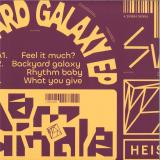
Dam Swindle's new 'Backyard Galaxy' EP is an ode to house music and the classic Swindle sound.
It's only been a few months since Dam Swindle released their highly acclaimed album "Open" and already the boys are back on Heist with a new release that takes you right back to the dancefloor. Where they've spent the better part of the last 3 years writing their album with all its sonic explorations and collabs, this new EP sees the duo return to their roots of club-ready house music. The 'Backyard Galaxy' EP comes with 4 high-energy house tracks made in their Amsterdam studio that have been road-tested all summer.
EP opener "Feel it much?" has all the ingredients of a classic Swindle heater, with warm pads, rich organic percussion and tons of soul. There's a simple and effective vocal running throughout the track that blends nicely with the classic house elements and electronic textures that are layered throughout the track. There's an effortless flow to this track and it comes as no surprise that it has been a highlight in their sets this summer.
The EP title track 'Backyard Galaxy' is an up-tempo Latin-themed jam with a hint of old school techno. The synth stabs hit you just right and the modulated vocal chops are a lovely boost for the build ups and add a touch of swing to a track that already has a tight groove. Add to that a huge breakdown and drum roll and you've got yourself a track that'll light up any dancefloor.
On the flip, we're moving into garage territory with the shuffling vibes of 'Rhythm Baby'. The current popularity of the genre is not missed on Dam Swindle, but when you look closely, you'll see this track is full of elements that the duo have built their legacy on. The vocal chops, transposed key samples and swing are all on point and work just as well below, as above 130 bpm if speed is your thing.
The EP closes with the NY-style house cut 'What you give', which reminds us of Dam Swindle's remix of Cinthie's Heist hit 'Won't U take me' with its lush organs and moody keys. It's perhaps the most classic house track they've made in a long time and you can hear they had a great time recording this. It's playful, vibey and catchy. Just the way we like it.
Dam Swindle might have delivered one of the standout cross-over albums of 2025, but on this EP the message is clear: Once a househead, always a househead.
As always, enjoy the music and play it loud!
Much love,
Heist HQ
In 2017, at Documenta Kassel (but in Athens), I invited José Jiménez Bobote, a remarkable gitano artist from the Tres Mil Viviendas neighbourhood in Seville, to record a series of actions in specific locations in the Greek capital. Ancient Greece and modern Greece. I wanted him to draw sound from the city, to strike it as only a flamenco artist can, with his feet. To hit the ground and make it moan, ring out with noises evoking significant moments in history: from Diogenes the Cynic and the Apostle Paul’s sermon at the Areopagus to Rosa Eskenazi’s resistance to the Nazi-German occupation, and the ups and downs of police Inspector Costas Haritos’s survival at the European Bank during the PIGS crisis. Bobote struck the ground and Athens responded, sending back echoes of the past, in an exceptional anachronistic exercise. In flamenco it is possible for several times to sound simultaneously.
We took seventeen hours of footage, and water from many wells.
I then shut away producer, musician, and friend Raül Refree with this material so that he could take the long titles and use them as scores, turning them into mere songs. It was very important to think in terms of songs. The tracks had to have the capacity to be songs, the kind of thing one whistles while absent-mindedly walking down the street. Generally speaking, the scores—that is, the texts—defended the use and abuse of the loose coins that people carry around in their pockets. Loose change as a kind of everyday fetishism against big financial capital. Pistis! Refree managed to coax that distinctive unity of songs, their bright catchiness, from the amalgamation of sounds that would, in other hands, end up being labelled concrete music. Peter Szendy would be pleased and grateful. Being able to sing under one’s breath something that others consider simply noise.
Seven songs, yes. And if you get the chance, take a stroll through Athens with them: the locations are clearly defined. If not, then let Athens fill your home with all its ancient wisdom, boring into your ears like worms, making holes in history.
Listen, and, as people used to say, turn up the volume!
Pedro G. Romero, Santa Marta, Colombia, November 2025
Comes with booklet with song lyrics written by Pedro G. Romero. Limited edition of 250 vinyl records.
A1 | Carlos Native – Be Yourself
Andalusian producer Carlos Native unfolds an almost cinematic sensibility: a slow, introspective piece where a hypnotic bassline and wide, horizontal backgrounds build an inner journey rather than a track aimed at immediate impact.
A2 | Slit Observers – Synthmek
The Galician duo present a hard, high-energy work. Industrial-driven drums demand movement, while an aggressive, sharp arpeggiated bass defines a sonic identity with no concessions.
A3 | Negocius Man – 8N8
The Madrid-based veteran constructs 8N8 with modular precision: each sound falls into place with an almost architectural logic. The result is a synthetic, measured and structured piece shaped by years of experience.
B1 | Allumynd – Chestcollider
Making their debut on the electro scene, Allumynd delivers an original and daring track. An otherworldly snare and a woven vocal structure turn this piece into a clear example of new-generation electro: atmospheric and bold.
B2 | Komatssu – Non Servian
The Asturian producer, under his Komatssu alias, opts for continuous evolution without a kick drum as support. The track works like an organism that grows and transforms as it progresses, generating a hypnotic and mature effect.
B3 | Irrational Language feat. Lucky – We Are Comming Back
Irrational Language dives into braindance with meticulous technical production: drums filled with micro-artifacts, luminous synthesizers, and Lucky’s vocals processed and spatialized to reinforce a narrative of rebirth and emerging from darkness.
The Mad Geezers are basically F-Spot mainstays Night Owls’ Dan Ubick, Dave Wilder, and Roger Rivas, but with long-time friend and drum guru, Oliver Charles (Ben Harper & The Innocent Criminals, Gogol Bordello) behind the kit. It’s safe to say that these four musicians love their Ska, Rocksteady, roots, and dub, but for this lineup, the four Mad Geezers collectively decided to explore their other obsession... early Jamaican Dancehall.
First on producer Dan Ubick’s To Do list was to channel the fun, attitude, and natural talent on records by Jamaican legends like Yellowman, U-Roy, Sister Nancy, Barrington Levy, Bunny Wailer, and Freddie McGregor. Secondly, find a song that no Jamaican artist has covered, but every DJ on the planet loves, and flip it into a Dancehall groove. Hmm… What about Tom Tom Club’s “Genius of Love”? Ooh! That’s it! So, The Mad Geezers broke out synths, Syn drums, and invited some friends to the party, stepping up to the plate with the brand-new F-Spot Records 45 “Genius Of Love” b/w “Genius Of Dub (Roger Rivas Dub Version). Featuring vocals by one of Jamaica’s shining jewels, Ranking Joe & Oakland’s chosen daughter, Destani Wolf (who many will recall from top-selling Night Owls singles such as “After Laughter” and “Let’s Stay Together,”) this 7” is a sure shot.
With its iconic bass line and catchy synth hook, this 1981 decade-long crate essential is in the collective unconscious at this point. Whether you found it as a Talking Heads fan, or as a rap music fan via Dr. Jeckyll & Mr. Hyde’s “Genius Rap” or Grandmaster Flash and the Furious Five’s “It’s Nasty,” the groove is infectious. It’s hard to imagine no one had yet infused this punk-disco powerhouse with a dancehall injection… until now.
Blu:sh back in Kalahari orbit for a third bite of the cherry.
This one’s dark and dank, with sultriness off the scales. The antithesis of the Frenchman’s output as Terra Utopia, it’s everything we’ve come to love from the project in 6 deadly traxxx.
Moody but never unruly. Taught, tough and rendered in the same seductive, turbulent vortex that’s defined all the Blush material to date.
Strapping earworm grooves set pace, as is tradition with these records. Not sparing on the menace either. Some of it sounds like Blu:sh on a villain arc. Whether you’re a cut-throat stalking the backstreets or looking for a mean streak of pure sci-fi dystopia, we got you covered.
Proper late nite hedonism. Oscillating between sensuous clubland fantasy and a volatile astral kinda flex, the sense of impending danger is unabating.
Now universally recognized as one the great ambassadors of House Music around the globe, Todd Edwards first built his reputation in the early 90’s with a string of 12" releases from some of New York’s more prominent independent labels. This was an era when on any given week you would have up to 100 new 12" releases from New York based producers, all vying for space on the 12" shop walls. In this hypercompetitive environment it was not easy for a new producer to garner a reputation. But Todd’s releases did not sound like anything else. Using an innovative blend of rhythmic, cut-and-paste vocal samples, rubbery basslines, and slapping percussion, he created a 4 track EP for Nervous in 1994 under the production acronym The Sample Choir. This 12" created such a massive buzz in the UK that it is now considered instrumental in helping to propel Britain’s Sunday clubscene into the genuine cultural phenomenon of speed garage.
- Satellites
- Who We Are
- And So I Goes
- Cloud On My Tongue
- The Great Escape
- Off-White
- Trigger Warning
- Stay
- Fallen Empire
- Let There Be Love
- True Love Waits
Viktoria Tolstoy, celebrated for her expressive voice, emotional storytelling and cross-genre artistry, seamlessly blends jazz, pop and original songs.
Her standout tracks ‘Autumn Breeze’ (4.6M streams) and ‘Calling You’ (6.5M streams) have reached millions of listeners worldwide.
Collaborations with top Scandinavian and European jazz artists, including Nils Landgren and Esbjörn Svensson, have positioned Viktoria as one of the leading female voices in European jazz.
Jacob Karlzon, renowned Swedish pianist and composer, is recognized for his virtuosic technique, cinematic soundscapes and inventive harmonic language.
Their collaboration began in the mid-1990s, forming one of the most enduring and successful partnerships in Scandinavian jazz.
Their music bridges Nordic lyricism and modern jazz sophistication, appealing to both jazz and a wider crossover audience. A trusted name on the European scene, they continue to tour internationally and attract strong streaming and media presence.
Their new duo album reflects and renews that bond - an intimate conversation shaped by time, friendship, and change. The world has shifted since their last recording and so have they. Yet their shared musical language endures - evolving, deepening, and gathering new shades of emotion. There is a rare ease between them: two Artists who no longer need to explain, only to listen and respond.
The result is music that feels unforced, sincere and alive - born of trust and the courage to explore the unknown. In the end, it’s the simple beauty of reunion: two musicians meeting again, with everything they’ve lived and everything still to discover
Belia Winnewisser and Fatuma Osman have known each other since childhood, a friendship rooted in shared afternoons of music and late 90s/early 00s girl core. Their first joint debut EP Vertex, released through the Swiss label Light of Other Days, emerges as both a continuation of that bond and an exploration of process, weaving together collective memories with their present-day musical language.
Resisting polished closure, the record circles around the idea of limerence in sound: suggesting rather than declaring, outlining atmospheres that leave room for the listener’s imagination to fill out the blanks. Across its five tracks Belia and Fatuma oscillate between the personal and the universal, immediacy and nostalgia. The opening track Emerald rises like morning light; fragile, blissful, and quietly radiant. Covering Madonna’s 80s single Angel feels natural and slots seamlessly into the EP’s arc: as a defining pop presence of the last four decades, she embodies less an idol than a subtle compass. Surrender, the first track on the B-side, draws you into the club, vibrating between vulnerability and release. Each step extends their vision further, revealing a cohesive body of work.
Vertex holds opposite poles in tension, creating a space where vulnerability and intensity create dialog. What lingers is a realm of possibilities: a conversation between two friends and collaborators who understand that sound can be as much about what is left out as about what is expressed. Vertex documents their progression, marking a milestone without concluding it.
Two worlds collide in the third release from the downtempo dedicated, Truffle101. Based out of Brighton UK, Acid Chaz shares a melting pot of sounds, wandering between Trip Hop and Dub, whilst Argentinian born and raised Keny G handles things on the flip side. Warm and charming sounds from this producer on the rise. Six cuts for the slower days.
- A1: Robert Pico - Le Chien Fidèle
- A2: Annie Girardot - La Femme Faux Cils
- A3: Spauv Georges - Je Suis L'état
- A4: Zoé - Zoé
- A5: Jacques Da Sylva - Fou
- A6: Valentin - Je Suis Un Vagabond
- A7: Jacques Malia - Histoire De Gitan
- A8: Bernard Jamet - Raison Legale
- B1: Jean-Pierre Lebort - Barbara Au Chapeau Rose
- B2: Les Concentrés - Fils De Dégénérés
- B3: Les Missiles - Publicité
- B4: Hegessipe - Le Credi D'hegessipe
- B5: Marechalement Votre - Ethero Disco
- B6: Mamlouk - Decollez Les
- B7: Mozaique - L'amour Nu
- B8: Jean-Marc Garrigues - Je Dis Non
- B9: Penuel - Astronef 328
The journey through French-speaking pop archives continues with this fifth volume, packed with fuzz, gimmicks, and dissent. Far from the charts, the selected tracks display a great creative freedom, often backed by corrosive humor. Welcome to the surprising, kaleidoscopic, and colorful world of the late sixties and early seventies, Wizzz!
Born in Montauban, Robert Pico stumbled into music by chance when he met René Vaneste, then artistic director at Pathé-Marconi. René brought him to Paris to record his first 45 RPM EP in 1964. A year later, Pierre Perret introduced him to Vogue, where he recorded his second album with Claude Nougaro’s orchestra. Sylvie Vartan then introduced him to RCA, where he recorded four singles, including the astonishing "Chien Fidèle," a track backed by a hair-rising fuzz guitar. Alongside his solo career, he also composed for other artists like Alain Delon (the song was recorded but remains unreleased), Magali Noël, Bourvil, and Georges Guétary. In the Paris of the sixties, he mingled with Mireille Darc, Elsa Martinelli, Marie Laforêt, France Gall, Françoise Hardy, Petula Clark, Régine, Dani, Serge Gainsbourg, Joe Dassin, Franck Fernandel, Charles Level, and Roland Vincent. Despite his efforts and winning a Grand Prix Sacem for his final record, Robert Pico didn’t achieve the expected success in show business and decided to leave Paris and return to the Southwest, where he devoted himself to writing. He is the author of 23 books (including Delon et Compagnie, Jean-Marc Savary Editions 2025, a memoir about his youth and his many encounters). Today, he is relieved to never have become a celebrity and devotes himself to his work with passion.
In 1969, the Franco-Italian movie Erotissimo was released, directed by Gérard Pirès (who later directed Taxi in 1998, written and produced by Luc Besson). This pop comedy features Annie Girardot, Jean Yanne, Francis Blanche, Serge Gainsbourg, Nicole Croisille, Jacques Martin, and Patrick Topaloff. The soundtrack was written by Michel Polnareff and William Sheller, with lyrics by Jean-Lou Dabadie. "La Femme Faux-cils," performed by Annie Girardot. It recounts the feelings of a rich CEO's wife who seeks to develop her sex appeal under the influence of advertisement and magazines. Groovy, sparkling and light, this track, with ITS lush arrangements humorously critiques consumer society and feminine beauty standards.
“Je suis l’Etat” (1967) is the flagship track of the first EP by singer-songwriter Spauv Georges, aka Georges Larriaga, better known as Jim Larriaga (1941-2022). Born into a family of bakers, the young man was initially planning to become a hairdresser when he discovered English-speaking music through Elvis Presley and the Beatles. After this revelation, he decided he would become a songwriter and gave himself five years to succeed. He recorded his first two EP’s independently for RCA under the pseudonym Spauv Georges; meaning “that poor George”, a nickname given to him by the mother of her friend Jean-Pierre Prévotat (future drummer of the Players, Triangle, or Johnny Hallyday). Portraying a depressed and eccentric young man, Spauv Georges created corrosive and amusing songs that didn’t reach a wide audience, despite a TV appearance with Jean-Christophe Averty.
Supported by his loyal friend and fellow songwriter Jean-Max Rivière, Georges Larriaga met the future singer Carlos in the early '70s, then Sylvie Vartan’s assistant. He wrote songs for Carlos, including the popular "La vie est belle," "Y’a des indiens partout," and "La cantine", which went onto become a huge hit in 1972. He also composed for Claude François (“Anne-Marie”, 1971), Charlotte Julian (“Fleur de province”, 1972), helped launch child singer Roméo (who sold 4 million records), and later wrote the hit "Pas besoin d’éducation sexuelle" (1975) for the young Julie Bataille. In 1971, Jim recorded an album for Disc'Az: “L’univers étrange et fou de Jim Larriaga”, which featured pop gems like “La maison de mon père”.
The story of the song "Zoé" began when Pierre Dorsay, artistic director at Vogue Records, asked Swiss singer and musician Pierre Alain to write a song for a new female singer. The inspiration came when he realized that Zoé (the artist's name) was also the name of France's first atomic battery, created in 1948, which consisted of uranium oxide immersed in heavy water! The lyrics reflect a bubbling energy that must be handled with caution, while the instrumentation echoes this atomic theme, notably with the use of a theremin.
Zoé’s career lasted only as long as a single 45 RPM, but it seems Christine Fontane was the vocalist behind this pseudonym, who is known for several EPs, a good "popcorn" album in 1964, and a handful of children’s singles in the '70s. Regardless, the photograph on the cover is of a different girl entirely.
Later, Pierre Alain continued his career, writing songs for himself, Marie Laforêt, Danièle Licari, Alice Dona, Arlette Zola (3rd place in Eurovision 1982), and achieving multiple gold and platinum records in Canada. Also an inventor with several patents, president of the Romande Academy, and head of the French Alliance in Geneva, he now composes atonal music, books, and poetry. Moreover, he is also the host of "Les Mardis de Pierre Alain" at "Le P'tit Music'Hohl" in Geneva.
Filled with oriental choruses and fuzz guitar, "Fou" is from Jacques Da Sylva's only EP released by Vogue in 1967. Despite the quality of this recording, all traces of this singer disappear after this first effort.
Valentin is a baroque pop singer born in Belgium. He is the songwriter and composer of most of the tracks on his three singles released in the late 60s in Canada. A legend says that he reincarnated himself as Jacky Valentin during the 1970s for a rock'n'roll revival career in Belgium, but his older brother sadly debunked this story. Valentin's first two singles were arranged by Claude Rogen, a Parisian session pianist who had come to Canada to promote the song “Mister A Gogo”, a cover of David Bowie’s “Laughing Gnome”, adapted by singer Delphine, his wife at the time. Far from his usual network, Claude Rogen arranged music for Polydor, including the arrangements for “Je suis un vagabond” in 1969, a jerk tune with string arrangements and a furious optimism.
Jacques Malia wrote, composed, and recorded his only 45 EP for Festival in 1966. “Histoire de gitan” is an incredible beat track with bohemian scat that tells the story of a gypsy musician who came to Paris to make it in the Music-Hall, to no avail. The hero of the song and its author probably shared a similar fate, as Jacques Malia faded into anonymity after this remarkable attempt.
Bernard Jamet recorded two EPs for Barclay in the late sixties and co-wrote several songs with Christine Pilzer, Pascal Danel, and prolific songwriters Michel Delancray and Mya Simile. The track “Raison Légale” (1968), his masterpiece, immerses the listener in a courtroom right when a murderer is being judged, with jerk rhythm and free arrangements. A unique, paranoid, judicial, and psychedelic oddity.
Jean-Pierre Lebrot-Millers started his career in show business in 1967 as a singer and songwriter for the Philips label. After three singles, he wrote several songs of a new kind with his friend Pierre Halioche, in the midst of the sexual liberation movement and the democratization of drugs. With provocative lyrics, “Les filles du hasard” and “Barbara au Chapeau Rose” were released on a Philips singles in 1968. The character of Barbara was inspired by a queen of Parisian nightlife during the psychedelic years: model Charlotte Martin, who dated Eric Clapton from 1965 to 1968, then Jimmy Page from 1970 to 1983. Jean-Claude Petit’s arrangements, with a table-filled intro, soul brass, and Hendrixian guitar, emphasize the flamboyance of a hedonistic and sexy character, whose dog is named Junkie because “Junkie est un nom exquis”! The track was recorded live in three takes with a full orchestra.
Upon its release, the record was censored by Europe 1 and RTL due to its references to drug use. Jean-Pierre Lebrot was then banned from the airwaves and later dismissed by his record label. He changed his artist name to Jean-Pierre Millers, while his companion Pierre Halioche became D. Dolby for a new dreamy composition, “Chilla”, which Jean-Pierre produced himself with arrangements by Jean Musy. Once again, the song was immediately censored everywhere. After this setback, he decided to stop singing and started taking on odd jobs to support his Swedish wife and their son until the day he met Jean-Pierre Martin, then production manager at Decca, who had worked with Manu Dibango. Martin offered Jean-Pierre Lebrot-Millers, then employed at Rank Xerox, the position of artistic director at Decca. He accepted and became, a year later, promotion director (radio, press, TV). He worked on Julio Iglesias’s first album for Decca, which became a massive hit and allowed him to meet Claude Carrère. The latter asked him to write new songs and find their performers, much like a “talent scout.” It’s through him that Jean-Pierre discovered Julie Pietri and Corinne Hermès. He composed “Ma Pompadour” for Ringo, Sheila’s husband, and took the microphone again for the syncope hit “Rendez-Vous” in 1982.
That same year, Jean-Pierre Lebrot-Millers tried to release a track for which he had heavily gone into debt: “Si la vie est un cadeau”. Having recorded it in London, he presented it to numerous professionals, all of whom refused to get involved. The same thing happened with Antenne 2 and the Sacem when he proposed the song as France’s entry for Eurovision. He then met Haïm Saban, who was producing cartoon soundtracks and had just launched the Goldorak theme song. Saban, having listened to the song, declared it had the potential to become a hit. He sent Jean-Pierre and Corinne Hermès to meet the CEO of the Luxembourg radio and television network. The latter received them, asked to hear a verse and chorus a cappella in his office, and immediately hired them to represent Luxembourg at Eurovision 1983. They reworked the arrangements and recorded a new version with Haïm Saban as co-producer. The song ended up winning Eurovision 1983, a great comeback for our hero. He continued producing and hung out with the band Nacash in Belgium when a couple came to introduce their daughter for an impromptu audition in a hotel room. The girl sang “Les démons de minuit” while dancing to a radio cassette. Impressed, he had her take singing lessons for a year and composed a song for her (for which he had the melody and title, but no lyrics). This required him to go on the hunt for a lyricist, who ended up being Guy Carlier. They recorded the song, which was initially a ballad, at Bernard Estardy’s CBE studio, and gave the singer a new name: Melody. They showed the song around their industry network without success. Later, Estardy called Jean-Pierre to suggest changing the rhythm and making it pop-rock. Orlando, Dalida’s brother, liked the result and decided to co-produce the track. “Y’a pas que les grands qui rêvent » became a classic hit. The song has since been covered by Juliette Armanet (as a ballad, like the original) and Valentina.
Born into an aristocratic Breton family, Hervé Mettais-Cartier worked as a DJ at Queen Kiss, a nightclub in Poitiers, where he formed the band Les Concentrés with Michel (an actor) and Christian (a radio technician). Together, they created a repertoire of whimsical songs (“Ma bique est morte”, “J’suis un salaud”, “Fils de dégénéré”...) that they performed on stage dressed in white (in homage to “concentrated milk”). They performed at Bliboquet and Olympia in 1968 for the 10th edition of the “Relais de la chanson Française” organized by L’Humanité-Dimanche and Nous les Garçons et les Filles, sponsored by Pepsi Cola. Winners in the author-composer category, alongside Danish singer Dorte, their visibility allowed them to record a 45, and appear on television in Jean-Christophe Averty’s show. The A-side of the disc features Bruno le ravageur, a casatchok dedicated to Bruno Caquatrix, the director of Olympia, nicknamed in the song “Coq Atroce” or “croque-actrices”. The B-side is dedicated to “Fils de dégénéré”, a quirky tribute to Hervé's aristocratic roots, mixing absurdity with sophisticated vocal harmonies.
After Les Concentrés, Hervé Mettais-Cartier formed the duo La Paire et sa Bêtise with his friend Olivier Robert. They performed in Parisian cabarets and toured with Pierre Vassiliu. In the late 1970s, Hervé began a solo career. He recorded two albums for the Motors label in 1978 and 1979, which did not achieve their anticipated success due to lack of promotion. In 1980, he met Bernadette, with whom he started a family and created a “Chansons à voir” (songs to see) show that he performed until his death at the end of 2024.
Publicité comes from the final EP by the Missiles (Ducretet Thomson, 1966), a disc that also includes “La (nouvelle) guerre de cent ans”, featured on Volume 4 of our Wizzz! series. Please refer to the booklet for the story of the band.
“He’s 1.82 meters tall, 28 years old, weighs 135 kg, is black and Belgian”: this is the description of singer Hegesippe on the back of his sole single (Decca, 1967). He appears on the album cover wearing a Greek toga, like a hippie gag – we are at the end of the year 1967. In “Le crédo d’Hegesippe”, this former bodyguard of Antoine and the Charlots plays the delightful card of the thick brute converted to Flower-Power and non-violence, with arrangements by Jean-Daniel Mercier, aka Paul Mille.
“Ethéro-disco” was released on a promotional record for clients of the Maréchal company (Liège, Belgium) for the New Year 1979. Over a funky rhythm, celebrity impersonations (Brigitte Bardot, Jacques Dutronc, Fernandel…) deliver an enigmatic text about pharmaceutical products like ether, bismuth, and aspartate. The track was composed by Dan Sarravah (responsible for Joanna's “Hold-up inusité” featured on Wizzz! Volume 3) and Tony Talado, who was also a singer (one 45 in 1967), songwriter (with over a dozen credits between 1964 and 1985 in various styles from surf music to disco), author (Devenez Végétarien, Dricot Editions, 1985), ad designer, and psychologist.
Décollez-les is on the A-side of Mamlouk's only single, a pseudonym for Marsel Hurten, who is known for his work on several EPs in the late sixties, as well as composing music for Hervé Vilard’s “Capri, c’est fini”, Claude Channes' “La Haine”, Annie Philippe’s “On m’a toujours dit”, and Nancy Holloway’s “Panne de Cœur”.
This strange song, with Afrobeat horns and absurd dialogues between a chef and his kitchen staff, is the result of a collaboration between Marsel Hurten and one of his neighbors, a photographer from Pavillon-sous-Bois (93), where the musician settled after returning from the Algerian War. A music video was shot to promote the record.
Marsel Hurten was born in Tourcoing (59) into a musical family. At a young age, he joined the brass band founded by his grandfather, playing the piston before studying trumpet at the conservatory, as well as teaching himself how to play the guitar. As an orchestra musician, he toured in France, Belgium, Germany, and England. He released a series of solo 45’s between 1965 and 1968 for the DMF and Az labels before stopping recording to focus on working for other artists (Gilles Olivier, Noëlle Cordier…).
“L’amour nu” (Vogue, 1971) is the work of the short-lived Belgian band Mozaïque. The track, written by singer Jacques Albin, closely resembles another of his compositions, “Carré Blanc”, which he recorded in 1969 for Disc’AZ.
Represented by the Lumi Son micro-label based in Marignane (Côte d'Azur), Jean-Marc Garrigues released two 45 RPMs in the late sixties, defending the French jerk sound. The song “Je dis Non” is a short, joyful ode to youth, pop music, and rebellion.
Songwriter and performer Jacques Penuel released three singles. The first one, “Astronef 328” (Fontana, 1969), features a dizzying series of chords punctuated by sound effects, a sci-fi story, and arrangements by Jean-Claude Vannier.
We would like to sincerely thank Pierre Alain, Moon Blaha, Marsel Hurten, Bastien Larriaga, Jean-Pierre Lebrot-Millers, Bernadette Mettais-Cartier, Robert Pico, Olivier Robert, Claude Rogen, Micky Segura.
- 1: Better With You
- 2: I'm Not The One
- 3: I'll Be There
- 4: You Won't Fool Me
- 5: Open Your Eyes
- 6: Won't Quit You
- 7: Flippin' Stomp
- 8: I Like It
- 9: Stung
- 10: Time Will Tell
- 11: I'll Wait
- 12: Play With You
Cream White Vinyl[25,17 €]
Although they emerged from Melbourne bayside outer suburbs onto the local live scene with their fresh and spirited indie-rock update of the garage-beat sounds of The Easybeats, Kinks and early Beatles only a year or so ago, Gnome actually started out as a bedroom solo project for teenaged singer/songwriter/ guitarist Jay Millar a few years back. Jay, playing everything himself, started recording and releasing a steady succession of material - quite a few albums' worth - on his own Goblin Records label via Bandcamp. Realizing he needed a band to start playing out, Jay approached some like minded players from Frankston's rehearsal hub Singing Bird, and with Jay on lead vocals and lead guitar, Ned Capp on guitar, Olly Katsianis on bass, and Ethan Robins on drums, Gnome became a band.
Early in 2025, the last solo Jay recordings released under the Gnome name caused something of an international underground sensation when the Bandcamp only I Like It EP - four songs of kranked up Kinks-style mono riffage - was posted by a Spanish garage-punk YouTube page and quickly clocked up over 50,000 views.
At the same time, the band quickly began gaining attention on the thriving Frankston scene and around Melbourne. They started breaking out, sharing bills with the likes of Drunk Mums, Skegss, Split System, The Prize, The Unknowns, Cosmic Psychos, Hockey Dad, Guitar Wolf, The 5.6.7.8's, The Breadmakers, Loose Lips, fellow Frankstoners/Singing Bird alumni The Belair Lip Bombs, and, on a quick trip to Sydney, Cammy Cautious & The Wrestlers.
And now, finally, we have The Gnomes' debut album. Twelve killer tracks that combine the best of the '60s with the best of today. Twelve killer tracks that show off assertive and accomplished songwriting, singing and playing and an explosive and authentic swinging group sound. Twelve killers slices of raw rock'n'roll running the gamut from the savage Rhythm & Blues of "Play With You" and “Better With You” to the vibrant beat pop of "I'll Be There" and "I'm Not The One", with forays into the heavy reverb psych of "Stung", the Cavern/Star Club stylings of "Flippin' Stomp" and the first flyte jangle of "Time Will Tell" along the way. There’s more of course, including a new version of that Kinks-style kranker “I Like It” for good measure.
Frankston’s Fab Four are taking their sound to the world. Join them for the ride!
- 1: The Festering Depths
- 2: Beckoning Of The Moss Ridden Tombs
- 3: Fields Of Flayed Skin
Me Saco Un Ojo Records proudly presents the debut EP of Croatian death-doom maniacs Decrepit Altar.
Gloomy guitars greet you with a charnel atmosphere, eerily descending into the graves. This subsides to showcase putrescent riffing and gargantuan drums with a monolithic heaviness, the perfect recipe for fetid death-doom excellence. Morbidly snarled vocals reverberate into the abyss with the spectral instruments perfectly enshrouding their malignant presence.
Combining crushing heaviness with savage and creeping aggression, these three tracks lurk in shadowy cemeteries awaiting your arrival only to punish you with their flagellating horrors. From the warping progressions to the primal bludgeoning force, it will not take long for you to feel this band means business with their first release.
Each sinuous and stringy tendril of terror flows organically from the last, presenting darkness and evil with a veritably claustrophobic and tense sound. Churning malice and groove in equal measure, their vile concoction of festering offal is something pungent and addictive that keeps you coming back for more.
All three of these twisted offerings give something of their own with a personality and character while fitting together to forge a trinity of depraved darkness that doomed death metal fans will certainly cherish. Prepare for egregious defilement…
- Blink
- Waiting Game
- Telling Me
- Lonely Rose
- Sweet Time
- Tides
- Like This
- What Would I Do
- Without Her Loving You
- Missing Out
- Resting Blues
British singer-songwriter Lucy Kitt unveils her highly anticipated second album, Telling Me, a deeply personal collection that shifts focus from introspection to storytelling, capturing the lives and struggles of those closest to her. Drawing from her love of 70’s Laurel Canyon folk, 90’s indie rock, and country music, Kitt crafts narratives that blend her own experiences with compassionate observations of loved ones. Based on a raw acoustic “three chords and the truth” style of songwriting that ripples throughout, the album expands with full-band arrangements that give a huge range and richness to the sound.
Though influenced by American musical traditions, the Essex-native maintains her distinctive voice and authenticity, ensuring the music remains unmistakably her own. Following her 2018 debut Stand By, this new record represents a more mature approach to songwriting, written during her early 30s and completed in the 2021 lockdown – a storybook of songs capturing that moment in time.
Musically, Telling Me showcases Kitt's stripped-down acoustic foundations, while incorporating fuller arrangements that blend her love of Nick Drake, Bob Dylan, Gram Parsons, Joni Mitchell and Joan Baez, with music she loved as a teenager such as The Lemonheads and Veruca Salt. The album features collaborations with an impressive roster of musicians, including Jay Starkey on drums, Nashville-based pedal steel virtuoso Spencer Cullum, Treetop Flyer’s Sam Beer and longtime collaborator Pat Kenneally on drums and piano.
Recorded between 2021-2023 at London's Lightship 95 studio at Trinity Buoy Wharf, the album was co-produced and engineered by Dave Holmes, with some musicians contributing remotely from Nashville and London.
Kitt's commitment to authenticity extends to every aspect of the album, from the down-to-earth, home-based album artwork which represents her life right now as a musician and a working mum, with all the wonderful chaos that comes along with it. Also her decision to maintain her natural accent throughout her vocals. "I have always retained my authentic self in my songs," she explains. "Always singing with my own accent, despite the influences of all the bands and artists over the years."
Kitt has been songwriting and performing for over 20 years, starting in a riot grrl band in her teens in her hometown of Romford, Essex, before evolving into the thoughtful folk storyteller she is today. A semi-finalist at the BBC Young Folk Awards in the early 2000s, she has performed at major festivals including Glastonbury and Cambridge Folk Festival, building a reputation for intimate, lyrically-focused performances.
Telling Me is a resplendent collection of songs, capturing the human experience with great empathy, honesty and musical sophistication that has become Lucy Kitt's signature.
- A1: Condition Red - The Goodees
- A2: Go Away - The Murmaids (Of ’66)
- A3: Where Is The Boy Tonight - The Charmaines
- A4: One Way Street - Beverly Williams
- A5: What Did You Do Last Night - The Drake Sisters
- A6: Forget Where I Live - The Half-Sisters
- A7: He Told Me He Loved Me - Miss Cathy Brasher
- B1: Don’t Let Him Hurt You - Les Chansonettes
- B2: He’s A Lover - Tutti Hill
- B3: Anything Worth Having (Is Well Worth Waitin’ For) - Joan Moody
- B4: I’ll Come Running Over - 2 Of Clubs
- B5: Hey Boy - The D.c. Blossoms
- B6: Wild Side - Denita James
- B7: Eddie My Love - The Sweethearts
From Ace Records’ early days, there’s always been a place in our hearts for music’s feminine side. A year having flown by since the release of our last compilation spotlighting the US girl group sound of the 60s – think castanets, anguished teen sirens, Svengali-esque producers and mini-sonatas about dreaming, dancing and moody boyfriends (sometimes deceased) – means the time has come for a new vinyl-only volume.
As 1968 drew to a close, the golden age of girl groups had seemingly been and gone: the Shangri-Las, Ronettes and Chiffons, for example, hadn’t had a hit record of note since 1966. Then along came ‘Condition Red’, a cleverly produced psychodrama performed by the Goodees, who grace the front cover and open the top side of this new comp in dramatic style. Over on the generally more soulful second side, Les Chansonettes are first up with ‘Don’t Let Him Hurt You’, a big production stomper written with Martha & the Vandellas in mind.
Elsewhere, Beverly Williams performs the very Lesley Gore-like ‘One Way Street’; ‘Go Away’ by the Murmaids (of ’66) is a lavishly produced number with a chamber pop vibe; ‘What Did You Do Last Night’ by the Drake Sisters was recorded in Phase-O-Phonic Sound; the lyrics of Denita James’ ‘Wild Side’ call to mind genre classics such as ‘He’s A Rebel’, ‘Out In The Streets’ and ‘Chico’s Girl’; and the Sweathearts close the show with a gorgeous harmony-filled update of the mid-50s oldie ‘Eddie My Love’. As usual in this series, the inner sleeve features a picture-packed 4,000-word track commentary by long-serving compiler Mick Patrick.
- 1: Downtown
- 2: The Shadow
- 3: Good Intentions
- 4: Gerima
- 5: See The Light
- 6: Hang On
- 7: Summer Rain
- 8: Forgotten Dream
- 9: Ojijican
Continued Sound is proud to present The Shadow by Ojiji.
In 1979, Rupert “Ojiji” Harvey put out one of the most distinctly original albums of a generation. Combining progressive jazz-fusion arrangements with soul, funk, and reggae from his native Jamaica, Ojiji’s The Shadow is an album only he could create.
Ojiji, along with his brother Carl, were performing in nightclubs before they were old enough to legally enter. At just 15, Ojiji was tapped by reggae keyboard legend Jackie Mittoo to join his band The Cougars. Not long after, the Harvey brothers teamed up with other Cougars members to form the funk band Crack of Dawn. This union proved to be groundbreaking, not just in the soul/funk genre, but for Canadian music as a whole. In 1975, they were signed to a major label, Columbia Records, the first Black Canadian band in history to do so. Tracks like “It’s Alright” and “Keep the Faith” still echo in the halls of Canadian funk history.
Personal and industry differences caused Crack of Dawn to break up in 1977, and a young Rupert Harvey was without a band for the first time. However, the creative mind never rests. Outside of the band, Ojiji had been writing and composing his own personal songs since age 17. These songs were a fusion of the sounds and styles he’d soaked up during his time with his musical mentors mixed with new emerging musical influences he was hearing every day.
With the help of his brother Carl and some Crack of Dawn bandmates, he began recording his debut solo album The Shadow. The band's tightness heard in the intricate arrangements are a testament to their interwoven musicianship at the time. Many tracks were recorded in only one-take. Each song in The Shadow’s eclectic glory paints a picture of a young man's singular lived experience through music. Regaling us with where he’s been. Inviting us to where he’s going.
About DJ Yoke..
Born in the small city of Aveiro, Portugal, DJ Yoke (Gabriel Casal) is a hip hop DJ and producer with over two decades of experience shaping the underground scene. In 2011, he was awarded Hip Hop Band of the Year in Portugal and crowned champion of the DMC Battle Supremacy, alongside multiple finalist appearances in the same competition.
Known for blending raw hip hop beats with broken beat and groove-driven textures, DJ Yoke has built a solid independent catalogue, including three solo albums and three beat tapes released independently.
In 2025, he unveils Yoke Fora de Órbita, a landmark release that represents a more mature and refined stage of his artistic journey. The album marks his first physical release, available on vinyl and cassette, and reflects the strong influence of his recent years based in London.
Conceived to be performed both as a live act with musicians and as a DJ set, Yoke Fora de Órbita expands Yoke’s sonic universe beyond the traditional DJ format. Live performances with musicians are scheduled for London, Lisbon, and other European cities.
No longer just a DJ, DJ Yoke continues to redefine his role as an artist — while keeping the turntable as his core instrument.
2026 Restocked!
If you've been following the Payfone story over the last 13 years, you'll know that Phil Passera and Jimmy Day's long-running collaborative project has specialised in one-off musical morsels - sublime songs cooked up in cahoots with all manner of guest musicians and vocalists. Never ones to rest on their laurels, Day and Passera have now delivered a full six-track tasting menu in the shape of Lunch, their hotly anticipated debut album.
Recorded over an 18-month period at Passera's Barcelona studio and Day's studio in Brighton, Lunch is an unsurprisingly assured and musically detailed affair that's entirely made up of previously unheard songs. Unlike acid-flecked recent single 'Volt To Volt', which delivered a tweaked take on late 1980s house music, the album's six tracks showcase the trademark sound the duo has been developing since first joining forces 13 years ago.
Trawl back through Passera and Day's high-quality catalogue, which includes outings on Leng, Golf Channel Recordings and Defected as well as their own OTIS imprint, and that distinctive musical recipe becomes clear. Rooted in their love of classic drum machines and their trusty JUNO-60 synthesiser, the Payfone sound combines equal amounts of electronic and organic instrumentation, warm and inviting downtempo and mid-tempo grooves, and pertinent and thoughtful lyrics delivered with panache by an impressive roll call of guest vocalists.
Lunch, then, is a standalone sonic statement - an initially vinyl only album on their own OTIS imprint - that continues this impressive lineage. Like all Passera and Day's collaborative work, it is free of samples, with the pair preferring to create their own sounds from scratch. Opener 'Movin' On', featuring the honeyed vocals of former XL Recordings artist Willis Earl Beal AKA Nobody and slap-bass from Jo Gabriel Harris (who also features on three other songs across the album), is a deep and effortlessly evocative mid-tempo delight that perfectly sets the tone for what's to come.
Brooklyn-born April Pittman and Russian/Armenian vocalist Zara Kian lend their talents to woozy, sun-baked shuffler 'Paperman' before regular Payfone collaborator Ludmilla Rodriguez headlines 'Joan of Arc', a veritable Mediterranean breeze rich in tumbling analogue synth synths, elastic bass and tumbling guitar solos. Those yearning for a touch of lightly disco-flecked dancefloor heat will savour 'Spend The Night', where Los Angeles singer Collette Tibbetts AKA Carmella The Balls, accompanied by virtuoso keys courtesy of Parisian pianist Gabriel Cazes, rises above a sweet, melodious, dub disco-adjacent backing track. In contrast, 'Pamela' is low-slung and hypnotic, with 'Sofian' vocalist Barbara Alcindor ushering us through a deep, heady groove-scape.
Fittingly, Passera and Day round off Lunch via a vibrant and potent sweet treat, 'Pony Bar'. Headed up by the J.J Cale-esque lead vocals of man of mystery Leon Lace, the pedal steel-sporting song joins the dots between dusty Americana, kaleidoscopic Balearic beats and lilting, slow-motion disco. Like the rest of the album, you'll be thinking about it long after you've washed down the last few musical mouthfuls.