Tesfa Williams' La Clique EP is a masterclass in house music's evolution - a sprawling, intricate journey that seamlessly connects the genre's past, present, and future.
Drawing from a well of deep musical knowledge, the Londoner continues to push things forward, offering a stunning five-track release that moves effortlessly through Deep, Afro, Bassline, UK Funky, and everything in between. He's also brought a few friends along for the ride: Zansika, Obi, and Tendai, each adding their own unique touches to this sonic exploration.
Opening track 'Beat & Break' is a perfect introduction to what the La Clique EP has in store, Tesfa leans heavily on a classic house sound and keeps the momentum with 'Don't Stop' featuring Obi Franky. 'Brain' is a rich and bass heavy swinger while 'Gonna Get Through' featuring Zansika hits all the right notes for an anthem in the making. Last but not least there is 'Shake It Up' featuring Tendai, a pairing that is a good as it gets when Tesfa's signature Uk house goes full into swing.
Each track stands as a distinct creation, unique in its flavour and style, but all delivering the same high level of quality we've come to expect from Tesfa Williams.
Search:beat c
Alina Kalancea's Impedance is an entirely instrumental album spanning four sides, contains powerful rhythmic sequences, heart-beating frequencies and hypnotic loops that are paradoxically encapsulated in carefully crafted compositions which are full of secret passages and hidden doors. Kalancea's work creates ungraspable sonic experiences, which overtakes you, immersing its listeners in powerful and mind-altering soundscapes. There's no quick payoff on Impedance. This is the sound of new, patient electronic music, full of depth and substance.
Alina Kalancea is a Romanian sound artist and composer based in Modena, Italy. She has studied sound design and synthesis with Enrico Cossimi and collaborated with producer Alex Gamez, and artists Julia Kent and Raven Bush. Highly recommended to fans of Eleh, Caterina Barbieri, Shasta Cults, Jessica Ekomane, Eliane Radigue, and Alessandro Cortini. Packaged in a deluxe, heavy duty tip-on gatefold sleeves printed by Stoughton; cut by Golden Mastering and pressed at RTI.
10th Anniversary Re-Release. Transparent-blaues Vinyl mit Bonewhite Splatter. Limitiert auf 200 Exemplare. Mit Human Nature zeigt die Band Caught a Ghost ihre außergewöhnliche Fähigkeit, Genres miteinander zu verschmelzen und dabei einen ganz eigenen, unverwechselbaren Sound zu schaffen. Das Album ist eine raffinierte Mischung aus Indie, Soul, Electronica und einem Hauch von Retro-Pop - eine musikalische Reise, die sich zwischen kraftvollen Grooves, atmosphärischen Synthesizern und souligen Vibes bewegt. Ein besonderer Höhepunkt des Albums ist die Single "Can't let go", die als Titelsong der erfolgreichen Krimiserie Bosch verwendet wurde. Der Song, der im Vorspann der Serie zu hören ist, fasst die Essenz von Caught a Ghost zusammen: Eine Mischung aus düsterem Soul, pulsierenden Beats und einer kraftvollen, aber gleichzeitig verletzlichen Stimmung. Die Tatsache, dass die Band nun auch Teil eines solch prominenten Projekts ist, unterstreicht nicht nur ihre künstlerische Relevanz, sondern zeigt auch, wie zeitlos und universell ihre Musik mittlerweile geworden ist.
The word "amateur" originates from the Latin word "amator," meaning "lover" or "admirer". This Latin term is derived from "amare," which means "to love". The French adopted "amateur" from Latin, and the English then borrowed it from French, initially retaining the sense of someone who loves or is devoted to something. Over time, the English usage of "amateur" also developed a meaning related to a lack of professional skill or experience. How did a word derived from love become a slur? Is love really so defenseless? They say love conquers all, but in reality isn’t love quite ridiculous? It has no intention, no motive, no agenda. How could it possibly prevail? It can’t be bought or sold, or so they say.Its mere existence can't be proven or even measured. What an impossible thing. Trying and failing, time and time again, no wonder cynicism always seems to win. I see “amateurism” as a delighted, even foolish, protest. Protest against everything. Of what’s expected of someone, or expected of someone to desire or strive for. To be elite, to be expert, to be professional, to be a master, to excel and succeed. Where’s the joy in that? I just want to have fun. I want to want. I want to love. And keep doing it, forever. I want to have fun, even when it’s tiring and sometimes even heaven is boring as hell. I want to be bad. I want to do my own thing. “I vant to be alone”. I want to be someone so dedicated to their passion that it starts to seem like there’s something wrong with them. All the way. We can take it all the way, and never get it back. ” - Molly Nilsson Amateur is the 12th studio album by Molly Nilsson. Deep in the teeth of a career that threatens to tip into something resembling a “legacy,” Molly Nilsson celebrates with an album recorded instinctively, quickly and bursting with so many moments of emotional brilliance and clarity it may be her greatest yet. Hers has been a career spent reaching out, perennially powerful in her earnestness, a warrior ridiculously defenceless and armed with a glittering sincerity. Shearing herself of the machinations of the music industry, recording at home, writing direct to the heart. Amateur is a jubilee for losers. A treatise in 13 songs, Amateur states clearly that we should live our life with eternal curiosity, offers us an open hand of comradeship out of the rat race. The songs on the album are both some of the most personal of Nilsson’s career and the most anthemic. First single How Much Is The World asks us to re-evaluate value in the face of a Neo-liberal system squeezing the life out of our loves. Pulsing opener Die Cry Lie satirises the commercialisation of emotion in the form of a shout-along diss-track. With a pounding rhythm track held down by gorgeous chord changes, heartbreaker Valhalla carries the torch for the main themes of the album: never growing up, making mistakes with kindness, moving on. When the drums crash in on the line “It’s going to get better now, you’ll see, going to be much better off without me” there is a world of feeling swirling about in the vocal delivery. One reading of the track might be that it’s a break up song but the subtext is classic Molly Nilsson: by living truthfully, making mistakes, we’re active agents against the myriad oppressions of the world. All The Way takes the theme for a run into the eternal sunset. It’s a manifesto for living fully. “Take it all the way, and never get it back” - it’s the process that’s the important point. The journey not the destination. Big Life, follows on like a part 2: An ode not only to Molly Nilsson’s career of endless gigs, endless connections with people, it’s a massive ode for following your dreams, doing it yourself. Closer The Bitter End is a powerful anthem for friendship, another definition of love infused in Nilsson’s work, A beautifully poignant ode to comradeship til the end, it seems to be the songwriter approaching aging, approaching life’s inevitability with the same vigour and earnestness, the same love of life she enjoyed at the onset of her career. There are moments on Amateur shrouded in reverb, slightly out of focus, forcing the listener to step deeper into the Mollyverse.. Nilsson’s open-armed beseeching to the world permeates every beat, every chord. These are songs exploding with life: the chunky, aggressive bassline on the punker Get A Life can’t hide its massive, catchy chorus. The sweeping Swedish Nightmare might be a tongue-in-cheek self-reference, but at its heart it’s a song about the duality of living life large, what is a dream, what is a nightmare? Molly Nilsson says you can’t have one without the other, and why would you want to? Here’s to making mistakes.
Anushka Chkheidze + Robert Lippok’s »Uncontrollable Thoughts« on Morr Music is the duo’s debut joint release. The Netherlands-based Georgian composer and the German sound artist from Berlin first met in 2019 in the context of a workshop programme that took place in Tbilisi, and later worked with Eto Gelashvili, Hayk Karoyi, and Lillevan on the massive »Glacier Music II« music and book project, released in 2021. This led them to engage in a less conceptually driven form of musicking and real-time composition that corresponds with their respective environments. They draw on traditions such as minimal music or late 1990s and early 2000s electronica to integrate subtle beats with elegiac organ drones, playful melodies with lush textures. The first document of an ever-shifting intergenerational dialogue, »Uncontrollable Thoughts« is a product of mutual listening outside time.
Though Chkheidze and Lippok had access to professional studios, they chose to rent a simple rehearsal space, equipped with only the bare essentials—bass and guitar amps as well as a small PA—to maintain immediacy in their working process. The music they made together corresponded to and drew on the respective possibilities and shortcomings of this studio, much like their collaboration in general is characterised by the care with which they approach each other's talents and ideas. While both had loosely defined roles—Chkheidze was responsible for the free-flowing beat programming and the evocative distortion came courtesy of Lippok, for example—they individually contributed in different ways to their joint process, which is as free of hierarchies as it is limitless. Hence, the duo’s focus on spontaneity and out-of-the-moment emergence makes them organically move beyond tried and tested conventions, resulting in music that seems to suspend time altogether.
When the first chimes on »Bird Song« announce a piece that sets rattling kickdrums against a backdrop of layered drones and rhizomatically entangled melodic elements, it becomes clear why »Uncontrollable Thoughts« carries this title: The album follows the constant detours of the subconscious of its makers, letting them explore moments of ecstasy such as on »Rainbow,« melancholy with »Field,« and the interplay of suspense and release through the ten-minute-long title track. But the different pieces also tie into one aother in various ways. The dirge-like organ drones on which »Rainbow Road« ends reappear in the beginning of »Uncontrollable Thoughts,« much like Chkheidze’s gentle yet emphatic piano chords on »Field« seem to provide the starting point from which the artist develops the striking motifs of the final piece »Opening«, whose title itself suggests that the record as a whole can and should be enjoyed as a loop. All this creates a unique, idiosyncratic temporal logic.
While there is much that sets Chkheidze and Lippok apart as solo artists, the major shared leitmotif in their respective bodies of work is the sonic engagement with space. »Uncontrollable Thoughts« is hence best understood as an extension of this practice; as an album that maps the geographies of their minds in motion, tracing musical movements as they melt into each other.
Downwards present Alexander Tucker in metamorphosis from psych folk to techgnostic bard, aided by notable guests – Justin K Broadrick, Regis, Phew, Karl D’Silva, JJOWDY, and Elvin Brandhi – in a quest for disordered convention and new thrills. One up to Tucker’s outings for Alter and The Tapeworm, and spiritual successor to his »Nonexistant« trio on Downwards, »Clear Vortex Chamber« is an enigmatic take on the brownfield edgelands where the eldritch intersects electronic heck. Decades of work spread between hardcore punk, psych rock, folk, and drone — including work with Stephen O’Malley (Ginnungap) and Neil Campbell (Astral Social Club, ESP Kinetic) — feed forward into this album’s unsteady machine rhythms and cranky junkyard atonalities, where Tucker panel-beats aspects of his previous sound with a newfound industrial thrust and cyber-punky lust that suits him dead well.
A crafty example of how to mutate without losing sight of yourself, the album’s eight parts feel like a cyborg patching itself into modernity. On opener »Udug« Tucker’s signature falsetto peals from a A Scanner Darkly-style scramble suit of stereo-strobing electronics, setting a melodramatic, neo-gothic tension that riddles the album thru the knotted, fractured industrial dancehall bullishness of »Mallets« with Yeah You’s feral gob Elvin Brandhi, via a pair of standout »Fedbck« parts with Tucker’s personal idol, Justin K Broadrick (Godflesh, Jesu, and the rest), featuring the Brum deity’s claw-handed riffs and howl on the first, and smeared with Karl D’Silva’s brass in its noctilucent second part.
Regis also proves a staunch foil for the album’s most robust, club-ready cut »Zona«, hammered out from buzzing metallic drums and monotone bass drones, and pitting his severed vox against Tucker’s own androgynous harmonies to recall aspects of The Ephemeron Loop via British Murder Boys, whilst scene legend, Can and Ryuichi Sakamoto spar Phew (aka Aunt Sally) ideally tempers the flow in a relatively soothing »Sansu«, sharing more cyber-romantic, recombinant sentiments with the channelling of Robert Wyatt gone Funk Bruxaria on »Folded«.
Bogdan Ra kicks off his new Love Affair label with four banging cuts that nod to the 90s and bring plenty of authentic acid madness. 'Kick It Off' begins with a heavyweight bump, trippy synth motifs and rigid rhythms that make you jerk your body in an 80s Chicago style. 'After Acid Hours' is another full body workout with wiggly 303s adding the energy and 'Ough Yeah' then gets snappy and sweaty with its fractured vocals and strobe-lit moods. 'Beat Body' shuts down with a more slamming technoid energy and rugged acid. Four stylish, fresh and destructive sounds.
oDYSea is back for its second release with the much-awaited debut EP of Penelope, featuring four compelling club tracks brimming with power and grace.
Opener ‘Unexpected Dreams’ surges with muscular basslines and acid liquidity, while ‘Usual Suspects’ adds crashing breaks into the mix.
On the B-side, ‘Strange World’ steps into outer space with a broken beat, alien foghorn motif and big synth riffs, before the electro-house groove of ‘Flow’ sends us home with a funky bang. A hypnotic blend of techno pulse and delicate breaks, ready to take you on a full dance floor immersion.
4 leftfield club belters by our man Robert Crash on his own label!
200 copies
Broken District presents Theoric Proximity, the debut album from French producer and label co-founder Jus Jam. Known for his blend of dreamy atmospheres and groove-driven productions, Jus Jam delivers a 12-track journey exploring the subtle balance between introspection and the dancefloor.
The record flows between ambient textures, deep and leftfield house, broken beat, hip-hop, and jazz influences, creating a cohesive yet versatile soundscape. From late-night moods to club-ready moments, Theoric Proximity reflects the artist’s unique approach: instinctive, emotional, and personal.
A milestone release for both the artist and the Bordeaux-based label, Theoric Proximity positions Broken District among today’s forward-thinking electronic imprints.
In between the folds of ceremony and commonality lies a perennial spring of musical expression.
A statement along the time continuum, or a testament to the resilient resourcefulness embedded in that truth, forms the philosophical approach of this album – the first outing of Dídac.
Studying an extensive archive of instruments, artifacts, and field recordings at the Musée d’ethnographie de Genève—a space steeped in folkloric gesture – Dídac encountered a cosmos of liturgical music and folk song. Anchored in reverance for tradition and transformation alike, this album navigates the old-world Mediterranean lore through a post-modern ambient lens, threading drone, gentle rhythm, electroacoustic textures and the crude tactility of archival material into one woven tapestry.
Under the guidance of Dr. Madeleine Leclair, Dídac was invited to work within one of the world’s most extensive ethno- musicological archives—L’AIMP. In the saturated basements and tape-lined backrooms of the museum, he submerged himself in the sounds of ritual and rural life: wax cylinders from the Eastern Mediterranean, tapes of liturgical hymn, the worn edges of communal song.
In a makeshift studio on the fourth floor of the museum, he sifted through the hours of material he collected, gradually discovering that the archive was no static source – It did not dictate; rather, it served as a companion—offering not answers, but questions. Not a beaten track, but a cluster of sonic clues and riddles. Samples do appear occasionally, tenderly interwoven into the dialogue of the songs. In Dídac’s self-titled debut, the past is not worn as ornament or kitsch; it is listened to and responded to. The museum, its archives, and the visit to Geneva became a foundational culisse of sorts, igniting a myriad of rough cuts and improvisational outtakes.
Dídac, or Diego Ocejo Muñoz, was born in Madrid in 1994 to a family of both Catalan and Castilian origin.
Brought up in a religious household, the influence of the Catholic Church innately shaped the social fabric, schooling and daily life. This lingering dominance led the adolescent Diego into a path of rejection of everything sacramental, promptly resorting to subversion in the shape of grafitti, skateboarding and underground music. Only later in life, after a rigorous venture as an acid and electro producer, the Church re-emerged before him in new light, invoking a deep fascination for its mysticism, iconography and choral tradition.
Spain in general and Catalonia in particular, has long served as a crossroads of the eastern–western Mediterranean continuum, with many of its cultures sharing aspects of way of life and ceremony. At the MEG, Diego found himself puzzled with this realization, resulting in a sonic amalgamation that reaches farther away from the rugged mountains of Catalonia than you might perceive at first encounter.
The deeply embedded memory of rite and public ceremony, religious hymn and landscape—sieved through the undercurrent of personal re-emergence, forms the emotional topography of this album. The record does not trace this landscape; it inhabits it. Its repetitive mysticism and ambient, wide-eyed gaze could possibly evoke (perhaps redundant) comparisons to artists such as Dimitris Petsetakis, or Popol Vuh’s late 70’s cinema scores.
The delicate lines between the sacred and the secular – between memory and re-invention – serve as a cipher to understanding this album in its entirety. Titles like Malpàs Mines or Pantocrator’s Portal Outro nudge toward a folkloric and devotional bedrock—places where labor and spirituality coexist, where names preserve both dust and veneration.
Nevertheless, this is far from mere nostalgia. It is a reclamation — singing alongside the spirits of the past, nurturing what still hums beneath the soil. It is an intimate reflection on tradition, rebellion, adolescence, ceremony and fantasy – a pastoral contemplation on what once was and what is to be.
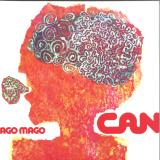
Seit langer Zeit kursierten die Can LPs nur als Bootlegs, jetzt gibt es endlich die offiziellen Vinyl Reissues via Spoon Records! Das in nur drei Monaten aufgenommene Doppelalbum (Gatefold) der Band erschien 1971 und entstand noch auf Schloss Nörvenich. Es gehört zum Weltkulturerbe der jüngeren Musikgeschichte, so wie "Sergeant Pepper" von den Beatles, "Electric Ladyland" von Hendrix oder das Bananenalbum-Debüt von Velvet Underground. Die sieben hier versammelten Titel bestimmen bis heute die DNA der Populärmusik. "Tago Mago" nimmt eine Sonderstellung im Werk der Band Can ein. Sie ist der Mount Everest, die höchste Verdichtung eines schieren Ausdruckswillens, der weder stilistische Kleinkrämerei, noch musikalische Genre-Grenzen akzeptierte und das war, was "nur nach sich selbst klingt, wie nichts zuvor und danach" ("sounds only like itself, like no-one before or after" (Julian Cope, "Krautrocksampler"). Tatsächlich wurde "Tago Mago" gerne als "magische Platte" bezeichnet, eine geheimnisvolle Reise ins düstere Herz einer bis dahin nicht gehörten Musik.
- 1: Vivere Distaccati
- 2: Trasmissione
- 3: Decadente
- 4: Tarantola
- 5: Non Passerò A Trovarti
- 6: Ho Paura
- 7: Chiang Mai
- 8: Nelle Vene
- 9: Lavoro Troppo
- 10: Festa Di Compleanno
Hailing from Raw Culture, Anna Funk Damage returns with his third release on the Roman label, delivering a record as fierce as it is intimate. Tarantola was born out of a winter suspended between contrasting emotions – melancholy, anger, love, confusion – distilled into a sound that transforms personal fragility into collective energy. There’s no pursuit of perfection here, but rather an urgency running through the veins, taking shape across supersonic punk, wave, ambient and industrial.
Each track is an emotional fragment, a bite that leaves its mark: from the electric tension of Vivere Distaccati to the feverish rush of Trasmissione, from the rawness of Decadente to the hypnotic title track Tarantola, which embodies the beating heart of the album. Side B unfolds into more nocturnal and intimate landscapes, from Chiang Mai to the disenchanted sincerity of Lavoro Troppo, closing with a party that carries the bittersweet taste of reality.
Tarantola is a journey into the chaos of human emotions, an album that doesn’t just narrate but pulls you deep into its sonic labyrinth, giving noise back its vulnerable yet powerful soul.
‘Aurelia’ is another atmospheric masterpiece by Boozoo Bajou.
Deep atmospheric soundscapes have always been a part of Boozoo Bajou during their 27 years as producers. Each of their previous five albums had those almost beatless melancholic beauties as part of the musical presentation.
Since this is a key element, Peter Heider and Florian Seyberth aka Boozoo Bajou decided to dedicate a new six-track album, called ‘Aurelia’, to this genre of music which might be called Ambient but is rather a free flow through their musical minds.
Based on a warm analogue mix, there are various instruments giving guidance to this journey, enriching the overall quality of this new output from Boozoo Bajou.
- World Famous
- Bless The M.i.c
- Intermission
- Here’s A Drink
- Off The Books
- Be Proud/Interlude
- Do You Believe
- Finger Smoke
- Stone Crazy
- N*Ggaz Know
- Horny Horns
- Find That
- Supa Supreme
- Thinkin ‘Bout Cash
- Uncivilized
- Give Me Tha Ass
- Strokes
Black Vinyl[28,15 €]
- A1: Hyacinth Threads (2:52)
- A2: Amy Peate (2:05)
- A3: Competition (2:38)
- A4: Dropping Out (2:38)
- A5: Laura's Garden (3:12)
- A6: Lavender Girl (2:18)
- B1: Sing This All Together (2:37)
- B2: Trip On An Orange Bicycle (3:29)
- B3: Jenskadajka (3:30)
- B4: Nicely (2:57)
- B5: Early Pearly Morning (2:56)
- B6: Go With Goldie (2:40)
A psych-pop cult classic tracks.
The Orange Bicycle blends Beatles/Beach Boys‑inspired psychedelic-pop style and sun-drenched melodies.
The Orange Bicycle captures the kaleidoscopic charm of late-’60s British psychedelia. Featuring lush arrangements, sitar-laced textures, and soaring vocal harmonies, this LP is a must for fans of The Beatles, The Beach Boys, The Zombies, Tomorrow, or early Pink Floyd.
- A1: Sixfold Radianz (3 45)
- A2: Boktay (2 10)
- A3: 4D-Tögtägtüu (1 23)
- A4: Exosphear (4 07)
- A5: Maurodius-Papeda (1 11)
- A6: Dondoli (The Npc) (3 20)
- A7: Leftrightba (0 56)
- B1: Lygöphobiä (1 49)
- B2: Flossbite (1 36)
- B3: Chipppps (3 32)
- B4: Dodgedog (2 33)
- B5: Bogeygirl (2 16)
- B6: Laserzimmer 1, Raum 3 16 (1 54)
- B7: Binäry Gatoraders On Acid (2 06)
"I live in the arcades. Reality was never an option!"
The 85-year-old video game queen and film composer pdqb (born on November 14, 1939) delivers a beautiful love letter to your boomer childhood, a wild ride through the golden age of video gaming. Hear how she dodges bullets, jumps over cosmic chasms, beats bosses, reaches bonus stages, uses cheat codes and even her last continue...just to stay in a world of pixels and vectors forever. pdqb will bring you back all those fond memories of unburdened joy that you might have lost while growing up. She could be your savior.
Synaptic Cliffs is filled with otherworldly pride to present these 14 timeless masterpieces to its beloved listeners.
Der düstere Zauber von Ritual Howls sechstem Album ,Ruin" entfaltet sich bereits in den ersten Momenten der ersten Single ,Follow the Sun", wenn der klare Ruf von Paul Bancells hallender Gitarre von Chris Samuels pulsierendem Kick und flirrenden Drum-Programmierung sowie dem knurrenden, verzerrten Bassgroove von Ben Saginaw untermalt wird. Mehr als ein Jahrzehnt nach ihrer Gründung verfeinert das Trio seine nuancierte Mischung aus Industrial, Goth und Post-Punk auf ein neues Niveau vollendeter Fülle, und die Ergebnisse verkörpern mehr denn je die Gegensätze, die sie ausmachen. Mit ,Ruin" kehren Ritual Howls zurück zu ihren düsteren Wurzeln. Mehr als ein Jahrzehnt nach ihrer Gründung verfeinert das Trio weiterhin seine nuancierte Mischung aus Industrial, Goth und Post-Punk zu einer neuen Ebene von alles verzehrender Fülle, und mehr denn je verkörpern die Ergebnisse die Kontraste, für die sie bekannt geworden sind: auf einmal eindringlich düster, aber kinetisch eingängig, intim roh, aber verlockend geheimnisvoll. Seit ihrer Gründung in Detroit hat die Band immer lose Elemente der Old-School-Rave-Kultur in ihre Arbeit einfließen lassen, was zu einer zutiefst physischen Erfahrung ihrer schweren, düsteren, melodischen und akribischen Konstruktionen führt. Nach ihrem letzten Album (Virtue Falters, 2023) zog Bancell nach Los Angeles, und ein Großteil von Ruin entstand über das Internet, gipfelnd in einer Reihe intensiver Aufnahmesessions mit dem langjährigen Toningenieur Adam Cox in Michigan. ,Es begann damit, dass Chris musikalische Ideen präsentierte - Beats, Melodien, Sounds, Riffs - und ein paar fertige Tracks; er und Ben trafen sich zum Jammen, und ich steuerte aus der Ferne einige Gitarrenparts bei ", erzählt er. Von der Entfernung grundlegend unbeeindruckt, funktioniert Ritual Howls als echte kollaborative Einheit, und Ruin ist ein reichhaltiger, unbestreitbarer Beweis dafür, dass sie weiterhin an der Spitze ihrer Kunst stehen.
2025 Repress
Sean McCabe’s impressive Good Vibrations Music is back with its 3rd vinyl instalment and features 4 heavyweight, tried and tested soulful cuts.
Kicking off the 12 Inch is the Black Sonix & Sean McCabe Extended Mix of ‘Rise’ from the Matsiko World Orphan Choir, a moving and heart-felt orphan choir group based in Liberia. The choir is an initiative that aims to provide education and break the cycle of poverty for vulnerable children around the world. With a strong message embedded throughout and given the 5-star production treatment, ‘Rise’ has already been heavily pushed by a wide array of artists including Daniel Steinberg, Red Rack’em and The Shapeshifters.
Next up is Sean’s lush piano-laden remix of ‘Baby Don’t Make Me Wait’, from David Bailey and MissFly. David is a firm favourite amongst the London house music community and regular across labels such as Idris Elba's 7wallace, Makin Moves, Rhemi Music & Unquantize. MissFly is widely renowned for her soulful serenades and ability to write songs 'on the fly' in the studio as well as being found regularly on tour with the likes of Thelma Houston, Andrew Tosh, and The Notorious BIG. Sprinkled with luscious piano undertones and subtle string lines. With support from the likes of Dave Lee and Natasha Diggs.
On the flip is ‘Got It Bad’ from Ellis Aaron & Sean McCabe. Built on a rocksolid foundation of late-night, swing-heavy beats, ‘Got It Bad’ bubbles and froths with creamy Rhodes, lush organ swirls and a bassline that moves and grooves in all the right places. Ellis’ warm and rich soulful vocals are the perfect complement to that unmistakeable sound Sean has become renowned for. Early adopters include Ash Lauryn, Ralf GUM, and Mr V.
Rounding off the EP is Last Nubian’s ‘Dance Together’ which beautifully blurs the lines quite beautiful between Deep House, House and Broken Beat, Josh’s strikingly soulful vocals pair harmoniously with the lush, musical backdrop spear-headed with an abundance of Rhodes, soothing string & synth riffs and a tight, rhythmic drum arrangement that simply refuses to let your feet rest!