Flint, Michigan-based rapped MC Breed and his crew DFC (Da Funk Clan aka Dope Flint Connection) put the Midwest on the map in 1991 with the release of their self-titled debut album, an underrated gem of the early 90s. The lead single, "Ain't No Future in Yo' Frontin'" with a boomin’ west coast sound would get radio play across the country and video rotation on YO! MTV Raps, BET’s Rap City, and Ralph McDaniels' Video Music Box. The album’s second single “Just Kickin’ It” with MC Breed’s laid-back vocal style over a funky groove landed in the top 10 on the Hot Rap Singles Chart. Tracks like “Underground Slang” have an 80s electro vibe and “Better Terms” has Breed rapping a little faster over a Bomb Squad influenced beat with his DJ on the cut. MC Breed would go on to release another 11 albums and collaborated with artists such as 2Pac on "Gotta Get Mine" and Too $hortís "Gettin It” as well as features with Slum Village, Pimp C, Kurupt, Erick Sermon, and The D.O.C. among others. Breed passed away in 2008 from kidney failure, but his legacy lives on having influenced other Midwest artists including Eminem, Proof, D12, Common, and Slum Village. Out of print on vinyl since 2018, Get On Down is bringing back this Midwest 90s classic on limited edition colored vinyl.
Buscar:beat connection
This song, co- written and produced by Jamie Safir (Kylie, Birdy, Will Young) is from the brand-new collection 'Greek Street Friday' released later this year on all formats. With an ace band, which includes drummer Ian Thomas (George Michael, Van Morrison, Celine Dion) and guitarist David Preston (Melody Gardot, Curtis Stigers), this collection will also feature, on a beautiful new take of Rickie Lee Jones' 'Blinded By The Hunt', the world-renowned saxophonist Iain Ballamy (Everything But The Girl, Hermeto Pascoal, Loose Tubes). 'To Be Held' is a lullaby for our times. The title, inspired by a Truman Capote interview, with Dick Cavett, expands into a beautiful tribute to lost friends, the power of connections, imperfections and navigates the strangeness and beauty of being alive 'on this beaten-up planet of ours'.
Ian Shaw is back with force and with 'the quirks and character tics of every day living, . . . brought into euphoric focus Shaw tours his smart and soulful show' (The Guardian)
- A1: Earthen Sea - Gleaming Beach
- A2: John Beltran – Elevate It
- A3: Jeremy Wentworth – Relaxed
- B1: Arthur Robert – Remember Me
- B2: Kmru - In A Distance
- C1: The Album Leaf - Md 10
- C2: Len Faki – Flew Away
- D1: Wata Igarashi – Our Place
- D2: Laraaji – Beloved
- E1: Can Love Be Synth – Marzipan
- E2: Biri - Neverending Celestial Dance
- F1: Exos - Shifting In The East
- F2: Future Beat Alliance – Memory Sketch
- F3: Max Cooper – Contour
A year after its first edition, the Open Space series returns in order to keep exploring what ambient music might mean nowadays.
A breadth of fresh artists, some new to the label and others renowned for their more dance-centric works, the compilation aims to give each individual artist their creative freedom to explore the space.
Techno producers such as Arthur Robert or label head Len Faki himself keep the beats present but this time focus on evoking states of introspection rather than the shuffle of dancefloors.
On the other end of the spectrum, we find seasoned multi-instrumentalist Laraaji, who has been crafting deeply meditative soundscapes since the 80’s. Using the special opportunity, the label reaches outside its usual sphere, inviting artists like the modular synth expert Jeremy Wentorth or Jimmy LaValle’s band project The Album Leaf. All while still featuring some well known veteran producers the likes of John Beltran or Exos.
No matter their respective scene or background, all artists are using their unique approach to display something deeply emotive. Be it the warm, expansive electro of Future Beat Alliance or a bubbly cosmic arpride by Hamburg Duo Can Love Be Synth.
Truly living up to its name, the Open Space series aims to open up possibilities for artists to freely pursue their creativity in a completely undefined area, a space for exploration and connection.
’The Celestial Suite’: a body of work rooted in the unconscious, displaying a deep connection between Pale Jay and his musical guides such as Donny Hathaway, J Dilla and Khruangbin. Pale Jay’s self-produced debut EP ‘The Celestial Suite’ showcases his fragile falsetto floating over dusty beats and serene strings glued together by ageless arrangements.
Long Island Sound follow up their acclaimed debut album and accompanying remix EP with Don’t Let Me / Air a limited white label release featuring 2 brand new dancefloor-certified anthems that signal a new era for the duo in both style and effect, while certifying them as masters of their house domain.
The Dublin-based duo of Rob Roche and Tim Nolan have made impressive strides as Long Island Sound for close to a decade now, honing their swooning dance craft via beloved EPs on their Signs Of Space imprint while becoming mainstays of their island’s club and festival circuit thanks to multiple acclaimed DJ sets.
Last year, they reached an impressive feat that few Irish dance acts have before them by releasing their debut album Lost Connection.
A 7-track opus that fused dynamic electronic sounds with contemporary styles of house, techno, and breaks, it signalled an exhilarating new direction for the duo that showcased their exceptional artistry in melody and production and subsequently earned them great acclaim.
An accompanying 5 track remix EP followed this year, featuring quality club reworks of various album cuts from producers Cromby, James Shinra, Mor Elian, and Benjamin Damage.
Signing off on that notable era, the duo moves swiftly on with this limited 2 track white label of unadulterated festival-ready house epics that have been highlights of their sets over the past year.
Don’t Let Me glides along a chromatic world of lasered synths, pitched diva croons and shuffling pistons before a breathtaking swell of cinematic rave harmonics reaches a magnificent combustible peak that’ll have you gasping for Air.
The flip cracks the window open, dialling down the frenzy with a magnificent swooning melody sits on top of a growling Reese bassline and mechanized 2-step beat where a romantic ambience grows.
Limited stock. First come first served!
DJ Support:
Pete Tong Radio One Support 21.07.2023
Tim Sweeney supports 'Don't Let Me' on his Beats in Space podcast on Apple Music
John Digweed supports 'Air' on his recent Compiled and Mixed podcast for Apple Music
Jenny Greene 2FM Ireland supports 'Don't Let Me'
Long Island Sound Guest Mix on Jenny's 'The Greene Room' on 2fm Ireland
The concept of strict musical genre has arguably been dead for decades, and the latest offering from Danish powerhouses Gustaf Ljunggren and Emil de Waal once again reinforces this notion. Their third collaborative album "Stockholm Kobenhavn", a spacious, cinematic and boundaryless exploration of their shared musical connection is set to release on July 7th on April Records. Emil de Waal has been one of Denmark"s leading drummers for three decades. Gustaf Ljunggren initially studied the saxophone at the Rhythmic Conservatory of Copenhagen, where whispers spread throughout the school that he was the best saxophone player in town and yet never practiced. His career has seen him prove that he can bring grace, musicality and heart to any instrument he touches, from the pedal steel guitar, to the bass, piano, and more. In the words of Danish multi-instrumentalist Kresten Osgood, "Although an instrument may be new to him he is able to play it like he has had a lifetime of experience working with it. Over the years I think the only instrument I haven"t seen him play is the drums." "Stockholm Kobenhavn" has a vast array of influences including Jazz, Americana, Film Music and Electronica. It is full of space, coaxing the listener into a meditative state and inviting them to drift away with their own imagination. The record plays as a series of open-ended sketches or moods, absent of big defining melodies or familiar song-like structures. Each piece evolves over time, providing musical interest in the form of rhythmic ideas, rich harmony, texture, and repetitive melodic patterns from a guitar or rhodes. Imaginative electronic production techniques combine the warm sounds of acoustic instruments with a constantly developing palette of otherworldly textures and effects. Grounded by an unwavering pulse, the combination of programmed beats and acoustic drums provide the hypnotic foundation over which the pair explore and challenge their common musical ground. The album closes with an intimate recording from a performance at STUK in Belgium, with a comforting guitar-led Americana tune bringing the listener back into the room and sharing in the joy the duo have felt in playing together over the past twenty years.
In an era defined by futility, isolation, and precarity, it can be difficult to envision a utopia. But on Skeleten’s thrilling, immersive debut album, Under Utopia, the Sydney musician dares to imagine new ways of being that are not characterized by doom or despair. Across eleven tracks of free-flowing, transcendent, and often euphoric electronic music, Skeleten praises the power of comradery and community; while dreaming of a future that is joyously boundless.
Skeleten, real name Russell Fitzgibbon, has always been fascinated by the ideas of utopias. He’s thought a lot about how the concept has shifted and morphed throughout history, and how the goal post for a utopia is always moving further and further away. “We're more familiar with the idea of a dystopia in the modern world - that's more close to our consciousness. I think on this album I wanted to explore the importance of imaging and embodying a new world.”
Written before and during the pandemic, the album was born out of a desire to connect with others and to shake the mantle of introspection that had been placed on his previous works. From the opening notes of the otherworldly album opener “Generator”, it's clear that this record prioritises immediate pleasures without forgoing intimacy. The lyrics are also more explicit, reaching outward with inviting choruses and mantra-like melodies. “I think the album came out of the experience of feeling this great desire to reconnect and dreaming of the power of community,” says the musician.
This is especially present in lead single ‘Sharing The Fire’, a song that crackles with optimism. A sprawling dance track with pulsating synths and Fitzgibbon’s gentle, warm vocals, the song is about futures that are full of brightness and bliss. As the artist repeats in the song’s chorus: “for all that you know, summer could be around the corner.” The song is about an “almost frustrated desire to connect with more people and feel that sense of community through shared goals.” The accompanying video clip, shot on 35mm, is similarly invested in ideas of companionship and gathering. Shot in a clinical, drab office space, friends and revelers fill the space with warmth and energy.
Elsewhere, this invocation of paradise is infused in the stripped-back, singular title track “Under Utopia”. The song was significant to Fitzgibbon, as it allowed him to gather all his thoughts and ideas about his new music under one message. “It’s something I wrote when I had this collection of songs and wanted to give it a single voice, which was about seeing the world entirely new, full of hope and beauty, and all of us underneath pushing it upwards.”
An antidote for gloom presented in Under Utopia is the transformative power of love. There’s “Heart Full Of Tenderness”, a woozy, languorous love song, awash with cloudy vocals and glistening synths; the truncated beats and hypnotic pleading of “Territory Day” and “Right Here It’s Only Love” which explores the icier and ambient side of R’n’B.
Another hallmark that characterizes Under Utopia is Fitzgibbon’s airy and spacious mix, which gives his songs room to sprawl out and simmer; as well as allowing his calming baritone to come to the fore. This is notable in the contemplative, synth-laden “Colour Room”, the funk-tinged “Walking On Your Name,” the previously released “No Drones in the Afterlife,” and the beloved early single “Mirrored,” which speaks of finding yourself through a connection to those around you.
Fitzgibbon has been enmeshed in the Sydney music scene for years. Skeleten emerged out of a need to experiment and make music without worrying about the outcome. “It was just me making music that felt right, and very much focusing on this kind of meditative aspect of exploring without any goal,” says Fitzgibbon. But as the project has evolved, the artist has gained clarity on what he hopes his music will achieve: bringing people together, and creating an atmosphere of elation. Or as Fitzgibbon puts it on Under Utopia’s hallucinatory album closer “We’re gonna get everything we need in the world.”
After the release of "3.3 magnitude" and the remixes of the single "1.3 HDG" unveiled last February, H3 Records continues its musical exploration between rap and electronic music with a new release, "Music 4 Tesla".
This time, rapper Kaba joins forces with producer Hyas and unveils a slender and festive 6-track track, true to the label's identity.
Hyas started producing music in 2017 and released his first projects completely independently. Today, he has more than twenty releases on labels such as 99CTS and Casa Voyager. The Lyon native, resident of Le Sucre and Rinse FM, has a string of dates and festivals in France and abroad and founded his own label Bardouin Music in 2020.
For his part, Kaba has released three singles this year, including two featuring Karmen (formerly Tortoz) and Samy Ceezy, and a 10-track "Long Story Short", a joint project with the young beatmaker Keno.
The connection between the two artists was very natural: the rapper's ambitions and Hyas' influences complemented each other and led to a first draft of tracks, convincing enough to form the basis of a joint project. With influences from UK Garage, Acid House, Ghetto House and 2step, "Music 4 Tesla" is a high-flying, catchy, danceable, warm and sunny project. Throughout the tracks, Kaba borrows incisive old school flows (like on "4daMob") but also "DMV" (overlap flows where the phrases overlap like on "Original G") and enriches the musical universe of the project, which carries in it this fever of H3 Records' sounds.
Between pervasive house influences and bouncy bass, borrowed from funk sounds, "Music 4 Tesla" depicts throughout its 20 minutes a captivating gradation of festive ambiences, and proves again that the marriage of rap and house is definitely made to last.
For the first release out on Entered Records it's EYA boss and London tastemaker, Jos, stepping up with four cuts of moody spirited machine sounds.
Entered, a label set up with the intention to create connection between the U.K, European and Naarm (Melbourne) scenes through music offerings. First up, the EP is full of spiraling emotive melodies and throbbing bass. This includes the introspective title track ‘Absence Of Thought’ with a refreshingly modern breakbeat rethink from Naarm based artist Dashiell alongside it.
Moving onto the B side you have rumbling 909 toms with dramatic swells of synth tension. Coiled energy in the restless amorphous zone, combining progressive elements of techno, electro, acid and everything in between. The EP closes fusing sci-fi melancholic synths, forward moving beats and a bass-line designed to ignite the dancefloor.
Heads-down, locked in music full of precision and class. A perfect alignment of analog sounds channelled from two sides of the globe. Out in July on Entered Records.
In 1983 there came a sound from the depths of the Brazilian rainforest that was primal, ground-breaking, and completely ahead of its time. The roaring of amplifiers and the beating of drums was the sound of Max and Iggor Cavalera creating their debut cult-classics 'MORBID VISIONS' and 'BESTIAL DEVASTATION', and now it seems that after many years, the Cavalera brothers will be returning to their raw upstarts with a full re-recording of these beloved yet obscure albums.
When 'MORBID VISIONS' and 'BESTIAL DEVASTATION" were first spawned it was done in ramshackle conditions in Belo Horizonte, where the duo grew up. Max and Iggor were 14 and 13 years old during the original recording, and they had all the tenacity and energy of a pack of wild dogs. Only, their sound was not quite refined at that time, their adolescence bled through on those early records. It is well known that Max's guitars were completely out of tune on those sessions, and Iggor's drums often swung around tempos crazily. There's an air of youth and passion that could only be achieved by two teenagers that wanted to shock the world. Four decades later and it is plain to see that they certainly did gather the world's attention.
Despite the production being rough around the edges and the band still carving out their direction, there was a noticeable level of craftsmanship to the song structures and a clear indication that given their desire to thrash like maniacs, these kids from Brazil were going to tear the place up night after night. These albums still hold a dark, mystic and at times eerie quality to them that many have come to love over the years. For some, the music does not have to be delivered with perfect technical precision, the spastic live delivery is something to be cherished, and even with their guitars out of tune, they played like the gates of hell were opening. The crossroads of a shamanistic spiritual summoning at a back-alley metal show in downtown Belo Horizonte.
It is a task of heavy magnitude to try and cross the gap between the accomplished artists that they are today to the scrappy boys that they were when they first wrote these songs, but the duo have executed the performances flawlessly. The perfect bridge between the unbridled energy of the original sessions and the high-quality sound of a 21st century production. It is truly astounding to hear Max once again growl like a monster during "Troops Of Doom" and riff at insane speeds through "War" and "Crucifixion". Iggor's barbaric drumming on "Anti-Christ" is like the galloping hooves of a death-rider. Accompanied by bassist Igor Amadeus Cavalera (HEALING MAGIC, GO AHEAD AND DIE) and lead guitarist Daniel Gonzales (POSSESSED, GRUESOME) the quartet is a force to be reckoned with.
How this re-recording attained such a familiar tenacity is almost a mystery, like some spell that brought these albums back from the grave. Within the first few beats you can hear that the Cavalera’s have lost no momentum, attacking the songs at maximum speed and ferocity. In fact, it seems that the brothers have only empowered their connection through music over the decades. You can feel the spark that those two create, a dynamic sound rich with subtleties and ear-grabbing hooks. As Iggor counts in each song with his drumsticks, and Max's guitar feedbacks loudly as he approaches the microphone, there is palpable apprehension. It is apparent that when these two icons get together to play, they are going to electrify the room with their presence.
Few have had the incredible careers that Max and Iggor have achieved through their music. Even fewer had faith in the young boys that wrote 'MORBID VISIONS' and "BESTIAL DEVASTATION' all those years ago. Yet here they still stand ripping through their earliest works with decades of experience under their belts. For them, it is a breath of fresh air to finally give these songs the desired production that they deserve. They both feel that the fans also deserve a fresh look at these albums, a chance to appreciate them in a completely new light.
From start to finish 'MORBID VISIONS" and "BESTIAL DEVASTATION" are a torrential whirlwind of riffs, beats, and screams. A blast from the past that is sure to take every last listener back to the raucous live shows of the eighties.
Mysterious clouds form above an old cathedral, the summoning of dark magic is upon us, and the troops of doom march forth to announce the arrival of 'CAVALERA'!
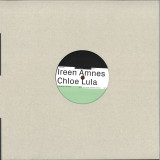
Tresor is proud to present the debut split 12" from Chloe Lula and Ireen Amnes. Meeting in the darker, harder-edged side of the Berlin techno scene in 2019, the pair have regularly collaborated and performed together, but Synergy marks the first time they've shared a record sleeve. Amnes describes Synergy as "the world we built while thinking about our journey as friends and the connection we share as people and artists," and while the record highlights their relationship and shared influences, it also showcases how each has grown into their respective lane.
Amnes' tracks lean into significantly more distorted territory, characterized by a dense fog of grainy pads punctured by sharp, expertly-programmed percussion. On "Our Bodies," these fragments are sculpted into driving hardware gear, replete with distant vocals and acidic squelches, where "Fragments of Desire" makes space for a more somber attitude, descending into murky, psychedelic electro.
In counterpoint to Amnes' deep atmospherics, Lula's contributions are driven by intricate sound design and a focus on dancefloor
impact. Taking cues from Regis and the Birmingham techno sound, she reins in the distortion of 2021's Errant Bodies for aufnahme + wiedergabe in favor of rolling techno and breakbeat-inspired rhythms that nod to her EBM influences. Making use of the extra space, she builds tension through heaving, textured basslines and crescendos of noise, and on EP closer "Event Horizon," she carves through the beat with her own metallic vocals.
Synergy includes a digital bonus track from each artist. Lula's sees her pushing deeper into finely-tooled techno territory, her drums at a swift, driving gallop, surrounded by ominous swaths of reverb. In contrast, Amnes crafts a gritty warehouse trip, sharpening the angles of her drums and detuning her synths until they sound bent and alien. Complete with the EP's physical cuts, these tracks are a testament to how the pair can simultaneously complement and contrast with each other, departing from their shared sonic origins and ending up in wildly dierent destinations.
Take part in the sound of Bogota's eclectic cumbia scene that permeates the ritual sonido of 'Noches de Medialuna', the latest album by Conjunto Medialuna out now on Little Beat More!
Enter the labyrinth that transcends the danceable and psychedelic, guided by the Colombian accordion and ecstatic percussion of their slow-pitched beat. A tribute to the power of guacharaca, and the street parrandas where each song becomes a discovery of new archetypes of what has always been traditional but today makes part of the urban tribes of Latin America and the world.
Collaborations with artists such as N. Hardem, Mismo Perro, Son Rompe Pera, MC Hydro, or the Japanese-Latin connection with percussionist Muupy elevate this musical journey to a universal level that transcends cultural boundaries.
Did you know that if we go back 10 generations, we could count for each of us some 2,046 ancestors, going back 20 generations there would be 2.097.150 ancestors and going back 40 generations each of us would have more than a trillion ancestors, which is more than all the people who have ever lived on earth?
This complicated paradox, known as the Pedigree Collapse, however, leads to the simple conclusion that we all share at least one ancestor with each other.
Inspired by this reflection, "How many ancestors do we have?" is the latest EP by Woxow, sound mixologist and mastermind of Little Beat More, translating the concept into a profound journey in search of the roots of music, to find that ancestral vibration that has resonated in every human being since the dawn of time.
Jazz atmospheres, refined hip hop beats, world music overtones, dub rhythms and reggae reminiscences, all enriched by the dense and meaningful voices of London's Reggae RoastMC Natty Campbell, the eclectic and electric Raashan Ahmad and the legendary rapper and
performance poet Azeem, bringing to light the infinite connections that unite all humanity.
The album is further enriched by the precious remixes of underground legend Koralle, electronic shaman Deela, dub master Paolo Baldini Dubfiles, and gifted hip-hop head Luke Beats, who hybridise Woxow's ancestral vision with their skillful artistry, giving a new dimension to the tracks.
The artwork by visual artist and filmmaker Simone Brillarelli captures the essence of the album in a vibrant bloom of colourful flowers sharing the same soil, and ultimately the same planet, reiterating the message of shared family and unity that is celebrated in the music.
The EP is available both as a gatefold with two 7-inch vinyls and as a single 12-inch vinyl, as well as digital. Join the family now.
Did you know that if we go back 10 generations, we could count for each of us some 2,046 ancestors, going back 20 generations there would be 2.097.150 ancestors and going back 40 generations each of us would have more than a trillion ancestors, which is more than all the people who have ever lived on earth?
This complicated paradox, known as the Pedigree Collapse, however, leads to the simple conclusion that we all share at least one ancestor with each other.
Inspired by this reflection, "How many ancestors do we have?" is the latest EP by Woxow, sound mixologist and mastermind of Little Beat More, translating the concept into a profound journey in search of the roots of music, to find that ancestral vibration that has resonated in every human being since the dawn of time.
Jazz atmospheres, refined hip hop beats, world music overtones, dub rhythms and reggae reminiscences, all enriched by the dense and meaningful voices of London's Reggae RoastMC Natty Campbell, the eclectic and electric Raashan Ahmad and the legendary rapper and
performance poet Azeem, bringing to light the infinite connections that unite all humanity.
The album is further enriched by the precious remixes of underground legend Koralle, electronic shaman Deela, dub master Paolo Baldini Dubfiles, and gifted hip-hop head Luke Beats, who hybridise Woxow's ancestral vision with their skillful artistry, giving a new dimension to the tracks.
The artwork by visual artist and filmmaker Simone Brillarelli captures the essence of the album in a vibrant bloom of colourful flowers sharing the same soil, and ultimately the same planet, reiterating the message of shared family and unity that is celebrated in the music.
The EP is available both as a gatefold with two 7-inch vinyls and as a single 12-inch vinyl, as well as digital. Join the family now.
- A1: Solid As A Rock Feat Natty Campbell
- A2: Blueprint Feat Raashan Ahmad
- A3: Enough Is Enough Feat Azeem
- B1: Blueprint Feat Raashan Ahmad (Koralle Remix)
- B2: Enough Is Enough Feat Azeem (Deela Remix)
- B3: Solid As A Rock Feat Natty Campbell (Paolo Baldini Dubfiles Remix)
- B4: Enough Is Enough Feat Azeem (Luke Beats Remix)
Did you know that if we go back 10 generations, we could count for each of us some 2,046 ancestors, going back 20 generations there would be 2.097.150 ancestors and going back 40 generations each of us would have more than a trillion ancestors, which is more than all the people who have ever lived on earth?
This complicated paradox, known as the Pedigree Collapse, however, leads to the simple conclusion that we all share at least one ancestor with each other.
Inspired by this reflection, "How many ancestors do we have?" is the latest EP by Woxow, sound mixologist and mastermind of Little Beat More, translating the concept into a profound journey in search of the roots of music, to find that ancestral vibration that has resonated in every human being since the dawn of time.
Jazz atmospheres, refined hip hop beats, world music overtones, dub rhythms and reggae reminiscences, all enriched by the dense and meaningful voices of London's Reggae RoastMC Natty Campbell, the eclectic and electric Raashan Ahmad and the legendary rapper and
performance poet Azeem, bringing to light the infinite connections that unite all humanity.
The album is further enriched by the precious remixes of underground legend Koralle, electronic shaman Deela, dub master Paolo Baldini Dubfiles, and gifted hip-hop head Luke Beats, who hybridise Woxow's ancestral vision with their skillful artistry, giving a new dimension to the tracks.
The artwork by visual artist and filmmaker Simone Brillarelli captures the essence of the album in a vibrant bloom of colourful flowers sharing the same soil, and ultimately the same planet, reiterating the message of shared family and unity that is celebrated in the music.
The EP is available both as a gatefold with two 7-inch vinyls and as a single 12-inch vinyl, as well as digital. Join the family now.
Cécille has a long-standing history with Leon dating back to 2009 when he released his second career track. His mesmerizing production 'Rain in Rio' claimed the Nr.1 spot on Beatport in 2009 and earned esteemed recognition from Mixmag as one of the best tracks of the season.
Since then Leon has held prestigious residencies at iconic venues like Marco Carola's Music On Ibiza a residency he has maintained since its inception in 2012. Additionally he has captivated audiences at Cocoricò renowned as the most awarded club in Italy. Leon's talent and presence have left an enduring impact on the global music
scene.
Now, he returns to Cécille with some fabolus new club-cuts, accompanied by a remix from the highly acclaimed Manchester trio, Mason Collective. Known for their deep connection to the city's club culture, Mason Collective has been touring the globe with tremendous success, solidifying their position as one of the most dynamic acts
to emerge from Manchester in recent years turn in their interpretation of ‘Sissy’s Track’, extracting the core groove and soul of the original while stamping their own mark on things via intricately intertwined synth work, a murky bass groove and an overall bumpy house feel.
The Inter-Atlantic duo of George Btp Dan Piu & Roger K. Versey return to your shores to traverse more mystery, adventure, and musical journey with an all new double 12" album.
Passport - Wonderful Elixir. Named for its nutritious flavor and mixture, Wonderful Elixir is crafted for the deep frequency connoisseurs, explorers not constrained to genres, not afraid to vibe with the tides of life, but rather seek the deeper feeling that is true and Indigo Blue. The main ingredients are 10 visions that await inside the fine grooves of two 180 gram disks crafted to capture the moments in the best way; a seamless connection of Air, Land and Seaways that harbor elements of Jazz, Acid, Deep House and Street Beat. From the organic forests to the concrete jungles, From Zurich to St.Louis, your Wonderful Elixir is here. Featuring very special appearances from DJ Nata, Jesus Gonsev, and Grant.
Presented on 2×12" vinyl by the legendary No Acting Vibes label, and on CD and Digital by Deep Inspiration Show. Includes original acrylic paintings by Zara Versey.
Nusantara Beat, the six-piece band hailing from Amsterdam, is quickly becoming a must-see act. With a deep connection to their Indonesian roots and a passion for honoring their cultural heritage, Nusantara Beat brings a fresh and modern take on traditional Indonesian music.
Nusantara Beat creates a unique sound that blends traditional Indonesian songs from the 20th century with their own style and creativity. The result is a mesmerising mix of tropical and mystical sounds that take the audience on a journey to the land of their ancestors.
But Nusantara Beat isn't just about honoring tradition. They also strive to showcase the rich diversity of Indonesian music and take it into the future. With their music, they pay tribute to traditional sounds while bringing their own innovative twists to the mix.
Taavi Suisalu is an Estonian media artist particularly interested into complex and adventurous sounds, field recordings and harsh audio emergencies, organized under the form of symphony or as a result of performative interactions.
In 2014 Suisalu received the Young Estonian Artist Prize as curator of Project of In-existent Villages, an articulate exhibition full of installations and site-specific sound performances. The use of peripheral spaces and the crossovers, sometimes extremely creative, of human interactions, data, sounds and technologies, are recurring in the works of Suisalu, whose subjective perspective unconventionally investigates different social and cultural phenomena. He is always attracted by the different forms of technologies. It can be an old seismograph he reconstructs to record the underground vibrations of a volcano, or, it can be some 3D models he uses to analyze a grain of soil coming from the ancient Pompei. The results of the researches would lead to the installations. The whole set of data is often the premise of a narration, a datafiction, as in the case of the signals recorded from some abandoned satellites, who are later presented with a speed set by the position of other satellites gravitating above the gallery hosting the event.
“Noisephony of Lawn Mowers" was originally composed in 2013, but it was unreleased until now, when Staalplaat, a fundamental label for its unusual experimental connections and for the sound events performed in unconventional spaces, decided to publish it. It's a score for lawnmowers, whose making is given to a conductor and executed by a group of artists. Suisalu reminds us that historically, lawn has been a symbol of power and wealth as it required substantial upkeep and unused land. Today, it still indicates wealth, but is mainly maintained by the owners themselves. This puts us in a schizophrenic situation where we strive to be privileged by taking the role of the servants.
“Silver Meets Ted” is the other track included in the selection. It's a recording of over ten minutes, whose trend cryptically moves on and with some unsettling minimal tolls, always more metallic. Some deaf beats follow, and then we have a splash of water and some slightly hinted neighs, chirps, different spills of liquid, more intense and measured, clackings and vibrations, some hardly identifiable frequencies and again a series of punctuated metal bells. The work by Taavi Suisalu stands out as a calibrated combination of mathematical coherence and elements of surprise, automatized and causal processes, some small oblique utopias, that work well together by improving highly subjective resources and create some slightly unsettling final results.
Tom Zé and Faust collide in Domenico Lancellotti's "machine samba"
Domenico Lancellotti's SRAMBA reaches back to the roots of samba whilst completely revamping its blueprint, indoctrinating guitar and percussion-led rhythms with analogue synthesisers, courtesy of album producer Ricardo Dias Gomes.
The majority of SRAMBA was recorded over two months in The Cave - Domenico's home studio in Lisbon, the city both Brazilian ex-pats reside in, where the arrival of a couple of Russian-designed synths purchased by Ricardo influenced the direction of their initial experimentation: "Ricardo had these instruments, modular machines" remembers Domenico, "and I had my guitar, some percussion instruments. On the first day we started making sounds and recording them, and songs started to appear, sambas started to appear."
The son of a renowned samba songwriter, at home Domenico would watch his father play and compose. At parties, the adults would hand his father a tamborim (a small tambourine) and ask him to play along. "I grew up inside samba, it's my roots", he says. "For me, everything is samba, I bring it into whatever style of music I am making".
Domenico and Ricardo instantly saw how the synthesisers were not at odds with the sambas they were playing, instead they had a similar sound to its typical percussion instruments (ganza, repinique, surdo, tarol). What's more, they saw a connection with roots samba, the samba that existed before bossa nova and samba jazz came along. This was rhythmic samba, with grooves that could go on ad infinitum. "It's samba de clave, geometrically structured" says Domenico. "It's ostinato samba", adds Ricardo.
"Diga" is a great example of what their proposal is capable of, as what begins as a glitchy machine whirring into action soon turns into a glorious samba in which the gurgles and scratchy beats coming from the analogue equipment only add to the arrangement. Likewise, on "Tá Brabo" it's an aching melody from one of the synths that gives the guitar rhythm its needed counterpoint, and shows how the duo's greatest accomplishment is not in invention alone, but in creating a great samba album. It's an album that can go from the opening track "Ere" with its reverberant bass thud, mantra-like vocals and staccato rhythms to the string-accompanied "Nada Sera de Outra Maneira", a swooning samba that pays tribute to the Brazilian ensemble Tamba Trio, who along with Tom Zé's Estudando O Samba, Domenico names as the biggest influence on their treatment of samba.
Other important reference points are made clear on "Um Abraço No Faust". One of three instrumentals on the album its title riffs off a JoãoGilberto song, "Um Abraço no Bonfá", but whereas JoãoGilberto was giving a hug (um abraço) to bossa nova guitarist Luiz Bonfá, Domenico and Ricardo are giving theirs to the German avant-gardists Faust. "Quem Samba", with its horn section and dramatic melody give a whiff of Domenico's Italian ancestry, while "Descomunal" is devoid of rhythm whatsoever, guest vocalist Tori singing over a bed of electronic drums, cello and swirling synths, that highlights the duo's unwillingness to stick to a particular formula.
Both Domenico Lancellotti and Ricardo Dias Gomes are revered names within Brazilian music over the past 20 years. As a member of the +2's, with Moreno Veloso and Kassin, Domenico released a trio of albums on Luaka Bop in the early 00s that pioneered a new Rio samba sound with elements of funk and psychedelia. With Veloso and Kassin he would later form Orquestra Imperial, a big band intent on reviving ballroom (gafieira) samba, and that has worked with guest vocalists such as Seu Jorge, Elza Soares and Ed Motta. SRAMBA is his fourth solo album. Multi-instrumentalist Ricardo Dias Gomes first came to notice as a member of Caetano Veloso's band Cê which helped reinvigorate Caetano's career with a sound influenced by British new wave. As well as collaborations with Lucas Santtana, Negro Leo and Thiago Nassif, and work with his own group Do Amor, he has released a series of acclaimed solo albums that reveal a restless music-maker.
SRAMBA is a glorious showcase of the duo's style, uniting Domenico's playful lyrics and rhythmic, samba-rooted songs with with Ricardo's assured accompaniment of unorthodox textures and instrumentations. It may be a new language for samba, machine samba (samba de máquina), but as Domenico says, "samba da máquina is samba".