Search:beat joe

Styles
All
Willie Bobo - Bobo's Beat LP

The gifted Puerto Rican-American drummer and percussionist Willie Bobo was one of the architects of Latin Jazz. Following mentorship from Machito and Mongo Santamaria, Bobo played with Tito Puente, Cal Tjader, and Herbie Mann, before going solo. Bobo’s Beat is a sure-fire winner from 1962 with excellent support from trumpeter Clark Terry, saxophonist Joe Farrell and keyboardist Frank Anderson, a fully three-dimensional set with fine jazz nuances. It shows that Bobo never accepted less than the best from his counterparts, and there are some bossa nova covers mixed in with the driving Latin originals too. An essential work!

In Stock

On Stock and ready to ship

15,76
Various - JR 003

Various

JR 003

2x12inchJR003
Jugaar Records
27.03.2023

Fresh from DOTT’s “Puppy Luv EP” and Rudoh’s “Vinland In Space EP”, Jugaar Records is back and this time with a full-length, double-pack vinyl, and digital compilation bringing together friends from Asia and Europe. The record is testament to the healthy place the Asian electronic music landscape finds itself in and those intrepid producers who are willing to explore new scenes and sounds. It's energy-crew from the off - with UK beatmaker Joe Koshin’s “Astro Wax”, a techy electro work-out that conjures images of futuristic cityscapes and dense urban mazes. Up next, Pakistan-born and label co-boss Rudoh maintains the electro vibe with cut-up hip-hop vocals sprinkled on top of a pulsating bassline in his “KOF”. His records are being picked up by global tastemakers from Emerald to Roza Terenzi to DJ Masda. Don’t sleep!

Moving to the B-side, German-born, London mainstay Voigtmann shuffles and deals a steppy drum pattern and intricate synth-work, with a bassline drenched in that particular brand of funk to get the party going even at the most ungodly hour. Observatory resident Nic Ford closes this disk with an ambient excursion that summons spiritual rave voices from the deep laid atop a lilting synth loop. It’s typical of his ambient performances which have gained much notoriety in Vietnam of late.

Opening the second record is Egyptian gem Hassan Abou Alam whose recent outings on Naïve and Banoffee Pies have gained him much and well-deserved attention. Here, his “Gloom” combines twinkling IDM modes with heavy sub bass experiments primed to stop the most idiosyncratic dancefloors in their tracks. Up on C2, the Version, 3024 and Phonica Records graduate Yak adds breaks to the equation. His “Disk Full” brings together a haunting gated synth and razor-sharp beat programming to devastating effect. Melbourne based, Salt Mines Records honcho Shedbug concludes this side with his hopeful “A Lil Piece” whose soaring synth line will hit all the right emotional chords at all the right times.

On the final side Bangkokian Chalo reminds us why he is one of the masters of this increasingly fully formed scene. His Depth Charge is a muggy dub-laden, electro jam capable of rattling the weightiest sound systems in some of the most twisted raves at the end of some of the darkest Sois. The record is completed by New Delhi linchpin and Boxout.fm resident Monophonik, whose techno/electro “Tumbi” journeys out of the night into a euphoric sunrise moment that will be setting the dancefloors alight come festival season.

In Stock

On Stock and ready to ship

16,18
JELEE - SOIL LP

Jelee

SOIL LP

12inchWW050 / RSRECS013
WICKED WAX AMSTERDAM
13.03.2023

"‘Soil’ by Amsterdam-based producer and musician Jelee is heavily influenced by video game world-building. Like a beat alchemist, he carefully pours his love for beats into his lifelong passion for video game soundtracks. That far exceeds your typical 8-bits and bobs: Soil unfolds like a challenging adventure game, held together by a sonic palette of hip-hop-minded drum programming, jazz-inspired chords, and synthesized sounds.

The album features tight-knit homegrown collaborations with jazz multi-instrumentalist Guido Hoek, rising deejay Jerrau, producer lofi prototype (“one of Amsterdam’s best-kept secrets when it comes to beatmaking,” says Jelee), deejay, producer, and keyboardist Mo Wrights, and singer Erosi. With influences ranging from Brainfeeder’s roster to Zelda games, Jelee presents a multifaceted take on music.

Jelee’s music has been featured on compilations by Resilienza Records, Stamp The Wax, and Carista’s ‘Modern Intimacy Volume 1.’ Jelee is also known for his expressive live sets, such as the support act for Onra, Samiyam, and Salami Rose Joe Louis."

In Stock

On Stock and ready to ship

20,59
Buckwild - Essential Beats Vol.3

D.I.T.C. member and acclaimed NYC-based production legend, Buckwild returns with the latest installment of his notable instrumental series, Essential Beats (Vol. 3).

Comprised of 14 new tracks, Buck continues to show and prove why he has remained amongst the game’s most accredited hip-hop producers since the early ‘90s, earning him platinum status with credits alongside the likes of Notorious B.I.G., Black Rob, Jay-Z, O.C., Big L, Fat Joe, Diddy, Big Pun and many, many more.

Essential beats (Vol. 3) is limited to just 300 units worldwide, and is out through Buckwild’s Still Diggin Music imprint in partnership with Fat Beats.

In Stock

On Stock and ready to ship

18,07
LTJ XPERIENCE - DEEPENING OF A GROOVE LP 2x12"

Luca LTJ Trevisi (LTJ Xperience) began his dj/producer career in the 80s. As resident dj in two of the most famous Italian clubs of the
time, Kinky in Bologna and Cap Creus in Imola, he was one of the first Italian jocks to spin House and to re-propose those black music,
jazz and latin-bossa classics from the 70s that at the end of the same decade would have given birth to the Acid Jazz and Rare Groove
movements. His first single release in 1988, titled First Job, together with Kekkotronics, was also the first release ever on Bologna
based Irma Records. It was featured in a lot of compilations of the time and entered several playlists, rapidly reaching cult status for
many UK and US djs. During the early 90s LTJ delivered a couple of singles in a kind of pre-breakbeat style: Dont Stop The Sax, released all over Europe, and Funky Superfly. He also produced US singer Tameka Starrs single Going In Circles, always for Irma Records, still a classic in the downtempo/r&b field. In the second half of the nineties Luca began to produce acid jazz bands like Bossa
Nostra, still today one of Irma Records main acts. Their first album had Vicky Anderson as special guest and today is still considered
one of the most important European acid jazz albums. In the following years he concentrated on developing his activity as collector
and rare vinyl merchant, which gave him the chance to get in touch with djs from all over the World and to discover many forgotten
gems from the past years. Thanks to this experience he was able to create two extremely successful rarities series on Irma Records:
Groovy and Suono Libero. In the meanwhile LTJ started to dj outside Italy too, performing in important venues like the Blue Note and
Jazz Café in London, Giant Step in New York and Montreux Jazz Festival in Switzerland. In 1999 saw the release of his first solo
album under the LTJ Xperience moniker. The album was produced with the collaboration of fellow Irma artist and producer Ohm Guru
and had Taka Boom and Jackson Sloan among the guests. Two of the main tracks on the album are brazil house classic Sombre
Guitar and title track Moon Beat, which became a true hit of the Chill Out genre, featured in dozens of important compilations.
After making countless productions for Irma Records, including their second album When The Rain Begins To Fall (with the participation
of the historic Spanish-American singer Joe Bataan), and the recents singles as ORGAN MIND / I LOVE YOU (favorite track by Larry
Heard ) & ON THE FLOOR / SOUND MACHINE, LTJ is devoted almost exclusively to re-edit and reconstruct tracks from the past with
the addition of sounds and rhythms in post production for labels like SUPER VALUE, SMALL WORLD DISCO, HOT GROOVY RECORDS, OH CRISTO! increasing the production of this new musical genre that is currently defined as beatdown/slo-mo, working with
international labels such as Far Out Recordings, Sleazy Beats, Future Classics, E.A.R. Music For Dreams, Apersonal Music, Roam
Recordings, !K7.

The latest three CDs on the Irma label “I Don’t Want This Groove To Ever End” (2012), “Ain’t Nothing But A Groove” (2013), “Don’t Let
The System Get You Down” (2015) and “Beggar Groove” (2017) show the funkiest and grooviest side of LTJ !
In the last years LTJ has literally toured the world, some really important and popular Festivals have booked him for his reknown DJ
Set performances, Scottish Soul Weekender (Dumfries, Scotland), Mareh Festival (Boipeba Island, Brazil), Garden Festival (Tisno,
Croatia), Jazz Refound Festival (Vercelli, Italy)
And visiting Cities like: Tel Aviv, Skopje(Macedonia), Belfast e Derry (Ireland), London, New York, Berlin, Bucarest, Amsterdam, Paris,
Marsille, Barcelona, and Vilnius (Lithuania). just to name a few.
Deepening of a Groove is the new album, the fifth dedicated to the research of sounds Disco Funk from its origins revisited by today's
rhythms and the dancefloor feeling of 2000. For the first time on this album 4 sung songs appear. Bad Side (already released in single
version) and Infiltrator are sung by Anduze, soul singer from Los Angeles also known for his collaboration with Parov Stelar. I'm Gonna
Funk U and Stranger are sung by the Marche singer AdniL for the first time in collaboration with LTJ.

In Stock

On Stock and ready to ship

24,58
Joe T. Vannelli - God Is A DJ LP 2x12"

“God Is A DJ” is the new full-length by Joe T Vannelli, an album the DJ and producer has been working on for years, 13 to be exact, since his latest LP came out. The album features sixteen unreleased tracks and features huge names from all over the musical scene, both italian and international. God Is A DJ is already a cult musical project, that the house music lovers all around the world have been waiting for for years.

The two LPs take the listener through a musical journey mixing different sounds and styles: the first four tracks on Side A lean towards a melodic house sound, the very same genre that JTV took to the top of the game with his “Live On Tour” series of streaming – 62 streamed gigs from different places in Italy, from April 2020 throughout the pandemic. Fifteen million views with a valuable representation of the italian territory.

Amongst the tracks on Side A, the 2022 remix of “Voice In Harmony”, one of JTV's biggest hits, and the long-awaited new version of “Children”, by Robert Miles, which was taken to the top of the charts by the same Joe T Vannelli in 1996.

Side B features collaborative works with some italian producers fresh off the top of international house charts: Moreno Pezzolato for “Doctor House” and “Paradise” remixed by Federico Scavo e Cassimm, licensed worldwide by Happy Music and Kontor Records.

Side C opens with the Angelo Ferreri remix of “Where Is My Man”, #1 on Traxsource, then moves on to two big featured artists: the first one is Saturnino. His bass is perfect, on this 70s funky style piece which echoes the biggest and boldest productions of music history. The second one is the remix of “Paradise” by Mario Biondi, made by JTV
himself who gives the track a soul/funky mood and an international sound inspired by Alicia Myers, who already worked as a muse for “Thank You” by Busta Rhymes. A song like “Sacrifice” by The Weeknd works along the same lines.

Side D, instead, is pure, distilled Vannelli-sound: house music for house music lovers, led by the afro-house beat by Silvano del Gado for “Booma Beat” and followed by the “Harlem” remix by Angelo Ferreri, and “Across The Universe” reinvented by the young producer from Veneto Reboq. The album closes with “Shavasana”, a meditative yoga number inspiring total relaxation.

In Stock

On Stock and ready to ship

25,17
Leo Anibaldi - Noise Generation

Leo was born in 1972 and at the age of 15 discovered his passion for electronic music creating his first loops thanks to his Commodore Vic 20 and 64, spreading his own sound in the city when it was impossible to find in Rome any trace of electronic beats.
Soon after he became a true collector of analogue synthesizers with a serious approach in the study of modular synthesis which led him to develop unique skills as we have recognition of them from his early works for ACV records: Attack Random, Riders Of the Future, Noise Generation, Muta, Cannibald and Aeon are still a milestones for nowadays electronic music aficionados.
1989 marked the birth of The Sound of Rome, when Leo met Lory D in a small garage bringing life to a universal and alternative music movement who diffused Techno Music in Rome and all over Italy, pushing these two wizards behind the decks playing along the like of Dave Clarke, Joey Beltram, Robert Armani and UR among others.
In 1995 Leo decided to cut his relationship with ACV records and moved to Rephlex, Aphex Twin’s record label, starting touring with the Rephlex group after the Void album. Ten years later Leo recorded his first single for a new project: Cannibald Records. Back to Life main target is to focus on house and techno classics reissue, and the mission continue with the official reissue of 1991 Leo's Noise Generation, a true special record that snaps an unforgettable highlight in the rave scene. BTL004 will be available with a special insert, black version and very limited white press to delight every serious vinyl collector.

In Stock

On Stock and ready to ship

11,13
Leo Anibaldi - Noise Generation

Leo was born in 1972 and at the age of 15 discovered his passion for electronic music creating his first loops thanks to his Commodore Vic 20 and 64, spreading his own sound in the city when it was impossible to find in Rome any trace of electronic beats.

Soon after he became a true collector of analogue synthesizers with a serious approach in the study of modular synthesis which led him to develop unique skills as we have recognition of them from his early works for ACV records: Attack Random, Riders Of the Future, Noise Generation, Muta, Cannibald and Aeon are still a milestones for nowadays electronic music aficionados.

1989 marked the birth of The Sound of Rome, when Leo met Lory D in a small garage bringing life to a universal and alternative music movement who diffused Techno Music in Rome and all over Italy, pushing these two wizards behind the decks playing along the like of Dave Clarke, Joey Beltram, Robert Armani and UR among others.
In 1995 Leo decided to cut his relationship with ACV records and moved to Rephlex, Aphex Twin’s record label, starting touring with the Rephlex group after the Void album.

Ten years later Leo recorded his first single for a new project: Cannibald Records. Back to Life main target is to focus on house and techno classics reissue, and the mission continue with the official reissue of 1991 Leo's Noise Generation, a true special record that snaps an unforgettable highlight in the rave scene. BTL004 will be available with a special insert, black version and very limited white press to delight every serious vinyl collector.

In Stock

On Stock and ready to ship

12,19
Soul Jazz Records Presents - Hustle! Reggae Disco: Kingston, London, New York

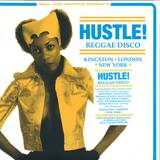
Soul Jazz Records' are releasing their long-out-of-print album 'Hustle! Reggae Disco' in a new expanded 2017 edition which now features five extra tracks. This ground-breaking album features non-stop killer reggae versions of original funk and soul classics in a disco style. Reggae disco updates of seminal classics by Anita Ward ('Ring
My Bell'), Chaka Khan ('I'm Every Woman'), Michael Jackson 'Don't Stop 'til You Get Enough,' Sugarhill Gang ('Rappers Delight' here performed by Derrick Laro and Trinity for producer Joe Gibbs) and more, all showing the hidden but inseparable link between the dance floors of New York, Kingston and London.

New bonus tracks to this collection include Derrick Harriott's funky take on Eddie Drennon's 'Do It Nice and Easy', the classic disco reggae of Risco Connection's take on McFadden and Whitehead's 'Ain't No Stopping Us Now' and the London rare groove lovers rock take on Barbara Acklin's soul classic 'Am I The Same Girl'.
'Hustle! Reggae Disco' has been one of Soul Jazz Records' best-selling releases since its first release 15 years ago (and subsequently featured heavily in the early Grand Theft Auto games!). This new edition comes complete fully re-mastered and with all original titles plus new tracks. This new expanded edition now comes a triple album (+ download code), CD and digital album.

'The effect of American R&B and soul music on Jamaican reggae is well documented, but the story doesn't stop there, for disco (and more so now for rap and hip-hop) have also been subsumed into the reggae mix, and while one might suspect that the resulting hybrid would die of its own implausibility, the feral mix of disco with reggae rhythms is so darn infectious that it hardly matters. Once you take your brain out of the frame and just let your feet go, this collection is a dancer's delight all done up in full-blown disco style, but with huge dub-style rhythm tracks ... if you're looking for an impossibly infectious dance collection, this is
it.' All Music

In Stock

On Stock and ready to ship

36,77
Guilty Razors - Complete Recordings 1977 - 1978

UILTY RAZORS, BONA FIDE PUNKS.


Writings on the topic that go off in all directions, mind-numbing lectures given by academics, and testimonies, most of them heavily doctored, from those who “lived through that era”: so many people today fantasize about the early days of punk in our country… This blessed moment when no one had yet thought of flaunting a ridiculous green mohawk, taking Sid Vicious as a hero, or – even worse – making the so-called alternative scene both festive and boorish. There was no such thing in 1976 or 1977, when it wasn’t easy to get hold of the first 45s by the Pistols or the Clash. Few people were aware of what was happening on the fringes of the fringes at the time. Malcolm McLaren was virtually unknown, and having short hair made you seem strange. Who knew then that rock music, which had taken a very bad turn since the early 1970s, would once again become an essential element of liberation? That, thanks to short and fast songs, it would once again rediscover that primitive, social side that was so hated by older generations? Who knew that, besides a few loners who read the music press (it was even better if they read it in English) and frequented the right record stores? Many of these formed bands, because it was impossible to do otherwise. We quickly went from listening to the Velvet Underground to trying to play the Stooges’ intros. It’s a somewhat collective story, even though there weren’t many people to start it.
The Guilty Razors were among those who took part in this initial upheaval in Paris. They were far from being the worst. They had something special and even released a single that was well above the national average. They also had enough songs to fill an album, the one you’re holding. In everyone’s opinion, they were definitely not among the punk impostors that followed in their wake. They were, at least, genuine and credible.

Guilty Razors, Parisian punk band (1975-1978). To understand something about their somewhat linear but very energetic sound, we might need to talk about the context in which it was born and, more broadly, recall the boredom (a theme that would become capital in punk songs) coupled with the desire to blow everything off, which were the basis for the formation of bands playing a rejuvenated rock music ; about the passion for a few records by the Kinks or the early Who, by the Stooges, by the Velvet mostly, which set you apart from the crowd.
And of course, we should remember this new wave, which was promoted by a few articles in the specialized press and some cutting-edge record stores, coming from New York or London, whose small but powerful influence could be felt in Paris and in a handful of isolated places in the provinces, lulled to sleep by so many appalling things, from Tangerine Dream to President Giscard d’Estaing...
In 1975-76, French music was, as almost always, in a sorry state ; it was still dominated by Johnny Hallyday and Sylvie Vartan. Local rock music was also rather bleak, apart from Bijou and Little Bob who tried to revive this small scene with poorly sound-engineered gigs played to almost no one.
In the working class suburbs at the time, it was mainly hard rock music played to 11 that helped people forget about their gruelling shifts at the factory. Here and there, on the outskirts of major cities, you still could find a few rockers with sideburns wearing black armbands since the death of Gene Vincent, but it wasn’t a proper mass movement, just a source of real danger to anyone they came across who wasn't like them. In August 1976, a festival unlike any other took place in Mont-de-Marsan – the First European Punk Festival as the poster said – with almost as many people on stage as in the audience. Yet, on that day, a quasi historical event happened, when, under the blazing afternoon sun, a band of unknowns called The Damned made an unprecedented noise in the arena, reminiscent of the chaotic Stooges in their early adolescence. They were the first genuine punk band to perform in our country: from then on, anything was possible, almost anything seemed permissible.

It makes sense that the four+1 members of Guilty Razors, who initially amplified acoustic guitars with crappy tape recorder microphones, would adopt punk music (pronounced paink in French) naturally and instinctively, since it combines liberating noise with speed of execution and – crucially – a very healthy sense of rebellion (the protesters of May 1968 proclaimed, and it was even a slogan, that they weren’t against old people, but against what had made them grow old. In the mid-1970s, it seemed normal and obvious that old people should now ALSO be targeted!!!).
At the time, the desire to fight back, and break down authority and apathy, was either red or black, often taking the form of leafleting, tumultuous general assemblies in the schoolyard, and massive or shabby demonstrations, most of the time overflowing with an exciting vitality that sometimes turned into fights with the riot police. Indeed, soon after the end of the Vietnam War and following Pinochet’s coup in Chile, all over France, Trotskyist and anarcho-libertarian fervour was firmly entrenched among parts of the educated youth population, who were equally rebellious and troublemakers whenever they had the chance. It should also be noted that when the single "Anarchy in the UK" was first heard, even though not many of us had access to it, both the title and its explosive sound immediately resonated with some of those troublemakers crying out for ANARCHY!!! Meanwhile, the left-wing majority still equated punks with reckless young neo-Nazis. Of course, the widely circulated photos in the mainstream press of Siouxsie Sioux with her swastikas didn’t necessarily help to win over the theorists of the Great Revolution. It took Joe Strummer to introduce The Clash as an anti-racist, anti-fascist and anti-ignorance band for the rejection of old-school revolutionaries to fade a little.

The Lycée Jean-Baptiste Say at Porte d’Auteuil, despite being located in the very posh and very exclusive 16th arrondissement of Paris, didn’t escape these "committed" upheavals, which doubled as the perfect outlet for the less timid members of this generation.
“Back then, politics were fun,” says Tristam Nada, who studied there and went on to become Guilty Razors’ frontman. “Jean-Baptiste was the leftist high-school in the neighbourhood. When the far right guys from the GUD came down there, the Communist League guys from elsewhere helped us fight them off.”
Anything that could challenge authority was fair game and of course, strikes for just about any reason would lead to increasingly frequent truancy (with a definitive farewell to education that would soon follow). Tristam Nada spent his 10th and 11th unfinished grades with José Perez, who had come from Spain, where his father, a janitor, had been sentenced to death by Franco. “José steered my tastes towards solid acts such as The Who. Like most teenagers, I had previously absorbed just about everything that came my way, from Yes to Led Zeppelin to Genesis. I was exploring… And then one day, he told me that he and his brother Carlos wanted to start a rock band.” The Perez brothers already played guitar. “Of course, they were Spanish!”, jokes their singer. “Then, somewhat reluctantly, José took up the bass and we were soon joined by Jano – who called himself Jano Homicid – who took up the rhythm guitar.” Several drummers would later join this core of not easily intimidated young guys who didn’t let adversity get the better of them.

The first rehearsals of the newly named Guilty Razors took place in the bedroom of a Perez aunt. There, the three rookies tried to cover a few standards, songs that often were an integral part of their lives. During a first, short gig, in front of a bewildered audience of tough old-school rockers, they launched into a clunky version of the Velvet Underground's “Heroin”. Challenge or recklessness? A bit of both, probably… And then, step by step, their limited repertoire expanded as they decided to write their own songs, sung in a not always very accurate or academic English, but who cared about proper grammar or the right vocabulary, since what truly mattered was to make the words sound as good as possible while playing very, very fast music? And spitting out those words in a language that left no doubt as to what it conveyed mattered as well.
Trying their hand a the kind of rock music disliked by most of the neighbourhood, making noise, being fiercely provocative: they still belonged to a tiny clique who, at this very moment, had chosen to impose this difference. And there were very few places in France or elsewhere, where one could witness the first stirrings of something that wasn’t a trend yet, let alone a movement.

In the provinces, in late 1976 or early 1977, there couldn’t be more than thirty record stores that were a bit more discerning than average, where you could hear this new kind of short-haired rock music called “punk”. The old clientele, who previously had no problem coming in to buy the latest McCartney or Aerosmith LP, now felt a little less comfortable there…
In Paris, these enlightened places were quite rare and often located nex to what would become the Forum des Halles, a big shopping mall. Between three aging sex workers, a couple of second-hand clothes shops, sellers of hippie paraphernalia and small fashion designers, the good word was loudly spread in two pioneering places – propagators of what was still only a new underground movement. Historically, the first one was the Open Market, a kind of poorly, but tastefully stocked cave. Speakers blasted out the sound of sixties garage bands from the Nuggets compilation (a crucial reference for José Perez) or the badly dressed English kids of Eddie and the Hot Rods. This black-painted den was opened a few years earlier by Marc Zermati, a character who wasn’t always in a sunny disposition, but always quite radical in his (good) choices and his opinions. He founded the independent label Skydog and was one of the promoters of the Mont-de-Marsan punk festivals. Not far from there was Harry Cover, another store more in tune with the new New York scene, which was amply covered in the house fanzine, Rock News (even though it was in it that the photos of the Sex Pistols were first published in France).
It was a favorite hang-out of the Perez brothers and Tristam Nada, as the latter explained. “It’s at Harry Cover’s that we first heard the Pistols and Clash’s 45s, and after that, we decided to start writing our first songs. If they could do it, so could we!”
The sonic shocks that were “Anarchy in the UK”, “White Riot” or the Buzzcocks’s EP, “Spiral Scratch” – which Guilty Razors' sound is reminiscent of – were soon to be amplified by an unparalleled visual shock. In April 1977, right after the release of their first LP, The Clash performed at the Palais des Glaces in Paris, during a punk night organised by Marc Zermati. For many who were there, it was the gig of a lifetime…
Of course, Guilty Razors and Tristam were in the audience: “That concert was fabulous… We Parisian punks were almost all dressed in black and white, with white shirts, skinny leather ties, bikers jackets or light jackets, etc. The Clash, on the other hand, wore colourful clothes. Well, the next day, at the Gibus, you’d spot everyone who had been at this concert, but they weren’t wearing anything black, they were all wearing colours.”

It makes sense to mention the Gibus club, as Guilty Razors often played there (sometimes in front of a hostile audience). It was also the only place in Paris that regularly scheduled new Parisian or Anglo-Saxon acts, such as Generation X, Siouxsie and the Banshees, the Slits, and Johnny Thunders who would become a kind of messed-up mascot for the venue. A little later, in 1978, the Rose Bonbon – formerly the Nashville – also attracted nightly owls in search of electric thrills… In 1977, the iconic but not necessarily excellent Asphalt Jungle often played at the Gibus, sometimes sharing the bill with Metal Urbain, the only band whose aura would later transcend the French borders (“I saw them as the French Sex Pistols,” said Geoff Travis, head of their British label Rough Trade). Already established in this small scene, Metal Urbain helped the young and restless Guilty Razors who had just arrived. Guitarist for Metal Urbain Hermann Schwartz remembers it: “They were younger than us, we were a bit like their mentors even if it’s too strong a word… At least they were credible. We thought they were good, and they had good songs which reminded of the Buzzcocks that I liked a lot. But at some point, they started hanging out with the Hells Angels. That’s when we stopped following them.”

The break-up was mutual, since, Guilty Razors, for their part, were shocked when they saw a fringe element of the audience at Metal Urbain concerts who repeatedly shouted “Sieg Heil” and gave Nazi salutes. These provocations, even still minor (the bulk of the skinhead crowd would later make their presence felt during concerts), weren’t really to the liking of the Perez brothers, whose anti-fascist convictions were firmly rooted. Some things are non-negotiable.
A few months earlier (in July 1978), Guilty Razors had nevertheless opened very successfully for Metal Urbain at the Bus Palladium, a more traditonally old-school rock night-club. But, as was sometimes the case back then, the night turned into a mass brawl when suburban rockers came to “beat up punks”.

Back then, Parisian nights weren’t always sweet and serene.

So, after opening as best as they could for The Jam (their sound having been ruined by the PA system), our local heroes were – once again – met outside by a horde of greasers out to get them. “Thankfully,” says Tristam, “we were with our roadies, motorless bikers who acted as a protective barrier. We were chased in the neighbouring streets and the whole thing ended in front of a bar, with the owner coming out with a rifle…”
Although Tristam and the Perez brothers narrowly escaped various, potentially bloody, incidents, they weren’t completely innocent of wrongdoing either. They still find amusing their mugging of two strangers in the street for example (“We were broke and we simply wanted to buy tickets for the Heartbreakers concert that night,” says Tristam). It so happened that their victims were two key figures in the rock business at the time: radio presenter Alain Manneval and music publisher Philippe Constantin. They filed a complaint and sought monetary compensation, but somehow the band’s manager, the skilful but very controversial Alexis, managed to get the complaint withdrawn and Guilty Razors ended up signing with Constantin with a substantial advance.

They also signed with Polydor and the label released in 1978 their only three-track 45, featuring “I Don't Wanna be A Rich”, “Hurts and Noises” and “Provocate” (songs that exuded perpetual rebellion and an unquenchable desire for “class” confrontation). It was a very good record, but due to a lack of promotion (radio stations didn’t play French artists singing in English), it didn’t sell very well. Only 800 copies were allegedly sold and the rest of the stock was pulped… Initially, the three tracks were to be included on a LP that never came to be, since they were dropped by Polydor (“Let’s say we sometimes caused a ruckus in their offices!” laughs Tristam.) In order to perfect the long-awaited LP, the band recorded demos of other tracks. There was a cover of Pink Floyd's “Lucifer Sam” from the Syd Barrett era – proof of an enduring love for the sixties’ greats –, “Wake Up” a hangover tale and “Bad Heart” about the Baader-Meinhof gang, whose actions had a profound impact on the era and on a generation seeking extreme dissent... On the album you’re now discovering, you can also hear five previously unreleased tracks recorded a bit later during an extended and freezing stay in Madrid, in a makeshift studio with the invaluable help of a drummer also acting as sound engineer. He was both an enthusiastic old hippie and a proper whizz at sound engineering. Here too, certain influences from the fifties and sixties (Link Wray, the Troggs) are more than obvious in the band’s music.

Shortly after a final stormy and rather barbaric (on the audience’s side) “Punk night” at the Olympia in June 1978, Tristam left the band ; his bandmates continued without him for a short while.

But like most pioneering punk bands of the era, Guilty Razors eventually split up for good after three years (besides once in Spain, they’d only played in Paris). The reason for ceasing business activities were more or less the same for everyone: there were no venues outside one’s small circuit to play this kind of rock music, which was still frightening, unknown, or of little interest to most people. The chances of recording an LP were virtually null, since major labels were only signing unoriginal but reassuring sub-Téléphone clones, and the smaller ones were only interested in progressive rock or French chanson for youth clubs. And what about self-production? No one in our small safety-pinned world had thought about it yet. There wasn’t enough money to embark on that sort of venture anyway.

So yes, the early days of punk in France were truly No Future!

out of Stock

Order now and we will order the item for you at our supplier.

21,43

Last In: 6 days ago
Various - Just Noise

Various

Just Noise

12inchDB050
Deadbeat Records
07.04.2026

London Based Deadbeat is a techno label founded in 2000 as an outlet for the more eclectic, risk taking and aggressive elements of the genre. Dedicated to unveiling forward thinking new talent, championing cult underground producers and celebrating established global acts the label has created a loyal fan base and now after more than two decades presents its first vinyl release, a massive six track EP that covers a lot of creative ground and features three artists well known for pushing boundaries while delivering face melting, dancefloor destroying beats.

Sane ( Don't Recordings / Fun In The Murky ) is a Uk based producer and techno DJ who has featured multiple times on the 'Best electronic music on bandcamp' pages. Described there by music journalist Joe Muggs as 'Filthy, dirty, vile and brilliant. His techno will tear the top off your head and make soup with the contents. It screeches, it blurts, it whistles, and it roars. Above all, it crashes and clangs like a dancing mech warrior, crushing all before it. What more do you need to know?'

TSR ( Analog Records / Hörspielmusik ) are a highly regarded creative force of Swedish musical mentalists, a crazed, technologically berserk band of electronic wizards who relentlessly conjure up the most brilliant, silliest, toughest, most dance bootable funky techno on this train of existence. Known for high-energy, raw, and sometimes humorous tracks they have released to high acclaim on many notable labels and played all over the world.

DJ Ze MigL ( Djax-Up-Beats / Minimalistix ) is first and foremost a DJ, but also a producer & a Dude! Creating crazy, funky and sometimes brutal techno mayhem. Residentially from Portugal, he’s been the one of most prolific Portuguese techno producer/ DJ during the last 25 years. Producing and Spinning his own special brand of honkin’ techno, not changing a single cowbell. Never too serious or dark, always with proper party ON!

The record additionally features full sleeve artwork by Ed Twist ( of the influential 'Ugly Funk' label ) and is pressed on yellow vinyl.

stock from17.04.2026

17,86

Last In: 9 days ago
JOE WESTERLUND - CURIOSITIES FROM THE SHIFT
  • A1: Nu Male Uno
  • A2: Peebles 'N' Stones
  • A3: Tem
  • A4: Fone
  • A5: Can Tangle
  • B1: Persurverance
  • B2: Furahai
  • B3: Ecstatic Guataca
  • B4: A Trance Delay
  • C1: Midpoint
  • C2: Elegy (For Olaibi)
  • C3: Felt Like Floating

In den letzten fünf Jahren hat sich Joe Westerlund intensiv mit der Clave beschäftigt, dem metrischen Muster, das zunächst die afro-kubanische und lateinamerikanische Musik geprägt hat und dann in fast alle Bereiche des Jazz und Rock Einzug gehalten hat. Was bedeutete es, dass eine Idee so flexibel war, dass sie so viele Formen annehmen konnte und dabei doch ihre eigene Essenz behielt? Das Ergebnis ist für Westerlund ein Sprung ins Unbekannte: Curiosities from the Shift, ein 12-Track-Spielplatz mit endlos verwobenen Beats und Melodien, auf dem Westerlunds Begeisterung für die Clave auf seinen experimentellen Umgang mit Texturen trifft und seine rhythmische Symphonie mit Freunden Hand in Hand geht, die diesen Raum gemeinsam mit ihm gestalten. Die dreiteilige Suite, die die erste Hälfte von Curiosities ausmacht, beginnt mit den Schrottplatz-Percussions und den entzückenden Bass-Splashes, die ,Tem" umrahmen, und endet mit dem surrealistischen Boom-Bap von Daumenklavieren und Shakers auf ,Can Tangle". Diese Stücke strahlen eine hart erkämpfte Freude aus, als würde Westerlund sich in Echtzeit daran erfreuen, eine potenzielle Sackgasse zu entdecken, aber trotzdem seinen eigenen Weg nach vorne zu finden. Diese Songs wurden zu einer Art Arbeitsplan für das Terrain, das Westerlund auf Curiosities erkundet, vom glorreichen Call-and-Response-Opener ,Nu Male Uno" bis zum unheimlich amorphen Schlussstück ,Felt Like Floating". Alle diese Songs zeichnen sich durch einen erkennbaren Rhythmus aus, wie den galoppierenden Gang in der Mitte von ,Midpoint" und den kopfnickenden Puls, der sich durch ,Persurverance" schlängelt, dessen Name augenzwinkernd falsch geschrieben ist, um seiner Aussprache aus North Carolina via Wisconsin zu entsprechen. Aber das sind nur Sprungbretter für andere Texturen, Stimmungen und Ideen, wie die New-Age-Anklänge - schimmernde Metallophone, zwitschernde Vögel, zurückhaltende Flöten -, die ,Midpoint" durchziehen, oder die Dub-artigen Delays und Gamelan-Hymnen, die ,Persurverance" durchziehen. Dies ist zutiefst vielschichtige Musik, deren treibender Kern durch eine Reihe überraschender Entscheidungen ausgeglichen wird. Bittersüße und Freude, Trauer und Befreiung, Seufzer und Lächeln: All das ist hier vorhanden und verflechten sich bis ins Unendliche. In den Monaten nach den ersten Sessions wandte sich Westerlund an Freunde - darunter Tim Rutilli von Califone, den Saxophonisten Sam Gendel, den Trompeter Trever Hagen und die Violinisten Libby Rodenbough und Chris Jusell. Es waren seine am gründlichsten komponierten und präzisesten Werke, aber er wollte hören, was passierte, wenn seine Freunde in Echtzeit darauf reagierten. Sie lieferten Anmut, Tiefe und Gefühl, wobei ihre Parts den Vorhang zu verborgenen Winkeln rhythmischer Welten öffneten. Westerlund gibt bereitwillig zu, dass er von der Betonung des Grooves und des Metrums des Albums überrascht ist, die sich von abstrakten Klängen abhebt. Nachdem er so lange mit Bands gelebt und gearbeitet hatte, ging er davon aus, dass er mit grundlegenden Metren fertig war. Diese 12 Songs verschmelzen so viele von Westerlunds Leidenschaften zu endlos faszinierenden Stücken, die mit vertrauten Elementen seine Abenteuer ins Unbekannte übertragen. Verspielt, aber zart, wehmütig, aber wundersam, von Beats angetrieben, aber nicht an sie gebunden - dies ist Westerlunds bisheriges Vermächtnis, das Soloalbum, das einen Blick auf eine musikalische und emotionale Landschaft eröffnet, die vielleicht sogar noch reichhaltiger ist, als er es sich jemals hätte vorstellen können.

out of Stock

Order now and we will order the item for you at our supplier.

32,35

Last In: 15 days ago
The Tornados - No More You And Me/ You Always Did What You Wanted (7")

In Joe Meek's last months, he produced some of his best, hard-edged mod and proto-psychedelic records - like this one. But still he clung on to the name of the Tornados, like a touchstone, reminding him of his greatest success with the 1962 hit single ‘Telstar’.

This Tornados in 1966 was very different to the original line-up, based around an entirely different group called the Saxons, and had an entirely different sound. ‘No More You And Me’ has blistering guitar lines, and an intense soulful vocal; it's a British popsike monster that drives along like the Eyes or Wimple Winch. On the flip, ‘You Always Did What You Wanted’ is British blue-eyed soul, a terrific beat ballad with hypnotic swirling piano.

Both point to directions Meek could have headed in had he lived, and are A-grade 60s beat. It's the first time on vinyl for both tracks. And it's another brace of dancefloor-friendly tracks from Bob Stanley's Measured Mile label.

out of Stock

Order now and we will order the item for you at our supplier.

13,66

Last In: 16 days ago
Carnivore A.D. - Transmutation

Carnivore A.D.

Transmutation

12inch426239083198
Apostasy Records
27.03.2026
  • 1: Prologue
  • 2: Transmutation
  • 3: I Stand Alone
  • 4: Social Decomposition
  • 5: Mine Is The Hand

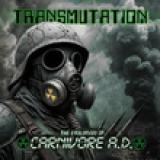
The Evolution Has Begun. Dedicated with love and honor to the memories of Peter Steele and Keith Alexander, Carnivore A.D. emerged as a post armageddon neo barbaric soundscape - a relentless force keeping the primal energy of Carnivore alive on stages and festivals around the world. Formed by NYC Hardcore and Metal veterans Baron Misuraca (vocals & bass – ex-SHEER TERROR), Chuck Lenihan (guitar – ex-CRUMBSUCKERS), and Joe Cangelosi (drums – ex-KREATOR, WHIPLASH, MASSACRE). Co-founded with full endorsement by original drummer Louie Beateaux, Carnivore A.D. has honored its roots by performing the explosive and brilliant works of Peter Steele with intensity, respect and raw power. But now, with the release of their first-ever studio EP "Transmutation", Carnivore A.D. transcends tribute.

They have challenged themselves to write new material - not to replace the original legacy, but to continue its spirit through their own lens. While the legacy of Carnivore remains sacred, Carnivore A.D. has become something more than its origin - a band with its own scars, its own instincts, and now, its own songs. “Think of Carnivore AD as a renowned dining establishment where it’s Chef passed on years ago but the recipes remain and folks still want to dine there instead of cooking the food themselves. And Chef Pete wouldn’t mind because his friends are making it with love.”- Louie Beateaux.

pre-order now27.03.2026

expected to be published on 27.03.2026

20,59
Demetrio Castellucci & Massimo Pupillo - Sleep Technique LP
  • 1: Skull Chamber
  • 2: The Venus And The Sorcerer
  • 3: Panel Of The Lions
  • 4: Hillaire Chamber
  • 5: Candle Gallery
  • 6: Chamber Of The Bear Hollows (North)
  • 7: Chamber Of The Bear Hollows (South) & Brunel Chamber
  • 8: Entrance Chamber

Demetrio Castellucci and Massimo Pupillo present the music of Sleep Technique, a performance by Dewey Dell inspired by the Chauvet cave and its ancient cave paintings.
The music comes to life anew on record, an immersion into the depths of sonic particles, moist electroacoustic rhythms, the repeated forms of speleothems, and the electric bass that scrapes the walls, shaping them into concave or convex surfaces. A voice that moves incredibly slowly, yet is in constant motion, like the millennia-old, unceasing erosion of water.
The album’s journey follows the geography of the cave in reverse, moving from its deepest chamber back to the entrance.

Demetrio Castellucci is a composer and sound designer who has been involved in theater productions, choreography, and film since 2004. Around the same time, he began performing as a DJ, favoring an omnitemporal approach geared toward dance that transcends musical genres. Since 2006, he has been a member of the dance company Dewey Dell, and since 2007, he has been active as Black Fanfare, a maximalist electroacoustic project. He has collaborated on performances by Andreco and Enrico Ticconi/Ginevra Panzetti, as well as on films by Ahmed Ben Nessib, Beatrice Pucci, and Ilaria di Carlo. After living in London and Berlin, he settled in Vilnius, where in 2018 he founded Unarcheology, a digital platform that publishes music and radio programs. He is also active as Airport Gad, an ambient project which, together with Unarcheology, launched its own “Airline Company”: concerts in a flight simulator built from cardboard, where the pilots are also the musicians.

Massimo Pupillo is best known as a founding member of the band Zu, with whom he has released 18 albums and performed over 2,000 live shows worldwide. He has maintained a highly open and multidisciplinary approach that has led him to work with some of the most acclaimed figures in the contemporary art world: South African photographer Roger Ballen, actors Malcolm McDowell and Marton Csokas, Romeo Castellucci and Chiara Guidi of Societas Raffaello Sanzio, American choreographer Meg Stuart, poet Anne Waldman, and Italian poet Gabriele Tinti, among others. He has collaborated live and in the studio with avant-garde musicians and composers such as Alvin Curran, piano duo Katia & Marielle Labèque, and classical virtuosos like Viktoria Mullova and Giovanni Sollima. He has also worked with some of the most influential names in the international rock scene, including Mike Patton, Thurston Moore, Jim O’Rourke (Sonic Youth), Guy Picciotto & Joe Lally (Fugazi), Buzz Osborne (Melvins), and Damo Suzuki (CAN).

In the field of improvised music, he has collaborated with Peter Brötzmann, Toshinori Kondo, Mats Gustafsson, Ken Vandermark, and Tony Buck, among others. Within the experimental music scene, his collaborations include Oren Ambarchi, David Tibet (Current 93), Thighpaulsandra (Coil), Stephen O’Malley (Sunn O))), Abul Mogard, Mick Harris (Scorn), Gordon Sharp (This Mortal Coil), FM Einheit (Einstürzende Neubauten), and many more. In cinema, he composed the score for Kirill Serebrennikov’s film LIMONOV, presented at Festival de Cannes in 2024.

pre-order now13.03.2026

expected to be published on 13.03.2026

25,17
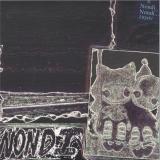
Nondi - Nondi_ LP

Nondi

Nondi_ LP

12inchZIQ481
Planet Mu Records
04.03.2026

Following her acclaimed 2023 release Flood City Trax, a dreamy, lo-fi take on footwork inspired by the crumbling rust-belt city she calls home, Nondi returns to Planet Mu with her second self-titled album, Nondi…While Nondi… retains some of the hazy, nostalgic atmosphere of Flood City Trax, it pushes her sound in bold new directions. “I made this album to capture the sense of freedom I used to get from music when I was first discovering it all,” Nondi says. “It’s meant to be cute, fun, kinda weird and emotional — but most of all, it’s a presentation of some of the prettiest tracks I’ve made.” Though she hasn’t really experienced club culture where she lives, her impressionistic productions evoke the surreal, lingering sounds of a night out — the melodic haze that hums in your ears as you drift off to sleep. Lo-fi and melodic, yet fluid and free, her music carries a sense of flight and intuitive logic. Nondi’s influences range widely — Actress, Aphex Twin, footwork, and the stranger edges of dub techno are all felt, yet she hallucinates them through her own weathered, dreamlike lens. Her tracks often build from clashing loops that evolve and transform organically, or from familiar genre elements reshaped by her instinct for misty, heart-wrenching melody. Some moments stay closer to genre, like Broken Future 175, a drum-and-bass tear-out that dissolves into lush, blurred chords, or Just Hanging Out, a bruised and beautiful take on 2-step. Lead single Tree Festival feels like a blown-out fusion of rave energy and sped-up new-age bliss, while Death Juke drifts through off-beat vocal samples, pulsing drums and 8-bit FX, reminiscent of early Steve Reich reimagined through a Game Boy. Nondi… is a uniquely moving and exploratory album that expands her sonic world even further. Lo-fi yet luminous, playful yet profound.

out of Stock

Order now and we will order the item for you at our supplier.

23,32

Last In: 29 days ago
Communards - Red (35th Anniversary Edition) 2x12"

Red Vinyl

The Communards’ sophomore album ‘Red’ consolidated the genius of the musical partnership between Bronski Beat singer Jimmy Somerville and pianist Richard Coles. Fusing synths and hi-NRG production with lush string and horn arrangements, The Communards straddled pop and the political, the album’s themes set against the political unrest and moral panic of late 80s Britain. A global smash upon its release, this remastered and expanded 35Th Anniversary Edition features an extensive array of B-sides, live tracks, demo versions and remixes, including classic mixes by legendary 80s club doyens Shep Pettibone, Clivilles & Cole (better known as C&C Music Factory) and a euphoric new 2022 remix of ‘Never Can Say Goodbye’ by UK outfit The 2 Bears (Hot Chip’s Joe Goddard and DJ Raf Rundell). Available on Deluxe Double CD , Collector White & Red Double Vinyl , Black Vinyl. All editions remastered , with new sleeve notes.

out of Stock

Order now and we will order the item for you at our supplier.

40,97

Last In: 51 days ago
George Harrison - Wonderwall Music

Als direkte Folge des großen Interesses der Beatles an experimenteller Musik und anderen avantgardistischen
Kunstformen gründete Apple Records im Februar 1969 das kurzlebige Tochterlabel Zapple. Es sollte ein Forum für ungezügelte Klangexperimente bieten, oder, wie es damals hieß, für „noch abgefahrenere Sounds“.
Georges „Electronic Sound“ und John Lennons und Yoko Onos „Unfinished Music No. 2: Life With the
Lions“, beide im Mai 1969 erschienen, waren Zapples einzige Veröffentlichungen vor der Schließung des
Labels. Das von George gemalte Cover von „Electronic Sound“ zeigt seinen Moog IIIp (der später von den
Beatles auf vier Stücken ihres Albums „Abbey Road“ verwendet wurde) mit den vier Modulen, aus denen
der Klang synthetisiert wurde. Jede Seite der LP „Electronic Sound“ enthielt ein experimentelles, längeres
Werk.
George Harrisons „Wonderwall Music“, erschienen im November 1968, war das erste Soloalbum eines
Beatles-Mitglieds und die erste LP, die von Apple Records veröffentlicht wurde. Der Soundtrack zu Joe
Massots Spielfilmdebüt „Wonderwall“ ist ein überwiegend instrumentales Album, das einen komplexen und
lebendigen Klangteppich aus westlicher Rockmusik und Kompositionen im Stil der indischen Klassik bildet.
1992 erinnerte sich George: „Ich entschied mich für eine Art Mini-Anthologie indischer Musik, weil ich die
Öffentlichkeit für indische Musik begeistern wollte.“

pre-order now20.02.2026

expected to be published on 20.02.2026

35,08
George Harrison - Electric Sound

Als direkte Folge des großen Interesses der Beatles an experimenteller Musik und anderen avantgardistischen
Kunstformen gründete Apple Records im Februar 1969 das kurzlebige Tochterlabel Zapple. Es sollte ein Forum für ungezügelte Klangexperimente bieten, oder, wie es damals hieß, für „noch abgefahrenere Sounds“.
Georges „Electronic Sound“ und John Lennons und Yoko Onos „Unfinished Music No. 2: Life With the
Lions“, beide im Mai 1969 erschienen, waren Zapples einzige Veröffentlichungen vor der Schließung des
Labels. Das von George gemalte Cover von „Electronic Sound“ zeigt seinen Moog IIIp (der später von den
Beatles auf vier Stücken ihres Albums „Abbey Road“ verwendet wurde) mit den vier Modulen, aus denen
der Klang synthetisiert wurde. Jede Seite der LP „Electronic Sound“ enthielt ein experimentelles, längeres
Werk.
George Harrisons „Wonderwall Music“, erschienen im November 1968, war das erste Soloalbum eines
Beatles-Mitglieds und die erste LP, die von Apple Records veröffentlicht wurde. Der Soundtrack zu Joe
Massots Spielfilmdebüt „Wonderwall“ ist ein überwiegend instrumentales Album, das einen komplexen und
lebendigen Klangteppich aus westlicher Rockmusik und Kompositionen im Stil der indischen Klassik bildet.
1992 erinnerte sich George: „Ich entschied mich für eine Art Mini-Anthologie indischer Musik, weil ich die
Öffentlichkeit für indische Musik begeistern wollte.“

pre-order now20.02.2026

expected to be published on 20.02.2026

35,08
Items per Page:
N/ABPM
Vinyl