Building up a head of steam, Ace Vision returns on the heels of his Raising Awareness EP.
For Shaped Mind, the Italian artist is exploring new musical avenues. While his musical essence, glow and style remain, a darker dancefloor palette is employed on the release. Polyrhythmic patterns race in the sample strewn “Second Phase”, rumbling waves and warehouse echoes tempered by swirling stabs. A bouncy liquid groove ushers in “Nu să Chan”, rasping beats shrouded in smoky bass while bars bend around an assortment of textures and tones. “Katana Cut (Trance Mix)” conjures up images of dancing bodies waiting for the dawn. Melodies circle percussive layers, meandering undercurrents of acid bubbling beneath shimmering synthlines. The finale comes with “Mixage Électronique.” Steady kicks and crisp cymbals give way to juddering chords, clean keys and snare rolls countering to a close.
Suche:beat per bar
Joel Sarakula's new album "Soft Focus" is a mid-career album spanning his many influences and genres including Soft-Rock, Funk and Indie Pop, all brought under the umbrella of his gentle gaze and a 'soft' aesthetic. "Soft Focus" is also the name of a photographic technique born out of a spherical abberation of the lens where the image is a bit blurry and undefined: it's both flattering and forgiving on the subject. It's an apt title. As a lifetime wearer of (vintage) glasses, Sarakula knows a lot about spherical abberations. Perhaps he produced these songs with his glasses off as these are abstract and warm vignettes, never overstaying their welcome and for this reason Sarakula manages to feature twelve new tracks on "Soft Focus".
Highlights include one of the two Shawn Lee produced tracks "I'll Get By Without You", the rockier, iberic beat of "King Of Spain", the soulful affirmation of "Back For Your Love" and the psychedelic-tinged "Bird Of Paradise" and "Microdosing". This is a lovingly crafted album, well polished and it feels like the culmination of Sarakula's adventures in soulful soft-rock and his defining statement in the genre. While comparisons will be made with contemporary projects like Shawn Lee's Young Gun Silver Fox, Drugdealer, Benny Sings and Prep, echoes of soft-rock icons Ned Doheny, Boz Scaggs, Todd Rundgren and Michael Franks also ripple gently through the album.
Imagine if Ray Manzarek was the frontman for the Bee Gees... It's a neat visual introduction to Joel Sarakula, a UK-based Australian artist who writes, produces and sings Soulful Pop, gazing out at a contemporary world through vintage glasses, vintage threads and long blond hair. His music is informed by a rich, 1970s-inspired palette, drawing on soft-rock, funk and disco influences: sunny, uptempo jams for darker times. Self-aware that he looks and occasionally sounds like the love child of Ray Manzarek and the Gibb brothers, his self-deprecating sense of humour is always there just below the fringe.
Born in Sydney, based in UK and international in outlook Sarakula is a songwriter who has travelled the world in search of his muse, experiencing everything from being a victim of Caribbean carjackings to performing in the remote fishing villages of Norway before finally establishing his career in the UK and Europe. Since then he has released albums such as "Island Time" (2023), "Companionship" (2020), "Love Club" (2018) and "The Imposter" (2015) that have racked up plays on rotation across national UK and European radio and got him noticed in The New York Times, The Independent (UK), The Irish Times, Rolling Stone Germany, El Pais (Spain) and Sydney Morning Herald. It's- been a long road finding his current cult status starting out at the piano from a young age in suburban Sydney, writing and singing songs by the time he was a teenager and onstage by fifteen years old playing jazz standards in his local golf club. "I came from humble beginnings, it's best not to mention" as he sings in his 70s boogie influenced song "I'm Still Winning". Joel Sarakula is a fixture on the festival and club circuit having previously performed at SXSW, Primavera Sound and Glastonbury festivals. Ever the internationalist, he tours with pickup bands sourced from each territory he plays in: a Barcelona band for Spain, a Berlin band for Germany and so forth. This cross-cultural exchange is another echo of the 1970s when world travelling soul and pop artists from the US did the same and guarantees that his live shows remain fresh, exciting and absolutely contemporary.
"Marombo" is a new track written, arranged and produced by Gerardo Frisina, that anticipates his forthcoming album scheduled for 2020.
Seeing the participation of Gerardo's longtime collaborators Ernesto Lopez on drums and percussion and Alfonso Deidda on baritone saxophone, "Marombo" is another a solid step into the future to explore new music territories: a great mixture of nu-latin and electronic beats with Afro-Cuban rhythm into a massive dancefloor groove!
- Enfer - La Découverte De L'ombre
- Enfer - Les Portes (1E Contrainte) I - La Bête
- Enfer - Les Portes Ii - Le Chemin Difficile
- Enfer - Les Portes Iii - Les Portes De L'enfer
- Enfer - Les Portes Iv - L'étendard Humain
- Enfer - Les Portes V - Passage De L'achéron
- Enfer - L'impouvoir (2E Contrainte) I - Béatrice
- Enfer - L'impouvoir Ii - Désir Sans Espérance
- Enfer - L'impouvoir Iii - Les Châteaux
- Enfer - L'impouvoir Iv - L'ouragan Infernal
- Enfer - Mal-Mort (3E Contrainte) I - Mal-Mort
- Enfer - Mal-Mort Ii - Le Messager Céleste
- Enfer - Les Monstres (4E Contrainte) I - Femmes De Griffe
- Enfer - Les Monstres Ii - Hommes De Ronces
- Enfer - Les Monstres Iii - Métamorphoses
- Enfer - Les Monstres Iv - Cerbères
- Enfer - Les Abysses (5E Contrainte) I - Les Abysses
- Enfer - Les Abysses Ii - Le Styx
- Enfer - Les Abysses Iii - Le Rêve Du Rêve
- Enfer - Fond De Bleu (6E Contrainte) I - Le Phénix
- Enfer - Fond De Bleu Ii - Fond De Bleu
- Enfer - Le Noud Ardent (7E Contrainte) I - Bataille Des Dragons
- Enfer - Le Noud Ardent Ii - Le Noud Ardent
- Enfer - Le Crépuscule De L'aube
- Purgatoire - Danse Des Chiffres
- Purgatoire - Chiffre 1 L'ange De Dieu - Le Roseau
- Purgatoire - Chiffre 1 - Ils
- Purgatoire - Chiffre 1 - La Barque
- Purgatoire - Chiffre 1 - Danse Du Tremblement Initial
- Purgatoire - Chiffre 2 La Vallée Des Princes - Polyphonie 1
- Purgatoire - Chiffre 2 - Polyphonie 2
- Purgatoire - Chiffre 2 - Longue Attente
- Purgatoire - Chiffre 2 - Rêve De L'aigle
- Purgatoire - Chiffre 3 La Porte Ou Deuxième Ange
- Purgatoire - Chiffre 4 Les Sculptures - Épreuve De L'orgueil
- Purgatoire - Chiffre 4 - Ô Notre Père
- Purgatoire - Chiffre 5 Extase - Polyphonie 3
- Purgatoire - Chiffre 6 L'ange-Feu - Danse En Six Parties
- Purgatoire - Chiffre 7 Épreuve Des Flammes - Fusion
- Purgatoire - Chiffre 7 - Maître De Toi-Même
- Purgatoire - Chiffre 8 Paradis Terrestre - Béatrice -Danse Des Trois Dames
- Purgatoire - Chiffre 8 - La Forêt
- Purgatoire - Chiffre 8 - Béatrice
- Purgatoire - Chiffre 9 Transparence - Le Repentir
- Purgatoire - Chiffre 9 - La Vérité Révélée
- Purgatoire - Chiffre 10 Figure Supérieure Paradis
Erste Gesamtausgabe als Deluxeausgabe: 4xLPs in einem geprägten Gatefold-Cover, gestaltet von Stephen O'Malley, mit einem 30 x 90 cm großen Poster. "Divine Comedie" ist ein Opus Magnum, geschaffen von zwei der führenden Komponisten ihrer Zeit, mit einem musikalischen Anspruch, der Dantes Gedicht und seiner visuellen Interpretation durch Sandro Botticelli oder Gustave Doré gleicht. Lange Zeit wurde dieses Triptychon als ein zweiseitiges Werk präsentiert, in dem Bernard Parmegianis Hölle und François Bayles Fegefeuer aufeinander reagierten und sich gegenseitig erweiterten. Michel Hermons Stimme führt durch die Vorstellungskraft des Zuhörers. Erstmals wird "Paradise", ein gemischtes Stück, das gemeinsam komponiert und live aufgeführt wurde, auf Tonträger veröffentlicht. Tatsächlich wird "Paradise" fünfzig Jahre nach seiner Uraufführung für unsere Ohren enthüllt und wertet damit die erste Gesamtausgabe von "Divine Comedie" auf. - François J. Bonnet, Paris, 2023
"Turmion Kätilöt, the Finnish-singing industrial and electronic metal band hailing from the barren wastelands of Savo, is rapidly becoming a new favorite among open-minded metal fans in the mid-2020s. The odds of their rise to prominence are nothing short of great.
Known for their ecstatic and theatrical concerts, Turmion Kätilöt invites you to dive into their twisted world of ""disco metal."" The current lineup features singers MC Raaka Pee and Shag-U, guitarist Bobby Undertaker, bassist Master Bates, keyboardist RunQ, and drummer DQ. Since the early 2000s, this vivid sextet has been delivering a unique blend of electrifying heavy music, characterized by its peculiar, perverted, and catchy style. Their journey includes numerous sold-out concerts, gold and platinum records, and Emma nominations (Finland's equivalent to the Grammys).
Turmion Kätilöt's depraved disco ball has also shone beyond Finland. Many fans remember their legendary European tour with Pain in 2011. In the 2020s, their fame continued to grow, highlighted by their selection as the opening band for Nightwish's sold-out European arena tour in 2022.
Now, Turmion Kätilöt is ready to unveil their latest creation: ""Reset."" Founding member and main songwriter MC Raaka Pee explains, ""Reset is simply the perfect name for our new studio album. For us, Reset is more about taking advantage of everything we've learned over two decades and then adding new nuances to our metallic disco vortex."" With twenty years and ten studio albums behind them, Turmion Kätilöt continues to push their boundaries. ""We have relentlessly raised our own bar with every record,"" says the band. ""Reset is our best album to date, and we simply couldn't be more satisfied.""
""Reset"" features all the hallmarks of Turmion Kätilöt: twisted synths, underfoot grooves, pounding beats, and cryptic lyrics, all with a stronger musical vision than ever before. The album is described as a ""bastard child"" of their previous records, with new spices added. The vocal parts, a mix of fierce screams and melodiousness, add a special twist.
Line up:
MC RAAKA PEE -vocals
SHAG-U - vocals
MASTER BATES - bass
BOBBY UNDERTAKER - guitar
DQ - drums
RUNQ – synths
"
. By his early 20s, Kurious was already an in-demand voice on the mic. His 1994 major label debut album, A Constipated Monkey, is a classic of its style, marked by heavy beats and nimble rhymes that are razor-sharp yet frequently hilarious. Despite being hailed as one of hip-hop's most compelling lyricists, he didn't release another solo IP for the rest of that decade, but he continued to be sought after. Rap fans the world over know him for his verse on "?," one of the standout songs from his longtime friend and collaborator MF DOOM's heralded Operation: Doomsday. As he prepares for the release of his new album, Majician-the nickname his peers blessed him with a generation ago-Kurious is well on his way to establishing the legacy he's long deserved. The LP, which was executive produced by MF DOOM before his passing, is a mesmerizing blend of technical wizardry and personal introspection. Take "Eye of Horus," where the pulsing drums convey an urgency that borders on panic; Kurious weaves a complex tapestry of history and insight, but does so while ducking through and under each pocket in the beat. Produced in its entirety by Mono En Stereo, Majician is filled with songs like "Eye of Horus," which dance on the line between confession and confrontation. "Separation Anxiety" is a personal bloodletting in the form of lyrical exercise; "Par For the Course," which features the elusive Mr. Fantastik, makes drum breaks from the early Reagan era sound totally revitalized. Through the radical amount of work Kurious put into the writing and recording of this material, he's removed all ambiguity from the question of whether he can stand as one of the premier MCs of his time.
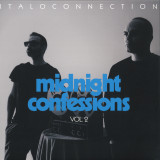
2021. Italoconnection, the partnership of Fred Ventura and Paolo Gozetti, released Midnight Confessions Vol 1. Three years on, the awaited second volume has arrived. All of the analogue emotion that characterised the first collection is present from the outset, warm throbs of bass coupled with clean melodies in “The Wait”. Smoky lyrics permeate the nine track album, the unmistakable timbre of Ventura’s voice recanting tales of optimistic encounters and lost love. As with the 2021 release, collaborations with fellow italo romantics are peppered throughout. Francesca Gastaldi returns to work with Italoconnection once again. Having featured on their Humanize EP, Gastaldi’s vibrant voice shines through the smouldering synthlines and robust beats of “Live Forever”. Jaia Sowden takes centre stage for “Just Like Water”. A story of discontent and disconnect is sang over bittersweet keys as eastern undercurrents flow. Contemporary commentary is intertwined with undulating melodies and distant lyrics in “Cold War Lovers”, a cold wave edge cutting through the sounds and words of “Systematic” .The dancefloor surfaces throughout the record. Bodies are pulled tight by the bold and bright bars of “Why” before drifting apart in the lovelorn lamentations of “Lover 2 Lover”. “Europa” pays homage to the machine music of the continent as a litany of influences are drawn upon . The title piece closes. A fragile drum pattern is bolstered by cascading chords, piano notes sailing alongside words by Gastaldi and Ventura. Welcome confessions from musicians who live and breath the synthesizer traditions of Italy.
Visionary art-pop duo Faux Real (a.k.a. Los Angeles-based Franco-American brothers Virgile and Elliott Arndt) release their debut album "Faux Ever" on City Slang.
Faux Real’s long-awaited debut album "Faux Ever" is a self-described “11-piece symphony for head-banging and longing,” the album sees the fraternal duo continuing to play on the outskirts of language and sound, exploring themes of heartbreak, labor, and the home with harmonies and humor, playful beats, and en franglais. Recorded between Paris, New York, London, Los Angeles, and Provence, "Faux Ever" thrusts Faux Real’s sultry, surreal, and unclassifiable sound towards a glossier pop horizon, an existential sonic pastiche with a glistening digital sheen. "Faux Ever" also includes such certified bangers as the bold, glitchy, and infectious “Rent Free” and the acclaimed “Faux Maux,” both available everywhere already alongside self-directed official music videos streaming now on YouTube. Known far and wide for their DIY, Iggy Pop-meets-Eurodance live performances, Faux Real are building anticipation for "Faux Ever" with international shows in the UK/EU and US.
Format: 140g Crystal Clear Vinyl
About Faux Real:
Elliott and Virgile Arndt founded Faux Real in 2018, blending post-punk, glam rock, and a taste for pop grandeur, fashioning a truly inimitable musical experience. From their increasingly accomplished studio output to mesmerizing, unprecedented live performances, Faux Real invite the audience to join them an enthralling post-realist expedition through contemporary pop culture with razor-edged satire, inspired boy band choreography, and a charged sensuality that has fast earned them a fervent fan following that includes among their number such iconic stars as Duran Duran, Beck, Paramore, Metronomy, and Wet Leg. Now, with the imminent arrival of Faux Ever, Faux Real continue to gleefully ignore boundaries and barriers, assuring the journey is as exhilarating as the ultimate destination.
Limitierte Edition: weisses Doppel-Vinyl im Klappcover! Leidenschaftlich, anglophil, anachronistisch, maximalistisch und barock, "La Vita Nuova" wurde als eine Elegie der Begierde geschrieben. Nach ihrer Fertigstellung wurde sie zu einer Beschwörung. Aufrichtig und leidenschaftlich hat Maria McKee ganz einfach ein seligmachendes Erwachen erlebt, und in einem Crescendo der Prosa erschließt ihr neues Album "La Vita Nuova" diese Geschichte und skizziert eine bedeutsame und transformative Zeit in ihrem Leben, die vor Jahrzehnten begann, als sie in ihrem Wohnzimmer vorm Kamin mit ihrem älteren Bruder, dem verstorbenen, großen musikalischen Erneuerer Bryan MacLean, Mitbegründer der bahnbrechenden LA-Band Love, sang. Auf dem Weg dorthin war sie Leadsängerin der bahnbrechenden Americana-Band Lone Justice, veröffentlichte eine Reihe stimmungsvoller und eklektischer Solo-Platten, schrieb Chart-Hits, die die Charts toppten, und inspirierte die Hingabe einer treuen kultischen Fangemeinde, bevor sie scheinbar verschwand. Ihr letztes Studioalbum "Late December" wurde 2007 veröffentlicht, seitdem sind dreizehn Jahre vergangen. "La Vita Nuova" ist eine Hommage an Dantes Werk über die unerwiderte Liebe. Obwohl der unbewusste Impuls für die Entstehung dieses Albums darin bestand, den Schock einer der bisher größten persönlichen Herausforderungen für McKee, der Auflösung und Neuerfindung ihrer Ehe, zu verarbeiten, sind die Lieder progressiv und lyrisch dicht. Die Produktion ist orchestral und opernhaft und orientiert sich an McKees Lexikon der Ikonen - John Cale, Scott Walker und David Bowie. Es handelt sich also um ein Werk, das ein hohes Maß an Konzentration erfordert. Man muss vielleicht mehr als einmal zuhören, um sich mit der konfessionellen Erzählung zu verbinden, die im Subtext gehalten wird, und um zu verstehen, dass die "Muse", oder "Beatrice" des Albums innerhalb der Prosazeilen auch ein herzzerreißendes Phantom von McKees jüngerem, idealistischem Selbst ist. Und eine Metapher für die Jugend im Allgemeinen. Das spiegelt sich in den eindringlichen, kaskadenartigen melodischen Klängen der Joni Mitchell, die "I Should Have Looked Away" andeuten, und in der ergreifenden, nostalgischen Wehmut des Titels "Effigy of Salt" wider. McKee ist inzwischen nach London umgezogen. Die Orchesterarrangements des Albums wurden von McKee komponiert und arrangiert, die keine formale klassische Ausbildung hat und keine einzige Note liest. Aber genau das ist die Natur der kreativen Katharsis, die im Allgemeinen mit einem eigenen Willen arbeitet.
DJ Support from Danny Howard, Annie Mac, Mistajam, Pete Tong, Charlie Hedges, Kraak & Smaak, Maxinne, Todd Terry, Alex Preston, Full Intention, GW Harrison, DJ Rae, Rudimental, Alaia & Gallo, Illyus & Barrientos, Johan S, David Penn, Sam Divine, Riva Starr, Claptone, Nice7, Dario D’Attis, Mousse T, SMan, Huxley, KC Lights, Friend Within, Dombresky, Gorgon City, Chris Lake, Format:B, Pirupa, TCTS, Alan Fitzpatrick, Low Steppa, Mat.Joe, Raumakustik, Eskuche
Kicking things off on Toolroom’s next 4-track vinyl sampler series is Mark Knight’s hugely successful rework of Groove Armada’s seminal classic ‘Get Down’. Considered one of the holy-grail records of their back catalogue so it’s an absolute honour for us, and Mark Knight, to be re-presenting this incredible record to a new audience. Fusing those unique vocals from Stush and classic Groove Armada synth line, coupled with the energy and insatiable groove of a Mark Knight record, this is a sure-fire dance floor weapon for 2024! Next up are a fan favourite of the label, the mighty duo Illyus & Barrientos who make their long overdue return with ‘When You Gonna’. Tracks such as ‘Shout’, ‘Promise’ and most famously, ‘So Serious’, propelled them to be one of the most exciting and sought after acts in the World. This record is trademark Illyus & Barrientos and reflects their personalities as artists perfectly. Think high energy house music filled with fun and peak-time dance floor vibes! Leading the charge on the b-side is an incredible collaboration from 2 heavyweight house artists, working together for the very first time! David Penn has a career spanning over 25 years. He was recently crowned the #1 house artist on Beatport and boasts over 1 million monthly listeners across leading streaming platforms. OFFAIAH appears on Toolroom for the first time in his career under this alias, although he was a firm part of the original Toolroom Family line up as Michael Woods. So this is a SPECIAL ONE! The record screams sun-drenched terraces, pool parties and chilled cocktails! A huge bass line, infectious tribal vocals and some lush house pianos for good measure. Last but not least, Long-standing Toolroom Family member and fan favourite, Ben Remember returns to the label with ‘Waiting 4 You’. As with all of Ben’s records, this is super creative and super original. Based around an infectious disco vocal sample and all created using out-board, analogue studio gear which gives the track a real gritty
undertone.
Countless radio plays on Radio 1 from Danny Howard, Sarah Storie, Pete Tong Other notable radio plays – Kiss FM, Toolroom Radio, Sirius XM, Data Transmission Radio, Radio 1 Dance Anthems, Radio 1 Party Anthems, Rinse FM, Select Radio, Tomorrowland Radio
It is summer dawn . . . and you are alone. Here is music for your strange mood. The piano starts the first track, slow tempo beat, a strict beat, a swinging beat. Lillemor—here minor harmonies give the tune a rural, romantic feeling of some place in Spain or France. The tempo changes to medium fast—the flute solos. Light phrasing contrasts beautifully to the earthy, swinging beat of the rhythm section and the repeating piano figures. The trombone adds a new color, a counterpoint of sound and phrasing, backed by the pulsating beat of this wonderful rhythm and the driving piano. Summer dawn . . . This music has more to offer, because it shows the personality of Sahib Shihab at its best. Sahib is a universal musician who reflects musical experiences in jazz since the end of the thirties. He lived through the important periods of modern jazz with his heart and mind wide open toward everything that was good music, regardless of being termed "Mainstream", "Bop", "Cool", "Westcoast", "Eastcoast", "Hard Bop'', et cetera. When you listen closely to his music, you will find traces of all these, but they are immersed in his deep musicianship and his true jazz personality. Sahib Shihab's background reads like the record of a master of advanced studies. Furthermore he played and collaborated with the coolest jazz musician of that period. Above all let's name Budd Johnson, Theolonius Monk, Tadd Dameron, Milt Jackson, Dizzy Gillespie, Illinois Jaquet, Elmer Snowden, Luther Henderson, Larry Noble, Fletcher Henderson, Roy Eldridge. In his early professional years, Sahib was heard mostly on alto sax; later, more often on baritone sax and flute. Today, his name is inseparably connected with these two instruments. The unity of his jazz performances is not alone bound up with the com¬positions and the arrangements of Sahib Shihab, though in their understated simplicity they have a melodic beauty that is seldom found in jazz of today. The rhythmical subtleties add to the overall qualities of being relaxed vehicles for free-blowing, but there is an immediacy that you hear and feel every moment when listening which defies analysis. The playing of the rhythm section helps greatly to promote the sense of flux and contrasting constant renewal that makes listening to this record so invigorating an experience. Well, this is no surprise, with Kenny Clarke as the nucleus of the rhythm group. Kenny 'Klook' Clarke is a major figure and contributor in jazz, one of the founders of modern jazz, and is ranked as one of the all-time great drummers. He influenced a whole generation of musicians with his playing, though living in Paris since the middle of the fifties somewhat dimmed his name to the general American public. Nevertheless, his name alone will assure a connoisseur to expect top class musical experiences. Talking of the rhythm section we have to name Jimmy Woode's bass, which together with Kenny's drumming, is the driving force for the group and the reliable harmonic anchor for the improvisors. By the way, Jimmy has been with the Duke quite a while, and this alone is an award for extraordinary craftsmanship and artistry. The good sounding rhythm with its full-bodied color is also a result of the added bongos of Joe Harris, who manages to stay out of the way of the players—a quality not often found with drummers—but his playing is felt through the set. There are two members of the group not yet mentioned. Two Europeans, pianist-composer-arranger Francy Boland from Belgium, and trombonist Ake Persson from Sweden. Francy Boland this time is a sideman, though normally he is a leader of recording sessions, both as composer-arranger and as musical director of the band. In the fifties he was in the States writing arrangements for different name-bands, such as Basie and Goodman. In Europe, he is famous for his swinging modern big band arrangements; and his inventiveness as a writer is reflected in his piano playing. He has the talent of using the right dynamic approach every moment, thus making his playing helpful to soloists and interesting for listeners as well. Ake Persson has been Scandinavia's out-standing trombone player for about ten years. There are only a few trombonists in Europe who might match his talents at times, but they lack the consistency of his playing. He is impressive, whether playing in a big band, or whether main soloist in his own small groups. American musicians love the sound of his slide trombone and his easily flowing romantic improvisations, so he often joins American name-bands as they travel in Europe. The music speaks alone . . . , we said it before. You have your soul to feel the beauty, to follow lines and structure, and to enjoy the spiritual excitement. Whether you enjoy the flowing, easy sounding theme of "Please Don't Leave Me", or the climaxing piano solo in the same piece—the bass solo in "Waltz For Seth" or the swinging baritone sax—listen to the first bars of this solo and pay attention to Kenny. Whether you listen to "Campi's Idea", (named after Gigi Campi, the well known Cologne jazz enthusiast who organized this recording) with the romantic flute solo of Sahib, the interesting tempo changes, the piano comping, the moving trombone solo; or to the up-tempo "Herr Fixit", with the cooking Kenny and humorous, driving flute solo, you know that these six musicians where in the right mood, in the right stimulating surroundings to feel what we all feel when it's: SUMMER DAWN.
A1 - Desire
Opening the EP in quietly epic fashion, Desire begins with a delightful beat pattern with adistinctive cymbal hit set over warm bass tones and whale song samples. A smooth, thoughtful bass melody is introduced which joyfully intersects with gorgeous piano keys while swirling strings and atmospheric vibes layer and recede like tides of the ocean, creating a truly unique journey of a track that will linger anywhere it may be heard.
A2 - Voidscaping
Instantly setting the scene with crisp, striking breaks, Voidscaping is an atmospheric treatfor the senses with serene throwback pads reminiscent of the halcyon days of Good Looking. Bringing the piece up to date for the Spatial era is the typically intricate blending of reflection and intrigue ASC conjures with his sampling and reverb work, effortlessly thickening the soundscape with memories old and new.
AA1 - Let Go
Opening with the vibrant sounds of twilight nature and metallic bongos, ASC sparinglydeploys a glorious choral vocal before the breaks take off with an energetic pattern drivenby constant, playful hi hats. As the track develops, questions are asked of the listener bythe curious atmosphere, gradually unraveling with strings, synths and trademark vocalusage, offering a new perspective with each listen.
AA2 - Meltdown
A darkly, anxious undertone floods the mix as Meltdown grips the listener from the first barwith skillfully sequenced minimal breaks, hi hats that whoosh in and out like evening crickets you can't quite track, and intense ambient padwork. A longing female vocal occasionally yearns over the various melodies which enter at will, discreetly developing the mood with purpose, unfurling a stream of aural consciousness from this incredible producer.
Words by Chris Hayes (Spatial / Red Mist)
Dame Area's highly anticipated fourth studio album, "Toda la verdad sobre Dame Area" ("The Whole Truth about Dame Area"), a collaboration with the renowned labels Mannequin Records and Humo Records.
Formed in 2017 within the vibrant underground scene of Barcelona's Màgia Roja club, Dame Area comprises the Italian-Catalan duo Silvia Konstance and Viktor Lux Crux. They fuse industrial-tribal polyrhythms with minimalist synth basslines, drawing profound inspiration from avant-garde masters such as Esplendor Geometrico, Throbbing Gristle, Suicide, Einstürzende Neubauten, Can, Coil, Swans, Big Black, and Wolf Eyes.
This record represents a new phase in Dame Area's discography. It's a big step up in terms of sound, composition and ideas. This record it's the perfect representation of what they have been playing live the last three years and what most people know them for. Also it serves as a companion piece to 2022’s Toda la mentira sobre Dame Area ("All The Lies About Dame Area"), which had a stronger focus on melody, while this latest record is more aggressive and industrial-influenced, with a greater emphasis on percussion.
Tracks like the Suicide-influenced "Si no es hoy cuando es" and "Sempre Cambiare" are an onslaught of industrialism and experimentalism—formidable, volatile, and unpredictable avant-garde subversion. Silvia explains, "One of our biggest influences is doing what our influences wouldn't do. We're more into dynamics and structures atypical of electronic music, with changes in time signatures, starts and stops, and dynamics more typical of rock music. We use any musical idea from any genre. Some songs on the album are based on flamenco rhythms, others influenced by '60s experimental pop, heavy metal, or contemporary electronic music."
The confrontational "Vengo dall'aldilà" accelerates with heavy percussion, while "Tu me hiciste creer" builds into a rhythmic, transcendent noise of yelled vocals and hypnotic beats. Viktor adds, "This song took us more time to complete than any other we have recorded. It was a very organic process, evolving slowly from some instrumental percussive stuff we were doing live. Then we started using feedback as a rhythmic element (through a metallic sheet), and this was the first song where we incorporated this element, typical of noise-rock and experimental rock."
Elsewhere, "Esto Es Nuestro Ruido" represents a manic, eclectic form of contemporary industrial music, post-punk, and EBM. Silvia notes, "It's the first album we recorded outside a studio. Although we've been playing live with metallic percussion and floor tom from the very start, in the studio, with some exceptions, it was mostly sample-based until now. On Toda la verdad sobre Dame Area, all drums and almost all metallic percussion have been recorded live."
With a growing reputation as one of the best live bands around since their inception, Dame Area has toured extensively across Europe, performing at renowned festivals like Atonal, CTM, Nuits Sonores, Dour, and Fusion, as well as legendary clubs such as Berghain, Tresor, Apolo, and Spook Factory.
Recorded at Sol de Sants Studios and Estudio Hermetic between August and November 2023
Silvia Konstance: vocals, synths, percussions, electronics, production
Viktor L. Crux: synths, drums, percussions, electronics, production
Mixing and additional production by Guillermo Sánchez Rojo
Mastering by Paul Mac at Hardgroove Mastering
Designed by Leo Sousa
Photography by Fabio Calabretta
Photo concept by Dame Area
Repress!
This EP is delicately melodic and fluid that even in its short four tracks shows a producer with different bows to their arrow. Intro is a laid back, downtempo affair with vocal samples punctuating the track’s pared down synths and gently propulsive beats.
Contrast that with Engang, which sees Jos Ma chisel all other elements away and put trust in the groove and urgency of its percussive elements. It’s something he echoes in Like Honey, although here the bright stabs of keys provide a welcome interjection - as does the chopped-up vocals that offer a further counterpoint to its kwaito-reminiscent shuffle. It is perhaps here that his respect and love of central and southern Africa’s dance forms is presented at its most bare.
The EP finishes with Mongo’s Dance, so-called after the Cuban Mongo Santamaria and driven forward by a chopped-up pachanga rhythm taken from one of the pioneering percussionist’s tracks. He then adorns it with wavy synths and flutes, each intertwining over the top as though engaged in ritual with one another. It’s a euphoric, slightly delirious end to an EP that puts Jos Ma firmly in Mas O Menos’ “neither here nor there” camp – a producer who simply follows his instincts and revels in the enthrallingly wandering music it throws up.
Analog Mutants consist of Phill Most Chill on the vocals, DJ Snafu of Bankrupt Europeans fame on production and the inimitable DJ Grazzhoppa on the cuts.
Vocals: Phill Most Chill
Phill Most Chill grew up in Conecticut half hour away from Boogie Down Bronx and by the late 80s had already established himself in the hip hop scene, having released a very strongly received (and eventually highly collectible fetching amounts in the high three digits) single (On Tempo Jack/ That Girl), the preccedent setting left field Baritone Tiplove releases and writing for the seminal Rap Sheet magazine. The Arcahaelogists' Classics and Soulman's World of Beats tape series and column further established him as an elite beatmaker and sample collector, with highly acclaimed producers seeking him out to purchase records in conventions. The random rap craze brought renewed attention to Phill Most's releases in the late 90s, leading to reissues of On Tempo, the release of previously unissued Baritone Tiplove records, his return with the Lo-Fi EP, and then the highly influential Fast Rap EP on Nobody Buys Records which led to a flurry of funky uptempo releases across the globe again. The interest in Phill Most records over the whole 2010s was rabid, with further releases produced by Bankrupt Europeans, Mr. Fantastic and Chris Read flying off the shelves, and two full length albums produced by 90s stalwarts Paul Nice and DJ Format, as well as the recent Jorun-PMC album being now considered classics in the boom bap scene. Having now signed with Chuck D's Spitslam label, Phill Most continues his journey in stepping all over MC conventions, and these first two Analog Mutants release are a perfect example of this.
Produced by DJ Snafu
DJ Snafu has been part of the Bankrupt Europeans crew since 2004, co-founding Nobody Buys Records in 2012 with the other two Bankrupt Euros members. Huge collector of vinyl from the 50s ad 60s primarily, and with an interest in modular production, FM synthesis and marrying modern techniques with the love of sampling old records, the Analog Mutants project is his first without the Bankrupt Euros crew. Having produced among others for Chill Rob G on his seminal return to music with the classic Tell 'Em on the Chilled Not Frozen EP, Roc Marciano on the Goodfelons label, DITC legend AG on The 21st Day and Chicago legend MC Juice's return to vinyl after 15 years, this is Snafu's first whole album to produce since Rise of Demigodz' debut album The Cornerstone in 2006 (released in 2013). Snafu shows he's honed his skills and developed an even crazier side to his production in the 5 year that passed between the last Bankrupt Euros project and the Analog Mutants album and the first three Analog Mutants singles are a sign of things to come in the post Bankrupt Euros years.
Scratches: DJ Grazzhoppa
DJ Grazzhoppa got infected in 1983 with the hip hop virus, demolishing local DJs and winning the European DMC Championships in 1991, and taking 3rd place in the ITF World Championships in 1998! His unique and immediately recognizable style was first heard on Blade's legendary 12” Clear The Way, and caught so many ears that the list of MCs and producers who queued up to work with him is seemingly endless. From MF Doom, Ruste Juxx, Guilty Simpson and Cage to Necro, Keith Murray, Big Daddy Kane, Kool G Rap and of course the Bankrupt Europeans projects with Phill Most Chill, MC Juice and Chill Rob G! This is a short list of a page of credits spanning over 4 pages long- if you have hip hop records, Grazzhoppa is already in your collection!
Analog Mutants consist of Phill Most Chill on the vocals, DJ Snafu of Bankrupt Europeans fame on production and the inimitable DJ Grazzhoppa on the cuts.
Vocals: Phill Most Chill
Phill Most Chill grew up in Conecticut half hour away from Boogie Down Bronx and by the late 80s had already established himself in the hip hop scene, having released a very strongly received (and eventually highly collectible fetching amounts in the high three digits) single (On Tempo Jack/ That Girl), the preccedent setting left field Baritone Tiplove releases and writing for the seminal Rap Sheet magazine. The Arcahaelogists' Classics and Soulman's World of Beats tape series and column further established him as an elite beatmaker and sample collector, with highly acclaimed producers seeking him out to purchase records in conventions. The random rap craze brought renewed attention to Phill Most's releases in the late 90s, leading to reissues of On Tempo, the release of previously unissued Baritone Tiplove records, his return with the Lo-Fi EP, and then the highly influential Fast Rap EP on Nobody Buys Records which led to a flurry of funky uptempo releases across the globe again. The interest in Phill Most records over the whole 2010s was rabid, with further releases produced by Bankrupt Europeans, Mr. Fantastic and Chris Read flying off the shelves, and two full length albums produced by 90s stalwarts Paul Nice and DJ Format, as well as the recent Jorun-PMC album being now considered classics in the boom bap scene. Having now signed with Chuck D's Spitslam label, Phill Most continues his journey in stepping all over MC conventions, and these first two Analog Mutants release are a perfect example of this.
Produced by DJ Snafu
DJ Snafu has been part of the Bankrupt Europeans crew since 2004, co-founding Nobody Buys Records in 2012 with the other two Bankrupt Euros members. Huge collector of vinyl from the 50s ad 60s primarily, and with an interest in modular production, FM synthesis and marrying modern techniques with the love of sampling old records, the Analog Mutants project is his first without the Bankrupt Euros crew. Having produced among others for Chill Rob G on his seminal return to music with the classic Tell 'Em on the Chilled Not Frozen EP, Roc Marciano on the Goodfelons label, DITC legend AG on The 21st Day and Chicago legend MC Juice's return to vinyl after 15 years, this is Snafu's first whole album to produce since Rise of Demigodz' debut album The Cornerstone in 2006 (released in 2013). Snafu shows he's honed his skills and developed an even crazier side to his production in the 5 year that passed between the last Bankrupt Euros project and the Analog Mutants album and the first three Analog Mutants singles are a sign of things to come in the post Bankrupt Euros years.
Scratches: DJ Grazzhoppa
DJ Grazzhoppa got infected in 1983 with the hip hop virus, demolishing local DJs and winning the European DMC Championships in 1991, and taking 3rd place in the ITF World Championships in 1998! His unique and immediately recognizable style was first heard on Blade's legendary 12” Clear The Way, and caught so many ears that the list of MCs and producers who queued up to work with him is seemingly endless. From MF Doom, Ruste Juxx, Guilty Simpson and Cage to Necro, Keith Murray, Big Daddy Kane, Kool G Rap and of course the Bankrupt Europeans projects with Phill Most Chill, MC Juice and Chill Rob G! This is a short list of a page of credits spanning over 4 pages long- if you have hip hop records, Grazzhoppa is already in your collection!
Analog Mutants consist of Phill Most Chill on the vocals, DJ Snafu of Bankrupt Europeans fame on production and the inimitable DJ Grazzhoppa on the cuts.
Vocals: Phill Most Chill
Phill Most Chill grew up in Conecticut half hour away from Boogie Down Bronx and by the late 80s had already established himself in the hip hop scene, having released a very strongly received (and eventually highly collectible fetching amounts in the high three digits) single (On Tempo Jack/ That Girl), the preccedent setting left field Baritone Tiplove releases and writing for the seminal Rap Sheet magazine. The Arcahaelogists' Classics and Soulman's World of Beats tape series and column further established him as an elite beatmaker and sample collector, with highly acclaimed producers seeking him out to purchase records in conventions. The random rap craze brought renewed attention to Phill Most's releases in the late 90s, leading to reissues of On Tempo, the release of previously unissued Baritone Tiplove records, his return with the Lo-Fi EP, and then the highly influential Fast Rap EP on Nobody Buys Records which led to a flurry of funky uptempo releases across the globe again. The interest in Phill Most records over the whole 2010s was rabid, with further releases produced by Bankrupt Europeans, Mr. Fantastic and Chris Read flying off the shelves, and two full length albums produced by 90s stalwarts Paul Nice and DJ Format, as well as the recent Jorun-PMC album being now considered classics in the boom bap scene. Having now signed with Chuck D's Spitslam label, Phill Most continues his journey in stepping all over MC conventions, and these first two Analog Mutants release are a perfect example of this.
Produced by DJ Snafu
DJ Snafu has been part of the Bankrupt Europeans crew since 2004, co-founding Nobody Buys Records in 2012 with the other two Bankrupt Euros members. Huge collector of vinyl from the 50s ad 60s primarily, and with an interest in modular production, FM synthesis and marrying modern techniques with the love of sampling old records, the Analog Mutants project is his first without the Bankrupt Euros crew. Having produced among others for Chill Rob G on his seminal return to music with the classic Tell 'Em on the Chilled Not Frozen EP, Roc Marciano on the Goodfelons label, DITC legend AG on The 21st Day and Chicago legend MC Juice's return to vinyl after 15 years, this is Snafu's first whole album to produce since Rise of Demigodz' debut album The Cornerstone in 2006 (released in 2013). Snafu shows he's honed his skills and developed an even crazier side to his production in the 5 year that passed between the last Bankrupt Euros project and the Analog Mutants album and the first three Analog Mutants singles are a sign of things to come in the post Bankrupt Euros years.
Scratches: DJ Grazzhoppa
DJ Grazzhoppa got infected in 1983 with the hip hop virus, demolishing local DJs and winning the European DMC Championships in 1991, and taking 3rd place in the ITF World Championships in 1998! His unique and immediately recognizable style was first heard on Blade's legendary 12” Clear The Way, and caught so many ears that the list of MCs and producers who queued up to work with him is seemingly endless. From MF Doom, Ruste Juxx, Guilty Simpson and Cage to Necro, Keith Murray, Big Daddy Kane, Kool G Rap and of course the Bankrupt Europeans projects with Phill Most Chill, MC Juice and Chill Rob G! This is a short list of a page of credits spanning over 4 pages long- if you have hip hop records, Grazzhoppa is already in your collection!
What an unbelievable record. From the wild cover to the iconic breakbeats, Roots from Ian Carr’s Nucleus is one of the dopest albums we know. This is seriously thick, funky-prog jazz-rock heaven. Originally released on Vertigo in 1973, other than a couple of versions at the time for other territories, Roots was never re-pressed since so it’s gone on to become another one of those impossible to find records.
Maybe it was a little too out there for the time, but it’s aged very, very well indeed and this Be With re-issue, re-mastered from the original analogue tapes, shows off just why this deserves to be back in press.
Genius trumpeter and visionary composer Ian Carr was one of the most respected British musicians of his era. He was a true pioneer and saw the potential in fusing the worlds of jazz with rock, just as Miles Davis and The Tony Williams Lifetime did in the US. In late 1969, following the demise of the Rendell-Carr quintet, and tiring of British jazz, Carr assembled the legendary Nucleus. Regarding music as a continuous process, Nucleus refused to “recognise rigid boundaries” and worked on delivering what they saw as a “total musical experience”. We can get behind that.
Under bandleader Carr, Nucleus existed as a fluid line-up of inventive, skilled musicians. This constant evolution and revolution was all part of the continuous musical exploration and discovery that took jazz to new levels.
Working together with producer Fritz Fryer and engineer Roger Wake, the seven compositions by Carr, Brian Smith and Dave MacRae that make up Roots flirt with perfection, and Nucleus at that time made up of the cream of 1970s UK jazz with Brian Smith on tenor saxophones and flutes, Dave MacRae on piano and electric piano, Jocelyn Pitchen on guitar, Roger Sutton on bass, both Clive Thacker and Aureo De Souza on drums and percussion, Joy Yates delivering the vocals and of course Carr on trumpet.
The spellbinding title track immediately renders the album indispensable. Riding the illest of loping breakbeats, “Roots” is low-slung, doped-out heist-funk. An absolute monster. If it sounds familiar then that’s likely down to it being sampled by Madlib for Lootpack and Quasimoto’s “Loop Digga”, as well as by a whole host of beat manipulators. “Roots” conjures prime instrumental hip-hop / beat music, only 20 years ahead of its time. Truly, these are the roots. Through sinuous bass, twinkling keys and a hypnotic guitar riff, a smoky brass motif weaves its way into a gloriously deep haze around Carr’s solos. “Roots” is over 9 minutes long, but there’s not a single wasted second, not surprising given that this is a condensed version of an originally 40 minute long commissioned composition.
The soothing vocal fusion delight of “Images” follows. Meticulously constructed, with gorgeous flute work from Brian Smith, with Joy Yates’ silky vocals and Dave MacRae’s Rhodes never sounding better. The cool, driving “Caliban” closes out the first side. Originally the third movement in a four part commission to celebrate Shakespeare’s birthday it stands up on its own, all robust rhythms and blended brass. Keyboard colour and Carr’s trumpet are splashed across the funk drums and basslines (and there’s even some bamboo flute). This really is fusion: the elements of jazz and rock coming together in beautifully synthesis.
Side two opens in riotous fashion with the short, thrilling samba of “Wapatiti”. Next up, “Capricorn” forms a smoothed-out, jazzy constellation. Mellow and dreamy, its twinkling percussion and languid horns slowly build the vibe before head-nod drums and a killer bassline enter the fray. With a distinct heaviness that Black Sabbath would’ve envied, “Odokamona” is a venomous slice of riff-soaked jazz metal (yes, you read that right), elevated by Carr’s wah-wah horns.
The album closes with MacRae’s exceptionally cosmic “Southern Roots and Celebration”. Very much in conversation with Weather Report, it opens as a languorous, spiritual jazz of chiming keys and serene guitar that turns slowly, gorgeously into a mid-paced, brass-laced banger. It’s another sure-fire party starter and the sound of the band having a righteous blast, building an ecstatic chaos that ends with Yates screaming.
And of course we need to talk about Keith Davis’ cover for Roots. Perhaps the coolest record cover of all time? Certainly one of the most bonkers. Just your run-of-the-mill high-gloss, acid-tinged airbrush dystopian/utopian living-room party scene. Consider this your chemical flashback trigger warning.
Front-and-centre the hip-to-death green robot holds court with their giant ball of yellow barbwire wool, hooked up to… something(?) being teased out from under the stairs (probably best not to ask). A thoroughly zoned-out, long-legged Pop Art party-goer lounges half-plugged in to the painting behind her as a pair of legs flail into shot from the the top of the stairs opposite. We won’t even begin to guess what the chap’s up to in the middle, but the view out of the windows is rather nice, and someone’s already got the hoover out ready to tidy up. All of the Nucleus sleeves are something special, but this particular one? Crikey.
This Be With edition of Roots has been re-mastered from the original Vertigo master tapes, Simon Francis’ mastering working together with Pete Norman’s cut to weave their usual magic with these wonderful recordings. The crazy cover has been restored at Be With HQ as the finishing touch to this long overdue re-issue.
Aesthetically, Ed Schrader’s Music Beat hates to tread water. At the same time, the Baltimore-based two-piece of vocalist Ed Schrader and bassist Devlin Rice won’t force their songs to fit a preconceived style. “The next album’s always gotta be different from the last one. We’re different people from record to record. So, writing authentically to ourselves will always bring our work to a place that we haven’t been to yet,” Rice said. Schrader added, “We’re terrified of turning into AC/DC. We never want to be married to one scene or time or sound. We want to be the Boba Fett of bands! Constantly altering the way in which we make records has been pretty key in that process.”
For Orchestra Hits, the band’s latest, that alteration was welcoming longtime musical comrade Dylan Going into the fold as a co-writer and co-producer. A songwriter in his own right, a guitar sideman for ESMB on their last two tours, and a collaborator with Rice in the noise riffage band Mandate, Going had both a unique vision and an intimate familiarity with the ESMB vibe.
“Dylan came to every show we’ve ever played in New York—no matter how weird it was,” Schrader said. “He’d be standing there ready to move an amp or feed us barbecued cactus after the gig and toss on some Golden Girls so we could decompress. It felt like family as soon as we began working, but I honestly had no idea how damn good he was at tossing out these hooks.”
According to Schrader, the songs “just poured out of us” over the course of a highly caffeinated three-day weekend in a tiny room in Devlin’s house while his cat, Sandy Goose, screamed continually. “It was like three kids hiding from the world to get into some lovely mischief,” they said. The lack of external pressure in the process gives Orchestra Hits an almost paradoxical vibe. For all of the album’s layers, that mix live and sequenced instruments, it never loses the raw energy of a small handful of friends in the same room plugging in, cranking up, and playing until they pass out.
Lyrically, the album finds Schrader, now 45, meditating on experiences in their youth to make sense of the present moment. “We are not into the garden,” Schrader wails on the relentless “Roman Candle,” a song about the sad debacle of Woodstock ’99, and a direct response to Joni Mitchell’s “Woodstock,” a utopian ode to hippie idealism. A 19-year-old Schrader, having snuck into Woodstock ’99 through a hole in the fence, was there the night members of the crowd used candles intended for a vigil for victims of the Columbine High School massacre to set fires all over the grounds. Even before the fires, Schrader remembered feeling disconnected from the music, the nostalgic cash grab, and the meatheads in the crowd. After watching a press tower collapse, they boarded a random shuttle bus and were dropped off near a Denny’s. “It was a far cry from the Garden of Eden,” Schrader said. “That experience defined what I didn’t want to be a part of, and yet America is more like Woodstock ’99 than ever.”
With percolating synthesizer arpeggios, and climbing bass grooves, “IDKS” is the album’s dance-floor slapper. “’IDKS’ is a funny one,” Schrader said. “We already had a pretty satisfying suite of songs when Dylan was packing up to head back to New York, but he missed the train because of a freak snowstorm. Realizing he’d be stuck in town another day, he says to me, ‘Here’s this other weird thing I have.’ It was ‘IDKS.’ The hooks were so good I felt like Homer Simpson at a free donut convention. I just dove right in, and we cranked that baby out in like 20 minutes.”
Lyrically, “IDKS” is a letter from the true self to public-facing self. “It’s an angry song,” Schrader said. “Because the public-facing self is always looking for an easy escape, but it forces the true self into a cage. I honestly thought my lyrics were corny and was about to change them, but Dylan was digging it just the way it was. So that’s what you hear.”
With the soaring “Daylight Commander,” the band went against all of their musty-basement-bred instincts. “I went full High School Musical with the vocals,” Schrader said. “At first it felt almost embarrassing, but I remember reading somewhere that Bowie recommended always floating a little bit above your comfort zone, and that’s what we did here.” The song is part exercise in absurdity and part pop Trojan horse. “If ever we had a ‘Shiny Happy People’ moment, I guess this is it,” Schrader said.
The unconscious and unknown must be really nice places. In any case, if you take the second album of Menelaos Tomasides under his given name as travelogue. A trip into dreamlike territory, yet concrete enough, a journey without target yet looking forward and looking back into familiar places, „dreamhike“ both continues and departs from the style Menelaos has found earlier, in “When the Moon Comes Through”, or his more conceptual-intentional “31 Minuten” works. As the album title - which roughly translates to “dream hiking” but also hints on “walkabout” and “songlines” – suggests, we are rambling between the real and the imaginary. From the bucolic border triangle of Belgium, Germany, and the Netherlands to the buzzing streets of the capital of Cyprus, where Menelaos has lived for many years, the tracks are about real places, about real experiences and emotions yet interwoven with a dreamlike fabric. Something that is just not tangible, yet substantial and palpable. Something concrete that manifests in the genuine and special sound design of this records - basically all of Menelaos’ works - his really special treatment of dynamics and loudness. It is one of the very few records where the established language of music making, specifically Techno, House, Dub, and early 2000’ Electronica, the clicks, thumps and plops from an earlier age of electronic music, transmogrify into slow movements of something new. Something that is gentle and truly personal, looking inwards. There are four-to-the-floor beats, there is wobbly bass, and dubby chords, even sublimated clarion calls. There is an immense energy in these tracks, the sheer materiality of low frequencies of a massive sound system manifested in a tiny room. Yet it is without any aggression, stripped bare of sonic pressure. It is quiet music no matter how high you turn up the volume. A rare treat, that requires exceptional skills and exceptional restraint and control on the technical side of music making. Probably it is a result of Menelaos specific combination of instinctual, intuitive approach to making music, which meets a genuine love for sound in seemingly endless loops of refinement that can lead to such a result as „dreamhike“. The elegant floating balance of control and playful experimentation manifests for example in a track that continues the ongoing collaboration with seasoned Cologne improviser Achim Fink on bass trumpet. Not only in this respect, the album can be described as a product of openness. It comes from a lot of taking in the world, of travel, of places and people met, of friendship and conversation (not necessarily with words). The deep trip of “dreamhike” further manifests Menelaos as one of the truly independent voices of electronic Cologne and beyond. Somewhat alike in character and attitude probably to what late Pete Namlook has established for Frankfurt with his label Fax +49-69/450464 (though ultimately warmer and much less uncanny) Menelaos has found his very own sound and vision. Music that answers to no one but speaks to everyone. Uncompromising yet gentle to the core: kind sounds from a kind spirit, arguably the most extraordinary and valuable quality music can have these days.