At only 19 years old, Dar Es Salaam's DJ Travella represents a new wave of singeli producers who are driving Tanzania's breakneck dance sound into fresh, innovative spaces. Unaffiliated with any of the well-known studios like Sisso and Pamoja, Hamadi Hassani's music points singeli's fusion of taraab and techno towards the stars, locating a cyber-singeli style that's dense, kinetic and unashamedly sexy. Hassani started producing at 15, and a few years later his debut is a jagged set of hi-nrg dance music that pulls influence from across the globe, folding together elements of dembow, rave, R&B, and trap. But nothing's straightforward: opening track 'Crazy Beat Music Umeme 2' juxtaposes grinding 200bpm rhythmic intensity with urgent plucked strings, sounding like Timbaland conjuring a Thunderdome soundtrack for a Tanzanian street party. 'Crazy Beat Music Umeme 4' is even more barbed, with neon rave synths and hand-jammed percussion that's one part 808 Mafia and one part DJ Diaki. On 'London Bandcamp', Travella meshes hi-speed singeli backbeats with downtempo dembow kicks, squeezing out unexpected sleaze in the process, while on 'London Uwoteeee' there's an almost romantic sparkle, with ethereal vocals draped across woodblock cracks and whistles. But Travella sounds most nimble when giving the nod to Atlanta, and his merging of earworm synth hooks and neck-snapping East African rhythms on tracks like 'London Jomon Beat' will leave no doubt that the young producer is capable of bending singeli completely to his will.
Suche:beat per bar
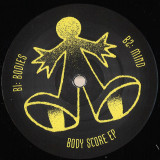
Following their much loved NTS radio shows and parties of the same name, the highly rated DJ/producers re:ni and Laksa have announced a brand new label, also called RE:LAX.
On ‘Body Score’ Laksa continues to traverse the same 150bpm territory as his releases for Hessle Audio and Timedance, but here we also find influences from his job as a social worker.
Chiseling bass weight, swung beats/loops and FX into new shapes with confident hands, ‘Body Score’ conjures mental images that’re equal parts wild humid rainforest and dystopian industrial complex.
‘Soulz’ sets the agenda from the outset; Featuring pumelling gut-punch bass and frenetic percussion, this tightly-wound ball of energy takes you deep into a dank cerebral vortex.
Acknowledging the darkside of life – 'Bodies' samples the psychiatrist Bessel van der Kolk.
Like an ancient ritual, ‘Mind’ evokes scenes of drummers whipping dancers up into a frenzied higher spiritual state, and with its huge snare adding head-cracking accents, the unstoppable momentum thunders along ‘til the very last bar.
Early support from the likes of Pearson Sound, Zenker Brothers, Darwin and Om Unit.
Swing Family's Music Force is dramatic mid-80s synth-funk. From the maverick mind of Sauveur Mallia, it's a thrilling and uniquely brilliant album from start to finish. It's undoubtedly known and revered for its unbelievable standout track, "Mission Africa". Those that know, know. And if you don't know, get to know. It's the reason this record has been hugely sought-after for the best part of two decades. Originally released on Tele Music in France in 1985 but now tear-inducingly rare, this is the definition of "a welcome reissue."
Swing Family is basically a supergroup of French Funk royalty. Led by French disco lord and Arpadys maestro Sauveur Mallia, they were augmented by trombonist Alex Perdigon from legendary French funk rock collective Godchild, trumpeter Kako Bessot from funky fusion group Synthesis and saxophonist Pierre Holassian, a member of Giant, Janko Nilovic's French jazz orchestra. So, about as heavyweight as it gets for funky French goodness. Mallia handles, of course, bass duties throughout, as well as utilising his arsenal of synths including his E-mu, Yamaha Dx7, Roland MSQ 700, Mini Moog and Oberheimm.
The maximalist disco fusion of "Exorcistor" is perhaps a bit too 80s French cheese for most tastes, so either linger on its singular style or head straight to the soundtracky typo-funk of "Greewich Boulevard". A deep, swaggering powerhouse, it comes on like mid-80s Chic jamming on the set of Beverly Hills Cop with Kashif. Yes, *that* good. It's followed by the vital "Music Force", a synthy, sleazy instrumental full of sax and flute and those 80s drum fills. Just the right side of acceptable.
OR! You can even choose to forget all the rest and just stick "Mission Africa" straight on. A rumbling, strutting, afro-cosmic low-profile banger. The slick drums hit hard, the synth strings warm things up, overlapping horns add swagger whilst electric guitar flourishes and a chanted refrain sit in the mix quite perfectly. A track that's almost impossible to describe and do justice to. You just need to hear it. Preferably as you saunter into your favourite after-hours club, after spotting all your friends at once, as you cut a swathe to the bubbling dance floor. A track quite like no other, it makes you sit up within its first bars and, to us at least, sound like something you'd have heard on a Print Thomas mix from the mid 00s. Basically, it's cosmo-galactic.
The B Side opens with "Musical Stars", an oh-so-80s funk-lite track which, at times, sounds like something Daft Punk may have left on the cutting room floor during their Discovery sessions. Another unimpeachable favourite of ours is the druggy brilliance of "Gentleman & Musician". You can almost hear the white powder through the speakers, as soaring, acidy synths, slick, heavy beats and the irresistible interplay of the primo horn players create a real sleazy wonder. "Film Action" follows, a galloping horn-heavy synth romp with moments of extreme bass breakdown brilliance before the drama-synths of "Episode Double" take things up another notch as it oscillates between gorgeous funky horns and urgent bleepy magic. Super tense, super funky and super stylish. Just ace. The elctro-tinged horn workout "Fatal Lady" closes things out majestically.
The audio for Music Force has been remastered by Be With regular Simon Francis, ensuring the punch of Sauveur's bass and those sick drums come through to the fullest. Pete Norman’s expert skills has made sure nothing is lost in the cut whilst the original and iconic sleeve - complete with perky Liberty Belle - has been restored here at Be With HQ as the finishing touch to this long overdue re-issue.
I"ve been focused on who I am in my music, but now I"m exploring where I am," Alfa Mist says. "I"m asking: how did I get here?" This is the journeying question that underpins Alfa"s fifth album, Variables. Traversing luscious, big band swing, head-nodding boom-bap rhythms and yearning vocal melodies, the record is expansive, soulful and moving, in both body and spirit. On Variables, his second release for ANTI-, Alfa achieves his most fully-realised, expressive musical work to date, coupling his keen ear for looping, memorably emotive piano melodies with intuitive grooves and a free-flowing jazz improvisation. Since the release of his first full-length project Nocturne in 2015, Alfa has established himself as one of the UK"s most focused, indemand and distinct musical voices. He has worked with the likes of Jordan Rakei and Tom Misch. Artists look to him for his unique blend of intimate bedroom production and expansive jazz group orchestration, since Alfa is yet to be boxed into a specific genre. His music spans everything from hip-hop beat-making to producing for artists such as rapper Loyle Carner, composing neo-classical works for the London Contemporary Orchestra, and reworking tracks from composer Olafur Arnalds and pioneering jazz label Blue Note. The return to live shows has been a welcome one for Alfa and his fans, resulting in an extensive tour throughout UK and Europe. Including a sold-out headline show at the Barbican in London. Alfa Mist will be touring Europe, UK and North America in 2023 again. It is a balance between feeling and perfectionism that ultimately gives Alfa"s music its depth and capacity for repeated listening. It is also an ethos that has enabled his remarkable work-ethic to date. "I"ve never been a "one album every four years" artist - I want to put out new projects every year," he says. "Music is an extension of my life; it is the practice of creating."
Alternative Hip Hop Artist Rebel ACA Channels his Pain in "Migraine" ft. Spragga Benz, Rodney P
LONDON - The word "migraine" can make you twinge, especially if you experience the pounding head, vertigo, and tinnitus associated with migraines. Imagine if you put all those feelings into music - that is what Rebel ACA did with his latest single, "Migraine."
Rebel ACA's new single flows through his twenty-year journey of advising on international tax by day and rapping and producing by night. Perhaps, the ACA stands for his accounting qualification.
Dropping in April, there will be two versions, an original version and a DJ Phantasy Remix of "Migraine" on streaming platforms. Depending on the version, "Migraine" is a musical representation of a severe headache. The drum and bass mix features a funky, constant drone throughout the track, while the original version is a funk-latent hip-hop song.
"I suffer very badly from migraines every week," said Rebel ACA. "To me, it was logical to write a song about migraines. The lyrics talk about what it feels like by using synthesizers to bring out the feeling of a migraine."
Joining Rebel ACA on the single is Spragga Benz and Rodney P. The duo shares their thoughts on using marijuana to cure a migraine. While Rebel ACA acknowledges he is not a medical doctor, studies have shown that smoking weed can reduce migraine pain.
"We talk about smoking weed to fight the migraine," he said. "The lyrics revolve around what it feels like to have one in your head. Doctors have told me that migraines are caused by triggers like alcohol and getting f*cked up. Then you get a migraine and now you get more f*cked up on pills or weed to feel better." This revolving cycle spirals throughout the single.
Born and raised in the UK, Rebel ACA experienced London's musical melting pot from birth. Hailing from northwest London, he was exposed to the rich Caribbean influence and massive underground music scene.
From squat parties to illegal raves, London's music was all mashed up, and Rebel ACA soaked up every genre and cultural influence. As a result, he is a successful singer/songwriter/producer who fuses hip hop, reggae, and indie sounds to create his unique style.
"Where I come from, the UK hip hop is like the 90s hip hop in America," he stated. "There is a hip hop scene that talks about poetry. I'm trying to keep it real with my lyrics and talk about things that are important other than guns, money, and bitches."
Rebel ACA's music is versatile but uniquely his own by utilizing numerous live instruments and coming in hard with a big boom-bap sound. The Rebel ACA sound is born by adding a funk influence on his tracks aligned with funky bass. On "Migraine," he uses some vintage 70s French influence vibes to give the single a flavor of its own. There is nothing out there like "Migraine."
Rebel ACA records under Buttercuts Records, a company he owns and operates. The London-based production company has been "bashing out buttery beats" since 2000. Buttercuts Records is the go-to place for releasing hip hop, reggae, breaks, funk, soul, and folk records with a tongue-in-cheek attitude and marketing that surpasses witty wordplay.
As "Migraine" gains international attention, it is easy to understand how Rebel ACA combines old and new hip hop with effortless flows and brilliant lyrics. Maybe the world is ready for an international tax advisor who drops bars and vibes out to some wicked rhymes.
Make sure to stay connected to Rebel ACA on all platforms for new music, videos, and social posts.
a A1. DJ PHANTASY VOCAL MIXfeat. Rebel ACA
b A2. DJ PHANTASY DUB MIXfeat. Rebel ACA
[c] A3. DJ PHANTASY INSTRUMENTAL MIX [feat. Rebel ACA]
[d] B1. OLD KOOL F U NKY MIX [feat. Rebel ACA]
[e] B2. OLD KOOL F U NKY INSTRUMENTAL [feat. Rebel ACA]
[feat. Rebel ACA]
Civilistjävel! returns to Copenhagen label FELT with a four track EP following on from 2022's Järnnätter album.
Equally well placed next to the Biosphere / early Fax +49-69/450464 camp as well as various decades of electro-acoustic drone practitioners, Fyra platser (Four Places) also includes a trip-hop leaning collaboration with Cucina Povera. Whilst Järnnätter drew influence from the cyclical, chasmic nature of dub techno, Fyra platser hones further in on the ‘between’ areas in a minimal, reductivist fashion. The rhythms are there to follow but are primarily beatless and more expansive, though skewing perceptions of time in the same trademark manner.
Three locations in the Nordingrå area of the Swedish high coast are exorcised and channelled through sound. ‘Kolugn’ is a deliberately grainy, sepia-tinged continuation of the likes of Robert Rutman’s work across the 70s American avant-garde. It sits in contrast to the more obviously synthesis-led direction of fellow longform piece ‘Valmsta’. The location slowly changes to Finland via Athens, scenes of cafe conversations and hazy polaroids informing the lyrics of ‘Louhivesi’. The result sounds like a 90s illbient record dropped around 30 bpm and the stylus has caught on a perennial 8-bar loop. The balance of Cucina Povera’s cold, reverb-heavy vocal inflections drive the track into another dimension. If Moral were the Scandi Joy Division, this pairing must be the Scandi Massive Attack.
Released in the UK in January 1967 by Decca Records and February by London Records in the US – Between The Buttons was the Stones’ fifth British and seventh US studio album. Released as the follow-up to Aftermath, this album marked a high point in the band’s career, continuing their ventures into psychedelia and baroque pop balladry, it is among the band’s most musically eclectic works. Brian Jones sidelined his guitar on much of the album, instead playing a wide variety of other instruments including organ, marimba, vibraphone, and kazoo. Piano contributions came from two session players: former Rolling Stones member Ian Stewart and frequent contributor and studio legend Jack Nitzsche. It was the last album produced by Andrew Loog Oldham, the band’s manager and producer of all of their albums to this point.
The album has one of the most striking sleeves of the period, featuring a classic Gered Mankowitz image on the cover. The photo shoot took place at 5:30 in the morning following an all-night recording session at Olympic Studios. Using a home-made camera filter constructed of black card, glass and Vaseline, Mankowitz created the effect of the Stones dissolving into their surroundings – according to Mankowitz… ""to capture the ethereal, druggy feel of the time; that feeling at the end of the night when dawn was breaking and they’d been up all night making music, stoned.”
The songs continued Aftermath’s lyrics of acute social observation and savage insight, their earlier raw, rootsy power enhanced by other influences of the period – notably The Beatles, The Kinks, and again Dylan. It is one of their strongest, most varied LPs, with many great songs that remain unknown to all but Stones devotees.
The inventive arrangements and innovative instrumentation on brooding near-classics like All Sold Out, My Obsession and Yesterday’s Papers brought a new dimension to the music. She Smiled Sweetly shows their hidden romantic side at its best, Connection is one of the record’s few pieces of more conventional driving rock and album closer Something Happened To Me Yesterday includes Keith’s first solo vocal.
The US version includes contemporaneous hits – the two songs that gave the group a double-sided number one in early 1967: the shameless and controversial Let’s Spend The Night Together and the beautiful, melancholy Ruby Tuesday.
Released in the UK in January 1967 by Decca Records and February by London Records in the US – Between The Buttons was the Stones’ fifth British and seventh US studio album. Released as the follow-up to Aftermath, this album marked a high point in the band’s career, continuing their ventures into psychedelia and baroque pop balladry, it is among the band’s most musically eclectic works. Brian Jones sidelined his guitar on much of the album, instead playing a wide variety of other instruments including organ, marimba, vibraphone, and kazoo. Piano contributions came from two session players: former Rolling Stones member Ian Stewart and frequent contributor and studio legend Jack Nitzsche. It was the last album produced by Andrew Loog Oldham, the band’s manager and producer of all of their albums to this point.
The album has one of the most striking sleeves of the period, featuring a classic Gered Mankowitz image on the cover. The photo shoot took place at 5:30 in the morning following an all-night recording session at Olympic Studios. Using a home-made camera filter constructed of black card, glass and Vaseline, Mankowitz created the effect of the Stones dissolving into their surroundings – according to Mankowitz… ""to capture the ethereal, druggy feel of the time; that feeling at the end of the night when dawn was breaking and they’d been up all night making music, stoned.”
The songs continued Aftermath’s lyrics of acute social observation and savage insight, their earlier raw, rootsy power enhanced by other influences of the period – notably The Beatles, The Kinks, and again Dylan. It is one of their strongest, most varied LPs, with many great songs that remain unknown to all but Stones devotees.
The inventive arrangements and innovative instrumentation on brooding near-classics like All Sold Out, My Obsession and Yesterday’s Papers brought a new dimension to the music. She Smiled Sweetly shows their hidden romantic side at its best, Connection is one of the record’s few pieces of more conventional driving rock and album closer Something Happened To Me Yesterday includes Keith’s first solo vocal.
The US version includes contemporaneous hits – the two songs that gave the group a double-sided number one in early 1967: the shameless and controversial Let’s Spend The Night Together and the beautiful, melancholy Ruby Tuesday.
Platform 23 again explores to the dense voids, this time with a touch of the funk, with a reissue of Dutch experimentalists De Fabriek and two tracks from their "Music For" cassette series, this time calling all Hippies.
Featuring both original and reinterpretations from modern-day heads, Dunkeltier and Khidja, this double-pack is something of an oddity, showcasing the bands' expansive range, moving away from the noise, drone and industrial soundscape releases they had become known for and crafting here, free flowing, groovy longform jams.
Active since the late 70s to today, De Fabriek (The Factory) have never considered themselves a real band - being also a label too - with an evolving and irregular line up centred around Richard van Dellen, they present their music and output as a kind of work-union.
With literally four decades and dozens of releases across all formats, 1988's cassette release, 'Music For Hippies', has become something of a cult curio, with the long improvisational tracks, Lullabye and Coming Down eschewing the rougher, industrial experience for something completely different.
In opener Lullabye, we go full leftfield P-Funk meets Motorik undertones. An incessant beat is laid from the start and doesn't cease for over 10 minutes, while spoken vocals call closer to the Krautrock realms of Can and hark to Liebezeit's stylised grooving best.
Analog, echo washed, with touches of glam and wrapped in simple effects pedal work, the secrets are passed to Dresden / Berlin inhabitant Dunkeltier aka Sneaker DJ aka Thomas Smorek. His darker moniker, appearing on obscure edits for Macadam Mambo and the much-missed Bahnsteig 23, his 'Hey Robot' mix adds bass, percussion, strings and synth to remold Lullabye into a late night, red light, basement denzien. This is followed by an additional, bonus reimagining, creating an all-new time piece, an ear worm of the best kind with Tik Tok Goes The Clock.
The second slab presents in Come Down, a more resembling De Fabriek werk. Edited to fit, the darkness is entered as snapshot vocal quips, oscillations and synthesised mutations are laid over a lazy, relentless ostinato rhythm where cymbals crash on the bar. Inviting, calling, De Fabriek's aptly titled downer is in fact, a joyous journey.
To complete, label affiliates, Khidja take a break from finalising their debut album to unfold their 'Psychebabble Mix', a dozen plus minutes of warped, twisted, cassette machinations that suck the listener further along the trip. Added bass propels their edit suddenly to a new direction, a hook for mind and for the open willed, the body. De Fabriek's "coming down lullabye" arriving on vinyl for the first time, with a twist and shake, calling deeper to acceptance.
The first thing that grabs you about Altin Gün"s new album is the energy. With Ask, the Amsterdam-based sextet turn away from the electronic, synth-drenched sound of their 2021 albums, Alem and Yol. While those two, created at home during the pandemic, paid homage to the electronic pop of the 80s and early 90s, Ask, marks an exuberant return to the 70s Anatolian folk-rock sound that characterised Altin Gün"s first two albums, On (2018) and Gece (2019). But there"s development here too. Ask is the closest the band have come so far to capturing the infectious energy of their live performances. "It"s definitely connecting more with a live sound - almost like a live album," says bassist Jasper Verhulst. "We, as a band, just going into a rehearsal space together and creating music together instead of demoing at home." "We didn"t record it like we did the last album," agrees vocalist Merve Dasdemir. "We basically produced that one at home because of the pandemic. Now we"ve gone back to recording live on tape." How many more worlds do Altin Gün visit in this joyful expedition? "Rakiya Su Katamam" is glowering space rock as though Gong had taken a stopover on the Bosphorus. "Canim Oy" is a psychedelic freak-beat stomper from a world where Istanbul"s Kadiköy district was the Carnaby Street of the east. "Güzelligin On Para Etmez" is a dreamy acid-folk anthem. And the finale, "Doktor Civanim," is an irresistible slice of sci-fi disco camp with lava-lamp synth squiggles that wouldn"t sound out of place next to Baris Manço"s "Ben Bilirim." Fresh yet timeless. Rooted in antiquity yet yearning for heavenly futures. Ask wants to take you places. All you have to do is strap yourself in
Born in Milan to a Cameroonese father and a Polish/Lithuanian mother, Nathan Dawidowicz moved at the age of 6 to Jerusalem. He was spending his childhood in a Jewish ultra-orthodox environment playing the piano and dreaming of being a Fashion designer and musician. After waking up from the reality he was raised in, he moved to Venice and started to explore the "outside world" of the mental barriers of religion. Music and fashion were his medicine, and he quickly became addicted to musical textures and vinyl. His love for music brought him quickly to Berlin, where he currently lives and loves.
Sanctuary Of Ideas is a very personal and optimistic journey by Nathan Dawidowicz. His first solo album is a spiritual path, as cosmic and adventurous as Nathan`s trajectory, with beautiful twists and psychedelic twirls into Dawidowicz personal rabbit hole. A record full of memories and positive affirmations, filled with Jazzy yet psychedelic Cosmic and Krautrock elements. A fusion of inspiration - and a perfect reflection of Dawidowicz heritage.
Idea`s Eve is a stargate to our ancestral power. The source of our inspiration is connected to our past - to the spirits of our ancient memories. Dawidowicz leaves a lot of space to breathe in this magical opener. Enchanting melodies and bubbling sounds surround the listener while his voice keeps repeating a mantra of an ancient love spell. A track where you feel your DNA spiraling up the ladder of evolution. Yet so natural and healing.
Full Moon Dance is the spiritual continuation of the first track. A swirl of magical melodies, yet jazzy but truly cosmic walking up the ladder to another dimension, where warm moon rays and fluffy clouds surround love. The synth lines represent the playful and smooth moon rays reflected on a rhythmical heart-beating ground where tears can be joyfully spent to honor the emotions we usually oppress.
To close the EP, Nathan Dawidowicz worked a half a year to finalize the last track in full detail. 23 Minutes and 18 Seconds long is the Capricorn Rising Over Jerusalemite Temple. This story is where the listener is brought to a higher level of consciousness. Against the rules of our consumerist world, Nathan Dawidowicz focuses on a dramaturgy full of patience for our own lifetime. Acidic lines come and go, powerful synth solos trigger unknown brain parts, and an epic melody accompanies the listener and lets dark emotions melt in a brass-filled part where a voice tells us that time is on our side. The song ends with an epic twist and promises a new start, where our most lovely memories stay in a vortex of light. Beam me up Nathan.
40th Anniversary Edition - newly remastered from the master tapes, with an additional bonus LP of instrumentals and the previously unreleased "Narration Theme."
Daytime Viewing (1979-80) is an extended narrative song, based on a casual analysis of daytime television drama and the audience phenomena such programming addresses. The piece explores the use of fantasy as a survival mechanism against loneliness, illustrating the human compulsion to inflate the mundane to mythological proportions. A central female character weaves tales, using threads of personal experience and the idea of TV as friend, as mantra, and as transformational window between imagined spectacle and the pedestrian plane.
Originally released as a private cassette edition recorded, 1982; Chez Hum-Boom release, 1983 documenting the collaborative performance piece of the same name by Jacqueline Humbert g David Rosenboom. This heady, thoroughly enjoyable work was first made available on CD and LP in 2013 by Unseen Worlds. Jacqueline Humbert (aka J. Jasmine) is a songwriter of brains and wit on
par with Robert Ashley, with whom she's worked extensively. David Rosenboom's complex, harmonic electronic arrangements are accentuated brilliantly by percussion from William Winant. Daytime Viewing can happily be added.
Relentless raver and emerging artist from the Rinse France roster of captivating talent, RONI launches her imprint Nehza Records with a five-track EP titled ‘Slowing’ by Bordeaux-based Neida . Marking the debut release on the label, Neida is the first producer to bring RONI’s fantasy-led vision to life.
‘Slowing’ is a cross-pollination of breaks, acid, jungle and bass which nods to the sound of the underground UK rave scene circa 1990. An era that RONI closely aligns with in terms of sound, art and the sense of liberation synonymous with 90s club culture, Neida nails this aesthetic throughout the EP. ‘Bull’ sets a powerful tone as the opening track, packed with punchy drums layered below an orchestral-like vocal before ‘DSO’ burbles through with squelchy synthwork over a 4/4 beat — a clear hint of that UK rave sound simmering under the surface. Garnering his appreciation for reggae and Rasta dialect, Neida’s rework of a vocal derived from reggae artist Don Carlos is masterfully blended into this 6-minute churner.
Over on the B-side, ‘Guess Who’ burns slowly with downtempo breaks and mesmerising chords; you can almost smell an imaginary forest as the track unravels, creating an image of tripping in nature. ‘WHT’ rumbles through with a mellow introduction before going full-whack into barreling drums and clap-heavy percussion, illustrating Neida’s ability to dip into experimental textures that nod to complex rhythm patterns rather than club-cut melodies. ‘For All The Time Sake’ closes the EP with an acid bassline and bright, crisp percussion ending the EP on a significantly vibrant note to mark the first stepping stone of RONI’s record label. ‘Slowing’ is a spiralling myriad of bright atmospheres and escapism, likely to be one of many sonic trademarks on Nehza Records.
Raising the bar yet again, Night Owls' first single of 2023 lays yet another set of classic soul songs on you, flipped into the band's signature style. On Side A we find The Flamingo's beloved Doo-Wop/soul hit from 1959, "I Only Have Eyes For You," re-imagined to wind your waistline with Night Owls' longtime friend and collaborator - the one-and-only Chris Dowd from Los Angeles' legendary Fishbone on vocals. Known for tunes like "Pouring Rain" and "Everyday Sunshine" Dowd brings his signature soul drenched delivery with a hint of rude boy grit to match the rhythmic and tonal stylings of the group. Wanting to take things to the next level, producer Dan Ubick called in veteran underground Jamaican legend Tippa Lee (Stones Throw, Dub Club, Jammy's, Greensleeves, etc.) to sprinkle his magic rasta dust on top and deejay/toast on the track and the results are burning hot.
But wait, that's not all!! On Side B we find the beloved beat diggers classic "Live And Let Live," originally performed by Jimmy Jones in 1970 on Deke Records out of Chicago. For the Fender Rhodes-driven reggaefied version here, Night Owls roped in another longtime friend - Los Angeles kingpin and mover ’n' shaker, "Music Man" Miles Tackett to add his soulful vocals to the track and it's as buttery as cornbread from Cracker Barrel! Tackett is the mastermind behind globe-trotting funk/soul collective Breakestra (of which Night Owl Dan Ubick was a member) and legendary weekly L.A. dance parties like Funky Sole, Root Down and The Breaks. This side also includes Destani Wolf, who many will remember was featured on Night Owls’ version of “Let’s Stay Together”, providing the beautiful ‘verbed out backing vocals.
Soreab – Sensitivity 6.0 Soreab debuts on Avian.
Dario Picchi, whose repertoire includes forays into Dancehall, Bass Music and genres less easily classified, alongside a spate of intriguing collaborations, keeps things sparse on Sensitivity 6.0. The six track EP offers up idiosyncratic takes on IDM, Techno and Ambient music with a focus on intricate sound design, showcasing the Baroque Sunburst label head’s admirable versatility as a producer.
Brazen opener Squirrel Stampede might surprise listeners expecting a more delicate approach from the EP title. Neatly layered and economic in its execution, it’s a forceful slice of modern Techno. Meditative follow up Trub marries a thick, undulating percussion line with a saccharine melody. Loose synths emerge sporadically from the sonic periphery, breaking up the rolling drum pattern to create a cinematic atmosphere. Closing out the A side is Giale Draws, an intriguing beatless piece with nods to both vintage Musique concrète and more contemporary compositions from the electronic music leftfield.
On the B side, Soreab ups the tempo and goes fathoms deep with the cavernous Dust Eater. Landing somewhere between Autonomic Drum & Bass and Dub Techno, it sets the tone for the dense… more
- A1: La Strega (Her Journey To The Grand Ball)
- A2: The Grand Ball Of The
- A3: Duljas
- A4: Morning At Boma Park
- A5: The Five Curtains
- A6: Book Of Roses
- A7: In Doga
- A8: Gamée
- B1: Passage To Promise
- B2: In The Woods Of Kroandal
- B3: Jugglers In Obsidian
- B4: Chanson De L'heure Bleue
- B5: Czippa And The Ursanian Girl
- B6: The Birds Of Tilmun
- B7: Hirzel / Jours D'amour
- B8: Manto's Arrow And The Sphinx
- B9: Letters To A Young Rose
Book of Roses is yet another brilliant Vollenweider album, yet it's notably
different from the rest of his works to date
There is a wide range of styles and a tremendous range of different instruments
and sound effects used here. In addition to his electroacoustic harp, you hear
orchestral music, vocals, hammer dulcimer, bassoon, flutes, harmonica, horns/
brass instruments, piano, electric and acoustic guitars, accordion, bass, and
many different types of percussion, e.g. hand clapping, chalk/crayon scratching,
and various kinds of drums. In addition you hear many sound effects: pages
turning in a book, footsteps, clocks ticking, dogs barking, birds chirping, bow and
arrow, and many other special effects.Even though this album is perhaps more
"chopped up" into different songs (and four separate "chapters" like in the book) it
flows together nicely as do the rest of his albums and the songs are great to
listen to. There is a diverse range of styles. It starts off with orchestral
movements, then we have the cheery "Morning at Boma Park" and the smooth
crayon- scratching rhythm of the title track, to the optimistic sounding South
African "Passage to Promise" to the fast paced Spanish- guitar/ harp piece
"Jugglers in Obsidian." Track 13 "Hirzel" is probably the most mainstream
Vollenweider track on this CD. It is an upbeat song with a pop-rock feel and brings
back a similar style and intensity of many of the songs from "Dancing With the
Lion." The final track "Letters to a Young Rose" has a somewhat festive African
feel and beat with several different kinds of percussion and is a perfect way to
end the album.Bottom line: It may be different and more diverse from many of his
previous albums, with many different instruments and sound effects in addition
to his harp, but "Book of Roses" is another must-have Vollenweider album.
Jeugdbrand is the voice (Dennis Tyfus) and the beat (Jeroen Stevens) of Antwerp. They perform a sparkling drama, a theatrical tragedy, marinated in our classic Antwerp anarchic sense of humor. Recorded at Joris Caluwaerts’ Finster Studios - a landmark in Belgian music.
Inside the multiverse that is Dennis Tyfus’ oeuvre there exists this body of detailed pencil drawings of various sizes. In these drawings the artist puts himself in many tragic situations. Like vomiting on his way home after a long night at the bar. Boiling right wing idiots. Telling sweet little lies on your Tinder profile. Or, you know, taking out the garbage on a Sunday evening. The horror. These seemingly hermetic pencil drawings show a deceivingly simple world. But you’re often stuck with a bitter aftertaste when you understand a bit more what is actually happening behind the colorful masque.
When it comes to his music - and in contrast to aforementioned drawings - Dennis pencils a more piecemeal picture. His recordings and performances often feel like spliced excerpts. Strange sentences and funny remarks waiver by and interconnect. Musical symbols are casually thrown on the table. Instead of a clear picture, we now have the feeling of looking at a bunch of different doodles. Like… sometimes I have the feeling compared to how focussed Dennis works on his drawings, how unfocussed and sketchy he treats his music. We are simply thrown from emotion to emotion. From laughter to tears. It’s a bumpy ride.
I’d like to imagine that Dennis constantly notates all the shards of conversation he picks up during his regular walks in the centre of Antwerp - a wormhole congested with characters, the one more tragic than the other. In a kind of R. Murray Schafer way, Dennis takes in every sentence very un-arbitrary… and that’s the soundscape. Dramatic, normal, boasted, silly, urgent…
Enter Jeroen Stevens. Antwerp’s number one percussionist. If I would have to list all the bands he performs in this text, well, we would be truly wasting data and printers. Jeroen is the grand gift of the wellschooled session musician. But thank the heavens of white improv, he is also sweet and creative. Jeugdbrand is his second entry in the Edições CN catalogue, after taking care of some of the percussive fragments on the “KAGIROI" LP with Sugai Ken (2021). Recently Jeroen has been performing very lengthy - thus correct - performances of Satie’s Vexations for midi instrumentation; Christmas music; and his famed De Stoeltjes project, where he covers Stooges songs on a camping chair. Apparently much to the confusion of Iggy himself. This might all feel like a big joke to you, but when you dare to listen, you will have to admit that Steven’s adventurous music is very rewarding. Special stuff.
The music of Jeugdbrand reminds me a bit of the music of the late Ghédalia Tazartès - especially when it comes to reinterpreting and combining musical idioms - but trying to put a direct reference on this album does it a bit short. Most important, this is music how it could be: incomprehensible, hilarious, serious, ludicrous, well crafted, sloppy, non-genre. With a strong sense of personality. You know, a fragmented beam for your own overstimulated temple. To shake things up a little … “They told us, they told her. I told everybody.”The albums comes with a drawing by German artist Albert Oehlen and with a text by Angela Sawyer of Weirdo Records, Boston.
In the late 1980s, the renowned American jazz pianist, composer, and arranger John Hicks formed one of the most influential ensembles consisting of musicians that had played music at the highest level all their lives and gained their status as both stand-alone artists and important sidemen. Each of them had participated in many of jazz’s great moments and all shared the ability, documented on many albums, to inspire their fellow musicians to even greater heights. The ‘John Hicks Trio’ had several line-up changes over the years that included greats such as Clifford Barbaro (Strata East, Blue Note, Sun Ra Arkestra, Charles Tolliver), Clint Houston (Prestige, Nina Simone, Roy Ayers, Azar Lawrence), Ray Drummond (Freddie Hubbard, Art Blakey, Lalo Schifrin), Marcus McLaurine (Muse, Verve, Weldon Irvine, Kool & The Gang) and Victor Lewis (Steve Grossman, Stan Getz, Charles Mingus, Cedar Walton, Chet Baker).
On the album we are presenting you today (I’ll Give You Something To Remember Me By from 1988) the trio consists out of some of the biggest and best players in the jazz, funk and soul scenes:
On piano we have the Atlanta based trio’s bandleader JOHN HICKS (1941-2006). He served as a leader on more than 30 albums and played as a sideman on more than 300 other recordings. After being taught piano by his mother, Hicks went on to study at Lincoln University of Missouri, Berklee College of Music, and the Juilliard School. After playing with a number of different artists during the early ’60s (including Oliver Nelson and being part of Pharoah Sanders’s first band) he joined Art Blakey & The Jazz Messengers in 1964. In the early ’70s he taught jazz history and improvisation at Southern Illinois University before resuming his career as a recording artist. Next to his many solo recordings for labels such as Strata East and Concord, Hicks would collaborate with all the big names in the scene, including Archie Shepp, Mingus and Alvin Queen. In 2014 & 2015, J Dilla paid homage to John Hicks by sampling two of his songs.
On drums we have the legendary IDRIS MUHAMMAD (1939-2014) who to this day is still considered as one of the most influential drummers covering a multitude of genre-transcending styles. Born in New Orleans, he showed early talent as a percussionist and began his professional career while still a teenager, playing on Fats Domino’s ‘Blueberry Hill’. He then toured with Sam Cooke and would later go on to work with Curtis Mayfield. Next to his landmark solo recordings for Prestige Records, Idris would collaborate with iconic musicians and acts from the likes of Manu Dibango, Ahmad Jamal, Melvin Sparks, Charles Earland, Walter Bishop, Ceasar Frazier, Roberta Flack, Gato Barbieri, Nathan Davis, Sonny Rollins, Lou Donaldson, Galt MacDermot, Lonnie Smith…and countless others. Idris Muhammad’s work was sampled by renowned performers such as Drake, Beastie Boys and Fatboy Slim.
On bass we have CURTIS LUNDY (born 1955) who originates from Florida. Lundy is a well-respected bass player (and a master of his instrument), choir director, arranger, composer and producer who was part of performances and recordings of renowned acts and artists such as Pharoah Sanders, Frank Morgan, Cole Porter, Chico Freeman, Khan Jamal… and many others!
On I’ll Give You Something To Remember Me By (recorded at the legendary Dutch Studio 44 in March 1987 and released on Limetree Records in 1988) the listener is treated to eight majestic tracks of the highest caliber (including an excellent Thelonious Monk cover-tune) and features a remarkable outing of advanced musicianship by three jazz-giants in their prime, delivering an inspirational gem of an album.
These recordings sound as successful, young and vibrant as ever! Expect supercharged ragtime Post Bop with striking notes, no-holds-barred musicianship, high swinging solos, screaming choruses and plenty of solid virtuosity to spare. The up tempo none stop Latin beat is complimented by the terrific drum solos of Idris Muhammad and the rhythmic bass strokes of Curtis Lundy. This electrifying set of tracks makes this release a bonafide hit and a must have for any self-respecting jazz fan or collector.
After several years of intense performance activity, the Italian sound artist and
vocalist SARA PERSICO releases her debut EP "Boundary", to be followed by a full album.
Born and raised in Naples, Berlin-based sound artist / vocalist SARA PERSICO cut her teeth
experimenting on the fringes of Naples' fiery underground experimental/noise scene, developing a
technique that would integrate her voice with analogue electronics, field recordings, and samples.
PERSICO holds a BA from the Conservatory of Napoli and a Master's Degree from the
Conservatory of Bologna and gained several residencies and scholarships like Temp Studio,
Lisbon (2018), Amplify Berlin (2021), Sonoscopia, Porto (2022), Sardegna Teatro - V2 Unstable,
Argentiera (2022). She presented her work in festival and events like Ballroom Blitz Beirut, CTM
Festival, Ortigia Sound System Festival/Bosco Colto, Codex Club, Documenta Fifteen, Dancity
Festival, Radical DB, Life Libertas Festival, among others.
As improviser and performer, she has collaborated with a wide spectrum of artists, joining EVELYN
SAYLOR's vocal ensemble for CATERINA BARBIERI's acclaimed "light-years" show at Rewire
Festival and London's Southbank Centre, and worked on projects alongside THE EX's ANDY
MOOR, TONY ELIEH (KARKHANA), LUDWIG WANDINGER, DIRAR KALASH, ELVIN BRANDHI,
RECORDAT, and many others.
She's also a fearless DJ who's able to straddle vastly different worlds, offering just as much
attention to abstract electronic sounds as she does bass-heavy club music, noise, and vocal
experiments. She is currently a resident on Bethlehem's Radio Alhara.
All this energy and experience radiates from her solo debut "Boundary": PERSICO's expressive
vocals play a central role, but her command of precisely sculpted electronic textures and dynamic
rhythmic structures is just as crucial to the overall experience.
Deconstructed beats, experimental voice, harmonic music, distorted rhythms craft a dense
introspective work that explores intimately the boundaries of the self. Identity rupture as a survival
technique, a voice-research climax with an unconventional approach - multi-faceted ideas melt in a
heavy-aesthetical 6 track solo EP that brings together different styles like noise and clubby sounds.
Brazilian psych soul wunderkind, producer and singer Tagua Tagua has joined the Wonderwheel Recordings family with a tender selection of cuts on his second album Tanto.
Recorded in the rural outskirts of Sao Paulo there is a sense of yearning that permeates throughout the set list of ten unapologetic love songs that fly between lush psychedelic pop to warm, beat-laden neo-soul with Brazilian flavor. The album maneuvers subtly between the different dynamics, and purposefully so, as it was 'a vibe' that Tagua Tagua AKA Felipe Puperi wanted to instill from start to finish - channeling soul heroes past and present like Bill Withers, Shuggie Otis & Sault.
The album title and first single Tanto translates to Portuguese as 'so much', and Felipe sees the track and entirety of the album as "a feeling of falling in love for the sake of falling in love". The track is a slice of horizontal soul music and possesses a sweet, almost drug induced fervor, simple on arrangements. Felipe sings in a melismatic tenor, at times tipping into falsetto, with subtle effects enriching his delivery.
Based in the city of São Paulo, Felipe previously fronted the group Wannabe Jalva and has an extensive musical resumé, having played at Lollapalooza Brazil, supported shows for Pearl Jam and Jack White, and created a name for himself as one of the most promising breakout acts in Brazil. Yet there was a break-out moment of self discovery, a re-connection with his language that led to a personal and musical revolution culminating in his debut solo album in 2020, Inteiro Metade.
Whereas his previous longplayer had changing musical personalities from tropical psychedelic to funk and soul, Tanto only flirts outside of the mellow psychedelic soul prism and whilst there are ebbs and flows, it delights in its sparse and sweet minimalism. "Pra Trás" opens proceedings, and aptly, as Tagua Tagua moves from one album to the next, it's about leaving things behind. There are strings and orchestrations, a killer guitar hook and Tagua Tagua's seductive delivery. "Colors" is full throttle future-soul, squelchy synths pulsed by a lazy, yet insistent shuffler of a beat. Further dreamlike timbres are found in "Barcelona", a journey of a song and Brisa, perhaps the body-mover of the collection, with silky synths and a chorus you're sure to repeat.
All songs were written and recorded by Felipe himself, mixed by fellow Wannabe Jalva band member Tiago Abrahão, and mastered by Brian Lucey (The Black Keys, Chet Faker). Recently, Tagua Tagua toured Europe and played several shows at SXSW and along the West coast in the US.