Cerca:beat

Generi
Tutto
Various - Wizzz! French Psychorama Volume 5 (67-75)

The journey through French-speaking pop archives continues with this fifth volume, packed with fuzz, gimmicks, and dissent. Far from the charts, the selected tracks display a great creative freedom, often backed by corrosive humor. Welcome to the surprising, kaleidoscopic, and colorful world of the late sixties and early seventies, Wizzz!
Born in Montauban, Robert Pico stumbled into music by chance when he met René Vaneste, then artistic director at Pathé-Marconi. René brought him to Paris to record his first 45 RPM EP in 1964. A year later, Pierre Perret introduced him to Vogue, where he recorded his second album with Claude Nougaro’s orchestra. Sylvie Vartan then introduced him to RCA, where he recorded four singles, including the astonishing "Chien Fidèle," a track backed by a hair-rising fuzz guitar. Alongside his solo career, he also composed for other artists like Alain Delon (the song was recorded but remains unreleased), Magali Noël, Bourvil, and Georges Guétary. In the Paris of the sixties, he mingled with Mireille Darc, Elsa Martinelli, Marie Laforêt, France Gall, Françoise Hardy, Petula Clark, Régine, Dani, Serge Gainsbourg, Joe Dassin, Franck Fernandel, Charles Level, and Roland Vincent. Despite his efforts and winning a Grand Prix Sacem for his final record, Robert Pico didn’t achieve the expected success in show business and decided to leave Paris and return to the Southwest, where he devoted himself to writing. He is the author of 23 books (including Delon et Compagnie, Jean-Marc Savary Editions 2025, a memoir about his youth and his many encounters). Today, he is relieved to never have become a celebrity and devotes himself to his work with passion.
In 1969, the Franco-Italian movie Erotissimo was released, directed by Gérard Pirès (who later directed Taxi in 1998, written and produced by Luc Besson). This pop comedy features Annie Girardot, Jean Yanne, Francis Blanche, Serge Gainsbourg, Nicole Croisille, Jacques Martin, and Patrick Topaloff. The soundtrack was written by Michel Polnareff and William Sheller, with lyrics by Jean-Lou Dabadie. "La Femme Faux-cils," performed by Annie Girardot. It recounts the feelings of a rich CEO's wife who seeks to develop her sex appeal under the influence of advertisement and magazines. Groovy, sparkling and light, this track, with ITS lush arrangements humorously critiques consumer society and feminine beauty standards.
“Je suis l’Etat” (1967) is the flagship track of the first EP by singer-songwriter Spauv Georges, aka Georges Larriaga, better known as Jim Larriaga (1941-2022). Born into a family of bakers, the young man was initially planning to become a hairdresser when he discovered English-speaking music through Elvis Presley and the Beatles. After this revelation, he decided he would become a songwriter and gave himself five years to succeed. He recorded his first two EP’s independently for RCA under the pseudonym Spauv Georges; meaning “that poor George”, a nickname given to him by the mother of her friend Jean-Pierre Prévotat (future drummer of the Players, Triangle, or Johnny Hallyday). Portraying a depressed and eccentric young man, Spauv Georges created corrosive and amusing songs that didn’t reach a wide audience, despite a TV appearance with Jean-Christophe Averty.
Supported by his loyal friend and fellow songwriter Jean-Max Rivière, Georges Larriaga met the future singer Carlos in the early '70s, then Sylvie Vartan’s assistant. He wrote songs for Carlos, including the popular "La vie est belle," "Y’a des indiens partout," and "La cantine", which went onto become a huge hit in 1972. He also composed for Claude François (“Anne-Marie”, 1971), Charlotte Julian (“Fleur de province”, 1972), helped launch child singer Roméo (who sold 4 million records), and later wrote the hit "Pas besoin d’éducation sexuelle" (1975) for the young Julie Bataille. In 1971, Jim recorded an album for Disc'Az: “L’univers étrange et fou de Jim Larriaga”, which featured pop gems like “La maison de mon père”.
The story of the song "Zoé" began when Pierre Dorsay, artistic director at Vogue Records, asked Swiss singer and musician Pierre Alain to write a song for a new female singer. The inspiration came when he realized that Zoé (the artist's name) was also the name of France's first atomic battery, created in 1948, which consisted of uranium oxide immersed in heavy water! The lyrics reflect a bubbling energy that must be handled with caution, while the instrumentation echoes this atomic theme, notably with the use of a theremin.
Zoé’s career lasted only as long as a single 45 RPM, but it seems Christine Fontane was the vocalist behind this pseudonym, who is known for several EPs, a good "popcorn" album in 1964, and a handful of children’s singles in the '70s. Regardless, the photograph on the cover is of a different girl entirely.
Later, Pierre Alain continued his career, writing songs for himself, Marie Laforêt, Danièle Licari, Alice Dona, Arlette Zola (3rd place in Eurovision 1982), and achieving multiple gold and platinum records in Canada. Also an inventor with several patents, president of the Romande Academy, and head of the French Alliance in Geneva, he now composes atonal music, books, and poetry. Moreover, he is also the host of "Les Mardis de Pierre Alain" at "Le P'tit Music'Hohl" in Geneva.
Filled with oriental choruses and fuzz guitar, "Fou" is from Jacques Da Sylva's only EP released by Vogue in 1967. Despite the quality of this recording, all traces of this singer disappear after this first effort.
Valentin is a baroque pop singer born in Belgium. He is the songwriter and composer of most of the tracks on his three singles released in the late 60s in Canada. A legend says that he reincarnated himself as Jacky Valentin during the 1970s for a rock'n'roll revival career in Belgium, but his older brother sadly debunked this story. Valentin's first two singles were arranged by Claude Rogen, a Parisian session pianist who had come to Canada to promote the song “Mister A Gogo”, a cover of David Bowie’s “Laughing Gnome”, adapted by singer Delphine, his wife at the time. Far from his usual network, Claude Rogen arranged music for Polydor, including the arrangements for “Je suis un vagabond” in 1969, a jerk tune with string arrangements and a furious optimism.
Jacques Malia wrote, composed, and recorded his only 45 EP for Festival in 1966. “Histoire de gitan” is an incredible beat track with bohemian scat that tells the story of a gypsy musician who came to Paris to make it in the Music-Hall, to no avail. The hero of the song and its author probably shared a similar fate, as Jacques Malia faded into anonymity after this remarkable attempt.
Bernard Jamet recorded two EPs for Barclay in the late sixties and co-wrote several songs with Christine Pilzer, Pascal Danel, and prolific songwriters Michel Delancray and Mya Simile. The track “Raison Légale” (1968), his masterpiece, immerses the listener in a courtroom right when a murderer is being judged, with jerk rhythm and free arrangements. A unique, paranoid, judicial, and psychedelic oddity.
Jean-Pierre Lebrot-Millers started his career in show business in 1967 as a singer and songwriter for the Philips label. After three singles, he wrote several songs of a new kind with his friend Pierre Halioche, in the midst of the sexual liberation movement and the democratization of drugs. With provocative lyrics, “Les filles du hasard” and “Barbara au Chapeau Rose” were released on a Philips singles in 1968. The character of Barbara was inspired by a queen of Parisian nightlife during the psychedelic years: model Charlotte Martin, who dated Eric Clapton from 1965 to 1968, then Jimmy Page from 1970 to 1983. Jean-Claude Petit’s arrangements, with a table-filled intro, soul brass, and Hendrixian guitar, emphasize the flamboyance of a hedonistic and sexy character, whose dog is named Junkie because “Junkie est un nom exquis”! The track was recorded live in three takes with a full orchestra.
Upon its release, the record was censored by Europe 1 and RTL due to its references to drug use. Jean-Pierre Lebrot was then banned from the airwaves and later dismissed by his record label. He changed his artist name to Jean-Pierre Millers, while his companion Pierre Halioche became D. Dolby for a new dreamy composition, “Chilla”, which Jean-Pierre produced himself with arrangements by Jean Musy. Once again, the song was immediately censored everywhere. After this setback, he decided to stop singing and started taking on odd jobs to support his Swedish wife and their son until the day he met Jean-Pierre Martin, then production manager at Decca, who had worked with Manu Dibango. Martin offered Jean-Pierre Lebrot-Millers, then employed at Rank Xerox, the position of artistic director at Decca. He accepted and became, a year later, promotion director (radio, press, TV). He worked on Julio Iglesias’s first album for Decca, which became a massive hit and allowed him to meet Claude Carrère. The latter asked him to write new songs and find their performers, much like a “talent scout.” It’s through him that Jean-Pierre discovered Julie Pietri and Corinne Hermès. He composed “Ma Pompadour” for Ringo, Sheila’s husband, and took the microphone again for the syncope hit “Rendez-Vous” in 1982.
That same year, Jean-Pierre Lebrot-Millers tried to release a track for which he had heavily gone into debt: “Si la vie est un cadeau”. Having recorded it in London, he presented it to numerous professionals, all of whom refused to get involved. The same thing happened with Antenne 2 and the Sacem when he proposed the song as France’s entry for Eurovision. He then met Haïm Saban, who was producing cartoon soundtracks and had just launched the Goldorak theme song. Saban, having listened to the song, declared it had the potential to become a hit. He sent Jean-Pierre and Corinne Hermès to meet the CEO of the Luxembourg radio and television network. The latter received them, asked to hear a verse and chorus a cappella in his office, and immediately hired them to represent Luxembourg at Eurovision 1983. They reworked the arrangements and recorded a new version with Haïm Saban as co-producer. The song ended up winning Eurovision 1983, a great comeback for our hero. He continued producing and hung out with the band Nacash in Belgium when a couple came to introduce their daughter for an impromptu audition in a hotel room. The girl sang “Les démons de minuit” while dancing to a radio cassette. Impressed, he had her take singing lessons for a year and composed a song for her (for which he had the melody and title, but no lyrics). This required him to go on the hunt for a lyricist, who ended up being Guy Carlier. They recorded the song, which was initially a ballad, at Bernard Estardy’s CBE studio, and gave the singer a new name: Melody. They showed the song around their industry network without success. Later, Estardy called Jean-Pierre to suggest changing the rhythm and making it pop-rock. Orlando, Dalida’s brother, liked the result and decided to co-produce the track. “Y’a pas que les grands qui rêvent » became a classic hit. The song has since been covered by Juliette Armanet (as a ballad, like the original) and Valentina.

Born into an aristocratic Breton family, Hervé Mettais-Cartier worked as a DJ at Queen Kiss, a nightclub in Poitiers, where he formed the band Les Concentrés with Michel (an actor) and Christian (a radio technician). Together, they created a repertoire of whimsical songs (“Ma bique est morte”, “J’suis un salaud”, “Fils de dégénéré”...) that they performed on stage dressed in white (in homage to “concentrated milk”). They performed at Bliboquet and Olympia in 1968 for the 10th edition of the “Relais de la chanson Française” organized by L’Humanité-Dimanche and Nous les Garçons et les Filles, sponsored by Pepsi Cola. Winners in the author-composer category, alongside Danish singer Dorte, their visibility allowed them to record a 45, and appear on television in Jean-Christophe Averty’s show. The A-side of the disc features Bruno le ravageur, a casatchok dedicated to Bruno Caquatrix, the director of Olympia, nicknamed in the song “Coq Atroce” or “croque-actrices”. The B-side is dedicated to “Fils de dégénéré”, a quirky tribute to Hervé's aristocratic roots, mixing absurdity with sophisticated vocal harmonies.
After Les Concentrés, Hervé Mettais-Cartier formed the duo La Paire et sa Bêtise with his friend Olivier Robert. They performed in Parisian cabarets and toured with Pierre Vassiliu. In the late 1970s, Hervé began a solo career. He recorded two albums for the Motors label in 1978 and 1979, which did not achieve their anticipated success due to lack of promotion. In 1980, he met Bernadette, with whom he started a family and created a “Chansons à voir” (songs to see) show that he performed until his death at the end of 2024.

Publicité comes from the final EP by the Missiles (Ducretet Thomson, 1966), a disc that also includes “La (nouvelle) guerre de cent ans”, featured on Volume 4 of our Wizzz! series. Please refer to the booklet for the story of the band.

“He’s 1.82 meters tall, 28 years old, weighs 135 kg, is black and Belgian”: this is the description of singer Hegesippe on the back of his sole single (Decca, 1967). He appears on the album cover wearing a Greek toga, like a hippie gag – we are at the end of the year 1967. In “Le crédo d’Hegesippe”, this former bodyguard of Antoine and the Charlots plays the delightful card of the thick brute converted to Flower-Power and non-violence, with arrangements by Jean-Daniel Mercier, aka Paul Mille.
“Ethéro-disco” was released on a promotional record for clients of the Maréchal company (Liège, Belgium) for the New Year 1979. Over a funky rhythm, celebrity impersonations (Brigitte Bardot, Jacques Dutronc, Fernandel…) deliver an enigmatic text about pharmaceutical products like ether, bismuth, and aspartate. The track was composed by Dan Sarravah (responsible for Joanna's “Hold-up inusité” featured on Wizzz! Volume 3) and Tony Talado, who was also a singer (one 45 in 1967), songwriter (with over a dozen credits between 1964 and 1985 in various styles from surf music to disco), author (Devenez Végétarien, Dricot Editions, 1985), ad designer, and psychologist.

Décollez-les is on the A-side of Mamlouk's only single, a pseudonym for Marsel Hurten, who is known for his work on several EPs in the late sixties, as well as composing music for Hervé Vilard’s “Capri, c’est fini”, Claude Channes' “La Haine”, Annie Philippe’s “On m’a toujours dit”, and Nancy Holloway’s “Panne de Cœur”.
This strange song, with Afrobeat horns and absurd dialogues between a chef and his kitchen staff, is the result of a collaboration between Marsel Hurten and one of his neighbors, a photographer from Pavillon-sous-Bois (93), where the musician settled after returning from the Algerian War. A music video was shot to promote the record.
Marsel Hurten was born in Tourcoing (59) into a musical family. At a young age, he joined the brass band founded by his grandfather, playing the piston before studying trumpet at the conservatory, as well as teaching himself how to play the guitar. As an orchestra musician, he toured in France, Belgium, Germany, and England. He released a series of solo 45’s between 1965 and 1968 for the DMF and Az labels before stopping recording to focus on working for other artists (Gilles Olivier, Noëlle Cordier…).
“L’amour nu” (Vogue, 1971) is the work of the short-lived Belgian band Mozaïque. The track, written by singer Jacques Albin, closely resembles another of his compositions, “Carré Blanc”, which he recorded in 1969 for Disc’AZ.
Represented by the Lumi Son micro-label based in Marignane (Côte d'Azur), Jean-Marc Garrigues released two 45 RPMs in the late sixties, defending the French jerk sound. The song “Je dis Non” is a short, joyful ode to youth, pop music, and rebellion.
Songwriter and performer Jacques Penuel released three singles. The first one, “Astronef 328” (Fontana, 1969), features a dizzying series of chords punctuated by sound effects, a sci-fi story, and arrangements by Jean-Claude Vannier.

We would like to sincerely thank Pierre Alain, Moon Blaha, Marsel Hurten, Bastien Larriaga, Jean-Pierre Lebrot-Millers, Bernadette Mettais-Cartier, Robert Pico, Olivier Robert, Claude Rogen, Micky Segura.

non in magazzino

Ordina ora e ordineremo l'articolo per te presso il nostro fornitore.

23,11

Last In: 3 months ago
Nacho Marco - Colors in dub vol. 1

Nacho Marco

Colors in dub vol. 1

12inchPHONOGRAMME71
PHONOGRAMME
30.01.2026

Nacho Marco drops Colors in Dub Vol.1—deep house soaked in warm analog dub. From the hypnotic “Midnight Blue” and its Satoshi Tomiie remix to the raw pulse of “Bumblebee Yellow” and “Electric Green,” this wax rides late-night frequencies straight from Valencia to Paris.

DJ Feedbacks :


Francois Kevorkian (Wave) : Love the Satoshi mix
Eddie Fowlkes (Detroit Wax, Rekids, Classic Music Company) : thanks
Travis Kirschbaum (Warehouse Preservation Society) : Loving this. Especially Midnight Blue!
Sascha Dive : Midnight Blue for me!!
Brothers' Vibe (Luv4Wax) : Super ep, great works!!
Radio Slave (Rekids) : Another superb ep from Phonogramme and Satoshi's mix is great.
Giles Smith : "midnight blue" is nice
Alexkid (Rawax / FUSE / NG Trax) : Totally my vibe. <3
Aleqs Notal : Yes !!
Italojohnson (Italojohnson) : Track 1 for me!
Ben Sims : Now downloading... will check asap!
Okain (Talman / Infuse / Pleasure Zone) : Electric Green is dope!
Satoshi Tomiie (Abstract Architecture) : Receiving great feedback from the dance floor!
Steffi (Dolly) : lovely release!!
Laurent Garnier : Cool tracks
DJ Bone (FURTHER) : Electric Green and Satoshi Tomiie remix work for me.
Harri (Sub Club) : lovely stuff, will play and support
Rob Pearson (Evasive Records / Sine 102.6fm) : lovely - right up my street, cheers ;-)
Felix Dickinson (Futureboogie, Rush Hour, Cynic) : Solid E.P. current fave Electric Green
Jorkes (Freeride Millenium) : lovely, thanks so much. xo
Kassian (Phonica White / Heist Recordings) : wicked
Jaye Ward (Dalston Super Store / Netil Radio) : massive quality as ever!! super deep and pulsing gear, electric green is ace! thx
Tim Sweeney (Beats In Space) : Sounds great
Chloe Caillet (Smile Records) : love this!
Stevie Cox (Sub Club) : really lush, thank you !
Raresh (ar:pi:ar) : thanks
Ame (Innervisions) : thanks
Geir Aspenes (G-Ha (Sunkissed)) : Thank u
Saoirse (Body Movements) : Super nice dubby vibes
Amotik : Very nice :)
Kai Alce (Real Soon) : Satoshi remix is hot!
Domenic Cappello (Subclub) : nice dubby house
Cee ElAssaad (ENSOULED) : Just the way I like it! dubby and groovy.
Mike Shannon (Cynosure) : Excellent work here from Valencia's finest!

non in magazzino

Ordina ora e ordineremo l'articolo per te presso il nostro fornitore.

14,71

Last In: 35 days ago
The Hirsch Effekt - Der Brauch (2x12")
  • 1: Der Brauch
  • 2: Der Faden
  • 3: Das Seil
  • 4: Brauch Reprise
  • 5: Der Doppelgänger
  • 6: Die Lüge
  • 7: Die Brücke
  • 8: Das Nachsehen
  • 9: Die Heimkehr
disponibile anche

Gold Vinyl[33,57 €]


Since their formation, The Hirsch Effekt have carved out a unique niche in the German-speaking music scene. Yet, despite—or perhaps because of—their elusiveness, the band has captivated a devoted audience. Musically, The Hirsch Effekt have always embraced limitless possibilities. Acoustic, introspective moments—where bassist Ilja John Lappin brings out his cello or guitarist Nils Wittrock returns to his classical roots—sit naturally alongside massive progressive metal onslaughts. The band is equally at home on intimate club stages as they are at international festivals, evidenced by repeated appearances at Euroblast and numerous events across the UK. Recently, they toured Germany alongside scene giants like Leprous, Tesseract and traversed Europe with Caligula’s Horse. Yet between these extremes, The Hirsch Effekt continually create songs that flirt with radio accessibility—almost—because the band steadfastly resists any form of standardization. With their seventh album, Der Brauch, they continue this course uncompromisingly. While earlier works, despite their diversity, were still labeled “metal albums,” this new record explores paths first hinted at on the multilayered second album, Holon : Anamnesis—the same album that fans of VISIONS magazine voted the only German-language entry among the 20 best albums of all time. Der Brauch can be seen as a return to that pivotal point—and simultaneously as a bold step forward. Drummer Moritz Schmidt doesn’t entirely forgot blast beats, but the record demands a new heading. In the end, though, there is only one truth: it unmistakably sounds like The Hirsch Effekt.

pre-ordina ora30.01.2026

dovrebbe essere pubblicato su 30.01.2026

32,35
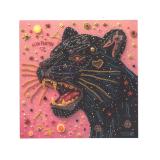
ÁCIDO PANTERA - S/T

ÁCIDO PANTERA

S/T

7"-VinylEDL003/SOAB001
SUN OF A BEACH
29.01.2026

" A very limited 7” for the tropical heads, beat travellers and cosmic cumbia astronauts on the new imprint Sun Of A Beach — the free-spirited daughter of Editions de Lux, who skipped town, fell in love somewhere between Kingston and Cartagena, and came back glowing, barefoot, and heavy on the bass.

At home in the steaming rainforest as much as the urban jungle of the Chapinero district of Bogotá, Colombia’s psychedelic groove pilots Ácido Pantera deliver a double-sided tropical weapon aimed straight at late-night sweatboxes, boat parties, and sun-soaked terraces.

"Te quiero, te amo” is a declaration of love at 132 bpm, bouncing along like a low-rider over cobblestones while neon synths float in the humid air.

Flip it for “Pájaro cantor”, a sound system destroyer that will lock the floor in an acid trance that feels both ancestral and futuristic in the same breath. This one’s featured on the FC26 soundtrack and will have you shimmying like Luis Díaz right before he bangs one into the top corner!

You know what to do!"

non in magazzino

Ordina ora e ordineremo l'articolo per te presso il nostro fornitore.

14,08

Last In: 15 days ago
CAY - Another Life (2x12")

CAY unveils his personal side on Another Life, a debut album rich in melancholic euphoria

The expressive, multi-faceted 10 tracker comes on Mind Against's HABITAT label in January 2026

Cologne-born producer CAY explores beyond the dancefloor with Another Life, a debut album that trades peak-time pressure for an ambitious and artful exploration of self. Far from being rooted in one genre, the record weaves his own honest vocals with a wide range of powerful rhythms that pull from progressive, broken beat, techno and trance.

For CAY, making music has always offered refuge and a place to calm his mind, process life’s chaos and channel personal experiences into sound. His journey started in the clubs of Cologne, in illegal forest raves and with trips to Berlin to soak up big room techno. His search for more purpose, away from mental demons and the darker side of the party lifestyle, led him to production. DJing followed after a push from his brother turned Manager, and while those experiences around Europe shaped his understanding of dance floor dynamics, he was never in a rush to release his early experiments.

Instead, CAY took private time to evolve into an accomplished artist with his own musical voice. Label heads Mind Against were so impressed when they heard what he sent to their demo inbox, they both reached out to collaborate, and he has since released on their label HABITAT.

With Another Life, he is making music that is multilayered and rich in narrative, rather than defined purely by big moments. It is drawn from years of writing, with more than 60 tracks whittled down to one concise, impactful statement. "There wasn't one big concept,” says CAY “but there was direction. It's a big risk for me, but I wanted to introduce people who like club music to something deeper. I want the music to say something real.”

Because of that, Another Life introduces CAY the vocalist. For the first time, he sings on several tracks. The subjects are real, whether that's an important friend, a moment with his girlfriend or, on 'Runaway', the thought of giving up and escaping everything. The lyrics are honest but often slightly oblique, so they invite your own readings rather than spelling everything out.

Sonically, the album moves between optimistic grandeur and introspective reality. It's cinematic but personal and bridges the gap between dancefloor drive and vulnerable storytelling. There is a grand scale to many of the tracks, with arching synths reaching and heavyhearted drums anchoring a groove: you'll dance, you'll cry, maybe both at the same time.

Another Life is the sound of a producer granting himself permission to sing, turn inwards and risk audience expectations. It’s intimate without being insular, club-capable without being confined, and a compelling first chapter for an artist who has spent years building toward this moment of truth.

non in magazzino

Ordina ora e ordineremo l'articolo per te presso il nostro fornitore.

30,46

Last In: 76 days ago
Various - Tempa Allstars Vol.9 (2x12")
non in magazzino

Ordina ora e ordineremo l'articolo per te presso il nostro fornitore.

26,47

Last In: 76 days ago
Debit - Desaceleradas

Debit

Desaceleradas

12inchLOVE141
Modern Love
26.01.2026

A chopped-and-screwed love letter to the sounds of rebajada – half-speed cumbia, pioneered by Sonido Dueñez in the 1990s, and born from an overheated turntable motor that didn’t make the crowd stop dancing. With Debit’s treatment, rebajada becomes an ethereal, at times intense ambient tapestry that’s also a history lesson.

Spend any amount of time pacing the streets of Monterrey, the bustling city in the north of Mexico where Delia Beatriz, aka Debit, grew up, and you’ll be sure to catch traces of cumbia echoing from Bluetooth speakers, DIY soundsystems, or car stereos. An Afro-Latin dance form and »practica cultural« originating in Colombia in the early 19th century, cumbia evolved rapidly in the early 1900s, as a localised sound played on drums and flutes quickly modernised to integrate European instrumentation like the accordion. When it reached Mexico in the 1940s, the sound shifted again, fusing with mariachi styles and integrating further vallenato folk elements. Eventually, cumbia spread across the entirety of Latin America, splintering into a spectrum of different musical styles such as chicha in Peru, and cumbia villera in Argentina. And over in Monterrey, cumbia inadvertently found its own idiosyncratic groove.

From the 1950s to the 1970s, waves of immigrants from across Mexico and Latin America headed to Monterrey to find work, making a home in Colonia Independencia. Colombian cumbia records, shipped in from Mexico City, Houston, and Miami, became the soundtrack of the neighbourhood, relaying familiar stories to a rural working class adjusting to their new industrial reality. The sound struck a chord with locals, and huge street parties hosted by ramshackle soundsystems known as sonideros unified the diverse community. So when cumbia rebajada materialised serendipitously in the 1990s, it emphasised and highlighted the memory distortions at the heart of the immigrant experience. Local record collector, selector, and sonidero Gabriel Dueñez had been playing cumbia for hours one night when disaster struck: his turntable’s motor overheated and slowed down, turning the music into a warped groan, with half-speed voices echoing over wobbly accordion drones and splashy drums. But the crowd kept dancing, and Sonido Dueñez realised he’d struck gold – cumbia rebajada was born.

Over the next few years, he dubbed a popular series of mixtapes, hawking them at the flea market on the dried-up Santa Catarina riverbed beneath El Puente del Papa, the bridge that links downtown Monterrey with Independencia. These woozy archives became the stuff of legend, poetically but subconsciously shadowing DJ Screw’s series of epochal cassettes that appeared over the border in Houston. Beatriz uses Sonido Dueñez’s first two tapes as the starting point for »Desaceleradas«, entering into a dialogue with time, culture, and geography as she recalls the sonic ecosystem that surrounded her decades ago, long before she emigrated to the USA. If 2022’s acclaimed »The Long Count« was an attempt to recover concealed pre-Columbian history in the face of colonisation, »Desaceleradas« jumps forward, figuring out how memory and shared celebration can resist a more contemporary form of cultural erasure. As AI systems scrape, blend, and decontextualise culture around us, leaving vapid slop, »Desaceleradas« proposes a slower, more careful, and ultimately more human kind of engagement. It’s an archive with a pulse.

non in magazzino

Ordina ora e ordineremo l'articolo per te presso il nostro fornitore.

28,15

Last In: 3 months ago
BLOKKONTROL - I II III LP

“I II III” is pure voltage. An EBM synth-punk blasting assault forged in the concrete heart of Kyiv. These tracks don’t just move: they hit, with brutalist force, fury, and cold rage. Each beat stomps forward like a clenched fist, a sound for strobe-lit riots and blacked-out warehouses. Body music as survival instinct and harsh rhythm as revolt. Raw. Unrelenting. Necessary Presented in ONE- OFF truly limited edition of 300 copies lacquered pressed on 180 gr. high quality solid RED vinyl, All tracks have been specially remastered for vinyl by Daniel Hallhuber at Young and Cold Studios (Germany).

In stock dal27.05.2026

18,91

Last In: 14 days ago
Ronnie Herel - Ronnie Herel Presents Neo Soul Sessions Vol. 2 LP 2x12"
  • A1: Vula – Want Ur Love
  • A2: Terri Walker – Missing You (Ronnie Herel Remix)
  • A3: Lukas Setto – Can You Feel The Love
  • B1: Bon Garcon Ft. Michele Escoffery – Love Is Real
  • B2: Tyler Daley – All I Need
  • B3: Legato – Thug Luv
  • C1: Zoe Kypri – Holding You
  • C2: Vula – Tru Luv
  • C3: Tyler Daley – 4So Long
  • D1: Sebastian Mikael – Next Chapter
  • D2: Anamé Rose – I Am
  • D3: Slakah The Beatchild – The Cure

Blues and Soul Award winner and double MOBO Awards nominee Ronnie Herel is back with his 2nd volume of his excellent compilation series Neo-Soul Sessions. Ronnie, a massively important figure in the UK Black music scene, is a radio presenter with Mi Soul and includes BBC 1xtra in his broadcasting credits. He is a DJ of international renown and was one half of the Quartz production duo which scored memorable hits with Dina Carroll. His undisputed love for and knowledge of the Neo-Soul genre shines through in the Neo-Soul Sessions and this latest, volume 2, is no exception. Featuring tracks from artists such as Vula, Terri Walker, Aname Rose and Slakah the Beatchild, among others, Neo-Soul Sessions volume 2 is a brilliantly curated and pieced together selection of twelve tracks that absolutely nails the beauty of the later releases in the Neo-Soul genre. Played from start to finish the track selection and order is a pre-made DJ set that flows in a way that would soundtrack a dancefloor, a house party and an excellent backdrop of tunes for any time and day of the week. Ronnie's passion for championing independent artists is also evident in his selections here and the compilation serves as a platform for those voices who deserve to break through. The decision to choose six of his favourite tracks to sit alongside six exclusive and unreleased gems means that a light is now shined on every artist featured on the compilation. An absolute must for serious lovers of Neo-Soul, RnB and Black Music, Neo-Soul Sessions volume 2 is released on double vinyl LP and CD formats.

pre-ordina ora23.01.2026

dovrebbe essere pubblicato su 23.01.2026

35,71
CLAMMBON - Lover Album 2x12

CLAMMBON

Lover Album 2x12

2x12inchCOJA-9570/1
NIPPON COLUMBIA JAPAN
23.01.2026
  • A1: Prayer (Akiko Yano)
  • A2: That's The Spirit (Judee Sill)
  • A3: As Long As He Lies Perfectly Still (The Soft Machine)
  • A4: Outing (Super Butter Dog)
  • B1: Waves Roll (Small Circle Of Friends)
  • B2: Summer Nude (Magokoro Brothers)
  • B3: Across The Universe (The Beatles)
  • C1: Night Cruising (Fishmans)
  • C2: Ishin Denshin - You've Got To Help Yourself - (Ymo)
  • C3: I'm Not A Know It All (Bow Wow Wow)
  • D1: Kahlua Milk (Yasuyuki Okamura)
  • D2: Odayaka Na Kurashi (Yuichi Ohata)
  • D3: I Shall Be Released (The Band)

Clammbon, who have performed numerous tribute albums for artists such as Yasuyuki Okamura, Fishmans, and YMO, have released their first covers album, including
all of their classic covers. From Akiko Yano to Bow Wow Wow, the selection and arrangements show the band's depth, and the loose and casual recordings of
the Magokoro Brothers' "Summer Nude" and the Beatles' "Across the Universe" featuring Takashi Nagatsumi are particularly captivating.

pre-ordina ora23.01.2026

dovrebbe essere pubblicato su 23.01.2026

48,11
The Dave Clark Five - All The Hits

Die Dave Clark Five verkauften mit ihrem einzigartigen Musikstil über hundert Millionen Tonträger. „All
The Hits“ ist die ultimative Sammlung ihrer größten Hits, darunter „Glad All Over“, das die Beatles in
Großbritannien von Platz 1 der Charts verdrängte, „Bits & Pieces“, „Do You Love Me“ und „Over and
Over“, das in den USA die Spitze der Charts erreichte. Diese Neuauflage erscheint als 1-CD-Digisleeve mit
Booklet und als 1-LP auf schwarzem Vinyl und enthält alle großen DC5-Hits.
Die Dave Clark Five waren die erste englische Band, die in den USA tourte und die British Invasion anführte.
In ihren ersten zwei Jahren in den USA landeten sie nicht weniger als fünfzehn Top-20-Hits in Folge – mehr
als jede andere Band außer den Beatles. Sie eroberten die Welt im Sturm und prägten die Rockmusik
maßgeblich, indem sie einen Hit nach dem anderen über die Radiosender der Welt verbreiteten.

pre-ordina ora23.01.2026

dovrebbe essere pubblicato su 23.01.2026

27,31
Xploding Plastix - Amateur Girlfriends Go Proskirt Agents LP 2x12"
  • 1: Sports, Not Heavy Crime
  • 2: Funnybones & Lazylegs
  • 3 6: Hours Starlight
  • 4: Behind The Eightball
  • 5: Single Stroke Ruffs
  • 6: Treat Me Mean, I Need The Reputation
  • 7: Relieved Beyond Repair
  • 8: Tintinnamputation
  • 9: More Powah To Ya
  • 10: Having Smarter Babies
  • 11: Far-Flung Tonic
  • 12: Happy Jizz Girls
  • 13: Doubletalk Gets Through To You
  • 14: Comatose Luck
  • 15: Pistola Hub Club
  • 16: Behind The Eightball (Remix)
  • 17: Shakedown Shutoff (Live In Manchester)
  • 18: Omar Sharif Bonanza
  • 19: Popfrontical Eclection
  • 20: The Jim Pedesen Theme

Das legendäre Debütalbum der norwegischen Funkateers Xploding Plastix, "Amateur Girlfriends Go Proskirt Agents" (2001), erscheint als Deluxe-Doppelvinyl mit 6 zusätzlichen Bonustracks. Mit ihrer Mischung aus obskuren Jazz-Samples, coolen Beats, melodischem Feeling, einer unkonventionellen Herangehensweise und einer gehörigen Portion Humor schufen Xploding Plastix ihren ganz eigenen Stil. Eine Art älterer Amon Tobin trifft auf Scott Walker in einem verraucht-schmuddeligen Jazzclub. Dazu noch ein Faible für Film Noir, Balearic Beats, Lo-Fi, absolut abgefahrene Sounds – einfach genial! Der NME schrieb damals: "Währenddessen bieten die Norweger Xploding Plastix – zwei Verrückte mit vielen kleinen Boxen und einem schrecklichen Namen – auf dem Jam Festival eine ganz andere Art von Umbruch. Ihr Sound ist ein lauter, desorientierender Future-Jazz-Krach, eine Mischung aus DJ Foods verrückten Drums, Aphex Twins Taktarten und den stimmungsvollsten, cineastischen Passagen von The Herbaliser. Fantastisch!"

pre-ordina ora23.01.2026

dovrebbe essere pubblicato su 23.01.2026

28,99
Parajekt - Parajekt LP

The music of the duo Parajekt is created on electronic instruments. Drum machines, samplers, modular synths, and effects devices all culminate in a tape recorder, whose limitations invite them to work with great musical and sonic precision.
The resulting pieces serve as the first layer and as a sound score, which is then overwritten, mixed, and refined with dub techniques in a subsequent step.
Elements inspired by electronic beat music, musique concrete, and noise merge in a musical performance that brings the studio action onto the stage and places it front and center.

pre-ordina ora23.01.2026

dovrebbe essere pubblicato su 23.01.2026

21,81
CLAMMBON - Lover Album 2 2x12
  • A1: Call (Kuki Koudan)
  • A2: Goldwrap (E.s.t. (Esbjorn Svensson Trio))
  • A3: U & I (After School Tea Time
  • A4: The Postman (The American Analog Set)
  • B1: Desire - Passion - (Akina Nakamori)
  • B2: State Of Highway (Tokyo No.1 Soul Set)
  • B3: Lady Madonna (The Beatles)
  • C1: O Caroline (Matching Mole)
  • C2: Giyaman (Tabito Nanao)
  • C3: Don't Say Anything (Kako And Katsumi (Original: The Happenings Four))
  • C4: Snoring Of The Clouds (Husking Bee)
  • D1: Wishing For Happiness From Beyond (Izumi Kanata (Shimamoto Sumi))
  • D2: I'm Getting Ready (Michael Kiwanuka)
  • D3: Four In The Morning (Little Creatures)

The second cover album, released in 2013, is now available on vinyl for the first time! It features songs from a variety of genres, both Japanese and Western,
arranged in Clammbon's signature style.


[c] a3. U & I (After School Tea Time [Yui Hirasawa, Mio Akiyama, Ritsu Tainaka, Tsumugi Kotobuki, Azusa Nakano])

pre-ordina ora23.01.2026

dovrebbe essere pubblicato su 23.01.2026

48,11
Charlemagne Palestine - The Organ is the World’s Greatest Synthesizer

For over six decades, Charlemagne Palestine (b. 1947, New York) has been a pioneering composer, performer, and multimedia artist, celebrated for his ecstatic sonic explorations and ritualistic, metaphysical performances. Emerging from the cross-disciplinary New York art scene of the 1960s and ’70s, he helped shape a heretical edge of minimalism alongside figures like Conrad, Riley, Niblock, and Glass. Trained as a Jewish cantor and later as the carillonneur at St. Thomas Church, Palestine cultivated a deep fascination with resonance and overtone—an obsession that evolved through his use of percussion, early synthesizers, and monumental piano works, influencing artists from John Cale to Nick Cave.

Animated by a spirit of ecstatic play and what he calls his »meschugge« (Yiddish for »crazy«) sensibility, Palestine’s universe blends the sacred and the absurd, filled with soft toys, ritual gestures, and immersive sound environments. Rejecting the »minimalist« label in favor of a maximalist, »spontanimalist« approach, he creates long-form, resonant performances that transform spaces into vibrating, living organisms—opening portals into the nature of time, sound, and devotion.

In the same vein, the aptly titled live record »The Organ is the World’s Greatest Synthesizer« – performed during the Sonic Acts Festival at Amsterdam’s Oude Kerk in 2025, and taking its title and cover art from a drawing realized by Palestine himself during the concert – adds to his opaque yet vibrant personal mythology and intimate transcendence, marking a return to the Staalplaat catalog after »Fffroggssichorddd« (2020) and »Music for Big Ears« (2001).

Beginning with a resonating bell and his falsetto overtone singing, then surrendering to the endless, wild soundscapes of tone-feeling and beat frequencies generated by the church’s organ, across 40+ minutes, single sound sources evolve into clusters, entangle fully with one another, and establish their own spatial existence and aural architectures. We witness the traces of something that can be described as a perpetual performance, a test for the ever-changing interaction between artist, instrument, space and, ultimately, us.

Since Palestine has always defined his execution as a form of anti-composition - of simply »being in the music« as if inhabiting a space - the true power of »The Organ is the World’s Greatest Synthesizer« lies in encapsulating a moment of Palestine’s practice in its most authentic, live dimension. Sound becomes at once subtle substance and strange telluric force, animating physical forms from some unknown channel beyond and within, accessible only through our sensorium. The point in this liminal temple of tone, timbre and frequency is not to learn anything but to simply enter. Palestine earns once again his self-given title of contemporary shaman by keeping this sonic portal open, allowing us to witness and make it last.

»I have always felt and heard and mixed the sounds in my world as liquids not as solids. Sonic liquids are material that is endlessly transformable. But I’m not crazy about people who go around defining stuff.«

pre-ordina ora23.01.2026

dovrebbe essere pubblicato su 23.01.2026

24,79
Articoli per pagina:
N/ABPM
Vinyl