When Ann Arbor's Tadd Mullinix began exploring hip-hop under the name Dabrye 20 years ago, he soon honed in on a startling vision of what the genre could be: ingenious, refined, daring. This vision came to life across two albums for Ghostly International — 2001's One/Three and its 2006 follow-up Two/Three— with each record further positioning the quiet Michigan producer as one of his generation's best, equally comfortable creating minimalist instrumental meditations or sharp rap salvos. In the late 2000s, following critical acclaim and accolades from both peers and inspirations (including the late Jay Dee with whom Mullinix collaborated before his untimely passing), Mullinix put the Dabrye moniker on ice and dedicated himself to other genres and ideas. All the while the influence of his work on a new generation of electronic musicians continued to make itself felt in subtle but meaningful ways.
All this changes in 2017 as Dabrye makes his long-awaited return with Three/Three, a razor-sharp rap album that brings to completion a prophetic trilogy. Mullinix's incisive productions provide the backdrop for equally acute rhymes that run the gamut from intergenerational observations and being your best self to back alley deals and having fun in the ride. Guests include indie rap legend DOOM, whose previous collaboration with Dabrye remains a point of reference for many, Wu Tang storyteller Ghostface Killah, L.A word fanatic Jonwayne, and Long Island's rugged surrealist Roc Marciano. Most importantly Three/Three is, much like its predecessor, an unfettered celebration of Detroit-area talent with Guilty Simpson, Phat Kat, Kadence, Quelle Chris, Danny Brown, Shigeto, Clear Soul Forces and more all lending their touch to Dabrye's return.
The blend of American and British dance music, hip-hop sampling, and Jamaican sound clash energy that underpinned Two/Three remains a quiet, guiding principle. At the same time Mullinix rejoices in a refreshed perspective, having had time to incubate ideas and find clarity in the distance between albums and the evolution of scenes.The beats are looser and less angular, more embracing of repetition. Organic techniques inspired by soul and jazz round off some of the harsher sonics. The resulting broad palette of tracks reflects both this evolution and the range of the Dabrye persona: relaxed headnod ("Tunnel Vision"), nervous, slow-motion electro ("The Appetite"), glacial motifs ("Emancipated"), jazzy, cut-up funk ("Sunset"), minimal brutalism ("Electrocutor"), intricate layering ("Culture Shuffle").
Three/Three marks the return of an innovator after close to a decade of silence. Despite what the title might imply, the album isn't the end of the story but rather the completion of a creative arc. Expect more Dabrye in the near future. The game is far from over.
- Final installment of the /Three series, started in 2001
- Guests include Ghostface Killah, Jonwayne, Doom, Danny Brown, Shigeto, and more.
- Media support from: The Wire, FACT Magazine, The Detroit Free Press, Pitchfork, XLR8R
- Past collabs with Jay Dee (J Dilla), MF DOOM, Beans & more
- Vinyl is housed in a matte jacket with black hot foil and includes 24-page zine designed by Michael Cina.
Suche:beats international
The remarkable thing about BELP's new album is its two-dimensional function. It works both on a loud and a quiet volume. Some tracks would go down well as a club track, like opener 'Travelling Thru Galaxies'. This track brings back memories of the best work released on the Hyperdub label, with it's fine combination of synths and irresistible, dubby beats. Elsewhere, 'Off Ending' might start off as 'dancehall-but-not-quite dancehall' track but when half way the synths kick in they change the feeling of the track to a more cerebral level.
BELP is the artist name of Sebastian Schnitzenbaumer. Born in Munich, he partially grew up on the Seychelles islands off the coast of East Africa. Educated in classical piano, those two gravitational poles, European and African influences, form the basis for his musical development. Currently he has close ties to the (dub) Sausage Studio in Hackney, London. In his hometown Munich, the Bavarian capital, BELP took a central role in a series of discussions and events aiming to improve the image and possibilities of Munich, which to his regret is a predominantly posh and hedonistic city where optimistic and uplifting music take central role.
In different guises Schnitzenbaumer works as a much needed antidote. Since 2013 he runs the Schamoni label, focusing on supporting local artists like Leroy and Protein. Its sublabel Jahmoni is responsible for recent works by international artists like Aaron Spectre and DJ Marcelle/Another Nice Mess.
BELP's music is dark, serious and layered. His love for dub and dancehall shines through in his broken beats. At the same time the synth layered tracks give the album an atmospheric feeling.
This also is what makes this album essential: it's refusal to be pigeonholed. The last track on side A, 'By Beauteous Softness', is an a cappella rendition of a 17th century Henry Purcell piece, beautifully sung by Alexander Schneider. This track is preceded by 'Transmission', which is a brilliant abstract work, sounding like wind closing on you from all sides. And you can sip a cocktail whilst listening to the jazzy 'Time And Again' (BELP once worked as a jazz pianist).
It's clear to hear BELP took a long time recording this album. Every note, synth, drum beat, is carefully placed. But what the album might lack on spontaneity it more than compensates this with its sheer musical beauty. This also reflects on the abstract sleeve, like 'Elephants' designed by BELP himself.
Enjoy this album on big speakers, as background music or simply on headphones. There will always be new sounds and layers to be discovered!
For our next Excursion, we're off to the library. In search of library records that is - you know the type, the crazy rare records used for soundtracks and such and such. We have a sick selection of synthed-up beats and pieces chopped together by one Earl Jeffers, making the most out of his international library digging card* (*not a real thing).
For those that don't know, Cardiff's Earl Jeffers is one half of Darkhouse Family, regular family at our sister label, First Word, on which they released their debut album 'The Offering' late last year. Earl is a prolific producer in his own right, also releasing over the years under the aliases Chesus and Metabeats on labels like MCDE, Fat City and Local Talk, collaborating with artists like Byron The Aquarius, Action Bronson and Kamaal Williams / Henry Wu, turning his hand ably to house, hip hop, jungle, jazz and more. All this in addition to running his own label, Mélange Records.
A dedicated digger and record collector first and foremost, Earl has provided us with a quadruple set of heavyweight stuttery sci-fi boom bap. In Earl's words: "This record was mostly inspired by my penchant for the more electronic / synthesized jams, mostly replayed from the original compositions then thrust in to 2028 and beyond...."
- A1: Los Pastores
- A2: Ilaló (Feat. Mateo Kingman)
- A3: Barú
- A4: Nadie Lo Riega (Feat. Miriam García)
- A5: Sierra Nevada
- A6: Niño Hermoso (Feat. Gianluz)
- B1: El Señor Del Flautín (Interludio)
- B2: La Victoria (Feat. Lido Pimienta & Manu Ranks)
- B3: Kawa Kawa (Feat. Kaleema)
- B4: Alegría
- B5: Indios Tilcara
- B6: Gira Gira
For the last decade, Argentina has become the epicenter of a musical explosion that characteristically blends folk music from the surrounding Andes and electronic beats. The artist arguably responsible for its emergence on a global platform is one named Chancha Via Circuito- a Buenos Aires native named Pedro Canale whose first album Rodante (2008) opened the floodgates by pushing the borders of Cumbia listeners weren't even aware existed. He's gone on to release other highly acclaimed albums such as Rio Arriba (2010), which Resident Advisor described as 'aural magical realism', and Amansara (2014), which catapulted him onto acclaimed international stages and received praises from Pitchfork to the New York Times.
Four years later, in the midst of some very notable global turbulence, Chancha Via Circuito brings us his highly anticipated new album Bienaventuranza- a word that essentially means bliss. Replete with his signature touches of Andean instruments (think lots of flute and charango), the folkloric elements on this album blend fluidly with danceable and digestible electronic beats. He's been cooking this record slowly, with unprecedented amounts of care and in a much more collaborative manner than his past albums.
Appearing on the album are heavy hitters in the digital cumbia scene, including Mateo Kingman, Kaleema, and Lido Pimienta, all of whom contribute their highly distinguishable sounds to the natural flow of the album. Most of these collaborations came about almost effortlessly. La Victoria is a track that blends cumbia, dancehall, and a bit of mysticism- carried by Lido Pimienta's luminous voice, Colombian Dancehall wizard Manu Ranks happened to be in town and slipped into the song naturally. Kawa Kawa came from an improv jam during rehearsal one day with Kaleema (Heidi Lewandowski) and Federico Estevez (percussionist in Chancha Via Circuito). Niño Hermoso, which is lyrically a fable, sounds the way it does because Pedro saw a video of Gianluz (Gianluca Zonzini), who he knows from dance classes, singing a Pocahontas song on Youtube.
As dancefloor-friendly as it is mystical, Bienaventuranza is as Chancha as it gets- with elements from Cumbia to Dancehall to Andean Folk to Global house, crystal clear production, and collaborations that are evidently natural and genuine, the record holds true to the sound that Canale has played such a huge part in creating. Since the release of his last album, the digital folk scene has also grown exponentially. From a new generation of producers to more listeners in unassuming parts of the globe, Pedro has been humbled to see the sound develop- and proves with this album that he's grown swiftly alongside it.
The early 2000s were a time of upheaval for hip-hop. The underground and mainstream divide that had dened so much of the previous decade was showing the rst signs of irrelevance. Timbaland and The Neptunes made radio rappers sound futuristic while independent artists struggled in a quagmire of backpacks and misguided claims to keep it real. Away from this, in a misunderstood middle ground between hip-hop and electronic music, a new generation of artists were busy imagining a new sound for hip-hop.
One such artist was Scott Prefuse 73' Herren, whose perpendicular MPC chops on his 2001 debut for Warp Records set curious minds racing with possibilities. That same year Tadd Mullinix released his debut as Dabrye on Ghostly International, a sonic wildstyle that appealed to both hip-hop heads and IDM nerds. Sometime that same year Herren and Mullinix met after sharing a bill in Detroit. CD-Rs were exchanged and a year later Eastern Development, Herren's newly launched label, released Dabrye's Instrmntl, a short album with a big impact. On its fteenth anniversary Ghostly International is reissuing Instrmtl on vinyl and making it available digitally for the rst time.
Instrmntl is a continuation of the beat experiments Dabrye began with One/Three and a bridge to the diverse textures that would dene Two/Three four years later. About half of its nine tracks (ten if you lived in Japan) were created at the same time as One/Three while the rest were newer or made specically for the album. Once again Mullinix looked outside of hip-hop to techno, house, and drum & bass for stylistic and technical ideas while embracing the blissful minimalism of a good hip-hop instrumental and the rhythmic nuance of Detroit.
Despite the similarities between Dabrye's debut and this follow up, Mullinix didn't simply replicate what had made One/Three so arresting. He pushed and pulled further between the two cornerstones of his approach to reveal more potentials. Instrmntl takes you deeper into electronic depths — the rugged synth stutter of 'Won', the tumbling, wobbling bass in 'No Child Of God', the electro get down of 'Prospects (Marshall Law)' — while also treading more organic grounds by letting samples breathe and moods unfurl at a gentler pace ('Take Me Home', 'Evelyn', and 'You Know The Formula Right'). And then there are the moments where this push and pull nds balance and the result becomes more, as it does on the mournful march of 'D-Town Tabernacle Choir' and the twinkling daydream of 'This Is Where I Came In'.
At just over 30 minutes, Instrmntl offers a snapshot of a time when potentials seemed innite, when lines could be drawn between jazz, ragga jungle, techno, and hip-hop and the resulting shape divined an exciting future.
- Reissue of the out of print 2002 album, available for the rst time on Ghostly.
- Includes previously Japanese-only bonus track, Gimme Lowlands'
- Standard weight blue vinyl is housed in a matte jacket.
- Dabrye's beats are like Jay Dee getting crunked up with Autechre.' — Prefuse 73
It was chance that brought about the release of One/Three, Dabrye's debut album. Early demos were tucked on the B side of a cassette Tadd Mullinix passed to Sam Valenti in 2000 while working at the Dubplate Pressure record shop in Ann Arbor. Mullinix had spent the late '90s producing jungle, techno, house, hip-hop and more using the All Sound Tracker software as a primary instrument. Each style pulled from a similar sound palette as Mullinix used limitations to define the contours of di-erent musical personalities. Dabrye was his hip-hop wildstyle, a captivating collage of sparse instrumentals inspired by the laid back vibes of midwestern hip-hop and east coast boom bap, the futuristic funk of Umma-era Jay Dee, and the calculated subtlety of Detroit dance music. Released in 2001 as the first in an intended trilogy, One/Three announced Dabrye's arrival with an unavoidable contribution to Detroit hip-hop. Ghostly International is reissuing the album in 2017 for the first time, including a long overdue vinyl edition.
On its release One/Three was the rare album that appealed to both fans of Slum Village's smooth yet rugged hip-hop and enthusiasts of the distinct American IDM released by labels like Schematic. Over the following decade, the inadvertent demo submission turned into a body of work that placed Dabrye alongside innovators such as Prefuse 73 amid the cannon of a new generation of producers. Today, One/Three remains a concise and intriguing study in instrumental hip-hop that helps join the dots between J Dilla and Flying Lotus.
One/Three is a record that says much with little. There are no obvious hip-hop tropes. Instead Mullinix captures the ingenious minimalism of '90s hip-hop instrumentals to build tracks both supple and hard, joyous and melancholy, full of sharply angled rhythms and warm rubbery basslines: 'The Lish' throws a sickly sweet saxophone against digitally fragmented melodies, 'How Many Times (with this)' draws you in with an irresistible, clipped guitar groove, the rhythmic stutter of 'Smoking The Edge' makes your head spin with pleasure. Playing with his inspirations, Mullinix injects omitted downbeats for imagined rhymes and repurposes the intricacy of ragga jungle for breakdowns.
But what really defines One/Three is the rhythmic sensibility and metric modulation of Detroit's school of hip-hop production, which Mullinix was a fervent student of. The beats feel like they're constantly escaping a rigid tempo grid even though they are, in fact, pretty tight. A lot of it is nuance,' Mullinix explains. I've been known to say that I'm not impressed by spectacle. I think that nuance is what really captivates people.'
If you like your beats with a dash of class, do not miss this. An essential purchase of the highest order.' -BBC
- First time all tracks from the original 2001 release appear on vinyl.
- Remastered by Daddy Kev
- Standard weight black vinyl is inserted in to 3.5mm matte finish vinyl jacket.
- Download card includes free download of the Payback EP
- A1: The Stand Feat Wildchild
- A2: Air Feat Doom
- A3: Machines (Part 1)
- A4: Encoded Flow Feat Kadence
- B1: That's What's Up Feat Vast Aire
- B2: Tell Dem
- B3: Nite Eats Day Feat Beans
- B4: Jorgy Feat Waajeed
- B5: Special Feat Gulty Simpson & Paradime
- C1: Bloop
- C2: Viewer Discretion Feat Invincible & Finale
- C3: Piano
- C4: Pressure Feat Ta'raach & Waajeed
- C5: Reconsider Feat Kadence
- D1: Get It Together Feat Invincible & Finale
- D2: My Life Feat Ag
- D3: In Water
- D4: Get Live Feat Big Tone
- D5: Machines (Part 2)
- D6: Game Over Feat Jay Dee & Phat Kata
Tadd Mullinix first made a name for himself as Dabrye in the early 2000s with a pair of instrumental albums combining the rhythmic finesse of Detroit hip-hop with the ingenuity of electronic music. But instrumental beats were only a temporary goal, a way for Mullinix to catch the ears of MCs. On Two/Three, his second Dabrye album for Ghostly International, Mullinix brought together a formidable crew of local and national talent to make the statement he'd always intended. Released in 2006, Two/Three o-ered a fevered vision of rap's future that remains just as intoxicating a decade on. Ahead of the long-await-ed conclusion of Dabrye's hip-hop trilogy in 2018, Ghostly is reissuing Two/Three.
Dabrye's move towards rap began in 2004 with the album's first single, 'Game Over' featuring Jay Dee and Phat Kat. An early inspiration of Dabrye's, Jay Dee invited Mullinix to his crib in 2002 for a listening session during which he picked the 'Game Over' beat to rap on. Crucially everyone involved was in accord that despite perceptions of their respective work this would be a hardcore rap song. Together with Kat, Jay delivered a one-two lyrical punch on 'Game Over' that no one saw coming. Detroit made the world go round and everyone's head spun. 'Game Over' set the tone for the album and, over the next few years, became a Detroit anthem — shortly after Jay's passing in 2006 the audience at Movement Festival sung his verse.
Moody, propulsive, and above all ambitious, Two/Three emerges from a sonic stew of Detroit and UK dance music, Jamaican sound clashes, and hip-hop sampledelia. The guests, a who's who of the mid-'00s underground rap scene, engage in a raucous rhyming session that pays as much attention to the realities of the streets as it does world events. MF Doom, Wildchild, Vast Aire, Beans, and AG represent for the various coasts while local talents — Waajeed, Ta-Raach, Invincible, Finale, Kadence, Guilty Simpson, Big Tone, Phat Kat, and Jay Dee — bring Two/Three alive with an infectious energy. In between bursts of raw rap and hard beats, Dabrye showcases detailed instrumentals that evoke bleak industrial futures, underwater meditations, and smoky late night sessions. With Two/Three Dabrye placed himself at the forefront of hip-hop's new wave, throwing a Molotov cocktail into the rap world as uncompromising as the head-twisting cover art from WK Interact. The independent press praised Mullinix's audacity. Over the following years the impact of Two/Threewas felt in slow increments as Dabrye's music became central to the sonic makeup of a new generation of producers. As this beat scene grew and moved away from rap, it showed Mullinix the influence of his work and the value of his vision for Dabrye as his own brand of Detroit hip-hop.
The Single > Side A 'PHRAKHANONG DISORDER' is T.D.O.S. second single featuring Japanese turntablalist DJ TO-RU (Dujada-Goja) is a bass battle on a downtempo hard drum beat, hypnotic and chaotic like Bangkok's streets. Phra Khanong is a neighbourhood of this megapolis where hip hop culture meets local traditions. Side B is 'NAMBA VIBRATIONS' with DJ TO-RU fine cuts on a dirty digital mish-mash of bass and dub beats,. Just in tune to get lost in electric downtown Osaka before heading to the dance floor facing a massive sound system. The Artist > The Dude Of Stratosphear aka T.D.O.S. is Jerome Doudet (Swiss/French artist and bass player based in Bangkok). DJ, vinyl collector, musician, graphic designer and East Asian music connoisseur, The Dude of Stratosphear was groomed in the vibrant alternative scene of the very international city of Geneva Switzerland. Growing up in a musical household (His father was a disco DJ), Growing up in a musical household (His father was a disco DJ), Jerome was exposed to a wide range of music at very early age, and started playing the 4 strings at the age of 10. Bass player in the swiss math-core bands Knut for a decade, he toured intensely all around Europe's biggest venues and festivals. He also joined the very underground american band Half Japanese for a couple of european tour and recorded the album Bone Head in 1997. And on top of the list was opening for the mighty KISS with the canadian band Bionic (CA) at Molson center in Monteal. Also member of various bands such as Imericani (SP/IT/CH), Intercostal (CH), Troll Patrol (CH), Bliscappen Van Maria (CH-IT), Edison (CH), Polar (CH-FR), Prejudice (CH-FR), Buz (CH), Void (CH), Ultra DB (CH), to name a few.
'Y.O.U' is an emotive album of tripped out ambient hip hop instrumentals by FROM, written and recorded in the mid 90s under Trevor Jackson's infamous production persona The Underdog. Originally planned as a vocally-led, song-based project that should've surfaced between his production for The Brotherhood's legendary British hip hop album 'Elementalz' in 1996 and his acclaimed debut PLAYGROUP release in 2001, for multiple reasons it hasn't seen the light of day, until now.
Only Available as a ultra limited edition Vinyl and CD release, the LP consists of 11 tracks. Dream-like synth lines, ambient melodies, blissful guitars, raw beats and soft, fractured vocals draw you into a hallucinatory 12bit world. Drawing on Jackson's progressive and jazz rock influences as well as psychedelia and early electronics, the album closes with 'Belladonna'- a piano-sampled homage to the east coast golden age hip hop pioneers. NB: The CD features a longer version of 'Veratrum' not available on the vinyl version. All created on an Akai S950 mono sampler (limited to only 20 seconds sampling time), an Akai MG1212 12 channel mixer (which recorded on Betamax style tapes) and primitive outboard gear, Jackson honed his skills from his bedroom, where he produced the majority of his output at the time. With a huge collection of obscure vinyl, he dug deep into uncharted territories for samples and sound clips
- using material no one knew about (or would think about touching) in the mid 90s. The Underdog's initial releases were on Jackson's own Bite It! recordings label, which was started in 1991. A unique platform for UK hip hop with a visual aesthetic and ethos more akin to ECM and Factory
than other rap labels, its mission was to push artists beyond musical and cultural limitations prevalent at the time.
Home to artists like The Brotherhood, Scientists of Sound, Little Pauly Ryan and Lewis Parker (who later signed to Massive Attack's Melancholic label), Bite It! became a great success;
finally British rap had artists and releases that looked and sounded as good as their revered American counterparts. In 1993 Richard Russell (who had just started running XL recordings) asked Trevor to remix House of Pain, resulting in a top ten record, which helped launch Jackson's musical career via further remixes Massive Attack, Run DMC, U2, The Cure and countless others. Off the back of his remix success, The Brotherhood signed a deal in 1994 with Virgin Records. Their 'ELEMENTALZ' album was produced by Jackson and is still lauded by many as one of the finest British hip hop albums of all time.
Jackson continued to remix and produce as The Underdog until managerial issues forced him out of the project he'd been instrumental in instigating.
Soon after his close friend and manager tragically passed away - which when combined with the UK hip hop scene becoming increasingly volatile and the moral demise of rap culture in general - convinced Trevor to hang up his hip hop hat for good.
After leaving The Brotherhood he started Output Recordings. Internationally and sonically diverse, it gave Jackson a free reign to do as he pleased, with genre twisting releases from the likes of Fridge, Four Tet, Sonovac, Colder, his own PLAYGROUP project, The Rapture and LCD Soundsystem. With a non-compromising attitude, strong DIY aesthetic and consistently groundbreaking releases across its ten year life between 1996 and 2006, it became one of the most important and respected independent labels in the world.
One year on since their last venture as Black Spuma on International Feel, Fabrizio Mammarella, also known as Telespazio and Phillip Lauer, one half of Tuff City Kids, are back with the insatiable Orme EP. Showcasing the pair at their best, this four tracker is where acid meets emotive melodies and shimmering Italo synths lines. In the words of Phillip Lauer it's where "balearic vibes, acid love and a lost tape from 1991 merge into pure bliss!.." The pair first met when Phillip (trading as Arto Mwambe) remixed a Telespazio track. They started working together in 2015 when their first joint release Oasi was released on International Feel. An integral part of the label, Lauer recently released the highly acclaimed self-titled Talamanca System album on International Feel alongside Gerd Janson and label boss Mark Barrott. Both Lauer and Mammarella have a history of quality releases on great labels: Running Back, Beats In Space, Permanent Vacation and Rollerboys Recordings.
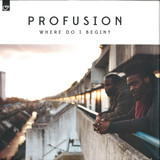
Profusion (noun): an abundance of something rich.
The sonic partnership of K15 and Emeson originated in the days of MySpace. A future of combining their skills was inevitable, and now in 2017, it's time to unleash their debut studio album into the ether.
The solo-projects of Tottenham-raised Kieron Ifill (aka K15) date back a decade, but were truly kick-started on labels such as Kyle Hall's Wild Oats and WotNot Music, with a number of genre-crossing releases dropping ever since, including the WU15 project (along with Yussef Kamaal's Henry Wu, on Eglo Records). Additionally to his production work, he has established himself internationally as a DJ, from the Jazz Cafe to the CoOp parties.
Partner in Profusion, Emeson, has many skills to his bow - singing, songwriting, producing, promoting, DJing (under the alias Ed Nice) and acting. As a musician, his varied skill-set has seen him work with Chico Hamilton, Carla Duke, Karmasound, Uzo Madu and Chris Jerome. A frontman for soul-jazz groups LifeSize, The One and Saturn's Children, he has featured on releases for BBE and Tokyo Dawn, and appeared live on stage at the likes of Ronnie Scott's.
The debut single was supported by tastemaker blogs Wonderland, XLR8R and Stamp The Wax, has been bumped by selectors such as Lefto and Jazzie B, and played on NTS, Worldwide FM, Mi-Soul, LeMellotron, Balamii Radio, Itch FM, Invader FM, Soho Radio and various stations across Europe and the US.
This album is full to the brim with summery sun-soaked synths, drifting across the warmest of basslines and heavyweight beats. Emeson's rich vocals gracefully ride atop of K15's delectably bruk twist on neo-soul sonics and electronics, this is some seriously classy contemporary London soul music, that manages to incorporate flashes of various dance music techniques, sound-system etiquette and jazz-tinged rhythms. As future-thinking as it is subtly retrospective, it doesn't lend itself to one genre, it intentionally embodies the best of many. An array of everything that is great about British black music in 2017. The message the album conveys itself couldn't have come at a more poignant time. Where do we begin
Profusion - an abundance of something rich indeed.
* Includes a DIN A2long poster inside the 12" sleeve with edition number and music download code
* Rogue Style 1 EP is an international homage to b-boy culture, where the worlds of breakbeat music and breakdance collide. Sinistarr (USA), Kiat (Singapore), Kabuki (Germany) and HomeSick (Canada) are connected in many ways, now they lay bare their hip-hop roots and give something back with a fresh take through the eyes of drum & bass and juke/footwork. Here is what they have to say:
Sinistarr: "As a teenager I grew up as a b-boy, dancing anywhere I could: schools, parks, festivals, you name it, my crew was there with cardboard and a speaker. I eventually got deeper into DJing and making music and learned to bring a sound that's not just for the crowds and the purists, but also for all the dancers!"
Kiat: "Hip Hop has taught me to keep evolving, to explore new forms in all my art. Progression is the key to evolution. -- I met Sinistarr online thru myspace and we had a musical connection which led to our first collaboration 'Black Diamonds' which is still one of my personal favourite tunes I've been fortunate to be part of it's creation. With Kabuki, i've always been a fan of his work since his 'Makai' alias on No U-Turn, despite meeting him only recently thru the label.I've always known him to be constantly progressing his ideas in his music which I respect alot."
Kabuki: "B-boy culture has always been a strong influence on how I pursued my art, mainly because of its DIY ethos and attitude of perfecting your craft. Incidentally these were also the aspects that drew me to Jungle when I first discovered it in the nineties. -- I'm happy to rub shoulders with Kiat, Sinistarr and HomeSick on this release, as I'm a fan of their music foremost, but also because we became friends through the music."
HomeSick: "I was only a child in the 90s and as a result I feel like my understanding of b-boy culture was experienced second hand thanks to 90s/early 2000s hip hop music. I appreciate the parallels I can see with footwork culture, particularly the similarities to the community mentality of break dancing. -- I know Sinistarr through booking him for our local party night in Alberta, Canada called Percolate. Our city must have left an impression on him because a year later he made the move here from Detroit. Had the pleasure of hosting him as a room mate for a little over half a year, the home was a very potent creative space during this time. Kabuki hit me up a few years ago and we very quickly got to sharing tracks and collaborating together. Mans a master of production and a super important part of the global scene."
The idea for a reminiscence of b-boy culture stem from label owner Booga:
"Why am I interested in this so much I grew up in East Germany and as the movie "Beat Street" premiered in 1985 over here I was age 13 and blown away by the energy, the music, the wit, the style - everything in this movie was better than everyday life in Leipzig. So I started saving for a cassette recorder and taped music shows from West German radio and prepared tapes for school disco gigs to the hope somebody would do the "robot" to Arthur Baker "Breaker's Revenge". Unfortunately that never worked out hahaha. But I was hooked since then and as the wall came down in 1989 I travelled to West Berlin just to buy the Beats, Breaks and Scratches 1-4 vinyl box by Simon Harris. The fascination for breakbeats never stopped and before I discovered Jungle around '94 I was down with the British cut up house thing from the likes of Marrs, Krush and Coldcut as another form of breakbeat music. The "do it yourself" spirit from hip hop culture inspired me to start a local website called breaks.org in 2000 to locally promote the drum and bass scene with emerging producers, djs and mcs for a wider audience and I threw in some interviews with Storm, Kabuki, Rob Playford, Klute and John B. That turnt into a multi author blog called itsyours.info in 2004 which still exists - that is where I had the pleasure to introduce Kiat and Ash in 2007. All these years I was listening and playing drum and bass tunes when the occasional "bboy tune" came up, some were obvious like Alex Reece "B-Boy Flavour", Lemon D "B Boyz", Commix "Change" and some were not so much self-explanatory like Digital & Spirits "Phantom Force" and the remixes by T-Power & Codeine or Fracture's Astrophonica Edit - but I felt the hidden force of breakdancing nevertheless. With the Rogue Style series I have the first class opportunity to ask established and new Defrostatica artists to present a current interpretation of b-boy culture. This is a dream coming true."
Shelter is one Alan Briand, a young Parisian producer with a strong melodic centre producing a sound that pulls on the Zouk, the Afro, the Balearic and the Ambient palette. Zon Zon Zon is only his fifth release and his first mini album, following the series on International Feel that has brought us material from Len Leise, Wolf Muller and CFCF.
International Feel first met Shelter on a trip to Paris a few years back. It sounds like a story from a Nick Hornby novel, but there's a record shop in Paris called L'International Records, run by a guy called Dave who has a group of young French DJs, producers and promoters that visit the store, hang out and buy and listen to music - a story no doubt currently being repeated throughout the world as new generations immerse themselves in the culture. Shelter is a producer who has sucked up all that he has been hearing around him for a number of years and is now producing a quality sound, pulling on the exotic.
The seven tracks on this mini-album are taken from an extensive pool of Shelter's melodic magic. Some people lead on the beats, some on the production, but Alan focuses on the melody, with the beat closely tied in as support. Señor Zalla starts the album with an afro vibe, closely followed by the Zouk-style of Zon Zon Zon and Port-au-Cœur's mellow Balearic tones, as Shelter twists nature's sounds into his own sonic world. Bucolica, an upbeat wonder of a track, turns to the ambient mantra of Courant Rouge and it's distant cousin Courant Bleu, a classic rhythmic balearic piece with syncopated melody and delayed drums. La Volière (the French can make even bird cage sound beautiful) brings the album to a close with a smile in the mind's eye.
Zon Zon Zon is universal. It could easily have been created in Ibiza or Canada, Australia or Africa. It was in fact recorded at Paris 11, where Shelter forged beauty through the sounds of nature and uncovers a wisdom in its simplicity. We can expect good things from Alan. Here's the first chapter.
The reveries begin with a simple electrical hum - a starting signal for the appearance of a vibrant array of sound, shifting before us in seemingly random motion. Before we know it, all those pulsating melodies, razor-cut hifi-house beats and drunken robot jazz ensembles start forming into patterns, secretly & perfectly designed by one Art Alfie. A long time operator in Stockholm's small but insistent underground music scene, Oscar Wedrén broke through internationally in 2012 with the Karlovak project, founded with on-off studio and dj partner Rudolf Nordström, a.k.a. Mr. Tophat. The duo's inexplicably fresh takes on classic dance music tropes is as much a result of a brilliantly odd pairing of personalities as of a defined concept and a precise method in searching for the perfect house groove. While writing Reveries Of, released early spring 2017 through Studio Barnhus, Art Alfie freed himself of all conceptual footholds, delving instead deep into his archives of old and new memories and feels, working with improptu field recordings and emotionally-guided sampling processes. He came back with an intricate and personal debut album and he didn't lose his groove on the way.
'I take my guitar and strum and sing some tings and blow people's mind. But I ain't trying to do anybody's music. I'm doing what I feel' - Shadow
When it came out in 1984 the far-out album Sweet Sweet Dreams by Trinidad & Tobago's Shadow (aka Winston Bailey) was described as 'way ahead of its time'. Undeservedly it was panned by critics and, unable to reach markets, disappeared into the dusty record collections of a few music aficionados. Now, more than three decades later that cosmic dance-floor UFO is about to take off again, change all that and set the record straight. Remastered and cut by Frank Meritt at The Carvery the album is truly a masterpiece.
But who is this Shadow behind Sweet Sweet Dreams Shadow is a man of understated magnitude. A truly enigmatic artist, he first emerged in Trinidad and Tobago during the 1970s, becoming a part of the tapestry of Caribbean music and reinvigorating calypso at the time. Calypso, the indigenous folk music of Trinidad and Tobago, has roots in West African kaiso rhythms, French Creole influences, and the hardships endured by the African slaves brought to Trinbago, whose descendants still use it as a tool for satire, self-expression, and social commentary. Calypso has also given birth to several other music genres, including soca, with its uptempo beats and festival context. Shadow effortlessly moves between both.
Shadow came from a humble but musical family and started writing songs as a youth while tending cattle in the fields. To his family's initial chagrin he chose calypso over church music but his talent and drive were undeniable. In the early days of his career Shadow's style was cramped when working with some of the more conservative music arrangers who felt that calypso and soca should fit a mould. But after a while Shadow teamed up with more innovative arrangers, including Arthur 'Art'de Coteau, who followed their and Shadow's intuitions resulting in a long line of hits.
'The first time we met for me to arrange his music we had a heated argument on the arrangement for one of his songs, I was theoretically correct but Shadow was musically right. Shadow broke all the traditional musical rules and made his own and that made him a musical giant. He changed the face of Calypso music in 1974 with the release of "Bassman" a tune in which Bass and magnificent horn line took central stage changing Soca music for ever. What Shadow did with his music was to put calypso on the International Dance circuit, giving it a totally different groove. You could take his music and swing it in any direction, Disco, Pop, Calypso, you name it. His music was different from anything that existed before'. - Carl "Beaver" Henderson, one of Trinidad's veteran producers.
This inert creativeness culminated in Sweet Sweet Dreams which was arranged by Shadow and deals with burning and ever-relevant themes like love and the ups and downs of relationships. a surprising fact for someone mainly known for his satirical and political lyrics. It prompted his manager to wonder if Shadow had written the lyrics while in a state of 'tabanca' (a word used in Trinidad and Tobago to describe lovesickness).
Sweet Sweet Dreams was recorded at the legendary SHARC studios, located on a hill in Chaguaramas (near Port of Spain) and despite a fantastic sound and monster Soca-boogie tunes like 'Lets get it together', 'Lets Make it Up' and 'Way, Way Out' the album was a commercial flop, probably due to the fact that it didn't sound like anything else coming out of Trinidad & Tobago at the time: It fused a range of different rhythms and new sounds, primarily heavy synth riffs.
Shadow took the album's lack of success in his stride with usual aplomb:
'When I did Sweet Dreams I expect something could happen. But nothing big happen because I have no big market and no distribution and all this thing now. So I just cool myself and move on to another song. I wasn't doing just one song. I used to always have plenty songs at the one time. And be writing music'.
What Shadow didn't realise back then was that the proto-electronic cocktail he had mixed in 1984 would only find the recognition it deserved three decades later. Life has swung full circle: Sweet Sweet Dreams has come true and been elevated to holy grail status becoming one of the most sought-after Caribbean disco records in existence.
For this re-release we carried out extensive interviews with Shadow and the musicians and have included as bonuses exclusive photos from Shadow's personal collection and the dancefloor filler tune 'D'Hardest' was added as a bonus track.
Double 180 gram, half-speed vinyl re-release of the orchestral epic. Norwegian Grammy-nominated and critically acclaimed masterpiece «The Mechanical Fair» finally gets it's long awaited vinyl release
Jampacked with a wellspring of harmonic slingshots, pumping beats and melodic rollercoasters, critics called The Mechanical Fair «the best movie you'll never see» and drew comparisons to Igor Stravinsky's «The Rite of Spring» upon it's original release in 2014. It's apparent appeal to an surprisingly wide range of musical communities finally brought it right into DJ dance-wiz Todd Terje's hands. And make no mistake: the physicist hands doesn't settle for an iPad. It craves vinyl. His wholehearted endorsement led the captain of the Olsen Family to clear the rights, assemble his own killer remix and requisition Grammy-winning cutting engineer Matt Colton for a gorgeous double 180 gram, half-speed vinyl re-release of the orchestral epic.
Originally written for a quintet including heavily merited jazz cats Erik Nylander, Ole Morten Vågan, Petter Vågan and Even Helte Hermansen in 2013, The Mechanical Fair expanded at the initiative of the Trondheim Chamber Music Festival, growing bolder and more powerful with the addition of the adventurous and Grammy-winning chamber orchestra The Trondheim Soloists in 2014.
Having just spearheaded seven genre-blending shows in just six days as the «Artist in Residence» of this years prestigious Molde International Jazz Festival, the multi award-winning Norwegian violinist/multiinstrumentalist, composer and producer Ola Kvernberg (35) can look back at an already impressive recording- and performing career. The once 17 year old jazz manouche violin sensation quickly and impatiently moved beyond the jazz realm for inspiration - resulting in seven albums as a solo artist, eight feature films as a movie score composer and countless additional recordings as a sideman. His list of collaborators range from jazz legends Pat Metheny and Joshua Redman, via post/prog-rock act Motorpsycho, to collaborations with world renowned novelists Lars Saabye Christensen and Jo Nesbø. His fearless attitude and relentless drive towards the boundaries of genres has given him a well-earned high standing on the Scandinavian scene today.
Don't miss out on this rollercoasting, genre-twisting magnum opus as it finally hits is true potential on the Olsen label on November 11 this fall.
Stutter & Twitch Records proudly presents the first in an exclusive series of 7" record releases, debuting two previously unreleased tracks on vinyl, from Latino Funk crusaders, Bugalu Foundation. These two spellbinding sides combine the irresistible fusion of Reggae, Funk and Soul with the beats of 'El Barrio' and the Hispanic traditions of Latin America.
Sounds amazing. Blown away. Great studio sound. Heavy!" - Snowboy it's the latin sound done seriously well, this is the real deal" - Craig Charles, Funk and Soul Show, BBC 6 Music
As well as attracting the attention of Craig Charles, appearing as his support act at Hull's Freedom Festival and being regularly played on his Radio 2 and 6 Music shows, Bugalu Foundation have been busy increasing their following with a number of high profile appearances across the UK, including at Gateshead International Festival, supporting Riot Jazz at legendary venue Antwerp Mansion, and opening the 19th Manchester Jazz Festival to glowing reviews.
Boris Werner returns with 'Daymare Dreamer EP' featuring collaborations with noisemaker 'Gretz & Rival of Mars' as well as 'Cinema Royale' and two fresh solo tracks 'Dance of the Hump Back Whale' and 'Frustration (No Strings Attached'). This EP by Werner, known for his infamous 23 hour DJ set in Amsterdam, kicks off with the title tune 'Daymare Dreamer' riding it's way in at 7min40secs in total for a breezy welcome of classic Werner style house beats. This opening track bubbles with roots influence that fans will be familiar with as well as some slick vocal slices drifting in and out. Having previously realised mixes and podcasts alongside the likes of beat creators and funky jammers such as Dj Buck, Lazare Hoche & Malin Génie, William Djoko, and Dj Deeon this new release comes after many live shows and events including his live set from an old wine bodega. His summer calendar is booked up with international tour dates at some of the most spot on locales for dance floor showdowns. This wealth of tour experiences, inspiration and excitement can be felt from the jazzy Dance of the Hump Back Whale' through to the funky pulsations of 'Frustration (No Strings Attached). 'King Hassan a track created with 'Cinema Royale' features superb 80s style house/electro cow-bell samples, mysterious murky baselines and forward motion keyboard funk.
Pursuing their explorations of international Funk and Disco music, Favorite Recordings and Bruno "Patchworks" Hovart present us Voilaaa. With this first 2 tracks single revealing the Afro-Disco inspiration of this new experience, Favorite also expands its new series of Disco 12inch singles recently launched with several fine reissues.
Under the imprint of the label and after their long years of collaboration in the achievement of projects such as The Dynamics, Mr President, Mr Day, Patchworks Galactic Project, or Taggy Matcher, the insatiable French producer therefore returns to his first love and specialty, Disco music, staring this time at the African and Caribbean influences.
Indeed, as everywhere in the 70s and 80s, Funk and Disco movements were extremely influential in these regions, and in most cases, the combination of the festive, yet sometime futile nature of Disco, and the instinctive, deep, sometimes rough nature of African music, sounds like a perfect balance. Aiming to respect this energy and specific sound, Patchworks quickly began producing a few tracks, Using his unique and ruling beats and bass lines as foundations, this time he dresses all with guitars, keyboards and brass distorted with vintage and DIY effects pedals and boxes.
Surrounded by a very dynamic music scene, where there is no shortage of artists with African origins, Patchworks decided to work with local singers, even if it means to accompany them on unusual musical paths. A more than successful bet with a result surprising of authenticity, as it's unveiled by these first two titles alongside Sir Jean and Pat Kalla, both from a musical background as rich than different.
With an album planned for the end of the year, that promises to be as explosive and magnetic, Patchworks and Favorite Recordings make a strike again... Voilaaa tout (Thaaat's all)!!
After the Alma EP' by Shanti Celeste, secretsundaze' s 19th release comes from another UK home grown favourite Wbeeza.
Beeza is a firm part of the secretsundaze family and although it's his first release on the label, he has been a regular fixture at the parties now for 5 or 6 years playing at both the London events and touring internationally with Giles and James as a live act, as well touring extensively by himself.
We hope his music needs no introduction - his sound is quite simply fresh; an amalgamation of so many things from house, techno, jazz, hip hop to more UK leaning garage vibes. Born and bred in South London and the youngest of 6 brothers he has dance music pumping through his veins.
Black Moon EP is up there with the very best of his work and all 3 tracks show a level of maturity that comes from releasing over 14 EPs and close to 2 LPs (his second LP entitled Visions of Love drops next month on Third Ear)
Title track Black Moon is a murky, growling techno workout with syncopated lo fi beats, a thunderous bass line that is eq'd to within an inch of its life, and white noise FX. Within the right hands this should be a deadly weapon.
Like Butta is a hazy, percussive tool that keeps the tension high while B side track Ferguson is arguably the strongest track of the EP. Referencing the Ferguson case in Missouri that sparked vigorous debate about the relationship between the police and African Americans, the track is a timeless groove, coming on like a modern day version of Maurizio's 'M4' with its heads-down, hypnotic deep techno flow that one could simply listen to on repeat. Wbeeza on secretsundaze.....Need we say more!