Steve Von Till has charted an extraordinary musical path over the last several decades, from his main duties as singer and guitarist of the boundary-breaking Neurosis to the psychedelic music of his Harvestman project and the gothic Americana he's released under his own name. But No Wilderness Deep Enough is truly like nothing you've ever heard from him before—an album that's devastatingly beautiful and overwhelming in its scope, reminiscent of the tragic ecstasy of Nick Cave and the Bad Seeds' recent work as well as the borderless ambient music pioneered by Brian Eno, late composer Jóhann Jóhannsson's glacial compositions, and the electronic mutations of Coil.
FOR FANS OF : MARK LANEGAN/MICHAEL GIRA/NICK CAVE.
Over the course of recent time, an aching, growing void has developed where our normal way of life has resided. Uncertainty abounds, and Steve Von Till's No Wilderness Deep Enough provides a voice of existential wisdom and experience to offer comfort and perspective in an era of uncharted territory. These six pieces of music shape a hallucinatory landscape of sound that plumbs the depths of the natural world's mysteries and uncertainties—questions that have vexed humanity since the dawn of time asked anew amidst a backdrop that's as haunting as it is holistic.
Von Till’s fifth solo album is a swirling and iridescent blend of ambient, neo-classical, and gothic Americana that swan-dives into the darkness of modern life, with the resulting emergence a sonic document of rural psychedelia that transcends the physical world—towards a greater spiritual acceptance that connects naturalism, spiritualism, and the corporeal form.
With a foundation of simple melancholy piano chord progressions embellished with mellotron, cello, french horn and electronic treatments Von Till's scorched ache spreads across the terrain of No Wilderness Deep Enough like a brushfire, adding a tactile level to his sonic creation as well as an inviting level of friction to the burning beauty painted across the album's framework.
With a foundation of simple melancholy piano chord progressions that came to fruition during jetlagged nights in his wife’s childhood home in Germany, No Wilderness Deep Enough was further embellished with mellotron and electronic treatments in Von Till’s home studio in North Idaho. Viewing the emerging result as an ambient instrumental album, he consulted friend and engineer Randall Dunn (Marissa Nadler, Earth) about adding live cello and french horn and piano in a proper studio. After enlisting Brent Arnold on cello and Aaron Korn on french horn, he challenged Von Till to sing over the music and make it his next solo album—which is exactly what happened, with final work being completed at Tucker Martine’s (the Decemberists, Neko Case) Flora Recording and Playback in Portland.
Search:before dark
This is the 1973 solo album by Ghanaian percussionist Anthony Kwaku Bah, who was given the nickname „Reebop“ by American
jazz legend Dizzie Gillespie. He passed away early at the age of 39 in Stockholm in 1983, but before made himself a name for his
works with UK 70s rock heroes TRAFFIC and German Krautrockers CAN, amongst others. If you might expect here the prototypical
Afro Beat and Afro Rock you mostly know from British bands, you will be surprised that this is only one part of the deal. Yes, there
are African elements to be found, buried somewhere in this boiling cauldron where polyrhythmic grooves are the base for jazz
improvisations by the brass section, that range from naughty swing and bebop, to freaked out free jazz and enchanting soul jazz
the way it was popular in the late 60s. The arrangements are utterly lush with so much going on here in every aspect that you
would get lost if there was no trace of melody to be discovered, but there they are and they tell you fantastic stories of exotic
places that only exist in your wildest dreams. Kwaku Bah’s rhythm patterns grab you by the horns and pull you into a world of
their own. Hypnotical, irresistible, hot and vivid. The tunes combine jazz, soul, funk and each one is constructed like a self –
contained story. One could imagine these tunes being used as library music for 70s movies from action to romance. All pieces
though are characterized by the constantly pulsating rhythm. To avoid drifting into the field of insubstantial disco dance music,
the performances witnessed here were executed with the highest possible emotional intensity and dedication. Lay back, close
your eyes and float away on a raft of sound upon the wild river of grooves and melodies. Some haunting Exotica jazz passages
with a typical „jungle“ feel get thrown in for the good measure. There are even vocals in an African language hard to identify,
which create and even more mysterious atmosphere. This is just an introduction part of another powerful speed funk groover but
the vocals stay and make this a clear standout track. Saxophone and guitars seem to have a duel here. You will not sit still while
having this tune „Iphonohimine“ coming down on you like a thunderstorm. Blues, Afro Beat, Psychedelic Rock, Funk, it can all be
found in here and the band goes wild into an everlasting improvisation that deprives you of your breath. Can this record get even better? Do not ask, just enjoy what comes next. If you think that some melodies by the giant brass section sound a bit too catchy
just reach out beyond these harmony lines and find yourself in a thicket of grooves, pulsations, bits and pieces of melody with a
dense, sultry atmosphere. Some smaller parts might make you think of cruise ship big bands and white suits, but everybody will
soon drop these and dance in their underwear for the hot blooded power funk base of the tune called „Africa“, which will take
over one’s soul and set it on fire. So clean, so nice and so filthy and dangerous at the same time, this album is a masterpiece of it’s
style. The exciting and very sensual funk rock of „Lovin‘ you baby“ with crazy fuzz guitars and a dark and haunting approach is
another reason to kneel down when you put this record onto your turntable. Great clean lead guitars give it a latin garage rock
edge Carlos Santana would commit serious crimes for. If you love bands like OSIBISA, Eric Burden & WAR, GINGER BAKER
AIRFORCE, SANTANA, Miles Davis, all around 1969 to 1973, this is what you always wanted to listen to. Grab your copy now.
Recumbent Speech, Ezra Feinberg’s second album, opens with a lament. Named for the Robert Frost poem, “Acquainted with the Night” was written during one of the many devastating spectacles of injustice under our current regime. Repeating flutes and synths beam out of a low-end darkness, reflecting a collective sense of loss and alienation. Rising slowly, thickening with guitars and strings, “Acquainted with the Night” lifts off, and so too does the album from there. The second track, “Letter to my Mind,'' features the dynamic interplay of Feinberg's guitar with the loose and playful drumming of Tortoise's John McEntire, both pushing and pulling atop a looping bass figure. "Palms Up" begins with a lockstep pulse recalling early Terry Riley before jumping into an Ashra-like jam with Afrobeat accents. Side B opens with "Ovation," a tryptic with McEntire on drums which sets a wide lens onto a sweeping landscape, with soaring flutes, wordless vocals, and a hypnotic bassline played on a humming fretless that recalls classic ECM jazz-fusion. The piece plunges into an ambient, interior space before reemerging with a guitar solo fried through an old Space Echo effects processor, conjuring lidded Pompeii-era Pink Floyd. The album's title-track finale, "Recumbent Speech," features the magical pedal steel of Chuck Johnson. Unwinding atop a Balearic analog synth pattern, Feinberg stretches textures of Fender Rhodes and acoustic guitar around Johnson’s lyrical steel, with nods to Japanese ambient legend Hiroshi Yoshimura, as well as Cluster & Eno. Recumbent Speech refers to the possibilities, pleasures, fears, and fantasies that occur the moment the noise dies down, when we are recumbent, in repose but still awake, still speaking, and still aware of ourselves as part of the maddening world. Ezra Feinberg is a guitarist, composer, and psychoanalyst living in Jackson Heights, NY. Feinberg was the founding member of the San Francisco psychedelic rock collective Citay, releasing albums on Important Records and Dead Oceans throughout the 2000s. After relocating to NYC, he issued his first solo record, Pentimento and Others, on his imprint Related States and on cassette on Stimulus Progression in 2018. The release, his first since Citay folded in 2012, earned praise from numerous music outlets including Paste Magazine, The Wire, Stereogum, Vice, and Aquarium Drunkard. In recent years, Feinberg has performed and toured near and far with Jefre Cantu-Ledesma, Steve Gunn, Alexander Turnquist, Cruel Diagonals, Daniel Carter, Jonas Reinhardt, Christopher Tignor, Kath Bloom, Robbie Lee, High Aura’d, Glasser, Ava Mendoza, Buck Curran, Real Estate, and many others, and has ongoing studio collaborations with Jefre Cantu-Ledesma and Arp, contributing both guitar and songwriting to the last Arp album Zebra.
House and techno focussed FINA sister label FINA WHITE comes through with more direct dance floor grooves from Bodyjack, aka Chris Finke. The veteran artist serves up two killer tracks, one dub and four locked grooves that provide serious heat for DJs and dancers.
Before now, former DMC competitor Finke has established himself with his Bodytrax label in association with the Clone.nl crew, standout mixes for Radio 1 etc and EPs on the likes of UTTU, Hypercolour and DEXT, all while being a famous former resident of titanic techno party Atomic Jam and playing the world's finest clubs for years.
Arresting opener 'Measure Twice, Cut Once' is a big, buoyant techno monster with warped acid lines and raves vocal stabs all adding fuel to the fire. The locked grooves serve up scintillating breakbeats that are hugely powerful and ripe for abuse in the club, and then 'Enfant Terrible' is a dark and eerie warehouse monster. The bass is loud, the kicks rock solid and an echoing female vocal lost in the midst of it all draws you in deeper. Closing things out, the dub versions strip things back to gritty chords and heavy, well-swung kicks that make you march.
This is high class, high functioning techno from one of the finest in the game.
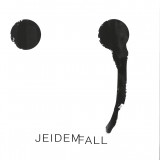
The man in the crowd is a wonderer with relaxed habits. In him the course of things and movement of the city is reproduced. The Düsseldorfer Detlef Weinrich is such a man in the crows. Some one who is constantly listening to future winds through rushes of the past. He loves the night for its free will. And his music tells stories about it. You might know him as a member of the band Kreidler. As a solo artist he goes under the name Tolouse Low Trax. And he's already got three Eps and two albums under his belt. His first solo album „Mask Talk“ thrives on a feathery beat frequency and cool new-wave-strength. His recently released piece „Corridor Plateau“, which appeared as a limited edition to accompany the exhibition „Corridor Plateau“ contains percussive electronics and Industrial sounding like its from the second industrial revolution. His third album „Jeidem Fall“, is also not from here. It sounds like music brought down to earth from the heavens. But its a dark cosmos in which there are only fleeting glimpses of light. All eight tracks were composed in a short space of time over the period of just a few months and fit together perfectly atmospherically. With a musical expressiveness that undoubtedly twists your emotions, „Jeidem Fall“ attacks the subconscious and clouds the mind. The drums have more movement that on „Mask Talk“. Along with the constant tapping of drumsticks goes melodical arpeggios dancing dark and dirty. At times longing vocals drift abstractly through the room, as on „Sa Seline“ or „Geo Scan“, without telling any obvious story.
To sound like stylistic cross references from the present and past is all just speculation for nothing on „Jeidem Fall“ really sounds like anything that has gone before. You could compare the dark minimal timbre of the drum computer aesthetic with Craig Leon's first reductive album „Nommos“. There is also a hint of the minimallist industrial of the Spanish band Esplendor Geometrico in the bubbly textures. But Tolouse Low Trax is still looking from the present into the future and filter and filters all his personal preferences through his MPC and his small synth setup to make them come alive here and now in a new way. Again Tolouse Low Trax has created a truly mysteriously vibrating drum computer music which offers hypnotic magic for the shadowy dance floor. Only a little light should illuminate the whole thing and the bodies that move above them should have no fear from threatening percussion which are displaced into a misty trance. A dark swaying shadowy mass, ideal for a journey at the end of the night and all those non-places where longing sleeps and the last romantics dance while getting drunk.
Tachyon Audio 005 is another installment of the Mutations Volumes by Tachyon Audio creators
Nick Payne and Paradaux A1
The second track A2 Sputnik presented on vinyl as a locked groove.
B1 and spares no one as Inhabitants dive into a deep dark chasm of acid throttled driving rhythms with subtle yet apparent drums driving the track forward into the sci-tech space realm.
Mutations III closes with Mut19 an emotional pulsing and broken beat track featuring the vocal of U.S. free speech and civil rights activist
Mario Savio from a speec in Berkley CA in 1964.
30D Records sublabel ‘Close Encounters’ publishes its third release ‘Third Contact’ EP on April 24th 2020, (initially on digital release) bringing together a range of artists to express their musical vision as a virtual union, somewhat reflective of the globes current confinement. ‘Third Contact EP’ delivers four tracks from an alliance of artists who are at a peak in their careers; Denise Rabe clearly defines her dark, hypnotic trade-mark aesthetic in ‘We’ll Meet In Shanghai’, a timeless track even before its release. Geistform combines industrial-electro with a raw techno drive, continuously channelling his masterful energy in ‘3C 273’. A more dancefloor-oriented B side features ‘Stolen’ from Temudo, delivering rolling groove and distorted bass-lines, Adriana Lopez closing the EP with her high energy, spellbinding ‘SMV’, both B-side tracks perfectly geared toward a wide variety of DJ sets. 30D Records are thrilled to debut all four artists on this special release and all the artists are equally happy to be able to share their creativity and vision through music with you at these strange times.
Purple Vinyl
Opening with "Absolut Bond (Sascha Müller My Name Is Acid Mix)" the pairs first collaboration effort weighs in a deep, hypnotic take on spiralling Acid music for strobe-lit underground raves whereas their second conjunctional joint "What I Mean (Great Evening Mix)" brings forth a darker, more pumping and minimalist approach whilst employing a creepy little motif that gets under your skin like the main theme from your favorite horror flic. On the flip we see Sascha Müller going on a double solo tip with "Work My 303", another masterly crafted Acid piece harking back to the finest twisted clubbing moments of the 90s, before the final cut "Generator Man" explores grinding, distorted Broken Techno / Wonky Techno realms, sucking each and every listener into a cold dystopian, post-apocalyptic future within seconds. Get this.
- A1: Frenetics - The Madman Talk
- A2: Vox Rei - Le Ombre Dei Soldati
- A3: The End - Tears In My Eyes
- A4: Les Blusons Noirs - The Scream
- B1: Illogico - Africani Gemiti
- B2: Blaue Reiter - My Inner Tought
- B3: Polaroid - Vita Immaginaria
- B4: Atelier Du Mal - Back To Taiwan
- C1: Sex - A Sickness Called Distress
- C2: Ship Of Fools - Metal Box
- C3: Ideal Standard - Another Loser
- C4: Nadja - Possession
- D1: The Age - Uer
- D2: Dark Ride - Apocalypse
- D3: Mono - From Planets & Satellites
- D4: Tv Dance - Schneller Leben
Searching for new languages beyond the bitter and nihilist dialect of punk, bands like Gaz Nevada, Litfiba, CCCP, Diaframma, Neon, and many others, began spreading their message all along the Italian peninsula during the early eighties and many of the members of these bands are now some of the best musicians/producers in the Italian independent music panorama (Giovanni Lindo Ferretti, Piero Pelù/Litfiba, Bisca, etc.). 16 tracks by 16 Italian underground bands from 1982-1984: bands who faded into oblivion before ever releasing anything of their own on vinyl. It should, however, be stated that if these sixteen bands had been found on an album, EP or single, they certainly would not have lowered the average quality of albums in that genre…not even in terms of sound quality, which has actually been improved upon here (considering that the original tapes had been lying around collecting dust for at least a quarter of a century) by careful restoration.
Multidisciplinary NYC artist Gavilán Rayna Russom launches her own label Voluminous Arts, dedicated to highlight electronic and experimental artists whose work challenges fixed categories of genre and categorization. Her aim is to create a platform for multidisciplinary work and events. The inaugural release being her second solo album as Gavilán Rayna Russom 'Secret Passage', following up last years 'The Envoy, an homage to the East Side Rail Tunnel in Providence, Rhode Island, and the friendships she made there.
In Rayna’s words:
“I grew up in Providence, Rhode Island in the 1970’s and 80’s. The booming jewelry and textile industries of the previous decades had pulled out by that point. The Italian mob ran most details of the day to day operations of the city. As kids coming up in that environment, before the internet, me and the people I hung out with didn’t know anything else and we worked with what we had to entertain ourselves. We found places that had been forgotten by market interests and made them spaces of creative community building. One of the most special of these places was the East Side Rail Tunnel. Running for almost exactly one mile beneath the city’s streets, the tunnel and nearby Crook Point Bridge were unsupervised autonomous zones where I tasted the possibilities of a world without surveilance. The tunnel was particularly important in my creative development because not only was it a marginal zone apart from monetized spaces of creative consumption, but it also had specific experiential properties. It had a bend in it which meant that when you got to the middle of it you were in complete darkness, and I learned quickly that when you spend enough time in complete darkness you start to hallucinate, which I liked. The acoustics were also remarkable; long natural delays and harmonic-reinforcing reverberances. Making any sound in there added layers of acoustic effects which made noises physical and fluid and, combined with the complete darkness, absolutely dissolved boundaries between internal and external experience. I started hanging out there when I was 14 and continued to return there regularly until development, gentrification and policing eventually made it inaccessible. By the mid ‘90s it was sealed off with progressively more impenetrable barriers. Nowadays it looks very different. This music is about some of the significant experiences I had in this beautifully neglected place and the people I had them with.”
Following up Batozsek’s four slices on Vol 2, Ecdisis Vol 3 is fresh and ready to wreak some havoc.
Some familiar names from the first volume of these series return for the third instalment as well as an otherworldly figure in the electronic music world.
Up first is Vinilette, returning after her excellent appearance on Ecdisis Vol 1. A brood of beats take hold for Vinilette’s rework of Flux of Pink Indians’ “Nothing Is Not Done.” Tribal, this rhythmic romp is inspired by the 1986 piece on Uncarved Block. Layers of kick drums, bongos and toms echo and
judder as a cold line circles and closes ever tighter. Following we have the head honcho, Juanpablo with his extended edit of Mac Blackout’s “Do The Dance In Your Head” which original version came out in Valencia’s imprint B.F.E. in 2011. The original song with its guttering guitar strings and nicotine
stained vocals, proves ample ground for the Frigio boss to work with. The intro is given room, adopting a doom disco march, before the fearsome crash of strings. The lyrics, a lurid tale brimming with menace, are sweetened with twirling notes in this grisly stomper. The final attack sequence comes care of Mick Wills with his amazing cut of an unreleased track by Argentina’s great producer NGLY. Dark and looming this distortion streaked encounter will leave bodies and speaker cones raw. Three edits with one central vision. This is music that cuts to the bone, these are tracks that continue
that intent first established by Ecdisis Vol 1. A collection with a serious impact, no doubt.
Smooth acid injected edgy house cuts on this new Klasse Wrecks! For the last 3 years SJ Tequilla (Naota Matsuda) and Aaty Matoba have been a regular but hidden fixture in Berlin's underground music scene. You may have caught them at their regular spot in a dark tunnel next to the sprawling Ostkreuz station in Kreuzberg, lucky to sneak a quick listen before the cops came in and shut things down yet again. Armed only with an electrical generator, a 606, 303 and various dub echo delay units the pair have slowly been refining their Teknobusker project into quite a special thing. Proving that creativity blooms best when using a limited set of tools, the SJ Teknobuskers music is gritty and dark but also retains an important sense of humour. WRECKS029 was recorded between the years 2018-2019 and does a deft job in capturing a flavour of the rhythms, tones and squelches that echoed down the tunnels during Berlin's endless summers.
yellow marbled vinyl / vinyl only
After a long wait we are happy to finally share the next release on Sleepless Musik and welcome Canarian artist Moises to our family!
A1. Circular
The title track is a dancefloor bomb, bursting with groove. You'll find it aptly placed on the A side, along with a remix from Sakro. The deep, rolling bassline of Circular takes similar form to previous Moises releases, a fast pace dance between low and high notes. Eery breakdowns signalled by spiralling synths accentuate the mysterious melody that dominates the track, before rave like chords creep to the forefront. Then with a cheeky hi-hat flick, the bass is back. The energy emanating from this one is enough to have a crowd going wild at peak-time.
A2. Circular (Sakro Remix)
The remix is a little more subtle, yet equally as suited for late into the night. The percussion overtakes this one with a deeper bassline. It becomes clouded with minimalistic growling and an echoing vocal, injecting the dreary trip we've got quite used to hearing in Sakro's productions.
B1. Homecoming
Flip the record over and the four-tracker becomes complete with two more of Moises' own productions, both of which retain that signature groove. Homecoming pulsates repetitive rhythms laced with chattering patter and choppy voice. A sweet layer to house the jabbing synth that follows for another dance worthy beat.
B2. Inside Out
Inside Out completes the set, representing a different approach. This feel good finale ditches the darkness and is instead full of dreamy high notes and percussive swing, making it the uplifting one of the bunch. It's fun, playful and full of life, perfect for celebrating those moments at the afters when the sun is up and so are the people.
‘Reality Tunnels’ is a concept that was originally introduced by Robert Anton Wilson in his 1983 book ‘Prometheus Rising’. In essence, the concept of a reality tunnel relates to an idea on how we create our own perspective – the subjective filter that we each apply to the world around us; the things we perceive and what our consciousness deems worthy of attention, IE what we see and hear is entirely relative to what we do not.
At points angular and uncompromising with levels in the red, frequencies pushed out and EQ curves stretched into strange new shapes, Pinch mixes both low and hi fi on this boldly distinct sonic statement. It sees him flexing years of production skills – but unconventionally so – knowing well that safe predictability and rounded polish don’t get the most interesting results.
Dark trip hop Bristolia segues into blistering jungle on album opener ‘Entangled Particles’, before planet-hopping onto the spiky insidious grimestep of ‘All Man Got’, featuring the rugged rasp of OG warhorse Trim.
Beginning a triptych of future techno, ‘Accelerated Culture’ offers the album’s most relatively straightforward moment, albeit one of scorching, anthemic dancefloor heat. Delving deeper into the vortex is the synapse sparking wobbler ‘Returnity’, before ‘Finding Space’ reaches to the cosmos’ far-flung, glowing outlands.
Back to an urban reality is ‘Party’, where a subtly menacing sense of dread is ignited by Killa P’s incremental flow, which ramps-up and pairs-back the intensity in unexpected ways. Still moving freely between different realities, ‘Back To Beyond’ is beautiful gloaming ambience, executed with equal fine-tuned grace as the genre’s masters.
Jamaican vocalist Inezi lends sweet tones to the slow burning, roots-meets-modern-bass spiritual ‘Change Is A Must’, and on ‘Non-Terrestrial Forms’ an atmospheric, misty steppers intro segues stealthily into fiercely dystopian, amen-fuelled jungle tekno; marking one of several surprise attacks on the album, where a subtle-slight-of hand shoots the intensity level dynamically up.Closing as it begins, the album is bookended by a piece that recalls the dark, intricate soundscapes of Massive Attack’s ‘Mezzanine’ and Tricky’s ‘Maxinquaye’ – found here in ‘The Last One’s scorched, smoky rocker.
Hit the vinyl double pack for an exclusive and quite unique sounding 120bpm glitchy techno roller featuring man like Trim once again and live cello recordings.
‘Reality Tunnels’ is a concept that was originally introduced by Robert Anton Wilson in his 1983 book ‘Prometheus Rising’. In essence, the concept of a reality tunnel relates to an idea on how we create our own perspective – the subjective filter that we each apply to the world around us; the things we perceive and what our consciousness deems worthy of attention, IE what we see and hear is entirely relative to what we do not.
At points angular and uncompromising with levels in the red, frequencies pushed out and EQ curves stretched into strange new shapes, Pinch mixes both low and hi fi on this boldly distinct sonic statement. It sees him flexing years of production skills – but unconventionally so – knowing well that safe predictability and rounded polish don’t get the most interesting results.
Dark trip hop Bristolia segues into blistering jungle on album opener ‘Entangled Particles’, before planet-hopping onto the spiky insidious grimestep of ‘All Man Got’, featuring the rugged rasp of OG warhorse Trim.
Beginning a triptych of future techno, ‘Accelerated Culture’ offers the album’s most relatively straightforward moment, albeit one of scorching, anthemic dancefloor heat. Delving deeper into the vortex is the synapse sparking wobbler ‘Returnity’, before ‘Finding Space’ reaches to the cosmos’ far-flung, glowing outlands.
Back to an urban reality is ‘Party’, where a subtly menacing sense of dread is ignited by Killa P’s incremental flow, which ramps-up and pairs-back the intensity in unexpected ways. Still moving freely between different realities, ‘Back To Beyond’ is beautiful gloaming ambience, executed with equal fine-tuned grace as the genre’s masters.
Jamaican vocalist Inezi lends sweet tones to the slow burning, roots-meets-modern-bass spiritual ‘Change Is A Must’, and on ‘Non-Terrestrial Forms’ an atmospheric, misty steppers intro segues stealthily into fiercely dystopian, amen-fuelled jungle tekno; marking one of several surprise attacks on the album, where a subtle-slight-of hand shoots the intensity level dynamically up.Closing as it begins, the album is bookended by a piece that recalls the dark, intricate soundscapes of Massive Attack’s ‘Mezzanine’ and Tricky’s ‘Maxinquaye’ – found here in ‘The Last One’s scorched, smoky rocker.
Hit the vinyl double pack for an exclusive and quite unique sounding 120bpm glitchy techno roller featuring man like Trim once again and live cello recordings.
French producer Najem Sworb re-joins Wolfskuil Records with ‘Pergelisol’ featuring remixes from Darko Esser and Doka’s collaborative project, The Leap.
Najem Sworb is an intriguing artist who’s been putting together absorbing techno productions for over ten years now which includes outings on labels such as Days Of Being Wild, Technorama, Clone Basement Series and Wolfskuil Records. ‘Pergelisol’ sees Najem return to Darko Esser’s exceptional Wolfskuil imprint following recent releases from Border One, Architectural, Physical Therapy, Ambivalent and Cadans and features remixes The Leap – a new live project from Dutch producers Darko Esser and Doka.
‘Sorl’ begins with rattling percussion enticing you from the start fused with angelic melodies and undulating euphoria while ‘Egilep’ taps into more of a heads-down kind of vibe featuring tough, modulated drums, robust synth shatters and pulsating bass stabs.
On the flip, The Leap offer up a remix of ‘Egilep’ which blends haunting undertones, airy pads and vibrant rhythms that shimmer throughout before their remix of ‘Sorl’ rounds off proceedings with wavering bleeps, clattering 909s claps and dreamy ambience in the distance allowing for a evocative atmosphere to finish.
**LP FORMAT IS VERY LIMITED - PLEASE BE AWARE THAT UNFORTUNATELY THERE MAY BE CUTS TO ORDERS**
For Los Angeles' The Black Queen, the depths of isolation and loss have always functioned as a gateway to being born anew. Much has transpired since the band released their cold, cutting debut album Fever Daydream (a record that Revolver described as 'a haunting exploration of the darker side of pop music'). But throughout it all, the trio of Greg Puciato (former frontman of the now-defunct The Dillinger Escape Plan), Joshua Eustis (of Telefon Tel Aviv, Puscifer, and Nine Inch Nails), and Steven Alexander (a tech member for Nine Inch Nails, Ke$ha, and A Perfect Circle) have emerged as triumphant and intense as ever, documenting their journey via the synth-streaked industrial anthems of their sophomore release, Infinite Games.Formed in 2011 after a chance meeting between Puciato and Eustis backstage at a Dillinger show in which they both realized they were huge fansof each other's work, The Black Queen became a labor of love for its members to explore sounds and emotions that they couldn't quite fit into their full-time projects. Injecting a pained, twilit edge into slick new-wave tracks as fit for the dance floor as they are for some imagined dystopian skyline, the trio have managed to channel their scattered, eclectic influences into a surprisingly cohesive vision. 'We've got a pretty weird cross section,' Puciato says of the band's musical chemistry. 'We can go out for food and listen to Power Trip on the way there, then Baltimore club music on the way back, and then talk about how killer Maxwell's Embrya album was, and then get sidetracked and talk about the Celeste video game soundtrack, then all have to be quiet so that we can grab a voice recording of some weird sounding radio interference. It's all over the place and unusually far reaching,and there's a lot of passion for discovery.'After releasing their 2016 debut album Fever Daydream to critical acclaim however, the trio underwent several major upheavals that cast the project in a completely new light. Puciato's main project The Dillinger Escape Plan disbanded. Chris Cornell of Soundgarden killed himself while Puciato was on tour with him. Eustis put out music under his beloved Telefon Tel Aviv monikerfor the first time since his former bandmate Charles Cooper died in 2009. Thetrio's storage space was robbed. Puciato suffered a relapse into crippling anxiety and paranoia. Once again, in the face of tragedy, The Black Queen had to rebuild everything from the ground up.The first step was acquiring a new studio space, which immensely helped the band get back into the rhythm of freely collaborating with one another, and experimenting with sounds for as long (and as loud) as they wanted. The resulting album, Infinite Games, marks a massive leap forward for The Black Queen. Not only are the band's icy R&B instincts more sharply pronounced; they've also rendered their morbid electronics in more lush detail than ever before, filling out the corners of their songs with chilling ambient passages
that create a wide-screen backdrop for Puciato's eerie, tortured vocals. 'I think this album is actually hookier, but more insidious in that it reveals itself over time,' Puciato says about Infinite Games. His choice of words says something about the album's creeping, pitch-black approach to pop music.With this release, the group have also announced a new undertaking in the form of their new label, Federal Prisoner. Resisting the more marketing-centricapproach that feels standard at this point for the record label game, the goal of Federal Prisoner is to provide an outlet for projects that emerge naturally from The Black Queen's own creative endeavors and collaborations with otherartists. In a way, Federal Prisoner solidifies TBQ's commitment to creating music on their own terms, following the same organic sense of inspiration that led them to forming in the first place. As Puciato puts it, 'It's just an expression of passion and individualism in a way that opens more doors for us to create and to own what we create with minimal compromise. It's as much an act of refusal as it is a statement of intent.'Infinite Games, the second album from experimental Los Angeles synth-pop trio The Black Queen, comes out on September 28th
In just a few years and with a handful of releases, the Canadian producer better known as Yves Malone has earned himself a reputation. In The Beginning of Nothing he continues working with many layers of analog synths and a keen sense of drum machines to create atmospheres and textures extracted from late twentieth-century collective fears of a dystopian future. Created as a sort of score to an internal elegy, Yves Malone creates soundtracks of the daily fear, regret, and resignation that is his waking life, an effort to isolate and negate this anxiety, which is a constant and unwanted companion. Sequenced on mostly working vintage gear, The Beginning of Nothing tries to extricate a bit of beauty from a rapidly darkening landscape.
After much anticipation, our Belgian disco diamonds Rheinzand present their debut full-length album. On their self-titled record, The Belgian trio wraps the human heart in synthetic threads of modular electronic disco. 9 songs writhing on timeless dancefloors, morphing in and out of shapes of luxuriant melody and vivid instrumentation.
The album is full of classic disco and electro sounds, wielded with imposing prowess by multi-instrumentalist Reinhard Vanbergen. It’s both an exploration ofdance music’s electronic genealogy and the vintage cool that has defined its different eras. Still, an organic atmosphere pervades as the blend of real instrumentation fixes a sort of retro-futurism, imagining an alternative timeline that’s a bit more exciting, more sensuous and libidinal, maybe more human, too, than our current outlook.
We start the engines with Break of Dawn, a compelling beat rises from the basement and soon we’re submerged by the pulsing bassline. Dark sunglasses on, we cruise through the night, letting flashing city lights flow into unbroken torrents of color. Blind awakens us, a splash of handclaps in the face, vivid strings and Charlotte’s trademark slick vocals enter the stage. Tantalizing sunbeams power up circuits of electronic synths blipping and beeping away.
Later down the road, we hit the Latin part of town. Porque fits enchanting vocal spells in beautiful Spanish on playful flamenco rhythms. Fourteen Again is a throwback to early electro, playing around with knobs and buttons. An oscillating synth imagines new worlds of plastic emotion. Still disco and still very cool, though. A constant velocity is sustained throughout the album bythis recurring locomotive synth, trudging away beneath the action. Once in a while, we hear the deep, mighty, trembling voice of Mr. Rheinzand speaking to us in incantations. Someone’s pulling the strings here.
On Slippery People, the trio cover the Talking Heads classic in a characteristic procedure of bouncy funk. We’re swirled around by the delirious glasswork of You Don’t Know Me into the hypnagogic funk noir of Strange World. Drifting through the house of mirrors after the fourth mojito.
Obey collects all these threads in a full-bodied future classic disco anthem, before Queen of The Dawn wraps up the show with a sky-bound epic of operatic choirs and ceremonious drums that lands somewhere between Kate Bush’s Aerial and Peter Gabriel’s most bombastic.
During a karaoke-fuelled haze in the seedy parts of Oslo, Legs 11 was formed based on a shared love of synth pop, post-punk, new wave and house music. Drawing on these influences, the band has created a diverse musical universe, ranging from dark repetitive guitar driven tracks, via infectious pop gems, to deep yet melodic dancefloor-orientated grooves. After exploring the indie-dance themes on their debut album "Another Wave" (2017), it's now time to dive into the world of (electro) pop!
Legs 11 have drawn on many different influences throughout their 15 year history. Still, at the heart of the band's musical universe, there has always been a deep love for pop-music! On their new ten-track album "The Colour Of My Heart", Legs 11 show us ten shades of their brightly pop-coloured heart.