TOM And His Computer is the newest alias for Copenhagen favourite Thomas Bertelsen. He started out as a teenager by looping and creating beats on his 4 track tape-recorder. Since then the very talented producer and DJ has been around the block. He produced two albums (with Lulu Rouge) and a number of songs, edits and remixes. He has also been DJing alongside Trentemøller every now and then since the early days and most recently TOM And His Computer performed live on the opening slot of Trentemøller's latest live tour and lately at Sonar Copenhagen 2015. Now we are happy and proud to present 'Small Disasters', TOM And His Computer's debut EP on Anders Trentemøller's label In My Room! Mixing elements as disparate as electronica, lo-fi guitars, driving beats, vocals and cinematic soundscape, this EP is a perfect example of why TOM And His Computer is tipped for big things in 2016. What maybe can be described as 'alternative electronic music' unfolds in different nuances. The lead track 'Organ' rides along on a crunchy rhythm track while throwing in psychedelic organs and howling electronics. Fizzing guitars weave in and project a paranoid undertone. Next up is 'Girl A Go Go' and its raw driving beat and bass hits in without any warning, before an agressive, hypnotising surf like guitar-riff comes in. Layers and layers of dirty distortion build a colapsing, overdriving climax. 'Tectonic' keeps the dark energy flowing, but packs it into a slow crawling creepy setting, drenched in reverb and noisy layers. Fraser McGuinness contributes the otherwordly vocals. Is he moaning Or conjuring Or proclaiming The song evolves from a fragile, fleeting feel into a massive, 'tectonic' pressure and all the way back. 'La Fountaine' completes the EP with another cut that perfectly fuses diverse elements from across the musical spectrum
Cerca:before dark
* Returning to Dispatch LTD after a string of successful and hard hitting releases, DBR UK are back to present their debut album, entitled 'Rough Edges', comprised of sixteen original productions from the UK trio.
* 'Rough Edges' is an ethos by which DBR UK live by in the studio, an ethos and distinctive style which has been developed over the years and throughout their own influences. Made up of varying elements, styles and attitudes within drum & bass, the album covers the trio's full spectrum, carried out with their own unique flair. * Certified masters of crafting their basslines and low ends to perfection, the pulse keeps every track pumping with soul, carefully mapped out and delivered to a tee, whatever the chosen direction. Eloquently arranged, but purposely gritty, dynamic but not over-complicated and never straightforward, glossy or predictable, it's an ideology the group stand by, whether it's a melodic vocal swathe or a murderous minimal mod. * Equipped with murky steppers for the shadowy back rooms such as 'Demolition' (ft. Slippy Skills), the album journeys through old skool & dub focused influences, like reece thronged 'Dark Alley' and hypnotic stroller 'Man Hunt'.
* Alongside their solo productions, the album also sees guest collaborators from the past and present combining efforts, with Skeptical, Structured, Gremlinz & Ahmad helping craft the gullied landscapes, the poignant and piercing vocals of MC Fokus striking at the jugular in 'Blood Water and the smooth, dulcet tones of Amanda Seal perfectly contrasting to the darkness and hysteria, before leading the listener back up the garden path.
* Back on the scene with a vengeance, having blown us away with an astounding quality and output, DBR UK deliver their first long player, 'Rough Edges', utilizing their subtly edged weaponry to maximum effect.
Cologne based artist 'Adryiano' has finally threaded into label managing waters. Ever since the emerge of his multi functional platform 'Cestraw' back in 2011 Adryiano has been twisting and thinking on when to launch the label side of things. After the humble success of his latest "Down South" effort on Soul Notes it felt like the right time.
CR/001 turned out to be an emotive dance floor record that touches several different modes within the spectrum of underground dance music. From the straight forward 303-anthem "Break Module" to the uplifting yet deep, Chicago-ish tones of "Path Of Yours" - Adryiano's "Default EP" is set to unfold just in time for the cold, dark days before Christmas.
One half of Scottish duo Clouds, Perth Drug Legend tear off a solo EP of rugged, apocalyptic bloke-techno. Stunners, all of them. Freak genius at work.
What more can be said about Clouds, young prodigies who have put out as much innovative techno in the past few years than anyone. The story takes a twist with a wealth of material being released by PDL, hot off a remix of Tiga's Bugatti and releases on Resin and Westend Communications. The sound is reminiscent of Ghost Systems Rave, but there's the feeling that things have gotten even more refined, something that smacks of a real subcultural movement.
Opener Balquhidder Ruins is a stomping gate-crasher, the tempo pulled back just enough to feel the grit of industrial funk, everything restrained to it's bare essentials. Monzievaird swings heavily around a few twinkling bleeps, sparse, chunky kicks that thunder through the greased hats. Pushing things even more into the dark corners with overdriven, haunting resonance is Clackmannanshire Crusaderz, which sounds like the soundtrack to being blacked out on the ground in a Berghain tunnel. Thisistullohnottibetpal adds a mystical, multi culti dimension with some mountain flute inexplicably soaring through the air before a bell breakdown zens things into a forceful yet tranquil climax.
If that madness weren't enough, there's a digital bonus track which is an absolute bomb if you're into lower tempos and hip hop inflected bangers.
Stunners, all of them. Freak genius at work.
Welcome back Mr. Quenum! It's been roughly two years now since the Geneve-based artist, DJ and producer released made his Upon.You debut with his single Rhyme' in summer 2013 and we're extremely thrilled to see his forthcoming three track 12 Trouble' causing serious dancefloor trouble again this fall. Getting started with Colour Pulp' there's no doubt that Quenum is in for some serious action here, fusing an uncomprising, yet minimalistic, hard pumping TechHouse foundation, well-tripping vocal bits and a highly percussive killer build-up sequence this tune is crafted for late nothing but late night abuse. The title track Trouble' also relies on Quenum's rolling trademark minimalism and obscured, morphing ethereal voices but adds a little bit of tribal seasoning here and there that perfectly floats alongside quirky synths and a steamy, fever'ish feel that keeps bodies pumping and palpitating through the night until the morning comes. Functional as functionality can get. Finally Geneve Never Sleeps' speeds up things on a darker, more technoid level where a dark'ish intro built from muffled bassdrums meets scattered, futuristic percussions before shrieking stabs and scarce, ghostly sounds take over and the unstoppable Techno engine starts to run. Proper machine music that is nothing but pure energy!
Introverted Dancefloor is Bevan Smith, a New Zealander who has released music under names like Signer and Aspen, and who has played in the Ruby Suns and Skallander throughout the last decade. His prior output has been spread over many international labels and has touched on sundry genres (like techno, IDM, folk, ambient) while featuring restraint and sophistication as compositional hallmarks.
As Introverted Dancefloor, Smith has kept those features as guiding principles while allowing a more propulsive low end to dominate the construction of this music, winding up with understated but energetic dance tracks. Gestation, too, is a prominent attribute of this music, though not necessarily an obvious one. Smith started these songs with hundreds of layers, which he then pared down to a few core elements before rebuilding again.
For Introverted Dancefloor, Smith limited himself to the use of two synthesizers, one mic, one filter, and one effects processer. This constraint is not obvious upon listening as the album works across the idioms of electro, Detroit techno, pop house, and leftfield disco, playing with the line between fluid melody and drum machine programming. Each track has a playlist as its scaffolding, Smith's goal being to filter a certain set of varied influences through just a couple of instruments. Metro Area's Miura' (Original Mix) turned into Introverted Dancefloor's Happiness is such a mess/Pipedream.' If there can be such a thing as a subtle banger, then Smith may have earned that distinction here. Take it high' seems to be a constant ascent with its climbing bass and layers of chords, relying on no hackneyed drops or releases for its crescendo. Smith's layering practices show their precision on tracks like Even if you try' and Tiger bones,' in which disparate elements contribute to pointed melodies, an unidentifiable percussive part entering the same expressive plane as a sung line.
One of the record's most striking features is Smith's inclusion of certain elements of a song in a neighboring one (vocals from Pipedream' in Happiness is such a mess,' a synth line from Even if you try' in Always turn your head') to lend a phantasmagorical effect to the procession, blurring the distinction between a track and its reprise. The result is a song cycle wrought from painstaking labor, while nonetheless retaining core values of amorphousness and motion.
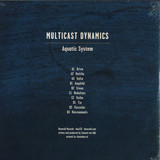
"Aquatic System"" is the second installment of the series, written and composed in two remote geographical places - namely at waters in Finland and Fuerteventura. Inspired by the complexity of water, its movement, various forms, inhabitants and hidden energy, the album was assembled mainly using synthesizers and processed field recordings of the ponds, streams, lakes and oceans of the different locations. With a vibrant story and conceptualization the focus lies in taking the listener on a observing, thoughtful and reflective journey through the aquatic system of our waters. Aquatic System opens with an impression of a frozen surface imagining icy and calm underwater movements underneath. Soon a slow process of melting begins and while the water starts to move in tiny streams of sound, small lifeforms evolve, curiously sending out small pulses in their flowing and constantly moving habitat. The aquatic nature awakens. Zooming out to larger waters high frequencies arise and colliding forms become audible. Larger marine life forms can be faintly heard when entering a much wilder environment, sensing sound-swirls of wind, foaming water tops and impressive large waves crashing on dark rocks. Finally ending at the shore, where the great ocean appears on the horizon, the environment is surrounded with moisture. From the calm reflective landscape derives an inward moment, recalling the organic and atmospheric quality of the sound journey. ""Aquatic System"" has been developed into an audiovisual performance together with visual artist Emilia Kwiatkowska and was performed several times in Spain and Finland, before the music has been finalized for the tracks.
Releasing under the moniker Misanthrop since 2002, Michael Brauninger's music reflects a foreboding sense of darkness, something that has been prevalent in his previous releases with the likes of Critical Recordings, Neosignal and Subtitles. Misanthrop has utilised unfamiliar ways to push the envelope of his twisted, sinister sound for new EP 'I Need More'
The automated refrain on 'Capitalism' reflects the stark coldness of Misanthrop's work, before unleashing an onslaught of off-beat breaks to display Brauninger's deft, often unpredictable production style.
'Rock'n'Roll', a more familiar tear-out drum & bass track, bolstered by pummelling percussive flourishes and flashes of distortion throughout.
Gaining support from the likes of Skrillex, Goldie, Skream, Alix Perez and more, Misanthrop has spent his 13 year career carving a sound that is wholly realised in this latest release. Brutal, uncompromising and inherently forward thinking.
Hot on the heels of killer releases by label heads Ryan Crosson and Shaun Reeves, the latest Visionquest release sees the label turn its head to Deadbeat aka Scott Monteith. The Berlin based Montrealeler has been putting his own spin on house and techno for some time now, putting his stamp on esteemed labels such as Cynosure, Echocord and Wagon Repair. The Jacks EP continues his fine tradition of putting out discerning fare, as he conjures up a new EP package that remixes his classic track, Mecca Drum Track (originally released on Wagon Repair), from 2008. Striking in its many intricate and delicate production wares, it's a polished effort from the outset.
The Jacks EP gets going with the suitably titled ''Berghain Drum Jack'', a suitably raucous and out-there slice of tribal tech that pays homage to the Berlin club and is notable for its banking percussive elements and its propensity for surprises. Starting off on an unrelenting tip, it gets even more off-kilter the longer it stretches out, as the drums become even more pronounced and the baseline finally enters the fray. Dark but dexterous, it's a thrilling track that's sure to more even the most ardent and discerning of dancefloors.
Middle track ''Mecca Drum Jack'' sees the producer opt for a similarlly-inclined vibe, as the drums play a similarly pertinent role. A fitting tool with which to light up your set, it's more dextrous in nature than what's arrived before but another altogether engrossing effort. Rounding off the weighty three-tracker is ''Acid Dub Jack'', which sees Deadbeat really go off on a frankly mental course that's littered with atmosphere from the get-go. Once again, Visionquest and Deadbeat have reminded us why they're both so cherished in the techno world.
The enigmatic Amara Touré from Guinée Conakry finally getting a well deserved compilation showcasing all of the 10 songs ever released between 1973 and 1980. Cuban influenced music of a different kind featuring amazing spaced-out guitar works!! Analog Africa compiles a complete collection of Amara Touré's Afro-Cuban compositions, originally released between 1973 and 1980."Lamento Cubana and Temedy are the two finest Afro-Cuban compositions ever recorded. As if they were played in a smokey, poorly lit ballroom where dark rum was sipped ever so slowly" - Vikram Sohonie - Ostinato Records
Analog Africa to release a compilation by Amara Toure, the enigmatic Afro-Cuban musician from Guinea-Conakry, showcasing all of the 10 songs he ever released between 1973 and 1980.
"Latin music, is it really foreign to us Africans I don't think so. Listen to the drums, to the rhythm. It all seems very close to us - it feels like it's our own culture," declared enigmatic singer Amara Toure. It is the late 50s, and Senegal is going crazy to the groove of Son Montuno and Patchanga. Brought to West Africa by Cuban sailors in the early 40s, these styles were immediately adopted by a flourishing music scene that did not hesitate to embrace the Caribbean sound, mixed it with their own Folklore, and, in the process, created something new. Through the unique cultural fusion of West African and Caribbean influences, Latin music took on a new and unique sound - the format was reinvented. Producer Ibra Kasseì and his Miami nightclub acted as the spearheads of this movement. They brought a breath of fresh air into Dakar's nightlife, further energising one of West Africa's most exciting cities. The demand for ballroom parties and live acts exploded, attracting numerous musicians from surrounding countries. One of the musicians who answered this call was percussionist and singer Amara Toureì, from Guinea-Conakry. Spotted by Kasseì while performing with Dexter Johnson, Toureì was asked if he would like to be part of a new project. Little did he know that this project would become a phenomenon.Immensely important for the development of Senegalese modern music, Le Star Band de Dakar, led by Mady Konate, became a sort of musical incubator and workshop, where many musicians learned and practiced their trade before moving on to become stars in their own right. Toureì's talent on percussion was undeniable, but it was his powerful and raw voice that captivated the producer. The fascinating way Toure interpreted Cuban music was unparalleled, and it was this feature that encouraged Kasse to recruit the unknown artist.
Although already brimming with incredible talent, Amara Toure's joining of Le Star Band de Dakar in 1958 began the band's meteoric rise to the top. The band quickly became Dakar's number one orchestra, and it cemented the reputation of the Miami nightclub as the hottest spot in the country. The place was packed nightly, and Dakar was boiling.
Amara Toure's Senegalese adventure lasted for ten years when he received an irrefutable offer and in 1968, joined by a few talented Senegalese musicians, headed to Cameroon and immediately formed the Black and White ensemble. Many live gigs later and it was time for the first songs to be recorded. A total of three singles were produced between 1973 and 1976. These singles, representing the first six songs on this compilation, fully epitomise and distill the essence of what Toureì had learned during his career. His Mandingue roots fused with the Senegalese sound that he had mastered - the perfect foundation for the Toureì's Cuban interpretations.
If Toure's intention was to create the most sensual music ever recorded in Africa, he might very well have reached this goal. The musicians on the recording sound like they are playing in a smokey, poorly lit juke joint, where dark rum was sipped ever so slowly, and the pulse of the music took up a life of its own. How many couples have danced, swayed, and melted together to the distinct sound of Amara Toure Nobody can say for sure ...
Amara Toureì's success poured across the borders of Cameroon, and in 1980 he went to Libreville, Gabon, to team up with the powerful Orchestre Massako. Toureì recorded an LP at that time which is hailed by many music aficionados as one of the very best African albums. The songs from that LP are the last four on this compilation. It took only ten songs for Amara Toureì to become a legend. These ten treasures, representing Toure ìs complete discography, have been carefully re-mastered from original session tapes and vinyl records, and will be released by Analog Africa on 22 June 2015. After the release of his LP in 1980, Toureì seems to have disappeared. Apparently he was last seen in Cameroon but it is unknown if he is still alive today. His music though is definitely alive.
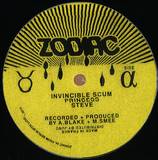
Warriors of the Acid Clan unite! Finally our cup runneth over! Your saviours return from the dark fold and bring with them treasures from afar, our bravest and most noble heroes of the Invincible Scum are here to save you from our once certain fate. A bounty of golden acid and precious gems lies before you and is yours alone for the devouring. HEAR the mystical 303 weave it's tales of yonder and FEEL the pounding of the electronic drum deep in your soul....seize the moment and celebrate this day for it is ours!
ZTAUR is the fourth of 12 releases from Z O D I A C 4 4. One for each sign of the stars and then Z O D I A C 4 4 is forever dead and gone. Forever gone and dead.
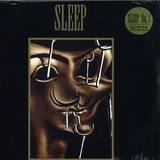
BACK IN STOCK NOW!! "Volume One is the debut album. It was the only album recorded with original guitarist Justin Marler, before he became an Orthodox monk. Volume One showcases a darker sound and stronger doom metal influence than Sleep's later work. The image featured on the cover is taken from the Salvador Dali painting "Soft Self-Portrait with Fried Bacon".
Their only album as a four piece of Al Cisneros, Matt Pike, Justin Marler and Chris Haikus
LP repressed for first time in many years.
allmusic
"For all their budding, precocious talent, Sleep's 1991 debut, Volume One, quickly betrays their still quite heavy debt to doom metal forefathers like Black Sabbath, Witchfinder, and Saint Vitus. Driven by Matt Pike and Justin Marler's lumbering mass of low-tuned guitar riffs, Al Cisneros' (still going as Luke here) serpentine bass and ragged screams, and drummer Chris Haikus' cyclopean kit pummeling, occasional highlights such as "The Suffering," "Nebuchadnezzar's Dream," and "The Wall of Yawn" prove less memorable than they are sensorially overwhelming. And yet, ironically, Sleep's rhythm guitars would never again be kept as under control, nor would their leads sound quite as refined as they do here (see the cleaner harmonies employed to good use on "Numb" and "Catatonic," for example). This was probably due to the onetime involvement of the significantly less stoned Marler, who would soon exchange the group for a monastery where he would study to become a monk. Fittingly enough, however, losing the versatility of a second guitarist was exactly what Sleep needed to focus their singular power into a crushing force, and the remaining trio would flourish immediately behind the sheer physicality of Pike's six-string style, as proven by 1993's superlative sophomore LP, Sleep's Holy Mountain."
Nologo is back with 2 essential, tried and tested underground club tracks. Orlando B serves up Side A with 'Dark World', an epic, slow burning, dark-house journey. 'Dark World' begins completely stripped back before the main hook, an eerie hypnotic vocal is introduced. Funky percussive elements creep in which drive the piece forward and a deep minor pad heightens the tension setting the tone for the rest of the track. The energy builds gradually with the addition of a 303 bass line peaking just before the end, taking the listener on a dark hypnotic trip.
On the flip, is none other than house & techno legend MR G who uses the Dark World vocal but takes it somewhere new providing his own unique and distinctive flavour. Mr G's Rum Remix is a dark and twisted peak-time banger, the high energy from the off set perfectly complementing the slower vibe of the original. Plenty of sub and twisted synth action keeps the momentum high and the dark stab he uses punctuates the vocal nicely giving it a raw edge. 'Dark World' is an essential addition to the record bag for darker dancefloors.
Dj Deep: I love this, your remix is super Funky and Dark at the same time!!! Dope! Tom (Panorama Bar): Ufff nice and dark.....another Mr G gem.To be served with the Rum Rush
The Bunker New York is proud to announce the second EP from Mehmet Irdel, also known as Løt.te (pronounced Loat-tey), following his debut release on our label in 2014.
Løt.te's 'History of Discipline' EP features two distinct moods and detailed, industrial-inspired sound design with a firm focus on the dancefloor.
"When I discovered the heavy, dark techno coming out of the U.K. and Japan in the '90s and '00s, like Regis, Surgeon, Female, and Takaaki Itoh, it was a revelation," Irdel says. "Until then, I hadn't realized that techno could reference the grittiness and physicality of industrial music and make it work so well, and feel natural on the dancefloor." These muscular, upbeat techno artists are the perfect reference point for Løt.te's music, but Irdel takes his work one step further, featuring an emotional complexity that many other producers lack. "I'm interested in techno that feels both masculine and feminine at the same time," says Irdel. "These days, most techno feels either very intricate and clean, or very noisy and macho. What interests me is finding an in-between."
True to its name, "History of Discipline" is the darker track here. Built on a foundation of heavy, swinging kick drums and shuffling hi-hats, the track builds to an enormous climax before winding down into a rattle of metallic percussion. "A Mutable Constant" is more ambiguous, featuring a rubbery bassline and steadily-building background percussion - until a moody, longing synthesizer pad begins to take center stage. "I don't honestly know where the emotion in 'A Mutable Constant' came from. That wasn't the plan when I started working on it," recalls Irdel, "but I incorporate a mix of analog synths into my productions, like the Korg MS-20 or Doepfer Dark Energy, and their sounds sometimes surprise me. My production process begins and ends with a computer, but I love being able to have that '90s analog sound' in my work. I'm very conscious of not having any 'overly digital' sounds in my tracks."
Løt.te's latest EP embodies the spirit of techno while simultaneously pushing its sound forward. "Techno, for me, is an experiment in human perception. A way to find the fringes of perception in rhythm, melody, and emotion, to push all the way to the edge, to find the breaking point. I'm trying to push techno's boundaries without ever losing sight of 'what makes techno techno': its restraint and groove."
Kicking off with acid-soaked stepper 'X ', DA05 sees the UK imprint continue to explore the darker recesses of the dancefloor. A bottom end as deep as you like combines with razor-sharp percussion on this basement techno workout. The sound design of 'black science (version)' warps the bleep techno blueprint into a swaggering half time roller before 'black science' itself arrives. This dramatic piece merges tense, Millsian atmospherics with stratospheric strings to create a timeless piece of expansive sci-fi techno. The filth-ridden 'debris', a bottom-heavy groove for those of a serious disposition, rounds off another killer four track salvo of techno futurism from this on-point label.
Maybe this is a mirage, an illusion Maybe we are on another planet, or maybe we are in the spaceship going to another planet Maybe we are all insane Possibilities, an infinite number of possibilities. 'We are in the darkness; nameless things with no memory-no knowledge of what went before, no understanding of what is now, no knowledge of what will be.' - this can easily describe what Absys Limited sublabel is offering us soon with Kontext studio album, 'Dispersal'. Kontext is an alias of Stanislav Sevostyanikhin from St. Petersburg, Russia - well acclaimed DJ and producer also known in drum&bass world as Dissident, who was responsible for the one side of our own first 12" vinyl with his track 'Scarecrow' and for numerous releases for such labels as Hospital Records, Subtle Audio, Counter Intelligence, Alphacut and many more.
'Dispersal', first LP since 2009's 'Dissociate' is Kontext at his finest. Ten track album that cannot be classified in genres, full of drifting through space orbits and dimensions, through newest technologies and our own human nature, through some glitched sonic fields and abyss of consciousness. Production level is high as always on Absys, tracks are kept in various tempos, with many layers and glitches to keep you moving places and enriched with quotes from film classics as 'Twighlight Zone' or 'Pi'.
Coming out with unique artwork by Krik, 'Dispersal' will be available on CD Digi Pack and 10" vinyl sampler.
Producer CRISTIAN VOGEL, born in Chile and in raised in Bristol, England, represents an inner turmoil within the history of electronic music and techno. Like only a few other artists such as Aphex Twin, he personifies the second wave of techno during which authorship, previously pronounced dead, returned in full force. The former punk, who had completed studies in composition (20th century classical music in Sussex) conveyed a powerful force in his music, which now finds its place very naturally as electronic music; back then, it did more than just shake up the concepts of techno. Complex and intricate rhythms (Süddeutsche Zeitung) dig deep chasms in dark (listening) spaces.
In 1996, together with JAMIE LIDELL as SUPER_COLLIDER, he made a final attempt to breathe life into electronic music, which was still primarily seen as dance/rave/club music, and produced clustered break funk music that was so relevant to its time that many considered it more a music of the future: science fiction for the dance floor. Although the project was not a failure, it did not succeed even halfway in meeting the expectations of an artist who was rather perplexed by the lack of interest he perceived in others in music as art and research. Vogel believes that music has a will to unfold, like a jungle from the undergrowth of industrial cities where music is thought of as an attack and a defense.
Seemingly out of disappointment in the predictably declining hedonism of the scene, he moved to Barcelona and bound his explosive ideas to more accessible formats, founded labels, created networks (No Future, Sleep Debt) and, at the same time, revisited his early days by working more and more on formats such as music for ballet and similar concepts. He also sought freedom precisely in what was referred to as functional electronic music through conceptual and serious endeavors in the artistic sense.
Vogel went under for a time and lived in Vienna before arriving in Berlin nearly two years ago, where he made his first new and daring attempt to assimilate everything that electronic music represented to him on one album: 'The Inertials' on SHITKATAPULT. Shortly after that, his mystical, floating ambient work 'Eselsbrücke' was released, which already spoke the language of the new city.
He now presents a new album on SHITKATAPULT entitled 'POLYPHONIC BEINGS' - a true masterpiece in the inimitable Vogel style, as his fans will no doubt claim. 'POLYPHONIC BEINGS' begins, after two minutes of an irritating noise wave, with a surprisingly classic dub track and grows darker and more abstract from track to track, minute by minute. An eerie and unbelievable sound, with all as it should be: every reverb tail, every movement of the fader, every composed note takes the listener piece by piece into Vogel's own cosmos.
He foregoes interwoven elements for swaying towers of rhythm, powerful sound passages, spaces, roads, mirrors and pathways, leading to a stream of ideas that never wants to end. He aptly quotes Karl-Heinz Stockhausen in the liner notes: These are the "atomic layers of ourselves." And so it is. We are what we hear. This is the definitive CRISTIAN VOGEL.
Bell Gardens combines the musical visions of Kenneth James Gibson (formerly of Furry Things, now recording as
*Bell Gardens' origins began arguably as more of an experiment than the duo's current 'experimental' projects - McBride's drone- and string-laden ambient symphonies, and Gibson's ventures in dub and minimalist techno - as they sought to manifest their mutual reverence for folk, psychedelia and chamber pop in a traditional band structure without cannibalising any particular past genre. Bell Gardens' sound is less reliant on effects and studio trickery than the pairs' independent guises, laying bare as it does vocals and live instruments with emotional sincerity, and presenting songs imbued with an almost pastoral or gospel simplicity and timelessness.
Slow Dawns for Lost Conclusions was again recorded mostly at home studios, but additionally the band made use of a friend's desert cabin in Wonder Valley, California, and it seems this willingness to retreat from the city has lent an expansiveness to the tracks, in particular the spacious, ceremonial 'Silent Prayer' (written in a snowbound mountain cabin in Idyllwild, C.A.) and the crepuscular 'She's Stuck in an Endless Loop of Her Decline' (mapped out under the stars in the desert).
While the addition of strings (contributed by Lauren Chipman of The Rentals and The Section Quartet) and trumpet (Stewart Cole of Edward Sharpe and The Magnetic Zeros) provides a double rainbow of tonal textures throughout, the nine tracks of Slow Dawns for Lost Conclusions are united by an understated elegance belying the newly expanded, communal effort in the studio: each instrument earns its place, nothing is overwrought or conspicuous. Moreover, it is McBride and Gibson's artistry in building stirring soundscapes from the barest of materials in their other guises that lends such assurance and sophistication to these arrangements.
The band is a result of the complimentary cross-pollination of Gibson and McBride's musical tastes - borne from a late-night conversation between the two that grew wings - and it is the universality of the sentiments and their restrained, reflective approach to writing and recording that allows the music to simultaneously straddle the past and the present. The music avoids pastiche, its pedal steel, sleigh bells and harmonies giving a nod to the ghosts of musical genres past, but never overriding or distracting from the emotional content of the sum of its parts.
The album ends with the glorious 'Take Us Away' - one of the first demos Gibson gave McBride when he was on tour with Stars of the Lid - neatly bringing their work to date full circle and exemplifying the band's mindfulness of their own serendipitous beginnings: the dawning of an auspicious, unique musical force.
Bell Gardens - Take Us Away -
Harmonies alert!! Actually, this is rather lovely. Slow-tempo, just the right side of 'twee' and packed full of strings, as if Air and Midlake had been taking balloon trips over the mid-West and sprinkling good-vibes dust across the land. From L.A. and subconsciously plugged into the '60s dream-pop scene, taking in a little bit of Mercury Rev and Brendan Perry en route, stopping off at Pearls Before Swine and Big Star's house for inspiration, before getting stoned with '70s era Brian Eno and Harold Budd.
The III Rivers juggernaut sets forth once again, release number 4 The Charivari EP, putting Voiceless in the cockpit and leading the charge.
Second Nature sets a dark, sultry and ominous tone as Voiceless deploys a plethora of sounds and moods that resonate with all the tense drama of the label's affiliated club night, Bohemian Grove.
Big laser beam synths dart through a thick pitch black haze while a factory line percussion section hammers on.
Always keeping a foot in the sonic warfare division, we get three locked grooves loaded and ready for battle, funky, electrified technoid wobblers that should fight off most opposition with ease.
Flip the disc and Opt-out opens with a controlled urgency as a barrage of kick drums sets the train in motion. Voiceless layers up rich, untreated piano chords against the backdrop of dark industrial chaos, percussion artefacts career around the mix and various elements are put through an aural meat grinder before the familiar and welcoming piano motif returns like a long lost friend, guiding us through the smoke hand-in-hand. A beautiful juxtaposition of soulful melancholy and cold, glacial machines.
Final track Charivari really hits the accelerator as a tough and mechanical rhythm jolts against blurred, radioactive pads and searing string lines before collapsing into a fractal breakdown introducing mystical, weaving high end leads. An eyes-down fist pumper of the highest order and one that commands excessive smoke & strobe light abuse late, late into the session.
One to close off one of their infamous soirees in style, hoards of mutant dancers leaving the industrial backdrop of the club's venue and crossing paths with the early morning dog walkers and Sunday strollers. Four releases in and we've lost none of the quality control, unique drive and free minded 'true spirit' (to quote Tresor's legendary catchphrase). The label goes from the strength to strength and with it, brings a whole new generation of techno shamans under their wing.
- A1: Screaming In The Darkness
- A2: Dream Sequence
- A3: European Eyes
- A4: Shoot You Down
- A5: Sympathy
- A6: Time Slipping
- B1: Drummer Boy
- B2: Thundertunes
- B3: When Will We Learn
- B4: Mr X
- B5: Judgement Day
- C1: Searching For Heaven
- C2: The Visitor
- C3: Animal Crazy
- C4: Dream Sequence Ii
- C5: Two Shots
- D1: Dream Sequence (Peel 3/1980)
- D2: Shoot You Down (Peel 3/1980)
- D3: Sympathy (Peel 3/1980)
- D4: When Will We Learn (Peel 3/1980)
PAULINE MURRAY , LEGENDARY VOCALIST OF MUCH LOVED PUNK BAND PENETRATION.
GUEST MUSICIANS JOHN MAHER (BUZZCOCKS) and VINI REILLY (DURUTTI COLUMN).
PRODUCED BY THE GOD-LIKE MARTIN HANNETT.
ARTWORK BY PETER SAVILLE AND TREVOR KEY
LINER NOTES BY JON SAVAGE
The double vinyl edition also includes a bonus CD featuring instrumental versions of all the album tracks (a must for students of Hannett's unique production sound), along with alternate takes of key singles.
Les Disques du Crepuscule presents a deluxe remastered edition of Pauline Murray and the Invisible Girls, the debut album by post/punk icon Pauline Murray, produced by revered sonic architect Martin 'Zero' Hannett.
Recorded at the famous Strawberry Studios in July 1980, the album offered epic electronic pop written by Pauline and partner Robert Blamire and marked a radical departure from their shared past in pioneering punk band Penetration. 'This is sophistication,' enthused Paul Morley in NME. 'Lovely songs of anxiety, malaise and self-doubt.' According to Melody Maker the album was 'unquestionably a musical highpoint of this year or any other.'
As well producer/arrangers Martin Hannett and Steve Hopkins (aka the Invisible Girls), the album features a stellar cast of guest musicians including John Maher (Buzzcocks) and Vini Reilly (Durutti Column). Indeed Pauline Murray and the Invisible Girls presents almost a Factory record, exquisitely sleeved by Peter Saville and Trevor Key. Stand-out tracks include the popular singles Dream Sequence and Mr X, with the newly remastered Hannett tracks now augmented on CD by a wealth of bonus material including non-album singles, live recordings (from tours in 1980 and 1981) and a John Peel session (1980). The liner note is by Jon Savage.
'It's a bit of a missing link album,' says Pauline today. 'Written and recorded after punk, but before Martin Rushent and the Human League made airy pop respectable again. We chose the other Martin in 1980 because we wanted the incredible sounds he achieved for Joy Division and Magazine. Thundertunes, basically.'