"Wind, Again" is Sary Moussa’s fourth studio album and second album on Other People. Based between France and Lebanon, Moussa returns with a riveting electro-acoustic album informed by his ever-changing relationships to space, listening, and resonance as well as his growing interest in the study of harmonics in electronic and electro-acoustic music.
Years in the making, “Wind, Again” approaches distinct musical worlds and languages by bringing together improvisations by musicians performing on Western and West Asian instruments such as the Hammond organ, clarinet, saz, and buzuk with electronic arrangements and textures. Rather than force a rapprochement of these musical worlds through the instruments, and keenly aware of the weighty sonic histories they carry, Moussa proposes another way through which they can exist together in contemporary electronic composition.
Composed of six tracks, each of which demonstrate an array of recording and processing techniques, the album generates moments of tension produced by the synthesis of textural, tonal, and harmonic encounters that Moussa calls “shadows”, which outline an impressionistic musical language, existing at the edge of familiarity. Such moments permeate tracks like “Everywhere at once” and “Violence” that open with the Hammond organ and the saz respectively and slowly reveal an expansive field of sounds that showcases each of the musicians’ characteristic performances and Moussa’s densely layered textures. It is a latent yet unrelenting tension through which the composer invokes rather than represents a collective experiential state, especially familiar to those who know his environment. In “Wind, Again” these shadows are articulations of sounds steeped in traditions they are never quite tethered to. Such articulations are implied and alluded to, they play within a musical reference without the latter explicitly existing in the recording, always teetering, never completely here nor there.
Sonically and musically, the album is fueled by the cultural, social, and personal realities that Moussa was brought up and lives in.
Both personal and musical ties with the musicians who feature on the album is central to Moussa’s practice. In the title track “I will never write a song about you”, musician Julia Sabra opens with rolled piano chords, followed by Paed Conca on clarinet and Abed Kobeissy on buzuk, before Moussa’s electronic processing pieces together, lifts, and sustains the melodic direction of the track that emerged from the musicians’ separate improvisations. For Moussa: “The initial connection between the three performances was made on a track that no longer existed, the original recording was both an obstacle and necessary step for the track we hear on the record. It’s as if we were all telling different stories and I pulled on the thread that held them together”. The track, and more generally the record, is tinged with a melancholy of things lost, though it never fully succumbs to it.
“Everything inside a circle”, Moussa’s most personal track and for which he provides the only vocals on the record, harkens back to a childhood memory of listening to music with his mother in a car: “There was a sound I was looking for — a memory of a sound and how I first heard it. This track is a hybrid of that memory and what I wanted to make of it”. The track relies heavily on generativesystems and perhaps embodies most the ambiguous quality of the record’s music in its refusal to be pinned down by one musical tradition or another.
“Wind, Again” is both familiar and alien, cold and warm; it pays homage to the mechanics, materials, and tactility of the instruments and converges acoustic and synthetic spaces. What anchors the sound of the album are the elements of a whole that cannot find its own idiosyncrasy and that is precisely why Moussa’s album is a tour de force.
Buscar:before the show
The first and most independent of all independent producers, Joe Meek needs little introduction. He was the first to chart in both the UK and the USA with an independently produced song -which was actually recorded in his home’s kitchen- when The Tornados' Telstar took the world in 1962. Meek was, of course, one of the most in vogue producers of the first half of the 1960s, providing the soundtrack to the evolution of UK Rock’n'Roll to Swinging London, scoring hits with actors like John Leyton (Johnny Remember Me), showmen like Screaming Lord Sutch and bands like The Outlaws and The Tornados. He also produced a wide stream of R&B and freakbeat 45s that are nowadays hardly sought after by the collectors with the biggest bank accounts.
Joe Meek experimented with all kinds of recording techniques in his home studio, his tricks and gimmicks won his productions chart placement and critical and public acclaim, but none of his projects was so advanced and way out as the avantgarde experimentation showed in his I Hear a New World electronic symphony from 1960. Aided by The Blue Men formed by Rod Freeman (group leader, guitar, vocals), Ken Harvey (tenor sax, vocals), Roger Fiola (Hawaiian Guitar), Chris White (guitar), Doug Collins (bass), Dave Golding (drums) -also known as Rodd-Ken and The Cavaliers- who provided a tight base to his electronically produced sounds, Meek came up with what he envisioned as the soundtrack of the future, the sounds he envisioned were to be heard in outer space. It was too way out for its time, certainly. To the point that of all the opus, only four tracks saw the light of day on a 7" EP released on Triumph, Meeks very own label. It wouldn’t be until 1991 that the whole recordings from the I Hear a New World sessions would see the light of day on a CD issued by the RPM label.
Wah Wah offers a new reissue of this now classic early electronics masterpiece, housed in a beautiful front-laminated back-flapped sleeve and offered as a limited 400 copies only black vinyl version and an ultra-limited 100 copies only transparent purple vinyl. Get yours before they fly!
RIYL : Delia Derbyshire and The BBC Radiophonic Workshop, Louis and Bebe Barron’s soundtrack to Forbidden Planet, Raymond Scott, Tom Dissevelt & Kid Baltan, Morton Subotnick…
The first and most independent of all independent producers, Joe Meek needs little introduction. He was the first to chart in both the UK and the USA with an independently produced song -which was actually recorded in his home’s kitchen- when The Tornados' Telstar took the world in 1962. Meek was, of course, one of the most in vogue producers of the first half of the 1960s, providing the soundtrack to the evolution of UK Rock’n'Roll to Swinging London, scoring hits with actors like John Leyton (Johnny Remember Me), showmen like Screaming Lord Sutch and bands like The Outlaws and The Tornados. He also produced a wide stream of R&B and freakbeat 45s that are nowadays hardly sought after by the collectors with the biggest bank accounts.
Joe Meek experimented with all kinds of recording techniques in his home studio, his tricks and gimmicks won his productions chart placement and critical and public acclaim, but none of his projects was so advanced and way out as the avantgarde experimentation showed in his I Hear a New World electronic symphony from 1960. Aided by The Blue Men formed by Rod Freeman (group leader, guitar, vocals), Ken Harvey (tenor sax, vocals), Roger Fiola (Hawaiian Guitar), Chris White (guitar), Doug Collins (bass), Dave Golding (drums) -also known as Rodd-Ken and The Cavaliers- who provided a tight base to his electronically produced sounds, Meek came up with what he envisioned as the soundtrack of the future, the sounds he envisioned were to be heard in outer space. It was too way out for its time, certainly. To the point that of all the opus, only four tracks saw the light of day on a 7" EP released on Triumph, Meeks very own label. It wouldn’t be until 1991 that the whole recordings from the I Hear a New World sessions would see the light of day on a CD issued by the RPM label.
Wah Wah offers a new reissue of this now classic early electronics masterpiece, housed in a beautiful front-laminated back-flapped sleeve and offered as a limited 400 copies only black vinyl version and an ultra-limited 100 copies only transparent purple vinyl. Get yours before they fly!
RIYL : Delia Derbyshire and The BBC Radiophonic Workshop, Louis and Bebe Barron’s soundtrack to Forbidden Planet, Raymond Scott, Tom Dissevelt & Kid Baltan, Morton Subotnick…
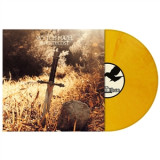
Over the past near-decade, Lancashire's medieval metal phenomenon WYTCH HAZEL have been honing an uncommonly wholesome, rustic and devotional brand of timewarped hard rock that's all their own, with 2016's Prelude and 2018's II: Sojourn summoning to mind fevered images of Robin Hood and his Merry Men grooving to Jethro Tull and Thin Lizzy. Yet within moments of pressing play on their third LP, III: Pentecost, the musty mystical minstrelsy takes a back seat in favour of a rich, sumptuous, anthemic late-night drivetime vibe, passionately embracing the most high-end smash-hit classic rock and metal circa its late 1970s heyday. "I thought I put a lot into the second album, but this album has been an absolute obsession," stresses the band leader, Colin Hendra. "Every aspect had to be as good as possible. We've gone back and forth, Ed was tinkering with it for months on end. There's quadruple tracking going on with the rhythm parts, then we've doubled, tripled and quadrupled all our lead parts to get that richness and fullness of sound, all meticulously planned with pages and pages of organisational notes. It wasn't just `get in the studio and see how it goes!'" he laughs. "One day I did 14 hours of vocal recording. All vocals are double-tracked, I can't express how much hard work that is. The last album feels like a breeze compared to what we've done with this - and I don't plan on ramping it down!" Musically there are gorgeous self-professed touches of Black Sabbath, Blue Öyster Cult, AC/DC and early Scorpions_"With the soloing I was trying to go for Michael Schenker" beams Colin_while the scampering headbanger I Will Not initially took a nod from Angel Witch, who Hendra was helping out on second guitar back in 2015 when the track was composed, before studio treatment made it sound "a lot more Wytch Hazelly". But perhaps the most lateral comparison is to a band from the opposite spiritual realm, with Archangel an explicit homage to Swedish faux-Satanic devil cult Ghost. "I find them fascinating, Ghost; musically great, the songwriting is spot-on," enthuses the frontman. "We share an intrinsic connection, with Bad Omen honcho Will Palmer being the person who discovered us both. "Music is created for all, it's a common grace for everyone," he affirms, "which is why the music that shows the glory of God the most, in my opinion, is not music created by Christians. It's Black Sabbath!"
- A1: Everybody's Somebody's Fool (Alternative Version)
- A2: Young At Heart
- A3: I'm Falling
- A4: Will She Always Be Waiting
- A5: Some Sweet Day
- A6: Cath
- A7: H.o.l.l.a.n.d
- B1: Red Guitars
- B2: Syracuse University
- B3: Learn To Love
- B4: The Patriot Game
- B5: South Atlantic Way (Full)
- B6: Aim In Life
- C1: Forevermore
- C2: Cath (Extended Version)
- C3: All I Ever Said
- C4: Fall From Grace
- C5: Sugar Bridge
- C6: Happy Birthday (Turn Gold)
- C7: Everybody's Somebody's Fool (Original Album Version)
- D1: Young At Heart (Extended Version)
- D2: Tender Mercy
- D3: All I Am (Is Loving You)
- D4: The Ballad Of Joe Hill
- D5: Goodbye And Good Luck (Bbc Session, 29Th Nov '81)
- D6: Young At Heart (Club Remix '93)
The Bluebells' Sisters is a perfect snapshot of early '80s "Sound of Young Scotland": Glasgow indie pop with bittersweet spirit, sharp hooks, and heartfelt harmonies. Signing to the then-nascent London Records, and working with a procession of esteemed producers (including Elvis Costello who became a mentor and teacher to the band), The Bluebells enjoyed three UK hits in the 1980s ('Cath', 'Young at Heart' and 'I'm Falling') before touring widely throughout Europe and North America, developing their live sound and signing to Seymour Stein's Sire Records in the U.S.
A decade later in 1993 that 'Young at Heart' hit the U.K. No 1 spot following its use as a T.V. advert for Volkswagen. Fast forward to this decade The Bluebells have reformed with a flurry of shows across the past two years including a triumphant return to Glasgow at Barrowlands for Celtic Connects, and just announced for the Acoustic Stage for Glastonbury Festival 2025.
This new edition of Sisters has been remastered and produced in consultation with the band, using the best audio sources available, including non-album singles and B-sides, bonus tracks from the original cassette edition and new liner notes from Will Hodgkinson.
With solid training as a classical musician, Sophie Agnel took a close interest in modern jazz before committing in the early 90s to the shifting, deliciously uncertain ground of free improvisation, thanks to her fascination for the powers of expression displayed by a few great keyboard-heretics such as Keith Tippett, Fred Van Hove or Christine Wodrascka. She began reworking the prepared piano techniques imagined by John Cage and transformed her instrument into a sort of extended piano.
Coming from a Punk music background Joke Lanz started in the mid 80s to play Experimental- and Noise music. Best known for his internationally acclaimed project Sudden Infant, Lanz is presenting his work since 30 years all over the world. Born in Switzerland and currently operating out of Berlin, he is one of the most prolific and profound artists working in the border zones where performance and body art meet Improvisation and Noise.
Agnel and Lanz have performed stunning live shows as a duo, now their debut album is coming out on Klanggalerie. Turntables and piano, a unique combination that is a lot of fun!
Franky Wah makes Crosstown Rebels debut with ‘Disconnect’ EP, featuring Kuuda. Out on 20th June 2025, the four-tracker sees the acclaimed UK producer make his first appearance on the revered imprint.
A producer known for balancing dancefloor energy with introspective songwriting, Franky Wah’s rise has been fuelled by a string of chart-topping singles, non-stop global club and festival appearances, and the launch of his own imprint and event brand, SHÈN. With musical influences stretching from trance and breakbeat to afro-house and techno, he now brings that rich sound palette to the Crosstown fold for the first time with a release that’s equal parts euphoric and deep as it is driving. Delivering a powerful and emotionally charged four-track release, 'Disconnect' showcases the Yorkshire-born artist’s blend of underground grit and melodic sophistication, featuring two standout collaborations with rising vocal trio Kuuda.
Opening the EP, the title track pairs swirling textures, brooding basslines and crisp percussion with commanding vocals, setting the tone for the journey ahead. The synergy continues on ‘Off The Wall’, a hazy, late-night jam elevated by Kuuda’s signature warped vox interjections. On the flip, ‘Desert Dance’ continues further into hypnotic territory with wicked bass licks and layered synth work, before closing track ‘Freak In The Sheets’ delivers another impactful, heads-down groove laced with attitude. Featured on two of the EP’s four cuts, Brighton-based trio Kuuda continue to emerge as a rapidly ascending vocal project within electronic music. Known for their genre-fluid songwriting and dynamic live presence, their collaborations with Hot Since 82, Yousef and Artche have earned them widespread support from the likes of Pete Tong, Danny Howard and RÜFÜS DU SOL. Blending emotional depth with club-ready impact, ‘Disconnect’ marks an inspired meeting point between Franky Wah’s expansive production style and the Crosstown Rebels spirit—one that looks set to soundtrack dancefloors throughout the summer and beyond.
The Advent a.k.a. Cisco Ferreira has a firm footing in quality techno DJs' bags - as well as in dance music history - and today we announce a special treat for the heads: Paraiso is releasing three never before heard tracks, rescued from a DAT lost sometime in the 90s. Titled 'Passado Distante' - you probably guessed it, it means Distant Past - we're talking about a trio of no-frills yet creative and highly energetic technoid ammunition. Classics that never were but now are given a new chance to grace our dancefloors. Opening this record, 'Driven' gifts our ears with syncopated claps and percussion while relentless rushes of hi hats and snares create a steady rhythmic core, creating a funky as hell piece that has the original spirit of techno inscribed in it. Things remain fast-paced and to the bone in the following track 'Circulate', a rolling bassline supporting snare rolls and a cheeky, minimalistic bleep reminiscent of sci-fi worlds. Dense yet concise, like techno bangers ought to. Closing this triad is the irresistibly rhythmic 'Tres Trax', a geeky but powerful closing act that shows Cisco's early wide-eyed aura, blending complex percussion and a bassline so soaked in swing it will have your hips drawing rave sigils as they naturally learn the groove. Dubby details add mystery to this incredibly imaginative Detroit-tinged wonky banger. Cisco did it again.
- A1: Voces Fugaces (Cautivo Y Desarmado)
- A2: Mirando Atras (En La Rebelión)
- A3: Radical (Noctámbulo)
- A4: Fuera De Lugar (Tierra Negra)
- A5: Entre Bastidores (Sobre Otra Ruta)
- A6: Una Vez Mas
- B1: La Frontera Perdida
- B2: El Éxodo (Es Solo El Comienzo)
- B3: Bajo Un Cielo Abierto
- B4: Sinceridad (Contra La Naturaleza)
- B5: Un Hombre Solo
- B6: Paisaje Rural
Décima Víctima were a Spanish-(Swedish) band that, during their short-lived career between 1981 and 1984, developed a very personal sound reminiscent of Joy Division, The Cure and other British post-punk bands. Although commercial success evaded them, rarely has any Spanish band achieved such a high degree of quality and coherence in their music and personality. This LP contains previously unreleased tracks recorded by Décima Víctima in November 1983, one month before their last concert. Seven of these songs feature different lyrics to the ones later recorded for the "Un hombre solo" album. This is the way they performed them that night on the Rock-Ola stage, so this record can be considered, to some extent, an approximation to their last show and to their powerful live sound. After many years a rehearsal session that DV had recorded on an old cassette tape has been resurfaced. It had originally been laid down on a four-track recorder but unfortunately the tape got lost.The story of these tracks goes back to the last weekend of October 1983, when DV went to record at friend Paco Trinidad's family home in the mountains north of Madrid. Paco recorded the latest songs on a four-track tape recorder at the house. It was done live, except for extra takes of clarinet and some guitar details. The garage sound, as the name suggests, was achieved in the garage and an adjoining room where the drums were played. The sleeve design is a photo montage of our performance for the Maqueta de Oro (Gold Demo) at the Diario Pop awards in March 1983, plus another photo of the band in the dressing room at Rock-Ola after playing our last gig. The directness and passion of the tape makes it an interesting item for collectors and fans and the fact that some of the lyrics were not the definitive ones is an added rarity that reveals the development process for the following LP "Un hombre solo".
Last Year at Marienbad proudly welcomes French producer DJ Psychiatre, aka Sylvain Creton, known for his dynamic and evolving approach to house music. His style blends acid-infused grooves, soft rhythmic atmospheres, and disco-driven energy, earning him releases on renowned labels like Whyte Numbers, Lost Palms, and Shall Not Fade.
His latest EP, Moving Into Jazz, showcases his signature sound with four diverse tracks. The title track starts with delicate keys before building into a rich, atmospheric house piece with acid elements. Those DJs follows with a stepping drum pattern, deep bass, and sweeping chords, reinforcing his intricate rhythmic focus. On the B-side, Iced Lemon introduces clean arpeggios and euphoric pads, culminating in a powerful progression. Closing the EP, A Trance to Remember delivers an uplifting, energetic groove with a deep bassline and engaging vocal snippets. This EP highlights DJ Psychiatre’s ability to craft immersive, melodically rich music that resonates beyond the dancefloor. Last Year at Marienbad is thrilled to share this release from a true master of the genre.
- I Feel So
- Lead To Gray
- Leave Me Behind
- Home For The Night
- Pringle Street
- Hereafter
- Time Spent, Too Long
- Autumn
- Chrysanthemum
- As The City Sleeps
For Wilkes-Barre's One Step Closer - the concept of home is complicated. "I've never felt so distant in my life," vocalist Ryan Savitski screams on the lead single "Pringle Street," a place in his hometown that binds the album's lyrics to both a precise location and feeling of displacement. On their first ever full-length album and debut for Run For Cover This Place You Know, the band offers a modern coming-of-age story about growing up and grasping both the known and the unknown. One Step Closer started in 2016 and in their short five years, Savitski, along with drummer Tommy Norton, bassist Brian Talipan and guitarists Ross Thompson & Grady Allen have come into their own as a modern hardcore mainstay. Their 2019 EP 'From Me To You' countered existing trends in exchange for a more melodic sound in the vein of bands like Turning Point and Title Fight. They went on to open for Have Heart at the band's now legendary reunion shows that summer, and joined bands like Knuckle Puck and Turnstile on tour before pausing to write their debut album. This Place You Know grapples with the weight of themes like isolation, depression, and loss - all amplified by driving bass lines, em-phatic guitar riffs and unwavering drumming performed by the band. From the first moments of album opener "I Feel So," the stakes are made clear by the anchoring lyric 'this place you know, sometimes it hides the truth and lets people go" - One Step Closer is attempting to resolve the unresolvable anguish of moving on from everything you once knew.
Khadim is a stunning reconfiguration of the Ndagga Rhythm Force sound. The instrumentation is radically pared down. The guitar is gone; the concatenation of sabars; the drum-kit. Each of the four tracks hones in on just one or two drummers; otherwise the sole recorded element is the singing; everything else is programmed. Synths are dialogically locked into the drumming. Tellingly, Ernestus has reached for his beloved Prophet-5, a signature go-to since Basic Channel days, thirty years ago. Texturally, the sound is more dubwise; prickling with effects. There is a new spaciousness, announced at the start by the ambient sounds of Dakar street-life. At the microphone, Mbene Diatta Seck revels in this new openness: mbalax diva, she feelingly turns each of the four songs into a discrete dramatic episode, using different sets of rhetorical techniques. The music throughout is taut, grooving, complex, like before; but more volatile, intuitive and reaching, with turbulent emotional and spiritual expressivity.
Not that Khadim represents any kind of break. Its transformativeness is rooted in the hundreds upon hundreds of hours the Rhythm Force has played together. Nearly a decade has passed since Yermande, the unit's previous album. Every year throughout that period — barring lockdowns — the group has toured extensively, in Europe, the US, and Japan. With improvisation at the core of its music-making, each performance has been evolutionary, as it turns out heading towards Khadim. “I didn’t want to simply continue with the same formula," says Ernestus. “I preferred to wait for a new approach. Playing live so many times, I wanted to capture some of the energy and freedom of those performances.” Though several members of the touring ensemble sit out this recording — sabar drummers, kit-drummer, synth-player — their presence abides in the structure and swing of the music here.
Lamp Fall is a homage to Cheikh Ibra Fall, founder of the Baye Fall spiritual community. The mosque in the city of Touba is known as Lamp Fall, because the main tower resembles a lantern. Soy duggu Touba, moom guey séen / When you enter Touba, he is the one who greets you. After a swift, incantatory start Mbene sings with reflective seriousness. Her voice swirls with reverb, over a tight, funky, propulsive interplay between synth and drums, threaded with one-two jabs of bass. Cheikh Ibra Fall mi may way, mo diayndiou ré, la mu jëndé ko taalibe... Cheikh Ibra Fall amo morome, aboridial / Cheikh Ibra Fall shows the way forward, he gives us strength, he gathers his disciples... Overflowing with grace, Cheikh Ibra Fall has no equal.
Interwoven with Wolof proverbs, Dieuw Bakhul is a recriminatory song about treachery, lies, and back-biting. Over moody, roiling synths and ominous, lean bass, Mbene throws out fluttering scraps of vocal, as if re-running old conversations in her head. The music shadows her despair to the verge of breakdown, at one moment seemingly so lost in thought and memories, that it threatens to disintegrate. Bayilene di wor seen xarit ak seen an da ndo... Dieuw bakhul, dieuw ñaw na / Stop judging your friends and companions... A lie is no good, a lie is ugly.
Khadim is a show-stopper; currently the centrepiece of Ndagga Rhythm Force live performances. The song is dedicated to Cheikh Ahmadou Bamba, aka Khadim, founder of the Mouride Sufi order. Serigne Bamba mi may wayeu / Serigne Bamba is the one who makes me sing. The verses name-check revered members of his family and brotherhood, like Sokhna Diarra, Mame Thierno, and Serigne Bara. Though Islam has been practised in Senegal for a millennium, it wasn’t until the start of the twentieth century that it began to thoroughly permeate ordinary Senegalese society, hand-in-hand with anti-colonialism. The verses here recall Bamba’s banishment by the French to Gabon, and later to Mauritania, in those foundational times. During exile, his captors once introduced a lion to his cell: gaïnde gua waf, dieba lu ci Cheikhoul Khadim / the lion doesn’t budge, it gives itself over to Cheikh Khadim. Deep, surging bass, steady kick-drum, and simple, reverbed chords on the off-beat lend the feel and impetus of steppers reggae. A reed plays snatches of a traditional Baye Fall melody; the dazzling polyrhythmic drumming is by Serigne Mamoune Seck. Mbene compellingly blends percussive vocalese, narrative suspense, exultant praise, introspection, and grievance.
Nimzat is a devotional tribute to Cheikh Sadbou, a contemporary of Bamba, buried in a mausoleum in Nizmat, in southern Mauritania. Way nala, kagne nala... souma danana fata dale / I call upon you and wonder about you... If I am overwhelmed, come to my aid. The town holds special significance for Khadr Sufism. An annual pilgrimage there is conducted to this day. The rhythm is buoyantly funky; the mood is sombre, reined-in, foreboding. Punctuated by peals of thunder, Mbene sings with restrained, intense reverence; huskily confidential, steadfast. Nanu dem ba Nimzat, dé ba sali khina / Let us go to Nimzat, to seal our devotion.
Mbene Diatta Seck: vocals.
Bada Seck: bougarabou, thiol, mbeung mbeung bal, tungune.
Serigne Mamoune Seck: bougarabou, khine, mbeung mbeung, tungune.
Text by Mark Ainley (Honest Jons).
Mastered by Rashad Becker.
Everything else by Mark Ernestus.
"6-track house finesse from Amsterdam mainstay Beraber, topped off with a killer remix by Brazilian artist Zopelar. Expect six melodic tracks for the body & mind. Beraber returns to United Identities with Gentle Actions, setting the tone for long summer evenings and sun-soaked days. The Amsterdam based producer and DJ organically blends Chicago's classically-schooled keys and machine backdrops with subtle, atmospheric textures. This long-awaited record by Beraber (Baris Akardere) is a deeply personal collection of music, encapsulating a period of creative and personal growth. Rather than a concept record, it serves as a document of the past years, bundling some of most cherished productions into a cohesive and heartfelt gift to the audience. This EP marks the first time the producer has used his own vocals in his productions, next to vocal contributions from Barcelona-based artist Ivy Barkakati, whose lyrics perfectly resonate with the journey of the EP. Gentle Actions opens with Between Us, a calm builder, gracefully layered with meandering pads. Distant Language picks us up with its dubbed-out groove, guiding our feet on a journey through melodic landscapes. It flows into Responsibility, an introspective track with a powerful message about turning dreams into reality, before continuing with Lost in Loops, a loose and soulful house cut featuring his own vocals. The journey ends with the more upbeat, instrumental Good Company, topped off with a deep, nocturnal remix by Zopelar. Written and produced entirely in his Amsterdam studio -- housed in the same building that once held De School -- Beraber continues to rely on a deeply analog and outboard gear-heavy approach. The result is a record that stays true to his soulful and introspective signature, mirroring the sonic identity of his acclaimed radio show, Gentle Actions on Amsterdam's online radio station RRFM."
Vol.1[26,01 €]
"...When I make music, I'm always trying to create a temporary refuge for myself, a refuge from the increasingly frightening world out there. A kind of remote island where I can hide, switch off for a while, feel at peace. In any case, I feel inner peace when making this music, and I hope, in some way, it does the same for you..."
"Dub Tapes. Volume 2 picks up exactly where its predecessor left off, employing a very similar sonic palette, drawn from analog instruments and effects. All 4 tracks are driven by Lars' live B-line virtuosity. He's played bass for a host of jazz bands and it shows. The bottom-end throughout is a constant, reassuring, warm, womb-like presence, that packs a deceptively powerful pulse. The subtle splashes of studio trickery might have their root in Basic Channel-esque techno, but the results reside somewhere far less minimal, more relaxed, more melodic and musical.
The reverb and delay twisted into soothing, rather than room-shaking shapes. Resembling birdsong and mountain streams.
Lars' piano improvisations are also integral to everything...Stuffed with rich, diverting detail for stoners and siesta seekers, the EP is certainly a set that you're supposed to sit back, settle into and savour."
"All four tracks are superb, the opener 'Ferry From Torkwrith' setting the scene - languorous, beatific Balearic dub from Berlin, music to hide inside, to temporarily block the outside world with.
Second track 'Morning Hour' is slightly more sunlit, a guitar joining the mix. 'Starlings' sets off with birdsong and the thud of a kick drum, a wave of synth chord and some bass guitar, unhurried and mellow.
Fourth track 'Isle Of Stonsey' drifts in, a nine minute excursion into a chilled-out version of space, Hawaiian guitar and dub bass prodding us gently into the cosmos."
- Through The Heat Waves
- Eight Miles High Alone 07:46
- In Motion
- Inhale
- Crystalline 06:38
- Exhale
- One More Rush
- Silence Is Gliding 05:56
- Cloud Surfing
Marconi Union, one of the most influential names in contemporary ambient and electronic music, announce their twelfth studio album, The Fear of Never Landing, set for release 6th June via Just Music. The news is paired with the release of first single Eight Miles High Alone, out 20th March on all major streaming platforms.
Known for their ability to craft cinematic, immersive soundscapes that blur the lines between ambient, electronic, and experimental music, the Manchester-based duo once again push the boundaries of sonic exploration. The Fear of Never Landing takes us on a dynamic journey that’s atmospheric, diaphanous and never short of mesmerising. While the new record is certainly infused with a sense of hope, there’s more than a soupçon of anxiety too, as the title suggests.
A 55-minute odyssey presented as one seamless piece divided into nine movements, they transcribe the nexus of modern living into a mostly wordless odyssey. The album encapsulates Marconi Union’s ability to translate the complexities of the human experience into sound, all while maintaining a stunning sense of cohesion.
While the music feels effortless, the creative process was anything but. During the two years it took to complete the album, members Jamie Crossley and Duncan Meadows faced creative struggles that even led them to briefly question the band’s future. A pivotal moment came when they performed a live soundtrack to the 1975 skateboarding film Downhill Motion, rekindling their connection to atmospheric composition. By testing new material live and returning to their roots, Marconi Union redefined their creative process, leading to some of their most emotionally impactful work to date.
“We’ve always made atmospheric music but we had started to lose that aspect. Other than some rough ideas, we had no sense of what we were doing anymore, a kind of musical wilderness. Eventually a couple of things fell into place, and it was like, ‘Ah, okay.”
With a foundation to build upon, they went back to basics and decided to take their time going forwards. “We tried out a few new tracks live which gave us the opportunity to see what worked and what didn’t. We've never given ourselves that luxury before.”
The first track to be shared, Eight Miles High Alone, is a mesmerizing sequencer-driven track that builds an immersive, atmospheric soundscape. Its hypnotic pulses and intricate layers evoke a sense of solitude and weightlessness, perfectly capturing the album’s blend of tension and introspection. “Eight Miles High Alone was the first piece that we managed to complete and helped to inform our approach to the rest of the album.”
Formed in Manchester in 2003, their debut album, Under Wires and Searchlights (2003), introduced their signature sound, but it was their 2011 release of Weightless that brought international acclaim. Developed in collaboration with a sound therapist, Weightless was scientifically recognised as “the world’s most relaxing song”, praised for its ability to reduce anxiety and heart rates. With over 900 million streams and widespread coverage across media, the track remains a cultural phenomenon.
Over the years, Marconi Union has continued to evolve, producing critically acclaimed albums such as Signals (2021), Ghost Stations (2016), and Tokyo+ (2017). Their work has been hailed for its emotional resonance and sonic depth, with The Quietus noting their ability to find “beauty in the bleakest places” and The Sunday Times describing them as “amongst today’s most talented musicians.”
Beyond their studio albums, Marconi Union has collaborated with visual artists, provided soundtracks for installations, and remixed notable acts like Max Richter and Vök. Their invitation by Brian Eno to perform at Norway’s Punkt Festival further cemented their reputation as innovators in the ambient music sphere.
With The Fear of Never Landing, Marconi Union once again showcases their unmatched ability to create immersive soundscapes that resonate deeply. The album reaffirms their position as masters of atmosphere and emotional storytelling, making it an essential addition to their storied catalog.
From "Spirit Of The Air"'s violence, "Cross Over"'s industrial poundings, the PCP-infused minimalism of "High On Angel Dust", to "Someone Was There" mixing techno and hardcore, Derniere Danse Part II outlines what Manu le Malin is as a producer : not afraid to visit experimental soundscapes nor ashamed to go straight to the dancefloor point... But always soaked in darkness. This is a black gateway to the world of MKNK's head, through five of his all-time favorite tracks, including one unreleased, all remastered by Scan X and Deathmachine.
But before pressing play, consider yourself warned : the first track "Spirit Of The Air", with its tortuous intro, piano break, screams samples and references to The Exorcist saga, is relentless, violent and unpredictable. And things don't go softer with "Cross Over", also an extract from his Fighting Spirit album (2002), a downright industrial attack that sounds particularly up-to-date.
Unreleased "High On Angel Dust" then shows Manu's admiration to the label PCP (hence the powdery title) and its founder Marc Acardipan. An oddity in his discography that almost never saw the light of the day : the synths and TR-909 based track was recorded in one night, and completely forgotten in a DAT for 28 years! "Someone Was There", from the soundtrack of Jalil Lespert's 24 Mesures, and the esteemed classic "One The Way Home", available as a bonus in the digital release, conclude this handpicked selection.
Diverse, personal, tormented and yet dancefloor compatible, Derniere Danse Part I and Part II feature some of Manu's best works. But they also are a stepping stone : MKNK will now open to new artists exploring every dark corner of what hardcore music can be.
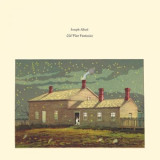
The songwriter Joseph Allred is always prolific, but breaks up their string of solo releases for one of the most orchestrated offerings since the excellent Branches And Trees. Allred’s often monastic guitar works are fleshed out here on Old Time Fantasias, turning them towards ensemble visions of country, Americana, and Appalachia. Album opener, “The Groundhog,” features the distinctive piano of Hans Chew, with bass from Daniel Kimbro and brass from Mikey Allred. Elsewhere the new album features Kelby Clark, Courtney Werner (Magic Tuber String Band), Evan Morgan (Magic Tuber String Band), Lydian Bramblia, and Jack Bird in the mix. “I started recording this album in Spring ‘23, thinking I might be making a mostly solo acoustic album with a couple of duets thrown in for good measure. I met Hans Chew at a Nashville show a few months earlier and sent him a few tracks to see if he wanted to add anything to them. Before long the ‘solo acoustic album’ had given way to what’s probably the most involved and densely orchestrated album I’ve made to date. “I enjoyed following some threads of influence that aren’t as easily discernible in my solo playing—I hear some classic country and psychedelic flourishes, baroque pop glockenspiel and horns, percussion ideas that may be cribbed from Danny Elfman and Tom Waits albums, nods to post-rock-filtered western guitar twang, and a little Cocteau Twins dreaminess. “All in all this was a satisfying record to make. I’m especially grateful to the collaborators for adding their touches and making it a less solipsistic affair than it would have been otherwise. The political climate has changed so much over the last two years that I find it hard to imagine I could make a record with this kind of fantastic mood if I started now. I hope that it can maybe re-enchant those of us who are felling disillusioned.” —Joseph Allred
- Break The Wall + Dub
- Far Away + Dub
- Run Fe Cover + Dub
- Life Is A Mess + Dub
- That’s Reggae For Me + Dub
- Burn It On + Dub
Lost Tapes Showcase; released on 6th October 2023, was short in the making, when Marcus I visited the Bakery Studio, Manchester for 1 week in June 2017 to voice the album. The album was then lost to the Bakery vaults for a long 6 years! It is a international collaboration with Marcus I hailing from Spain, bringing his lyrics and vocal styles to the UK with additional over-dubs (backing vocals and Kette drum) laid down at Golden Hen Studios in Madrid. Working together before the visit, Marcus I sent Al Breadwinner 4 acoustic guitar demos which he then built into rhythm tracks ready for voicing. The other 2 tracks were preexisting rhythm tracks from the Breadwinners archive that just seemed to fit the lyrics Marcus I had written.
- A1: Introduction
- A2: Singularity
- A3: Regret
- A4: Love Vigilantes
- A5: Ultraviolence
- B1: Disorder
- B2: Crystal
- B3: Academic
- B4: Your Silent Face
- C1: Sub Culture
- C2: Blt
- C3: Vanishing Point
- D1: Waiting For The Sirens’ Call
- D2: Plastic
- D3: Perfect Kiss
- E1: True Faith
- E2: Blue Monday
- E3: Temptation
- F1: Atmosphere
- F2: Decades
- F3: Love Will Tear Us Apart
Limited edition deluxe box featuring the Blu-ray film, 2CD set, 180g 3LP on special crystal-clear vinyl, hardback book and x5 12” art prints. Recorded live on 9th November 2018 (their only UK show of 2018), ‘education entertainment recreation’ is the live album from London’s Alexandra Palace.
This strictly limited and exclusive deluxe box features:
● Blu-ray Film
● 2CDs of the audio
● 180g 3LP Vinyl *
● 48pg Hardback book *
● Five 12” art prints *
* Exclusive to the box
Sonically and visually spectacular, spanning 2 hours 20 minutes, the show joyously mixed New Order classics, their latest acclaimed album ‘Music Complete’ and Joy Division’s finest.
Opening with ‘Singularity’ from ‘Music Complete’, they eased back in time to 1993’s ‘Regret’, to ‘Love Vigilantes’ from 1985’s ‘Low-Life’ to ‘Ultraviolence from 1983's ‘Power, Corruption and Lies’. Later, their power over the dance floor was proven by sublime performances in the manner of the celebrated extended 12-inch remixes they are synonymous with - on ‘True Faith’, ‘Blue Monday’ and ‘Temptation’ before a three song Joy Division mini set to end.
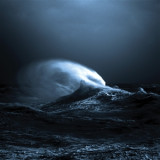
The Ottawa composer/performer and head of Black Bough Records plays every instrument on his CST debut: an accessibly avant-garde work of dark/ambient modern chamber music. Mark Molnar has been a linchpin of the Ottawa experimental music scene for over two decades, spanning contemporary classical, electroacoustic, industrial/noise, and improv. As a string player in a wide range of projects, an organizer and curator of innumerable shows, and via his own avantgarde label Black Bough Records, Molnar's unflagging contributions to independent music culture in Canada's capital city have been significant. EXO is his Constellation debut: a remarkable and bracing suite of post-classical composition on which Molnar plays every instrument. Meticulously self-recorded, primarily with strings, harp, and piano, EXO balances thematic melodicism, polytonality, and dissonance across three elegiac pieces of exquisitely expressive dynamism. This is exacting modern chamber music that blends formal and harmonic complexity with a solemn emotive sensibility accessible to a broad audience. Listeners that yearn for some edge and disquietude in a landscape of often all-too-approachable post-classical music should find EXO eminently worth their time and attention. While Molnar is a highly trained string player, and studied music under Aubrey Wolfe, microtonality with James Tenney, and composition with R. Murray Schafer, his trajectory has been entirely and intentionally outside the academy, signalling a socio-artistic commitment to DIY culture, forged from an early passion for the sonic worlds of post-hardcore, post-punk, no-wave, free improv, power electronics, and other independent/underground musics. His classically-informed works have been described as "tense currents of musical modernism invigorated with punk's raw vitality." EXO carries an undercurrent influenced by dark industrial and ambient metal in particular, with microphones purposely placed to pick up the low-end frequencies of the piano body, and of a bass drum positioned as a resonant skin in the acoustic space; an electroacoustic strategy organically meshed to the crisply defined and pristinely recorded pointillisms and polychords of strings, harp, and piano, which feed into this noisefloor of crepuscular sub-bass disquietude and decay. It's a production aesthetic that lends EXO a distinct undertow of tension and feeling, a sort of roiling maximalism where the chamber instrumentation traces arcs and waves of form and flow as if drawn from a dark, impervious ocean below. It also reinforces the profound hermeticism of Molnar's process, as a forbiddingly solitary creative act of immersion and navigation. The album artwork, featuring semiabstract stills of the sea by British photographer Ed Allen, further reifies this metaphor. The album's opening piece 'Sub Luna' (and its shortest at 8 minutes) showcases Molnar's adeptness at naturalistic and flowing complexity: tight cascades of climbing and descending chordal clusters hold their polytonal densities for various durations, yielding to more clarified harmonic suspensions and motifs, as melodic themes led primarily by violins in the higher registers provide a fractured lyricism. Molnar says: "the opening and closing figures of this piece act as opposing shorelines; the shorelines provide a reliable expression of range and key signature, and the tides come in and swallow them up, the motion of a body that addresses the relationship between states of lucidity and melodic figures." On 'Terre Sacer' everything happens in soupier waters, as a slow and doleful theme, anchored by grinding bass notes, circles in a gyre of dark resonances, until glistening strings gradually ascend to enrobe a plaintive and gently harrowing single-voiced ostinato over the composition's final third. Molnar's drone, ambient, minimalist, and goth-industrial influences are on display here. Side Two of EXO features the 18-minute multi-movement 'pallida Mors' (pale death): a waterfall of heterophony introduces dense chordal movements where strings are recorded and mixed to evoke pipe organ, in the album's most overtly dissonant and (anti)liturgical sequence. This gives way to ever more open and fragile spaces, before a resurgence of dark clusters and noise treatments introduces a final repeating piano coda, shrouded in devastated bass resonance, settling into what Molnar calls "a meditative hollow." Constellation is honoured to release this work by Mark Molnar, a longtime fellow-traveler whose selfless and boundlessly generous activities as an independent arts enabler sometimes obscure his own accomplished and uncompromising artistry. We trust EXO can help shed some much deserved light on this fine composer. Thanks for listening.