An interesting insight into some of the diverse dancefloor oriented sounds going on in Canada during the 80s sitting somewhere between electro, italo disco and proto house. A-side starts off on a slow paced 80 bpm pop/rock italo-disco crossover track featuring lyrics in english with an unidentifiable accent, very much reminiscent of Italian local neighbourhood private press ventures featuring someone's sister on the vocal. 3 versions later, on the B side, things step up a notch coming in at 130 bpm with "Heat In Africa's" drum machine propelled rhythmic mayhem pulling out all the latest studio bells and whistles of the time. Big electric guitar solo build up on the "Dance Mix" and additional Bonus Beats mix by Castro. Remastered and officially re-released almost 4 decades later.
Cerca:bell
Episode six of the Afterhours. saga is here. Veteran sound crafter Jay Tripwire joins forces with Real Gang's Danny Miller for a three-cut EP delving deep into highly textured, exquisitely detailed minimal arrangements.
The appropriately named "Greasy Grooves" juxtaposes three groove-centred compositions of different tonal energy yet similarly high levels of sophistication. A-Side's 'Cut001' carries a definitive after-hours vibe: evolving atmospheres, stomping rhythmic arrangements, airy melodic pads and growling textures — basically all the right ingredients for the post-sunrise periods of resilient raving. B-Side's 'Cut002' is the most cinematic, even enigmatic, offering here. But regardless of its eerie character, its focus is still very much on drum arrangement and incessant locomotive swing. 'Cut003' closes the EP with prime-time vibes, cow-belling through a slightly acidic, powerfully dubby techno groove.
One-off electronic disco project of 1984 for the unmistakable sounds of the Yamaha DX7 - especially the notorious "tubular bells" during the verses - introduced at the end of '83, but which didn't catch on in Italo-Disco until the following year. "Dancing Dode" has the strangest spelling ever. Whoever created this truly amazing super theme barely knew English as the word "dode" does not exist in English. This explains why some Italo-Disco songs have obvious grammatical errors even on the original records. The artist or the authors thought that du:d would be written "dode" in English, but in reality it's "dude"... which means a meticulous and elegant man, potentially homosexual, in short a gay type, "King /Queen" of disco dancing like in that film with J.T.. The role of disco in the 80s was a ground for negotiating rights throughout history, so most people didn't care too much about choosing and hating someone's sexual orientation, but dancing, listening to music and this song with a beautiful melody is perhaps the rarest Italo-Disco song ever made.
Following on La Bella Di Notte is a repress we are very proud of. Zero Origin, one of Nathanael Heres' monikers, techno music geek, and producer plus headliners behind Urban Sound Of Amsterdam, as well as the owner himself of Upcult Records, a tight but super sharp label from the mid-nineties, born in the backstreets of the Dutch capital. The original record here is "New Life".
Last on the market as Zero Origin, but perhaps the finest on his chest. Three exciting tracks chase each other in a rhythmic crescendo and increasingly hypnotic decorations are ready to set on fire both the main room of bigger clubs and intimate dance floors of a smoky underground party.
Forbidden to sleep.
For their next release, Futuribile looks to the work of Salerno star Carlo Fontana, presenting a set of hard-to-find & unreleased treasures titled ‘La Musica Del Sud.’
Carefully remastered at the West Hill Studio, the collection of tracks — which features contributing arrangements from Tullio De Piscopo — forms a moody pop funk paradise, with jazz horns and soul brass layered together, and amorous vocals crooning, supported by lush harmonizations and greasy gliding bass. Disco beats and exotic drums dance, prismatic pads and soft synths seek the stars, piano and guitar sing a spaced out blues, and amidst the moving grooves and deep swinging jams, moments of beautiful balladry emerge to touch the spirit.
Carlo Fontana's work is further testimony to a courtly and sophisticated musical aesthetic in vogue in Naples (and surrounding areas) between the 70s and 80s which had as its main proponents and protagonists exceptional musicians such as Joe Amoruso, Tony Esposito, Pino Daniele, Elio D'Anna, Enzo Cervo and many others.
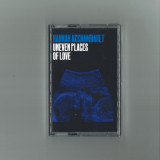
Hannah Archimbault is a multidisciplinary French artist based in London. Hannah opens up her inner deep emotions throughout minimal sequences and loops of sustained and touching organ notes, with reminiscences of Philip Glass, Eva-Maria Houben, Harold Budd or Kali Malone and a contemporary vein that questions love in current times. "The EP came after a break up as I decided to compose in the process of going through this love grief and how you could grow from it, learn to love oneself after the break-up. Each song represents a different stage on this life chapter.". Indeed moving anger, sadness and acceptance are well represented on this sonic, brave redemption of the grief through the artform.
The flesh withers to the pulses of thunderous cave reverberations, while the spirit is united with the psalms of the Glorious Dead, the Ancient Entities that have conquered Death and become Life, dominant, absolute and victorious. This Work consists of a ritual deriving from the darkest corners of the Mind, the deathlike spheres of the Netherworld and the truest essence of the Afterlife, to become a homage to the Force of Life Eternal.
Guided by Her Luminous rays, it is dictated to be experienced solely in chamber-like conditions, below the waxing Moon, accompanied with Myrrh and lunarian incenses and agharbattis, to be properly roamed within its uncharted corridors. Listen, experience and conquer, setting aside the mundane aspects of realities, explore the unmapped pathways, with every preconception burnt to the altars of this Magnum Opus.
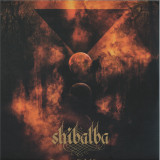
SHIBALBA's music is saturated with the mysticism of the East. It's richly detailed and multidimensional, while layered with chanting and broadly defined elements of traditional ritual and shamanic music. Apart from contemporary synths and guitar drones, the band makes use of bones and skulls as percussion instruments, Tibetan Horns, Tibetan Singing Bowls, bone & horne trumpets, Darbuka's (goblet drums) as well as ceremonial bells and gongs, to name a few. The Spirits behind the Shamanic Halls of Shibalba are V.P. Adept & Aldra-Al-Melekh.
CD edition of 300 copies in 6 panel Digisleeve, Matt Lamination. 7 Tracks. Running Time: 43:04
Vinyl LP edition of 300 copies in 3mm sleeve with printed innesleeve, Matt Lamination. 7 Tracks. Running Time: 43:04
Kimochi Sound welcomes back regular artist Shielding for another standout entry into the label's catalogue, this time on wax with a lovely hand-sprayed sleeve. It's a deep exploration of supple rhythm here with 'Ceiling Licker' mix up diffuse ambient arps and organic sounds from the great outdoors with a bubbling bassline. 'Hundred' is a trippy late night cut with a ghostly atmosphere and muted bells and chords drifting into earshot from way off in the distance. 'Kvadrat' is a late-night collaboration with Maeteriet from Sewer Sender Records that overlays a rubbery minimal rhythm with deft synth details and curious hooks to make for dark but ultimately charming listening.
- A1: Kavkazka Sound - All Forces On The Love Of Animals
- A2: Radiant Futur - Journey In The Deepest Of The Eyes
- A3: Mlin Patz - Smspce
- A4: Iury Lech - Here Comes Bellum Omnium Contra Omnes
- A5: Ihor Okuniev - Vernal
- B1: Rotrum – Kured
- B2: Niagara – Maja
- B3: Maarja Nuut – Flamingo Pop
- B4: Luurel Varas – Phantom Island
- B5: Terry Long Hermy – Eratifications On Observatations Of Unica
Ukrainian Muscut & Estonian Mida team up for “Воля x Rahu” compilation (Ukr: Volition x Est: Peace) with 100% of label profits donated to “Livyj Bereh” – a volunteer group based in Kyiv & working in regions affected by the war.
The A–side is curated by Muscut & holds only Ukrainian artists: Kavkazka Sound, Radiant Futur, Mlin Patz, Iury Lech & Ihor Okuniev. The B–side by Mida has Portuguese trio Niagara stuck in between Estonians Maarja Nuut, Rotrum, Luurel Varas & Terry Long Hermy.
Atmospheric & mellow selections on both sides, with a couple allowed left turns here & there.
Mr Beatnick & Richard Greenan present their debut full length collaboration, "??????". Brought together by their twin residencies on NTS Radio, the duo have forged distinct paths in respective scenes over the last decade - as producers, DJs and label heads of imprints Mythstery and Kit Records.
The strength of their partnership is built on contrasting styles; Mr Beatnick's sound orbits the woozier fringes of house and hip-hop, while Richard Greenan has settled in the cracks between ambient, textural experimentation and the avant-garde. Here, these approaches coalesce in unexpected ways - with violin, harp, guitar and saxophone finding themselves serrated by volleys of percussion and punchily melodic bass.
With much of the music recorded during the pair's residency in Margate, the album documents a weekend toasted and skewed progressively sideways. The opening salvo of cascading synth muscle ("Goodnight Mush") and fragmented acoustic stepper ("Superb Crafty Gardens") could evoke Devo and Pete Rock breaking fried toast over a dirty fry up. Side A's pop sensibilities peak on the lucidly string-laden "Harbour Arms", complete with pristine guest vocal by bb sway.
Then, like the work of a pair of pissed beavers, things start to get pretty weird. Familiar structures ferment laterally, from the midi swamp-hop of "Bellows of the Earth", to the cooked techno-funk stylings of "Bronze Pears". "How to Draw Roger" offers a magma-like credits roll, the sun's purple yolk poached over a hoppy sea of amber.
Regardless of where you’re from, it’s where you at. These wise words are some that the Watch Patrol wants you to remember as we all trying to find and stay on our path..
These wise words start off the A side and prepare us for a funky and synth fueled, cow bell-ing journey.
Next we head into Trial & Error, a bouncing tech which has already been proven to bring some big energy on the dance floor.
The B side contains the breaks you’ve been waiting for. Two big tunes that have been deliciously dialed in to spread groove and funk on the dancefloors. Trance, breaks, arpeggios, chopped up vocals, and special effects that will get you to keep this one in the bag at all times.
Limited copies as always, be quick!
Sept duos pour guitar acoustique et piano préparé is the second duo recording from Stephen O'Malley and Anthony Pateras. Their first together, Rêve Noir (2018), took an electro-acoustic scalpel to a 2011 duo concert for electric guitar and piano, using Revox and digital treatments to twist and smear gig documentation into ghostly echoes and fractured drones. Here, in contrast, the music is entirely acoustic and presented as it was performed, without overdubs. Both players’ choices of instruments are notable: this is O'Malley’s most extensive recording on steel string acoustic guitar (playing an instrument whose previous owners include Marissa Nadler and Glenn Jones) and Pateras return to the prepared piano, which he has rarely employed in recent years, after spending much of the first decade of the 21st century exploring its possibilities.
Recorded during O'Malley’s residency at La Becque on Lake Geneva in the summer of 2021, from the first moments of the opening ‘déjà revé’ the music immediately establishes the distinctive landscape of chiming tones and hovering clouds of resonance explored throughout its one-hour running time. Pateras’ preparations create tolling bell-like tones alive with complex overtones, alongside which O'Malley’s open strings and natural harmonics add a sparkling clarity. While Pateras’ music often uses a densely chromatic harmonic language, these duos are remarkable for their modal simplicity. However, the interaction between the pure intervals of O'Malley’s just-intoned strings and the unstable harmonies created by the piano preparations suspends the music in an oneiric state of hazy ambiguity. Without obvious reference to tempo or meter, the music floats in what the composer Ernstalbrecht Stiebler has called a ‘bottomless sound space’, the temporal placement of events determined by bodily rhythms and the performers’ own listening to (and enjoyment of) the sounds being made.
Heard one way, this music can seem striking in its consistency, almost environmental. Attending more carefully, the listener hears the pitch sets and tunings changing throughout the album’s length. Each piece has its own character, subtly distinguished from the others through mood, pacing, and timbre. On ‘déjà voulu’, for instance, O'Malley makes prominent use of slide, the woozy, bending pitches weaving through a series of lush arpeggiated chords from the piano. ‘Déjà senti’, on the other hand, is particularly spare, the gestures spaced out to the extent that they often float in isolation against the background of fading resonance. Much of ‘déjà su’ is built around a slowly pulsing single prepared piano tone, creating an almost ominous tension, whereas the sparkling guitar harmonics and arpeggios of the closing ‘déjà raconté’ have a gently triumphal air. While the music’s calm, rippling surface is immediately entrancing, these seven duos – in the tradition of the best improvised music – also reward close listening, which reveals sonic details and focuses the listener’s attention on how the music unfolds spontaneously from decision to decision, from gesture to gesture.
Recorded during a period when O'Malley and Pateras were grieving the loss of recently departed friends and collaborators, these seven duos possess a reflective, at times almost mournful quality. More importantly, though, they are imbued with other qualities that can arise from personal loss: a clarity that allows one to clear away the inessential, to begin again, to renew one’s faith in friendship and music.
- A1: Flug 8 - Puerto Rico (The Velvet Circle Mix)
- A2: The Black Frame - Sacrosanct (Mount Obsidian Remix)
- A3: The Novotones - Liberty Bell
- A4: Sascha Funke - Mathias Rust
- A5: La Finca - What Clouds Say
- B1: Paulor - The Last Coke In The Desert
- B2: Mount Obsidian - Fade Feat Charlotte Jestaedt
- B3: The Velvet Circle - Our Tribe
- B4: Seb Martel Feat Las Ondas Marteles - Dark Mambo (Joerg Burger Mix)
- B5: Mount Obsidian - Marole Feat Charlotte Jestaedt
Kompakt unveils the third volume of Jörg Burger’s Velvet Desert Music compilation series, dedicated to music that hits the sweet spot between the cinematic, the (pop) ambient, and the psychedelic. With Velvet Desert Music Vol. 3, Burger and his friends wander afar, taking trips away from, or adjacent to, the dancefloor that’s acted so long as the crucible for the Kompakt aesthetic. Like its predecessors, it’s a gorgeous, lambent collection of late-night mood music.
Because it’s such a broad church, Velvet Desert Music admits all kinds of new experiences, as well, with Burger looking for music that "leads out of the desert into the velvet universe". Indeed, of all the volumes in the series, this third instalment feels closest to an album made by a true collective. The roster has changed, with new contributors Flug 8 and Seb Martel, both with his trio Las Ondas Marteles and with Chocolate Genius and Zsela as La Finca, joining regulars The Novotones, Mount Obsidian, The Golden Bug, Paulor and Sascha Funke.
Burger himself reappears, too, alongside Fritz Ackermann (of The Novotones), Max Würden and Thore Pfeiffer, in The Velvet Circle. Their contributions are pure lush life electronica: “Our Tribe” hitches a ride with a low-slung groove, flickering psychedelic reels of acoustic guitar traipsing across moody bass and taffeta layers of drone; their opening remix of Flug 8’s “Puerto Rico” gently introduces the album with softly tangling electronic tones, while guitars, drenched in reverb, pirouette in the background. A Mount Obsidian remix of “Sacrosanct” by Burger’s The Black Frame -project is a swirling treat for the ears.
La Finca’s electronics and voice miniature, “What Clouds Say”, is a masterclass in poetic restraint; Martel’s “Dark Mambo”, remixed by Burger, is one of the collection’s big surprises, for it indeed does what the title says, a drifting, surrealist take on the mambo form, full of pensive chords, rich with unrequited longing, a breathy saxophone whispering under the song’s sly rhythmic carriage.
Elsewhere, The Novotones chime in with a slyly propulsive, Krautrock-esque charmer, “Liberty Bell”, and the guitar-led tone-drift of “Valley of Oblivion”; Paulor’s “The Last Coke in the Desert” is a chiming, lilting dreamscape; Mount Obsidian are joined by vocalist Charlotte Jestaedt for two modern takes on early-hours art song, “Marole” and “Fade”; Sascha Funke’s “Mathias Rust” is a lavish dancefloor dream, vocal samples drifting through the song as it slowly envelops the listener in its opulent radiance.
This is just a taste of the rich pleasures of Velvet Desert Music Vol. 3, a triumph of a compilation that takes the psychedelic visions of its predecessors and looks for the desert within, a dusty kiss, a road-movie hallucination flickering on the listener’s eyelids, a cinematic projection from deep inside the mind.
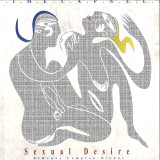
A lavish four chapter chronicle that imagines an alternative evolution of mankind through sound, VIS (Latin for energy or force) is the result of a lengthy process of self-discovery, collaboration and research for Italian-German composer David August. The son of a classical pianist, August slipped from the academic music world into an early career as a dance music producer and DJ before he felt his artistic outlook shifting considerably. He established the adventurous 99CHANTS label in 2018, and has since used it as an output for his most progressive notions, collaborating most recently with jazz-noise vocalist Cansu Tanrikulu and Carnatic singer Sushma Soma on last year"s acclaimed "Imaginary Landscapes" compilation. VIS then is a chance for August to reconcile his personal narrative, leveling it with concepts that touch on history, transformation and metaphysics. He wrote the album"s 13 pieces to play like a linear storyline, tracking the development of culture from its illusory beginnings in Plato"s cave into the wider world and observing its progression and adaptation.
August represents these themes with levitational orchestral drones, choirs and bells that slowly bend to long-forgotten ancestral rhythms, inevitably colliding with the digitized chaos of the information age. Motion guides everything, whether it"s shadows on a wall projected by dancing flames, or dramatic, overlayed rhythms that vibrate the air and excite the feet. VIS is a dynamic attempt to show the movement of time on a macro scale, looking backwards in order to move forwards. It charts mankind"s journey from its cosmic beginnings through the awe-inspiring world of flora and fauna, grounding the experience in rhythmic expression and dance before we"re returned to the stars in transcended form. Crucially, it"s a hopeful articulation of ideas and concepts that continue to echo throughout history, inviting us to imagine greater and cherish the teeming landscape that surrounds us.
At times where technology inexorably infuses into humankind, Ammar808’s next adventures lays within the realms of Stambeli’s invisible creatures, an old genuine Tunisian tradition that has roots spreading out within the depths of the African continent.
Stambeli is a Tunisian musical therapeutic ritual that was implanted by afro-descendant communities. During the ceremonies, music, dance and chants are blended so as for some participants to reach the alternate state of trance while they are possessed by super natural entities. It is a syncretism between Islam and animist Yorisha religion’s voodoo beliefs, that has been disseminated during slave trade by Yoruba populations originating from current Benin’s gulf. Stambeli is a precious legacy the symbolizes the outstanding diversity and complexity of the North-African identity.
Using drum machines and analog synthesizers, he summons super natural creatures to visit our material world and taste human incarnations, form the audience’s collective experience. The album features vocals and gumbri from Bellassan Mihoub, who inherited his father’s knowledge and mastery, and currently embodies the avant-guarde of Stambeli’s revival. Two additional choristers round off the stage band, also playing the krekebs: these are pairs of large castagnet-like instruments oscillating in the limbo between binary and ternary rhythmic patterns. They breathe life and motion into this pagan communion, blessed by VJ Sia original visuals synchronized to the thundering music.
Super Stambeli is a contemporary interpretation of the Stambeli traditional repertoire, processed through a time-travel washing-machine, a parallel-dimension earthquake portal, that aims to echoes ancestral ceremonies through sub-harmonic speakers. It’s a dialogue between the wailing of the gombri, known to call for the spirits to descend into the bodies of the participants, but this time AMMAR808 directs them straight into the digital circuits of his clockwork-crafted machineries.
Long Beach legend Scotty Coats links the West Coast eclecticism of Stones Throw to the NYC cool of DFA and Rong to the Balearic gods of DJ Harvey et al. He personally introduced Be With to Ned Doheny 10 years ago and he was immortalised on Smith & Mudd's last LP. And he's the main man behind the mysteriously titled duo Todd Russell & The Dangerous Coats, alongside Erick "Todd" Coomes (Lettuce founder/bassist).
In very real danger of being lost forever, we unearthed two of their private recordings and present them as a double A-Side 12", adorned with S-T-U-N-N-I-N-G artwork, courtesy of Arizona artist Frank Gonzales.
"Playa Larga" is a melodic, mellow masterpiece and is quintessentially Balearic. It's stretched out, low slung, guitar-soaked drum-machine soul music. It's multi-layered and contains multitudes: it builds and builds and builds and mesmerises as it does so. On the flip, "1900 Ocean Avenue" is a super slo-mo, sunbaked drug-chug which is already blowing minds thanks to early leaks of this cosmic, psychedelic detonation.
On first listen back, Erick said to Scotty: “So wait, nothing really happens, I mean nothing bad happens but nothing really happens”. Apparently these tracks were a bit foreign for Erick, musically, because of the lack of structure in the songs.
One morning, years later, Erick called Scotty and excitedly declared: “dude, I get it now!”. He was listening to random music with a lady friend while watching the sunrise in his 1900 Ocean Ave apartment and "Playa Larga" came on randomly. He'd forgotten all about it and said he had to get up and see what song it was because "it was the perfect soundtrack for a psychedelic sunrise over the ocean."
And that's exactly how we came across it, circa 2018, randomly popping up on a playlist while we were busy doing other things. It stopped us in our tracks but, when trying to find any info on iTunes, we were out of luck. It was only years later that we worked out Scotty had sent it to us. Ever since, we've been working on getting this out to you all. It's finally time.
We've only 500 pressed for the world, with many of them spoken for by those lucky enough to be already ITK, so these are gonna fly: be warned!
Scotty is a world class raconteur so we'll hand over to him to explain how these songs came about and why they mean so much to him in the context of his wider raison d'être:
"These were made 13 years ago when I was a new dad and left my job at Ubiquity Records to provide security for my newborn son, Nolan Liam Chai Coats. I became miserable working a job outside of music for the first time in my life and I was laid off 4 months into it. I was left wondering how the fuck am I going to provide for my family?
I lived in Long Beach and Erick lived a few blocks away. I would walk to his house when Jen finally got Nolan to sleep so I could escape my panic, drink some beers (is it beerlearic?) and make some music. He lived overlooking the ocean with the Queen Mary on the horizon, so I guess mellow Long Beach nights unintentionally inspired the music. These songs were the first two songs we ever made and they embody the desperation and hope I really needed at that time. 12 years later, when Rob at Be With expressed an interest in releasing it, we had Erick's brother Tyler Tycoon Coomes play drums on it at Jazzcats Studio in LBC, with Jonny Bell.
Shortly after I was laid off, I discovered The Stepkids. I was blown away by "Shadows On Behalf" and sent it on to Gilles Peterson. He played it on Worldwide the next day. The Stepkids pulled me back into music and made me realize I wasn't prepared to do anything but be involved with music. After I heard their unreleased album, I knew there was something there so I sent it to my good friend Jamie Strong who was at Stones Throw at the time. Jamie passed it along to Peanut Butter Wolf and the band asked me to be their manager. I didn't think I was the right guy for the job but wanted to see them do well so I told them I would help shop their album. Jamie suggested I take his place at Stones Throw, just as he did when he left Ubiquity Records. I always joke that Jamie can call me Scotty Coat Tails because I had been riding his for years.
Wolf told him that "Scotty is a nice guy but has horrible taste in music", which was ironic because he was literally trying to sign the band that I brought him. The Stepkids signed with Stones Throw and found a real manager. 6 or so months later Jamie sent me a note saying "Stones Throw is hiring and you should apply lol". I told him I was going to send my resume and the subject of the email was to read I HAVE GREAT FUCKING TASTE IN MUSIC. I did just that and got a call the next day from their new GM asking me to come in for an interview. When I walked in I was in Wolf's office where I had been 6 months before, signing The Stepkids
deal. Wolf and Jason McGuire were asking me some questions and wanted to introduce me to Jeff Jank. Jank walked in and said "Isn't this the guy that Jamie wanted to bring on 6 months ago?" They confirmed and he threw his hands up and walked out saying "I've seen enough". I got the job. I worked there for 2 or 3 years until I left to join forces with Jamie Strong at his label and stayed there for almost 7 years."
Scotty wanted to use a painting by his good friend, Frank Gonzales, for the front cover image. Frank was incredibly generous in letting us use this one, and Scotty was completely honoured. We think you'll agree, it's pretty striking. Simon Francis carefully mastered the original audio for both tracks and Cicely Balston's precise cut for Alchemy at AIR Studios ensures this double A-side 12" sounds appropriately outstanding. The immaculate Record Industry pressing will ensure these previously unheard, recently discovered recordings finally get a chance to shine.
- A1: Et Si Tu N'existais Pas (Joe Dassin)
- A2: La Javanaise (Serge Gainsbourg)
- A3: Everybody's Talkin' (Harry Nilsson)
- A4: I'm Going Away Smiling (Yoko Ono)
- A5: La Vie En Rose (Edith Piaf)
- B1: Les Passantes (Georges Brassens)
- B2: Syracuse (Henri Salvador)
- B3: What Is This Thing Called Love? (Cole Porter)
- B4: Michelle (The Beatles)
- B5: Only The Lonely (Frank Sinatra)
- B6: La Belle Vie (Sacha Distel)
10th year anniversary reissue of Iggy Pop's Après cover album with a bonus track, Sacha Distel's La Belle Vie and new artwork, and an exclusive poster. Originally released only in France in 2012, Après is being reissued for the first time and is now finally available outside of France.
The dynamic duo of Komponente & Kurilo from the Ukrainian label Trance Pandemic are preparing for their next sold-out record. This “Defenders” EP is made from tracks, that were made before the full-scale Russian invasion in Ukraine and also it is the continuation of “For A Brave” EP.
The main track of the release, also called “Defenders” is a signature piece for their duo. Moderately slow and calm, that evolves into something bigger around the third minute. The mayhem of sounds with that hell’s bells also. And there’s a little Easter egg at 1:29. If you know the sample – you’ll smile for a bit.
The record starts with “Victory”. Bold, a bit broken at the beginning piece, that is also evolving. This time we’re talking about the structure. The straight one comes after that broken start. “Kharkiv Mnemonic” also has some bells inside, paired with a nice, bubbling acid and a heavenly melody a bit closer to the end. The calmest track on the release.
Last, but definitely not least (the choice for the pick was between these two from the B-side) is “Broken Dreams”. Still can’t get enough of that break that we know lately from Alec Falconer’s release on Art Of Dark (not that lately, to be honest) and a dozen of other tracks. Here it’s hidden a bit in the back, so we can hear another kinda trancey and melancholic melody in full.