Gotts Street Park are a proud bunch of throwbacks. The Leeds-based trio - Josh Crocker (bass, production), Tom Henry (keys) and Joe Harris (guitar) - met through various music studies and friendship networks. Individually their tastes are diverse: from North Indian classical to experimental jazz, soul to alternative hip hop but their vision is united: “The idea of doing things live in one room has always been important,” remarks Josh. “That’s how they used to do it. Our identity evolved from that.”
The inception of the collective goes back to around 2012. There have been minor line up tweaks - they currently record with a rotating list of drummers - but the philosophy has stayed the same: an ongoing pursuit to capture the raw, unparalleled vibe that comes from recording music together, usually as one take, sometimes to analogue tape.
That approach is a deliberate call back to the methods made famous by legendary studios like Sun and Stax in Memphis, or FAME and Muscle Shoals in Alabama and their in-house bands. That’s why for years, GSP set up their own studio in a shared house in a tough (but, crucially, affordable) corner of west Leeds, Armley. Gotts Park (historically the home of industrialist Benjamin Gott) was close by - the group’s name was a nod to their local geography but also the fact it sounded like an area plucked straight out of some of their favourite East Coast hip hop releases.
Their work was quickly noticed, and it was from that base where they began working with an eye catching list of collaborators: Rejjie Snow, Kali Uchis, Cosima, Yellow Days, Chester Watson, Greentea Peng and Benny Mails. Tom also played keys in Mabel’s band. Early on, while performing as a band for hire for those artists, they were simultaneously honing their own sound; a deliberately retro “heavy, saturated” atmosphere that married the languid vibe of traditional soul with the pin sharp clarity of contemporary hip hop. Old leanings, sure, but upcycled with their own modern twist. “We’re constantly trying to build a catalogue,” says Tom. “Writing new stuff and sending it out to people.” That’s why after the release of their debut EP, ‘Volume One’, in 2017 the invitations kept coming; most notably from Brits Rising Star award winner Celeste, with whom they recorded two tracks on her debut EP ‘Lately’.
‘Volume Two’ once again features an impressive raft of vocalists - all female - from established names to fresh talent. This time, musically, the overall tone is lighter; less gritty, more optimistic. “It’s definitely not as gloomy,” says Josh. “Still though, there is this kind of dark, mysterious thing that we do a lot that works,” he continues. “Like the song we’ve done with Grand Pax, for example - it’s got that kind of witchy darkness to it. I think if you do a really straight male soul voice, it can be a bit cheesy and sound like you’ve heard it a million times before.”
Their collaborations might be some of the freshest of 2020 but make no mistake: Gotts Street Park are out there looking to create something timeless.
Поиск:ben eye
Все
Der Soundtrack zum packenden Dokumentarfilm ”Billie” (Kinostart 24.12) , der mit seltenem Archivmaterial und Interviews das dramatische Leben von Billie Holiday nacherzählt.
”Billie” entstand unter der Regie von James Erskine, auf dessen Konto unter anderem die Emmy-nominierte BBC-Dokumentation ”The Human Face” geht. ”Billie” erkundet Leben und die Karriere der legendären Sängerin auf der Basis von rarem Filmmaterial (zum Teil erstmals koloriert) und Interviews mit Künstlerkollegen wie Charles Mingus, Tony Bennett und Count Basie, sowie mit Holiday’s Stiefeltern, Lebenspartnern, Schulfreunden, Gefängniskameraden, Anwälten und sogar den FBI-Agenten, die sie einmal verhaftet haben.
”Billie” kommt in Deutschland am 24. Dezember ins Kino, bereits am 13. November erscheint das Soundtrack-Album, das die wichtigsten und schönsten Songs aus dem Werk Billie Holidays versammelt.
We are excited to welcome French avant-garde metal duo WuW to our ever-expanding roster of for- ward-thinking artists. Inspired by classical music, free jazz and drone the two classically trained brothers Benjamin and Guillaume Colin have been creating lo-f experimental post-doom epics in the vein of Year of No Light, Dirge and Omega Massif since 2016. "WuW is the sound wind makes when it blows on a hot night," explains the band, "It's a low-end murmur that grabs you by the guts, a blast of air rushing through the mountains and the oceans." Their upcoming third album Orchaostre is an anthem to a restless journey, a fve-part doom symphony that creates a shroud of oppressive atmospheres with only a pinch of light. With their third studio album, WuW deliver a veritable post-metal odyssey, one that takes you on a journey through rhythm and texture and that lets your soul wallow in a soft shell of desolation. The marching rhythm of «Orchaostre 1» and the swaying rhythm with the slow chugging patterns of «Orchaostre 2» take you along on this intric- ate journey, slowly numbing the senses in the throes of repetition. Nevertheless, for those who manage to keep their eyes peeled on this descend into forgetfulness, there is a world of beauty and a spark of hope to be found. The atmosphere is thick, the mood is heavy, and across the slow rifs and funerary drumbeats, the wailing e-bow guitars and myriad of synthesisers evoke kafkaesque at- mospheres as well as strange poignant textures that inspire desolation. Evoking the work of early electronic music innovators, notably during the climactic fnale of «Orchaostre 1» but also halfway through «Orchaostre 3» WuW breed a sense of pristine beauty, like unadulterated nature. In fact, the beauty of Orchaostre feels so un- spoilt, so devoid of any human infuence, it becomes alien, resulting in a harrowing ex- perience of the exquisite in the eye of a hot and hazy storm. FOR FANS OF Russian Circles, Year of No Light, Dirge, Omega Massif, Neurosis, Telepathy, Celeste, Tangled Thoughts of Leaving Limited (100 copies ww) Single Colour Orchaostre 4 (Pink Vinyl) Edition!
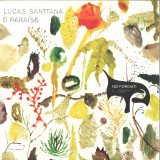
With this new solar album, Brazilian singer-songwriter Lucas Santtana wishes to re-enchant our life on earth. For his ninth album "O Paraíso" (Paradise), the free heir of the Brazilian tropicália intends to redefine our idea of Paradise. "It is in front of us, we must open our eyes and learn to contemplate it in depth," he explains. The Earth is a living organism also called "biosphere", a unique planet in the solar system where all the conditions are gathered to welcome life. Lucas places life at the heart of his songs and celebrates the collective forces that resist to preserve it. His guitar-vocal songs with bossa nova sounds are mixed with organic sounding percussions, enriched with electronic orchestrations and textures. The Brazilian composer gets closer to his French audience by collaborating with Flavia Coelho, Flore Benguigui (from the band L"Impératrice) or the saxophonist Laurent Bardaine, and by even trying his hand at French on one of his tracks. It"s a festive new album, which helps us better understand where we live and with whom we share this heavenly home.
- 1: The Rocks And The Water
- 2: Wild Theme
- 3: Freeway Flyer
- 4: Boomtown (Variation Louis' Favourite)
- 5: The Way It Always Starts
- 6: The Rocks And The Thunder (I)
- 7: The Ceilidh And The Northern Lights
- 8: The Mist Covered Mountains
- 9: The Ceilidh: Louis' Favourite, Billy's Tune
- 10: Whistle Theme
- 11: Smooching
- 12: Stargazer
- 13: The Rocks And The Thunder (Ii)
- 14: Going Home (Theme Of The Local Hero)
Mastered from the original master tapes and pressed at RTI on dead-quiet 180g vinyl, Mobile Fidelity's numbered-edition 180g LP of Local Hero gives the beloved effort audiophile-grade sound on a par with the reference-quality sonics afforded Dire Straits' Mobile Fidelity reissues. In each arrangement, Knopfler's methodical guitar lines emerge with supreme transparency and multi-hued textural detail. The intricate notes, finger-picked passages, and cosmopolitan lines come across as if they're transmitted just feet away from you in real time.
Ditto the diverse accompaniment, including the Celtic-themed effects, supplemental jazz accents, and folk inflections. The keys to the nearly 44-minute effort's success and continuity relate not only to Knoplfer's laidback style and low-key approach, but his ear for uncanny melody and blues traces. Woven acoustically and electrically, his tapestries benefit from the newfound airiness, openness, and balance that live on this reissue. No matter the instrument or treatment, the music arrives with pinpoint imaging and vibrant liveliness. Close your eyes, and the Mobile Fidelity version of Local Hero projects movies in your head.
For instance, take the closing "Going Home," a cherished instrumental whose proud spirit resonates with English football fans and features saxophone playing by the late, great Michael Brecker. Heard before every Newcastle United F.C. home game, it has become an anthem on both sides of the Atlantic. Or, look to "The Ceilidh: Louis' Favorite Billy's Tune" on which Scottish-flavored vibes and dance tempos conjure a festive jig until a transition gives the number a more subdued, romantic feel. Then, the pattern repeats. Seeking to expand beyond the parameters of Dire Straits, Knoplfer taps into a global economy of structures and sounds, and takes anyone with a sense of adventure along for the ride.
Not that his hallmark six-string is absent from the proceedings. It frames the lovely tin-pan whistle motif of the aptly titled "Whistle Theme," acts as a beacon for the elegant, vibraphone-kissed "Smooching," and pushes forward the jovial, top-down momentum of "Freeway Flyer," among other highlights. Knopfler also receives assistance from session pros Mike Mainieri, Steve Jordan, and Terry Williams, as well as vocalist Gerry Rafferty on the set's sole vocal tune, "That's the Way It Always Starts."
You’re Not a Bad Person, It’s Just A Bad World is the fourth studio album from the genre-bending Canadian punks, Rare Americans. Containing the massive singles, “Love Is All I Bring,” & “Lose My Cool,” (which seeks to raise awareness on bullying), the nine-track album expands on the wildly inventive world Rare Americans have created through their gripping stories and visuals. After ripping through America on their first ever US tour, of which all dates were sold out well in advance, the band’s next mission seems clear. Global domination.
Sky Blue Vinyl[35,25 €]
Ltd edition Double Sky Blue Vinyl, Gatefold sleeve w/ spot gloss, liner notes + DL card. Classic Double Black vinyl, Gatefold sleeve w/ spot gloss, liner notes + DL card. Bending scuzzy boundaries, ‘Good Bad Not Evil’ is a coming-of-age garage rock classic record. Full of hedonistic delinquent anthems, the fourth studio album from Atlanta punks Black Lips reaches it’s 15 year anniversary. This deluxe edition includes unearthed photos and new liner notes from Jared Swilley and King Khan. The second disc features B-sides and rarities including ‘Cruising’, ‘I Wanna Dance With You’ and ‘Leroy Faster’. ‘Good Bad Not Evil’ perfectly encapsulates the disillusionment of the mid-00s America, slammed between warehouse parties, DIY generator shows and scattered party pics, which was recorded in a little house in Atlanta that had been converted into a studio called the Living Room. Referencing Shangri-Las in the title, this is where their knack for garage gems met Motown; with bass heavy grooves (later remixed by Diplo), a certified country twang and unabashed bravado. Instant hits like ‘Veni Vidi Vici’, ‘Cold Hands’, ‘Bad Kids’ and ‘O Katrina!’ immediately became Black Lips staples. This was a band caught in the eye of the storm, the touring continued, the parties didn’t stop, this was a band bending the scuzzy boundaries of their chosen genre. The record was hailed by the likes of Pitchfork, who proclaimed, “Black Lips are a go-to band for vintage lo-fi freaks, and their raucous live shows have helped them cross over outside of crusty dive bars. ‘Good Bad Not Evil’, however, is the record where naysayers, disinterested friends and acquaintances, people on the street, and anyone else within earshot has to sit up, shut up, and listen.” …and, shut up and listen they did. “A perfect tapestry of sordid pleasure.” NME // “The same rapturous energy as the Sonics and the 13th Floor Elevators.” The Guardian // Track List: Disc One – Good Bad Not Evil. A1 I Saw A Ghost (Lean) A2 O Katrina! A3 Veni Vidi Vici A4 It Feels Alright A5 Navajo A6 Lock and Key A7 How Do You Tell a Child That Someone Has Died B1 Bad Kids B2 Step Right Up B3 Cold Hands B4 Off The Block B5 Slime and Oxygen B6 Transcendental Light… Disc Two - B-Sides & Rarities. C1 Cruising C2 Make It C3 I Wanna Dance With You D1 Best Napkin I Ever Had D2 My Trouble D3 Leroy Faster D4 Buried Alive
Black Vinyl[31,72 €]
Ltd edition Double Sky Blue Vinyl, Gatefold sleeve w/ spot gloss, liner notes + DL card. Classic Double Black vinyl, Gatefold sleeve w/ spot gloss, liner notes + DL card. Bending scuzzy boundaries, ‘Good Bad Not Evil’ is a coming-of-age garage rock classic record. Full of hedonistic delinquent anthems, the fourth studio album from Atlanta punks Black Lips reaches it’s 15 year anniversary. This deluxe edition includes unearthed photos and new liner notes from Jared Swilley and King Khan. The second disc features B-sides and rarities including ‘Cruising’, ‘I Wanna Dance With You’ and ‘Leroy Faster’. ‘Good Bad Not Evil’ perfectly encapsulates the disillusionment of the mid-00s America, slammed between warehouse parties, DIY generator shows and scattered party pics, which was recorded in a little house in Atlanta that had been converted into a studio called the Living Room. Referencing Shangri-Las in the title, this is where their knack for garage gems met Motown; with bass heavy grooves (later remixed by Diplo), a certified country twang and unabashed bravado. Instant hits like ‘Veni Vidi Vici’, ‘Cold Hands’, ‘Bad Kids’ and ‘O Katrina!’ immediately became Black Lips staples. This was a band caught in the eye of the storm, the touring continued, the parties didn’t stop, this was a band bending the scuzzy boundaries of their chosen genre. The record was hailed by the likes of Pitchfork, who proclaimed, “Black Lips are a go-to band for vintage lo-fi freaks, and their raucous live shows have helped them cross over outside of crusty dive bars. ‘Good Bad Not Evil’, however, is the record where naysayers, disinterested friends and acquaintances, people on the street, and anyone else within earshot has to sit up, shut up, and listen.” …and, shut up and listen they did. “A perfect tapestry of sordid pleasure.” NME // “The same rapturous energy as the Sonics and the 13th Floor Elevators.” The Guardian // Track List: Disc One – Good Bad Not Evil. A1 I Saw A Ghost (Lean) A2 O Katrina! A3 Veni Vidi Vici A4 It Feels Alright A5 Navajo A6 Lock and Key A7 How Do You Tell a Child That Someone Has Died B1 Bad Kids B2 Step Right Up B3 Cold Hands B4 Off The Block B5 Slime and Oxygen B6 Transcendental Light… Disc Two - B-Sides & Rarities. C1 Cruising C2 Make It C3 I Wanna Dance With You D1 Best Napkin I Ever Had D2 My Trouble D3 Leroy Faster D4 Buried Alive
- A1: Hold Up Hold Up Hold Up
- A2: Black Friday
- A3: To Be Honest
- A4: I See Dollars
- A5: Corduroy Houseshoes Skit
- A6: What's Da Bizness
- A7: The Land
- A8: Death Row
- B1: Cray Cray
- B2: Rnb (Feat Megan Thee Stallion)
- B3: Rich Slave
- B4: Until It Rot
- B5: Blue Diamonds
- B6: No Sense (Feat Key Glock)
- B7: Benz
- B8: 1 Scale (Feat G Herbo)
After releasing a successful collaboration album last year, Memphis, TN artist, Young Dolph returns with his highest charting album in his career, Rich Slave. The title is Dolph's commentary on how he is perceived – that no matter how much money he has – in the eyes of America, he will always be a slave. Rich Slave is the album that Young Dolph has shown growth in the sense that he has touched on current events, and social commentary with songs like, The Land that say, "they say this the land of the free, but it looks like the land of bullshit to me". With little features aside from Megan Thee Stallion, Key Glock, and G Herbo, Rich Slave showcases Young Dolph's charismatic skill, and ability to inspire those after him to pursue entrepreneurship.
We Out Here is the highly anticipated debut EP from Dublin’s Plus One on First Second Label. The prolific musical polymath lays down 4 sub-wrenching club tracks indebted to hardcore futurism with a canny pop sensibility.
Plus One is an alias of cultishly adored producer Matt Finnegan, a veteran beatsmith behind multiple productions for Irish rapper Kojaque, amongst other impressive credits on an expansive CV. He concurrently eyed up the dancefloor, stocking an impressive hard drive of unreleased club tracks that were subsequently rinsed heavily by the likes of Ben UFO, re:ni and EMA to name but a few.
This is his solo debut proper, and comes impressively fully formed from the off. We Out Here starts the engines with a deliciously sub-y stepper of epic big room potential, with a fittingly large bassline to boot. Hood Up Head Down is suspended in an aqueous ambient-drowned RnB bath before unfurling into lush 2-step in romantic fashion. Kiki bobs assuredly along a breaks-y techno pulse amongst a twinkling twilight melody and an emotive reese-bass stunner of a line. Me concludes the EP on a necessary 160 tip, flexing a modern jungle rinse out with sharp amens and soaring melodic subs to round off this statement of intent. - Nevan Jio
Felix Laband’s The Soft White Hand is the masterwork of an artist who expresses himself through musical and artistic collage acting together to reinterpret his sources and to express significant elements of his own personal story.
Released by Munich-based Compost Records, the 14-track album is Laband’s first full-length offering since the critically acclaimed Deaf Safari in 2015. It is heralded by the single “Derek and Me”, and is being pressed on vinyl for distribution globally.
In The Soft White Hand Laband works with source materials that will be familiar to those who know his previous four records – Thin Shoes in June (2001), 4/4 Down the Stairs (2002), Dark Days Exit (2005) and especially Deaf Safari which reached deep into the South Africa scene and its political culture to inspire its vocal and music sampling. However, the disengagement he felt from his homeland during his latest album’s creation – an abiding sense of untethered-ness to place and space, exquisitely rendered in tracks like “Death of a Migrant” – is perceptible in Laband’s desire to illuminate instead aspects of his own life.
“For this album, my source material became almost autobiographical as opposed to African statements I’ve worked with previously,” says the artist. “I have sampled a lot from documentaries from the 80s crack epidemic in impoverished African American communities and believe my work speaks unapologetically for the lost and marginalised, for those who are the forgotten casualties of the war on drugs. In the past, I have had my issues with substance abuse, and I know first-hand about the nightmares and fears, what it feels like to be isolated and abandoned.”
Few artists have managed to air these intimate aspects of their life so luminously as Laband does in tracks like “5 Seconds Ago”, “They Call Me Shorty” and in the strange and meditative “Dreams of Loneliness”. “I’ve been building this weird, autobiographical story using other people talking. It’s kind of humorous but it is also sad and beautiful,” says Laband.
Yet, as in all of Laband’s recorded output, the delineations between emotions are never starkly drawn and The Soft White Hand is also shot through with beauty. Nature appears in recordings made in his garden in the intimate early morning hours, whether as in the calls of the Hadada Ibis and other birdsong in “Prelude” or of the vertical-tail-cocking bird in “Derek and Me”. The last is a wonderful track with Derek Gripper, the South African experimental classical guitarist of international renown, whose 2020 song “Fanta and Felix” imagines a meeting between Fanta Sacko and Laband.
Laband’s eloquence in reinterpreting classical composers such as Beethoven in “We Know Major Tom’s a Junkie” is another thrilling aspect of the new record. “I’ve been properly exploring classical music on this album,” explains Laband, “taking melodies from classical compositions and reinterpreting them”. A fresh quality comes to his work through this sonic adventuring: the tender manipulation of the mundaneness of the computer’s AI voice to reimagine and reinvent iconic lyrics and melodies in strange and unexpected configurations.
The Soft White Hand is Laband’s most cohesive body of work to date. Yet it remains, in its sheer artistic scope, impossible to describe fully. Darkness abuts the gossamer light. A song that summons the sunrise and all the hope of a new day could also be about the final dipping down of the sun that portends a troubled night ahead. Interludes are invitations to expand outwards or shift inwards. Mistakes and “weird fuckups” in the sound are cherished as convincing statements against what Laband calls the “grossness” of perfect sound in modern music.
For this world-leading electronic artist, the boundaries are unfixed. He is inspired by the German Dada artist, Hannah Höch, who memorably declared: “I wish to blur the firm boundaries which we self-certain people tend to delineate around all we can achieve.” His music consequently reflects a primal artistic impulse that is also visible in Laband’s considerable visual art output as seen recently in several solo exhibitions such as that held in the No End Gallery in Johannesburg in 2019 and in the works he produced during his 2018 Nirox Foundation Artists Residency. “My music is always about collage, as is my art,’’ he affirms. “Everything I do is collage. It is a medium I find very interesting because you are taking history and distorting it and changing its meaning and turning it upside down and back to front.” In her book Recollections of My Non-Existence, Rebecca Solnit calls collage “literally a border art”; it is “an art of what happens when two things confront each other or spill onto each other”.
With The Soft White Hand, Laband is confirming his singular ability to achieve this in both art and music, melting the divisions between the two creative disciplines until they become one. He is also affirming his belief that an album of music should be more than a collection of unrelated tracks, but should unfold a fully integrated, cohesive story as in the song cycles of the great classical composers. In doing so, he claims his position as one of the most significant artists working today.
Artist Statement – Felix Laband – August 2022
When the Khmer Rouge took their captives for processing, they identified their class enemies by looking at their hands. If they were sunburned, rough and calloused, they were those of a peasant, a proletarian to be spared. But if they were soft and white, then they were those of a city-dweller, an intellectual or bourgeois, an adversary to be liquidated.
In calling this album The Soft White Hand, I was reflecting on the Cambodian genocide and how it resonates in contemporary South Africa. The apartheid era is over, and gone with it is white political domination. Yet economic and social privilege is still held in soft white hands. But those who grasp it know just how tenuous is their hold, how it singles them out, and my music reflects their subconscious fears, the stress and guilt of clinging on to what others envy and desire.
The soft white hand of the title suggests to me a further image, one that relates to all of postcolonial Africa. In my mind’s eye, I see the soft, duplicitous handshake of the smooth representatives of the superpowers making deals and promising gifts that benefit only them, and not their African dupes.
Yet, soaring above the wailing of sirens sampled from the first day of the invasion of Ukraine, my music is also about love gained and passion lost. It is about the tender caress of a soft white hand that conducts you into a place of dreams to be enfolded by nocturnal melodies.
Shannen Moser wants to have a conversation: with their past selves, their present self, their undesignated, unfurling future selves; with the trees that adorn their old street, and the door they used to call home; with the shadows of lovers-turned-to- friends and the overwhelming cacophony of abrupt change. They’re drawing a map but the port of call is cloudy and indistinct. It’s while traveling along these nebulous contours that their latest album The Sun Still Seems To Move forms a kind of physicality, of outstretched giving hands, that offers a guide through the fog. Here, Moser examines the disorien- tating, challenging task of trying to hold onto ourselves––and everything else––all at once. But this isn’t a fatalistic journey of melancholy or apprehension. Instead, Moser celebrates the small steps and the unwavering perseverance that makes it all worthwhile.
Moser’s previous albums Oh, My Heart (2017) and I’ll Sing (2018) were praised for their careful, intimate arrangements that showcased their sharp, interpersonal narration and time- less lush vocals. On The Sun Still Seems To Move
It is our distinct pleasure to announce the debut solo effort from Thee Sacred Souls' own Jensine Benitez. Anyone who has had the privilege to catch Thee Sacred Souls live is already well familiar with Jensine. On a nightly basis, when she gracefully steps into the spotlight for one of her solos, her mellifluous voice and commanding stage presence sends the crowd into a frenzy of adoration and unadulterated joy. With this single she enriches that charm with honeyed melodies set to floaty rhythms that are sure to have you bobbing your head with the windows rolled down. "Ilusión de Amor" is a lilting lament sung en español about a forlorn lover whose deep, brooding sadness has left them yearning well beyond any hope of reconciliation. On the flip is "The Spar kle in Your Eyes," a vibey, mid-t empo mover that will have couples crowding dance-floors for decades to come. A stunning two-sider that epitomizes the kind of soul music we dig. Snatch this one up quick, or tears may fall..
"Abhorrent Abomination', der Name des Debüt-Openers der Deather Autophagy, bedeutet frei übersetzt "abscheuliche Abscheulichkeit". Ein ziemlich zutreffender Begriff für ihre Musik, doch rein im positiven Sinne. Die Growls von Andy Swarthout sind stets etwas im Hintergrund verankert und sorgen somit für eine etwas surreale Atmosphäre. Die Gitarristen Justin Yaquinto und Kevin Miller hauen neben Doom-angehauchten Düster-Riffs auch ziemlich groovige, fast schon an Pantera erinnerte Rhythmen raus ('Beneath The Moss, Between The Roots'). Auf einer Spielzeit von rund 33 Minuten kommt daher wenig Langeweile auf. Im Titel-Track entscheiden sich die Herren aus dem amerikanischen Oregon für ein langsam schlürfendes Outro, welches durch seine Behäbigkeit an Brutalität gewinnt - die Kirsche auf der Torte sind die Slayer-Soli gen Ende des Songs. Die runde und kraftvolle Produktion von Billy Anderson (unter anderem Sleep, Neurosis, Eyehategod) sorgt für ein angenehm deftiges Sound-Erlebnis..." (Metal Hammer)
"Nach nur einem Demo heizen die Portland-Deather AUTOPHAGY mit ihrem Debüt "Bacteriophage" mächtig ein. Das Quartett spielt düsteren Death Metal, der extrem basslastig aus den Boxen dröhnt und tempomäßig zwischen Geholze, Uffta-Rhythmen und doomigem Geschrote hin und her pendelt. Die pechschwarzen, Lava-artigen Arrangements erinnern an Bands wie Incantation, Portal oder Immolation. Wenn´s abgeht und das Tempo etwas flotter wird, scheppert es in alter Carcass-Manier. AUTOPHAGY liefern mit "Bacteriophage" ein solides Debütalbum ab, das man als Fan genannter Bands durchaus mal anchecken sollte." (Rock Hard)
Weitere Formate
In 1968, the future composer of "The Things of Life" (Les Choses de la Vie) seriously considered becoming a director. He wrote and shot "Florence", a short film influenced by the New Wave and composed its soundtrack, under the benevolent eye of Vladimir Cosma. The first spectators of the film are unanimous: failing to have seen a visionary cinematographic opus, they have discovered a real movie musician. From this first attempt, Philippe Sarde imposes his melodic talent on the picture and initiates his sense of counterpoint. This founding soundtrack, however, remained in the boxes for more than 50 years, before finding a place of choice on the B side of our album.
To open the ball, we offer you another forgotten score: the almost unused score of Loulou, Maurice Pialat’s cult classic. In 1980, the naturalist director planned to use original music to accompany the wanderings of his sublime love duo, played by Gérard Depardieu and Isabelle Huppert. He commissioned a bare, impressionistic score from Philippe Sarde, then changed his mind and kept only a
timid end credits. The meeting between the two giants of French cinema did however take place, as evidenced by the first side of this beautiful lp.
Laila Sakini's new album 'Paloma' arrives via Modern Love and is her most striking and ambiguous to date - a pointed and timely meditation on hope and hierarchies that riffs on Zbigniew Preisner's magical "The Double Life of Veronique" score and enduring outsider music tome "The Langley Schools Music Project". Subtly transcendent, fathoms-deep music.
When Laila Sakini's debut album ‘Vivienne’ arrived in 2020, it felt like the record we were waiting for to map out our tangled reactions to an uninvited reality. Never self-consciously strange, it revealed itself slowly and cautiously, like a shadow in the corner of the eye, or an alchemical symbol in a bowl of alphabet spaghetti. This time around Sakini has worked her unique world-building to an even finer point, forming six tracks around a theme that's so close to our heart it's almost beating in time. Initially inspired by Krzysztof Kieślowski's 1991 arthouse classic "The Double Life of Veronique", the cult Polish director's enduring modern fairytale that serves as a cosmic rumination on identity and choice. Detailing two identical women - both singers, both in love - the film lets one live as the other dies, forcing us to consider the implications of art and endurance in the face of life's myriad challenges.
Sakini takes Polish composer Zbigniew Preisner's influential score for the film and uses it as a jumping-off point for ‘Paloma’, bending the more grandiose moments into baroque awkwardness on opening track 'Fluer D'Oranger' and evoking the mood of scene-setting cues 'Weronika' and 'Véronique' on the recorder-led 'The Light That Flickers In The Mirror'. And while Preisner's score zeroed in on the musical virtuosity of the film's lead characters, Sakini reinterprets that as a metaphor for self-discovery. Playing piano, violin, glockenspiel, timbale, recorder, and occasionally singing, Sakini captures a mood of innocence that immediately transports the listener back to simpler times. Her music isn't self-consciously simplistic, but forcing herself to interface with instruments impulsively rather than studiously, her sounds are all heart, no filigree.
In spirit, it reminds us of cult Canadian album "The Langley Schools Music Project", a collection of 1970s recordings of school kids singing rudimentary renditions of pop songs in a school gymnasium. That album's genius was in the bottling of hope and innocence: the feeling of joy from hearing and wholesomely interacting with music that's known and loved without a sense of hierarchy or desire for cultural clout. Sakini subtly subverts this by evoking the amateur spirit in the most bewitching way; instead of sourcing her ideas from Bowie, Fleetwood Mac and the Beach Boys, her stock is the established art canon, and by reforming those sounds she makes an insightful comment on intellectualism and access. European classical music is all too often trapped behind the frosted glass of respectability and assumed skill - craft replaces spirit, and technique replaces soul. By approaching these gestures from a different angle, Sakini softens the edges sonically and intellectually, finding music that bubbles with emotion, and most strikingly - hope.
Her choice of instruments and the way she interacts with them allows us to feel as if we're not only listening but contributing. It's a bottom-up way of absorbing art that's traditionally been top-down, and a reminder that we're all part of the experience, whether we're humming along to the remnants of a theme as it dribbles out of an ear in the shower, or dreaming of spotlights in a parallel life that may or may not be real. Sakini's music is nostalgic in a sense, but nowhere near the buttered popcorn and high-fructose candy migraine of the Netflix/Spotify algorithm generation of regurgitated churn. She makes sounds that remind us of what time and experience may have stolen from us, and how we might recover it.
We, the label, asked Ben Wallers (ex-Country Teasers) to write a press release for his new album. "Press Release And Give Me The Disc as Peter said to Murphy said to Daniel said to Ash said to J said to the drummer subs please check name was it Martyn Atkins? No... scratch that please Roger, there's nothing funny about not knowing all the members of Bauhaus. Announcing the new album by The Rebel, yay! Wow! Fucking hell, great! How long is it this time? Oh it's getting on for the optimal 45 mins. Fit on side of a D90 but go bit wobbly near end of SA90. I am listening to my copy on vinyl record, it's much better than tape. That's the intro. Once upon a time there was a man/boy a sort of immature Peter's Pan type pan-pipe type who COULDNT WOULDNT grow up a bit like Keith Richards and who er where was i? The Vagina Museum is very near Maureen Paley's art gallery where if you hurry you can see some INCREDIBLY GOOD paintings/art. Anyway once upon a time it was february 2021 if that's last year or 2020 if it was the one before that, i've lost count, honestly this Covid thing is SO confusing isn't it? Anyway. Ducking fomestic crisis as usual reached boiling point again and i fucked off didn't i, did a runner, off to Turkey wiv a lih-ooh bih-uh ragarahn me ed, first of all 2 weeks on George's spare mattress, then 2 weeks in Merlin's magical tower, then a week in a fucking EasyJet Hotel with no windows, then at last my new exile retreat, Congreve Ho. Meanwhile Dad got me a new recording device the size of a VHS tape, the Tascam D-POO 8 S-E-X multitrack. Quality, oscar mike golf!! Urine for a surprise Listener/s! Ural b sayin "Y could ont he ov get 1 of these B4?" Well! Paid off the fuckin mortgage, didden Eye listenerz. Paid the fucking mortgage of. Dad said "Lets get you a reward Son! Anything name it!" Well i said ... can you fix it for me to touch Britney's hat? The one she wore for the Milkshake video. Great album. Recorded it in exile, from where i write this press release and give me the tape Kevin Haskins." And he did. Tracklist: 1. Nemo To Self 2. I’m Wok Inner Gdn.C 3. A Cretian Build-Up 4. Lays A Seamless Transition 5. A Bottle Of Timotei Hair-Shampoo 6. Long Way Off 7. Teulleodd Hapys (Dave 1) 8. I Aint Gonna Lie To Ya 1 9. Bisgeden Am Swper Eto (Dave 4) 10. Put Your Fucking Glasses On So You Can Fucking See 11. Happy Families (Dave 3) 12. Pyfgosycfs 2/Aquafauna 13. Dave Two Ukraine Nil 14. Nemo Self 2
The Dangerous Summer signed their first record deal as high school seniors and quickly established themselves among the alt-rock world’s elite. Passionate delivery, confessional authenticity, and deeply resonant musical storytelling define their sound. The band writes hooks that serve as soundtracks for important life moments for a diverse group of listeners spread across the globe. The audience is more family than a fanbase. The community feeling is apparent at every gig, from Slam Dunk to Riot Fest, from touring with State Champs to headlining shows. Reach for the Sun is the record that “shot them into the pop-punk pantheon” (Kerrang!). Powered by unshakeable, enduring alt-rock anthems, the Ellicott City, Maryland band’s debut album made them heroes of the Warped Tour world, all while they carved their own unique path. 2011’s War Paint was a sophomore-slump-smashing follow-up. Grantland likened the “tall and wide” riffs of 2013’s Golden Record to The Hold Steady and U2. (“Catholic Girls” even earned The Danger Summer praise from the famously discerning Pitchfork.) Alternative Press saluted The Dangerous Summer as a group that stayed true to their sound, praising the songs on their 2018 self-titled comeback album as equal parts charismatic and addictive. 2019’s Mother Nature conjured an emotional storm, with an uplifting bent. Underoath’s Aaron Gillespie appeared on the 2020 EP, All That Is Left Of The Blue Sky. Produced by Will Beasley (Turnstile, Asking Alexandria), 2022’s Coming Home ushers in a new era for TDS. The Dangerous Summer never sacrificed their unique, diverse sonic identity, one that appeals to fans of everything from Kings Of Leon and Coldplay to Jimmy Eat World and Bright Eyes. Coming Home is a triumphant summary of what The Dangerous Summer is all about, past, present, and future.
10” black vinyl + DL card.
Josephine Foster's peculiar 2000 home recorded debut There Are Eyes Above is an essential introduction to her music that’s unfolded now for over two decades. Released for the first time on vinyl, this limited edition 10-inch pressing comes packaged with brand new artwork and is adorned by one of Josephine’s illustrations. Lo-fi and unaffected by tradition or commercialism these initial recordings are sepia-tinted, folk-art music with powered by uke minimalism; it’s outsider music that still doesn't fit in. Just 30-minutes caught in time before her 2001 follow up Little Life - this humble first incarnation includes here for posterity super personal lullabies and a glimpse into her songwriting evolution. It’s music from an era that only exists in your mind, with a bow to Tin Pan Alley for good measure. This super rare collection, originally only released on CDR and sold at shows, remains an essential part of the curious oeuvre of this unique songwriter and singer. “A dissonant soprano and lyrics about benevolence and old-time faith, Foster expertly weaves ancient and modern” The Guardian. Track listing: Side A 1 One Hundred Songs I Sing 2 Emily Told Me 3 Teeter Totter 4 Little Life 5 I Am A Guest In Here. Side B 6 Robber Song 7 Hey Matthew 8 There Are Eyes Above 9 Godcake 10 Yippee I'm Leaving 11Two Not One