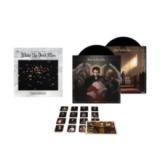
BLK ODYSSY is an Austin-based artist and producer whose boundary-pushing sound blends soul, hip-hop, rock, funk, and pop. Born in Plainfield, New Jersey, and raised in a household steeped in neo-soul, BLK began channeling his voice through music after the unjust killing of his older brother by police at age 12. That life-altering loss and the experience of growing up Black and male in 21st-century America fuels his raw, layered storytelling. His debut album, BLK VINTAGE (2021), written and produced with close collaborators, served as both a celebration and a critique of Black identity in America. It was met with critical acclaim and re-released in 2022 via Empire as BLK VINTAGE: The Reprise, featuring Mereba, Benny the Butcher, George Clinton, and Baby Rose. The project has since amassed over 100 million streams and positioned BLK ODYSSY as a standout voice in modern soul. His 2023 sophomore album, DIAMONDS & FREAKS, continued his ascent, merging surrealism and social commentary with contributions from Rapsody, KIRBY, Bootsy Collins, Cory Henry, and production from The Alchemist. NPR called BLK “a surrealist R&B auteur,” while Pitchfork praised his ability to bend genre into a cinematic sonic experience. In 2024, following a surreal Tiny Desk performance and festival appearances across Europe—including a headline set at North Sea Jazz Festival and Lollapalooza in Chicago—BLK ODYSSY launched a bold new chapter, with his third studio album, 1-800 FANTASY. The first single from the album, “WANT YOU” (co-produced by Tyler Johnson, known for his work with Harry Styles), marked a shift in tone. That was followed by “XXX” featuring Wiz Khalifa, and “STANK ROSE” featuring Joey Bada$$. Now averaging over 1M+ weekly streams, BLK ODYSSY is unleashing his fourth project, MOOD CONTROL, a ten-track album pushing alt-R&B, soul, and funk to new heights. 1xLP, pressed on Green, Brown & White 3 Color A Side B Side Vinyl.
Search:ben johnson
- 1
Nala Sinephro veröffentlicht ihren ersten Original-Soundtrack für Benny Safdies Film "The Smashing Machine", der vor dem offiziellen Kinostart am 3. Oktober bei den 82. Internationalen Filmfestspielen von Venedig (mit 15-minütigen Standing Ovations!) Premiere feierte. Der Film erzählt die Geschichte des legendären Mixed-Martial-Arts- und UFC-Kämpfers Mark Kerr. Die Hauptrollen spielen Dwayne "The Rock" Johnson und die Oscar-nominierte Emily Blunt. Die Filmmusik wurde von Nala Sinephro komponiert, produziert, arrangiert, gemischt und gemastert. Mit dabei sind auch ihre langjährigen Weggefährten James Mollison, Nubya Garcia, Lyle Barton, Dwayne "Wonky Logic" Kilvington, Morgan Simpson, Natcyet Wakili, Mark Mollison und Sheila Maurice-Grey. Außerdem wirkt das Londoner Orchester Orchestrate mit, das bereits 2024 die Streicher für Sinephros hochgelobtes Album "Endlessness" lieferte.
Obwohl Sinephros Musik – meditativ, ätherisch und gewaltig – für eine Wrestlergeschichte paradox erscheinen mag, fand Marks Geschichte bei Sinephro Anklang, der die verborgenen Sanftheiten und Emotionen der Geschichte aufgriff. Die Filmmusik klingt immer noch unverkennbar nach Nala Sinephro – weitläufig mit gleichmäßiger Wärme, wunderschönen Streicherarrangements, leichten Themen, gemächlicher Harfe –, wurde aber intensiviert, um den Themen des Films zu entsprechen: Druck, Verlustangst, Sucht, Schmerz, vulkanische Beziehungen und das Gefühl des Hochgefühls.
Rolando’s back in the game with Syncrophone Remixes Vol.2—flipping DJ Qu’s “Undescribed3,” Detect Audio’s “Synchronize,” and Anthony Shake Shakir’s “Arise.” Three exclusive remixes, pure underground techno for real heads. Detroit spirit, cop this 12” before it disappears!
DJ Feedbacks :
Honey Dijon : DJ Qu is the one for me. Will def support!
Raresh (ar:pi:ar) : super! thanks
Truncate : Thanks!
The Advent : Smooth bgrooves on here.. 3 - Anthony 'Shake' Shakir - Arise (Rolando Remix)
Anika Kunst (Symbolism / RSPX) : Cool release. Arise rmx is beautiful. Thanks!!
Harvey Sutherland (MCDE / PPU / Voltaire Records) : DJ Qu flip for me, thanks!
Scott Grooves : The Shake is the one
Satoshi Tomiie (Abstract Architecture) : Wooow hot hot hot
Roman Fluegel (Roman Fluegel, Dial, Cocoon, Playhouse, Robert Johnson) : The Remix for Shake is the one for me.
Erol Alkan (Phantasy Sound) : Downloading Thanks!
Enrica Falqui (ERIS, Plexus 4) : I like it!
Daniel Avery (Phantasy / Fabric) : Awesome
Laurent Garnier : cool release
Elisa Bee : Only love for Rolando, thanks x
Slam (Soma) : Brilliant - thanx
San Proper (Perlon / Rush Hour / Proper's Cult) : Totally what i needed to hear, Rolando remixing Shake & Q, my heroes lined up. I will enjoy playing all 3 mixes. One Love.
Axel Boman (Studio Barnhus) : killer remixes!
Terry Farley : DJ Qu mix my fave - heads down LETS GURN
D'Julz (Bass Culture) : great work !
gilbr (Dj Gilb'R / Chateau Flight (Versatile)) : Like the Shakir remix thanks for sending
Ben Sims : Now downloading... will check asap!
Lea Lisa (Phonica Records / Folklor Club) : mental, really good one
Dj Deep (Deeply Rooted) : Super nice package! Dj Qu's Undescribed3 remix for me here! Thank you
Mike Shannon (Cynosure) : Rrrrreeeeemix!! Thx
Efdemin (Dial) : Wonderful remix package!
Inland (Inland) : Hellooo. These are great. Qu and Shake versions both killer! Thanks
Kai Alce (Real Soon) : DJ QU remix bangin
Uncertain (RSPX, WRKTRX, Suara) : remix 1 for me
Harri (Sub Club) : very nice all three will play and support
Blasha & Allatt (Meat Free) : Thank you!
Marcel Dettmann : thx
Richie Hawtin (M_Nus) : downloaded for r hawtin
Luke Solomon (Classic / Freaks / Music For Freaks) : all killer
Luke Slater : Thanks Ro!
Ame (Innervisions) : thanks
Felix Dickinson (Futureboogie, Rush Hour, Cynic) : I like this
Geir Aspenes (G-Ha (Sunkissed)) : Thank u
Alienata (about blank) : Very nice remixes, all of them, thx!
Nat Wendell (Depth of My Soul, Courtesy of Balance, Love & Loops) : Dope remixes!
Dave Clarke (white noise radio) : Not my sound, but please keep them coming !
DJ Support: Antal, I Cube, Noel Watson, Colleen Cosmo Murphy, Sean Johnston, San Soda, Takaya Nagase, Tina Edwards, Pete Herbert, Kenneth Bager, Severino, Aaron Paar, Felix Joy, Harri Harrigan, Laroye, Telford, Darker Than Wax, Rocky (X Press 2), Shane Johnson, Dan Tyler, Felix Dickinson and many more
Having previously released selected retrospectives focused on the musical output of Ryo Kawasaki and Joan Bibiloni, NuNorthern Soul has now turned its attention to the vast back catalogue of Jasper Van’t Hof’s pioneering electro-acoustic, Afro-fusion collective, Pili Pili.
The band was established in 1984 by Van’t Hof, a Dutch pianist who began his career in Europe’s jazz scene of the late 1960s, as a way of combining his love of jazz-fusion and the music of North-West Africa. Van’t Hof already had a reputation for combining roles in traditional jazz combos with more experimental and abstract projects. These included a spell in violinist Jean-Luc Ponty’s first band, years spent masterminding jazz-rock outfit Jasper Van’t Hof’s Porkpie, the recording of an all- electronic album (1982’s Visitors), and a celebrated collaborative live album with the great Archie Shepp, Mama Rose.
Pili Pili, though, was another step forward for Van’t Hof. Working with percussionists and vocalists from Benin and Mali (including the now legendary Angelique Kidou) and a string of adventurous jazz soloists (saxophonist Tony Lakoto and trumpeter Annie Whitehead included), Van’t Hof’s collective frequently combined live and programmed percussion, electronic and acoustic instrumentation, and the talented improvisor’s own memorable melodies and impactful solos.
NuNorthern Soul’s retrospective focuses on the most productive and celebrated period of Pili Pili’s near three-decade history, showcasing tracks originally recorded and released on studio albums released between 1984 and 2002. The six tracks on show offer an essential glimpse into the musical gold to be found across the Pili Pili catalogue.
In keeping with NuNorthern Soul’s previous retrospectives, the vinyl version of Selected Works 1984-95 comes with extended liner notes telling the remarkable story of this most unusual of cross-cultural collaborations. These feature extensive quotes, reflections and memories from Jasper Van’t Hof and were written by music historian Matt Anniss.
Always championing forward-thinking projects and sounds, Enzo Siragusa’s FUSE imprint welcomes a special addition to its catalogue as London-based DJ and producer Theo Kottis steps up for his label debut with his ‘Dark At 3PM’ EP. A highly respected figure known for his euphoric productions and magnetic energy behind the decks, Theo’s first appearance on the label marks a fresh moment of synergy, uniting his rich and often nostalgic sound with the signature UK-driven edge of the London imprint.
Known for standout releases on tastemaker labels such as Dekmantel and CWPT – and with performances at iconic venues including Panorama Bar, Lux Fragil and Robert Johnson – Theo brings a decade of craftsmanship into his FUSE debut, diving deep into a world of garage, rave, and bassline, through to cosmic-inspired textures to deliver a vibrant and genre-bending body of work.
Across the EP, Theo presents a kaleidoscope of UK club influences while weaving in his own flair for melody and mood. Opener ‘Dark At 3PM’ kicks things off with warped low-end frequencies and spaced-out atmospherics, merging raw UKG fl avours with celestial flourishes. ‘Forward Motion’ keeps the energy tight and driving with propulsive speed garage rhythms, weighty lows and sharp percussive touches. On the B-side, ‘Glow’ leans into spacey pads and deep, undulating basslines, offering a shimmering mid-release moment. ‘In Search Of’ adds an impactful, introspective dimension with swirling synths, chunky bass, ethereal vocals and breaks-influenced drums, before ‘Strides’ closes the EP on a trip – a deep-diving journey built for late-night sessions.
Luke's Anger is someone we've wanted to release for a long time. He's an act whose playful production style has been wiggling our ears for nearly 20 years, through releases on Don't, Uglyfunk, Sneaker Social Club, Tigerbeat 6, his own Bonus Round, and many more. Wearing various influences on his sleeve - like Neil Landstrumm, Paul Johnson (RIP), Daniel Bell, DJ Hyperactive, Thomas Bangalter, Subhead, Jerome Hill - the "Rear Wiggle EP" is Luke's ode to bleep techno at its intersection with swinging '90s Chicago. But it's more than that too. Over 5 tracks he encompasses many elements that modern techno needs more of: shuffle, screaming riffs, phat pumping bass, FUNK, hypnotism, the list goes. No matter what your taste, there's likely to be a dancefloor detonator here to make your night a memorable one. Big release from Luke, which we're very excited to put out.
(Late Nite Tuff Guy & Farley 'Jackmaster' Funk Remixes)
An ‘80s dance classic from the legend John Rocca, gets a fresh new take from Aussie edit king Late Nite Tuff Guy alongside a remastered reissue of Chicago house royalty Farley 'Jackmaster' Funk’s 1987 Hot House Piano Remix.
The main man behind jazz funk favourites, Freeez, John Rocca took to the studio in ’84 and whipped up an electro-fied steamer in the form of ‘I Want It To Be Real’. Tantalizing synthwork, beefed up basslines, gated snares and pure ‘80s vocals, it’s a melting pot of influences with a catchiness that caused a serious stir.
This special double header of remixes kicks off with a brand new mix from Late Nite Tuff Guy. He builds up the brilliance with masterful effect, keeping the vocal in the back pocket till the final frontier whilst adding in some buttery new synth magic and deft filtering to the mix.
On the flip, Chicago house don Farley 'Jackmaster' Funk’s 1987 remix homes in on those blissful piano and vocal stabs for a dubbed out ‘Hot House Piano Mix’. Spiritual keys laid down with passion that will be sure to get any dancefloor hot under the collar.
DJ Feedback:
OPTIMO/ JD TWITCH
Nice! The Farley mix is an all time classic. Lovely version from LNTG.
GERD JANSON
I have love for this.
GRAEME PARK/ THE HACIENDA
I vividly remember playing this record the day it was released while working at Selectadisc in Nottingham like it was yesterday. I played it the same night at The Garage club not long after I started DJing there. It brings back some great memories and this superb remix is just wonderful. Its made me get all bleary eyed and tingly. Absolutely tremendous stuff.
AXEL BOMAN
Love this
KAI ALCE / NDATL
This is a HOT EDIT from Late Nite Tuff Guy!
A LOVE FROM OUTER SPACE/ SEAN JOHNSON
Killer - love it
NORM TALLEY
I love this!
CROSSTOWN REBELS
Nice one!!
JACQUES RENAULT / LETS PLAY HOUSE
LOVE the classic Farley piano mix and the LNTG version is a fun take too!
OSUNLADE/ YORUBA
LOVE THIS!!
DANIELE BALDELLI
Love this classic, and now more love for both new remixes
DANNY TENNAGLIA
I really like this remix
DANNY KRIVIT/ BODY & SOUL
Nice
DJ KEMIT/ ARRESTED DEVELOPMENT
An incredible beefed up edit of an international dance floor classic. 10/10
HELENA STAR / NTS
Amazing record, those chords!!
LOUISE CHEN/ NTS
I’d love to play this.
ERIC DUNCAN/ RUB N TUG
This ones cool.
MAKE A DANCE / BEN
Yes yes yes pease love the original so much.
HOT TODDY/ CRAZY P
The Farley mix is a total winner which is a new one on me, LNTG mix is pretty tasty also
TERRY FARLEY
Yes please. A big early House lesson for me BITD
SUB CLUB HARRI
Realy diigin this.
GROOVE ARMADA / TOM FINDLAY
Love this, production is so good!
Black Repress !
This one is something unique coming straight from the FullTime Production vaults.
Orlando Johnson steps up to the plate once again with four of his delighting records revisited and completely remastered.
Pure Disco and Soulful House pleasure!
The 1983 special US remix by the iconic and legendary remixer and producer John "Jellybean" Benitex of "Turn The Music On" was Orlando Johnson's greatest hit and opens Side A together with the UK Remix of "If You Come Back" featuring Tony Adam.
On the flip side scalpel maestro Massimo Berardi delivers a new rendition of "Somebody Save Me" together with his remix when in the Harlem Hustlers duo, of "I Got It", taken from Orlando Johnson's "Funky Time" album of 2011.
After the original comes the remix. Or in this case three. I:Cube, Chinaski and Aera help you refresh your memory and re-draw "Drawn From Memory" from Benjamin Fröhlich's second part of the "Rude Movements" series. It's one single track, but every remixer has taken his very own approach and came up with a new interpretation.
The iconic French producer and Permanent Vacation long time favourite, I:Cube, transformed the original into a soul warming and heart melting late night bomb that lets the sun appear even in the darkest places. Chinaski out of Frankfurt, well known from his releases on Live at Robert Johnson and Uncanny Valley, fuses Italo Disco with a John Carpenter-style soundtrack aesthetic and an infectious bassline completed by a full on guitar solo in the break. Aera, fresh from releasing his album on Permanent Vacation, is slowing down the tempo, rearranging the layers of the original and adding a bubbly and underwater atmosphere that let the dub stabs shine. Three different versions that may represent different memories of one long night.
- A1: Dean Martin - You're Nobody Till Somebody Loves You
- A2: Tony Bennett - Rags To Riches
- A3: The Ink Spots - Whispering Grass (Don't Tell The Trees)
- A4: The Shirelles - I Met Him On A Sunday (Aka "Da Doo Ron Ron")
- A5: Robert & Johnny - You're Mine
- A6: Howlin' Wolf - Smokestack Lightning
- A7: The Cramps - The Creature From The Black Leather Lagoon
- B1: Jimmy Smith - Walk On The Wild Side
- B2: Jimpson & Group - The Murderer's Home
- B3: Santo & Johnny - Sleep Walk
- B4: Lonnie Johnson - Tomorrow Night
- B5: Glenn Miller & His Orchestra - Moonlight Serenade
- B6: Muddy Waters - Hoochie Coochie Man
- B7: The Berlin Radio Symphony Orchestra - Radetzky March
- C1: The Harptones - Life Is But A Dream
- C2: Bing Crosby With Victor Young's Orchestra - Just One More Chance
- C3: Charlie Parker - I'll Remember April
- C4: Johnnie Ray - Cry
- C5: Benny Goodman - Moonglow
- C6: Lavern Baker - Tweedlee Dee
- C7: Frankie Carle - I Want A Girl (Just Like The Girl)
- D1: Ray Charles - Come Rain Or Come Shine
- D2: Bo Diddley - Road Runner
- D3: Brenda Lee - I'm Sorry
- D4: The Marvelettes - Please Mr. Postman
- D5: Jackie Gleason - Melancholy Serenade
- D6: The Hot Club Of France With Django Reinhardt & Stéphane Grappelli - What Is This Thing Called Love
- D7: The Danleers - One Summer Night
- Dean Martin - You're Nobody Till Somebody Loves You
- Tony Bennett - Rags To Riches
- The Ink Spots - Whispering Grass (Don't Tell The Trees)
- The Shirelles - I Met Him On A Sunday (Aka "Da Doo Ron
- Robert & Johnny - You're Mine
- Howlin' Wolf - Smokestack Lightning
- The Cramps - The Creature From The Black Leather Lagoon
- Jimmy Smith - Walk On The Wild Side
- Jimpson & Group - The Murderer's Home
- Santo & Johnny - Sleep Walk
- Lonnie Johnson - Tomorrow Night
- Glenn Miller & His Orchestra - Moonlight Serenade
- Muddy Waters - Hoochie Coochie Man
- The Berlin Radio Symphony Orchestra - Radetzky March
- The Harptones - Life Is But A Dream
- Bing Crosbywithvictor Young's Orchestra - Just One Mo
- Charlie Parker - I'll Remember April
- Johnnie Ray - Cry
- Benny Goodman - Moonglow
- Lavern Baker - Tweedlee Dee
- Frankie Carle - I Want A Girl (Just Like The Girl)
- Ray Charles - Come Rain Or Come Shine
- Bo Diddley - Road Runner
- Brenda Lee - I'm Sorry
- The Marvelettes - Please Mr. Postman
- Jackie Gleason - Melancholy Serenade
- The Hot Club Of France Withdjango Reinhardt&Stéphane
- The Danleers - One Summer Night
Scorsese Sounds - A Tribute To Martin Scorsese - The Finest Selection of Martin Scorsese"s Soundtracks Martin Scorsese ist nicht nur ein Meister des Films, sondern auch ein Virtuose der Musikauswahl. Mit "Scorsese Sounds" erleben Sie die unverwechselbare Klangwelt seiner größten Werke - von epischen Gangster-Sagas bis hin zu psychologischen Dramen und zeitlosen Klassikern. Diese exklusive Doppel-Vinyl vereint die Essenz der Soundtracks, die Scorseses Filme zu Kult gemacht haben. Jeder Track ist sorgfältig ausgewählt, um die Atmosphäre und Emotionen der legendären Szenen einzufangen - von der rauen Energie des New Yorker Untergrunds bis zur eleganten Nostalgie vergangener Zeiten. Ein Muss für Cineasten, Vinyl-Liebhaber und alle, die die Magie von Bild und Ton schätzen. Tauchen Sie ein in die musikalische DNA eines der größten Regisseure unserer Zeit.
- 1: Ride
- 2: Ain't That Right
- 3: Hot Cookin
- 4: Can't Go Back To Jersey
- 5: Missing My Baby
- 6: Holla!
- 7: Banger
- 8: Thanks And Praise
- 9: Let The Music Play
- 10: Free
- 11: Beautiful
- 12: Rainbow
- 13: Breakin' Up
- 14: Still Hangin' Around
- 15: Sneakster
This double LP yellow vinyl 20th anniversary release of G. Love's "Lemonade" celebrates one of his most beloved and successful records. The release accentuates G. Love’s unmistakable blend of blues grit, hip-hop cadence, and sun-kissed songwriting and captured a creative peak that welcomed an all-star cast of collaborators including Jack Johnson, Ben Harper, Marc Broussard, Blackalicious and more. Critics praised its warmth and ease, often calling it one of G. Love’s most effortlessly joyful projects, and fans have carried its songs with them for two decades.
- Overture
- Eve's Apple
- The Flock
- Monsignor Wicks
- The Confrontation
- The Good Friday Murder
- Jud's Prayer
- The Hollow Man
- The Red Thread
- A Minor Omission
- False Priest
- Betrayed
- Torching The Flock
- Wake Up Dead Man
- The Empty Tomb
- In The Flesh
- Blanc's Revelation
- The Confession (Violin Concerto In G Minor)
- Vengeance Is Mine
- Requiem
Mutant präsentiert in Zusammenarbeit mit Cut Narrative und Netflix stolz Nathan Johnsons unglaubliche Filmmusik zu Rian Johnsons drittem Benoit-Blanc-Krimi „Wake Up Dead Man“.In diesem bislang düstersten Teil der Reihe wechselt Nathan Johnson geschickt von der helleren, weltumspannenden Musik des Vorgängers „Glass Onion“ zu einer gotischen und wunderschön gespenstischen Filmmusik. Nathans charakteristische Streicher entführen Sie in das Herz der Finsternis von Our Lady of Perpetual Fortitude, einer unruhigen Kirche im Bundesstaat New York, die vor einer Abrechnung steht.Nathans Filmmusik ist emotional kraftvoll, aber niemals düster und bildet eine brillante Fortsetzung einer der klanglich markantesten und einzigartigsten Krimiserien aller Zeiten.
- A1: Scala!!! (Opening Title)
- A2: Timelines
- A3: Scala Posters (Mondo Bongo)
- A4: As Steve Woolley Sees It
- A5: Babs Johnson Is Divine
- A6: Iggy And Lou And Mick Rock Too
- A7: Latex Gloves
- A8: Acid Celluloid
- A9: Scala Cats
- A10: Sodom And Tomorrow
- A11: Barry's Iranian Embassy Blues
- B1: Spandau Politics
- B2: Another All Nighter
- B3: One Of Us / Sticky Floors Atmos
- B4: Pink Narcissus
- B5: Black Leather Lovers
- B6: Back To The Cats
- B7: Jane's Day Out In Court
- B8: King's Cross Skyline
- B9: The Party's Over
- B10: Scala!!! (End Title)
- B11: Scalarama (Outtake)
Barry Adamsons Original-Soundtrack versetzt uns in die Unterwelt des nächtlichen Londons – ein lebhafter Soundtrack zum Underground-Kino und zur kulturellen Rebellion.
Barry Adamson, Gründungsmitglied von Magazine und Nick Cave and the Bad Seeds sowie gefeierter Solokünstler und Komponist, kehrt mit dem Soundtrack zu „SCALA!!!“ zurück, dem vielgelobten Dokumentarfilm über die Geschichte des berüchtigtsten Independent-Kinos Londons. Adamson, bekannt für seine Filmarbeiten, darunter Kooperationen mit David Lynch, bringt seine charakteristische Mischung aus Noir, Jazz, Funk und Atmosphäre in eine Filmmusik ein, die ebenso bewegend ist wie das Scala selbst.
Das Album fängt den Geist des Kinos ein: lange Nächte, klebrige Böden, schäbige Underground-Vorführungen und die berauschende Welt subversiver Kunst. In den 22 Titeln zaubert Adamson Stimmungen, die von grüblerisch und cineastisch bis verspielt und chaotisch reichen und die wilde Programmgestaltung und kulturelle Rebellion widerspiegeln, für die das Scala stand.
Der Film unter der Regie von Jane Giles und Ali Catterall erzählt die Geschichte des legendären Repertoirekinos King's Cross (1978–1993). Mit Interviews mit Mitarbeitern, Stammgästen und Ikonen wie John Waters, Mark Moore, Mary Harron, Isaac Julien und Ben Wheatley sowie seltenem Archivmaterial feiert er einen Ort, der zu einem Schmelztiegel für Gegenkultur, Sexploitation, Horror, Kung-Fu, LGBTQ+-Kino, Live-Musik und Kult-Doppelvorstellungen wurde.
Barry Adamson’s original score plunges us into the underworld of late-night London - a vivid soundtrack to underground cinema and cultural rebellion, available on vinyl and CD via Mute.
Barry Adamson, original member of Magazine and Nick Cave and the Bad Seeds, and a celebrated solo artist and composer, returns with the soundtrack to SCALA!!!, the acclaimed documentary chronicling the history of London’s most infamous independent cinema. Known for his film work, including collaborations with David Lynch, Adamson brings his trademark blend of noir, jazz, funk and atmosphere to a score that’s as evocative as the Scala itself.
The album captures the cinema’s spirit: late nights, sticky floors, sleazy underground screenings, and the intoxicating world of subversive art. Across its 22 tracks, Adamson conjures moods that shift from brooding and cinematic to playful and chaotic, echoing the wild programming and cultural rebellion the Scala embodied.
The film, directed by Jane Giles and Ali Catterall, tells the story of the legendary King’s Cross repertory cinema (1978–1993). Featuring interviews with staff, regulars and icons including John Waters, Mark Moore, Mary Harron, Isaac Julien and Ben Wheatley, alongside rare archival footage it celebrates a venue that became a crucible for counterculture, sexploitation, horror, kung-fu, LGBTQ+ cinema, live music, and cult double bills.
- A1: (Part I)
- B1: Prelude (Part Ii)
- B2: Maiysha
- C1: Interlude
- C2: Theme From Jack Johnson
The capstone of Miles Davis’ electric period, Agharta reigns as a funk-rock fireball — a blazing comet streaked energy and elan, a fearless organism feasting on adventure and freedom, a seven-headed Godzilla stomping its way through Osaka, Japan. Recorded on February 1, 1975 at Osaka Festival Hall at the first of a two-show stand, the double album offers an endless abundance of surprises and shifts — as well as a road-proven ensemble whose chemistry and abilities equal that of any of Davis’ celebrated bands. If the true measure of jazz is the capacity to adapt to the moment and challenge perception, Agharta is consummate.
Sourced from the original master tapes, housed in a Stoughton gatefold jacket, and pressed at Fidelity Record Pressing in California, Mobile Fidelity’s numbered-edition 180g 33RPM 2LP set of this epic live release presents it in audiophile sound on a domestic pressing for the first time. Offering greater degrees of separation, detail, and richness than the compressed CD editions and more clarity, openness, and presence than older vinyl copies, this version of the 1975 release helps bring the concert stage to your home. Just make sure your turntable and speakers are up to the challenge of Davis and Co.’s explosive performances — and producing the decibels they demand.
Teeming with vibrant colors, tones, and pace, Mobile Fidelity’s reissue captures the hear-it-to-believe-it flow, sweep, and moodiness of the music. Though the group honors looseness and freedom with religious verve, the specificity and scale rendered by this remaster allows you to detect methods behind the alleged madness that are often otherwise harder to discern. This insight extends to the understated changes in volume, harmonics, and phrasings. In many ways, you can listen as Davis himself did that early February evening as he helped coordinate the overall direction and decided on whether to blow his wah-wah-wired trumpet or take a turn on the organ.
Tellingly, Agharta would likely never have been made if not for Davis’ ventures overseas and, specifically, to the Land of the Rising Sun. Having for years faced a backlash on his native soil for his choices to experiment and blow past all known borders, Davis was welcomed with open arms in Japan. The concert documented on Agharta — as well as the day’s later show, captured on the equally exciting Pangea — stemmed from a sold-out three-week tour that would ultimately mark Davis’ final public appearances for years, as he soon settled into semi-retirement and nursed the wounds connected to an unprecedented stretch of restless and relentless output.
For all the band-fueled merit of Agharta — and there’s plenty, given the cast of saxophonist Sonny Fortune, bassist Michael Henderson, drummer Al Foster, percussionist James Mtume, and guitarists Reggie Lucas and Pete Cosey seemingly blasts off to outer space and travels distant galaxies by the time this minimally edited record runs its course — Davis’ own playing often remains overlooked. As critics Richard Cook and Brian Morton observed, it is “often fantastically subtle, creating surges and ebbs in a harmonically static line, allowing him to build huge melismatic variations on a single note.” He attacks like a man on a mission, out to prove naysayers wrong and bent on trailblazing another new path forward. Convention and skeptics be damned.
Noisy and furious, dark and discordant, abstract and off-balance, radical and intense, abrasive and atmospheric, strangely beautiful and hypnotically eccentric: Agharta evades simple description, and refuses to be pinned down in any established category — rock, jazz, punk, ambient, prog, avante-garde, or otherwise. Shot through with trench-deep grooves, screaming riffs, scalding solos, and free-improv leads, its cosmic thrust comes on as the equivalent of an animated pointillist painting comprised of millions of textured dots, dashes, and dabs that hold your attention so raptly you want to revisit the ideas again and again.
Always steps ahead of everyone else, Davis knew what he was doing even when Agharta debuted in Japan before later hitting U.S. markets. Though “Maiysha” and “Theme from Jack Johnson” are identified in the track listing, the record contains a number of uncredited references to other Davis works, including a nod to “So What.” This decision to bypass labels only adds to the art of the reveal — the rare black magic in which Agharta expertly deals.
- Freedom From Stress
- Ease Into
- Opening Night
- Slow R&B
- Two Shall Become One
- Susie's Challenge
- Looking For
- Coracao
- Song Of Joy
- Line 2 4 U
- Flirti Di Notte
- Coolbreeze
- Reel Track 1
- Following A Rainbow
- Happy To See The Sunrise Again
- Daydream
- A.c
COOLBREEZE BLUE VINYL[34,87 €]
Gönnen Sie sich eine dringend benötigte Auszeit für Ihren Geist, ganz bequem von zu Hause aus. Die erste Zusammenstellung der Secondhand-Laden- und YouTube-Lieblinge Paradise Is A Frequency, The Style of Life, umfasst 70 Minuten mit Wein-Cooler-Core, Smooth-Jazz-CDRs für den Massenmarkt, Aerobic-Proto-Vape-VHS und Aufzug-tauglichen Library-Music-Tape-Loops von Künstlern wie Metamorphosis, Lorad Group, Ski Johnson, Mensah und anderen. Verteilt auf zwei Mainframes und mit einem Booklet mit Reflexionen, Ausgrabungsstätten und Tapetengruppen für weitere Lifestyle-Upgrades. Das fiktive Software-Update für die nächste Version von Ihnen.
- 1: Opening
- 2: At The Taxi
- 3: Park Bench
- 4: Tattoo Parlour
- 5: Dublin Castle
- 6: Snooker Hall
- 7: Sort Yourselves Out
- 8: Soho To Glastonbury
- 9: Holloway Prison
- 10: The End
- 11: Song For Amy
- 12: Song For Amy (Reprise)
The 2024 biographical drama film Back To Black explores the life of the iconic talent Amy Winehouse, played by Marisa Abela. The biopic is directed by Sam Taylor-Johnson and written by Matt Greenhalgh. Nick Cave and Warren Ellis crafted the evocative soundtrack for the documentary Back to Black, which chronicles the rise and impact of Amy Winehouse. Their composition is a haunting yet soulful homage, blending melancholic strings and ambient soundscapes to mirror Winehouse's turbulent journey and profound artistry. The duo's music underscores the film's emotional depth, capturing both the rawness of Winehouse's struggles and the brilliance of her musical legacy. The music of Black To Black is cut on 45 RPM and is available as a limited edition of 750 numbered copies on gold and black marbled vinyl and includes a 4-page booklet with liner notes by director Sam Taylor-Johnson.
- A1: Hosanna (Meridian)
- A2: First Born (Redeemed)
- A3: When Angels Speak Of Love
- A4: Doubleupptown (Larocque)
- A5: W-I-S (Above Every Other)
- A6: Pistol Poem (Leadbelly)
- A7: Whip Appeal (Pipn8Ez)
- A8: Seven Trumpets
- A9: Giz'aard ($Uckets)
- A10: Helpmeet (Iyadunni)
- B1: Flir2A
- B2: U&Me (Decemberseventeen)
- B3: Illbethere, 4Everandever
- B4: Alàáfía (Cita's World)
ALTERNATE COVER[27,52 €]
Honour's debut album is a ligament stretching from Lagos to London and to New York, curling across the diaspora and brushing the darker hues of blues, hip-hop, free jazz, ambient, gospel with Christian mythology and Yoruba folklore. As cinematic as it is painterly, Alàáfíà is a meditation on themes of life, death and love that pulls inspiration from the unexpected poetic profundity of casual conversations, field recordings, literature, ephemera, or personal archives. The result is an impressionistic vision in Black and Blur that both exhausts and implicates language_substantiating a mythos proposed by Fred Moten that sublimates boundaries between everywhere and nowhere; history and the present; the individual and the universal. Alàáfíà delineates a gothic landscape cut by overdriven beats, swooping orchestral blasts, choral bursts and ear- splitting fuzz, where the fleshly and spiritual realms commune. Dedicated to Honour's late grandmother, the title track began to take form after their last embrace and remains steeped in her influence and spirit_a tape-saturated composition that starts in Lagos and ends in London's smoke-stained cityscape, the song's dream-like quality developed out of the artist's grief and PTSD coping with this loss. Beneath the stretched guitar drones and stuttering loops, their grandmother's shared faith bubbles to the surface. "When Angels Speak of Love," borrows its title from two works by Sun Ra and bell hooks, respectively. Sculpting echoes of praise music into disorienting spirals perforated with syrupy DJ Screw-inspired breaks and sharp splinters of melancholic guitar, "When Angels Speak of Love" engages a conceptual dialogue with the spirits of both late thinkers, folding them into Honour's pantheon of ancestral guides. The album's ninth track, "Giz Aard ($uckets)," is a dirge of regimented drums which anchor this somber melody as it whirls into a blizzard of heartache, uncertain if its consequence will be death or eternal joy. The album's sole lyrical offering, "Pistol Poem (Lead Belly)," begins with a darkly humorous bar, "He went thru hell and back/ came back/ 2 get the strap," that swells into a haunting allegory based on the life of Philip "Hot Sauce" Champion. A modern take on the Blues, Honour's lyrics reify the artist's status as a student of both literature and popular culture, crossbreeding the artist's clever wordplay with additional references to Richard Pryor, Robert Johnson, Kelly Rowland & Bryon Gysin. Setting core principles of hip-hop, R&B, jazz and gospel music to atemporal soundscapes and compositions, Honour crafts a record that marinates in its own knotty contradictions. The ghosts that sit on the artist's shoulders have never been more tangible than with this emotive debut.
- A1: Charlie Parker - Roomance Without Finance (Mg9022)
- A2: Dexter Gordon - Dexter's Minor Mad (Mg9022)
- A3: J J. Johnson - Jay Bird (Mg9022)
- B1: Milt Jackson - Hearing Bells (Mg9022)
- B2: Leo Parker - Chase 'N' Lion (Chase'n The Lion) (Mg9022)
- B3: Stan Getz - Stan's Mood (Mg9022)
- A1: Fats Navarro - Hollerin' And Screamin' (Fatso) (Mg9023)
- A2: Allen Eager - Church Mouse (Mg9023)
- A3: Kai Winding - Always (Mg9023)
- B1: Don Byas - Byas A Drink (Mg9023)
- B2: J J. Johnson - Jay Joy (Mg9023)
- B3: Dexter Gordon - Long Tall Dexter (Mg9023)
- A1: Budd Johnson - Little Benny (King Kong) (Mg9024)
- A2: J J. Johnson - Mad Be Bop (Mg9024)
- A3: Milt Jackson - Bubu (Mg9024)
- B1: Leo Parker - Solitude (Mg9024)
- B2: Stan Getz - Don't Worry 'Bout Me (Mg9024)
- B3: Fats Navarro - Maternity (Lard Pot) (Mg9024)
- A1: Allen Eager - Donald Jay (Mg9025)
- A2: Kai Winding - Saxon (Mg9025)
- A3: Budd Johnson - Dee Dee's Dance (Mg9025)
- B1: J J. Johnson - Coppin' The Bop (Mg9025)
- B2: Milt Jackson - Junior (Mg9025)
- B3: Dexter Gordon - Dexter Digs In (Mg9025)
- A3: Eddie "Lockjaw" Davis - Stealin' Trash (Mg9026)
- B1: Roy Porter - Pete's Beat (Mg9026)
- B2: Serge Chaloff - Pumpernickel (Mg9026)
- B3: Morris Lane - Blowin' For Kicks (Mg9026)
- A1: Allen Eager - Unmeditated (Mg9026)
- A2: Leo Parker - The Lion's Roar (Lion Roars) (Mg9026)
”The Birth of Bop” kann ab heute hier vorbestellt werden und erscheint am 31. März in verschiedenen Formaten, darunter ein Vinyl-Boxset mit fünf 10-Zoll-LPs, ein 2-CD-Format und digitale Editionen. Jeder Titel der Sammlung wurde von Joe Tarantino bei Joe Tarantino Mastering frisch restauriert und neu gemastert, während die physischen Formate neue, ausführliche Liner Notes des GRAMMY-gekrönten Autors und Moderators Neil Tesser sowie alte Fotos aus dieser Zeit enthalten. Es ist eine unverzichtbare Einführung in
diese wichtige Periode der Jazzmusik: The Savoy 10-Inch LP Collection enthält 30 ausgewählte Aufnahmen von vielen der Pioniere des Genres, darunter Charlie Parker, Dexter Gordon, Stan Getz, Milt Jackson, Allen Eager, Fats Navarro und viele mehr.
Diese bahnbrechenden Aufnahmen aus den Jahren 1944 bis 1949
trugen maßgeblich zur Entwicklung des modernen Jazz bei und brachten junge Künstler dazu, die Grenzen des Genres in einer Zeit zu erforschen, in der Swingmusik der vorherrschende Sound war und Big Bands den Äther beherrschten.
London-based DJ and producer Theo Kottis steps into a defining new chapter with his debut EP on Fabric Originals. A respected figure on the European scene, Theo has spent the last decade refining his craft, delivering euphoric, high-energy productions and magnetic performances that have earned him a dedicated following across the clubbing & festival circuits.
Following standout releases on tastemaker labels including Dekmantel - where his track Lighthouse was dubbed "song of the summer" by Resident Advisor - and Fuse London, Theo’s sound has become synonymous with nostalgia-soaked dancefloor moments, seamlessly fusing rave, garage & bassline textures. His tracks have seen support from top-tier selectors like Ben UFO, Francesco Del Garda & Eris Drew - & his sets at Panorama Bar, Lux Fragil, and Robert Johnson further cement his reputation as a selector with deep musical intuition.
Now releasing on Fabric Originals, Theo is on his best form - following a run of acclaimed EPs on Dekmantel and FUSE London, affirming his place as a versatile & vital force in underground music.
This new EP sees him channel his signature sound through the venue’s rich legacy & forward-thinking ethos. The result is a bold and genre-bending body of work, shaped by both personal reflection and creative momentum.
Opening track Drone was born out of angst - heard through the powerful synths, weighty bassline & unrelenting energy, capturing the tension of that moment. In contrast, Momentum introduces lush pads & evolving textures, expressing a sense of release and optimism, a reflection of renewed focus and belief in the road ahead. Together, the two tracks form a deeply personal narrative, blending emotional resonance with club-ready impact. With momentum building across 2024, this release signals an exciting evolution for Theo Kottis as he continues to shape dancefloors well into 2025 & beyond.
- Trophy Girlfriend
- K-Klass Kisschase
- Space Manatee
- Ben Sherman
- By The Way
- Cut Off
- Nous Ne Sommes Pas Des Anges
- Mark Angel
- Fat Lenny
- Snail Trail
- Pet
For most members of the band it's the best album. But, tragically, the release of Operation Heavenly in 1996 was overshadowed by the sudden death of drummer Mathew Fletcher. The promotional tour was cancelled, the surviving members of the band went into emotional hibernation and no-one could bring themselves to celebrate these vibrant, upbeat songs. So, this release by Skep Wax Records, nearly thirty years on, is more like an album launch than a re-issue. Time has healed most wounds, and the songs on Operation Heavenly feel like they can finally emerge onto the stage, with Mathew's spirit very much alive: his effervescent witty drumming sounding as fresh now as it did then. These tracks are gleeful, melodic, sophisticated and knowing. The tough riot grrrl edge that Heavenly had developed a year before with seminal singles P.U.N.K. Girl and Atta Girl, has been blended with a deliberate quantity of Britpop styling. Heavenly were clearly listening to what was going on, liked the energy, but didn't necessarily feel the need to join in. Some of the tracks (eg Ben Sherman) are as jaunty as early Blur, but the lyrics, mocking a narcissistic boyfriend for his obsession with hair, clothes and his own erections, show that Heavenly didn't need or want to be part of the la - or even ladette - herd. Operation Heavenly was the band's first release on a label other than Sarah Records. Matt Haynes and Clare Wadd had brought that exceptional label to a deliberate and dramatic end. The liaison with US punk label K Records continued - as did the duets with Calvin Johnson: Pet Monkey is a moving duet between a growling Calvin Johnson and a sweet-voiced Cathy Rogers, as they dramatize another complex, maybe doomed relationship, with another self-centred boy finding himself frustrated by a girl who won't take any shit. But in the UK, Heavenly needed to find a new home - and Wiija Records were welcoming hosts, ushering the band into a brasher, less cloistered world: the production on this album is brighter than before, the artwork is colourful and upbeat. With tracks as catchy and as complete as Fat Lenny, Trophy Girlfriend and Space Manatee there was an expectation that Heavenly might finally emerge from the indiepop shadows and trouble the charts. And who knows if this might have happened. Mathew was lost before the album was released, and the band had no choice but to bring things to an end. This reissue also contains two tracks that appeared on the B side of the 7" single of Space Manatee. They are both cover versions, and along with Serge Gainsbourg's Nous Ne Sommes Pas Des Anges on the main album, these vivacious assaults on Art School by The Jam and You Tore Me Down by The Flamin' Groovies show that the band, briefly in its prime, could happily embrace any variant of pop music and make it something Heavenly.
- Vanity (Feat. Rachel Goswell)
- Cape Perpetua
- The Skin And The Glove
- Yield To Force
The latest EP from Drab Majesty marks the start of a stirring new chapter in the band's majestic legacy. Written during a 2021 retreat to the remote coastal Oregon town of Yachats, Deb Demure leaned into the neo-psychedelic resonance of a uniquely bowl-shaped 12-string Ovation acoustic/electric guitar. After early morning hikes in the rain, Deb would record ambient guitar experiments the rest of the day, tapping into "flow states," letting the sound lead the way. These sessions were then refined or recreated, and later elevated further with key collaborations by Rachel Goswell (Slowdive), Justin Meldal-Johnson (Beck, M83, Air), and Ben Greenberg (Uniform, Circular Ruin Studio). An Object In Motion is true to its title, capturing the chrysalis moment of an artist evolving, reborn and untethered, silhouetted against an open horizon."Cape Perpetua" kicks off the collection's divergent palette: sparkling acoustic finger-picking refracted through delay, equal parts raga and reverie. Melodies and moods congeal and dissipate, at the threshold of rustic American primitivism, brooding neo-folk, and pastoral melancholia. "The Skin And The Glove" deploys jangle to different effect - baggy, soaring, grey-skied kaleidoscopic pop in the spirit of Stone Roses, Primal Scream, and The Glove. Rachel Goswell lends her iconic freefall voice to The Cure-esque ballad, "Vanity," infusing poetic gravity to the doomed refrain: "If the valve breaks / then the earth quakes / and history finds a way / to put you in your place.""Yield To Force", the closing track of the EP, may be the most anomalous offering of the set. A 15-minute instrumental odyssey of cyclical strings, ominous slide guitar, and simmering synthesizer, the piece sways and spirals like a long zoom into distant storm clouds. Demure finesses the guitar with a restless but regal grandeur, unfolding a panorama of peaks, shadows, and plateaus. It's music both intuitive and prophetic, tracing the slow swing of pendulums across an endless plain. Taken as a whole, An Object In Motion presents a showcase of potential futures from Drab's evolving domain, their sound poised to bloom at the precipice of transformation.
- A1: Early Autumn; Bass – Milt Hinton; Drums – Osie Johnson; Flute – Jerome Richardson; Guitar – Billy Mure; Piano – Billy Rowland, Written-By – Johnny Mercer, Ralph Burns, Woody Herman 3:09
- A2: Round Midnight; Bass – Milt Hinton; Drums – Osie Johnson; Guitar – Billy Mure; Piano – Billy Rowland; Trumpet – Billy Butterfield, Written-By – B. Hanighen*, C. Williams*, Thelonious Monk 2:59
- A3: Prelude To A Kiss; Bass – Milt Hinton; Drums – Osie Johnson; Guitar – Billy Mure; Piano – Billy Rowland; Trombone – Urbie Green; Written-By – Duke Ellington, Irving Gordon, Irving Mills 2:58
- A4: My One And Only Love; Bass – Wendell Marshall; Drums – Don Lamond; Piano – Hank Jones; Tenor Saxophone – Al Cohn; Written-By – Guy Wood, Robert Mellin 3:28
- A5: In Other Words; Bass – Wendell Marshall; Drums – Don Lamond; Piano – Hank Jones; Tenor Saxophone – Al Cohn; Written-By – Bart Howard 3:51
- A6: Two For The Blues; Baritone Saxophone – Jerome Richardson; Bass – Milt Hinton; Drums – Osie Johnson; Guitar – Billy Mure; Piano – Billy Rowland, Written-By – J. Hendricks*, Neal Hefti 2:38
- B1: Blue And Sentimental; Bass – Milt Hinton; Drums – Osie Johnson; Guitar – Billy Mure; Piano – Billy Rowland; Trombone – Urbie Green, Written-By – Count Basie, Jerry Livingston, Max David* 2:52
- B2: Speak Low; Bass – Wendell Marshall; Drums – Don Lamond; Piano – Hank Jones; Tenor Saxophone – Al Cohn, Written-By – Kurt Weill, Ogden Nash 3:57
- B3: Oh What A Night For Love; Bass – Milt Hinton; Drums – Osie Johnson; Guitar – Billy Mure; Piano – Billy Rowland, Written-By – Neal Hefti, Steve Allen (3) 2:55
- B4: You Go To My Head; Bass – Wendell Marshall; Drums – Don Lamond; Piano – Hank Jones; Tenor Saxophone – Al Cohn, Written-By – Haven Gillespie, J. Fred Coots 3:04
- B5: Caravan; Bass – Milt Hinton; Drums – Osie Johnson; Flute – Jerome Richardson; Guitar – Billy Mure; Piano – Billy Rowland, Written-By – Duke Ellington, Irving Mills, Juan Tizol 3:51
- B6: Soft Winds; Baritone Saxophone – Jerome Richardson; Bass – Milt Hinton; Drums – Osie Johnson; Guitar – Billy Mure; Piano – Billy Rowlandm, Written-By – Benny Goodman, Fred Royal 2:36
- Young Bean
- In A Mellow Tone
- Budd Johnson
- Time After Time
- De-Dar
VERVE ACOUSTIC SOUNDS SERIE: Stereo, komplett analog von Ryan K. Smith bei Sterling Sound von den Originalbändern gemastert, QPR-Pressung (180 g), stabiles Tip-On-Gatefold (Stoughton Printing), wattierte Innenhülle.
“Ben Webster & Associates” war 1959 das dritte und letzte Projekt, für das der Produzent Norman Granz die beiden Tenorsax-Ikonen Ben Webster und Coleman Hawkins im Studio zusammenbrachte. Als dritter Tenorist gesellte sich bei dem entspannt swingenden Austauch noch Budd Johnson hinzu, von dem Ben Webster in seiner Jugend in Kansas City seine ersten Saxofonstunden erhalten hatte.
- Laughter
- Class A Cherry
- Come Apart
- Collider
- Matador
- Limassol
- Heavy Duty
- Thinking About It
- In Ways
- Nothing Left
- Falling Down
Mit zwei Singles Ende 2024 weckten Slung das Interesse anspruchsvoller Ohren in der Branche und im Netz. Nun folgt mit "In Ways" das Debütalbum der Band aus Brighton mit der traumatisch-herzzerreissenden ersten Single "Laughter". Ihr Klanguniversum – bestehend aus der Kraft der feurigen Riffs des Gitarristen Ali Johnson, der beneidenswert-dynamischen Bandbreite der Sängerin Katie Oldham, den wellenförmigen und doch erdenden Basslinien von Vlad Matveikov und der fachmännisch-rhythmischen Interpunktion des Drummers Ravi Martin – ist eine wahre musikalische Supernova. Die Einflüsse innerhalb des Slung-Lagers sind weitreichend - von Deftones und Baroness über Wednesday und MJ Lenderman bis zu Queens Of The Stone Age und sogar einer Prise Chappell Roan und Fleetwood Mac.
Dateline: April 10, 1970. Setting: The storied Fillmore West in San Francisco, CA. Context: Miles Davis, three days removed from his first session for Jack Johnson and, with newly recruited soprano saxophonist Steve Grossman in tow, opening shows for countercultural heroes the Grateful Dead on the latter’s home turf. Result: The initial rumblings of a thrilling era in which Davis and his cohorts would again upend jazz and popular conceptions of the genre with music steeped in groove, improvisation, and hang-on-for-your-life adventurousness. All captured on Black Beauty: Miles Davis at Fillmore West.
Mastered at MoFi’s California studio, pressed at Fidelity Record Pressing in California, and housed in a Stoughton gatefold jacket, Mobile Fidelity's numbered-edition 180g 33RPM 2LP set helps bring what went down that spring evening in Bill Graham’s venue to your listening room with exceptional clarity, balance, and presence. Originally only released in Japan in 1973 and unavailable in the United States until the late ‘90s on compact disc, this marks the first time Black Beauty has been issued on domestic vinyl. The wait is worth it.
Benefitting from quiet surfaces and excellent definition, these LPs present the band’s livewire energy and torrential storm of notes with captivating dynamics, pacing, and fullness. At its core, this audiophile reissue takes you into the walls of sound erected by a band learning on-the-fly the sheer power, will, and breadth of the electric jazz Davis was orchestrating and realizing, on the spot, would reach rock audiences that until that point had only a faint awareness of his mad-scientist experimentation. The sense of release and reach conveyed by these carefully restored records make it clear the veteran bandleader was in the process of a permanent shift that he’d chase for the next five years.
Given Davis was only a few months away from releasing the pioneering double album Bitches Brew, it shouldn’t come as a surprise that much of the fare here adheres to similar explorative approaches. Turbulent rhythms, provocative trumpet passages, and rich, saturated tonal colors that seemingly splash against a blank canvas take precedence over any traditional attempts at organization and melody. Davis and Co. intentionally play everything on a line with the bandleader signaling changes with his horn via coded phrases. The group speaks a common language — with each member having gone to achieve iconic status for their career contributions and technical prowess.
In the company of Grossman, Chick Corea (piano), Dave Holland (bass), Jack DeJohnette (drums), and Airto Moreira (percussion), Davis constructs themes around “Directions,” “Miles Runs the Voodoo Down,” “It’s About That Time,” the title track to Bitches Brew, and more from his then most-recent studio works and the in-progress Jack Johnson. His farewell to the popular standards that for nearly two decades remained a part of his repertoire arrive via a brief dalliance with “I Fall in Love Too Easily,” a shortened albeit aggressive “Masqualero,” and the “Theme” finale of “Spanish Key.” Initially, Black Beauty lacked specific track listings due to Davis’ increasing frustration with listeners over-analyzing his music.
In retrospect, it’s difficult to blame anyone for wanting to view what’s on display here with the aural equivalent of a magnifying glass. Leaning in rock directions, yet maintaining an ear for spaciousness and solos, Black Beauty survives as a snapshot of a thrilling moment amid a transitory period in which evolution came fast and furious. Just two months later, Davis would add another instrumentalist to the lineup in the form of organist Keith Jarrett, and the perpetually restless visionary would blast off to a more atmospheric and arguably more chaotic universe.
Consider, then, this live document a bridge to that galaxy and a breathtaking example of the possibilities of jazz itself.
- A1: God Made Me Funky - The Headhunters
- A2: Spanish Twist - The I. B. Special
- A3: Breakaway - The Valentines
- A4: Top Of The Stairs - Collins & Collins
- A5: Dont Let The Green Grass Fool You - The Spinners
- A6: Black Balloons - Syl Johnson
- B1: Soulshake - Peggy Scott & Jo Jo Benson
- B2: I Can't Make It Anymore - Richie Havens
- B3: You Got To Have Money - The Exits
- B4: Pull My String (Turn Me On) - The Joneses
- B5: Run For Cover - The Dells
- B6: On Easy Street - O.c. Smith
- B7: It Ain't No Big Thing - The Radiants
- C1: Summertime - Billy Stewart
- C2: In The Bottle - Brother To Brother
- C3: Hard Times - Baby Huey
- C4: Maggie - Johnny Williams
- C5: When - Joe Simon
- C6: Pouring Water On A Drowning Man - James Carr
- C7: That's Enough - Roscoe Robinson
- D1: Blackrock “Yeah, Yeah” - Blackrock
- D2: Golden Ring - American Gypsy
- D3: Search For The Inner Self - Jon Lucien
- D4: Life Walked Out - The Mist
- D5: In The Meantime - Betty Davis
- D6: Beautiful Feeling (Single Mix) - Darrell Banks
Soul music has always been in Paul Weller’s blood from early Jam covers of Martha & the Vandellas 1963 classic ‘Heatwave’. Along with other forms of music, soul found its way into Paul’s record collection, nourishing his ears and informing his own songwriting
We don’t need to recap a questing musical career from the Jam to the Style Council and then blossoming into one of the most productive and revered careers of any UK solo artist. Paul has written anthems, standards and a songbook that have always developed from his own feelings.
Whilst Paul has talked about his love of soul music he has, before now, simply been too busy to sit down and curate a collection of his favourite tracks and get it into the record racks.
Ace Records are honoured and delighted to finally release that Paul Weller curated collection which he has aptly titled, “That Sweet Sweet Music”.
This 2-LP set and CD open the curtains on 26 tracks that are some of Paul’s favourite soul records most of which nestle on vinyl in his own collection. He can still recall paying £70 for his copy of Jon Lucien’s 1971 ‘Search For The Inner Self’ 7” at a record shop in Leicester in the 90s. Some of these tracks are soul classics like James Carr’s 1966 ‘Pouring Water On A Drowning Man’ and Brother to Brother’s brilliant take on Gil Scott Heron and Brian Jackson’s ‘In The Bottle’ from 1974. Others are deliciously obscure wonderous gems like the A-side of Blackrock’s sole 1971 single ‘Blackrock “Yeah, Yeah”’, ‘Life Walked Out’ from the same year by the Mist or Syl Johnson’s ‘Black Balloons’ taken from his 1970 album “Is It Because I’m Black?”.
There are plenty of big vocal hitters such as Darrell Banks, Spinners, Joe Simon, O.C. Smith, the Dells and Betty Davis. Whilst the core is vocal soul the music does branch out with Paul selecting a wicked instrumental from the flipside of the Isley Brothers’ ‘Twist & Shout’ from 1962 and the funky jazz of the Headhunters ‘God Made Me Funky’, the A-side of their first 1975 seven-inch.
The 1978 debut album Articulation meant the start of a fine recording career for guitarist Rodney Jones. Jones’ started working in and around New York with jazz giants Dizzy Gillespie and Tommy Flanagan, while at the same time working with his own quartet. On this album Rodney is accompanied by Wallace Roney III (trumpet), Arthur Blythe (alto sax), Bob Mintzer (tenor sax), Bernadine Davis (flute), Kenny Kirkland (piano), Kenwood Denard (percussion drums) and Bemshi Jones (vocals). The track “Hard New York Swing” also features Benjamin Brown (drums) and Bruce Johnson (bass).
"Sympathy Pain is an unusual animal, as their collective backgrounds come from hardcore, drone, and experimental pop in Salt Lake City, Utah. Sympathy Pain began as Skyler Hitchcox’s gloomy drone project which was later joined by Casey Hansen (of Cult Leader) to explore and expand the sullen space that the project initially carved out. Sympathy Pain is rounded out by Chaz Prymek (Lake Mary) and Nora Price. The deep connections to Salt Lake City’s underground well of experimental music have deep entanglements. Sympathy Pain has emerged from those entanglements with a clear eyed thesis, transmuting the often oppressive cultural climate of Utah through a personal veil of heavy sorrow.
Swan Dive is the product of years of excavating that space into a cavern, yielding their self-described “emo)))” (a nod to the preeminent doom/drone band Sunn) while still holding onto the submerged soundscapes that began as the core of the project. The album is expansive — a winding ride that travels from minimalism, to claustrophobic ambient, to triumphant passages that all underscore its forlorn undercurrent.
Originally released in January of 2024 as a CD by The Ghost is Clear and cassette by Diabolical Records, Swan Dive finally finds a new life on vinyl - reissued by the Cincinnati, OH record label Whited Sepulchre Records.
Tracked with Wes Johnson at Archive Recordings in SLC, UT and mixed/mastered by longtime friend and co-conspirator Ben Young, the album features a haunting guest spot by Madeline Johnston of Midwife on “Heaven + Hell” to close out the album."
- A1: New Hook - Lebenskonzept Perfektion
- A2: Innere Tueren & Map Ache - Xxii (The Goodbye)
- A3: Curses - In Disarray
- A4: Mano Le Tough - Keep Noddin’
- B1: Skelesys - Synesthetic Serenade
- B2: Rebolledo - Alright Pingüino Rodriguez
- B3: Moderna Y Theus Mago - Amor De Verano
- C1: Massimiliano Pagliara - Get Moving
- C2: Man Power - Unbekannt
- C3: Dj Oyster - House Of Bookla (Gerd Janson Remix)
- D1: Lydia Eisenblätter - It Doesn’t Stop
- D2: Alinka - Light Tunnel 8
- D3: Dc Salas - A Journey
- E1: Llewellyn - High5, Twenty5
- E2: Benjamin Fröhlich - Perfectly (Version Pour Offenbach)
- E3: Peter Invasion & Gregor Habicht - Kasalina
- F1: Kalexis - Pulsar Radio Star
- F2: Adana Twins - Neue Realitä
- F3: Oskar Offermann - Live Forever
- G1: Robert Dietz - Deny The Flaw
- G2: Cromby - Lost Tool
- G3: Odopt - Gristlecut
- H1: Kadosh Feat Tony Y Not & Common Occupation - Wake Up
- H2: Ali Schwarz - Tougana
- J1: Ludwig A F. - Sky
- J2: Shubostar - First Children
- J3: Jennifer Touch - Shiver (Robert Johnson)
- H3: Current Location - Terrace Dub Tool
- I1: Hcl - Riv
- I2: Irakli - Infinite Errors
- I2: Rkjvk - Memory Lane
In the heart of Offenbach, where the city's pulse synchronizes with the beat of the night, stands the illustrious Robert Johnson Club. For a quarter of a century, it has stood as a bastion of sonic exploration, a sanctuary for those who seek solace in the rhythm, and a beacon of inspiration for the global electronic music community. As it proudly raises its glass to toast 25 years of unrivaled musical excellence, the echoes of countless memories reverberate through its storied halls. To honor this landmark anniversary, „Live at Robert Johnson“ presents a kinda like masters blueprint of sound: "Tell Me Something Good - 25 Years of Famous When Dead!" This compilation, aptly named after the club's mantra, serves not only as a celebration of its rich history but also as a testament to the enduring legacy of the artists who have graced its stage. Crafted with meticulous attention to detail, each track on the compilation is a sonic journey unto itself—a symphony of beats and melodies that weave together to tell the story of Robert Johnson's evolution over the past quarter-century. From the pulsating rhythms of underground techno to the ethereal melodies of deep house, the compilation encapsulates the club's eclectic spirit and unwavering commitment to pushing the boundaries of electronic music. But beyond the music lies something deeper—an intangible energy that permeates every aspect of Robert Johnson's existence. It's the sense of camaraderie that binds together the club's patrons and artists alike, the shared experience of losing oneself in the music, and the profound sense of belonging that transcends language and culture. As the compilation reverberates through the speakers, it serves as a rallying cry—a call to arms for all who have ever felt the transformative power of music. It's a reminder that, even in the darkest of times, there is beauty to be found in the simple act of coming together and losing oneself in the rhythm of the night. So let us raise our voices in celebration of Robert Johnson Club and the indelible mark it has left on the world of electronic music. Here's to 25 years of passion, of creativity, and of "something good" that will echo through the ages for generations to come.
Mighty Vertebrate is the International Anthem debut from Anna Butterss. The Adelaide born bassist / composer has been a first call for LA tour and studio work since relocating there in 2014 – racking up credits with notables across the experimental, jazz, and pop worlds alike – but their most notable contributions to the burgeoning LA scene have been as a member of both Jeff Parker’s ETA IVtet and rising proto-trance supergroup SML, who Pitchfork says “represents the thrilling next phase of a vibrant L.A. community.”
“I had just gotten off of a bunch of touring at the end of 2022 and just wanted to write music,” says Butterss. “The best way for me to do that, I’ve found, is to set myself a discreet and focused task."
I’m going to make a song where the bass doesn’t function in the role of a bass.
I’m going to work on this for an hour and then I’m going to stop.
I’m going to make a song that uses groups of three-bar phrasing.
I want to sample something and make it into a song.
I’m going to start with a drum machine.
The music itself reflects that structure beautifully, with the material being tightly
composed and melodically realized by Butterss well in advance of production concerns. Here they reconvene a group of trusted longtime collaborators to bring their compositions to fruition: Ben Lumsdaine (drums, guitar, production), Josh Johnson (sax), and Gregory Uhlmann (guitar), plus a smoking guest appearance from Jeff Parker. The breadth and scope of the results might have been difficult to achieve otherwise. From the Robbie-Shakespeare-in-groove-mode intro to the album opener “Bishop” to the spacious cinematic doom of “Seeing You”, there is a lot to wrangle into one cohesive concept. On Mighty Vertebrate, Butterss and crew do just that.
- Aretha Franklin - Try A Little Tenderness
- Sam Cooke - (What A) Wonderful World
- Marvin Gaye & The Vandellas - Stubborn Kind Of Fellow
- Otis Redding - These Arms Of Mine
- Ann Peebles - I Can’t Stand The Rain
- Aaron Neville - Hercules
- Al Green - Let's Stay Together
- Ben E. King - Stand By Me
- Etta James - I Just Want To Make Love To You
- Bob & Earl - Harlem Shuffle
- Gwen Mccrae - 90% Of Me Is You
- Syl Johnson - I Hate I Walked Away
- Barry White - Ghetto Letto
- Stevie Wonder - Contract On Love
- Ray Charles - Unchain My Heart
- James Brown & The Famous Flames - Please, Please, Please
- Dionne Warwick - Don’t Make Me Over
- Timmy Thomas - Why Can’t We Live Together
- George Mccrae - Rock Your Baby
- Curtis Mayfield - She Don’t Let Nobody (But Me)
- Aloe Blacc & King Most - With My Friends
- Greyboy & Quantic Feat. Sharon Jones - Got To Be A Love
- Nostalgia 77 Feat. Alice Russell - Seven Nation Army
- Ibeyi - River
- Terry Callier & Paul Weller - Brother To Brother
- Al Jarreau - Ain’t No Sunshine
"The 2024 biographical drama film Back To Black explores the life of the iconic talent Amy Winehouse, played by Marisa Abela. The biopic is directed by Sam Taylor-Johnson and written by Matt Greenhalgh. Nick Cave and Warren Ellis crafted the evocative soundtrack for the documentary Back to Black, which chronicles the rise and impact of Amy Winehouse. Their composition is a haunting yet soulful homage, blending melancholic strings and ambient soundscapes to mirror Winehouse's turbulent journey and profound artistry. The duo's music underscores the film's emotional depth, capturing both the rawness of Winehouse's struggles and the brilliance of her musical legacy. The music of Black To Black is cut on 45 RPM and is available on black vinyl and includes 4-page booklet with liner notes by director Sam Taylor-Johnson.
The 2024 biographical drama film Back To Black explores the life of the iconic talent Amy Winehouse, played by Marisa Abela. The biopic is directed by Sam Taylor- Johnson and written by Matt Greenhalgh.
Nick Cave and Warren Ellis crafted the evocative soundtrack for the biopic Back to Black, which chronicles the rise and impact of Amy Winehouse. Their composition is a haunting yet soulful homage, blending melancholic strings and ambient soundscapes to mirror Winehouse’s turbulent journey and profound artistry. The duo’s music underscores the film’s emotional depth, capturing both the rawness of Winehouse’s struggles and the brilliance of her musical legacy.
- A1: Hosanna (Meridian)
- A2: First Born (Redeemed)
- A3: When Angels Speak Of Love
- A4: Doubleupptown (Larocque)
- A5: W-I-S (Above Every Other)
- A6: Pistol Poem (Leadbelly)
- A7: Whip Appeal (Pipn8Ez)
- A8: Seven Trumpets
- A9: Giz'aard ($Uckets)
- A10: Helpmeet (Iyadunni)
- B1: Flir2A
- B2: U&Me (Decemberseventeen)
- B3: Illbethere, 4Everandever
- B4: Alàáfía (Cita's World)
Original Cover[27,52 €]
Honour's debut album is a ligament stretching from Lagos to London and to New York, curling across the diaspora and brushing the darker hues of blues, hip-hop, free jazz, ambient, gospel with Christian mythology and Yoruba folklore. As cinematic as it is painterly, Alàáfíà is a meditation on themes of life, death and love that pulls inspiration from the unexpected poetic profundity of casual conversations, field recordings, literature, ephemera, or personal archives. The result is an impressionistic vision in Black and Blur that both exhausts and implicates language_substantiating a mythos proposed by Fred Moten that sublimates boundaries between everywhere and nowhere; history and the present; the individual and the universal. Alàáfíà delineates a gothic landscape cut by overdriven beats, swooping orchestral blasts, choral bursts and ear- splitting fuzz, where the fleshly and spiritual realms commune. Dedicated to Honour's late grandmother, the title track began to take form after their last embrace and remains steeped in her influence and spirit_a tape-saturated composition that starts in Lagos and ends in London's smoke-stained cityscape, the song's dream-like quality developed out of the artist's grief and PTSD coping with this loss. Beneath the stretched guitar drones and stuttering loops, their grandmother's shared faith bubbles to the surface. "When Angels Speak of Love," borrows its title from two works by Sun Ra and bell hooks, respectively. Sculpting echoes of praise music into disorienting spirals perforated with syrupy DJ Screw-inspired breaks and sharp splinters of melancholic guitar, "When Angels Speak of Love" engages a conceptual dialogue with the spirits of both late thinkers, folding them into Honour's pantheon of ancestral guides. The album's ninth track, "Giz Aard ($uckets)," is a dirge of regimented drums which anchor this somber melody as it whirls into a blizzard of heartache, uncertain if its consequence will be death or eternal joy. The album's sole lyrical offering, "Pistol Poem (Lead Belly)," begins with a darkly humorous bar, "He went thru hell and back/ came back/ 2 get the strap," that swells into a haunting allegory based on the life of Philip "Hot Sauce" Champion. A modern take on the Blues, Honour's lyrics reify the artist's status as a student of both literature and popular culture, crossbreeding the artist's clever wordplay with additional references to Richard Pryor, Robert Johnson, Kelly Rowland & Bryon Gysin. Setting core principles of hip-hop, R&B, jazz and gospel music to atemporal soundscapes and compositions, Honour crafts a record that marinates in its own knotty contradictions. The ghosts that sit on the artist's shoulders have never been more tangible than with this emotive debut.
Clear Blue Vinyl! Van Etten originally recorded "Silent Night" in 2018 for Eric Paschal Johnson 's short film The Letter. Her version of "Blue Christmas" appeared in 2009 on a benefit album titled Do You EAR what I Ear. "The holidays are just around the corner, and since I'm always late to the party, I thought I'd share two holiday songs I recorded. Nothing really beats the Bob Dylan Christmas record for me _ but I hope they bring you joy." - Sharon Van Etten
I needed to do some recording to cheer myself up. The studio I usually use was booked all month, but before the disasters of Brexit & Covid I’d met pianist Yves Meerschaut in Gent, and he’d shown me his recording studio, Room 13, and that did have a couple of days free in January… I decided to make a record of old songs that other people have liked, and / or that I play differently now, and / or that haven’t appeared on vinyl before. So, here, there’s: “Pennypot Lane”, a fox song that people like, “Winter Turns to Spring” that was Tony Benn’s favourite song, “The Blue Sea Says Yes”, a song about how the sea welcomes us all, heroic or fragile, equally in our mortality (something like that anyway) , that I had forgotten about till people started saying how much they liked it, “More Than Enough”, that Roy Bailey and Martin Simpson have kindly rescued from the obscurity of its previous appearance on a CD in 1992, “Babbecombe at the Closing of the Day”, a song about going to Babbecombe model village, “At the Siege of Madrid” which quite a few people like, but is one of those songs that always somehow eludes a definitive performance, “A True History of Couscous”, a song I like that is more or a less fictionalized autobiography, and lastly.. “You Don’t Have to Say Goodbye”. This is a song from my first CD; Thames Valley folk-stalwart Terry Silver used to enjoy performing it so that afterwards he could shock audiences who’d been happily singing along to it by revealing it had been written by that dreadful lefty Robb Johnson, It’s also, more recently, a song our son Arvin likes very much too, and he graces this version with his characteristically modest tasteful Spanish guitar playing. He also nagged me into doing the artwork for the cover. Three of these songs are lucky enough to have Yves’s breathtaking, exquisite piano playing embellishing them, and Sian Allen gifts “Madrid” some beautiful trumpet accompaniment too. But primarily, for good or ill, it’s mainly me with an acoustic guitar. Robb Johnson, May 24. “in my view one of the best songwriters this country has produced in many a year… the appellation National Treasure is often over-used, but in Robb’s case it is entirely appropriate (St Edith’s Folk) // “an English original”, (Robin Denselow, the Guardian) // “a national treasure” (Mike Harding) // “one of this country’s most important songwriters (no argument!)
Warehouse Find!
As I-Robots launches a new compilation series that celebrates the roots and influences of Italo disco in Turin and the Piedmont region, the Opilec Music boss also offers up various singles from it with some special remixes and edits. After an EP from Johnson Righeira last summer comes the latest one featuring the legendary Captain Torkive and two of his tracks as well as some special versions by I-Robots. Captain Torkive is Daniele Torchio, an Italian artist active in the late seventies & early eighties who got his nickname from a love of UFOs and space, in fact the titles here are inspired by the Superman DC Comics classic.
He has worked with the likes of Valero Liboni and all the material here is officially licensed from Ponzo Records master tapes. His tracks here are some of the most rare 7" Italo space disco tunes from Turin's rich history and feature synthesizers and electronic effects that he made himself, as well as guitars and keys he also played. Up first comes the I-Robots 1979 Reconstruction of Flying Saucers To Krypton which marries both tunes into a lush retro space odyssey that shimmers and rockets through the cosmos with live drums and jangling bass. Rounding off the A side is 1979 original version of Krypton' which is just as dazzling and spaced out with layers of synths and arps all sounding squelchy beneath some robot vocals. Kicking off the B side is the I-Robots 1979 Space Reconstruction of Flying Saucers To Krypton that strips some of the layers and keeps one lead synth line and some ascending spaceship sounds, as well as a lovably loose groove that really stomps along with real character. Last but not least is the original 1979 version of Flying Saucers, a cosmic tune with sci-fi sounds and melodies shooting about above big disco grooves with the keys and synths that carries you away to another galaxy. This is another essential package from Opliec Music that shines a light on an artist and era that deserves all the attention it can get.
There are two versions of Perennial: the adventurous art-punk modernists, layering British Invasion pop, 60s soul, 90s Dischord post-hardcore, electronic music, and free-jazz, and the live three-piece whose bombastic 20 minute sets have become a “must-see” in the New England music scene. What started in 2015 as an all-encompassing art project has since grown into an honest-to-goodness word-of-mouth phenomenon, with over 300 shows played in the last six years (including shows with Guerilla Toss, Bully, Calvin Johnson, Jon Spencer, Sheer Mag, Teenage Halloween, and Downtown Boys) and multiple pressings of both of their full-length records. Perennial formed the band they always wanted to hear, and when they play, they're the band they always wanted to see. Perennial’s breakthrough 2022 LP, In The Midnight Hour, was their first time working with producer Chris Teti (The World Is A Beautiful Place & I Am No Longer Afraid To Die), a collaboration that garnered rave reviews from BrooklynVegan, Under The Radar, Post-Trash, Pop Matters, NPR Music and more, and marked a new creative benchmark. Feeling inspired, the band once again worked with Teti on 2023’s 7” EP The Leaves Of Autumn Symmetry, which earned more high praise from Stereogum, Paste, Consequence, Alternative Press, and Bandcamp Daily. Their latest release is the adventurous, experimental mod punk LP Art History, available June 7 via Ernest Jenning Record Co. and Safe Suburban Home.
- A1: Thelonious Monk - Straight, No Chaser
- A2: Amy Winehouse - What Is It About Men
- A3: Amy Winehouse - Stronger Than Me
- A4: Amy Winehouse - I Heard Love Is Blind
- A5: The Specials - Ghost Town
- A6: Amy Winehouse - Know You Now
- A7: Little Anthony & The Imperials - I'm On The Outside (Looking In)
- B1: The Shangri-Las - Leader Of The Pack
- B2: Billie Holiday - All Of Me
- B3: The Shangri-Las - Dressed In Black
- B4: Donny Hathaway - I Love You More Than You’ll Ever Know
- B5: The Libertines - Don't Look Back Into The Sun
- B6: Amy Winehouse - Fuck Me Pumps
- C1: Tony Bennett - Body & Soul
- C2: Amy Winehouse - Back To Black
- C3: Amy Winehouse - Valerie (Live Lounge Version)
- C4: Minnie Riperton - Les Fleurs
- C5: Willie Nelson - That’s Life
- C6: Dinah Washington - Mad About The Boy
- C7: Amy Winehouse - (There Is) No Greater Love
- D1: Amy Winehouse - Me & Mr Jones
- D2: Amy Winehouse - Love Is A Losing Game
- D3: Amy Winehouse - Rehab
- D4: Sarah Vaughan - Embraceable You
- D5: Amy Winehouse - Tears Dry On Their Own
- D6: Nick Cave – Song For Amy
Black LP[25,63 €]
The official soundtrack release to the new film of Amy Winehouse, BACK TO BLACK, releasing Spring 2024. Amy Winehouse is widely considered as one of the greatest artists in recent history, selling more than 30 million records worldwide. Her acclaimed self-produced 2006 album Back to Black, propelled her to global stardom, going on to win a (then) record breaking 5 Grammy Awards, including Record Of The Year and Song of The Year for hit single Rehab. Releasing on 140g 1LP Black vinyl, the tracklist comprises a carefully curated highlights collection of Amy's original recordings and tracks from her idols, such as The Shangri-Las, Billie Holiday and Dinah Washington, that are featured in the film, plus a new original track sung by Nick Cave. The vinyl product is housed in a single sleeve with printed inners featuring a personal note from director Sam Taylor-Johnson.
Don't judge a book by its cover. Judge a record by its cover.
And, perhaps, its title.
Cedar Walton's Mobius is as outrageously, disorientatingly brilliant as the stunning jacket design, featuring the legendary jazz pianist morphing into a mobius strip, set against a beautiful sky filled with cumulus clouds. A proper jazz-funk fusion slapfest, Mobius is a stellar electric set from - essentially - one *hell* of a SUPERBAND.
Yes, in addition to Walton's Fender Rhodes wizardry, Mobius is elevated by Ryo Kawasaki's stinging electric guitar, pristinely clear vocals by Adrienne Albert and Lani Groves, rootsy percussion by Ray Mantilla and Omar Clay, alto and baritone from Charles Davis, trumpet from Roy Burrowes, Gordon Edwards on bass and Frank Foster's tenor sax. Oh and did we mention STEVE GADD ON DRUMS?!?!
Gem after gem of looping, bliss-inducing gold, it's an incredibly revelatory album. It presents a thrilling synthesis of R&B, funk, blues and hard bop (with a hint of rock), all driven by an idiosyncratic electronic keyboard. Walton, a giant in the jazz world, got quite the workout every time he played, from piano to arp synthesizer to clarinet to electric piano to mini-moog and back again.
Mobius was Cedar Walton's debut for RCA in 1975. The versatile artist confirmed his abilities as a player, composer, interpreter and arranger with this stunning record, and his own bright compositions offered a springboard for the improvisations of the different soloists. Coltrane's "Blue Trane" is the first classic to be given the funkafied Mobius treatment, Ryo Kawasaki let loose all over neck-snapping Gadd-drum gold before the horns take a fiery turn and subsequently give way to Cedar's virtuosity. A sparkling b-boy break version of Thelonious Monk's "Off Minor" (featuring an absolutely *fire* solo from Walton) really sets proceedings alight. Of the three original pieces, the shuffling, percussive power of "Soho" is just absolutely mind bending Latin-influenced jazzy soul whilst the mellow vibes of "The Maestro" bring elegant, sumptuous soul. And then there's the effortlessly funky "Road Island Red". Just too, too good.
Cedar Walton was born in Dallas, Texas, on January 17, 1934 and began his professional career in 1959 when he began touring for several years with the J.J. Johnson Quintet. He later joined the Art Farmer-Benny Golson Jazztet and then Art Blakey's Jazz Messengers. Pretty solid credentials, right? While based in New York City, Cedar played with such luminaries as Donald Byrd, Eddie Harris, Blue Mitchell, Kenny Dorham, Lee Morgan, Freddie Hubbard, Jimmy Heath and Milt Jackson. Without question, he was one of the most complete and gifted musicians of his time and Mobius provides proof of that. The fresh, danceable tracks, all firmly rooted in the living tradition of blues and gospel, are skilfully presented by a master who enjoyed keeping abreast of contemporary tastes and was always keen to renew his language.
As the album notes state: “Mobius, which is the theoretical shape of the infinite universe, makes use of the most modern recording techniques and synthesizers. We mastered and mixed so that it’s hotter than the competition, which should help radio play and in-store demonstration.” Indeed. Mobius is really gorgeous mid-70s fusion, ranging from the funky to the ecstatic. It's an absolute MONSTER that will completely blow you away; and, yes, it's as wild and hypnotic as the cover. The audio for Mobius has been carefully remastered by Be With regular Simon Francis, ensuring it sounds better than ever. Cicely Balston's expert skills have made sure nothing is lost in the cut whilst the records have been pressed to the highest possible standard at Record Industry in Holland. The original, iconic sleeve has been restored here at Be With HQ as the finishing touch to this long overdue re-issue.
Recorded in 1957, Paris.
Original LP issue: Guilde du Jazz J-1239.
When Miles Davis heard Barney Wilen for the first time during a jam session at the Club Saint-Germain in Paris, he exclaimed: “This is the best tenor saxophone I’ve heard in Europe, he plays tenor in an authentic way, much better than many current stars in the States.”
Barney Wilen’s mother was French, his father a successful American dentist-turned-inventor. He grew up mostly on the French Riviera; the family left during World War II but returned upon its conclusion. According to Wilen himself, he was convinced to become a musician by his mother’s friend, the poet Blaise Cendrars. As a teenager he started a youth jazz club in Nice, where he played often.
He moved to Paris in the mid-’50s and worked with such American musicians as Bud Powell, Benny Golson, Miles Davis, and J.J. Johnson at the Club St. Germain. His emerging reputation received a boost in 1957 when he played with Davis on the soundtrack to the Louis Malle film Lift to the Scaffold. Two years later, he performed with Art Blakey and Thelonious Monk on the soundtrack to Roger Vadim’s Les Liaisons Dangereuses (1960). He’s probably the first non-US musician to play at the Newport Jazz Festival – it was in 1959.
In 1957 he made his very first album as leader, The Barney Wilen Quintet for the US label Guilde du Jazz / Jazztone at the age of 20. Unfortunately, this record was not widely distributed in France because Barney was under contract with the French label Vogue. This album reflects joy and sadness on an emotional level by the subtletly of Wilen’s musical imagination and physical releasing the essential siprit of jazz swing. On this so rare record, Barney plays with : on alto Hubert Fol, who recorded couple of times with Django Reinhardt. On Piano Nico Buninck, born in Amsterdam, is considered one of the best Young pianist in his country. Lloyd Thompson is a Young talented bassist who played with Lester Young, Dizzy Gillespie and Kenny Clarke. On drums Al Levitt, 25, has already toured in the USA with Charles Mingus, Lennie Tristano, Stan Getz and Lee Konitz.
Miles Davis' A Tribute to Jack Johnson is the best jazz-rock record ever made. Equally inspired by the leader's desire to assemble the "greatest rock and roll band you have ever heard,” his adoration of Johnson, and Black Power politics, Davis created a hard-hitting set that surges with excitement, intensity, majesty, and power. Bridging the electric fusion he'd pursued on earlier efforts with a funkier, dirtier rhythmic approach, Davis zeroes in on concepts of spontaneity, freedom, and identity seldom achieved in the studio — and just as infrequently accepted by the mainstream.
Sourced from the original analog master tapes, pressed on MoFi SuperVinyl, and housed in a Stoughton jacket, Mobile Fidelity's 180g LP reissue brings it all to fore with startling realism. Benefitting from SuperVinyl’s nearly inaudible noise floor, superb groove definition, and clean, ultra-quiet surfaces, this 180g LP showcases everything — from the bold tonality of the headliner's white-hot trumpet solos to the decay of crashing cymbals, carry of wiry guitar notes, and echoes of the studio — in reference fashion.
Bristling with exuberance, Davis' high-register passages explode with authority and commanding presence. Around him, a barrage of urgent backbeats, knifing riffs, and supple bass lines emerge amidst black backgrounds. One of the most prominent differences long-time fans will notice is how much more aggressive, immediate, and vibrant the music sounds, with those aspects central to the composer's original desires.
Utilizing wah-wah and distortion, the go-to instrumentalist of the performances— guitarist John McLaughlin — attacks with a nasty edge, slashing style, and vicious streak that allows A Tribute to Jack Johnson< cross the until-then-impenetrable divide between rock and jazz. Davis puts both feet in the former camp and erases any gap. The stories of the record’s creation are nearly as legendary as the sounds within: Two sessions, multiple jams, different sets of musicians (several uncredited), and near-miraculous production perfectionism that made it all appear cohesive.
The least-well-known masterpiece of Davis' career, the 1971 record — seamlessly assembled and spliced together by producer Teo Macero — was a victim of limited record-label promotion. Audiences also didn’t immediately know what to make of its original cover art — faithfully replicated here. In addition, the powers that be at Columbia Records were directing the public’s attention to Miles at Fillmore, a completely different kind of album guided by two keyboardists. A Tribute to Jack Johnson practically lives in a different universe, one from the future. To many listeners who did manage to hear it — among them critic/musician Robert Quine, Stooges leader Iggy Pop, and renowned critic Robert Christgau — it surpassed everything that came before.
Indeed, Davis treated it as a personal manifesto: An opportunity to salute the Black championship boxer admired for his threatening image to the establishment and impeccable taste in clothes, cars, women and music. Davis explains in the liner notes his affinity for Johnson — a stance mirrored by the defiant music, which hits with a prize fighter's force and reflects the graceful elegance with which a pugilist navigates the ring — and closes the album with a Johnson quote read by Brock Peters.
Inspired not only by Johnson but by Jimi Hendrix and Sly Stone, Davis changed his approach and his band. He surrounds himself with a cadre of musicians in their 20s and, in the case of bassist Michael Henderson, a 19-year-old fresh from touring with Stevie Wonder. Henderson gives Davis what he requested: boogie-based grooves that don’t lose shape or direction. Soprano saxophonist Steve Grossman, drummer Billy Cobham, and organist Herbie Hancock adhere to a similar aesthetic that prizes brazenness, innovation, and energy.
In that vein, during a portion of “Yesternow,” Davis segues into a separate performance (which became known in its entirety as “Willie Nelson”) played by guitarists McLaughlin and Sonny Sharrock, bass clarinetist Bernie Maupin, keyboardist Chick Corea, bassist Dave Holland, and drummer Jack DeJohnette. Dig it!
Talking with jazz scholar Bill Milkowski — who himself noted how McLaughlin’s unrestrained style, decibel-forward volumes, and rapid-fire power chords engendered himself to the rock crowd at the same time that his harmonics and syncopation still definitely made him a jazz player — guitarist Henry Kaiser summed up part of the appeal of A Tribute to Jack Johnson as well as anyone, saying: “It’s a jazz record that way way more open than other jazz records at the time, but still not free jazz. McLaughlin’s rhythm guitar playing on ‘Right Off’ — the use of different chords in a rock shuffle than what anybody had used before — was revolutionary.”
And to think that’s just one aspect of a record that contains multitudes. “Never let them forget it.” Indeed.
"Profiler is a Nu-Metal reawakening from the mind of vocalist and guitarist Mike Evans.
This band is inspired by those who have incited change in genres, arts, and theories. It's a weight of legacy that Profiler is comfortable shouldering, backed by SharpTone Records, its home since 2020.
After starting as a solo project in Bristol, UK, Mike stepped out from the studio and onto the stage, enlisting bassist/vocalist Joe Johnson and drummer Oscar Hocking. In early 2023, Oscar departed to be replaced by Brad Ratcliffe, cementing the line-up that would forge 2024 debut album, A Digital Nowhere.
Profiler's nu-metal-grunge-alt-rock, call it what you want, is an abrasive distorted soundscape that reverently glances back to those genres' heydays. Profiler is for anyone who misses or missed the contagious nineties Seattle grunge movement or the explosion of nu-metal that dominated the 00s and the genre-bending bands they made a path for. "
"Acclaimed singer-songwriter Benjamin Francis Leftwich returns with his 5th studio album ‘Some Things Break’ which sees a subtle reinvention in Benjamin Francis Leftwich’s sound and some of his most daring lyrics to date. The album consists of ten brand new tracks, all written and performed by Leftwich and follows his previous album ‘To Carry A Whale’, released in 2021.
‘Some Things Break’ was written over the course of the past two years at locations across the globe including London, Nashville, Washington and Stockholm. It was produced by Grammy Award-winning producer Jimmy Hogarth (Amy Winehouse, Sia, Anohni & The Johnsons) and features collaborations with fellow songwriters including Mikky Ekko, The 1975’s Jamie Squire, Jon Green and more.
Album available on CD and ‘Evening Sky’ vinyl."
FOR FANS OF: SHADOW OF INTENT, LORNA SHORE, FIT FOR AN AUTOPSY
Enterprise Earth gehört zu den gefeiertsten Death-Metal-Bands der Neuzeit. Düsterer, atmosphärischer, grooviger Death Metal der alten Schule mit
modernen Akzenten. Ihre Musik wechselt mit scheinbar müheloser Leichtigkeit von erderschütternden Breakdowns über langsamen Sludge bis hin zu
hämmernden Hochöfen.Mehr als alles andere haben wir den Tod gemeinsam. Diese universelle Eventualität verbindet uns. In einem evolutionären
Sinne sorgt sie für unsere Gleichheit. Ganz gleich, wer man ist, man wird sterben. Enterprise Earth betrachtet den Tod aus einer ganz anderen
Perspektive. Das US-Quartett - Gabe Mangold (Gitarre, Backing Vocals, Produktion), Brian Zackey (Schlagzeug), Travis Worland (Gesang) und Dakota
Johnson (Bass) - wendet sich dem Tod nicht ab, sondern stellt sich ihm mit ihrem fünften Album Death: An Anthology.
FOR FANS OF: SHADOW OF INTENT, LORNA SHORE, FIT FOR AN AUTOPSY
Enterprise Earth gehört zu den gefeiertsten Death-Metal-Bands der Neuzeit. Düsterer, atmosphärischer, grooviger Death Metal der alten Schule mit
modernen Akzenten. Ihre Musik wechselt mit scheinbar müheloser Leichtigkeit von erderschütternden Breakdowns über langsamen Sludge bis hin zu
hämmernden Hochöfen.Mehr als alles andere haben wir den Tod gemeinsam. Diese universelle Eventualität verbindet uns. In einem evolutionären
Sinne sorgt sie für unsere Gleichheit. Ganz gleich, wer man ist, man wird sterben. Enterprise Earth betrachtet den Tod aus einer ganz anderen
Perspektive. Das US-Quartett - Gabe Mangold (Gitarre, Backing Vocals, Produktion), Brian Zackey (Schlagzeug), Travis Worland (Gesang) und Dakota
Johnson (Bass) - wendet sich dem Tod nicht ab, sondern stellt sich ihm mit ihrem fünften Album Death: An Anthology.
When Ben White was 25 years old Eddy Bongo Brown of the Funk Brothers brought him to Motown to play with Marvin Gay, 5 years later he recorded this single 'I would have to be a fool' and released it himself. Ben comes from a long line of musicians in his family, his cousins are Cab Calloway and Otis Redding.
Over the years he sessioned for Marvin Gay, Bloodstone, Carl Carlton, High Energy, Harold Johnson, J.W. Alexander, Richard T & The Salsoul Orchestra
Unfortunately, as is often the case, children came along and Ben moved away from music, this and forthcoming AOTN single 'Give Me Love' were his only solo recordings unless we can find the tapes of his lost LP further down the line.
Amazing floaty modern soul / disco goodness out of late 70s Queens, NY. 'Love Is The Same' two brilliant and different versions, both dancefloor fire…
Mark Beiner met Ben Iverson in 1976 when I was 17 years old, at the time he was a junior at Newtown High School in Elmhurst, Queens. Mark had taken a part time job as a Produce Clerk at Walbaum's Supermarket on Northern Boulevard in Jackson Heights, Queens, where I met Ben Iverson, the "Frozen Food Manager."
Back then Mark remembers, 'I was going to work early just to talk to him about his musical background and his time spent in the 50's and 60's with the Ohio Doo Wop Group, "The Hornets", or better known as, "Ben Iverson and The Hornets."'
In 1978 after Ben and I discussed getting together and composing music, I started writing poetry and expressing in writing my break-up with my college girlfriend, Paula. Ben and Mark went on to writing two albums worth of material, which in turn gave us a lot of time and presence on stage at our live gigs.
The regular Coast to Coast Band members consisted of Ben Iverson on Lead Vocals, Rhythm Guitarist and Co-Executive Producer, Joe Crowley, who is known today as "New York Congressman Joe Crowley." Carl (Woody Wood) Morton on Bass Guitar, Jimmy Johnson on Keyboards. Lead Guitarist, Lou Jimenez, currently owns his own recording studio, Music Labs in Elmont, Long Island. On Drums, Eddie Byam, on Alto Sax, Jay Cohen, who in the 70's used to record for "Gary U.S. Bonds." Gary Pevols on Trumpet. On Bone, Scott Burrows, Trumpet player, Steve Becker, along side Neil Levine, Stan Stockley, Tom Russo.
When it comes to warming, quality, life-affirming live blends of house and disco, Italian duo Micky More and Andy Tee are in a league of their own. Logo Side Sees "Celebrate” Feat. Kathy Brown & Sheree Hicks; A beautiful original song with a great energetic two-voice chorus full of intensity; Hypnotic guitars and explosive strings surround the voices of Kathy Brown and Sheree Hicks. Feel-good house music with disco and soulful influences. On The Flip “So Wide Open” Feat. Angela Johnson is a horn-heavy, disco and funky-fired organic house number. Quality dance music as we like it.
DJ Support: David Morales, Dimitri From Paris, Dave Lee, Simon Dunmore, David Penn, Michael Gray, Brian Tappert, Melvo Baptist, Seamus Haji, Terry Hunter, DJ Spen, Hector Romero, Dr. Packer, Kenny Carpenter; Jellybean Benitez, Husky, Birdee, Derrick McKenzie, Angelo Ferreri.
- Al Green - Let's Stay Together
- Etta James - I Just Want To Make Love To You
- The Platters - The Great Pretender
- Screamin' Jay Hawkins - I Put A Spell On You
- The Shirelles - Will You Love Me Tomorrow
- James Brown & The Famous Flames - Think
- Aretha Franklin - Try A Little Tenderness
- Ben E. King - Stand By Me
- Peggy Lee - Fever
- The Clovers - Love Potion No. 9
- Ike & Tina Turner - A Fool In Love
- The Drifters - Save The Last Dance For Me
- The Impressions Feat. Curtis Mayfield - Little Young Lo
- Aretha Franklin - God Bless The Child
- Stevie Wonder - Contract On Love
- Al Jarreau - Ain't No Sunshine
- The Marvelettes - Please Mr. Postman
- Bob & Earl - Harlem Shuffle
- O.v Wright - Let's Straighten In Out
- Esther Phillips - Release Me
- Otis Redding - These Arms Of Mine
- Gladys Knight & The Pips - Every Beat Of My Heart
- The Supremes With Diana Ross - Your Heart Belongs To Me
- Sam Cooke - (What A) Wonderful World
- Betty Wright - Clean Up Woman
- Al Green - Tired Of Being Alone
- Everly Brothers - All I Have To Do Is Dream
- Barry White - Ghetto Letto
- Curtis Mayfield - She Don't Let Nobody (But Me)
- Dionne Warwick - Don't Make Me Over
- Ray Charles - Unchain My Heart
- Ann Peebles - I Can't Stand The Rain
- Galt Macdermot - Coffee Cold
- Aaron Neville - Hercules
- Gwen Mccrae - 90% Of Me Is You
- Ben E. King - Spanish Harlem
- Dinah Washington - Mad About The Boy
- James Brown - Please, Please, Please
- Brenda Lee - I'm Sorry
- Gene Chandler - Duke Of Earl
- Lavern Baker - Love Me Right
- Syl Johnson - I Hate I Walked Away
- Timmy Thomas - Why Can't We Live Together
- Nina Simone - Plain Gold Ring
Re-release Soul entwickelte sich gegen Ende der 1950er Jahre aus Rhythm"n"Blues, Gospel, Blues und Jazz. Im folgenden Jahrzehnt war Soul ein Synonym für schwarze Popmusik. Kennzeichnend dafür waren vor allem die Produktionen von Motown Records, zum Beispiel Diana Ross & The Supremes oder Sam Cooke. Seither sind herzergreifender Gesang und groovige Vibes die größten Stilmerkmale des Soul. Zu den weiteren Ikonen des Soul gehören Curtis Mayfield, James Brown, Aretha Franklin, Barry White, Sam Cooke, Al Green und viele mehr. Deren Erfolg ist eng mit dem Kampf der US-amerikanischen Bürgerrechtsbewegung gegen Rassentrennung und für Gleichberechtigung verbunden. 1969 benannte man die Rhythm"n"Blues- in Soul-Charts um. Der Soul-Orkan, der während der Sechziger in den Charts tobte, ebbte jedoch wieder ab, kam aber runderneuert in den 70ern als Phillysound wieder zu erneuten Hitparadenehren. 1982 änderte man die Chart-Bezeichnung von Soul in Black Music. Die vorliegende Kompilation vereint die legendären Stimmen des Soul mit ihren unvergesslichen Hits.
- A1: Greenpoint (Marco Benevento)
- A2: Pepper (Marco Benevento)
- A3: In Color (Jamey Johnson)
- A4: I Think I'll Just Stay Here And Drink (Jamey Johnson)
- B1: Medicine (Grace Potter & The Nocturnals)
- B2: The Lion The Beast The Beat (Grace Potter & The Nocturnals)
- B3: A New Life (Jim James)
- B4: State Of The Art (A.e.i.o.u.) (Jim James)
- C1: Sweet Emotion (Mike Gordon)
- C2: Pendulum (Mike Gordon)
- C3: Record Year (Eric Church)
- C4: Ain't Wastin' Time No More (Eric Church)
- D1: Spanish Boots (Joe Bonamassa)
- D2: Swlabr (Joe Bonamassa)
- D3: Tea For One > I Can't Quit You Baby (Joe Bonamassa)
- A1: Glory Road (Warren Haynes Feat Ray Sisk)
- A2: I'm Telling You (Planet Of The Abts)
- A3: Underground Umbrella (Kevn Kinney, Jamey Johnson & The Christmas Jam Band)
- A4: Straight To Hell (Kevn Kinney, Jamey Johnson & The Christmas Jam Band)
- B1 10: 00 Black Birds (Tyler Ramsey)
- B2: The Nightbird (Tyler Ramsey)
- B3: If Heartaches Were Nickels (Warren Haynes & Joe Bonamassa)
- B4: Crazy Sometimes (Mike Gordon & Scott Murawski)
- C1: Captured (Warren Haynes & Jim James)
- C2: Gold Dust Woman (Warren Haynes, Jim James & Grace Potter)
- C3: Times Like These (Dave Grohl & Warren Haynes)
- C4: Everlong (Dave Grohl)
- D1: Time > Breathe (Reprise) (Gov't Mule)
- D2: Money (Govt Mule)
- D3: Comfortably Numb (Gov't Mule)
- A1: Just Before The Bullets Fly (Warren Haynes)
- A2: One (Warren Haynes)
- A3: Paris (Ooh La La) (Grace Potter & The Nocturnals Feat. Ron Holloway)
- B1: I've Seen A Love (Edwin Mccain)
- B2: Ray Ray's Juke Joint (Jamey Johnson)
- B3: Victim (Mike Gordon)
- B4: Smoke A Little Smoke (Eric Church)
- B5: The Weight (Eric Church)
- C1: Here In Spirit (Jim James)
- C2: Red Baron (Gov't Mule Feat. Ron Holloway & Mike Barnes)
- C3: Soulshine (Warren Haynes)
- D1: Us And Them (Gov't Mule Feat. Jim James)
- D2: Any Colour You Like (Govt Mule)
- D3: Welcome To The Machine (Gov't Mule)
- A1: Blue Jeans And A Boy's Shirt - Glen Glenn
- A2: The Woman I Love - Gene Terry & His Kool Kats
- A3: Sweet Love - Orangie Ray Hubbard
- A4: Jello Sal - Benny Ingram
- A5: Lonesome Baby Blues - David Ray
- A6: Do Me No Wrong - Pat Cupp & The Flying Saucers
- A7: Cool Off Baby - Billy Barrix
- Side Two
- B1: Let's Go Bopping Tonight – Al Ferrier & His Bopping Billies
- B2: Jitterbop Baby - Hal Harris
- B3: Raw Deal - Junior Thompson With The Meteors
- B4: Nuthin' But A Nuthin' – Jimmy Stewart & His Nighthawks
- B5: I'm Doing All Right - Jerry Hanson
- B6: Where There's A Will (There's A Way) – Carl Trantham & The Rhythm All Stars
- B7: All Dressed Up – Jimmy Johnson
Legendary international DJ, Keb Darge, fell under the spell of this music when his Japanese girlfriend forced him to go down to a ‘Rockabilly’ night back in 1989. As soon as the DJ dropped the needle on Johnny Burnette’s ‘Rockabilly Boogie’ Keb was mesmerized. He was soon hunting down the hideously rare top tunes and slipping thousands of pounds into specialist collectors like Boz Boorer’s back pocket, when the legendary guitarist was not recording or touring with Morrissey. Of course, Keb was then taking these records and introducing them to new audiences in his DJ sets worldwide.
Although it has taken an age to persuade him, Keb has now applied his perfectionist compiling skills to pick 14 killers to grace this fantastic collection. Ranging from the bopping Glen Glenn’s ‘Blue Jeans and A Boy’s Shirt’ to the almost hillbilly Jimmy Johnson’s ‘All Dressed Up’. This is a must-have compilation not only for those who have been oiling their quiffs for decades, but also those wondering what this “rockabilly” is all about. Keb drops you in at the deep end with no easy-going fillers, and you’ll be glad he did.
Keb has written the sleeve notes and with cover art by the legendary Robin Banks – this album looks as good as it sounds.
Blues guitarist JOHNNY LAPORTE (Barrelhouse, Oscar Benton) releases his first solo album.
With twelve bluesy songs on which he proves to be an all-round bluesman. Parallel to this
album, he makes his debut as a writer with an Indian novel.
Johnny makes his debut as an accomplished singer with a slightly weathered voice. He also
presents himself as a multi-instrumentalist. Of course his guitar work is most in the
foreground. But in the quiet 'Storyteller', for example, his piano playing creates a tranquil
atmosphere. In the reggae-like 'We Gotta Tie Her Down' you can even hear a synthesizer.
In the blues ballad 'Forbidden Blues', inspired by the old 'Summertime', you can fully enjoy
his slow-hand guitar playing. Piano and guitar play a leading role in one of the two tracks
not written by Johnny on this album: a wonderful mid-tempo version of Robert Johnson's
traditional 'Ramblin' On My Mind' (from 1936).
Black Vinyl[20,80 €]
The latest EP from Drab Majesty marks the start of a stirring new chapter in the band's majestic legacy. Written during a 2021 retreat to the remote coastal Oregon town of Yachats, Deb Demure leaned into the neo- psychedelic resonance of a uniquely bowl - shaped 12 -string Ovation acoustic/electric guitar. After early morning hikes in the rain, Deb would record ambient guitar experiments the rest of the day, tapping into "flow states," letting the sound lead the way. These sessions were then refined or recreated, and later elevated further with key collaborations by Rachel Goswell (Slowdive), Justin Meldal Johnson (Beck, M83, Air), and Ben Greenberg (Uniform, Circular Ruin Studio). An Object In Motion is true to its title, capturing the chrysalis moment of an artist evolving, reborn and untet hered, silhouetted against an open horizon. "Cape Perpetua" kicks off the collection's divergent palette: sparkling acoustic fingerpicking refracted through delay, equal parts raga and reverie. Melodies and moods congeal and dissipate, at the threshold of rustic American primitivism, brooding neo-folk, and pastoral melancholia. "The Skin And The Glove" deploys jangle to different effect baggy, soaring, grey skied kaleidoscopic pop in the spirit of Stone Roses, Primal Scream, and The Glove. Rachel Goswell lends her iconic freefall voice to The Cure - esque ballad, "Vanity," infusing poetic gravity to the doomed refrain: "If the valve breaks / then the earth quakes / and history finds a way / to put you in your place." "Yield To Force", the closing track of the EP, may be the most anomalous offering of the set. A 15 minute instrumental odyssey of cyclical strings, ominous slide guitar, and simmering synthesizer, the piece sways and spirals like a long zoom into distant storm clouds. Demure finesses the guitar with a restless but regal grandeur, unfolding a panorama of peaks, shadows, and plateaus. It's music both intuitive and prophetic, tracing the slow swing of pendulums across an endless plain. Taken as a whole, An Object In Motion presents a showcase of potential futures from Drab's evolving domain, their sound poised to bloom at the precipice of transformation.
- A1: Georgia Ave (Feat. Josh Johnson)
- A2: An Invitation
- A3: Call The Tune
- 4: A | Good Good (Feat. Jade Hicks, Josh Johnson)
- A5: Omnipuss
- A6: Clear Water (Feat. Deantoni Parks, Jeff Parker, Sanford Biggers)
- B1: Asr (Feat. Jeff Parker)
- B2: Gatsby (Feat. Cory Henry, Joan As Police Woman)
- B3: Towers (Feat. Joel Ross)
- C1: Perceptions (Feat. Jason Moran)
- C2: Tha King (Feat. Thandiswa)
- C3: Virgo (Feat. Brandee Younger, Julius Rodriguez)
- C4: Burn Progression (Feat. Hanna Benn, Ambrose Akinmusire)
- C5: Onelevensixteen
- C6: Vuma (Feat. Thandiswa, Joel Ross)
- D1: The 5Th Dimension (Feat. The Hawtplates)
- D2: Hole In The Bucket (Feat. The Hawtplates)
- D3: Virgo 3 (Feat. Oliver Lake, Mark Guiliana, Brandee Younger, Josh Johnson)
Meshell Ndegeocello grooved jetzt bei Blue Note Records!
Die GRAMMY-prämierte Multiinstrumentalistin, Sängerin und Songwriterin gibt ihr Blue-Note-Debüt mit einem vielschichtigen Funk-Jazz-Album, das den Beginn eines neuen Kapitels in ihrer Karriere markiert.
Nach ihrem Coverversionen-Album „Ventriloquism“ (2018) kehrt Meshell jetzt mit 100% neuem, eigenem Material zurück, das ein breites Spektrum ihrer musikalischen Wurzeln abdeckt. „The Omnichord Real Book“ wurde von Josh Johnson produziert und präsentiert eine vielseitige Familie von Gastkünstlern, darunter Jason Moran, Ambrose Akinmusire, Joel Ross, Jeff Parker, Brandee Younger, Julius Rodriguez, Mark Guiliana, Cory Henry, Joan As Police Woman, Thandiswa und andere.
Green in Blue Vinyl[20,80 €]
The latest EP from Drab Majesty marks the start of a stirring new chapter in the band's majestic legacy. Written during a 2021 retreat to the remote coastal Oregon town of Yachats, Deb Demure leaned into the neo- psychedelic resonance of a uniquely bowl - shaped 12 -string Ovation acoustic/electric guitar. After early morning hikes in the rain, Deb would record ambient guitar experiments the rest of the day, tapping into "flow states," letting the sound lead the way. These sessions were then refined or recreated, and later elevated further with key collaborations by Rachel Goswell (Slowdive), Justin Meldal Johnson (Beck, M83, Air), and Ben Greenberg (Uniform, Circular Ruin Studio). An Object In Motion is true to its title, capturing the chrysalis moment of an artist evolving, reborn and untet hered, silhouetted against an open horizon. "Cape Perpetua" kicks off the collection's divergent palette: sparkling acoustic fingerpicking refracted through delay, equal parts raga and reverie. Melodies and moods congeal and dissipate, at the threshold of rustic American primitivism, brooding neo-folk, and pastoral melancholia. "The Skin And The Glove" deploys jangle to different effect baggy, soaring, grey skied kaleidoscopic pop in the spirit of Stone Roses, Primal Scream, and The Glove. Rachel Goswell lends her iconic freefall voice to The Cure - esque ballad, "Vanity," infusing poetic gravity to the doomed refrain: "If the valve breaks / then the earth quakes / and history finds a way / to put you in your place." "Yield To Force", the closing track of the EP, may be the most anomalous offering of the set. A 15 minute instrumental odyssey of cyclical strings, ominous slide guitar, and simmering synthesizer, the piece sways and spirals like a long zoom into distant storm clouds. Demure finesses the guitar with a restless but regal grandeur, unfolding a panorama of peaks, shadows, and plateaus. It's music both intuitive and prophetic, tracing the slow swing of pendulums across an endless plain. Taken as a whole, An Object In Motion presents a showcase of potential futures from Drab's evolving domain, their sound poised to bloom at the precipice of transformation.
he Congos possess what all bands look for, that unique distinctive sound that draws the listener in. Alongside the great songs, lead singer Cedric Myton's singing, phasing and falsetto voice makes that just the case.
The Congos were formed by Cedric Myton (b. 1947, St Catherine, Jamaica) around the mid-Seventies when the
Rasta message was central to the reggae sound coming out of Kingston, Jamaica. But he had started out in the
Rocksteady era, when he formed the vocal group 'Tartans', taking lead vocal duties alongside Devon Russell, Prince Lincoln Thompson and Lindbergh Lewis.They cut 'Dance All Night' (1967) and 'Coming On Strong' (1968). The line-Up became The Royal Rasses and from this Cedric moved on to form the Congos on meeting Roydel Johnson, who had previously sang with Ras Michael and the Sons of Negas. Cedric's Rasta roots were firmly in place when he went to work with producer Lee Perry to cut the seminal album 'Heart Of The Congos' at Perry's just built, Black Ark Studios in 1977. Cedric Myton has carried on the mantle, cutting a set of tunes with the help of his good friend Mr Brent Dowe, who had previously sang lead vocals with the Melodians.This is the Dub set to the vocal album released on the Kingston
Sounds label called 'The Congos Feast'(KS008).With such strong songs, rhythms and vocals it always had the chemistry for a great dub set. Hope you agree and enjoy the dub excursion...
- A1: Reach For Love
- A2: Hollywood Nights
- A3: Love To Shine
- A4: Keep On Dancin’
- B1: Reach For Love (Mark Kamins Ny Remix)
- B2: Hollywood Knights (Instrumental)
- B3: Reach For Love (Dub)
Factory Benelux presents a limited edition 180gm vinyl singles collection by Marcel King, best known for his sparkling 1984 dance single ‘Reach For Love’ on Factory Records, as well as the youthful vocalist on ‘SadSweet Dreamer’ by Sweet Sensation, a UK number one back in 1974 Limited to just 1000 copies, Reach For Love: Singles 1983-88 features both sides of the infectious electro single co-produced by Bernard Sumner (New Order) and Donald Johnson (A Certain Ratio) and released as Fac 92 in April 1984, as well as a previously unreleased demo for ‘Love To Shine’, the planned follow-up single on Factory produced by Tony Henry of 52nd Street. (NON-RETURNABLE).
The album also features ‘Hollywood Nights’, a later single cut by Marcel with Gee Bello of Light of the World, along with a rare US remix of ‘Reach For Love’ by noted New York DJ Mark Kamins, and extended dub and instrumental versions.
King was invited to record for Factory in 1983 by Joy Division/New Order manager Rob Gretton, a devotee of soul and black music, and prime mover behind the famous Hacienda nightclub. ‘Rob was a massive fan of Marcel and thought he was as good a singer as Michael Jackson,’ explains Tony Henry. Not just a gifted and
plaintive soul singer, King also wrote both sides of his Factory single, ‘Reach For Love’ and ‘Keep On Dancin’, both paeans to perseverance and enduring Hacienda classics.
A classic video clip for the single, filmed at The Hacienda with local breakdancing crews, is available in.
Alas ‘Reach For Love’ was destined to remain an underground hit rather than a chart topper. Rob Gretton blamed Factory’s disdain for conventional promotion. ‘At Factory we still basically believe that you don’t have to hype a group in any way, and that a record should success on its own. But it’s getting increasingly difficult.
We put a record out by Marcel King and it’s hardly sold at all. The charts are wide open to hyping and marketing.’
Adds Bernard Sumner: ‘Marcel was an incredibly talented guy, but a tragic figure. He used to sleep in a car in Moss Side and was a bad heroin addict.’ A troubled but pioneering artist, Marcel sadly passed away in 1995 after suffering a brain haemorrhage.
1000 copies only of FBN 47 will be available on Record Store Day on 22 April 2023, pressed on 180gm black vinyl. The sleeve is based on original artwork for the Factory single and also includes a press interview with Marcel from 1984.
Wide Open Light Is a family of songs I've written. I've selected them with the care one might put into a personal photo album. To that effect, I'd call it a sonic family photo album, each track a close relative to the next.
The story behind this record is simple. I have been writing songs now forover 30 years. It's what I long to do, love to do, and at times feel I need to do, and hope to continue doing until the ink runs dry and the notes fade.
But for now, Wide Open Light. Deliberately minimalist, the songs themselves do as much of the heavy lifting as the production. (produced by myself, and my longtime collaborators Danny Kalb and Jason Mozersky) Featured guests on the album include: Jack Johnson guitar, vocals on 'Gone For Good'. Shelby Lynne vocals on '8 Minutes'. Piers Faccini vocals on 'Wide Open Light'.
Wiederveröffentlichung eines gefeierten und gesuchten Klassikers des Roots Reggae von 1978, produziert von Augustus Pablo und Hugh Mundell, re-mastered von Kevin Metcalfe! Die Musik wurde eingespielt von Basil "Benbow" Creary, Carlton "Santa" Davis, Wycliffe "Steely" Johnson, Jacob Miller & Leroy "Horse Mouth" Wallace (Drums), Robbie Shakespeare & Leroy Sibbles (Bass), Earl "Chinna" Smith, Geoffrey Chung & Clayton Downie (Guitar), Paul "Pablove Black" Dixon & Augustus Pablo (Organ, Piano, Melodica) und aufgenommen im Channel One Studio (Engineer: Ernest Hookim), Harry J Studio (Engineer: Sylvan Morris), Joe Gibbs Studio (Engineer: Errol "Errol T" Thompson), King Tubby's Studio (Engineer: Phillip "Prince Phillip" Smart), The Black Ark (Engineer: Lee "Scratch" Perry).
- 1: Deep 6 - We’re Going Deep
- 2: Ralph Falcon - Every Now And Then
- 3: Papermusic Issue One - Downtime
- 4: Global Goon – Fin
- 5: Kgb – Detroit 909
- 6: Angel Moraes - The Cure (12" Megamix By Angel Moraes & Tom Moulton)
- 7: Omegaman -Into The A.m
- 8: Da Rebels - House Nation Under A Groove
- 9: Lectroluv - Dream Drums
- 10: Joi Cardwell - Trouble (The Vibe Mix)
- 11: The Afrodizzyact – Strange
- 12: Dewayne 'Powermix' Jensen – Don’t Go
- 13: Louie Balo - Don’t Shut Me Out
- 14: Benji Candelario – Can’t Turn My Back
- 15: Kings Of Tomorrow - Untitled
- 16: Kings Of Tomorrow Feat. Sean Grant - I Hear My Calling (Vocal Mix)
- 17: Iz & Diz - Down 4 U
- 18: Presence – How To Live
- 19: Glenn Vernon – Can’t We All Get Along
- 20: Jovonn Featuring Krystine – Better Love
- 21: Low Key – Try Me Baby (Low Key’s Original Mix)
- 22: Free Energy - Happiness
- 23: Wam Kidz - In Love Again
- 24: Tronic Pulse – Early A.m
Tape
The next issue in the on-going Mastermix series features a centerpiece of Frankfurt’s club history: Wild Pitch Club.
A predecessor to the esteemed Robert Johnson and a stepping stone for Panorama Bar’s very own nd_baumecker.
Founded by Playhouse masterminds Ata and the late Heiko M/S/O it was a Thursday club night that heavily featured house music as a prescription to the ongoing techno fever. Enamored with the US-American roots of it and all things deep, it not only presented the right records, but also their creators and protagonists. With a string of guest DJs from Robert Hood and Claude Young to Kerri Chandler and Theo Parrish as well as talent from the UK and Europe, it was one of the culture’s hubs at the time.
Here you have its testimony. Selected and mixed by Ata and nd_baumecker, it’s an authentic snapshot of the club’s vibe and spirit, spread over a collectable tape (download included) and a pleasant streaming version, it’s the full dosage. Like Roach Motel confessed: Wild Pitch, I love you.
- 1: James Brown & The Famous Flames Please, Please, Please
- 1: 2 Little Willie John Fever
- 1: 3 Barrett Strong Money (That's What I Want)
- 1: 4 Ben E. King Stand By Me
- 1: 5 Sam Cooke (What A) Wonderful World
- 1: 6 Ray Charles Unchain My Heart
- 1: 7 Solomon Burke Cry To Me
- 1: 8 James Ray I've Got My Mind Set On You (Parts & 2)
- 1: 9 Otis Redding These Arms Of Mine
- 1: 0 Marvin Gaye & The Vandellas Stubborn Kind Of Fellow
- 1: Stevie Wonder Hallelujah (I Love Her So)
- 1: 2 Gene Chandler Duke Of Earl
- 1: 3 The Isley Brothers Right Now
- 1: 4 Bob & Earl Harlem Shuffle
- 1: 5 Timmy Thomas Why Can't We Live Together
- 2: 1 Gil Scott-Heron Lady Day And John Coltrane
- 2: Aaron Neville Hercules
- 2: 3 Darondo Didn't I
- 2: 4 Lonnie Liston Smith & The Cosmic Echoes Expansions
- 2: 5 Joe Simon Drowning In The Sea Of Love
- 2: 6 Al Jarreau Ain't No Sunshine
- 2: 7 Barry White Ghetto Letto
- 2: 8 Curtis Mayfield You Mean Everything To Me
- 2: 9 Syl Johnson They Can't See Your Good Side
- 2: 10 Terry Callier Running Around (Fug City Mix)
"A Tribute to Jack Johnson" by Miles Davis. Original Release: February 24, 1971.
A1. "Right Off" Feat. Billy Cobham, Herbie Hancock, John Mc Laughlin, Michael Henderson & Steve Grossman.
B1. "Yesternow" Feat. Bennie Maupin, Billy Cobham, Chick Corea, Dave Holland, Herbie Hancock, Jack DeJohnette, John Mc Laughlin, Michael Henderson, Sonny Sharrock & Steve Grossman.
French pianist Melaine Dalibert, known for his releases on contemporary music labels such as Another Timbre and Elsewhere, his work with David Sylvian, Ensemble 0, Sylvain Chauveau, and world premieres from Gérard Pesson, Giuliano D'Angiolini, Michael-Vincent Waller, Tom Johnson, has signed with FLAU in Japan to release a new album Magic Square.
Across the album's eight tracks, the French pianist and composer takes listeners on a "fantasy journey". Travel is at the heart of Magic Square, but not of the physical kind. Instead, his emotive and intriguing piano pieces inspire inward travel and daydreaming, reflecting the past two years of pandemic and introspection.
Having received his training in Rennes and the conservatories of Paris, Dalibert has a musical background that is naturally entrenched in the technical aesthetic of classical music. However, experimenting with algorithmic ways of writing and other mathematical concepts such as fractals, Dalibert's music combines emotion and logic for captivating results. His music has been played on BBC Radio, Radio France and NTS Radio, among others.
“Melaine Dalibert, himself a composer whose works similarly deal in patience and space, is an ideal interpreter « As with his other releases, Dalibert breaks boundaries difficult to define but easy to hear, rendering and dissolving their polarities with a new iteration of his already luminous language. » (Mark Medwin, Dusted Magazine, juillet 2021) of such beguilingly modest music, and this sensitive recording lets every detail resound.”
Steve Smith — The New-Yorker
“compositions by French pianist Melaine Dalibert, is a warm stream of harmonious ripples that echoes the graceful postclassical music of Max Richter, Ólafur Arnalds, Jóhann Jóhannsson, etc, but the economy and precision, combined with Dalibert’s calm hands on the keys, put it on a whole other level of beauty.”
Derek Walmsley — the WIRE
“As with his other releases, Dalibert breaks boundaries difficult to define but easy to hear, rendering and dissolving their polarities with a new iteration of his already luminous language.”
Mark Medwin — Dusted Magazine
“Dalibert is one of the most effortlessly talented and subtlety creative pianists at work today”
Roger Batty — Musique Machine
“Au-delà des genres et au dessus de ce monde, le pianiste français Melaine Dalibert continue d’échafauder une œuvre d’un autre temps, d’un futur à construire avec une musique qui doit autant à Federico Mompou qu’à l’Acousmatique. Night Blossoms, son dernier disque en date (avec la participation de David Sylvian sur deux titres) est une pure merveille !”
Greg Bod — Benzine Mag
“La musique de Melaine Dalibert, héritière de cinquante ans d’expériences minimalistes, correspond à l’impérieux besoin du public d’aujourd’hui de cultiver un hors-temps et de se plonger au cœur du son. Elle y répond parfaitement”
Guillaume Kosmicki — Res Musica
“Comment des pièces reposant sur des constructions aussi abstraites et rigoureuses peuvent-elles susciter autant d’émotion à l’écoute ? La musique de Melaine Dalibert projette l’auditeur dans un univers où l’assommant temps quotidien n’a plus cours. Plus de mesure, plus de début ni de fin : pour qui accepte de se laisser prendre, Night Blossoms fait perdre tous les repères du commensurable”
Guillaume Kosmicki — Hémisphère Son
• Fame collectors know how rare this 45 is to find in the wild; it hardly ever happens. ‘Go Away With Me’ is a fabulously, catchy dance number from 1963 when the little-known Dixon wandered into the Fame Studios in Muscle Shoals and laid these track down. It is one of Dan Penn’s very early compositions and the nascent talent of the writer is in evidence here.
• The tuneful self-penned ‘Time Will Tell’ flip reveals another accomplished musical bent to the singer who, though he only cut two 45s, was revered as a major Muscle Shoals influence by the likes of Jimmy Johnson, Donnie Fritts and David Hood.
Special 10th Anniversary Edition In Brown Card Artboard Sleeve With Additional Lyric Print Insert
Slowdive singer and songwriter’s third solo album, which was originally released in November 2012. It is a stunning record and one which, upon its release, underlined the claims that Neil was one of the finest and most underrated British songwriters of recent times. It’s also a very special release in the Sonic Cathedral catalogue; the shoegaze label licensed the record from Jack Johnson’s Brushfire imprint for the UK and Europe and it was the start of a relationship that also gave us the Black Hearted Brother album in 2013 and, ultimately, brought about the reformation of Slowdive in 2014. But Palindrome Hunches is a very different beast. Both stately and understated, this moody and mesmerising collection of peculiarly British folk songs was made with the Band of Hope, a Wallingford, Oxfordshire based collective consisting of Ben Smith (violin), Drew Milloy (double bass), Paul Whitty (piano) and Tom Crook (guitar). Together with producer Nick Holton, banjo player Kevin Wells and backing singer Aimee Craddock, they recorded the album to tape over a few weekends in the music room of their local junior school. “At first we were going to record in a studio, but everything seemed too clean,” said Neil at the time. “We just went through the songs and recorded them live without very much rehearsal. We wanted to be spontaneous and simple and to keep the little mistakes that sneaked in.” This goes a long way to explaining the album’s humanity and intimacy, and also why it has had a quiet life of its own over the past decade, gradually growing in stature alongside Neil’s more high-profile activities with Slowdive; copies of the 2012 original and even the 2017 repress currently fetch up to triple figures on Discogs. The stunning opener ‘Digging Shelters’ was used to devastating effect in the posthumously released James Gandolfini movie Enough Said – a fitting home for a song that rubs shoulders here with ruminations about love and loss such as ‘Tied To You’ and ‘Spin The Bottle’ and, on ‘Wittgenstein’s Arm’, an Austrian pianist who had his right arm amputated in World War I and lost three of his brothers to suicide. The wordplay of the title track is almost light-hearted in comparison; “I wanted to write a song that was the same forwards and backwards, but it didn’t quite work out,” explained Neil, adding that he also chose ‘Palindrome Hunches’ for the album’s title because “I like the idea of things being reversible”. A couple years later, by reforming his old band, he proved that. And now, ten years on, it’s the perfect time to rewind to this understated, underrated classic. Side A 1 Digging Shelters 2 Bad Drugs and Minor Chords 3 Wittgenstein’s Arm 4 Spin The Bottle 5 Tied to You Side B 1 Love Is a Beast 2 Palindrome Hunches 3 Full Moon Rising 4 Sandy 5 Hey Daydreamer 6 Loose Change. Praise for Palindrome Hunches on its original release: ““Nope, it ain’t shoegaze as it's been codified and re-codified. But why be disappointed in someone following his muse to a logical conclusion when that path was always the one he walked on?” – Pitchfork An exquisite set of dark folk music” – The Times “Draws from the same understated, reflective well as John Martyn” – MOJO “‘Tied To You’ doesn’t merely evoke Nick Drake but withstands the comparison – evidence of the songs’ quality” – Financial Times “Halstead’s songs breathe the sort of honesty and goodness that’s harder and harder to find in the iTunes age” – The Independent “Given the chance, they could be songs that continue to enchant for many years to come” – The Line Of Best Fit
Oliver Johnson alias Dorian Concept veröffentlicht am 28. Oktober 2022 sein neues Album, „What We Do For Others“, auf Brainfeeder. Es ist das dritte Studioalbum des österreichischen Produzenten und Synthesizer-Experten, der für seine einzigartigen, wunderschön detaillierten Klangteppiche und wilden, gar euphorisierenden Live-Keyboard-Jam-Videos bekannt ist.
„What We Do For Others“ ist ein entspanntes, ruhiges, selbstbewusstes und intimes Album, das auf herrlich lockeren Arrangements und rückgekoppelten Klanglandschaften basiert und mit Fetzen seines eigenen verfremdeten Gesangs unterlegt ist, der eher als zusätzliche Instrumentierung denn als lyrische Phrasen präsentiert wird. Alle Elemente und Schichten wurden ohne Unterbrechungen aufgenommen und absichtlich nicht bearbeitet. „Ich glaube, deshalb hat diese Platte so etwas wie einen ‚Bandsound‘.“, erklärt Johnson. „Ich spiele alle Arten von Tasteninstrumenten, singe und benutze Effektgeräte, um diese freien Kompositionen zu schaffen.“ Der in Wien lebende Johnson ist ein fester Bestandteil der experimentellen Jazz-/ Elektronik-Szene, die im Umfeld von Brainfeeders Aushängeschild Flying Lotus floriert und sich diversifiziert hat. Mit frühen Veröffentlichungen auf dem Kindred Spirits-Label Nod Navigators und Affine Records spielte Johnson bei den ersten internationalen Label-Nächten von Brainfeeder im Jahr 2009 (Off-Sónar in Barcelona und die berüchtigte Hearn Street Car Park-Session in London) und bildete eine starke familiäre Bindung mit der Brainfeeder-Crew, die auf der gemeinsamen Liebe zu freaky Elektronik-Jazz-Fusion beruht. Johnson war an der Produktion von Thundercats „The Golden Age Of Apocalypse“ beteiligt, spielte die Tasten auf Flying Lotus' bahnbrechendem Album, „Cosmogramma“, und tourte mit den Live-Bands von FlyLo und The Cinematic Orchestra. Außerdem steuerte er die Tasten auf MF DOOMs „Lunchbreak“ bei, das von FlyLo und Thundercat produziert wurde. Kürzlich arbeitete er mit Kenny Beats an dessen Debütalbum, „Louie“, zusammen, wobei er bei drei Stücken die Tasten beisteuerte, und tat sich mit einem weiteren Pionier zukunftsorientierter Elektronik - Mark Pritchard - zusammen, um Musik für Damien Jalets zeitgenössische Tanzperformance, „Kites“, an der Göteborger Oper zu komponieren. Im Jahr 2020 arbeitete Oliver mit einem der weltweit führenden Ensembles für zeitgenössische Musik zusammen, dem Klangforum Wien, und komponierte ein Stück namens „Hyperopia“, das beim TRANSART Festival in Österreich aufgeführt wurde. Johnson veröffentlichte sein Debütalbum, „Joined Ends“, 2014 auf Ninja Tune, bevor er 2018 auf Brainfeeder landete, um „The Nature Of Imitation“ zu veröffentlichen: ein Album mit schwindelerregenden Partituren, kakophonischen Breakdowns und formidablen Rhythmen, von denen Pitchfork schwärmte: „Dorian Concept schafft etwas, das Elektro-Funk-Autoren der 70er und 80er Jahre wie Kraftwerk, George Clinton und Roger Troutman angedeutet haben: Computermusik, die den Funk unverhohlen imitiert, anstatt ihn nur zu faken.“.
- A1: Rock This Mother
- A2: Talk To Me Girl
- A3: You Can Find Me
- A4: Check This Out
- A5: Jesus Going To Clean House
- A6: Hope You Understood
- A7: Is It What You Want
- A8: Love Is Everlasting
- A9: This Is Hip-Hop Art
- A10: Opposite Of Love
- A11: Do You Know What I Mean
- B1: Saving All My Love For You
- B2: Look Out Here I Come
- B3: Girl You Always Talking
- B4: Have A Great Day
- B5: Take My Hand
- B6: I Need Your Love
- B7: Your Town
- B8: Talk Around Town
- B9: Booty Head/Take A Little Walk
- B10: I Love My Mama
- B11: I Never Found Anyone Like You
Vinyl LP[23,49 €]
As the sun sets on a quaint East Nashville house, a young man bares a piece of his soul. Facing the camera, sporting a silky suit jacket/shirt/slacks/fingerless gloves ensemble that announces "singer" before he's even opened his mouth, Lee Tracy Johnson settles onto his stage, the front yard. He sways to the dirge-like drum machine pulse of a synth-soaked slow jam, extends his arms as if gaining his balance, and croons in affecting, fragile earnest, "I need your love… oh baby…"
Dogs in the yard next door begin barking. A mysterious cardboard robot figure, beamed in from galaxies unknown and affixed to a tree, is less vocal. Lee doesn't acknowledge either's presence. He's busy feeling it, arms and hands gesticulating. His voice rises in falsetto over the now-quiet dogs, over the ambient noise from the street that seeps into the handheld camcorder's microphone, over the recording of his own voice played back from a boombox off-camera. After six minutes the single, continuous shot ends. In this intimate creative universe there are no re-takes. There are many more music videos to shoot, and as Lee later puts it, "The first time you do it is actually the best. Because you can never get that again. You expressing yourself from within."
"I Need Your Love" dates from a lost heyday. From some time in the '80s or early '90s, when Lee Tracy (as he was known in performance) and his music partner/producer/manager Isaac Manning committed hours upon hours of their sonic and visual ideas to tape. Embracing drum machines and synthesizers – electronics that made their personal futurism palpable – they recorded exclusively at home, live in a room into a simple cassette deck. Soul, funk, electro and new wave informed their songs, yet Lee and Isaac eschewed the confinement of conventional categories and genres, preferring to let experimentation guide them.
"Anytime somebody put out a new record they had the same instruments or the same sound," explains Isaac. "So I basically wanted to find something that's really gonna stand out away from all of the rest of 'em." Their ethos meant that every idea they came up with was at least worth trying: echoed out half-rapped exhortations over frantic techno-style beats, gospel synth soul, modal electro-funk, oddball pop reinterpretations, emo AOR balladry, nods to Prince and the Fat Boys, or arrangements that might collapse mid-song into a mess of arcade game-ish blips before rallying to reach the finish line. All of it conjoined by consistent tape hiss, and most vitally, Lee's chameleonic voice, which managed to wildly shape shift and still evoke something sincere – whether toggling between falsetto and tenor exalting Jesus's return, or punctuating a melismatic romantic adlib with a succinct, "We all know how it feels to be alone."
"People think we went to a studio," says Isaac derisively. "We never went to no studio. We didn't have the money to go to no studio! We did this stuff at home. I shot videos in my front yard with whatever we could to get things together." Sometimes Isaac would just put on an instrumental record, be it "Planet Rock" or "Don't Cry For Me Argentina" (from Evita), press "record," and let Lee improvise over it, yielding peculiar love songs, would-be patriotic anthems, or Elvis Presley or Marilyn Monroe tributes. Technical limitations and a lack of professional polish never dissuaded them. They believed they were onto something.
"That struggle," Isaac says, "made that sound sound good to me."
In the parlance of modern music criticism Lee and Isaac's dizzying DIY efforts would inevitably be described as "outsider." But "outsider" carries the burden of untold additional layers of meaning if you're Black and from the South, creating on a budget, and trying to get someone, anyone within the country music capital of the world to take your vision seriously. "What category should we put it in?" Isaac asks rhetorically. "I don't know. All I know is feeling. I ain't gonna name it nothing. It's music. If it grabs your soul and touch your heart that's what it basically is supposed to do."
=
Born in 1963, the baby boy of nine siblings, Lee Tracy spent his earliest years living amidst the shotgun houses on Nashville's south side. "We was poor, man!" he says, recalling the outhouse his family used for a bathroom and the blocks of ice they kept in the kitchen to chill perishables. "But I actually don't think I really realized I was in poverty until I got grown and started thinking about it." Lee's mom worked at the Holiday Inn; his dad did whatever he had to do, from selling fruit from a horse drawn cart to bootlegging. "We didn't have much," Lee continues, "but my mother and my father got us the things we needed, the clothes on our back." By the end of the decade with the city's urban renewal programs razing entire neighborhoods to accommodate construction of the Interstate, the family moved to Edgehill Projects. Lee remembers music and art as a constant source of inspiration for he and his brothers and sisters – especially after seeing the Jackson 5 perform on Ed Sullivan. "As a small child I just knew that was what I wanted to do."
His older brother Don began musically mentoring him, introducing Lee to a variety of instruments and sounds. "He would never play one particular type of music, like R&B," says Lee. "I was surrounded by jazz, hard rock and roll, easy listening, gospel, reggae, country music; I mean I was a sponge absorbing all of that." Lee taught himself to play drums by beating on cardboard boxes, gaining a rep around the way for his timekeeping, and his singing voice. Emulating his favorites, Earth Wind & Fire and Cameo, he formed groups with other kids with era-evocative band names like Concept and TNT Connection, and emerged as the leader of disciplined rehearsals. "I made them practice," says Lee. "We practiced and practiced and practiced. Because I wanted that perfection." By high school the most accomplished of these bands would take top prize in a prominent local talent show. It was a big moment for Lee, and he felt ready to take things to the next level. But his band-mates had other ideas.
"I don't know what happened," he says, still miffed at the memory. "It must have blew they mind after we won and people started showing notice, because it's like everybody quit! I was like, where the hell did everybody go?" Lee had always made a point of interrogating prospective musicians about their intentions before joining his groups: were they really serious or just looking for a way to pick up girls? Now he understood even more the importance of finding a collaborator just as committed to the music as he was.
=
Isaac Manning had spent much of his life immersed in music and the arts – singing in the church choir with his family on Nashville's north side, writing, painting, dancing, and working various gigs within the entertainment industry. After serving in the armed forces, in the early '70s he ran The Teenage Place, a music and performance venue that catered to the local youth. But he was forced out of town when word of one of his recreational routines created a stir beyond the safe haven of his bohemian circles.
"I was growing marijuana," Isaac explains. "It wasn't no business, I was smoking it myself… I would put marijuana in scrambled eggs, cornbread and stuff." His weed use originated as a form of self-medication to combat severe tooth pain. But when he began sharing it with some of the other young people he hung out with, some of who just so happened to be the kids of Nashville politicians, the cops came calling. "When I got busted," he remembers, "they were talking about how they were gonna get rid of me because they didn't want me saying nothing about they children because of the politics and stuff. So I got my family, took two raggedy cars, and left Nashville and went to Vegas."
Out in the desert, Isaac happened to meet Chubby Checker of "The Twist" fame while the singer was gigging at The Flamingo. Impressed by Isaac's zeal, Checker invited him to go on the road with him as his tour manager/roadie/valet. The experience gave Isaac a window into a part of the entertainment world he'd never encountered – a glimpse of what a true pop act's audience looked like. "Chubby Checker, none of his shows were played for Black folks," he remembers. "All his gigs were done at high-class white people areas." Returning home after a few years with Chubby, Isaac was properly motivated to make it in Music City. He began writing songs and scouting around Nashville for local talent anywhere he could find it with an expressed goal: "Find someone who can deliver your songs the way you want 'em delivered and make people feel what you want them to feel."
One day while walking through Edgehill Projects Isaac heard someone playing the drums in a way that made him stop and take notice. "The music was so tight, just the drums made me feel like, oh I'm-a find this person," he recalls. "So I circled through the projects until I found who it was.
"That's how I met him – Lee Tracy. When I found him and he started singing and stuff, I said, ohhh, this is somebody different."
=
Theirs was a true complementary partnership: young Lee possessed the raw talent, the older Isaac the belief. "He's really the only one besides my brother and my family that really seen the potential in me," says Lee. "He made me see that I could do it."
Isaac long being a night owl, his house also made for a fertile collaborative environment – a space where there always seemed to be a new piece of his visual art on display: paintings, illustrations, and dolls and figures (including an enigmatic cardboard robot). Lee and Issac would hang out together and talk, listen to music, conjure ideas, and smoke the herb Isaac had resumed growing in his yard. "It got to where I could trust him, he could trust me," Isaac says of their bond. They also worked together for hours on drawings, spreading larges rolls of paper on the walls and sketching faces with abstract patterns and imagery: alien-like beings, tri-horned horse heads, inverted Janus-like characters where one visage blurred into the other.
Soon it became apparent that they didn't need other collaborators; self-sufficiency was the natural way forward. At Isaac's behest Lee, already fed up with dealing with band musicians, began playing around with a poly-sonic Yamaha keyboard at the local music store. "It had everything on it – trumpet, bass, drums, organ," remembers Lee. "And that's when I started recording my own stuff."
The technology afforded Lee the flexibility and independence he craved, setting him on a path other bedroom musicians and producers around the world were simultaneously following through the '80s into the early '90s. Saving up money from day jobs, he eventually supplemented the Yamaha Isaac had gotten him with Roland and Casio drum machines and a Moog. Lee was living in an apartment in Hillside at that point caring for his dad, who'd been partially paralyzed since early in life. In the evenings up in his second floor room, the music put him in a zone where he could tune out everything and lose himself in his ideas.
"Oh I loved it," he recalls. "I would really experiment with the instruments and use a lot of different sound effects. I was looking for something nobody else had. I wanted something totally different. And once I found the sound I was looking for, I would just smoke me a good joint and just let it go, hit the record button." More potent a creative stimulant than even Isaac's weed was the holistic flow and spontaneity of recording. Between sessions at Isaac's place and Lee's apartment, their volume of output quickly ballooned.
"We was always recording," says Lee. "That's why we have so much music. Even when I went to Isaac's and we start creating, I get home, my mind is racing, I gotta start creating, creating, creating. I remember there were times when I took a 90-minute tape from front to back and just filled it up."
"We never practiced," says Isaac. "See, that was just so odd about the whole thing. I could relate to him, and tell him about the songs I had ideas for and everything and stuff. And then he would bring it back or whatever, and we'd get together and put it down." Once the taskmaster hell bent on rehearsing, Lee had flipped a full 180. Perfection was no longer an aspiration, but the enemy of inspiration.
"I seen where practicing and practicing got me," says Lee. "A lot of musicians you get to playing and they gotta stop, they have to analyze the music. But while you analyzing you losing a lot of the greatness of what you creating. Stop analyzing what you play, just play! And it'll all take shape."
=
"I hope you understood the beginning of the record because this was invented from a dream I had today… (You tell me, I'll tell you, we'll figure it out together)" – Lee Tracy and Isaac Manning, "Hope You Understand"
Lee lets loose a maniacal cackle when he acknowledges that the material that he and Isaac recorded was by anyone's estimation pretty out there. It's the same laugh that commences "Hope You Understand" – a chaotic transmission that encapsulates the duality at the heart of their music: a stated desire to reach people and a compulsion to go as leftfield as they saw fit.
"We just did it," says Lee. "We cut the music on and cut loose. I don't sit around and write. I do it by listening, get a feeling, play the music, and the lyrics and stuff just come out of me."
The approach proved adaptable to interpreting other artists' material. While recording a cover of Whitney Houston's pop ballad "Saving All My Love For You," Lee played Whitney's version in his headphones as he laid down his own vocals – partially following the lyrics, partially using them as a departure point. The end result is barely recognizable compared with the original, Lee and Isaac having switched up the time signature and reinvented the melody along the way towards morphing a slick mainstream radio standard into something that sounds solely their own.
"I really used that song to get me started," says Lee. "Then I said, well I need something else, something is missing. Something just came over me. That's when I came up with 'Is It What You Want.'"
The song would become the centerpiece of Lee and Isaac's repertoire. Pushed along by a percolating metronomic Rhythm King style beat somewhere between a military march and a samba, "Is It What You Want" finds Lee pleading the sincerity of his commitment to a potential love interest embellished by vocal tics and hiccups subtlely reminiscent of his childhood hero MJ. Absent chord changes, only synth riffs gliding in and out like apparitions, the song achieves a lingering lo-fi power that leaves you feeling like it's still playing, somewhere, even after the fade out.
"I don't know, it's like a real spiritual song," Lee reflects. "But it's not just spiritual. To me the more I listen to it it's like about everything that you do in your everyday life, period. Is it what you want? Do you want a car or you don't want a car? Do you want Jesus or do you want the Devil? It's basically asking you the question. Can't nobody answer the question but you yourself."
In 1989 Lee won a lawsuit stemming from injuries sustained from a fight he'd gotten into. He took part of the settlement money and with Isaac pressed up "Saving All My Love For You" b/w "Is It What You Want" as a 45 single. Isaac christened the label One Chance Records. "Because that's all we wanted," he says with a laugh, "one chance."
Isaac sent the record out to radio stations and major labels, hoping for it to make enough noise to get picked up nationally. But the response he and Lee were hoping for never materialized. According to Isaac the closest the single got to getting played on the radio is when a disk jock from a local station made a highly unusual announcement on air: "The dude said on the radio, 107.5 – 'We are not gonna play 'Is It What You Want.' We cracked up! Wow, that's deep.
"It was a whole racist thing that was going on," he reflects. "So we just looked over and kept on going. That was it. That was about the way it goes… If you were Black and you were living in Nashville and stuff, that's the way you got treated." Isaac already knew as much from all the times he'd brought he and Lee's tapes (even their cache of country music tunes) over to Music Row to try to drum up interest to no avail.
"Isaac, he really worked his ass off," says Lee. "He probably been to every record place down on Music Row." Nashville's famed recording and music business corridor wasn't but a few blocks from where Lee grew up. Close enough, he remembers, for him to ride his bike along its back alleys and stumble upon the occasional random treasure, like a discarded box of harmonicas. Getting in through the front door, however, still felt a world away.
"I just don't think at the time our music fell into a category for them," he concedes. "It was before its time."
=
Lee stopped making music some time in the latter part of the '90s, around the time his mom passed away and life became increasingly tough to manage. "When my mother died I had a nervous breakdown," he says, "So I shut down for a long time. I was in such a sadness frame of mind. That's why nobody seen me. I had just disappeared off the map." He fell out of touch with Isaac, and in an indication of just how bad things had gotten for him, lost track of all the recordings they'd made together. Music became a distant memory.
Fortunately, Isaac kept the faith. In a self-published collection of his poetry – paeans to some of his favorite entertainment and public figures entitled Friends and Dick Clark – he'd written that he believed "music has a life of its own." But his prescience and presence of mind were truly manifested in the fact that he kept an archive of he and Lee's work. As perfectly imperfect as "Is It What You Want" now sounds in a post-Personal Space world, Lee and Isaac's lone official release was in fact just a taste. The bulk of the Is It What You Want album is culled from the pair's essentially unheard home recordings – complete songs, half-realized experiments, Isaac's blue monologues and pronouncements et al – compiled, mixed and programmed in the loose and impulsive creative spirit of their regular get-togethers from decades ago. The rest of us, it seems, may have finally caught up to them.
On the prospect of at long last reaching a wider audience, Isaac says simply, "I been trying for a long time, it feels good." Ever the survivor, he adds, "The only way I know how to make it to the top is to keep climbing. If one leg break on the ladder, hey, you gotta fix it and keep on going… That's where I be at. I'll kill death to make it out there."
For Lee it all feels akin to a personal resurrection: "It's like I was in a tomb and the tomb was opened and I'm back… Man, it feels so great. I feel like I'm gonna jump out of my skin." Success at this stage of his life, he realizes, probably means something different than what it did back when he was singing and dancing in Isaac's front yard. "What I really mean by 'making it,'" he explains isn't just the music being heard but, "the story being told."
Occasionally Lee will pull up "Is It What You Want" on YouTube on his phone, put on his headphones, and listen. He remembers the first time he heard his recorded voice. How surreal it was, how he thought to himself, "Is that really me?" What would he say to that younger version of himself now?
"I would probably tell myself, hang in there, don't give up. Keep striving for the goal. And everything will work out."
Despite what's printed on the record label, sometimes you do get more than one chance.
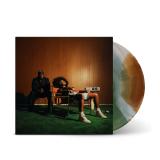
Acht neue Songs von Okkervil River Frontmann Will Sheff. Produziert von John Congleton (St. Vincent, The War On Drugs), Matt Linesch und Marshall Vore (Phoebe Bridgers). Ein bemerkenswertes Album und Sheff’s Solodebüt.
Inspiriert von den Texten von King Crimson, Joni Mitchell oder Bill Fay sowie den Bergen, Wüsten und Seen Südkaliforniens, seiner neuen Wahlheimat, jedoch überschattet vom Tod seines Freundes, Okkervil River-Drummer Travis Nelsen, besticht 'Nothing Special' mit teils verspulten Arrangements, die subtile Überraschungen enthalten und Verweise nahelegen auf barocken Pop, verschwommene Synthie-Balladen und Sci-Fi-Psychedelia der 70er und 80er Jahre. Eine emotionale Reise, die von Trauer und Verlust handelt und dem Versuch, sich einer transzendenteren Realität zu öffnen.
Unterstützt wird er dabei von alten und neuen Freunden, Gitarrist Will Graefe und Bassist Benjamin Lazar Davis, Singer/Songwriter Christian Lee Hutson, Dawes-Schlagzeuger Griffin Goldsmith und Death Cab For Cutie-Pianist Zac Rae sowie Cassandra Jenkins und Eric D. Johnson (Fruit Bats, Bonny Light Horseman).
Acht neue Songs von Okkervil River Frontmann Will Sheff. Produziert von John Congleton (St. Vincent, The War On Drugs), Matt Linesch und Marshall Vore (Phoebe Bridgers). Ein bemerkenswertes Album und Sheff’s Solodebüt.
Inspiriert von den Texten von King Crimson, Joni Mitchell oder Bill Fay sowie den Bergen, Wüsten und Seen Südkaliforniens, seiner neuen Wahlheimat, jedoch überschattet vom Tod seines Freundes, Okkervil River-Drummer Travis Nelsen, besticht 'Nothing Special' mit teils verspulten Arrangements, die subtile Überraschungen enthalten und Verweise nahelegen auf barocken Pop, verschwommene Synthie-Balladen und Sci-Fi-Psychedelia der 70er und 80er Jahre. Eine emotionale Reise, die von Trauer und Verlust handelt und dem Versuch, sich einer transzendenteren Realität zu öffnen.
Unterstützt wird er dabei von alten und neuen Freunden, Gitarrist Will Graefe und Bassist Benjamin Lazar Davis, Singer/Songwriter Christian Lee Hutson, Dawes-Schlagzeuger Griffin Goldsmith und Death Cab For Cutie-Pianist Zac Rae sowie Cassandra Jenkins und Eric D. Johnson (Fruit Bats, Bonny Light Horseman).
Das 17te Album des erfolgreichen US-amerikanischen Musikers, Multi-Instrumentalisten und leidenschaftlichen Skateboarders. Für Harper selbst auch so etwas wie ein Neuanfang.
Weithin inspiriert von dem Verlust eines langjährigen Freundes und dem anhaltenden Einfluss eines temperamentvollen und charismatischen Vaters, ist 'Bloodline Maintenance' das mit Spannung erwartete neue und siebzehnte Studioalbum des dreifach mit einem GRAMMY®-prämierten Singer-Songwriters/Musikers/Produzenten Ben Harper. Ein ungemein persönliches Soul-Album und das erste nicht-instrumentale Soloalbum mit neuen Songs seit 2016.
Auf 'Bloodline Maintenance' wendet Harper den Ideenreichtum des Hip-Hop auf bestehende Paradigmen des Soul, Blues und Jazz an und konfiguriert das Genre neu, a new black Americana, und setzt so seine lange Geschichte als einer der stärksten Protestsänger seiner Generation fort.
Schon im Alter von nur 21 Jahren tourte Harper mit Blueslegende Taj Mahal. In den Folgejahren machte er sich bei Kritikern wie auch Fans weltweit einen Namen, wurde für sein eigenes genreübergreifendes Werk insgesamt siebenmal für einen GRAMMY® nominiert (den er auch dreimal gewann), war gleichzeitig als Produzent tätig für u.a. Mavis Staples, Rickie Lee Jones und Ziggy Marley und kollaborierte mit einer Vielzahl von Künstlern, die von John Lee Hooker, Charlie Musselwhite und Jack Johnson bis hin zu Ringo Starr, Keith Richards und zuletzt Harry Styles reichen.
- A1: Rock This Mother
- A2: Talk To Me Girl
- A3: You Can Find Me
- A4: Check This Out
- A5: Jesus Going To Clean House
- A6: Hope You Understood
- A7: Is It What You Want
- A8: Love Is Everlasting
- A9: This Is Hip-Hop Art
- A10: Opposite Of Love
- A11: Do You Know What I Mean
- B1: Saving All My Love For You
- B2: Look Out Here I Come
- B3: Girl You Always Talking
- B4: Have A Great Day
- B5: Take My Hand
- B6: I Need Your Love
- B7: Your Town
- B8: Talk Around Town
- B9: Booty Head/Take A Little Walk
- B10: I Love My Mama
- B11: I Never Found Anyone Like You
Cassette[11,72 €]
As the sun sets on a quaint East Nashville house, a young man bares a piece of his soul. Facing the camera, sporting a silky suit jacket/shirt/slacks/fingerless gloves ensemble that announces "singer" before he's even opened his mouth, Lee Tracy Johnson settles onto his stage, the front yard. He sways to the dirge-like drum machine pulse of a synth-soaked slow jam, extends his arms as if gaining his balance, and croons in affecting, fragile earnest, "I need your love… oh baby…"
Dogs in the yard next door begin barking. A mysterious cardboard robot figure, beamed in from galaxies unknown and affixed to a tree, is less vocal. Lee doesn't acknowledge either's presence. He's busy feeling it, arms and hands gesticulating. His voice rises in falsetto over the now-quiet dogs, over the ambient noise from the street that seeps into the handheld camcorder's microphone, over the recording of his own voice played back from a boombox off-camera. After six minutes the single, continuous shot ends. In this intimate creative universe there are no re-takes. There are many more music videos to shoot, and as Lee later puts it, "The first time you do it is actually the best. Because you can never get that again. You expressing yourself from within."
"I Need Your Love" dates from a lost heyday. From some time in the '80s or early '90s, when Lee Tracy (as he was known in performance) and his music partner/producer/manager Isaac Manning committed hours upon hours of their sonic and visual ideas to tape. Embracing drum machines and synthesizers – electronics that made their personal futurism palpable – they recorded exclusively at home, live in a room into a simple cassette deck. Soul, funk, electro and new wave informed their songs, yet Lee and Isaac eschewed the confinement of conventional categories and genres, preferring to let experimentation guide them.
"Anytime somebody put out a new record they had the same instruments or the same sound," explains Isaac. "So I basically wanted to find something that's really gonna stand out away from all of the rest of 'em." Their ethos meant that every idea they came up with was at least worth trying: echoed out half-rapped exhortations over frantic techno-style beats, gospel synth soul, modal electro-funk, oddball pop reinterpretations, emo AOR balladry, nods to Prince and the Fat Boys, or arrangements that might collapse mid-song into a mess of arcade game-ish blips before rallying to reach the finish line. All of it conjoined by consistent tape hiss, and most vitally, Lee's chameleonic voice, which managed to wildly shape shift and still evoke something sincere – whether toggling between falsetto and tenor exalting Jesus's return, or punctuating a melismatic romantic adlib with a succinct, "We all know how it feels to be alone."
"People think we went to a studio," says Isaac derisively. "We never went to no studio. We didn't have the money to go to no studio! We did this stuff at home. I shot videos in my front yard with whatever we could to get things together." Sometimes Isaac would just put on an instrumental record, be it "Planet Rock" or "Don't Cry For Me Argentina" (from Evita), press "record," and let Lee improvise over it, yielding peculiar love songs, would-be patriotic anthems, or Elvis Presley or Marilyn Monroe tributes. Technical limitations and a lack of professional polish never dissuaded them. They believed they were onto something.
"That struggle," Isaac says, "made that sound sound good to me."
In the parlance of modern music criticism Lee and Isaac's dizzying DIY efforts would inevitably be described as "outsider." But "outsider" carries the burden of untold additional layers of meaning if you're Black and from the South, creating on a budget, and trying to get someone, anyone within the country music capital of the world to take your vision seriously. "What category should we put it in?" Isaac asks rhetorically. "I don't know. All I know is feeling. I ain't gonna name it nothing. It's music. If it grabs your soul and touch your heart that's what it basically is supposed to do."
=
Born in 1963, the baby boy of nine siblings, Lee Tracy spent his earliest years living amidst the shotgun houses on Nashville's south side. "We was poor, man!" he says, recalling the outhouse his family used for a bathroom and the blocks of ice they kept in the kitchen to chill perishables. "But I actually don't think I really realized I was in poverty until I got grown and started thinking about it." Lee's mom worked at the Holiday Inn; his dad did whatever he had to do, from selling fruit from a horse drawn cart to bootlegging. "We didn't have much," Lee continues, "but my mother and my father got us the things we needed, the clothes on our back." By the end of the decade with the city's urban renewal programs razing entire neighborhoods to accommodate construction of the Interstate, the family moved to Edgehill Projects. Lee remembers music and art as a constant source of inspiration for he and his brothers and sisters – especially after seeing the Jackson 5 perform on Ed Sullivan. "As a small child I just knew that was what I wanted to do."
His older brother Don began musically mentoring him, introducing Lee to a variety of instruments and sounds. "He would never play one particular type of music, like R&B," says Lee. "I was surrounded by jazz, hard rock and roll, easy listening, gospel, reggae, country music; I mean I was a sponge absorbing all of that." Lee taught himself to play drums by beating on cardboard boxes, gaining a rep around the way for his timekeeping, and his singing voice. Emulating his favorites, Earth Wind & Fire and Cameo, he formed groups with other kids with era-evocative band names like Concept and TNT Connection, and emerged as the leader of disciplined rehearsals. "I made them practice," says Lee. "We practiced and practiced and practiced. Because I wanted that perfection." By high school the most accomplished of these bands would take top prize in a prominent local talent show. It was a big moment for Lee, and he felt ready to take things to the next level. But his band-mates had other ideas.
"I don't know what happened," he says, still miffed at the memory. "It must have blew they mind after we won and people started showing notice, because it's like everybody quit! I was like, where the hell did everybody go?" Lee had always made a point of interrogating prospective musicians about their intentions before joining his groups: were they really serious or just looking for a way to pick up girls? Now he understood even more the importance of finding a collaborator just as committed to the music as he was.
=
Isaac Manning had spent much of his life immersed in music and the arts – singing in the church choir with his family on Nashville's north side, writing, painting, dancing, and working various gigs within the entertainment industry. After serving in the armed forces, in the early '70s he ran The Teenage Place, a music and performance venue that catered to the local youth. But he was forced out of town when word of one of his recreational routines created a stir beyond the safe haven of his bohemian circles.
"I was growing marijuana," Isaac explains. "It wasn't no business, I was smoking it myself… I would put marijuana in scrambled eggs, cornbread and stuff." His weed use originated as a form of self-medication to combat severe tooth pain. But when he began sharing it with some of the other young people he hung out with, some of who just so happened to be the kids of Nashville politicians, the cops came calling. "When I got busted," he remembers, "they were talking about how they were gonna get rid of me because they didn't want me saying nothing about they children because of the politics and stuff. So I got my family, took two raggedy cars, and left Nashville and went to Vegas."
Out in the desert, Isaac happened to meet Chubby Checker of "The Twist" fame while the singer was gigging at The Flamingo. Impressed by Isaac's zeal, Checker invited him to go on the road with him as his tour manager/roadie/valet. The experience gave Isaac a window into a part of the entertainment world he'd never encountered – a glimpse of what a true pop act's audience looked like. "Chubby Checker, none of his shows were played for Black folks," he remembers. "All his gigs were done at high-class white people areas." Returning home after a few years with Chubby, Isaac was properly motivated to make it in Music City. He began writing songs and scouting around Nashville for local talent anywhere he could find it with an expressed goal: "Find someone who can deliver your songs the way you want 'em delivered and make people feel what you want them to feel."
One day while walking through Edgehill Projects Isaac heard someone playing the drums in a way that made him stop and take notice. "The music was so tight, just the drums made me feel like, oh I'm-a find this person," he recalls. "So I circled through the projects until I found who it was.
"That's how I met him – Lee Tracy. When I found him and he started singing and stuff, I said, ohhh, this is somebody different."
=
Theirs was a true complementary partnership: young Lee possessed the raw talent, the older Isaac the belief. "He's really the only one besides my brother and my family that really seen the potential in me," says Lee. "He made me see that I could do it."
Isaac long being a night owl, his house also made for a fertile collaborative environment – a space where there always seemed to be a new piece of his visual art on display: paintings, illustrations, and dolls and figures (including an enigmatic cardboard robot). Lee and Issac would hang out together and talk, listen to music, conjure ideas, and smoke the herb Isaac had resumed growing in his yard. "It got to where I could trust him, he could trust me," Isaac says of their bond. They also worked together for hours on drawings, spreading larges rolls of paper on the walls and sketching faces with abstract patterns and imagery: alien-like beings, tri-horned horse heads, inverted Janus-like characters where one visage blurred into the other.
Soon it became apparent that they didn't need other collaborators; self-sufficiency was the natural way forward. At Isaac's behest Lee, already fed up with dealing with band musicians, began playing around with a poly-sonic Yamaha keyboard at the local music store. "It had everything on it – trumpet, bass, drums, organ," remembers Lee. "And that's when I started recording my own stuff."
The technology afforded Lee the flexibility and independence he craved, setting him on a path other bedroom musicians and producers around the world were simultaneously following through the '80s into the early '90s. Saving up money from day jobs, he eventually supplemented the Yamaha Isaac had gotten him with Roland and Casio drum machines and a Moog. Lee was living in an apartment in Hillside at that point caring for his dad, who'd been partially paralyzed since early in life. In the evenings up in his second floor room, the music put him in a zone where he could tune out everything and lose himself in his ideas.
"Oh I loved it," he recalls. "I would really experiment with the instruments and use a lot of different sound effects. I was looking for something nobody else had. I wanted something totally different. And once I found the sound I was looking for, I would just smoke me a good joint and just let it go, hit the record button." More potent a creative stimulant than even Isaac's weed was the holistic flow and spontaneity of recording. Between sessions at Isaac's place and Lee's apartment, their volume of output quickly ballooned.
"We was always recording," says Lee. "That's why we have so much music. Even when I went to Isaac's and we start creating, I get home, my mind is racing, I gotta start creating, creating, creating. I remember there were times when I took a 90-minute tape from front to back and just filled it up."
"We never practiced," says Isaac. "See, that was just so odd about the whole thing. I could relate to him, and tell him about the songs I had ideas for and everything and stuff. And then he would bring it back or whatever, and we'd get together and put it down." Once the taskmaster hell bent on rehearsing, Lee had flipped a full 180. Perfection was no longer an aspiration, but the enemy of inspiration.
"I seen where practicing and practicing got me," says Lee. "A lot of musicians you get to playing and they gotta stop, they have to analyze the music. But while you analyzing you losing a lot of the greatness of what you creating. Stop analyzing what you play, just play! And it'll all take shape."
=
"I hope you understood the beginning of the record because this was invented from a dream I had today… (You tell me, I'll tell you, we'll figure it out together)" – Lee Tracy and Isaac Manning, "Hope You Understand"
Lee lets loose a maniacal cackle when he acknowledges that the material that he and Isaac recorded was by anyone's estimation pretty out there. It's the same laugh that commences "Hope You Understand" – a chaotic transmission that encapsulates the duality at the heart of their music: a stated desire to reach people and a compulsion to go as leftfield as they saw fit.
"We just did it," says Lee. "We cut the music on and cut loose. I don't sit around and write. I do it by listening, get a feeling, play the music, and the lyrics and stuff just come out of me."
The approach proved adaptable to interpreting other artists' material. While recording a cover of Whitney Houston's pop ballad "Saving All My Love For You," Lee played Whitney's version in his headphones as he laid down his own vocals – partially following the lyrics, partially using them as a departure point. The end result is barely recognizable compared with the original, Lee and Isaac having switched up the time signature and reinvented the melody along the way towards morphing a slick mainstream radio standard into something that sounds solely their own.
"I really used that song to get me started," says Lee. "Then I said, well I need something else, something is missing. Something just came over me. That's when I came up with 'Is It What You Want.'"
The song would become the centerpiece of Lee and Isaac's repertoire. Pushed along by a percolating metronomic Rhythm King style beat somewhere between a military march and a samba, "Is It What You Want" finds Lee pleading the sincerity of his commitment to a potential love interest embellished by vocal tics and hiccups subtlely reminiscent of his childhood hero MJ. Absent chord changes, only synth riffs gliding in and out like apparitions, the song achieves a lingering lo-fi power that leaves you feeling like it's still playing, somewhere, even after the fade out.
"I don't know, it's like a real spiritual song," Lee reflects. "But it's not just spiritual. To me the more I listen to it it's like about everything that you do in your everyday life, period. Is it what you want? Do you want a car or you don't want a car? Do you want Jesus or do you want the Devil? It's basically asking you the question. Can't nobody answer the question but you yourself."
In 1989 Lee won a lawsuit stemming from injuries sustained from a fight he'd gotten into. He took part of the settlement money and with Isaac pressed up "Saving All My Love For You" b/w "Is It What You Want" as a 45 single. Isaac christened the label One Chance Records. "Because that's all we wanted," he says with a laugh, "one chance."
Isaac sent the record out to radio stations and major labels, hoping for it to make enough noise to get picked up nationally. But the response he and Lee were hoping for never materialized. According to Isaac the closest the single got to getting played on the radio is when a disk jock from a local station made a highly unusual announcement on air: "The dude said on the radio, 107.5 – 'We are not gonna play 'Is It What You Want.' We cracked up! Wow, that's deep.
"It was a whole racist thing that was going on," he reflects. "So we just looked over and kept on going. That was it. That was about the way it goes… If you were Black and you were living in Nashville and stuff, that's the way you got treated." Isaac already knew as much from all the times he'd brought he and Lee's tapes (even their cache of country music tunes) over to Music Row to try to drum up interest to no avail.
"Isaac, he really worked his ass off," says Lee. "He probably been to every record place down on Music Row." Nashville's famed recording and music business corridor wasn't but a few blocks from where Lee grew up. Close enough, he remembers, for him to ride his bike along its back alleys and stumble upon the occasional random treasure, like a discarded box of harmonicas. Getting in through the front door, however, still felt a world away.
"I just don't think at the time our music fell into a category for them," he concedes. "It was before its time."
=
Lee stopped making music some time in the latter part of the '90s, around the time his mom passed away and life became increasingly tough to manage. "When my mother died I had a nervous breakdown," he says, "So I shut down for a long time. I was in such a sadness frame of mind. That's why nobody seen me. I had just disappeared off the map." He fell out of touch with Isaac, and in an indication of just how bad things had gotten for him, lost track of all the recordings they'd made together. Music became a distant memory.
Fortunately, Isaac kept the faith. In a self-published collection of his poetry – paeans to some of his favorite entertainment and public figures entitled Friends and Dick Clark – he'd written that he believed "music has a life of its own." But his prescience and presence of mind were truly manifested in the fact that he kept an archive of he and Lee's work. As perfectly imperfect as "Is It What You Want" now sounds in a post-Personal Space world, Lee and Isaac's lone official release was in fact just a taste. The bulk of the Is It What You Want album is culled from the pair's essentially unheard home recordings – complete songs, half-realized experiments, Isaac's blue monologues and pronouncements et al – compiled, mixed and programmed in the loose and impulsive creative spirit of their regular get-togethers from decades ago. The rest of us, it seems, may have finally caught up to them.
On the prospect of at long last reaching a wider audience, Isaac says simply, "I been trying for a long time, it feels good." Ever the survivor, he adds, "The only way I know how to make it to the top is to keep climbing. If one leg break on the ladder, hey, you gotta fix it and keep on going… That's where I be at. I'll kill death to make it out there."
For Lee it all feels akin to a personal resurrection: "It's like I was in a tomb and the tomb was opened and I'm back… Man, it feels so great. I feel like I'm gonna jump out of my skin." Success at this stage of his life, he realizes, probably means something different than what it did back when he was singing and dancing in Isaac's front yard. "What I really mean by 'making it,'" he explains isn't just the music being heard but, "the story being told."
Occasionally Lee will pull up "Is It What You Want" on YouTube on his phone, put on his headphones, and listen. He remembers the first time he heard his recorded voice. How surreal it was, how he thought to himself, "Is that really me?" What would he say to that younger version of himself now?
"I would probably tell myself, hang in there, don't give up. Keep striving for the goal. And everything will work out."
Despite what's printed on the record label, sometimes you do get more than one chance.
"Kontakt Audio and Infinite Fog Productions proudly present the 25-th anniversary reissue of the one of most unique albums on avantgarde/neoclassic music – Ihor Tsymbrovsky – Come, Angel.
Recorded in 1995 in Ukraine and released in 1996 just as a small run on cassette on Polish label Koka Records, the album without any promotion little by little became legendary and madly wanted by many fans all around the world. And from the first seconds, you can hear why it is so. Pretty hard to explain what songs play Ihor, moreover that would be senseless. “Come, Angel” is one of those albums which are so unique that takes you in a vacuum of verbal forms in an attempt to describe the record. In a few words, this is definitely very intimate and deeply emotional music with an absolutely incredible voice. The first associations could forward you to Antony Hegarty from Antony And The Johnsons, Marc Almond, Arthur Russell, Baby Dee, Bjork. Experienced listener familiar with these great artist knows that all of them are inimitable and Ihor Tsymbrovsky is totally inimitable as well.
In 2016 well-known German label Offen Music published 3 tracks from the album “Come, Angel” which brought a lot of attention to Ihor’s music. This time we’re excited to announce the first full album reissue on CD, Double vinyl, and tapes. Beside the full version of the album, you’ll find an exclusive bonus song from the cult compilation “Music The World Does Not See” – Nefryt Records 2000.
~
“For me, music is a certain way of cultural survival. Here I do not set myself theoretical problems or experiments.
The connotations of life are important: rhythms, melodies, their connection with language, poetry, real life, virtual or imaginary space. It is very important to me how the recitation of work sounds, how consonant and vowel sounds dissolve in singing, how they combine musically. I understand sound space as a field of my interpretations, preferences, priorities, and I do not use direct imitation. If I hear a melody or a musical phrase, and it is fixed in my memory, later I extract it in my own interpretation, as already formed by this field. In art, the goal is in the work itself, not outside it. For me, the expression “To be is to create a new reality” is another winged reality.” – Ihor Tsymbrovsky
~~
“Tsymbrovsky – an architect, musician, a poet, an artist; one of the most underestimated musicians in Ukraine’s artistic world. Many critics pulled their hair out trying to get to the bottom of Tsymbrovsky’s music. It has been inspired by jazz, minimal, modern, ethnic, and meditation music. Tsymbrovsky is not a virtuoso, however, he creates whole worlds with his astonishing falsetto. Although Cymbrovsky’s music is simple it is made of many elements. Filled with magic and unusual sensitivity and warmth it can be therapeutic for the listener. This is that kind of music, which can be listened to many times – in a different way each time.” – Koka Records.
~~~
“Igor Tsymbrovsky’s only album “Come Angel” (1995) still remains perhaps the most bizarre phenomenon in Ukrainian music since independence. The story of its author is a vivid example of cultural amnesia. In the pre-Internet era, Tsymbrovsky was a prominent figure in the Ukrainian underground, performed on the “Red Route”, went on tour in Germany. However, he left a minimum of evidence of his activity and became a silent legend for a few. We talked to Igor to find out where he came from and where he was going.
The album “Come Angel” is eight compositions performed with a falsetto to the accompaniment of a piano. (Tsymbrovsky’s falsetto is a legacy of the Lviv Dudaryk choir, where he sang as a child.) It would seem that it could be easier. But, despite such ascetic tools, Tsymbrovsky managed to create a phenomenon unique to Ukrainian culture. Some people compare him to Benjamin Clementine and Anthony Hegarty, but no comparison will be exhaustive. The lyrics of the songs attract special attention: two of them were written by Tsymbrovsky himself, the others demonstrate his remarkable literary knowledge. Here and Guillaume Apollinaire, and Mikhaijl Semenko, and even less obvious poets, such as Mykola Vorobyov or Jozsef Attila.
The young performer’s first performance took place in 1987 in the club of the Forestry Institute. It is quite symbolic that this room used to be a Jesuit church because such a chamber environment suits his songs about angels much better than the noise of big festivals. However, there were also many festivals in Tsymbrovsky’s career: in 1989, Chorna Rada and Chervona Ruta, in 1991, Kharkiv’s Nova Scena and Ukrainian Nights in Gdansk, Alternativa in Lviv. Ihor calls his first performances musical performances and notes that they sounded completely different. Unfortunately, we will never know exactly how.” – Amnesia
~~~~
“The magicians at Dusseldorf’s Offen Music pluck a madly beguiling pearl of late-night songcraft by Ukraine’s Ihor Tsymbrovsky to follow their vital releases by Toresch and Rex Ilusivii. Come Angel was first recorded in Lviv, Ukraine, in 1995, and issued on cassette by Poland’s Koka Records in 1996. There appears to be no prior mention of the release or artist on the internet and quite how it came into of Offen Music possession is not disclosed, and that only ratchets the record’s enigma to astonishing degrees once you’ve heard the music. In a quivering, high register, androgynous trill, Ihor Tsymbrovsky beckons heavenly beings in the remarkable A-side Come, Angel against a swirling backdrop of phasing, subtly delayed organ. It was recorded in one take (this is the 2nd version), and, if we’re not mistaken, you can hear the keys being pressed rhythmically in the background, which seems to be the song’s only tangible connection to this mortal world as Ihor vaults octaves high and close-in-the-mix with the sort of alien, dreamlike vocal that requires pinching oneself to make sure you’re awake. Spellbinding is definitely the word. On the other side he (we’re assured it is a ‘he’ in the promo text) sets two poems by Mykola Vorobyov and Mykhal Semenko, respectively, to emphatic piano keys, this time more shy of FX save for some delay, placing that willowing, avian vocal at a dreamy arms reach in Roses for the Poet, and with a sort of liturgical dark jazz feel, sorta like Lewis repenting his sins as a castrato monk, in the spare atmosphere in By the Sea. This is gold-seal business, we tell ya. Clock the clips and clear some swooning room.” – Boomkat
credits:
Music By – Ihor Tsymbrovsky
Lyrics By: Ihor Tsymbrovsky (tracks: C2, D1)
Atilla Joszef (tracks: B1)
Mychajl Semenko (tracks: B2, C1,C3, D2)
Mykoła Worobjow (tracks: A1,A2)
Engineer – Edward Hryhorjew
Remastering – Ihor Tsymbrovsky"
Jazz organist ‘Brother’ Jack McDuff (born Eugene McDuffy in 1926 September 17, 1926 – January 23, 2001) was second only to the infamous Jimmy Smith in terms of fame and the impact he made with the King of keyboard instruments - the Hammond B-3 Organ. Self-taught on the organ, he recorded with Willis Jackson & Roland Kirk in the late ’50s and early ’60s, cutting high calibre souljazz dates for Prestige Records, and later Argo / Cadet. Blue Note and Verve Records. McDuff can also take the credit for launching the career of a particularly gifted young jazz guitarist when he recruited George Benson to his own quartet, which resulted in Benson's first solo deal in the mid 1960’s.
‘Live At Parnells’ is made up of 15 tracks selected from a week-long engagement in June 1982, featuring Danny Wollinski on sax, guitarist Henry Johnson and Garrick King on the drums. Stylistically, Jack and his group cover a lot of ground, especially for an organ quartet – from beautifully old school funky, gritty blues with tracks like Walkin’ The Dog & Blues 1 & 8, jazz standards like April In Paris, and A Night In Tunisia through to some frenetic and distinctly edgy fast paced jazz fusion type numbers - Make It Good and Untitled D Minor - and this reflects how Jack's ears were open to the newer, freer sounds that had developed in jazz and reflected in some of his recordings as ‘The Heatin’ System’ – as several tracks have modal and fusion touches that sound remarkably current. Soul Bank’s Greg Boraman explains the 23 year old back story to how this amazing release of previously unreleased music by a bona fide jazz legend came about.
“I first heard these live recordings in 1999, when I came across Scott Hawthorn’s ’s jazz organ website, where he had made available his personal recordings of Jack and his band playing at Parnell’s in Seattle in 1982. It was amazing to have this music to check out – despite the obvious shortcomings with the condition of the recordings themselves”.
- 1: Born For This Bullshit (Feat. Sad3)
- 2: My Adventure (Feat. Sally Seltmann)
- 3: Parents Get High (Feat. Washington)
- 4: Crooked Tree (Feat. Zooey Deschanel, Eric D. Johnson)
- 5: Like This Or Like That
- 6: Arsehole (Feat. Georgia Maq)
- 7: The Good Stuff
- 8: Sex & Drugs & Rock N Roll
- 9: Slow Down (Feat. Shamir)
- 10: Cowards
Indie-pop singer-songwriter, composer and producer Australia’s Ben Lee releases his 14th solo studio album “I’m Fun!”. The new album features guests Zooey Deschanel, Christian Lee Hutson, Money Mark, Megan Washington, Georgia Maq, Eric D Johnson.
On the album, Ben Lee says “This album, this moment in my career, is all about balancing some hard-earned wisdom from a 30-year long career with the vigor and energy of youth. That’s why it was as important to me to collab with artists like Jon Brion and Money Mark who I’ve both known for over 2 decades, as much as people like Shamir and Georgia Maq who are young and lit up with creative adrenaline. I like being a generational bridge between freaky artists. They are my tribe!”
Even before the launch of his solo career, Ben attracted attention in his teens as a member of the Sydney band Noise Addict. Following the band’s demise in the mid-90s, he began issuing a string of acclaimed solo albums while taking part in several side projects, including The Bens (Ben Folds, Ben Kweller, Ben Lee).
In his 30-year music career, Ben Lee has been gloriously prolific and unpredictable. The 4x ARIA award winning artist boasts an enviable catalogue including ‘Grandpa Would’ 1995, ‘Something To Remember Me By’ [1997], ‘Breathing Tornados’[1998], 2x ARIA Platinum album ‘Awake In New Sleep’[2005], ‘Ripe’ [2007], ‘The Rebirth of Venus’[2009], ‘Deeper Into Dream’ [2011] which have collectively spawned a multitude of chart hits, including “Cigarettes Will Kill You”, “Gamble Everything For Love”, “We're All in This Together” and “Catch My Disease”
- A1: Signe" (Eric Clapton) - 3:13
- A2: Before You Accuse Me" (Ellas Mcdaniel) - 3:36
- A3: Hey Hey" (Big Bill Broonzy) - 3:24
- A4: Tears In Heaven" (Clapton, Will Jennings) - 4:34
- B1: Lonely Stranger" (Clapton) - 5:28
- B2: Nobody Knows You When You're Down And Out" (Jimmy Cox)
- B3: Layla" (Clapton, Jim Gordon) - 4:46
- B4: Running On Faith" (Jerry Lynn Williams) - 6:35
- C1: Walkin' Blues" (Robert Johnson) - 3:37
- C2: Alberta" (Traditional) - 3:42
- C3: San Francisco Bay Blues" (Jesse Fuller) - 3:23
- D1: Malted Milk" (Robert Johnson) - 3:36
- D2: Old Love" (Clapton, Robert Cray) - 7:53
- D3: Rollin' & Tumblin'" (Muddy Waters) - 4:10
Strictly limited to 10,000 numbered copies, pressed on MoFi SuperVinyl at RTI, and mastered from the original master tapes, Mobile Fidelity's ultra-hi-fi UltraDisc One-Step 180g 45RPM 2LP collector's edition enhances the blockbuster work for today – and the ages to come. Surpassing the sonics of any prior version, it peels away any remaining limitations to provide a transparent, lively, ultra-nuanced presentation of a record that won six Grammy Awards – including prizes for Album of the Year, Best Male Rock Vocal Performance, and Best Rock Song. The expanse and depth of the soundstage, fullness of tones, natural snap and extension of the guitar strings, realistic rise and decay of individual notes, and roll of Clapton's vocals all attain demonstration-grade levels.
Housed in a deluxe box, the UD1S Unplugged pressing features special foil-stamped jackets and faithful-to-the-original graphics that illuminate the splendor of the recording and the reissue's premium quality. No expense has been spared. Aurally and visually, this UD1S reissue exists as a curatorial artifact meant to be preserved, touched, and examined. It is made for discerning listeners that prize sound quality and production, and who desire to fully immerse themselves in the art – and everything involved with the album, from the images to the finishes.
Truly, everything about Unplugged matters. Having sold more than 10 million copies in the U.S. and more than 26 million copies worldwide, the 1992 work resonates with listeners of all generations and speaks a universal language. Recorded for MTV before a very small audience on January 16, 1992, the 14-track set became the signpost for future acoustic-based endeavours that witnessed artists of all stripes re-examining their catalogues and, in many instances, as Clapton does here, placing familiar originals in fresh contexts and unveiling spirited versions of cover material. Needless to say, Clapton's session turned MTV's series into can't-miss programming for which the likes of Rod Stewart, Tony Bennett, Nirvana, Pearl Jam, and more would soon participate.
Kicking off his performance with a spirited instrumental to establish the mood, Clapton immediately wades into the style that originally caught his attention as a British teenager in the early 1960s: American blues. Backed by a superb band that includes guitarist Andy Fairweather Low, pianist Chuck Leavell, bassist Nathan East, and drummer Steve Ferrone, Slowhand delivers a rhythmic, toe-tapping rendition of Bo Diddley's "Before You Accuse Me" that announces he's come to reconnect with his muse. What follows over the course of nearly the next hour stirs the heart, shakes the soul, moves the mind, and invigorates the senses.
Of course, there's no talking about Unplugged without keying in on "Tears in Heaven," the striking ballad Clapton penned about the death of his four-year-old son. More emotional, direct, spare, and healing than the studio version released a year prior, it crackles with an intimacy, maturity, poignancy, honesty, sweetness, and integrity that inform the entire concert. Indeed, how Clapton frames other favorites here – transforming "Layla" into a relaxed, comfortable stroll and ruminating on the seasoned ripples flowing throughout "Old Love," for example – indicate both a creative rebirth and gleeful acceptance of the next phase of his career.
And that very direction (two of Clapton's next three albums would be all-blues projects) is what really makes Unplugged so indispensable. Equivalent in mastery if not in volume to the output that earned him his "God" nickname, interpretations of Jesse Fuller's "San Francisco Bay Blues" (complete with kazoo!), Big Bill Broonzy's "Hey Hey," Robert Johnson's "Walkin' Blues" and "Malted Milk," and Muddy Waters' "Rollin' & Tumblin'" showcase a learned professor in his element and all the wheels turning.
In every regard, Clapton's Unplugged session was appointment listening when it came out in August 1992. With the arrival of MoFi's UD1S pressing, that sensation is more urgent than before.
More About Mobile Fidelity UltraDisc One-Step and Why It Is Superior
Instead of utilizing the industry-standard three-step lacquer process, Mobile Fidelity Sound Lab's new UltraDisc One-Step (UD1S) uses only one step, bypassing two processes of generational loss. While three-step processing is designed for optimum yield and efficiency, UD1S is created for the ultimate in sound quality. Just as Mobile Fidelity pioneered the UHQR (Ultra High-Quality Record) with JVC in the 1980s, UD1S again represents another state-of-the-art advance in the record-manufacturing process. MFSL engineers begin with the original master tapes and meticulously cut a set of lacquers. These lacquers are used to create a very fragile, pristine UD1S stamper called a "convert." Delicate "converts" are then formed into the actual record stampers, producing a final product that literally and figuratively brings you closer to the music. By skipping the additional steps of pulling another positive and an additional negative, as done in the three-step process used in standard pressings, UD1S produces a final LP with the lowest noise floor possible today. The removal of the additional two steps of generational loss in the plating process reveals tremendous amounts of extra musical detail and dynamics, which are otherwise lost due to the standard copying process. The exclusive nature of these very limited pressings guarantees that every UD1S pressing serves as an immaculate replica of the lacquer sourced directly from the original master tape. Every conceivable aspect of vinyl production is optimized to produce the most perfect record album available today.
MoFi SuperVinyl
Developed by NEOTECH and RTI, MoFi SuperVinyl is the most exacting-to-specification vinyl compound ever devised. Analog lovers have never seen (or heard) anything like it. Extraordinarily expensive and extremely painstaking to produce, the special proprietary compound addresses two specific areas of improvement: noise floor reduction and enhanced groove definition. The vinyl composition features a new carbonless dye (hold the disc up to the light and see) and produces the world's quietest surfaces. This high-definition formula also allows for the creation of cleaner grooves that are indistinguishable from the original lacquer. MoFi SuperVinyl provides the closest approximation of what the label's engineers hear in the mastering lab.
SACD
Mastered from the original master tapes, Mobile Fidelity's numbered hybrid SACD enhances the blockbuster work for today – and the ages to come. Peeling away remaining sonic limitations to provide a transparent, lively, ultra-nuanced presentation of a record that won six Grammy Awards (including prizes for Album of the Year, Best Male Rock Vocal Performance, and Best Rock Song), it places Clapton and company in your room. The expanse and depth of the soundstage, fullness of tones, natural snap and extension of the guitar strings, realistic rise and decay of individual notes, and roll of Clapton's vocals all attain demonstration-grade levels. A perennial audiophile favourite, Unplugged now tosses its hat into the ring as a demonstration disc.
Greg Dowling and Shane Johnson return to the Go Deep label for their third album, ‘This Bit of Earth’. Beginning work in the relative normality of 2019 and finishing over the strange summer of 2020, the resulting music mirrors the thoughts that such upheaval brings out - our world and our place in it - while also functioning as a kind of travelogue of journeys past and planned, real and imaginary.
Mixing samples with modular synths, programmed drums with jazz loops, and quirky plugins with outboard gear, the album ranges far and wide while retaining a warm, natural core sound.
The title track opens proceedings on an ambiguous note. A simple double bass motif weaves around a misheard vocal sample, layers of piano and vibraphone take up the call, and the whole thing gradually spins off axis to a distorted, disjointed finish. ‘Suburban Key’ follows on a groove of busy drum work and deep sub bass, the stately piano and strings setting the stage for an undulating synth solo.
Further in, ‘Alice on Jupiter’ takes a deep breath and blends field recordings, gently swelling pads, modular bursts and a recurring picked melody.
‘Back Trace Dub’ strolls the imagined streets of Irish author Kevin Barry’s ‘City of Bohane’, noting the “taint of badness” in the air and revelling in the tense, dub-noir atmosphere. Later on, the spoken word intro of ‘I Could See’ expresses the dread of confinement and the relief and ecstasy of release, a theme the music reflects as it steadily builds to a joyful climax.
And closing the album on an optimistic note, the languid, emotional Culatra Ferry remembers better, beautiful days in the sun and looks hopefully forward to more.
“Highlights are the stunning sonics of Suburban Key, with its dusty groove and fast paced drums, stately piano, and cinematic strings reminiscent of a Four Hero orchestral masterpiece. High As Scaffold is full of warmth and soul and is yet another example of Fish Go Deep going even deeper into the dark blue waters of their brilliant musical minds.” Ban Ban Ton Ton review, Japan
“So good. Real beauty” Laurent Garnier, Radio FG, France
“Really liking this, would love to support on radio” Colleen 'Cosmo' Murphy, WorldwideFM, UK
“Lovely album” Osunlade, Yoruba Soul, US
“Very very nice album...love the new directions here” Charles Webster, Openlab, SA
“Absolutely beautiful piece of work” Darimont, RWAV, Germany
“A lovely LP of eclectic sounds” Jimpster, Freerange Records, UK
“Delightful album this. Very much appreciate the musicianship and we need that in the world right now as the commercial music world starts to fire up its nonsense for the new beginning” Vince Watson, Yoruba, Netherlands
“Such a fucking great body of work, and on par with ANY of the great albums I've listened to recently” Billy Scurry, Ireland
“There’s some REAL magic here. Possibly the deepest year from this duo” Charles Levine, Soul Clap, US
“A fabulous surprise. I'm sure if he were still alive Jose Padilla would have hailed this as his number one album of the year, it certainly is mine” Steve Miller, Afterlife, UK
“Great album... will play in next shows” Franck Roger, Real Tone, France
“Beautifully produced and great atmospherics” Ashley Beedle, Black Science Orchestra, UK
Radio and DJ support from Ron Trent, Hector Romero, Ame, Cian Ó Cíobháin, Bill Brewster, DJ Sprinkles, Harri, Honey Soundsystem, Alexkid, Moodymanc, Hifi Sean, Kassian, Freddie Garcia, 6th Borough Project, Stuart Patterson, Lars Behrenroth, Fred Everything, Mark Roberts, Cut n Shut, Will McGiven, Stefano Tucci, Tristan Jong, Matthias Schober, Trevor Fung, Ben Davis, Max P and more.
INIT is Benedikt Frey & Nadia D`Alo. We are delighted to present their long delayed vinyl and digital album, NRGY.
Born out of various art performances and installations, INIT states a logical outcome of Berlin based duo Nadia D`Alo and Benedikt Frey. With heavy use of analogue synthesis and drum-machines, INIT rethinks its genre's sonic approach, unfolding a unique and organic, yet alienating sound, somewhere in the mysterious midst of Acid, Techno, Ambient and Kraut-Rock.
This is INIT's third album, following two releases on Hivern Discs, and performances at clubs such as Berghain, Robert Johnson and Pudel Club.
INIT say -
Module, NRGY, and Time were reverse extracted out of our live set and re-recorded and re-arranged after we realised how well they work in clubs. It is the first time we worked this way as we tend not to play our compositions live, like we produced them. Mostly we just extract loops out of our production to mess around with in a loose live project.
Snowglobe, Holes In My CV and N.O.D. were more built up from a studio jam plus a bulletproof-ish arrangement afterwards.
Tried and tested on dance floors this is a surefire hit album on the dancefloor, and at home. NRGY!
Reissue of George Duke's classic 1976 jazz-funk-fusion album 'Liberate Fantasies'
This 1976 album, the last one of the MPS fusion series, continues George Duke's tendency to couple his fusion world with accessible R&B songs. Once again, he shows a discernible vocal development. In "Tryin' And Cryin" the Californian together with rock singer Napoleon Brock overlays multiple vocal tracks.
On "Seeing You" Duke lays on a glaze of soulful tenderness, whereas "What The…" is 30 seconds of frivolous funning around. "Back to Where We Never Left" is a witty gem in which Duke bundles his pool of synthesizers into a united groove, whereas "I C'n Hear That" shows off synth and marimba tonal colors in dialogue, with the bass riffing on the bottom.
The album flows into the final bend carrying along the sonorous richness of Brazil. "After the Love" plays with the languorous erotic colours of the tropics, whereas all the band members are allowed to shine on the epic circa ten minute title track with its hot samba flair: the rhythm section with "Ndugu", Al Johnson, and Airto Moreira's percussion arsenal, Daryl Stuermer with his rock interludes on guitar, and Duke himself with inspired virtuosity on all sorts of synths and
keyboards.
"Eternity" - Alice Coltrane (org, hp, el-p; perc, arr, cond); Terry Harrington (ts); Jerome Richardson (ss); George Bohanon (tb); Oscar Brashear (tp); Tommy Johnson (tba); Hubert Laws (fl); Charlie Haden (b); Ben Riley (b, dr); Armando Peraza (cga); a.o.
When the brilliant saxophonist John Coltrane died in 1967, the core values of jazz music had long drawn him into the spiritual world ("A Love Supreme", "Ascension", "Meditations" etc.). His widow and final pianist followed in his footsteps. Alice Coltrane (1937–2007) sought after »cosmic sounds, higher dimensions, astral levels« – she had an important influence on the spiritualised, esoteric music scene of the 1970s. Her first album was only released after John Coltrane’s death, but "Eternity" was already her tenth. (In the same year she founded a Hindu Vedantic Center in California.) The album draws its power from highly contrasted sound worlds. The size of the ensemble ranges from an unaccompanied harp solo ("Wisdom Eye") to a large orchestra with a big band of up to 25 plus a 12-man string section. Alice Coltrane’s main instrument is the electric Wurlitzer organ, whose rasping sound conjures up John Coltrane’s saxophone (especially in the opening number "Spiritual Eternal"). Mostly she improvises modally, sinuously, or with meditative ecstasy – whether in the style of Latin rock ("Los Caballos") or quite without a firm tempo ("Morning Worship" with a tamboura accompaniment). Support comes from such renowned musicians as Charlie Haden (bass), Jerome Richardson (saxophone and flute), Hubert Laws (flute) and Ernie Watts (cor anglais). In the number "Om Supreme" Coltrane switches to a gently swinging Fender Rhodes electric piano, which is joined by a six-voice vocal group. A surprising finale to the album is an orchestral adaptation of an excerpt from Stravinsky’s "Le Sacre du printemps". Here the moments of dissonance and free jazz are far from meditative contemplation.
- A1: Sam Cooke Feat. Lou Rawls - Bring It On Home To Me
- A2: Curtis Mayfield - You Mean Everything To Me
- A3: Gwen Mccrae - Let's Straighten It Out
- A4: Ben E. King - Spanish Harlem
- A5: Diana Ross & The Supremes - Let Me Go Ti The Right Way
- A6: Al Jarreau - Ain't No Sunshine
- A7: Otis Redding - These Arms Of Mine
- B1: Marvin Gaye - My Funny Valentine
- B2: Syl Johnson - They Can't See Your Good Side
- B3: James Brown - Please, Please, Please
- B4: The Marvelettes - Forever
- B5: Esther Phillips - Don't Feel Rained On
- B6: Aaron Neville - Hercules
- B7: Ray Charles - Georgia In My Mind
Soul Genius - Vintage Sound is the collection presenting the greatest artists with their best songs in every musical genre. This new volume is dedicated to Soul Genius. Rediscover 16 masterpieces that made the music history of Soul, including James Brown, Marvin Gaye, The Supremes with Diana Ross…
The Pop Group’s seminal 1979 album ‘Y’ has been
given a new dub mix by British reggae legend
Dennis ‘Blackbeard’ Bovell, who has produced for
a wide variety of artists including Fela Kuti,
Bananarama and Linton Kwesi Johnson.
This new version of the album features reimagined
arrangements of the original album’s tracks with
mind-bending space echoes and a plethora of
other studio effects.
‘Y’ is ranked by The Wire as one of the 100 Most
Important Records Ever Made and by Pitchfork as
one of The Best Albums Of The ‘70s.
CD housed in a brown Kraft Board card sleeve
with vinyl replica CD.
Double vinyl in brown Kraft Board sleeve with
exclusive poster insert and additional packaging
plus digital download code.
Cassette with booklet and digital download code.
The Pop Group’s seminal 1979 album ‘Y’ has been
given a new dub mix by British reggae legend
Dennis ‘Blackbeard’ Bovell, who has produced for
a wide variety of artists including Fela Kuti,
Bananarama and Linton Kwesi Johnson.
This new version of the album features reimagined
arrangements of the original album’s tracks with
mind-bending space echoes and a plethora of
other studio effects.
‘Y’ is ranked by The Wire as one of the 100 Most
Important Records Ever Made and by Pitchfork as
one of The Best Albums Of The ‘70s.
CD housed in a brown Kraft Board card sleeve
with vinyl replica CD.
Double vinyl in brown Kraft Board sleeve with
exclusive poster insert and additional packaging
plus digital download code.
Cassette with booklet and digital download code.
- A1: Love Is The Same
- A2: I Want You Dear
- A3: Paula Marie
- A4: A Woman Was Made To Be Loved
- A5: Reincarnation Of Love
- B1: Love Is The Same (Alternate Instrumental)
- B2: Paula Marie (Alternate Instrumental)
- B3: Move Your Body (Alternate Instrumental)
- B4: Funkin' Coast To Coast
- B5: Love Is The Same (Alternate Take)
Our second LP this month is an unreleased magical modern soul LP from the band Coast To Coast, the full story below by band leader Mark Beiner...
I met Ben iverson in 1976 when I was 17 years old. I was a junior at Newtown High School in Elmhurst, Queens. At that time, I took a part time job as a Produce Clerk at Walbaum's Supermarket on Northern Boulevard in Jackson Heights, Queens, where I met Ben Iverson who was the "Frozen Food Manager." In between the music, this job was steady income, and he and his Wife, Diane, started a family and raised two Daughters, Tonia and Cytherea, whom I am still in contact with today.
Back then, I remember going to work early just to talk to him about his musical background and his time spent in the 50's and 60's with the Ohio Doo Wop Group, "The Hornets", or better known as, "Ben Iverson and The Hornets." However, Ben was somewhat quiet and at a loss for words when I questioned him with regard to "Ben Iverson and the Nue Dey Express", as well as his short career as Manager and Songwriter for Brooklyn's own, "Crown Heights Affair" in the early 70's.
Between the 50's and 60's, "Ben Iverson and The Hornets" shared billing at music events with recording artists such as, The Drifter's, Bill Haley and The Comets, Pat Boone, Etta James, Mary Wells, Nancy Wilson, Jackie Wilson, Sam Cooke, Aretha Franklin, Lloyd Price and Al Green. Many of these names got their start in the 50's, which Ben met at music concert events hosted by Radio Disc Jockey, Alan Freed. Alan was truly the first Concert Promoter for Doo Wop, Rhythm & Blues, and early Rock & Roll.
In 1978 after Ben and I discussed getting together and composing music, I started writing poetry and expressing in writing my break up with my college girl friend, Paula Vasta. Paula's middle name was Marie, so in kidding around, I would call her "Paula Marie." Ben thought my lyrics were "powerful" and wanted to put them in music. Thus our first recorded 45 rpm record called "Paula Marie", backed with "I Want You Dear." This launched our musical partnership and within a year, the Coast to Coast Band was formed. Ben and I went on to writing two albums worth of material, which in turn gave us a lot of time and presence on stage at our live gigs.
The regular Coast to Coast Band members consisted of Ben Iverson on Lead Vocals, Rhythm Guitarist and Co-Executive Producer, Joe Crowley, who is known today as "New York Congressman Joe Crowley." Carl (Woody Wood) Morton on Bass Guitar, Jimmy Johnson on Keyboards. Woody and Jimmy used to hang and play rap in its early days with "Run DMC" in St. Albans, Queens. Lead Guitarist, Lou Jimenez, currently owns his own recording studio, Music Labs in Elmont, Long Island. On Drums, Eddie Byam, on Alto Sax, Jay Cohen, who in the 70's used to record for "Gary U.S. Bonds." Gary Pevols on Trumpet. On Bone, Scott Burrows, Trumpet player, Steve Becker, whom we lost to Testicular Cancer at the age of 25, along side Neil Levine, Stan Stockley, Tom Russo and additional members that came and went that we used for live gigs and studio recordings.
In addition, special recognition goes out to our Producer, Recording Engineer and Multi-sound Recording Studio, Owner, Dave Weiner and staff. Dave and I launched Multi-Sound Records under the Multi-Sound label in 1980.
Last, of course myself, Mark Beiner, where I served as Executive Producer, Songwriter, Business/Marketing Manager, and background vocals.
Unfortunately, Ben Iverson passed away on March 21, 2008, and cannot be here to share this with us, but his music and voice still lives on!
- A1: Muddy Waters - Rollin' Stone
- A2: Chuck Berry - Come On
- A3: Howlin' Wolf - The Red Rooster
- A4: Bo Diddley - Mona
- A5: John Lee Hooker - Dimples
- A6: Jimmy Reed - Honest I Do
- A7: Little Walter - Confessin' The Blues
- A8: Slim Harpo - I'm A King Bee
- A9: Robert Johnson - Love In Vain Blues
- A10: Elvis Presley - My Baby Left Me
- A11: Buddy Holly & The Crickets - Not Fade Away
- A12: Cliff Richard & The Shadows - You Don't Know
- A13: Eddie Cochran - 20 Flight Rock
- A14: Jerry Lee Lewis - Money (That's What I Want)
- A15: The Everly Brothers - Wake Up Little Susie
- A16: Dale Hawkins - Susie-Q
- A17: Johnny Kidd & The Pirates - I Can Tell
- A18: Alexis Korner's Blues Incorporated - I Got My Mojo Working
- B1: Ray Charles - I'm Movin' On
- B2: Marvin Gaye - Hitch Hike
- B3: The Temptations - Oh Mother Of Mine
- B4: Smokey Robinson & The Miracles - Mighty Good Lovin
- B5: The Coasters - Poison Ivy
- B6: Larry Williams - She Said Yeah
- B9: Buster Brown - Fannie Mae
- B10: Otis Redding - These Arms Of Mine
- B11: Solomon Burke -Cry To Me
- B12: The Drifters - Save The Last Dance For Me
- B13: Don Covay - I'm Coming Down With The Blues
- B14: Benny Spellman - Fortune Teller
- B15: Arthur Alexander - You Better Move On
- B16: Bob & Earl - Oh Baby Doll
- B17: Alvin Robinson - Oh Red
- B18: Gene Allison - You Can Make It If You Try
- B7: Irma Thomas - Don't Mess With My Man
- B8: Amos Milburn - Down The Road Apiece
- A1: Ghetto Priest - Hercules (North Street West 'Late Night Tales' Dub) *Exclusive Remix
- A2: Prince Fatty &Shniece Mcmenamin - Black Rabbit
- A3: Wrongtom Meets The Rockers - Dub In The Supermarket *Exclusive Remix
- A4: Gaudi Meets The Rebel Dread Ft. Emily Capell - E = Mc2 *Exclusive Track
- A5: Rude Boy - Superstylin' *Exclusive Remix
- B1: Capitol 1212 Ft. Earl 16 - Love Will Tear Us Apart (Full Vocal Dub) *Exclusive Remix
- B2: Quantic Presenta Flowering Inferno - All I Do Is Think About You (Far East Dub) *Exclusive Remix
- B3: Zoe Devlin Love Ft. Tim Hutton - Caroline No
- B4: John Holt - You'll Never Find Another Love Like Mine (Mad Professor 2021 Dub) *Exclusive Remix
- B5: Cornell Campbell - Ital City Dub *Exclusive Remix
- B6: Matumbi - (I Can't Get Enough Of) That Reggae Stuff (Dennis Bovell Remix) *Exclusive Remix
- C1: Gentleman's Dub Club Ft. Kiko Bun - Use Me (Ben Mckone Dub)
- C2: Black Box Recorder - Uptown Top Ranking
- C3: Obf - Sixteen Tons Of Dub
- C4: Yasushi Ide - Ain't No Sunshine (Space Dub Mix) *Exclusive Remix
- D1: The Tamlins - Baltimore
- D2: 15 16 17 - Emotion (Dennis Bovell Remix) *Exclusive Remix
- D3: Ash Walker - There's Nothing Like This *Exclusive Track
- D4: The Senior Allstars - Slipping Into Darkness
- D5: Easy Star All-Stars - Within You Without You
- D6: Khruangbin - Dern Kala (Khruangbin Dub Mix) *Exclusive Remix
Born in Brixton, a child of the Windrush Generation, Letts’ slippery and unorthodox career is somewhat hard to define, without taking a few detours around London, New York and Jamaica. He began his working life managing the dauntingly hip Acme Attractions on Chelsea’s Kings Road, where he made a mark with his attitude, dress and, especially, the pounding dub reggae that vibrated the shop’s walls. His first gig as a DJ at the short-lived Roxy in Neal Street, became mythical for turning a generation of punks on to reggae. They in turn hipped him to their DIY ethos resulting in his reinvention as a filmmaker. This led to a shed-load of music videos (Linton Kwesi Johnson, The Clash, Bob Marley) not
to mention documentaries on the likes of Gil Scott-Heron, George Clinton and Sun Ra.
In the ’80s, he was part of Mick Jones’ new venture, Big Audio Dynamite and his innovative use of samples were a core part of their sound. Listeners of his weekly 6 Music radio show are taken on a musical safari that moves seamlessly between time, space and genre. It’s not called Culture Clash Radio for nothing. So this latest bulletin from Letts HQ is merely one angle of a multifaceted personality, his take on the JA tradition of the cover version.
The history of Caribbean music owes a debt to R&B as many of the early island releases were cover versions of US 45s. Ska’s breakthrough commercially, Millie Small’s ‘My Boy Lollipop’, was originally recorded by Barbie Gaye in ’50s New York. Cover versions became quite a thing in Jamaica and Don, following in that tradition, has dug deep with a selection of interesting dubbed out covers including thirteen exclusives.
“A disciple of sound system, raised on reggae n’ bass culture my go to sound was dub. Besides being spacious and sonically adventurous at the same time, its most appealing aspect was the space it left to put yourself ‘in the mix’ underpinned by Jamaica’s gift to the world - bass. But that’s only half the story as the duality of my existence meant I was also checking what the Caucasian crew were up to not to mention the explosion of black music coming in from the States. That’s why this version excursion crosses time space and genre, from The Beach Boys to The Beatles, Nina Simone to Marvin Gaye, The Bee Gees to Kool & The Gang, The Clash to Joy Division and beyond. You’d think it impossible to draw a line between ‘em but not in my world. Fortunately, the ‘cover version’ has played an integral part in the evolution of Jamaican music and dub covers were just a natural extension.”
There’s a diverse mix of classic and new, with legendary figures like John Holt, The Tamlins and Cornell Campbell, mixed in with British veterans Mad Professor and the irrepressible Dennis Bovell, while (relatively) young striplings Kiko Bun, Emily Capell and Prince Fatty deliver the goods, with laidback Texan groovers Khruangbin also offering an exclusive bass heavy-delight.
The song choices are diverse, from French dubsters’ OBF’s renditions of ‘Sixteen Tons’, the miners’ paean popularised by Tennessee Ernie Ford in the 1950s, to Ash Walker’s refix of Omar’s ‘There’s Nothing Like This’ and ‘All I Do Is Think About You’, immortalised by the ill-fated Tammi Terrell and preserved here by Quantic (the latter two both exclusives). Being a Rebel Dread compilation, there’s a cover (by Wrongtom Meets The Rockers) of The Clash’s ‘Lost In The Supermarket’ while Don’s exclusive, naturally, is a rendition of Big Audio Dynamite’s debut hit, ‘E = MC2’.
“Truth be told I’ve wanted to work with the Late Night Tales crew from the get go. We’re talking nearly two decades such was the allure of their musical aesthetic typified by curators like Nightmares on Wax, The Flaming Lips, MGMT, Trentemoller, Khruangbin and countless others. Now being as old as rock n’ roll (born in ‘56) and having nearly 20 years of Culture Clash Radio under my belt I figured I was tooled up to musically juggle with the best of ‘em. But I wanted to carve out a space that was distinctly my own - something that reflected my musical journey and the culture clash that’s made me the man I am today.”
- A1: Sketch For Dawn (1)
- A2: Portrait For Frazier
- A3: Jaqueline
- A4: Messidor
- A5: Sketch For Dawn (2)
- B1: Never Known
- B2: The Act Committed
- B3: Detail For Paul
- B4: The Missing Boy
- B5: The Sweet Cheat Gone
- C1: Danny
- C2: Enigma
- C3: Experiment In Fifth
- C4: Portrait For Paul
- C5: Favourite Painting
- D1: For Mimi
- D2: For Belgian Friends
- D3: Self-Portrait
- D4: Zinnia
- E1: Sketch For Summer (Live)
- F1: Requiem For A Father (Version)(Live)
After recording debut album The Return of the Durutti Column with producer Martin Hannett in 1979, virtuoso guitarist Vini Reilly purchased a TEAC four-track recorder from Bill Nelson and began producing his own material. These evocative demos were perfected by Reilly at Graveyard Studio with co-producer Stuart Pickering, with additional drums and percussion from Bruce Mitchell. Originally released by Factory Records in November 1981, LC is a key album in a body of work described by David Stubbs of Uncut magazine as ‘unique in rock, with Reilly’s scampering, watercolour guitar style building a tentative bridge between post-punk and the chamber sketches of Debussy and Ravel.’
On this expanded Factory Benelux the original ten tracks are supplemented by no less than 9 bonus cuts, including rare Sordide Sentimental single Danny/Enigma, and the three tracks Reilly contributed to A Factory Quartet in 1980 - his last recordings with Hannett, which feature Donald Johnson of A Certain Ratio on drums.
The remastered double disc set is housed in a gatefold sleeve printed on matt reverse board, with liner notes and archive images. The package also includes an exclusive 7-inch single featuring live versions of Sketch for Summer and Requiem for a Father, recorded at Leeds Polytechnic in October 1980. These are the earliest surviving professional live recordings of Durutti Column in concert.
Having already unearthed three collections of archival ‘70s recordings by Catherine Christer Hennix, Blank Forms continues their annual illumination of the visionary Swedish composer’s music by turning to more recent work with this first-time vinyl edition of Hennix’s “Blues Alif Lam Mim in the Mode of Rag Infinity/Rag Cosmosis,” a 2014 piece first released as a CD in 2016 (Important Records).
The double album captures the April 22, 2014 premiere of Hennix’s composition by by the Chora(s)san Time-Court Mirage, her expanded just intonation ensemble, featuring a brass section of Amir ElSaffar, Paul Schwingenschlögl, Hilary Jeffery, Elena Kakaliagou, and Robin Hayward; live electronics by Stefan Tiedje and Marcus Pal; and voice by Amirtha Kidambi, Imam Ahmet Muhsin Tüzer, and Hennix herself. Intended to reveal the blues’ origins in the eastern musical traditions of raga and makam, “Blues Alif Lam Mim in the Mode of Rag Infinity/Rag Cosmosis” has its roots in Hennix’s 2013 realization of an “Illuminatory Sound Environment,” a concept developed in 1978 by anti-artist Henry Flynt on the basis of Hennix’s own “The Electric Harpsichord.”
As Hennix explains in Other Matters, Blank Forms’ 2019 collection of her writings:
“Rag Infinity/Rag Cosmosis presents fragments of ‘raga-like’ frequency constellations following distinct cycles and permuting their order, creating a simultaneity of ‘multi-universes.’ When two such ‘universes’ come in proximity of each other and begin unfolding simultaneously along distinct cycles, there is a kaleidoscopic exfoliation of frequencies as one universe is becoming two, but not separated—the effect of cosmosis is entrained, binding two or more frequency universes into proximity where their modal properties interact and blend, creating in the process entirely new microtonal constellations in an omnidirectional simultaneous cosmic order with phenomenologically ‘transfinite’ Poincaré cycles (cyclic returns to initial conditions).”
As with Hennix’s best work, the organic unfolding of this quivering drone belies a precision that opens onto the infinitesimal. Upon its mesmerizing ebb and flow, the vocalists incant a devotional poem written in Arabic by Hennix and featuring quotations from the Quran. Also reproduced on the album’s gatefold jacket, Hennix’s reduction of the sacred text to its most elegant formulation invites the contemplator to bring their inner knowledge to the composition for use as a prompt for meditation. Yet the piece offers depth to even the most secular listener willing to immerse themselves in music brimming with such serene intensity.
Catherine Christer Hennix (b. 1948) started her creative life playing drums with her older brother Peter, growing up in Sweden where she heard jazz luminaries, such as John Coltrane, Eric Dolphy, Dexter Gordon, Archie Shepp, and Cecil Taylor perform from 1960 to 1967. Directly after high school, Hennix went to work at Stockholm’s pioneering Elektronmusikstudion (EMS), where she developed early tape music, incorporating computer generated speech done at the Royal Technological University (KTH), where she was an undergraduate student. After traveling to New York In 1968, she met artists Dick Higgins and Alison Knowles who invited her to stay at the Something Else Press Town House where she had the opportunity to meet, among others, composers John Cage, James Tenney, and Phil Corner. During the following years she developed fruitful collaborative relationships with many composers in the burgeoning American avant-garde, including, most significantly, Henry Flynt and La Monte Young. Young introduced Hennix to Hindustani raga master Pandit Pran Nath and she would later study intensively under him as his first European disciple. While Hennix continued to make music performing alongside Arthur Russell, Marc Johnson, Henry Flynt, and Arthur Rhames, she also served as a professor of Mathematics and Computer Science at SUNY New Paltz and as a visiting Professor of Logic (at Marvin Minsky’s invitation) at MIT’s Artificial Intelligence Laboratory. In recent years Hennix has led the just-intonation ensemble the Chora(s)san Time-Court Mirage, which has featured musicians Amelia Cuni, Amirtha Kidambi, Chiyoku Szlavnics, Hilary Jeffrey, Amir El-Saffar, Benjamin Duboc and Rozemarie Heggen. She currently resides in Istanbul, Turkey pursuing studies in classical Arabic and Turkish makam.
- A1: James Brown & The Famous Flames - Please, Please, Please
- A2: Little Willie John - Fever
- A3: Barrett Strong - Money (That's What I Want) (That's What I Want)
- A4: Ben E King - Stand By Me
- A5: Sam Cooke - (What A) Wonderful World (What A)
- A6: Ray Charles - Unchain My Heart
- A7: Solomon Burke - Cry To Me
- A8: James Ray - I've Got My Mind Set On You (Part 1 & 2)
- B1: Otis Redding - These Arms Of Mine
- B2: Marvin Gaye & The Vandellas - Stubborn Kind Of Fellow
- B3: Stevie Wonder - Hallelujah (I Love Her So) (I Love Her So)
- B4: Gene Chandler - Duke Of Earl
- B5: The Isley Brothers - Right Now
- B6: Bob & Earl - Harlem Shuffle
- B7: Timmy Thomas - Why Can't We Live Together
- C1: Gil Scott Heron - Lady Day & John Coltrane
- C2: Aaron Neville - Aaron Neville
- C3: Darondo - Didn't I
- C4: Lonnie Liston Smith & The Cosmic Echoes - Expansions
- C5: Joe Simon - Drowning In The Sea Of Love
- D1: Al Jarreau - Ain't No Sunshine
- D2: Barry White - Ghetto Letto
- D3: Curtis Mayfield - You Mean Everything To Me
- D4: Syl Johnson - They Can't See Your Good Side
- D5: Terry Callier - Running Around (Fug City Mix)
- A1: Art Blakey Big Band Feat. John Coltrane - Pristine (Take 2)
- A2: Fred Johnson - A Child Runs Free
- A3: George Benson - Along Comes Mary
- A4: Charles Mingus - Boogie Stop Shuffle
- A5: Gordon Beck - The Hustler
- A6: Lorez Alexandria - Send In The Clowns
- B1: Dizzy Gillespie - Chega Dee Saudade (No More Blues) (Take 2)
- B2: Letta Mbulu - What's Wrong With Groovin
- B3: Joe Williams With Thad Jones & The Mel Lewis Orchestra - Get Out Of My Life Woman
- B4: Oscar Brown Jr. - Work Song
- B5: Grant Green - The Final Comedown
- B6: Jeremy Steig - Howling For Judy
Live At Robert Johnson kicks off 2021 with a new cut above the rest thanks to Benjamin Fröhlich, who dons a cosmic Acid-to-Italo four-track EP. Whether „Club Fantasy“ insinuates the phantasy of clubbing in times of a pandemic shutdown in global club cultures, or a club by the name of it, lies within the ears of the listeners. Either way, Benjamin’s ties with the Robert Johnson club can be heard resonating throughout this fantastic EP.
Club Fantasy (Club Version) introduces a a happy 303 reminiscent bouncy bassline, supported by relentless rim shots, fast-forwards the Club Version of the title track directly into the uplifting domains of well-established sounds. Sparse echoing vocal snippets, encouraging us to dance, and by the time the piano stabs finally kick in, it’s all hands up for your very own club phantasies. Club Fantasy (Fantasy Version) boasts a less peaky signature, while working a more playful and driving treatment of the title track, supported by mellow strings, a harder kick and subtle room reverberation. On the flip-side, Escape presents a warm, emotional and cinematic Italo soundscape, featuring floating arpeggios, which flash like coloured strobes in the dark. Benjamin’s final track, Dream Machine, is a beautiful kaleidoscope of sounds, slightly more energetic yet moody, that is sure to catch everyone's ears on the dancefloor.
As a co-founder to Munich based record label Permanent Vacation, but also as a DJ and producer, Benjamin Fröhlich’s musical involvement traces back many years in the Cosmic Disco and Balearic scene, and into the networks of both Robert Johnson club and its label.
- 1: Fender Iv - Everybody Up
- 2: The Sonics - Marlene
- 3: James Mask - Hootchie Coochie Gal
- 4: John Worthan - The Cats Were Jumpin
- 5: Vince Maloy - Hubba Hubba Ding Ding
- 6: Don Wade - Gone, Gone, Gone
- 7: Billy Wayne - I Love My Baby
- 8: Wally Willette And His Globe Rockers - Pink Elephantssi
- 1: Darrell Rhodes And The Falcons - Four O'clock Baby
- 2: Arlie Miller And The Bullets - Lou Ann
- 3: Cruisers - Betty Ann
- 4: Joe D. Johnson - Rattlesnake Daddy
- 5: Bobby Mcdowell - Lonely
- 6: Jerry Arnold And The Rhythm Captains - Can't Do Without
- 7: Gene Terry - The Woman I Love
- 8: Glen Glenn - Blue Jeans And A Boys' Shirtside C
- 1: Red Moore - Crawdad Song
- 2: Maylon Humphries And His Tri-Seniors - Worried 'Bout Yo
- 3: Van Brothers - Servant Of Love
- 4: Sonny Fisher - Sneaky Pete
- 5: Benny Cliff Trio - Shake Um Up Rock
- 6: Gene Norman - Snaggle Tooth Ann
- 7: Tommy Nelson - Hobo Bop
- 8: Lloyd Mccollough - Gonna Love My Babyside D
- 1: Don Ellis And Royal Dukes - Blue Fire
- 2: Sonny Wallace - Black Cadillac
- 3: Floyd Mack - I Like To Go
- 4: Rod Morris - Alabama Jailhouse
- 5: Carl Trantham And The Rhythm Allstars - Where There's A
- 6: Jim Oertling - Back Forty
- 7: Hodges Brothers - I'm Gonna Rock Some Too
- 8: Lonesome Drifter - Eager Boy
Nach Crazy Rhythms Of Mata Hari, Shake Your Bones, dem Cool Cat Club und Born To Hula! Folgt nun der 5. Teil der DJ-Set Serie auf Stag-O-Lee. Wie auch bei den Vorgängern handelt es sich hier um einen auf 80 Minuten eingedampftes DJ-Set von einem verdienten Recken der Zunft - Keb Darge. Gaz Mayall folgt direkt mit Volume 6. Linernotes: Rockabilly didn't cross my world until the early nineteen eighties at a Dirtbox weekender in Bournemouth, until then I was a pure northern soul boy. I didn't really get stuck into collecting the stuff until a decade later, but when I did what a wonderful world of tunes opened up to me, and I went wild on it. I was very lucky to be doing a record stall in Camden market at the time just across from Boz Boorer and Neil Scott's stall. They along with other serious collectors Dave Vickers, Barney Koumis, Cosmic Keith, Jim Fox, Dave Crozier, and many others taught me all I needed to know. I only ever made one great rockabilly discovery which none of them knew, "Little Bit Lonesome" by Charles Ross, but I was happy enough buying all their recommendations as they were all new and exciting for me. I have done several rockabilly comps before, but sadly the Philippines typhoon in 2013 destroyed my village and forced me to sell the bulk of my collection. Here are some of my favourites that I never got round to putting out before that happened. Two of the aforementioned collectors are no longer with us. I therefore dedicate this comp to Dave Vickers and Cosmic Keith who both had a huge influence on my life and my musical taste.
Houston’s reputation for developing first-class jazz acts is well-established, as a stream of young players have been distinguishing themselves for decades…among those musicians and mentors who stood tallest, Bubbha Thomas was no exception (and a major key-player) in this long tradition of talent.
Before becoming an artist and educator, Bubbha Thomas (born 1937) was a Fourth Ward kid who grew up in a music-filled household. In High School he divided his time between music & basketball (he excelled at both) and studied with jazz legend Conrad “Prof” Johnson. “Prof” would later bring jazz glory to Texas with the Kashmere Stage Band, the group of teenagers who would win the “Best High School Stage Band In The Nation” prize in Mobile, Alabama in 1972 and who were anthologized in 2006 on Now-Again’s ‘Thunder Soul’ (which led to the 2010 Jamie Foxx documentary of the same name).
After finishing college, Bubbha got drafted in the service (he was a Korean War veteran) and would return to Houston in the early 1960s where he found work as a session drummer for the Duke and Peacock labels. Thomas drummed on recordings by O.V. Wright, Buddy Ace and the Mighty Clouds of Joy. He was playing his own stuff and backing luminaries such as R&B singer Chuck Jackson and homegrown legends like Lightnin’ Hopkins. Bubbha Thomas also teamed up with some of his equally legendary peers (like guitarist Melvin Sparks & organist Leon Spencer) and eventually established his own group, the Jazz Merchants.
Bubbha learned every style that was thrown at him and he played straight-ahead jazz with renowned artists before the political and social upheaval of the late 1960s led him to a path first charted by Coltrane and Sun Ra…the result of these new found influences was the incredible spiritual jazz ensemble ‘The Lightmen’, who released four incredible recordings in the 1970s. Their first album ‘Free As You wanna be’ predates the deep-set, maverick jazz issued by the likes of Tribe and Strata East and is a harbinger of some of the best in the 1970s jazz underground. The Lightmen albums eventually fell out of print until 2017 when the Now-Again record label brought them back into circulation and generated new interest in Bubbha Thomas’ work.
Thomas had a storied career as a drummer and bandleader, but perhaps his most enduring work is that as founder of Houston’s Summer Jazz Workshop, a remarkable program that nurtured upcoming talent for generations...we can’t begin to count the number of young people who benefitted from the exposure to music-arts because of Bubbha Thomas and what he meant to the Houston music community. In his career he earned five Grammy nominations and authored a pair of books. Next to this he was also a writer/editor for several local newspapers, ran one of the first Houston African American Television shows and he hosted a radio program on KYOK. Impressive to say the least!
Bubbha Thomas passed away in March 2020 at the age of 82. It was obvious he was a principled, fiery & wise person…and any anger he felt at America’s (and the world’s) injustices he met with music, intellect, activism and unity!
Next to his work with ‘’The Lightmen’’, Bubbha also released the fantastic (solo) album ‘Life & Times’ in 1985. ‘Life & Times’ (which we are proudly presenting you today) is particularly interesting to boogie-enthusiasts because of its high doses of funky twerks, solid grooves, crazy synth work, soulful vocals and excellent drum-beats courtesy of Mr. Thomas himself. You’ll quickly find yourself shaking hips the moment the needle hits the first track! The whole album is backed by a fantastic cast of all-star players and includes Howard Harris (Ruth Copeland), Dwight Sills (Bobby Lyle - TLC), Jerry McPherson (Donna Summer), Leo Polk (Kashmere Stage Band), John Gordon (Strata East) and Jackie Simley (Queen Latifah - Lionel Richie). All of the above makes this LP an essential purchase for any self-respecting fan and collector.
Tidal Waves Music now proudly presents the FIRST ever vinyl reissue of this fantastic album (originally released in 1985 on Lightin’ Records). This rare record (original copies tend to go for large amounts on the secondary market) is now finally back available as a limited 180g vinyl edition (500 copies) complete with the original artwork.
"I first heard Lady In Satin in a mega-shopping mall somewhere in San Francisco. I was about 20 years old and didn't know much about Billie's records or her life or how her voice changed over the years. Anyway, the sound was coming from the other side of the mall and I remember mistaking her voice for a beautiful perfectly distorted electric guitar - some other-world thing floating there on this strange mournful ocean of strings and I was hooked for life. Ten years later in 2006 I recorded an electric guitar instrumental version of "I'm A Fool To Want You" for my album Post-War. In 2018 I performed a concert in LA. of all the songs from Lady In Satin as a quintet and began preparing guitar arrangements for the recordings compiled on this record - Think of Spring. The title comes from a poem written in 1924 by Jane Brown-Thompson that eventually became "I Get Along Without You Very Well" in 1938 - the first song here. The conceit of Think of Spring is to filter the songs and strings from Lady In Satin through a single acoustic guitar using various alternate tunings and a minimal amount of textures and studio manipulation. most of the songs were recorded on an analog Tascam four track. Think of Spring is inspired by Billie Holiday, Ray Ellis, J.J. Johnson, John Fahey and Robert Johnson. Proceeds from this record will benefit Inner-City Arts & Donors Choose via PLUS1 for Black Lives Fund." - M. Ward
Unbegrenzt is the third in an ongoing series of archival records of the unheard music of Swedish composer Catherine Christer Hennix, co-released by Blank Forms Editions and Empty Editions. It follows Selected Early Keyboard Works and Selections from 100 Models of Hegikan Roku (named the #1 archival release of 2019 by The Wire), in addition to a two-volume collection of Hennix’s writing titled Poësy Matters and Other Matters.
Recorded in February of 1974 and featuring Catherine Christer Hennix (recitation, percussion, and electronics) and Hans Isgren (bowed gong), Hennix’s realization of Karlheinz Stockhausen’s “Unbegrenzt” (German for “unlimited”) from Aus den Sieben Tagen is an elaboration both rigorous and radically different from the canonical 1969 recording issued by Shandar. The collection of 15 text pieces written in Paris during May of 1968, Aus den Sieben Tagen, denies its performers notated direction and instead provides poetic cues that hinge upon Stockhausen’s conception of “intuitive music,” a Eurocentric perspective on improvisation antithetical to the vernacular forms Hennix had engaged with as a young drummer performing in Stockholm jazz clubs with musicians like Bill Barron, Cam Brown, Hans Isgren, Lalle Svenson, Allan Vajda, Bo Wärmell, and many others. While both Hennix and Isgren saw the formal prospect of Aus den Sieben Tagen as a productive development of and beyond La Monte Young’s event scores, she here steadfastly counters his rationalization of intuition with the Principle of Sufficient Reason. (Cf. Brouwer’s Lattice.) Eschewing the busy, conservatory-addled lapses into idiomatic citation of Stockhausen’s 1969 recording, Hennix’s alternative realization of the “Unbegrenzt” score’s instructions to “play a sound with the certainty that you have an infinite amount of time and space” is based on her concept of Infinitary Compositions, the trademark of her ensemble The Deontic Miracle which, at one time, considered adding Stockhausen, La Monte Young and Terry Jennings scores to its repertoire. Taking a mature, minimal iteration of Stockhausen’s compositional method of “moment-forming” to heart, her version’s dark, controlled feedback and amplified bowed gong subtly shift through an immanent sequence of formative moments, step by step. Its bubbling computer noise, percussion, and repeated ominous transient sounds of temple blocks over the bowed gong terminate with the integrated recitation of exotic text fragments from Hevajra Tantra which faithfully take Stockhausen’s score into deeper vistas of the unconscious and a more devastating opening to the unlimited time and space of a dreaming mind.
Audio restoration and mastering by Stephan Mathieu, with an essay by Bill Dietz.
Catherine Christer Hennix (b. 1948) started her creative life playing drums with her older brother Peter, growing up in Sweden where she heard jazz luminaries, such as John Coltrane, Eric Dolphy, Dexter Gordon, Archie Shepp, and Cecil Taylor perform from 1960 to 1967. Directly after high school, Hennix went to work at Stockholm’s pioneering Elektronmusikstudion (EMS), where she developed early tape music, incorporating computer generated speech done at the Royal Technological University (KTH), where she was an undergraduate student. After traveling to New York In 1968, she met artists Dick Higgins and Alison Knowles who invited her to stay at the Something Else Press Town House where she had the opportunity to meet, among others, composers John Cage, James Tenney, and Phil Corner. During the following years she developed fruitful collaborative relationships with many composers in the burgeoning American avant-garde, including, most significantly, Henry Flynt and La Monte Young. Young introduced Hennix to Hindustani raga master Pandit Pran Nath and she would later study intensively under him as his first European disciple. While Hennix continued to make music performing alongside Arthur Russell, Marc Johnson, Henry Flynt, and Arthur Rhames, she also served as a professor of Mathematics and Computer Science at SUNY New Paltz and as a visiting Professor of Logic (at Marvin Minsky’s invitation) at MIT’s Artificial Intelligence Laboratory. In recent years Hennix has led the just-intonation ensemble the Chora(s)san Time-Court Mirage, which has featured musicians Amelia Cuni, Amirtha Kidambi, Chiyoku Szlavnics, Hilary Jeffrey, Amir El-Saffar, Benjamin Duboc and Rozemarie Heggen. She currently resides in Istanbul, Turkey pursuing studies in classical Arabic and Turkish makam.
After his first appearance on the „Plankton“ Compilation (BK014 July 2020) frankfurt based Dan Bay signed his first solo EP on Bunte Kuh. The „Fieser Niesel“ EP will be released on Vinyl and as a digital edition including 2 bonus tracks. Dan is also performing as a DJ or liveact with E-drum - he already released on Laut & Luise, Wayu Records, Leveldva, Finebeatz and Heimlich Musik. The EP also introduces the iconic female DJane Krystyna - the former Robert Johnson resident is giving her debut as a producer.
The first track „Reise ins Universum“ is a dreamy journey thru his universe of minimalistic music - endless, relaxing and trippy. The title track „Fieser Niesel“ is way more rolling with dark basslines and short bleeps - an overall great dancefloor workout. Next is AVEM´s Remix of „Reise ins Universum“ - Boris (who already released on Underyourskin, LOKD and Heimlich) added his unique signature - a fabolous 9 minute adventure full of melodies & deep grooves.
Benjamin Fehr - a berlin based active producer since 15+ years - treated „Fieser Niesel“ and maybe this track is the surprise of the EP - a glitchy & bleepy adventure that follows the roots of good old Robag Wruhme Tracks. „Jimi Nagel“ is the first out of 2 digital only tunes - something for the early after hours while „123“ is more suitable for the real club hours.
- A1: Brian Bennett - Canvas
- A2: Wil Malone - Death Line
- A3: Syd Dale - Huckleberry Fine
- A4: The Harry Roche Constellation - Spiral
- B1: The Ivor & Basil Kirchin Band - Jungle Fire Dance
- B2: The Laurie Johnson Orchestra - The New Avengers Theme
- B3: James Clarke & Sounds - Folk Song
- B4: The Reg Tilsley Orchestra - Strike Rich
- B5: The Barry Gray Orchestra - Joe 90
- C1: Keith Mansfield - Soul Thing
- C2: Ccs - Whole Lotta Love
- C3: Syd Dale - Artful Dodger
- C4: John Gregory & His Orchestra - Jaguar
- D1: Nick Ingman - Down Home
- D2: Barbara Moore - Steam Heat
- D3: Alan Parker - Angels
- D4: Alan Moorhouse - Face Up
The 36 track 2CD album comes with 50-page book featuring text, biographies and photography. It also comes in a limited run two volume double-vinyl super-loud super-heavy gatefold sleeve editions. Compiled by Stuart Baker (Soul Jazz Records) and sleevenotes biographies by Jonny Trunk (Trunk Records).
TV Sound and Image features British composers who worked in television, film and music libraries the second half of the 20th century.
Aside from John Barry, whose work on the James Bond films made him a household name, or Tony Hatch and Laurie Johnson, the majority of composers featured here - Simon Park, Keith Mansfield, Reg Tilsley, Syd Dale, Keith Papworth – remain relatively unknown. And yet ironically they have created some of the most recognisable songs in British popular culture, their music widely disseminated on television.
A quick role call of these would include Neil Richardson (who composed the theme tune to Mastermind) and Barry Stoller (who wrote Match of the Day). The Simon Park Orchestra’s Eye Level, theme song to the BBC series Van der Valk, reached number one in 1973. CCS’s cover of Led Zeppelin’s Whole Lotta Love was the theme tune to Top of the Pops. And so on.
This album is not however a stroll through the TV memories of the mind, but an exploration of the serious contribution that these creative musicians have on the landscape of popular music in Britain.
Here then is a guide to the amazing music of many of the composers (both well-known and obscure) responsible for some of the most widely known music ever to come out of Britain in the second-half of the 20th century.
Reviews:
Quietus
Der Spiegel: "spannende Klänge ... die oft funky und immer lässig klingen"
"thrilling sounds.... often funky and always chilled"
New Zealand Herald: ***** "Every track is a killer... This is more than just music to mooch too."
Irish Times: **** "downright funky"
Volkskrant: "Ze leverden spanning op maat, die onbekende makers van fenomenale Britse film en tv-muziek. Door de cd TV Sound and Image opnieuw in de aandacht"
Evening Standard: "deeply funky"
Uncut Magazine "excellent 36 track set ... welcome additions to your collection"
Q Magazine: ****
- A1: Aretha Franklin - Try A Little Tenderness
- A2: Sam Cooke - (What A) Wonderful World (What A)
- A3: Ray Charles - I Got A Woman
- A4: Screamin' Jay Hawkins - I Put A Spell On You
- A5: Marvin Gaye & The Vandellas - Stubbirn Kind Of Fellow
- A6: James Brown - Please, Please, Please
- A7: Little Willie John - Fever
- A8: Ben E King - Stand By Me
- B1: Al Green - Let's Stay Together
- B2: Otis Redding - These Arms Of Mine
- B3: Ov Wright - Let's Straighten It Out
- B4: Syl Johnson - I Hate I Walked Away
- B5: Isaac Hayes - Walk On By
- B6: Ann Peebles - I Can't Stand The Rain
- B7: Gwen Mccrae - 90% Of Me Is You
- C1: Dusty Springfield - Son Of A Preacher Man
- C2: Mary Wells - My Guy
- C3: Dee Edwards - I Can Deal With That
- C4: Gil Scott-Heron - Lady Day & John Coltrane
- C5: Terry Callier - You're Goin' Miss Your Candyman
- D1: Cymande - Genevive
- D2: Al Jarreau - Ain't No Sunshine
- D3: Neneh Cherry - Woman
- D4: Greyboy - Got To Be A Love (Paul Nice Remix)
- D5: Alice Russell - Hurry On Now (Feat Tm Juke)
- D6: Amy Winehouse - Back To Black
2019 marks the 20th anniversary of ‘Low Birth Weight,’ the second album by Piano Magic, then a loose collective of musicians centred around founder songwriter, Glen Johnson. Though a year later, the collective would take shape as a bona fide internationally touring group, in 1999, Johnson had one foot in his native Nottingham and the other in his new home of London where, finding himself label manager at Rough Trade Records, also became highly prolific, releasing his own records across a myriad of micro-labels (Che, Wurtlitzer Jukebox, Darla, Rocket Girl, etc).
By his own admission, ‘Low Birth Weight,’ owes much to the East London experimental group, Disco Inferno who, embracing sampling technology, attempted to turn pop music inside out. By 1995, the Inferno had burnt out but Johnson remained inspired by their playful, subversive manifesto and thus, the album here, partly produced by “Nottingham’s own Martin Hannett,” Martin Cooper, is difficult to pigeonhole either at the end of the millennium or even now. Drum kit signals are fed through a tiny amp literally inside a cardboard box; breathing is employed for rhythms; kick drums are replaced with broken glass; there’s a ragbag of tablas, huge slap back delay and phase, theremin, shortwave radio, and more.
Aside from the DI benchmarks, ‘Low Birth Weight’ bears the marks of an infatuation with the dreampop of the time – the guitar saturated in delay and overdrive – inspired by the likes of AR Kane and Kitchens Of Distinction and not the more languid “shoegaze,” which has oft been levelled at LBW.
There’s a revolving door of guests on the album, including Pete Astor (The Loft/The Weather Prophets) on a cover of Disco Inferno’s ‘Waking Up’; Simon Rivers of The Bitter Springs supplies lyrics and voice to ‘Crown Estate’ and ‘Dark Secrets Look For Light’; Jen Adam, then an American art student on a year’s placement in London, writes and sings ‘The Fun Of The Century,’ a personal account of being pushed off a roof at a party by someone she thought a close friend.
‘Low Birth Weight’ is undoubtedly of its time, though undoubtedly more playful and literary than much of the music made during the late 90’s and a fascinating bridge between dream pop and experimental electronic music.
- A1: Markus Gibb - Kuru
- A2: C O N T R A - Taurus
- A3: Ben Shemie - A Million Kinds
- B1: Drvg Cvltvre - Last Rites
- B2: Sutja Gutierrez - Allodoxaphobia
- B3: Théo Muller - Douce Transe
- C1: Dave E Brun Vs Frank Agrario - Grace
- C2: Benedikt Frey - Iaon
- C3: Lauer - Pythor
- D1: Bajram Bili - Restart
- D2: Il Est Vilaine - Fahrenheit 451
- D3: Jonathan Fitoussi - Cercles Polaires
- D4: Lumi - Izerditan
In just a year of existence, Chloé's Lumière Noire has brought emerging artists and promising newcomers together - and this first compilation of 13 brand new tracks expands the roster, exposing the label's eclectic vision in full daylight. When Chloé talks about her label, she puts forward the fundamental values that informed her own musical journey, her trust in her own musical taste - and, of course, the predominance of human relationships: 'I followed
my bliss and only commissioned tracks from artists that I respect and whose music I love. That to me is Lumière Noire's musical palette.' With this 13- track, unmixed compilation, Chloé makes a case for a label aesthetic that is based in open-mindedness. Familiar, elemental Lumière Noire artists are represented, as are new faces, producing a kind of group photo presaging what's next for the fledgling label. Lyon's Markus Gibb leads the track listing with Kuru with a deep chiaroscuro matching the label's ethos, followed by other mainstays Il Est Vilaine's Farenheit 451, which evokes Ray Bradbury's retro-dystopic angst with the
band's usual electro-pop elegance. Sutja Gutierrez, who released in debut EP, The Legend of Time on Lumière Noire in April, pursues his electro Shamanism with the ceremonial Allodoxaphobia, while Iñigo Vontier (whose EP Aluxes came out on the label in late 2017) brings his C O N T R A project
online with track Taurus, a further development in voodoo house. Elsewhere, Suuns lead singer Ben Shemie, who lent his fascinating art-rock croon to Recall, a single from Chloé's Endless Revisions LP, contributes A Million Kinds, a synthy, psych-pop debut that is as brilliant as it is surprising. On to the freshman class: Dutch producer Drvg Cvltvre (who gets personal kudos
from Chloé with each new 12') brings the uncompromising dark electro of his hypnotic and claustrophobic Last Rites. Jonathan Fitoussi's airy, minimalistic Cercles Polaires brings the respite of his recent Versatile Espaces Timbrés LP (a collaboration with Clemens Hourrières): 'I met him at Xavier Veilhan's
Studio Venezia at the Venice Biennale. He's a great guy, and his universe is unique,' says Chloé. Benedikt Frey's deep techno track Iaon, is on par with his smash 2017 album, Artificial, out on ESP Institute. First-timers are also part of the recruits: Bajram Bili with the ten cerebral minutes of Restart, Théo Muller with the ultra-deep Douce Transe, and Lumi, a Basque band that fuses
electronic sounds with acoustic instruments, brings the ompilation to a close with a track commissioned by Chloé. These audacious choices are anchored down with the likes of Permanent Vacation pioneer Lauer's hooky, 80s-infused Pythor ('Just like him, I was a resident of the Robert Johnson, and he was a guest of mine at one of my Lumière Noire nights at the Rex. He is one of these people whose music I highly appreciate'); Aergeworc & Franck Agrario, half of English duo Swayzak David Brown's project, weaves an ethno* mood into Grace's techno. Bringing together different generations, genres, and styles That may not necessarily be Chloé's MO. She invokes a more arbitrary, personal logic: 'I like to mix of-the-moment tracks and more timeless one, but the rule is above all 'do I love this or not'. That was my ethos when I started Lumière Noire.' In that way, the label is definitely in keeping with its time
As a Dutch label, we're proud supporters of the homegrown sounds of guys like Nachtbraker, Frits Wentink and Fouk. Adding another Dutchie to our list of exquisite producers, we present you 'Pitto' with his debut on Heist Recordings. Pitto is a musically omnipotent creature, venturing into deep house with the underground hit 'Richklap' on Wolfskuil back in 2012 and dreamy electronic pop with his album 'Breaking up the Static' on Sonar Kollektiv and Virgin. He has also moved beyond producing his own music, running 'Studio Stekker'; a Dutch music festival that focused on freeform creative interactions between musicians where the artists performing on the festival locked themselves up a week in advance in Kytopia (Colin Benders' synth paradise) to make new music together. Through this, he's worked with people like Kyteman, Matthew Johnson, Sebastian Mullaert and Colin de la Plante, better known as 'The Mole', who is also present on Pitto's Heist debut with a remix.
The 'Late night studio moves' ep is one of varied styles, where Pitto's inspiration from African music, jazzy and soulful samples becomes evident. He finds his 'funk' in repetition, clever sample combinations and combining electronic and live elements in the most organic way.
'Late night studio moves' finds its basic groove in an African percussive loop. Over the 9:26 minutes, the track slowly adds elements, chopped African chants and piercing synth hits. It's all really dreamy and energetic at the same time, but it is when the bass and main keys kick in, that you really feel the euphoric vibe of the track. The Mole chose to remix this track and he turned it completely upside down, both in vibe and tempo. His version is an atmospheric and mesmerizing downtempo track, where the percussion works in an intoxicating way and bells, birds and chants move in and out of the spotlight.
Pitto's second original track on the ep is the mesmerizing 'Treat me like a fool'. 16th hi-hats, claps on the hats, and a chopped piano loop set the mood here, but it's the vocal that steals the show. A mantra like 'You love me' builds up and breaks down into 'you love me like an angel, but you treat me like a fool'. Each time, the track builds and builds, never quite giving in to a massive drop, but instead, focuses on the stripped back soul that is the heart of the track.
'Jazz kids' evolves around a jazzy bass loop and a set of quirky African percussive elements that you could imagine Henrik Schwarz making if he were in a more leftfield mood. A syncopated synth melody filters in and out throughout the track and a basic kick and hi-hat combo keeps the energy going strong on this on.
We're proud to bring you this deep, dreamy and provocative EP by Pitto and hope you'll enjoy it as much as we do.
Benedikt Frey returns to Live At Robert Johnson with three hypnotic cuts.
"It was the most beautiful summer of my life."
Memories — places, vacancies, allusions — are fundamental characters in Mary Lattimore's evocative craft. Inside her music, wordless narratives, indenite travelogues, and braided events skew into something enchantingly new. The Los Angeles-based harpist recorded her breakout 2016 album, At The Dam, during stops along a road trip across America, letting the serene landscapes of Joshua Tree and Marfa, Texas color her compositions. In 2017, she presented Collected Pieces, a tape compiling sounds from her past life in Philadelphia: odes to the east coast, burning motels, and beach town convenience stores. In 2018, from a restorative station — a redwood barn, nestled in the hills above San Francisco's Golden Gate Bridge — emanates Hundreds of Days, her second full-length LP with Ghostly International. The record sojourns between silences and speech, between microcosmic daily scenes and macrocosmic universal understandings, between being alien in promising new places and feeling torn from old native havens. It's an expansive new chapter in Lattimore's story, and an expression of mystied gratitude. A study in how ordinary components helix together to create an extraordinary world.
Awarded a residency at the Headlands Center for the Arts, Lattimore spent two summer months living with 15 fellow artists — writers, playwrights, musicians, poets, painters, activists, curators — in a cluster of old Victorian military buildings on the Northern Pacic Coast. Days offered solitude, Lattimore set up in a spacious barn, able to arrange her instruments at will. Nights welcomed new perspectives. "Hanging out with a lot of accomplished artists with poetic ways of looking at the world was really inspiring. My heart was in a bit of a tangle after leaving Philadelphia. I was holding onto things instead of moving forward. My time there was a nostalgia detox, a way to press reset in a healthy way. Also breathing in the freshest air in America, straight off of the ocean, felt good."
Throughout the shifting locales there is one consistent companion Lattimore engages: a 47-string Lyon and Healy harp. The instrument wires directly into her psyche. Pitchfork's Marc Masters posits, "she can practically talk through it at this point, she's created a language." The space and stillness of the Headlands afforded Lattimore freedom to her expand her vocabulary, to stretch out and experiment with layers of keyboard, guitar, theremin, and grand piano. Lattimore's voice sweeps beneath the plucks and washes of opener It Feels Like Floating,' enraptured by the winding current, and reappearing in the second minute of the immense "Never Saw Him Again." The track elevates towards a shimmering apex of static and percussion before organ drone yields to signature halcyon utters. As with much of Lattimore's work, the track titles are telling, "Baltic Birch" is a somber windswept march that sways gracefully out of step, a remembrance of a recent trip to Latvia where she was struck by the abandoned resort towns along the Baltic Sea. Hello From The Edge of The Earth' is an earnest reection of Lattimore's love of the natural world, recognizing the thresholds of varying terrains.
The album's fth track borrows its name from Lattimore's favorite line in Denis Johnson's short story Emergency' from Jesus' Son. A character, lost in a blizzard, reassesses a disjointed universe, a clash between curtains of snow and angels descending out of a brilliant blue summer: it isn't an apocalypse, it is a drive-in movie, with stars hovering above the lot, off the screen, in the throes of the Midwestern storm. This mix-up is disorienting and existentially tragic, Lattimore's darkly strummed piece is a melancholic parallel, mimicking Johnson's elegant suture attaching two remarkably discontinuous spaces.
Micro-revelations, not quite as bright as torn skies but nonetheless enlightening, were everyday occurrences during Lattimore's residency. Living small days with small tasks — feeling little dramas within the arcadian universe of a national park — rendered her the sense that disjointed spaces can be interconnected no matter the enormity that divides them. It's in this elastic scale of perception that something as simultaneously simple and intricate as Hundreds of Days can ourish.
- Second solo album for Ghostly, past releases on Thrill Jockey
- Recently toured w/ Sharon Van Etten, Jarvis Cocker, Kurt Vile, Steve Gunn, Julia Holter, Iceage
- Mary Lattimore has been featured on Pitchfork, NPR, The Wire Magazine, and more
Brett Naucke returns to Spectrum Spools with his sophomore LP for Spectrum Spools following the "Seed" LP (SP-034) as well as a string of exceptional cassette releases on Umor Rex and Hausu Mountain.
"The Mansion" finds Naucke at the peak of his powers with a fresh array of meticulously composed psychotropic tapestries. Themes based on a childhood home, now a distant memory, reveal a mysterious narrative in mind-bending sonic detail. These complex ideas fuse conflicting states of tension and beauty with an organic acumen, each track a piece of the greater whole.
"The Mansion" is a fine mixture of contemporary concrète structure interlaced with tightly crafted melodic arrangement and hi-fidelity electronic exploration. In addition to his stalwart synthesis, Naucke employs additional personnel featuring vocal duties from Natalie Chami (of Goodwill Smith and TALsounds) and Viola sounds from Whitney Johnson (of Matchess). Field recording, piano and other various instrumentation are also carefully implemented adding a new, deeper dimension to the Naucke oeuvre.
With his most realized set of compositions yet, "The Mansion" finds Naucke at the paragon of his conceptual and sonic ethos with a work that's at once deeply meaningful and profound in it's auditory breadth.
lvin Toffler was overwhelmed. When in the morning of October 4th, 1988-it was his 60th birthday-he was starring with a still somewhat absent look into a bowl of cornflakes, he thought that in the surface structure of the yellowish shimmering milk which was making an emulsion with the maple syrup and slowly but irreversibly corroding the crunchy crystals on the flakes, he could see through a window into a timeless dimension. Toffler, who at that time had reached the peak of his fames as a future scientist, was sustainably disturbed from his peek into this extra temporary peephole. In none of his books-'Future Shock' had just been released with yet another edition featuring a proud printed note on the book cover stating 'more than 5 million copies in print'-did he ever mention this occurrence. Even after his death in June 2016, no note on this incident could ever be found in his estate. The 'flake dimension' as Toffler called it in notes which were later shredded remains a secret of opaque, hard-to-grasp radiant power.
Maybe it's too simple to describe 'Pneumatics' as a creation coming from this cornflake world Without doubt. Are there any more precise terms or instruments to determine the multifacetedness and beyond-timeliness of the 'Pneumatics' soundscape There are still unknown. 'Pneumatics' is, after releases at Innervisions, Die Orakel und his own label Sound Mirror, the debut album of Orson Wells (as long as you don't count in 'Jupiter' - Wells's first LP which was released in 2014 with 48 copies on cassette-have fun digging for rarities and bargains!).
Perhaps Wells, known in Frankfurt under his real name Lennard Poschmann and as an employee at the record store Tactile, is only a messenger. Or a psychic. The sound manifesto that he apparently transmits from Toffler's secret dimension tells of a city of upside down pyramids ('Tianon'), of passes into the land of the five elements ('Multipass') and dead straight four-to-the-floor lines which appear bended within the spherical dimension (''Geodesic'). These beats are right on the heels of the ones of Intersteller Fugitives; the strings sound like that at any moment a vocal sample edited by Moodyman could warp over through the Cornflake wormhole. Pneumatics is the science of all technological applications powered by condensed and often by quite heated air. It is a matter of mechanics, compression, jackhammer, ramblings, high pressure levels, valves for blowing of steam. On 'Pneumatics' it's all about this. And more. Orson Wells's album gets to the point of the post-retro futuristic state of the dancefloors of the house and techno clubs of this planet. It is like a peek into another dimension, right on the golden cut of spacetime geometry.
Modern acid influenced techno cuts for steady floor action.
Already getting play by: Truncate, Eric Cloutier, Cari Lekebusch, Rødhåd, Jeroen Search, Nicole Moudaber, Dj Deep, Dustin Zahn, Dj Sodeyama, The Advent, Ben Sims, Dj Hyperactive, La-4a (Ambivalent), SLAM, Magit Cacoon, Dustin Zahn, Technasia, Agaric, Lando, Len Faki, Raíz, Adrian Lopez, Luigi Madonna, Carlo Lio, Alland Byallo, Agaric (Patrik Skoog), Brett Johnson, Luke Slater, Jamaica Suk, Pär Grindvik, Nihad Tule, Samuel L Session, Kiss FM, Butane, Alexi Delano, Lenny Posso, Z.I.P.P.O
- A1: Vincent Feit - X04
- A2: Chinaski - Half Life
- B1: Lauer - Okinase
- B2: Massimiliano Pagliara - Forever What
- C1: Benjamin Milz - Electric Current
- C2: Felix Strahd - Puppies
- D1: Orson Wells & Benjamin Milz - Transient Field
- D2: Roman Flügel - Good News From Another Planet
- E2: 10 Rolande Garros - Nickpack
- F1: Bendedikt Frey - Bells
- F2: Fort Romeau - Lost, Again
Some try it with mouth-to-mouth insufflation and cardiac massage. Others with
psychopharmaceuticals or group therapy. Still others with divorce. By going cold turkey. With a new profile pic and a matching hairstyle. Seen it all at Robert Johnson, already endorsed everything - at least as long as it helps: as a lifesaving measure.
But since the year dot, the Offenbach-based club with its affiliated label recommends to all which are undecided or have doubts particularly one thing: Music. And dance.
Every two years, when life newly blossoms during spring, Live At Robert Johnson opens its windows widely, lets new music out and fresh air into the house. The beguiling scent of nature and aviation fuel blends with the scent of sweat and dry ice fog - and causes sundry healing confusion. As soon as the first tone of the Lifesaver Compilation 3 is heard, the swelling grunt of Vincent Feit's 'X04', the scenery of the dancefloor right at the Main river appears before one's eyes.
On Saint Monday Iconoclasts rebel against the age of self-optimization. A crack goes through the parquet of the dance floor (or the dancing party itself). The post-unambiguities era is beginning. The images become blurred. Bass case. Alternative facts. Resonance hole. No reception. And then it's only the queue answering the club emergency hotline. Finally there is a buzz on the line. 'Just drop the images!', it says.
'It's all not that tragic.' This helps.
The Lifesaver 3 Compilation, the yet most comprehensive package of the lifesaver history, sounds like electro, sharp-edged like the vault in a Hague bunker (Lauer), provides data pop with piano crescendo (Fort Romeau), brings the style characteristics of German Schlager music to the breakdance mat (Rolande Garros), lets the bulky lily-of-the-valley bells clang and sends the reverb tails away with the wind (Benedikt Frey). There are several new names to discover: Felix Strahd, Benjamin Milz, Vincent Feit; and of course there a many old acquaintances: Massimiliano Pagliara, Orson Wells, TCB, Chinaski. Roman Flügel brings us 'Good News', however: 'From Another Planet.' And Fort Romeau feels 'Lost, Again', but in such somnambulistically beautiful manner that you want to get lost with him instantly and jointly find the great joy.
Again and again there are mysterious chants. It's not required to decipher the specific words in order to get the message: Salvation is near. Salvation is here:
[)] e1 | Roman Fügel - Chang
- A1: 52Nd Street Can't Afford
- A2: Section 25 Looking From A Hilltop (Megamix)
- A3: The Beat Club Security (Remix)
- B1: Marcel King Reach For Love
- B2: Quando Quango Love Tempo
- B3: Nyam Nyam Fate/Hate
- C1: A Certain Ratio Bootsy (Swingfire Mix)
- C2: Factory Floor ~(Real Love)
- C3: Marnie The Hunter (Remix)
- D1: The Other Two Inside
- D2: Fujiya & Miyagi Daggers (Remix)
- D3: Tim Burgess Oh Men (02 Mix)
New Order Presents Be Music is a compilation of productions by members of iconic Manchester group New Order, including classic dance and electro tracks released on Factory Records between 1982 and 1985, as well as more recent remixes for current artists such as Factory Floor, Marnie, Tim Burgess and Fujiya & Miyagi.
The generic tag Be Music was first used in 1981 and covered studio production work by all four members of New Order: Bernard Sumner, Peter Hook, Stephen Morris and Gillian Gilbert. Sumner often teamed with Donald 'Dojo' Johnson of A Certain Ratio, including the pioneering electro cuts featured here by Quando Quango, 52nd Street, Marcel King, Paul Haig and Surprize. Morris and Gilbert worked with Thick Pigeon, Life, Red Turns To and also 52nd Street. Although more rock orientated, Hook proved he was no slouch on the dancefloor either with the mighty Fate/Hate by Nyam Nyam.
'Producing was a really important sideline,' recalls Bernard Sumner of the Factory era. 'It's OK doing it because although all the groups are skint, you learn a lot and you're helping somebody.'
After 1985 the band focused more on producing their own records, both as New Order and solo projects such as Electronic, Revenge, The Other Two, Monaco and Bad Lieutenant. However in recent years Stephen Morris in particular has remixed several newer artists, notably London industrialists Factory Floor, as well as former Factory workers A Certain Ratio and Section 25.
Bonus tracks on the 3xCD box set include Knew Noise by Section 25, produced by Ian Curtis and Rob Gretton of Joy Division way back in 1979, and the complete 22 minute version of Video 586, recorded by New Order themselves in 1982.
All tracks (12 on vinyl, 36 on the CD) are newly remastered. The liner notes feature commentary on the tracks by the artists and the members of New Order. Design and packaging are by Matt Robertson/Peter Saville Studio.
Dear reader,
since Ramona presented all her disciples work throughout the first Lifesaver compilation in 2013, it's now time for another episode of togetherness. Summoning all of her artists around Frankfurt and those who live around the world, Ramona is now ready to present the Lifesaver Compilation 2.
Kicked off by one of the Frankfurt young guns, the compilation leans into a melody-driven warm-up with a slight hint of analogue soul - "Digital Revolution" by Orson Wells. Next up is the Italian-born and now Berlin-based Massimiliano Pagliara. His contribution "Phasing Down The Sea" enriches the second Lifesaver installment with some of his signature synth-lines paired with a classic chicago-driven beat. The secret weapon from Kilianstädten also known as Mr. Melody, who goes by the name of Lauer, delivers a dark-italo and wave-ish piece topped off with the famous Lauer-craziness called "Language". Roman Flügel, the man of the hour, reinvents classic UK bleep-techno with Tender Hooligan". Another member of the young-guns-club, Chinaski, brings his certain level of synthesizer-love to the table with a track called Futuresex". Portable, one of Ramona's most delicate flowers, teamed up with Lcio again - together they created a hieroglyphic and deep-driven piece of music: "Dive In". TCB, also known as the only member of The Citizen's Band, delivers "Byrdmap", a solid piece of spheric deep and broken music. "Brainwashed" by Benedikt Frey marks the end of the compilation and simultaneously shows his dimension of futuristic dark-disco acid-madness.
The Lifesaver compilation will be released as a double 12"-vinyl. Additionally Live At Robert Johnson will release an Extension-10"-vinyl containing two brand new tracks by the infamous Hotel Lauer and Tuff City Kids end of March 2015.
Be prepared,
Ramona
After his wonderful eclectic Fences Album in 2013, John Roberts is back with a brandnew Clubsingle on Dial Records.
Here again the sound design benefits from the acoustical researches and experiments John Roberts works on since years. With the A-side's Ausio he creates an enchanting floorsmasher- highly recommended by the angelic crowd of our favorite clubs Panorama Bar and Robert Johnson.
On the B- Side you will find the classic John Roberts Sound: two soulful groovers, unique and timeless.
SVS Records was set up by Beni Brachtel and Daniel Hermann-Collini as an imprint of Brachtel's sister project Selbstversorgersound (SVS). A compilation titled "SVS 1" was released in Oct 2012. This was the first official collection made up of songs from the last three years by various artists whose backgrounds could hardly be more diverse. Next up is a three vinyl series named "Polyrhythmic Series 1-3". Volume 2 contains exclusive productions from Gnther Lause (Karlsruhe/ Berlin, Crosstown Rebels, Paradise Now!, Laut und Luise, SVS), Larkin & the Sky (London/Munich, Paradise Now!, Goldsmith, SVS), Bartellow (Munich, Pollyester, Tambien, Columbus, GTA Hoffmann, SVS) and Konrad Wehrmeister. Five techno tracks of the highest calibre ranging from from dubbed out to tripped out and way beyond!
DJ support by Norman Nodge, Extrawelt, Ripperton, Trus'me, Ben Westbeech, Alland Byallo, Archiepelago, Brett Johnson, Eric Duncan, Agoria, Jonas Kopp
After a contribution to Ethereal Sound and a full-bloom debut EP on Mule Electronic earlier this year, "Running In Circles" takes the next step. Two power cuts that melt, espouse and mutate classicist Chicago school of design elements with the post-industrial take of the Live at Robert Johnson canon On a meta-level they even deal with such heavy stuff as reincarnation and the cycles of life and death. Oh, yes! How does that sound As sweet and threatening as a sugar skull, of course.
- 1