On All Centre’s second vinyl outing, label regular Endless Mow and co-boss Simkin join forces for a split EP of adventurous club excursions. Endless Mow kicks off proceedings with two sparkling mutated club jams, whilst Simkin contributes two tracks on the flip that display his aggressive paired back style!
Buscar:ben p
With one foot planted in jazz and the other in the township groove of Mbaqanga, saxophonist Sello Mmutung was a powerful crossover figure in the history of popular music in South Africa. Using the stage name Bra Sello, meaning “brother” and used as a term of affection and respect in the jazz community, he came up in the era of shellac 78s as an exponent of the 1960s sax jive sound that brought the swinging rhythm of kwela into the domain of South African jazz. Despite the injection of American rhythm and blues into South African pop in the late-1960s, Bra Sello’s first releases on vinyl on the CBS label saw him backed by the group Abafana Bentuthuko and holding down an unapologetic township sound.
Joining the independent Soweto label under producer Cambridge Matiwane in the mid-1970s, Bra Sello recorded two records in the hit-making bump jive style popularised by serious jazz musician Dollar Brand on the one hand and prolific studio group the Movers, operating in funk and soul territory, on the other. Blending modern American and traditional African elements into joyful hip-swinging rhythms, Butterfly (1975) and The Battle of Disco (1977) reflect the vivacity of urban life in South Africa and document an era when dance music was performed by bands as extended jams laced with jaw-dropping solos. With music trends shifting dramatically in the late-1970s, the title of The Battle of Disco was an ironic call to arms in response to the territory that group musicians were beginning to cede to synthesisers and DJs.
For enthusiasts of African music from the 1970s, a full appreciation of the continent’s output is incomplete without South Africa’s pop-jazz sound providing a regional counterpoint to the funk experimentation of West Africa. Reissued for the very first time, Bra Sello returns in 2023 with limited replica editions from Afrodelic using master tape sources from the As-Shams/The Sun collection. Afrodelic’s unique edition of Butterfly features a previously unreleased track on Side B.
With one foot planted in jazz and the other in the township groove of Mbaqanga, saxophonist Sello Mmutung was a powerful crossover figure in the history of popular music in South Africa. Using the stage name Bra Sello, meaning “brother” and used as a term of affection and respect in the jazz community, he came up in the era of shellac 78s as an exponent of the 1960s sax jive sound that brought the swinging rhythm of kwela into the domain of South African jazz. Despite the injection of American rhythm and blues into South African pop in the late-1960s, Bra Sello’s first releases on vinyl on the CBS label saw him backed by the group Abafana Bentuthuko and holding down an unapologetic township sound.
Joining the independent Soweto label under producer Cambridge Matiwane in the mid-1970s, Bra Sello recorded two records in the hit-making bump jive style popularised by serious jazz musician Dollar Brand on the one hand and prolific studio group the Movers, operating in funk and soul territory, on the other. Blending modern American and traditional African elements into joyful hip-swinging rhythms, Butterfly (1975) and The Battle of Disco (1977) reflect the vivacity of urban life in South Africa and document an era when dance music was performed by bands as extended jams laced with jaw-dropping solos. With music trends shifting dramatically in the late-1970s, the title of The Battle of Disco was an ironic call to arms in response to the territory that group musicians were beginning to cede to synthesisers and DJs.
For enthusiasts of African music from the 1970s, a full appreciation of the continent’s output is incomplete without South Africa’s pop-jazz sound providing a regional counterpoint to the funk experimentation of West Africa. Reissued for the very first time, Bra Sello returns in 2023 with limited replica editions from Afrodelic using master tape sources from the As-Shams/The Sun collection. Afrodelic’s unique edition of Butterfly features a previously unreleased track on Side B.
New Zealand disco-boogie outfit Flamingo Pier plant some Brooklyn roots with their fresh new ‘Beneath the Neon EP’ on Razor-N-Tape. Known for parties in East London and their massive hometown festival, as well as previous releases on Soundway, the Kiwi collective deliver a trio of new songs that solidify and expand their signature danceable blue-eyed indie-soul sound.
Lead off single 'How 2 Feel' shows a clubbier side of the band, with a pulsating house rhythm track and layers of angular synth stabs, vibey horn lines, and vocal chants. 'Beneath the Neon' and 'Remedy' are more familiar Flamingo Pier territory, upbeat indie disco anthems that boast incendiary vocal hooks, funky guitar work, and crisp production by Luke Walker.
Rounding out the EP are remixes by Chicago house legend Glenn Underground, and RNT co-head JKriv, whose mix features a guest appearance by Afro-boogie royalty Steve Monite.
Oozing with hazy sun, Beneath the Neon is the perfect soundtrack to soak up the dog days of summer.
1 december 1944, Thiaroye military camp, right outside of Dakar, Senegal.
1600 French soldiers of West African origin (Benin, Mali, Ivory Coast, Tchad, Senegal , Gabon, Togo etc.) have been quickly evacuated by the French Army during what was subsequentially called the ‘whitening of the colonial troops’ that happened before the armistice signature. The soldiers are awaiting to be paid for their war effort. Things go sideways, protests erupt, and the French military staff decides to open fire. The official number of casualties is 35, although various sources claim several hundred people died on that fatal day.
Since then, several artists have grasped that difficult topic, screaming for recognition and reparation.
Such is the case with a young Senegalese musician and singer named Maxidilick Adioa, with his very first single ever released, ‘Toubab Bile’, in 1987.
At that time, Adioa had been living in France for a few years. He was considered a master percussionist, playing, recording and touring alongside the great Ivorian artist Alpha Blondy. He had just written a beautiful tune, ‘Nao’, for Aminata Fall, one of the biggest actress and singers in Senegal. It seemed like a good time to launch his solo career.
Toubab Bilé remains Adioa’s biggest hit to this day, and one of the best African reggae tune ever recorded.
Adioa ended up signing an album deal with Chris Blackwell’s Island records and toured the world endlessly during the following years.
In 2012, François Hollande was the first French President to officially mention and pay tribute to the Thiaroye massacre in a speech.
Most Excellent Unlimited is happy to announce the next release in its series of collaborations with master DJ and editor "Mr. K". Two exceptional deep classic album gems skillfully cut down to a maximum 7" 45rpm format, Luther’s “Funky Music (Is a Part of Me)” and Zulema’s “Giving Up.”
Long before “Never Too Much” and his other solo hits, Luther Vandross was an in-demand backup singer and vocal arranger, working with luminaries like Carly Simon, Bette Midler, and Donna Summer, along with his stand out performances in Change, Bionic Boogie, & so many more. Perhaps his most significant role, however, was backing David Bowie on the 1975 Young Americans album. It was during these sessions that Bowie heard Luther’s song “Funky Music (Is a Part of Me)” and re-tooled it to become the Bowie/Vandross joint composition “Fascination,” which went on to become a successful Bowie single.
For the latest edition of Most Excellent Unlimited’s series of edits, Mr. K has gone back to the original source, credited to the group (not the solo artist) Luther (which also features Christine Wiltshire). Mr. K's technique on this edit is cleverly subtle, in the process giving us the first opportunity to get almost the entire full-length song on compact 7-inch wax, keeping that irresistible building energy that places the track firmly on dancefloor-friendly territory.
“Giving Up” was the opening track on Zulema’s second LP, and given the drama of the intro, with its rolling piano, string ensemble, and piercing guitar, it’s not hard to hear why it was effective in that role. Mr. K’s edit benefits from a crystal clear remastering in which each element of the band is distinct in the soundfield, led by Zulema’s gutsy vocals upfront. Originally a 1964 Gladys Knight tearjerker that crept along at a tango’s pace, Zulema’s 1973 cover gives the song a new, powerfully soulful arrangement, championed by such disparate eras and tastemakers as Nicky Siano at the Gallery in the ’70s and breakbeat hunters the Beatnuts in the ’90s that has easily found favor with a wide variety of listeners and DJs, and this new issue should solidify that position. Never before available on 7-inch, “Giving Up” is a bonafide funk and proto-disco classic —
Repress.
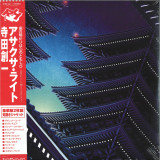
Back in 2015, Japanese DIY house pioneer Soichi Terada stepped back into the limelight courtesy of Rush Hour's 'Sounds From The Far East', a Hunee curated retrospective of material first released on his own Far East Recording label in the 1990s and early 2000s. Buoyed by the positive response and renewed interest in his work, Terada went back into studio to record his first new album of house music for over 25 years, Asakusa Light.
Developed over 18 months, Terada tried to recreate the mental and physical processes that led to the creation of his acclaimed earlier work. Those familiar with Terada’s celebrated, dancefloor-focused sound of the 1990s – a vibrant, atmospheric, and emotive take on deep house powered by the twin attractions of groove and melody – will find much to enjoy on Asakusa Light.
“I tried to recall my feelings 30 years ago, but when I tried it, I found it super difficult,” he explains. “I didn’t even know what I thought about myself five years ago, and the mental metabolic cycle seems to be faster than I thought. I tried different methods, including digging up my old MIDI data and composing by remembering old experiences. With the help of Rush Hour, I found some of the light from my heart that I had 30 years ago. I nicknamed the light I found in my heart, ‘Asakusa Light’.”
Produced using the very same synthesizers and drum machines that powered his 1990s work, the album is a joyous, colourful and life-affirming collection of timeless house music that not only recalls Terada’s own impeccable back catalogue, but also that of similarly celebrated contemporaries such as the Burrell Brothers or Ben Cenac (Dream 2 Science, Sha-Lor).
Terada, who has spent much of the last two decades writing video game music, has always had a gift for combining warm, undulating synthesizer basslines and perfectly programmed machine drums with stirring chords, smile-inducing melodies and mellow musical flourishes. It’s this immersive, sun-kissed and tuneful trademark style that takes centre stage on Asakusa Light, an album for the ages.
The set begins with the alien-sounding chords, soft-touch percussion and dawn-friendly warmth of ‘Silent Chord’ and ends on a high via the bouncing string stabs, starlight chords and thickset grooves of ‘Blinker’; in between, you’ll find a deluge of effortlessly feelgood music that’s the aural equivalent of a dopamine rush at sunrise.
There are subtle variations aplenty throughout the album – see the 8-bit lead lines and pulsing electronic textures of ‘Takusambient’, the vintage Tony Humphries flex of ‘Diving Into Minds’ and the effortlessly funky ‘Marimbau’ – but it’s the uniquely atmospheric, vivid and tactile nature of Terada’s loved-up sound that resonates. After well over 30 years in house music, the light in his heart is shining brighter than ever.
Very special material found in the legacy archive of a Ukrainian rock'n'roll star from the '90s, the frontman of the Braty Hadiukiny band. After a long pause in his musical career and a life-changing period abroad, he unexpectedly switched to electronic music production.
He passed away in 2009 without releasing these tracks, and only a very limited number of people ever heard them in his studio. His productions include eclectic house, progressive trance, and downtempo tracks we discovered thanks to his former wife, who kept Serhii’s artistic heritage throughout the years.
Life has changed in the eight years since the release of II. In ours, yours and Gala Drop themselves. Most times without noticing it, partly due to those two years of a semi-existence that still resonates and with the ongoing predatory gentrification process changing the landscape and life of Lisbon, home to the band since ever. Close to a decade and a half of existence, with various mutations along the way enacting new perspectives and moments of stillness and reflection to a sound that's been mutating itself to its own internal rhythm and agency under the guiding light of the core duo of Afonso Simões and Nélson Gomes. Now a trio, with Rui Dâmaso transitioning from II after the departure of Jerry the Cat and Guilherme Canhão, Gala Drop sound even more focused as a working band, with their new album title Amizade – friendship in Portuguese – making perfect sense in a celebration of their, by now, patented soundworld of cosmic inspiration: krautrock's endless and hypnotic potential, dub's sense of transient space, the throb of house, balearic dreams, polyrhythms and a communal sense of belonging.
Again, this sprawling sphere of influence opens itself to new shapes and inspirations, but there's a deeper sense of accuracy and direction, with the band channeling those legacies into something we can only grasp as the Gala Drop sound. An organic outcome of working steadily as a trio, made possible by a residency promoted by gnration in Braga, Amizade dwells on the psychedelic nature of the group through seven tracks made up of dreamy synth washes, loads of percussion, echoes, chilled guitars under a radiant aura. Gala Drop have never sounded as openly dubby as on 'Dub da Meia Noite' and 'Areal Dub' or capable of converging different tropes of the hardcore continuum – rave stabs and cut up vocals – on a slow burner as memorable as 'Monte do Ouro'. Or given free reign to electricity as on the narcotic guitars of 'Guitarra Voadora' – excepting the one off with Ben Chasny on 2012's Broda. 'Amizade' points towards all of that with comforting escapism and wrapping things up 'Raio' turns dubstep's original bass weight meditations into a cosmic funk workout. One last hug before we leave. An album that feels like a collective moment of celebration, just when we most need it.
Afonso Simões - Drums, percussion and synthesizers
Nelson Gomes - Electric guitar and electronics
Rui Dâmaso - Electric bass & guitar and synthesizer
Recorded by Budda Guedes at Estúdio Mobydick, Braga
Mixed by Gala Drop and Hugo Valverde at Estúdio Cão Andaluz, Lisboa
Mastered by Anne Taegert at Dubplates & Mastering, Berlim
Cover photo by Sara Graça
Design by Nicolai Sarbib
Effortlessly dismantling the barriers between R&B, soul, funk, disco and jazz sounds, MF Robots present long player ‘Break The Wall’, on BBE Music. Astonishing musicianship, pristine production and top-tier songwriting, ‘Break The Wall’ immediately calls to mind those iconic American rhythm sections of the 70s and 80s. The music is energising, uplifting and the potent result of a highly accomplished musical partnership maturing, growing and hitting their stride together in lock-step. Jan Kincaid and Dawn Joseph met as members of one of the UK’s most successful Acid Jazz bands, which influenced Mark Ronson, D’Angelo, Jamiroquai, Erykah Badu and The Roots to name a few. Founding the Brand New Heavies was an important chapter for Jan, but once he and vocalist and songwriting partner Dawn began working together, the chemistry was instant and irresistible. It was time to turn the page, and soon MF Robots was born. “When we made our first album, we didn’t have a band as such. We basically made a lot of the record at home and called on other musicians as and when we needed them. Our sound was developing organically, and when we finally released the record to great critical acclaim, it was time to get out on the road,” says Jan. “We put together a band of like-minded young musicians, playing intimate gigs and big festivals all over Europe and beyond, growing tight as a unit, so that when it came time to think about making this, our second album, we knew we had an extra level of musicianship full of personality that could realise our vision.” Inviting band members Alex Montaque (keys), Naz Adamson (bass), Mark Beaney (guitar), Jack Birchwood (trumpet), Ben Treacher (sax) to improvise and contribute their own ideas over song-sketches laid out by Jan and Dawn gives ‘Break The Wall’ a special sense of off-the-cuff brilliance. Even on the polished final product you can detect a collaborative, fluid and unhurried approach to production that’s all-too rare these days. There’s guest performances from bassist Gail Ann Dorsey (‘The Love It Takes’, ‘Make Me Happy’) and guitarist Cory Wong ('Shine', 'Make Me Happy'), the former a top-flight session player who’s collaborated with Lenny Kravitz and David Bowie among others, the latter a member of the incredible Vulfpeck collective and an accomplished solo artist in his own right.
Because the 8th time is the charm.
For our 008 interpret teams up with with one of Montreal's finest jazz imprints “Ensoul records”.
This collaboration presents a four remixes record featuring songs from Dominique fils aime's album “Nameless”.
For the A1 interpret's founder Ohm Hourani revisits “Birds” with his own signature of walking bass and shuffle drums. Sharing this side, Ben Nevile inserts a healthy dose of funk to “Grow mama grow” with a remix that visits a past era with a flavour of modern twist.
The B side commences with a dance floor roller for the title song “Nameless” by Paris's Pepeno and shake expert Ben Vedren.
Closing this four tracker is Montreal's dynamic duo “Flabbergast”. Vincent Lemieux & Guillaume Coutu Dumonts work their own charm on “Birds” pairing the voice with a deep groove accompanied by warm keys.
microCastle’s third offering of 2023 welcomes Ditian back to the label for his first artist EP. Splitting time between Buenos Aires, Berlin and Barcelona, the Argentinean artist has carved out a unique place in the electronic underground over the last half decade. With an immediately recognizable sonic signature, Ditian channels languages of varied musical landscapes, churning them into his own complex rollercoaster of intricate electronica. A sound that is equally at home on rebellious dance floors around the world or in the sweet spot of a late-night leftfield listening session. A short but meticulous discography reflects Ditian's choosy nature; with Exit Strategy, Innervisions and TAU serving as the primary landing spots for his musical output. Having remixed Ivory’s ‘Arpstairs’ for his microCastle debut last summer, a project which was followed by a contribution to Dixon and Ame’s Secret Weapons 15 collection to begin the year, Ditian now returns to the label with a four-track showcase entitled ‘Serpenta’.
The crushing title track crashes in and sets any preconceived ideas of Ditian’s music alight, forecasting jet force propulsions and wild signal bending synths. As somewhat of a departure from his previous experiments, Ditian’s clustered pungi mutations provide an enduring main theme, while a wonderfully warped break is sure to cast a paranoid spell over the dancefloor.
‘Venena’ follows in fine style and further hammers down Ditian’s elusive vision. Dizzying, rapid-fire sequences of rhythm, granular textures and heavily manipulated synths travel to the very edges, while maelstroms of drums and contorted basslines highlight a high-octane second act.
‘Inertia’ lands at the collection’s midway point and does so in remarkably twisted fashion, stepping decisively on the gas and steering into shadowy transgressions. Never one to shy away from darkness or pushing boundaries, Ditian’s metallic storyboarding rises and falls across act one, consciously withholding energy, as grooves pulse and effects orbit, creating tension that eventually gets resolved as clusters burst open and oscillate in kaleidoscopic fashion.
Ditian’s creative attitude reveals itself further on collection closer ‘Influenza’. Presenting some of his most club-adjacent rhythms yet, it’s a clever coax of billowing tones and scrappy melodica which get wrapped up in a concordant fog, eventually getting washed away; because after all, the oceanic drones are all the better when they’re magnified to full size.
Cover art: Mauricio Seidel
- A1: Wrong (Album Version)
- A2: Wrong (Thin White Duke Remix)
- B1: Wrong (Trentemøller Club Remix)
- B2: Wrong (Caspa Remix)
- C1: Wrong (Magda's Scallop Funk Mix)
- C2: Wrong (D I.m. Vs Boys Noize Remix)
- D1: Wrong (Trentemøller Club Remix Dub)
- D2: Oh Well (Black Light Odyssey Remix)
- E1: Peace (Single Version)
- E2: Peace (Sixtoes Remix)
- E3: Come Back (Jonsi Remix)
- F1: Peace (Ben Klock Remix)
- F2: Peace (The Japanese Popstars Remix)
- G1: Peace (Sid Lerock Remix)
- G2: Peace (Justus Köhncke Extended Disco Club Vocal Remix)
- H1: Peace (The Exploding Plastic Inevitable Jk Disco Dub)
- H2: Peace (Pan/Tone Remix)
- I1: Fragile Tension (Stephan Bodzin Remix)
- I2: Fragile Tension (Kris Menace's Love On Laserdisc Remix)
- J1: Hole To Feed (Popof Vocal Mix)
- J2: Hole To Feed (Paul Woolford's Easyfun Ethereal Disco Mix)
- K1: Perfect (Roger Sanchez Club Mix)
- K2: Perfect (Ralphi Rosario Dub)
- L1: Peace (Hervé's 'Warehouse Frequencies' Remix)
- M4: Fragile Tension (Laidback Luke Remix)
- N1: Fragile Tension (Peter Bjorn And John Remix)
- N2: Hole To Feed (Joebot Remix)
- N3: Perfect (Ralphi & Craig Club Mix)
- N4: Fragile Tension (Solo Loves Panorama Remix)
- L2: Peace (Sander Van Doorn Remix)
- M1: Fragile Tension (Radio Mix)
- M2: Hole To Feed (Radio Mix)
- M3: Come Back (Sixtoes Remix)
Sounds Of The Universe | The 12" Singles, a deluxe collector's
edition box set, contains seven 12" vinyl discs presenting
singles--including Wrong, Peace, the double A-side Fragile
Tension/Hole To Feed--alongside B-sides, remixes, dub
versions and other recordings contemporaneous to Depeche
Mode's 12th studio album, Sounds Of The Universe, originally
released by Mute Records in April 2009.
Sounds Of The Universe | The 12" Singles offers a full range of
ear-grabbing mixes--radio, club, dub and more--of Depeche
Mode originals with three discs (Discs Two, Four and Seven)
newly compiled for this collection, bringing together B-sides
and mixes first released across CD and maxi-singles
contemporaneous to the album's release.
When it came time to record the Sounds Of The Universe
album, DM's classic core (Dave Gahan, Martin Gore, Andrew
Fletcher) returned to the studio to make their second album
with producer Ben Hillier, whose intuitive contributions to
their previous studio album, 2005's Playing The Angel, had
created new sonic possibilities for the band expanding
Depeche Mode's vision and repertoire while continuing their
tradition of issuing monumental 12“ singles.
Water Machine is an office romance between Hando Morice (they/them), Flore de Hoog (she/her), Jimmy Gage (he/him) and Goda Ilgauskaitė (she/her). An unassuming supergroup formed out of Glasgow institutions including Goth GF, Passion Pusher, Brenda and Soursob, their sound careens between punk, country and alt-rock underpinned by the unique quality they call “Raw Liquid Power”.
Following last year’s self-titled demo tape on Gold Mold Records, and fresh off of shows with the likes of Holiday Ghosts, The Cool Greenhouse and The Orielles, as well as a rollicking Viagra Boys afterparty, the four-piece will release their highly-anticipated first studio effort ‘Raw Liquid Power’ on Upset The Rhythm on August 4th.
The EP opens with a menacing, modulating synth melody. Gage’s guitar enters with a mighty bend before breaking into the chugging rhythm of ‘Water Machine Pt. 2’. This timely reminder to refill your water bottle - “don’t be late, hydrate!” less a wellness mantra than a threat - builds to a spacey outro with flashes of the art-punk weirdness of Suburban Lawns. ‘Stilettos’ marches on indignantly with a spiky riff punctuated by Ilgauskaitė’s cowbells. Staccato talk-singing tells a playful tale of stray cats following you home, but belies a darker subtext as the breakdown gives way to paranoid duelling guitars evoking The Fire Engines.
The anti-anthem ‘At the Drive In’ skewers joyless DIY crowds, reminiscent of much-missed Glasgow punks Breakfast Muff. Water Machine’s irrepressible sincerity can’t help but shine through in the final moments though, as jibes about “late night trade potential” give way to plaintive vocal harmonies. Morice tears public transport a new one on closer ‘Bussy’, a First Bus diss track bemoaning precarious employment amidst crumbling infrastructure. “That’s why I’m not on time!” they roar over de Hoog’s frantic, pounding bass, bringing the record to a skidding, screeching halt.
Evelyn spreads her wings and prepares to fly. This is her first offering for the ESP Institute. On side A, 'Tremors' slams together a plethora of seemingly disparate rhythms, organic percussion, field samples, hypnotic chants and a relentless low end punch, that when in full-swing, works some seriously deep sorcery. Contrasting her pounding kick and rolling sub combo are a softer grouping of melodies, soft mallets and muted tones that lay subtly beneath the aggression, skillfully playing with a sense of spatial depth and room size. Its the kind of track that draws you in with meditative bars, concentric cycles that sit ever so slightly off-axis, inducing the mind and body to obsess and regulating its timing, and then drops you into a very intentionally arranged soundstage giving expansive space to explore. On the flip, 'Pregunta' continues this approach of natural versus industrial instrumentation. The consistent machine kick has a powerful but playful tone, the negative space between each stroke evoking a mighty gesture as its note bends in the decay. Set in 3/4, a community of live percussion successively adds and subtracts, each player’s imperfect attack accumulating into a mechanically smeared and addictive loop that toys with peaks a handful of times yet restrains any unnecessary climax for the betterment of a driving groove. Near the end, as the kick and various players mute and the base of the track is given a moment to breathe, its apparent just how layered the production was in the moments prior, as we’re suddenly at home, smitten with the wobbly and lopsided innocence of the foundational percussion. These two songs will push you headfirst into the light.
John Howard was one of the best and most creative DJs of the west coast house scene back in the 90’s. His mixes and productions were full of house groove, soul, breaks and jazzy rhythms. This new series on Repeat contains of three parts including Howard’s best productions. These tracks are all huge influence for many producers that later discovered these kind of psychedelic house grooves on European based DJ sets… John Howard was on his own journey much ahead of time and his music still sound absolutely incredible 25 years later… Mesmerizing release.
- A1: Island Band – Idle Hours 4 55
- A2: Chaz Jankel – Manon Manon 4 56
- A3: Gilbert O’sullivan – So What (Nail Edit) 8 44*
- B1: Rheinzand – Kills And Kisses (Scorpio Twins Remix) 8 10*
- B2: Canada High – Le Chiffre 5 02*
- B3: Lanowa – Burning Up 6 38*
- C1: Khruangbin – So We Won’t Forget (Mang Dynasty Irreverent Dub) 7 16*
- C2: Fernando – 1998 7 00*
- C3: Debbe& The Code – Code Of Love 6 02
- D1: Jana Koubková - Nijána 6 15
- D2: Ipg V Hot Toddy – Open Space 7 32*
- D3: Smashed Atoms & Backdoor Man – Hey Dreamer 6 50*
This July the esteemed scribe, proper DJ, and discreetly deft twiddler Bill Brewster, drops the latest instalment in his ‘After Dark’ series, for Late Night Tales.
A throbbing, louche and leisurely affair, groove is very much at the heart of this freestyle selection, a vibe which Bill de- scribes as “a basement, a red light and a sound system. Or, as the Beastie’s once rapped, slow and low, that is the tempo”.
There’s Hawaiian drum machine bossa balearica from Island Band, percussive afro post punk from Czech jazz singer Jana Koubkova, and breathy-bubbling-dubwise-slap-bass-soul from Debbe& The Code.
There’s also sultry deep house mood music from Lanowa, infectious bouncy jazz funk breaks from Canada High, and Nail’s life affirming re-edit of singer songwriter Gilbert O Sullivan’s electro pop gem ‘So What’.
Bill’s own studio skills are present and correct too, featuring an undulating bassy version of country troubadour Jeb Loy Nichols, reworked along Alex Tepper under their Hotel Motel moniker, and a chugged-up squelchy disco take on Khruang- bin, this time paired with Raj Gupta, as Mang Dynasty.
Chock full of exclusives, tracks are either completely brand new, or available digitally for the first time, whilst others are wallet-rinsing rarities if purchased elsewhere. Whichever way you slice it though, every tune is a highlight, working equally well as standalone nuggets, or within Bill’s fluidly cohesive mix.
Whether he’s taking the roof off a club with his unique selec- tion of deep and tough house music, enchanting a backroom with a genre-bending set of disco, Balearic, rock and hip hop or playing chillout music in a bay in Croatia, Bill Brewster is the man for all occasions.
In a former life, Bill was a punk rocker, a chef and also the co-editor of football magazine When Saturday Comes but has been a record nerd all of his life. He began DJing in the 1980s, but came into his own in the early 1990s, particularly during a two-year stint in New York running DMC’s office, where nights at the Sound Factory and hanging out with Danny Tenaglia gave him the musical grounding you can still hear in his music today.
Bill was also one of the founding residents at Fabric in London, a position he held for five years. There are few still playing regularly today that have his dedication, eclecticism and encyclopedic knowledge of music.
His parallel life is as a writer, and with his long-term part- ner-in-crime Frank Broughton, they have written four books together, including the acclaimed ‘Last Night A DJ Saved My Life’ (latest edition published last July), ‘How To DJ (Prop- erly)’ and ‘The Record Players’.
He has been working in the industry’s fringes for over 40 years including the running of various labels from Twisted UK and Forensic in the ’90s to Disco Sucks and Anorak in the noughties.
He is one of NTS radio’s new residents for 2023 and his ‘Low Life Loves You’ show is available on the first Tuesday of every month.
As it celebrates its 50th anniversary, Bill Withers' Still Bill remains true to its title – and stands as the greatest male-fronted soul album not made by a singer named Marvin, Al, Sam, James, or Ray. Though the saying "keeping it real" did not exist in popular parlance when Withers released his sophomore effort on Sussex Records, no words better capture the music's approach, mindset, and value. Every facet of Still Bill radiates honesty, truth, and emotion.
These characteristics – along with Withers' strong singing, hybrid arrangements, and deceptively simple songwriting – have allowed the album to endure to the point where it sounds as fresh today as in 1972.
After rising into the Top 5 of the Billboard Album charts and attaining gold status within a year of release, Still Bill has long been evaluated not by sales – but according to its merit, spirit, and agelessness. Included by The Guardian on its "1,000 Albums to Hear Before You Die" list (2007) as well as in Tom Moon's 1,000 Recordings to Hear Before You Die book (2008), its contemporary standing as one of history's most venerated soul efforts eclipses the positive reception it enjoyed in the early ‘70s.
Still Bill walks the same hallowed ground as What's Going On, Call Me, Night Beat, and Genius + Soul = Jazz. Like those landmarks, Still Bill plays with a mix of consistency, effortlessness, and complexity that rewards repeat listening and transcends categorization.
In combining four of the era's predominant styles – Philly soul, sweaty funk, Southern-reared blues, acoustic-based folk – and melding them with standout production borrowed from both minimalist affairs and sophisticated singer-songwriter albums, Still Bill occupies a distinct universe.
Its rhythmic fare is equally laidback and invigorating; relaxing and rollicking; eloquent and muscular; soft and tough. Withers' calm, self-assured voice hovers above it all, doubling as a warm blanket that adds comfort and grace to lyrics steeped in maturity, perspective, and compassion.
Withers' balanced outlook on human desires, needs, and situations stem from his own existence as a former blue-collar employee who believed his time as a musician would soon end. That grounding forever separates Withers from other contemporary soul greats – and stamps Still Bill with a conversational nature and egoless approachability.
"I mean look, I'm really a factory worker," said Withers in 1972. "That's a real job." There's that word again: real. The songs on Still Bill are tethered to modesty and actuality, wedded to a belief in simplicity, and connected to universal truths that link us all – independent of our economic or social standing. No track better exemplifies those principles than "Lean on Me," a feel-good paean to brotherhood and community that hit No. 1 on the pop and R&B charts en route to becoming a mainstream staple.
Withers approaches the plainspoken insight on "Lonely Town, Lonely Street" and heartbreaking vulnerability of "I Don't Want You on My Mind" with similar sincerity and straightforwardness. His proclivity for authenticity extends to the record's other big hit: the sexual, funk-laden "Use Me," which reached No. 2 and reflects the singer's everyman persona. It's an identity couched in keeping it real, the very inclination that ultimately led Withers to retire in the mid-'80s rather than bend to industry pressures or risk credibility.
That commitment to truthfulness and realism helps make Still Bill feel as unaffected as the air we breathe. Looking back on "Lean on Me" years later, Withers said it seemed like "something that was there before I got here" – the kind of song that could be 100 or 10 years old, or one we encounter anew 10 years into the future. The same can be said for every note on Still Bill.
Names You Can Trust continues its years-long revival work with one of Panama's most gifted and legendary soul artists, Ralph Weeks, returning the singer to the studio for another brand new recording that highlights the now 80-year old's still silky vocals and masterful songwriting. Up for the challenge with their own studio savoir-faire is a most fitting and genuine purveyor of modern day soul themselves, Ben Pirani and The Means of Production, whose output on Palmetto Street Recording and Colemine Records has already achieved high praise and collectible status in just a few years. The mission, record two unreleased home studio demos that were penned and tracked in the early 1980's and recently excavated from Ralph's extensive archive of personal songs. These original compositions were faithfully given the full treatment and arrangement they never received, but always deserved. The A-Side, "Nobody Loves Me (Like You Do)", a quintessential Ralph testimonial of love, now shines alive and...