London-based four-piece Adult Jazz announce their first full-length album in a decade, So Sorry So Slow, out 26 April 2024 via Spare Thought. Alongside the announcement comes lovesick new single ‘Suffer One’ featuring Owen Pallett, a cautious excavation of self and sexuality, clambering across a gorgeously shapeshifting, filmic five-minutes.
Containing some of the band’s most abrasive but gentle, beautiful and melismatic work to date, So Sorry So Slow has many defining characteristics: romance, panic, devotion and remorse, threaded together by an intentionally laser-focused love. It’s deeply personal, bruised and candid in its expressions of tenderness, and deeply pained in its concurrent reflections of ecological regret. Across its hour-long runtime, a delicate, frenetic energy and glacial heaviness coexist, the band pitting those paces against one another. In their richly experimental timbre, dancing strings and fluttering falsettos prang against a bed of brass drones like a wounded bird.
“We started writing in 2017 and began recording in 2018,” says vocalist Harry Burgess. “We genuinely thought it might be finished in 2018! But things kept developing and, having resolutely not struck while the iron was hot, there was no real external push to rush things after that, so we just kept letting things shift and unfold until it felt right. Listening back to my voice notes it’s nice to notice that there are fragments of ideas from the whole period 2017-2023 which have shaped the record.”
Recorded in bursts at studios across London and in the band members’ flats, at Konk, on the Isle of Wight and in Sussex, So Sorry is unambiguous in its evolution. Sonically, there are sparks of the arrhythmic brightness that afforded the band’s critically acclaimed debut album Gist Is its cult adoration, for fans of Arthur Russell and Meredith Monk, but with a blossoming, melancholic darkness often overhead. Piano sprees and luscious string sections appear like low-hanging stars on a night-time drive, whilst plunging vocal distortions and humming brass loops resurrect heavy limbs in a bad dream.
“I usually have objects as kind of totems for ideas,” explains Burgess. “The album initially started out to do with performance… the totem was a head mic, one of the subtle skin-tone ones, discreet on the forehead of a West End star. A number of the first songs in their original forms were almost musical theatre piano ballads. I think that was really a device to write about my life as the ‘main character’ (pre internet-speak reframing): regrets about romance, relationships - unsustainable relationships with the self and others.”
“However, once we started writing, the ideas about unsustainable personal relationships, loving unevenly and heartbreak conflated with a more expressly ecological regret. Like contending with big feelings of loss, endings, beauty, desolation, and with how much joy the earth contains in it. Feeling so much gratitude bound up in waves of sadness. Maybe witnessing a slow-motion goodbye to all that, or its last gasps. I love the earth and the life it supports so much. I love how ecosystems fit together - even the brutal stuff. It may be basic to say, but now is the time to be laser focused on that love. I was thinking about human centrality on earth, us as the ‘main character’, the way that is served by faith and romanticism, and the subsequent disingenuous understandings of our position in the ecosystem, as only stewards somehow, rather than subjects. The totems at this point: a herald’s horn, lorry inner tubes, archaeological tools. I guess from doom, industry, history respectively.”
“Now I would say the record is about gripping. Totems being: crampons, rope, drips, desalination equipment, accruing various survival tech. I think gripping sums up both of the threads. There’s the emotionally correct clinging to the earth that is the substrate of everything we value, or the delusional clinging to our imagined dominant position. But also the practical, technological aspects of creating a sustainable relationship, of remaining here. Then I think of romance again.”
So Sorry So Slow comes out 26th April 2024 on Spare Thought, mixed by Fabian Prynn at 4AD Studios and mastered by Alex Wharton at Abbey Road.
Adult Jazz is Harry Burgess, Tim Slater, Steven Wells and Tom Howe.
Buscar:ben shift
The collaborative project from Vincent Lemieux and Guillaume Coutu-Dumont, Flabbergast, returns this March with a new EP, entitled ‘Default Mode Network’ and coming via Swiss imprint Adam’s Bite.
Vincent Lemieux is a staple of the Montreal, Canada underground and a widely beloved DJ for his impeccable technique and selections, he’s also offered up productions on the Studio Club and DISDAT labels and a collaborative EP alongside Ohm Hourani for Jigit and co-founding the Musique Risquée alongside Akufen, Deadbeat and Stephen Beaupré.
Guillaume Coutu-Dumont, a fellow Montrealer has long been a prized producer for his unique spin on micro house and
deep house music with his music finding a home on the likes of Mule Musiq, Meander and Dokutoku among others. In 2015 the two joined forces for their Flabbergast debut on Circus Company, have gone on to release with Yoyaku and Copier/Coller, and here makes a triumphant return for Switzerland’s Adam’s Bite with four fresh original cuts.
Opening the EP is the playful ‘Peppermint Poddle’, fuelled by oscillating synth tones, twitchy percussion and saturated bass alongside a spoken word vocal. ‘Manger Du Bon Manger’ then
shifts focus to cinematic organ lines, jazzy drums and a snaking bass groove throughout.
‘Mou D’état’ kicks off the B-side and sees the duo dive deeper via ethereal atmospherics, their signature wonky, mind bending synths and an amalgamation of processed vocal murmurs. Lastly
‘Dans L’oeil’ sees César Merveille join the party, the trio working collectively to create a unique slice of percussion fueled microhouse with intricately intertwined organic percussion, dubby
synth flutters, cinematic pads and pulsating subs.
Irresistible Brazilian blues reggae from the heart of the Amazon rainforest. A psychedelic guarana induced trip and ode to the fading indigenous cultures and shifting hegemony in Brazil. This one-off release by Manaus native Natacha Fink was originally written in 1986 as the lead track on NOSSA MUSICA - a compilation celebrating regional music from the Amazon. Emerging out of the dictatorship, Natacha and her fellow artists rejected the aesthetic standards driven by internal colonialism and sought out new ways to express themselves away from the styles of the dominant Rio-São Paulo axis. What surfaced was a melodic blend of genres, with Natacha’s haunting vocals and playful lyrics gliding over an arrangement of guitars and double bass. Vocal backing is led by Torrinho, well known for his layered composition style, whose song ‘Porto de Lenha’ is recognised throughout Amazonas as an unofficial anthem. Hidden within the Amazon, Pirarublue lies in that wonderful space between innocence and honesty. Proudly exploring cultural and ecological spaces through a refreshing, ghostly infectious groove. For fans of Gal Costa, Elis Regina, Chico César, Jorge Ben Jor and Joni Mitchell.
Accompanying Natacha’s beguiling single is the field recording “Unseen Songlines” by artist and academic Nimalan Yoganathan. The composition immerses the listener in the soundscapes of Mamori Lake, a remote village inside the Brazilian Amazon. Nimalan explores the ambiguous perception of sounds emanating from the dense rainforest and deep beneath the Amazon River, where we hear the sounds but cannot see their sources: an acousmatic concert performed by the rainforest itself. Processed field recordings of birds and frogs, as well as underwater hydrophone recordings of dolphins and fish subtly weave throughout electroacoustic textures and beats. The listener is invited to hone in on the musical subtleties hidden throughout the environment. The compositional methods employed in this piece draw on the concepts of sonic rupture, presence, absence and memory found in the dub music tradition.
This limited edition 7” by Sticky Buttons puts these two outlying works together for a unique listening experience, combining the human and more-than-human experience of life at the heart of Brazil. Both uniquely Amazonian but with a universal appeal.
Warehouse Find!
Time to welcome Soul 223 to the label with his debut Delusions EP entitled Fear Of Stopping. Something of a complete legend in our eyes and ears, Steve Pickton has been releasing top drawer tuneage for over two decades both as Stasis on influential labels such as B12 and Peacefrog and more recently as Soul 223 on equally well regarded imprints like Delsin, Soul Jazz and Neroli. Always one to shy away from any limelight or self promotion it's true to say that this underrated British producer remains something of an anomaly, staying true to his underground roots where faceless, shadowy and obscure reigns supreme over the latest over-exposed cover star. This ethos naturally carries through into his music where you will always find both expansive beauty and unrefined rawness in equal measures ensuring his tracks always sound fresh rather than over produced or contrived.
Fear Of Stopping opens the EP with a low-slung disco groove providing the backbone for intermittent pad washes and reversing stabs. The focus here is firmly on the drums and simple conga riff with thankfully very little else to deter you from this sublime slice of abstract dance music.
Next up we have a remix from another ridiculously talented producer who chooses quality over quantity, having only ever had one release under his own name, albeit for one of the most respected labels in the world; Rush Hour. Maxi Mill came to our attention having released one of the tracks of 2011 namely To The Next. On this, his first ever solo remix he brings a brilliant bump to the EP with a raw, warehousey and bass-heavy workout. Just the right amount of strings and pads keep the deep vibe intact but the filtering bass and jacking drums definitely take this one to the floor.
Flipping over we have Walberswick in it's Hoist Covert Mix incarnation. Almost thirteen minutes of spaced out, deep Detroit house music awaits you, ready to lure you in and cocoon you with it's warm and hypnotizing machine funk. Lovely to hear the old Stasis influence working it's way into this one sounding both decidedly old-school and completely futuristic and otherworldly as only the best tracks ever do.
Closing the EP we have Birdbrook Rain dropping the BPM's for a beautifully sparse track that brings with it an almost desolate and disconnected feeling, echoing synths providing a naive melody while a dusty pad shifts simply beneath. A little slice of magic concluding a fresh and interesting EP, we hope you agree.
Theo Kottis arrives on Dekmantel with an EP of snappy, melodically-charged house, techno and electro with a distinct 90s edge. Lighthouse marks a shift in focus for the London-based Scottish producer — the result of a self-imposed creative reset which has seen him honing a more mature sound both in the studio and on the decks. The EP’s title track has been on heavy rotation this summer from the likes of Ben UFO, Francesco Del Garda & Palms Trax, and it’s not hard to work out why. ‘Lighthouse’ draws on all the best elements of club music and moulds them into a deadly, effective whole.
From the driving low-end of the Reese bassline to the razor-sharp attack of the 4/4 drums, the swoon of the Motor City pads to the tweaked acid line, it’s a hybrid techno workout of the highest order. Following the inspirational flash point of ‘Lighthouse’ Kottis built out the rest of the EP in a similar vein of characterful, impactful club tracks driven by iconic 90s sounds wielded with precision. ‘Warp’ brings the 303 further to the forefront while ‘Take Control’ digs into deliciously dirty lead lines and ‘Distance’ takes a more explicit electro direction. He might be exploring a revitalised sound, but Kottis holds true to his flair for ear-snagging anthems evidenced on past releases for Permanent Vacation, Space Dust and DGTL amongst many others. As Kottis’ impact on the scene continues to grow, it’s a true pleasure to present some of his fiercest tracks to date on his continued upward trajectory.
Having built a loyal local Antwerp following off of the success of their 2019 debut self released album, ‘Forgotten Kingdom’, and growing reputation for electrifying stage performances, Kolonel Djafaar achieved worldwide recognition in 2021 for the ‘Cold Heat’ EP on Batov Records, attracting praise from Music Is My Sanctuary (“triumphant), and support from Gideon Coe on BBC 6 Radio Music, and DJs across Worldwide FM, Soho Radio, Le Mellotron, and KEXP.
The group overcame busy schedules and frequent quarantine periods to hit the studio in February 2022 to lay down four tracks. However, the creative itch persisted, leading to an intense writing session in August, deep in the heart of a tranquil forest. From noon until midnight, the band immersed themselves in the creative process, embracing the freedom to make noise without restraint.
Fueled by hearty breakfasts, unwavering focus, and the ambient clucking of chickens roaming the studio, Kolonel Djafaar crafted the majority of ‘Getaway’. This period marked a pivotal shift as a number of new band members joined just in time for the August sessions.
Membership changes, including Emiel Lauryssen joining on trumpet, alongside guitarist Philip Matthhijnssens, the band's palette has broadened and new sounds are able to break through. From psychedelic rock and soul influence of the Daptone Records’ affiliated Budos Band, surf rock (“Urban Dweller”), Morricone Spaghetti Western guitar, and Afro Cuban (“Kelmendi”), alongside the brassy Afrobeat and Ethio jazz vibes the group have been known for.
The broader dynamics of ‘Getaway’, and the band’s more cinematic and experimental approach, is particularly apparent on "Siren’s Glitch" and "Phil’s First Tear". The latter, first conceived by drummer Anton Van Hove, features the lead guitar doubling up with the bass guitar for added impact. Whilst the origins of "Convoi Exceptionnel", a brass & synths stomper of a march, trace back to a jam session during the band's Hungarian tour, another vital period of prolonged time together, capturing the organic essence of their experiences on the road.
Each track on ‘Getaway’ holds a unique connection to at least one band member, and all benefit from a collaborative approach to songwriting. "Sparking Clover'', an Ethio-inspired psych & soul groover penned by tenor saxophonist Doyin Smith, carries a poignant undertone inspired by personal loss, while psych rock leaning tracks like "Apologies in Advance" showcase the band's evolution and increasing professionalism in crafting a distinct sonic experience.
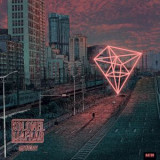
The curious cover art depicts a lone individual heading down an empty city street towards a large mysterious glowing object, evoking the common emptiness and struggle of urban life, and the search for meaning or just something better. The band envision the object to represent this album, offering a beacon to like-minded listeners. Kolonel Djafaar invite music enthusiasts on an immersive journey, to ‘Getaway’ from the daily grind of life, on an album reflecting diverse influences and marking a new chapter in their musical exploration.
Founded by Joe Laycock and Jack Sharp as a successor to theatrical punk group Cheap Teeth, the pair birthed the project from their joint love of immersive, beat-driven soundscapes and subtle shifts. Featuring members of Catholic Action and Pressure Retreat, the band aims to urge the listener"s ear into progressively choppy waters whilst simultaneously grounding them in firm lyrical soil.
'Scope Neglect' ist ein experimentelles und genreübergreifendes Album, das aus Frosts Bewunderung für den Metal geschmiedet wurde, wobei er sich bewusst von dessen konventionellen Attributen entfernt hat. Wo das Album Aspekte des Genres berührt, trifft es auf glitchende Elektronik, immersive Ambient-Industrial-Sounds und tief kontemplative Erkundungen, die zu etwas führen, das sich nicht in eine Schublade stecken lässt. Das Album wurde zusammen mit dem Gitarristen Greg Kubacki (von der New Yorker Progressive-Metal-Band Car Bomb) und dem Bassisten Liam Andrews (von der Melbourner Band MY DISCO) in den Candy Bomber Studios in Berlin mit dem Toningenieur Ingo Krauss (Swans, Nick Cave und Mick Harvey) aufgenommen.
Chicago hip-hop outfit Angry Blackmen made up of Quentin Branch & Brian Warren (ABM) have been stretching their arms and tapping into different sounds since they smashed onto the scene with their debut single “OK!” in 2017. A prime introduction starring two emcees showing they deserve to wield the microphone and do so with good cause. Then barely a month later ABM released sophomore single ‘Riot!’ a complete shift in sound that still housed the foundation set in ‘OK!’ A few years later the duo would drop their debut project ‘Talkshit!’ which saw them amass the following they have today.
‘The Legend of ABM’ immediately smacks the listener in the eardrum leaving no second wasted and jumping straight to the point. The 11-track adventure truly presents an expression of hip-hop that we haven’t seen before, infusing multiple sounds with the 50-year old genre. To go even deeper, Quentin Branch & Brian Warren are teaching a masterclass in top-notch poetic lyricism, creating both accessible and mind-bending music. “Stanley Kubrick” has both heroes shattering the beat with their braggadocio for what is just the appetizer to prepare the listener for what’s to come in the next ten tracks. ‘Sabotage’ tells the story of two Black men hustling through the trenches of capitalism and the effect that this journey has on them. While the album exudes catchy wordplay and spine-splitting production, if you lift up the hood, ABM is spinning a tale of depression, existentialism and self-reflection that isn’t always pretty. “Dead Men Tell No Lies” is another mutation in sound for the duo, where the industrial sounds clash, violently yet perfectly together with a blistering hook harkening to the end of time. Warren & Branch’s raw poetry educates the listener of the pre-apocalyptic world we’re already living in throughout this project. ‘The Legend of ABM’ is not an excursion for the weak, the production is meant to snap your spine in half, the lyrics from Quentin & Brian are pathos-infused and relatable to anyone simply trying to survive.
- A1: Brian Bennett – Image 4 29
- A2: Neil Richardson – The Little Orphan 2 27
- A3: David Gold / Gordon Rees – Paradise Island 2 19
- A4: David Gold / Gordon Rees – Forbidden Fruit 2 19
- A5: David Gold / Gordon Rees – The Enchantress 2 56
- A6: David Gold – Phenomena 2 41
- B1: John Scott – Infinite Expanse 1 46
- B2: John Scott – Static Objects 2 31
- B3: John Fiddy – Metamorphosis 2 37
- B4: Neil Richardson – Cubist Pictures 2 12
- B5: Neil Richardson – Analysis 2 04
- B6: Neil Richardson – Crystal Ball 2 38
- B7: Steve Gray – Gliding Through Clouds 2 55
Impossible to find in the wild, KPM's Image is exactly that; this record paints extraordinary, hyper-vivid scenes with music, in the way only the library greats can. Originally released in 1974, Image is an absolutely stunning listen from start to finish, and arguably the most wanted KPM grail that's still not been reissued - until now! Just too good…
Worth the price of admission alone, and likely the reason you're all already drooling about this release, the mellow, dramatic beat of "Image", Brian Bennett's opener and title track, is a Jaylib-sampled firecracker. A reflective, scenic underscore which grows to full orchestra and ends as it begins - it's just beautiful. Next up, swoon to "The Little Orphan" by Neil Richardson featuring strings and harp. It's a deeply emotive, sweeping orchestral piece. Just straight gorgeous. It's followed by "Paradise Island", a lush, horizontal Balearic gem courtesy of Gordon Rees and David Gold; it'll send you into a blissful reverie with its elegant strings and gentle drums. From the same pair, "Forbidden Fruit" is, again, string-drenched but the strings are more insistent, stabbing even, and, with drums and Blaxploitation guitars high up in the mix, it's definitely a funkier proposition. "The Enchantress", again a Rees-Gold special, is a slower, groovy, synthy wonder. Closing out the A-Side, "Phenomena" is a mysterious gem, a Gold solo effort set at a breezier tempo with propulsive percussion and head nod, fast-paced breaks with ace keys.
Flip over for "Infinite Expanse", John Scott's dramatic panorama adorned with proud, triumphant horns. Scott's "Static Objects" paints patient, pastoral scenes; there's a serenity and stillness to the proceedings. Next up, Be With favourite John Fiddy delivers shifting shapes and patterns with his wonderful "Metamorphosis", all wah wah, harps, dramatic percussion and strings. It's by turns billowy and blasting. "Cubist Pictures" follows, Neil Richardson's brilliant nebulous, fragmentary piece. Better yet, Richardson's gorgeous, beatless "Analysis" follows, and it's an orchestral beauty featuring cello, harps and woodwind. It's no exaggeration to describe this as transcendental. His "Crystal Ball" presents more static scenes with cello, twinkling percussion and strings, before Steve Gray's fantastically-titled softly-ace "Gliding Through Clouds" closes out this remarkable set.
As with all of our KPM re-issues, the audio for Image comes from the original analogue tapes and has been remastered for vinyl by Be With regular Simon Francis. And as usual, the sleeve reproduction duties were handed over to Richard Robinson, the current custodian of KPM’s brand identity.
Following their contribution to the 2022 International Women’s Day compilation, and a co-production credit on “Dreaming is Essential” by Byron Yeates, Eoin DJ drops their first release on Radiant Records, Total Body. The 4-track EP is replete with mind-bending, lustrous tracks waiting to be spun out to sweatbox dancefloors.
“Total Body” invites movement from its first seconds. Layers and layers of snares, shakers and rhythmic synth stabs build tension before the pulse of a rolling bassline cements the elements into a cohesive hard house groove. Fragments and chops of sensx’s vocals wrap in and around the sonic field, leaving wisps of reverb and echo in their wake before repeating the track’s Total Body mantra in the breakdown. The result is a lushly-scored density of sound, with a relentless stomp that never feels overcrowded or too heavy.
Angel D’lite’s remix takes a more skeletal approach to “Total Body”: a snare and clap march beneath chiming vocal stabs, rumbling low end and rolling breakbeats, flipping the original into a modern bass-heavy hybrid number. The rhythmic synth from the original, reversed and efex’d, ushers us in, and then out of the track, around extra bass stabs and pitch shifted “Total Body” chops.
On the B side, “Ultra Soft” lifts off with a firm kick and a rolling 3-note bassline. Despite the title, the track hits harder than “Total Body” and sings with Eoin DJ signatures: swirling funnels of processed vocals, rich, ear-itching textures, stripped back percussion and rave-ready samples are sprinkled with 303s, to create a track that sits comfortably with both classic trance and techno and contemporary “Progressive” dance music.
The EP’s closer, a remix of “Ultra Soft” by Byron Yeates, compresses the astrally-inclined scale of the original track into shining slices of sound. A playful, chiming melody starts off the track alongside the kick, working through precise grooves, knife-sharp snares, a throbbing bass and chopped-up, smokey vocals. The result: 6 minutes of total embodiment from the Radiant Records boss.
Repress.
After the success of Bollywood infused edit of Koi Jaye and the Three Eyes remix, Tjade is back on Bordello A Parigi with a four tracker of varied delights. A clear enthusiasm for bright melodies and bending bars of trance runs through his Voyager EP. The title track judders to life on rumbling arpeggio lines, while the leads are crisp and beats racing fast as an anthem for dancing till sunrise dawns. “In Contact” offers corkscrew acid key shifts and sentimental chiptune melodies, while broken beats and the devil-may-care chords characterise “Shut Out”. Tjade provides music to help cares float away and bring people together. To top it all off, the master of all things modern rave Marlon Hoffstadt dons his DJ Daddy Trance moniker to rework the title piece. The BPMs rise, the breaks extend and drops fall from great height.
- A1: Sincerity Commercial
- A2: Our Funeral
- A3: Pet Rock
- A4: I Hate My Best Friends
- A5: I Killed Your Dog
- A6: All The Days You Remember
- A7: 5 To 8 Hours A Day (W Wwa G)
- B1: Sometimes
- B2: R(Emote)
- B3: Uncertainty Principle
- B4: Oh Wow, A Bird!
- B5: Knead Bee
- B6: Monsoon Of Regret
- B7: Clumsy
- B8: What's That Song?
- B9: New Year's Unresolution
Multi-instrumentalist, composer, performer and curator L’Rain (Taja Cheek) returns with her third album I Killed Your Dog. Over-writing themes of grief and identity that informed her previous work, I Killed Your Dog considers what it means to hurt the people you love the most. Multi-layered in subject and form, L’Rain’s sonic explorations interrogate instead how multiplicities of emotion and experience intersect with identity. The experimental and the hyper-commercial; the expectation and the reality; the hope and the despair. “I’m envisioning a world of contradictions, as always,” Cheek explains. “Sensual, maybe even sexy, but terrifying, and strange.” Written amidst heartbreaks from the perspective of an earned maturity, I Killed Your Dog takes the sonic world laid out by L’Rain in 2021’s album Fatigue on a compelling new trajectory. Described by Cheek as an “anti-break-up” record, I Killed Your Dog takes the universal pop theme of love as its starting point – bold, bratty and even a touch diabolical – and inspects it through the form of a conversation with her younger self, untangling her relationship with femininity and the formal musical conventions that others have come to expect of her. Alongside long-time collaborators Andrew Lappin and Ben Chapoteau-Katz, Cheek has developed L’Rain into a shape-shifting entity that blurs the distinction between band and individual
Following on from the psychoacoustic concrète of Outside Ludlow / Desert Disco LP (BT075), Sam Dunscombe returns to Black Truffle with Two Forests / Oceanic. Dunscombe has been active in recent years on multiple fronts, including as a key member of the Berlin community of Just Intonation researchers and practitioners; working with composers like Taku Sugimoto, Mary Jane Leach, and Anthony Pateras; and the release of Horatiu Radulescu - Plasmatic Music vol. 1 (the result of many years performance research into the thought and music of this seminal Romanian spectralist). In parallel with these activities, Dunscombe has been deeply involved in research on the role of music in psychedelic-assisted psychotherapy, prompting these two side long pieces, composed using field recordings and digital synthesis. As Dunscombe explains in the accompanying liner notes, music plays a key role in psychedelic-assisted therapy, yet it is often restricted to stock forms of New Age, ambient and electronica. Taking seriously the potential for spatio-environmental sonic experiences to add to the therapeutic process, these two pieces are intended to suggest how ‘a music-as-environment approach may help to add options to the therapist’s toolbox’. ‘Two Forests’ begins in a central Californian sequoia grove. Bird songs and buzzing insect life are treated with a variety of time-based processing methods (slicing and recombination, primitive granular synthesis, delay, and so on), which strip the field recordings of their linear, documentary character, reframing them in an enchanted web of traces and echoes. Analysing the pitches found in the original recordings, Dunscombe used them to generate a large Just Intonation pitch set. These tones are woven slowly into the field recordings, gradually building in density and complexity until the forest has been transformed into an unreal space of infinite proportions. Emerging from this cosmic expanse in the final minutes of the piece, we find ourselves in the Amazon rainforest outside Manaus, Brazil. As Dunscombe writes, the piece creates ‘a sense of place-gone-strange, of space and time simultaneously expanding and contracting across octaves, miles, and minutes’. On ‘Oceanic’, several recordings of different beaches fade in and out to create a texture both homogenous and constantly shifting in both the rhythm of the waves and each recording's sense of depth and distance. Tones relating in simple ratios to the average rhythm of each beach float over each other, colouring the white noise texture of the field recordings with shifting hues. In both pieces, Dunscombe forgoes the easy consonance that bogs down much contemporary ambient music for a richer harmonic array informed by extended tuning practices and spectralism. The end results suggest a hitherto undreamt-of meeting of Radulescu’s undulating sonic masses and the discreetly processed location recordings of Irv Teibel’s ‘psychologically ultimate’ Environments. Looking beyond the insularity that can afflict experimental music culture, Dunscombe’s work is a moving argument for the healing power of expanded approaches to sound and music. Even outside of a psychedelics-assisted therapy, frequent immersion in Two Forests / Oceanic is almost guaranteed to produce beneficial psychological results.
Black Truffle is thrilled to present a previously unheard performance by rudra veena master Ustad Zia Mohiuddin Dagar, recorded in the North Indian city of Vrindavan at the Druhpad Samaroh festival in 1982. Z.M. Dagar was a nineteenth-generation descendant of the Dagar family of musicians, famed for their profoundly meditative approach to the tradition of Hindustani court music. Perhaps the most revered members of the family were the brothers Mohinuddin and Aminuddin Dagar, who played a key role in reawakening interest in dhrupad in the mid-20th century. The great exponents of the tradition from whom Z.M. Dagar descended were all singers, and dhrupad is essentially vocal music. However, as Z.M. Dagar explained, the veena family of instruments plays an important role in the education and practice of dhrupad singers, especially as an aid to mastering the fine microtonal nuances of pitch essential to the genre. Introduced as a child by his father to the rudra veena, a large and low-pitched veena amplified by two enormous gourds, Z.M. Dagar became the first modern dhrupad musician to perform with it as an instrumental soloist, giving his first recital at the age of 16. Devoted to the instrument throughout his life, he made innovations to its design and materials, as well as introducing novel techniques (such as playing without the use of the traditional wire plectrum, resulting in the remarkable warmth of his tone). In the great Dagar family tradition, his approach to the various ragas that make up the dhrupad repertoire was stately, slow, and considered, with a great emphasis on the alap, the heavily improvised exposition section. True to form, in this recording of Dagar performing the night raga Yaman Kalyan, the alap section stretches out to more than forty minutes of slow-motion bliss, a frozen tanpura drone hovering above Dagar’s gracefully bent notes and elegantly twisting phrases. In the alap’s first half, Dagar’s figures are so intently focused on the lower reaches of the rudra veena’s range that they register more as shudders and moans than melodic patterns. As the performance continues, he slowly climbs in pitch, though continuing with the same intent focus on the articulation of single notes and subtle microtonal variations. This leads to the jod section of the performance, which, though still accompanied only by the tanpura, gradually takes on a more rhythmic character. Developing almost imperceptibly over the course of nearly thirty minutes, the jod moves from the stillness of the opening alap to a rapid pulse that announces the closing section of the piece, where Dagar is joined by Shrikant Mishra on the pakhawaj (a double headed hand drum). Where many performers use the final section of the raga as an exercise in unrestrained virtuosity, Dagar and Mishra subtly weave a web of finely shifting accents and hypnotic melodic variations, bringing the recording to a fitting conclusion while remaining within the meditative space occupied by the performance as a whole. Adorned with beautiful archival photographs of Dagar taken by Swedish percussion legend Bengt Berger and accompanied by detailed notes from Bradford Bailey, Vrindavan 1982 is a stunning document of music unmatched in its patient focus and mysterious emotional depth. .
Polish jazz rebels sneaky jesus are back with their second studio album For Chaching Taphed.The highly imaginative quartet out of Wroclaw comprising Maciej Forreiter (Guitar), Matylda Gerber (Saxophones), Ben Łasiewick i(Bass) and Filip Baczyński (Drums) have won fans around the world for their restless, quirky brand of jazz which takes in breakbeats, twisting chord progressions and improvisation as well as a wealth of musical influences.
The band have been touring their asses off ever since they surprised the world with their debut album For Joseph Riddle in 2021. From out of nowhere their debut LP of 500 copies sold out in a month and they quickly went on to sell close to 1,000 CDs of the album. Fast-forward to 2023 and the band are sharing stages with artists such as Ill Considered and Theon Cross.
For Chaching Taphed was created in complete isolation. The group locked itself in a barn at the Museum of Agricultural Technology in Piotrowice Świdnickie. It worked on its sophomore output surrounded by machinery, trucks and carriages. These new compositions mirror the abstract conversations which the group frequently has just for fun. Contrary to For Joseph Riddle, this album is simple and does not rely on ongoing grooves. This enabled the group to be much more experimental. The band was joined by friends Flautist Mariya Mavko on Piękno Niemożliwe (Impossible Beauty) and her playing is sampled in Hipotetyczny Taras (Hypothetical Terrace). Pięciu Pszczelarzy (Five Beekeepers) closes the album featuring EABS' Jakub Kurek on trumpet. His fiery solo is one of the most intense moments of the album.
Spacer Po Nadodrzu (A walk around Nadodrze) opens the album and is inspired by one of the districts of Wrocław. It is a sonic story depicting a walk through Nadodrze late at night. A steady bass rhythm imitates a careful pace and the responding sax line is a spooky theme that might pop to oneʼs head in a moment of uncertainty.
The album's first single Krztusiec (Whooping Cough) finds the group diving head first into their most recent influences. The trackstarts with drum improvisation, rolling into a solid hip-hop backbeat provided by Ben Łasiewicki on Bass and Drummer Filip Baczyński. Sax and Guitar weave steady but dissonant lines, written by Maciej Forreiter after many hours spent listening to the Ethiopian jazz greats. The track takes off right after that. Matylda Gerber delivers a fiery Sax solo, while the group picks up the tempo and quickens the groove. The essence is the middle section, a dubby collective improvisation. Forreiter, Gerber and Baczyński take turns playing both classic dub phrases and fierce avant grade lines. Łasiewicki keeps everybody in check with a steady bassline. The energy slows down until Baczyński's drum solo, which explores phrasing detached from the rest of the tune.
Second single Chiński Sprzedawca Smażonych Kasztanów (Chinese roasted chestnut seller) is a fusion of breakbeats, energized songo rhythms and motifs inspired by South African melodies. Presenting the group with spacious and rhythmic horn lines, guitarist Maciej Forreiter wrote a chord progression while Beniamin Łasiewicki and Filip Baczyński took care of the rhythm section. This first part of the track suddenly drops out and explodes into the dramatic main motif which includes double sax and fierce guitar playing in harmony, plus the rhythm section playing more and more jungle-esque. Powerful guitar and sax solos feature before we return to the main theme with a completely different rhythmic backdrop.
W Klatce z Bykiem (In a cage with a Bull), starts like a race. The music plays with an incredible nerve and when the theme is right on edge it suddenly stops. It is followed by an animalistic growl on the saxophone and a doom metal-esque bash of downtuned, distorted guitars and heavy drums. In this heavy fashion it slowly approaches the finishing line hitting one final metallic clang.
Piękno Niemożliwe (Impossible Beauty) features wonderful flute playing of Mariya Mavko (Kadabra Dyskety Kusaje). Her work in the opening motif evokes sounds of Polish and Ukrainian folklore. This brief mellow moment serves as a contrast to the usual frantic sounds of sneaky jesus. It is an appreciation of thepolish jazz music of the past, intrinsically-linked to folklore. The band took this idea and reworked it into their own unique style.
Hipotetyczny Taras (Hypothetical Terrace) is built on top of a lengthy vamp in an unusual 7/8 time-signature. The bass anchors the quartet in a simple line, while the rest of the quartet share an emotional conversation. This track is the most open of the whole project and it ends accordingly. The final burst is a call back to the basics ofspiritual jazzand the whole band shows every emotion simultaneously and gracefully fades out.
Pięciu Pszczelarzy (Five Beekeepers) is For Chaching Taphed's conclusion and is a non stop assault of heavy horn lines, punk rhythms and noise. The band is joined by the extraordinary trumpeter Jakub Kurek from EABS, who blends in perfectly with sax and guitar. His exchange of solos with Maciej Forreiter is a combination of classic jazz phrasing and discordant clatter. In the same fierce manner the whole group works within the motif, switching up accents and breaks.
In the short space of two years, sneaky jesus has gone from ambitious upstart looking to break out from its home city playing spit and sawdust venues, to touring Europe as well as prestigious Jazz clubs such as Jassmine in Warsaw. In the process, it has delivered two full-length albums that don't stay in lane or pander to established jazz sub-genres as so many groups do. Some artists make the same record twice or even more than that, but not sneaky jesus. For Chaching Taphed shows the band as restless, experimental, fun, irreverent but purposeful as never before.
“A lot of over-hyped improv / jazz projects out there at the moment and Sneaky Jesus are genuinely excellent and out on their own. Drawing on the expansive atmospherics of a barn as the recording's setting, the album immediately pulls you in with the unsettling 'Spacer Po Nadodrzu' and lifts off on 'Krztusiec', effortlessly moving from angular, abrasive jazz to trippy dub and cinematic intrigue. Tempos shift and intensities shift naturally. The whole set warrants a deep listen from start to finish and watch out for two great guest features from flautist Mariya Mavko and Jakub Kurek bringing some mad fuzz licks to the boisterous closer. Brilliant album.”
Quinton Scott — Strut Records
The central theme of Steady is perseverance. Each track is based on a personal story or a fleeting encounter with people these past few years, from close friends to total strangers, either at home or on night shift commutes. People navigating their own hardships, almost giving up but always struggling through. More broadly, it’s about multiplicity, and contradiction. These central figures displaying hope and determination within a city of development and neglect, uniformity and chaos - an unfiltered representation of a city with all its jagged edges, darkness, and shards of light. It's broken and disheveled, but never not beautiful, just like the people in it. Musically, Steady continues where Bleach (debut album) left off - a sonic language of glitch, decaying tape and analogue distortion through which hints of RnB and soulful ballads bleed through. With a greater emphasis on beats, albeit lopsided on pitch-shifted tape loops, Steady feels more self-assured, more confident, more recognisable. At the same time, it's never stable or predictable - choruses break down early, harmonies bend into beating microtones, tracks emerge before others have finished. The symphonic scope of Bleach is still retained in Steady though. This is music of motivic development, of micro and macro form, of meticulous refining. The work of two classically trained composers, the album's chaos is heavily considered and carefully shaped. Hours of improvisation sessions have since been painstakingly refined into ten distilled tracks, owing to Steady's three year gestation.
Formed by Monster Magnet’s John McBain and Soundgarden’s Matt Cameron & Ben Shepherd in 1993 during some downtime from their day jobs and side project Hater (who released a self-titled album in 1993), Wellwater Conspiracy set about immersing themselves in the dayglo world of sixties psychedelia, channelling the vibrations of Syd Barrett’s Pink Floyd and the 13th Floor Elevators to produce the garage lo-fi-lysergic assault on the senses that is their debut album ‘Declaration of Conformity’. Originally issued on Mudhoney’s Steve Turners Super Electro label in 1997, the album was met with critical acclaim upon its release, and Rolling Stone magazine said, “Declaration’s tinny, fuzzed-out sonics decidedly evoke the Summer of Love.” God Unknown Records are proud to be welcoming the album back into print and on all digital platforms, and this coming September 22nd will see the release of a remastered vinyl pressing with extra tracks and new artwork taking influence from Blue Note Records’ fabled artwork. From start to finish, ‘Declaration Of Conformity’ is a loving homage to the true beginnings of psychedelic rock, long before the music got harder and heavier. Songs like ‘Green Undertow’ and ‘Sleeveless’ hark back to the time when The Beatles were spinning the world on its axis with ‘Tomorrow Never Knows’, Syd Barrett was the piper at the gates of dawn and Roky Erickson was introducing the world to his Texan psychedelic sounds. Wellwater Conspiracy’s music exists at that moment when pop music started to fracture and go far further out. It was still pop music, but the edges were starting to blur and the sounds were starting to fracture. This is where ‘Declaration of Conformity’ sits; at the dawn of one of the biggest cultural shifts in musical history. The Bandcamp link will also feature two bonus download-only tracks, a cover of ‘Akka Ragga’ by Shocking Blue and ‘Late Night’ by Syd Barrett. Both tracks feature Josh Homme on guitar and bass. Tracklisting A1 Sleeveless A2 You Do You A3 Trowerchord A4 Green Undertow A5 I Love You Every Day Sandy A6 Nati Bati Yi A7 Far Side Of Your Moon B1 The Ending B2 Space Travel In The Blink Of An Eye B3 6-6-5-4-3-2-1 B4 Shel Talmy B5 Lucy Leave B6 Declaration Of Conformity B7 Palomar Observatory
A month after the release of his debut album as Tambores En Benirras, 2021’s fabulous Orbe Dotodo, Graham Newby’s life changed forever. After years living with a visual impairment, his sight had deteriorated so much that he was declared “registered blind”. For a man who had spent decades dividing his time between travelling, DJing, running clubs and lengthy sessions in his own studio, it was a genuinely life-changing moment.
It was against this backdrop, and the need to alter his working methods, that Ondas Horizontales, the second Tambores En Benirras album took shape. Inspired by a mixture of daydreaming, visualisation, immersion in other people’s music (escapism that provided mood enhancement, rather than a specific set of ideas) and long periods spent soaking up the sun in Ibiza, the album is the most vividly detailed, sonically colourful, and sun-soaked collection that Newby has released to date.
Newby’s declining sight forced him to stop spending long spells staring at a screen and undoubtedly slowed down the production process. Yet it also allowed him to reconnect with his emotions, appreciate the storytelling and mood-shifting potential of music, and mine mind’s eye memories of places and spaces that have meant much to him over the years.
The results are undeniably stunning. Designed with horizontal listening in mind, the set distils a range of musical and real-life inspirations –or, as he puts it, “ambient soundtracks, cosmic journeys, Balearic rhythms and poolside sessions” – into ten mesmerising and magical tracks; an undulating, slow-motion journey that’s as breath-taking as it is beguiling.
Newby sets the tone with ‘Mi Sueno Vibe En Reverb’, a swelling, slow-burn ambient masterpiece that tiptoes between hope and melancholia, before flitting between imaginary sunset soundtracks (‘Estrellas En Mastella’, where lilting pedal steel sounds, bubbling electronics and shuffling breakbeats catch the ear), kaleidoscopic sun-up beats (the gorgeous warmth of ‘Generadora De Reyos’), enveloping beatless soundscapes (‘Templos Del Sol’, a drowsy drift in becalmed waters under the heat of the mid-afternoon sun), and dubby, loved-up lusciousness (‘Mokono’).
As the album progresses, bobbing and weaving on an ocean of vibrant chords, pulsing melodies and heart-stopping melodies, there’s no sign of Newby’s inspiration waving. ‘Alma Hablando’ channels the spirit of mid-80s ‘worldbeat’ and douses it in layers of Balearic bliss, while ‘Extrensor Entragado’ recalls the head-nodding haziness of his best Gripper productions of old while combining them with the musical equivalent of a humid summer breeze. Then there’s the mood-enhancing joy of the album’s superb title track –a mission statement of sorts – and the life-affirming post trip-hop/Balearic fusion of ‘Un Placer Celestial (Reprise)’, where the influence of his old friend Aim is clearly evident.
A serious sonic step-up from its predecessor and a future Balearic classic in its’ own right, Ondas Horizontales marks the start of a new musical and personal journey for its creator. It is, in his words, not the end of an era, but the start of a new one.
"Neural transmissions of crisis on the eve of WEB 3.0"
Net Prophet finds the band moving deeper into the vaporous territory of 21st century excess, where power casually corrupts absolutely and the mental netscape is more deranged in the membrane than we ever knew possible. A world on the edge, where imminent ecocide and violent social upheaval lurk beneath every minute mental distraction. The doomscroll gets longer and the attention span shorter as a disconnected global internet life takes over with its scepters of promise and looming evasiveness.
The sound is rich in variety from the darkwave pulsing synths of "Lichtenberg Monologue" reminiscent of Shape / Shifting's "Tomahawk" to the growling, slowdriving bass of "A New Dawn" which harks back to the bands S/ T 1st record, albeit with a synth instead of guitar. Even with the stark contrasts of murder-punk "AR-15" and jangle- pop "Purgatory Mall" the record never strays from the prime colors of the band: Vox, Drums, Bass, Guitar, Synth.
Recorded live in the Berlin studio Monoton, the record demonstrates the band in its prime - tightened up and influenced by their extensive touring, who have honed their sound from simple elements into a rich and tasty nugget, easily digestible for the modern consumer. Always true to their company slogan "tight, loose and evil".