"Remembering is not the opposite of forgetting," Casey MQ sings at the start of Later that day, the day before, or the day before that, his new LP and Ghostly International debut. It's a phrase fittingly misremembered from something the LA-based, Canadian-born composer came upon as he spiraled into unconscious and subconscious-led writing sessions at the piano. Casey's known for his 2020 breakthrough release babycasey, which gave voice to songs seen through the lens of childhood, various film score work and collaborations with artists such as Oklou (who returns here), Eartheater, and Vagabon. His gifts as a producer and songwriter are rooted in textural world-building and the excavation of personal truth. With Later that day... he questions what is true entirely, understanding our mind's tendency to bend and project onto pictures of the past. Across vivid, baroque pop balladry, Casey MQ reorients his recording project and point of view under the notion that memories are malleable. All the joy, pain, love, and loss housed within remembrance is open to interpretation and deconstruction, which he does deftly, with curiosity and complete artistic freedom. "It's a memory album," Casey puts it simply, winding up for the deeper unpacking, "and it might be a breakup album, too_there are more questions than answers." Engaging his dreams and sitting with sheet music at his newly acquired piano, he looked to new and old inspirations including the works of Claude Debussy, Joni Mitchell, and Joe Hisaishi's beloved Studio Ghibli film scores. "Since I was young, I always wanted to write a piano album." babycasey's studied electronic sound isn't wholly abandoned on Later that day... instead, it comes through like an atmosphere, giving Casey's more spacious, minimal arrangements a distinct luster and sheen. The textures and tones shift from song to song as if mirroring the way our minds constantly recontextualize, remember, and forget. Cathartic opener "Grey Gardens" _ its title derived from a dream abstractly related to the Toronto restaurant, but not the 1975 film, which he cites as another coincidental false memory _ presents the record's plaintive, haunted feeling. "Even if not reading into lyrics, sonically I wanted it to feel like you're being pulled into a universe. Not fantasy or otherworldly per se, something more tangible, of the body and mind," Casey says. "Hearing it back, I realized this track was the key to unlocking it." His tender falsetto hovers above ambient washes and echoed keys, each word falling carefully in the crevices. "Asleep At The Wheel" unfolds on arpeggiated synth before a burst of symphonic color; the synth returns inverted to harmonize with the outro, "I love a car crash, I love a story, I love a memory, I swear it's real..." Casey leans into digital imagination on the warm, introspective "Me I Think I Found It." Subdued, stuttered percussion underscores the singer as he cycles through pixelated imagery _ screenshots, smiles, streetlights _ searching for higher meaning through love. Built on ascendent chord distortions, "Dying Til I'm Born" gives the record one of its boldest pulses of emotion. The back half stretches out; "Is This Only Water" is sparse and foggy, "Baby Voice" is intimate and desperate for something to remain. "Words For Love" grooves on guitar, and "Tennisman9" aches in heartbreak. French musician Marylou Mayniel, aka Oklou, appears as the collection's only guest for the closing duet, "The Make Believe," a bright and buoyant send-off that gives Later that day... both a sense of resolve and cyclical-motion. "We are young, under the sun," they sing together, a parting image brimming with lightness.
Starting out in 2001 to tie up some loose ends from our regulars, SPEICHER has since become a guarantee for vanguard dance sounds from all over the planet, allowing KOMPAKT to invite and support electronic artists that comfortably inhabit both the delicate and the more deliberate ends of the electronic music spectrum. For SPEICHER 81, Amsterdam-based DJ and producer PATRICE BÄUMEL presents two adventurous minimal epics with decidedly mind-bending propensities.
As a long-running resident DJ at Amsterdam's renowned Trouw club, PATRICE BÄUMEL certainly knows how to draw in a crowd, having proven his skillful approach to hypnotic techno time and time again, as an impeccable host as well as an internationally acclaimed guest DJ in the world's leading venues. Just as his DJ sets, Patrice likes to infuse his own music with raw energy and a sense for sonic adventure - MILE HIGH GANG serves as a perfect example for his credo, underpinning its vibrant synth sequences with a meticulously crafted - and intensely propelling - beat.
The true mind bender, however, arrives with the flipside's aptly named VERTIGO, a deceptively simple, yet unstoppable son of a pitch shifter, cutting its way through spiralling serpentines in dizzying heights. Never one to let himself get bogged down by genre markers or scene compliancy, PATRICE BÄUMEL commutes between electronic factions with ease: he caters to a purist crowd as well as those in dire need of sonic surprises, giving both daydreamers and nighthawks something to rock out about.
out of Stock
Last delivered 19 days ago available to reorder, subject to availability
The relatively short life of San Francisco's Aluminum has so far yielded a single (Spinning Backwards, 2020) and an EP (Windowpane, 2022), but their debut LP, Fully Beat, overflows with tenured confidence and a singular style that deftly comprises shoegaze, big beat, and jangle pop. With influences ranging from Orbital, to Wipers, to The Avalanches and Sly and the Family Stone, theirs is a multifaceted take on established forms, fed through fuzz and led by honeyed, male-female vocal harmonies from Bay Area post-punk veterans Marc Leyda (of Wild Moth) and Ryann Gonsalves (of Torrey). "Smile" begins with deceptive sparseness, adding neon swirls of stacked tremolo over a mesmerizing lyrical refrain, and hinting at the dynamism to come with understated grace and grit. "Always Here, Never There" is Fully Beat's first pure hit of melodic pop: its liquid bass groove winds beneath a melancholy-sweet synth hook and Leyda's plaintive vocals, while drummer Chris Natividad's deep, pillowy snare and propulsive style maintain a driving pace. Lead single, "Behind My Mouth", shifts gears into a big beat shuffle and howl of overdriven guitars, which relent to Gonsalves' rolling bassline and playful, snarky vocal. Composed across several weeks of experimentation, it is a prime iteration of Aluminum's meticulous world of sound, which nevertheless carries an air of wry nonchalance. Asking, "Do you ever see behind my mouth?", Gonsalves notes that the song "comes from a place of wanting to be understood authentically, and to communicate intentionally." This approach speaks to the album's broader theme of exhaustion amid the demands of the modern grind: working unfulfilling jobs to pay exorbitant rent, feeling society break at the seams, and trying to maintain a meaningful personal life with the remaining scraps of morale. The response, then, must be to find joy. These songs were crafted over a half-dozen months in basements and practice spaces, creating an abundance of authentic passion and catharsis that's as nostalgic and comforting as a cherished, tattered band t-shirt. The closer, "Upside Down", is a full-throttle blare of joyous release - "a straight-up love song," according to Leyda. The deliberate choice to end it with a gradual fade, rather than a dramatic climax, smartly suggests the ambivalence of acceptance - perhaps fitting, when considering the immensity of the album's subject matter. It also hints that there is much more to be said, and as such a rich and compelling debut, Fully Beat shows that Aluminum are only getting started.
Throw the gauntlet: Fast Castle is back with Gent1e $oul’s “Shoals”-EP, our furthest excursion into the unexplored depths of mind-bending bassweight! Having perfected his build order on his recent “Block Printing'' and “Silk Armor”-EPs, Gent1e $oul continues to infuse his productions with sonic bass strategies over five versatile tracks.
“Dark Age” provides an aggressive opening, immediately applying pressure with nasty bass wobbles, dembow echoes and a 4x4 switch that might catch distracted players off guard. Tried and tested in many settings, this is an essential option for the incoming dancefloor rush!
With its heavy neo-stepper energy, ”Bad Neighbor” lays siege to dancefloor resistance with a piercing lead, breathing drums and powerful waves of sub wubs. Just like the AoE2’s legendary trebuchet of the same name, “Bad Neighbor” – paired with the right Soundsystem – will make the walls shake.
“Dusty Acer” is a homage to Gent1e $oul’s dear but aging AoE2 gaming machine, capable of producing similar noises to this dark UKG cuts’ central bassline.
Deep dubstep cut “Illumination” takes us to the for a wholesome mana refill: Mystic ambiences make you pull down your cowl, before diving into a fully blown sub massage.
The standout self-titled cut “Shoals” concludes the release: A deep-yet-powerful half-stepping perc grower at 160bpm, operating on subdued rhythmic shifts and layers.
As a special tribute to the AoE2 community, all tunes are flavored with the game's original sound effects. Thanks for keeping us inspired, Nili_Aoe for NAC5 and T90 for HC5!
out of Stock
Last delivered 2 years ago available to reorder, subject to availability
Tulsa, Oklahoma's Unwed Sailor have been on a tear over the past few years. Following a quiet phase through much of the 2010s, they reëmerged with the aptly titled Heavy Age (2019), and two more full-lengths, Truth Or Consequences (2021) and Mute The Charm (2023), that chart a remarkable evolution of their bass-led, pop-leaning post rock. On Underwater Over There - their ninth LP overall - a current of 80s goth and jangle-pop runs beneath a litany of memorable hooks and compositional left turns, creating a propulsive and intricate world of sound. The band worked collectively on all elements of mixing and production to craft a meticulously layered environment, while maintaining an air of spontaneity and experimentation across the set. Early standout, "Final Feather", drifts through varying landscapes of airiness and haze on a high-neck bass hook, while the hum of voices adds a contrast of angelic comfort. Bearing influence from New Order and The Cure in particular, its balance of gravitas and shimmer is the result of founding member Johnathon Ford's intuitive writing method: the lead bass line comes first, followed by supporting melodies, drums, guitars, keys, and final detailing. "Dusty" is a prime example of this process, as Ford's powerful, low-end groove anchors a full-spectrum array of guitars, bells, and arpeggiations along with Matt Putman's energetic drum section. Its fluid pacing provides a perfect establishing shot, with shifting moods that gather into a coda guided by David Swatzell's harmonized, glittering guitar riffs - a sunrise after a moonless night. In quick succession, "Blue Tangier" widens the aperture with a pounding percussive refrain, vibrant bass tone and an unforgettable, fuzzed-out melodic motif. Sprawling centerpiece, "Junko", is a loose callback to 2003's The Marionette and The Music Box, its deliberate stride and interwoven melodies evoking the hands of a mechanical clock, and the anticipation of something long-awaited but nebulous. It drifts effortlessly from innocence to intrigue, expands into a mesmerizing howl, and vanishes abruptly into mist. While honoring their forebears in winks and nods, Unwed Sailor remain totally inimitable in their approach and style, twenty-five years into an acclaimed career. The band's clear vision for Underwater Over There has yielded some of their most indelible work, and their inventive, passionate approach gives a strong sense of plenty more beyond the horizon.
Imagine a held-up-in-traffic Wayne Shorter arriving late to a Weather Report studio session and Joe Zawinul, Victor Bailey, and Omar Hakim filling in the time by jamming on a grooving house cut. Had that happened, it might have sounded a little bit like “It Never Stops,” one of two ultra-fresh tracks on Kaidi Tatham's Yore debut. Jazz and house are obviously distinct genres, yet as this irresistible cut makes clear swing is common to both. The other track, the cerebrally titled “One for the Brain,” locates itself closer to house music proper but is no less appealing for doing so.
Given the jazzy vibe of “It Never Stops,” it's fitting that Benji B once deemed Tatham the "Herbie Hancock of the United Kingdom.” Regarded as one of the originators of the Broken Beat sound, the UK-based multi-instrumentalist has worked with many an artist, from Bugz In The Attic and The Herbaliser to DJ Jazzy Jeff, and his session work credits list Slum Village, Amy Winehouse, Soul II Soul, and others. His own discography includes EPs and releases for labels such as 2000 Black, First World Records, Theo Parrish's Sound Signature, Eglo Records, and now, of course, Yore.
“It Never Stops” rolls in on a wave of silky synthesizer textures and percolating precision with a tight, funky groove that instantly pulls you into its velvety world. Triangles, electric bass, and clavinet add collective radiance to the material as the tune struts its way into your psyche. As if to make the jazz connection even more explicit, Tatham works an acoustic piano solo into the cut's second half before shifting focus back to the groove for the coda. “One for the Brain,” by comparison, digs into its chugging house pulse with fervour whilst also sweetening the arrangement with painterly synth flourishes. This one charges with breathless determination and like “It Never Stops” nods in jazz's direction with the inclusion of a freewheeling piano solo. Every minute and second on this strictly limited 12“ release seem's meaningful. No Represses / Limited 200 Copies.
out of Stock
Last delivered 2 years ago available to reorder, subject to availability
London-based four-piece Adult Jazz announce their first full-length album in a decade, So Sorry So Slow, out 26 April 2024 via Spare Thought. Alongside the announcement comes lovesick new single ‘Suffer One’ featuring Owen Pallett, a cautious excavation of self and sexuality, clambering across a gorgeously shapeshifting, filmic five-minutes.
Containing some of the band’s most abrasive but gentle, beautiful and melismatic work to date, So Sorry So Slow has many defining characteristics: romance, panic, devotion and remorse, threaded together by an intentionally laser-focused love. It’s deeply personal, bruised and candid in its expressions of tenderness, and deeply pained in its concurrent reflections of ecological regret. Across its hour-long runtime, a delicate, frenetic energy and glacial heaviness coexist, the band pitting those paces against one another. In their richly experimental timbre, dancing strings and fluttering falsettos prang against a bed of brass drones like a wounded bird.
“We started writing in 2017 and began recording in 2018,” says vocalist Harry Burgess. “We genuinely thought it might be finished in 2018! But things kept developing and, having resolutely not struck while the iron was hot, there was no real external push to rush things after that, so we just kept letting things shift and unfold until it felt right. Listening back to my voice notes it’s nice to notice that there are fragments of ideas from the whole period 2017-2023 which have shaped the record.”
Recorded in bursts at studios across London and in the band members’ flats, at Konk, on the Isle of Wight and in Sussex, So Sorry is unambiguous in its evolution. Sonically, there are sparks of the arrhythmic brightness that afforded the band’s critically acclaimed debut album Gist Is its cult adoration, for fans of Arthur Russell and Meredith Monk, but with a blossoming, melancholic darkness often overhead. Piano sprees and luscious string sections appear like low-hanging stars on a night-time drive, whilst plunging vocal distortions and humming brass loops resurrect heavy limbs in a bad dream.
“I usually have objects as kind of totems for ideas,” explains Burgess. “The album initially started out to do with performance… the totem was a head mic, one of the subtle skin-tone ones, discreet on the forehead of a West End star. A number of the first songs in their original forms were almost musical theatre piano ballads. I think that was really a device to write about my life as the ‘main character’ (pre internet-speak reframing): regrets about romance, relationships - unsustainable relationships with the self and others.”
“However, once we started writing, the ideas about unsustainable personal relationships, loving unevenly and heartbreak conflated with a more expressly ecological regret. Like contending with big feelings of loss, endings, beauty, desolation, and with how much joy the earth contains in it. Feeling so much gratitude bound up in waves of sadness. Maybe witnessing a slow-motion goodbye to all that, or its last gasps. I love the earth and the life it supports so much. I love how ecosystems fit together - even the brutal stuff. It may be basic to say, but now is the time to be laser focused on that love. I was thinking about human centrality on earth, us as the ‘main character’, the way that is served by faith and romanticism, and the subsequent disingenuous understandings of our position in the ecosystem, as only stewards somehow, rather than subjects. The totems at this point: a herald’s horn, lorry inner tubes, archaeological tools. I guess from doom, industry, history respectively.”
“Now I would say the record is about gripping. Totems being: crampons, rope, drips, desalination equipment, accruing various survival tech. I think gripping sums up both of the threads. There’s the emotionally correct clinging to the earth that is the substrate of everything we value, or the delusional clinging to our imagined dominant position. But also the practical, technological aspects of creating a sustainable relationship, of remaining here. Then I think of romance again.”
So Sorry So Slow comes out 26th April 2024 on Spare Thought, mixed by Fabian Prynn at 4AD Studios and mastered by Alex Wharton at Abbey Road.
Adult Jazz is Harry Burgess, Tim Slater, Steven Wells and Tom Howe.
out of Stock
Last delivered 2 years ago available to reorder, subject to availability
The collaborative project from Vincent Lemieux and Guillaume Coutu-Dumont, Flabbergast, returns this March with a new EP, entitled ‘Default Mode Network’ and coming via Swiss imprint Adam’s Bite.
Vincent Lemieux is a staple of the Montreal, Canada underground and a widely beloved DJ for his impeccable technique and selections, he’s also offered up productions on the Studio Club and DISDAT labels and a collaborative EP alongside Ohm Hourani for Jigit and co-founding the Musique Risquée alongside Akufen, Deadbeat and Stephen Beaupré.
Guillaume Coutu-Dumont, a fellow Montrealer has long been a prized producer for his unique spin on micro house and
deep house music with his music finding a home on the likes of Mule Musiq, Meander and Dokutoku among others. In 2015 the two joined forces for their Flabbergast debut on Circus Company, have gone on to release with Yoyaku and Copier/Coller, and here makes a triumphant return for Switzerland’s Adam’s Bite with four fresh original cuts.
Opening the EP is the playful ‘Peppermint Poddle’, fuelled by oscillating synth tones, twitchy percussion and saturated bass alongside a spoken word vocal. ‘Manger Du Bon Manger’ then
shifts focus to cinematic organ lines, jazzy drums and a snaking bass groove throughout.
‘Mou D’état’ kicks off the B-side and sees the duo dive deeper via ethereal atmospherics, their signature wonky, mind bending synths and an amalgamation of processed vocal murmurs. Lastly
‘Dans L’oeil’ sees César Merveille join the party, the trio working collectively to create a unique slice of percussion fueled microhouse with intricately intertwined organic percussion, dubby
synth flutters, cinematic pads and pulsating subs.
out of Stock
Last delivered 2 years ago available to reorder, subject to availability
Irresistible Brazilian blues reggae from the heart of the Amazon rainforest. A psychedelic guarana induced trip and ode to the fading indigenous cultures and shifting hegemony in Brazil. This one-off release by Manaus native Natacha Fink was originally written in 1986 as the lead track on NOSSA MUSICA - a compilation celebrating regional music from the Amazon. Emerging out of the dictatorship, Natacha and her fellow artists rejected the aesthetic standards driven by internal colonialism and sought out new ways to express themselves away from the styles of the dominant Rio-São Paulo axis. What surfaced was a melodic blend of genres, with Natacha’s haunting vocals and playful lyrics gliding over an arrangement of guitars and double bass. Vocal backing is led by Torrinho, well known for his layered composition style, whose song ‘Porto de Lenha’ is recognised throughout Amazonas as an unofficial anthem. Hidden within the Amazon, Pirarublue lies in that wonderful space between innocence and honesty. Proudly exploring cultural and ecological spaces through a refreshing, ghostly infectious groove. For fans of Gal Costa, Elis Regina, Chico César, Jorge Ben Jor and Joni Mitchell.
Accompanying Natacha’s beguiling single is the field recording “Unseen Songlines” by artist and academic Nimalan Yoganathan. The composition immerses the listener in the soundscapes of Mamori Lake, a remote village inside the Brazilian Amazon. Nimalan explores the ambiguous perception of sounds emanating from the dense rainforest and deep beneath the Amazon River, where we hear the sounds but cannot see their sources: an acousmatic concert performed by the rainforest itself. Processed field recordings of birds and frogs, as well as underwater hydrophone recordings of dolphins and fish subtly weave throughout electroacoustic textures and beats. The listener is invited to hone in on the musical subtleties hidden throughout the environment. The compositional methods employed in this piece draw on the concepts of sonic rupture, presence, absence and memory found in the dub music tradition.
This limited edition 7” by Sticky Buttons puts these two outlying works together for a unique listening experience, combining the human and more-than-human experience of life at the heart of Brazil. Both uniquely Amazonian but with a universal appeal.
out of Stock
Last delivered 2 years ago available to reorder, subject to availability
Having built a loyal local Antwerp following off of the success of their 2019 debut self released album, ‘Forgotten Kingdom’, and growing reputation for electrifying stage performances, Kolonel Djafaar achieved worldwide recognition in 2021 for the ‘Cold Heat’ EP on Batov Records, attracting praise from Music Is My Sanctuary (“triumphant), and support from Gideon Coe on BBC 6 Radio Music, and DJs across Worldwide FM, Soho Radio, Le Mellotron, and KEXP.
The group overcame busy schedules and frequent quarantine periods to hit the studio in February 2022 to lay down four tracks. However, the creative itch persisted, leading to an intense writing session in August, deep in the heart of a tranquil forest. From noon until midnight, the band immersed themselves in the creative process, embracing the freedom to make noise without restraint.
Fueled by hearty breakfasts, unwavering focus, and the ambient clucking of chickens roaming the studio, Kolonel Djafaar crafted the majority of ‘Getaway’. This period marked a pivotal shift as a number of new band members joined just in time for the August sessions.
Membership changes, including Emiel Lauryssen joining on trumpet, alongside guitarist Philip Matthhijnssens, the band's palette has broadened and new sounds are able to break through. From psychedelic rock and soul influence of the Daptone Records’ affiliated Budos Band, surf rock (“Urban Dweller”), Morricone Spaghetti Western guitar, and Afro Cuban (“Kelmendi”), alongside the brassy Afrobeat and Ethio jazz vibes the group have been known for.
The broader dynamics of ‘Getaway’, and the band’s more cinematic and experimental approach, is particularly apparent on "Siren’s Glitch" and "Phil’s First Tear". The latter, first conceived by drummer Anton Van Hove, features the lead guitar doubling up with the bass guitar for added impact. Whilst the origins of "Convoi Exceptionnel", a brass & synths stomper of a march, trace back to a jam session during the band's Hungarian tour, another vital period of prolonged time together, capturing the organic essence of their experiences on the road.
Each track on ‘Getaway’ holds a unique connection to at least one band member, and all benefit from a collaborative approach to songwriting. "Sparking Clover'', an Ethio-inspired psych & soul groover penned by tenor saxophonist Doyin Smith, carries a poignant undertone inspired by personal loss, while psych rock leaning tracks like "Apologies in Advance" showcase the band's evolution and increasing professionalism in crafting a distinct sonic experience.
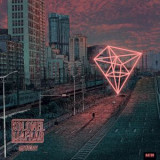
The curious cover art depicts a lone individual heading down an empty city street towards a large mysterious glowing object, evoking the common emptiness and struggle of urban life, and the search for meaning or just something better. The band envision the object to represent this album, offering a beacon to like-minded listeners. Kolonel Djafaar invite music enthusiasts on an immersive journey, to ‘Getaway’ from the daily grind of life, on an album reflecting diverse influences and marking a new chapter in their musical exploration.
Founded by Joe Laycock and Jack Sharp as a successor to theatrical punk group Cheap Teeth, the pair birthed the project from their joint love of immersive, beat-driven soundscapes and subtle shifts. Featuring members of Catholic Action and Pressure Retreat, the band aims to urge the listener"s ear into progressively choppy waters whilst simultaneously grounding them in firm lyrical soil.
'Scope Neglect' ist ein experimentelles und genreübergreifendes Album, das aus Frosts Bewunderung für den Metal geschmiedet wurde, wobei er sich bewusst von dessen konventionellen Attributen entfernt hat. Wo das Album Aspekte des Genres berührt, trifft es auf glitchende Elektronik, immersive Ambient-Industrial-Sounds und tief kontemplative Erkundungen, die zu etwas führen, das sich nicht in eine Schublade stecken lässt. Das Album wurde zusammen mit dem Gitarristen Greg Kubacki (von der New Yorker Progressive-Metal-Band Car Bomb) und dem Bassisten Liam Andrews (von der Melbourner Band MY DISCO) in den Candy Bomber Studios in Berlin mit dem Toningenieur Ingo Krauss (Swans, Nick Cave und Mick Harvey) aufgenommen.
out of Stock
Last delivered 2 years ago available to reorder, subject to availability
Chicago hip-hop outfit Angry Blackmen made up of Quentin Branch & Brian Warren (ABM) have been stretching their arms and tapping into different sounds since they smashed onto the scene with their debut single “OK!” in 2017. A prime introduction starring two emcees showing they deserve to wield the microphone and do so with good cause. Then barely a month later ABM released sophomore single ‘Riot!’ a complete shift in sound that still housed the foundation set in ‘OK!’ A few years later the duo would drop their debut project ‘Talkshit!’ which saw them amass the following they have today.
‘The Legend of ABM’ immediately smacks the listener in the eardrum leaving no second wasted and jumping straight to the point. The 11-track adventure truly presents an expression of hip-hop that we haven’t seen before, infusing multiple sounds with the 50-year old genre. To go even deeper, Quentin Branch & Brian Warren are teaching a masterclass in top-notch poetic lyricism, creating both accessible and mind-bending music. “Stanley Kubrick” has both heroes shattering the beat with their braggadocio for what is just the appetizer to prepare the listener for what’s to come in the next ten tracks. ‘Sabotage’ tells the story of two Black men hustling through the trenches of capitalism and the effect that this journey has on them. While the album exudes catchy wordplay and spine-splitting production, if you lift up the hood, ABM is spinning a tale of depression, existentialism and self-reflection that isn’t always pretty. “Dead Men Tell No Lies” is another mutation in sound for the duo, where the industrial sounds clash, violently yet perfectly together with a blistering hook harkening to the end of time. Warren & Branch’s raw poetry educates the listener of the pre-apocalyptic world we’re already living in throughout this project. ‘The Legend of ABM’ is not an excursion for the weak, the production is meant to snap your spine in half, the lyrics from Quentin & Brian are pathos-infused and relatable to anyone simply trying to survive.
Impossible to find in the wild, KPM's Image is exactly that; this record paints extraordinary, hyper-vivid scenes with music, in the way only the library greats can. Originally released in 1974, Image is an absolutely stunning listen from start to finish, and arguably the most wanted KPM grail that's still not been reissued - until now! Just too good…
Worth the price of admission alone, and likely the reason you're all already drooling about this release, the mellow, dramatic beat of "Image", Brian Bennett's opener and title track, is a Jaylib-sampled firecracker. A reflective, scenic underscore which grows to full orchestra and ends as it begins - it's just beautiful. Next up, swoon to "The Little Orphan" by Neil Richardson featuring strings and harp. It's a deeply emotive, sweeping orchestral piece. Just straight gorgeous. It's followed by "Paradise Island", a lush, horizontal Balearic gem courtesy of Gordon Rees and David Gold; it'll send you into a blissful reverie with its elegant strings and gentle drums. From the same pair, "Forbidden Fruit" is, again, string-drenched but the strings are more insistent, stabbing even, and, with drums and Blaxploitation guitars high up in the mix, it's definitely a funkier proposition. "The Enchantress", again a Rees-Gold special, is a slower, groovy, synthy wonder. Closing out the A-Side, "Phenomena" is a mysterious gem, a Gold solo effort set at a breezier tempo with propulsive percussion and head nod, fast-paced breaks with ace keys.
Flip over for "Infinite Expanse", John Scott's dramatic panorama adorned with proud, triumphant horns. Scott's "Static Objects" paints patient, pastoral scenes; there's a serenity and stillness to the proceedings. Next up, Be With favourite John Fiddy delivers shifting shapes and patterns with his wonderful "Metamorphosis", all wah wah, harps, dramatic percussion and strings. It's by turns billowy and blasting. "Cubist Pictures" follows, Neil Richardson's brilliant nebulous, fragmentary piece. Better yet, Richardson's gorgeous, beatless "Analysis" follows, and it's an orchestral beauty featuring cello, harps and woodwind. It's no exaggeration to describe this as transcendental. His "Crystal Ball" presents more static scenes with cello, twinkling percussion and strings, before Steve Gray's fantastically-titled softly-ace "Gliding Through Clouds" closes out this remarkable set.
As with all of our KPM re-issues, the audio for Image comes from the original analogue tapes and has been remastered for vinyl by Be With regular Simon Francis. And as usual, the sleeve reproduction duties were handed over to Richard Robinson, the current custodian of KPM’s brand identity.
out of Stock
Last delivered 19 months ago available to reorder, subject to availability
Following their contribution to the 2022 International Women’s Day compilation, and a co-production credit on “Dreaming is Essential” by Byron Yeates, Eoin DJ drops their first release on Radiant Records, Total Body. The 4-track EP is replete with mind-bending, lustrous tracks waiting to be spun out to sweatbox dancefloors.
“Total Body” invites movement from its first seconds. Layers and layers of snares, shakers and rhythmic synth stabs build tension before the pulse of a rolling bassline cements the elements into a cohesive hard house groove. Fragments and chops of sensx’s vocals wrap in and around the sonic field, leaving wisps of reverb and echo in their wake before repeating the track’s Total Body mantra in the breakdown. The result is a lushly-scored density of sound, with a relentless stomp that never feels overcrowded or too heavy.
Angel D’lite’s remix takes a more skeletal approach to “Total Body”: a snare and clap march beneath chiming vocal stabs, rumbling low end and rolling breakbeats, flipping the original into a modern bass-heavy hybrid number. The rhythmic synth from the original, reversed and efex’d, ushers us in, and then out of the track, around extra bass stabs and pitch shifted “Total Body” chops.
On the B side, “Ultra Soft” lifts off with a firm kick and a rolling 3-note bassline. Despite the title, the track hits harder than “Total Body” and sings with Eoin DJ signatures: swirling funnels of processed vocals, rich, ear-itching textures, stripped back percussion and rave-ready samples are sprinkled with 303s, to create a track that sits comfortably with both classic trance and techno and contemporary “Progressive” dance music.
The EP’s closer, a remix of “Ultra Soft” by Byron Yeates, compresses the astrally-inclined scale of the original track into shining slices of sound. A playful, chiming melody starts off the track alongside the kick, working through precise grooves, knife-sharp snares, a throbbing bass and chopped-up, smokey vocals. The result: 6 minutes of total embodiment from the Radiant Records boss.
out of Stock
Last delivered 16 months ago available to reorder, subject to availability
Multi-instrumentalist, composer, performer and curator L’Rain (Taja Cheek) returns with her third album I Killed Your Dog. Over-writing themes of grief and identity that informed her previous work, I Killed Your Dog considers what it means to hurt the people you love the most. Multi-layered in subject and form, L’Rain’s sonic explorations interrogate instead how multiplicities of emotion and experience intersect with identity. The experimental and the hyper-commercial; the expectation and the reality; the hope and the despair. “I’m envisioning a world of contradictions, as always,” Cheek explains. “Sensual, maybe even sexy, but terrifying, and strange.” Written amidst heartbreaks from the perspective of an earned maturity, I Killed Your Dog takes the sonic world laid out by L’Rain in 2021’s album Fatigue on a compelling new trajectory. Described by Cheek as an “anti-break-up” record, I Killed Your Dog takes the universal pop theme of love as its starting point – bold, bratty and even a touch diabolical – and inspects it through the form of a conversation with her younger self, untangling her relationship with femininity and the formal musical conventions that others have come to expect of her. Alongside long-time collaborators Andrew Lappin and Ben Chapoteau-Katz, Cheek has developed L’Rain into a shape-shifting entity that blurs the distinction between band and individual
out of Stock
Last delivered 2 years ago available to reorder, subject to availability
Following on from the psychoacoustic concrète of Outside Ludlow / Desert Disco LP (BT075), Sam Dunscombe returns to Black Truffle with Two Forests / Oceanic. Dunscombe has been active in recent years on multiple fronts, including as a key member of the Berlin community of Just Intonation researchers and practitioners; working with composers like Taku Sugimoto, Mary Jane Leach, and Anthony Pateras; and the release of Horatiu Radulescu - Plasmatic Music vol. 1 (the result of many years performance research into the thought and music of this seminal Romanian spectralist). In parallel with these activities, Dunscombe has been deeply involved in research on the role of music in psychedelic-assisted psychotherapy, prompting these two side long pieces, composed using field recordings and digital synthesis. As Dunscombe explains in the accompanying liner notes, music plays a key role in psychedelic-assisted therapy, yet it is often restricted to stock forms of New Age, ambient and electronica. Taking seriously the potential for spatio-environmental sonic experiences to add to the therapeutic process, these two pieces are intended to suggest how ‘a music-as-environment approach may help to add options to the therapist’s toolbox’. ‘Two Forests’ begins in a central Californian sequoia grove. Bird songs and buzzing insect life are treated with a variety of time-based processing methods (slicing and recombination, primitive granular synthesis, delay, and so on), which strip the field recordings of their linear, documentary character, reframing them in an enchanted web of traces and echoes. Analysing the pitches found in the original recordings, Dunscombe used them to generate a large Just Intonation pitch set. These tones are woven slowly into the field recordings, gradually building in density and complexity until the forest has been transformed into an unreal space of infinite proportions. Emerging from this cosmic expanse in the final minutes of the piece, we find ourselves in the Amazon rainforest outside Manaus, Brazil. As Dunscombe writes, the piece creates ‘a sense of place-gone-strange, of space and time simultaneously expanding and contracting across octaves, miles, and minutes’. On ‘Oceanic’, several recordings of different beaches fade in and out to create a texture both homogenous and constantly shifting in both the rhythm of the waves and each recording's sense of depth and distance. Tones relating in simple ratios to the average rhythm of each beach float over each other, colouring the white noise texture of the field recordings with shifting hues. In both pieces, Dunscombe forgoes the easy consonance that bogs down much contemporary ambient music for a richer harmonic array informed by extended tuning practices and spectralism. The end results suggest a hitherto undreamt-of meeting of Radulescu’s undulating sonic masses and the discreetly processed location recordings of Irv Teibel’s ‘psychologically ultimate’ Environments. Looking beyond the insularity that can afflict experimental music culture, Dunscombe’s work is a moving argument for the healing power of expanded approaches to sound and music. Even outside of a psychedelics-assisted therapy, frequent immersion in Two Forests / Oceanic is almost guaranteed to produce beneficial psychological results.
out of Stock
Last delivered 2 years ago available to reorder, subject to availability
Black Truffle is thrilled to present a previously unheard performance by rudra veena master Ustad Zia Mohiuddin Dagar, recorded in the North Indian city of Vrindavan at the Druhpad Samaroh festival in 1982. Z.M. Dagar was a nineteenth-generation descendant of the Dagar family of musicians, famed for their profoundly meditative approach to the tradition of Hindustani court music. Perhaps the most revered members of the family were the brothers Mohinuddin and Aminuddin Dagar, who played a key role in reawakening interest in dhrupad in the mid-20th century. The great exponents of the tradition from whom Z.M. Dagar descended were all singers, and dhrupad is essentially vocal music. However, as Z.M. Dagar explained, the veena family of instruments plays an important role in the education and practice of dhrupad singers, especially as an aid to mastering the fine microtonal nuances of pitch essential to the genre. Introduced as a child by his father to the rudra veena, a large and low-pitched veena amplified by two enormous gourds, Z.M. Dagar became the first modern dhrupad musician to perform with it as an instrumental soloist, giving his first recital at the age of 16. Devoted to the instrument throughout his life, he made innovations to its design and materials, as well as introducing novel techniques (such as playing without the use of the traditional wire plectrum, resulting in the remarkable warmth of his tone). In the great Dagar family tradition, his approach to the various ragas that make up the dhrupad repertoire was stately, slow, and considered, with a great emphasis on the alap, the heavily improvised exposition section. True to form, in this recording of Dagar performing the night raga Yaman Kalyan, the alap section stretches out to more than forty minutes of slow-motion bliss, a frozen tanpura drone hovering above Dagar’s gracefully bent notes and elegantly twisting phrases. In the alap’s first half, Dagar’s figures are so intently focused on the lower reaches of the rudra veena’s range that they register more as shudders and moans than melodic patterns. As the performance continues, he slowly climbs in pitch, though continuing with the same intent focus on the articulation of single notes and subtle microtonal variations. This leads to the jod section of the performance, which, though still accompanied only by the tanpura, gradually takes on a more rhythmic character. Developing almost imperceptibly over the course of nearly thirty minutes, the jod moves from the stillness of the opening alap to a rapid pulse that announces the closing section of the piece, where Dagar is joined by Shrikant Mishra on the pakhawaj (a double headed hand drum). Where many performers use the final section of the raga as an exercise in unrestrained virtuosity, Dagar and Mishra subtly weave a web of finely shifting accents and hypnotic melodic variations, bringing the recording to a fitting conclusion while remaining within the meditative space occupied by the performance as a whole. Adorned with beautiful archival photographs of Dagar taken by Swedish percussion legend Bengt Berger and accompanied by detailed notes from Bradford Bailey, Vrindavan 1982 is a stunning document of music unmatched in its patient focus and mysterious emotional depth. .
out of Stock
Last delivered 2 years ago available to reorder, subject to availability
I Talk To Water, the fifth album for Kompakt by Danish producer Kölsch, is the artist’s most personal statement yet. While all the trademarks that make his music so popular and powerful are still present – lush, melodic techno; swooping, trance-like figures; sensuous, shivery texturology – I Talk To Water is also a deep and intimate rapprochement with family and history, a beautiful, finely detailed document of loss and memory, and a tracing of the long, unbroken thread of grief that runs through our lives once we’ve lost those we loved.
The emotional core of I Talk To Water, then, is a cache of recordings by Kölsch’s father, Patrick Reilly, who passed away in 2003 from brain cancer. With time rendered elastic by the pandemic and its associated lockdowns, its sudden, alienating shifts in everyday living, Kölsch found himself reflecting on his father’s passing and ongoing spiritual presence, thinking about how best to memorialise such a significant figure in his own life. Those recordings opened a gateway, of sorts, for Kölsch to move through – a way to bring past and present together and entwine them in a sensitive, poetic manner.
Kölsch’s father was a musician – “touring in the sixties and seventies, in the Middle East especially, he was doing the whole hippy trail, playing guitar, and wrote some songs over the years,” he recalls. “But all in all, he decided to focus on family rather than pursue a musical career.” Reilly kept playing and writing music over the years, though Kölsch hadn’t listened to the material for some time: “I’d never had the guts to listen to it, because I just felt too fragile listening to his voice. It’s such a tough thing to go through.”
During the pandemic, though, Kölsch listened through the fragmented body of work that his father had produced over the years. “I decided I’m gonna finally release my dad’s music twenty years after his passing,” he reflects. “This whole album is about the process of loss, and for me it’s been one of my main driving forces in my musical life, the whole emotional aspect of whatever I’ve done has been based in that feeling that he’s not there anymore.”
Recordings of Reilly appear on three songs across I Talk To Water. His guitars drift pensively across “Grape”, offering a lush thread of melody that Kölsch wraps with clicking, driftwood rhythms and droning, melancholy bass. “Tell Me” is a lovely three-minute art song, a sadly beautiful reflection, minimally adorned with gentle keys and a muted pulse. And on the closing “It Ends Where It Began”, Kölsch lets his father’s acoustic guitar take centre stage for a lament that’s unexpectedly folksy, a guitar soli dream, which Reilly originally recorded in 1996. “He actually recorded it for my first album that never came out,” Kölsch reveals, “and I had it sitting around forever. That is purely him.”
These three imagined collaborations between father and son are poised and delicate. But their relationship also marks the gorgeous music Kölsch has made across the rest of I Talk To Water, from the itchy yet lush “Pet Sound” (titled in tribute to one of Reilly’s favourite albums), the flickering synths and yearning vocal samples that slide through “Khenpo”, the ecstatic shuddering that marks “Only Get Better”, or “Implant”’s slow-motion pans and subtle reveals.
There’s also the title song, where Kölsch is joined by guest Perry Farrell (Jane’s Addiction, Porno For Pyros), singing a mantra for internal reflection: “I talk to water / Searching for myself / Looking for answers / Oceans of you.” Farrell’s appearance brings another timbre, another spirit to the album, aligning neatly with his recent interest in electronic music. “He was completely taken by this idea of talking to water,” Kölsch says, thinking about the ways we collectively lean towards the natural world as a comfort and a listener, a guide through mourning, a way to map out the terrain of the heart. This mapping is something that Kölsch has proven remarkably adept at through the years; dance music for both body and mind, but also both for the here-and-now, and for the hereafter.
“I Talk To Water”, das fünfte Album des dänischen Produzenten Kölsch für Kompakt, ist zweifellos das persönlichste Statement des Künstlers bislang. Während alle Markenzeichen, die seine Musik so beliebt und kraftvoll machen, immer noch präsent sind – üppige, melodische Techno-Tracks; schwebende, tranceartige Elemente; sinnliche, fiebrige Texturen – ist “I Talk To Water” auch eine tiefe und intime Annäherung an Familie und Geschichte. Es ist ein wunderschönes, fein ausgearbeitetes Dokument des Verlusts und der Erinnerung, und es verfolgt den langen, ungebrochenen Faden der Trauer, der durch unser Leben läuft, sobald wir diejenigen verloren haben, die wir liebten.
Der emotionale Kern von “I Talk To Water” besteht aus Aufnahmen von Kölschs Vater, Patrick Reilly, der 2003 an Hirnkrebs verstarb. Durch die Pandemie und ihre damit verbundenen Lockdowns, die plötzlichen, entfremdenden Veränderungen im Alltag, fand Kölsch sich in Gedanken an den Tod seines Vaters und seine fortwährende spirituelle Präsenz wieder. Er überlegte, wie er eine so bedeutende Figur in seinem eigenen Leben am besten verewigen könnte. Diese Aufnahmen öffneten ihm sozusagen ein Portal, um Vergangenheit und Gegenwart miteinander zu verbinden und sie auf sensible und poetische Weise zu verweben.
Kölschs Vater war Musiker – “er tourte in den sechziger und siebziger Jahren, vor allem im Nahen Osten, auf dem Hippie Trail, spielte Gitarre und schrieb im Laufe der Jahre einige Songs”, erinnert sich Kölsch. “Aber alles in allem entschied er sich, sich auf die Familie zu konzentrieren, anstatt eine musikalische Karriere zu verfolgen.” Reilly spielte und schrieb jedoch im Laufe der Jahre weiterhin Musik, obwohl Kölsch das Material lange Zeit nicht angehört hatte: “Ich hatte nie den Mut, es anzuhören, weil ich mich einfach zu zerbrechlich fühlte, seine Stimme anzuhören. Es ist so schwer, das durchzustehen.”
Während der Pandemie hörte sich Kölsch jedoch durch das fragmentierte Werk, das sein Vater im Laufe der Jahre produziert hatte. “Ich beschloss, die Musik meines Vaters zwanzig Jahre nach seinem Tod endlich zu veröffentlichen”, reflektiert er. “Dieses ganze Album handelt von dem Verlustprozess, welcher für mich generell eine der Hauptantriebskräfte in meinem musikalischen Leben ist. Der ganze emotionale Aspekt von dem, was ich getan habe, basierte auf dem Gefühl, dass er nicht mehr da ist.”
Auf “I Talk To Water” sind Aufnahmen von Reilly in drei Songs zu hören. Seine Gitarren ziehen nachdenklich durch “Grape”, bieten einen üppigen Melodiefaden, den Kölsch mit klickenden, treibenden Rhythmen und dröhnendem, melancholischem Bass umwickelt. “Tell Me” ist ein schönes dreiminütiges Kunstlied, eine traurig-schöne Reflexion, minimal geschmückt mit sanften Tasten und einem gedämpften Puls. Und auf dem Abschlusstrack “It Ends Where It Began” lässt Kölsch die akustische Gitarre seines Vaters im Mittelpunkt stehen, ein überraschend folkiger Klagegesang, den Reilly ursprünglich 1996 aufgenommen hatte. “Er hat es tatsächlich für mein erstes Album aufgenommen, das nie veröffentlicht wurde”, enthüllt Kölsch, “und ich hatte es ewig liegen.”
Diese drei erdachten Kollaborationen zwischen Vater und Sohn sind ausgewogen und zart. Aber ihre Beziehung prägt auch die wunderschöne Musik, die Kölsch im Rest von “I Talk To Water” geschaffen hat, angefangen bei dem nervösen, aber üppigen “Pet Sound” (benannt als Hommage an eines von Reillys Lieblingsalben), den flimmernden Synthesizern und sehnsüchtigen Vocal-Samples in “Khenpo”, den ekstatischen Erschütterungen in “Only Get Better” oder den langsamen Schwenks und subtilen Enthüllungen in “Implant”.
Es gibt auch den Titelsong, in dem Kölsch von Gast Perry Farrell (Jane’s Addiction, Porno For Pyros) begleitet wird, der ein Mantra für die innere Reflexion singt: “I talk to water / Searching for myself / Looking for answers / Oceans of you.” Farrells Auftritt bringt eine weitere Klangfarbe, einen weiteren Geist in das Album, der gut zu seinem jüngsten Interesse an elektronischer Musik passt. “Er war völlig fasziniert von der Idee, mit Wasser zu sprechen”, sagt Kölsch und denkt darüber nach, wie wir kollektiv zur Natur als Trost, Zuhörer, Führer durch die Trauer neigen, um die Gelände des Herzens zu kartieren. Diese Kartierung ist etwas, in dem Kölsch im Laufe der Jahre erstaunlich geschickt war; Tanzmusik für Körper und Geist, sowohl für das Hier und Jetzt, als auch für das Leben danach.
out of Stock
Last delivered 9 months ago available to reorder, subject to availability
Polish jazz rebels sneaky jesus are back with their second studio album For Chaching Taphed.The highly imaginative quartet out of Wroclaw comprising Maciej Forreiter (Guitar), Matylda Gerber (Saxophones), Ben Łasiewick i(Bass) and Filip Baczyński (Drums) have won fans around the world for their restless, quirky brand of jazz which takes in breakbeats, twisting chord progressions and improvisation as well as a wealth of musical influences.
The band have been touring their asses off ever since they surprised the world with their debut album For Joseph Riddle in 2021. From out of nowhere their debut LP of 500 copies sold out in a month and they quickly went on to sell close to 1,000 CDs of the album. Fast-forward to 2023 and the band are sharing stages with artists such as Ill Considered and Theon Cross.
For Chaching Taphed was created in complete isolation. The group locked itself in a barn at the Museum of Agricultural Technology in Piotrowice Świdnickie. It worked on its sophomore output surrounded by machinery, trucks and carriages. These new compositions mirror the abstract conversations which the group frequently has just for fun. Contrary to For Joseph Riddle, this album is simple and does not rely on ongoing grooves. This enabled the group to be much more experimental. The band was joined by friends Flautist Mariya Mavko on Piękno Niemożliwe (Impossible Beauty) and her playing is sampled in Hipotetyczny Taras (Hypothetical Terrace). Pięciu Pszczelarzy (Five Beekeepers) closes the album featuring EABS' Jakub Kurek on trumpet. His fiery solo is one of the most intense moments of the album.
Spacer Po Nadodrzu (A walk around Nadodrze) opens the album and is inspired by one of the districts of Wrocław. It is a sonic story depicting a walk through Nadodrze late at night. A steady bass rhythm imitates a careful pace and the responding sax line is a spooky theme that might pop to oneʼs head in a moment of uncertainty.
The album's first single Krztusiec (Whooping Cough) finds the group diving head first into their most recent influences. The trackstarts with drum improvisation, rolling into a solid hip-hop backbeat provided by Ben Łasiewicki on Bass and Drummer Filip Baczyński. Sax and Guitar weave steady but dissonant lines, written by Maciej Forreiter after many hours spent listening to the Ethiopian jazz greats. The track takes off right after that. Matylda Gerber delivers a fiery Sax solo, while the group picks up the tempo and quickens the groove. The essence is the middle section, a dubby collective improvisation. Forreiter, Gerber and Baczyński take turns playing both classic dub phrases and fierce avant grade lines. Łasiewicki keeps everybody in check with a steady bassline. The energy slows down until Baczyński's drum solo, which explores phrasing detached from the rest of the tune.
Second single Chiński Sprzedawca Smażonych Kasztanów (Chinese roasted chestnut seller) is a fusion of breakbeats, energized songo rhythms and motifs inspired by South African melodies. Presenting the group with spacious and rhythmic horn lines, guitarist Maciej Forreiter wrote a chord progression while Beniamin Łasiewicki and Filip Baczyński took care of the rhythm section. This first part of the track suddenly drops out and explodes into the dramatic main motif which includes double sax and fierce guitar playing in harmony, plus the rhythm section playing more and more jungle-esque. Powerful guitar and sax solos feature before we return to the main theme with a completely different rhythmic backdrop.
W Klatce z Bykiem (In a cage with a Bull), starts like a race. The music plays with an incredible nerve and when the theme is right on edge it suddenly stops. It is followed by an animalistic growl on the saxophone and a doom metal-esque bash of downtuned, distorted guitars and heavy drums. In this heavy fashion it slowly approaches the finishing line hitting one final metallic clang.
Piękno Niemożliwe (Impossible Beauty) features wonderful flute playing of Mariya Mavko (Kadabra Dyskety Kusaje). Her work in the opening motif evokes sounds of Polish and Ukrainian folklore. This brief mellow moment serves as a contrast to the usual frantic sounds of sneaky jesus. It is an appreciation of thepolish jazz music of the past, intrinsically-linked to folklore. The band took this idea and reworked it into their own unique style.
Hipotetyczny Taras (Hypothetical Terrace) is built on top of a lengthy vamp in an unusual 7/8 time-signature. The bass anchors the quartet in a simple line, while the rest of the quartet share an emotional conversation. This track is the most open of the whole project and it ends accordingly. The final burst is a call back to the basics ofspiritual jazzand the whole band shows every emotion simultaneously and gracefully fades out.
Pięciu Pszczelarzy (Five Beekeepers) is For Chaching Taphed's conclusion and is a non stop assault of heavy horn lines, punk rhythms and noise. The band is joined by the extraordinary trumpeter Jakub Kurek from EABS, who blends in perfectly with sax and guitar. His exchange of solos with Maciej Forreiter is a combination of classic jazz phrasing and discordant clatter. In the same fierce manner the whole group works within the motif, switching up accents and breaks.
In the short space of two years, sneaky jesus has gone from ambitious upstart looking to break out from its home city playing spit and sawdust venues, to touring Europe as well as prestigious Jazz clubs such as Jassmine in Warsaw. In the process, it has delivered two full-length albums that don't stay in lane or pander to established jazz sub-genres as so many groups do. Some artists make the same record twice or even more than that, but not sneaky jesus. For Chaching Taphed shows the band as restless, experimental, fun, irreverent but purposeful as never before.
“A lot of over-hyped improv / jazz projects out there at the moment and Sneaky Jesus are genuinely excellent and out on their own. Drawing on the expansive atmospherics of a barn as the recording's setting, the album immediately pulls you in with the unsettling 'Spacer Po Nadodrzu' and lifts off on 'Krztusiec', effortlessly moving from angular, abrasive jazz to trippy dub and cinematic intrigue. Tempos shift and intensities shift naturally. The whole set warrants a deep listen from start to finish and watch out for two great guest features from flautist Mariya Mavko and Jakub Kurek bringing some mad fuzz licks to the boisterous closer. Brilliant album.”
Quinton Scott — Strut Records
out of Stock
Last delivered 9 months ago available to reorder, subject to availability
The central theme of Steady is perseverance. Each track is based on a personal story or a fleeting encounter with people these past few years, from close friends to total strangers, either at home or on night shift commutes. People navigating their own hardships, almost giving up but always struggling through. More broadly, it’s about multiplicity, and contradiction. These central figures displaying hope and determination within a city of development and neglect, uniformity and chaos - an unfiltered representation of a city with all its jagged edges, darkness, and shards of light. It's broken and disheveled, but never not beautiful, just like the people in it. Musically, Steady continues where Bleach (debut album) left off - a sonic language of glitch, decaying tape and analogue distortion through which hints of RnB and soulful ballads bleed through. With a greater emphasis on beats, albeit lopsided on pitch-shifted tape loops, Steady feels more self-assured, more confident, more recognisable. At the same time, it's never stable or predictable - choruses break down early, harmonies bend into beating microtones, tracks emerge before others have finished. The symphonic scope of Bleach is still retained in Steady though. This is music of motivic development, of micro and macro form, of meticulous refining. The work of two classically trained composers, the album's chaos is heavily considered and carefully shaped. Hours of improvisation sessions have since been painstakingly refined into ten distilled tracks, owing to Steady's three year gestation.
Formed by Monster Magnet’s John McBain and Soundgarden’s Matt Cameron & Ben Shepherd in 1993 during some downtime from their day jobs and side project Hater (who released a self-titled album in 1993), Wellwater Conspiracy set about immersing themselves in the dayglo world of sixties psychedelia, channelling the vibrations of Syd Barrett’s Pink Floyd and the 13th Floor Elevators to produce the garage lo-fi-lysergic assault on the senses that is their debut album ‘Declaration of Conformity’. Originally issued on Mudhoney’s Steve Turners Super Electro label in 1997, the album was met with critical acclaim upon its release, and Rolling Stone magazine said, “Declaration’s tinny, fuzzed-out sonics decidedly evoke the Summer of Love.” God Unknown Records are proud to be welcoming the album back into print and on all digital platforms, and this coming September 22nd will see the release of a remastered vinyl pressing with extra tracks and new artwork taking influence from Blue Note Records’ fabled artwork. From start to finish, ‘Declaration Of Conformity’ is a loving homage to the true beginnings of psychedelic rock, long before the music got harder and heavier. Songs like ‘Green Undertow’ and ‘Sleeveless’ hark back to the time when The Beatles were spinning the world on its axis with ‘Tomorrow Never Knows’, Syd Barrett was the piper at the gates of dawn and Roky Erickson was introducing the world to his Texan psychedelic sounds. Wellwater Conspiracy’s music exists at that moment when pop music started to fracture and go far further out. It was still pop music, but the edges were starting to blur and the sounds were starting to fracture. This is where ‘Declaration of Conformity’ sits; at the dawn of one of the biggest cultural shifts in musical history. The Bandcamp link will also feature two bonus download-only tracks, a cover of ‘Akka Ragga’ by Shocking Blue and ‘Late Night’ by Syd Barrett. Both tracks feature Josh Homme on guitar and bass. Tracklisting A1 Sleeveless A2 You Do You A3 Trowerchord A4 Green Undertow A5 I Love You Every Day Sandy A6 Nati Bati Yi A7 Far Side Of Your Moon B1 The Ending B2 Space Travel In The Blink Of An Eye B3 6-6-5-4-3-2-1 B4 Shel Talmy B5 Lucy Leave B6 Declaration Of Conformity B7 Palomar Observatory
A lavish four chapter chronicle that imagines an alternative evolution of mankind through sound, VIS (Latin for energy or force) is the result of a lengthy process of self-discovery, collaboration and research for Italian-German composer David August. The son of a classical pianist, August slipped from the academic music world into an early career as a dance music producer and DJ before he felt his artistic outlook shifting considerably. He established the adventurous 99CHANTS label in 2018, and has since used it as an output for his most progressive notions, collaborating most recently with jazz-noise vocalist Cansu Tanrikulu and Carnatic singer Sushma Soma on last year"s acclaimed "Imaginary Landscapes" compilation. VIS then is a chance for August to reconcile his personal narrative, leveling it with concepts that touch on history, transformation and metaphysics. He wrote the album"s 13 pieces to play like a linear storyline, tracking the development of culture from its illusory beginnings in Plato"s cave into the wider world and observing its progression and adaptation.
August represents these themes with levitational orchestral drones, choirs and bells that slowly bend to long-forgotten ancestral rhythms, inevitably colliding with the digitized chaos of the information age. Motion guides everything, whether it"s shadows on a wall projected by dancing flames, or dramatic, overlayed rhythms that vibrate the air and excite the feet. VIS is a dynamic attempt to show the movement of time on a macro scale, looking backwards in order to move forwards. It charts mankind"s journey from its cosmic beginnings through the awe-inspiring world of flora and fauna, grounding the experience in rhythmic expression and dance before we"re returned to the stars in transcended form. Crucially, it"s a hopeful articulation of ideas and concepts that continue to echo throughout history, inviting us to imagine greater and cherish the teeming landscape that surrounds us.
out of Stock
Last delivered 10 months ago available to reorder, subject to availability
A month after the release of his debut album as Tambores En Benirras, 2021’s fabulous Orbe Dotodo, Graham Newby’s life changed forever. After years living with a visual impairment, his sight had deteriorated so much that he was declared “registered blind”. For a man who had spent decades dividing his time between travelling, DJing, running clubs and lengthy sessions in his own studio, it was a genuinely life-changing moment.
It was against this backdrop, and the need to alter his working methods, that Ondas Horizontales, the second Tambores En Benirras album took shape. Inspired by a mixture of daydreaming, visualisation, immersion in other people’s music (escapism that provided mood enhancement, rather than a specific set of ideas) and long periods spent soaking up the sun in Ibiza, the album is the most vividly detailed, sonically colourful, and sun-soaked collection that Newby has released to date.
Newby’s declining sight forced him to stop spending long spells staring at a screen and undoubtedly slowed down the production process. Yet it also allowed him to reconnect with his emotions, appreciate the storytelling and mood-shifting potential of music, and mine mind’s eye memories of places and spaces that have meant much to him over the years.
The results are undeniably stunning. Designed with horizontal listening in mind, the set distils a range of musical and real-life inspirations –or, as he puts it, “ambient soundtracks, cosmic journeys, Balearic rhythms and poolside sessions” – into ten mesmerising and magical tracks; an undulating, slow-motion journey that’s as breath-taking as it is beguiling.
Newby sets the tone with ‘Mi Sueno Vibe En Reverb’, a swelling, slow-burn ambient masterpiece that tiptoes between hope and melancholia, before flitting between imaginary sunset soundtracks (‘Estrellas En Mastella’, where lilting pedal steel sounds, bubbling electronics and shuffling breakbeats catch the ear), kaleidoscopic sun-up beats (the gorgeous warmth of ‘Generadora De Reyos’), enveloping beatless soundscapes (‘Templos Del Sol’, a drowsy drift in becalmed waters under the heat of the mid-afternoon sun), and dubby, loved-up lusciousness (‘Mokono’).
As the album progresses, bobbing and weaving on an ocean of vibrant chords, pulsing melodies and heart-stopping melodies, there’s no sign of Newby’s inspiration waving. ‘Alma Hablando’ channels the spirit of mid-80s ‘worldbeat’ and douses it in layers of Balearic bliss, while ‘Extrensor Entragado’ recalls the head-nodding haziness of his best Gripper productions of old while combining them with the musical equivalent of a humid summer breeze. Then there’s the mood-enhancing joy of the album’s superb title track –a mission statement of sorts – and the life-affirming post trip-hop/Balearic fusion of ‘Un Placer Celestial (Reprise)’, where the influence of his old friend Aim is clearly evident.
A serious sonic step-up from its predecessor and a future Balearic classic in its’ own right, Ondas Horizontales marks the start of a new musical and personal journey for its creator. It is, in his words, not the end of an era, but the start of a new one.
out of Stock
Last delivered 2 years ago available to reorder, subject to availability
"Neural transmissions of crisis on the eve of WEB 3.0"
Net Prophet finds the band moving deeper into the vaporous territory of 21st century excess, where power casually corrupts absolutely and the mental netscape is more deranged in the membrane than we ever knew possible. A world on the edge, where imminent ecocide and violent social upheaval lurk beneath every minute mental distraction. The doomscroll gets longer and the attention span shorter as a disconnected global internet life takes over with its scepters of promise and looming evasiveness.
The sound is rich in variety from the darkwave pulsing synths of "Lichtenberg Monologue" reminiscent of Shape / Shifting's "Tomahawk" to the growling, slowdriving bass of "A New Dawn" which harks back to the bands S/ T 1st record, albeit with a synth instead of guitar. Even with the stark contrasts of murder-punk "AR-15" and jangle- pop "Purgatory Mall" the record never strays from the prime colors of the band: Vox, Drums, Bass, Guitar, Synth.
Recorded live in the Berlin studio Monoton, the record demonstrates the band in its prime - tightened up and influenced by their extensive touring, who have honed their sound from simple elements into a rich and tasty nugget, easily digestible for the modern consumer. Always true to their company slogan "tight, loose and evil".
The debut album from Winnipeg psychedelic jazz-funk collective Apollo Suns, 'Departures' (Do Right! Music), finds the band evolving across new styles and moods, encompassing the shifting tides of the pandemic years.
Produced by Juno award-winning producer Ben Kaplan (Bootsy Collins, Five Alarm Funk), Departures is a cinematic journey inspired as much by artists like Goblin, Lettuce, and Frank Zappa as film, TV and video game scores and soundtracks. The band combines classic compositional techniques with synths and electronics, showcasing genre-melding finesse. Introducing strings, acoustic guitar, grand piano, and lap steel into the mix, Apollo Suns explore the visceral and heavy, the elegant and ethereal, epic house rock to New Orleans-y brass, proggy pathways, string-backed balladry, greasy funk and beyond.
"It's been a heavy couple of years. We wanted to make an album that summed it all up," says bandleader Ed Durocher. "I always kind of think of music as the different parts of life. Sometimes it's aggressive, sometimes it's fun and loose, and sometimes it's sad and hard. So, since we don't have vocals, a lot of these songs try to convey those experiences through sound."
Gatefold single vinyl LP with an 8 page 12" size bookelt in the other side of the gatefold.
We're thrilled to announce the return of Tobor Experiment, the visionary musical project led by the enigmatic Giorgio Sancristoforo, to the Bearfunk fold. After a twelve-year hiatus, Tobor Experiment emerges from the shadows with their second LP, "Available Forms". Picture the ethereal ambiance of a dimly lit jazz club colliding with the futuristic vibrations of a 1970s sci-fi TV show, and you'll begin to grasp the sonic experience that awaits. Giorgio draws on a whole host of musical inspirations, from the name checked Tim Gane & Letitia Sadier to the moog pioneers Claude Denjean & Jean Jaques Perrey. With the moogsploration of contemporary jazz Tobor Experiment invites listeners on an extraordinary musical odyssey where jazz meets electronica meets nu-disco.
Prepare to be captivated from the very first note of the infectious opener, "Lowpass Risotto" as Tobor Experiment masterfully combines familiar elements with their unique artistic vision. Resonating with undertones reminiscent of the timeless classic "Take Five" the track immediately grabs your attention. While the familiar drum shuffle sets a comforting foundation, Tobor Experiment takes an unexpected twist by infusing the composition with squelchy Moog lines and captivating hollow body guitar solos. The result is a harmonious blend of nostalgia and innovation that transports you to an entirely new sonic realm.
Continuing the journey, the mesmerizing 6/8 rhythm of "Up!" pays homage to the iconic sounds of Stereolab while showcasing Tobor Experiment's innovative spirit. As enchanting synth pads weave through the air, you find yourself immersed in a dream-like state, carried away by the hypnotic shifting patterns of the bass and drums.
With "Astounding Stories" Tobor Experiment returns to the energetic vibes of the album opener, inviting you to surrender to a sonic tapestry rich with musical exchanges. In traditional jazz style we receive solo's from all parties. Each instrument adding its unique voice to the narrative, creating a dynamic and engaging musical conversation.
As the album progresses, "Moonscape Dust" emerges, drawing inspiration from the atmospheric brilliance of "Low." This track serves as a portal to an otherworldly sonic landscape where time and space lose their hold. Here, organic drums step aside, making way for a low-fi drum pattern that lays the foundation for ethereal synth pads. The composition invites you to explore the depths of your imagination, transcending earthly boundaries and allowing you to float in an immersive soundscape.
The album's closing track, "Monsters" has an air of "Air" about it... the ethereal synths beckon you to surrender to the weightlessness of space, just allow yourself to be carried away by the infectious rhythms, intricate melodies, and atmospheric textures that shape this extraordinary musical journey.
Each track on "Available Forms" showcases Tobor Experiment's exceptional ability to transcend musical boundaries, creating a genre-bending album that defies all expectations. From start to finish, the soundscape presented is a testament to Tobor's relentless pursuit of musical innovation. Each composition is a fusion of diverse elements, seamlessly blending organic instruments and electronic textures in a way that challenges traditional genre classifications.
The AI-generated artwork serves as a portal to an alternate dimension. Paying homage to the retro-futuristic aesthetic of 1970s science fiction TV shows, it captures the essence of the album's fusion between organic and electronic realms.
out of Stock
Last delivered 2 years ago available to reorder, subject to availability
Eight years on from the release of his compelling debut album ‘Sun, Cloud’, Luke Howard has now established himself as one of the most important and exciting musicians in contemporary classical music. The composer has been at the forefront of opening up piano music to a new generation, while challenging the notion of what can be achieved in the form. New album ‘All Of Us’ is not only an exquisite portrait of isolation, loss, resistance and reconciliation in both stark and rich shades of piano, orchestra and electronics, but the theme of quarantine provides a framework for the record. Throughout the album, Howard shifts between subtle permutations of shifting sound, etched with his trademark intimacy and restraint, and applied with a palate both minimalist and expansive; to his own piano, celeste and synthesiser, the Budapest Art Orchestra (conducted by Peter Pejtsik) plays strings, guests added flugelhorn, viola, contrabass and modular synth whilst fellow post-classicist Ben Lukas Boysen provides additional programming, production and mixing on ‘Critical Spirit’ and ‘The Opening Of The Gates’.
**NEW 2018 ALBUM FROM KIKAGAKU MOYO**The shifting dimensions of Masana Temples, fourth album from psychedelic explorers Kikagaku Moyo,are informed by various experiences the band had with traveling through life together, ranging from the months spent on tour to making a pilgrimage to Lisbon to record the album with jazz musician Bruno Pernadas. The band sought out Pernadas both out of admiration for his music and in an intentional move to work with a producer who came from a wildly different background.
With Masana Temples, the band wanted to challenge their own concepts of what psychedelic music could be. Elements of both the attentive folk and wild-¬-eyed rocking sides of the band are still intact throughout, but they're sharper and more defined.
Kikagaku Moyo started in the summer of 2012 busking on the streets of Tokyo. Though the band started as a free music collective, it quickly evolved into a tight group of multi-¬-instrumentalists. Kikagaku Moyo call their sound psychedelic because it encompasses a broad spectrum of influence. Their music incorporates elements of classical Indian music, Krautrock, Traditional Folk, and 70s Rock. Most importantly their music is about freedom of the mind and body and building a bridge between the supernatural and the present. Improvisation is a key element to their sound.
More than the literal interpretation of being on a journey, the album's always changing sonic panorama reflects the spiritual connection of the band moving through this all together. Life for a traveling band is a series of constant metamorphoses, with languages, cultures, climates and vibes changing with each new town. The only constant for Kikagaku Moyo throughout their travels were the five band members always together moving through it all, but each of them taking everything in from very different perspectives. Inspecting the harmonies and disparities between these perspectives, the group reflects the emotional impact of their nomadic paths. The music is the product of time spent in motion and all of the bending mindsets that come with it.
out of Stock
Last delivered 10 months ago available to reorder, subject to availability
'Malombo music is an indigenous kind of music. If you listen to it, you can feel that it can heal you, if you’ve got something wrong. It’s healing music.'
Lucky Ranku
"Lucas ‘Lucky’ Madumetja Ranku (1941-2016) was one of the greatest African guitarists of his generation. He first made his name with the Malombo Jazz Makers – the successor group to the legendary Malombo Jazzmen, formed in Mamelodi township by guitarist Philip Tabane, drummer Julian Bahula and flautist Abbey Cindi. When Tabane left the Jazzmen in 1965, Bahula and Cindi called on Lucky to replace him, and the Malombo Jazz Makers were born. Building on the popularity and success of the original Malombo Jazzmen, the Malombo Jazz Makers become immensely popular, touring widely, winning numerous jazz competitions, and recording two successful albums for the Gallo label.
The deep and hypnotic Down Lucky’s Way was their third album. Recorded in 1969, it was the first Malombo Jazz Makers album to feature additional instruments, and the first to feature Abbey Cindi on soprano saxophone as well as flute. But more than anything else, Down Lucky’s Way is a transfixing showcase for Lucky Ranku’s sui generis guitar virtuosity. Quite different from their previous recordings, the album shifted the Jazz Makers’ sound toward hypnotic, extended compositions, layered by organ bass and guitar overdubs. Of all the Malombo Jazz Makers recordings, Down Lucky’s Way is the deepest of mood, and the richest of vision.
However, through one of the erasures that are ubiquitous in South African musical history under apartheid, it seems that the record may not ever have been properly issued. Original copies are outrageously rare – only a few are known among collectors. When we asked Lucky about the album, he was unaware it had ever been released, and had never seen a copy. Perhaps it was pulled; perhaps it was pulped; perhaps Gallo simply took their eye off the ball. Nobody knows, but it is not impossible that the apartheid authorities were involved, for by 1969, the Malombo Jazz Makers were well known to them.
Julian Bahula’s introduction of malopo drums to the music of the original Malombo Jazzmen was a moment of crucial political and cultural radicalism for South African jazz. Traditionally used by BaPedi people for healing, the malopo drums of Malombo music re-centered jazz
around indigenous sounds and culture, and over the next decade, the Malombo Jazz Makers became deeply involved in political opposition to apartheid. Their recovery of indigenous sounds made them the musical standard bearer for the Black Consciousness movement, and they toured South Africa clandestinely with the writer and anti-apartheid activist Steve Biko. They also broke apartheid laws by playing with the white rock group Freedom’s Children, sometimes appearing on stage in masks or made up with UV paint to avoid detection by the authorities; they appeared regularly at the rule-bending Free People’s Concerts organized by David Marks, where Marks’ clever exploitation of a loophole – mixed audiences were prohibited from attending ticketed concerts where anyone was being paid, but the law said nothing about private functions played by artists for free – meant people could come together in defiance of apartheid laws. The notorious Special Branch would raid their concerts; Lucky remembered police storming an auditorium, throwing smoke bombs.
Eventually the political situation became too dangerous, and the band were being actively sought by the police. Though Abbey Cindi remained in South Africa, both Julian Bahula and Lucky Ranku went into political exile in the UK, where Bahula founded the group Jabula with Lucky and former members of Cymande, Steve Scipio and Michael ‘Bami’ Rose. With Jabula, Julian and Lucky worked tirelessly for the anti-apartheid movement, raising funds and awareness all over Europe and in the US. They played with Dudu Pukwana’s Spear in the joint formation Jabula-Spear, and worked together in Bahula’s Jazz Afrika formation, and Bahula organized the first Concert for Mandela in 1984 (it was Jabula that supplied the chorus for The Special A.K.A.’s hit single ‘Nelson Mandela’). Lucky also played and recorded with Chris McGregor’s South African Exiles Thunderbolt group. After the fall of apartheid, they both remained living and working in the UK. In 2012 the South African government awarded Julian Bahula the Gold Order of Ikhamanga for his cultural work during the struggle against apartheid.
Until his death in 2016, Lucky continued to play with countless groups and musicians. putting together the band Township Express with Pinise Saul, and leading his own African Jazz Allstars. The influence of his playing on the international perception of South African township music was immense, and he was held in the highest regard by his peers – ‘Lucky was a guitarist who could bring any house down’, said Michael ‘Bami’ Rose.
But despite his continuous presence on the UK live circuit over four decades, Lucky Ranku never recorded an album as leader. And so as well as restoring an important lost piece of South African musical heritage, Down Lucky’s Way is a precious opportunity to hear one of Africa’s foremost guitarists stretching out, in focus and in his element."
First issue since 1969 of the Malombo Jazz Maker’s unknown third album.
Liner notes featuring interviews with Julian Bahula and Lucky Ranku.
Fully licensed from Julian Bahula.
‘Where is Agartha? What is the specific region in which it lies? Along what road, through what civilizations, must one walk in order to reach it?.’ Saint-Yves d’Alveydre in 1886
Agartha, the debut full-length album by Japanese producer Wata Igarashi, is a mysterious, divine thing. Named for the mythical secret kingdom, understood as a complex maze of underground tunnels, perhaps designed by Martians who colonised the Earth tens of thousands of years ago, it’s a similarly mystical, perhaps even cosmic trip – but this time, exploring an inner, deeply personal cosmos. Beautifully detailed and bustling with rich incident, it takes Igarashi’s music to new places, which still retaining his unique sonic imprimatur; in this respect, it’s perfectly at home with Kompakt, a label that’s always encouraged artists to make the visionary music they need to create, to take risks and make sideways steps into uncharted territory.
An eloquent producer and DJ, Igarashi has been releasing techno for eleven years now, appearing on such imprints as The Bunker NY, Delsin, Midgar, and Time To Express; he has also self-released his productions via his WIP net label. Throughout, Igarashi has consistently explored his unique approach to techno and electronic music, one that’s eloquent and poised, even when it shifts into more psychedelic terrain; he’s a master at balancing the sensual and the functional, and he has an unerring ear for the right texture, the right tone, at the right time. He brings all of this into Agartha, his most thorough-going expression of self to date.
For Agartha, Igarashi had a strong concept he wanted to explore. Visualising specific scenes from an imaginary film based on the titular secret kingdom, he created soundtracks for those scenes, spending time during the pandemic in his studio, working away carefully at the ten tracks here. Given his background in creating music for television and advertisements, Igarashi is well-placed to explore the marriage of the sonic and the visual in such intimate ways, but freed from commercial concerns, he let his imagination run riot. He also drew on a rich palette of musical influences – techno is in there, of course, but you can also hear the smoky, improvised jazz of the likes of Miles Davis (to whom the album’s title is an indirect nod), and the minimalism and systems music of Steve Reich.
The latter is particularly pronounced on the gorgeous, beatless drift of “Floating Against Time”, where an arpeggiated sequence lingers, lovingly, around your ears for nine blissful minutes, coasting across swooning drones and waves of ambient noise. “Ceremony Of The Dead”, originally composed as part of a Sony 360 Reality Audio spatial sound concert, is a deep pass into systems composition, with various patterns overlaid and interlocking, before a wordless vocal rises from the depths, a gorgeous counterpoint to the swarming textures that gather across the track. On the other hand, tracks like “Burning” and “Subterranean Life” nudge toward Fourth World territory, painting deluxe dreamscapes of uncertain provenance; the title cut is an abstract drift-world, Igarashi painting an alien tableau dotted by shape-shifting creatures.
Agartha’s conceptual framework means that everything on the album sits perfectly together; listening to it in one sitting is a dizzying, lush experience. Its imaginings of inner landscapes recall, in some respects, the nautical, aqueous mythologies of the Drexciyan universe, though from different perspectives. But the result is Igarashi’s own creation, a deluxe, enchanting trip through the visionary Agartha of this unique producer’s cinematic mind’s-eye.
Wo liegt Agartha? In welcher spezifischen Region liegt es? Auf welchem Weg, durch welche Zivilisationen muss man gehen, um dorthin zu gelangen?'
Saint-Yves d'Alveydre im Jahr 1886
Agartha, das Debütalbum des japanischen Produzenten Wata Igarashi, ist ein geheimnisvolles, göttliches Ding. Benannt nach dem mythischen, geheimen Königreich, das als ein komplexes Labyrinth unterirdischer Tunnel verstanden wird, die vielleicht von Marsmenschen angelegt wurden, die vor Zehntausenden von Jahren die Erde kolonisierten, ist es eine ähnlich mystische, vielleicht sogar kosmische Reise - aber dieses Mal erforscht es einen inneren, zutiefst persönlichen Kosmos. Wunderschön detailliert und voller reichhaltiger Begebenheiten, führt es Igarashis Musik an neue Orte, die dennoch seine einzigartige klangliche Handschrift bewahren. In dieser Hinsicht hat es bei Kompakt ein perfektes Zuhause gefunden - einem Label, das Künstler immer ermutigt hat, jene visionäre Musik zu machen, Risiken einzugehen und seitwärts Schritte in unbekanntes Terrain zu tun.
Der eloquente Produzent und DJ Igarashi veröffentlicht seit elf Jahren Techno auf Labels wie The Bunker NY, Delsin, Figure und Time To Express; außerdem hat er einige Produktionen über sein Label WIP net selbst veröffentlicht. Dabei hat Igarashi stets seinen einzigartigen Ansatz für Techno und elektronische Musik verfolgt, der kontrolliert und ausgeglichen ist, selbst wenn er sich in psychedelisches Terrain begibt; er ist ein Meister der Balance zwischen dem Sinnlichen und dem Funktionalen und hat ein untrügliches Gespür für die richtige Textur, den richtigen Ton zur richtigen Zeit. All das bringt er in Agartha ein, dem bisher umfangreichsten Ausdruck seiner selbst.
Für Agartha hatte Igarashi ein starkes Konzept, das er erforschen wollte. Er stellte sich bestimmte Szenen eines imaginären Films vor, der auf dem titelgebenden geheimen Königreich basiert, und schuf Soundtracks für diese Szenen. Während der Pandemie verbrachte er Zeit in seinem Studio und arbeitete sorgfältig an den zehn Tracks. Mit seinem Hintergrund als Komponist von Fernseh- und Werbemusik ist Igarashi prädestiniert dafür, die Verbindung von Klang und Bild auf solch intime Weise zu erforschen, aber frei von kommerziellem Dünkel ließ er seiner Fantasie freien Lauf. Er schöpfte auch aus einer reichen Palette musikalischer Einflüsse - Techno ist natürlich dabei, aber man hört auch den rauchigen, improvisierten Jazz von Miles Davis (an den der Titel des Albums eine indirekte Anspielung ist) und den Minimalismus und die Systemmusik von Steve Reich.
Letzteres ist besonders ausgeprägt in dem wunderschönen, beatlosen "Floating Against Time", wo eine arpeggierte Sequenz neun Minuten lang liebevoll um die Ohren fliegt und über schwelende Drones und Wellen von Umgebungsgeräuschen gleitet. "Ceremony Of The Dead", ursprünglich als Teil eines Sony 360 Reality Audio-Raumklangkonzerts komponiert, ist ein tiefes Eintauchen in eine Systemkomposition, bei der sich verschiedene Muster überlagern und ineinander greifen, bevor sich ein wortloser Gesang aus der Tiefe erhebt, ein wunderschöner Kontrapunkt zu den wimmelnden Texturen, die sich über den Track legen. Andererseits bewegen sich Tracks wie "Burning" und "Subterranean Life" in Richtung der Vierten Welt und malen luxuriöse Traumlandschaften ungewisser Herkunft; der Titeltrack ist eine abstrakte Scheinwelt, in der Igarashi ein außerirdisches Tableau malt, das von formwandelnden Kreaturen übersät ist.
Der konzeptionelle Rahmen von Agartha ermöglicht, dass alles auf dem Album perfekt zusammenpasst; es in einem Zug durchzuhören ist eine schwindelerregende, opulente Erfahrung. Wata's Vorstellungen von inneren Landschaften erinnern in gewisser Hinsicht an die nautischen, wässrigen Mythologien des drexciyanischen Universums, wenn auch aus einer anderen Perspektiven betrachtet. Aber das Ergebnis ist Igarashis ureigene Schöpfung, ein luxuriöser, bezaubernder Trip durch das visionäre Agartha dieses einzigartigen Produzenten mit seinem cineastischen Blick.
out of Stock
Last delivered 12 months ago available to reorder, subject to availability
Like a winding system of trails and paths cutting through a digital forest-scape, M. Sage's Paradise Crick is shaped by time. Full of wonder and charm, designed patiently and from a rich, curious mulch of synthesized and acoustic sound, the versatile American artist and magic realist's new suite of music is an imaginary destination and a pastoral fantasy that envisions the natural and fabricated worlds as one. Matthew Sage is a musician, intermedia artist, recording engineer and producer, publisher, teacher, partner, and parent. Assembling a sprawling and idiosyncratic catalog of experimental studio music between Colorado and Chicago since the early 2010s, recent highlights include The Wind of Things (Geographic North, 2021), an ensemble-recorded expression of bow-splashed nostalgia, and the four seasonal albums of Fuubutsushi, the improvisatory ambient jazz quartet he formed with friends from afar in 2020. Sage renders projects with nuanced velocity and a completist sensibility _ when it's finished, it's done _ which is what makes Paradise Crick, his debut for RVNG Intl., a compelling outlier. Sage first staked his tent in Crick's conceptual campground five years ago from his home studio in Chicago (he's since returned to Colorado, home to the mountains and prairies often personified in his work). He had just read Richard Brautigan's Trout Fishing in America, a kaleidoscopic reflection of pastoral America's shifting identity by way of magical fishing sojourns. Inspired by that feeling, of getting lost but finding oneself in through the outdoors, he amassed over seventy demos documenting a fictional soundtrack for camping. Pull up to this park, and the sign might read, "Welcome to Paradise Crick. Fire Danger Is Low." The sequence, pruned down to thirteen tracks, courses the dewy mornings, afternoon hikes, and firelit nights of a weekend expedition. While Sage is not a filmmaker, he views the method of making this album as a similar form of world-building via structure, narrative, formal elements, and editorial refinement. Contrasted with his collaborative craft, here he is a sole auteur reclined in total autonomy, able to improvise scenes and implement special effects at will. A parallel precedent for such unchecked imagination in the M. Sage canon is A Singular Continent, his 2014 album that tilted its compass to a faraway land. Where Continent built its world layering samples as composition, Paradise Crick deploys a balance of accessible song structures with experimental instrumentation and sound design. Speckled with harmonica, autoharp, chimes, penny whistle, voice, hand percussion, and other mysteries, Crick's texture is treated as a sensorial adventure; the swamps gurgle, the lakes glisten, and the valleys breathe in robust HD. The rhythms are loose and buoyant, bursting with a few `kick and snare' moments shaped by Sage's lifelong love for drumming and headphone prone electronic music. Crick bumps more than most anything he's done before; crackling static pulses and lush vibrations reveal an intrinsic groove, a hidden beat map. In the landscapes of Paradise Crick, science and magic co-exist, 5k boulders and midi frogs share the frame with real-life memories of Midwest camping trips and the desire to feel extra human in a digitized space. Sage strived for "nature in the holodeck" but couldn't help leaving fingerprints in the simulation, and it's these traces of spirit and character that give Paradise Crick its strange allure. The album's bubbling sense of play, melody, and timbre takes cues from left-field electronic lineage; synth pioneers like Tomita and Raymond Scott up through the more expressive pop tendencies of Woo, Stereolab and the Cocteau Twins, and into contemporary composers like Sam Prekop. The album's vocabulary is uncomplicated; the gestures are sweet and inviting, intended to lull the listener. As much as Sage continues to be an experimentalist by nature in his work, with Paradise Crick, he spins a narrative. Not necessarily a concept album, but rather an invitation to take off for a weekend. That's the modus operandi down here in the Crick, we stretch out. M. Sage's Paradise Crick will be released May 26, 2023 in LP, CD, and digital editions. A portion of the proceeds from this release will benefit Earthjustice, the premier nonprofit public interest environmental law organization.
Fellow violinist Stuff Smith marveled, "He plays violin like Coltrane plays saxophone." Born in 1942, the French violinist Jean- Luc Ponty transported jazz violin playing into the world of modern jazz. On Frank Zappa's urging, Ponty moved to the States in 1970. Over the next years he toured with Zappa, the Mahavishnu Orchestra, and Chick Corea's "Return to Forever".If Ponty's 1983 album Individual Choice was the sketchbook of his decision to take his music in a new direction, Open Mind (1984), released the following year, was a deeper
exploration of the emerging world of synthesizers and sequencers and their impact on live and studio performance. Here, complex rhythmic patterns shift in the background while new sounds appear and disappear on the surface in colorful bursts, and outstanding jazz improvisors create familiar music in new settings. It's almost an audio version of a kinetic wind sculpture.
Ponty chose to use a Roland rhythm machine instead of faking real drum and percussion sounds and played all the keyboard parts himself in order to further explore the concept he had introduced in Individual Choice. He additionally asked two longtime friends to solo on various tracks: George Benson, whom JLP had met and played with when they were both 21 years old, and Chick Corea, who
excels on two tracks with his Moog synthesizer. Open Mind has been re-mastered by 2023 Grammy Nominee Christoph Stickeland includes new liner notes.
First released back in the fall of 1989, the In Order To Dance album was a compilation LP that pulled together tracks from a
select band of electronic producers, pushing the boundaries of the house and electronic music that was in its infancy stage.
Released on the R&S Records label, the IOTD series would become pivotal in the development of the electronic music scene
at large.
The world of music is a constant shape shifting, trend moving behemoth. Style may come and go (and come back around
again), stars are made, stars can fall. But the ethos behind In Order To Dance remains the same as it ever has, with a fierce
independent spirit, and a pledge to bring forward the next generation of young artists and their music. And so, here we arrive
at a new collection, fresh for 2023, and just in time for the labels 40th anniversary year, and with the ardent A&R’ing of label
founder Renaat Vandepapeliere, a selection of new tunes is assembled to reinforce the strength and power to be found within
music.
Across thirteen tracks, a squad of refreshingly contemporary producers from around the globe are brought together under the
In Order To Dance banner. Ushering the series into a new era, new variations on the electronic genre and fresh ideas are
fused into a delightfully engaging collection of tracks. There’s deep breakbeats courtesy of UK producer Dharma, smooth and
dubby live action from Saytek and complex bass heavy rhythms from Vromm. There’s esoteric electronics from Hyphen, epic
piano driven deep house from Dino Lenny and swinging jazzy breaks from Nphonix & Matrika. Paul Roux’s melancholic
‘Bapteme’ unfurls waves of deft pianos and guitar swirls over taunt beats, and a driving electro tone is set on Acidulant’s
contribution. Intoxicating rave tropes and hefty breaks come courtesy of Pascal Nuzzo and Adam Antine delivers a wall of
sound anchored by shuffling, funky beats on ‘Sortavala’.
And to accompany the new wave of In Order To Dance, a series of music videos have been produced. Acclaimed artists and
video directors, including Alessandro Amaducci, Ben Marlowe and Gala Mirissa, have all stamped their digital artistic
visions onto these stunning compositions, synching audio and visual for a multi-sensory experience!
‘In Order To Dance 4.0’ by Various Artists is available on R&S Records from 14th April 2023 on 3LP vinyl, download &
streaming services.
out of Stock
Last delivered 8 months ago available to reorder, subject to availability
New York painter and musician exploratory industrialist Tor Lundvall initially envisioned his 14th album, Beautiful Illusions, as an entirely instrumental affair, "inspired by memories of sitting in a church or cathedral watching the shifting sunlight through stained glass." Although he ultimately chose to wreath the majority of the tracks with hushed, poetic vocals, his original muse still resonates. These are certainly songs of shadowplay and vaulted skies, the quiet grandeur of dusk deepening on the horizon. Lundvall characterizes the lyrical subject matter, too, in ways both specific and surreal, exploring "the doubts, the anxieties and even the bleak fantasies the mind spirals into during moments of isolation, separation and distance." Tricks of the eye, mind, and ear, magnified by silence and the looming long winter. Shivering pulses and muted bass lines tread the twilight while icicle synths and wiry guitar map the melody until the voice enters, narrating oblique moods of essence and absence, tenderness and truth. Glimpses of dark humor flicker in the wordplay but the greater sonic landscape is one of falling leaves and failing light, small gestures rendered as revelation, cloaked in reverb and spatial fog. Lundvall's mastery of nuance and negative space continues to heighten, whispered brushstrokes of the invisible and the unsaid, what lies beneath and what lies beyond: "Behind the shields and false fronts is usually a sadness. The heartbreaking reflections of what might have been."
out of Stock
Last delivered 3 years ago available to reorder, subject to availability
Mammal Hands announce spell-binding new album 'Gift from the Trees', their fifth studio album, pointing to subtle shifts and exciting new departures for the unique trio
"We're at a point now where playing and writing together can sometimes feel almost telepathic, that as individuals we can tune in to a collective resonance..."
Mammal Hands fifth album 'Gift from the Trees' offers a fresh perspective on the unique trio's singular music. The first to be recorded in a residential studio, the band enjoyed the opportunity to go late into the night searching for a deeper, more organic experience, closer to both their writing process but also their trance-like live performances. While some of the music was pre-composed and had even been performed live, the band also enjoyed the opportunity to improvise ideas in the studio. Drummer Jesse Barrett explains:
We wanted to have a more immersive experience that felt closer to our writing process. One thing that was really important to us was feeling free to jam out ideas as they came to us. We're at a point now where playing and writing together can sometimes feel almost telepathic, that as individuals we can tune in to a collective resonance and just follow that thread where it wants to go. Sometimes it's something as simple as a rhythmic, textural flow, like in Sleeping Bear.
There was also a conscious decision to move away from the sound and ambiance of the recording studio, with the band opting to engineer the record with their go-to live engineer Benjamin Capp before mixing the sessions with Greg Freeman in Berlin. The idea was to try and capture more of the energy of the band's captivating shows, saxophonist Jordan Smart explains:
Considering the group of tracks we had, it made sense to try and capture this process as organically and honestly as possible, and so a change in studio environment felt like the right move to us. Some of the tracks have a raw joy and energy that came with being able to play together again after a long period of time of having been apart, and capture that feeling of just being happy to be in a room with our instruments altogether again.
Whereas for pianist Nick Smart there was also the chance to really go deep into the band's music:
The new studio environment really opened us up to different ways of working and thinking because we could record at any hour of the day or night. I think this allowed us much more freedom to try unusual ideas and push elements of the music to extremes because we had the time to really focus in on the detail and work on things without time pressure. With some tracks, we were trying to find the boundaries of our playing ability and push beyond that point. With others, it was just getting into the right mindset and putting as much energy and emotion into the take as possible.'
The Welsh environment outside the studio doors seeped into the music presented on Gift from the Trees, with two recording sessions (one in winter and one in the spring) bringing different moods: one bleak and wintery, the other more hopeful and bright – an energy that permeates through tracks such as Kernel and Dimu.
Gift from the Trees opens with wonderfully elevating The Spinner which grew from one of Nick's piano parts and was developed and arranged into a complete tune without losing the feeling of constant flow and motion. It is almost like a dance, with the interaction of different melody parts and the doubling of certain parts melding together and fitting into the overall energetic flow, while Jesse's drums are both floating and deeply melodic. Riser aims to capture the band's raw energy and intriguingly is influenced by both breaks and modern drum production but also minimalist classical composition. Nightingale features the band at their most delicate and lyrical – a band favourite it draws heavily on modern folk with a beautifully realised melody that came unforced to pianist Nick Smart before being jammed out together. It was recorded early one morning, bringing an extra light and brightness to this beautiful performance.
Another album highlight is Dimu which utilises one of drummer Jesse Barret's favourite rhythmic devices from the Tabla repertoire and draws inspiration from Indian, Greek and Arabic music as well as modern folk arrangements. Dimu starts with saxophone over a bed of drones and percussion and moves through many different sections that frame and present the melodies in unique ways. The beguiling, intimate Deep within Mountains aims to place you in the room with the band as they play; it was recorded late at night to capture a dreamlike, liminal ambiance. The piano solo really reflects this mood and energy while the tenor is some of the softest and closest on the recording. Elsewhere, the remarkable Labyrinth started with what Nick describes as "some weird recording on my phone from a soundcheck, where Jordan was playing some crazy sounding bass clarinet part and I quickly recorded him", giving birth to a captivating, complex slice of propulsive 'almost' contemporary classical that like so much of the music on Gift from the Trees really couldn't be any other band than Mammal Hands.
Finally, the album draws to a close with the glorious Sleeping Bear, a tune that was wholly improvised in the studio. Nick and Jesse entered a simple but 'weird' locked groove and Jordan improvises melodies over the top. The track came about without any planning or thought; it was one of those special things that came by surprise and the band felt offered the perfect ending to their latest gift to us all: a deeply enthralling album that captures so much of what makes Mammal Hands a special band while mapping out new routes and paths for their beautiful, beguiling music.
out of Stock
Last delivered 3 years ago available to reorder, subject to availability
Angelo is an EP, named after a car, featuring nine songs Brijean have crafted and carried with them through a period of profound change, loss, and relocation. It finds percussionist and singer Brijean Murphy and multi-instrumentalist/producer Doug Stuart processing the impossible the only way they know how: through rhythm and movement. The months surrounding the acclaimed release of Feelings, their full-length Ghostly International debut in 2021 which celebrated tender self-reflection and new possibilities, rang bittersweet with the absence of touring and the sudden passing of Murphy's father and both of Stuart's parents. In a haze of heartache, the duo left the Bay Area to be near family, resetting in four cities in under two years. Their to-go rig became their traveling studio and these tracks, along with Angelo, became their few constants. Whereas Feelings formed over collaborative jams with friends, Angelo's sessions presented Murphy and Stuart a chance to record at their most intimate, "to get us out of our grief and into our bodies," says Murphy. They explored new moods and styles, reaching for effervescent dance tempos and technicolor backdrops, vibrant hues in contrast to their more somber human experiences. Angelo beams with positivity and creative renewal _ a resourceful, collective answer to "what happens now?". Angelo the car is a 1981 Toyota Celica they got off Craigslist during their first stint in Los Angeles, where Murphy and Stuart have since settled. "Such a bro-y, `80s dude car, it's been super fun to drive around in a new town," Murphy says. "He's older than us, he's a classic, he's got a story." It is a spiritual vehicle with a cinematic appeal, first dropping them off in an alleyway for the scene-setting intro, "Which Way To The Club." The question is quickly resolved by "Take A Trip" as a cruising bassline mingles with crowd sounds, hand-claps, cuíca hiccups, whip-cracks, even a horse neigh. Brijean have found some club on this cross-dimensional trip - the kind of imagined space or chamber within one's self capable of "shifting a fraction of who you are," says Murphy. They wrote the track with the simple intention to be "as free as we could be," adds Stuart, likening the flip on the B section to a realm unlocked: "What if the world changed completely? You open the door to a new room." Next is "Shy Guy," a motivational anthem for the wallflowers among us. Murphy sets up the daydream: "We are in junior high, we're on the dance floor, what's going down, who is dancing, who is not, how are we gonna make them dance?" The narrator, the MC, hypes up the room as conga-driven rhythms bounce between languid synth and guitar lines. "Show me how to move...I feel something...I know you feel it too," Murphy sings sweetly, calling back to the opening lines of Feelings, and this time the audience chants it back. It is easy to picture Brijean performing this one - something they only got to do a handful of times until more recently, opening shows for Khruangbin and Washed Out, an experience they found informative. Murphy explains, "It was inspiring to be out there and let loose more. To see how people can expand their expression on stage gave me more liberty with how I viewed my musicianship. My role for so long was to be a backup percussionist, so why would I ever leave the drums, you know? But then after playing all these runs, you see these artists and realize you can, you have permission." "Angelo" and "Ooo La La" deliver the danciest stretch in Brijean's catalog to date. The title track adopts a deep house pulse replete with strings, hi-hats, and kicks. The latter opts for a funkier groove that foregoes verses in favor of warbled hums and extended breakdowns. What follows is perhaps the duo's dreamiest run, a comedown initiated with the honey-hued interlude "Colors" drifting into "Where Do We Go?", a tropicália reverie where Murphy contemplates the passage of time and space. It all culminates in "Caldwell's Way," a fond farewell to their Bay Area community - "a part of my life that I knew couldn't come back," says Murphy. Above shimmering organ sounds, lush strings, and the birdcall of their former neighborhood, she wistfully articulates the uncertainty of moving on by remembering the characters dear to them. There's the wisdom of their neighbor, Santos, who refused payment when helping them move out: "I'd rather have 100 friends than 100 dollars." And the song's namesake, Benjamin Caldwell Brown, a friend and club night cohort for many years. "I'm only miles away, maybe I'm just feeling lonely," the line resigns to warm nostalgia, and "Nostalgia" runs the closing credits to this healing and transportive collection.
out of Stock
Last delivered 3 years ago available to reorder, subject to availability
Brazilian experimental multi-instrumentalist Carla Boregas follows plates for Bokeh Versions and Hive Mind with a ghostly set of deep listening electronics that plays like a symphony for an imagined woodwind orchestra.
Carla Boregas is best known from her tenure in São Paulo's genre-bending experimental post-punk scene, playing in long-running outfit Rakta as well as other related offshoots. Her solo material has been knottier to unpick, here developing ideas from a collection of unfinished fragments and notebook scribbles exploring the possibility of finding a wind instrument that could be played collectively by several musicians. Coinciding with the pandemic, however, she soon realised the inherent risks involved with sharing breath and so the concept took a different direction, with added resonance.
Boregas developed a synthetic alternative, layering vocals and environmental recordings to suggest wind instrumentation without attempting to mimic it. The sounds here are airy, but rarely diegetic - on the title track, Boregas uses analog arpeggios and plucked, sustained tones to approximate the kosmische world of Ash Ra Tempel or more recently Emeralds, as if trapped in a wind tunnel, moved forward by an unseen force.
There's a whisper of the ancient past that harmonises with Wojciech Rusin's speculative medieval gasps, and Bloedneus & de Snuitkever's severely underheard ‘Milli Mille’, an examination of the ancient Greek aulos. On ’Grafia Do Invisível' the sound is completely different again, but the concept remains, using precise analog drones and minuscule timbral shifts to imitate the character of a wind instrument and simultaneously harmonise with the deep listening meditations of Éliane Radigue and Kali Malone.
A voice enters the frame on 'Sopro’, chopped into deviated gulps and syllables, creating a language that's unfamiliar and percussive. The use of breath is subtle, and vocalisations criss-cross between synths and faint whistles, forming an expression that's different from its predecessors but intrinsically interlinked. This is where ‘Pena Ao Mar’ excels, by viewing breath and its application in electronic music from multiple angles simultaneously. Fans of Lucy Duncombe, Lucrecia Dalt, or Sarah Davachi - don't miss this one.
Mammal Hands announce spell-binding new album 'Gift from the Trees', their fifth studio album, pointing to subtle shifts and exciting new departures for the unique trio
"We're at a point now where playing and writing together can sometimes feel almost telepathic, that as individuals we can tune in to a collective resonance..."
Mammal Hands fifth album 'Gift from the Trees' offers a fresh perspective on the unique trio's singular music. The first to be recorded in a residential studio, the band enjoyed the opportunity to go late into the night searching for a deeper, more organic experience, closer to both their writing process but also their trance-like live performances. While some of the music was pre-composed and had even been performed live, the band also enjoyed the opportunity to improvise ideas in the studio. Drummer Jesse Barrett explains:
We wanted to have a more immersive experience that felt closer to our writing process. One thing that was really important to us was feeling free to jam out ideas as they came to us. We're at a point now where playing and writing together can sometimes feel almost telepathic, that as individuals we can tune in to a collective resonance and just follow that thread where it wants to go. Sometimes it's something as simple as a rhythmic, textural flow, like in Sleeping Bear.
There was also a conscious decision to move away from the sound and ambiance of the recording studio, with the band opting to engineer the record with their go-to live engineer Benjamin Capp before mixing the sessions with Greg Freeman in Berlin. The idea was to try and capture more of the energy of the band's captivating shows, saxophonist Jordan Smart explains:
Considering the group of tracks we had, it made sense to try and capture this process as organically and honestly as possible, and so a change in studio environment felt like the right move to us. Some of the tracks have a raw joy and energy that came with being able to play together again after a long period of time of having been apart, and capture that feeling of just being happy to be in a room with our instruments altogether again.
Whereas for pianist Nick Smart there was also the chance to really go deep into the band's music:
The new studio environment really opened us up to different ways of working and thinking because we could record at any hour of the day or night. I think this allowed us much more freedom to try unusual ideas and push elements of the music to extremes because we had the time to really focus in on the detail and work on things without time pressure. With some tracks, we were trying to find the boundaries of our playing ability and push beyond that point. With others, it was just getting into the right mindset and putting as much energy and emotion into the take as possible.'
The Welsh environment outside the studio doors seeped into the music presented on Gift from the Trees, with two recording sessions (one in winter and one in the spring) bringing different moods: one bleak and wintery, the other more hopeful and bright – an energy that permeates through tracks such as Kernel and Dimu.
Gift from the Trees opens with wonderfully elevating The Spinner which grew from one of Nick's piano parts and was developed and arranged into a complete tune without losing the feeling of constant flow and motion. It is almost like a dance, with the interaction of different melody parts and the doubling of certain parts melding together and fitting into the overall energetic flow, while Jesse's drums are both floating and deeply melodic. Riser aims to capture the band's raw energy and intriguingly is influenced by both breaks and modern drum production but also minimalist classical composition. Nightingale features the band at their most delicate and lyrical – a band favourite it draws heavily on modern folk with a beautifully realised melody that came unforced to pianist Nick Smart before being jammed out together. It was recorded early one morning, bringing an extra light and brightness to this beautiful performance.
Another album highlight is Dimu which utilises one of drummer Jesse Barret's favourite rhythmic devices from the Tabla repertoire and draws inspiration from Indian, Greek and Arabic music as well as modern folk arrangements. Dimu starts with saxophone over a bed of drones and percussion and moves through many different sections that frame and present the melodies in unique ways. The beguiling, intimate Deep within Mountains aims to place you in the room with the band as they play; it was recorded late at night to capture a dreamlike, liminal ambiance. The piano solo really reflects this mood and energy while the tenor is some of the softest and closest on the recording. Elsewhere, the remarkable Labyrinth started with what Nick describes as "some weird recording on my phone from a soundcheck, where Jordan was playing some crazy sounding bass clarinet part and I quickly recorded him", giving birth to a captivating, complex slice of propulsive 'almost' contemporary classical that like so much of the music on Gift from the Trees really couldn't be any other band than Mammal Hands.
Finally, the album draws to a close with the glorious Sleeping Bear, a tune that was wholly improvised in the studio. Nick and Jesse entered a simple but 'weird' locked groove and Jordan improvises melodies over the top. The track came about without any planning or thought; it was one of those special things that came by surprise and the band felt offered the perfect ending to their latest gift to us all: a deeply enthralling album that captures so much of what makes Mammal Hands a special band while mapping out new routes and paths for their beautiful, beguiling music.
out of Stock
Last delivered 3 years ago available to reorder, subject to availability
Steve Gunn and David Moore's Let the Moon be a Planet is a volume of improvisatory exchanges between classical guitar and piano, and a meeting place where two artists become acquainted through instrumental dialogue without a single expectation distracting them from the joy and open field possibility of collaboration. A project enveloped by an aura of reciprocity, Let the Moon Be a Planet unfolded from an invitation to connect between two New York-based musicians who admired each other's work but had never intersected: guitarist and songwriter Steve Gunn, whose solo, duo, and ensemble recordings represent milestones of contemporary guitar-guided material, and pianist and composer David Moore, acclaimed for his minimalist ensemble music as the leader of Bing & Ruth. The exchange began remotely as Gunn and Moore responded to one another's solo improvisations, embarking on a synergistic progression of deep listening and connection through musical conversation. "We were both fans of each other's music and this was a chance to try a different process which was much more open," says Moore. "It felt like something I needed personally as an artist, to not be so controlling over the final output, and to truly collaborate with somebody else." Similarly for Gunn, who was exploring new pastures and passages in classical guitar when the dialogue began, the project was an invitation for pure conversation and exchange, creating space for him to revisit foundational forms with his playing: "I was trying to break out of what I was doing, to have something that just pulled away all the elements of usual structured things." Let the Moon Be a Planet intertwines the trajectories of two musicians acclaimed for pushing the boundaries of their instruments, unified by a shift away from what they recall as more "detail-oriented" approaches to composition. Fueled by the magnetism of their call and response exercise, Gunn and Moore set out on a nomadic songwriting venture without an intended destination. "We didn't know it was going to be an album," Gunn explains. "There was never pressure on us to complete or make something. It was interesting to start realizing that this could be an album and to take a step back_ to arrive at a project after the fact." Calibrating their focus to connect with a spectrum of inner and external emotional realities, the duo found their way into a world where the most subtle of gestures can eternally flow. Let the Moon be a Planet is an ode to experimentation over outcome; it holds a candle light to the corners of introspection and captures the patterns that flicker within. Cast across the compositions of the album is a gritty, filmic grain _ a quality that emerged partially from recording "without the greatest microphones" or their usual studio environments. For both artists, this lo-fi sensitivity felt integral to the record and its production, and they worked closely with engineer Nick Principe to preserve its otherworldly haze in the final mixes. Across the record's eight compositions, the rippling impulses of Gunn and Moore's inner worlds converge in the spirit of two strangers wandering the same path, engaged in a daydream state of natural back and forth. Melodic tableaux arise, drift and disperse across serene open spaces, painted in earthy hues of nylon string and balmy, undulating keys _ side by side, the duo converse in tessellating motifs and gestures of lucid introspection, cultivated by a shared desire for intuitive play. "This project was such a simple idea," says Gunn. "It got down to the very core of where I am or where I was, and where I'm trying to be as a musician. Making this record became a very beneficial ritual for me, almost a meditative process." As Moore recalls, "Our only motivation for making these tracks was that it felt good to make them and there was nothing else behind it_ I don't know that I've ever made a record that came about so naturally." While Let the Moon Be a Planet was envisioned through a deeply collaborative process, it uncovered a path for Gunn and Moore to respectively return home as musicians. Imbued with the forces of interconnection and balance, the record is an exploration of creative synergy while following the currents of inner experience _ of looking outwards to arrive at one's natural self. Steve Gunn and David Moore's Let the Moon Be a Planet will be released March 31, 2023 in LP, CD, and digital editions. The album represents the first volume of Reflections, a new series of contemporary collaborations orchestrated by RVNG Intl. A portion of the proceeds from this release will benefit St. John's Bread and Life, whose mission is to respect the dignity and rights of all persons by ensuring access to healthy, nutritious food and comprehensive human services resulting in self-sufficiency and stability.