DIIV - Andrew Bailey, Colin Caulfield, Ben Newman und Zachary Cole Smith - kündigen ihr viertes Album "Frog in Boiling Water" an. "Frog In Boiling Water", das von Chris Coady produziert wurde und über Fantasy Records erscheinen wird, war ein vierjähriger Prozess, der die Band fast zum Scheitern gebracht hätte, bevor das Album fertiggestellt war.
Mit dem Ziel, ihren Sound voranzutreiben & eine Platte zu machen, die sie herausfordert, und die Band zum ersten Mal demokratisch behandelt, begaben sich DIIV auf eine neue Reise, sowohl individuell als auch kollektiv. Das Ergebnis sind 10 Songs, die eine neue lyrische und musikalische Tiefe ausschöpfen, wobei sich diese beiden Hälften in einem reflektierenden und eindringlichen Ganzen spiegeln. Es ist ein hypnotisches Zeugnis des Durchhaltens und der Vorstellung, dass es auf der anderen Seite etwas anderes gibt, während man hier, in dem sich langsam erhitzenden Wasser des Hier und Jetzt bleibt.
Поиск:ben w
Все
DIIV - Andrew Bailey, Colin Caulfield, Ben Newman und Zachary Cole Smith - kündigen ihr viertes Album "Frog in Boiling Water" an. "Frog In Boiling Water", das von Chris Coady produziert wurde und über Fantasy Records erscheinen wird, war ein vierjähriger Prozess, der die Band fast zum Scheitern gebracht hätte, bevor das Album fertiggestellt war.
Mit dem Ziel, ihren Sound voranzutreiben & eine Platte zu machen, die sie herausfordert, und die Band zum ersten Mal demokratisch behandelt, begaben sich DIIV auf eine neue Reise, sowohl individuell als auch kollektiv. Das Ergebnis sind 10 Songs, die eine neue lyrische und musikalische Tiefe ausschöpfen, wobei sich diese beiden Hälften in einem reflektierenden und eindringlichen Ganzen spiegeln. Es ist ein hypnotisches Zeugnis des Durchhaltens und der Vorstellung, dass es auf der anderen Seite etwas anderes gibt, während man hier, in dem sich langsam erhitzenden Wasser des Hier und Jetzt bleibt.
DIIV - Andrew Bailey, Colin Caulfield, Ben Newman und Zachary Cole Smith - kündigen ihr viertes Album "Frog in Boiling Water" an. "Frog In Boiling Water", das von Chris Coady produziert wurde und über Fantasy Records erscheinen wird, war ein vierjähriger Prozess, der die Band fast zum Scheitern gebracht hätte, bevor das Album fertiggestellt war.
Mit dem Ziel, ihren Sound voranzutreiben & eine Platte zu machen, die sie herausfordert, und die Band zum ersten Mal demokratisch behandelt, begaben sich DIIV auf eine neue Reise, sowohl individuell als auch kollektiv. Das Ergebnis sind 10 Songs, die eine neue lyrische und musikalische Tiefe ausschöpfen, wobei sich diese beiden Hälften in einem reflektierenden und eindringlichen Ganzen spiegeln. Es ist ein hypnotisches Zeugnis des Durchhaltens und der Vorstellung, dass es auf der anderen Seite etwas anderes gibt, während man hier, in dem sich langsam erhitzenden Wasser des Hier und Jetzt bleibt.
Xciot EP is the first release by Pyramid Of Nahash (Pyramid Of Knowledge and Nahash), who in this project for Asphalt Records, tag team to merge breakbeat science and bass experiments with classic analogue Trance and early Ambient-Techno melodies. The result is a cinematic, sci-fi safari through outer space in a futuristic hardcore vessel.
Remixing duties have been handed to a second collaborative effort: RVSHES (Logos and DB1), who in their Recombination Mix, carve, bend and reshape the original material into a rugged, angular, yet melancholic techno artefact.
“Why Can’t We Live Together” is a song written and recorded by Timmy Thomas in 1972. A chart hit in the following year, it was included on the album Why Can’t We Live Together. It was one of the first major hits to feature the use of a rhythm machine! From his organ! Very apt for our times, this song simply gives a heartfelt antiwar message. The track has been re-recorded by the likes of Sade, MC Hammer, Santana and Steve Winwood over the years but it’s the original that has the magic of it’s creator!
Ben Liebrand ups the bpm’s for his mix. He creates a percussive jam that pumps with pure emotion. Absolute club class.
Included on this release is Ben’s (now admittedly taking ownership after 43 years) 1981 Bootleg which chugs with soul and funk goodness.
Field Records takes a look into the vast catalogue of Celer, the prolific ambient project from Tokyo-based artist Will Long. Perfectly Beneath Us was originally released in 2012 as a CD-R on Still*Sleep, and now it’s being presented as a vinyl release remastered by Stephan Mathieu.
Celer began in California as a collaborative project in 2005 between Long and Danielle Baquet, resulting in reams of self-released work up until Baquet passed away in 2009. Long opted to keep their project going, and Celer has continued to grow as an expansive exploration of purest ambient. Meanwhile Long’s solo work under his own name has been equally accomplished, with scores of releases on DJ Sprinkles’ Comatonse Recordings and respected Norwegian leftfield label Smalltown Supersound.
With such a sizable library of sounds to explore, the reissue of Perfectly Beneath Us serves as an ideal entry point into the Celer catalogue, presenting four pieces of sustained, glacial movement wreaking profound emotional impact from the subtlest methods. Long exercises the utmost patience from the shorter ‘Distressing Sensations’ and ‘Ultra-terrestrial Yearning’ through to the 10-minutes-plus stretches of ‘Slightly Apart, Almost Touching’ and ‘Absolute Receptivity Of All The Senses’.
It’s truly immersive, captivating drone music that rewards the attentive listener as much as it soothes the casual drifter. Originally limited to just 100 copies in 2012, it’s now beautifully framed on a carefully considered reissue which adds to Field’s own repertoire of evocative, subliminal electronics.
About Field Records
Field Records has been publishing versatile electronic music from a string of high-principled artists since 2008. Firmly rooted in minimalism and modesty, the label gained a reputation for its versatile and atmospheric output - which includes works from the likes of Artefakt, ENA, Imaginary Softwoods, Monolake and SUGAI KEN.
Benny Sings, the Amsterdam-based singer, songwriter and producer, blends together influences from AOR, soul, jazz and pop. Known for his distinctive vocal and piano chops, he put his own spin on Drake's "Passionfruit" to mark his signing with Stones Throw.
Since 2003, Benny Sings has been releasing his own music and collaborating with artists including Anderson .Paak, Mndsgn, GoldLink, and Mayer Hawthorne. He was featured on Rex Orange County's 2017 hit "Loving Is Easy" and had a breakout performance on NPR's Tiny Desk series. He says of the “Passionfruit” cover: “Pop music has always been a goal of mine and I liked the idea of presenting this song in a more old-fashioned or conventional way."
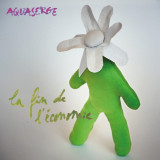
It’s burning, everything is catching fire, and Aquaserge are singing and dancing on the embers of a world contemplated in a rear-view mirror. A world which is hyper-connected, yet forgets its primary emotions.
This seventh album by the band is an ecological poem, where present and past collide. A resolutely rock-sounding album, laced with electronics, experimental pop songs and audio archives. Along the way, the listeners will encounter traces of Oulipo (the famous experimental French literary movement founded in the ’60st), Dada and free jazz. They will cross paths with the ghosts of Ennio Morricone, Walter Benjamin and Marguerite Duras, with the shadows of Kim Gordon and Brigitte Fontaine. And other audacious and exciting melanges, in the pure tradition of Aquaserge.
The album was arranged and produced by Benjamin Glibert, the band’s guitarist and main composer.
The recording took place in a house located in the french countryside (where Aquaserge’s mobile studio was installed). The mix was done at Studio St Guidon in Brussels, the album was mastered by the legendary Dominique Blanc-Francard at the Labomatic studio in Paris.
The members of the band’s current line-up all took part in the recording: Audrey Ginestet (vocals, bass, guitar, etc.), Benjamin Glibert (vocals, guitar, keyboards, etc.), Olivier Kelchtermans (saxophones, keyboards, vocals, etc.), Manon Glibert (clarinets, vocals, etc.) and Julien Chamla (drums, vocals, etc.).
- Queen - A Kind Of Magic (From Highlander)
- Simple Minds - Don't You (Forget About Me) (From The Breakfast Club)
- Philip Oakey & Giorgio Moroder - Together In Electric Dreams (From Electric Dreams)
- Tina Turner - We Don't Need Another Hero (Thunderdome) (From Mad Max Beyond: Thunderdome)
- Limahl - Never Ending Story (From The Never Ending Story)
- Kenny Loggins - Danger Zone (From Top Gun)
- Los Lobos - La Bamba (From La Bamba)
- Duran Duran - A View To A Kill (From James Bond: A View To Kill)
- Ray Parker Jr. - Ghostbusters (From Ghostbusters)
- Survivor - Burning Heart (From Rocky Iv)
- Pat Benatar - Invincible (From The Legend Of Billie Jean)
- Orchestral Manoeuvres In The Dark - If You Leave (From Pretty In Pink)
- Oingo Boingo - Weird Science (From Weird Science)
- Huey Lewis & The News - The Power Of Love (From Back To The Future)
- The Bangles - Hazy Shade Of Winter (From Less Than Zero)
- The Beach Boys - Kokomo (From Cocktail)
- Harold Faltermeyer - Axel F (From Beverly Hills Cop)
- Deniece Williams - Let's Hear It From The Boy (From Footloose)
- Lionel Richie - Say You, Say Me (From White Nights)
- Michael Sembello - Maniac (From Flashdance)
- John Parr - St. Elmo's Fire (Man In Motion) (From St. Elmo's Fire)
- Dan Hartman - I Can Dream About You (From Streets Of Fire)
- El Debarge - Who's Johnny (From Short Circuit)
- Billy Ocean - When The Going Gets Tough, The Tough Get Going (From The Jewel Of The Nile)
- Yello - Oh Yeah (From Ferris Bueller's Day Off)
- Eric Carmen - Hungry Eyes (From Dirty Dancing)
- Echo & The Bunnymen - People Are Strange (From The Lost Boys)
"The Eighties spawned many iconic films such as Footloose, Dirty Dancing, Ghostbusters, Rocky and The Breakfast Club. Despite all the different genres, they all had something in common: great film music. 80’s Movies Hits Collected is a collection of music that is inextricably linked to Eighties movie classics, including Queen, Billy Ocean, Lionel Richie, The Bangles, Duran Duran, Pat Benatar, Tina Turner and Survivor amongst many others. 80’s Movie Hits Collected is available as a limited edition of 1500 copies on translucent blue (LP1) and gold (LP2) coloured vinyl. This 2LP-set includes an insert with liner notes, photos, and credits. "
80'S Movie Hits Collected by Various Artists, released 24 May 2024, includes the following tracks: "Philip Oakey & Giorgio Moroder - Together In Electric Dreams (From Electric Dreams)", "Limahl - Never Ending Story (From The Never Ending Story)", "Los Lobos - La Bamba (From La Bamba)", "Ray Parker Jr. - Ghostbusters (From Ghostbusters)" and more.
This version of 80'S Movie Hits Collected comes as a 2xLP. This release comes with (a) Insert(s).
The vinyl is pressed as a translucent, blue disc. Another vinyl is pressed as a translucent, gold disc.
A deeper dive into the mind of the mysterious man who gave us Niggajazz at the top of the pandemic. Although only a six song ep, the title song gained traction for its jazz bop, house appeal. The follow up, New World Order is the first full length from the artist and displays a wider scope of that exact sound. Written and produced in 2021 NWO comprises tunes for the floor as well as the ride. With lush ballad Black Apple, The Common Suicides latin flare, The Torus’ obscurity and Ota Benga with its tribute to the worlds most renown human zoo attraction, this release is complete and advanced from the introduction received prior. We are pleased to present New World Order in a time when most needed to reflect and absorb carefully. We hope you enjoy it as much as we do!
Es gibt nur einige wenige große Bands auf unserem Planeten, die man innerhalb weniger Sekunden unfehlbar identifizieren kann. Das einzigartige
Melodieverständnis, die geschmackvolle Instrumentierung, die richtige Balance aus Tiefe und Eingängigkeit, und dann natürlich diese charismatische
Stimme: Magnum sind Magnum!
Dies gilt auch für ihr neuestes Studioalbum ‚Here Comes The Rain‘, das am 12. Januar 2024 über Steamhammer/SPV als CD+DVD, Doppel-Vinyl-LP, als
Boxset und als Digitalversion veröffentlicht wird und einmal mehr beweist: Stimmungsvoller kann klassische Rockmusik kaum klingen.
Das fantasievolle Artwork stammt wie gewohnt aus der Feder des großartigen Rodney Matthews, der bereits für zahlreiche Magnum-Scheiben das
äußere Erscheinungsbild an die atmosphärisch dichte Musik der Band perfekt angeglichen hat.
Kein Zweifel: Mit ‚Here Comes The Rain‘ ist Magnum in der Besetzung Catley, Clarkin, Keyboarder Rick Benton, Bassist Dennis Ward und Schlagzeuger
Lee Morris erneut ein farbenfrohes, abwechslungsreiches und in jeder Sekunde inspiriertes neues Studioalbum gelungen.
Deluxe 180g vinyl. Art Edition LP includes set of six 12”x12” art cards.
The follow-up to Kee Avil's acclaimed 2022 debut Crease: "A stunning debut" (The Quietus); "A whiplash style of uninhibited exploration" (The Wire); "Kee Avil's debut is a force" (Foxy Digitalis); "A work of Frankensteinian wonder" (Electronic Sound); "A tightly coiled, finely wrought vision of avant-pop" (Exclaim); "A debut of fiendish creativity" (Bandcamp Album Of The Day / Albums Of The Year) Kee Avil's music is both adventurous and intimate, intellectually challenging and emotionally resonant. The Montréal guitarist and producer's 2022 debut LP Crease garnered plaudits from outlets like The Wire, The Quietus, Mojo and Foxy Digitalis, picking up a Canadian Juno Award nomination and Bandcamp Album Of The Day and Albums Of The Year along the way. Its intricate construction, unnerving atmospheres, and knife-edge take on avant-pop prompted comparisons to early PJ Harvey, This Heat, and Gazelle Twin. A remix EP with work by claire rousay, Ami Dang, Cecile Believe, and Pelada brought collaborative perspectives to four Crease tracks, offering new pathways within those songs. With Spine, Kee Avil strips back her heavily textured compositions, opening up a much rawer sound. She calls it folk… and while traditionalists might scoff, this is urgent music that reflects the precarity of modern life, as well as the jarring mixture of electronic and real-world interactions that have become the fabric of our day-to-day experiences. There's a hypnotic post-punk somnambulance to it all, using the repetition and fracturing of melodic phrases interwoven with delicate electronics to create curious and persistent hooks. While not a concept album, themes of time's passage, remembrance, and decay crop up across multiple tracks. Each track intentionally only has four elements - guitar, electronics, and two other instruments, with Kee's voice and guitar pushed to the front. Within this minimalist framework, the juxtaposition of beauty and discomfort that is key to the Kee Avil sound stands out in skin-prickling relief. "We're shaped by many versions of ourselves," says Avil. "I was looking back at these versions of myself and what could have been, what didn't end up being and what did end up being, and going back like that through time. Seeing the future, the past." Spine was written in Kee Avil's home studio after a lapse in writing while touring Crease and working on other projects. She is a well-known and respected member of the Montréal experimental scene, and formerly ran Concrete Sound Studio with Zach Scholes, who continues to work with her as a producer on Spine. Compared to the three years that went into making her debut, Spine emerged in a matter of months - a process that may also be a factor in its intensity and sharpness: "This record was much harder, like it was really discovering everything from scratch." In her desire to not simply replicate or extend the sound of Crease, she felt she had to rip up the rule book, write in a different way, and pare back songs against her usual instincts. Sometimes, when we work against our ingrained habits, we get to the core of who we really are. Spine is an exercise in that process. Without over-intellectualizing or being didactic, it hits immediately and emotionally, especially if you are a person who has spent much time in the process of self-examination. Kee's voice hisses, whispers, and chants; her guitar bends and rings; electronics skitter and crackle; violin creaks like a door in the wind. There is something so evocative about the atmospheres she creates that it's easy to overlay one's own feelings onto her work, but to do that wholly would be to overlook one of the most important things about Spine: Kee Avil's clear and thoughtful vision. This isn't just the next step forward in her artistic trajectory; it's a stunner of a record that stands on its own, a bracing and thrilling listen that has much to reveal about the contradictions inherent in being human. - jj skolnik
Kein Zweifel: Die große musikalische Weiterentwicklung der Hamburger Sleaze-Rocker Night Laser ist auf ihrem neuesten Studioalbum ‚Call Me What You Want‘ in jeder einzelnen Note zu spüren. Die fünfköpfige Band hat die gesamte Erfahrung aus den drei Vorgängerscheiben ‚Fight For The Night‘ (2014), ‚Laserhead‘ (2017) und ‚Power To Power‘ (2020) sowie den mehr als 200 Konzerten gebündelt und in ihre bislang abwechslungsreichste
und kraftvollste Studioproduktion einfließen lassen. Verantwortlich dafür sind – neben den Bandgründern/Brüdern Benno (Gesang) und Robert Hankers (Bass) – die Neuzugänge Felipe Zapata Martinez, Vincent Hadeler (beide Gitarre) und Schlagzeuger Ingemar Oswald, aber auch Produzent Dirk Schlächter (Gamma Ray, Ross The Boss) und Mix/-Mastering-Koryphäe Eike Freese (u.a. Deep Purple, Helloween, Simple Minds). Veröffentlicht wird ‚Call Me What You Want‘ am 24. Mai 2024 über Steamhammer/SPV als CD, Vinyl und digitaler Download. Bereits vorab werden mit den Album-Openern ‚Bittersweet Dreams‘ und ‚Way To The Thrill‘ und der Hymne ‚Don´t Call Me Hero‘ mindestens drei Singles inklusive Videos
ausgekoppelt.
Black Uhuru wurde Mitte der 70er Jahre gegründet und stürmte in den frühen 80er Jahren wirklich in die Reggae-Szene, als Sly & Robbie die künstlerische Leitung übernahmen und wichtige Alben wie Showcase, Sinsemilla, Red, Chill Out und Anthem produzierten (beachten Sie, dass es sich um eine großartige Sammlung ihrer Alben handelt). Singles für Sly & Robbies TAXI-Label sind auf TAXI TRAXX erhältlich und wurden letztes Jahr von TABOU1 veröffentlicht.
Die Alben waren nicht nur künstlerisch bahnbrechend, auch die Live-Shows waren großartig. Eine Lawine aus kraftvollem Drum and Bass, ergänzt durch grenzwertige Metal-Rock-Gitarren des verstorbenen Darryl Thompson, lieferte ein Fundament aus Rhythmus und Energie für Michael Roses Lead-Gesang und Duckie Simpsons und Puma Jones‘ Backing-Gesang.
Die erste US-Tournee von Black Uhuru fand 1982 statt. Damals steckte Reggae in den USA noch in den Kinderschuhen und es gab nur drei Reggae-Radiosendungen in Kalifornien: Doug Wendt in San Francisco, Roger Steffens in LA und Lance Linares in Santa Cruz. Lance leitete nicht nur seine Radiosendung bei KUSP, sondern buchte auch Künstler in Santa Cruz und arbeitete mit dem Soledad-Gefängnis zusammen, um Insassen dabei zu helfen, berufliche Fähigkeiten zu erwerben, die sie nach ihrer Entlassung aus dem Gefängnis nutzen könnten. Lance kontaktierte die Organisation Black Uhuru und bot an, ein Konzert im Gefängnis selbst zu organisieren. Zu seiner Überraschung wurde seine Idee begeistert angenommen und die Gruppe trat vor vollem Haus im Soledad-Gefängnis auf.
Was wir auf dieser Doppel-LP hören, ist das gesamte Konzert, das live auf KUSP übertragen wurde. Seine historische Bedeutung ist enorm und kann mit dem Reggae-Äquivalent der legendären Live-Aufnahme der amerikanischen Legende Johnny Cash in Folsom verglichen werden. Außerdem wurde das Konzert per Video aufgezeichnet. Wir haben das Video mit modernster Technologie restauriert und Schlüsselmomente des Konzerts kuratiert. Jedes dieser Videos kann mit der Artivive-Anwendung auf ein Smartphone gestreamt werden. Sobald die App installiert ist, können Benutzer die Videos ansehen, indem sie ihr Telefon auf die Fotos auf dem Plattencover (von Bruno Tilley) richten, die mit dem Artivive-Logo gekennzeichnet sind. TABOU1 ist stolz darauf, das erste Plattenlabel zu sein, das diese Augmented Reality-Funktion anbietet.
Through his project Lionlimb, New York based singer/songwriter/producer Stewart Bronaugh crafts unfurling soundscapes that feel mysterious and otherworldly, yet timeless and nostalgic at the same time. He presents his most ambitious vision of these inner vistas on his new album, Limbo, arriving May 24th on Bayonet Records. Inspired by a palette of '70s Italian film soundtracks, '60s girl group music, and funk and soul ballads, Bronaugh brings these influences together to invent an immersive sound all his own-with help from close collaborator Joshua Jaeger, whose live drums bring a rawness to Limbo's meticulously layered production. Led by the smoldering single "Dream of You," featuring Angel Olsen, Limbo taps into universal themes of romance, longing, and loss, while still offering a hazy escape from our present reality. Bronaugh penned the songs with "classic" songwriting in mind, transforming his personal struggles with grief and addiction into love songs. Using images inspired by nature (like the sun, moonlight, hurricanes, and deep water), he expresses being overtaken by a force greater than himself, as the psychedelic production evokes a sense of being plunged into this vast landscape. Limbo benefits from its eclectic influences, as Bronaugh overlays sitar-sounding guitar on top of funky basslines, melodramatic string arrangements, and fuzzed out guitar, making for music that could easily belong on Twin Peaks just as much as a Western cowboy film. An album of duets, Limbo features a host of female vocalists-Angel Olsen, Ewa Synowiec, to Bion augil, nderstad ocal periora ne Bill bout vocal sad ate another instrument* he explains. "When we first tried to have someone else sing, I liked it, because I felt more akin to a producer than a songwriter." There's a dreamy quality to how these singers trade off with Bronaugh, both parties expressing his inner emotions. Limbo is a culmination of Bronaugh's years of production experience, as he composed, produced, and mixed the project almost entirely by himself, with additional recording from Robin Eaton. Always inspired to make bold and experimental choices that capture his instincts in the moment, Bronaugh's production style is informed by "wanting to do the weird thing that engineers wouldn't approve of," as he describes it. "My favorite part of making music is the mistakes."
The relatively short life of San Francisco's Aluminum has so far yielded a single (Spinning Backwards, 2020) and an EP (Windowpane, 2022), but their debut LP, Fully Beat, overflows with tenured confidence and a singular style that deftly comprises shoegaze, big beat, and jangle pop. With influences ranging from Orbital, to Wipers, to The Avalanches and Sly and the Family Stone, theirs is a multifaceted take on established forms, fed through fuzz and led by honeyed, male-female vocal harmonies from Bay Area post-punk veterans Marc Leyda (of Wild Moth) and Ryann Gonsalves (of Torrey). "Smile" begins with deceptive sparseness, adding neon swirls of stacked tremolo over a mesmerizing lyrical refrain, and hinting at the dynamism to come with understated grace and grit. "Always Here, Never There" is Fully Beat's first pure hit of melodic pop: its liquid bass groove winds beneath a melancholy-sweet synth hook and Leyda's plaintive vocals, while drummer Chris Natividad's deep, pillowy snare and propulsive style maintain a driving pace. Lead single, "Behind My Mouth", shifts gears into a big beat shuffle and howl of overdriven guitars, which relent to Gonsalves' rolling bassline and playful, snarky vocal. Composed across several weeks of experimentation, it is a prime iteration of Aluminum's meticulous world of sound, which nevertheless carries an air of wry nonchalance. Asking, "Do you ever see behind my mouth?", Gonsalves notes that the song "comes from a place of wanting to be understood authentically, and to communicate intentionally." This approach speaks to the album's broader theme of exhaustion amid the demands of the modern grind: working unfulfilling jobs to pay exorbitant rent, feeling society break at the seams, and trying to maintain a meaningful personal life with the remaining scraps of morale. The response, then, must be to find joy. These songs were crafted over a half-dozen months in basements and practice spaces, creating an abundance of authentic passion and catharsis that's as nostalgic and comforting as a cherished, tattered band t-shirt. The closer, "Upside Down", is a full-throttle blare of joyous release - "a straight-up love song," according to Leyda. The deliberate choice to end it with a gradual fade, rather than a dramatic climax, smartly suggests the ambivalence of acceptance - perhaps fitting, when considering the immensity of the album's subject matter. It also hints that there is much more to be said, and as such a rich and compelling debut, Fully Beat shows that Aluminum are only getting started.
Splatter is a new vinyl and digital underground techno label from Austrian artists Luca Tresque, Joe Haensn and Rotary Motion.
'Exceed Limits' follows their special prequel EP and launches the label catalogue in style.
Florian Meindl is a Berlin-based artist who runs the FLASH record label and who has appeared outside of his own imprint on labels like Stephan Bodzin's Herzblut to Oliver Koletzki's Stil vor Talent. "Gridlock" is a true jackin' cut with a multitude of mechanical elements and raw analogue energy.
Linear System is a Spanish artist who has released music on esteemed labels like Edit Select, Ben Sims' Symbolism and Dynamic Reflection. "Taurinom" is a moody, rolling groove with gripping suspense and haunting touches from gothic effects and an eerie atmosphere.
Leipzig is the home of JANEIN, a respected artist known for releasing on Index Marcel Fengler, Slam's Soma, Fiedel's Fiedeltwo, Exos' Planet X and Electric Rescue's Skryptom. "Neowise" is punchy and percussive track with a metallic, siren-like hook and infectious energy.
Daniel Heinrich is also from Berlin, and shows himself to be a top talent following his EP's on Elektrotribe to Inherit with remixes by Arnaud Le Texier an Hadone. "Close Your Eyes" has a pacey style with superb stabbing chords that create an old-school feel alongside vocal chants for extra impact.
Stuttgart-based Egotot runs the Schimmer label and also lists BCCO, OECUS and Ketch's SYXT in his quality back catalogue. "Name It As You Want" has a quirky, bouncing beat with Detroit-style stabs and a light-hearted vibe ready for the dance floor.
Black Truffle is pleased to announce the first vinyl reissue of Trancedance, a wild slice of Swedish Afro-fusion from Christer Bothén, originally released in 1984. A major figure in Swedish jazz and improvised music since the 1970s, often heard on bass clarinet and tenor sax, Bothen studied doso n’koni (the large six-stringed ‘hunter’s harp’ of the Wasulu) in Mali in 1971-2 before turning to the guinbri (the three-stringed lute of the Gnawa/Gnauoua) in Marakesh later in the decade. In between, he performed extensively with Don Cherry during his Organic Music Society period and taught Cherry the doso n’koni. In the later 70s and 80s he worked with the most important figures in the distinctive Swedish jazz-rock-world fusion scene, joining Archimedes Badkar for their African-influenced Tre and participating in Bengt Berger’s legendary Bitter Funeral Beer Band. Many of the musicians who played on the Bitter Funeral Beer Band’s ECM LP (including Berger on drums, Anita Livstrand on voice and percussion and Tord Bengstsson on piano, violin and guitar) joined Bothén for one of the sessions that produced Trancedance, the first release under his own name, dedicated to his compositions. The other session introduced his seven-piece group Bolon Bata, heard on the second track of each side. The title track opens the album with the rubbery buzzing strings of the doso n’goni playing a hypnotic ten beat pattern, soon joined by bass and piano before the entire nine-piece group kicks in with a rollicking Afro-jazz workout, Berger’s drums driving an intricate, winding melodic line played by the horns with Mattias Helden’s cello throwing in pizzicato slides and smears. Bothén then takes centre stage on tenor sax, soloing with a wide, vibrating tone and moving seamlessly from soaring melodies to guttural stutters. After a return to the composed horn lines and a solo from Elsie Petrén on alto sax, the piece builds to an ecstatic conclusion of yelping voices and handclaps, gradually simmering down to return to the solo doso n’koni where it began.
The hypnotic sounds of the hunter’s harp carries over to ‘Mimouna’, where it is joined by Bothen’s overdubbed guinbri. The piece develops into a haunting whispered and sung invocation, gradually building momentum until the organic textures of strings, voices, and hand percussion are ruptured by Lennart Söderlund’s distorted guitar, which brings an unmistakable touch of 1984 to the otherwise timeless sound. Joined by chicken scratch guitar and increasingly dominated by the insistent clang of three of Bolon Bata’s members on karqab (a kind of cast-iron castanet), the grove develops frenetically.
The B side opens with the multi-part epic ‘9+10 Moving Pictures for the Ear’, at over 16 minutes the record’s longest piece. Though Bothen is heard only on horns on this piece, the hypnotic repeating bass line carries on the first side’s link to African musical traditions. Using an expanded 16-piece ensemble, the music balances untethered improvisation with carefully arranged passages of knotty ensemble playing that at points suggest Mingus, Moacir Santos or some of the ambitious post-free work being done in the same years by figures like David Murray or Henry Threadgill. The piece ends with a triumphant passage of looping unison melody reminiscent of the Scandinavian folk explorations of Arbete och Fritid (whose Kjell Westling is heard on bass clarinet and soprano sax here). The sound of Bjorn Lundqvist’s fretless bass introduces the odd left turn made by the record’s final track, a spaced-out expedition into bluesy horn lines and distant guitar atmospherics set to a semi-reggae beat, perfumed by the core Bolon Bata group and bearing the appropriate title of ‘The Horizon Stroller’. A must for fans of the Swedish scene around groups like Arbete och Fritid and Archimedes Badkar, as well as any listener who has been seduced by Louis Moholo’s Spirits Rejoice!, The Brotherhood of Breath, or, more recently, the guinbri grooves of Natural Information Society, Trancedance is a lost classic ripe for rediscovery.
- A1: Samba 00 04:58
- A2: Panorama 00 04:39
- A3: Golfo Mistico 00 04:34
- A4: Open Sky With Tears Of Blue 00 04:56
- A5: Contemporary Lullaby 00 03:05
- A6: Requiem 00 02:55
- B1: Whispers 00 04:19
- B2: Modular Clouds In Rome 00 03:21
- B3: Piano Bells 00 03:30
- B4: Space Call From Mars 00 03:01
- B5: Tuning The Orchestra With Tears Of Blue 00 03:22
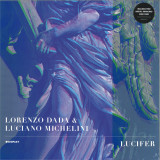
With Lucifer, Kompakt presents an album of rare beauty from two masters of modern music. A family affair, it’s a collaboration between the Italian father-and-son duo of Luciano Michelini and Lorenzo Dada, whose combined histories bring to Lucifer a depth of experience alongside clarity of vision and a finely tuned, neatly developed combined compositional voice. A lovely, beguiling suite of music that combines the electronic and the acoustic, the urban and the pastoral, its gorgeous night-eye vision and tender melancholy sits neatly within the Kompakt universe, while offering the curious listener some rich new perspectives.
There is already plenty to know both artists by. Lorenzo Dada creates across multiple fields – a techno producer and DJ who has already worked with the likes of Jay Haze, Fete, Leo Benassi, and Der, he’s released a small clutch of stylish, smartly designed EPs, and a solo album, Second Life (2018). His complementary background in classical music and composition informs his ensemble project, Tears Of Blue (who appear on Lucifer), where Dada paints with neo-classical tones for a quartet of violin, viola, cello and grand piano, supplemented by electronics for live performance.
Luciano Michelini’s history is yet richer. He may be best known, to many, for his piece “Frolic”, the theme to Larry David’s Curb Your Enthusiasm series; it was also sampled by Snoop Dogg for 2022’s “Crip Ya Enthusiasm”. But there’s much more to Michelini’s story. A successful soundtrack composer, Michelini both studied and taught at the Conservatoro di Santa Cecilia, and worked for RCA from the sixties to the eighties; his soundtracks from this period are gorgeous examples of the form, particularly his work for Il Decamerone Nero (1972), L’Isola Degli Uomini Pesce (1979), and the devastatingly gorgeous Dimensione Donna (1977).
In the eighties, Michelini and his wife Anna Gutling founded the Electronic Music Division studio and academy in Rome, which is where the majority of Lucifer was recorded. Dada reflects on the experience: “We never worked together before, so it was all new for both of us,” with Michelini adding, “I truly love this experience with my son. He’s a talented pianist and composer. I am not very familiar with electronic music nowadays, but we did it fluently.” There’s certainly a familial energy at play through Lucifer, and you can hear how Dada and Michelini, through exploration and experiment, find a shared language, balancing Dada’s tendency toward minimalism, and Michelini’s composerly voice.
Lucifer flows as a suite that interweaves electronic music with acoustic instruments: the lonely sigh of saxophone; Michelini’s lush, verdant piano; the weeping strings of Tears Of Blue (recorded at the studio of Michelini’s friend, the late Maestro, Ennio Morricone). These multiple voices are located within the electronic sighs and swarms from Dada’s kit; there are moments of propulsion, and passages of lambent drift, where the album revels in its tonal sweetness. If it flows so effortlessly, that’s because Lucifer was designed that way, as a suite or a sonata of sorts.
And the title? Dada reflects, “Lucifer was an angel who decided not to be one anymore. The miracle of life is that we can decide what we want to be, even if we are born as angels or vice versa.” This feels somehow apposite: there’s certainly something of the transformative, and the transportive, in Lucifer, a unique family collaboration of rare poetry and sensitivity, where two generations meet in the modern crucible that is the electronic music studio.
"The outsized sounds emerging from the Excelsior Mill organ captured here constitute a unique chapter in the Sun Ra story, a dizzying phantasmagoria that offers a whole new view on what Ra could do. It might thrill you; it might unnerve you; it might strum your heartstrings; it might spook the living daylights out of you. Most likely you’ll experience all of the above before the jolting musical jeremiad is done. The CD includes the full uncut show with music not featured on the LP version!
When you’re Sun Ra, you don’t need synthesizers to evoke apocalyptic visions and interstellar excursions. You don’t even need a band.
Ra is most widely known for working with various iterations of his Arkestra, but he was no stranger to unaccompanied keyboard expeditions. His discography contains solo piano albums, solo Fender Rhodes records, and solo recordings on conventional organ, the latter going as far back as his home recordings from the 1940s. But none of those instruments ever offered Sun Ra the kind of sonic artillery that waited beneath his fingers and feet when he sat before the keyboards, pedals, and multicolored constellation of tabs controlling the Wurlitzer pipe organ.
Mystic and magisterial, Ra comes off here like a cross between a demonically riffing ‘50s horror movie villain and a futuristic congregation leader delivering the interplanetary gospel. Brassy stabs provide the kind of punctuation that could be graphically rendered as an endless string of exclamation marks in 500-point font. String-like swoops and swirls dance across the top of the carnage, cooling the flames just enough to keep the whole thing from combusting (for a while at least) but never dousing the fiery fury that Ra draws forth from the instrument.