A lavish four chapter chronicle that imagines an alternative evolution of mankind through sound, VIS (Latin for energy or force) is the result of a lengthy process of self-discovery, collaboration and research for Italian-German composer David August. The son of a classical pianist, August slipped from the academic music world into an early career as a dance music producer and DJ before he felt his artistic outlook shifting considerably. He established the adventurous 99CHANTS label in 2018, and has since used it as an output for his most progressive notions, collaborating most recently with jazz-noise vocalist Cansu Tanrikulu and Carnatic singer Sushma Soma on last year"s acclaimed "Imaginary Landscapes" compilation. VIS then is a chance for August to reconcile his personal narrative, leveling it with concepts that touch on history, transformation and metaphysics. He wrote the album"s 13 pieces to play like a linear storyline, tracking the development of culture from its illusory beginnings in Plato"s cave into the wider world and observing its progression and adaptation.
August represents these themes with levitational orchestral drones, choirs and bells that slowly bend to long-forgotten ancestral rhythms, inevitably colliding with the digitized chaos of the information age. Motion guides everything, whether it"s shadows on a wall projected by dancing flames, or dramatic, overlayed rhythms that vibrate the air and excite the feet. VIS is a dynamic attempt to show the movement of time on a macro scale, looking backwards in order to move forwards. It charts mankind"s journey from its cosmic beginnings through the awe-inspiring world of flora and fauna, grounding the experience in rhythmic expression and dance before we"re returned to the stars in transcended form. Crucially, it"s a hopeful articulation of ideas and concepts that continue to echo throughout history, inviting us to imagine greater and cherish the teeming landscape that surrounds us.
Search:ben w
- A1: Top Boy Theme
- A2: But Not This Way
- A3: Damp Bones
- A4: Cutting Room I
- A5: Floating On Sleep's Shore
- B1: Beauty And Danger
- B2: Beneath The Sea
- B3: Afraid Of Things
- B4: Waiting In Darkness
- B5: The Fountain King
- B6: Washed Away In Morocco
- C1: Overground
- C2: Watching The Watcher
- C3: Sweet Dark Section
- C4: Sky Blue Alert
- D1: Delirious Circle
- D2: Cutting Room Ii
- D3: Dangerous Landscape
- D4: The Good Fight
Top Boy is the British television crime drama series, created and written by Ronan Bennett. The story follows two seasoned drug dealers return to the gritty streets of London, but their pursuit of money and power is threatened by a young and ruthless hustler. It stars Ashley Walters, Kane Robinson, and the
2020 BAFTA Rising Star Award-winning Michael Ward. The first two seasons aired between 2011 and 2013, but following interest from rapper Drake, Netflix announced in 2017 that it would revive the series. Co-produced by the Hotline Bling-rapper, the third and fourth season of Top Boy launched in 2019 and 2022.
In the captivating Netflix series Top Boy, Brian Eno’s transcendent music serves as a vital companion, molding the narrative’s essence with its ethereal power. With a masterful touch, Eno’s atmospheric compositions effortlessly transport us into the gritty world of crime, friendship, and survival in East London. From delicate ambience to pulsating beats, his sonic tapestry envelops every scene, elevating the storytelling and evoking a range of emotions. Eno’s singular ability to capture the struggle, hope, and inner strength of the characters accentuates the raw authenticity of Top Boy, leaving an indelible mark on its viewers. His haunting melodies and intricately crafted soundscapes symbolize the unyielding resilience amidst chaos, making Brian Eno’s music an integral and unforgettable component of this groundbreaking series.
Mekanika Recordings from Sofia, Bulgaria is a techno label ran by Stevo Kurt aka DJ Steven the main resident of Metropolis events that have featured the likes of Sven Vath, Ben Klock, Len Faki and Ellen Allien amongst others and and Svilen Dzhonev - Ziggy - A & R of the label.
MKNK002V is the second of a limited vinyl series consisting of 100 copies.
Spas Tzvetkov aka Asymmetrik is a fellow Bulgarian who returns to the label for a four-track EP following remixes of Stevo Kurt on MKNK002. As a producer, Asymmetrik has an album on Steve Parker's MUTED rec in Portugal, Bulgaria's Hivemind, and Spain's Subsist, among others.
Asymmetrik is unbalanced. Asymmetrik is unconventional.
Asymmetrik is unsettlin
Halbert kicks off "OUR STORY“ EP with no fear and no compromises to his sound legacy. It has been produced during the last year in the neighborhood of Santa Catalina - where everything is happening - under the experience and influence of local parties such as private villas and small sweaty clubs.
A1 "OLEEVA" features a weird half-tempo break, grooving along a 4x4 kick and Bmore loop style. The "Spanish" trumpets act as an irresistible hook, leaving a long lasting impression. A fusion of folklore and timeless sounds, "Oleeva" is a true party anthem that defies genres. Continuing the journey, A2 "WHAT IS IT?" is a playful cocktail-Molotov made of fat FM rolling bassline, slap bass guitar, arabic strings, and other mind-bending surprises. Get ready to let loose and immerse yourself in this freaky gem.
On the flip, B1 "SECRET PATH" delivers a functional old catchy house jam with a non-directional arrangement where organic meets dark electronic synth sound. An ideal companion for a pool party or daytime vibes. Wrapping up the EP, B2 ”POWER UP!" shines as a high energy breakbeat tune influenced by Plank Records sound. Featuring an evolving big guitar synth stab, lively percussion, uplifting trancy synths and robust old school bass.
Mixed by Halbert and Hamid at MariaDiaz Studio. Mastered by Marco Pellegrino at AnalogCutMastering Berlin.
- A1: Mind Against & Sideral - Criseide
- A2: Remcord - Entourage Effect
- B1: Dyzen - Talk To Me
- B2: Read The News - A Space
- B3: Losless - Ground Echoes
- C1: Ivory - There Would Come A Day
- C2: Beswerda - Out Of The Blue
- D1: Ae Ther - Disco Biscuit
- D2: Vaert - High Hopes
- D3: Momery - Ophelia Ft. Running Pine
- E1: Marino Canal - Ample
- E2: Nandu - Ygi
- F1: Enos - Supernova
- F2: Sam Shure - Plus Ultra
- F3: Laroz - Don't Touch Ft. Sheera
Mind Against launch their eagerly awaited imprint Habitat with a 15-track compilation titled “METAFLORA”, available as a deluxe transparent vinyl 3LP box set including a 24x12” fold-out poster.
Suitably, the compilation features new and emerging artists with whom Mind against have relationships, and recurrent motifs of subtly unsettling melodic house/techno building alternate worlds in soundscapes.
Mind Against & Sideral – ‘Criseide’ heralds this new world with portentous pounding beat/bass, the melodic synth singing beneath like beauty surviving under threat, the vocal/lyrics with an edge of alarm: ‘if you think it couldn’t happen to you…’
‘Talk To Me’ by Dyzen (who also collab’ed with Mind Against on their fabric presents compilation) has stately chords riding a prancing beat while sombre piano and sweet high vocal create a heraldic, post-apocalyptic nu-medieval world, whereas Sam Shure’s ‘Plus Ultra’ has rattling percussion, with melody like a coded message from an abandoned spaceship to which something replies in stark tones…
Marino Canal, whose debut album was released by Nicole Moudaber’s MOOD, and who has support from many big names including fabric’s founder Keith Reilly, features plangent notes veering up, down and off the scale for a disturbing effect in ‘Ample’, while Swiss duo Read The News in ‘A Place’ set a fast, kicking beat against a female voice yearning for ‘a space where I can just be’.
Remcord, often played by Black Coffee, Tale of Us and more besides MA, show us why in ‘Entourage Effect’ while Laroz gives a lively melody and raucous chords in ‘Don’t Touch’ feat. Sheera as her cool, raunchy, layered vocals come to the fore.
At times where technology inexorably infuses into humankind, Ammar808’s next adventures lays within the realms of Stambeli’s invisible creatures, an old genuine Tunisian tradition that has roots spreading out within the depths of the African continent.
Stambeli is a Tunisian musical therapeutic ritual that was implanted by afro-descendant communities. During the ceremonies, music, dance and chants are blended so as for some participants to reach the alternate state of trance while they are possessed by super natural entities. It is a syncretism between Islam and animist Yorisha religion’s voodoo beliefs, that has been disseminated during slave trade by Yoruba populations originating from current Benin’s gulf. Stambeli is a precious legacy the symbolizes the outstanding diversity and complexity of the North-African identity.
Using drum machines and analog synthesizers, he summons super natural creatures to visit our material world and taste human incarnations, form the audience’s collective experience. The album features vocals and gumbri from Bellassan Mihoub, who inherited his father’s knowledge and mastery, and currently embodies the avant-guarde of Stambeli’s revival. Two additional choristers round off the stage band, also playing the krekebs: these are pairs of large castagnet-like instruments oscillating in the limbo between binary and ternary rhythmic patterns. They breathe life and motion into this pagan communion, blessed by VJ Sia original visuals synchronized to the thundering music.
Super Stambeli is a contemporary interpretation of the Stambeli traditional repertoire, processed through a time-travel washing-machine, a parallel-dimension earthquake portal, that aims to echoes ancestral ceremonies through sub-harmonic speakers. It’s a dialogue between the wailing of the gombri, known to call for the spirits to descend into the bodies of the participants, but this time AMMAR808 directs them straight into the digital circuits of his clockwork-crafted machineries.
- A1: Villa - Silhouetten Der Nacht
- A2: Chontane - Ceoid
- A3: Levzon - Planga
- B1: Benkhlifa - Basikstruktur
- B2: Umwelt - Echoes Of The Storm
- B3: Kashpitzky - Timeline Off
- C1: Dax J - Passing Clouds
- C2: Lpv - Arrival
- C3: Hadone - Euphoria
- D1: Stef Mendesidis - Magma
- D2: Chlär - Raw Audio Models
- D3: Nnamael - One Step Closer To The Truth
- E1: Benkhlifa - Predator In The Zoo
- E2: Selective Response - Mars
- E3: Jehra - Take It Or Leave It
- F1: Mattia Trani - Dreampunk
- F2: Vil & Cravo - Plane To Lisboa
- F3: Jadzia - Surface
- F4: Pablo Bozzi - To The Edge
The World of Monnom Black makes it triumphant return, unveiling the highly anticipated third iteration of its iconic release and ushering in a wealth of new artistic voices into its ever-expanding universe. Celebrated for curating the finest handpicked music, the series remains a beacon for championing the true essence of techno. Presented on triple vinyl and graced by 19 esteemed artists, marking this as the label's most innovative and important release to date. Welcome to The World Of Monnom Black 3!
Y'all ready to mangle peoples heads??? Most of you are, but not YOU,-YOU know who you are, get out of here with your NU Garage chipmunk vocal Bass-Hop shit...
Mr. Cool aka Louie Fresco aka El Cabrone has some heat right here.
Get it- heat, cause he's from Mexico City, and cause the ep is Picante.
Pride is some dank ass bassment shit right here.
Percussive grooves for days, mind melting sounds and a nice tripped out vocal to round it all out.
Pride has a modern minimal shuffle, and that swingy greasy percussion that the Mexicans do
so well,its even low rumble that hits just right in the booty.
A perfect combo of blended brains and brawn!
On the flip we have the K-Dot. I hope it's referencing some new drug that is microdot acid and K combined in a mind warping 250Mg tablet.
This song sounds just like that, mind bending, face melting grinding madness, it rolls and rolls and evolves and evolves.
Put that record on and just watch people make twisted faces and dance like they are puppets getting their strings pulled.
Mr. Cool nailed this, and I question his sanity, and life choices. Nobody normal makes music like
this.
If you don't like this record now, you probably will in 18 years when it's the jam all over again cause a 65 year old Raresh drops it at Sunwaves 309.
Mind you if we keep this global warming shit up, all our vinyl gonna melt. Live in the moment and buy records now.
The Bladehouse crew is back with Bladhouse IV, offering another slice of the good stuff. Four differently styled out tools spanning from stripped house to peak-time groove and the occasional minimal bleeper on the B Side. Get your hands on this versatile dance-floor weapon as long as it‘s stocked. As Always: No Names - Let it Rip
BHO004 starts things off with a groovy, intuitive vibe on A1. A bumping Bassline dives Deep into hypnotic and subtle chord layers and a thriving shaky beat, perfect for open spaces and creating a lifted atmosphere.
A2 is a hidden stomper. Techy drum loops blend with dubbed-out pad shots, crafting a dark and moody rhythm that builds up to a climax, creating moments of anticipation and release.
The B Side is opened up by glitchy and gritty textures that evolve into a warm body of soothing groovy minimal with an intimate ambivalence. Use this to hypnotize crowds of any form and size.
B2 wraps things up with one more perfectly crafted mood swinger. Repeated percussions come together with a deep pad, gradually clearing up and welcoming mind-bending plucks and bleeps when the main theme kicks in. It creates a moody and meditative vibe with plenty of drive to keep you moving.
After picking up a camera in 2006 to shoot events at London superclub Fabric, Sarah Ginn started her journey of documenting the dance music scene. With exclusive, behind-the-scenes access at the likes of Fabric, Ultra Festival, Boomtown, Glastonbury, Outlook, Printworks, Creamfields and Hospitality, Sarah captured the sights of UK rave and
dance culture in the 2000s, 2010s and 2020s.
Super Sharp Shooter is a carefully curated selection of over 800 photographs from Sarah’s extensive archives, many never before seen. Spanning drum & bass, dubstep, house and techno, the book showcases festivals, clubs, press shots and record covers, providing an unsurpassed document of electronic music in a colourful celebration of beats and bass.
This deluxe book features artists like Andy C, Skream, Chase & Status, Shy FX, Carl Cox, Fatboy Slim, Goldie, Chemical Brothers, Jon Hopkins, Sub Focus, DJ Zinc, Ben UFO, Craig Richards, Erol Alkan, Miss Kitten, Dusky and many more. Also contained is Sarah’s essay,
The Feedback Loop Theory. A demonstration of how music affects time and energy and makes it a magic entity. Set in colour order to reflect the visible light spectrum, this gorgeous book is a must-have for all music and photography enthusiasts. It has 480 pages in full colour on heavyweight 150 gsm paper. It's available as a book only and as a bundle with an exclusive A2 poster.
“‘I’m looking forward to publishing this book because these actually are my only memories!Research shows that when you take photos it actually affects the way you remember things. So on that note, I hope you all enjoy my crazy spectral journey into sound, the many sights of the rave and everything in between.” - Sarah Ginn
Mr Projectile, one of our favorite IDM producers from back in the day, has given La Luna the chance to share some of his unreleased IDM tracks from the early 2000’s. The album is an eclectic blend of ambient, IDM and experimental electronics.
These sounds are a time machine to simpler, less chaotic times and have become essential listening these days. We envision this album spinning on a sunny Sunday afternoon, filling your room with the delicate and deep textures of electronic music and soothing your uncertainty. Enjoy a nice cup of coffee and explore your thoughts as you speed through time and space. Hopefully serving as a special reminder that we are all in this madness together.
Not only is the music stellar, but we are honoured to have Marcello Raeli, an Italian artist and car designer, accompany the music with his wonderfully mind bending artwork. Marcello is an artist who has designed some of the most insanely beautiful/fast cars on the planet. Here we get to take a deep look into his mind and marvel at the incredible interconnectedness created in this piece and appreciate the sense of depth and space created for this album.
On All Centre’s second vinyl outing, label regular Endless Mow and co-boss Simkin join forces for a split EP of adventurous club excursions. Endless Mow kicks off proceedings with two sparkling mutated club jams, whilst Simkin contributes two tracks on the flip that display his aggressive paired back style!
With one foot planted in jazz and the other in the township groove of Mbaqanga, saxophonist Sello Mmutung was a powerful crossover figure in the history of popular music in South Africa. Using the stage name Bra Sello, meaning “brother” and used as a term of affection and respect in the jazz community, he came up in the era of shellac 78s as an exponent of the 1960s sax jive sound that brought the swinging rhythm of kwela into the domain of South African jazz. Despite the injection of American rhythm and blues into South African pop in the late-1960s, Bra Sello’s first releases on vinyl on the CBS label saw him backed by the group Abafana Bentuthuko and holding down an unapologetic township sound.
Joining the independent Soweto label under producer Cambridge Matiwane in the mid-1970s, Bra Sello recorded two records in the hit-making bump jive style popularised by serious jazz musician Dollar Brand on the one hand and prolific studio group the Movers, operating in funk and soul territory, on the other. Blending modern American and traditional African elements into joyful hip-swinging rhythms, Butterfly (1975) and The Battle of Disco (1977) reflect the vivacity of urban life in South Africa and document an era when dance music was performed by bands as extended jams laced with jaw-dropping solos. With music trends shifting dramatically in the late-1970s, the title of The Battle of Disco was an ironic call to arms in response to the territory that group musicians were beginning to cede to synthesisers and DJs.
For enthusiasts of African music from the 1970s, a full appreciation of the continent’s output is incomplete without South Africa’s pop-jazz sound providing a regional counterpoint to the funk experimentation of West Africa. Reissued for the very first time, Bra Sello returns in 2023 with limited replica editions from Afrodelic using master tape sources from the As-Shams/The Sun collection. Afrodelic’s unique edition of Butterfly features a previously unreleased track on Side B.
With one foot planted in jazz and the other in the township groove of Mbaqanga, saxophonist Sello Mmutung was a powerful crossover figure in the history of popular music in South Africa. Using the stage name Bra Sello, meaning “brother” and used as a term of affection and respect in the jazz community, he came up in the era of shellac 78s as an exponent of the 1960s sax jive sound that brought the swinging rhythm of kwela into the domain of South African jazz. Despite the injection of American rhythm and blues into South African pop in the late-1960s, Bra Sello’s first releases on vinyl on the CBS label saw him backed by the group Abafana Bentuthuko and holding down an unapologetic township sound.
Joining the independent Soweto label under producer Cambridge Matiwane in the mid-1970s, Bra Sello recorded two records in the hit-making bump jive style popularised by serious jazz musician Dollar Brand on the one hand and prolific studio group the Movers, operating in funk and soul territory, on the other. Blending modern American and traditional African elements into joyful hip-swinging rhythms, Butterfly (1975) and The Battle of Disco (1977) reflect the vivacity of urban life in South Africa and document an era when dance music was performed by bands as extended jams laced with jaw-dropping solos. With music trends shifting dramatically in the late-1970s, the title of The Battle of Disco was an ironic call to arms in response to the territory that group musicians were beginning to cede to synthesisers and DJs.
For enthusiasts of African music from the 1970s, a full appreciation of the continent’s output is incomplete without South Africa’s pop-jazz sound providing a regional counterpoint to the funk experimentation of West Africa. Reissued for the very first time, Bra Sello returns in 2023 with limited replica editions from Afrodelic using master tape sources from the As-Shams/The Sun collection. Afrodelic’s unique edition of Butterfly features a previously unreleased track on Side B.
1 december 1944, Thiaroye military camp, right outside of Dakar, Senegal.
1600 French soldiers of West African origin (Benin, Mali, Ivory Coast, Tchad, Senegal , Gabon, Togo etc.) have been quickly evacuated by the French Army during what was subsequentially called the ‘whitening of the colonial troops’ that happened before the armistice signature. The soldiers are awaiting to be paid for their war effort. Things go sideways, protests erupt, and the French military staff decides to open fire. The official number of casualties is 35, although various sources claim several hundred people died on that fatal day.
Since then, several artists have grasped that difficult topic, screaming for recognition and reparation.
Such is the case with a young Senegalese musician and singer named Maxidilick Adioa, with his very first single ever released, ‘Toubab Bile’, in 1987.
At that time, Adioa had been living in France for a few years. He was considered a master percussionist, playing, recording and touring alongside the great Ivorian artist Alpha Blondy. He had just written a beautiful tune, ‘Nao’, for Aminata Fall, one of the biggest actress and singers in Senegal. It seemed like a good time to launch his solo career.
Toubab Bilé remains Adioa’s biggest hit to this day, and one of the best African reggae tune ever recorded.
Adioa ended up signing an album deal with Chris Blackwell’s Island records and toured the world endlessly during the following years.
In 2012, François Hollande was the first French President to officially mention and pay tribute to the Thiaroye massacre in a speech.
Most Excellent Unlimited is happy to announce the next release in its series of collaborations with master DJ and editor "Mr. K". Two exceptional deep classic album gems skillfully cut down to a maximum 7" 45rpm format, Luther’s “Funky Music (Is a Part of Me)” and Zulema’s “Giving Up.”
Long before “Never Too Much” and his other solo hits, Luther Vandross was an in-demand backup singer and vocal arranger, working with luminaries like Carly Simon, Bette Midler, and Donna Summer, along with his stand out performances in Change, Bionic Boogie, & so many more. Perhaps his most significant role, however, was backing David Bowie on the 1975 Young Americans album. It was during these sessions that Bowie heard Luther’s song “Funky Music (Is a Part of Me)” and re-tooled it to become the Bowie/Vandross joint composition “Fascination,” which went on to become a successful Bowie single.
For the latest edition of Most Excellent Unlimited’s series of edits, Mr. K has gone back to the original source, credited to the group (not the solo artist) Luther (which also features Christine Wiltshire). Mr. K's technique on this edit is cleverly subtle, in the process giving us the first opportunity to get almost the entire full-length song on compact 7-inch wax, keeping that irresistible building energy that places the track firmly on dancefloor-friendly territory.
“Giving Up” was the opening track on Zulema’s second LP, and given the drama of the intro, with its rolling piano, string ensemble, and piercing guitar, it’s not hard to hear why it was effective in that role. Mr. K’s edit benefits from a crystal clear remastering in which each element of the band is distinct in the soundfield, led by Zulema’s gutsy vocals upfront. Originally a 1964 Gladys Knight tearjerker that crept along at a tango’s pace, Zulema’s 1973 cover gives the song a new, powerfully soulful arrangement, championed by such disparate eras and tastemakers as Nicky Siano at the Gallery in the ’70s and breakbeat hunters the Beatnuts in the ’90s that has easily found favor with a wide variety of listeners and DJs, and this new issue should solidify that position. Never before available on 7-inch, “Giving Up” is a bonafide funk and proto-disco classic —
Repress.
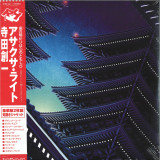
Back in 2015, Japanese DIY house pioneer Soichi Terada stepped back into the limelight courtesy of Rush Hour's 'Sounds From The Far East', a Hunee curated retrospective of material first released on his own Far East Recording label in the 1990s and early 2000s. Buoyed by the positive response and renewed interest in his work, Terada went back into studio to record his first new album of house music for over 25 years, Asakusa Light.
Developed over 18 months, Terada tried to recreate the mental and physical processes that led to the creation of his acclaimed earlier work. Those familiar with Terada’s celebrated, dancefloor-focused sound of the 1990s – a vibrant, atmospheric, and emotive take on deep house powered by the twin attractions of groove and melody – will find much to enjoy on Asakusa Light.
“I tried to recall my feelings 30 years ago, but when I tried it, I found it super difficult,” he explains. “I didn’t even know what I thought about myself five years ago, and the mental metabolic cycle seems to be faster than I thought. I tried different methods, including digging up my old MIDI data and composing by remembering old experiences. With the help of Rush Hour, I found some of the light from my heart that I had 30 years ago. I nicknamed the light I found in my heart, ‘Asakusa Light’.”
Produced using the very same synthesizers and drum machines that powered his 1990s work, the album is a joyous, colourful and life-affirming collection of timeless house music that not only recalls Terada’s own impeccable back catalogue, but also that of similarly celebrated contemporaries such as the Burrell Brothers or Ben Cenac (Dream 2 Science, Sha-Lor).
Terada, who has spent much of the last two decades writing video game music, has always had a gift for combining warm, undulating synthesizer basslines and perfectly programmed machine drums with stirring chords, smile-inducing melodies and mellow musical flourishes. It’s this immersive, sun-kissed and tuneful trademark style that takes centre stage on Asakusa Light, an album for the ages.
The set begins with the alien-sounding chords, soft-touch percussion and dawn-friendly warmth of ‘Silent Chord’ and ends on a high via the bouncing string stabs, starlight chords and thickset grooves of ‘Blinker’; in between, you’ll find a deluge of effortlessly feelgood music that’s the aural equivalent of a dopamine rush at sunrise.
There are subtle variations aplenty throughout the album – see the 8-bit lead lines and pulsing electronic textures of ‘Takusambient’, the vintage Tony Humphries flex of ‘Diving Into Minds’ and the effortlessly funky ‘Marimbau’ – but it’s the uniquely atmospheric, vivid and tactile nature of Terada’s loved-up sound that resonates. After well over 30 years in house music, the light in his heart is shining brighter than ever.
Very special material found in the legacy archive of a Ukrainian rock'n'roll star from the '90s, the frontman of the Braty Hadiukiny band. After a long pause in his musical career and a life-changing period abroad, he unexpectedly switched to electronic music production.
He passed away in 2009 without releasing these tracks, and only a very limited number of people ever heard them in his studio. His productions include eclectic house, progressive trance, and downtempo tracks we discovered thanks to his former wife, who kept Serhii’s artistic heritage throughout the years.
Life has changed in the eight years since the release of II. In ours, yours and Gala Drop themselves. Most times without noticing it, partly due to those two years of a semi-existence that still resonates and with the ongoing predatory gentrification process changing the landscape and life of Lisbon, home to the band since ever. Close to a decade and a half of existence, with various mutations along the way enacting new perspectives and moments of stillness and reflection to a sound that's been mutating itself to its own internal rhythm and agency under the guiding light of the core duo of Afonso Simões and Nélson Gomes. Now a trio, with Rui Dâmaso transitioning from II after the departure of Jerry the Cat and Guilherme Canhão, Gala Drop sound even more focused as a working band, with their new album title Amizade – friendship in Portuguese – making perfect sense in a celebration of their, by now, patented soundworld of cosmic inspiration: krautrock's endless and hypnotic potential, dub's sense of transient space, the throb of house, balearic dreams, polyrhythms and a communal sense of belonging.
Again, this sprawling sphere of influence opens itself to new shapes and inspirations, but there's a deeper sense of accuracy and direction, with the band channeling those legacies into something we can only grasp as the Gala Drop sound. An organic outcome of working steadily as a trio, made possible by a residency promoted by gnration in Braga, Amizade dwells on the psychedelic nature of the group through seven tracks made up of dreamy synth washes, loads of percussion, echoes, chilled guitars under a radiant aura. Gala Drop have never sounded as openly dubby as on 'Dub da Meia Noite' and 'Areal Dub' or capable of converging different tropes of the hardcore continuum – rave stabs and cut up vocals – on a slow burner as memorable as 'Monte do Ouro'. Or given free reign to electricity as on the narcotic guitars of 'Guitarra Voadora' – excepting the one off with Ben Chasny on 2012's Broda. 'Amizade' points towards all of that with comforting escapism and wrapping things up 'Raio' turns dubstep's original bass weight meditations into a cosmic funk workout. One last hug before we leave. An album that feels like a collective moment of celebration, just when we most need it.
Afonso Simões - Drums, percussion and synthesizers
Nelson Gomes - Electric guitar and electronics
Rui Dâmaso - Electric bass & guitar and synthesizer
Recorded by Budda Guedes at Estúdio Mobydick, Braga
Mixed by Gala Drop and Hugo Valverde at Estúdio Cão Andaluz, Lisboa
Mastered by Anne Taegert at Dubplates & Mastering, Berlim
Cover photo by Sara Graça
Design by Nicolai Sarbib