The new album from the 'DeaThrash' trailblazers CARRION VAEL. Melodic Death Metal collides with furious Trash in an essential offering for fans of Alterbeast, The Black Dahlia Murder, At The Gates and Benighted!
Buscar:beni
BENIGHTED, deren Wurzeln tief in den makabren Gefilden des extremen Metal verwurzelt sind, haben sich von einem Nebenprojekt zu einer bösartigen Kraft entwickelt, die Fans auf der ganzen Welt mit ihrem schädelzerschmetternden Sound und ihren thematisch fordernden Stücken in ihren Bann zieht.Tauche mit "Ekbom" in den Abgrund ein - dem neuesten Werk von BENIGHTED, das von der seltenen neurologischen Störung "Ekbom-Syndrom" inspiriert wurde. Mach dich auf eine groteske Reise gefasst, auf der wilde Musik die beunruhigenden Empfindungen von delusionaler Parasitose widerspiegelt. "Ekbom" ist ein albtraumhaftes Album, das mit unerbittlicher Brutalität pulsiert und eine Geschichte des psychologischen Horrors webt, die den Hörer in die dunkelsten Abgründe der menschlichen Psyche zieht. BENIGHTEDs meisterhafte Beherrschung viszeraler Klanglandschaften und thematisch reichhaltige Kompositionen gipfeln in einer schaurigen Klanglandschaft, die noch lange nach der letzten brutalen Note im Bewusstsein verweilen wird.
- Hervorgegangen aus den französischen Death- und Black-Metal-Bands DISHUMANIZED, DARKNESS FIRE und OSGILIATH, gründeten sich BENIGHTED 1998 mit dem Ziel, eine brutalere, härtere und modernere Form des musikalischen Ausdrucks zu finden.
- Die Wirkung ihres ersten selbst produzierten und unter ??tled veröffentlichten Albums im Jahr 2000 machte BENIGHTED von einem Nebenprojekt zu einem Hauptact, der sich schnell eine treue Fangemeinde erspielte.
- BENIGHTED feierten ihr 20-jähriges Jubiläum, indem sie 2018 den Live-Wahnsinn mit Dogs Always Bite Harder Than Their Master einfingen.
- Der auditive Angriff spiegelt die abstoßenden Empfindungen des Syndroms (Ekbom) wider, eine viszerale und beunruhigende Reise in die Abgründe des menschlichen Geistes.
FFO: Cryptopsy, Aborted, Wormed, Dying Fetus
Crystal Clear Vinyl
BENIGHTED, deren Wurzeln tief in den makabren Gefilden des extremen Metal verwurzelt sind, haben sich von einem Nebenprojekt zu einer bösartigen Kraft entwickelt, die Fans auf der ganzen Welt mit ihrem schädelzerschmetternden Sound und ihren thematisch fordernden Stücken in ihren Bann zieht.Tauche mit "Ekbom" in den Abgrund ein - dem neuesten Werk von BENIGHTED, das von der seltenen neurologischen Störung "Ekbom-Syndrom" inspiriert wurde. Mach dich auf eine groteske Reise gefasst, auf der wilde Musik die beunruhigenden Empfindungen von delusionaler Parasitose widerspiegelt. "Ekbom" ist ein albtraumhaftes Album, das mit unerbittlicher Brutalität pulsiert und eine Geschichte des psychologischen Horrors webt, die den Hörer in die dunkelsten Abgründe der menschlichen Psyche zieht. BENIGHTEDs meisterhafte Beherrschung viszeraler Klanglandschaften und thematisch reichhaltige Kompositionen gipfeln in einer schaurigen Klanglandschaft, die noch lange nach der letzten brutalen Note im Bewusstsein verweilen wird.
- Hervorgegangen aus den französischen Death- und Black-Metal-Bands DISHUMANIZED, DARKNESS FIRE und OSGILIATH, gründeten sich BENIGHTED 1998 mit dem Ziel, eine brutalere, härtere und modernere Form des musikalischen Ausdrucks zu finden.
- Die Wirkung ihres ersten selbst produzierten und unter ??tled veröffentlichten Albums im Jahr 2000 machte BENIGHTED von einem Nebenprojekt zu einem Hauptact, der sich schnell eine treue Fangemeinde erspielte.
- BENIGHTED feierten ihr 20-jähriges Jubiläum, indem sie 2018 den Live-Wahnsinn mit Dogs Always Bite Harder Than Their Master einfingen.
- Der auditive Angriff spiegelt die abstoßenden Empfindungen des Syndroms (Ekbom) wider, eine viszerale und beunruhigende Reise in die Abgründe des menschlichen Geistes.
FFO: Cryptopsy, Aborted, Wormed, Dying Fetus
10" in top-on sleeve, limted to 300 copies. Yiri Yiri! BOOM! A year and a half after their debut for Sdban Ultra, Brussels-based afrogroove formation M.CHUZI returns with a stunner of an EP.Yiri BOOM! offers a variety summery sauces to assaison this spring with a refreshing sound, catchy songs and some catchy features.
Captivated by a musical residency in Benin, this time the band relocates to the Black Atlantic, with the agogo bell as their guide. Literally, because in "Mojo Picon", drum legend Stéphane Galland actually performs a solo on cowbell. A world's first. Together with singer Vanesa Diaz Gil, M.CHUZI travels from the Canarias to Cuba with an innovative cover of the Cuban mambo classic "Yiri Yiri Boum". Following in the footsteps of this iconic song, the Brussels gents finally cross back across the ocean in the danceable "Pepper Sauce", in which the heyday of Fela Kuti's afrobeat resonates with an irresistible guitar riff, a rippling bass, a rousing shuffle groove and punchy horns.
DJ Support: Louie Vega, Kenny Dope, David Morales, Dimitri From Paris, Dave Lee, Simon Dunmore, Michael Gray, Brian Tappert, Melvo Baptist, Seamus Haji, Terry Hunter, DJ Spen, Hector Romero, Dr. Packer, Kenny Carpenter; Jellybean Benitez, Husky, Birdee, Derrick McKenzie.
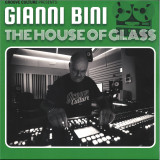
Legendary Italian producer Gianni Bini Debuts on Groove Culture with 'The House Of Glass' LP. With an inimitable CV and discography that includes over a thousand production credits to his name, hundreds of singles under renowned pseudonyms including Bini & Martini, Fathers Of Sound, The Goodfellas, Subsystem and two Worldwide hits as Eclipse and House Of Glass, Gianni is one of the most revered producers of disco-house, defining each genre with a signature sound. Always looking to push the boundaries of what it means to make music, his latest project sees Gianni return to deliver an epic disco record that takes the sound back to its roots in every way possible. Backing up live drums, live bass, live guitars, live strings with catchy vocals and enough groove to level a discotheque, it’s this Disco-Pop energy that Gianni has captured and expertly delivered with 'The House Of Glass'LP.
Founded by Joe Laycock and Jack Sharp as a successor to theatrical punk group Cheap Teeth, the pair birthed the project from their joint love of immersive, beat-driven soundscapes and subtle shifts. Featuring members of Catholic Action and Pressure Retreat, the band aims to urge the listener"s ear into progressively choppy waters whilst simultaneously grounding them in firm lyrical soil.
Kuratiert von Robert Wyatt, Domino Record Company und Marcus O'Dair, dem Autoren der bald erscheinenden Wyatt Biografie "Different Every Time", erscheint begleitend zu dessen werkumspannenden Buch ein gleichnamiges Doppel-Compilation-Album auf Domino. Die Veröffentlichung besteht aus Disc 1 "Ex Machina", einer chronologischen Werk-Einführung für Wyatt Novizen, sowie aus Disc 2 "Benign Dictatorships", einer Sammlung von seltenen bis niemals zuvor veröffentlichten Songs aus den Wyatt Archiven. Robert Wyatts musikalische Karriere begann in den 60ern als Schlagzeuger der legendären Psychedelic Rock- und Jazz Fusion-Band Soft Machine. Mit Beginn der 70er Jahre widmete sich Wyatt der Arbeit als Solo-Singer/Songwriter. Durch inzwischen über 15 Studio-Veröffentlichungen schaffte er sich besonders in Europa eine bis heute treue Fangemeinde. Bisherige Kollaborationen mit Künstlern wie Brian Eno, John Cage, Scritti Politti, David Gilmour, Björk oder Hot Chip sind dabei Zeugen von Wyatts anhaltender musikalischer Entfaltung.
- A1: Nazan Şoray - Hal Hal (Barış K Edit) 04 48
- A2: Kamuran Akkor - İkimiz Bir Fidanız (Barış K Edit) 03 43
- A3: Edip Akbayram & Dostlar - Ayrılık (Barış K Edit) 04 27
- B1: Erkin Koray - Cemalım 05 56
- B2: Modern Folk Üçlüsü & Ayşegül Aldinç - Dönme Dolap (Barış K Edit) 05 24
- B3: Urfalı Babi - Disko Kebap (Barış K Edit) 05 47
- C1: Derdiyoklar - Yaz Gazeteci (Barış K Edit) 05 04
- C2: Osman İşmen - Tv Ara Müziği (Barış K Edit) 07 13
- C3: Şenay - Dalkavuk (Barış K Edit) 05 27
- D1: Ersen & Dadaşlar - Derman Bulunmaz (Barış K Edit) 05 30
- D2: Nazan Şoray - Teselliye Sen Gerek (Barış K Edit) 04 00
- D3: Cem Karaca - Nem Alacak Felek Benim (Barış K Edit) 04 53
- A1: Grana
- A2: Vorsichtig - Mutiger - Verloren
- A3: The Idea Of A Horizon
- A4: View From My Parents House
- B1: Folie
- B2: X-Pulse
- B3: Ungeheuer Ist Vieles
- B4: Seance
- B5: Nexus Ii On The Beach
- B6: Langsame Bewegung
- B7: Zwischen Luft
- C1: Chez Charles
- C2: P-Analyse
- C3: La Caduta Degli Dei
- C4: Aavikon (No Water)
- C5: Что Такое Человек
- D1: Dark Matter Art Cabinet
- D2: Hatch On A Hunch
- D3: Theban Constitutional
- D4: Kismet
- D5: No Noosphere
ESP Institute artist Bartellow, one third of the project Tambien and otherwise known in the Contemporary Classical sphere as Beni Brachtel, returns to the label with his second full-length release, Noosphere. While currently heading the SVS label and residency series out of Munich, Beni’s resume expands well beyond electronic music to include immersive sound installations such as The Adven- ture Of The Empty House (solo live performance across seven floors of Walter Henn’s Deckelbau building), a slew of compositions for the Bavarian State Opera (for which he doubled as conductor), and a prolific career of over twenty-five theater scores for institutions such as the Münchner Kammerspiele, Schauspiel Basel, Maxim Gorki Theater Berlin, Berliner Ensemble, Schauspiel Köln, Schaus- piel Graz and with directors Ersan Mondtag, Alexander Eisenach, Jessica Glause and Tobias Staab among others.
Noosphere is a compendium excerpting from theatrical scores WUT (Elfriede Jelinek, at Schauspielhaus Köln, directed by Ersan Mondtag, 2020), Ödipus and Antigone (Maxim Gorki Theatre Berlin, directed by Ersan Mondtag, 2017), Der Zauberberg (Thomas Mann, Schauspiel Graz, directed by Alexander Eisenach, 2017), Hass Tryptichon (Sybille Berg, Wiener Festwochen / Maxim Gorki Theatre, directed by Ersan Mondtag, 2019), Wonderland Ave. (Sibylle Berg, Schauspielhaus Köln, directed by Ersan Mondtag, 2018), Die Verdammten (after Visconti ́s film, Schauspielhaus Köln, directed by Ersan Mondtag, 2019) and Roi Ubu (Alfred Jarry, Theater Neumarkt, Zurich, directed by Alexander Eisenach, 2018).
The work traverses homages, infusing everything from Baroque to Impressionism, and while these types of references are certainly built into the canon of Theatre as a discipline, here we gather histor- ic layers in an even wider net. Under the self-referential thumb of Contemporary Classical music, this sort of "hindsight" approach has been largely avoided, however, in today’s all-access arena, the constant stream of historic causal-chained events has opened a delta where anything is possible. This defines Bartellow’s stance among his colleagues as well as his cultural position as a composer.
Beni considers beauty a fleeting objective in the arts, that expression is often expected to follow notions of Destructivism or the unfulfilled. Art will pore over wounds, collective angst, mourn- ing a loss of natural habitat or a fear of technological invasion, yet there is a bitter irreverence for the friction or salvation in beauty itself. Acknowledging this subjectivity — what one audience considers superficial pleasure may be deeply profound to another — he leans into musical instinct as if composing via divine conduit.
Noosphere conjures a array of suspense, ecstasy, melancholy, and dread, but in isolating the work from its theatrical component, Brachtel directs our focus toward formal qualities, clearing unim- peded space to conceive fresh narratives and examine dynamism and interconnectivity. In sympathy with often difficult theatre pieces, the passages can be dark and transgressive, but more importantly they remain relative to Brachtel’s circumstances at their time of creation. The title Noosphere speaks to the evolution of human thought and knowledge, opening a door to subjective points-of-view. For example, Nexus II On The Beach refers to both Roberto Musci’s Water Messages On Desert Sand as well as the film Bladerunner, invoking the image of an android enjoying the sunset, but whether or not this abstraction may be considered beautiful depends the listener’s cumulative life experience and perspective.
This is hybrid chamber music, augmented by electro-acoustic layers, juxtaposing various periods and successively processing their residual themes into a trans-generational rendering of “now.”
Tschechiens berühmt-maskierte Modern-Metal-Band veröffentlicht ihr neues Album "Five Angry Men". Der Name ist Programm! Tschechiens berühmt-maskierte Modern-Metal-Band veröffentlicht ihr neues Album "Five Angry Men". Der Name ist Programm! Dieses brutale Meisterwerk überrollt einen wie eine Dampfwalze und reiht sich in die Riege von Five Finger Death Punch, Disturbed und Stone Sour ein! Während DYMYTRY in den letzten Jahren mehrere Alben auf Tschechisch veröffentlicht haben, ist "Five Angry Men" ihr zweites Album mit englischen Texten und gleichzeitig Teil ihres Weges sich auf dem internationalen Markt zu etablieren. Produziert und gemixt wurde die Platte von Kristian "Kohl" Kohlmannslehner, der auch internationale Metal-Bands wie Powerwolf, Hämatom, Crematory oder Benighted produziert. Verpasse nicht deine Chance und schnappe dir das“ neue Album Five Angry Men" als limitierte Splatter-Vinyl, CD-Digipak oder digitale Version, welches am 26. Januar 2024 erscheint!
2024 Transparent Vinyl Repress
With seemingly effortless precision and a sense for the imperfect, Popp merges Ambient, Third Stream and Minimal Music on his debut album "Laya". The title derives from the Sanskrit language and signifies a place of rest and mental inactivity. In the spring of 2019 Popp created these 8 tracks from hours of improvisation in his own studio. The moments thus captured were then enriched with more sounds and effects to add layers and shed the manually played percussion of all its earthliness. The result is an album of concealed complexity and unadorned beauty.
Raised on an old farm in rural Bavaria, Simon Popp started playing the drums at the age of 9. During his studies at the Academy of Music and Theatre in Munich, he extensively studied African music from countries like Togo, Ghana and Benin where rhythm is central to culture. On his quest for this world's sounds, Popp collected and recorded a wide variety of drums and other instruments, adding to the placelessness of Laya.
Betty & The Code Red is a life and creative partnership between Benin-born Tunde Obazee and his girlfriend Betty. The pair grew up in Nigeria and would play all manner of instruments to entertain people at the local school before staying together as they went on to live in Italy and the US. Obazee performed at colleges and universities despite no formal training and eventually recorded a selection of tunes together including a small album on relatively new bits of gear like the Yamaha RX7. Especial has collated some of their best work across two new EPs, this being one of them.
When it comes to warming, quality, life-affirming live blends of house and disco, Italian duo Micky More and Andy Tee are in a league of their own. Logo Side Sees "Celebrate” Feat. Kathy Brown & Sheree Hicks; A beautiful original song with a great energetic two-voice chorus full of intensity; Hypnotic guitars and explosive strings surround the voices of Kathy Brown and Sheree Hicks. Feel-good house music with disco and soulful influences. On The Flip “So Wide Open” Feat. Angela Johnson is a horn-heavy, disco and funky-fired organic house number. Quality dance music as we like it.
DJ Support: David Morales, Dimitri From Paris, Dave Lee, Simon Dunmore, David Penn, Michael Gray, Brian Tappert, Melvo Baptist, Seamus Haji, Terry Hunter, DJ Spen, Hector Romero, Dr. Packer, Kenny Carpenter; Jellybean Benitez, Husky, Birdee, Derrick McKenzie, Angelo Ferreri.
Social Limbo is the new album by OPEZ. A collection of eleven dreamy, rough, abundant instrumental songs which have the guts to subsist and survive the fluidity of our times. With his melodies Massi Amadori tells the nostalgia and melancholy of a lived, loved and consumed Italy.
In the Limbo of a rebirth. With the desire to imagine himself female, sensitive, sexy. With a swinging mood. The dreamlike suggestion in “Male Nostrum”, the mysterious love in “Venice”, the social raids in “Social Roll”, the dust and the silence in “Limbo” are just some of the tracks that represent the meeting in a place between dark and light, between east and west, with the heart in the south. And as always in that Limbo between life and death. The eleven tracks represent a shared work with musicians and producers of the caliber of Andrea Benini (Mop Mop), Francesco Giampaoli (Sacri Cuori, Hugo Race) and Manuel Volpe (Rhabdomantic Orchestra).
Recorded between Turin and Ravenna in the hot summer months from 2020 to 2023. Once again the images and graphics are curated by the Umbrian artist Aimone Marziali. Mastered by Kelly Hibbert at Almachrome. produced by Andrea Benini.
There’s a connection between the musical history of the Mediterranean that can’t be explained through academia alone. It’s an expression of simultaneous grief and celebration that trespasses cultures and generations; and demands to be felt, or even better, danced, to be understood. The same spirit weaves Rebetiko from the ashes of the Ottoman empire to the heavy Hafla soundtracks on the Koliphone label in ‘70s Jaffa, or rebellious Turkish psychedelic music to the first generation of surf guitarist migrants in America. It's an infectious feeling that travelled and evolved wherever it was called, and that passion is embodied in “Back to the Taverna”, the new album by Berlin based bouzouki quintet, Cherry Bandora.
On the milestone of their third release, original members Liad Vanounou (Bouzouki) and Lorena Atrakci (Vocals) have bolstered their sound with longtime friends and collaborators Moshe ‘Moosh’ Lahav on Keyboards and flute, Tamir ‘Hassan’ Chen on Bass and Nimrod Lieberman on Drums to create an album celebrating the ecstasy of being able to drink and perform together again, freed from the anathema of the last years. The band has evolved considerably since their beginnings ten years ago as an Agean-influenced part of the local Balkan Swing scene; the most significant addition being the deployment of “The Hardest Working Man in Tropical Music” Alex Figueira as musical director for this album. His scorched fingerprints are unmissable throughout the extended psychedelic breakdowns and percussive overdubs that make “Back to the Taverna” such a dynamic offering.
Cherry Bandora have always been a very personal band; collecting songs from nearby cultures and history and blending them into their own experience by developing new arrangements or lyrics, just as musicians from those times would have. Lorena delights in expressing herself away from her mother tongue or providing modern lyrics for an updated feeling, as she does to the beloved Turkish standard, “Rampi Rampi”. In this interpretation she uses her native Hebrew in a saucy lockdown-delivery-guy romance... This track also features Baris Öner from local Turkish rock band Kara Delik on his signature flanging Saz.
Singing in Greek, English, Turkish and Hebrew was also a natural choice on the album, representing the “multikulti” area of Berlin that the band lives and records in. These languages would all be heard on the street as they walked to record in the analog Studio Wong in Kreuzberg.
“As descendants of Mizrahi Jews (Jewish migrants from non-European countries), growing up listening both to Beatles and Umm Kulthum, playing in jazz music departments in high school, and now living in Kruezkölln, we basically pay tribute and revive this shared heritage in the context of the global music scene of today” says Lorena.
The opening track, The Sound Of Baglama, is an interpretation of the anthemic Tsitsanis homage to the tavernas and sweethearts of Thessaloniki. It lays the ground for what to expect from Cherry Bandora’s exceptional live performances, featuring effortless switch-ups between surf rock choruses and laid-back verses dipping into Persian disco funk. This song will be accompanied by a tour-collage “found footage” style film clip in production at this
time.
Cherry Bandoras show their dedication to the bit with a rousing English version of the canonical rembetiko tune Dimitroula Mou. This amour song, popular with generations of female singers, is accompanied by real studio plate smashing, a ritual which sealed their final session for the album. 2 bonus tracks are included on the digital release, both a little more raw from the band’s home studio: the reeling dervish Rubi Rubi (which will be released as a second single with a video clip) and the emotionally dense and hypnotic slow burner Esý.
The album will be released digitally and on vinyl as a collaboration between Rebel Up Records (Belgium) and Rumi Sounds (Berlin) on Friday 3 november 2023 and is a prime example of what a raunchy, open minded and tireless bouzouki band can do as they hit their prime.
An extensive highlighted review will appear in Songlines magazine #135 December issue and the track ‘Benimde Canim Var’ will be featured on their free compilation. Also radioplay on Radio Campus France playlist (allover) during November and December.
In this accompanying remix set, "Earth 2.23: Special Lower Frequency Mix", the Bug has taken a bit of "Seven Angels" and laced it with feedback and big bass, allowing grime luminary Flowdan to climb atop it with his dark, staccato visions. Responsible for many transformational records himself, Justin K. Broadrick of Jesu and Godflesh crawls inside "Teeth" to lash at it with punishing drum machines and sordid layers of new distortion, building it into some brokedown palace of industrial mayhem. Loop's Robert Hampson makes good on the premise of ambient metal with his 30-minute hypnotic beauty, while longtime Earth cohort and longtime Built to Spill multi-instrumentalist Brett Netson seems to float the sound through a benighted graveyard on his clever "Teeth" revamp. These are not obvious directions for Earth's impact. Again, Earth 2 was never an obvious record. 30 years on, have we yet to grasp the enormity of Earth 2, an album that has continued its slow cycle of influence, uninterrupted? Probably not. Hell, most of us don't even know there are horses on the cover. VERY limited indies only LOSER copies pressed on lovely CURACAO BLUE vinyl!
T.P. Orchestre Poly-Rythmo 'Le Sato 2' ist eine besonders obskure
Veröffentlichung. Das Nachfolgealbum von "Le Sato" wurde ursprünglich in genau der gleichen Hülle wie der erste Teil des Albums verkauft, die neue Katalognummer wurde dabei einfach auf die Rückseite geschrieben! In den letzten Jahren hat Acid Jazz eine Reihe von Wiederveröffentlichungen aus dem enigmaFc 'Albarika Store' veröffentlicht - eine Goldgrube von Platten aus Benin, West Afrika von den späten 60er bis zu den frühen 80er Jahren.
Limited 200 Copy
Cherry Bandora is an oriental jewish princess singing in poetic Greek, rhythmical Turkish and Hebrew slang. The fresh combination of the greek blues guitar, the bouzouki, with the psychedelic hammond organ, accompanied by lively middle eastern grooves on drums creates an exciting clash of tradition and rebellious attitude.
Supported by Initiative Musik GmbH with project funds from the Federal Government Commissioner for Culture and Media
Polish jazz rebels sneaky jesus are back with their second studio album For Chaching Taphed.The highly imaginative quartet out of Wroclaw comprising Maciej Forreiter (Guitar), Matylda Gerber (Saxophones), Ben Łasiewick i(Bass) and Filip Baczyński (Drums) have won fans around the world for their restless, quirky brand of jazz which takes in breakbeats, twisting chord progressions and improvisation as well as a wealth of musical influences.
The band have been touring their asses off ever since they surprised the world with their debut album For Joseph Riddle in 2021. From out of nowhere their debut LP of 500 copies sold out in a month and they quickly went on to sell close to 1,000 CDs of the album. Fast-forward to 2023 and the band are sharing stages with artists such as Ill Considered and Theon Cross.
For Chaching Taphed was created in complete isolation. The group locked itself in a barn at the Museum of Agricultural Technology in Piotrowice Świdnickie. It worked on its sophomore output surrounded by machinery, trucks and carriages. These new compositions mirror the abstract conversations which the group frequently has just for fun. Contrary to For Joseph Riddle, this album is simple and does not rely on ongoing grooves. This enabled the group to be much more experimental. The band was joined by friends Flautist Mariya Mavko on Piękno Niemożliwe (Impossible Beauty) and her playing is sampled in Hipotetyczny Taras (Hypothetical Terrace). Pięciu Pszczelarzy (Five Beekeepers) closes the album featuring EABS' Jakub Kurek on trumpet. His fiery solo is one of the most intense moments of the album.
Spacer Po Nadodrzu (A walk around Nadodrze) opens the album and is inspired by one of the districts of Wrocław. It is a sonic story depicting a walk through Nadodrze late at night. A steady bass rhythm imitates a careful pace and the responding sax line is a spooky theme that might pop to oneʼs head in a moment of uncertainty.
The album's first single Krztusiec (Whooping Cough) finds the group diving head first into their most recent influences. The trackstarts with drum improvisation, rolling into a solid hip-hop backbeat provided by Ben Łasiewicki on Bass and Drummer Filip Baczyński. Sax and Guitar weave steady but dissonant lines, written by Maciej Forreiter after many hours spent listening to the Ethiopian jazz greats. The track takes off right after that. Matylda Gerber delivers a fiery Sax solo, while the group picks up the tempo and quickens the groove. The essence is the middle section, a dubby collective improvisation. Forreiter, Gerber and Baczyński take turns playing both classic dub phrases and fierce avant grade lines. Łasiewicki keeps everybody in check with a steady bassline. The energy slows down until Baczyński's drum solo, which explores phrasing detached from the rest of the tune.
Second single Chiński Sprzedawca Smażonych Kasztanów (Chinese roasted chestnut seller) is a fusion of breakbeats, energized songo rhythms and motifs inspired by South African melodies. Presenting the group with spacious and rhythmic horn lines, guitarist Maciej Forreiter wrote a chord progression while Beniamin Łasiewicki and Filip Baczyński took care of the rhythm section. This first part of the track suddenly drops out and explodes into the dramatic main motif which includes double sax and fierce guitar playing in harmony, plus the rhythm section playing more and more jungle-esque. Powerful guitar and sax solos feature before we return to the main theme with a completely different rhythmic backdrop.
W Klatce z Bykiem (In a cage with a Bull), starts like a race. The music plays with an incredible nerve and when the theme is right on edge it suddenly stops. It is followed by an animalistic growl on the saxophone and a doom metal-esque bash of downtuned, distorted guitars and heavy drums. In this heavy fashion it slowly approaches the finishing line hitting one final metallic clang.
Piękno Niemożliwe (Impossible Beauty) features wonderful flute playing of Mariya Mavko (Kadabra Dyskety Kusaje). Her work in the opening motif evokes sounds of Polish and Ukrainian folklore. This brief mellow moment serves as a contrast to the usual frantic sounds of sneaky jesus. It is an appreciation of thepolish jazz music of the past, intrinsically-linked to folklore. The band took this idea and reworked it into their own unique style.
Hipotetyczny Taras (Hypothetical Terrace) is built on top of a lengthy vamp in an unusual 7/8 time-signature. The bass anchors the quartet in a simple line, while the rest of the quartet share an emotional conversation. This track is the most open of the whole project and it ends accordingly. The final burst is a call back to the basics ofspiritual jazzand the whole band shows every emotion simultaneously and gracefully fades out.
Pięciu Pszczelarzy (Five Beekeepers) is For Chaching Taphed's conclusion and is a non stop assault of heavy horn lines, punk rhythms and noise. The band is joined by the extraordinary trumpeter Jakub Kurek from EABS, who blends in perfectly with sax and guitar. His exchange of solos with Maciej Forreiter is a combination of classic jazz phrasing and discordant clatter. In the same fierce manner the whole group works within the motif, switching up accents and breaks.
In the short space of two years, sneaky jesus has gone from ambitious upstart looking to break out from its home city playing spit and sawdust venues, to touring Europe as well as prestigious Jazz clubs such as Jassmine in Warsaw. In the process, it has delivered two full-length albums that don't stay in lane or pander to established jazz sub-genres as so many groups do. Some artists make the same record twice or even more than that, but not sneaky jesus. For Chaching Taphed shows the band as restless, experimental, fun, irreverent but purposeful as never before.
“A lot of over-hyped improv / jazz projects out there at the moment and Sneaky Jesus are genuinely excellent and out on their own. Drawing on the expansive atmospherics of a barn as the recording's setting, the album immediately pulls you in with the unsettling 'Spacer Po Nadodrzu' and lifts off on 'Krztusiec', effortlessly moving from angular, abrasive jazz to trippy dub and cinematic intrigue. Tempos shift and intensities shift naturally. The whole set warrants a deep listen from start to finish and watch out for two great guest features from flautist Mariya Mavko and Jakub Kurek bringing some mad fuzz licks to the boisterous closer. Brilliant album.”
Quinton Scott — Strut Records
Freeze Corleone, founding member of the famous 667 crew comes back with a second album called ADC (L'Attaque des Clones).
This album is on top of the charts in France since its digital release on mid September with 6.7 Millions streams in the first 22 hours and the first 13 places on the french Spotify charts making him one of the biggest names in contemporary French rap.
- 01: Jean-Marie Tjibaou - Discours Melanesia 2000 (Kanaki 1974)
- 02: Joby Bernabé - La Logique Du Pourrissement (Madinina 1985)
- 03: Lena Lesca - Aux Tortionnaires (France 1978)
- 04: Alfred Panou & Art Ensemble Of Chicago - Je Suis Un Sauvage (Benin &Amp; Usa 1970)
- 05: Léon Gontran Damas - Il Est Des Nuits (Guyane 1988)
- 06: Slimane Azem & Cheikh Nourredine - La Carte De Résidence (El Djazair 1979)
- 07: Manno Charlemagne - Le Mal Du Pays (Ayiti 1984)
- 08: Guy Cornely - Où Sont Donc Les Tam Tam ? (Karukera 1969)
- 09: Groupement Culturel Renault - Cadences 1 (France 1973)
- 10: Colette Magny - La Pieuvre (France 1969)
- 11: Salah Sadaoui - Déménagement (El Djazair 1985)
- 12: Võ Nguyên Giáp - Rien & Est Plus Précieux` Entretien À Alger (Vietnam 1976)
- 13: Les Colombes De La Révolution - Hommage À Mohamed Maïga (Burkina Faso 1985)
- 14: Hô Chi Minh - ` Arbitrer Le Conflit `(Vietnam 1964)
- 15: Peloquin & Sauvageau - Monsieur L& Indien (Quebec 1972)
- 16: Francis Bebey - On Les Aime Bien (Kamerun 1979)
- 17: Léon Gontran Damas - Blanchi (Guyane 1988)
- 18: Groupement Culturel Renault - Cadences 2 (France 1973)
- 19: Pierre Akendengue - Le Trottoir D&Apos;En Face (Gabon 74)
- 20: Eugène Mona - Pitié (Madinina 1970)
- 21: Dane Belany - Complexium - After Aimé Césaire (France &Amp; Usa 1975)
- 22: Troupe El Assifa - Extrait De Ça Travaille, Ça Travaille, Et Ça Ferme Sa Gueule (Maurice 1975)
- 23: Dansons Avec Les Travailleurs Immigrés - Versailles (France &Amp; Tunisie 1971)
- 24: Abdoulaye Cissé - Les Vautours (Burkina Faso 1978)
Gegründet 1980 in München, spielt die Band noch immer in Original-Besetzung: Justin Hoffman, Thomas Meinecke, Michaela Melián und Wilfried Petzi. Seit 1990 gibt es als fünftes festes Mitglied den Schlagzeuger Carl Oesterhelt. Von Anfang an verstand sich die Band in der Tradition von Art School Bands: nicht Virtuosität, sondern Haltung spielt die zentrale Rolle. F.S.K. machen Musik über Musik, was sowohl ihre eigenen Stücke als auch zahlreiche Cover-Versionen betrifft, die besonders seit dem häufigen Auftreten und Aufnehmen in U.K. (für John Peel) und U.S.A. (mit David Lowery) in den 1980ern und 1990ern ins Programm genommen wurden. Das neue Studio Album, TOPSY-TURVY, greift in mancherlei Hinsicht auf Arbeitsweisen aus vergangenen Band-Perioden zurück. So gibt es, wie auf den ersten Alben, Streicher- und Bläser-Overdubs, die mitunter ins spätromantisch Orchestrale lappen, aber auch improvisatorischer Natur sind (Cello, vierhändiges Klavier, Trompete). Die acht Stücke wurden in dem von der befreundeten Band The Notwist zur Verfügung gestellten Alien Research Center in Live Takes produziert und von Mario Thaler gemischt.
A month after the release of his debut album as Tambores En Benirras, 2021’s fabulous Orbe Dotodo, Graham Newby’s life changed forever. After years living with a visual impairment, his sight had deteriorated so much that he was declared “registered blind”. For a man who had spent decades dividing his time between travelling, DJing, running clubs and lengthy sessions in his own studio, it was a genuinely life-changing moment.
It was against this backdrop, and the need to alter his working methods, that Ondas Horizontales, the second Tambores En Benirras album took shape. Inspired by a mixture of daydreaming, visualisation, immersion in other people’s music (escapism that provided mood enhancement, rather than a specific set of ideas) and long periods spent soaking up the sun in Ibiza, the album is the most vividly detailed, sonically colourful, and sun-soaked collection that Newby has released to date.
Newby’s declining sight forced him to stop spending long spells staring at a screen and undoubtedly slowed down the production process. Yet it also allowed him to reconnect with his emotions, appreciate the storytelling and mood-shifting potential of music, and mine mind’s eye memories of places and spaces that have meant much to him over the years.
The results are undeniably stunning. Designed with horizontal listening in mind, the set distils a range of musical and real-life inspirations –or, as he puts it, “ambient soundtracks, cosmic journeys, Balearic rhythms and poolside sessions” – into ten mesmerising and magical tracks; an undulating, slow-motion journey that’s as breath-taking as it is beguiling.
Newby sets the tone with ‘Mi Sueno Vibe En Reverb’, a swelling, slow-burn ambient masterpiece that tiptoes between hope and melancholia, before flitting between imaginary sunset soundtracks (‘Estrellas En Mastella’, where lilting pedal steel sounds, bubbling electronics and shuffling breakbeats catch the ear), kaleidoscopic sun-up beats (the gorgeous warmth of ‘Generadora De Reyos’), enveloping beatless soundscapes (‘Templos Del Sol’, a drowsy drift in becalmed waters under the heat of the mid-afternoon sun), and dubby, loved-up lusciousness (‘Mokono’).
As the album progresses, bobbing and weaving on an ocean of vibrant chords, pulsing melodies and heart-stopping melodies, there’s no sign of Newby’s inspiration waving. ‘Alma Hablando’ channels the spirit of mid-80s ‘worldbeat’ and douses it in layers of Balearic bliss, while ‘Extrensor Entragado’ recalls the head-nodding haziness of his best Gripper productions of old while combining them with the musical equivalent of a humid summer breeze. Then there’s the mood-enhancing joy of the album’s superb title track –a mission statement of sorts – and the life-affirming post trip-hop/Balearic fusion of ‘Un Placer Celestial (Reprise)’, where the influence of his old friend Aim is clearly evident.
A serious sonic step-up from its predecessor and a future Balearic classic in its’ own right, Ondas Horizontales marks the start of a new musical and personal journey for its creator. It is, in his words, not the end of an era, but the start of a new one.
Proxima is back with a new reissue by Stockholm-based producer Peter Benisch, better known as Harmon Eyes. Originally released in 1994, 'Iodine Sky' displays various shades of techno and trance for a unique transdimensional journey. It includes a fresh rework by Audrey Danza. All tracks are freshly remastered. A hypnotic masterpiece!
On its’ release in November 2022, Daniel Stenger’s debut mini-album as Flashbaxx, Take Care My Friend, won plenty of plaudits for its’ enticing blend of jazz-funk instrumentation, audible warmth, effortless musicality, and memorable, sun-soaked songs. Now the set returns in remixed and reworked form, with a sextet of artists taking it in turns to put a new spin on the German producer’s carefully crafted and immaculately executed tracks.
The six-cut vinyl version boasts two revisions that have already made waves on digital download: a genuinely life-affirming hip-hop-soul take on ‘Strangers’ courtesy of East Midlands’ maestro Atjazz, where Katherine Kempf’s smouldering lead vocals rise above head-nodding beats, woozy electric piano chords, yearning horn arrangements and smooth bass guitar, and a sublime Moods mix of ‘Love Boat’ that re-frames the track as a languid, groove-fired shuffle through Balearic jazz-funk territory.
The other four reworks, which are exclusive to this EP, are similarly inspired. Chris Pookah collaboration ‘City Lights’ is given the remix treatment not once, but twice. First NuNorthern Soul regulars Mike Salta and Mortale re-imagine the track as a gently breezy, dusk-ready blend of bouncy, samba-influenced grooves and colourful Balearic nu-disco, before BJ Smith – the first artist to release music on Phil Cooper’s imprint way back in 2012 – takes the track into semi-acoustic, blue-eyed-soul-meets-Balearic jazz-funk territory. Gentle, tactile, and vibrant, it’s a stunning, soul-stirring revision.
To round off the EP, two producers renowned for creating atmospheric, sunrise-ready soundscapes deliver their versions of Stenger’s kaleidoscopic, musically rich aural visions. Marshall Watson handles ‘Alright’, smothering a languid, slow-motion drum machine beat in jazzy double bass, delay-laden electric piano motifs, lazy jazz guitars, rising synth strings and the dreamiest of pads.
Then, to round things off in considerable style, Tambores En Benirras reworks title track ‘Take Care My Friend’, teasing out the track’s inherent musical colour and warmth whilst adding his own distinctive spin. Pleasingly hard to pigeonhole, his remix makes extensive use of deep, dubby bass, Latin-style percussion, leisurely beats, blossoming synth sounds and all manner of effects-laden instrumental flourishes – including guitar solos that recall some of Dave Gilmour’s most laidback, eyes-closed moments. It provides a genuinely brilliant conclusion to an effortlessly impressive set of remixes.
Imagine if Eric Carle had been signed to Ghost Box, or if the Look Around You team had ended up taking over the Radiophonic Workshop. If you can picture that kind of sound, we’re ready to welcome you to the Cosmic Neighbourhood.
Cosmic Neighbourhood’s Gatherings is an album made for wild imaginations and deep daydreams. Its fourteen tracks provide the kind of trip you can take if you close your eyes tight enough and let your mind wander. It’s the music of small things, groovy sounds from way underground that’s inspired as much by Martin Rev and Moondog as it is by walking trees, pine cones catching the bus, nocturnal farmyard symphonies and the movements of butterflies reimagined through restless drum machines. Sounds good? Come join the gathering. There’s room for everyone.
Cosmic Neighbourhood is the musical alias of York-based illustrator and musician Adam Higton. Adam’s work encompasses comic strips, collage and sound art and documents the daily goings-on of the forest folk within the realm of the Cosmic Neighbourhood. His two albums on Kit (|Collages I and II) see each song acting as a response to a series of paper-and-scissors compositions. Sonically, these records straddle new and old, taking modular electronics, flutes, bells and softly pattering drum machines, before colouring them all with the amber glow of some forgotten, psychedelic kids' TV programme. Higton's benign toots and echoing jingles bring to mind Daphne Oram's early delay experiments or the meandering playfulness of Tom Cameron. Radiophonic and time-worn, it still somehow sounds like the future.
Gatherings follows previous Cosmic Neighbourhood albums Library Vol 1 and Collages I and II. Previous Rivertones releases include spoken word and found sound collages by Robert Macfarlane & Chris Watson, poetry and elemental music by Will Burns & Hannah Peel and the soundtrack to Wolfgang Buttress’ Hive structure at Kew Gardens by Be.
Bosq & Kaleta return for the second single off their forthcoming full length album. Uplifiting Afro Disco & Funk are the name of the game on this beautiful release with artwork by Amanda Lobos from Brasil.
It's not possible to pick an A & B side between these two quality cuts, recorded between Bosq's Medellin Studio, NYC & Cotonou, Benin (one of Kelata's hometowns).
Sonayon is a midtempo summertime Afro Disco burner that almost doesn't need a translation from it's Gun (A language native to Benin and some parts of Southern Nigeria) lyrics for you to understand that it speaks of overcoming hardship & brighter days ahead.
Meji Meji, loosely meaning something akin to "two heads are better than one" in Yoruba takes a similarly positive stance, with Kaleta singing about unity over division on a heavy Disco Funk groove with blistering horns and heavy percussion.
Both sides already getting heavy support on dancefloors worldwide.
The Tribe founders’ collaborative debut, remixed from the original mutli-track master tapes under the direction of its creators and lacquered by Bernie Grundman. Phil Ranelin’s side has been pitch-corrected and restored to a suite, as was originally intended. Wendell Harrison’s side contains extended, full versions of two songs. The definitive reissue of this Spiritual Jazz masterpiece. The Tribe label, one of the brightest lights of America’s 1970s jazz underground, receives the Now-Again reissue treatment. This is your chance to indulge in the music and story of one of the most meaningful, local movements of the 20th Century Black American experience, one that expanded outwards towards the cosmos. In the words of the collective themselves, “Music is the healing force of the universe.” Included in an extensive, oversized booklet, Larry Gabriel and Jeff “Chairman” Mao take us through the history of the Tribe, in a compelling story that delves not just into the history of the label and its principals, but into the story of Black American empowerment in the latter half of the 20th Century. The booklet features never-before-seen archival photos and rare ephemera from Tribe’s mid-1970s heyday.
- A1: La Sagesse (Women, I'm Calling You) 04:29
- A2: Speaking In Tongues Iii 02:14
- A3: Waiting 06:03
- A4: Shehnai Song 02:04
- A5: Love It Is A Killing Thing 04:49
- A6: Speaking In Tongues Iv 04:58
- B1: Woman And Child 03:37
- B2: En Mireal Del Penal 03:36
- B3: A Sailor's Life 04:21
- B4: Abbess Hildegard 03:26
- B5: Kafi Noir 06:45
An extraordinary exploration of pure vocal power and sensual expression, The Zen Kiss is a highly personal vision of a woman working on the boundaries of convention.
credits
released May 3, 1994
Produced by Steve Coe. Mixed at Real World Studios, Wiltshire, England, November 1993. Mixing engineer Stuart Bruce. Assistant mixing engineer James Cadsky. Recorded at the Coachhouse, Clifton, Bristol. Recorded by Andy Allen and Rik Dowding in the two weeks around the Neptune/ Uranus conjuction of October 1993.
Mastered by Ian Cooper at Metropolis, London.
All drones played or sung by Steve Coe and Sheila Chandra.
All songs written and arranged by Steve Coe and Sheila Chandra except ‘En Mireal del Penal’ by Arroyo/Benito.
Art Direction by Michael Coulson, Real World. Designed by Tony Stiles, Real World. Design Consultation Assorted Images. Series identity Garry Mouat. Photography by Sheila Rock.
Interview by Martha Ladly and Tatiana Spencer.
Hatıralar was Anadol's second album, originally composed between Berlin and Istanbul around 2012 and released years later only in digital form on the Istanbul based label Inverted Spectrum. The title Hatıralar ("Memories") turns out to be a self-fulfilling prophecy. Anadol recalled and revisited the music in 2023, gently editing and mixing the compositions for the newly mastered LP format in which they now see the light of day. Hatıralar represents an early version of the melodic, instrumental synth-pop that Anadol refined on her album Uzun Havalar (2019) before exploring the more free, krautrock-inspired musique concrète of her last album Felicita (2021). Here is the text that accompanied the original 2017 release:
Anadol, named after an old-fashioned Turkish automobile brand, is an instrumental synth-pop project by Gözen Atila, an artist, dj and keyboard player. She records with mini organs manufactured during the 70s and 80s, the built-in rhythms and arpeggios of these machines provide the backbone of her sound, and her melodies are influenced by pop music and soundtracks from France, Italy and Turkey from the same period. The music is awash with allusions to the moods of old Turkish and European cinema, from the erotic to the melodramatic, and with a reminiscence of the sound and spirit of so-called "tavern music" popular in Turkey's urban nightlife in the 1980s, a flexible pop style usually performed by a solo keyboardist-singer. Anadol is a continuation of the tradition of lone synth experimentalists like Bruce Haack and The Space Lady with their childlike curiosity for electronic sounds, and of the keyboardists pushing the boundaries of minimal equipment to entertain middle aged drunk couples in pubs and wedding parties of Istanbul.
- A1: Afrocult Foundation - The Quest (Version Piano Solo)
- A2: Orchestre Lipua-Lipua - Distingue (Edit)
- A3: B G. And Fibre - (G#) Thanks And Praises
- A4: Akwassa - I Don`t Want No-Body (To Tell Me)
- A5: Aura - I Got To Make It
- B1: Akofa Akoussah - Ramer Sans Rame
- B2: Francis Bebey - La Condition Masculine
- B3: Benis Cletin - Jungle Magic
- B4: Sorry Bamba - M&Bife Je T`aime
- B5: Gregoire Lawani - Elle M` Mordu La Langue
After "Afro Exotique - Adventures In The Leftfield, Africa 1972-88" was enthusiastically embraced by heads, collectors and core Africa Seven enthusiasts alike, we dived back down into the vaults, and hope we've come up with another volume of listenable esoterica from roughly the same period.
"The Quest", courtesy of fleeting 1978 leftfield supergroup Afro Cult Foundation (featuring Joni Haastrup, Remi Kabaka and friends) sets the tone-bar high and sideways, with 4.50 mins of atmospheric, effected solo piano drift to get things started.
Congolese ensemble band "Orchestre Lipua Lipua" introduces gently lilting Soukous with 1977's, "Distingue", before BG and Fibre's "Thanks and Praises" introduces some wobbly, Moog tinged Lagos reggae shuffle to proceedings.
Akwassa's 1974 funker "I Don't Want Nobody" peels off into a Hammond / wah wah / moog mini odyssey half way through, before Tongolese chanteuse Akofa Akoussah's stirring "Ramer San Rame" introduces emotional charge into proceedings.
Francis Bebey's "La Condition Masculine" (1976) is a centre piece of the album, with it's skippy drum machine rhythm and spoken world vocal, but we'll admit, we probably wouldn't have used it if we'd read a translation of that vocal first.
Benis Cletin's "Jungle Magic" (1979) acid funk intro then gives way to a blatant, and at times slightly unhinged homage to the all conquering (at the time) "I Feel Love", Sorry Bamba's "M'Bife Je T'Aime" keeps the leftfield funk groove rolling, before the mournful, immersive croon of Gregoire Lawani's "Elle M'a Mordu La Langue" brings proceedings to a reflective close.
repress
Tribute to the Soul brother of Benin with Rare Afro- Funk and Digital Soul songs from the Maestro .
Following the tremendous «!Dans le Tchink System «!reissue album, we wanted to celebrate the legacy of one the greatest singer from Cotonou .
Owhaaou ! is an original 4 tracks 12 inch vinyl taken from the extremely obscure , futuristic and now expensive record «!Metamorphose!» released in 1985, recorded on 24 analog tracks channel with an incredible backing band such as Hilaire Penda on bass, Daniel Bentho from Poly Rythmo de Cotonou to name a few .
The B side is a Dj friendly Edit of the dance floor burner «! Zemidjan «! recorded in 1991 . A composition done to pay tribute to the Taxi moto of Cotonou .The last track «!Mi Tchinker!» is a typical Stanislas Tohon hit with a mix of Tchink Rhythm , Soul and funky melodies .
Stanislas Tohon aka Papy Grande was born in the “Country of the kings” (Benin), in Abomey , December 30 th 1955. He’s “Chevalier de la legion d’honneur” in Benin for his brilliant musical career .The famous soul singer from Cotonou started his musical career at this age of 9, played with the greatest such as Gnonnas Pedro and recorded almost 35 albums.
Influenced by the traditional “Tchingoume“ music , he invented his own rhythm called “Tchink Système”, a mix of soul and Beninese traditional rhythm .
Sang in Fon, his native language from Benin, this EP is a soulful call for Peace respect and unity in Africa, a real definition of Afro Soul music!
Sadly died in February 26 th 2019 in Paris, this Ep is a tribute.
Remastered by The Carvery (UK), officially licensed and strictly limited to 1000 copies.
First solo LP by the talented Peruvian artist Betico Salas, lead trumpet player of the great Sonora de Lucho Macedo, one of the best ensembles playing Cuban repertoires in the early '60s. This 1966 album features Alfredo Linares on piano and sonero vocals by Benny del Solar, and combines a mix of guarachas, guanguancó and even cumbias. Betico Salas would later release two more albums and become a legendary trumpet player in Peruvian musical history. First time reissue.- DETAILS: Alfredo Linares on piano and sonero vocals by Benny del Solar stand out on this album. Benny del Solar sings lead vocals on the cumbia of Argentine origin 'Nos vamos a casar'; the Colombian 'Lo que pasa es que la banda está borracha', a continental hit since the early sixties; the guaracha 'A los muchachos de Belén', by Puerto Rican musician Tito Rodríguez; the guaracha 'Ritmo del amor'; the elegant Cuban guaguancó 'Así namá', also well known for Tito Rodríguez's rendition; and the cumbia 'Qué le digo a mi mujer'. Singer, César Gonzales, who would have an extensive career in Peruvian tropical music, sang lead vocals in the guaguancó by the Sonora Matancera 'Lindo Omelenko' and the bolero 'El árbol', a hit for the singer Roberto Ledesma, also recorded that same year by Peruvians Carmita Jiménez, Anamelba, Raul del Mar and Lucho Macedo himself, who decided to sing for his new record label. The mythical singer Johnny Arce, years later known as Mr. Macondo, also appears on the album on the two guarachas: 'La renga', a composition by Esther Forero, known as La novia de Barranquilla; and 'Yo soy candela', a composition by the Colombian Ray Rodríguez. Finally, 'La chola' is a cumbia by Peruvian composer Tomás Benítez; and 'Mambo Jazz' is a version of the descarga 'Yayi's instant mambo', an innovative instrumental track performed by Puerto Rican Willie Rosario, who recorded it in the United States at the start of 1966 with his own orchestra. Betico Salas would later release two more albums and become a legendary trumpet player in Peruvian musical history.
On the heels of his already critically acclaimed (yes, already!) retrospective, World Spirituality Classics 3: The Muslim Highlife of Alhaji Waziri Oshomah, Alhaji Waziri Oshomah — the Oyoyo King, the Godfather of Afemai Music, the Etsako Super Star, Mr. Please Please Please, Mr. Dynamite — returns with Vol. 2.
Along with the other four volumes of the series, Vol. 2 is now available—for the very first time!—as part of a complete set (in a box): Vol 1 - 5 (1978 - 1985) (November 4, 2022).
Waziri hails from a small part of Edo State in southern Nigeria called Afemailand, known for being a harmonious region where Muslims and Christians live—and dance—together. And there, as a devout Muslim and an exemplar of religious piety in his community, Waziri’s music fuses Etsako/Afemai folk styles with pan-Nigerian highlife and pop to create a sublime vehicle for his Islamic philosophy that gets everyone—Muslims, Christians, whoever—on the dancefloor.
Vol. 2 focuses on Waziri’s illustrious mid-career output—the music he created during the years leading up to and after he performed his first hajj. Every song here (one of which you might recognize from The Muslim Highlife) strikes his signature balance of traditional music, highlife, and funk, as he entreats you to stay on the straight and narrow, though there’s nothing straight about his beat.
On and off the record…
This is the second of the five-part Volume Series, which was recently compiled for the first time in the limited-edition box set, Vol. 1 - 5 (1978 - 1984) (November 4, 2022).
This release follows World Spirituality Classics 3: The Muslim Highlife of Alhaji Waziri Oshomah (September 23, 2022).
The Muslim Highlife of Alhaji Waziri Oshomah, received an 8/10 from Uncut, ★★★★ from MOJO, and has been called “therapy, worship, ecstasy” by Pitchfork (7.2).
Release supported by archival and new video content.
Alhaji Waziri Oshomah will play select shows—along with his wife and musical collaborator Madam Hassanah Waziri—in the U.S. and Europe throughout 2023. l He can perform sets as long as 3-4 hours! (Depending on the financial strength of the village).
Sings in English and local languages and is regarded as #1 Singer in all of Edo State.
The fifth release on Canopy continues to up the ante and expand on the tropical Techni-colour palette already set out by the label.
Alafia was a studio project from the mid 80s in Paris. Masterminded and written by musical maverick Phil Han Mandounou and bringing together musicians from Benin, Cameroon and the French Antilles. The project is a superbly orchestrated and expertly delivered exploration of funk and afro off-beats with 80s synth leanings. Precise musicianship and forward leaning afro synth funk wizardry. Dextrous, extrovert, playful and masterful.
A1. Alafia – Assanssan (Original Mix) (33rpm)
Uplifting vocals are set against shimmering guitars and punctuated by triumphant horns. Growling and bouncing synth bass is underpinned by tight digital drums. Assanssan defies categorisation while encapsulating many vibrant genres and motifs. “A proper mind melting hybrid tropical beast of a tune”!
“Assanssan” refers to a type of quilted fabric popular in West Africa and is a metaphor for togetherness and blending cultures harmoniously. “
Assanssan hé hé hé, come and sing along, Assanssan hé hé hé, come and dance along.”
A2. Alafia – Assiove (Original Mix) (33rpm)
A powerful afro funk groove built around punchy off-beat digital drums and tightly syncopated guitar and bass-lines, augmented by searing synth arrangements and positive vocal passages. Assiove is a highly successful fusion of western and African influences.
B1. Alafia – Assanssan (Bosq Remix) (45rpm)
Bosq, the man with Midas touch, takes Assanssan and pours gasoline on the already raging flames, setting the whole funky situation alight! Swapping out the bass groove for an insistent and pulsing funk, he switches the track into overdrive while the original passages shine sublimely under his benediction.
Sometimes, a change of view can transform a person’s world. On ‘Don’t Come Down’, the artist formerly known as Matt Pond PA can be found with his “shoulder on the concrete” of a pavement, scoping out the world anew. This granular realignment of perspective serves as an open door to the debut album from The Natural Lines. At once clearly Pond’s work yet a huge leap forward in its measured songcraft, melodic immediacy, collaborative detail and wryly questioning lyrics, the result is a gorgeous album of intimate reflections from a relocated, renamed, revivified talent.
Recorded with close collaborators and friends over a period that saw Pond make vital adjustments to his life, its stealth emergence reflects his desire to set a fresh pace for himself and come from somewhere new, somewhere more open.
Now based in Kingston, New York, with his partner and wild dog Willa, Matt explains the album’s gestation thus. “It was something different from the start. I wanted to write as purely as I could. Instead of getting stuck in the ‘tour, write an album, release an album, tour’ cycle, which is not a natural way of writing or living, I wanted to write an album and when it was done I wanted to make sure it was done. I didn’t want this feeling of, ‘Oh, we didn’t have time’, or, ‘I don’t know whether I believe in the songs but it’s coming out anyway.’ I used to be always racing to the finish line, but I’m not anymore.”
For Matt, the call to ring the changes came with the recognition of “a certain nihilism or narcissism” involved in making music. “In some ways, you have to get in your own head and I think I went too far with that, with drinking and shutting people out. In something that I believe is collaborative, it’s not helpful.”
“I quit lying,” he adds. “I checked my harsher tones. I cut my drinking down. I went to therapy and figured out how to stop shouting at cars.”
Car troubles inspire ‘No More Tragedies’, the album’s standout second track, where he wryly details his desire to dampen his twinned impulses to take pictures of license plates blocking his parking space or take bricks to said car windshields. Warming melodies and harmonies soothe his rage, a balance maintained elsewhere on the album.
A need for connection underpins the lilting ‘Alex Bell’, where Matt’s lyrics playfully reference the inventor of the telephone over a plaintive cello and bubbling keyboards – evidence of the album’s carefully nurtured arrangements. With nimble sequencing, ‘My Answer’ follows with a question: do artists really need to get messed-up to create? Matt may not have the answer, he admits, but he articulates the question beautifully, channelling the influence of Blue Öyster Cult’s ‘Don’t Fear The Reaper’ into a song of fleet, melodic electric-folk drive.
Featuring 17-year-old MJ Murphy on misty backing vocals, the softly insistent ‘Don’t Come Down’ is an album centrepiece, detailing a need to see things anew. Like The Flaming Lips writing a classicist piano ballad, the twinkling ‘Artificial Moonlight’ finds Matt writing late at night, illuminated by the lights from streetlamps. Finally, ‘Mahwah’ closes the album on a note of arrival. While Matt Pond PA’s albums emerged from the disconnection of touring and living in vans, Pond is now happily – cruel winters aside – ensconced in Kingston. “I have found a place I love. Mercury Rev lives near here. It is a cool place to be, an artistic, mountainous, wild place to live. So – maybe this is it.”
In the case of The Natural Lines, a sense of arrival suggests itself. For Matt, the album follows two decades’ worth of Matt Pond PA records and soundtrack works. In a career he once described as “a series of benign mistakes,” Matt travelled far, moving from his band’s starting point in Philadelphia to Florida, Oakland and beyond while releasing 14 well-received albums. In 2017, he declared his intent to retire the Matt Pond PA name, though it lived on briefly in the reissue of The State Of Gold and EPs such as Free Fall, a tribute to Philadelphia.
Now, the name change honours his collaborators. Among a revolving cast, one constant presence in his work has been Chris Hansen, who plays guitar, bass, keys, saxophone and vocals on The Natural Lines’ debut. Matt’s partner, Anya Marina, contributes vocals. Other band members number Hilary James (cello/vocals), Kyle Kelly-Yahner (drums), Louie Lino (keys), Sarah Hansen (horns), Sean Hansen (drums/bass), Kat Murphy (vocals) and, also on vocals, MJ Murphy, for whom Matt brims with praise: “She can do anything she wants to musically.”
A heartening rebirth for Pond and his friends, the result also pays warming, witty, reflective and infectious testimony to the value of reconfiguring one’s outlook. “Once I took control of my mind, I could see what I wanted to say more clearly,” says Matt. “Instead of random floods of mania and panic, I felt like I was composed and composing. It has become as simple as reading the words of a sentence in the right order. As small as the pause before I hit ‘send’.” A development, you might say, conducted along the most natural of lines.