Ikadub have been shaping their sound for a decade, oscillating between digital pulse and analog sounds. Character and rhythm that the duo offers to several singers according to style and mood, for a discography rich in beautiful encounters.
Tell The Truth is an example, if not the best, of a collaboration that rings true, hits hard and sounds killer! Prince Jamo delivers impeccable vocals to lyrics that resonate as current events prove him right, served by a riddim that makes you nod your head from the first bars. I want to say BIM!
Search:bet e
- A1: Bittersweet
- A2: Bongo Joe
- A3: The Moil
- A4: Paint
- A5: Never Called You Crazy
- A6: Gypsy Fade
- A7: Mercamon
- B1: Uptown Odyssey
- B2: Kid Kenner
- B3: The Beast
- B4: Tenderness
- B5: All Behind You Now
- B6: Doomed
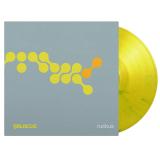
On their fourth proper studio album Ruckus, Galactic wholeheartedly move not so much away from their past as a bad-ass New Orleans jazz & roll band, as they move toward another of its traditions: Voodoo funk.
Not merely content to stick to Mardi Gras or Dr. John esthetics, Galactic points firmly toward the technological present with their primordial groove machine music. Bass, bass, and more bass is the order of the day, and strange keyboard sounds come bubbling under like some lost Lee Perry session gone digital. Ruckus is a spooky ride to the other side of midnight. That moment in time when anything is possible.
This is musical rebirth of a band. Galactic was made all the better for its brave new direction. Ruckus is a album packed with ass-burning grooves and was produced by Dan The Automator.
Ruckus has not been available on vinyl more than 2 decades, and now it's finally out again as a limited edition of 750 individually numbered copies on yellow & green marble vinyl, and includes an insert.
After some time, The Don returns to the series for number 4, with 3 previously unreleased tracks all recorded between the 90’s and early 2000’s. Remastered from the original CD and ready to spin many years later.
Limited to 300 copies.
Remastered & cut with Marco at Analogcut.
Luis Malon returns to Overthink Records with a 4-track EP.
Four cuts rooted in his distinctive, functional sound.
Driven by raw drum machines, acidic lines and precise sequencing, the release moves between techno and electro with a direct, dancefloor-focused approach — tight, hypnotic and built for late hours.
- A1: Handcarved Coffins
- A2: Waugh & Peace
- A3: A Month In The Country
- B1: The Old Man's Still An Artist With A Thompson
- B2: Slow Wurm
- B3: The Easter Parade
"It transported me back to 1979. Me as a 17 year old post-punk kid at Futurama Festival in Leeds watching PiL, Killing Joke, The Fall and Cabaret Volatire." Lubomir Jovenovic - Leeds Jazz Festival Curator.
Born out of a chaotic Saturday night in Hastings. A raucous double bill between Leeds Jazz troupe and Kent post punks resulting in feedback, mosh pits and a breakneck rendition of The Stooges TV Eye. A plan was hatched right there to record an album together.
"Really f**king happening. I dig this big time." Mike Watt (Minutemen, The Stooges)
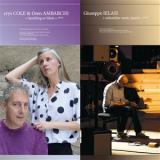
- 1: Crys Cole & Oren Ambarchi 'Sparkling Or Silent
- 2: Giuseppe Ielasi 'Unfamiliar Music (Paris)
Entstanden aus einem Live-Auftritt, offenbart ,unfamiliar music (paris)" das Wesen der Obsessionen und des Klanguniversums von Giuseppe Ielasi - einem Musiker, dessen Zurückhaltung nur von seinem Talent und seiner grenzenlosen Hingabe an das musikalische Schaffen seit fast 30 Jahren übertroffen wird. unfamiliar music (paris) ist ein bemerkenswerter Ausdruck von Ielasis Herangehensweise, einer Herangehensweise, in der Feinfühligkeit, manchmal Nostalgie und Emotionen es verstehen, mit Zurückhaltung ein Klanguniversum zu durchdringen, das um Polyphonie und Reminiszenz herum aufgebaut ist, um Texturen und Motive, die sich mit Anmut und Inspiration verflechten, verbinden und gegenseitig antreiben. ,Sparkling or Silent" des Duos Crys Cole und Oren Ambarchi ist ein eigenständiger Moment in ihren jeweiligen künstlerischen Ansätzen, ein Schritt zur Seite, der einen Fixpunkt um eine elektroakustische Methode markiert, die zwar in beiden Werken stets latent vorhanden war, sich hier jedoch als zentrale Kompositionsmodalität durchsetzt. Der elektroakustische Ansatz wird hier jedoch nicht aus formalen Gründen herangezogen, geschweige denn als ästhetische Leitlinie. Im Gegenteil, er wird als Kompositionswerkzeug betrachtet, offen für alle klanglichen Möglichkeiten, ein Werkzeug, das es dem Künstler ermöglicht, innerhalb des Klangs selbst einen verwobenen Raum zu entwerfen, in dem Erinnerungen, Eindrücke und Empfindungen eine Erzählung am Rande der Vorstellungskraft und der gemeinsam erlebten Momente weben - eine Erzählung, in die eine komplexe und sensible Klangschicht eingebettet ist, die die Grenzen zwischen künstlerischem Projekt, intimer Reise und geteilten Träumen verschwimmen lässt.
- 1: Big Bang
- 2: Dusk
- 3: Library Copy Do Not Remove
- 4: Habitat
- 5: Arp Angels
- 6: Castle In The Moon
In ,Library Copy Do Not Remove" präsentiert JJ Weihl von Discovery Zone eine digitale Verzauberung der Realität, in der er das Materielle und das Immaterielle miteinander verwebt, um zu zeigen, dass es sich dabei tatsächlich um zwei Aspekte ein und desselben handelt. In Weihls Welt sind Natur und Technologie keine Feinde, sondern erschaffen sich gegenseitig in einem unendlichen Tanz aus Bedeutung und Reflexion. Ursprünglich als Raumsound für das Zeiss-Groß-Planetarium in Berlin geschaffen, ist ,Library Copy Do Not Remove" eine Schöpfungsmythologie für das simulierte Universum. Dabei handelt es sich jedoch nicht um eine trockene, bostromische, maskuline Fantasie einer digitalen Realität, der die Geheimnisse der Natur fehlen. Stattdessen fordert Weihl den Zuhörer auf, im Rahmen einer Simulation Raum für die beeindruckende Realität der natürlichen Welt zu lassen. Wenn unsere Welt simuliert ist, dann muss die Simulation in der Lage sein, die Schönheit und Pracht der Natur zu erschaffen. Auf diese Weise betreibt Weihl eine ambient-artige Alchemie, die eine große Versöhnung von Natur und Technologie fordert, während sie uns auffordert, darüber nachzudenken, wie und wo die Erfahrung transzendenten menschlichen Bewusstseins zwischen ihnen existieren könnte. Die Songs auf ,Library Copy Do Not Remove" entstanden, während Weihl gleichzeitig ihr zweites Album ,Quantum Web" fertigstellte, und spiegeln einen weitreichenden, inspirierenden Zustand aus Aufregung und Angst wider, der mit der Aufgabe einherging, Musik für einen so einzigartigen Raum zu komponieren. Die Songs selbst wurden durch Ambisonics geformt, ein spezielles Format für räumliches Audio, das direktional ist, anstatt auf Kanälen zu basieren (wie Stereo), und wurden über ein Mosaik aus 49 Lautsprechern übertragen. Da es für Live-Auftritte geschrieben wurde, war ,Library Copy Do Not Remove" nie als Album im eigentlichen Sinne gedacht, sondern als dreidimensionales Ereignis. Auf diese Weise spiegelte die Klanginszenierung wider, wie wir Klang in unserem Alltag wahrnehmen: uns aus allen Richtungen umgebend. Für diese Albumveröffentlichung hat Weihl alle Songs gemeinsam mit ihrem langjährigen Produzenten E/T von Grund auf neu abgemischt und die Konstellation der Tracks für ein Stereoerlebnis neu konzipiert und überarbeitet. Inspiriert von den Werken von James Gleick, LD Deutsch, Johannes Kepler und Jorge Luis Borges, erforscht ,Library Copy Do Not Remove" die kreative Spannung zwischen Realität und Wahrnehmung, Information und Mythologie, Harmonie und Unordnung. Im gesamten Album fragt Weihl, wie wir als Menschen das Universum um uns herum und den zugrunde liegenden Code, der es belebt, verstehen lernen. Was dabei entsteht, ist ein klanglicher Mythos, der von spiralförmigen digitalen Universen erzählt, die ineinander verschachtelt sind und in denen jeder teilnehmende Akteur gleichzeitig sowohl Teil als auch das Ganze der Realität ist. Auf diese Weise ist ,Library Copy Do Not Remove" ein cyber-Ausdruck zeitloser Weisheit: Anstelle von ,wie oben, so unten" könnte Weihl vorschlagen: ,wie der Input, so der Output".

Cosmic G maps the liminal terrain between waking consciousness and neural drift across four transmissions. Synaptic pathways fold into spiraling architectures. Each sequence a deeper descent into the mind's hidden hollow circuitry. From euphoric dissolve to the hum of interior mechanisms, dream state traces the geometry of altered perception where the dancefloor becomes ritual chamber. An invitation to slip into the frontal cortex and navigate the frequencies that rewire thought itself.
Ecstasy and delirium—Amterdam’s duo Match Box transport us once again, getting us back on bright, trance-leaning club sounds; while Berlin-based Olsvangèr takes on remix duties with patient in waveform form—dubby, radiant and groove-led. X-File’s is an ep leaned into pure ecstasy made for this summers festival calendar and beyond.
303 synthesiser leads, driven bouncy baselines, infectious chopped vocal samples from the nineties—Match Box sit somewhere between euphoric trance and high-energy progressive house, shaping the sound of the EP.
On B1, Olsvangèr takes Stone Again into dubby territory with his signature prog touch, full of intricate textures and depth.
TGP & LDG on their third collaborative release, a four-track statement that moves between raw live energy and deep, hypnotic exploration. The A side captures the essence of the dancefloor with two cuts from Tobias. & Kuniyuki’s live set at EDEN, Japan. Spontaneous, textured, and driven by the moment. A direct transmission from the booth.
B side shifts perspective: Yuta / O-MA strip things down to the core with a minimal techno approach, precise, reduced, and functional. Ness closes the record with a downtempo, hypnotic journey, immersive, subtle, and introspective.A release built on contrast and cohesion, bridging live improvisation and studio precision. Third chapter. Same vision. Expanded language.
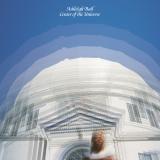
Spiritual World presents: Ashleigh Ball — Center of the Universe, a transcendental flute journey from the singer and flutist of Teal. Center of the Universe is a 32-minute improvisational odyssey recorded inside the Dominion Astrophysical Observatory (DAO), a National Historic Site on Vancouver Island, in British Columbia Canada..
Inspired by the pioneering work of Paul Horn and his Inside series, the recording channels a similar spirit of reverent exploration within a space rich in history and resonance. Completed in 1918, the observatory is home to the Plaskett Telescope - once among the largest and most powerful in the world - playing a key role in mapping the Milky Way.
Following months of coordination, three hours of private access were granted on the morning of August 25, 2025. Beneath the observatory’s towering telescope, Ball performed a wordless meditation, moving between alto flute and soprano concert flute, allowing each note to merge with the chamber’s vast natural reverb. Tones bloom, linger, and return, carried along the massive curved steel walls.
Captured using a minimalist recording approach, Center of the Universe preserves the purity of the moment—its warmth, stillness, and the architecture’s subtle mechanical resonance. Here, the observatory itself becomes an instrument, shaping the sound into something elemental, timeless, and deeply human. Center of the Universe will be released as a limited-edition vinyl LP (300 copies) with a printed insert on May 15, 2026, via Rubadub, Forced Exposure, and HiFi in Sheep’s Clothing.
On Lila, his debut LP, Moroccan artist Karim presents a series of undulating electronic rhythms laser-etched into tessellated form: drumless techno from the pre-Sahara, built for communal psychic expansion.
Drumless, yes, but not percussionless. There are shakers, castanets, stabs, plonks, thuds. There are insistent basslines propelling forward, pulsing with energy, rippling in time. There are tones interlocking, rolling, fluttering, pattering. Dancing within, around, between each other. Considered in terms of sheer geometry, Lila is a techno record, unmistakably. But it sounds quite unlike any other techno record you've heard lately.
To write the album, Karim borrowed from the music of the Gnawa, a religious-spiritual musical tradition descended from West African peoples brought to Morocco as slaves hundreds of years ago. Now integrated deeply into Moroccan culture, the centerpiece of Gnawa music is the lila—or "night," in Arabic—an all-night-long ritual of rhythm designed to induce participants and musicians alike into a healing trance state. Which, if you're a dedicated raver, may sound familiar, yes?
Crafted entirely with modular synthesizers, Lila conjures a range of textures and moods. The show opens with "Bakh," a blissful exercise in beatlessness, clear and crystalline. On "Philipoussis," "Kiyex," and "Sonic," arpeggiated synths approximate Gnawa chants while interlaid percussion keeps time in multiple meters. "La" and "Kille" pulse in half-time, ideal for creative mixing. "Joul à lèvre" bristles with electricity, the sound of a charged lightning rod. "Pamil," woozy and lurching, feels like being shipwrecked on a forgotten island. Last and absolutely certainly not least, on the final track, "Miloir," Karim faces West and unleashes the album's only kick drum for a ten-minute psychedelic techno masterpiece. The mind warps; the body moves.
Lila is released on Tikita, Karim's own record label, founded in 2014. Tikita's discography, spare but tightly curated, features artists from across the globe pushing outwards into techno's deepest reaches. Karim's album pushes even farther. Listen for yourself.
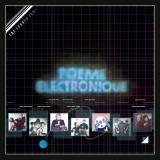
POEME ELECTRONIQUE was Dave Hewson (synthesisers, production), Sharon Abbott (lyrics, lead and backing vocals), Julie Ruler (backing vocals) and Les Hewson (bass), formed in 1980 by Dave Hewson in South London, UK, in 1980. Dave was studying music and as a rare kind of student species he had a deep fascination for New Wave and electronic music thus also playing and recording electronic music ever since like using the Boss DR-55, Cosmo Sound Super Drum, Elka Rhapsody 610, EMS Synthi AKS, Korg MS-20(X2)/Polysix/Polyphonic Ensemble 1000/VC-10 Vocoder, Linn Electronics LM-1, Octave Kitten, Roland RS-09/VP-330 Vocoder Plus, Simmons SDS-V Kit and Yamaha CS-80 on this retrospective POEME ELECTRONIQUE album with original material from 1981/82 only. Over the period of more than two years, Dave has remastered these tracks using the latest high-end tools making them sound better than ever before. The deluxe 2LP vinyl album comprises 16 tracks of which 14 have never been published before. “The Echoes Fade” and “Voice” are the original versions taken off their original 7” from 1982. The album “The Echoes Fade” cannot be described other than being a masterpiece and one of the best-ever early 80’s electropop records ever, and it surely has to be lined up with Rational Youth or Experimental Products’ cult albums (in terms of being minimal synth/wave scene reference albums), but to be frank, Anna thinks that POEME ELECTRONIQUE were even above their level.
Truly, they had deserved to go on the successful path like Depeche Mode, OMD or Soft Cell, but fate was against them as it seems. The main difference to other electropop groups of the time was definitely that Dave did not only master his synths technically-wise, no, he also knew how to actually play, and when you hear his amazing multi-track ‘manual sequencing’, programming skills, great harmonies and melodies throughout the tracks, along with the two girls’ performances – well they can really sing! – you will agree there is some something remarkably extraordinary in these tracks. You will find minimal electropop super hits like “Rendezvous”, “She’s an Image”, “Fragile”, or “Dilemma”; hauntingly beautiful melancholic tracks like “A Mourner’s Lament”, “This Night” or “It’s in the Atmosphere”; darkest minimal electronics on “Inside his Head”; and even more poppier tracks like “Follow”. This record will hopefully be loved by any electronic music lover and most probably marks the highlight in the growing Anna Logue Records catalogue – therefore Anna did not shy away from any costs and the album is truly an outstanding release in every single aspect including sound and artwork presentation. Apart from the bonus tracks you will find in the 2LP deluxe vinyl edition glossy inner sleeves with lyrics to all songs, as well as individual mini 7” sleeves for each song designed by our dear graphic designer Steve Lippert plus many additional group photos on the gatefold sleeves’ inner. After so many efforts and more than two years passing by, Anna is so over the moon to see this release being ready now and we have done all we could to make this an outstanding release, so now it’s up to you to give the band their final glory, but Anna is in no doubt that – at least after hearing the sound samples – you will.
Mad Rey is a Paris-based producer and DJ whose universe moves freely between warm house, raw electronic textures, and influences drawn from the international club scene. First emerging through the D.Ko Records collective and label—one of the key forces behind the French house revival of the 2010s—he quickly developed a sensitive and organic signature, blending analog groove, evocative melodies, and a deep dancefloor energy. His notable releases on D.Ko, followed by projects with labels such as Red Lebanese and Ed Banger Records, reflect a singular trajectory at the crossroads of France’s most influential underground and electronic scenes.
Constantly evolving, Mad Rey is now opening a new chapter in his journey. An upcoming EP on Yoyaku affirms a more club-focused and percussive direction, while new productions leaning toward tech house outline a sharper sound designed for powerful systems and late-night dancefloors. This evolution comes with a clear ambition: to carry his music beyond French borders and expand his presence on the international stage.
Balancing production precision, DJ instinct, and an ongoing search for renewal, Mad Rey continues to shape a distinctive artistic world—rooted in the present yet firmly oriented toward the future of the dancefloor.
- 1: Remenanuèch
- 2: Fòrabanda
- 3: Adissiatz Palhassonaira
- 4: Clam
- 5: La Majorana
- 6: Au Nòst' Casalòt
- 7: Diuré Tremblar
- 8: Diuré Samsir
- 9: A L'amistat
- 10: Flame Folclòre
- 11: Lo Mes De Mai
- 12: Jana D'aimé
With Flame Folclòre, Cocanha continues reclaiming Occitan folklore as a living, political and embodied space. For Lila Fraysse and Caroline Dufau, folklore is neither decoration nor nostalgia. It is a site of struggle, where narratives, identities and imaginaries are constantly renegotiated. Drawing from fragments of traditional Occitan music, the duo composes, reshapes and rewrites. Ancient melodies intertwine with original texts in a contemporary language that echoes both subversive Occitan memories and present-day struggles. The voice becomes a chronicle of now, a way of inhabiting the present. Driven by hypnotic polyphony and the deep pulse of stringed tambourines, the album embraces a minimal, physical and grounded aesthetic. Repetition acts as propulsion, dance as function. Cocanha"s practice is collective by nature: to gather, to move, to fuel a joyful struggle around reclaiming the commons. Produced by Raül Refree, Flame Folclòre intensifies the dialogue between memory and transformation. Voices strike, revolve and respond, opening a circular space where folklore is no longer frozen but alive and burning in the present.
- A1: Boundaries
- A2: Cyber Dreams (Patrice Scott Remix)
- A3: Nasty (Feat. Marquinn Mason)
- B1: Cyber Dreams (Feat. Domenica Fossati)
- B2: Foster Child
Water Sign is the debut EP from producer and instrumentalist John Silas: a five-track suite that moves fluidly between peak-time dance and inward reflection. Deeply aligned with the open-eared ethos of NYC’s Love Injection Records, the release channels house and jazz into an emotive personal chronicle shaped by movement, memory, and community.
At its thematic center is “Boundaries,” a dynamically arranged dance-floor meditation that begins with piano, 4/4 kick and restless hi-hats before blooming into radiant synth work reminiscent of classic disco auteur Patrick Adams. Midway, the track shifts—electric piano, whistles and percussion reframing the groove into what Silas calls “hues of vulnerability.” The result mirrors the arc of love, release and renewal.“Cyber Dreams” leans into lush escapism, buoyed by surging keys and impassioned flute from Domenica Fossati, while a remix from Detroit mainstay Patrice Scott (Sistrum Records) adds unmistakable Motor City weight. “Foster Child” nods to Silas’ hero, the late Paul Johnson with exuberant Chicago spirit, and “Nasty” delivers a concise workout featuring Marquinn Mason’s robust saxophone.
Water Sign reflects Silas’s trajectory—from a childhood steeped in Soul Train, coming of age with hip hop, to MPC craftsmanship, his Detroit musical family and present-day Brooklyn—into a deeply personal record equally suited to discerning DJs and deep listeners.
- 1: Morning Dew
- 2: Damp The View
- 3: Errance
- 4: Fly Bee Fly
- 5: Backwards
- 6: About Honey
- 7: August
- 8: Hound
- 9: Bleach
- 10: Maandagje
Introducing Whoman, a Brussels trio formed by Mira and Ambroos De Schepper and Lou Wery, after several years of concerts and sonic explorations between electronic and acoustic formats. Born from travels, rehearsals, and fragments accumulated in various living spaces, About Honey has patiently taken shape, like a collection of soundscapes and intimatenarratives. The richnessof the textures and the fluidity of the arrangements are striking. Acoustic guitars, mandolin, and tenor guitar converse with synth pads and delicate vocal harmonies, sketching a shifting sonic universe where pop energy and introspective folk atmospheres intersect. Finalized at Studio Ledeberg in Ghent, the album bears the mark of these years of concerts, particularly the tours in mountain refuges that refocused the band"s attention on the essence of the songs: voices, harmonies, and collective breath. Like the honey from which it borrows its metaphor, About Honey concentrates multiple influences to reveal a singular color: the textured expanse of Animal Collective and Panda Bear, the luminous melancholy of Fleet Foxes, and the abundant songwriting of Dirty Projectors. In ten tracks, Whoman delivers a dense and luminous debut album, both organic and inventive, where the delicacy of the vocals and the richness of the arrangements combine to create a warm and vibrant record, revealing a unique new voice on the Belgian indie scene.
Gidia, the collaborative project of Giorgos Lemos and Kondaktor, deliver a bold release that marks a new chapter for both the artists and the evolving sound of REVOLT.
Born between global influence and local greek reality, Gidia operate at the intersection of club culture and street memory. Their sound moves freely across house, techno, electro and acid, drawing from West Coast grooves, disco-house energy, early Daft Punk aesthetics, boombox culture and the raw attitude of B-boys music.
Noko is a Gda?sk-based (Poland) band operating at the intersection of jazz, electronics, and club music. Their sound grows out of improvisation, but instead of following a traditional jazz narrative, it focuses on trance, repetition, and the physicality of rhythm. The band's sound is built on a fusion of acoustic instruments-trumpet, saxophone, double bass, and drums-with electronics and synthesizers. The result is a dynamic structure that works just as well at jazz festivals as it does in a club setting. ?oko's second album is a sonic residue suspended somewhere between a jazz festival and a Berlin techno club. KO is a form of recycled jazz and electronics that opens up wide, cinematic landscapes for the listener. It's deeply physical music, driven by a trip-hop groove that keeps things grounded while allowing the mind to drift into less obvious territories. For this release, ?oko invited two outstanding artists who add a unique character to the whole. Novika brings her signature dreamlike calm, while the voice of Maciej ?winiarski appears in a song about death, closing the band's improvised journeys. This is a personal record the band wants to share with you.
- A1: Voice Of Gob
- A2: Passage Ii
- A3: Latched On
- A4: Decrepit Mansion
- A5: Witch In The Attic
- B1: The Attic
- B2: Room That Wasn’t There Before
- B3: Passage 1
- B4: ) Room With The Rain
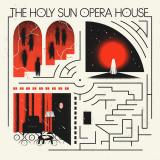
Holy Sun Opera House at its core is soprano and drummer Krissy Barker with composer dl Salo. Along with a revolving cast of collaborators, singers and performers, they create emotionally engaging and haunting symphonic music embellished by electronics, heavy drums and synthesizers. The group has been described as “Opera Cult” and as one who would play at the Roadhouse in Twin Peaks. They draw influence from early Dead Can Dance, Fever Ray and Klaus Nomi.
The Holy Sun Opera House is the group's self-titled debut set for release in May 2026 on the label Hologram Opera. The self-produced album was conceptualized as a way to describe an obsessive mind with music and inspired by the recurring dreams of singer Krissy Barker. In it is a realm of shifting rooms, dilapidated houses and passages. These unsettled rooms and spaces pose a striking confrontation of fear and anxiety from deep within.
In its conception, The Holy Sun Opera House was written as a passage through these ethereal dreams and spaces. The song Latched On depicts the compulsive psyche as a draining physical entity attached. While Voice of Gob, Decrepit Mansion, and Room with the Rain observe and attempt to find acceptance in this conflict. The Passages I & II travel between the curtains to the unknown entity residing in The Attic, who looks inside the mind of the dreamer and determines she has no soul.
The album blends genres with electro, darkwave, and contemporary classical music. The ritualistic passages of the choir throughout the album are reminiscent of Wicker Man and 1970's mystic cults, praising the deities residing within the dream. The arrangement of synths, electronics, heavy drums and operatic singing lend itself to something uniquely memorable.