2026 Repress.
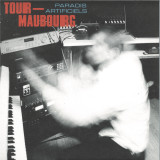
There is with Tour-Maubourg an eternal desire to translate the feeling of love into music. Sometimes cheerful, sometimes melancholy, always exhilarating, the producer, native of Brussels and expatriate in Paris, has continued for 3 years to attract the praise of his peers and the support of a growing audience. The man who was described by Trax Magazine upon the release of his 1st EP as ‘‘one of the most promising producers of the French house scene’’ has revealed himself in this hyperactive new scene to become one of its best standards.
After several EPs released in France on Pont Neuf, FHUO (ie. Folamour’s label), as well as Happiness Therapy or in England and Germany on FINA and Salin, Tour-Maubourg unveils his first album, Paradis Artificiels. The Parisian producer refers to Charles Baudelaire’s poem, to which he links his melancholy music, who wrote:
‘‘common sense tells us that the things of the earth exist very little, and that the true reality is only in the dreams’’.
If the producer’s first EPs were mainly focused on club music, Paradis Artificiels oscillates between the atmospheres that made the success of these previous releases and those of a studio album. Composed of both house songs and downtempo sound researches, always flirting with the jazz sounds that have made the fame of the producer, this first album invites us on a journey in the lineage of St Germain, Massive Attack or Nicolas Jaar.
Cerca:bet e
In spring 2025, Abul Mogard and Rafael Anton Irisarri created the source material for their second album, Where Light Pauses in the Silence of the Sun, during a three-day residency at Morphine Raum in Berlin. Functioning as both recording studio and performance venue, the space has no stage, with the audience gathered around the performers. Working within an open framework, the duo reshaped the music each evening while recording the performances live to multitrack. Rotary speakers, modular synthesizers and bowed guitar formed the core of their sonic language, captured through a 1970s mixing console and microphones placed around the room.
Back in Mogard’s studio in Rome, the material was further crafted as motifs were stretched, fragments isolated, and tempos dissolved. Irisarri recorded additional guitar textures and treatments in New York, while passages recorded by Martina Bertoni and Andrea Burelli in Berlin reinforced the harmonic centres and brought breath, refinement and a new sensibility to their compositions. The process continued as Mogard’s layering and subtraction reassembled everyone’s parts into the final arrangement.
The album opens with “In the Eastern Wild,” building from a sparse outline into a monumental formation of low-frequency weight, its internal motion shaped by the rotating Leslie speaker. “Over the Domes” widens into a broader acoustic field, where sustained modular tones meet waves of softly plucked guitar. The music then turns inward with “A Blue Descent,” centred on Bertoni’s cello, whose growling timbre introduces a melancholic depth.
At the album’s centre, “In a Quiet Radiance” unfolds around a slow guitar ostinato, its luminous stillness opening into a more expansive and reflective state. Across its ten-minute span, Burelli’s violin lines and Bertoni’s lower cello phrases gradually surface, weaving through the harmonic field. Mogard brings Burelli’s processed voice to the fore, its emotive, operatic presence becoming one of the record’s pivotal moments. “Of Blessed Ages” suspends the sonic flow, shifting between parallel major and minor chords as lingering, slowly decaying melodies shape the music’s internal drift. The closing “Among Shadows” settles into a darker resonance as layered textures recede.
Mogard and Irisarri’s shared language balances restraint and maximalism. UK magazine Crack describes the music as “a tidal wave held in suspension,” while Dutch newspaper de Volkskrant writes, “What a colossal sound, and how this music strikes at the emotions.” Reflecting on the residency sessions, Irisarri recalls: “At moments I genuinely couldn’t tell if a sound was coming from me or from Abul. It stopped feeling like two people making decisions and began to feel like we were inside a system moving on its own."
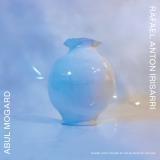
Marja de Sanctis’ cover artwork revisits the vessel sculpture from the duo’s first album, Impossibly Distant, Impossibly Close. There it appeared as raw, unfired clay. Here it has been fired in the kiln and finished with a glaze. Light gathers on its polished surface and spills into the surrounding space. As she explains, “I wanted to convey the idea of continuity within the duo, and the vessel became a kind of container for that idea. However, their music felt different this time, and with the collaboration of Martina and Andrea, I felt it should have a sleeker, softer, more glamorous look, very distant from the first raw appearance.” The transformation of the vessel from raw clay to fired form suggests a passage from immediacy toward permanence, mirroring the music’s gradual expansion.
In spring 2025, Abul Mogard and Rafael Anton Irisarri created the source material for their second album, Where Light Pauses in the Silence of the Sun, during a three-day residency at Morphine Raum in Berlin. Functioning as both recording studio and performance venue, the space has no stage, with the audience gathered around the performers. Working within an open framework, the duo reshaped the music each evening while recording the performances live to multitrack. Rotary speakers, modular synthesizers and bowed guitar formed the core of their sonic language, captured through a 1970s mixing console and microphones placed around the room.
Back in Mogard’s studio in Rome, the material was further crafted as motifs were stretched, fragments isolated, and tempos dissolved. Irisarri recorded additional guitar textures and treatments in New York, while passages recorded by Martina Bertoni and Andrea Burelli in Berlin reinforced the harmonic centres and brought breath, refinement and a new sensibility to their compositions. The process continued as Mogard’s layering and subtraction reassembled everyone’s parts into the final arrangement.
The album opens with “In the Eastern Wild,” building from a sparse outline into a monumental formation of low-frequency weight, its internal motion shaped by the rotating Leslie speaker. “Over the Domes” widens into a broader acoustic field, where sustained modular tones meet waves of softly plucked guitar. The music then turns inward with “A Blue Descent,” centred on Bertoni’s cello, whose growling timbre introduces a melancholic depth.
At the album’s centre, “In a Quiet Radiance” unfolds around a slow guitar ostinato, its luminous stillness opening into a more expansive and reflective state. Across its ten-minute span, Burelli’s violin lines and Bertoni’s lower cello phrases gradually surface, weaving through the harmonic field. Mogard brings Burelli’s processed voice to the fore, its emotive, operatic presence becoming one of the record’s pivotal moments. “Of Blessed Ages” suspends the sonic flow, shifting between parallel major and minor chords as lingering, slowly decaying melodies shape the music’s internal drift. The closing “Among Shadows” settles into a darker resonance as layered textures recede.
Mogard and Irisarri’s shared language balances restraint and maximalism. UK magazine Crack describes the music as “a tidal wave held in suspension,” while Dutch newspaper de Volkskrant writes, “What a colossal sound, and how this music strikes at the emotions.” Reflecting on the residency sessions, Irisarri recalls: “At moments I genuinely couldn’t tell if a sound was coming from me or from Abul. It stopped feeling like two people making decisions and began to feel like we were inside a system moving on its own."
Marja de Sanctis’ cover artwork revisits the vessel sculpture from the duo’s first album, Impossibly Distant, Impossibly Close. There it appeared as raw, unfired clay. Here it has been fired in the kiln and finished with a glaze. Light gathers on its polished surface and spills into the surrounding space. As she explains, “I wanted to convey the idea of continuity within the duo, and the vessel became a kind of container for that idea. However, their music felt different this time, and with the collaboration of Martina and Andrea, I felt it should have a sleeker, softer, more glamorous look, very distant from the first raw appearance.” The transformation of the vessel from raw clay to fired form suggests a passage from immediacy toward permanence, mirroring the music’s gradual expansion.
In spring 2025, Abul Mogard and Rafael Anton Irisarri created the source material for their second album, Where Light Pauses in the Silence of the Sun, during a three-day residency at Morphine Raum in Berlin. Functioning as both recording studio and performance venue, the space has no stage, with the audience gathered around the performers. Working within an open framework, the duo reshaped the music each evening while recording the performances live to multitrack. Rotary speakers, modular synthesizers and bowed guitar formed the core of their sonic language, captured through a 1970s mixing console and microphones placed around the room.
Back in Mogard’s studio in Rome, the material was further crafted as motifs were stretched, fragments isolated, and tempos dissolved. Irisarri recorded additional guitar textures and treatments in New York, while passages recorded by Martina Bertoni and Andrea Burelli in Berlin reinforced the harmonic centres and brought breath, refinement and a new sensibility to their compositions. The process continued as Mogard’s layering and subtraction reassembled everyone’s parts into the final arrangement.
The album opens with “In the Eastern Wild,” building from a sparse outline into a monumental formation of low-frequency weight, its internal motion shaped by the rotating Leslie speaker. “Over the Domes” widens into a broader acoustic field, where sustained modular tones meet waves of softly plucked guitar. The music then turns inward with “A Blue Descent,” centred on Bertoni’s cello, whose growling timbre introduces a melancholic depth.
At the album’s centre, “In a Quiet Radiance” unfolds around a slow guitar ostinato, its luminous stillness opening into a more expansive and reflective state. Across its ten-minute span, Burelli’s violin lines and Bertoni’s lower cello phrases gradually surface, weaving through the harmonic field. Mogard brings Burelli’s processed voice to the fore, its emotive, operatic presence becoming one of the record’s pivotal moments. “Of Blessed Ages” suspends the sonic flow, shifting between parallel major and minor chords as lingering, slowly decaying melodies shape the music’s internal drift. The closing “Among Shadows” settles into a darker resonance as layered textures recede.
Mogard and Irisarri’s shared language balances restraint and maximalism. UK magazine Crack describes the music as “a tidal wave held in suspension,” while Dutch newspaper de Volkskrant writes, “What a colossal sound, and how this music strikes at the emotions.” Reflecting on the residency sessions, Irisarri recalls: “At moments I genuinely couldn’t tell if a sound was coming from me or from Abul. It stopped feeling like two people making decisions and began to feel like we were inside a system moving on its own."
Marja de Sanctis’ cover artwork revisits the vessel sculpture from the duo’s first album, Impossibly Distant, Impossibly Close. There it appeared as raw, unfired clay. Here it has been fired in the kiln and finished with a glaze. Light gathers on its polished surface and spills into the surrounding space. As she explains, “I wanted to convey the idea of continuity within the duo, and the vessel became a kind of container for that idea. However, their music felt different this time, and with the collaboration of Martina and Andrea, I felt it should have a sleeker, softer, more glamorous look, very distant from the first raw appearance.” The transformation of the vessel from raw clay to fired form suggests a passage from immediacy toward permanence, mirroring the music’s gradual expansion.
- A1: Intro + Colors (Feat. Nic Hanson) (Live À L'olympia)
- A2: Love On Me (Feat. Later.) (Live À L'olympia)
- A3: Tiger Teeth (Feat. Nic Hanson) (Live À L'olympia)
- B1: Djon Maya Maï (Feat. Victor Démé) + Bensema (Feat. Lass) (Live À L'olympia)
- B2: Danse (Feat. Sirius Trema) (Live À L'olympia)
- B3: Nuit Blanche (Feat. Clou) (Live À L'olympia)
- B4: Les Hommes C'est Pas Des Mecs Bien (Feat. Clou) (Live À L'olympia)
- C1: Intemporel (Live À L'olympia)
- C2: Manyé (Avec David Walters)(Synapson Remix)(Live À L'olympia)
- C3: Toujours (Feat. Tim Dup & Lass) (Live À L'olympia)
- C4: Breathe (Feat. Thaïs Lona) (Live À L'olympia)
- C5: Guess What (Feat. Nic Hanson) (Live À L'olympia)
- D1: All In You (Feat. Anna Kova) (Live À L'olympia) + Going Back To My Roots (Feat. Tessa B) (Live À L'olympia)
- D2: Between The Lines (Dub Version) (Live À L'olympia)
- D3: Together (Feat. Beat Assailant) + Superfinal (Feat. Tbow, Thaïs Lona, Sirius Trema, Pierre Mirabeau) (Live À L'olympia)
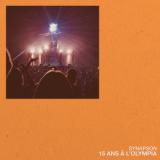
On October 16, 2025, Synapson took over the Olympia for a sold-out anniversary concert, celebrating 15 years of their career. A symbolic night in an iconic venue, in front of a crowd that came to relive the tracks that shaped their journey.
Today, the duo unveils “15 ans à l’Olympia”, a live album recorded during this unique show, a vibrant testament to their stage energy and the evolution of their project.
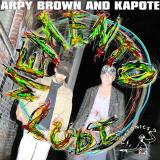
Arpy Brown & Kapote Announce Collaborative Album Memento Ludi via Toy Tonics
A sun-drenched fusion of yacht rock, house and modern indie dance energy – out June 26, 2026
BERLIN, GERMANY — Toy Tonics is proud to announce Memento Ludi, the first collaborative album by label founder Kapote and multi-instrumentalist producer Arpy Brown, arriving June 26, 2026.
The album is a funk-driven journey that bridges the warmth of 1970s analog recordings with the pulse of contemporary dance music. Blending neo-soul grooves, yacht rock harmonies and modern house rhythms, Memento Ludi captures the spirit of classic musicianship within a forward-looking club context.
But Memento Ludi is more than a typical house record. The album moves fluidly between dancefloor tracks and fully developed songs. Every instrument was performed live by the artists themselves: guitars, bass, keyboards and percussion recorded in the studio by Arpy and Kapote. After jamming and recording the basis of every song in a live procedure they carefully resample the parts to create the organic, human touch that defines the Toy Tonics sound.
The title Memento Ludi — Latin for “remember to play” — reflects the album’s philosophy: bringing joy, spontaneity and musicality back into dance music at a time when many club tracks feel increasingly mechanical and formulaic.
The collaboration arrives during a particularly busy moment for both artists. While spending countless hours in the studio, Kapote and Arpy Brown have also maintained intensive international touring schedules with the Toy Tonics crew, road-testing many of the tracks as “secret weapons” in their DJ sets from Melbourne to Los Angeles via their homebase Berlin.
“We wanted to make a record that felt like a lost studio session from 1978 — resampled and synthesised in 2026,” says Kapote.
- 01: Kneebone Barton
- 02: Through The Gaps (Pt.1)
- 03: Are We Fast?
- 04: Golow
- 05: One More Trawl
- 06: Cornish Affirmative
- 07: E-Bow An Howl
- 08: Through The Gaps (Pt. 2)
- 09: What’s Your Name?
- 10: Look At It
- 11: A Letter Home
- 12: Pysk
- 12: We Don’t Catch Fish
- 13: Home To Mother
- 14: Through The Gaps (Pt. 3)
- 15: Rose Of Nevada
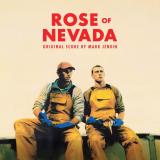
Mark Jenkin, the BAFTA Award winning director, editor, screenwriter, cinematographer and musician, presents the score to his new film, Rose of Nevada on Invada Records. Unique among British feature filmmakers for the analogue way in which he crafts his films - all three feature films have been shot on 16mm using a Bolex clockwork camera – as well as his multifaceted roles as the writer, director, director of photography and editor of the film, once more he is responsible for handling the sound design and composing the original score.
The new score mirrors the techniques employed in the film, with analogue synthesisers drawing the listener into nebulous hypnotic tones and delicate movements.
Composed, produced, engineered and performed by Mark Jenkin using synthesiser, guitar, percussion and loops & effects, the environmental recordings remind us of the context in which the music was originally borne, but as the score ebbs and flows between ambient tranquil seas and crashing storms, it affirms its presence as a powerful stand-alone piece of work.
The score’s physical release follows the Cornish director’s third feature film: the time-travelling Rose of Nevada cinematic release in UK and Irish cinemas on 24 April, with a BFI Blu-ray and BFI Player release in the summer.
- A1: Space Maker
- A2: Once Upon A Time
- A3: One Hell Of A Party (Feat. Jarvis Cocker)
- B1: Napalm Love
- B2: Mayfair Song
- B3: Left Bank
- C1: Photograph
- C2: Mer Du Japon
- C3: Lost Message
- D1: Sometimes Between Waking And Sleeping (Feat. Neil Hannon)
- D2: Redhead Girl
- D3: Night Sight
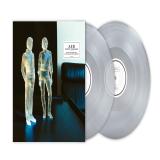
We are pleased to announce the upcoming reissue of the critically acclaimed fifth album by the iconic French duo AIR, titled Pocket Symphony.
Originally released in 2007 and produced by long-time collaborator Nigel Godrich, this album represents a refined and introspective milestone in Air's career.
The record masterfully blends delicate electronics with traditional Japanese instrumentation, creating a soundscape that is both intimate and cinematic.
Gadea’s original soundtrack to In the Beginning, the new animated short film by director Ala Nunu, unfolds across three surreal, yet surprisingly real, stories about people and the world around them: a lunar probe’s tardigrade cargo, 16th-century myths surrounding birds of paradise, and Hong Kong’s pandemic-driven hamster cull. The film is a tonally absurd documentary-fiction essay on anthropocentrism and the human need to control narratives.
This is Gadea’s first musical accompaniment for animation. Collaborating with Marina Herlop on vocals, Gadea’s sonic palette sits somewhere between field-recording minimalism, chamber electro-acoustics, and the more fragile end of speculative composition.
- A1: Michael Andrews - Something Bad’s Better Than Nothin’
- A2: Kevin John Agosti - The Reason
- A3: Ron Eliran - Sky Dust Drifter
- A4: Sunburst - Special Lady
- A5: Virgil Charles Mashburn - Why Should It Be
- B1: Randy Ream - Divorce Song
- B2: Ray Daly - Leave Me Alone
- B3: Richard David Spano - After So Long
- B4: Kerry - Stargazer
- B5: Black Water - All Night Company
2026 Repress
An anthology born out of isolation and deep introspection, Sky Dust Drifter is a cosmic medley of sun-soaked AOR, psychedelic folk, and soft rock. This soundtrack was driven by the lonesome cowboy, a lockdown savior leaving me adrift in desert winds and dimly lit country bars.
Long-distance trades and masked meetups yielded a collection of private press LPs and 45s from ten different artists spanning 1973 to 1980. This seemingly random stack of records revealed songs living entangled in themes of hard luck, heartache, and the inevitable loneliness of existence. Adorned in cracked leather and chrome, this album is an aimless wander from the soil to the stars.
Featuring an unreleased English version of the compilation’s title track “Sky Dust Drifter” (originally released only in Hebrew), the record shifts from laconic afterthoughts to bold proclamations. From Michael Andrews’ blue-eyed soul assertion “Something Bad’s Better Than Nothin’,” to the searing electric guitars and bold synths of Sunburst’s “Special Lady,” Sky Dust Drifter thrives on solitude in a universe of unconditional self-rule where loneliness is not darkness but rather a blazing light of autonomy.
With »News from Planet Zombie«, The Notwist return to view after years of exploration and experiment with an album rich in both melancholy and positivity, sketched across a suite of thrilling, fiercely committed pop songs. It’s an album reflecting a chaotic world, but responding with warmth and generosity, to achieve creative and spiritual consolidation. Recorded in their home base of Munich, it reconnects with the security of the local to explore the troubles of the global: a guiding impulse writ large across this album’s eleven songs. It’s also the first studio album since 1995’s »12« that the entire band recorded together in the studio in its expanded live formation.
A new album by The Notwist is always a curious endeavour; their musical language is as consistent and resilient as the contexts for creativity are unpredictable and ever shifting. For »News from Planet Zombie«, the core trio of Markus and Micha Acher and Cico Beck embraced the plural possibilities of writing together, bringing songs to the collective and then arranging, rehearsing and recording that material live, in the studio.
The result is an album that’s energised, fully in ›the now‹, with spectacular moments where you can hear the magic bubbling up in the dynamic between the Achers, Beck, and fellow members Theresa Loibl, Max Punktezahl, Karl Ivar Refseth, and Andi Haberl. If »Teeth« begins »News from Planet Zombie« quietly and reflectively, by »X-Ray« everyone’s supercharged, blasting out future anthems with the collective energy cranked up high. The chiming keys of »Propeller« skim the instrumental’s surface like stones across burbling water; »The Turning« clangs its way into one of the album’s most heartwarming melodies.
»News from Planet Zombie« was recorded over one week at Import Export, a non-profit space for arts and music. You can tell, too; there are some pleasingly rough edges here, as though The Notwist’s striving for hazy perfection means they’re also confident enough to let the songs breathe and mutate between our ears. That openness to chance also takes in guest turns from friends both local and international, reflective of a cosmopolitan Munich: Enid Valu joins in on vocals, while Haruka Yoshizawa guests on taishōgoto and harmonium, Tianping Christoph Xiao on clarinet, and Mathias Götz on trombone.
The Notwist aren’t best known for cover versions, but »News from Planet Zombie« features two: a gorgeous version of Neil Young’s »Red Sun« (from 2000’s »Silver & Gold«), which the group originally developed for a theatre play directed by Jette Steckel, and a take on Athens, Georgia folk-pop gang Lovers’ »How the Story Ends«. They slot into the album’s narrative perfectly, nestling in like old friends, revealing The Notwist as poetic interpreters. Played well, the cover version is both acknowledgement of fellow travellers and act of generosity, and The Notwist nail both aspects here.
And that narrative, the way the album plays out? »News from Planet Zombie« acknowledges the distress of our current geopolitical impasse, while reminding us there are collective ways forward. Fed through the figure of the zombie, Markus Acher explores our anxieties: »In the title and some lyrics I reference B- and horror-movies, which is a reference to the crazy world at the moment, which seems to be like a really bad and unrealistic B-movie.« But there’s a reminder here not to lose the thread entirely, that these things, too, will pass.
»The river here in Munich I often go to has been there forever and will be there long after us,« Acher reflects, pinpointing an important source of succour for him, »always the same but always changing. Very calming, but also always reminding me that like this river time only flows into one direction and you can’t go back. Every moment is very precious.«
Artwork by Marie Vermont
The Notwist:
Markus Acher: vocals, guitar
Micha Acher: bass, sousaphone, euphonium, trumpet
Cico Beck: electronics, keyboards, guitar, recorder, percussion
Theresa Loibl: bassclarinet, clarinet, piano, harmonium, organ
Max Punktezahl: guitar
Karl Ivar Refseth: marimbaphone, vibraphone, glockenspiel, congas, percussion
Andi Haberl: drums, dulcimer
+
Enid Valu: vocals on 1, 2, 3, 4, 5, 7, 9, 10, 11
Haruka Yoshizawa: taishōgoto on 6, harmonium on 9, 10, 11
Tianping Christoph Xiao: clarinet on 4, 10, 11
Mathias Götz: trombone on 4, 10, 11
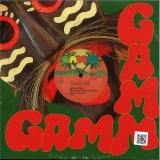
Melohman and Paco Colombas Unveil 'Palma de Janeiro': A Rhythmic Bridge Between Mallorca and Brazil...
PALMA DE MALLORCA - Producers Melohman and Paco Colombas announce their new EP, 'Palma de Janeiro' on GAMM, a vibrant sonic fusion where Mallorcan tradition meets Brazilian pulse. All together, the result is a highly percussive house workout with a South American feel.
The project centers on a unique dialogue between two worlds: the Mediterranean drone of the Ximbomba and the tropical snap of the Pandeiro.
Inspired by the festive spirit of Mallorca's 'Devil' - a mischievous figure of joy and dance - the EP weaves together communal island roots with the duo's deep-seated passion for Brazilian music.
Born from years of crate-digging and travels across Brazil, 'Palma de Janeiro' is more than a collaboration; it is a celebration of music as a universal language. It is a tribute to the dancefloor, where local heritage and global rhythms collide.
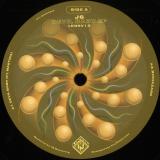
One of the UK’s rising talents in recent times, J6 continues his upward trajectory with an enormous four-tracker on underground fan favourites, Locked In Dam. The party starting crew go hand in hand with the refined J6 ethos, as he delivers a dynamite selection of tracks for your record bag. His familiar low end driven sound, combined with tinges of acid and futuristic textures moving between house and modern electro, shapes the ‘Devil Baby’ EP into a cohesive and powerful statement.
The title track is built upon powerful drums and squelchy, spaced-out tones, combined with trippy vocal stabs from Martina, who features on the record. This is prime J6 territory and not to be underestimated. Next up, ‘Biohazard’ introduces mysterious synths that create a transcending atmosphere, shifting the dance floor into the next gear with further twisted acid movements. On the flip side, the Manchester based beatmaker teams up with Ben Gough for ‘Time Capsule’, delivering pacey energy that never lets up, driven by nostalgic tech house drums and icy hi-hats. Rounding off the EP, ‘Emergence’ simmers with an emotive dark energy throughout; if we weren’t dancing with the devil before, we certainly are now.
A certain tip for the tastemakers amongst us, these are four dynamic dance floor cuts to be shared deep within the dark realms of the night.
So… what are we actually supposed to tell you about HCL? Honestly, it’s a pretty nice story. A collaboration the way it’s meant to be.
HCL stands for Horkheimer, Consti aka Zeitstill, and Delenz — not hydrochloric acid, but liquid music. One shared idea of sound, without a fully mastered plan. Most of the tracks were born during long studio sessions — long nights, extended jams, ideas taking shape naturally. No big concept, just working it out together and seeing where things go (or not).
After the first two HCL tracks found their way onto various samplers — including the 25 Years of Live at Robert Johnson compilation and Freeride Millennium’s own Queer Base Vol. 2 — it felt like the right moment to take the next step and release the first pattern. Not as a conclusion, but more as a checkpoint. This is far from the end. There are more patterns, more sessions, more ideas already waiting to be published.
Describing the genre is, as always, not that easy. It drifts somewhere between techno and all the other things orbiting around it. Purely electronic music, rooted in the club, but not obsessed with functionality. In a way, it reminds us of the early 2000s — deep, slightly twisted, hypnotic, driving but never aggressive. Music that takes its time, creates space, and pulls you in rather than pushing you forward.
For moments that are meant to last — tracks you don’t want to hear mixed out. For getting lost on the dancefloor, for forgetting the noise and madness outside for a while, for drifting into yourself and letting time fly. Honest club music, built for immersion.
Enjoy the music. Enjoy yourself. Love.
Yours, HCL
- A1: Watermät, James Mac - Make A Livin
- A2: Mousse T , Wanklemut, Francesco Yates - Some Kinda Feeling
- A3: Don Diablo, Tseba - The Devil Works Hard
- B1: Metroplane, Alex Metric, Aeroplane - Be Where I Am (Feat Daniel Wilson)
- B2: Sian, Sacha Robotti, Joplyn - Get Raw
- B3: Crooked Colours - I Can't Forget You (Gabss Remix)
Vol. 2[13,87 €]
Our brand new Club Sweat compilation series has landed with Vol. 001 - a meticulously curated vinyl EP that captures some of our favourite releases from 2025.
The A-side features Watermät & James Mac’s magnetic Afro House dancefloor-filler ‘Make A Livin’, followed by the legendary Mousse T. with‘Some Kinda Feeling’ and the future-forward collaboration between Don Diablo & Tseba ‘The Devil Works Hard’.
The B-side begins with the beloved Whitesquare remix of Metroplane’s classic anthem ‘Be Where I Am’, before dropping into Sian’s gritty and hypnotic ‘Get Raw’ with Sacha Robotti & JOPLYN, concluding with Gabss’ atmospheric rework of Crooked Colours’ ‘I Can’t Forget You’.
A snapshot of Sweat It Out’s current influence in the global dance scene what a way to kick off 2026!
d B1: Metroplane, Alex Metric, Aeroplane - Be Where I Am (feat. Daniel Wilson) Whitesquare Remix
“ It’s like a more psychedelic , organic KLF Chill Out with deep roots and cosmic overtones“ Richard Norris
“ A beautiful trip “ Jem Finer
D.E.N 01 LAND - Composer Danny Hammond
Land is the first in a series of earth inspired sonic journeys , part sound meditation , part immersive psychedelic nature trip. Incorporating field recordings , shack instruments and spoken words from cosmic adventurers .
It originated as an installation at the 14 Hour Technicolor Drone event in Sept 2025 whereby all listeners fell into a deep nature/dream slumber.
For fans of Pauline Olivieros ,Brian Eno , Terry Riley , Don Cherry , Barbara Hepworth , Alice Coltrane , John Betjemin and all other ambient adventurers.
D.E.N
Deep Earth Network is a long term sound project exploring deep-listening , drone and sonic adventure , all inspired by the earth in all its manifestations , land , water , space , consciousness. Initiated by Danny Hammond , D.E.N will present different sonic projects and collaborations from vinyl / audio releases to sonic installations with the aid of The Deep Earth Soundsystem and the Sonic Heads ( S.H ) a collection of sculpted head audio transmitters.
the debut solo album by henrik raabe, guitarist of the german trio wareika, who rose to prominence in the 2000s with their minimal deep house sound. departing from the cool, jazzy deep house he was known for, raabe delivers a uniquely crafted downtempo album that feels like a seamless blend of jazz, afro, dub, new age, and postmodern influences. it evokes the spirit of an imagined encounter between the durutti column and dennis bovell, with virginia astley joining in—reminiscent of the uk sound of the 1980s—yet rendered more minimal and refined, in a distinctly german way. with each listen, the album draws you deeper in. it is poised to become a defining release for mule musiq in 2026
- A1: Return Of The Knödler Show 2 52
- A2: The Frogs Of Miwa - Cho (1) 4 52
- A3: Waiting (I) 5 38
- A4: An Old Friend Passes By 3 46
- A5: Coco Bolo Strip (1) 5 25
- B1: Peace And Pipe Utopia 3 14
- B2: Unidentified Dancing Object 1 44
- B3: The Call (I) 2 41
- B4: Wenn Das Rohr Dommelt 4 03
- B5: Mariahilf (Live Version) 3 36
- B6: Watching The Shades (I) 2 59
- B7: Playing The Table Music (Ii) 2 43
- C1: Could Be Nice Too 5 29
- C2: Ox Of Inner Depth 4 51
- C3: Ymir Shows Up 3 58
- C4: Could Be Nice 5 24
- C5: Playing The Table Music (I) 4 23
- D1: Coco Bolo Strip (Ii) 4 52
- D2: Locusts Looking Like Men 5 55
- D3: Waiting (Ii) ︎ 3 36
- D4: No Stove 2 29
- D5: An Old Friend Passes By Again 3 00
- D6: Heimkehr Der Holzböcke 3 16
Black Truffle is thrilled to announce Dalbergia Retusa, an extensive double LP selection of the solo guitar music of Hans Reichel, compiled by Oren Ambarchi. Last heard on Black Truffle as one quarter of the joyously anarchic Bergisch-Brandenburgisches Quartett, Hans Reichel (1949-2011) is one of the great figures of experimental guitar music. Though perhaps lesser known than peers like Derek Bailey, Fred Frith and Keith Rowe, Reichel’s rethinking of the instrument was in some ways the most radical of all. Early on, he dispensed with existing guitars to build a series of his own that explored the use of additional strings and fretboards, moveable pickups, extra bridges, special capos, and other innovations documented in the extensive booklet accompanying this release.
Reichel was a long-term resident of Wuppertal, the small Western Germany city that became an unlikely centre of European free jazz in the late 1960s, also home to Peter Brötzmann and Peter Kowald. His solo debut Wichlinghauser Blues was an early entry into the FMP discography and began a relationship with the label that stretched into the 1990s; all the solo performances heard here were first released on FMP. As Reichel says in the charming archival interview with Markus Müller included here, he was ‘always a cuckoo’s egg at FMP’, a label that began as an outlet for roaring European free jazz. What strikes the listener right from the opening selection on Dalbergia Retusa—‘Return of the Knödler show’, from 1987’s The Dawn of Dachsman—is the extraordinary beauty of Reichel’s music, at once alien in the shimmering sonorities and unconventional pitch relationships made possible by his invented instruments, and deeply lyrical, even romantic in its harmonic content. Growing up in West Germany in the 1960s, Reichel’s formative influences were mainly British and American rock bands, a background that shines through in many of the pieces included here: ‘An old friend passes by’ is haunted by the ghost of Hendrix’s rhythm guitar, and the wild closer ‘Heimkehr der Holzböcke’, taken from a rare 1975 7” and the only piece to use overdubbing, layers errant hammer-on and slide tones over a Canned Heat boogie chug.
Reichel was an important source for the development of Oren Ambarchi’s own extended approach to the electric guitar. Appropriately enough, his selection opens with the very first piece by Reichel he ever heard, on a flexidisc included with a 1989 issue of Guitar Player magazine. Though Reichel collaborated with others extensively in many settings and also performed on violin and his other major contribution to instrument invention, the daxophone, his music for solo guitar remains at the core of his oeuvre. Focusing exclusively on solo pieces recorded between 1973 and 1988, the 23 pieces on Dalbergia Retusa showcase the range and consistency of Reichel’s work, allowing the listener to see how his performances developed hand-in-hand with his instrumental inventions. On a piece from his very first LP, played on an 11-string instrument (partly strung with piano strings and using a schnapps glass a slide), we hear his intensive exploration of fret-hammering to create zither-like, chiming tone, which Reichel would hone further in later years with a double fretboard guitar specifically designed to be hammered rather than fretted and picked. On a piece from 1979’s Death of the Rare Bird Ymir, Reichel uses two steel-string acoustic guitars at once, with beautiful results: ‘some even say too beautiful’, he jokes in the interview included here. Many of the pieces from the 1980s make use of varieties of the ‘pick behind the bridge guitar’, instruments of uncanny harmonic richness primarily designed to be played on the ‘wrong’ side of the bridge. At times the unexpected behaviour of attacks, resonance, and decay can almost seem electronic, conjuring up the technology-assisted work of Henry Kaiser or even Fennesz, but realised solely through Reichel’s unorthodox techniques on his invented instruments. Extensively illustrated with photos and Reichel’s own plans and drawings of his instruments, Dalbergia Retusa is an essential introduction to the unique world of Hans Reichel. Rarely has music been at once so strange and so beautiful.
Brooklyn Sway's 8th installment arrives from outside with more unexpected debuts and riotous returns to form. Experienced Barcelonian Larry Lan's epic 10-minute opener 'WTNG' is minimal goes post-punk, repurposing well-known, undisguised lyrics into an aggressive take on early Perlon and explanation enough for his recent album drop on Cadenza. BKS vets N/UM return with 'A Free Woman in Queens' showing off a reduced side of their sound adjacent to mid-00s minimal with plenty of character, its stripped intro giving way to a fuller, dubbed-out second half, with the cheeky vocal and instrumental touches joined by a swelling pad. Featuring spoken vox from Mari Blue and the debut of BKS co-head Asha Jasz alongside DeWinter and Jay Prouty, 'Acid in Your Coffee' takes the dirtier route, with layers of zapping electronics, an insistent single-note acid bass, and synths drifting between tones and textures all veering off like its vocals before eventually returning to center. LA/Bucktown scallywag $coe brings it home with 'The Devil is a MF Liar', an acid jam whose profanity-laced vocal samples don't require divine intervention to decipher. Bookended by a pair of interludes, the first on the power of repetition and the last in memoriam BK legend Big Sexy in his own words, and again featuring striking artwork from notable NYC street artist Fumero, BKS keeps that Sway from going astray.
- A1: Is This What You Like - Terra
- A2: The Tribe - The Fred Bloggs Band
- A3: Morning Light - Smythe And Rucker
- A4: Zig Zag - David Chalmers
- A5: High Again - Shades Of Rayne
- B1: Animal Talk - Dana Alberts
- B2: Child Of Nature - The Key Of Creek
- B3: Child Of Earth - Chuck Robinson
- B4: Silvery Waterfalls - Luellen Reese
- B5: The Lost Road - Doria
2026 Repress
A further exercise in musical curation, Child Of Nature is our latest sonic confluence of self-released tracks from the loners, hippies and outsiders of the 70s and early 80s. A collection of privately pressed music, able to breathe and be created free from the constraints of heavy handed commercialism, yielding a pure vision of artistic expression. Child Of Nature features ten songs of brooding soft rock and psychedelic folk steeped in melancholia. Some ache for better times or past lovers, while others seek spiritual fulfilment or social progress.
A compilation to evoke the raw and unobstructed, to summon the occult, to fundamentally conjure a vivid portrait of our untamed natural environment. Recorded on the north coast of California, Luellen Reese’s ethereal “Silvery Waterfalls” drifts and swirls with electric guitar as her unearthly vocals transcend across a seven minute opus, fit for the golden age of labels like 4AD or Dedicated. “The flowers are dancing just for you …”, Reggie Russell croons over glistening Key Of Creek’s title track “Child Of Nature”, evoking a utopian world of natural harmony free from the present day realities of industrial decay.
Tap into your inner primal being, to embrace wholeheartedly, with frivolity and without reserve, your own child of nature.