The first chapter of a new series exploring identity, temporality and the many dialects of contemporary techno. Four tracks, four distinct approaches, yet bound by a shared pursuit of tension, texture and transcendence.
Chronicles Diary introduces its identity with WAYF VOL1, the first entry in a series asking when, not where, this music belongs. The answer comes in four club pieces that favour impact over ornament, tracing tension, texture and a sense of forward movement.
Boyd Schidt & Uvall's "Bullet Train" is tensile 4/4, serrated hats and a tunnelling bassline pulling the room into a tight zone. Commissar Lag's "Battle Rites" ups the pressure, all offline bass and percussive rhythm. MMSS pares things back on "Aion_01," a looping, hypnotic figure that blurs time without dropping energy. Time Traveller (UK) closes with "Stud," glitched and driving, a roughcast groove that breathes between the hits. Four perspectives, one intent: functional, underground Techno that works.
Cerca:bet e
- A1: A Day In Your Life Ft. Antonina Nowacka
- A2: Jellyfish Light A Big Blue Lie
- A3: Days Ft. Heith
- A4: Slices Of Wind
- A5: Miles Of Silence Ft. Antonina Nowacka
- B1: The Lighthouse Ghost Ft. Martyna Basta Heith
- B2: Airbus 2021
- B3: Music For Airdrop Ft. Renato Grieco
- B4: Please Please Dear Seagull
- B5: Iced-Eye Clown
"Recorded in Naples historic recording studio Auditorium Novecento ‘notes from the air’ is the second Ciro Vitiello full-lenght album, that turns around the ambiguous figure of the seagull, a coastal apparition both ridiculous and divine, foolish and sacred, graceful in flight yet uneasy on land, something that knows more than it shows, carrying both wonder and threat in its gaze.
The album breathes through that tension, the desire to fly and the fear of falling, the suspicion of having already crashed somewhere unseen.
Wind, creaking ropes, invisible currents: these become signals from another uncoding state, reminders that air can be both home and haunting. The record lingers in suspension. Each track feels like a fragment carried by wind, a message blurred, a memory misplaced, something approaching meaning but never arriving.
The record drifts between orchestral gestures and dream-pop/post-rock shadows, guided by Ciro Vitiello’s fascination with shoegaze textures and cinematic atmospheres, and features contributions by Heith, Renato Grieco, Stefano Costanzo, Caraluce and Daniel Kinzelman. Vocal features include Martyna Basta, Heith and Antonina Nowacka, alongside Ciro’s own voice."
Visionary producer Ilija Rudman confidently lands into the Black Jukebox catalogue with a truly mesmeric 2-tracker.
Based in Zagreb, Ilija has carved a legacy over more than two decades in the game throughout which he's released over 100 vinyl EPs and 8 studio albums, collaborating with the likes of Robert Owens, Greg Wilson, Faze Action and Ron Trent.
'Euphonia' opens up with a suave slice that melds deep Detroit shades with the flexible Electro funk of Morgan Geist and Clatterbox. A sawtooth bass climbs steps in the low end while gorgeous synths bend and glide at the groove's core. Crisp, delicate drums kick, snap and shuffle as they guide a low-slung, retro-futuristic trip to the moon.
'Late Checkout' draws for a similar sound palette as rich analogue pads form a magic carpet for Prelude-era synth phrases and another sneaking bass line. The tone is elegant and nothing feels forced as Ilija Rudman traverses the vast sonic territory between Salsoul-era Disco and modern Electro-funk in the most fluent and stylish manner.
As far as disco bangers go, they don't come much better than 'To Be With You Again'. The shock is hits is actually a brand new tune on a new label rather than an unearthed old gem. It's a heart-swelling sound with symphonic strings and swooning energy all finished in magnificent style by the stunning vocals from the Choir of Angelic Disco Angels. Getaway Jones adds the tight bassline and some superb keys to make this a must-cop 12" this is guaranteed to fly off the shelves. An instrumental on the flip is just as moving, but it's the vocal-fuelled A-side that really soars.
AUMATRA
The vibration that links the invisible. A shared pulse between mind, body and machine. AUMATRA is neither a place nor an object. It is a living structure: a sonic ritual activated when the pulses of different minds fall into sync.
A space where every sound becomes a frequency, and every frequency becomes a connection.
Inspired by the ancestral and shaped by the digital, AUMATRA is a weave of intensity, discipline and collective creation-an echo from the past projected toward what has yet to be name
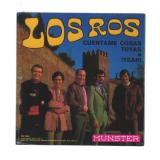
'Cuéntame cosas tuyas' is perfect pop with flawless arrangements; it's crossed over into the international soul scene, made its way into playlists by DJs like Gilles Peterson, and was even covered in the early 2000s by La Costa Brava-proof of its appeal among an ever-broader audience. On the B-side you'll find the superb '¡Yeah!', packed with soul and funk flair. Two irresistible tracks that, after years out of print, we're putting back into circulation with the reissue of this essential record-one that's practically impossible to find in its original pressing. Few late-'60s Spanish pop songs have reached the status that 'Cuéntame cosas tuyas' has earned decades after its original 1969 release. The single, put out by Barcelona label Belter, has become one of the most coveted gems for collectors of '60s sounds. 'Cuéntame cosas tuyas' is perfect pop with flawless arrangements-a sure-fire dance-floor killer, right up there with Elia y Elizabeth's 'Alegría' in any imaginary ranking of Spanish-language pop anthems. Although originally from Valencia, Los Ros (formerly Los 4 Ros) built their career in Palma de Mallorca and released nearly twenty singles on Belter. Between 1968 and 1970, their friendly, commercial pop started weaving in bolder elements drawn from soul, funk, and even psychedelia-something you can also hear on the B-side of this very single, featuring the superb '¡Yeah!'
Daniele Baldelli and Jolly Mare come together for a record that feels less like a collaboration and more like a shared state of mind. Flusso Uno moves through Afro-cosmic kraut-inflected psychedelia and cinematic electronics with a natural, unforced flow, where rhythm, texture and narrative all pull in the same direction.
Rather than referencing the past, the EP treats it as a living language. The longform, ritualistic percussion of early cosmic dance culture meets the hypnotic motorik pulse of krautrock and the more structured, sample-driven tribalism that followed in later decades. What ties it all together is a deep sense of atmosphere and intention: music that feels physical, emotional and quietly transportive.
“We particularly focused on ritual percussions, hypnotic grooves and suspended atmospheres, trying to blend musical anthropology, auteur electronics and narrative instinct.”
Dhol Parade opens the journey like a slow-burning procession, drums circling and expanding as if guiding the listener into another space. With Icari the perspective lifts, melodic lines drifting and tilting, constantly searching for balance between gravity and flight. Huldufolk pulls everything back into a shadowy, nocturnal zone, where textures feel half-real, half-imagined.
Finally, Viaggio Tascabile loses the record in a quietly reflective way, a compact voyage that sums up the EP’s philosophy: small in scale, deep in meaning. Flusso Uno is not about nostalgia or revivalism. It is about taking the spirit of cosmic culture and letting it breathe in the present, where storytelling, dancefloor intuition and sonic exploration still meet. A record made for open ears, open minds and long nights.
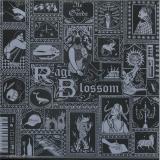
Born Bad Records knew exactly what it was doing when it signed this Nantes-based trio, whose sharply defined sound and raw authenticity stand out. With Rage Blossom, Île de Garde unveils an EP charged with palpable tension, somewhere between dark pop and psycho-wave. A catalogue of modern misdeeds, a David Lynch-like backdrop where Sylvia Plath’s poetry might cross paths with the controlled excesses of Fever Ray.
The EP opens with “Fear The Sun,” its Mike Oldfield-esque soundscapes plunging us into an apocalyptic and unsettling world. “Homicide Volontaire” follows with meticulous narration, a technical exercise evoking the anger and defiant lucidity of a Virginie Despentes. The hallucinatory hit “To Death” snaps like an anthem to collective dancing in the face of the inevitable. Since we’re going to die, let’s dance! On the B-side, “Ageless Woman” weaves together a half-mythological, half-mysterious text, carried by haunting backing vocals. “Birthday Girl,” featuring Kuntessa, radiates an ironic and joyful riot-grrrl energy, an uninhibited celebration of women’s liberation. Finally, “Boy,” a small post-punk jewel, closes the EP with an ending as surprising as it is delicate.
The group’s genius also lies in the complementarity of its musicians. Morgane Poulain anchors the drums with a dynamic that is both subtle and narrative, airy yet jagged. Cécile Aurégan, the architect behind a multitude of synths, builds powerful sonic landscapes, layer upon layer. Klara Coudrais, the band’s poetic figurehead, elevates her texts with a rich and plural vocal palette, giving life to several characters who vibrate with intensity. The band’s writing, hovering between darkness and light, echoes a kind of visceral poetry, exploring the seasons of the soul with authenticity and force.
With this EP, Île de Garde establishes itself as a band to watch closely, capable of translating on stage both the raw energy and the fine craftsmanship that define their music. An immersive journey, full of tension, urgency, beauty, and electric flashes.
Île de Garde, a Nantes-based trio with sharply drawn sonic contours and raw authenticity, unleashes its full arsenal on Rage Blossom, an EP radiating palpable tension between dark pop and psycho-wave. A catalogue of modern misdeeds, a David Lynch-like setting where Sylvia Plath’s poetry would meet the controlled excesses of Fever Ray. An immersive journey of tension, urgency, beauty, and electric sparks.
Opening track “Fear The Sun” plunges us into an apocalyptic and unsettling landscape. “Homicide Volontaire” continues with meticulous storytelling, a crime vignette evoking anger and the fierce lucidity summoned by a situation with no way out. The hallucinatory trance of “To Death” snaps like an anthem to collective dance in the face of the inevitable. Since we are going to die, let’s dance! “Ageless Woman” blends a half-mythological, half-mysterious text, carried by hypnotic backing vocals. “Birthday Girl,” featuring Kuntessa, releases an ironic and joyful riot-grrrl spirit, an uninhibited celebration of feminine liberation. Finally, “Boy,” a small post-punk case study, closes the EP with a simple, sensitive truth.
The three musicians propel and relay one another in this breathless race. Morgane Poulain drives the drums with a dynamic that is both subtle and narrative, airy yet staccato. Cécile Aurégan, architect of multiple synths, builds powerful sonic landscapes, layer after layer. Klara Coudrais, the storyteller, elevates her texts with a rich and multifaceted vocal palette, giving life to all their characters, both mythical and ordinary. The band’s writing, between darkness and light, proclaims a visceral poetry, exploring the seasons of the soul with authenticity and strength.
Yeong Die would typically be described as DJ, musician, or “experimental” composer, but in reality she is a sculptor. Between the rapidly disintegrating boundaries of composition and sound design, her work employs a hunting and gathering of intangible material—bursts of memory, fragments of liminal space, interstitial banalities—materializing as boundless expressions that evade genre constructs. As an integral presence among Seoul’s most forward thinking sound artists, Yeong is in a constant uphill battle rejecting the reverence that so quickly creeps in and infects contemporary craft, that relegates even the most audacious attempts of her peers to pigeon-hole pastiche. Given this style-agnostic starting line, her ESP Institute debut 'Uncapturable' exudes non-urgency, an unfettered pace that allows breathing room, affording the listener freedom to mentally isolate and explore elements without fear of missing a “bigger picture.” There is a warm and welcoming feeling that invites repetitive, even studied listening. While half the work is somewhat singular in presentation—'1km', 'Like Your Flaw', or 'Burnt'—there are moments of meticulous complexity—'Morning Rum Punch' (featuring vocals by Cifika) and 'Did' (featuring a smattering of spoken words by icecream drum), both underground Korean peer artists. These moments feel more of like an acute focus on execution that compliments the overall shape of the album, rather than a dynamic contrast. Cifika’s vocals, in particular, command the listener’s periphery in a playful and refreshing way, exaggerating negative space and in-between moments that not only the paint an arresting stereo field but a remarkable sense of depth, not easily achieved without production sorcery. It is, without a doubt, these beautiful fleeting moments that we describe as 'Uncapturable'.
Tapper Zukies 'Peace in the Ghetto' album would be the first release as part of his new deal with Virgin Records.This came about through a trip organised by the label to Jamaica in 1978 to sign up the cream of the crop of Reggae artists,for the new Virgin Front Line label.
Personnel on this trip included John Lydon (Rotten) of the Sex Pistols ,whose band had just split up.
The Peace in the Ghetto album deals with the political situation in at the time,the peace initiative between the gangs and Political Parties.
Paying tribute to some of the gang leaders Claudie Massop ,Buckie Thompson and Tony Welsh who helped make this process happen.
But whatever the subject matter Tapper Zukie chose to hang his songs on,you know he always does it in a fine style......Respect
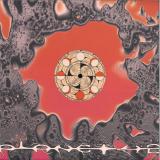
For their very first offering, Hanna & Robbie unveils a 5-track album making an ever possible encounter between psychedelic fractured grooves and mellow sci-fi haze in a divergent electronic shell. Planet42 carves a slow-burning path through severance and trance, a trip back to the subconscious like an escape or a sin, guiding both body and mind into unfamiliar exploration
Taking a fey look on electronic performance, where dubby-inspired and fractured rhythms tend to unveil ethereal ambiances, HR was born and raised in the emergent underground electronic French scene and started being moving targets in 2023 with a first live show at the Supercamp Festival happy few’s gathering.
With a mosaic of gritty textures, clubby breaks and otherworldly echoes in the lead-off project Planet42, Hanna & Robbie dives deep in this restless esoteric tension their identity is all about : an spunky early signal sculpting precise and intricate yet atypical tones revealing this crawling need of delivering unsettled arrangements and dreamscaped lines. Already in the move for their next in order work, it is settled in their experimentation lab that new doses of psychedelia and delusive resonances were written as an incipit to a future alternative live act.
Celebrating his Bleep Album of the Year ‘The Eternal Present’, Mark Van Hoen rounds out a prolific 2025 with further goodies as he joins forces with Clark for a club focussed 7” split release of vinyl only material.
‘Needles’ is an assuredly buzzing, thumping, murky dancefloor cut, with turbulent scribbling frequency shifts adding extra heft to the bristling bass thuds. Following his own triumphant return to rave modes with his latest album Steep Stims, Clark delivers the frenetic ‘Poland RYTM (Live Take 2023 Mix)’, constantly morphing with sharp, snapping sounds, and a curious blend between acid squelch and chiptune beep melodies.
“From gently weaving melody to gale force rips and tears, The Eternal Present shows Mark Van Hoen at all angles of his sonic practice”.
White label with a postcard
At the start of this summer, following a three-year hiatus for Daphni (punctuated only by his first ever collaborative Daphni track ‘Unidos’ alongside Sofia Kourtesis), he dropped ‘Sad Piano House’. The track represented something of a continuation in the Daphni catalogue, its roots growing from Cherry’s ‘Cloudy’ and its subsequent Kelbin remix, something in that song’s makeup having a profound effect when played on dancefloors by Snaith and countless others. ‘Sad Piano House’ deployed more intangibly irresistible bendy piano to equally satisfying effect and continues to achieve similarly rhapsodic dancefloor saturation.
Though a sizeable gap for Daphni releases, between Cherry and Butterfly however of course sits Honey, the latest Caribou album and one that saw the more instantaneous and dancefloor leaning traits of Daphni peaking through the cracks more than ever before. This blurring of the lines leads to an intriguing collaboration in Butterfly’s lead single ‘Waiting So Long (feat. Caribou)’. An unlikely duo - in that both artists are the same man, Dan Snaith - ‘Waiting So Long’ is not so much an identity crisis, ego trip, or the result of a chemical spill in the Snaith laboratory. It’s simply a track that Snaith felt for the first time belongs to both aliases, and might appeal to fans of both. He has never sung on a Daphni track before, and did not set out with the intention to do so this time, and yet this strange billing was born.
Daphni music has always been Snaith’s way of hitting directly to the core of the dancefloors he spends so much of his time playing to, and those dancefloors have been steadily expanding as his name grows, with the music following suit. This album however also draws from further back with a definite kinship to the very first Daphni album, the invigorating bag of ideas that was Jiaolong.
Butterfly is a showcase of the wonderful variety and surprising twists and turns that made that album such an exciting new prospect and that still to this day make Snaith such an intriguing DJ. There are more heavy hitters here, tracks that fill those dancefloors better than anyone, like ‘Clap Your Hands’ which picks up the energy of ‘Sad Piano House’ and flips it, exposing the gritty and intoxicating underbelly of Snaith’s hitmaking side, while retaining the playful urgency that runs through all of his work of late. Meanwhile ‘Hang’’s comic-strip horns are unpinned by gleeful force, unrelenting and thrillingly unshakeable. Elsewhere though comes a clutch of other tunes that might creep out somewhere more off the beaten path, a path Snaith has never stopped seeking in amongst his larger billings. ‘Lucky’ is squirmy and elusively intoxicating, ‘Invention’ skitters down meandering, inviting corridors, ‘Talk To Me’ grumbles and broods in the murk, and ‘Miles Smiles’ could roll on endlessly, so confident in its groove. There are no obvious peaks in these tracks or unifying moments, in fact many of them really have no business being on the dancefloor at all, and yet in the right setting, they could be the most fun to be had all night.
One such club is a good microcosm for the ethos of Butterfly as a whole. “Around the time I was finishing up this album I played a long set in a club called Open Ground in Wuppertal, Germany.” Snaith recalls, “It’s kind of, in one sense, the platonic ideal of the kind of club I’d want to play in. Every single decision has been taken, at great expense, with the aim of making the perfect sounding medium sized club room. But on top of it being the perfect acoustic environment it also is run by an amazing collection of people in a way that gives it a sense of community that dance music at its best provides. It is an absolute pleasure to play in that room to a crowd of people who come from all over. Playing in there you feel like you can play anything, and I played works in progress of pretty much every track on this album in my set there. Don’t get me wrong, I love playing a short set at a festival or in a more raw warehouse kind of club where you bang it out and only really functional music works but on record I guess the point of these Daphni records is to keep in mind a more expansive idea of dance music where the parameters are broad and the church is broad. I think that actually, putting really functional stuff next to weirder tracks (both on an album and in a dj set) might be the thing that’s still most interesting to me.”
This is the feeling that’s most palpable on Butterfly, and in every single time you see Snaith DJ. Right from the inception of the Daphni alias - and even before that – the thrill of trying stuff out, pushing at the boundaries has always been there and on Butterfly is present in all its twists and turns. It leaps all over the place and yet it hangs together, never feeling like a grab bag of dancefloor utilities but rather a distillation of all the strings to Snaith’s bow, exhilaratingly human and unified by one singular concept – simple and joyful exploration.
Already in its title, Plume Girl’s debut thoroughly lets things go and takes them in – all at once. “In the End We Begin” is the first solo full-length from Sowmya Somanath, a Hindustani classical singer/composer and half of alt-pop duo Felt Out. Plume Girl’s music takes inspiration from the semi-regular musical form of the rāga (translated as ‘tinting’), invoking mood and atmosphere, each rāga thought to have its own distinct nature and personality, brought to life through improvisation. String swells and Somanath’s searching vocalisations envelop every track’s own blissful chamber. Exploring imagined binaries along the way — eastern vs. western, traditional vs. experimental, acoustic vs. electronic, Sowmya sees music as a curious dialogue between divine Self and an invisible reality. Beneath the illusion of a chromatic world, there remains a blissful oneness.
Plume Girl’s songs sit between ambient Hindustani music and emotionally-encumbered pop. In front of backdrops comprising sundrenched drones or glitches, sketched out beats, and criss-crossing glissandi or flutes, Somanath both murmurs intimately and spirals upwards into soaring choruses. The lyrics ponder innermost thoughts, never more literally than on the blissful emo folk closing track: ‘In my heart I know / what’s in my heart / I know what’s in my…’
“When I began writing this music, I was fresh off of an experience that completely twisted my reality,” explains Somanath. It was the end of a years-long relationship, and the blossoming of a long-buried love hidden in plain sight: “a best friend of a decade, my musical partner, someone who had always seen me completely…At once, I felt grief and loss. At once, excitement and love.”
A heavyweight classic! 'Don't Laugh' is one of those records, you know you've heard it, you may not who, what or where, but you know it!
The original Winx mix is a classic, often imitated, never bettered, but the real gem here is Richie Hawtin's manic, almost borderline sinister 15+ minute reworking.
Monster doesn't do it justice, tweaked out, narcotic, minimalist jacking gear. A dope combination of severe LOW end and some bracing sine waves that cut straight through. This one will surely test any club sound-system, if the venue is built for it you will know! This is one for the real heads, pure late night business oft overlooked for the more famous A-side, but trust us - Hawtin's mix will smash any dance! Oh, and there's an insane laughing acappella for those who want to mix and blend! Reissued, remastered and re-sorted for 2017 by Above Board Records with the full involvement of Nervous Records NYC.
Made across 2024 between London and Amsterdam, WITH A VENGEANCE (or WAV for short) is the sound of uptempo catharsis, of SHERELLE making sense of a turbulent and difficult moment in time in her personal life. Determined to write one track a day, the studio became a safe space for SHERELLE to channel anger and feelings of betrayal, her hard and fast club tracks turning darkness into the cerebral joy of overcoming adversity. From those intense daily writing sessions has emerged a sharp, finely-crafted 10-track LP that is powered by fierce feminine energy and reflects the hard/soft and light/dark dualities of the dancefloor and life itself.
WITH A VENGEANCE is also a rally cry for the 160 scene, designed to push the tempo in new, exciting and as yet undiscovered directions. Inspired by SHERELLE’s foundational influences such as Kode9, Scratch DVA, Machinedrum, Lone and SBTRKT as well as the soundsystem-shaking groove of grime’s R&G sub genre, the album is designed to change perceptions of what 160 can be. But don’t get it twisted: this isn’t a concept album. WAV is for the dancefloor, delivering shades of London, New York, Detroit and Chicago in ways that are guaranteed to raise gun finger salutes.
Melbourne / Naarm stronghold Butter Sessionsclock 15 years in the game with a trilogy of 12"s, sustaining their uncompromising streak of peak-form electronics. The family-style V/A binds friends, collaborators, former studio neighbours and DJ booth allies, capturing a label that exists as community as much as catalogue.
Disc Two lifts off with recurring contributor Rory McPike's first label outing as Rings Around Saturn, a blissed-out cosmic floater skimming the periphery. Booked in the early days of the label's formative Mania residency, Japanese don Gonno twists freestyle, techno and breaks into pure ecstasy, before the unerringly bold Jennifer Loveless spikes the punch with a hallucinatory mix of drums, disembodied voice and jazz club keys.
On the flip, Boorloo's Guy Contact rolls out Dance In The Grey, a shadowy prog churn pitched between new-romantic vocal sheen and EBM muscle, with Kate Miller completely rewiring the script on Sub Series E - a masterfully minimal, double-time meditation. suki presents his Sniper1 alias to close with a demonic body-jacking groove loaded for the system.
Whether taken alone or folded into the three-disc triptych, each instalment stands as a bag-ready constant, charged with Butter Sessions' curatorial finesse.
The union of Antwerp synthesist David Edren and Tokyo minimalist Hiroki Takahashi is a fit so natural as to feel preordained. Both traffic in subtle shades of contemplative electronics, marked by patience, space, and poetic restraint. And both have rich histories of curation and collaboration – Edren in the duo Spirit & Form alongside Bent Von Bent, and Takahashi as proprietor of the Kankyō record shop, as well as one fourth of cosmic ambient quartet UNKNOWN ME. Mutual fans of one another’s work, they began sharing stems in the latter half of 2020, which slowly blossomed into a collection of multi-hued compositions inspired by notions of connectivity and impermanence, translated for east and west: Flow | 流れ.
Opener “Dusk Decorum | 黄昏 礼節” maps the mood of what’s to come, elegantly pirouetting and percolating through an expanding vista of looming stars and half-light horizons. Takahashi describes Edren’s arrangements as evoking “a strange feel, something we haven't heard much of before.” The sensation is one of “in-betweenness,” a restless current whispering beneath the beauty, like seasons seen in time-lapse footage: flickering but infinite, transience turned permanent. Takahashi’s signature sculpture garden tones plot spiral patterns over which Edren cascades dazzling pointillist synthesizer coloration. The pieces veer between delicate and dilated, micro and macro, their aperture forever softly in flux.
From the oscillating orchestral lullaby of “Stalactime | 鍾乳石時計” to the sweeping, sparkling dream sequence closer, “Shift Register | シフトレジスタ,” the album achieves the elusive goal of being more than the sum of its parts. This is music of rare air, elevated and amorphous, shimmering just out of reach. Though Edren and Takahashi have yet to cohabitate the same room in person (a fact that should be rectified soon by an astute festival booker), their palettes and poise are perfectly paired, twin fragilities woven into seven radiant and regenerative vibrational states. The cover design of a beatific, beaded leaf rippling on the surface of a hidden pond aptly captures the record’s muted majesty. Takahashi’s quiet pride is justified: “We are very happy with this time-consuming and carefully crafted work.”
Melbourne / Naarm strongholdButter Sessionsclock 15 years in the game with a trilogy of 12"s, sustaining their uncompromising streak of peak-form electronics. The family-style V/A binds friends, collaborators, former studio neighbours and DJ booth allies, capturing a label that exists as community as much as catalogue.
A new chapter in Butter Sessions' ongoing Japanese exchange sees Sapporo sound sculptor Kuniyukire-opening a 2015 tour collaboration with label heads Sleep D- a deep, spatial beatdown powered by dub pressure and percussive hypnosis. Shadow-lurking prodigy Mosam Howiesondrops in with his trademark scatterbrain techno, while Hasvat Informantlocks into joint-consciousness big-room radioactivity.
Opening the B-side, Fader Capfuses Balearic psy-ence with Mike Dunn-esque utilitarian jack, hovering somewhere between '80s memory and future vision. Tokyo's Mayurashkafollows with Survival Guide, big beat colliding with drug chug, before Albrecht La'Brooyreunite for a divine chill-out tent slowdown, magnifying sample detail with exacting flow. We're adrift until Sunju Hargunlights the beacon with スカイサーファ(Sky Surfer), Thailand's emissary of ritualistic minimal trance.
Whether taken alone or folded into the three-disc triptych, each instalment stands as a bag-ready constant, charged with Butter Sessions' curatorial finesse.
Accepting the darkness can be a liberating experience. Realising, and struggling with just who we are and what world we live in requires it. By further complicating the fractured sense of beauty found on his droning 2022 release, ‘I dreamt we found a way’, Bristol-based composer, Rob Winstone creates a language that encapsulates the lifelong reach for our own personal heavens, along with the darkness and fear on which those foundations are built.
Winstone’s instrumental palette continues to reach out far from behind his keyboards, however the sound of ‘sifting through heaven’ is stripped back and pared down, putting melody front and centre. 'postcards and loose tea', a love song written for Winstone’s partner during a period coming to terms with health difficulties had previously self-released with heavy spectral and granular manipulation from the artist. Here Winstone re-presents the original: “the stripped back recording I made in my old damp and cold studio that was in a building that has since been demolished”. It reflects the composer’s own journey, doing away with veils and histrionics, and embracing emotional bliss wherever it can be found, warts and all. Even the rumbling dark ambience of ’hospital corridor’ - where distant chimings, groans, and droplets synthesized from field recordings made nervously in a hospital waiting for test results coalesce - harbours a sacred-seeming beauty and aseptic warmth within its very bleak sense of dread.
There’s no better way to describe Winstone’s method than ‘sifting through heaven’. The hymnal organ chords, sketched out acoustic guitar phrases, scattering drum thuds, and meditative field recordings may flit between tenebrous to incandescent, but his focus is always on the embrace of love; “a view of life that embraces positive growth, yet doesn't deny immense suffering,” as he puts it. The album is bookended by two of Winstone’s most outright peaceful moments, summarising his core message: 'in spite of it all...' '...love finds a way'.