Suche:bewilder

Styles
Alle
Guilty Razors - Complete Recordings 1977 - 1978

UILTY RAZORS, BONA FIDE PUNKS.


Writings on the topic that go off in all directions, mind-numbing lectures given by academics, and testimonies, most of them heavily doctored, from those who “lived through that era”: so many people today fantasize about the early days of punk in our country… This blessed moment when no one had yet thought of flaunting a ridiculous green mohawk, taking Sid Vicious as a hero, or – even worse – making the so-called alternative scene both festive and boorish. There was no such thing in 1976 or 1977, when it wasn’t easy to get hold of the first 45s by the Pistols or the Clash. Few people were aware of what was happening on the fringes of the fringes at the time. Malcolm McLaren was virtually unknown, and having short hair made you seem strange. Who knew then that rock music, which had taken a very bad turn since the early 1970s, would once again become an essential element of liberation? That, thanks to short and fast songs, it would once again rediscover that primitive, social side that was so hated by older generations? Who knew that, besides a few loners who read the music press (it was even better if they read it in English) and frequented the right record stores? Many of these formed bands, because it was impossible to do otherwise. We quickly went from listening to the Velvet Underground to trying to play the Stooges’ intros. It’s a somewhat collective story, even though there weren’t many people to start it.
The Guilty Razors were among those who took part in this initial upheaval in Paris. They were far from being the worst. They had something special and even released a single that was well above the national average. They also had enough songs to fill an album, the one you’re holding. In everyone’s opinion, they were definitely not among the punk impostors that followed in their wake. They were, at least, genuine and credible.

Guilty Razors, Parisian punk band (1975-1978). To understand something about their somewhat linear but very energetic sound, we might need to talk about the context in which it was born and, more broadly, recall the boredom (a theme that would become capital in punk songs) coupled with the desire to blow everything off, which were the basis for the formation of bands playing a rejuvenated rock music ; about the passion for a few records by the Kinks or the early Who, by the Stooges, by the Velvet mostly, which set you apart from the crowd.
And of course, we should remember this new wave, which was promoted by a few articles in the specialized press and some cutting-edge record stores, coming from New York or London, whose small but powerful influence could be felt in Paris and in a handful of isolated places in the provinces, lulled to sleep by so many appalling things, from Tangerine Dream to President Giscard d’Estaing...
In 1975-76, French music was, as almost always, in a sorry state ; it was still dominated by Johnny Hallyday and Sylvie Vartan. Local rock music was also rather bleak, apart from Bijou and Little Bob who tried to revive this small scene with poorly sound-engineered gigs played to almost no one.
In the working class suburbs at the time, it was mainly hard rock music played to 11 that helped people forget about their gruelling shifts at the factory. Here and there, on the outskirts of major cities, you still could find a few rockers with sideburns wearing black armbands since the death of Gene Vincent, but it wasn’t a proper mass movement, just a source of real danger to anyone they came across who wasn't like them. In August 1976, a festival unlike any other took place in Mont-de-Marsan – the First European Punk Festival as the poster said – with almost as many people on stage as in the audience. Yet, on that day, a quasi historical event happened, when, under the blazing afternoon sun, a band of unknowns called The Damned made an unprecedented noise in the arena, reminiscent of the chaotic Stooges in their early adolescence. They were the first genuine punk band to perform in our country: from then on, anything was possible, almost anything seemed permissible.

It makes sense that the four+1 members of Guilty Razors, who initially amplified acoustic guitars with crappy tape recorder microphones, would adopt punk music (pronounced paink in French) naturally and instinctively, since it combines liberating noise with speed of execution and – crucially – a very healthy sense of rebellion (the protesters of May 1968 proclaimed, and it was even a slogan, that they weren’t against old people, but against what had made them grow old. In the mid-1970s, it seemed normal and obvious that old people should now ALSO be targeted!!!).
At the time, the desire to fight back, and break down authority and apathy, was either red or black, often taking the form of leafleting, tumultuous general assemblies in the schoolyard, and massive or shabby demonstrations, most of the time overflowing with an exciting vitality that sometimes turned into fights with the riot police. Indeed, soon after the end of the Vietnam War and following Pinochet’s coup in Chile, all over France, Trotskyist and anarcho-libertarian fervour was firmly entrenched among parts of the educated youth population, who were equally rebellious and troublemakers whenever they had the chance. It should also be noted that when the single "Anarchy in the UK" was first heard, even though not many of us had access to it, both the title and its explosive sound immediately resonated with some of those troublemakers crying out for ANARCHY!!! Meanwhile, the left-wing majority still equated punks with reckless young neo-Nazis. Of course, the widely circulated photos in the mainstream press of Siouxsie Sioux with her swastikas didn’t necessarily help to win over the theorists of the Great Revolution. It took Joe Strummer to introduce The Clash as an anti-racist, anti-fascist and anti-ignorance band for the rejection of old-school revolutionaries to fade a little.

The Lycée Jean-Baptiste Say at Porte d’Auteuil, despite being located in the very posh and very exclusive 16th arrondissement of Paris, didn’t escape these "committed" upheavals, which doubled as the perfect outlet for the less timid members of this generation.
“Back then, politics were fun,” says Tristam Nada, who studied there and went on to become Guilty Razors’ frontman. “Jean-Baptiste was the leftist high-school in the neighbourhood. When the far right guys from the GUD came down there, the Communist League guys from elsewhere helped us fight them off.”
Anything that could challenge authority was fair game and of course, strikes for just about any reason would lead to increasingly frequent truancy (with a definitive farewell to education that would soon follow). Tristam Nada spent his 10th and 11th unfinished grades with José Perez, who had come from Spain, where his father, a janitor, had been sentenced to death by Franco. “José steered my tastes towards solid acts such as The Who. Like most teenagers, I had previously absorbed just about everything that came my way, from Yes to Led Zeppelin to Genesis. I was exploring… And then one day, he told me that he and his brother Carlos wanted to start a rock band.” The Perez brothers already played guitar. “Of course, they were Spanish!”, jokes their singer. “Then, somewhat reluctantly, José took up the bass and we were soon joined by Jano – who called himself Jano Homicid – who took up the rhythm guitar.” Several drummers would later join this core of not easily intimidated young guys who didn’t let adversity get the better of them.

The first rehearsals of the newly named Guilty Razors took place in the bedroom of a Perez aunt. There, the three rookies tried to cover a few standards, songs that often were an integral part of their lives. During a first, short gig, in front of a bewildered audience of tough old-school rockers, they launched into a clunky version of the Velvet Underground's “Heroin”. Challenge or recklessness? A bit of both, probably… And then, step by step, their limited repertoire expanded as they decided to write their own songs, sung in a not always very accurate or academic English, but who cared about proper grammar or the right vocabulary, since what truly mattered was to make the words sound as good as possible while playing very, very fast music? And spitting out those words in a language that left no doubt as to what it conveyed mattered as well.
Trying their hand a the kind of rock music disliked by most of the neighbourhood, making noise, being fiercely provocative: they still belonged to a tiny clique who, at this very moment, had chosen to impose this difference. And there were very few places in France or elsewhere, where one could witness the first stirrings of something that wasn’t a trend yet, let alone a movement.

In the provinces, in late 1976 or early 1977, there couldn’t be more than thirty record stores that were a bit more discerning than average, where you could hear this new kind of short-haired rock music called “punk”. The old clientele, who previously had no problem coming in to buy the latest McCartney or Aerosmith LP, now felt a little less comfortable there…
In Paris, these enlightened places were quite rare and often located nex to what would become the Forum des Halles, a big shopping mall. Between three aging sex workers, a couple of second-hand clothes shops, sellers of hippie paraphernalia and small fashion designers, the good word was loudly spread in two pioneering places – propagators of what was still only a new underground movement. Historically, the first one was the Open Market, a kind of poorly, but tastefully stocked cave. Speakers blasted out the sound of sixties garage bands from the Nuggets compilation (a crucial reference for José Perez) or the badly dressed English kids of Eddie and the Hot Rods. This black-painted den was opened a few years earlier by Marc Zermati, a character who wasn’t always in a sunny disposition, but always quite radical in his (good) choices and his opinions. He founded the independent label Skydog and was one of the promoters of the Mont-de-Marsan punk festivals. Not far from there was Harry Cover, another store more in tune with the new New York scene, which was amply covered in the house fanzine, Rock News (even though it was in it that the photos of the Sex Pistols were first published in France).
It was a favorite hang-out of the Perez brothers and Tristam Nada, as the latter explained. “It’s at Harry Cover’s that we first heard the Pistols and Clash’s 45s, and after that, we decided to start writing our first songs. If they could do it, so could we!”
The sonic shocks that were “Anarchy in the UK”, “White Riot” or the Buzzcocks’s EP, “Spiral Scratch” – which Guilty Razors' sound is reminiscent of – were soon to be amplified by an unparalleled visual shock. In April 1977, right after the release of their first LP, The Clash performed at the Palais des Glaces in Paris, during a punk night organised by Marc Zermati. For many who were there, it was the gig of a lifetime…
Of course, Guilty Razors and Tristam were in the audience: “That concert was fabulous… We Parisian punks were almost all dressed in black and white, with white shirts, skinny leather ties, bikers jackets or light jackets, etc. The Clash, on the other hand, wore colourful clothes. Well, the next day, at the Gibus, you’d spot everyone who had been at this concert, but they weren’t wearing anything black, they were all wearing colours.”

It makes sense to mention the Gibus club, as Guilty Razors often played there (sometimes in front of a hostile audience). It was also the only place in Paris that regularly scheduled new Parisian or Anglo-Saxon acts, such as Generation X, Siouxsie and the Banshees, the Slits, and Johnny Thunders who would become a kind of messed-up mascot for the venue. A little later, in 1978, the Rose Bonbon – formerly the Nashville – also attracted nightly owls in search of electric thrills… In 1977, the iconic but not necessarily excellent Asphalt Jungle often played at the Gibus, sometimes sharing the bill with Metal Urbain, the only band whose aura would later transcend the French borders (“I saw them as the French Sex Pistols,” said Geoff Travis, head of their British label Rough Trade). Already established in this small scene, Metal Urbain helped the young and restless Guilty Razors who had just arrived. Guitarist for Metal Urbain Hermann Schwartz remembers it: “They were younger than us, we were a bit like their mentors even if it’s too strong a word… At least they were credible. We thought they were good, and they had good songs which reminded of the Buzzcocks that I liked a lot. But at some point, they started hanging out with the Hells Angels. That’s when we stopped following them.”

The break-up was mutual, since, Guilty Razors, for their part, were shocked when they saw a fringe element of the audience at Metal Urbain concerts who repeatedly shouted “Sieg Heil” and gave Nazi salutes. These provocations, even still minor (the bulk of the skinhead crowd would later make their presence felt during concerts), weren’t really to the liking of the Perez brothers, whose anti-fascist convictions were firmly rooted. Some things are non-negotiable.
A few months earlier (in July 1978), Guilty Razors had nevertheless opened very successfully for Metal Urbain at the Bus Palladium, a more traditonally old-school rock night-club. But, as was sometimes the case back then, the night turned into a mass brawl when suburban rockers came to “beat up punks”.

Back then, Parisian nights weren’t always sweet and serene.

So, after opening as best as they could for The Jam (their sound having been ruined by the PA system), our local heroes were – once again – met outside by a horde of greasers out to get them. “Thankfully,” says Tristam, “we were with our roadies, motorless bikers who acted as a protective barrier. We were chased in the neighbouring streets and the whole thing ended in front of a bar, with the owner coming out with a rifle…”
Although Tristam and the Perez brothers narrowly escaped various, potentially bloody, incidents, they weren’t completely innocent of wrongdoing either. They still find amusing their mugging of two strangers in the street for example (“We were broke and we simply wanted to buy tickets for the Heartbreakers concert that night,” says Tristam). It so happened that their victims were two key figures in the rock business at the time: radio presenter Alain Manneval and music publisher Philippe Constantin. They filed a complaint and sought monetary compensation, but somehow the band’s manager, the skilful but very controversial Alexis, managed to get the complaint withdrawn and Guilty Razors ended up signing with Constantin with a substantial advance.

They also signed with Polydor and the label released in 1978 their only three-track 45, featuring “I Don't Wanna be A Rich”, “Hurts and Noises” and “Provocate” (songs that exuded perpetual rebellion and an unquenchable desire for “class” confrontation). It was a very good record, but due to a lack of promotion (radio stations didn’t play French artists singing in English), it didn’t sell very well. Only 800 copies were allegedly sold and the rest of the stock was pulped… Initially, the three tracks were to be included on a LP that never came to be, since they were dropped by Polydor (“Let’s say we sometimes caused a ruckus in their offices!” laughs Tristam.) In order to perfect the long-awaited LP, the band recorded demos of other tracks. There was a cover of Pink Floyd's “Lucifer Sam” from the Syd Barrett era – proof of an enduring love for the sixties’ greats –, “Wake Up” a hangover tale and “Bad Heart” about the Baader-Meinhof gang, whose actions had a profound impact on the era and on a generation seeking extreme dissent... On the album you’re now discovering, you can also hear five previously unreleased tracks recorded a bit later during an extended and freezing stay in Madrid, in a makeshift studio with the invaluable help of a drummer also acting as sound engineer. He was both an enthusiastic old hippie and a proper whizz at sound engineering. Here too, certain influences from the fifties and sixties (Link Wray, the Troggs) are more than obvious in the band’s music.

Shortly after a final stormy and rather barbaric (on the audience’s side) “Punk night” at the Olympia in June 1978, Tristam left the band ; his bandmates continued without him for a short while.

But like most pioneering punk bands of the era, Guilty Razors eventually split up for good after three years (besides once in Spain, they’d only played in Paris). The reason for ceasing business activities were more or less the same for everyone: there were no venues outside one’s small circuit to play this kind of rock music, which was still frightening, unknown, or of little interest to most people. The chances of recording an LP were virtually null, since major labels were only signing unoriginal but reassuring sub-Téléphone clones, and the smaller ones were only interested in progressive rock or French chanson for youth clubs. And what about self-production? No one in our small safety-pinned world had thought about it yet. There wasn’t enough money to embark on that sort of venture anyway.

So yes, the early days of punk in France were truly No Future!

nicht am Lager

Bestelle jetzt und wir bestellen den Artikel für dich beim Lieferanten.

21,43

Last In: vor 31 Tagen
DILBY & PORNBUGS - BETWEEN US

DILBY & PORNBUGS

BETWEEN US

12inchBOND12081C
BONDAGE-MUSIC
03.04.2026

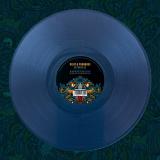
2026 Repress, LIMITED PEARL-DEEP-OCEAN COLORED VINYL

Dilby and Pornbugs team up on ‘Between Us’. Pornbugs celebrate 20 years of Bondage in 2026 and 21 years as a DJ/production team. Moving in fresh circles has always been an important part of their longevity, so signings so Selador and Sudbeat have exposed them to new ears showcasing their crossover sound.
Equally, on-form Dilby is having something of a renaissance with his chunky deep house sound now, finding increasing favour with the progressive house elite. Signed to a bewildering selection of labels from Glasgow Underground to Sudbeat, the world is his oyster.

Opening with ‘Hear Me Out’ their combined bumpy deep sound marries incredibly well. Uptempo and lively, this is the future sound of retro, and we are here for all of it. Next up, ‘Hold The Line’ joins the dots between deep and progressive house, keeping the funk and soul intact. Bass-led and groovy as hell, this is your new secret weapon. Play it loud!
‘Fade Into You’ is the first of the vinyl only tracks and marks a stark change of pace. Deeper, more soulful and markedly more thoughtful, this is modern deep house in its glittery new rave clothes. Pairing nicely is the flipside track ‘Beyond Fear’ which rumbles along with techy bass and a chunky groove.

nicht am Lager

Bestelle jetzt und wir bestellen den Artikel für dich beim Lieferanten.

11,98

Last In: vor 20 Tagen
LYR - Dark Sky Reservation LP
  • A1: Dark Sky Reservation
  • A2: A Walled Garden
  • A3: Blah! Blah! Blah!
  • A4: Pray Silence
  • A5: Where Have You Been All My Life?
  • A6: French Cursive
  • B1: Guernica Jigsaw
  • B2: Eclipse
  • B3: The Goldilocks Zone
  • B4: Sirius Alpha, Sirius Beta
  • B5: Under Artificial Lighting
  • B6: Collared Dove

The new album by L.Y.R., their third commercial release, begins with the idea that the furthest points of light - stars - can only be seen in the dark. It’s a kind of contradiction that finds musical expression in these new tracks, the band always navigating towards sightings of hopefulness and constancy in an increasingly bewildering and storm-battered world.

The term dark sky reservation has its origins in environmentalism, and several tracks on the album deal with the messed-up weather of our contemporary planet, both meteorological and psychological, from descriptions of an earth deluged by thunderstorms to the soggy back-gardens of suburbia, a climate crisis brought on by rampant urbanism. In that context, dark sky reservations are those regions of the landscape where light pollution is discouraged and even outlawed, to allow scientists and casual stargazers to peer into the cosmos and see the glory of the constellations, patterns of light that have entranced and mystified us for hundreds of thousands of years.

It’s from those designated zones that human beings get a sense of their place in the universe, and experience the wonder of the here and now against a context of eternity and infinity. An alternative to the hectic craziness of everyday life, so often virtual and synthetic, the dark sky reservation is a place of refuge and dreaming, and like L.Y.R.’s music, such spaces are earmarked for contemplation and thoughtfulness.

L.Y.R. is author and current British poet laureate Simon Armitage, singer-songwriter Richard Walters and multi-instrumentalist & producer Patrick Pearson.

vorbestellen03.04.2026

erscheint voraussichtlich am 03.04.2026

25,63
33 - Tripolar LP

33

Tripolar LP

12inchSPCTR022
Haunter Records
27.03.2026
  • 1: Adhd
  • 2: Worry Days
  • 3: Crying Song
  • 4: Fuck U
  • 5: Bastard State
  • 6: Mania
  • 7 3: Sides Touching
  • 8: Canned Coffee
  • 9: Babymusicc

As collaborative projects often do, 33 has in time found a more fixed form, a kind of structure that turned it from a loose collection of collaborators gravitating around founders Bill John Bultheel and Alexander Iezzi into something resembling more of a traditional band. Not that there is anything conventional in their creative process tho, nor in the music itself… Nontheless Tripolar - their second album and first for Haunter - seems to take them closer to song territory than ever before.

The (progressive) graduation of multi-instrumentalist Cem Dukkha and vocalist/clarinet player Ivan Cheng from collaborators to full-time members has brought 33 to a more refined awareness of their possibilities as a creative unit, although their compositional process has retained a high level of spontaneity and musical madness. Tripolar was in fact assembled by editing hours of improvisation that Bultheel, Iezzi and Dukkah recorded with no specific endgame in mind. The sessions saw them exchange a variety of acoustic, electronic and electric musical instruments: percussions, guitars, strings, piano, hurdy gurdy, synthesizers and even CDJs as a tool of live sampling manipulation.

By molding the pieces into what they are now, the band managed to concoct some beautiful vignettes of contradictory mental and emotional states, as sonically playful as a renaissance fair happening within a broken timestream. Cheng’s lyrical and vocal contributions helped them coalesce even further into proper songs, adding a melodic presence that’s at once seductive and uncanny. But vocal duties are often ceded to guests, namely Danish pop-neoclassicist Astrid Sonne, Kenyan metal guru Lord Spikeheart, Irish goth raconteur Olan Monk and Japanese body-poet Golin.The amount of different sounds arranged into each of the tracks produces a unique sense of awe and bewilderment, a testament to the incredible talent and craft the musicians have employed into putting together such a broad range of influences and approaches into a coherent and extremely effective musical journey.

An equally erratic thematic thread seems to run through all the tracks, one ultimately preoccupied with mental health and its ramifications. Without turning the project into a concept album, 33 and their collaborators have sprinkled it with references to personality disorders and mental conditions that are all too relevant to the contemporary age, reflecting on the lineage of human inner life. A wide display of lyrical and musical tools is employed to explore these themes, ranging from Sonne’s expressionist depiction of ADHD in the opener, to Cheng’s queer-themed reinvention of an Irish murder ballad in closing track ‘Babymusicc’. Tracing lateral trajectories for introspection, Tripolar is not only highly captivating, but it ultimately sounds esoteric in the best possible way: progressively revealing layer after layer of incredible aural magic, its true meaning living in the form and in its manic scope of energies.

vorbestellen27.03.2026

erscheint voraussichtlich am 27.03.2026

23,49
hoyah חיה - Can I Get A Chayah? (TAPE)

On his second album for Bruk, hoyah חיה continues to take an unflinching look at his Jewish identity while confronted with the heinous actions of the Israeli state. Echoing the name of his Refuge Worldwide radio show, he examines the shared histories of the Jewish diaspora across the Middle East and North Africa — from Morocco to Uzbekistan and everywhere in between. Can I Get A Chayah? is an honest attempt to explore what Judaism could become at a time when the culture faces an existential crisis.

The sonic approach hoyah חיה takes on Can I Get A Chayah? is central to the album's theme, as hard-gated processing on every sound creates a disorienting effect aiming for a kind of 'functional transcendentalism'. From the opening strains of preceding single '808s n Trance Gates' the jagged stop-start intensity of the samples sets a head-spinning tone for the album. The source material comes from across the aforementioned Jewish diaspora, challenging the nationalist idea of the single Jewish state.

Balancing beauty and aggression, hoyah חיה also reaches to a strong cast of collaborators to round out his cultural explorations. Principle among these is the late David German, the US-born guitarist and songwriter behind Silver Jews, whose repeated, bewildered mantras on 'Shalom Aleichem' embody hoyah חיה's own struggles with faith in the face of current horrors. Internationally celebrated Turkish-descent German musician Derya Yıldırım graces 'Talmuds' with her haunting vocal — a tribute to ancient Jewish mysticism that gets passed through the album's unrelenting sonic framework. On 'The Lock' Muha tackles African transcendentalism, while Rael pulls no punches with the questions he poses on the barbed 'This Song Has A Different Title But It Can't Be Published Here Because Of "Reasons"'.

With further prayer recitals on 'Lekha Dodi' and 'The Nose' and videos examining the psychedelic nature of reading the talmud and repetitive prayer movement shuckling, hoyah חיה has taken his research deep into the spirituality of his heritage at a time of crisis for Jewish identity. Naturally, Can I Get A Chayah? is not an easy listening experience, but neither is it a bleak one. There is beauty, mystery, complexity and nuance woven within the stark approach — an intentional, considered statement on a culture much deeper and wider than the barbaric acts of an unrepresentative group of twisted ethno-nationalists.

vorbestellen20.03.2026

erscheint voraussichtlich am 20.03.2026

14,92
JAMES BROWN - Sex Machine (2x12")
  • A1: Get Up I Feel Like Being A Sex Machine
  • A2: Brother Rapp (Part I & Part Ii)
  • A3: Bewildered
  • A4: I Got The Feeling
  • B1: Give It Up Or Turnit A Loose
  • B2: I Don’t Want Nobody To Give Me Nothing
  • B3: Licking Stick
  • C1: Lowdown Popcorn 9.Spinning Wheel
  • C2: If I Ruled The World
  • C3: There Was A Time
  • C4: It’s A Man’s Man’s Man’s World
  • D1: Please, Please, Please
  • D2: I Can’t Stand Myself (When You Touch Me)
  • D3: Mother Popcorn

James Brown wants to know one thing before he and his band begin Sex Machine. “Can I get into the thing, really?,” he asks. His cohorts enthusiastically respond in the affirmative. And for the next hour and change, Mr. Dynamite gets into it and more, turning in a sweat-soaked, feet-moving, hip-swiveling, emotion-purging, in-the-red, drop-everything-you’re-doing-and-dance performance for the ages. Ranked by Rolling Stone among the 500 Greatest Albums of All Time, the sweeping 1970 effort towers as a testament to Brown’s inimitable legacy as well as the peak powers of his voice, vibrancy, and bands.

Sourced from the original master tapes, pressed at Fidelity Record Pressing, and housed in a Stoughton gatefold jacket, Mobile Fidelity’s numbered-edition 180g 33RPM 2LP set presents Sex Machine in audiophile sound for the first time. It explodes with the energy the lightning-strike music demands. Dynamic, immediate, present, airy: Everything from the brassiness and fluidity of the horns to the snap and decay of the snare to the swell and carry of the organ comes across in full-range perspective.

Then there’s Brown’s superhuman singing, which here emerges with a purity, naturalism, and transparency that ensure you feel everything. Screeching, shouting, pleading, moaning, preaching, stinging, commanding, testifying, crooning, humming: The Godfather of Soul contributes one of the finest vocal performances known to man. This definitive 55th anniversary reissue of Brown’s monster funk statement further exhibits a combination of clarity, solidity, separation, and imaging that helps bring to light what he and his crack ensembles committed to tape. Both in the studio and on the stage.

Just how lifelike does this reissue sound? Senior Mobile Fidelity Sound Lab engineer Krieg Wunderlich, who handled the remaster, notes: “There were some artifacts that sounded a bit like mistracking. But they turned out to be breath blasts on the vocal microphone. That is part of history. JB was workin' hard, and breathin' hard. And there was an edit the timing of that was truly strange. Again, a part of history.”

Originally marketed as a live album, Sex Machine contains six songs recorded in the studio and later overdubbed with canned crowd noise and reverberation. Save for “Low Down Popcorn,” the tracks on the latter half stem from a phenomenal performance captured in October 1969 at Bell Auditorium in Brown’s adopted hometown of Augusta, GA. The special relationship between the singer, the audience, and the location is palpable.

As the 1960s gave way to a new decade, Brown experienced immense success and dealt with unexpected change. Soul Brother Number One soon expanded his idea for an official live album captured in Augusta when the ensemble that backed him on that date morphed into the original version of the world-famous J.B.’s just months after the show. The virtuosic abilities, sticky chemistry, and rhythm-forward nature of the J.B.’s prompted him to book a one-off session in Cincinnati, OH, on a late July night.

Anchored by brothers William “Bootsy” Collins and Phelps “Catfish” Collins, the group — as well as two different drummers — laid down a nearly 11-minute rendition of “Get Up I Feel Like Being Like a Sex Machine” and a thrilling medley of “Bewildered,” “I Got the Feeling,” and “Give It Up or Turnit a Loose.” A pair of then-recent studio singles cut in separate locations in 1969, “Brother Rapp” and “Low Down Popcorn,” each featuring his prior group, took care of the second LP worth of material that complements the originally planned live set.

Complicated? Somewhat. Unusual? Definitely. But just as he elevated the expectations for all present and future R&B artists, Brown not only makes it all work. He makes it positively electrifying.

“Get Up I Feel Like Being Like a Sex Machine” is alone deserving of a dissertation on the art of funk music, seeing it moves up and down akin to an oil derrick, witnesses Brown unleashing a trademark series of grunts, squeaks, and “good god” asides, and glides to a hypnotic groove that won’t quit. Or look to the syncopated rhythms of “Brother Rapp (Part I and Part II),” one of multiple pieces here that signify the point where Brown began viewing every instrument as a percussive tool. Brown closes the three-song medley with his new band with a skedaddling “Give It Up or Turnit a Loose,” which provides jolts on the order of sticking your finger into a socket.

Not that the actual live material falls short in any way. Setting an insistent tempo for the vitality that follows, “I Don’t Want Nobody to Give Me Nothing” positions Brown as a role model, leader, and self-sufficient entrepreneur. All simmer and boil, the short and sweet “Licking Stick” dares you to keep pace. The floating, almost comforting “Spinning Wheel” spotlights the instrumental prowess of Maceo Parker and company, and functions as a seamless segue into the tender, horn-saluted “If I Ruled the World.”

And Brown and his mates still aren’t done. Just try to resist the one-two closing punch of “I Can’t Stand Myself (When You Touch Me)” and “Mother Popcorn.” Mercy.

Ain’t it funky? Sure ‘nuff.

nicht am Lager

Bestelle jetzt und wir bestellen den Artikel für dich beim Lieferanten.

83,40

Last In: vor 4 Monaten
SUFFERING - THINGS SEEN BUT ALWAYS HIDDEN
  • The House With The Red Door
  • Enthralled
  • The Chamber Of Breathtaking Delights
  • Consorting With The Devil
  • What Once Was Shall Be Again And What Is Shall Be No More
  • Apocrypha Through The Keyhole
  • Hell On Earth New Eden
  • Behind The Green Door

The story of Suffering began in the UK's West Midlands in 2012 and since those nascent days they have released a nefarious collection of occult black metal offerings, beginning with their debut album, 11, in 2018 and most recently the Symphonies: Diabolis EP in 2024. They have also built a reputation for intense, diabolical live performances, appearing alongside the likes of Esoteric, Ghost Bath, and Mol. The band recently signed with infamous label, Apocalyptic Witchcraft, with label founder Conor Droney describing Suffering's music as "dark, unflinching, and deeply atmospheric, exactly what we stand for." And now the first fruits of that new alliance are about to be unveiled, in the shadowed form of Things Seen But Always Hidden. Things Seen But Always Hidden is an enveloping nightmarish journey through temptation and spiritual destruction, an immersion in contrasting states of terror and ecstasy - it bewilders, consumes and possesses the power to change and scar. Each song seeps into the next, binding them into a grimoire of dehumanising ritual, yet they exist as powerful individual entities. There is 'Enthralled', constructed from classic black metal riffs and raw vocal exhortations_and something more, something imperceptible but profoundly affecting; 'What Once Was Shall Be Again And What Is Shall Be No More', a glimpse beyond the veil, a fall down the endless paths of inherited memory that binds you to this album, this place constructed from arcane sound; the fear filled and imperious 'Hell On Earth New Eden', driven by a ravenous, unholy hunger_each chapter in this tome of unmaking and desecration will burn itself into your mind. A fusion of blackest metal, ritualistic doom and unsettling, distressing atmosphere Things Seen But Always Hidden will never leave you, no matter where you run. The way to Things Seen But Always Hidden will be revealed by Apocalyptic Witchcraft on November 28th. But remember, once you have set foot on this path there is no way back_

vorbestellen28.11.2025

erscheint voraussichtlich am 28.11.2025

31,05
Sonnenspot - Sonnenspot

Sonnenspot

Sonnenspot

12inchBID011
Before I Die
14.10.2025

Manchester based trio, Sonnenspot have unashamedly taken their favourite records from the Kosmische Musik landscape and fused these to inform their own spontaneous sonic constructions. Motorik drums, pulsating flutes, wah guitar and almost excessive use of space echo make this a dense and dreamy listen, with a hint of the rainy pensiveness of their home town.

Notable inspiration from Neu!, Manuel Gottsching, Sonic Youth and Yo La Tengo is all clearly audible in the various recordings on this album and minimal effort was made to shy away from this. The longest track 'Motorway' is an epic homage to the space rock art form and 'Madrugada' takes both John Martyn's 'Small Hours' and Gottsching's 'Inventions' as a starting point. Others include the tobacco lovers art-rock-ear-worm ('Liquorice Paper'), a dub laden celestial synth jam ('Slow Blinker') and the album opens with the first thing the band ever recorded, as a meaningless improvisation to tune their synths up to ('Figurescene'). Turned out it had a killer bass line and drum part.

Initial sessions were mostly just an excuse for the three long standing friends to get together musically for the first time, and after knowing each other for many full moons, it was long overdue.

They all bring some peripheral musical heritage to the table. Ian Smith was the guitarist in Alfie and the The Beep Seals and played on Badly Drawn Boy's 'The Hour of Bewilderbeast'. Pete Philipson played in Jane Weaver's band for ten years and has made his own ambient guitar albums. Dan Hope plays in the jazz folk band Mother Sky and promotes events around the city under the Rainy Heart banner.
They were joined by another long term musical friend Sam Kynaston who added heavenly flute to much of the album.

nicht am Lager

Bestelle jetzt und wir bestellen den Artikel für dich beim Lieferanten.

22,06

Last In: vor 6 Monaten
Wevie Stonder - Sure Beats Living LP

Opener “That’s Magic” features a magician talking us through a convoluted magic trick, to a mysterious synth theme that a celebrity conjurer might use to help the pyramids disappear. It’s probably one of the only pieces of music to draw influences from Paul Daniels. “Carpet Squares” is a hefty slab of squirming machine bass, acid squidges and clanking industrial drums, its samples extolling the virtues of fitting comfortable flooring, with a voiceover recorded on a Canadian golf course. “Vanja & Slavcho” tells the odd story of twins who have an extraordinary ability to a bustle of spiralling arpeggios and comedic sound effects, while “Tiktaalik” has a glam rock beat, guitar twangs, wild synth runs and dance music drum rolls that build to nowhere, plus processed dolphin noises and a vocal about evolution. Then there’s “Piccolo’s Travels”, a spellbinding mix of classical strings and... is that a malfunctioning Clanger?

“Album Titles” lists rejected names for the record to hilarious effect, with outlandish blips, accordion riffs and bubbling percussion setting the scene, “The 38th Parallel” is a wonky slab of electronica, while “Push It” has everything from rock guitar interjections to explosions and birdsong. If “Customer Services” imagines the bewildering experience of dealing with a sentient automated phone call, then the following “Nothing To Write Home About” is a waltz-time organ piece with a nostalgic, bittersweet air. “Ready?” lists practically every genre under the sun and gives you a burst of it, from drill to country & western, hardcore to Miami bass, and the final track, “The Void”, is an AutoTune-laced R&B track with a deep, emotional core.

That’s the genius of Wevie Stonder: their ability to make you laugh one minute, and the next transport you
to an atmospheric reverie.

nicht am Lager

Bestelle jetzt und wir bestellen den Artikel für dich beim Lieferanten.

19,12

Last In: vor 8 Monaten
Gonçalo F. Cardoso - Impressões de Várias Ilhas (Recordings from Macaronésia)
  • 1: Bufadeiros De São Vicente (São Vincente, Cabo Verde)
  • 2: La Cueva Scuba Libre (La Gomera, Canarias)
  • 3: Chá Da Gorreana (São Miguel, Açores)
  • 4: Noite Em Rabo De Peixe (São Miguel, Açores)
  • 5: Pardelas - Dueto (La Gomera, Canarias)
  • 6: Rãs Em Xoxo (Santo Antão, Cabo Verde)
  • 7: El Chat Gracioso (La Graciosa, Canarias)
  • 8: Cozido Na Caldeira Velha (São Miguel, Açores)
  • 9: Salinas De Pedra Lume ( Sal, Cabo Verde)
  • 10: Noche En Punta Brava (Tenerife, Canarias)
  • 11: A Lagoa Do Combro (São Miguel, Açores)
  • 12: Piedras Húmedas En Castro (Tenerife, Canarias)
  • 13: Digestão Nas Furnas (São Miguel, Açores)
  • 14: O Peixe Tá Congelado (Santo Antão, Cabo Verde)

After impressions of Unguja and Borneo islands, Discrepant's chieftain Gonçalo F. Cardoso continues his sonic travelogue on insularity with 'Impressões de Várias Ilhas’.

Literally translated as "impressions from various islands", this third tome dwells on recordings and inspirations from three archipelagos of Macaronésia. Soaking in the sounds and recollections from Azores, Cape Verde and Canary Islands these diaristic endeavours spread throughout a number of real environments, from water caves and black stone beaches and lagoons to small harbours and everyday life scenarios, to project them into this not quite imaginary but not quite real memory haze that goes from a deeply personal impression to a resonating one.

Melding raw field recordings with processed ones and synthesized landscapes, Cardoso never falters into sonic tourism, conjuring small-ish takes both vivid and dreamy, infused with a sense of wonder that feels both bewildering, comforting and escapist. The breaking waves of 'Bufadeiros de São Vicente' soothing in their irregular pattern, mingling with the lone echoing tones not completely removed from Black Dice's 'Beaches & Canyon's most pensive passages, flow into the underwater ambience and suspended pads of 'La Cueva Scuba Livre', as reflections of the same sea crashing in on different lands, nature’s psychogeography. Further on, the queasy warm chord and scraping murmurs of 'Noite em Rabo de Peixe' mirror their nighttime framing while 'Rãs em Xoxo' veers closer to pure musique concréte, crossed by a subdued feeling of unease that lingers in the nostalgia of 'Cozido da Caldeira Velha', brimming within the haze of a Boards of Canada vignette. Summoning the past lives and future hauntings of its scenery, 'Salinas de Pedra Lume' is like the quiet epic of the album, meandering into the unknown among crackling field recordings, decaying synths and flute-like howls - or is it howl-like flutes? - recurring as glimpses from foregone existences, not necessarily Gonçalo’s own. Maybe ours?

Music & Photography by Gonçalo F. Cardoso
Artwork layout by Jeroen Wille
Master by Rashad Becker

Discrepant 2025
Pressed in Spain

vorbestellen25.07.2025

erscheint voraussichtlich am 25.07.2025

19,29
ZIUR - EYEROLL LP

Ziur

EYEROLL LP

12inchHKLP53
Nyege Nyege Tapes
16.07.2025

Black Vinyl LP. The world has changed, we shouldn't try and pretend otherwise. While we were shut away in isolation our routines shifted, social patterns evolved, and our hopes and dreams were twisted into cobwebs we're still trying to wipe from our fingers. Ziúr tentatively approached this on her last album Antifate, an ambitious and complex hybrid pop fever dream that looked back to a Medieval escapist fantasy as the scent of revolution seemed to hum in the air. But when restrictions were eased, she found herself staring down a discombobulated society that had trapped itself in a spiral of microwaved nostalgia and detached, narcotic repetition. Eyeroll then is Ziúr's musical panacea, a tincture to wake us from our creative slumber and prompt external connection and reflection. It's a polyphonous hex that demands human interaction, and Ziúr's hand-picked alliance of collaborators - Elvin Brandhi, Abdullah Miniawy, Iceboy Violet, Juliana Huxtable, Ledef, and James Ginzburg - each provide distinct voices that together herald a bewildering sonic epoch. Ziúr's palette had to evolve to match the scope of the project, but it was pure necessity that informed the album's defining tone. Recording mostly at night, Ziúr was conscious of the noise she was making so developed a unique way to record organic percussion. Using a set of rototoms - low profile tunable drums - she scratched, scraped and gently tapped the skins to build up the undulating and unstable rhythmic backdrop for each track. It's the first sound we hear on the opener 'Eyeroll', rattling like lost marbles against Elvin Brandhi's primal croaks and screams. And when Brandhi's twisted articulations form words, Ziúr matches the energy with chaotic thuds and serrated blasts of saturated electronics. "I roll the shittiest cigarette," she squeals like she's about to start a mosh pit at Paris's GRM Studios. Without pause, Abdullah Miniawy takes over on 'Malikan', building on the promise of material with Simo Cell, Carl Gari and HVAD with corrosive trumpet blasts and charged, politically incendiary Arabic vocals. Inspired by pre-Islamic poetry and the Qu'ranic chanters he heard growing up in Saudi Arabia and Egypt, he spins labyrinthine stories that cross between the worlds, breaking down physical and spiritual borders simultaneously. Miniawy's scope is expanded even further on his second collaboration, 'If The City Burns I Will Not Run'. "If it rains and the city drowns," he utters over gaseous electronics, "I will not run away, but I will be anxious for the heart of one close to me." After a supple vocal turn from Manchester's Iceboy Violet on 'Move On' and a surreal interlude from poet- DJ-artist-theorist Juliana Huxtable on '99 Favor Taste', Brandhi returns with two more hyperactive collaborations: ,'Nontrivial Differential' and 'Cut Cut Quote'. On the former she slices into Ziúr's skeletal jazz eruptions, screaming and crooning interchangeably, fluxing between the rap battle and the cabaret. The latter is completely different meanwhile, with Brandhi settling into her role as front-woman and groaning dizzying improvised passages that sound like grunge crossed with psychedelic no-wave. Brandhi's spiky musical history has prepared her well for this collaboration; she's a prolific producer and has been using her voice spontaneously since debuting with father-daughter improv duo Yeah You in the mid 2020s. She's found an ideal foil in Ziúr, a producer who matches her restless energy and willingness to bend formality, and leaves an indelible mark on Eyeroll. But the album's most tender moments are from Ziúr herself, who winds the album down on 'Hasty Revisionism', growling over collapsible beats and cascading strings, and comes to an unexpected conclusion with country coda 'Lacrymaturity'. Its feverish amalgamation of country music and euphoric, experimental electronics might seem incongruous at first, but in context with the rest of the album is the only possible conclusion. With Eyeroll Ziúr is making a firm statement about togetherness, humanity, and the renewal of hope when all seems lost. By bringing together such a wide but philosophically harmonic team of collaborators, she's conducted a body of work that speaks to the creative fringe in no uncertain terms. Now's the time to throw away what you think you know, and build bridges you didn't think you need. Now's the time for action. She may have spent her entire career avoiding the solipsistic trappings of "queer art", but by assembling a communal statement that questions so many normative assumptions about music, politics, and beyond, Ziúr has chanced upon her queerest album yet. Cringe? Eyeroll.

nicht am Lager

Bestelle jetzt und wir bestellen den Artikel für dich beim Lieferanten.

22,27

Last In: vor 9 Monaten
Stimulator Jones - Cool Green Trees (1999-2005) (LP)

"Chasing the funky symphonies that filled my head and my dreams..."

December 25th, 2023 - an Instagram post. Stimulator Jones shared half a dozen FIRE tracks from his beat tape archive. We were immediately drawn to the rough hewn boom bap.

"I'd release that", Rob commented.

Hours of material was shared and the result is this: Cool Green Trees (1999-2005). A collection of beats and loops Stimulator Jones created between the ages of 14-20 at home in his basement, bedroom and computer room in Roanoke, Virginia.

You will not believe the profound soulful genius contained within these naive schoolboy melodies.

December 25th, 1998 - 25 years ago to the day and his much-coveted Yamaha SU10 sampler was finally bestowed upon young Stimmy AKA Sam Lunsford: "I immediately hooked up a CD Walkman to the input jack and looped the beginning two bars of Grover Washington Jr.'s "Mercy Mercy Me". I don't know what exactly was so thrilling about hearing two measures of music repeating over and over but it was so infectious and hypnotizing and enthralling to me. I'll never forget that ecstatic rush of making my first loop - an uncontrollable, gleeful smile plastered all over my face." When you hear the pocket breakbeat symphonies featured here on Cool Green Trees, you'll feel the same sense of frisson.

In the wake of his Stones Throw breakthrough - Exotic Worlds & Master Treasures - Stimulator Jones was pegged by many as a 90s throwback artist. However, he literally IS a 90s artist. He's been recording music most of his life and he's now 40. He created the bulk of Cool Green Trees as a teenager. Everything before 2004 was recorded when Sam was still in school. He was in 8th grade when he made the 1999 tracks - he didn't even have his learner's permit. This album is a snapshot of a young man in a simpler time. Things were still mysterious back then and he was flying blind, relying on his ears and having to figure things out for himself: "I had no road map for becoming a beatmaker. I have been collecting music since I was a kid, I am a lifelong digger and seeker of cool and interesting sounds. I was there in the golden age of Hip Hop, and while I may have been a suburban white kid in Roanoke, Virginia, I was tuned in and I bought so many classic albums when they came out. I was attracted to Hip Hop because of the musical and poetic quality. I was hypnotized by the rhythms, partially because I was a drummer. I didn't brag about collecting my breakbeat records or making beats - it was something I did in isolation. It wasn't something I generally wanted to bring attention to and it didn't really score me any cool points. I certainly wasn't flexing on social media about it."

Hell, he can do that now!

Opener "Pharoah Jones" was inspired by Yesterday's New Quintet and Madlib's ability to capture that classic 70s sound whilst playing all the instruments. Sam created this one stoned afternoon by laying down a 2 bar loop and a shaker loop on his Yamaha SU700 sampler. He hung a microphone from the ceiling and played his Yamaha Stage Custom drum kit over the top before adding ender Rhodes and playing his dad's Selmer tenor sax through an Electro Harmonix Memory Man echo pedal. Yes! Up next, "Ghost Gospel" utilises a dope loop from a gospel record and adds some soul-funk drums overtop, whilst working that filter knob. Says Sam: "The loop reminded me of something Ghostface would rap over. The sample was in 3/4 waltz time but I flipped it for a 4/4 groove, a technique I picked up from RZA. "Ill Feeling" uses sped-up pieces from a dusty old funk record and putting them over a classic NOLA drum loop; gain chopping up a slow, bluesy 3/4 time signature and bending it to a 4/4 groove. Classy shit. "Capital Punishment" features drums tapped in live, inspired by MF Doom's Special Herbs series. "Do Not Adjust" consists loops found on a compilation of 70s French music at Happy's Flea Market, a classic Roanoke digging spot.

The sublime, evocative title track, "Cool Green Trees" was created when Sam was still living at home. He dumped samples off his SU10 into the family desktop and arranged them in a demo version of Pro Tools: "This track was sort of my ode to the DJ Shadow style of sample based production. Super spacey, slow, and moody. The heavily filtered drums were inspired by Alec Empire's 'Low on Ice' album. I later added some scratches and sounds from a Spider Man storybook record." "Chill Scratch" snags the final bit of a bossanova record and pairs it with a drum loop before adding experimental scratching run through an Electro Harmonix Memory Man echo pedal. "Poisonous Fumes" was made using a sampler, mixer and a turntable; a kind of mixtape beat collage with added scratches and sounds from various records. Using dialogue from superhero records was a nod to Madlib. "Welcome Aboard The Starship" is dark, downtempo trip-hop with a spooky bent. Sam paired a slow, hard drum loop with a guitar sample grabbed off a psychedelic rock record. To finish, he added various backwards sounds and weird atmospheric effects and a little scratching. Swoon.

Side B opens with "Keep On Runnin", made on a borrowed Roland SP202 sampler. Having always loved the sound of the Lo-Fi filter on those machines, reminiscent of the Emu SP1200, Sam always imagined Del or another of the Hieroglyphics crew rapping over this beat. You can certainly hear why. "Sounds Impossible" sees Sam experimenting with layering multiple kick samples at different volumes to create patterns similar to those heard by Showbiz and Lord Finesse during their God-level 1995 period. "Painted Faces" was made by chopping up a REDACTED record which he had gotten from Happy's Flea Market and paired it with a REDACTED drum loop. By the time Sam recorded "The Knew Style", he had acquired a shitty old 1960s portable turntable off eBay. It didn't function properly when he bought it but his brother opened it up, cleaned it out and got it working: "I remember he told me that there was a bunch of sand inside of it when he opened it up, as if its previous owner had taken it to the beach. I would take that turntable on my Happy's Flea Market digs so I could preview records...that's how I found this loop."

"Chicken Wing Blues Sauce" loops up a classic blues joint and pairs it with some REDACTED drums. A bit of filtering and arranging et voilà! "Kool Breeze", from 1999, is one of Sam's oldest surviving beats, as is "Sexx Bullets". The Roots sampled the same record, leaving Sam frustrated yet vindicated. "Soul Child" was an early SU10 creation, looping a dusty old Soul Children 45 and pairing it with 70s rock drum loops to great effect. "Take Off Runnin" was another loop found digging with a portable turntable. Paired with some boom bap drums it makes for a hypnotic head-nod groove. "Centurian" was intended to be a little beat interlude a la Pete Rock. The sample is from a sun-dappled soft-psych record and it's paired with a Robin Trower drum loop that just happens to fit perfectly. Sometimes you slap things together kind of haphazardly and magic happens. "Bozack" was the first beat Sam made using Pro Tools, his first foray into using chopped sounds instead of loops, an exciting new world. "Church" is beat interlude using a Phil Upchurch loop with the "Long Red" drums - a favourite break of Dilla et al. Sam was really on a tear in late 2004, probably because he was unemployed and phoneless and able to just make beats all day. He made "Splash One" on a borrowed Yamaha SU700 and again was experimenting with tapping the drums in live with his fingers, instead of using a loop or sequenced pattern. Channeling 9th Wonder, Sam used a water splash sound effect from a Batman record as a percussive element, hence the title (also a 13th Floor Elevators reference). The main loop is a backwards portion of one of his favourite Roy Ayers songs.

"Hank" is another fun little beat interlude thing, created on a borrowed Roland SP202 sampler with the fantastic Lo-Fi effect that resembled the Emu SP1200 at a fraction of the price. "73 goatee", from 99, is another of his oldest surviving beats, created in his bedroom with his Yamaha SU10 and his brother's Vestax MR-300 4-track recorder: "This one will always feel special. I can remember having a feeling all the way back then on the night that I created it that this was a solid beat with a catchy loop. There was something in the Fender Rhodes melody that resonated with me emotionally, and I had never heard a producer sample that portion before. I felt like I had found my own unique sound, my own unique loop. It came from an Ahmad Jamal '73. I actually even recorded myself rapping and scratching over this beat way back then, I still have that version in all its imperfect sloppy glory."

Sam explains just how much these tracks mean to him: "They all have immense historical and sentimental value and I'm proud of them. These beats come from an innocent, simple time when I was just figuring out how to craft these sounds. They're something very personal to me. They are the initial part of a journey that I really was taking *alone*. There was no YouTube. I couldn't Google shit. I didn't even know any other beatmakers, producers or DJs in my town that could teach me anything. It was always just me, alone, in a room with some equipment - chasing the funky symphonies that filled my head and my dreams. What I was doing wasn't cool. Most of my peers thought I was a weirdo and couldn't care less. Creating these sounds was an anti-social endeavour. In a sense, I felt like it was me against the world, and all I had to instruct and assist me were the recordings produced by my heroes - RZA, DJ Premier, Erick Sermon, Beatminerz, Showbiz, Diamond D, Beatnuts, Prince Paul, The Bomb Squad, Pete Rock, Q-Tip, E-Swift, Mista Lawnge, DJ Shadow, Cut Chemist, Peanut Butter Wolf, El-P and so many more...I dedicate this collection to them, and to my older brother Joe who has always been a musical and technical guiding light for me.

This was a time before every kid was a self-described producer and beatmaker, before everyone had a DAW, before Kanye and "chipmunk soul", before Red Bull beat battles, before there was any social media beyond chat rooms and AOL Instant Messenger, before Soundcloud, before SP-404 mania, before lo-fi beats to study to, before Splice, before targeted ads for MIDI chord packs, etc. In 99 when I told people that I had a sampler and made beats I was mostly met with bewildered confusion and indifference. Kids and adults alike would wonder why I got this weird machine for Christmas instead of something worthwhile like a Playstation or a mountain bike or even a guitar for that matter because at least that could be used to make "real music". Back then, sampling was still not widely respected as an art form - it was seen as lazy, talentless and unoriginal at best and outright criminal theft at worst. I had gotten respect for playing drums and guitar and things of that nature but this was a step in the wrong direction in the eyes of many."

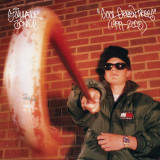
The cover photo is a picture of Sam standing on his back porch in the latter part of 1998, just before he got his first sampler. He was 13 years old, in 8th grade. His dad took the picture with his 35mm film camera: "I actually wanted to be pointing my dad's .22 pistol at the camera lens but he wouldn't let me. He gave me an old walking cane to use instead. The Tommy Hilfiger puffer jacket came from the lost and found at William Fleming High School where my mom worked as a secretary. I was thrilled when she brought it home because we never spent money on expensive name brand clothing like that - we were for the most part strictly a sale rack, bargain bin, thrift store, yard sale, flea market kind of family when it came to clothes. My watch is some cheap off-brand fake gold department store watch." Mastering for this vinyl edition was overseen by Be With regular Simon Francis and it was cut by the esteemed Cicely Balston at Abbey Road Studios to be pressed in the Netherlands by Record Industry.

nicht am Lager

Bestelle jetzt und wir bestellen den Artikel für dich beim Lieferanten.

25,63

Last In: vor 10 Monaten
PAU RIBA - ELECTROCCID ACCID ALQUIMISTIC XOC
  • Sol Solet
  • Es Fa Llarg Es Fa Llarg Esperar
  • Cuatre Barres Blanc I Negre
  • Brian A Clown
  • Lluna Robada
  • Maria
  • Occident (Recepte De Cuina)
  • Lluna Estimada
  • Estrella De La Fortuna

Once again, Riba left everyone bewildered with a work that, on its own, gave early substance to what would eventually be known as roc català, of which Riba may well have been its most authentic representative. The album was recorded in the winter of 1975 with the help of the same group of musicians who had accompanied him a few months earlier at a concert at Zeleste to debut new songs: a mix of Valencian musicians from bands like Paranoia Dea and guitarist Eduardo Bort's group. "Electròccid àccid alquimístic xoc" marks a shift in Pau Riba's sound-now electrified and fully embracing rock with nods to Lou Reed, Ray Davies, and Kevin Ayers, but the core of "Electròccid_" is defined by Riba's own authorship. With lyrics that veer from poetic to absurdly ironic, Riba explores themes like the moon, the stars, death, love, women, the devil, and the bourgeoisie-fueling the originality that made him such a unique artist. It's striking how naturally and effortlessly Riba incorporated the Catalan language into the rock idiom-and vice versa. First vinyl reissue in over four decades!

vorbestellen27.06.2025

erscheint voraussichtlich am 27.06.2025

22,27
JEREMIAH CHIU /MARTA SOFIA HONER - DIFFERENT ROOMS

Different Rooms is the sophomore album by Jeremiah Chiu & Marta Sofia Honer. The followup to their critically acclaimed Recordings from the Aland Islands, this collection extends the path of pastiche forged by their debut: quietly multi-rhythmic, modular-trance-meets-processed-and-unprocessed-chamber strings, bewitching and bewildering field recordings-all knitted tightly, an LA patchwork.

vorbestellen20.06.2025

erscheint voraussichtlich am 20.06.2025

24,33
Johnny Flynn - Lost in the Cedar Wood
  • 1: Ten Degrees Of Strange
  • 2: Nether
  • 3: The World To Come
  • 4: Flood In The Desert
  • 5: Tree Rings
  • 6: Gods And Monsters
  • 7: Enkidu Walked
  • 8: Bonedigger
  • 9: I Can’t Swim There
  • 10: Home And Dry
  • 11: Ferryman

Johnny and Robert began work on the album in the first weeks of the pandemic, wanting to make music that sang of those dangerous, disorienting spring days; when birdsong was brighter –– and the sense of bewilderment more powerful –– than any of us had known before. They drew inspiration in part from The Epic of Gilgamesh, the oldest surviving work of world literature; an epic poem from Ancient Mesopotamia that contains the earliest version of the Flood Myth. To Johnny and Robert, Gilgamesh resonated eerily with the present moment –– and it catalysed their song-writing. For Gilgamesh is a story of friendship, love, loss, grief, bad governance and good dreaming; of natural disaster and environmental crisis. It also contains the first recorded act of human destruction of the natural world: when Gilgamesh and Enkidu travel to the Sacred Cedar Wood, slay the guardian spirit of the forest, and cut down the trees with their axes, thereby bringing catastrophe upon themselves. Johnny and Robert wrote the album between March 2020 and February 2021, during a year in which we all wandered unsure of our path, lost in the cedar wood. The songs were composed in large part as a correspondence, through a back-and-forth of notebook pages, voice-recordings and WhatsApp-messages, at a time when lockdowns made meeting in person impossible. The first eight songs were recorded in an off-grid cottage deep in a Hampshire forest, with the sounds of chainsaws felling trees drifting in through the windows along with the birdsong. The result is an album at once urgent and ancient, which fuses poetry, landscape, myth and music into something unique. These are songs that ring with hope, love and sadness –– and one need not know anything about The Epic of Gilgamesh to be touched by them.

vorbestellen13.06.2025

erscheint voraussichtlich am 13.06.2025

27,69
Zoë Mc Pherson - Upside Down

Zoë Mc Pherson

Upside Down

12inchSFX10
SFX
09.05.2025

Berlin-based French-Irish multimedia artist Zoe Mc Pherson levels up on their third full-length "Pitch Blender", mangling years of experience DJing and performing live into a tight set of cybernetic soundsystem experiments that flicker between the rave and the art space.

Cast your mind back to February 2020 for a moment, when Mc Pherson released their last album "States of Fugue". The world seemed less tangled somehow, and yet Mc Pherson's precision-engineered fusion of exploratory sound design and visceral club pressure seemed to hint at a cataclysmic event none of us were really expecting. Only a few weeks after its release the world changed forever, and the majority of us were grounded - forced to consider our lives and the movement (or lack thereof) surrounding us. The philosophy of this extended time period is welded into the bones of "Pitch Blender", Mc Pherson's supple third album. They have learned plenty in the last two years, and infuse all of that anxiety and spiky emotionality into a spread of tracks that sound as powerful in headphones as they do over a well-tweaked soundsystem, soldering vocals, environmental recordings and instrumental flourishes to unpredictably pneumatic, cybernetic beats.

Anyone that's caught one of Mc Pherson's energetic live performances over the last few months will have an idea of what "Pitch Blender" is made of. They're an artist who's somehow able to match the raw energy of post-punk and no-wave music with the brain-altering potential of the best experimental club tracks, vocalizing an incongruous post-lockdown reality over beats that sound as if they're in a permanent state of flux. 'On Fire' splutters to life in a frenetic patter of drums that blur into oddly soothing hoover sounds, snaking lysergically towards a drop that's teased constantly, and never comes. We're forced to wait until 'The Spark' for that, fighting through choppy, pitch-mangled guitar and rolling beats until a gruesome kick drum forces its way through the psilocybin mists and heaving Bristol-inspired bass clonks. Backed up with just the inverted traces of recognizable breaks, this vigorous pulse lies at the heart of "Pitch Blender", the driving force that powers Mc Pherson's sound even when it's only hinted at.

'Blender' is the moment where Mc Pherson show their full hand, using crackling sound effects, ghost vocals and uneven rhythms to build a textural landscape that's so evocative you can almost taste it. Squealing modular synth effects sound like gameshow buzzers being triggered in another dimension and propel the track forward - it's club music, just about, but Mc Pherson's motivation is world-building, and their world is colorful, abstract, and dizzyingly surreal. "Obsolete user," their voice echoes over driving airlock kicks. But they take a swift left turn with 'Lamella', reducing the kinetic club rhythms to a longing simmer and letting loose with powerful vocals, intoning with robotic, gender-fluxed intensity. On 'Wait', New York City's clacking crosswalk signal - already an effective club track on its own - is transformed into a reminder to slow down, juxtaposed with booming sub-heavy kicks, acidic synths and effervescent percussion that rattles in time with the vibrations. It's foley rave, built for pure psychedelic intensity to blur the line between real life and sonic fiction.

One of the album's most galvanic tracks, 'Power Dynamics' curves a double-time rhythm around breathless HQ sound design squiggles until it hits a polyrhythmic crescendo, striking a queasy balance between rave hedonism and ritualistic hand drum energy. It all builds towards eerie closing track 'Outside' that acts as an important wind down, spotlighting Mc Pherson's ability to operate outside of the rhythmic spectrum, using cinematic scrapes and flickering neon synths to create music that's tense but never terrifying. The track feels like the end credits of a particularly bewildering movie - something between the cyberpunk dystopia of "Ghost in the Shell" and the vivid, sky-scraping beauty of "Koyaanisqatsi". Mc Pherson has managed something special with "Pitch Blender": mashing together genres with rare focus, and sharpening their engineering skills to a fine point, they've concocted an antidote to contemporary malaise - a wakeup call that's begging us to loosen our limbs and move.

nicht am Lager

Bestelle jetzt und wir bestellen den Artikel für dich beim Lieferanten.

13,03

Last In: vor 6 Monaten
Nektar Agu - Leviosa

Nektar Agu

Leviosa

12inchRU003
Raru Movement
23.04.2025

Incl. huge Barac remix. Welcome to an odyssey that only those with a unique understanding can embark on. We have gathered these artists to transport you to a world of fantasy, where anything is possible. Join us on this journey of sensations.

Argentine artist Nektar Agu unlocks this enigmatic path, where you may come face to face with your deepest fears. Are you ready? By grasping the essence of Leviosa, you will come to appreciate the magnificent masterpiece created by Barac. It is an honor for us to present this historic sound on our label—we still can’t quite believe it ourselves. The Romanian artist continues this journey with his signature sound, leaving us speechless as we follow him into the unknown. Closing the experience, Forty Eyes—a collaboration between our label owner, Lucas Moss, and Nektar Agu—immerses us in a pure atmosphere of grace, offering a breath of clarity after this bewildering passage through auditory flavors.

nicht am Lager

Bestelle jetzt und wir bestellen den Artikel für dich beim Lieferanten.

11,72

Last In: vor 3 Tagen
Scientist - At The Controls Of Dub - Rare Dubs 1979 – 1980

Scientist's name will be found on many dub releases in peoples record collections.His connection to King Tubby's studio is inseparable and many say when the dub end of Reggae music had fallen on quieter times it was Scientist with his often stripped back style and at other times, wild off the wall remixes that breathed life back into the dub cannon.

Scientist (born Overton Brownie,1960, Jamaica) was in many ways King Tubby's apprentice. Having helped his own father out repairing televisions and such like, he would help Tubby on winding transformer coils, that the amps of the day all needed. His interest in recording grew as he watched the many sessions taking place at Tubby's Dromilly Avenue Studio, learning the ropes as the musicians came and went. His first break happened when King Jammy (then Prince Jammy) was too tired to work on a session booked for producer Errol 'Don' Mais. Scientist engineered the session to every one’s bewilderment and great satisfaction.

His first hit would be a mix of Barrington Levy's 'Collie Weed' and his reputation built on the many versions he cut at Tubby's where he would become the engineer of choice. His pared down mixing style suited the new Dancehall reggae sound that came at the tail end of the 1970's and rolled into the 1980's. Such was his stature that albums were now sold with his name on their jacket, 'Scientist Vs Prince Jammy, 'Scientist meets The Space Invaders' to name but two.

His time at King Tubby's was followed as chief engineer working for the Hookim Brothers at the mighty Channel 1 Studio's and on many of top producer Henry 'Junjo' Lawes tracks, that were hit after hit at the time.

We have compiled some tuff tracks from the late 70's / early 80's just before everything went digital. Some great dub versions to some killer tracks that rocked the dancehalls around this golden time.The mighty Tristan Palmer whose killer cuts 'BadBoys','Stop Spreading Rumours','Eveready' and 'The Greatest Lover’ alongside Michael Palmer's debut release 'Mr Landlord' and Robert Trench's 'Mr Babylon'. The songs stand back-to-back with Tony Tuff's timeless 'Never Trouble Trouble' and the biblical Rod Taylor's 'The Lord is My Light'. Sammy Dread's 'Wah Dah Wah' and the always respectful Dennis Brown's 'Time and Place' all benefited a touch of magic from The Scientist and his laboratory of effects.

Hope you enjoy the set.....

nicht am Lager

Bestelle jetzt und wir bestellen den Artikel für dich beim Lieferanten.

13,87

Last In: vor 6 Monaten
Martin Glass - The Interstellar Music of Martin Glass

Martin had been a surprise choice for the commission.

It was the Spring of 1977 and two Interstellar Mariners were to be sent hurtling into deep space. Glass was to provide weekly "sonologues" of their progress, audio diarist for a pair of mute mechanical adventurers.

Delivered with a near fanatical diligence over the course of nearly three decades, these stuttering musical biographies would soon bewilder those who had first asked for them.

Martin's work, they judged, had begun to plot its own eccentric orbit, charting more than just the ships' material progress, but rather their imagined psychogeography ("What will they say about me?" "I will never conserve my instruments" "Nobody has gone further").

With his sonic dispatches increasingly ignored and unheard, all funding for the project swiftly fell to dust.

The very best of these scores, chosen from a vast compendium of source material, are now assembled here for the first time. Their muses, two arthritic spacecrafts now nearly half a century old, limp on through deep space, forever onwards and onwards forever...

vorbestellen04.04.2025

erscheint voraussichtlich am 04.04.2025

22,90
Artikel pro Seite:
N/ABPM
Vinyl