
nicht am Lager
Bestelle jetzt und wir bestellen den Artikel für dich beim Lieferanten.
10,50 €
Last In: vor 4 Monaten
Bestelle jetzt und wir bestellen den Artikel für dich beim Lieferanten.

+ 10 Tracks for download
Preceded by the successive releases of lead singles "Sandcastles" and "My Mind", here comes the versatile debut full-length offering from Tel-Aviv-based producer Kadosh on Stil vor Talent, "Unanimously". Bridging the club universe with that of deeper, further immersive off-floor narratives, Kadosh entices us down a compelling path of rhythmic enlightenment and all-embracing togetherness. Casting mutable strains of EBM, house, pop and exotica entangled in one dizzying polyphony throughout the album, the Israeli vibist has us surfing our way across his musical headspace effortlessly.
From the stealth, neo-noir-like opening sequence of "Interstellar" feat. Marc Piñol to the epic Luso-Italo vibrations of "Sandcastles" feat. vocal hoodooist Abra~o, via the exquisite Afro-informed piano house and all-round atmospheric luxuriance of "My Mind" feat. Floyd Lavine and Erika Krall's supremely smooth yet characterful timbre, Kadosh swings the pendulum with constant surprise and bravura. Aside from his compositions' obvious hooking nature, there's also great lots of textural back funk to dive in at every corner. Hauntingly transporting, "From Jaffa to Frederichshain" feat. Upon You's Marco Resmann works a more jagged programming, flush with big-room reverbs and muted drums, while the slo-evolving "Pronto" feat. Emanuel Satie morphs from a low-key DJ tool into a full-fledged, melancholy-charged peak-time burner.
Bearing both Kadosh and David Mayer's signature, "1999" lets the 80s-inherited arsenal of iridescent Casio synths and lashing percussions talk in unhindered fashion, whereas "Volantage" feat. Murat Uncuoglu goes all in on the trampling kicks, sooty claps and prismatic keyboard stabs. Sensual to the fullest, "Moran" in collaboration with Rodriguez Jr. is certainly one of the album's highlights with its impeccably laid-down melange of bassy thunder and shapely Latin rhythmic backbone ushering us down an irresistibly poignant and hypnotic tunnel of sound. A joint effort with Locked Groove, "Far Too Close" is a further loopy discoid affair reminiscent of the French filtered-house scene's heyday, while the album's closer "Think it Over" feat. Stereo MC's is that perfect pop-indebted electro chugger that'll rev up any tired engine with reinvigorated, ecstasy-inducing horsepower.
Bestelle jetzt und wir bestellen den Artikel für dich beim Lieferanten.
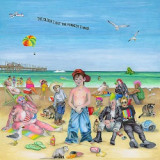
The Older I Get, the Funnier I Was, which follows Thomas’ brilliant 2020 HBO special The Golden One and his Can't Believe You're Happy Here EP released earlier this year, surveys a range of emotion and offers a broad sonic palette, moving between pop punk, electro, and the obvious influence of the singer-songwriters he grew up listening to in early childhood. It conjures the ennui of Bright Eyes alongside the barefaced storytelling of John Prine, the overstuffed lists of Fred Thomas with the lackadaisical humor of Colleen Green, among many others.
Thomas attributes the dexterity of the record to Duterte, who recorded and engineered most of it in addition to serving up plenty of encouragement when Thomas got down on the process. “As a comic, I used to test out new songs during sets to see if the funny bits were hitting, but since I wrote this in isolation I ended up writing lyrics and worrying less about making jokes,” Thomas says. That said, the album’s plenty funny. Stand-out and lead single “Rigamarole” opens with a Thomas-voiced infomercial that recalls his oft-cited lookalike Jim Carrey as the Grinch, before launching into a buoyant pop song about being depressed.
Whitmer Thomas will admit that when he traveled home to small town Gulf Shores, Alabama to record his HBO stand-up special, The Golden One, he expected to be greeted as a returning hero, a conquering king, or at minimum, a guy with a moderately successful career as an entertainer in Los Angeles. “I expected a big welcome home, open arms, but when I went back I realized: nobody fucking knows me. Nobody remembers me,” Thomas says. “In the years I’d been performing that show, I’d been romanticizing my childhood in this mythologized place, but the visit made me see that I’m not really from there anymore.”
The sense of alienation compounded when Thomas recognized how few people in town remembered his mom, to whom The Golden One is dedicated and largely about. Thomas grew up watching her perform with her twin sister at the legendary Flora-Bama Lounge, where he set the special, and still counts her as one of his musical influences. His new album, The Older I Get, the Funnier I Was, isn’t overtly about his mom, her presence is deeply felt throughout. While in Gulf Shores, Thomas discovered dozens of her old recordings, all of which had been wrecked by Katrina, but upon returning to LA, Thomas paid “a fancy place in Hollywood” to fix the tapes and hired Melina Duterte (Jay Som, Bachelor, Routine) to mix them. The two struck up a collaborative friendship, and Thomas had the sound of his mom’s voice back. “I was listening to songs she recorded when she was about my age, just these heartfelt, sweet Americana songs,” he says. “I decided then that I wanted to lose the Ian Curtis voice I always sing with; I wanted to do what came naturally, because my mom always sounded like herself, even when she was singing some cheesy reggae song about, like, Jamaica.”
Thus he went into The Older I Get, the Funnier I Was knowing it was time to retire his darkwave persona, and leaning into his natural, chirpier voice, which he says sounds “like a 12-year-old’s.” It makes sense: much of the album chronicles what Thomas calls “being a kid and feeling like you have no control and overcompensating by being annoying.” “So much of the album is about witnessing drug and alcohol addiction as a kid and seeing what it does to people, but also realizing that there's nothing you can do about it,” Thomas says. It’s familiar territory (see: “Partied to Death”) but the methodology is different this time around; true to its title, The Older I Get, the Funnier I Was isn’t always looking for laughs. Thomas might’ve left his hometown behind, but his kid self is still tagging along, a Peter Pan shadow he can’t untether himself from. The first line he sings on The Older I Get, the Funnier I Was is: “There should be a room at every party where you can just sit and watch a movie.” Find a 12-year-old who wouldn’t say the same.
erscheint voraussichtlich am 21.10.2022

Blue Vinyl
Das GRAMMY-nominierte Trio PVA veröffentlicht ihr mit Spannung erwartetes Debütalbum, „BLUSH“ Mitte Oktober auf Ninja Tune. Das Album der Südlondoner Band, das kurz nach ihrer 2020 beim Ninja Tune-Sublabel Big Dada (u.a. Yaya Bey, Young Fathers oder Diplo) veröffentlichten EP, „Toner“, erscheint, verbindet den Pulsschlag elektronischer Musik mit der rohen Energie eines lebensbejahenden Konzerts und offenbart mehr über das Trio, als sie bisher je preisgegeben haben. Die elf mitreißenden Tracks der Gruppe, bestehend aus Ella Harris und Josh Baxter (die sich Leadgesang sowie Synthesizer-, Gitarren- und Produktionsarbeit teilen) sowie Schlagzeuger und Perkussionist Louis Satchell, basieren auf einer Formel aus Acid, Disco, knallenden Synthesizern, der Befreiung des Dancefloors und kathartischem Spoken Word-Post-Punk.
PVA begann, als Harris und Baxter 2018 begannen, gemeinsam etwas zu machen, das sie als „Country-Friend-Techno“ bezeichneten. Ihre erste Show, eine Nacht namens „Narcissistic Exhibitionism“ im The Five Bells Pub in New Cross, fand nur zwei Wochen nach ihrem Kennenlernen statt. Der Abend wurde von Harris kuratiert und bot im Obergeschoss Malerei, Bildhauerei und Fotografie, während im Erdgeschoss Bands auftraten. Sie buchte PVA als Headliner. Einer ihrer ersten Songs, „Divine Intervention“, entstand, als Harris ihrer neuen Bandkollegin ihre Träume diktierte. Auf ihrem Debütalbum nehmen PVA die gleiche Energie aus der Live-Szene mit, während sie gleichzeitig eine ganzheitliche Welt voller Textur und Herz aufbauen. „BLUSH“ ist reich an schwergewichtigen Industrial-Beats, zerklüftetem Punk-Spirit und Momenten stiller Kontemplation durch Harris' poetische Lyrics. Das Album rennt unermüdlich vorwärts und verbindet Einflüsse wie Portishead, PC Music, Laurie Anderson und das kultige Rave-Pop-Duo The Pom-Poms mit Leichtigkeit. „BLUSH“ wurde während der verschiedenen Lockdowns geschrieben, eine Leidenszeit für eine Band, die es eigentlich gewohnt ist, die Grenzen ihres Sounds live auf der Bühne auszuloten. Diese Einschränkungen machten PVA aber nicht zu schaffen. Wenn überhaupt, fühlten sie sich durch die erzwungene Distanz in ihrem Songwriting gestärkt. Harris schrieb Gedichte und lernte, Musik zu produzieren, Baxter arbeitete mit anderen Künstler*innen als Produzent, und Satchell setzte sein Musikstudium an der City University fort und studierte unter anderem alte afrikanische Polyrhythmen.
Bestelle jetzt und wir bestellen den Artikel für dich beim Lieferanten.

Stellar Legions is four experienced space cadets from the Antwerp interstellar legion, led by Captain Andrew Claes (STUFF., BRZZVLL, Internal Sun). With a sound rooted in jazz, improv, hip-hop, dub and electronic music, brace yourself for an intergalactic trip through colourful musical worlds and allow yourself to be carried away to indefinable, otherworldly but always hospitable beacons.
Alongside Claes, the delegates on duty are all heroes from the Allied star: Bram Weijters (Raymond Van Het Groenewoud, Crazy Men), Klaas De Somer (Tourist Lemc, Selah Sue) and Fre Madou (ex-DAAU, Namid). With them, come stories and artifacts from the multidimensional cosmos to our beloved mother planet Earth and this autumn, they passionately present their first omnibus 'Stellar Legions', released 21st October via the groove-obssessed Sdban Ultra label.
The album consists of eight tracks recorded in the studio and live, resulting in one big cosmic experience that exhilarates down to every last arrangement. From Claes' twisted sax on the semi-electronic ecstatic dream world that is an 'An Arp in Tunisia' to the jazzy snatches of 'Wessel' where De Somer's hurried drum patterns and Weijters frenzied keyboard solos catch light, Stellar Legions unites the adventure and improvisation of jazz with contemporary sounds.
At the core of the Stellar Legions sound is a rhythm section Sly & Robbie would have approved of: loose and sticky, grinding and unwinding: De Somer's drums fizz with expectation while the relentless bass strokes from Madou provide the beating pulse. It's fresh, it's raw and it keeps us listening, grooving and wanting more. Elsewhere, 'Odyssey' is a cataclysmic mix of feverish sounds and melodies that take you to an extra-terrestrial place, while the live recording of 'Alcyone', basks in a spatial mix of futuristic grooves and ethereal soundscapes before album closer 'Covix', results in a spacious and wonderfully atmospheric affair.
Electronics wizard Andrew Claes has recorded music in a wide range of styles ranging from free jazz outfit Chaos of the Haunted Spire (duo with Teun Verbruggen) to techno icon Marco Bailey and New Wave hero, Marcel Vanthilt. In addition, he has collaborated with Zach Danziger, Zap Mama, Brussels Jazz Orchestra, Hermes Ensemble, Mauro Pawlowski, Josse De Pauw and many others and released music with the electro-jazz collective AAN/EOP and his solo project, Internal Sun.
Claes is also a teacher of 'Live Electronics' at the Conservatory of Antwerp and a doctorate in the arts, where he is currently investigating the possibilities of an electro-acoustic saxophone. He also regularly gives workshops on the Belgian synthesizer microcontroller platform, Axoloti. His latest achievement is AI-driven robot-jazz project 'BotBop' with Dago Sondervan and Kasper Jordaens, which explores the possibilities and limits of 'computer aided music performance'. Their latest project 'Integers & Strings' premiered at the Sònar festival in Barcelona in November 2021.
erscheint voraussichtlich am 21.10.2022

Die Arctic Monkeys veröffentlichen am Freitag, den 21. Oktober, ihr neues Album mit dem Titel 'The Car'. 'The Car' ist das siebte Studioalbum der Band und enthält zehn neue Songs, die von Alex Turner geschrieben und von James Ford produziert wurden. Aufgenommen wurde das Album in Butley Priory, Suffolk, den RAK Studios in London und La Frette in Paris. Nach dem 2018 erschienenen Album 'Tranquility Base Hotel + Casino' finden sich die Arctic Monkeys auf 'The Car' in einer neuen, üppig orchestrierten musikalischen Landschaft wieder und bieten einige der besten und beeindruckendsten Gesangsdarbietungen in der Karriere von Alex Turner.
Bestelle jetzt und wir bestellen den Artikel für dich beim Lieferanten.

Reissue! Before the acclaimed albums "Legends Never Die" and "All My Heroes Are Dead" brought his career to new heights, R.A. The Rugged Man spent years as an underrated rap enigma, with a slew of storied records to his name that had never received a proper release.
With the 2009 compilation "Legendary Classics Vol. 1, R.A. finally unleashed many of the lost gems that earned him a reputation as one of hip-hop's most feared lyricists, showcasing his undeniable history.
An essential collection from a true hip-hop original, the album features appearances by The Notorious B.I.G., Havoc of Mobb Deep, Jedi Mind Tricks, Kool G Rap, J-Live, Hell Razah, Tragedy Khadafi, Akinyele, and Sadat X, along with track-by-track commentary from the Rugged Man himself. This "Legendary Classics Vol. 1" reissue also includes the new bonus track “The Greatest” featuring famed Italian singer Marcella Puppini, which has never before been available on vinyl.
erscheint voraussichtlich am 21.10.2022

Giacomo Smith’s critically acclaimed outfit Kansas Smitty’s embark on a new chapter with a twist on their sound; modern jazz, African rhythms and classic cinema sculpt We’re Not In Kansas Anymore.
As the title suggests, We're Not In Kansas Anymore is the beginning of a new dawn for Kansas Smitty’s. Their fifth studio album marks a progression from their swing led palette, instead pulling inspiration from modern jazz, African rhythms and classic cinema. Kansas Smitty’s continues to be the primary outlet for bandleader, alto-saxophonist and clarinetist Giacomo Smith, a musician and producer whose tireless creativity continues to lift his reputation, recently producing albums for both Jamie Cullum and rising star Jas Kayser.
“I want people to feel a big range of emotion - I want people to see things”, says Smith. “There's joy and there's humour, but there's also spirituality. There's seriousness, there's loss and longing - and those are all there on purpose. We've experienced them as a collective and I’ve experienced them as an individual”.
erscheint voraussichtlich am 21.10.2022

Giacomo Smith’s critically acclaimed outfit Kansas Smitty’s embark on a new chapter with a twist on their sound; modern jazz, African rhythms and classic cinema sculpt We’re Not In Kansas Anymore.
As the title suggests, We're Not In Kansas Anymore is the beginning of a new dawn for Kansas Smitty’s. Their fifth studio album marks a progression from their swing led palette, instead pulling inspiration from modern jazz, African rhythms and classic cinema. Kansas Smitty’s continues to be the primary outlet for bandleader, alto-saxophonist and clarinetist Giacomo Smith, a musician and producer whose tireless creativity continues to lift his reputation, recently producing albums for both Jamie Cullum and rising star Jas Kayser.
“I want people to feel a big range of emotion - I want people to see things”, says Smith. “There's joy and there's humour, but there's also spirituality. There's seriousness, there's loss and longing - and those are all there on purpose. We've experienced them as a collective and I’ve experienced them as an individual”.
erscheint voraussichtlich am 21.10.2022

If Meatraffle is the Marxist/Leninist Big Brother house band then SCUDFM is a band of naughty Baby Socialist Anarchists who never pay to get in. SCUD play songs about Electronic Components, House Cleaning, the 2nd 'Ndrangheta War, Boats, Meatraffles, Allergies, Tactical Ballistic Nuclear Missiles plus serious subjects like Trade Unionism and Women's Rights. The band are also great to hang out with, in fact they are even more entertaining as offstage citizens and can recite all the times tables with ease.
The long awaited debut LP by South London supergroup SCUDFM is primed and ready for launch.
erscheint voraussichtlich am 21.10.2022

If Meatraffle is the Marxist/Leninist Big Brother house band then SCUDFM is a band of naughty Baby Socialist Anarchists who never pay to get in. SCUD play songs about Electronic Components, House Cleaning, the 2nd 'Ndrangheta War, Boats, Meatraffles, Allergies, Tactical Ballistic Nuclear Missiles plus serious subjects like Trade Unionism and Women's Rights. The band are also great to hang out with, in fact they are even more entertaining as offstage citizens and can recite all the times tables with ease.
The long awaited debut LP by South London supergroup SCUDFM is primed and ready for launch.
erscheint voraussichtlich am 21.10.2022

After a crush at the Brussels World Fair in 1900, King Leopold II decided, for his own personal pleasure, to have the Japanese Tower and Japanese Gardens built. In order to create this little relocated Asian paradise, he had the wood, sculptures, paintings, ornaments, trees, workers, and their know-how imported. For a few years, he invited his entourage to enjoy it during large banquets and private receptions. He then had the idea of transforming the Japanese Tower into a luxury restaurant, but he died. This magnificent place remains closed to the public except during an annual opening.
"A Story of a Global Disease" is a short tale about artificial paradises of globalization, a melancholic walk through the exotic relics of free trade, where whim, appropriation, and appearances take precedence over otherness. Here, geishas eat chips, Europeans confuse Tokyo and Beijing, and tribal ceremonies begin with samples and drumkits.
These tracks have been initially recorded for the “ON THE GO” Beursschouwburg’s project in Oct. 2020. It has been originally and properly released on shiny pinky tape by the fantastic Bamboo Shows imprint and includes an unreleased track (Walk With Your Romance).
Naomie Klaus is a young artist from Marseille based in Brussels. In love with performance, constantly flirting with cinema and acting, Naomie seems to conceive her music as a big playground, a free zone of mischief in which she likes to experiment and interpret different identities, different characters. The result is funambulistic, a hybrid and synthetic form of a thousand influences that we can't really characterize: 90' Techno, loud Trip-hop, languid Pop, nonchalant Post-punk, dracular mass... Naomie Klaus doesn't know on which foot to dance and invites us to join a zone of in-between, has fun to plunge us in her strange tales for adults, where the princesses we meet are armed, hysterical, nymphos and badly dressed.
Following a B.F.E proposal to release on a limited vinyl edition, Teenage Menopause from France & Moli Del Tro from Brussels joined the project. Rude66 remastered these gems and Harrisson made the artwork.
erscheint voraussichtlich am 21.10.2022

Superb EP ! The best from them with a banging full Electro Techno/Freetekno side and 2 Electro Techno groovers on the flip.. Some vocal samples you could recognise from big cheezy classics...
Sound is quite minimal and spacy, the bass is light and groovy, in that Pumpin 2.0 style proper to Ixindamix.
The full EP provides a wicked printed sleeve.
BIG !
Bestelle jetzt und wir bestellen den Artikel für dich beim Lieferanten.

featuring Tennishu and R4ND4ZZO BIGB4ND
Ihr neues Album Butcher Brown Presents Triple Trey featuring Tennishu and R4ND4ZZO BIGB4ND erscheint am 16.09.
Das fünfköpfige Kollektiv Butcher Brown aus Richmond veröffentlicht mit Unbelievable bereits ein weiteres Stück aus ihrem kommenden Big-Band-Album. Der Track ist ein Beispiel der dynamische JazzNeuinterpretation des gleichnamigen Songs von Notorious B.I.G. und wird von einem mitreißenden Video
der Band begleitet, die den Song live performt.
Das Album wurde ursprünglich vom MC und Multiinstrumentalisten der Band, Tennishu, als HipHopAlbum geschrieben und produziert und hat sich seitdem zu Butcher Browns eigener eklektischer Ode an
den Big-Band-Jazz entwickelt, ihrem ersten Ausflug in dieses Format. Butcher Brown Presents Triple Trey
ist bahnbrechend in seiner Annäherung an den klassischen Jazz. Die Band und die R4ND4ZZO BIGB4ND
spielen eine Collage aus Jazz-Suiten für ein HipHop-Album und integrieren gleichzeitig die ganz eigene
Mischung aus Soul, Funk und Rock-Elementen, für die Butcher Brown bekannt ist.
erscheint voraussichtlich am 20.10.2022

Powerfull Melly is back with a full EP.
A side, a 45 Killer of a kind leads to a mental hardfloor twirling tune... That can be cool at 33 RPM too :)
The flip start with a tooth brushing 175 BPM cruiser.
Second tune is a trap door, with a loud heavy kick, 178 BPM heavy ambiance, really Hardtek in the shape, sound and ambiance.
BIG !
Illustration by Kristof Albert
Bestelle jetzt und wir bestellen den Artikel für dich beim Lieferanten.

Bestelle jetzt und wir bestellen den Artikel für dich beim Lieferanten.

Diggin’ in the vast vaults of Victor Simonelli, a collection of classic Jazz-N-Groove remixes from the legendary Bassline Records label, fully remastered for the first time on one 12”.
Started back in 1993 by the man himself, the label features releases from the likes of Romanthony, Jocelyn Brown, DJ Duke and many more, also going on to spawn the Big Big Trax sublabel too.
For this 12 inch, a spotlight on Jazz-N-Groove, the legendary production team consisting of Marc Pomeroy, Brian Tappert & previously Roy Grant. Showcasing soulful house done properly, this EP takes in four of their sought-after ‘90s remixes of anthemic cuts from Northbound, Body Moods and Strive For Jive. For the house trivia heads out there, the pair also went on to launch Soulfuric Records and also digital download store, Traxsource.
Bestelle jetzt und wir bestellen den Artikel für dich beim Lieferanten.

'Big or profound sensations from small gestures which are carefully arranged. Using a mixture of sacred and profane, or classical and prosaic sound sources, knitted into intricate, fleet-footed compositions that virtually spring into the ear. Profondo Rosa is composer Ailin Grad’s first vinyl album following years embedded and loved in the Argentinian experimental music scene, with past treats on labels Krut, Sun Ark, Orange Milk Records and her own label Abyss, devoted to ‘connecting Latin Juke with the world’.
There’s a playfulness at the heart of Profondo Rosa that’s immediately charming, with a sense of scale and spatialisation in the sounds being toyed with, exploring the strange pleasures and satisfaction in her approach to delightful and fresh feeling sound design. Aylu is known to be as likely to deploy the sound of a finger click, a fizzy drink being cracked open, or a fly buzzing past the ear, as she is drawn to sampling gorgeous strings or instrumentation. Her debut album for Mana constantly builds territories that tug at your heartstrings and then have you grinning five seconds later. This versatility and acceleration has often resulted in her music being compared to footwork, alongside collaboration with other producers experimenting in that sphere; in 2017 she and Foodman put together a dizzying hour of sounds for NTS.
Her miniaturisation of rhythm and ringtone-like sample size could also bring to mind SND circa their warmer softer glitch Tenderlove phase, or perhaps the approach that Teenage Engineering take to designing tools for music making. Each are deriving pleasure from small and satisfying shapes, as well as advocating an object-oriented philosophy and minimalisation in their work that sidesteps a draining of colour. Sound is fun, and in Profondo Rosa it sounds like Aylu has that at the forefront of her mind.
Her hyperreal sound and its link to the languages of electroacoustic or computer music are clear, but she outmanoeuvres many of the overly-academic and formless examples of those genres. Profondo Rosa’s skeletal assembly of objects becomes tunes in an elegant, almost understated way; tactile elements quickly combine and roll into deeper and persuasively emotional places. These compositions give off an air of being very free, very experimental, despite being meticulously artful and studied arrangements on precise and nimble coordinates.'
Bestelle jetzt und wir bestellen den Artikel für dich beim Lieferanten.

Vinyl LP[23,49 €]
As the sun sets on a quaint East Nashville house, a young man bares a piece of his soul. Facing the camera, sporting a silky suit jacket/shirt/slacks/fingerless gloves ensemble that announces "singer" before he's even opened his mouth, Lee Tracy Johnson settles onto his stage, the front yard. He sways to the dirge-like drum machine pulse of a synth-soaked slow jam, extends his arms as if gaining his balance, and croons in affecting, fragile earnest, "I need your love… oh baby…"
Dogs in the yard next door begin barking. A mysterious cardboard robot figure, beamed in from galaxies unknown and affixed to a tree, is less vocal. Lee doesn't acknowledge either's presence. He's busy feeling it, arms and hands gesticulating. His voice rises in falsetto over the now-quiet dogs, over the ambient noise from the street that seeps into the handheld camcorder's microphone, over the recording of his own voice played back from a boombox off-camera. After six minutes the single, continuous shot ends. In this intimate creative universe there are no re-takes. There are many more music videos to shoot, and as Lee later puts it, "The first time you do it is actually the best. Because you can never get that again. You expressing yourself from within."
"I Need Your Love" dates from a lost heyday. From some time in the '80s or early '90s, when Lee Tracy (as he was known in performance) and his music partner/producer/manager Isaac Manning committed hours upon hours of their sonic and visual ideas to tape. Embracing drum machines and synthesizers – electronics that made their personal futurism palpable – they recorded exclusively at home, live in a room into a simple cassette deck. Soul, funk, electro and new wave informed their songs, yet Lee and Isaac eschewed the confinement of conventional categories and genres, preferring to let experimentation guide them.
"Anytime somebody put out a new record they had the same instruments or the same sound," explains Isaac. "So I basically wanted to find something that's really gonna stand out away from all of the rest of 'em." Their ethos meant that every idea they came up with was at least worth trying: echoed out half-rapped exhortations over frantic techno-style beats, gospel synth soul, modal electro-funk, oddball pop reinterpretations, emo AOR balladry, nods to Prince and the Fat Boys, or arrangements that might collapse mid-song into a mess of arcade game-ish blips before rallying to reach the finish line. All of it conjoined by consistent tape hiss, and most vitally, Lee's chameleonic voice, which managed to wildly shape shift and still evoke something sincere – whether toggling between falsetto and tenor exalting Jesus's return, or punctuating a melismatic romantic adlib with a succinct, "We all know how it feels to be alone."
"People think we went to a studio," says Isaac derisively. "We never went to no studio. We didn't have the money to go to no studio! We did this stuff at home. I shot videos in my front yard with whatever we could to get things together." Sometimes Isaac would just put on an instrumental record, be it "Planet Rock" or "Don't Cry For Me Argentina" (from Evita), press "record," and let Lee improvise over it, yielding peculiar love songs, would-be patriotic anthems, or Elvis Presley or Marilyn Monroe tributes. Technical limitations and a lack of professional polish never dissuaded them. They believed they were onto something.
"That struggle," Isaac says, "made that sound sound good to me."
In the parlance of modern music criticism Lee and Isaac's dizzying DIY efforts would inevitably be described as "outsider." But "outsider" carries the burden of untold additional layers of meaning if you're Black and from the South, creating on a budget, and trying to get someone, anyone within the country music capital of the world to take your vision seriously. "What category should we put it in?" Isaac asks rhetorically. "I don't know. All I know is feeling. I ain't gonna name it nothing. It's music. If it grabs your soul and touch your heart that's what it basically is supposed to do."
=
Born in 1963, the baby boy of nine siblings, Lee Tracy spent his earliest years living amidst the shotgun houses on Nashville's south side. "We was poor, man!" he says, recalling the outhouse his family used for a bathroom and the blocks of ice they kept in the kitchen to chill perishables. "But I actually don't think I really realized I was in poverty until I got grown and started thinking about it." Lee's mom worked at the Holiday Inn; his dad did whatever he had to do, from selling fruit from a horse drawn cart to bootlegging. "We didn't have much," Lee continues, "but my mother and my father got us the things we needed, the clothes on our back." By the end of the decade with the city's urban renewal programs razing entire neighborhoods to accommodate construction of the Interstate, the family moved to Edgehill Projects. Lee remembers music and art as a constant source of inspiration for he and his brothers and sisters – especially after seeing the Jackson 5 perform on Ed Sullivan. "As a small child I just knew that was what I wanted to do."
His older brother Don began musically mentoring him, introducing Lee to a variety of instruments and sounds. "He would never play one particular type of music, like R&B," says Lee. "I was surrounded by jazz, hard rock and roll, easy listening, gospel, reggae, country music; I mean I was a sponge absorbing all of that." Lee taught himself to play drums by beating on cardboard boxes, gaining a rep around the way for his timekeeping, and his singing voice. Emulating his favorites, Earth Wind & Fire and Cameo, he formed groups with other kids with era-evocative band names like Concept and TNT Connection, and emerged as the leader of disciplined rehearsals. "I made them practice," says Lee. "We practiced and practiced and practiced. Because I wanted that perfection." By high school the most accomplished of these bands would take top prize in a prominent local talent show. It was a big moment for Lee, and he felt ready to take things to the next level. But his band-mates had other ideas.
"I don't know what happened," he says, still miffed at the memory. "It must have blew they mind after we won and people started showing notice, because it's like everybody quit! I was like, where the hell did everybody go?" Lee had always made a point of interrogating prospective musicians about their intentions before joining his groups: were they really serious or just looking for a way to pick up girls? Now he understood even more the importance of finding a collaborator just as committed to the music as he was.
=
Isaac Manning had spent much of his life immersed in music and the arts – singing in the church choir with his family on Nashville's north side, writing, painting, dancing, and working various gigs within the entertainment industry. After serving in the armed forces, in the early '70s he ran The Teenage Place, a music and performance venue that catered to the local youth. But he was forced out of town when word of one of his recreational routines created a stir beyond the safe haven of his bohemian circles.
"I was growing marijuana," Isaac explains. "It wasn't no business, I was smoking it myself… I would put marijuana in scrambled eggs, cornbread and stuff." His weed use originated as a form of self-medication to combat severe tooth pain. But when he began sharing it with some of the other young people he hung out with, some of who just so happened to be the kids of Nashville politicians, the cops came calling. "When I got busted," he remembers, "they were talking about how they were gonna get rid of me because they didn't want me saying nothing about they children because of the politics and stuff. So I got my family, took two raggedy cars, and left Nashville and went to Vegas."
Out in the desert, Isaac happened to meet Chubby Checker of "The Twist" fame while the singer was gigging at The Flamingo. Impressed by Isaac's zeal, Checker invited him to go on the road with him as his tour manager/roadie/valet. The experience gave Isaac a window into a part of the entertainment world he'd never encountered – a glimpse of what a true pop act's audience looked like. "Chubby Checker, none of his shows were played for Black folks," he remembers. "All his gigs were done at high-class white people areas." Returning home after a few years with Chubby, Isaac was properly motivated to make it in Music City. He began writing songs and scouting around Nashville for local talent anywhere he could find it with an expressed goal: "Find someone who can deliver your songs the way you want 'em delivered and make people feel what you want them to feel."
One day while walking through Edgehill Projects Isaac heard someone playing the drums in a way that made him stop and take notice. "The music was so tight, just the drums made me feel like, oh I'm-a find this person," he recalls. "So I circled through the projects until I found who it was.
"That's how I met him – Lee Tracy. When I found him and he started singing and stuff, I said, ohhh, this is somebody different."
=
Theirs was a true complementary partnership: young Lee possessed the raw talent, the older Isaac the belief. "He's really the only one besides my brother and my family that really seen the potential in me," says Lee. "He made me see that I could do it."
Isaac long being a night owl, his house also made for a fertile collaborative environment – a space where there always seemed to be a new piece of his visual art on display: paintings, illustrations, and dolls and figures (including an enigmatic cardboard robot). Lee and Issac would hang out together and talk, listen to music, conjure ideas, and smoke the herb Isaac had resumed growing in his yard. "It got to where I could trust him, he could trust me," Isaac says of their bond. They also worked together for hours on drawings, spreading larges rolls of paper on the walls and sketching faces with abstract patterns and imagery: alien-like beings, tri-horned horse heads, inverted Janus-like characters where one visage blurred into the other.
Soon it became apparent that they didn't need other collaborators; self-sufficiency was the natural way forward. At Isaac's behest Lee, already fed up with dealing with band musicians, began playing around with a poly-sonic Yamaha keyboard at the local music store. "It had everything on it – trumpet, bass, drums, organ," remembers Lee. "And that's when I started recording my own stuff."
The technology afforded Lee the flexibility and independence he craved, setting him on a path other bedroom musicians and producers around the world were simultaneously following through the '80s into the early '90s. Saving up money from day jobs, he eventually supplemented the Yamaha Isaac had gotten him with Roland and Casio drum machines and a Moog. Lee was living in an apartment in Hillside at that point caring for his dad, who'd been partially paralyzed since early in life. In the evenings up in his second floor room, the music put him in a zone where he could tune out everything and lose himself in his ideas.
"Oh I loved it," he recalls. "I would really experiment with the instruments and use a lot of different sound effects. I was looking for something nobody else had. I wanted something totally different. And once I found the sound I was looking for, I would just smoke me a good joint and just let it go, hit the record button." More potent a creative stimulant than even Isaac's weed was the holistic flow and spontaneity of recording. Between sessions at Isaac's place and Lee's apartment, their volume of output quickly ballooned.
"We was always recording," says Lee. "That's why we have so much music. Even when I went to Isaac's and we start creating, I get home, my mind is racing, I gotta start creating, creating, creating. I remember there were times when I took a 90-minute tape from front to back and just filled it up."
"We never practiced," says Isaac. "See, that was just so odd about the whole thing. I could relate to him, and tell him about the songs I had ideas for and everything and stuff. And then he would bring it back or whatever, and we'd get together and put it down." Once the taskmaster hell bent on rehearsing, Lee had flipped a full 180. Perfection was no longer an aspiration, but the enemy of inspiration.
"I seen where practicing and practicing got me," says Lee. "A lot of musicians you get to playing and they gotta stop, they have to analyze the music. But while you analyzing you losing a lot of the greatness of what you creating. Stop analyzing what you play, just play! And it'll all take shape."
=
"I hope you understood the beginning of the record because this was invented from a dream I had today… (You tell me, I'll tell you, we'll figure it out together)" – Lee Tracy and Isaac Manning, "Hope You Understand"
Lee lets loose a maniacal cackle when he acknowledges that the material that he and Isaac recorded was by anyone's estimation pretty out there. It's the same laugh that commences "Hope You Understand" – a chaotic transmission that encapsulates the duality at the heart of their music: a stated desire to reach people and a compulsion to go as leftfield as they saw fit.
"We just did it," says Lee. "We cut the music on and cut loose. I don't sit around and write. I do it by listening, get a feeling, play the music, and the lyrics and stuff just come out of me."
The approach proved adaptable to interpreting other artists' material. While recording a cover of Whitney Houston's pop ballad "Saving All My Love For You," Lee played Whitney's version in his headphones as he laid down his own vocals – partially following the lyrics, partially using them as a departure point. The end result is barely recognizable compared with the original, Lee and Isaac having switched up the time signature and reinvented the melody along the way towards morphing a slick mainstream radio standard into something that sounds solely their own.
"I really used that song to get me started," says Lee. "Then I said, well I need something else, something is missing. Something just came over me. That's when I came up with 'Is It What You Want.'"
The song would become the centerpiece of Lee and Isaac's repertoire. Pushed along by a percolating metronomic Rhythm King style beat somewhere between a military march and a samba, "Is It What You Want" finds Lee pleading the sincerity of his commitment to a potential love interest embellished by vocal tics and hiccups subtlely reminiscent of his childhood hero MJ. Absent chord changes, only synth riffs gliding in and out like apparitions, the song achieves a lingering lo-fi power that leaves you feeling like it's still playing, somewhere, even after the fade out.
"I don't know, it's like a real spiritual song," Lee reflects. "But it's not just spiritual. To me the more I listen to it it's like about everything that you do in your everyday life, period. Is it what you want? Do you want a car or you don't want a car? Do you want Jesus or do you want the Devil? It's basically asking you the question. Can't nobody answer the question but you yourself."
In 1989 Lee won a lawsuit stemming from injuries sustained from a fight he'd gotten into. He took part of the settlement money and with Isaac pressed up "Saving All My Love For You" b/w "Is It What You Want" as a 45 single. Isaac christened the label One Chance Records. "Because that's all we wanted," he says with a laugh, "one chance."
Isaac sent the record out to radio stations and major labels, hoping for it to make enough noise to get picked up nationally. But the response he and Lee were hoping for never materialized. According to Isaac the closest the single got to getting played on the radio is when a disk jock from a local station made a highly unusual announcement on air: "The dude said on the radio, 107.5 – 'We are not gonna play 'Is It What You Want.' We cracked up! Wow, that's deep.
"It was a whole racist thing that was going on," he reflects. "So we just looked over and kept on going. That was it. That was about the way it goes… If you were Black and you were living in Nashville and stuff, that's the way you got treated." Isaac already knew as much from all the times he'd brought he and Lee's tapes (even their cache of country music tunes) over to Music Row to try to drum up interest to no avail.
"Isaac, he really worked his ass off," says Lee. "He probably been to every record place down on Music Row." Nashville's famed recording and music business corridor wasn't but a few blocks from where Lee grew up. Close enough, he remembers, for him to ride his bike along its back alleys and stumble upon the occasional random treasure, like a discarded box of harmonicas. Getting in through the front door, however, still felt a world away.
"I just don't think at the time our music fell into a category for them," he concedes. "It was before its time."
=
Lee stopped making music some time in the latter part of the '90s, around the time his mom passed away and life became increasingly tough to manage. "When my mother died I had a nervous breakdown," he says, "So I shut down for a long time. I was in such a sadness frame of mind. That's why nobody seen me. I had just disappeared off the map." He fell out of touch with Isaac, and in an indication of just how bad things had gotten for him, lost track of all the recordings they'd made together. Music became a distant memory.
Fortunately, Isaac kept the faith. In a self-published collection of his poetry – paeans to some of his favorite entertainment and public figures entitled Friends and Dick Clark – he'd written that he believed "music has a life of its own." But his prescience and presence of mind were truly manifested in the fact that he kept an archive of he and Lee's work. As perfectly imperfect as "Is It What You Want" now sounds in a post-Personal Space world, Lee and Isaac's lone official release was in fact just a taste. The bulk of the Is It What You Want album is culled from the pair's essentially unheard home recordings – complete songs, half-realized experiments, Isaac's blue monologues and pronouncements et al – compiled, mixed and programmed in the loose and impulsive creative spirit of their regular get-togethers from decades ago. The rest of us, it seems, may have finally caught up to them.
On the prospect of at long last reaching a wider audience, Isaac says simply, "I been trying for a long time, it feels good." Ever the survivor, he adds, "The only way I know how to make it to the top is to keep climbing. If one leg break on the ladder, hey, you gotta fix it and keep on going… That's where I be at. I'll kill death to make it out there."
For Lee it all feels akin to a personal resurrection: "It's like I was in a tomb and the tomb was opened and I'm back… Man, it feels so great. I feel like I'm gonna jump out of my skin." Success at this stage of his life, he realizes, probably means something different than what it did back when he was singing and dancing in Isaac's front yard. "What I really mean by 'making it,'" he explains isn't just the music being heard but, "the story being told."
Occasionally Lee will pull up "Is It What You Want" on YouTube on his phone, put on his headphones, and listen. He remembers the first time he heard his recorded voice. How surreal it was, how he thought to himself, "Is that really me?" What would he say to that younger version of himself now?
"I would probably tell myself, hang in there, don't give up. Keep striving for the goal. And everything will work out."
Despite what's printed on the record label, sometimes you do get more than one chance.
Bestelle jetzt und wir bestellen den Artikel für dich beim Lieferanten.

Unearthed by Mike Peden for BBE Music, Per Husby Septett's ‘The Peacemaker’ is a beautiful, deep and under-the-radar small big band set recorded in 1976 by the elite of Norway's jazz cognoscenti, led by pianist and band leader Per Husby. Originally issued for Husby on the Studentersamfundets Plateselskap label by the Student Society in Trondheim, Norway, this obscure jazz rarity had no budget for PR or distribution, and with just a mere 500 copies pressed sales were scarce; it soon became a collectors item in Norway and across the globe. The album creates a big-sounding dynamic mix of original compositions by Per Husby and covers, including Harold Land's modal masterpiece title cut ‘The Peacemaker’, plus a top-draw selection of tunes encompassing post bop, modal, bossa and ballads by the likes of Kenny Wheeler, Cedar Walton and Charlie Parker. Reissued with original artwork and the approval of Per Husby himself, who has also provided the sleeve notes, ‘The Peacemaker’ is now available once again for download, streaming, CD and as a double 180g LP cut at 45rpm by the Grammy-nominated Carvery studio.
erscheint voraussichtlich am 14.10.2022
